Hubbry Logo
search
logo
2225373

Automatic direction finder

logo
Community Hub0 Subscribers
Read side by side
from Wikipedia
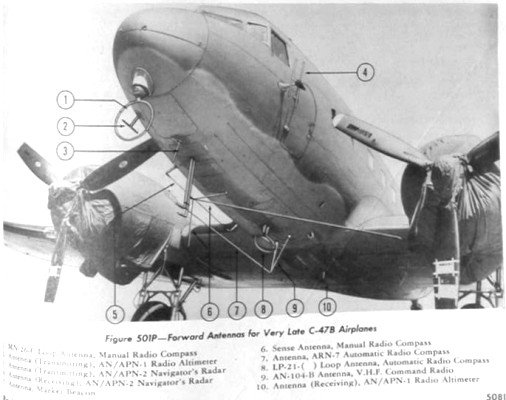
A teardrop-shaped housing that encases LP-21 rotatable loop antenna attached to the underside of Douglas DC-3 "Flagship Knoxville". The loop antenna is used for the ADF.[1][2]

An automatic direction finder (ADF) is a marine or aircraft radio-navigation instrument that automatically and continuously displays the relative bearing from the ship or aircraft to a suitable radio station.[3][4] ADF receivers are normally tuned to aviation or marine NDBs (Non-Directional Beacon) operating in the longwave band (LW) between 190 – 535 kHz. Like RDF (Radio Direction Finder) units, most ADF receivers can also receive medium wave (AM) broadcast stations, though these are less reliable for navigational purposes.

The operator tunes the ADF receiver to the correct frequency and verifies the identity of the beacon by listening to the Morse code signal transmitted by the NDB.[5] On marine ADF receivers, the motorized ferrite-bar antenna atop the unit (or remotely mounted on the masthead) would rotate and lock when reaching the null of the desired station. A centerline on the antenna unit moving atop a compass rose indicated in degrees the bearing of the station. On aviation ADFs, the unit automatically moves a compass-like pointer (RMI) to show the direction of the beacon. The pilot may use this pointer to home directly towards the beacon, or may also use the magnetic compass and calculate the direction from the beacon (the radial) at which their aircraft is located.

Unlike the RDF, the ADF operates without direct intervention, and continuously displays the direction of the tuned beacon. Initially, all ADF receivers, both marine and aircraft versions, contained a rotating loop or ferrite loopstick aerial driven by a motor which was controlled by the receiver. Like the RDF, a sense antenna verified the correct direction from its 180-degree opposite.

More modern aviation ADFs contain a small array of fixed aerials and use electronic sensors to deduce the direction using the strength and phase of the signals from each aerial. The electronic sensors listen for the trough that occurs when the antenna is at right angles to the signal, and provide the heading to the station using a direction indicator. In flight, the ADF's RMI or direction indicator will always point to the broadcast station regardless of aircraft heading. Dip error is introduced, however, when the aircraft is in a banked attitude, as the needle dips down in the direction of the turn. This is the result of the loop itself banking with the aircraft and therefore being at a different angle to the beacon. For ease of visualisation, it can be useful to consider a 90° banked turn, with the wings vertical. The bearing of the beacon as seen from the ADF aerial will now be unrelated to the direction of the aircraft to the beacon.

Dip error is sometimes confused with quadrantal error, which is the result of radio waves being bounced and reradiated by the airframe. Quadrantal error does not affect signals from straight ahead or behind, nor on the wingtips. The further from these cardinal points and the closer to the quadrantal points (i.e. 45°, 135°, 225° and 315° from the nose) the greater the effect, but quadrantal error is normally much less than dip error, which is always present when the aircraft is banked.

ADF receivers can be used to determine current position, track inbound and outbound flight path, and intercept a desired bearing. These procedures are also used to execute holding patterns and non-precision instrument approaches.

Typical service ranges of non-directional beacons (NDBs)

[edit]

Non-directional beacons in North America are classified by power output: "low" power rating is less than 50 watts; "medium" from 50 W to 2,000 W; and "high" at more than 2,000 W.[6]

Class of NDB, by power rating Transmission power output, watts (W) Effective range, nautical miles (nmi)
Locator beacon 0–25 15
Low 0–50 25
Medium 50–2,000 50
High 2,000+ 75

ADF indicators

[edit]
An ADF indicator with a fixed azimuth dial. The airplane is flying a 40° magnetic heading, while the station is 310° relative to the plane (called "relative bearing"). The magnetic bearing to the station in this case is 350°.

The ADF indicators are a kind of navigational display consisting of a dial and a needle that rotates around the dial and points to the beacon. This needle suggests the "to" bearing of the beacon, and to fly the "from" bearing, 180° needs to be added or subtracted from the reading.[7]

There are two types of ADF indicators: the "fixed azimuth dial" type with 0° always represents the aircraft nose, and 180° always represents the aircraft tail; and the type with rotating dials that can be rotated to align the azimuth with the aircraft heading.[7]

Stages

[edit]

Station passage

[edit]

As an aircraft nears an NDB station, the ADF becomes increasingly sensitive, small lateral deviations result in large deflections of the needle which sometimes shows erratic left/right oscillations.[8] Ideally, as the aircraft overflies the beacon, the needle swings rapidly from directly ahead to directly behind. This indicates station passage and provides an accurate position fix for the navigator. Less accurate station passage, passing slightly to one side or another, is shown by slower (but still rapid) swinging of the needle. The time interval from the first indications of station proximity to positive station passage varies with altitude — a few moments at low levels to several minutes at high altitude.

Homing

[edit]

The ADF may be used to home in on a station. Homing is flying the aircraft on the heading required to keep the needle pointing directly to the 0° (straight ahead) position. To home into a station, tune the station, identify the Morse code signal, then turn the aircraft to bring the ADF azimuth needle to the 0° position. Turn to keep the ADF heading indicator pointing directly ahead. Homing is regarded as poor piloting technique because the aircraft may be blown significantly or dangerously off-course by a cross-wind, and will have to fly further and for longer than the direct track.

Tracking

[edit]

The ADF may also be used to track a desired course using an ADF and allowing for winds aloft, winds which may blow the aircraft off-course. Good pilotage technique has the pilot calculate a correction angle that exactly balances the expected crosswind. As the flight progresses, the pilot monitors the direction to or from the NDB using the ADF, adjusts the correction as required. A direct track will yield the shortest distance and time to the ADF location.[7]

Radio magnetic indicator (RMI)

[edit]
An aircraft RMI

A radio magnetic indicator (RMI) is an alternate ADF display providing more information than a standard ADF. While the ADF shows relative angle of the transmitter with respect to the aircraft, an RMI display incorporates a compass card, actuated by the aircraft's compass system, and permits the operator to read the magnetic bearing to or from the transmitting station, without resorting to arithmetic.

Most RMIs incorporate two direction needles. Often one needle (the thicker, double-barred needle) is connected to an ADF and the other (generally thin or single-barred) is connected to a VOR. Some models allow the operator to select which needle is connected to each navigation radio. There is great variation between models, and the operator must take care that their selection displays information from the appropriate ADF and VOR.

This instrument display can replace a magnetic compass display in the instrument panel, but not necessarily the gyroscopic Heading Indicator. The Heading Indicator can be combined with information from navigation radios (primarily VOR/ILS) in a similar way, to create the Horizontal Situation Indicator. The HSI, along with the VOR system, has largely replaced use of the RMI, however the HSI's much higher cost keeps the older combination of an RMI and an Omni Bearing Indicator attractive to cost-conscious pilots and operators.

Decline in use

[edit]

While ADF receivers were once a standard feature in most commercial and general aviation aircraft, their use has declined with the growth of satellite-based navigation systems such as GPS and the implementation of Performance-Based Navigation (PBN). Many civil aviation authorities have gradually decommissioned non-directional beacons (NDBs), particularly in North America and Europe, where more precise navigation aids and satellite augmentation systems are available. Today, ADF equipment is primarily retained for legacy procedures, training purposes, and as a backup in areas with limited satellite coverage.[9]

References

[edit]
Revisions and contributorsEdit on WikipediaRead on Wikipedia
from Grokipedia
An Automatic Direction Finder (ADF) is a radio navigation instrument used in aviation and maritime applications to automatically determine and display the relative bearing of an aircraft or vessel to a non-directional radio beacon (NDB) or other low- to medium-frequency transmitter. By receiving signals in the frequency range of 190 kHz to 1750 kHz, the ADF employs a loop antenna to detect the direction of the incoming signal's null point and a sense antenna to resolve directional ambiguity, enabling pilots or navigators to track radials toward or away from the station for en-route navigation, instrument approaches, and as a backup to systems like GPS or VOR.[1][2] The ADF originated from early 20th-century radio direction-finding techniques, with loop antennas first utilized during World War I for naval applications, but it evolved into an automated airborne system in the late 1920s and early 1930s. Developed by the Sperry Gyroscope Company, the first practical ADFs were installed on aircraft in the mid-1930s, replacing manual radio direction finders and providing a self-contained navigation solution that pointed directly to beacons without requiring external ground loops.[3][4][2] As the "grandfather" of radio navigation aids, the ADF played a pivotal role in enabling reliable over-water and night flying before World War II, with NDB stations broadcasting omnidirectional signals identifiable by Morse code. Despite vulnerabilities to atmospheric interference and terrain effects, its simplicity and low cost ensured widespread adoption, and it remains in use today for non-precision approaches in regions without advanced infrastructure, often integrated with modern avionics for enhanced accuracy.[4][1]

History and Development

Origins and Invention

The Automatic Direction Finder (ADF) emerged in the early 20th century as an evolution of manual radio direction finding (RDF) systems, which relied on rotatable loop antennas to determine the bearing of radio signals. Early RDF techniques, such as those developed by Ettore Bellini and Alessandro Tosi in 1907, introduced the goniometer—a device using fixed loop antennas and a rotating coil to visually indicate signal direction without mechanical rotation of the antenna itself. This innovation addressed limitations of manual systems by enabling more reliable fixed installations, laying the groundwork for automatic operation in navigation.[5] In the 1920s, significant advancements toward fully automatic direction finding occurred, particularly for aviation applications. German engineers Max Dieckmann and Rudolf Hell developed an early indicating system that combined a directional loop antenna with a non-directional sense antenna, automatically displaying deviations from the signal course on an indicator to assist pilots in homing. This approach, prototyped in the mid-1920s and detailed in Hell's 1927 PhD dissertation on a direct-indicating radio direction finder for aviation, resolved the 180-degree ambiguity inherent in loop antennas by forming a cardioid pattern, though it faced challenges from signal mistuning and phase errors that reduced accuracy during off-course flight. Concurrently, in the UK, Robert Watson-Watt pioneered automatic direction finding methods in 1926, initially for locating lightning strikes using cathode-ray oscilloscopes to graphically display signal bearings from fixed antennas.[6] These efforts, including goniometer-based prototypes around 1921, shifted from labor-intensive manual tuning to self-contained automatic systems better suited for aircraft, where pilots needed hands-free operation.[7] By the 1930s, these foundations enabled the first commercial implementations of ADF for aircraft navigation. The Sperry Gyroscope Company introduced operational ADF units in the mid-1930s, integrating automatic tuning and bearing indication to track non-directional beacons, marking a practical transition from experimental RDF to standard aviation equipment. Early adoption highlighted ongoing challenges with loop antenna sensitivity to atmospheric interference, prompting refinements in receiver design for reliable low-frequency signals in maritime and aerial use.[8]

Adoption in Aviation and Maritime Navigation

The Automatic Direction Finder (ADF) experienced rapid and widespread adoption during World War II, serving as a critical navigation tool in both military aviation and maritime operations. In aviation, ADF systems enabled pilots of bombers and transport aircraft to navigate by homing in on non-directional radio beacons, providing essential guidance during long-range missions over unfamiliar terrain or at night.[9] For maritime use, the U.S. Navy deployed the DAE-1 radio direction finder starting with contracts awarded on December 31, 1942, equipping ships and aircraft with loop antennas to detect and locate enemy or friendly radio signals for convoy protection and submarine hunting.[10] This wartime proliferation marked a shift from manual direction finding to automated systems, enhancing operational efficiency across Allied forces.[11] Postwar, the FAA and ICAO established key standards for ADF in the 1950s to support the burgeoning civil aviation sector, including the allocation of the 190-535 kHz frequency band for non-directional beacons (NDBs) compatible with ADF receivers.[12] These regulations, outlined in ICAO Annex 10, ensured interoperability and safety for international flights, promoting the system's integration into global airway networks.[13] By the mid-1950s, ADF became a standard feature in commercial airliners, with airlines incorporating it for en-route navigation and non-precision approaches, exemplified by its routine use on transoceanic routes.[14] In maritime navigation, ADF complemented emerging technologies like LORAN during the 1940s and 1950s, with hybrid systems combining direction finding for short-range homing and hyperbolic positioning for longer distances on merchant and naval vessels.[15] This pairing improved accuracy in fog-bound or remote waters, as seen in U.S. Coast Guard operations where low-frequency ADF signals aided LORAN fixes.[16] Under FAA rules, ADF equipment was required for aircraft certified to perform non-directional beacon (NDB) approaches under instrument flight rules (IFR) through the 1980s, providing a reliable backup as the airspace system transitioned to VHF omnidirectional range (VOR) systems and ensuring redundancy in the National Airspace System.[17]

Principles of Operation

Non-Directional Beacon Signals

Non-directional beacons (NDBs) operate within the medium frequency band, typically from 190 to 1750 kHz as specified by the International Civil Aviation Organization (ICAO) Annex 10, although in many regions such as the United States, the practical range is limited to 190–535 kHz. These beacons transmit using amplitude modulation (AM) on a continuous carrier wave, which is further modulated at either 400 Hz or 1020 Hz to produce an audible tone receivable by aircraft automatic direction finders (ADFs).[18] The signals from NDBs exhibit an omnidirectional radiation pattern, allowing reception from any azimuth relative to the transmitter without directional bias. For station identification, the carrier is intermittently modulated with a continuous three-letter Morse code identifier transmitted every 10 to 30 seconds, though some facilities may use voice announcements instead unless designated with a "W" suffix indicating no voice capability. Power output varies by facility class but typically ranges from 25 watts for low-power compass locators to 2000 watts for higher-power en route beacons, influencing the effective service range.[18][18][18] NDB signals propagate primarily via ground waves during daytime, which follow the Earth's surface and provide reliable coverage over short to medium distances up to 50–100 nautical miles, depending on power and terrain. However, sky waves—reflected signals from the ionosphere—become prominent at night, extending range but introducing interference and signal fading that can degrade accuracy. Propagation is further affected by terrain, where mountains or obstacles may cause signal shadowing, bending, or distortion, and nighttime ionospheric enhancement amplifies sky wave effects, often leading to erratic reception over longer distances.[18][19][18]

Direction Finding Mechanism

The direction finding mechanism in an Automatic Direction Finder (ADF) fundamentally relies on loop or ferrite rod antennas, which respond to the magnetic component of electromagnetic waves from a non-directional beacon (NDB). These antennas produce a bidirectional reception pattern shaped like a figure-of-eight, where the signal strength reaches a null (minimum) when the plane of the loop aligns parallel to the incoming wavefront's direction of propagation, and a peak (maximum) when perpendicular to it. The null position is particularly precise for bearing determination because it corresponds directly to the line of sight to the transmitter, minimizing ambiguities in signal interpretation.[20][21] To achieve direction finding without physically rotating the antenna, ADF systems incorporate a goniometer, which electronically simulates a rotating magnetic field using fixed loop antennas. The goniometer typically employs two orthogonal loops positioned at 90 degrees to each other; their outputs are phase-shifted and combined to recreate the effect of a single rotating loop, allowing the system to detect the incoming signal's azimuthal angle through comparative signal amplitudes or phases. This principle, originating from the Bellini-Tosi direction finder design, resolves the bearing by measuring the phase difference between the loop signals relative to a reference, enabling accurate direction computation in a compact, mechanically stable configuration.[21][22][23] Automatic null-tracking circuitry ensures continuous bearing updates by employing high-gain amplifiers to detect and amplify the subtle differences near the null point, coupled with servo mechanisms that drive the goniometer or an internal reference coil to maintain alignment with the minimum signal. This closed-loop system processes the modulated signals—often incorporating a sense antenna to resolve 180-degree ambiguities—and uses feedback to adjust in real time, compensating for aircraft motion or signal variations.[20][23][22] The resulting bearing is initially computed as a relative bearing, measured from the longitudinal axis (nose) of the aircraft to the NDB. To obtain a magnetic bearing for navigation, this relative value is corrected using heading data from a flux gate compass, which senses the Earth's magnetic field to provide the aircraft's orientation. This conversion integrates the ADF's directional output with the magnetic reference, yielding a true navigational heading to the station.[20][23]

System Components

Antenna Configurations

The antenna configurations in automatic direction finder (ADF) systems primarily rely on loop antennas designed to be electrically small, meaning their dimensions are much smaller than the wavelength of the low-frequency signals (typically 190–1750 kHz) they receive from non-directional beacons (NDBs). These electrically small loops provide directional sensitivity by detecting the magnetic field component of the incoming radio wave, with a null (minimum signal) occurring when the loop plane is aligned perpendicular to the signal's direction of arrival. To achieve compactness suitable for aircraft installation, where space and aerodynamics are constrained, ferrite rod antennas are commonly used; these consist of a coil wound around a ferrite core that enhances inductance and sensitivity without requiring large physical loops.[24][20] A key limitation of the loop antenna alone is its 180-degree ambiguity, as the null response is identical from opposite directions. This is resolved by adding a sense antenna, an omnidirectional vertical whip or wire antenna that captures the electric field component of the signal, allowing the system to determine the correct bearing through phase comparison with the loop output. In modern ADF installations, the loop and sense antennas are often integrated into a single compact unit, such as a low-profile blade or box-shaped assembly, which simplifies wiring and reduces vulnerability to icing or damage.[24][1] Mounting positions for ADF antennas are selected to minimize multipath interference from the aircraft's airframe, particularly the metallic fuselage, which can distort signal patterns. Typically, the combined loop-sense antenna is installed on the underside of the fuselage, away from propellers and major structural elements, to ensure a clear reception pattern; on larger aircraft, the sense antenna may extend vertically from the top to the bottom of the fuselage for better omnidirectional coverage. This placement balances aerodynamic drag with performance, though careful site surveys are required during installation to avoid shadowing effects.[24] Calibration procedures for ADF antennas focus on aligning the system with the aircraft's heading to ensure accurate bearing indications. Ground checks verify basic operation, but flight calibration is essential and involves flying directly toward and away from a known NDB station at least 50 miles distant, with the aircraft axis aligned to the transmitter tower; deviations in the ADF reading (ideally zero degrees on the nose) are noted and corrected per manufacturer specifications, often by adjusting the antenna coupler or goniometer. This process, conducted in smooth air with light winds, confirms a single null reception area and compensates for any airframe-induced errors, typically limiting bearing accuracy to within 2–5 degrees.[25][24]

Receiver and Tuning Elements

The receiver in an Automatic Direction Finder (ADF) system employs a superheterodyne architecture to process signals from Non-Directional Beacons (NDBs) operating in the low-frequency range. This design includes radio frequency (RF) amplifiers that boost the weak incoming signals from the loop and sense antennas, followed by a mixer stage that converts the RF signal to a lower intermediate frequency (IF), typically 455.7 kHz, for easier amplification and demodulation.[26] The IF stages then apply further amplification using multiple cascaded amplifiers, incorporating mechanical filters to achieve selectivity, such as a broad 3.1 kHz bandwidth for general reception or a sharper 1.5 kHz for precise tuning.[26] This architecture ensures stable signal processing across the ADF band of 190 kHz to 1750 kHz, allowing the ADF to tune to aviation beacons while rejecting off-frequency noise.[26][27] Tuning elements in the ADF receiver enable precise selection of NDB frequencies within the designated band, often via a control unit with a digital or analog dial for pilot input. The receiver's local oscillator generates the mixing signal to shift the selected frequency to the IF, supporting increments as fine as needed for beacon identification, typically in 1 kHz steps for NDBs.[26] Automatic frequency control (AFC) circuits assist in maintaining tuning stability by providing feedback to the local oscillator, compensating for drift due to temperature variations or vibration in aircraft environments, though manual fine-tuning remains common for initial station lock.[26] A beat frequency oscillator (BFO) is integrated for detecting continuous wave (CW) signals, such as unmodulated Morse code identifiers from certain NDBs; it injects a tone heterodyned with the IF signal at approximately ±6 kHz offset, producing an audible beat note for tuning confirmation and identification.[26] To mitigate interference, the receiver incorporates bandpass and mechanical filters in the RF and IF sections, which attenuate unwanted signals outside the tuned frequency. Specific rejection of power line harmonics—common at 50/60 Hz and multiples in low-frequency bands—is achieved through notch filters or wave traps that create narrow rejection bands at these discrete frequencies, preventing desensitization from electrical noise in the aircraft vicinity.[26] These filters maintain signal integrity without overly distorting the NDB modulation, ensuring reliable bearing computation even in electrically noisy environments. Integration with aircraft power systems typically involves 28 Vdc for core receiver operation and 115 Vac at 400 Hz for servo motors driving the loop antenna, drawn from the aircraft's electrical bus with protective fusing to prevent surges.[26] Failure modes, such as desensitization, can occur from misalignment in the RF or IF stages, reducing gain and sensitivity to weak NDB signals, or from excessive interference overwhelming the front-end amplifiers; this may manifest as erratic tuning or loss of station identification, requiring periodic alignment checks per maintenance standards.[26]

Display and Indicators

Basic ADF Needle

The basic ADF needle serves as the primary visual indicator for the relative bearing to a tuned non-directional beacon (NDB), displaying the direction from the aircraft's nose in degrees from 0° to 360°. In a fixed-card ADF instrument, the needle deflects over a stationary compass rose where the 0° position represents the aircraft's nose, and the needle's head always points directly toward the NDB station, providing an immediate relative bearing reading without requiring manual adjustments to the card itself.[28] The compass rose features prominent scale markings at intervals such as every 10° or 30° for quick reference, allowing pilots to interpret bearings accurately during flight. To address potential erratic swings caused by signal fluctuations or aircraft maneuvers, modern ADF systems incorporate damping mechanisms—typically electronic or mechanical filters—that smooth the needle's movement and prevent excessive oscillation, ensuring stable readings for reliable navigation. As a backup to the visual display, ADF receivers integrate audio output capabilities, enabling aural null detection in manual mode where pilots can listen for the minimum signal strength (null) by rotating a loop antenna if the automatic system fails. This aural method, inherited from earlier radio direction finding techniques, provides redundancy for bearing determination in low-visibility conditions or equipment malfunctions.[29] In older general aviation aircraft, such as the Cessna 172, the basic ADF needle is typically installed as a panel-mounted instrument, often alongside other analog gauges in the center or right section of the cockpit panel for easy pilot access during visual and instrument flight rules operations.[30][31]

Radio Magnetic Indicator Integration

The Radio Magnetic Indicator (RMI) enhances the Automatic Direction Finder (ADF) by integrating magnetic heading data with ADF bearing information on a single instrument. It features a rotating compass card driven by a flux valve, which senses the Earth's magnetic field through a soft iron ring and 400 Hz AC coils to generate signals that align the card with the aircraft's magnetic heading via a synchro mechanism.[32] The RMI typically includes one or more needles, such as an ADF needle, that are fixed relative to the aircraft and point toward the nondirectional beacon (NDB) station, allowing simultaneous display of heading and bearing data.[33] This design enables pilots to read absolute orientations without manual adjustments.[32] In ADF integration, the RMI automatically converts the relative bearing from the ADF receiver—indicating the direction of the NDB relative to the aircraft's nose—into a magnetic bearing by slaving the compass card to the flux valve's heading input. As the aircraft turns, the card rotates to maintain alignment with magnetic north, positioning the ADF needle to show the magnetic bearing to the station directly on the card's scale.[29] This process eliminates the need for pilots to mentally add the relative bearing to the aircraft's magnetic heading, providing an intuitive visual representation of the station's position relative to magnetic north.[32] A key advantage of the RMI over basic ADF displays is the direct readout of the magnetic bearing to the station, known as the QDM (magnetic bearing to the station), which simplifies navigation and reduces pilot workload during en route or approach phases.[29] The configuration further supports monitoring multiple NDBs or combining ADF with VOR signals, enhancing situational awareness in areas with overlapping coverage.[33] Historically, the RMI was integrated into transport aircraft of the mid-20th century, where the ADF needle on the RMI provided magnetic bearings to low-frequency NDBs as a backup navigation aid, with the compass card actuated by the aircraft's compass system for precise heading reference. In modern aviation, digital variants appear in glass cockpits as part of primary flight displays (PFDs) and multi-function displays (MFDs), coupling ADF inputs to electronic horizontal situation indicators (EHSIs) for bearing display alongside GPS and other sources, maintaining compatibility with NDB approaches in nonsequencing modes.[34]

Homing to a Station

Homing to a station using an automatic direction finder (ADF) involves navigating an aircraft directly toward a non-directional beacon (NDB) by aligning the ADF needle with the aircraft's nose, allowing pilots to follow the relative bearing to the transmitter. This technique, also known as tracking to the station, relies on the ADF's ability to continuously indicate the direction of the NDB signal, enabling precise inbound navigation even in instrument flight rules (IFR) conditions.[35] The procedure begins with tuning the ADF receiver to the NDB's frequency, typically in the 200–415 kHz range, as listed in the aeronautical chart or Chart Supplement. Once tuned and the NDB identifier is positively identified aurally, the pilot turns the aircraft to align the ADF needle at the 0° position relative to the nose, indicating the aircraft is headed directly toward the station. Wings are then maintained level, and the heading is held steady while monitoring the needle for any deflection, which signals the need for immediate correction to recenter it.[35][36] In homing, the magnetic bearing to the station, known as the QDM (quadrantal deviation magnetic), represents the direction from the aircraft to the NDB and is read directly from the ADF display when the needle is centered. Conversely, the reciprocal bearing, or QDR (quadrantal deviation reciprocal), is the magnetic bearing from the NDB to the aircraft, calculated by adding or subtracting 180° from the QDM. These bearings facilitate inbound (QDM) and outbound (QDR) legs, with the ADF providing real-time updates to maintain the track.[35] Wind correction is essential during homing, as crosswinds cause the aircraft to drift, resulting in needle deflection away from 0°. To compensate, the pilot notes the drift angle from the initial needle movement, then adjusts the heading into the wind by that amount to recenter the needle and fly a straight ground track toward the station; for instance, a 10° left deflection due to a crosswind requires a 10° right heading correction.[35] A practical example of homing occurs during a non-precision instrument approach to an airport NDB, where the pilot tunes the ADF to the station frequency upon reaching the initial approach fix, turns to center the needle on the final approach course, and applies wind corrections while descending to the minimum descent altitude (MDA), typically ensuring at least 250–350 feet of obstacle clearance until visual references are acquired.[36]

Tracking Radial Paths

To track a radial path defined by the intersection of bearings from two non-directional beacons (NDBs), pilots alternate tuning the automatic direction finder (ADF) receiver between the frequencies of the two stations, using successive needle deflections to bracket the desired course and maintain alignment along the radial line.[37] This bracketing technique involves trial-and-error heading adjustments to counteract crosswinds, starting with an initial correction (such as doubling the relative bearing for interception) and refining it until the needle remains centered during switches between stations.[37] With a single ADF receiver, rapid frequency changes ensure continuous monitoring, while dual receivers allow simultaneous tuning for more precise en-route positioning..pdf) When the aircraft passes directly overhead an NDB, the ADF needle undergoes a rapid 180-degree swing or erratic fluctuation due to the shift from inbound to outbound signal reception, signaling station passage and necessitating an immediate switch to the alternate NDB to avoid course deviation.[37] This effect, which can last from seconds at low altitudes to several minutes at higher ones, requires pilots to confirm passage via signal strength changes or Morse code identification before resuming tracking.[37] In en-route navigation, this method supports airway tracking along low- and medium-frequency routes, where pilots maintain a constant magnetic bearing to successive NDBs, particularly in instrument meteorological conditions (IMC) with low visibility that demand reliable path adherence without visual references.[37] Federal airways, bounded by 4 nautical miles on each side of the NDB centerline and floored at 1,200 feet above ground level, rely on such techniques for structured routing between fixes.[37] Pilots manage errors during turns by accounting for quadrantal error, a bearing inaccuracy caused by radio wave reflections off the aircraft's metallic structure that varies by the quadrant relative to the NDB, typically requiring up to 15-30 degrees of correction in affected positions.[37] This error, most pronounced in the northeast and southwest quadrants, is mitigated through pre-flight awareness of aircraft-specific deviations and cross-checking with charted corrections during heading changes.[37]

Performance and Limitations

Service Ranges of NDBs

NDBs are classified into categories based on their transmitted power and intended operational purpose, which directly dictate their standard service ranges. Low-power compass locators, typically used for airport approaches, provide reliable coverage within a 15 nautical mile (NM) radius. Terminal-class NDBs (MH) offer medium-range service up to 25 NM, suitable for airport terminal area navigation. En-route NDBs include the H class with a 50 NM radius (which may be reduced as noted in operational publications) and the higher-power HH class extending to 75 NM for longer-distance cross-country flights. These ranges represent the standard service volumes where the groundwave signal maintains a minimum field strength of 50 µV/m for navigational accuracy.[38][33] Daytime operations for low-power NDBs typically achieve effective ranges of 10 to 50 NM, limited by groundwave propagation and signal attenuation over distance. At night, skywave propagation via ionospheric reflection can extend detectable signals to 100 NM or more, potentially allowing greater usability but often compromising precision due to multipath interference.[38] Key factors affecting NDB service ranges include transmitter power, which sets the initial signal intensity; operating frequency, where lower frequencies in the 190–535 kHz band support longer propagation but increase vulnerability to atmospheric effects; and atmospheric conditions, such as diurnal ionospheric variations that enhance nighttime skywave while causing daytime absorption. Aircraft receiver sensitivity, required to detect at least 50 µV/m, also plays a critical role in realizing the full range.[38] Regulatory standards mandate minimum service ranges for NDBs to ensure safe aviation use, with the U.S. Federal Aviation Administration (FAA) defining these volumes in the Aeronautical Information Manual and requiring publication of any limitations in the Chart Supplement and Notices to Air Missions (NOTAMs). Internationally, the International Civil Aviation Organization (ICAO) establishes comparable field strength requirements in Annex 10, Volume I, to standardize NDB performance across global airspace.[38][33]

Common Errors and Mitigations

One significant source of inaccuracy in Automatic Direction Finder (ADF) systems is night effect, where skywave propagation from distant non-directional beacons (NDBs) interferes with the ground wave signal, causing the ADF needle to swing erratically as signals arrive out of phase.[12] This interference is most pronounced at dawn and dusk but can occur throughout the night, particularly over land, fresh water, or ice, degrading bearing accuracy significantly. To mitigate night effect, pilots should prioritize daytime operations when possible, as skywave propagation diminishes, or employ higher flight altitudes to reduce signal attenuation; additionally, continuous monitoring of the NDB's Morse code identification and audio quality helps detect and disregard erroneous indications.[12] Quadrantal error arises from the asymmetry of the aircraft's structure, particularly the fuselage and wings, which distort the radio signal null and cause bearing deviations of up to ±10 degrees, with maximum error occurring when signals arrive perpendicular to the aircraft's longitudinal axis.[39] This error is minimized when signals align with the fuselage but requires correction during turns or when the aircraft is not in a steady heading.[2] Mitigation involves factory-installed compensators in modern ADF systems that adjust for average quadrantal effects, supplemented by pilot use of pre-flight calibration charts or in-flight adjustments based on known aircraft deviations to align indicated bearings with true magnetic directions.[40] Coastal refraction, also known as shoreline effect, occurs when low-frequency signals bend toward the coastline due to differing conductivity between land and sea, resulting in bearings that place the aircraft erroneously closer to shore, especially when flying parallel to the coast at low altitudes.[41] This can lead to navigation errors of several degrees near transitional zones. To counter coastal refraction, pilots should select NDBs located well inland for better signal stability and average multiple bearing readings over time to smooth out distortions, while avoiding reliance on coastal stations during approach planning.[2] Thunderstorm static, or precipitation static (P-static), generates electrical noise from charged particles in cumulonimbus clouds or precipitation, overwhelming the ADF receiver and causing signal fades, needle hunting, or false bearings as the system points toward the storm's electrical discharges.[12] Such interference reduces the signal-to-noise ratio and is exacerbated during convective activity. Mitigations include installing and maintaining static wicks on the aircraft to dissipate buildup, averaging successive ADF readings to filter noise, and cross-checking with other navigation aids like GPS when thunderstorms are present; pilots should also route around known storm areas to preserve signal integrity. Overall, ADF systems typically achieve bearing accuracies of ±5 to 10 degrees under nominal conditions, though errors can exceed this due to the factors above, with total system accuracy approximating ±10 degrees including ground station and airborne components.[38] Accuracy improves with dual ADF installations, where bearings from two independent receivers are averaged on a radio magnetic indicator (RMI), reducing random errors and providing redundancy for IFR operations.

Modern Applications and Alternatives

Current Usage in Aviation

As of 2025, the Automatic Direction Finder (ADF) remains a vital navigation tool in general aviation, particularly in remote and underserved areas where satellite-based systems may face limitations or where infrastructure is limited. Approximately 17,400 non-directional beacons (NDBs), the ground stations used with ADF systems, operate worldwide, supporting enroute navigation and non-precision approaches in regions lacking advanced aids.[42] In general aviation, ADF/NDB systems provide reliable backup navigation for visual flight rules (VFR) and instrument flight rules (IFR) operations, especially in rural or off-airway environments where pilots rely on them for homing and tracking.[30] Regulatory frameworks from the Federal Aviation Administration (FAA) and International Civil Aviation Organization (ICAO) continue to incorporate ADF/NDB requirements, though with increasing flexibility. The FAA mandates ADF equipment for aircraft conducting certain IFR approaches that specify NDB use, such as standalone NDB procedures, until their phasedown; however, it is optional in many modern fleets equipped with GPS overlays, which can substitute for ADF on most non-precision approaches except pure NDB finals.[43] ICAO standards similarly retain NDBs as a supplementary aid for enroute and terminal navigation in areas without performance-based navigation (PBN) infrastructure, emphasizing their role in ensuring operational resilience amid potential GNSS disruptions.[44] The FAA's phaseout efforts include the elimination of numerous NDB approaches, with broader reductions targeted for completion by 2030 while prioritizing safety and transitioning to RNAV/GPS equivalents.[45] ADF systems are frequently used in hybrid configurations with GPS, serving as a redundant backup for cross-checking positions during IFR flights and enhancing situational awareness in challenging conditions. In pilot training, ADF/NDB proficiency remains a standard component of instrument rating curricula, with resources like the FAA's Instrument Flying Handbook dedicating sections to its operation for non-precision approaches.[30] This integration is particularly evident in bush flying operations, where ADF/NDB aids navigation to remote airstrips in areas with sparse GPS coverage or during training scenarios simulating equipment failures.[46] Recent trends show a divergence in ADF/NDB adoption globally, with the global NDB market projected to grow from $434.1 million in 2025 at a CAGR of 5.7%. In Europe, the European Union Aviation Safety Agency (EASA) supports progressive decommissioning through national PBN implementation plans, such as Italy's 2020-2022 NDB rationalization and Belgium's 2024-2030 transition strategy, aiming to reduce reliance on legacy ground-based aids by 2030 where RNAV substitutes are viable.[44][47][48] Conversely, developing regions maintain higher retention rates, with growing NDB deployments to bolster air traffic management in emerging economies facing infrastructure gaps, as seen in Romania's 2025 nationwide military upgrade involving 13 new NDB systems for the Air Force.[44][49]

Transition to Satellite-Based Systems

The transition from automatic direction finder (ADF) systems to satellite-based navigation, particularly the Global Positioning System (GPS), has been driven by the superior performance of modern alternatives in aviation and maritime domains. GPS and complementary systems like VHF Omnidirectional Range (VOR) and Distance Measuring Equipment (DME) provide bearing accuracy of approximately ±1 degree, far surpassing the ±10-degree system accuracy typical of ADF and non-directional beacons (NDBs).[38][50] Additionally, these satellite and ground-augmented systems offer global coverage without the need for extensive ground-based infrastructure, enabling precise, all-weather positioning anywhere on Earth, unlike ADF's dependence on local NDB stations with limited ranges.[51] In aviation, the U.S. Federal Aviation Administration (FAA) has initiated a phased decommissioning of NDB facilities and associated approaches starting in the early 2020s, with approximately 19 of 62 NDBs decommissioned by the end of fiscal year 2024 and ongoing reductions targeting most but retaining some for resiliency and Department of Defense needs by 2030.[52][53] This shift aligns with broader adoption of performance-based navigation (PBN) standards, where GPS enables RNAV procedures that integrate seamlessly with instrument landing systems (ILS) for more efficient routing and reduced separation minima. Despite this, ADF retains a role as a backup during GPS outages or interference, as outlined in the FAA's Minimum Operational Network (MON) concept, which ensures alternate navigation aids like VOR and select NDBs remain available within 100 nautical miles of airports.[54] GPS-approved aircraft can also substitute for ADF in many procedures, including holds and missed approaches, enhancing system redundancy without full reliance on legacy equipment.[43] Maritime navigation has similarly moved away from ADF and radio direction finding (RDF) toward integrated satellite and electronic systems since the early 2000s, coinciding with the decommissioning of most marine radio beacons by around 2000.[55] The International Maritime Organization (IMO) mandated the Electronic Chart Display and Information System (ECDIS) for SOLAS vessels, with full implementation phased in by 2017 for new builds and 2018 for existing ships over 50,000 gross tons, relying primarily on GPS for positioning overlaid on digital charts. This transition has drastically reduced ADF usage, as ECDIS provides real-time, high-accuracy track monitoring without ground station dependencies, though RDF may persist in limited remote or backup scenarios.[56]

References

User Avatar
No comments yet.