Hubbry Logo
BMW UKL platformBMW UKL platformMain
Open search
BMW UKL platform
Community hub
BMW UKL platform
logo
7 pages, 0 posts
0 subscribers
Be the first to start a discussion here.
BMW UKL platform
BMW UKL platform
from Wikipedia
BMW UKL platform
Overview
ManufacturerBMW
Parent companyBMW Group
Production2014–present
Body and chassis
ClassSubcompact car
Compact car
LayoutFront-engine, front-wheel-drive
Front-engine, all-wheel-drive

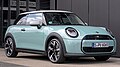
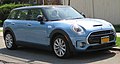
The UKL platform (Untere Klasse, "lower class" in German)[1] is a modular automobile platform developed by German car manufacturer BMW. It is a modular architecture to suit a range of front-wheel-drive and all-wheel drive models. The first production vehicle to use the UKL platform was the 2014 Mini Hatch.

The objective of the front-wheel-drive UKL platform is to offer smaller models with a large interior space, with enough room for passengers in the rear seats and large cargo space. These objectives are only possible to achieve by mounting transverse three or four-cylinder engines.[2] At the time of release, BMW announced that any model under 4.5 m (177 in) in length and smaller than a 3 Series will make use of the UKL platform.[3] According to Ian Robertson, BMW sales and marketing chief, "One of the big advantages of UKL is that we are able to launch a lot of products almost simultaneously because we are doing the engineering at once."[4]

The UKL platform was developed into the UKL1 and UKL2 platforms under FAAR umbrella with pure ICE, hybrid and electric powertrains in mind.[5][6]

UKL platform

[edit]

Vehicles using platform (calendar years):

UKL1 platform

[edit]

UKL2 platform

[edit]

Vehicles using platform (calendar years):

See also

[edit]

References

[edit]
Revisions and contributorsEdit on WikipediaRead on Wikipedia
from Grokipedia
The BMW UKL platform, short for Untere Klasse (German for "lower class"), is a modular automobile architecture developed by the German car manufacturer BMW specifically for front-wheel-drive (FWD) and all-wheel-drive (xDrive) compact vehicles, enabling shared components across multiple models to enhance production efficiency and cost-effectiveness. Development of the UKL platform was first publicly announced in 2011 by Board Member Ian Robertson during an interview with CAR PRODUCTION magazine, as part of 's strategy to expand its portfolio into smaller, FWD-based vehicles while integrating it with the brand. The platform debuted in production with the third-generation (F56) in 2014, marking 's entry into a dedicated FWD architecture after years of reliance on rear-wheel-drive platforms for its core lineup. The platform comprises UKL1 and UKL2 variants, both debuting in 2014; the UKL2 was later updated as the FAAR (Frontantriebsarchitektur) architecture around 2018, introducing lighter materials and greater adaptability for diverse powertrains, including , while the original UKL1 variant focused on initial compact applications. projected the platform would underpin up to 12 models across its brands, a figure that has largely been realized through iterative updates. Key features of the UKL platform include its layout, which optimizes space for FWD configurations, and a flexible that accommodates internal combustion engines (ICE), plug-in hybrids, and battery-electric (BEVs) without requiring entirely new architectures. This adaptability has allowed to rework elements like battery cradles and load paths for EV integration, as seen in recent applications, while maintaining compatibility with the company's efficient modular engine family. As of 2025, adaptations continue, exemplified by the MINI Countryman SE's full EV implementation on the UKL2 variant. Notable built on the platform encompass the UKL1-based MINI models such as the F56 , F55 MINI 5-Door Hatch, and F57 MINI Convertible, as well as UKL2/FAAR variants including the F40 Hatchback, U11 , F45/F60 MINI Countryman, and F52 . The platform's emphasis on continues to drive its evolution, supporting 's shift toward sustainable mobility in the compact segment.

Background and Development

History

The BMW UKL platform was conceived in as part of the company's broader modular platform strategy aimed at replacing legacy front-wheel-drive architectures with a more efficient, scalable system for compact vehicles. This initiative reflected BMW's push toward shared components across its lineup to reduce development costs and improve production flexibility for both BMW and MINI brands. In November 2012, BMW officially announced the UKL platform, projecting its use in up to 12 models over the following eight to ten years, with a strong emphasis on cost efficiency, scalability, and adaptability for front-wheel-drive and all-wheel-drive configurations. The platform's internal designation, "UKL," derives from the German "Untere Klasse," denoting its focus on small to mid-size vehicles. The platform made its production debut in 2014 with the third-generation (F56), marking BMW Group's first major implementation of the architecture in a series-production . Key milestones followed swiftly, including the 2014 market launch of the (F45), BMW's initial application of UKL for a dedicated model. In 2015, the second-generation arrived, expanding the platform's reach into the premium compact SUV segment. Further evolution came in 2017 with the second-generation MINI Countryman (F60) on the enhanced UKL2 variant, and in 2019 with the third-generation , which introduced refined dynamics and updated electronics while reinforcing UKL's role in BMW's front-wheel-drive portfolio.

Objectives and Strategy

The development of the BMW UKL platform was driven by the company's strategic aim to penetrate the premium front-wheel-drive (FWD) segment, thereby competing more effectively with rivals and in compact and subcompact vehicle categories. Traditionally reliant on rear-wheel-drive (RWD) architectures like the CLAR platform for its core models, BMW sought to diversify its offerings to address growing demand for versatile, space-efficient premium vehicles in urban and family-oriented markets. This move was intended to capture a larger share of the expanding small-car premium sector, where FWD layouts predominate due to advantages, while reducing overall dependence on RWD platforms for entry-level segments. A key objective was achieving substantial cost efficiencies through the platform's modular design, which allows for shared components, flexible wheelbases, and adaptable dimensions across multiple vehicle types. This enables simultaneous development and production of diverse models, leading to significant reductions in and expenses by optimizing and streamlining supply chains. The strategy aligned with BMW's broader push for , as outlined in its 2012 EfficientDynamics initiative, which emphasized resource optimization and sustainable growth to maintain leadership in premium mobility. The UKL platform facilitated an ambitious expansion of BMW's model lineup, targeting small to mid-size segments with both FWD and all-wheel-drive (AWD) configurations tailored for and , potentially extending to other group affiliates. BMW projected up to 12 models on the platform within eight to ten years, representing about 40% of its portfolio and enabling annual sales of around 960,000 units by 2020 to attract younger demographics and international markets like , the U.S., and . Despite the FWD foundation, engineering goals prioritized a premium driving experience through sophisticated suspension systems and high- materials, ensuring agile handling and refined ride quality akin to BMW's RWD heritage.

Technical Specifications

Modular Architecture

The BMW UKL platform represents a scalable modular primarily designed for front-wheel-drive (FWD) vehicles, with adaptability for all-wheel-drive (AWD) configurations through the integration of a rear drive unit, enabling efficient component sharing across compact and subcompact models. This design emphasizes transverse engine placement within a flexible structure, allowing for variations in size and drive layout while maintaining BMW's focus on dynamic performance in smaller segments. The divides the underbody into three key structural modules: the front bulkhead and engine bay, the main floor, and the rear/wheelhouse section, which can be adjusted independently to accommodate different body styles and powertrains. Central to the platform's modularity are its adjustable dimensions, including a flexible spanning three variations—typically ranging from approximately 2,495 mm in subcompact applications to 2,780 mm in larger MPVs—along with variable track widths and interchangeable powertrain bays that support three- and four-cylinder engines. These features enable scalability across vehicle lengths from subcompact models around 3.8 meters (such as the ) to compact crossovers up to 4.5 meters (like the ), facilitating a broad portfolio without requiring entirely new platforms for each variant. The design prioritizes manufacturing efficiency, with production distributed across multiple plants capable of up to 900,000 units annually, replacing older dedicated platforms like the R50 and E80. Lightweight construction is achieved through the strategic use of high- and ultra-high-strength steels in critical areas like the passenger cell and components, complemented by aluminum in select elements such as suspension parts and body panels, resulting in notable weight savings compared to predecessors—for instance, the second-generation X1 (F48) benefits from targeted material optimizations that enhance efficiency while preserving crash safety. This approach contributes to improved fuel economy and handling without compromising structural integrity. The platform promotes extensive component sharing across variants, including subframes, electronics modules, and suspension elements, supporting as many as 12 and models in the B- and C-segments and driving cost efficiencies in development and production. Such modularity not only reduces redundancy but also allows brief references to drive configurations, where FWD serves as the base and AWD is added modularly for enhanced traction.

Drive Systems and Chassis

The BMW UKL platform employs a front-wheel-drive (FWD) as its primary configuration, enabling efficient packaging and interior space utilization in compact vehicles. Optional all-wheel drive (AWD) is available through BMW's xDrive system, which integrates a at the rear to distribute variably between the front and rear axles, enhancing traction without supporting pure rear-wheel-drive setups. This setup draws from a orientation, compatible with three- and four-cylinder petrol and diesel engines up to 2.0 liters, as well as hybrid integrations such as mild-hybrid and powertrains using BMW eDrive technology. The chassis incorporates a front suspension, referred to by as a single-joint spring , paired with a multi-link rear suspension to balance ride comfort and handling dynamics. In higher trims, adaptive dampers with frequency-selective damping are offered, allowing for adjustable firmness to optimize stability and simulate balanced during dynamic maneuvers. Safety features include standard via 's Dynamic Stability Control (DSC) system, which monitors and corrects yaw and slip. Performance tuning in xDrive variants leverages , where the system selectively applies brake force or power to individual wheels for precise cornering control. This integration, combined with near-actuator wheel slip limitation, ensures responsive handling while maintaining the platform's modular scalability for various vehicle sizes.

Platform Variants

UKL1

The UKL1 represents the smaller-scale variant of the BMW UKL modular platform, designed specifically for subcompact and entry-level vehicles optimized for urban driving and the entry-premium market segment. It emphasizes compact proportions, agile handling, and efficient powertrains to meet the demands of city environments while maintaining 's signature driving dynamics. Debuted in 2014 with the third-generation (F56) and other compact MINI models such as the F55 5-Door Hatch and F57 , the UKL1 marked BMW Group's shift toward scalable front-wheel-drive architectures for smaller models, enabling shared components across brands to reduce development costs and improve production efficiency. Key to its design are dimensions tailored for maneuverability, including a of approximately 2,500 mm and overall vehicle lengths ranging from 3.8 to 4.0 meters, allowing for tight turning radii suitable for urban navigation. This configuration supports primary with optional all-wheel drive (xDrive) in select applications, prioritizing lightweight construction and balanced . The accommodates three-cylinder engines up to 1.5 liters and four-cylinder engines up to 2.0 liters, with maximum outputs up to 141 kW, such as in the BMW TwinPower Turbo units, to deliver responsive performance without compromising agility. Compared to the larger UKL2 variant, the UKL1 incorporates shorter front and rear overhangs for improved parking ease and a more compact footprint, along with lighter subframes that contribute to overall weight savings of about 100 kg versus mid-size implementations. This focus on efficiency is evident in fuel consumption figures of 5-6 L/100 km for representative models, achieved through features like BMW EfficientDynamics technologies, including Auto Start Stop and optimized . Engineering adaptations in later UKL1-derived vehicles include compact placement of 48-volt batteries for mild-hybrid systems, often integrated into the luggage compartment to preserve front-end balance and enhance compatibility without significantly altering the platform's core dimensions.

UKL2

The UKL2 represents the mid-size iteration of 's UKL modular front-wheel-drive platform, optimized for compact crossover SUVs and multi-purpose vehicles (MPVs) requiring higher performance and versatility compared to the smaller UKL1 variant. This architecture supports greater structural rigidity and payload capacities, making it ideal for premium family vehicles that balance dynamic handling with practical utility. The UKL2 variant, also known as FAAR (Frontantriebsarchitektur), was introduced in 2017 as an evolution for greater adaptability to . Introduced in production with the BMW X1 (F48) in late 2014 for the 2015 model year, the UKL2 was quickly expanded to the (F45) in 2015, enabling to offer front-wheel-drive options in segments traditionally dominated by rear-wheel-drive layouts. Dimensional flexibility defines the UKL2's design, with wheelbases spanning 2,670 mm to 2,780 mm and overall vehicle lengths from 4.2 m to 4.5 m, accommodating mid-size applications without exceeding compact footprint constraints. These proportions facilitate spacious interiors for family use, such as seating for five passengers plus cargo, while preserving agile maneuverability in urban and highway environments—exemplified by the X1's 4.439 m length and 2.670 mm . Powertrain integration on the UKL2 emphasizes efficiency and performance, supporting inline-three and inline-four engines up to 2.0 liters in displacement, with outputs reaching approximately 170 kW in top configurations like the X1 xDrive28i. Full all-wheel-drive capability via BMW's xDrive system is standard across many variants, enhancing traction for crossovers, while options—such as the X1 xDrive25e combining a 1.5-liter with an for 162 kW system power—offer electrified propulsion without compromising the platform's modular nature. Structural enhancements distinguish the UKL2, including a reinforced engineered for capacities up to 2,000 kg braked, suitable for light trailers or family equipment. Advanced insulation, incorporating multi-layer acoustic materials in the floor and wheel arches, delivers a refined ride with suppressed and at highway speeds, elevating cabin serenity for long-distance . To optimize weight and dynamics, the UKL2 employs an aluminum-intensive front structure, including the hood and fenders, which contributes to curb weights around 1,500 kg in base models like the X1 sDrive18i—reducing unsprung mass for improved handling and fuel economy without sacrificing safety.

Vehicle Applications

BMW Models

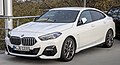
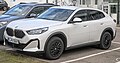
The second-generation BMW X1 (F48), produced from 2015 to 2022, marked the inaugural application of the UKL platform within the BMW lineup, specifically leveraging the UKL2 variant for its front-wheel-drive architecture with optional xDrive all-wheel drive. This modular setup enabled a transverse engine layout, improving interior space efficiency compared to the previous rear-wheel-drive E84 model, while maintaining BMW's signature handling through a steel monocoque chassis and adaptive suspension options. The platform's flexibility allowed for a range of petrol and diesel engines, including efficient three- and four-cylinder units, paired with an eight-speed automatic transmission, emphasizing practicality for compact SUV buyers. The third-generation BMW 1 Series (F40), produced from 2019 to 2024, employed the UKL2 platform as its foundation, shifting from to as standard, with xDrive available on higher trims for enhanced traction. This adaptation prioritized increased rear passenger space and a longer derived from the modular architecture, while retaining sporty dynamics via tuned electric power steering and selective damping. Engine options spanned efficient mild-hybrid petrol and diesel variants, reflecting the platform's compatibility with , though it blended elements of UKL1 and UKL2 sizing for compact proportions. The fourth-generation BMW 1 Series (F70), introduced in 2024 for the 2025 model year, continues on the evolved UKL2/FAAR platform, maintaining with xDrive options and incorporating updated mild-hybrid technology for improved efficiency. The first-generation (F45) and Gran Tourer (F46), manufactured from 2014 to 2021, represent the UKL platform's MPV adaptations, built on the UKL2 architecture to deliver versatile family transport with and optional xDrive. The Active Tourer's five-seat configuration and the Gran Tourer's seven-seat extension highlight the platform's scalability, featuring a longer and sliding rear seats for optimized cargo space up to 1,510 liters. These models incorporated BMW's efficient modular engines and chassis tuning for agile handling in a multi-purpose segment, setting a benchmark for premium MPVs. The second-generation Active Tourer (U06), produced from 2022, continues on the UKL2/FAAR platform with similar versatility and enhanced options. The (F44), introduced in 2019, utilizes the UKL2 platform for its compact four-door sedan configuration, offering front-wheel drive with xDrive and a focus on premium styling and dynamics. The first-generation (F39), produced from 2017 to 2023, utilized the UKL2 platform in a coupe-style body, distinguishing itself with a sportier, lower roofline and tuned suspension for enhanced cornering responsiveness over the standard X1. The front-wheel-drive base with xDrive option leveraged the for compact dimensions and agile performance, supported by variable sport and optional adaptive dampers. This adaptation emphasized dynamic driving in the Sports Activity Coupe category, with engine choices focused on balance between efficiency and power. The second-generation X2 (U10), introduced in 2023, continues on the UKL2/FAAR platform with updated styling and powertrains. The third-generation BMW X1 (U11), produced from 2022, builds on the UKL2/FAAR platform evolution, offering improved space, electrification options including plug-in hybrids, and xDrive all-wheel drive in a compact format.

MINI Models

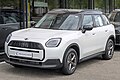
The marque leverages the BMW UKL platform to underpin its compact vehicles, adapting the modular front-wheel-drive architecture to deliver the brand's distinctive blend of premium styling, compact dimensions, and agile performance. This integration allows to maintain its urban-oriented identity while benefiting from shared engineering efficiencies with , though each model receives unique tuning to emphasize playful dynamics and go-kart-like handling. The second-generation MINI Countryman (F60, introduced in 2017 and produced until 2023) utilized the UKL2 variant of the platform, which supported its subcompact crossover design with a under 4.5 meters. This setup enabled as standard, with the optional ALL4 all-wheel-drive system that employed an electronically managed multi-plate clutch on the rear to variably distribute —up to 50% to the rear—for improved traction on varied surfaces without compromising efficiency. The Countryman's suspension was calibrated for MINI's responsive handling, incorporating progressive springs and dampers to enhance cornering agility while accommodating family-friendly practicality. The third-generation Countryman (J01), introduced in 2024, continues on the UKL2/FAAR platform with expanded dimensions and enhanced EV options. Similarly, the second-generation MINI Clubman (F54, produced from 2015 to 2024) was built on the UKL2 platform, adopting a shooting-brake wagon configuration that extended the brand's ethos into a more versatile five-door format. It incorporated BMW-sourced powertrains, including the B48 2.0-liter turbocharged inline-four engine in Cooper S and variants, delivering outputs from 192 hp to 306 hp paired with an eight-speed . The Clubman's chassis tuning prioritized MINI's feel through a firmer ride setup and precise steering rack adjustments, distinguishing it from platform siblings despite shared modular components like the front suspension. Advancing , the 2025 MINI Countryman SE ALL4 represents an adapted evolution of the UKL platform for battery-electric propulsion, retaining the modular while integrating a dedicated EV underbody structure. This variant features a dual-motor all-wheel-drive configuration with one per axle—a front unit producing 181 hp and a rear unit adding 127 hp—for a combined system output of 308 hp (230 kW) and 364 lb-ft of , enabling 0-60 mph in 5.6 seconds. The ALL4 system in this electric application uses intelligent between axles to optimize both performance and a claimed range of up to 251 miles on the WLTP cycle. Across these models, MINI shares core UKL elements such as the architecture, mounts, and electronic systems with BMW counterparts like the 2 Series Active Tourer and X1, fostering cost efficiencies in development and production. However, MINI-specific adaptations—including exterior styling, interior motifs, and calibrations for heightened steering feedback and body control—preserve the brand's fun-to-drive ethos. Production occurs primarily at the Plant Oxford in the for models like the Clubman, with the Countryman shifting to BMW's facility in to handle increased volumes, including the electric SE ALL4 variant on a flexible line that also assembles BMW vehicles.

Advancements and Future

Electric Vehicle Adaptations

The BMW UKL platform has facilitated plug-in hybrid integrations since 2015, beginning with the BMW 2 Series Active Tourer 225xe, which features a 7.7 kWh lithium-ion battery enabling an electric-only range of approximately 30 km. Subsequent models, such as the 2020 BMW X1 xDrive25e on the UKL2 variant, incorporate a 10 kWh battery for an EV range of up to 56 km, allowing seamless transitions between electric and combustion modes while leveraging the platform's front-wheel-drive architecture for efficient power distribution. These hybrids prioritize urban electric driving, with the battery positioned under the floor to preserve interior space and handling characteristics. For full battery electric vehicles, the UKL platform underwent significant adaptations in the 2025 MINI Countryman SE ALL4, where the underbody cradle was reworked to accommodate a 66.5 kWh integrated directly into the vehicle's structure via bolted connections and surrounding reinforcements. This design maintains the model's signature 50:50 , enhancing stability despite the added mass of the EV components. The platform's modular nature allows such retrofits without a complete redesign, supporting dual-motor all-wheel-drive configurations for improved traction. Key technical modifications include floorpan reinforcements through layered stampings around the battery to handle structural loads and protect against impacts, alongside updated load paths in the cradle to manage the higher demands of electric —up to approximately 250 Nm per motor in the Countryman SE's setup. These changes ensure the can withstand the instant delivery of BEVs while complying with crash safety standards. Additionally, the platform's inherent flexibility supports underbody battery placement, minimizing aerodynamic disruption. Efficiency enhancements stem from aero-optimized chassis tweaks, such as streamlined underbody panels, contributing to a 15-20% range improvement over comparable non-EV UKL variants through reduced drag and better energy recuperation. The 2025 MINI Countryman SE achieves a WLTP-estimated range of 433 km, bolstered by the platform's efficient drive integration. Addressing challenges in all-wheel-drive EV setups, BMW implemented advanced thermal management systems for the batteries, utilizing liquid cooling circuits that precondition the pack and motors to optimal temperatures, preventing overheating during high-torque AWD operation. This is particularly vital in dual-motor configurations like the Countryman SE, where heat generation from simultaneous front and rear propulsion is mitigated to sustain performance and battery longevity.

Evolution to FAAR Platform

In 2017, BMW evolved the UKL platform into the UKL2 derivative, also known as FAAR (Frontantriebsarchitektur), which enhanced adaptability for diverse powertrains including . However, for the next generation of electric vehicles, BMW introduced the Neue Klasse in 2025 as a dedicated EV architecture succeeding the UKL/FAAR platforms. This front-wheel-drive-focused framework prioritizes and achieves a 35% reduction in product across the lifecycle compared to predecessors through optimized , lightweight construction, and increased use of secondary materials. Key advancements in the Neue Klasse include its status as a dedicated EV architecture, integrating sixth-generation eDrive systems with cylindrical cells for superior . Development timelines were accelerated using digital twins and data from over 10 million connected vehicles, enabling and validation. The platform debuted in production with the iX3 in late October 2025 at the Debrecen plant, marking the first application and setting the stage for broader rollout. As UKL phases out with the full transition to Neue Klasse by the end of the decade, the new platform inherits modular principles but introduces an 800-volt architecture supporting up to 400 kW fast charging, reducing charge times significantly while boosting range to approximately 500 miles (800 km WLTP) in initial models. This transition underscores 's strategic pivot toward , incorporating one-third secondary raw materials—including 30% recycled marine plastics in interior components—and embracing software-defined vehicle paradigms via the BMW Operating System X, which enables over-the-air updates for ongoing performance enhancements. The proven modularity of UKL, which underpinned more than 11 front-wheel-drive models across and lineups, informed the design of the Neue Klasse, facilitating a seamless handover that amplifies BMW's electrification strategy without disrupting production efficiency. By 2027, Neue Klasse derivatives are projected to influence over 40 vehicle variants, solidifying BMW's leadership in premium electric mobility.

References

Add your contribution
Related Hubs
User Avatar
No comments yet.