Hubbry Logo
Box-springBox-springMain
Open search
Box-spring
Community hub
Box-spring
logo
8 pages, 0 posts
0 subscribers
Be the first to start a discussion here.
Box-spring
Box-spring
from Wikipedia
Box-spring
Queen size box-spring on metal bed frame
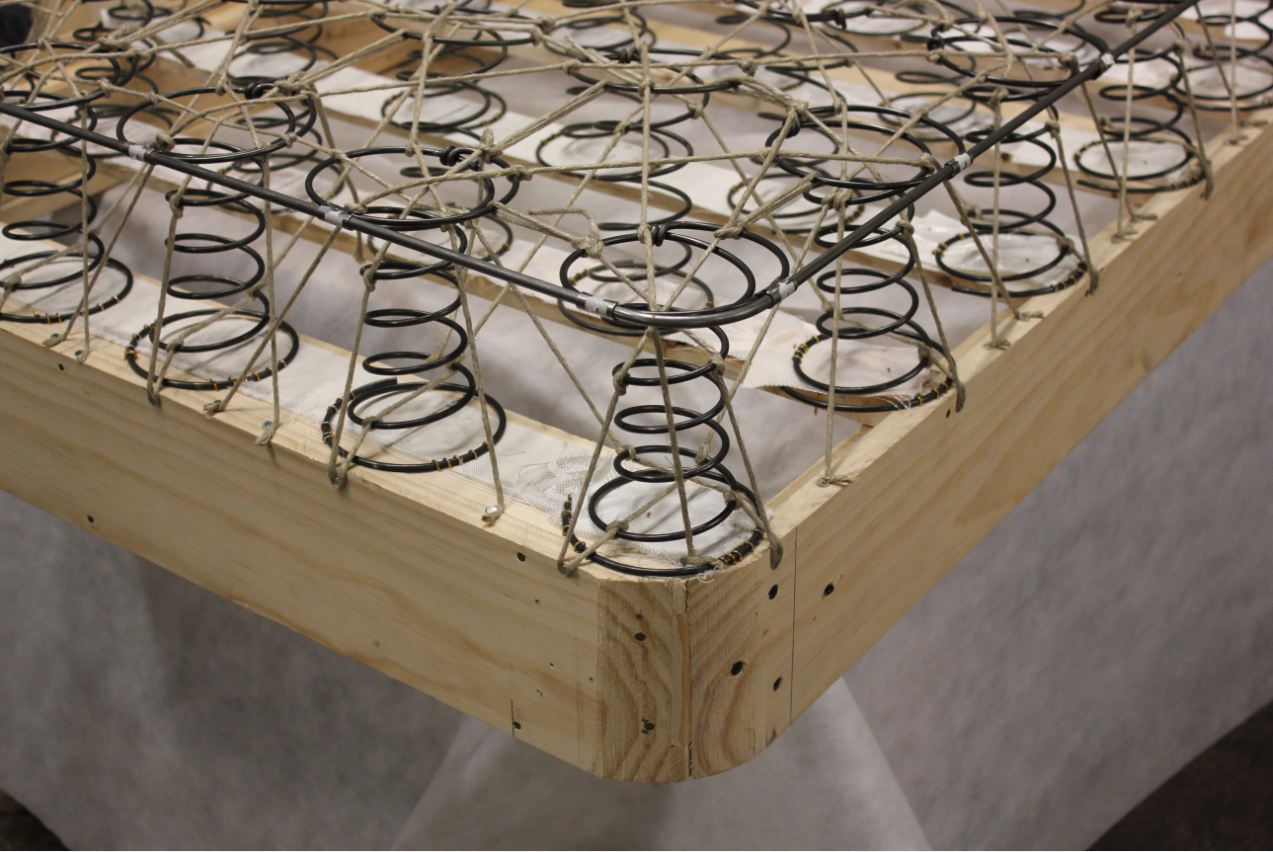
8-way hand-tied box spring

A box-spring (or divan in some countries) is a type of bed base typically consisting of a sturdy wooden frame covered in cloth and containing springs. Usually, the box-spring is placed on top of a wooden or metal bedframe that sits on the floor and acts as a brace, except in the UK where the divan is more often fitted with small casters. The box-spring is usually the same size as the much softer mattress placed on it. Working together, the box-spring and mattress (with an optional bed frame) make up a bed. It is common to find a box-spring and mattress being used together without the support of a frame underneath, the box spring being mounted directly on casters standing on the floor.

Purpose

[edit]

The purpose of a box-spring mainly lies in the trade-off between ventilating the bed through the bottom and the structural stability of the box-spring itself.

Other purposes

[edit]

The box-spring has a variety of advantages and purposes. Purposes include:

  • elevating the mattress above the ground, increasing the ease of getting into bed and getting out of bed;
  • Providing ventilation and allowing body moisture to escape, reducing the growth of mold and mildew due to moisture retention;
  • Creating a relatively flat and firm structure for the mattress to lie upon;
  • Enhancing aesthetics or design-style value.

History

[edit]

The first rectangular spring-cushioned wireframes to support mattresses did not have wood rims or cloth covers. These were called bedsprings. More and more box-springs are made of wood and then covered in fabrics. Wood makes a better support system for the newer memory foam and latex mattresses. The newest design in box-springs is the folding box spring, which is made of wood or metal and then covered in fabric that can fold in half and be sent by shipping and courier companies.[1]

With the increasing height of mattresses, manufacturers now make box springs in different heights so that the mattress and box spring pair maintain a standard height. Standard "high profile" box springs are 9 inches (23 cm) in height, whereas "low profile" box springs are between 5 and 5.5 inches (13 and 14 cm). Changing the thickness of the box spring and mattress requires revisions to the mattress and box spring coil stiffness. This is often why box springs and mattresses are matched and sold in pairs.

Alternatives

[edit]

Box-spring beds are especially popular in North America and Western Europe.

Alternatively, in Japan, futon mattresses are usually placed on a bedframe or the floor without using springs.

A bunkie board can be used when a low profile is desired.

In Europe, wooden frames with a middle section consisting of springs held in place by wire (to be put into the wooden bedframe as a unit) used to be the standard for most of the 20th century. The springs have mostly been replaced by pre-bent wooden slats (usually glued laminated timber made from beech or birch), which are joined to the outer wooden frame by some form of flexible rubber bolt, shoe or socket. This lath floor provides suspension, allows the mattress to ventilate, and can be designed to be vertically adjustable to elevate the legs or the torso. A more straightforward approach is to join straight laths with a textile strap to be rolled up for transport and placed right into the bedframe.

References

[edit]
Revisions and contributorsEdit on WikipediaRead on Wikipedia
from Grokipedia
A box spring is a foundational support structure for mattresses, typically consisting of a sturdy wooden or metal frame encasing rows of metal springs or coils, all covered in a durable fabric or ticking . It matches the dimensions of the it supports, providing , stability, and shock absorption while fitting within a . The core components of a box spring include the rigid frame, which forms the base; an internal spring unit made of coils or a metal grid for resilience; and an outer covering of fabric that protects the assembly and ensures a smooth surface. Traditional designs feature helical springs connected to the frame, while variations may use a solid wooden platform instead of coils for a firmer, low-profile option. These elements work together to distribute weight evenly and prevent sagging in the above. Developed in the mid-19th century following the invention of the steel-coil spring in 1857, the box spring emerged as a key advancement in , replacing simpler or slat systems with enhanced comfort and durability. Primarily paired with innerspring mattresses, it promotes to reduce buildup, minimizes motion transfer between sleepers, and complies with federal flammability standards for . Although still common, modern alternatives like platform bases have gained popularity due to the rise of and hybrid mattresses that require less spring-based support.

Overview and Purpose

Definition

A box-spring is a consisting of a rigid frame, typically wooden, enclosing a grid of springs and covered in fabric or to provide foundational support for a . This structure forms a mattress-sized platform that elevates the sleeping surface while distributing weight evenly. Visually, a box-spring resembles a rectangular box-like unit, typically 8 to 9 inches high for standard models, with low-profile variations as low as 2-6 inches and high-profile up to 12 inches, designed to match standard mattress dimensions such as twin (39 x 75 inches) or queen (60 x 80 inches). In some European countries, a similar upholstered base is referred to as a , though the term can encompass variations without springs.

Primary Functions

The primary function of a box spring is to provide by distributing the weight of the sleeper and evenly across its surface, thereby preventing sagging and extending the lifespan of the . This is particularly essential for innerspring , where the box spring's internal coil system aligns with and reinforces the mattress coils to maintain proper spinal alignment and overall stability. Box springs also elevate the sleeping surface to a standard height of 8 to 9 inches, making it easier for users to get in and out of , especially for those with mobility challenges or preferences for a higher profile. This added height contributes to a more accessible and comfortable sleeping position without requiring additional framing adjustments. In terms of shock absorption, the springs within a box spring compress under to impacts and minimize motion transfer between sleepers, allowing one partner to move without significantly disturbing the other. This feature is achieved through the interconnected or pocketed coil design, which dampens vibrations and promotes undisturbed rest. Additionally, the open spring structure of a box spring facilitates ventilation by promoting airflow beneath the , which helps regulate and prevent buildup that could lead to mold or . This airflow is crucial for maintaining a dry and hygienic sleeping environment, particularly in humid climates.

Design and Construction

Key Components

A box spring consists of several essential components that work together to provide structural integrity and support. The frame forms the foundational , typically constructed from sturdy wood such as or metal like , creating a rectangular outer box that encases the internal elements. At the core is the internal support unit, which may consist of interconnected coils, a metal grid, or a solid platform, wired or linked together to distribute weight evenly and offer resilient support across the surface. Corner guards reinforce the edges, particularly at the lower exterior corners, using materials like impact-resistant or metal cores covered in fabric, attached via tabs that are stapled to the frame to prevent sagging, warping, and general wear during use. The encases the entire assembly, featuring durable fabric or non-woven material stapled over the top, sides, and bottom for a smooth, protective finish that conceals the components and enhances . For basic models, assembly involves components that interlock via clips or folds without requiring tools, allowing quick setup by unfolding the frame and securing the support unit in place.

Materials and Manufacturing

Box springs are primarily constructed using kiln-dried for the frame to prevent warping and ensure structural integrity over time. Common woods include , valued for its affordability and lightweight properties, while is selected for enhanced durability and strength in higher-end models. The springs themselves are typically made from galvanized , which provides resistance and longevity by preventing in humid environments. Upholstery materials for box springs often consist of or blends for the covering fabric, offering breathability and durability, while padding, such as , is added for additional comfort and cushioning. These materials must comply with federal standards, including 16 CFR Part 1633, which requires sets—including box springs—to withstand open-flame exposure without exceeding specified heat release limits for at least 30 minutes. The manufacturing process begins with cutting kiln-dried to form the rectangular frame, typically using precision saws to ensure accurate dimensions and integrity. Support units are then assembled, which may involve or clipping individual coils together for traditional designs or installing metal grids or wooden slats for others, to create a supportive , followed by attachment to the frame via clips or wires. is applied next, with layers secured and fabric stapled or glued around the for a taut finish. involves inspecting frame alignment, support connectivity, and tension uniformity to verify load-bearing capacity, ensuring the assembly meets industry standards for stability and safety. In modern production, environmental considerations have led to the increased use of sustainably sourced woods, such as FSC-certified hardwoods from managed forests, to minimize impacts. Additionally, the steel for springs is predominantly recycled, with virtually all innerspring units incorporating post-consumer scrap metal, promoting material circularity and reducing the demand for virgin resources since the mid-2010s.

Types and Variations

Traditional Box Springs

Traditional box springs, also known as classic or standard box springs, feature a rigid wooden or metal frame encased in fabric and filled with coils to provide foundational support beneath a . These designs typically measure 8 to 9 inches in height, offering elevated positioning that contributes to a bouncy feel through the use of full coil springs, which are continuous helical wires that span the entire unit for uniform resilience and airflow. In terms of configuration, traditional box springs are available in all standard mattress sizes—such as twin, full, queen, king, and California king—and come in full or split varieties to accommodate different bed sizes and setups. A full box spring forms a single, seamless unit ideal for twin, full, or smaller s, ensuring even weight distribution across the surface. Split box springs, commonly used for queen and sizes, consist of two independent halves that can be separated for easier transport up stairs or through doorways, and they are particularly suited for pairing with adjustable bases where each side can articulate independently. These box springs are optimally compatible with innerspring mattresses, as the coils in both layers work synergistically to absorb impact, promote ventilation, and extend mattress longevity, a that has made them a staple in North American markets since the mid-20th century.

Modern and Specialized Types

Modern box springs have evolved to address contemporary needs such as compatibility with low-sitting furniture, adjustable bed frames, and online shipping, incorporating innovations like reduced heights and modular designs since the mid-2010s. These adaptations prioritize portability, durability, and integration with foam or hybrid mattresses, diverging from earlier spring-heavy constructions. Low-profile box springs are a type of box spring with a lower overall height. Low-profile box springs, typically measuring 5 to 6 inches in height, feature minimal spring systems or hybrid constructions combining sparse coils with padding to provide stable support while maintaining a sleek, ground-level aesthetic. This design enhances compatibility with platform beds and thicker modern mattresses, such as or hybrids, by allowing adequate airflow and preventing sagging without elevating the bed excessively. For instance, models like the Zinus 4-inch bi-fold foundation use reinforced metal slats with limited coils to support up to 700 pounds, making them ideal for urban spaces or low-ceiling rooms. Another modern variation is the zero-deflection or solid platform box spring, which replaces coils with a sturdy wooden or metal grid and slats for firm support without bounce. These low-profile options, often 5 to 9 inches high, are suitable for and mattresses that do not require spring suspension, providing even weight distribution and durability. Split box springs consist of two independent units, often twin XL sizes joined for or queen configurations, enabling separate adjustment for each side of the bed. Primarily designed for adjustable bases, they allow one partner to elevate the head or foot independently, accommodating preferences or needs like acid reflux relief. The Kingsdown Semi-Flex foundation, available in 5.5- or 8.5-inch profiles, supports up to 750 pounds per side with a flexible center bridge to minimize gaps under the . Folding or collapsible box springs utilize lightweight materials like frames with filling or reinforced composites, facilitating compact packaging for delivery in line with the bed-in-a-box trend that began around 2004. These designs fold along the center for easy transport up stairs or through narrow doorways, then expand to form a full foundation without tools. Examples include the Zinus Night bi-fold, which arrives preassembled and supports standard weights while promoting through recyclable components. Heavy-duty variants are engineered with denser steel coils and thicker gauge wiring to accommodate weights exceeding 500 pounds, often rated for up to 2,000 pounds total to suit bariatric users or couples. These reinforced models feature robust frames and high-tensile springs to prevent compression and ensure longevity, contrasting with standard options by incorporating up to 14-gauge tempered for enhanced load distribution. The Big Fig Heavy-Duty Foundation exemplifies this, offering tool-free assembly and compatibility across sizes while maintaining a 7-inch profile for versatile use.

Historical Development

Origins in the 19th Century

The development of the box-spring originated in the mid-19th century amid innovations in and furniture design that sought to improve upon traditional sleeping surfaces. This built upon the 1857 patenting of steel coil springs for furniture, initially chair seats. The foundational technology for modern box-springs emerged with the patenting of coil springs suitable for bed foundations. In 1869, American inventors Timothy Rose of , and Platt S. Buell of Windsor, New York, received U.S. No. 97,705 for an "Improvement in Bed-Springs," which described a system of interconnected wire coil springs mounted on a wooden frame to support mattresses. This design marked a significant advancement over earlier supports, providing resilient elevation and distributing weight more evenly, though initial implementations were rudimentary. Early forms of these spring supports were typically exposed metal coils attached directly to wooden slats or webbing on frames, without any enclosing fabric or padding. These open-spring assemblies, often handmade by local blacksmiths or cabinetmakers, replaced sagging or straps that had previously held or mattresses. By the , such exposed springs were increasingly used in urban households, offering a firmer and more durable base that reduced direct contact with potentially damp or vermin-infested floors. The adoption of box-springs accelerated in the late as a shift away from primitive straw pallets and stuffed tick mattresses, which were prone to harboring dust, mites, and odors. Companies like the Simmons Manufacturing Company, founded in 1870 by Zalmon G. Simmons in , began producing commercial wire bed springs around this period, with their first spiral coil innovations appearing by 1889 to lower costs and improve accessibility. The first fully enclosed box-springs, featuring fabric-covered wooden frames with internal springs, emerged toward the end of the , providing a more finished and hygienic appearance. This evolution was deeply tied to the cultural and social changes of the , particularly rapid urbanization in and , which heightened demands for elevated, easily cleanable sleeping arrangements. As cities swelled with industrial workers and middle-class families, traditional ground-level pallets gave way to spring-based beds that promoted better and , aligning with growing awareness of risks from poor in crowded tenements. These innovations reflected broader Victorian ideals of respectability and bodily purity, where clean, raised symbolized moral and physical .

20th and 21st Century Evolution

In the early 20th century, box springs evolved from their late-19th-century origins to incorporate sturdy wooden frames stapled with spiked steel coils, topped by wire grids and thin upholstery layers, which provided enhanced support when paired with emerging innerspring mattresses. By the 1920s, fabric covers—typically durable quilted materials with foam or fiber backing—became standard, encasing the frame for protection and aesthetics while integrating seamlessly with mass-produced innerspring units that gained widespread adoption post-World War I. This period marked a shift toward more accessible, factory-made designs, as exemplified by innovations from manufacturers like Zalmon Simmons, Jr., who scaled production to meet growing consumer demand for resilient sleep surfaces. Mid-century developments further refined box spring construction, emphasizing lightweight yet robust wooden frames. Post-1950s, height variations emerged to accommodate thicker mattresses—such as the newly popularized queen and sizes—offering standard profiles around 9 inches for elevated setups and low profiles of 2 to 6 inches for sleeker , ensuring consistent overall heights. These adaptations supported the era's focus on comfort and compatibility, as innerspring systems proliferated in residential and institutional settings. By the late , the necessity of traditional box springs began to wane with the rise of mattresses in the , which provided self-contained support and reduced reliance on separate foundations due to their denser, more stable construction. This shift was accelerated by thicker foam and hybrid designs that eliminated sagging risks without additional elevation. In the , folding box spring designs were introduced to facilitate shipping, with manufacturers like developing collapsible metal frames that could be compressed for delivery while maintaining structural integrity. Entering the 21st century, box springs have increasingly incorporated eco-friendly materials, such as covers and sustainable wood frames free from harmful chemicals, aligning with broader trends in . Hybrid foundations—combining springs with layers—have gained traction alongside the bed-in-a-box boom, offering compact, supportive alternatives that extend life without traditional bulk. Globally, the market continues to expand, though adoption remains lower in and compared to , where platform beds and slat systems predominate due to cultural preferences for lower-profile sleeping arrangements.

Advantages and Disadvantages

Benefits for Sleep and Support

Box springs enhance support by providing elevated cushioning that works in tandem with innerspring mattresses to promote proper spinal alignment. The coiled structure absorbs body weight and distributes it evenly, preventing uneven pressure points that could lead to discomfort or over time. This reinforcement helps maintain a neutral spine position during , particularly beneficial for individuals with back issues, as it elevates the mattress to a height that facilitates easier entry and exit while supporting natural body contours. In addition, box springs contribute to better motion isolation, minimizing disturbances for shared sleepers. The internal springs absorb movements and impacts, reducing the transfer of motion across the surface, which allows couples to move independently without waking each other. This shock-absorbing quality not only improves rest quality but also helps preserve the mattress's integrity by dampening vibrations that could accelerate wear. Box springs also promote improved airflow and compared to solid foundations. Their open coil design facilitates greater ventilation beneath the , allowing air to circulate and dissipate heat and moisture more effectively, which helps regulate temperature and reduces the risk of mold or growth. This breathability is especially advantageous in humid environments, contributing to a healthier sleep surface by preventing the accumulation of allergens and . Furthermore, the even weight distribution provided by box springs extends mattress durability. By spreading pressure uniformly and absorbing daily impacts, they minimize sagging and localized stress on the , potentially prolonging its usable life by reducing premature breakdown of coils or layers. This supportive base ensures consistent performance over years of use, optimizing overall sleep investment.

Potential Drawbacks and Limitations

Box springs are susceptible to sagging over time, typically after 8 to 10 years of use, which can result in compressed springs and uneven support that disrupts proper spinal alignment during . Their substantial weight, often ranging from 60 to 105 pounds for a queen-size unit, makes them more cumbersome to move or assemble compared to lighter basic bed frames, while costs generally fall between $100 and $500, exceeding the price of simple platforms. Box springs may be incompatible with certain mattress types, such as or , unless low-profile versions are used, as the uneven spring surface can lead to premature wear; moreover, pairing them with these mattresses often voids manufacturer warranties. Additionally, box springs can develop issues, such as creaking from metal coils rubbing against wooden frames, which may intensify with age and regular use.

Alternatives

Platform Beds and Frames

Platform beds are low-profile bed frames, typically ranging from 5 to 12 inches in height, featuring a slatted or solid surface that directly supports a without requiring a separate foundation like a box spring. These frames provide a stable base for various types, including and innerspring models, by distributing weight evenly across the platform. Common types include those constructed from metal or slats, spaced approximately 2 to 3 inches apart to ensure adequate support and prevent sagging, while eliminating the need for internal springs. This slatted design contrasts with fully solid surfaces, promoting ventilation beneath the , though both variants maintain the frame's minimalist structure. Compared to box springs, platform beds offer advantages such as lighter weight for easier assembly and transport, lower costs typically ranging from $50 to $300 depending on materials and size, and enhanced compatibility with mattresses that benefit from the firm, non-resilient surface. The open slat configuration facilitates airflow to reduce moisture buildup and heat retention, while providing a bounce-free sleep experience that prioritizes stability over springiness. Platform beds have gained popularity for their alignment with minimalist and modern aesthetics, characterized by clean lines and low profiles that create an uncluttered environment. They are particularly common in and , where influences from Japanese and emphasize simplicity, functionality, and harmony with natural materials.

Solid Foundations and Other Bases

Solid foundations, such as plywood or metal sheets with minimal slats, offer a firm and flat surface to support mattresses without the need for internal springs. These bases typically feature a continuous or nearly continuous platform that distributes weight evenly, preventing sagging and extending mattress lifespan. For instance, bunkie boards, which are thin panels usually 1 to 3 inches thick and constructed from materials like solid wood, , or particleboard, serve as an ideal addition to low-profile frames or bunk beds to provide this stable support. Adjustable bases consist of electric frames that allow for the elevation of the head and foot sections, enabling customized positioning for improved comfort and circulation. These bases eliminate the requirement for traditional box springs and are compatible with various mattress types, including and hybrid models, often incorporating features like remotes, functions, and built-in USB ports. Manufacturers such as Sleep Number and produce models that support nearly unlimited head and foot adjustments, making them suitable for standalone use or pairing with split configurations. Other bases include futon frames, which are designed to fold for convenient storage and portability, accommodating mattresses in compact living spaces. Floor setups, particularly in Japanese-style arrangements, utilize mats as a woven foundation placed directly on the ground to support shikibuton or mattresses, promoting a low-profile and breathable surface. These mats, often arranged within a simple wooden platform, provide natural firmness and airflow while adapting to traditional or modern interiors. Solid foundations and other bases are preferred across all mattress types, particularly for heavier users who require enhanced stability or in small spaces where space-saving designs are essential. In 2025, there is a notable rise in their integration with , featuring connectivity, app-based controls, and voice activation for features like automatic positioning adjustments.

References

Add your contribution
Related Hubs
User Avatar
No comments yet.