Hubbry Logo
Ben ChandlerBen ChandlerMain
Open search
Ben Chandler
Community hub
Ben Chandler
logo
8 pages, 0 posts
0 subscribers
Be the first to start a discussion here.
Ben Chandler
Ben Chandler
from Wikipedia

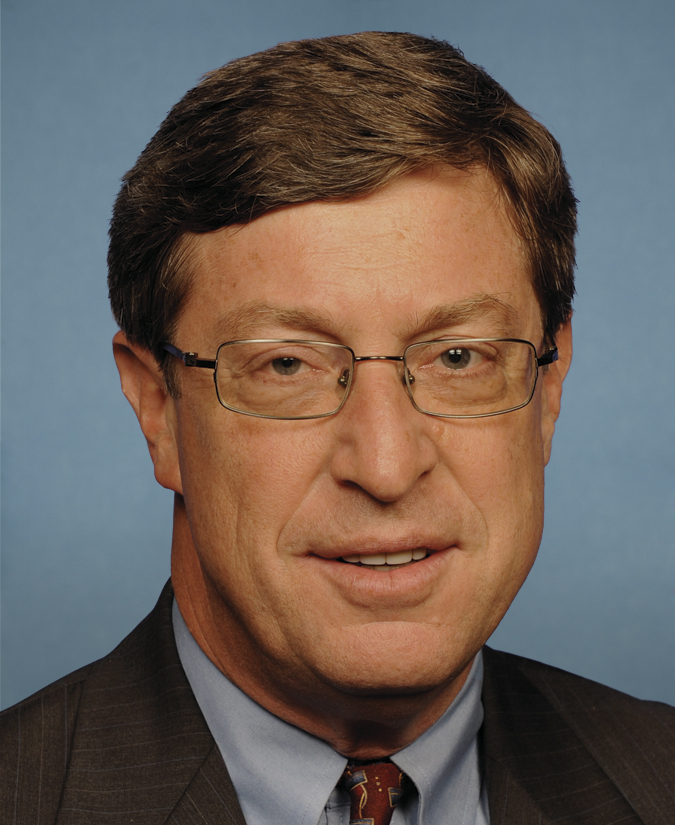
Albert Benjamin Chandler III (born September 12, 1959) is an American lawyer and politician who served as the United States representative for Kentucky's 6th congressional district from 2004 to 2013. A member of the Democratic Party, and the grandson of two-time Kentucky Governor Happy Chandler, he was the nominee of his party for Governor in 2003, losing by just over 10 points to Republican Ernie Fletcher, He was then elected to Congress in a 2004 special election. He served until January 2013, having been defeated for re-election by Andy Barr in the 2012 elections. He was also the Attorney General of Kentucky from 1996 until 2004.

Key Information

Early life, education and career

[edit]

Chandler was born in Versailles, Kentucky on September 12, 1959, the son of Lucie "Toss" (née Dunlap) and A. B. Ben Chandler Jr.[1] His paternal grandfather, A. B. Happy Chandler., served as Governor of Kentucky, Commissioner of Baseball, and as a U.S. Senator.[2][3]

Chandler graduated with distinction from the University of Kentucky with a BA in History and a J.D. from the University of Kentucky College of Law. Chandler became a private practice lawyer in Lexington, KY before starting his political career.

Early political career

[edit]

Chandler started his political career as State Auditor (per the Constitution of the Commonwealth, officially called the "Auditor of Public Accounts") from 1992 through 1995. In 1995, Chandler won the Attorney General of Kentucky race by a 20-point margin, making him the nation's youngest attorney general at the time.[4] In 1999, Chandler was elected to a second term as attorney general with no opposition.[3]

As attorney general, Chandler championed Kentucky's "No Call" list and collected thousands of dollars in fines to the state for companies that did not comply with the new law.[5] Chandler also strengthened federal laws regarding the "No Call" registry.[6]

Also during his time as attorney general, Chandler recovered $45 million in charitable assets from one of Kentucky's largest insurance companies when it converted from non-profit to for-profit status. This $45 million provided the endowment for the Foundation for a Healthy Kentucky, which many years later Chandler headed.[7]

U.S. House of Representatives

[edit]
Congressman Chandler signs autographs for students visiting from Perryville, Kentucky.

Chandler represented the Sixth Congressional District of Kentucky in the United States House of Representatives since a special election in 2004 until 2013. Although Chandler is a Democrat, the Sixth Congressional District leans Republican, rated by Charlie Cook in his Cook Partisan Voting Index as "R + 9,"[8] meaning a generic Republican running against a generic Democrat would win by 9 points more than he would nationally.

He is a moderate to conservative Democrat and in its 2010 vote rankings, National Journal rated Chandler as being the ideological center of the House of Representatives.[9] Although Chandler is a Democrat and has supported many Democratic bills including supporting healthcare for children through the SCHIP law[10] and the Recovery Act,[11] he has also voted against some large pieces of Democratic-led legislation including the Wall Street Bailout[12] and the Affordable Care Act.[13]

Chandler was a member of the Blue Dog Coalition, a fiscally conservative Democratic caucus. This caucus is generally composed of Democrats serving Republican leaning congressional districts. He served as the chair of the national Blue Dog Task Force on Oversight and Regulatory Review.[14] According to the website, this taskforce "The Task Force on Oversight and Regulatory Review is responsible for taking a look at the nearly 8,000 regulations issued annually by the federal government and for analyzing these new rules to ensure Congressional intent is appropriately followed. Under the leadership of Chair Ben Chandler (KY-06) and Vice-Chair Tim Holden (PA-17), the Task Force monitors implementation efforts, identifies overly burdensome regulations and seeks to modify rules problematic to job creation."[14]

Chandler has voted in favor of the American Recovery and Reinvestment Act of 2009, the American Clean Energy and Security Act of 2009, against the Dodd–Frank Wall Street Reform and Consumer Protection Act and the Troubled Asset Relief Program, against the Patient Protection and Affordable Care Act, against Cut, Cap and Balance Act and for funding the State Children's Health Insurance Program.[15]

In 2010 Chandler was criticized for accepting campaign contributions from embattled Congressman Rep. Charles Rangel's National Leadership PAC.[16]

In September 2010, Kentucky.com reported that Chandler was one of several "moderate Democrats facing tough re-election bids who are bucking the Obama administration and pushing to extend tax cuts at every income level."[17]

In 2011, Chandler voted for the National Defense Authorization Act for Fiscal Year 2012 as part of a controversial provision that allows the government and the military to indefinitely detain American citizens and others without trial.[18]

Taxes

Chandler is a signer of Americans for Tax Reform's Taxpayer Protection Pledge.[19]

Committee assignments

[edit]

Before being appointed to the Intelligence Committee, Chandler served on the Appropriations Committee.

Caucus memberships

[edit]

A full list of Chandler's caucus memberships can be found here: Caucus Membership | Congressman Ben Chandler, Representing the 6th District of Kentucky

Chandler was a Blue Dog Democrat as well as a member of the House New Democrat Coalition. His name had been rumored as a candidate for governor for the 2007 election and Senator in the 2008 election. Chandler, however, announced on November 30, 2006, that he would not seek the governorship in 2007, stating he could better serve the Commonwealth in Congress: "With rising seniority and a Democratic majority, I have the opportunity to do so much more for my constituents and for the people of Kentucky."[20] Chandler told "Kentucky Newsmakers" that he would not start holding so-called town hall meetings in 2009, citing a lack of "civility" at forums regarding health care.[21] Chandler ultimately voted against the Patient Protection and Affordable Care Act.

Political campaigns

[edit]

Chandler was the Democratic candidate for governor in the election of 2003. He was defeated in that election in the landslide by his Republican opponent, Congressman Ernie Fletcher. Fletcher resigned from Congress in order to become governor, and a special election was held for his seat in February 2004. Chandler became the Democratic candidate and won the election, defeating state Senator Alice Forgy Kerr by a 55% to 43% margin.

As a superdelegate in the 2008 United States presidential election, Chandler endorsed Barack Obama.[22] Chandler's 2008 Republican opponent in the race for Congress was attorney Jon Larson.

2010

[edit]

Chandler was challenged by Republican nominee Andy Barr in the November 2010 election. Chandler was elected by a very narrow margin, as results showed him leading Barr by about 600 votes. The results were re-canvassed due to the closeness of the outcome, but Chandler was certified as the election winner on November 12, 2010, by 648 votes.[23]

In October 2011, Barr called their forthcoming contest "a rematch of the third-closest Congressional race in America" and said that Chandler was burdened with "considerable dissatisfaction" on the part of his constituents and the difficulty of running on the ticket with Obama. But Joshua Miller of Roll Call observed that "if the bent of the GOP-leaning district grows more Democratic and Democrats who sat out 2010 come to the polls next November, Barr has a steep hill to climb."[24]

2012

[edit]

Chandler was again challenged by Barr. Randolph S. Vance ran as a write-in candidate. Barr defeated Chandler in the election, 50.6% to 46.7%.[25]

Post-congressional career

[edit]

Chandler did not run for Governor in 2015,[26][27][28] though he has hinted that he might run for office again in the future.[29]

From 2013 to 2016, Chandler served as executive director of the Kentucky Humanities Council. From 2016 to 2024, he was CEO of the Foundation for a Healthy Kentucky.[30] He is a member of the ReFormers Caucus of Issue One.[31]

See also

[edit]

References

[edit]
[edit]
Revisions and contributorsEdit on WikipediaRead on Wikipedia
from Grokipedia
Albert Benjamin "Ben" Chandler III (born September 12, 1959) is an American attorney and politician who represented in the as a Democrat from 2004 to 2013 and served two terms as the Commonwealth's from 1996 to 2003. The grandson of Albert Benjamin , a former Kentucky governor, U.S. senator, and commissioner, Chandler built a career in focused on legal and issues. Born in Versailles, , Chandler graduated from Woodford County High School in 1977 and earned both a in and a from the . Elected Kentucky's in 1995 at age 35—the youngest in the nation at the time—he prioritized and tobacco litigation, contributing to settlements that funded initiatives. In , Chandler served on the Appropriations Committee, advocating for , , and in Kentucky's . After losing re-election in 2012, he transitioned to nonprofit leadership, becoming president and CEO of the Foundation for a Healthy Kentucky in 2014, where he advanced efforts to reduce use and improve metrics through research and advocacy. Chandler announced his retirement from the foundation effective December 31, 2025.

Early life and family background

Ancestry and paternal legacy

Albert Benjamin Chandler III, known as Ben Chandler, descends from a family with deep roots in rural . His paternal grandfather, Albert Benjamin "Happy" Chandler Sr., was born on July 14, 1898, in Corydon, , to Joseph Sephus Chandler, a farmer, and Callie Saunders Chandler. The Chandler lineage in the region traces back to early 19th-century settlers, with linking the family to Thomas Chandler the Younger, an immigrant whose descendants, including through son John A. Chandler, established themselves in farming communities by the early 1800s. Chandler's father, Albert Benjamin "Ben" Chandler Jr., born August 8, 1929, in Versailles, , carried forward the family's commitment to community involvement through media ownership. He acquired and managed The Woodford Sun, a local originally purchased by his father in 1942, becoming a noted authority on . Ben Jr.'s tenure emphasized local and preservation of regional heritage, providing a foundation in that influenced his son's career. The broader paternal legacy, however, is dominated by Happy Chandler's multifaceted public career, which instilled a tradition of Democratic politics, legal advocacy, and sports administration in the family. Happy served as Kentucky's from 1935 to 1939 and 1955 to 1959, U.S. Senator from 1939 to 1945, and commissioner from 1945 to 1951, where he approved Jackie Robinson's integration into the in 1947, advancing racial desegregation in amid opposition from Southern team owners. This legacy of bold leadership and policy innovation directly shaped Ben Chandler's political path, as he later acknowledged his grandfather's influence in pursuing and representing Kentucky's Sixth Congressional District from 2004 to 2013.

Childhood and education

Albert Benjamin Chandler, commonly known as Ben Chandler, was born on September 12, 1959, in Versailles, . As an eighth-generation Kentuckian, he spent his early years in the rural community of Versailles, where his family had deep roots in the state. Chandler attended local public schools, graduating from Woodford County High School in Versailles in 1977. For undergraduate studies, he enrolled at the in Lexington, earning a degree in history with distinction in 1981. He continued his education at the same institution, receiving a from the University of Kentucky College of Law in 1984. Chandler received his degree from the College of Law in 1986. He was admitted to the Kentucky Bar Association that same year. Prior to entering , Chandler practiced law in private firms. He worked in the Lexington office of Brown, Todd & Heyburn, a prominent Kentucky law firm, and with the Versailles-based firm of Reeves & Graddy. Chandler maintained membership in the , Kentucky Bar Association, and Fayette County Bar Association during this time. His legal practice focused on general civil matters, though specific cases from this period are not prominently documented in public records. This professional experience spanned from 1986 until his election as Kentucky State Auditor in 1991.

Service as Kentucky Attorney General

Election and initial tenure

Chandler was elected Attorney General in the November 7, 1995, general election, defeating Republican nominee William T. "Will" Scott by receiving 560,526 votes to Scott's 375,287, capturing 59.9% of the popular vote. He had run unopposed in the Democratic primary earlier that year. Taking office on January 2, 1996, at age 36, Chandler became the youngest in the United States at the time. In his initial tenure, Chandler prioritized initiatives, including the establishment of 's "No Call" list in 1998 to curb unwanted calls, one of the earliest such programs nationwide; his office subsequently collected thousands of dollars in fines from violating companies, directing proceeds to state coffers. He also advanced efforts by supporting the development of the Kentucky All Schedule Prescription Electronic Reporting (KASPER) system, enacted in 1999 to track prescriptions and combat diversion and abuse. These actions reflected Chandler's emphasis on enforcing consumer and public safety laws, often pursuing cases against large corporations irrespective of political affiliations. Early legal victories included securing a $45 million settlement in 1997 from one of Kentucky's largest companies for deceptive practices, with funds allocated to and relief programs. Chandler's office also began probing environmental and -related issues, laying groundwork for broader multistate litigation, though major tobacco settlements materialized later in his term. His approach drew praise for independence but occasional criticism from business interests for aggressive enforcement. Chandler played a central role in Kentucky's participation in the national of 1998, signing the accord as and contributing to Phase I and Phase II litigation efforts that generated hundreds of millions of dollars in payments to the state for tobacco-related health costs and enforcement. In November 2002, his office enforced compliance by collecting more than $270,000 in fines from tobacco manufacturers for violations of the state's tobacco control laws stemming from the settlement. In 1997, Chandler filed suit against Anthem Blue Cross Blue Shield of after its conversion from a nonprofit to a for-profit entity, alleging failure to account for charitable assets acquired through a prior merger; the case resulted in a $45 million settlement in 2000, with funds directed toward health initiatives and ultimately establishing the Foundation for a Healthy in 2001. Chandler's office also pursued criminal accountability in elder care, securing what was reported as the highest penalty in U.S. history at the time for nursing home abuse, though specific case details such as the defendant, date, or exact penalty amount are not widely documented in public records. These actions reflected a focus on , public health recovery, and corporate accountability during his tenure from 1996 to 2003.

Entry into federal politics

2003 special election to Congress

The special election for was necessitated by the resignation of Republican incumbent , who vacated the seat after winning the 2003 gubernatorial election on November 4, 2003, with 55% of the vote against Democratic nominee Ben Chandler. Fletcher was sworn in as on December 9, 2003, prompting —no relation—to call the special election for February 17, 2004. The district, encompassing central including Lexington and surrounding counties, had been held by Republicans since 1967 but featured a Democratic-leaning electorate in presidential years, though Fletcher had secured it in 2002 with 61% of the vote. Chandler, leveraging his statewide name recognition from the recent gubernatorial campaign and his prior service as from 1996 to 2003, ran as the Democratic nominee without significant primary opposition. The Republican nominee was Alice Forgy Kerr, who advanced after a competitive primary against businessman Geoff Davis and attorney Kevin Murphy; Kerr emphasized and local issues. Libertarian Mark Gailey also qualified, focusing on and tax reduction. Voter turnout was low at approximately 20% of registered voters, influenced by winter weather and the off-cycle timing, which favored Chandler's established profile over Kerr's lesser-known candidacy. Chandler secured a , capturing 55.1% of the vote to Kerr's 42.9%, with Gailey receiving 1.9%; the margin exceeded 18,000 votes across 14 counties.
CandidatePartyVotesPercentage
Ben ChandlerDemocratic84,16855.1%
Alice Forgy KerrRepublican65,47442.9%
Mark GaileyLibertarian2,9521.9%
Total152,594100%
This outcome represented a Democratic pickup of the seat, attributed to Chandler's residual campaign infrastructure from the governor's race and dissatisfaction among some voters with Fletcher's transition to statewide office. Chandler was sworn into the 108th on February 24, 2004, serving out the remainder of the term.

Tenure in the U.S. House of Representatives

Committee assignments and caucuses

Chandler served on the House Committee on Appropriations from the 109th through the 111th (2005–2010), including roles on subcommittees such as , Rural Development, , and Related Agencies, as well as Energy and Water Development. In the 112th (2011–2012), he lost his Appropriations seat amid Democratic caucus reallocations but was reassigned to the Permanent Select Committee on Intelligence, where he served on the Subcommittee on Technical and Tactical Intelligence and participated in briefings on matters, including the review of photographs related to the raid on . He also held assignments on the House Committees on , Transportation and Infrastructure, , , , and , , and Ethics during various terms. Regarding caucuses, Chandler was a member of the , a group of fiscally conservative Democrats emphasizing deficit reduction and targeted spending; he occasionally provided leadership, such as co-authoring letters on regulatory oversight in 2011. This affiliation aligned with his moderate voting record in a Republican-leaning district.

Legislative record and voting positions

Chandler, a founding member of the emphasizing fiscal responsibility and bipartisanship, compiled a voting record that often diverged from Democratic leadership on spending and mandates while aligning on environmental and regulatory measures. His lifetime score on the Freedom Index, assessing adherence to constitutional limits on , stood at 25%, reflecting support for expanded federal roles in certain areas. On , Chandler opposed the core Democratic overhaul, voting nay on H.R. 3590, the Patient Protection and , on March 21, 2010, joining 33 other Democrats in resistance to its mandates and costs. He supported incremental expansions, including yes votes on reauthorizing and broadening the in January 2009 and regulating tobacco as a drug in April 2009, but rejected broader Medicare cuts proposed in the Ryan budget in April 2011. In energy and climate policy, as a member of the House Energy and Commerce Committee, Chandler voted yea on H.R. 2454, the American Clean Energy and Security Act (Waxman-Markey cap-and-trade bill), on June 26, 2009, to enforce limits and promote renewables, earning an 83% rating from the Campaign for America's Future for efforts. This stance, prioritizing emissions reductions over immediate industry protections, drew criticism in Kentucky's coal regions and contributed to his 2014 defeat. He later backed measures like H.R. 3409, the Stop the War on Coal Act, in September 2012, and opposed expansions in May 2011 to balance environmental and economic concerns. Fiscally, Chandler voted yea on multiple stimulus packages, including the $825 billion American Recovery and Reinvestment Act in 2009 and the $192 billion anti-recession measure in July 2009, but opposed the $700 billion (TARP) in October 2008. He endorsed the Taxpayer Protection Pledge against net tax hikes, voting yes on exemptions in June 2008 while opposing retention of cuts in December 2005. On social issues, Chandler maintained a moderate profile: he voted yes on prohibiting lawsuits against gun manufacturers in October 2005 and advocated a national concealed carry standard, earning NRA support in a gun-friendly district. Abortion votes were mixed, with yes on fetal protection during crimes in February 2004 and restricting minor transport for abortions in April 2005, but no on banning federal abortion coverage in May 2011, yielding a 55% rating from the National Right to Life Committee. He supported border security, voting yes on the Secure Fence Act in September 2006, but opposed amnesty paths.
Key VotesBill/IssueVoteDateDescription
Health CareH.R. 3590 (ACA)Nay03/21/2010Rejected comprehensive overhaul with mandates.
Energy/ClimateH.R. 2454 (Cap-and-Trade)Yea06/26/2009Enforced CO2 emission limits via market mechanisms.
EconomyEmergency Economic Stabilization Act (TARP)Nay10/03/2008Opposed $700B bailout.
GunsProtection of Lawful Commerce in Arms ActYea10/20/2005Shielded manufacturers from liability lawsuits.
StimulusAmerican Recovery and Reinvestment ActYea01/28/2009Supported $825B economic recovery package.

Achievements and legislative impacts

Chandler served on the House Committee on Energy and Commerce, where he contributed to oversight and hearings on research, including solar adoption, fusion energy development, and high-performance building efficiency standards under the framework. His involvement advanced federal support for initiatives relevant to Kentucky's and agricultural sectors, though few bills he personally sponsored reached enactment. A key focus was protecting Kentucky's horse racing industry, which generates significant economic activity in the 6th . Chandler co-sponsored multiple bills, including H.R. 3028 in the 110th and similar measures in 2011, to impose federal standards banning performance-enhancing drugs and establishing uniform medication rules across states, aiming to enhance race integrity and . These efforts highlighted bipartisan collaboration with Kentucky colleague Ed Whitfield but did not result in enacted legislation during his tenure. Chandler also co-sponsored H.R. 211, the Calling for 2-1-1 Act of 2007 (reintroduced in subsequent sessions), to promote nationwide deployment of the 2-1-1 dial code for connecting residents to health and , building on existing state systems in . Through Appropriations Committee assignments, he directed federal allocations to district priorities, such as $1.1 million for in Mt. Sterling on September 12, 2012, supporting job creation and infrastructure amid the Bluegrass region's economic challenges. His overall record emphasized pragmatic, district-specific impacts over high-profile standalone bills.

Criticisms and controversies

Chandler faced criticism from conservative opponents and coal industry advocates for his support of the 2009 Waxman-Markey American Clean Energy and Security Act, a cap-and-trade bill perceived as imposing regulatory burdens on Kentucky's coal sector, which employs thousands in his district. Republicans, including 2012 challenger Andy Barr, highlighted Chandler's vote for the legislation as evidence of anti-coal policies aligned with the Obama administration, contributing to ads portraying him as responsible for job losses in the industry, though fact-checkers rated direct claims of causation as false. Chandler defended his record by emphasizing votes against certain EPA regulations and for coal-friendly amendments, but the attacks resonated in a district reliant on mining, factoring into his eventual electoral defeat. In November 2009, Chandler joined 38 other House Democrats in voting against H.R. 3962, the Affordable Health Care for America Act, citing concerns over costs and mandates as a fiscally conservative Blue Dog Democrat; this stance drew ire from progressive Democrats and labor groups who viewed opposition to the precursor bill as undermining party efforts on reform. Despite later supporting the final Patient Protection and Affordable Care Act in March 2010, the initial no vote amplified perceptions of inconsistency, with critics on the left accusing him of prioritizing district interests over national Democratic priorities. Chandler's December 2011 vote in favor of the for Fiscal Year 2012, which included provisions authorizing indefinite military detention of suspects including U.S. citizens, sparked concerns from groups like the ACLU, who condemned the measure for eroding ; while bipartisan, the detention language faced opposition from some Democrats and libertarians. A June 2012 complaint filed with the by Lexington attorney Mark Wohlander alleged illegal coordination between Chandler's re-election campaign and the independent expenditure group Patriot Majority USA on attack ads against Barr, potentially violating contribution limits. The FEC investigated matters related to Chandler's 2010 and 2012 campaigns but ultimately closed the file without further action or findings of violation. During his 2008 endorsement of before Kentucky's Democratic primary, Chandler received backlash from supporters, including racially insensitive phone calls urging delay until after the state's May vote, highlighting intraparty tensions in a conservative-leaning district.

Congressional elections and defeat

Re-elections through 2012

Chandler secured re-election to a full term in the 2006 midterm elections on November 7, defeating Republican state representative with 64 percent of the vote to Rudy's 36 percent. The occurred amid a Democratic wave nationally, with Chandler benefiting from his incumbency and focus on district issues like agriculture and energy. In the 2008 general election on November 4, Chandler won re-election against Republican Jon Larson, capturing approximately 64 percent of the vote in . Larson, a political newcomer, emphasized , but Chandler's established record on bipartisan issues such as horse industry support and contributed to the comfortable margin. Voter turnout was elevated due to the presidential contest, yet Chandler maintained strong support in urban Fayette County and rural areas. The 2010 midterm presented a closer contest, with Chandler narrowly defeating Republican attorney Andy Barr on November 2 by a margin of 647 votes—119,638 (50.0 percent) to 118,991 (49.3 percent), excluding minor third-party votes. Barr's campaign highlighted Chandler's alignment with Democratic leadership on , while Chandler stressed local economic priorities like jobs; provisional ballots and a potential recount were scrutinized before Barr conceded on November 12. This outcome bucked the national Republican surge, reflecting the district's competitive nature. Chandler sought re-election in 2012 but lost to Barr in the November 6 , receiving 124,629 votes (39.2 percent) to Barr's 193,476 (60.8 percent). The defeat aligned with Republican gains amid dissatisfaction with national Democratic policies, including the , and Barr's emphasis on economic recovery; Chandler's campaign raised over $2.4 million but could not overcome the 21-point swing from 2010. This marked the first incumbent loss of the cycle.

2014 election loss

In the general election held on November 6, 2012, incumbent Democrat Ben Chandler faced Republican challenger Andy Barr in a rematch of their narrow 2010 contest, which Chandler had won by 647 votes. Barr secured victory with 153,222 votes (50.6 percent), while Chandler received 141,438 votes (46.7 percent); independent candidate Randolph Vance garnered the remaining 8,340 votes (2.8 percent), for a total of 303,000 votes cast. This outcome flipped the seat to Republican control, contributing to the party's net gain of eight House seats nationwide amid a midterm environment unfavorable to Democrats. Kentucky's 6th Congressional District, encompassing central including Lexington and horse country, had shown Republican leanings, with losing it by 20 points in 2008 and carrying it decisively in 2012. Chandler's defeat stemmed in part from national headwinds, including low approval for Obama (around 40 percent nationally and lower in ) and voter backlash against Democratic policies on and spending; Chandler himself cited the presidential race's coattails for Romney as a key factor. Barr's campaign emphasized Chandler's alignment with Obama and House Democratic leadership, portraying him as out of step with district priorities like industry support and , despite Chandler's moderate voting record on issues like gun rights and . Campaign spending exceeded $5 million, with outside groups amplifying attacks on both sides, though Barr benefited from stronger Republican fundraising and grassroots momentum. Chandler conceded on election night, ending his nine-year tenure in the House after five terms; he did not seek a comeback in the 2014 cycle, where Democrat Elisabeth Jensen lost to incumbent Barr by a wider margin of 149,414 to 98,290 votes. The result reflected broader shifts in Kentucky's congressional delegation toward Republican dominance, driven by demographic stability in rural areas and suburban growth favoring conservative messaging over Chandler's incumbency advantages.

Post-congressional career

Role at the Foundation for a Healthy Kentucky

Chandler assumed the role of president and chief executive officer of the Foundation for a Healthy Kentucky, a dedicated to improving the state's health outcomes through research, grants, and policy advocacy, in September 2016 following an announcement of his appointment the prior month. The foundation's endowment originated from a $45 million settlement Chandler secured as attorney general in 2001 from the demutualization of Blue Cross and Blue Shield of Kentucky to form , funds that established the organization to address challenges. Under Chandler's leadership from 2016 to 2024, the Foundation emphasized policy advocacy to drive systemic health improvements, including efforts to reduce use among Kentuckians. He advocated for a 2018 increase in the state's cigarette tax, which raised revenue for health programs, and supported the passage of a 2019 bill mandating -free policies on school campuses, extending coverage to additional districts beyond voluntary adoptions. During the , Chandler directed initiatives to build vaccine confidence, including statewide public campaigns, community events, and commissioned research to inform strategies. Chandler announced his retirement from the position effective December 31, 2024, after nearly eight years, with Allison Adams succeeding him as president and CEO starting January 1, 2025. His tenure marked a strategic pivot toward influence, contributing to measurable advancements in areas like tobacco prevention and pandemic response, though the Foundation's grantmaking and research outputs continued to prioritize empirical over broader social interventions.

Other board positions and activities

Following his tenure as executive director of the Kentucky Humanities Council from September 2013 to 2016, Chandler held various board and advisory roles. He served as a trustee of the James Graham Brown Foundation, a Louisville-based philanthropic organization focused on transformative grants in health, education, and community development. Chandler has been a board member of the Kentucky Historical Society, contributing to efforts in preserving and promoting Kentucky's historical resources. He also serves on the board of directors for New Vista Behavioral Health, a nonprofit providing and services across central counties, including Woodford County where he resides. In advisory capacities, Chandler chairs the Kentucky State Board of Elections, overseeing election administration and integrity in the state. He participates on the University of Kentucky College of Law Visiting Committee and the College of Public Health Advisory Committee, offering guidance on legal education and public health initiatives. Additionally, in March 2025, he was appointed to the Outside Advisory Board of the Distilled Spirits Council of the (DISCUS) Code of Responsible Practices for Beverage Alcohol Advertising and Marketing, drawing on his prior experience as Kentucky Attorney General in consumer protection matters. Chandler serves on the Policy Committee of the Council on Foundations and acts as publisher of the Woodford Sun and Midway Messenger newspapers, local publications covering Woodford County and surrounding areas. These roles reflect his ongoing involvement in , , health services, and post-Congress.

Retirement announcement and recent views

On June 27, 2024, the Foundation for a Healthy announced that Ben Chandler would retire as president and CEO effective December 31, 2024, after serving in the role since 2016. The board appointed chief operating officer Allison Adams as his successor, effective January 1, 2025, citing her experience in policy and . Chandler, who helped establish the foundation during his tenure as Attorney General through a $45 million settlement from a against Blue Cross Blue Shield, described his leadership as "an incredible experience" and expressed confidence in the organization's future under Adams. The announcement highlighted Chandler's policy advocacy during his tenure, including support for a 2018 cigarette tax increase and a 2019 bill mandating tobacco-free school campuses, as well as campaigns to build confidence in COVID-19 vaccines. No specific personal reasons for retirement were detailed beyond the completion of his eight-year term, though Chandler turned 65 on September 12, 2024. Post-retirement, Chandler has continued to comment on Kentucky health policy challenges. In April 2024, he stated that improvements in access and costs would remain limited without addressing persistent and low levels in the state. In May 2025, amid discussions of potential cuts recommended by a state , he warned that such reductions could lead to hospital service losses even if closures were avoided. These remarks reflect his ongoing emphasis on structural factors in outcomes, consistent with the foundation's mission.

References

Add your contribution
Related Hubs
User Avatar
No comments yet.