
Recent from talks
Book of Judith
Knowledge base stats:
Talk channels stats:
Members stats:
Book of Judith
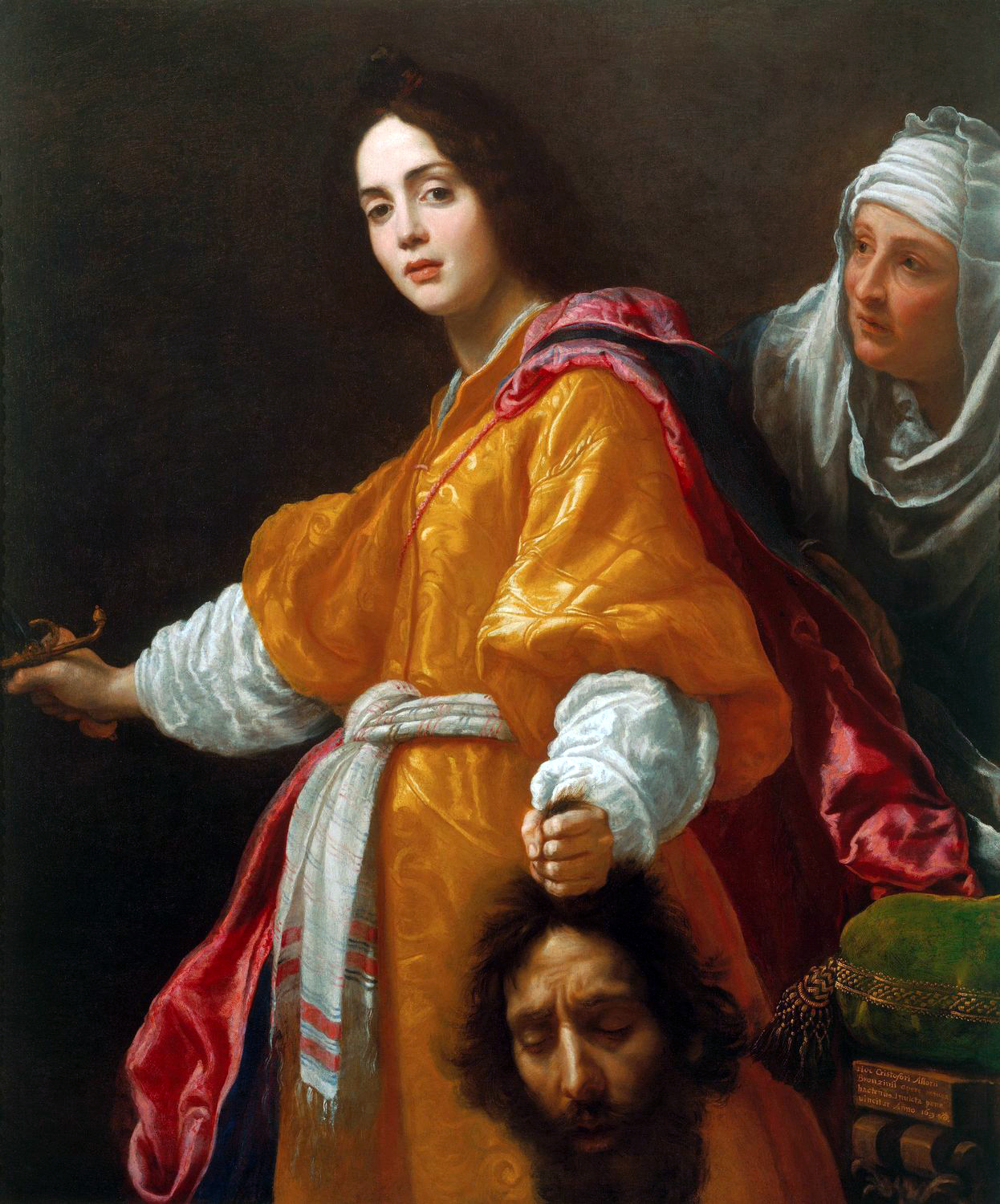
The Book of Judith is a deuterocanonical book included in the Septuagint and the Catholic, Eastern Orthodox, Oriental Orthodox, and Church of the East Old Testament of the Bible but excluded from the Hebrew canon and assigned by Protestants to the apocrypha. It tells of a Jewish widow, Judith, who uses her beauty and charm to kill an Assyrian general who has besieged her city, Bethulia. With this act, she saves nearby Jerusalem from total destruction. The name Judith (Hebrew: יְהוּדִית, Modern: Yəhūdīt, Tiberian: Yŭhūḏīṯ), meaning "praised" or "Jewess", is the feminine form of Judah.
The extant translated manuscripts from antiquity appear to contain several historical anachronisms, which is why the majority of modern scholars consider the book ahistorical. Instead, the book has been re-classified as a parable, theological novel, or even the first historical novel. Although the majority of Catholic scholars and clergy now view the book as fictional, the Roman Catholic Church had traditionally maintained the book's historicity, assigning its events to the reign of King Manasseh of Judah and that the names were changed in later centuries for an unknown reason. The Jewish Encyclopedia identifies Shechem (modern day Nablus) as "Bethulia", and argues that the name was changed because of the feud between the Jews and Samaritans. If this is the case, it would explain why other names seem anachronistic as well.
It is not clear whether the Book of Judith was originally written in Hebrew, Aramaic or Greek, as the oldest existing version is from the Septuagint, a Greek translation of the Hebrew scriptures. However, due to the large number of Hebraisms in the text, it is generally agreed that the book was written in a Semitic language, probably Hebrew or Aramaic, rather than Koine Greek. When Jerome completed his Latin Vulgate translation, he asserted his belief that the book was written "in Chaldean (Aramaic) words". Jerome's Latin translation was based on an Aramaic manuscript and was shorter because he omitted passages that he could not read or understand in the Aramaic that otherwise existed in the Septuagint. The Aramaic manuscript used by Jerome has long since been lost.
Carey A. Moore argued that the Greek text of Judith was a translation from a Hebrew original, and used many examples of conjectured translation errors, Hebraic idioms, and Hebraic syntax. The extant Hebrew manuscripts are very late and only date back to the Middle Ages. The two surviving Hebrew manuscripts of Judith are translated from the Greek Septuagint and the Latin Vulgate.
The Hebrew versions name important figures directly, such as the Seleucid king Antiochus IV Epiphanes, and place the events during the Hellenistic period when the Maccabees battled the Seleucid monarchs. However, because the Hebrew manuscripts mention kingdoms that had not existed for hundreds of years by the time of the Seleucids, it is unlikely that these were the original names in the text. In the minority, Helmut Engel and Jeremy Corley argued that Judith was originally composed in Greek that was carefully modeled after Hebrew and pointed out "Septuagintalisms" in the vocabulary and phrasing of the Greek text.
While the author was likely Jewish, there is no evidence aside from its inclusion in the Septuagint that the Book of Judith was ever considered authoritative or a candidate for canonicity by any Jewish group. The Masoretic Text of the Hebrew Bible does not contain it; it is not found among the Dead Sea Scrolls or any early Rabbinic literature. Speculated reasons for its exclusion include the possible lateness of its composition, possible Greek origin, apparent support of the Hasmonean dynasty (to which the early rabbinate was opposed), and perhaps the brash and seductive character of Judith herself.
After disappearing from circulation among Jews for over a millennium, however, references to the Book of Judith and the figure of Judith herself resurfaced in the religious literature of crypto-Jews who escaped Christian persecution after the capitulation of the Caliphate of Córdoba. The renewed interest took the form of "tales of the heroine, liturgical poems, commentaries on the Talmud, and passages in Jewish legal codes." Although the text does not mention Hanukkah, it became customary for a Hebrew midrashic variant of the Judith story to be read on the Shabbat of Hanukkah as the story of Hanukkah takes place during the time of the Hasmonean dynasty.
That midrash, whose heroine is portrayed as gorging the antagonist on cheese and wine before cutting off his head, may have formed the basis of the minor Jewish tradition to eat dairy products during Hanukkah. In that respect, the Jewry of Europe during the Middle Ages appear to have viewed Judith as the Maccabean-Hasmonean counterpart to Queen Esther, the heroine of the holiday of Purim. The textual reliability of the Book of Judith was also taken for granted, to the extent that biblical commentator Nachmanides (Ramban) quoted several passages from a Peshitta (Syriac version) of Judith in support of his rendering of Deuteronomy 21:14.
Hub AI
Book of Judith AI simulator
(@Book of Judith_simulator)
Book of Judith
The Book of Judith is a deuterocanonical book included in the Septuagint and the Catholic, Eastern Orthodox, Oriental Orthodox, and Church of the East Old Testament of the Bible but excluded from the Hebrew canon and assigned by Protestants to the apocrypha. It tells of a Jewish widow, Judith, who uses her beauty and charm to kill an Assyrian general who has besieged her city, Bethulia. With this act, she saves nearby Jerusalem from total destruction. The name Judith (Hebrew: יְהוּדִית, Modern: Yəhūdīt, Tiberian: Yŭhūḏīṯ), meaning "praised" or "Jewess", is the feminine form of Judah.
The extant translated manuscripts from antiquity appear to contain several historical anachronisms, which is why the majority of modern scholars consider the book ahistorical. Instead, the book has been re-classified as a parable, theological novel, or even the first historical novel. Although the majority of Catholic scholars and clergy now view the book as fictional, the Roman Catholic Church had traditionally maintained the book's historicity, assigning its events to the reign of King Manasseh of Judah and that the names were changed in later centuries for an unknown reason. The Jewish Encyclopedia identifies Shechem (modern day Nablus) as "Bethulia", and argues that the name was changed because of the feud between the Jews and Samaritans. If this is the case, it would explain why other names seem anachronistic as well.
It is not clear whether the Book of Judith was originally written in Hebrew, Aramaic or Greek, as the oldest existing version is from the Septuagint, a Greek translation of the Hebrew scriptures. However, due to the large number of Hebraisms in the text, it is generally agreed that the book was written in a Semitic language, probably Hebrew or Aramaic, rather than Koine Greek. When Jerome completed his Latin Vulgate translation, he asserted his belief that the book was written "in Chaldean (Aramaic) words". Jerome's Latin translation was based on an Aramaic manuscript and was shorter because he omitted passages that he could not read or understand in the Aramaic that otherwise existed in the Septuagint. The Aramaic manuscript used by Jerome has long since been lost.
Carey A. Moore argued that the Greek text of Judith was a translation from a Hebrew original, and used many examples of conjectured translation errors, Hebraic idioms, and Hebraic syntax. The extant Hebrew manuscripts are very late and only date back to the Middle Ages. The two surviving Hebrew manuscripts of Judith are translated from the Greek Septuagint and the Latin Vulgate.
The Hebrew versions name important figures directly, such as the Seleucid king Antiochus IV Epiphanes, and place the events during the Hellenistic period when the Maccabees battled the Seleucid monarchs. However, because the Hebrew manuscripts mention kingdoms that had not existed for hundreds of years by the time of the Seleucids, it is unlikely that these were the original names in the text. In the minority, Helmut Engel and Jeremy Corley argued that Judith was originally composed in Greek that was carefully modeled after Hebrew and pointed out "Septuagintalisms" in the vocabulary and phrasing of the Greek text.
While the author was likely Jewish, there is no evidence aside from its inclusion in the Septuagint that the Book of Judith was ever considered authoritative or a candidate for canonicity by any Jewish group. The Masoretic Text of the Hebrew Bible does not contain it; it is not found among the Dead Sea Scrolls or any early Rabbinic literature. Speculated reasons for its exclusion include the possible lateness of its composition, possible Greek origin, apparent support of the Hasmonean dynasty (to which the early rabbinate was opposed), and perhaps the brash and seductive character of Judith herself.
After disappearing from circulation among Jews for over a millennium, however, references to the Book of Judith and the figure of Judith herself resurfaced in the religious literature of crypto-Jews who escaped Christian persecution after the capitulation of the Caliphate of Córdoba. The renewed interest took the form of "tales of the heroine, liturgical poems, commentaries on the Talmud, and passages in Jewish legal codes." Although the text does not mention Hanukkah, it became customary for a Hebrew midrashic variant of the Judith story to be read on the Shabbat of Hanukkah as the story of Hanukkah takes place during the time of the Hasmonean dynasty.
That midrash, whose heroine is portrayed as gorging the antagonist on cheese and wine before cutting off his head, may have formed the basis of the minor Jewish tradition to eat dairy products during Hanukkah. In that respect, the Jewry of Europe during the Middle Ages appear to have viewed Judith as the Maccabean-Hasmonean counterpart to Queen Esther, the heroine of the holiday of Purim. The textual reliability of the Book of Judith was also taken for granted, to the extent that biblical commentator Nachmanides (Ramban) quoted several passages from a Peshitta (Syriac version) of Judith in support of his rendering of Deuteronomy 21:14.
Recent media