


Community hub
Recent from talks
Contribute something
Nothing was collected or created yet.
Cairo, Georgia
View on Wikipedia
Cairo (/ˈkeɪroʊ/) is a city in Grady County, Georgia, United States. As of the 2020 census, the city had a population of 10,179. The city is the county seat of Grady County.[4]
Key Information


History
[edit]Cairo was founded in 1835. It was incorporated as a town in 1870 and as a city in 1906. In 1905, Cairo was designated seat of the newly formed Grady County.[5] The city was named after Cairo, the capital of Egypt.[6][7]
Geography
[edit]Cairo is located in central Grady County at 30°52′39″N 84°12′5″W / 30.87750°N 84.20139°W (30.8774, -84.2013).[3] U.S. Route 84 (38th Boulevard) passes through the northern part of the city, leading east 14 miles (23 km) to Thomasville and west 24 miles (39 km) to Bainbridge. Valdosta is 59 miles (95 km) to the east, and Dothan, Alabama, is 79 miles (127 km) to the west on US 84. Georgia State Route 93 passes through the center of Cairo as Broad Street and Fifth Street; it leads north 19 miles (31 km) to Pelham and south 12 miles (19 km) to U.S. Route 319, north of the Florida border. Tallahassee, Florida, is 33 miles (53 km) to the south.
According to the United States Census Bureau, Cairo has a total area of 9.8 square miles (25.4 km2), of which 9.7 square miles (25.1 km2) is land and 0.1 square miles (0.3 km2), or 1.38%, is water.[8]
Climate
[edit]The climate in this area is characterized by relatively high temperatures and evenly distributed precipitation throughout the year. According to the Köppen Climate Classification system, Cairo has a humid subtropical climate, abbreviated "Cfa" on climate maps.[9]
| Climate data for Cairo, Georgia | |||||||||||||
|---|---|---|---|---|---|---|---|---|---|---|---|---|---|
| Month | Jan | Feb | Mar | Apr | May | Jun | Jul | Aug | Sep | Oct | Nov | Dec | Year |
| Mean daily maximum °F (°C) | 64 (18) |
66 (19) |
73 (23) |
80 (27) |
86 (30) |
90 (32) |
91 (33) |
91 (33) |
87 (31) |
81 (27) |
71 (22) |
65 (18) |
79 (26) |
| Mean daily minimum °F (°C) | 42 (6) |
42 (6) |
48 (9) |
55 (13) |
62 (17) |
68 (20) |
70 (21) |
70 (21) |
67 (19) |
57 (14) |
46 (8) |
42 (6) |
56 (13) |
| Average precipitation inches (mm) | 3.9 (99) |
4.1 (100) |
5.3 (130) |
3.9 (99) |
3.4 (86) |
5.5 (140) |
6.4 (160) |
5.6 (140) |
4.4 (110) |
2.5 (64) |
2.6 (66) |
3.5 (89) |
51.2 (1,300) |
| Source: Weatherbase [10] | |||||||||||||
Demographics
[edit]| Census | Pop. | Note | %± |
|---|---|---|---|
| 1880 | 275 | — | |
| 1890 | 521 | 89.5% | |
| 1900 | 690 | 32.4% | |
| 1910 | 1,505 | 118.1% | |
| 1920 | 1,908 | 26.8% | |
| 1930 | 3,169 | 66.1% | |
| 1940 | 4,653 | 46.8% | |
| 1950 | 5,577 | 19.9% | |
| 1960 | 7,427 | 33.2% | |
| 1970 | 8,061 | 8.5% | |
| 1980 | 8,777 | 8.9% | |
| 1990 | 9,035 | 2.9% | |
| 2000 | 9,239 | 2.3% | |
| 2010 | 9,607 | 4.0% | |
| 2020 | 10,179 | 6.0% | |
| U.S. Decennial Census[11] 1850-1870[12] 1870-1880[13] 1890-1910[14] 1920-1930[15] 1940[16] 1950[17] 1960[18] 1970[19] 1980[20] 1990[21] 2000[22] 2010[23] | |||
| Race / Ethnicity (NH = Non-Hispanic) | Pop 2000[24] | Pop 2010[25] | Pop 2020[26] | % 2000 | % 2010 | % 2020 |
|---|---|---|---|---|---|---|
| White alone (NH) | 3,921 | 3,416 | 3,293 | 42.44% | 35.56% | 32.35% |
| Black or African American alone (NH) | 4,700 | 4,601 | 4,688 | 50.87% | 47.89% | 46.06% |
| Native American or Alaska Native alone (NH) | 32 | 27 | 27 | 0.35% | 0.28% | 0.27% |
| Asian alone (NH) | 53 | 52 | 68 | 0.57% | 0.54% | 0.67% |
| Pacific Islander alone (NH) | 1 | 10 | 3 | 0.01% | 0.10% | 0.03% |
| Other race alone (NH) | 4 | 19 | 50 | 0.04% | 0.20% | 0.49% |
| Mixed race or Multiracial (NH) | 61 | 98 | 213 | 0.66% | 1.02% | 2.09% |
| Hispanic or Latino (any race) | 467 | 1,384 | 1,837 | 5.05% | 14.41% | 18.05% |
| Total | 9,239 | 9,607 | 10,179 | 100.00% | 100.00% | 100.00% |
As of the 2020 United States census, there were 10,179 people, 3,567 households, and 2,169 families residing in the city.
Education
[edit]Grady County Schools serves the city. Cairo High School, located in Cairo serves as a central high school for all of Grady County. Elementary schools serving students in the city include Eastside Elementary, Northside Elementary and Southside Elementary. Washington Middle School serves Cairo residents.[27]
A campus of the Southern Regional Technical College is located in Cairo.
Health
[edit]Archbold Grady serves the city. A 60-bed acute care hospital, it has been affiliated with John D. Archbold Memorial Hospital in Thomasville since 1985.[28]
Notable people
[edit]- Notable Cairo people include:
-
 Jackie Robinson,
born 1919,
American professional baseball second baseman who became the first African American to play in Major League Baseball (MLB) in the modern era. -
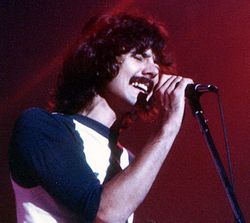 Mickey Thomas,
born 1949,
American rock singer, best known as one of the lead vocalists of Jefferson Starship and Starship. -

-


- Teresa Edwards, former professional basketball player and an Olympic gold medalist
- Emerson Hancock, former pitcher for University of Georgia and selected to the Seattle Mariners as the 6th overall pick in the 2020 MLB draft.
- Willie Harris, outfielder and second baseman in Major League Baseball from 2001 through 2012, member of the 2005 World Champion Chicago White Sox
- Bryan Johnson, former professional motocross racer.
- John Monds, 2010 Libertarian gubernatorial candidate for the state of Georgia
- David Ponder, former defensive tackle for the Dallas Cowboys
- Ernest Riles, shortstop and third baseman in Major League Baseball
- Jackie Robinson, Baseball Hall of Famer; first person to break the color barrier in Major League Baseball; born in Cairo
- Matthew "Mack" Robinson, Olympic silver medalist, older brother of Jackie Robinson
- Daryle Singletary, country music singer
- George Thornewell Smith, Georgia politician
- Bill Stanfill, former All-Pro National Football League defensive end
- Mickey Thomas, lead singer of Jefferson Starship
- Bobby Walden, former punter for the Pittsburgh Steelers and Minnesota Vikings
- Hurston Waldrep, baseball pitcher
- J. J. Wilcox, safety for the New York Jets
- Arthur L. Williams Jr., founder of Primerica Financial Services
- Curley Williams, country music singer and songwriter; born near Cairo in Grady County
References
[edit]- ^ "2020 U.S. Gazetteer Files". United States Census Bureau. Retrieved December 18, 2021.
- ^ "U.S. Census website". United States Census Bureau. Retrieved January 31, 2008.
- ^ a b "Cairo, Georgia". Geographic Names Information System. United States Geological Survey, United States Department of the Interior.
- ^ "Find a County". National Association of Counties. Archived from the original on May 31, 2011. Retrieved June 7, 2011.
- ^ Hellmann, Paul T. (May 13, 2013). Historical Gazetteer of the United States. Routledge. p. 222. ISBN 978-1135948597. Retrieved November 30, 2013.
- ^ Logue, Victoria; Logue, Frank (1997). Touring the Backroads of North and South Georgia. John F. Blair, Publisher. p. 412. ISBN 978-0-89587-171-8.
- ^ "Cairo Across America: Interpreting Geography, History and the Meaning of a Name". AramcoWorld. November 11, 2025. Retrieved January 8, 2026.
- ^ "Geographic Identifiers: 2010 Demographic Profile Data (G001): Cairo city, Georgia". American Factfinder. U.S. Census Bureau. Retrieved November 23, 2016.[dead link]
- ^ Climate Summary for Cairo, Georgia
- ^ "Weatherbase.com". Weatherbase. 2013. Retrieved on September 28, 2013.
- ^ "Decennial Census of Population and Housing by Decade". United States Census Bureau.
- ^ "1870 Census of Population - Georgia - Population of Civil Divisions less than Counties" (PDF). United States Census Bureau. 1870.
- ^ "1880 Census of Population - Georgia - Population of Civil Divisions less than Counties" (PDF). United States Census Bureau. 1880.
- ^ "1910 Census of Population - Georgia" (PDF). United States Census Bureau. 1910. Archived from the original (PDF) on January 16, 2024.
- ^ "1930 Census of Population - Georgia" (PDF). United States Census Bureau. 1930. pp. 251–256.
- ^ "1940 Census of Population - Georgia" (PDF). United States Census Bureau. 1940.
- ^ "1950 Census of Population - Georgia" (PDF). United States Census Bureau. 1950.
- ^ "1960 Census of Population - Population of County Subdivisions - Georgia" (PDF). United States Census Bureau. 1960.
- ^ "1970 Census of Population - Population of County Subdivisions - Georgia" (PDF). United States Census Bureau. 1970.
- ^ "1980 Census of Population - Number of Inhabitants - Georgia" (PDF). United States Census Bureau. 1980.
- ^ "1990 Census of Population - Summary Social, Economic, and Housing Characteristics - Georgia" (PDF). United States Census Bureau. 1990.
- ^ "2000 Census of Population - General Population Characteristics - Georgia" (PDF). United States Census Bureau. 2000.
- ^ "2010 Census of Population - General Population Characteristics - Georgia" (PDF). United States Census Bureau. 2010.
- ^ "P004: Hispanic or Latino, and Not Hispanic or Latino by Race – 2000: DEC Summary File 1 – Cairo city, Georgia". United States Census Bureau.
- ^ "P2 Hispanic or Latino, and Not Hispanic or Latino by Race – 2010: DEC Redistricting Data (PL 94-171) – Cairo city, Georgia". United States Census Bureau.
- ^ "P2 Hispanic or Latino, and Not Hispanic or Latino by Race – 2020: DEC Redistricting Data (PL 94-171) – Cairo city, Georgia". United States Census Bureau.
- ^ "Schools." Grady County Schools. Retrieved on April 9, 2009.
- ^ "Grady General Hospital". Archbold Medical Center. Retrieved March 30, 2017.
External links
[edit]Municipalities and communities of Grady County, Georgia, United States | ||
|---|---|---|
| Cities |  | |
| CDP | ||
| Unincorporated communities | ||
| International | |
|---|---|
| National | |
| Geographic | |
| Other | |

Cairo, Georgia
View on GrokipediaCairo is a city in Grady County, Georgia, United States, serving as the county seat. As of the 2020 United States census, it had a population of 10,179. Located in southwest Georgia approximately 30 miles north of Tallahassee, Florida, the city spans 9.37 square miles and is governed by a five-member city council. Nicknamed the "Hospitality City," Cairo was chartered as a town in 1870 and incorporated as a city in 1906, shortly after being selected as the seat for the newly formed Grady County in 1905. Its economy relies primarily on manufacturing, retail and wholesale trade, and agriculture, reflecting the rural character of the region. The city achieved recognition for its production of cane syrup, contributing to local agricultural heritage. Cairo is notably the birthplace of Jackie Robinson, born January 31, 1919, the first African American player in Major League Baseball in the modern era, whose legacy is commemorated by a historical marker. The community has produced other figures in entertainment and sports, including rock vocalist Mickey Thomas and professional motocross riders Davi Millsaps and Bryan Johnson. In recent years, the city endured an EF-2 tornado in 2019 that caused significant damage, underscoring its vulnerability to severe weather in the area.[1][2][3][1][4][5][6]
History
Founding and early settlement
The area now known as Cairo was initially settled in the early 1820s by William Hawthorne, a Baptist preacher and explorer who established the first known presence there by blazing a forty-mile trail from Thomasville to the Chattahoochee River to facilitate travel and settlement.[1][7] Additional settlers arrived in the following decades, with Henry Miller relocating to the region in 1842 and establishing Miller's Station as a key stagecoach stop along the route between Thomasville and Bainbridge in what was then Thomas County.[1][8] Following the American Civil War (1861–1865), economic recovery in southwest Georgia spurred organized town development at the site, with lots offered for sale to prospective residents beginning in 1866.[8] This post-war initiative transformed the former stagecoach outpost into a planned community, which was formally incorporated as the town of Cairo on November 28, 1870, under an act of the Georgia General Assembly.[1][9] The name "Cairo" was selected, reportedly drawing inspiration from the Egyptian city due to aspirations for the town to serve as a transportation hub linking rail lines to the Gulf of Mexico, akin to the Nile River's role.[10] Early growth was modest, centered on agriculture and rudimentary trade, with the population remaining under 500 residents through the 1870s as settlers focused on clearing pine barrens and wiregrass lands for farming.[11] The arrival of the Atlantic and Gulf Railroad in the late 1860s provided initial connectivity, enabling shipment of timber and early cotton crops, though full economic expansion awaited later decades.[1]Agricultural expansion and incorporation
The region encompassing present-day Cairo initially supported subsistence farming on sandy loam soils amid pine forests, with early settlers like Henry Miller establishing operations as a stagecoach stop by 1842.[1] Post-Civil War, agricultural expansion accelerated as forests were cleared for cultivation, transitioning from self-sufficient practices to commercial production of cash crops, facilitated by the Atlantic and Gulf Railroad's arrival in 1859, which connected the area to broader markets for produce and timber.[8] This infrastructure enabled Grady County's emergence as a diversified farming center in southeast Georgia, with rich soils and climate supporting multiple crops including sugarcane, peanuts, and vegetables.[12] Seaborn Anderson Roddenbery exemplified this growth by initiating sugarcane syrup production in 1862 and opening a general store by 1867; by 1889, his branded "Roddenbery’s Old Plantation Molasses" marked a milestone in local agro-processing, with the W.B. Roddenbery Company later expanding into pickles, peanut butter, and boiled peanuts by 1936.[1][12] Export-oriented agriculture drove economic vitality, attracting settlers and spurring land development, as H.H. Tooke and James H. Hayes sold plots beginning in 1866 to establish the townsite formerly known as Miller’s Station.[1] This agricultural boom underpinned Cairo's formal incorporation as a town on December 20, 1870, providing structure for governance amid rising population and trade volumes tied to farming outputs.[1] The creation of Grady County in 1905 from portions of Decatur and Thomas counties, named for Atlanta Constitution editor Henry W. Grady, elevated Cairo to county seat status, with its reincorporation as a city in 1906 reflecting sustained expansion in processing facilities and rail-dependent crop shipments.[8][12]20th-century developments and challenges
In the early decades of the 20th century, Cairo's economy benefited from agricultural expansion, with tobacco cultivation emerging as a key sector; local production was described as the finest in Georgia by 1925, supporting markets and related commerce.[13] Cane syrup manufacturing also gained prominence, exemplified by the W. B. Roddenbery Company's establishment in 1920, which processed local crops into syrup and later diversified into pickles and other products by 1936.[1] These developments coincided with infrastructural growth, including the construction of a new county courthouse in 1908.[1] The Great Depression exacerbated preexisting agricultural vulnerabilities in south Georgia, including overproduction and low commodity prices; tobacco sales in regional markets averaged $4.32 per 100 pounds in February 1931, reflecting broader economic distress that strained rural communities like Cairo.[14] Federal New Deal initiatives provided relief, funding the Roddenbery Memorial Library in 1939 through the Works Progress Administration.[1] World War II drew labor to defense industries elsewhere, contributing to the Great Migration of African Americans from Grady County, as sharecroppers and farmworkers sought opportunities in northern cities amid persistent rural poverty.[15] Postwar years brought challenges from racial segregation and civil rights struggles; Cairo maintained separate facilities, such as Douglass High School for Black students, until desegregation efforts aligned with federal mandates in the 1960s and 1970s, amid statewide resistance that included school closure threats and community tensions.[16] Agricultural shifts compounded economic pressures, with shade tobacco production in Grady County phasing out by 1965 due to declining demand and changing farming practices.[17] A major setback occurred in 1980 when fire destroyed the 1908 courthouse, necessitating reconstruction.[1] These events underscored Cairo's reliance on agriculture and vulnerability to external market forces and social upheavals.Post-2000 economic and social shifts
Since 2000, Cairo's population has experienced modest growth, increasing from approximately 9,313 in 2000 to 9,639 in 2010 and reaching 10,179 by the 2020 census, representing a cumulative rise of about 9.3% over two decades compared to national trends exceeding 17%.[18] This slower expansion reflects limited economic pull factors in a rural setting dominated by agriculture and small-scale manufacturing, with recent annual employment growth hovering below 1%, from 3,850 jobs in 2022 to 3,870 in 2023.[19] Economic indicators in Grady County, where Cairo serves as the seat, underscore stagnation and vulnerability to broader downturns. Median household income rose marginally from $29,007 in 2000 to $31,297 in 2010, trailing inflation and national medians, while poverty rates climbed sharply from 19.0% to 27.9% over the same period, exacerbated by the 2008 recession's impact on manufacturing and farming sectors.[20] Statewide manufacturing employment, a key local pillar including food processing and textiles, declined 25.6% since 1999, with Cairo mirroring this through reduced output in traditional industries and a pivot toward health care and social assistance, which employed the largest share of workers by 2023.[21][22] Local initiatives, such as downtown revitalization efforts emphasizing retail and community gathering spaces, aimed to counter these trends but yielded limited measurable gains amid persistent fiscal constraints.[23] Socially, the period saw gradual diversification, with foreign-born residents comprising 7.35% of Cairo's population by 2023, up from negligible levels, alongside a rising Hispanic or other race share nearing 7%, altering the near-even Black-White demographic balance that persisted from earlier decades.[19] Elevated poverty correlated with heightened reliance on public assistance, including a child poverty rate exceeding 30% in recent years, though it declined 5.2% from 2014 to 2024 amid broader rural challenges like workforce outmigration and educational attainment lags, where high school completion rates trailed state averages.[22] These shifts, driven by structural economic pressures rather than acute crises, maintained Cairo's profile as a stable but underperforming small town, with no major upheavals but ongoing strains from inequality and limited upward mobility.[24]Geography
Location and topography
Cairo is situated in Grady County, serving as the county seat, in the southwestern part of Georgia, United States.[25] The city's geographic coordinates are approximately 30°52′39″N 84°12′5″W.[25] It lies roughly 34 miles (55 km) north of Tallahassee, Florida, along U.S. Route 84 and Georgia State Route 27.[26] The topography of Cairo falls within the Upper Coastal Plain physiographic province, which comprises low-relief landscapes formed by sedimentary deposits.[27] Elevations in the area average 243 feet (74 meters) above sea level, with flat to gently rolling terrain dominated by agricultural fields.[25] Predominant soils include sandy types like the Tifton series, which are well-drained and support row crops due to their texture and permeability.[28] The Ochlockonee River, originating in the Georgia Piedmont and flowing southward, passes near the city, with a U.S. Geological Survey streamflow gauging station located at Georgia State Route 93 approximately 5 miles east of Cairo.[29]Climate patterns
Cairo, Georgia, exhibits a humid subtropical climate, marked by long, hot, and humid summers alongside short, mild winters and consistent year-round precipitation influenced by continental and Gulf of Mexico air masses. Average annual temperatures hover around 66°F, with diurnal and seasonal swings typically ranging from 42°F lows to 91°F highs, though extremes rarely fall below 28°F or exceed 96°F based on historical observations from 1980 to 2016.[30] The hot season spans mid-May to late September, with average daily highs surpassing 85°F; July records the peak at 91°F highs and 73°F lows, fostering oppressive humidity where dew points often exceed 70°F for over 30 days monthly, elevating perceived temperatures. In contrast, the cool season runs from early December to late February, featuring highs under 68°F and January averages of 62°F highs paired with 43°F lows; frost occurs periodically but sustained freezes are infrequent, supporting a lengthy frost-free growing period of approximately 288 days from late February to early December.[30] Precipitation averages 50.3 inches annually, distributed relatively evenly but with a modest wet-season peak from late May to early September driven by convective thunderstorms, yielding 4-5 inches per summer month and up to 17 wet days in July alone. Drier intervals, such as October with 2.5 inches and 6 wet days, alternate with these, while overall rainy days number about 84 per year; snowfall is negligible, rarely accumulating, and cloud cover varies from partly cloudy fall skies (65% clear or partly cloudy in October) to mostly cloudy summer conditions (56% overcast or mostly cloudy in July). The region's exposure to occasional tropical cyclones and severe thunderstorms underscores its vulnerability to heavy localized downpours, though long-term patterns reflect stable subtropical dynamics rather than arid or polar extremes.[30][31]Government and politics
Municipal structure and administration
Cairo, Georgia, operates under a mayor-council form of government, as established by its municipal charter, with an appointed city manager serving as the administrative head.[32][33] The legislative authority is vested in a five-member city council, with each member elected from one of five single-member districts for staggered four-year terms.[34] The mayor is elected at-large in nonpartisan municipal elections, also serving a four-year term, and presides over council meetings held on the second and fourth Mondays of each month at 6:00 p.m. in City Hall.[34] The city council appoints the city manager, who acts as the chief administrator responsible for day-to-day operations, overseeing all city departments through their heads, preparing and submitting the annual budget for council approval, implementing council policies, and managing interactions with citizens and stakeholders.[35] The manager attends all council meetings and reports directly to the council on administrative matters. As of October 2025, Booker T. Gainor IV serves as interim city manager, having previously held the position of mayor before transitioning to this role in March 2025.[35][36] Edgar M. Robinson has served as mayor since winning a special election on June 17, 2025, following the prior mayor's resignation.[37] Current council members include Annette Higdon (District 1), Demario Byrden (District 2, mayor pro tem), Timothy Gurley (District 3), James H. Douglas (District 4), and Charles Renaud (District 5), with terms expiring between 2025 and 2027.[38][34] A special municipal election is scheduled for November 4, 2025, to fill select seats amid ongoing governance activities.[39] The city's code of ordinances, codified through Ordinance No. 848 adopted November 13, 2023, governs procedural aspects of administration.[40]Electoral history and recent governance disputes
In November 2017, Booker Gainor was elected mayor of Cairo in the city's nonpartisan municipal election, alongside new city council members DeMario Byrden and others.[41] Gainor, who later became the first African American to serve as both mayor and city manager, was reelected in November 2021, defeating incumbent Howard Thrower III by a margin of 719 votes to 659.[42][43] Following Gainor's departure from office, a special mayoral election held on June 17, 2025, saw Edgar M. Robinson secure victory with 71% of the vote (approximately 1,000 total votes cast), defeating challengers Shenkia Johnson and Silvia Salgado.[44][45][37] Robinson was sworn in on June 26, 2025.[46] Cairo's city council consists of five members elected at-large, with terms staggered across municipal elections, including a special election scheduled for November 4, 2025.[34][39] Grady County, of which Cairo is the seat, has consistently supported Republican candidates in federal elections, including Donald Trump's victories in the state-wide 2024 presidential race, reflecting broader rural South Georgia voting patterns.[47] Local municipal races remain nonpartisan, with voter turnout in recent Cairo elections ranging from several hundred to around 1,000 participants.[48] Recent governance has involved multiple disputes centered on transparency and ethical conduct. In August 2025, resident Phyllis Crawford filed notarized ethics complaints against Mayor Robinson and two city council members, alleging violations of local ordinances prohibiting conflicts of interest, including prohibitions on council members holding paid city positions or engaging in related business dealings; the complaints are under review by city ethics officials.[49] The city's Downtown Development Authority (DDA) pursued civil litigation against Cairo starting in October 2024, accusing the council of violating the Georgia Open Meetings Act by entering executive session without adequate public notice and improperly dismissing DDA members, rendering the authority inactive.[50][51] A superior court judge ruled in the DDA's favor in September 2025, determining that the council's actions to disband the authority lacked proper procedure under state law, potentially exposing the city to taxpayer-funded legal costs and mandates for reinstatement.[52][53] These cases underscore procedural lapses in council operations following the 2025 leadership transition.Economy
Primary sectors: Agriculture and manufacturing
Agriculture remains a cornerstone of the economy in Cairo and surrounding Grady County, benefiting from the region's fertile soils and subtropical climate that support diverse crop production and livestock rearing. According to the 2017 USDA Agricultural Census, crop sales accounted for 67% of total farm revenue in the county, with livestock, poultry, and related products comprising the remaining 33%; net cash farm income reached $83,058 per farm on average, reflecting a 56% increase from prior periods amid total production expenses of $182,141 per farm.[54] Local processing plants handle outputs from major row crops, including soybeans, peanuts, and cotton, which dominate field agriculture in south Georgia's peanut belt.[55] Farms such as Powe Farms, operational for over 35 years in Cairo, exemplify sustained family-based operations contributing to commodity production and subsidy receipts, with Grady County farms collectively receiving $211,780,000 in federal subsidies from 1995 to 2024, primarily for program crops like peanuts and cotton.[56][57] The sector employs about 13% of the local workforce in agricultural and forestry products, underscoring its role despite competition from mechanization and market volatility.[58] Manufacturing constitutes 19% of employment in Grady County, with several facilities in Cairo specializing in equipment and products tied to agriculture and consumer goods. Nivel Parts & Manufacturing operates a 110,000-square-foot plant in the city, producing U.S.-made components such as golf car parts using advanced automation.[59][60] Thomson Industries, a fourth-generation family business, manufactures pecan shellers, crackers, grading equipment, and machinery for pea and bean processing, serving the regional agribusiness needs.[61] Other key operations include Graco Fertilizer Company's production facilities for blended fertilizers and Big Bend Agri-Services' plant focused on agricultural inputs like packaging and storage solutions, both located in Cairo to leverage proximity to farming operations.[62][63] These firms benefit from available industrial acreage and low operational costs, though the sector faces challenges from global supply chains and labor shortages, as evidenced by ongoing recruitment for roles in assembly and quality control.[58][64]Labor market trends and fiscal indicators
The civilian labor force in Cairo, Georgia, numbered 7,332 as of the most recent American Community Survey estimates, with a participation rate of 56 percent among the working-age population.[65] Of those in the labor force, 94.2 percent were employed, yielding an unemployment rate of 5.14 percent.[65] Total nonfarm employment in the city stood at 3,870 in 2023, marking a modest annual growth of 0.572 percent from 3,850 in 2022, consistent with gradual post-pandemic recovery in rural Southern economies reliant on manufacturing and services.[19] Leading employment sectors for Cairo residents include manufacturing (515 workers), health care and social assistance (485 workers), and retail trade (379 workers), reflecting the city's ties to regional agriculture processing, medical facilities, and consumer goods distribution.[19] In encompassing Grady County, the unemployment rate registered 4.0 percent in August 2024, with a labor force of 10,982, employed persons at 10,538, and 444 unemployed—rates that have fluctuated between 2.7 percent and 4.0 percent over the prior year amid steady demand in construction and health services.[66] These figures, drawn from Bureau of Labor Statistics local area models, indicate resilience against statewide trends but highlight structural challenges like lower participation rates compared to Georgia's overall 3.6 percent unemployment in late 2024.[67] Fiscal indicators for Cairo reveal a municipal budget of $45,934,140 adopted for fiscal year 2022–2023, encompassing general fund operations, utilities, and capital projects funded primarily through property taxes, sales taxes, and utility fees.[68] The 2023–2024 budget maintained similar scale, with allocations for dues to associations like the Georgia Municipal Association at $4,800 and regional councils at $10,000, signaling stable administrative spending amid no reported sharp revenue shifts.[69] Comprehensive financial reports for fiscal year 2023, prepared under Governmental Accounting Standards Board guidelines, affirm ongoing fund balances without disclosed material debt burdens or deficits, though detailed debt service levels remain tied to infrastructure bonds typical for small cities.[33] These metrics underscore fiscal conservatism, with expenditures aligned to revenues in a context of limited industrial expansion.Demographics
Population dynamics and racial composition
As of the 2020 United States decennial census, Cairo had a population of 10,179 residents.[70] Between 2000 and 2020, the city's population grew by approximately 7.9%, reflecting modest expansion typical of small rural municipalities in southern Georgia amid broader regional migration patterns influenced by economic opportunities in agriculture and manufacturing.[71] However, post-2020 estimates show stagnation or slight decline, with the population at 10,067 in the 2022 American Community Survey and further estimated at 10,057 in 2024, attributed to factors such as out-migration for employment and an aging demographic structure.[72][73] The city's population density stands at around 1,200 persons per square mile, concentrated in the urban core with sparser development in peripheral areas.[74] Historical data indicate steady growth from 1,908 residents in 1920 to peaks in the late 20th century, driven by railroad development and agricultural booms, though net growth slowed after 2010 due to limited industrial diversification and competition from larger nearby cities like Albany and Tallahassee.[19] Racial and ethnic composition, per the 2023 American Community Survey estimates, shows a near-even split between Black or African American (44.9%) and White (44.7%) residents, with Hispanic or Latino individuals (of any race) comprising 13.8% of the total.[75] Smaller groups include American Indian and Alaska Native (0.6%), Asian (0.3%), Native Hawaiian and Other Pacific Islander (0.0%), and two or more races (3.0%).[76]| Racial/Ethnic Group | Percentage (2023 ACS) |
|---|---|
| White alone | 44.7% |
| Black or African American alone | 44.9% |
| Hispanic or Latino (any race) | 13.8% |
| Two or more races | 3.0% |
| American Indian and Alaska Native alone | 0.6% |
| Asian alone | 0.3% |
Household income, poverty, and education levels
The median household income in Cairo was $40,496 in 2023, reflecting economic challenges in a rural Southern community reliant on agriculture and manufacturing.[19] [78] Per capita income stood at $24,757 during the same period.[73] The poverty rate was 27.3%, affecting over a quarter of the population for whom status is determined, which exceeds the Georgia state average of approximately 14%.[19] [78] This elevated rate correlates with limited high-wage job opportunities and a demographic profile including a significant proportion of single-parent households and racial minorities, as documented in Census analyses.[79] Educational attainment levels among adults aged 25 and older indicate below-average postsecondary completion compared to national benchmarks. Approximately 20% lacked a high school diploma or equivalency, while only 14% held a bachelor's degree or higher.[80] These figures, derived from U.S. Census Bureau data, underscore barriers such as access to higher education institutions and economic pressures prioritizing immediate workforce entry over extended schooling.[80]| Educational Attainment (Ages 25+) | Percentage |
|---|---|
| Less than high school | 20% |
| High school diploma/GED | 35% |
| Some college, no degree | 26% |
| Associate's degree | 5% |
| Bachelor's degree | 8% |
| Graduate or professional degree | 6% |