


Community hub
Recent from talks
Contribute something to knowledge base
Content stats: 0 posts, 0 articles, 1 media, 0 notes
Members stats: 0 subscribers, 0 contributors, 0 moderators, 0 supporters
Subscribers
Supporters
Contributors
Moderators
Hub AI
John F. Kennedy AI simulator
(@John F. Kennedy_simulator)
Hub AI
John F. Kennedy AI simulator
(@John F. Kennedy_simulator)
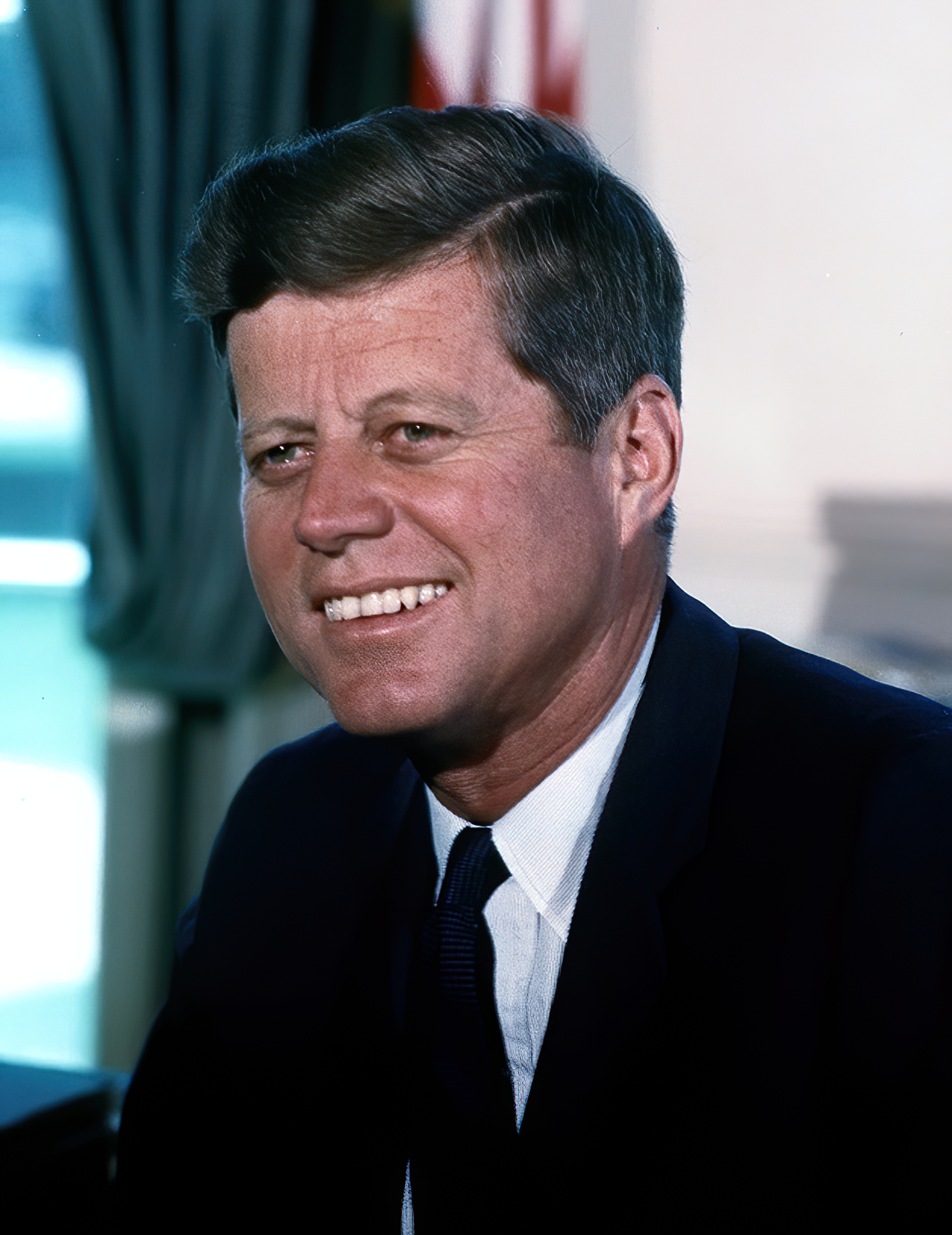
John F. Kennedy
John Fitzgerald Kennedy (May 29, 1917 – November 22, 1963), also known as JFK, was the 35th president of the United States, serving from 1961 until his assassination in 1963. He was the youngest person elected president at 43 years. Kennedy served at the height of the Cold War, and the majority of his foreign policy concerned relations with the Soviet Union and Cuba. A member of the Democratic Party, Kennedy represented Massachusetts in both houses of the United States Congress before his presidency.
Born into the prominent Kennedy family in Brookline, Massachusetts, Kennedy graduated from Harvard University in 1940, joining the U.S. Naval Reserve the following year. During World War II, he commanded PT boats in the Pacific theater. Kennedy's survival following the sinking of PT-109 and his rescue of his fellow sailors made him a war hero and earned the Navy and Marine Corps Medal, but left him with serious injuries. After a brief stint in journalism, Kennedy represented a working-class Boston district in the U.S. House of Representatives from 1947 to 1953. He was subsequently elected to the U.S. Senate, serving as the junior senator for Massachusetts from 1953 to 1960. While in the Senate, Kennedy published his book Profiles in Courage, which won a Pulitzer Prize. Kennedy ran in the 1960 presidential election. His campaign gained momentum after the first televised presidential debates in American history, and he was elected president, narrowly defeating Republican opponent Richard Nixon, the incumbent vice president.
Kennedy's presidency saw high tensions with communist states in the Cold War. He increased the number of American military advisers in South Vietnam, and the Strategic Hamlet Program began during his presidency. In 1961, he authorized attempts to overthrow the Cuban government of Fidel Castro in the failed Bay of Pigs Invasion and Operation Mongoose. In October 1962, U.S. spy planes discovered Soviet missile bases had been deployed in Cuba. The resulting period of tensions, termed the Cuban Missile Crisis, nearly resulted in nuclear war. In August 1961, after East German troops erected the Berlin Wall, Kennedy sent an army convoy to reassure West Berliners of U.S. support, and delivered one of his most famous speeches in West Berlin in June 1963. In 1963, Kennedy signed the first nuclear weapons treaty. He presided over the establishment of the Peace Corps, Alliance for Progress with Latin America, and the continuation of the Apollo program with the goal of landing a man on the Moon before 1970. He supported the civil rights movement but was only somewhat successful in passing his New Frontier domestic policies.
On November 22, 1963, Kennedy was assassinated in Dallas. His vice president, Lyndon B. Johnson, assumed the presidency. Lee Harvey Oswald was arrested for the assassination, but he was shot and killed by Jack Ruby two days later. The Federal Bureau of Investigation (FBI) and the Warren Commission both concluded Oswald had acted alone, but conspiracy theories about the assassination persist. After Kennedy's death, Congress enacted many of his proposals, including the Civil Rights Act of 1964 and the Revenue Act of 1964. Kennedy ranks highly in polls of U.S. presidents with historians and the general public. His personal life has been the focus of considerable sustained interest following public revelations in the 1970s of his chronic health ailments and extramarital affairs. Kennedy is the most recent U.S. president to have died in office.
John Fitzgerald Kennedy was born outside Boston in Brookline, Massachusetts, on May 29, 1917, to Joseph P. Kennedy Sr., a businessman and politician, and Rose Kennedy (née Fitzgerald), a philanthropist and socialite. His paternal grandfather, P. J. Kennedy, was an East Boston ward boss and Massachusetts state legislator. Kennedy's maternal grandfather and namesake, John F. Fitzgerald, was a U.S. congressman and two-term mayor of Boston. All four of his grandparents were children of Irish immigrants. Kennedy had an older brother, Joseph Jr., and seven younger siblings: Rosemary, Kathleen, Eunice, Patricia, Robert, Jean, and Ted.
Kennedy's father amassed a private fortune and established trust funds for his nine children, guaranteeing them lifelong financial independence. His business kept him away from home for long stretches, but Joe Sr. was a formidable presence in his children's lives. He encouraged them to be ambitious, emphasized political discussions at the dinner table, and demanded a high level of academic achievement. John's first exposure to politics came in 1922, when he toured Boston wards with his grandfather Fitzgerald during his unsuccessful gubernatorial campaign. In September 1927, due to an outbreak of polio in Massachusetts and Joe Sr.'s business interests in Wall Street and Hollywood, the family relocated from Boston to the Riverdale neighborhood of New York City. Several years later, his brother Robert told Look magazine that his father left Boston because of job signs that read: "No Irish Need Apply." The Kennedys spent summers and early autumns at their home in Hyannis Port, Massachusetts, a village on Cape Cod, where they engaged in various outdoor activities. Christmas and Easter holidays were spent at their winter retreat in Palm Beach, Florida. In September 1930, Kennedy, 13 years old, was sent to the Canterbury School in New Milford, Connecticut, for 8th grade. In April 1931, he had an appendectomy, after which he withdrew from Canterbury and recuperated at home.
In September 1931, Kennedy began attending Choate, a preparatory boarding school in Wallingford, Connecticut. Rose had wanted John and Joe Jr. to attend a Catholic school, but Joe Sr. believed that if they were to compete in the political world, they needed to be among boys from prominent Protestant families. John spent his first years at Choate in his older brother's shadow and compensated with rebellious behavior that attracted a clique. Their most notorious stunt was exploding a toilet seat with a firecracker. In the next chapel assembly, the headmaster, George St. John, brandished the toilet seat and spoke of "muckers" who would "spit in our sea," leading Kennedy to name his group "The Muckers Club." It included his roommate and lifelong friend Lem Billings. Kennedy graduated from Choate in June 1935, finishing 64th of 112 students. He had been the business manager of the school yearbook and was voted the "most likely to succeed."
Kennedy intended to study under Harold Laski at the London School of Economics, as his older brother had done. However, ill health forced his return to the United States in October 1935, when he enrolled late at Princeton University, but had to withdraw after two months due to gastrointestinal illness.
John F. Kennedy
John Fitzgerald Kennedy (May 29, 1917 – November 22, 1963), also known as JFK, was the 35th president of the United States, serving from 1961 until his assassination in 1963. He was the youngest person elected president at 43 years. Kennedy served at the height of the Cold War, and the majority of his foreign policy concerned relations with the Soviet Union and Cuba. A member of the Democratic Party, Kennedy represented Massachusetts in both houses of the United States Congress before his presidency.
Born into the prominent Kennedy family in Brookline, Massachusetts, Kennedy graduated from Harvard University in 1940, joining the U.S. Naval Reserve the following year. During World War II, he commanded PT boats in the Pacific theater. Kennedy's survival following the sinking of PT-109 and his rescue of his fellow sailors made him a war hero and earned the Navy and Marine Corps Medal, but left him with serious injuries. After a brief stint in journalism, Kennedy represented a working-class Boston district in the U.S. House of Representatives from 1947 to 1953. He was subsequently elected to the U.S. Senate, serving as the junior senator for Massachusetts from 1953 to 1960. While in the Senate, Kennedy published his book Profiles in Courage, which won a Pulitzer Prize. Kennedy ran in the 1960 presidential election. His campaign gained momentum after the first televised presidential debates in American history, and he was elected president, narrowly defeating Republican opponent Richard Nixon, the incumbent vice president.
Kennedy's presidency saw high tensions with communist states in the Cold War. He increased the number of American military advisers in South Vietnam, and the Strategic Hamlet Program began during his presidency. In 1961, he authorized attempts to overthrow the Cuban government of Fidel Castro in the failed Bay of Pigs Invasion and Operation Mongoose. In October 1962, U.S. spy planes discovered Soviet missile bases had been deployed in Cuba. The resulting period of tensions, termed the Cuban Missile Crisis, nearly resulted in nuclear war. In August 1961, after East German troops erected the Berlin Wall, Kennedy sent an army convoy to reassure West Berliners of U.S. support, and delivered one of his most famous speeches in West Berlin in June 1963. In 1963, Kennedy signed the first nuclear weapons treaty. He presided over the establishment of the Peace Corps, Alliance for Progress with Latin America, and the continuation of the Apollo program with the goal of landing a man on the Moon before 1970. He supported the civil rights movement but was only somewhat successful in passing his New Frontier domestic policies.
On November 22, 1963, Kennedy was assassinated in Dallas. His vice president, Lyndon B. Johnson, assumed the presidency. Lee Harvey Oswald was arrested for the assassination, but he was shot and killed by Jack Ruby two days later. The Federal Bureau of Investigation (FBI) and the Warren Commission both concluded Oswald had acted alone, but conspiracy theories about the assassination persist. After Kennedy's death, Congress enacted many of his proposals, including the Civil Rights Act of 1964 and the Revenue Act of 1964. Kennedy ranks highly in polls of U.S. presidents with historians and the general public. His personal life has been the focus of considerable sustained interest following public revelations in the 1970s of his chronic health ailments and extramarital affairs. Kennedy is the most recent U.S. president to have died in office.
John Fitzgerald Kennedy was born outside Boston in Brookline, Massachusetts, on May 29, 1917, to Joseph P. Kennedy Sr., a businessman and politician, and Rose Kennedy (née Fitzgerald), a philanthropist and socialite. His paternal grandfather, P. J. Kennedy, was an East Boston ward boss and Massachusetts state legislator. Kennedy's maternal grandfather and namesake, John F. Fitzgerald, was a U.S. congressman and two-term mayor of Boston. All four of his grandparents were children of Irish immigrants. Kennedy had an older brother, Joseph Jr., and seven younger siblings: Rosemary, Kathleen, Eunice, Patricia, Robert, Jean, and Ted.
Kennedy's father amassed a private fortune and established trust funds for his nine children, guaranteeing them lifelong financial independence. His business kept him away from home for long stretches, but Joe Sr. was a formidable presence in his children's lives. He encouraged them to be ambitious, emphasized political discussions at the dinner table, and demanded a high level of academic achievement. John's first exposure to politics came in 1922, when he toured Boston wards with his grandfather Fitzgerald during his unsuccessful gubernatorial campaign. In September 1927, due to an outbreak of polio in Massachusetts and Joe Sr.'s business interests in Wall Street and Hollywood, the family relocated from Boston to the Riverdale neighborhood of New York City. Several years later, his brother Robert told Look magazine that his father left Boston because of job signs that read: "No Irish Need Apply." The Kennedys spent summers and early autumns at their home in Hyannis Port, Massachusetts, a village on Cape Cod, where they engaged in various outdoor activities. Christmas and Easter holidays were spent at their winter retreat in Palm Beach, Florida. In September 1930, Kennedy, 13 years old, was sent to the Canterbury School in New Milford, Connecticut, for 8th grade. In April 1931, he had an appendectomy, after which he withdrew from Canterbury and recuperated at home.
In September 1931, Kennedy began attending Choate, a preparatory boarding school in Wallingford, Connecticut. Rose had wanted John and Joe Jr. to attend a Catholic school, but Joe Sr. believed that if they were to compete in the political world, they needed to be among boys from prominent Protestant families. John spent his first years at Choate in his older brother's shadow and compensated with rebellious behavior that attracted a clique. Their most notorious stunt was exploding a toilet seat with a firecracker. In the next chapel assembly, the headmaster, George St. John, brandished the toilet seat and spoke of "muckers" who would "spit in our sea," leading Kennedy to name his group "The Muckers Club." It included his roommate and lifelong friend Lem Billings. Kennedy graduated from Choate in June 1935, finishing 64th of 112 students. He had been the business manager of the school yearbook and was voted the "most likely to succeed."
Kennedy intended to study under Harold Laski at the London School of Economics, as his older brother had done. However, ill health forced his return to the United States in October 1935, when he enrolled late at Princeton University, but had to withdraw after two months due to gastrointestinal illness.
Recent media
Recent media