Hubbry Logo
Catharine Littlefield GreeneCatharine Littlefield GreeneMain
Open search
Catharine Littlefield Greene
Community hub
Catharine Littlefield Greene
logo
21 pages, 0 posts
0 subscribers
Be the first to start a discussion here.
Catharine Littlefield Greene
from Wikipedia

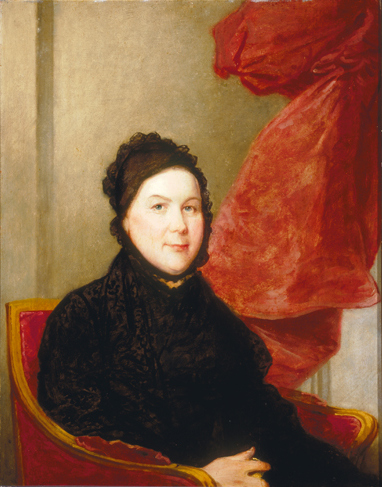
Catharine "Caty" Littlefield Greene (February 17, 1755 – September 2, 1814) was an American patriot who traveled to her husband, Continental Army General Nathanael Greene's, encampments during the American Revolutionary War. She entertained and comforted the soldiers, officers, and officer's wives. During that time she had four children and a fifth after the end of the war. Greene followed her husband, regardless of cold weather or illness in the camps, notably spending the winter at Valley Forge.

Key Information

During the war, Nathanael signed promissory notes for clothing and food for his soldiers in South Carolina. He was not repaid during his lifetime and through a chain of events the debt-ridden Greenes moved to Georgia to operate a rice plantation, relying on enslaved workers. They moved from the north to the plantation with Phineas Miller, the children's tutor. After Nathanael's death in 1786, Miller, successfully ran the plantation for a time. With the help of her friend Alexander Hamilton, arrangements were made with the federal government to repay the money that Nathanael spent to take care of his troops. Greene married Miller at the home of her friends, George and Martha Washington, in Philadelphia, in 1796.

She was a noted supporter of the inventor Eli Whitney. Her "extraordinary activity of mind, and tact in seizing on points, so as to apprehend almost intuitively, distinguished her through life. It enabled her, without apparent mental effort, to apply the instruction conveyed in the books she read, to the practical affairs of life".[1]

Early life

[edit]

Catharine ("Caty") Littlefield was born on February 17, 1755,[2][3][4][a] off the coast of Rhode Island Colony on Block Island, where her mother's family were among the first settlers in the 1660s. She was born into an upper-class family; her father John Littlefield was a member of the Rhode Island legislature.[2][3] Catharine was the second of five children born to John and Phebe (née Ray) Littlefield.[5]

Catharine spent her early childhood years with her family on Block Island, where she learned to ride a horse at a young age. There were no conveniences of villages or small towns, no schools or stores. The only public building was a meetinghouse.[7] Her mother Phebe died on April 30, 1761. She was buried in the Block Island Old Burial Ground in May.[5][8][9][b]

The Governor Greene Mansion, East Greenwich

At age ten,[10] Catharine and her younger sister were sent to live in East Greenwich with Catharine ("Kitty") Ray and William Greene, her aunt and uncle.[1][11] Both of her caretakers were active in local government and acquainted her with its inner workings. Her uncle was later the Governor of Rhode Island (1778–1786). Catharine received a formal education and lessons of domesticity.[2][3] Among the household's visitors were her aunt's friend Benjamin Franklin, and her uncle's relative Nathanael Greene.[3] Catharine corresponded with Franklin, his sister Jane Franklin Mecom, and his daughter Sarah Franklin Bache beginning in 1755, a habit that continued until 1790.[11][c]

Catharine had a happy childhood, enjoying dancing and riding. She visited family at Block Island, where Nathanael would meet her and enjoy dancing with her.[1] She had a quick, curious mind and enjoyed a multitude of topics, which made her "one of the most brilliant and entertaining of women", according to Elizabeth F. Ellet.[1]

Marriage to Nathanael Greene

[edit]
Nathanael Greene Homestead, Anthony, Coventry Town, Rhode Island, built in 1770, photograph between about 1930 and 1945, Tichnor Brothers collection, Boston Public Library

Beginning in 1772, Catharine was courted by Nathanael Greene, a fellow Rhode Islander, who was 12 years and six months her senior.[d] He was a merchant and a foundry worker.[11] Catharine married Nathanael on July 20, 1774, becoming Catharine Littlefield Greene. She expected a comfortable life with her husband in Coventry, Rhode Island.[2]

Revolutionary war

[edit]

The beginning of the war

[edit]
Charles Willson Peale, Nathanael Greene, 1783

After the initial Battles of Lexington and Concord of the American Revolutionary War (April 19, 1775 – September 3, 1783), Nathanael was made a brigadier general in the Continental Army and commander of Rhode Island's three regiments.[2][3] He was a patriot fighting against the British. A Quaker, Nathanael was banned from attending meetings after he served as a colonial legislator and an officer in the military.[11] Curious about the war, the pregnant Greene rode for a full day by horse and buggy from her home in Coventry to meet up with Nathanael at the American Army camp in Massachusetts.[6]

An officer's wife

[edit]

Greene spent some of her time at home and managed their business, but spent as much time as she could at military camps or at his headquarters, in housing that Nathanael arranged near where he was during the war.[13] She saw many of the battles,[3] including those in Boston, Philadelphia, New York, and Charleston.[11] Against her husband's wishes, Greene stayed near his headquarters and encampments as much as she could after she had their first child in 1776.[2]

Greene formed a camaraderie with others her husband was stationed with, often the one responsible for planning social events for the troops to have respite. She became friends of Lucy Flucker Knox, Alexander Hamilton, Martha and George Washington, and other officers and their wives.[2][14] Martha spent the winters in her husband's encampments, including Valley Forge and Boston. Lucy often stayed near her husband during the winter.[13] Wives of officers had assistance, whether servants, slaves, or, if necessary, assigned soldiers.[13]

Officer's wives organized dinner parties, dances, and balls for officers.[15] Nathanael wrote that "we had a little dance at my headquarters ... Upon the whole we had a pretty little frisk" in March 1779.[13] Greene danced with General George Washington at Valley Forge[11] and for three hours at Middlebrook.[16] Alexander Hamilton met his wife Elizabeth Schuyler at an event.[15]

According to author Mary Ellen Snodgrass, "she kept up intense scrutiny of military politics" and corresponded with Thomas Jefferson, Alexander Hamilton, and Henry Knox, the secretary of war.[11] She also communicated with Martha Washington.[11]

Philadelphia and New Jersey

[edit]

Greene stayed at Valley Forge during the winter,[2] living in a small hut,[17] or a house "far more elegant" than where Nathanael was housed.[13] Greene's lodging, 3 miles (4.8 km) from the main camp at Valley Forge, was used to entertain officers, including Jeremiah Wadsworth and Anthony Wayne.[18] She was visited by soldiers "in turn", who were suffering from cold and hunger and they received comfort, kindness, and cheer by her fireside. She lived among sickness, cold weather, suffering, and moments of joy, which endeared her to the soldiers and officers.[17]

In her various yearly efforts to join her husband, little seemed to deter her. On the verge of childbirth ... Frightened of sailing, and in danger of capture by a British patrol boat, she nevertheless took a boat across the Long Island Sound to get to New York City before the British attack. Facing a long journey along rutted roads and several nights in shabby inns along the way, she climbed in her carriage with her son and traveled from Coventry to Philadelphia to meet her husband.[19]

When Nathanael was encamped at Morristown, New Jersey, Greene stayed a year with the family of William Alexander, Lord Stirling, on their estate in Basking Ridge.[20]

Newport, Rhode Island

[edit]

Greene was in Newport, Rhode Island in 1780 and 1781, where the French General Jean-Baptiste Donatien de Vimeur, comte de Rochambeau, his officers, and troops were stationed.[21] In December 1781, Greene visited George and Martha Washington in Philadelphia, before meeting up with her husband in the south in April 1782.[21]

War in the south

[edit]

During Nathanael's command in the South, he faced harsh conditions without sufficient supplies and money.[2] In order to feed and clothe his soldiers during the winter, he personally guaranteed thousands of dollars to Charleston merchants.[2][22] He later discovered that the speculator, John Banks, through whom he had dealt was fraudulent.[23] At the end of the war, the merchants pressed him for payment on the notes, and judgments came down from South Carolina courts. He was without sufficient funds and heavily in debt.[24] Congress stated that Nathanael secured the loans without authorization and would not pay any of the debt. Nathanael sold off his property in Rhode Island and moved his family to Georgia.[2]

Motherhood during the war

[edit]

When Greene followed her husband during the war, she gave birth to five children.[2] In 1779, she had three children and was pregnant with their fourth child when Nathanael was made commander of George Washington's southern forces. Greene was not able to join her husband in Charleston, South Carolina, until 1781.[3] She split her time between staying with him at his headquarters and on the islands that gave her respite from the heat.[1] By this time, her children were George, Martha, Cornelia, and baby Nathanael Ray. Their fifth child, born by the end of the war, was Louisa.[3] They had two more daughters who died shortly after they were born.[25]

  • George Washington was born by February 1776, the place and date are unknown. He went with his mother to Nathanael's headquarters at Prospect Hill near Boston to help him recover from a bad case of jaundice. She stayed there until the end of the Siege of Boston campaign (April 19, 1775 – March 17, 1776).[26]
  • Martha "Patty" Washington, born on March 14, 1777,[27] in Potowamut (Nathanael's hometown). Greene, ill with pneumonia, was delayed several months in meeting up with Nathanael in New Jersey. Greene and her two children traveled over very difficult roads for four days to avoid the British and Tories. They ultimately made it to Abraham Lott's estate, Beaverwyck, in New Jersey, where she met up with Nathanael. Greene remained in Basking Ridge,[28] staying on the estate of William Alexander, Lord Stirling for a year.[20]
  • Cornelia Lott was born in 1779 when Nathanael and his troops where camped out at their house and grounds in Coventry. Nathanael, concerned about Greene's health, received approval for a leave from Washington so that he could attend to his wife while his troops marched to New York. Cornelia was born fragile and sickly, and it was not clear that she was going to live. When she began getting stronger, Nathanael returned to his soldiers.[29]
  • Nathanael "Nat" Ray was born in January 1780 at her husband's encampment at Morristown, New Jersey. A few weeks before her due date she traveled through a frigid snowstorm with her son George, but she left the girls behind.[6] Patty was on Block Island with Greene's father and Cornelia was with Nathanael's family in Potowamut. Greene gathered her three children and the new baby to Coventry in the summer of 1780.[30]
  • Louisa was born about March 1784[e] in Newport. Nathanael, with his family after the end of the war, sent their children to visit relatives for the birth of the baby.[33]
  • Catharine was born in Newport, after Louisa and by August 1785. A few of the children had whooping cough, but they survived. Baby Catharine had it too. Her throat closed up and she died.[34] Greene became despondent, ill, and pregnant again by the fall of 1785. Realizing she was pregnant again, Greene collapsed and required nursing care.[35]
  • A baby girl was born early April 1786 at Mulberry Plantation after Greene had an accidental fall. The premature baby died shortly after it was born.[36]

Green was a strict parent, and "none of her children ever thought of disobeying her". She also enjoyed playing with them.[1] When the war ended, Greene looked forward to having Nathanael home to share in the responsibility of raising the children and handling business and household affairs.[2] His presence at home "brought a peace of mind unknown to her since the conflict began."[37] With his return to the family as a whole, Nathanael became a light-hearted parental figure, helping to share the burden of raising children, without strict discipline.[37]

Recover funds from the war

[edit]

At the urging of a trusted adviser, Greene personally presented to the United States Congress a petition for indemnity to recover funds that Nathanael had paid to Charleston merchants. On April 27, 1792, President George Washington approved and signed an act that indemnified the Greene estate.[38]

In a happy letter to a friend, she wrote:

I can tell you my dear friend, that I am in good health and spirits and feel as saucy as you please—not only because I am independent, but because I have gained a complete triumph over some of my friends who did not wish me success—and others who doubted my judgement in managing the business and constantly tormented me to death to give up my obstinacy as it was called. They are now as mute as mice—Not a word dare they utter. O how sweet is revenge![2]

Plantation

[edit]
Historic marker for Mulberry Grove Plantation, Georgia

After the war, Nathanael was given land in Georgia[3] and farm land in South Carolina for his military service.[39] A slave plantation on the Savannah River called Mulberry Grove, in Chatham County, Georgia, was granted to him by the Georgia General Assembly in gratitude for his services during the war.[2] Nathanael decided to move the family, with the children's tutor Phineas Miller, in the fall of 1785.[3] Here, he hoped to make a living and pay off their debts[2] from what they earned on their rice, produced with slave-labor. Nathanael set aside his anti-slavery beliefs to operate the plantation.[40]

Greene, living on the frontier, far away from her family in Rhode Island, had to adjust to being the mistress of a struggling plantation.[2] According to Stegeman, "her dream of wealth and leisure, once the war was over, had been shattered; she could no longer count on even the most basic security."[40]

Greene saw her husband as a "tired, haggard ex-soldier who had given himself to a belief, had signed away his future life, in fact, for that cause."[41] She earnestly ran the plantation house with their domestic enslaved people. She also got to know members of her community.[2]

Nathanael's death

[edit]

Nathanael died suddenly on June 19, 1786, of sunstroke.[3] Greene assumed responsibility for managing the plantation. Nathanael still had debt from the war that needed to be paid off. Greene contacted all she knew who might be helpful and gained Alexander Hamilton's support to obtain the money from the government for the debt.[2]

After her husband's death, Greene met the pressures of rearing her children and handling Nathanael's devastated finances. The children's tutor, Phineas Miller, became the plantation manager and Mulberry Grove flourished by 1788.[3]

Cotton gin

[edit]
Drawing of Eli Whitney's cotton gin, circa 1795, original drawing by the United States Patent Office, courtesy of Textile Industry History

Greene met a young man named Eli Whitney, who tutored her neighbor's children,[42] but soon lost interest in that occupation. He preferred to study law.[1] With her encouragement he took up residence at Mulberry Grove and during that time he pursued his inventions, working in a room in the basement.[1][42] Greene considered him a mechanical genius.[1] Within a year he had produced a model for the cotton gin.[3]

In an 1883 article in The North American Review titled "Woman as Inventor", the early feminist and abolitionist Matilda Joslyn Gage claimed that Mrs. Greene suggested to Whitney the use of a brush-like component, which was instrumental in separating the seeds from the cotton.[11][43] Gage provided no source for this claim, and to date there has been no independent verification of Greene's role in the invention of the gin. Her daughter Cornelia Greene Skipwith Littlefield describes her mother's role in "perfecting" the cotton gin with Eli Whitney in a Century magazine article written by her granddaughter. The article also mentioned that she suggested using a brush to separate the seeds from the cotton.[44]

Second marriage and later years

[edit]
The Nathanael Greene Cottage, or Tabby House at Dungeness estate on Cumberland Island, southeast Georgia. Historic American Buildings Survey of Georgia.

Greene married Miller[3] on June 13, 1796, in Philadelphia[45] at the home of President and Martha Washington.[46] After selling Mulberry Grove in 1798, Greene and Miller lived at Dungeness plantation on the southern end of Cumberland Island, on land that Nathanael was awarded. Miller died in 1803.[3][11]

Aaron Burr showed up at the plantation after killing Green's friend, Alexander Hamilton, in the Burr–Hamilton duel (July 11, 1804). Unable to entertain the killer of her friend, she let him enter her home and she left. Greene returned when Burr was gone.[1]

Greene died of malaria at the plantation on September 2, 1814,[3][11] and she was buried there in the family cemetery.[1]

Notes

[edit]

References

[edit]

Bibliography

[edit]

Further reading

[edit]
Revisions and contributorsEdit on WikipediaRead on Wikipedia
from Grokipedia
Catharine Littlefield Greene (February 17, 1755 – September 2, 1814) was an American woman who married Revolutionary War general in 1774 and actively supported the Continental Army's campaigns by hosting soldiers, converting her home into a hospital, and joining her husband at encampments such as in 1777–1778. Following Greene's death from fever in 1786 amid heavy war-related debts, she relocated to the Mulberry Grove plantation near —a property confiscated from Loyalists and granted to her husband for military service—and managed its operations, including oversight of enslaved laborers, while raising their five children. In 1792, inventor arrived at Mulberry Grove as a private tutor for her children; during his stay, he conceived and constructed the , a mechanical device for separating fibers from seeds that revolutionized Southern , with Greene providing the venue, resources, and intellectual stimulation through conversations on agricultural challenges. She later remarried Phineas Miller, Whitney's business partner in promoting the gin, but faced ongoing financial strains from patent disputes and plantation economics until her death on .

Early Life

Birth and Family Background

Catharine Littlefield was born on February 17, 1755, in New Shoreham on , within the Colony of and Providence Plantations. She was the second of five children born to John Littlefield and Phebe Ray Littlefield. Her father, John Littlefield (1717–1796), served as a member of the colonial legislature, representing Block Island interests during the mid-18th century. Her mother, Phebe Ray (1733–1761), descended from one of the earliest settler families on , which had been established in the 1660s as an offshoot of mainland Puritan communities. The Littlefields belonged to the island's established landowning class, with ties to farming, shipping, and local governance amid 's isolated agrarian economy reliant on sheep husbandry and small-scale trade. Following Phebe Ray Littlefield's death on April 30, 1761, Catharine, then approximately six years old, relocated to on the mainland, where she was raised by , including her aunt Catharine Ray Greene, wife of Governor William Greene. This transition exposed her to broader colonial social networks in Warwick, a hub of Quaker-influenced commerce and politics, though her immediate family maintained no formal Quaker affiliation.

Upbringing and Influences

Catharine Littlefield was born in 1755 on , , into a family of colonial settlers whose ancestors had helped establish the island community in the 1660s. Her father, John Littlefield, served as a member of the legislature, placing the family within the upper echelons of colonial society, while her mother, Phebe Ray Littlefield, descended from early founders. In May 1761, at the age of six, Catharine witnessed her mother's burial on the isolated , an event that marked the end of her early island childhood and prompted significant family changes. Following Phebe's death, John Littlefield relocated with his children to the mainland, settling in , around 1765 when Catharine was approximately ten years old. There, she came under the care of her paternal aunt, Elizabeth "Lizzie" Smith Greene, wife of William Greene, a prominent , landowner, and future deputy (1778) and (1780). Catharine's upbringing in exposed her to a more refined social environment than Block Island's rural isolation, with her aunt serving as a key influence in shaping her manners, charm, and domestic skills. Elizabeth Greene, noted for her elegance and hospitality, provided a model of genteel womanhood in a household connected to Rhode Island's political and mercantile elite, fostering Catharine's early poise and adaptability amid the colony's growing revolutionary sentiments. As a young woman of the colonial era, her likely emphasized practical domestic arts, reading, and social graces rather than formal schooling, aligning with expectations for daughters of prosperous families.

Marriage and Family with Nathanael Greene

Courtship and Early Married Life

Catharine Littlefield, orphaned young and raised by her aunt, began a with in 1772 at age 17, with the approval of her uncle and father. Greene, a 30-year-old Quaker-turned-miller and ironworks owner from , frequently visited her household, fostering their relationship despite his physical ailments including a limp, , and a smallpox scar over one eye. The couple married on July 20, 1774, at the home of William and Catharine Greene, Nathanael's cousin and his wife; she was approximately 19 years old at the time. Following the wedding, they settled in , where Greene managed his iron forge and farm, anticipating a stable domestic existence amid Rhode Island's colonial economy. Their early married life, spanning less than a year before Greene's military involvement in the Revolutionary War, centered on establishing a ; Catharine adapted to rural while Greene pursued ventures that positioned him as a local leader. The onset of hostilities in soon disrupted this phase, drawing Greene into duties and separating the couple as he rose to prominence in the Continental Army.

Childbearing and Domestic Responsibilities

Catharine Littlefield Greene and married on July 20, 1774, after which she assumed primary responsibility for their household at the family farm in , where Nathanael operated an iron forge prior to the Revolutionary War. As the couple's family grew amid escalating colonial tensions, Catharine managed daily domestic operations, including child-rearing, provisioning, and estate oversight, often with limited assistance due to Nathanael's increasing military commitments. She bore five children between 1776 and the mid-1780s: George Washington Greene (born 1776), Martha Washington Greene (born 1777), (born January 29, 1780), Cornelia Lott Greene, and Louisa Catharine Greene. The births occurred during periods of separation or travel, with Catharine delivering , their fourth child, while visiting her husband's camp near . Domestic duties encompassed not only nurturing infants and young children—frequently boarding them with relatives for safety—but also corresponding with on family finances and health, as evidenced by his wartime letters expressing concern for her burdens.

Contributions During the Revolutionary War

Accompaniment to Military Campaigns

Catharine Littlefield Greene accompanied her husband, Major General , to several encampments and campaign theaters during the Revolutionary War, enduring the rigors of military life despite the risks to her safety and separation from her children. After their marriage on July 20, 1776, she joined him in , where he oversaw fortifications ahead of the British advance, remaining there until the evacuation following the in August 1776. In January 1778, Greene arrived at the Valley Forge winter encampment, leaving her infants George Washington Greene (born October 1776) and Martha Washington Greene (born May 1777) with relatives in Rhode Island; she resided in a small hut and hosted gatherings for officers' wives, including participation in the May 6, 1778, celebration of the Franco-American alliance, before departing in late May. She rejoined Nathanael at the Morristown, New Jersey, winter quarters in late 1779, pregnant with their fourth child, John, whom she delivered there in January 1780 amid ongoing supply shortages and harsh conditions affecting the army. Following Nathanael's appointment as commander of the Southern Department on October 14, 1780, Greene traveled southward to the Carolinas, joining him intermittently during the grueling guerrilla campaigns against British forces, though the mobile nature of operations limited prolonged cohabitation compared to northern winter quarters.

Social and Logistical Support

Catharine Littlefield Greene provided social support to the Continental Army by accompanying her husband, Major General , to various encampments, where her presence and vivacity boosted morale among officers and troops. She arrived at in January 1778 during the harsh winter encampment of 1777–1778, joining other officers' wives in sharing camp hardships and offering companionship that uplifted spirits through social interactions and her noted gaiety. There, she befriended key figures including Washington, the Marquis de Lafayette, and von Steuben, endearing herself to military leaders and contributing to the headquarters' social cohesion. In terms of logistical assistance, Greene converted the family home in Coventry, Rhode Island, into a hospital to aid in the smallpox inoculations of Continental Army troops prior to the 1775–1776 siege of Boston, facilitating medical care for soldiers. She traveled extensively to join Nathanael at sites like Morristown, New Jersey, in November 1779, where she resided at Arnold Tavern and supported headquarters operations by managing domestic arrangements amid wartime constraints. Her journeys continued southward after 1781, including to Charleston, South Carolina, and nearby islands, where she resided at headquarters despite the risks of active campaigns and family demands—by 1779, she had three children and was expecting a fourth—thus enabling Nathanael's focus on command. Greene extended practical aid by showing kindness to her husband's associates, such as alleviating the camp sufferings of Polish , and reportedly serving as an informal translator between French and American officers at , aiding communication in multinational forces. These efforts complemented the army's social fabric, as she participated in planning events that fostered unity among officers, though her primary impact stemmed from personal resilience in sustaining headquarters functionality under duress.

Experiences in Key Locations

Catharine Littlefield Greene first joined her husband at his headquarters on Prospect Hill near in 1776, traveling despite being pregnant with their first child, George Washington Greene, born that October. Her presence there allowed her to meet key figures, including , whom she described as a "thoroughly good and gracious lady," highlighting the social networks that supported officers' families amid of Boston. In January 1778, Greene arrived at the Valley Forge encampment in , leaving her two young children in to reunite with her husband during the army's severe winter hardships, including shortages of food and shelter that affected over 11,000 troops. At age 24, she contributed to morale by hosting social gatherings for officers' wives and participating in the May 6, 1778, celebration of the French-American alliance, which featured reviews, , and a feast for 400 attendees despite ongoing privations. Her efforts mirrored those of , emphasizing domestic stability in a camp where and exposure claimed hundreds of lives by June 1778. Greene relocated to , in November 1779, residing with her husband at Arnold Tavern in the town center during the Continental Army's winter quarters, a period marked by Nathanael Greene's role as amid supply crises and inflation plaguing the war effort. This encampment, sheltering about 6,000 soldiers, saw her manage household logistics in a tavern that also quartered other officers, fostering a semblance of civilian normalcy through entertaining and correspondence that sustained personal ties strained by the conflict. By January 1780, her presence there underscored the adaptive roles of officers' wives in supporting command structures without formal military duties.

Post-War Financial and Estate Management

Nathanael Greene's Death and Inherited Debts

died on June 19, 1786, at the age of forty-four from sunstroke while overseeing operations at Mulberry Grove plantation near . His sudden death left Catharine Greene, then thirty years old, as a widow responsible for their five surviving children and the family estates. Greene's financial obligations stemmed primarily from wartime advances and guarantees he made to supply the Continental Army, including endorsements for loans exceeding thirty thousand pounds sterling to procure provisions for the Southern campaign. Although had acknowledged these expenditures and promised reimbursement, delays in payment left Greene personally liable to creditors, forcing him to liquidate much of his property prior to his death. Upon his passing, Catharine inherited the remaining assets—primarily Mulberry Grove and a plantation—along with these accumulated debts, which overshadowed the estates' value and threatened their loss to . As executrix of the estate, Catharine immediately faced creditor claims and initiated sales of additional holdings to stave off immediate , while retaining the Georgia property in hopes of generating through rice cultivation. The inherited burdens, rooted in unreimbursed , positioned her in a precarious economic state, compounded by the postwar instability of the and the absence of timely federal relief.

Efforts to Recover Continental Congress Funds

Following Nathanael Greene's death on June 19, 1786, his estate inherited substantial liabilities from wartime financial obligations, including advances he had made to procure supplies for the , notably through a bond guaranteeing payments to Charleston merchants for goods obtained via agent John Banks amid supply shortages in the Southern Department. These expenditures, totaling significant sums in sterling and continental currency equivalents, had been undertaken on the expectation of congressional reimbursement, but delays and the weak postwar finances of the Confederation government left the claims unresolved during Greene's lifetime. Catharine Greene, as executrix of the estate, initiated persistent efforts to secure indemnification from the federal government under the new . In early 1791, advised by allies including , she traveled to to lobby directly, presenting a formal for relief from the bond's effects and related debts. Hamilton, as Secretary of the Treasury, supported her claim by submitting a detailed report on December 26, 1791, analyzing the bond's origins—traced to Greene's guarantee of Banks's contracts for army provisions in 1782—and recommending full indemnification to honor the government's implicit commitments to its officers. Congress responded affirmatively, passing legislation in April 1792 to address the petition. On April 27, 1792, President signed "An Act to indemnify the Estate of the late Nathanael Greene, for a certain bond entered into by him during the late war," which relieved the estate of the bond's principal and accrued liabilities, effectively reimbursing the advances Greene had made from personal credit. This outcome, yielding approximately $47,000 in value to the estate, alleviated a primary source of financial distress but did not fully resolve all lingering claims, prompting Greene to continue correspondence with federal officials, such as her March 1796 letter to seeking further advocacy amid implementation hurdles. Her direct involvement underscored the challenges widows faced in navigating early republican bureaucracy for military reimbursements, where personal persistence proved essential despite systemic delays in settling Revolutionary War accounts.

Operation of Mulberry Grove Plantation

Following Nathanael Greene's death on June 19, 1786, his widow Catharine Littlefield Greene, then 31 years old, assumed responsibility for operating the 2,141-acre Mulberry Grove plantation near , returning there with five of her children amid substantial inherited debts from her husband's unreimbursed Revolutionary War expenditures. The estate, originally developed in the 1730s as a mulberry nursery for production before shifting to cultivation with the introduction of enslaved labor in Georgia, primarily produced and corn under her oversight, leveraging the marshy coastal terrain suitable for tidal rice flooding. Catharine managed the plantation's enslaved workforce, which performed the labor-intensive tasks of rice planting, diking, flooding fields, and harvesting, though exact numbers during her tenure are not precisely documented in contemporary records; earlier owners had expanded slave holdings for rice expansion, and she later sold many enslaved individuals to offset debts. Facing declining land values, personal grief, and financial strain—including the loss of assets like carriages and furniture—she collaborated with Phineas Miller, the family's former tutor who became de facto manager by 1788, to pursue profitability through rigorous agricultural operations and legal efforts for federal reimbursement of Greene family claims against the Continental Congress. Initial operations showed some promise by 1788, with Catharine directing crop rotations and estate maintenance while hosting influential visitors, such as in 1791, to bolster social and potential economic networks; however, persistent debts and market challenges led to hard times, culminating in the plantation's sale in 1798. Her management emphasized self-reliance amid these pressures, rejecting earlier failed ventures like but adhering to as the core until emerging opportunities in .

Involvement in the Cotton Gin Development

Hosting Eli Whitney and Initial Encouragement

In the fall of 1792, Eli Whitney, a recent graduate of Yale College, arrived at Mulberry Grove plantation near Savannah, Georgia, at the invitation of Phineas Miller, who managed the estate and served as tutor to Catharine Greene's children. Greene, the widow of Revolutionary War General Nathanael Greene, hosted Whitney as a guest and potential additional tutor during a period when the plantation functioned as a social and intellectual hub for regional planters. This arrangement provided Whitney with direct exposure to the agricultural challenges of the area, including the tedious manual separation of seeds from short-staple cotton fibers, which limited the crop's viability despite its ease of growth in the local climate. Greene took an active interest in Whitney's observations and encouraged him to pursue a mechanical innovation to address the seed removal bottleneck, recognizing its potential to transform processing efficiency. Her prompting stemmed from practical familiarity with operations, where laborers spent extensive time on ginning by hand, often using rudimentary tools like fingers or rollers. Whitney, residing at Mulberry Grove, utilized available materials—such as wire from the parlor and a brush for cleaning—to construct initial prototypes in 1793. This early support from Greene included granting access to workspace and resources on the property, fostering the environment in which Whitney developed the core concept of a spiked to pull fibers through a grate while leaving seeds behind. Historical accounts, including Whitney's own correspondence, affirm Greene's role in spurring the initial effort, though the extent of her technical input remains a point of later contention among biographers. Primary evidence, such as Whitney's letters from the period, describe the collaborative atmosphere at Mulberry Grove without attributing the invention's design solely to him, underscoring Greene's facilitative encouragement as pivotal to overcoming the inertia of traditional methods. By March 1793, Whitney demonstrated a functional model to Greene and , marking the transition from idea to prototype under her plantation's auspices.

Specific Contributions and Patent Arrangement

Catharine Greene hosted Eli at Mulberry Grove plantation from late 1792, providing him with living quarters, space, and materials during the 's development. She encouraged Whitney, a recent Yale graduate tutoring her children, to address the inefficiency of manually separating seeds from short-staple fibers, which she described as unprofitable due to the labor required—up to a pound of seeds per pound of fiber. A documented specific contribution from Greene was her suggestion to Whitney of using a stiff-bristled , modeled after a , to sweep from the wire teeth of the gin's , resolving issues in his completed by March 1793. This improvement enabled effective and separation, though the core mechanism of hooked wires pulling fibers through a grate drew from earlier churka gins and Whitney's own innovations. Greene also offered financial support for early experimentation and fabrication, leveraging resources amid her ongoing debt recovery efforts. For the patent, Whitney filed his application on October 28, 1793, and received U.S. Patent No. 72X on March 14, 1794, listing himself as the sole inventor for a machine using a rotating drum with wire spikes to extract fibers, followed by a brush cleaner. Greene did not claim co-inventorship, reportedly at her own suggestion to Whitney, possibly to avoid public scrutiny as a woman or due to prevailing norms, though women were legally eligible for patents under the 1790 Patent Act. Instead, she backed commercialization through a partnership between Whitney and Phineas Miller, her plantation manager, who handled licensing and manufacturing; this arrangement granted Greene indirect economic stake via Miller, whom she married in 1796. Later 19th-century accounts, such as those by , elevated Greene's role to primary originator, asserting she conceived the gin and delegated construction to Whitney while insisting he take credit. These claims, however, lack contemporaneous primary evidence like letters or affidavits and appear amplified in for women's historical recognition, contrasting Whitney's own descriptions and crediting his design with inputs from Greene and . Empirical assessment favors Whitney as lead inventor, with Greene's verifiable inputs as facilitative rather than foundational, supported by documentation acknowledging her ideas amid collaborative origins.

Business Ventures and Economic Impact

After the 's development at Mulberry Grove plantation, Catharine Greene pursued business ventures tied to its commercialization through her second husband, Phineas Miller, who served as her estate overseer before their 1796 marriage. Miller formed a with in late 1793 to manufacture, , and sell , with Greene acting as a primary financial backer covering costs for production and patent defense. The partners installed gins on plantations, including at Mulberry Grove, and sought monopolistic control via licensing fees, but faced immediate resistance as planters built unauthorized copies to avoid royalties. Greene and Miller funded Whitney's protracted legal battles following the patent's issuance on March 14, 1794, including suits against Georgia infringers, yet court rulings often invalidated claims due to prior art allegations and legislative opposition, such as Georgia's 1796 refusal to enforce the patent. These disputes generated scant revenue—Whitney earned under $10,000 from licensing over 15 years—while draining resources and leading Greene and Miller to speculative investments, notably the 1795 Yazoo land purchase aimed at financing gin expansion but exposed as fraudulent, resulting in total losses exceeding $100,000. Financial strain forced the 1798 sale of Mulberry Grove for $20,000, insufficient to offset debts, prompting relocation to Dungeness plantation on Cumberland Island. Though Greene's ventures yielded personal economic hardship, her support enabled the cotton gin's dissemination, catalyzing transformative effects on the U.S. economy by mechanizing fiber separation from 1,000 pounds of seed per day per gin versus manual methods. exports surged from 500,000 pounds in 1793 to 4 million bales by 1860, comprising over half of U.S. exports by 1840 and fueling industrialization in the North while entrenching plantation in the , with production doubling nearly every decade post-1800. This expansion, indirectly stemming from Greene's facilitation of Whitney's work, amplified wealth disparities and sectional tensions, though her direct gains remained negligible amid ongoing litigations until Miller's death.

Second Marriage and Final Years

Union with Phineas Miller

Following the death of her first husband, , in June 1786, Catharine Littlefield Greene managed the Mulberry Grove plantation in Georgia while raising their five surviving children, with Phineas Miller serving as tutor to the children and gradually assuming responsibilities as plantation manager and business confidant. Miller, born in 1759 in , had studied at the and moved to Georgia around 1789, where he aided Greene in estate operations and legal matters amid ongoing financial debts from the Revolutionary War. By the early 1790s, a romantic relationship developed between Greene and , marked by a prolonged complicated by her responsibilities as a and mother; they formalized a legal agreement outlining property and marital expectations prior to , reflecting pragmatic considerations for her children's . The couple wed on May 31, 1796, in , with Washington attending as witnesses, an event underscoring Greene's continued ties to prominent circles. Their union blended personal companionship with economic partnership, as Miller took an active role in Greene's ventures, including support for Eli Whitney's patent efforts, though it did not alleviate the plantation's mounting debts; the marriage produced no additional children, and Miller died on December 7, 1803, at age 44 from a sudden illness while traveling. Greene outlived him by a decade, managing the estate as a once more until her death in 1814.

Ongoing Financial Struggles

Following her marriage to Phineas Miller on July 21, 1796, Catharine Greene continued to grapple with inherited debts from her first husband's Revolutionary War expenditures, compounded by unsuccessful ventures including the Yazoo land speculation of 1795, which was declared fraudulent and voided by the Georgia legislature in 1796, forcing sales of holdings at significant losses. The couple's partnership with Eli Whitney in cotton gin manufacturing dissolved in 1797 after repeated patent infringement lawsuits failed to yield enforceable protections or sufficient royalties, while a factory fire in spring 1795 further eroded capital invested in the enterprise. Despite initial profitability at Mulberry Grove under Miller's oversight, mounting back taxes led to the plantation's auction in 1800, prompting relocation to the Dungeness estate on Cumberland Island, Georgia, where operations proved insufficient to offset cumulative liabilities. Miller's death from unspecified illness on December 7, 1803, intensified financial pressures, as he left unresolved loans and legal entanglements tied to Whitney's pursuits and estate divisions. Greene sold portions of the Miller estate, including live oak timber, to cover fees and debts, yet persistent shortfalls required ongoing petitions to Congress for relief from Nathanael Greene's wartime claims, yielding partial reimbursements but no full resolution. By 1812, she faced a court-ordered payment of $60,000 related to the Miller estate, settled only fractionally through legislative aid before her death. These reversals left Greene in relative poverty during her final years, estranged from some children and reliant on estate remnants at Dungeness, where she succumbed to a fever on September 2, 1814, at age 59. Her last known correspondence, a letter to Whitney dated July 5, 1814, reflected enduring ties to failed business hopes amid personal hardship.

Death and Immediate Aftermath

Catharine Littlefield Greene died on September 2, 1814, at the age of 59 from a fever at Dungeness, the plantation on Cumberland Island, Georgia, where she had resided since selling Mulberry Grove in 1798. The illness struck in the last week of August 1814, coinciding with British forces burning Washington, D.C., during the War of 1812. She was attended by her children, daughter Louisa Shaw and son Nathanael Ray Greene, who were at her bedside. Greene was buried in the Greene-Miller Cemetery at , alongside her second husband, Miller, who had predeceased her in 1803. Following her death, her surviving children inherited interests in the properties, though ongoing financial strains from inherited debts and plantation operations persisted into the family's management. No public ceremonies or widespread contemporary notices are recorded, reflecting the remote location and the era's limited communication amid wartime disruptions.

Historical Legacy and Assessments

Recognition as Patriot and Plantation Manager

Catharine Littlefield Greene earned acclaim as a patriot for her direct support of the Continental Army during the Revolutionary War, including repeated visits to her husband General Nathanael Greene's encampments where she witnessed battles and aided troops. She braved the severe winter at in 1778, accompanying her husband amid public disapproval of women's presence in military settings. In , she converted her family home into a for wounded soldiers, facilitating organized relief efforts that contemporaries hailed as self-sacrificing . Her proximity to military leaders, including hosting , further solidified her reputation among Revolutionary figures. Following Nathanael Greene's death on June 19, 1786, Catharine assumed management of Mulberry Grove plantation in Georgia, navigating inherited debts from wartime confiscations of Loyalist estates. She enlisted Phineas Miller, tutor to her children, as operational overseer, and their collaboration restored profitability by 1788 through effective cultivation of and other crops. Historical accounts commend her business competence in sustaining the 3,000-acre property amid post-war economic strains, including a successful 1792 petition to —endorsed by President Washington—for reimbursement of her husband's unpaid military expenses exceeding $100,000. Greene's dual legacy as patriot and estate steward is reflected in modern honors, such as the U.S. Army's Catharine Greene Award, instituted in 2001 by the Quartermaster Corps to recognize exemplary support contributions, echoing her wartime . Assessments portray her not merely as a general's but as an resilient operator who transformed adversity into viability, though financial setbacks later forced the plantation's sale in 1798.

Debates Over Inventive Role and Gender Narratives

Historians debate the extent of Catharine Littlefield Greene's inventive contributions to the , with receiving sole credit in the U.S. patent issued on March 14, 1794, for a device featuring a hand-cranked with wire teeth to extract seeds from short-staple fibers. Contemporary accounts, including Whitney's correspondence, describe Greene's role as providing Mulberry Grove as a workshop in late 1792, discussing the inefficiencies of manual ginning, and offering financial backing amid patent disputes. While some secondary sources posit that Greene suggested the core separating mechanism—potentially drawing from earlier slave-operated roller gins—primary evidence attributes the patented innovations, such as the opposing brush to clean residual fibers, to Whitney's mechanical adaptations developed during his residence there. Claims elevating Greene to primary inventor emerged in the 19th century, notably from suffragist , who asserted without cited sources that Greene conceived the device and enlisted Whitney for construction, attributing the patent omission to legal barriers for women. Family recollections, such as those from Greene's daughter Cornelia Greene Skipwith, describe her "perfecting" the gin alongside Whitney, but these postdate the invention by decades and lack corroboration from Whitney's records or patent documentation. Rigorous assessments, including archival reviews, confirm Greene's facilitative influence—through encouragement and funding via her partnership with Phineas —but find no verifiable proof of her devising the operational design, positioning the narrative of co-invention as unsubstantiated rather than empirical fact. Gender-focused historical retellings in recent decades have amplified Greene's agency to underscore women's sidelined roles in early American , often framing Whitney as a mere under her . This perspective aligns with broader efforts to reattribute credit amid 18th-century laws effectively excluding women, yet it encounters evidentiary limits: Whitney's independent prototyping, informed by but not originating from Greene's input, drove the gin's viability, as evidenced by his Yale-honed and prior exposure to similar concepts. Such narratives, while rectifying archival oversights on , risk causal overreach by conflating support with origination, diverging from first-hand records that prioritize Whitney's agency in transforming conceptual need into functional machinery.

References

Add your contribution
Related Hubs
User Avatar
No comments yet.