Hubbry Logo
Tower City CenterTower City CenterMain
Open search
Tower City Center
Community hub
Tower City Center
logo
8 pages, 0 posts
0 subscribers
Be the first to start a discussion here.
Tower City Center
Tower City Center
from Wikipedia

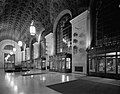
Inside the main shopping concourse in 2023

Key Information

Tower City Center is a large mixed-use facility in downtown Cleveland, Ohio, in its Public Square. The facility is composed of a number of interconnected office buildings, including Terminal Tower, the Skylight Park mixed-use shopping center, Jack Cleveland Casino, Hotel Cleveland, Chase Financial Plaza, and Tower City station, the main hub of Cleveland's four RTA Rapid Transit lines.

The structure was built in 1929 as Cleveland Union Terminal. On March 17, 1976, the complex was added to the National Register of Historic Places.

History

[edit]

Rail terminal

[edit]
The 1903 Group Plan with a union station on the waterfront

The building complex was originally commissioned by the Van Sweringen brothers, prominent local railroad moguls and real estate developers. The center of the complex was Cleveland Union Terminal (CUT), a terminal for all trains coming into Cleveland via the various railroad lines in a concept similar to Grand Central Terminal in New York City.[2]

When Cleveland Union Terminal was built, the train station allocated the northern set of tracks for interurban or rapid transit service and the southern set of tracks for inter-city rail service. The portion of the station above the interurban tracks was called the Traction Concourse and the portion above the intercity train tracks was called the Steam Concourse. The Van Sweringen brothers envisioned a network of interurban lines extending from the CUT in all directions. They even acquired right-of-way for some of the lines.

The complex was designed by the firm of Graham, Anderson, Probst & White. Site preparation began in 1922, and over 1,000 buildings were demolished. Construction began in 1926, and structural work was completed by 1927. At the time, it was the second-largest excavation project in the world after the Panama Canal. The Terminal Tower opened to its first tenants in 1928. From its completion until 1964, the Terminal Tower was the tallest building in North America outside of New York City. Three other office buildings, the Medical Arts Building, Builders Exchange Building, and Midland Building, were built in addition to the Terminal Tower. The three Art Deco buildings are collectively known as the Landmark Office Towers Complex and were completed in 1929. In addition to the new buildings, the 1918 Hotel Cleveland was connected to the complex. Cleveland Union Terminal was dedicated and officially opened in 1930.

The facility included a number of retail stores and restaurants. Original designs for the complex show that at first the brothers did not plan on building an office tower within the complex. However, they eventually decided to build the 52-story Terminal Tower on the northeast side of the complex facing Public Square.

In 1931, the Higbee Company moved its main store to a new building connected to Cleveland Union Terminal. In 1934, the U.S. Postal Service moved its main Cleveland office to Union Terminal in a new building designed by the firm of Walker and Weeks. It was known as M.K. Ferguson Plaza under the ownership of Forest City Enterprises.[3]

The Union Terminal served most rail lines: the Baltimore and Ohio Railroad, New York Central Railroad and Nickel Plate Road.[4] Exceptions were the Pennsylvania Railroad and initially the Erie Railroad.

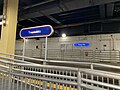
Former departure board

Notable trains, particularly for their destinations included:

  • Baltimore and Ohio Railroad:[5]
  • Erie Railroad, with the Pittsburgh and Lake Erie Railroad:[6]
    • Steel King (Cleveland–Pittsburgh, with morning and evening variations)
  • New York Central Railroad:[7][8]
    • Chicagoan (Chicago–New York)
    • Cincinnati Mercury (Cincinnati–Cleveland) (beginning in fall, 1951)[9]
    • Cleveland Mercury (Detroit–Cleveland)
    • Empire State Express (Cleveland–New York)
    • Fifth Avenue Special (Chicago–Cleveland-New York)
    • Iroquois (Boston–Chicago; in most years operating westbound only; in some years terminating in Cleveland, in some years having New York as the eastern terminus)
    • North Star (New York–Cleveland; in most years operating westbound only)
    • Ohio State Limited (Cincinnati–Cleveland–New York; in some years stopping for east-bound trips only, in other years running through the city without stopping)
    • Pacemaker (Chicago–Cleveland–New York; in some years stopping for east-bound trips only; in latter years: Cleveland–New York)
    • Southwestern Limited (St. Louis–Indianapolis–Cleveland–New York)
  • Nickel Plate Road (Norfolk and Western in final year of service):[10][11]
    • Nickel Plate Limited (Chicago–Buffalo) [later named City of Chicago westbound/City of Cleveland eastbound]
    • Blue Arrow (Cleveland–St. Louis)/Blue Dart (St. Louis–Cleveland)

However, the station was never particularly popular with the railroads. It required deviating from the quicker route along Lake Erie. As the city would not allow trains to operate under steam power near the downtown area, trains were forced to switch from steam to electric power at a suburban rail yard when heading inbound and then reverse on the way out at another yard. As a result, some lines began to bypass the station entirely, heading along the lake route, and some trains stopped serving the city altogether (examples of the latter case: the New York Central Railroad's Lake Shore Limited and the New England States).

Several east–west routes on the circuit of trains bound east from Chicago through northern Ohio bypassed the city, traveling slightly to the south, passing through Akron and Youngstown, as in the case of B&O and Erie mainlines. In addition, national passenger rail travel had already passed its peak and was starting its gradual decline in favor of the automobile and, later, the airplane. The Erie Railroad, owned by the Van Sweringens, could not afford the electric transfer and continued to use its own nearby station until 1948, when it replaced steam with diesel locomotives and was able to serve the Union Terminal under its own power.

By the end of 1965, the B&O and the Norfolk and Western (the successor to the Nickel Plate) had terminated their last trains that had served Cleveland. By the end of 1967, the New York Central had discontinued all named trains that had run through Cleveland. All that remained as passenger trains were unnamed successors to trains #51 (westbound Empire State Express), #90 (eastbound successor to the Chicagoan), #27/28 (successor to the New England States) and #63/#64 (Chicago–New York) trains.[12]

In the lead-up to the arrival of Amtrak, in 1970 the Erie Lackawanna ran an unnamed train to Youngstown.[13] The Penn Central (successor to the New York Central) Chicago-bound trains stopping at the terminal included an unnamed remnant of the Empire State Express and another unnamed train. East-bound, there was an unnamed successor to the New England States, as well as two other unnamed trains. Southwest-bound there was an Indianapolis-destined remnant of the Southwestern Limited and an Ohio State Limited remnant bound for Columbus.[14]

Amtrak's short-lived Lake Shore served Union Terminal for seven months in 1971. However, Amtrak found the rents prohibitive, and Cleveland's declining rail traffic did not begin to justify such a large facility. When the new Lake Shore Limited began in 1975, Amtrak chose to construct a new station near Lake Erie adjacent to the Cleveland Memorial Shoreway.[15] The new Amtrak station is located near the former Cleveland Union Depot, once served by the Pennsylvania Railroad. The former Erie Railroad commuter service, ultimately inherited by Conrail, was discontinued on January 14, 1977, ending the facility's use as a railroad station.[16]

Shopping mall

[edit]

Most of the platform area was demolished in the late 1980s renovation of the building. The station area itself was converted by Forest City Enterprises into a three-story, 367,000 square foot[17] shopping mall and food court known as The Avenue, which opened on March 26, 1990. As part of the renovation, RTA rebuilt its rapid transit station beneath the center. The rest of the platform area was turned into a parking garage for the new complex. When the already renamed Tower City Center reopened, the mall housed many high-end retailers, including Bally of Switzerland, Barneys New York, Fendi, Gucci, Versace, and even had a letter of intent from Neiman Marcus to build a 120,000-square foot anchor store in 1992.[18][19][20] Over the following 25 years, many of those shops were replaced by more-modest stores, some of them local retailers.[21]

In 1991, two new 11-story office towers, the Skylight Office Tower and the Chase Financial Plaza, were added. The Chase Building houses Cleveland's Ritz-Carlton Hotel and The Skylight Office Tower once housed the Hard Rock Cafe. After the completion of the nearby Gateway project in 1994, RTA built an indoor walkway connecting Tower City to the complex. A second walkway was built in 2002 to connect Tower City with the Carl B. Stokes U.S. Courthouse.

Higbee's (by then bought by Dillard's) closed its department store in the complex in January 2002. Positively Cleveland (formerly the Convention and Visitors Bureau of Greater Cleveland) and the Greater Cleveland Partnership (the local chamber of commerce) opened offices in the Higbee Building in 2007. Until late 2010, the Cleveland Plus Visitors Center occupied the first floor.[22][23][24] The building was opened on May 14, 2012, as the Horseshoe Casino Cleveland.[25] After Rock Gaming LLC assumed management of the Horseshoe, the casino was transformed into Jack Cleveland Casino and reopened on May 11, 2016.[26]

In 2001, Time Warner Cable Amphitheater opened as an outdoor stage along the Cuyahoga River near the Tower City Complex. A site on the Cuyahoga River side of the complex was proposed as a location for a new Cleveland convention center, but in January, 2009 the Cuyahoga County Commissioners decided to redevelop the existing facility.[27]

In July 2021 businessman Dan Gilbert's company Bedrock announced plans to convert the mall into a "retail marketplace" with a blend of retail and entertainment.[28] After renovations were completed in 2022, the main atrium was renamed to "Skylight Park".[29]

Former rapid transit stations

[edit]

Former Cleveland Transit System station

[edit]

The Red Line took the place of a never-completed interurban line. An additional vault for that line was located at Mayfield Road, now the Little Italy–University Circle station.

History

[edit]

The Shaker rapid transit remained the only service using the interurban portion of the CUT for 25 years. When the Cleveland Transit System built its rapid transit (later designated the Red Line) in 1955 (using much of the right-of-way previously developed by the Van Sweringens), another rapid transit station was built in the former interurban area of the CUT to serve it. Since the CTS Rapid Transit (Red Line) and the Shaker rapid transit (Green and Blue Lines) were owned by different entities at the time, there was no fare transfer between the trains, and the stations were entirely separate.

In 1968, the Cleveland Transit System line finished its extension through Cleveland's west side to Cleveland Hopkins International Airport and Cleveland became the first North American city with direct rapid transit access from downtown to an airport.[30]

Both lines became part of the Greater Cleveland Regional Transit Authority when it assumed control on September 5, 1975.[31] The two stations remained separate until December 17, 1990, when an entirely new station was completed with the development of Tower City Center.[32]

Former Shaker Rapid station

[edit]
Tower City
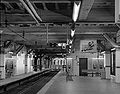
Temporary platforms in August 2016
General information
Owned byGreater Cleveland Regional Transit Authority
Construction
Structure typeUnderground
History
OpenedJuly 20, 1930
July 31, 2016
March 20, 2017
December 28, 2020
March 5, 2024
February 17, 2025
ClosedDecember 9, 1990[33]
November 26, 2016
April 2, 2017
2021
May 16, 2024
Previous namesPublic Square, Downtown Terminal, Cleveland Terminal
Original companyCleveland Interurban Railroad
Former services
Preceding station Rapid Transit Following station
2016, 2017, 2020, 2024, 2025
West 25th–Ohio City
toward Airport
Red Line Tri-C–Campus District
One-way operation
through to Waterfront Line Blue Line
Green Line
Settlers Landing Waterfront Line through to Blue and Green Lines
Until 1980s
Terminus Blue Line East 34th–Campus
Green Line East 34th–Campus
toward Green Road
Location
Map

These platforms opened with the extension of the Cleveland Interurban Railroad from just east of the ramp at East 34th Street and Broadway in 1930.

History

[edit]

Since the Van Sweringens-owned Cleveland Interurban Railroad which served the suburb of Shaker Heights, the interurban portion of the CUT was immediately occupied by the Shaker trains upon completion on July 20, 1930. (Previously, the Shaker trains had used streetcar tracks to reach downtown from East 34th Street, which caused significantly slower service.) The Shaker rapid transit station was located along the northernmost tracks of the complex, and it included a small yard for the storage of a few trains and a loop to allow trains to reverse direction. Development of the other interurban services, however, was stalled by the Great Depression, which hit the Van Sweringens particularly hard. By 1944, ownership of the Shaker rapid transit passed to the city of Shaker Heights.

The Shaker and Van Aken lines became part of the Greater Cleveland Regional Transit Authority when it assumed control on September 5, 1975. The two stations remained separate until December 17, 1990, when a completely new station was completed with the development of Tower City Center.[32]

The platform was temporarily re-opened for westbound passengers in 2016, 2017, 2020, 2024, and 2025.

See also

[edit]

References

[edit]
[edit]
Revisions and contributorsEdit on WikipediaRead on Wikipedia
from Grokipedia
Tower City Center is a major mixed-use complex in , , encompassing retail shopping, dining, entertainment venues, office spaces, hotels, and a key public transit hub, all integrated within and around the historic Cleveland Union Terminal building at 230 West Huron Road. Announced in 1986 by Forest City Enterprises and completed with its grand opening in 1990, the center was designed by architects RTKL Ohio Corp. and represents a pivotal project that renovated the 1930s-era terminal while adding new structures, including two 11-story towers and an expanded skylit atrium. Groundbreaking occurred on September 28, 1988, with further expansions in 1994–1995 to connect via a 1,000-foot indoor walkway to the Gateway Sports and Entertainment Complex, now home to Rocket Mortgage FieldHouse and . This development solidified Tower City as a cornerstone of 's downtown economic revival during the , blending —such as restored brass storefronts and the English Oak Room—with modern amenities like a centralized station and an 11-screen cinema. The complex features The Avenue, a retail promenade featuring a variety of specialty stores, alongside a and full-service restaurants offering diverse cuisines, all accessible seven days a week with hours from 11:00 a.m. to 7:00 p.m. through and noon to 5:00 p.m. on . It provides direct indoor access to the (RTA) rail lines, including , , and , as well as proximity to the and two on-site hotels, including The Ritz-Carlton, . In 2016, Bedrock—a real estate firm owned by Cleveland Cavaliers owner Dan Gilbert—acquired the retail portion of Tower City for $56.5 million from Forest City Enterprises, initiating ongoing revitalization to reposition it as a vibrant "marketplace" with new tenants, entertainment options, and community events. In 2022, Bedrock engaged architect Sir David Adjaye for further transformations of the center and adjacent riverfront. Recent enhancements include Skylight Park, an indoor greenspace launched in partnership with the Cuyahoga Valley National Park Conservancy, featuring seasonal Ohio native plantings, picnic areas, and family-friendly activations to draw visitors year-round. As of 2025, the center continues to host events like lunchtime concerts and pop-up experiences, maintaining its role as a pedestrian-friendly gateway to Public Square and Cleveland's cultural and sports districts.

Overview

Description

Tower City Center is a 17-acre mixed-use facility situated in , , that integrates office space, retail outlets, entertainment venues, services, and a multi-modal transit hub. Developed through of historic structures and new construction, it serves as a central node connecting commercial, leisure, and transportation activities in the city's core. The complex showcases Beaux-Arts and architectural styles, with the original design attributed to the firms Graham, Anderson, Probst & White and Walker & Weeks. On March 17, 1976, it was added to the as the Union Terminal Group (NRHP reference No. 76001405). Comprising interconnected high-rise towers, such as the iconic , along with multi-level underground concourses and retail arcades, Tower City Center exemplifies large-scale urban integration. Originally built as the Cleveland Union Terminal rail station, it has evolved into a cornerstone of 's urban revitalization efforts, fostering economic and cultural connectivity.

Location and Significance

Tower City Center is situated at 230 West Huron Road in downtown Cleveland, Ohio 44113, centered around Public Square with its iconic Terminal Tower at 50 Public Square, and encompassing a complex bounded by Huron Road to the north, Ontario Street to the east, and Prospect Avenue to the south. This strategic placement integrates the center directly into Cleveland's downtown grid, serving as a pivotal link between the financial district, including major office towers and corporate headquarters, and broader urban amenities. Approximately one mile south of Lake Erie, it enhances access to the city's waterfront while anchoring the core of downtown activity. As an economic anchor, Tower City Center generates significant employment and stimulates tourism in Cleveland, with its mixed-use design supporting over 1 million square feet of office space and attracting visitors through retail, dining, and entertainment offerings. It functions as a cultural hub, hosting events such as lunchtime concerts, family-friendly activations, and seasonal festivals that foster community engagement and attract foot traffic to the area. The center's role as the primary transit nexus for the Greater Cleveland Regional Transit Authority (RTA), where all four rapid transit lines converge alongside numerous bus routes, positions it as a key element in reducing car dependency by providing efficient multimodal access across the region and beyond. Since its origins in the 1930 Cleveland Union Terminal, Tower City Center has contributed to revitalization by serving as a transportation and business focal point that spurred urban development and economic resilience amid industrial shifts. The retail portion of the center is owned by , which acquired it in 2016; as of 2025, Bedrock's investments, including 2021 plans to reimagine the space as a destination and green initiatives like Skylight Park, emphasize mixed-use sustainability through pedestrian connectivity and to support long-term vitality.

Components

Architectural Features and Major Buildings

Tower City Center's architectural centerpiece is the Terminal Tower, a 52-story rising 708 feet (216 meters) in the Beaux-Arts style with influences, completed in 1930 as part of the Cleveland Union Terminal complex. At the time of its opening, it was the second-tallest building in the world outside , serving as a symbol of 's industrial prominence. Today, the tower primarily houses office space across its upper floors, while its lower levels integrate with the mixed-use complex, and it features a public offering panoramic views of the city and . Adjacent to and integrated within the Terminal Tower is the historic Hotel Cleveland, a 600-room luxury hotel originally opened in as part of the terminal building's design to accommodate travelers. The hotel occupies space in the tower's base and has undergone significant renovations, including a major $90 million restoration completed in 2024 that preserved its classical interiors while updating amenities for modern use. This maintains the hotel's role as a key hospitality component of the complex, blending historic grandeur with contemporary functionality. The Chase Financial Plaza, a modern 14-story building completed in 1991, adds approximately 200,000 square feet of leasable space to Tower City Center and connects to the main complex via a skybridge. Designed in a contemporary style, it contrasts with the historic core while enhancing the site's commercial capacity, primarily serving professional tenants with views of . At the heart of the complex lies the Skylight Concourse, a expansive central atrium featuring a vaulted glass ceiling that covers the of the original train sheds, transforming them into a light-filled spanning roughly 300 feet in length. This architectural element, added during the , serves as the primary circulation hub, allowing natural light to illuminate retail and transit areas below while evoking the site's rail heritage. Overall, Tower City Center exemplifies of 1920s rail infrastructure, incorporating opulent marble interiors, polished brass accents, and restored historic details throughout its structures. The complex provides over 2.2 million square feet of total space, with office accommodations exceeding 1 million square feet across its major buildings, supporting a diverse range of professional and public functions.

Retail, Dining, and Entertainment

Tower City Center's retail offerings are centered in its multi-level , spanning approximately 360,000 square feet across three levels and featuring a curated mix of specialty shops, pop-up vendors, and local brands focused on , , and lifestyle goods, with flexible spaces for emerging retailers. In 2022, owner reimagined the space—formerly known as The Avenue—into an experiential destination with pop-up shops, local vendors, and flexible leasing for emerging brands, emphasizing community-driven retail over traditional big-box anchors. Notable tenants include and as key anchors, alongside boutiques like Unscript'd and DTLR for apparel and accessories. At the heart of this area lies Skylight Park, an indoor greenspace unveiled in July 2022 that replaced a long-standing in the Skylight Concourse; it incorporates native plants, picnic tables, benches, and installations to create a serene urban oasis for shoppers and events. Dining at Tower City Center includes a variety of options, blending quick-service spots in the Eatery food hall with sit-down venues for varied tastes. Casual eateries dominate the lineup, including Charleys Philly Steaks for cheesesteaks, Dunkin' for and baked goods, Kelly's Cajun Grill for po'boys and , and Mixed Greens for salads, while recent additions like Cleveland Sandwich Co. and Shake & Slide bring local flavors such as stacked sandwiches and sliders. For upscale dining, offers premium steaks and seafood in an elegant setting within the complex. The Eatery functions as a central hub, providing grab-and-go meals amid the retail bustle and supporting the marketplace's emphasis on convenient, diverse culinary experiences. Entertainment options anchor Tower City Center's leisure appeal, with the serving as a major draw since its opening in May 2012 within the renovated Higbee Building. The casino spans approximately 96,000 square feet of gaming space, featuring around 1,300 slot machines, about 100 table and poker , and electronic tables, complemented by lounges and bars for a full experience. Beyond gaming, the center hosts year-round events in its open concourses and Skylight Park, including free lunchtime series, pop-up performances, family activities like face , and celebrations such as Noon Year's Eve parties with live music and countdown festivities. These activations transform the space into a vibrant gathering spot, fostering community engagement through seasonal programming. As of 2025, revitalization efforts continue with seasonal events and support for local businesses. Economically, Tower City Center plays a pivotal role in downtown Cleveland by drawing significant foot traffic—contributing to the area's 57.3 million annual visits (as of ) from residents, workers, and tourists—and bolstering local businesses via its experiential retail and event focus. The 2022 marketplace pivot under Bedrock has prioritized pop-ups and vendors from the region, enhancing support for small enterprises while integrating with pedestrian links to nearby venues. This model sustains vitality amid urban revitalization, attracting diverse crowds to the historic core.

Transportation Hub

Tower City station serves as the primary hub for the (RTA) Rapid Transit system, integrating the , , Green, and Waterfront lines to facilitate efficient multimodal travel across the region. The station, which opened on December 10, 1990, as a consolidation of previously separate rail operations into the historic Cleveland Union Terminal structure, handles an estimated 30,000 daily passengers, underscoring its role as a vital gateway for commuters, visitors, and event attendees in . This central convergence point enables seamless transfers between lines, with the Line providing airport connections and the Blue and Green lines serving eastern suburbs via Shaker Heights, while the Waterfront Line offers limited service to the lakefront area. The infrastructure at combines subway-level platforms for the Red Line with elevated tracks for the and lines, ensuring direct indoor pedestrian access from the station to the retail, dining, and office levels of Tower City Center above. This integrated design minimizes weather exposure and enhances convenience, allowing passengers to move effortlessly between transit and the complex's amenities. Complementing the rail services, numerous RTA bus routes converge near the station, providing regional connectivity, while the RTA Trolley operates short loops between Tower City, the Warehouse District, and the along Superior and Lakeside Avenues. An adjacent accommodates approximately 2,200 vehicles, supporting park-and-ride options for those accessing the hub by car. Beyond current operations, Tower City Center is positioned as a potential mini-hub for , with ongoing proposals in 2025 to restore Amtrak's stops and extend the into , leveraging the existing tracks for enhanced commuter and tourist services. These developments, advocated by groups like All Aboard , aim to revitalize the facility's historic rail prominence and integrate it further into national and regional networks; as of November 2025, they remain under discussion without implementation.

History

Construction as Cleveland Union Terminal

The Cleveland Union Terminal was commissioned in 1923 by real estate developers Oris P. and Mantis J. Van Sweringen to consolidate the city's fragmented rail lines into a single, modern passenger hub, replacing the outdated Cleveland Union Depot. The brothers, who had gained prominence through their development of Shaker Heights, envisioned a grand complex that would serve as both a transportation center and a catalyst for downtown revitalization. Construction officially began in 1926 and spanned four years, culminating in the terminal's completion in 1930 at a total cost of approximately $100 million—equivalent to about $1.8 billion in 2025 dollars. The project represented one of the era's most ambitious engineering endeavors, involving the demolition of over 1,000 buildings and the excavation of 2.5 million cubic yards of earth, making it the largest such project in the world after the . Foundations were sunk up to 250 feet deep to reach bedrock, supporting extensive viaducts, bridges, and an electrified rail network that spanned 17 miles. At the heart of the terminal lay a vast underground with 12 through station tracks sheltered beneath a massive glass-vaulted , allowing to illuminate the platforms while accommodating efficient passenger flow for intercity trains. The terminal opened to the public on June 28, 1930, marking the peak of rail travel in Cleveland and serving major carriers including the New York Central Railroad, Pennsylvania Railroad, Nickel Plate Road, Big Four Railroad, Erie Railroad, and Baltimore & Ohio Railroad. From its inception, the complex integrated key components such as the 708-foot Terminal Tower—completed in 1927 and briefly the second-tallest building in the world—and the adjacent Hotel Cleveland, originally constructed in 1918 but designed with the broader terminal project in mind to provide lodging, retail, and office spaces. This unified design not only streamlined rail operations but also positioned the site as a multifaceted urban landmark.

Closure of Rail Operations and Initial Decline

The decline of passenger rail service at Cleveland Union Terminal marked a significant for the complex, culminating in the final departure of commuter trains on January 14, 1977. These trains, operated by on former Erie Lackawanna routes, represented the last vestiges of scheduled rail passenger activity at the facility, following Amtrak's assumption of intercity services in 1971, which had already shifted long-distance operations to a new splash lakeside station. The cessation was exacerbated by broader in , including population loss and economic challenges that diminished demand for downtown rail travel. Following the closure, the terminal's extensive track network, which had once supported up to 37 platforms, was largely dismantled, with weeds overtaking the former rail yards as freight operations assumed limited use of surviving approach lines outside the core area. The grand station , once bustling with travelers, fell into underuse, becoming a largely empty space punctuated by sporadic events like public gatherings or temporary exhibits, while and general neglect contributed to physical deterioration amid Cleveland's stagnation. High vacancy rates plagued the Terminal Tower's office spaces during the late 1970s and 1980s, reflecting broader economic woes, though some leasing persisted for government and corporate tenants. Preservation efforts gained momentum with the Union Terminal Group's designation on the on March 17, 1976, which highlighted the architectural and historical significance of the complex and prompted early discussions on to prevent further decay. This listing, administered by the , underscored the need to repurpose the underutilized structure amid ongoing economic pressures, setting the stage for potential revitalization while the site hosted intermittent activities to maintain basic functionality.

1990s Redevelopment and Expansion

In the mid-1980s, Forest City Enterprises, Inc., which had acquired the Cleveland Union Terminal properties in 1982, initiated a major to transform the aging complex into a modern mixed-use center. Planning began in October 1986, with groundbreaking occurring on September 28, 1988, and the total development cost reaching approximately $388 million. The involved of historic structures like the Terminal Tower and former , alongside new construction, and was designed by RTKL Corp. to integrate retail, office, hotel, and transit elements. A key component was the addition of The Avenue, a three-level retail mall spanning 361,000 square feet of gross leasable area, which opened to the public on March 29, 1990. This space featured over 100 stores, an 11-screen cinema complex, and a , with architectural nods to the site's history such as restored brass storefronts and the English Oak Room. The mall's debut drew widespread acclaim and marked the first major retail anchor in in decades, helping to anchor the complex's role as a commercial hub. Remaining construction, including office and hotel components, was completed by early 1991. Transit integration was central to the redevelopment, with the (RTA) consolidating its operations into a new underground station at Tower City, which opened on December 17, 1990. This facility merged the , , and Lines, streamlining service and replacing older platforms, while the former Shaker Rapid station was closed on December 10, 1990, as part of the consolidation. The updated station enhanced connectivity, boosting daily ridership to around 30,000 passengers and facilitating seamless links between rail, bus, and pedestrian pathways. Further expansions in the mid-1990s strengthened the center's ties to surrounding developments, including the construction of a 1,000-foot enclosed walkway connecting Tower City to the Gateway Sports and Entertainment Complex, which opened in 1994 with Jacobs Field and Gund Arena. This linkage created a pedestrian-friendly corridor for sports events and entertainment, drawing additional visitors to the area. Additionally, Forest City laid groundwork for potential expansions on adjacent land south of Huron Road, including sites earmarked for gaming facilities, though these plans were delayed and not realized until the 2010s. The had a profound revitalizing effect on , serving as a catalyst for broader economic recovery by increasing foot traffic through integrated transit and retail amenities, and stimulating property values and investment in nearby blocks. By underutilized rail infrastructure into a vibrant urban node, the project helped reverse years of decline and positioned Tower City as a cornerstone of the city's resurgence.

21st-Century Ownership and Renovations

In 2016, Bedrock Real Estate Services, a company owned by Cleveland Cavaliers owner , acquired The Avenue Shops at Tower City Center from Forest City Enterprises for $56.5 million, including approximately 3,000 associated parking spaces. This purchase marked Bedrock's entry into Cleveland's market, building on Gilbert's existing interests in the , including the adjacent operated by his Jack Entertainment in the historic Higbee Building, which has been leased for casino operations since 2011. Under Bedrock's ownership, Tower City Center has shifted toward a mixed-use destination emphasizing local retail, , and public spaces. A key renovation occurred in 2022, when transformed the Skylight Concourse's long-standing central fountain into Skylight Park, an indoor greenspace featuring trees, plants, benches, picnic tables, and seasonal plantings in partnership with the Conservancy for . The project, which included upgraded lighting fixtures and new public amenities, aimed to create a welcoming respite amid the urban environment and support local vendors through curated marketplace activations. These changes were part of broader revitalization efforts to reposition the center as a community hub, with event programming such as performances and gatherings enhancing visitor engagement. By 2025, Tower City Center had hosted family-oriented activations and major events, including fan experiences tied to the (MAC) Men's Basketball Tournament at nearby Rocket Arena, such as watch parties and themed promotions to draw crowds. These initiatives contributed to post-COVID economic recovery, aligning with downtown Cleveland's retail occupancy reaching approximately 80% by mid-2023 amid new tenant openings and reduced vacancies from earlier lows. Looking ahead, announced proposals as of March 2025 for integrating Tower City as an Amtrak mini-hub and connecting it to service, potentially restoring passenger rail access to the historic terminal while incorporating sustainability measures like energy-efficient upgrades.

Connections and Expansions

Tower City Center features a network of enclosed walkways and skybridges that provide climate-controlled connections to adjacent developments, facilitating seamless movement for commuters, shoppers, and event attendees. These links, primarily constructed during the and early as part of revitalization efforts, integrate the center with key civic and entertainment destinations. A prominent connection is the 1,000-foot enclosed Walkway to Gateway, an elevated glass-and-steel skybridge linking Tower City Center's food court directly to the Rocket Mortgage FieldHouse lobby. Completed in 1994 alongside the Gateway sports complex, this pathway extends access to and supports efficient flow from the transit hub to sports venues, offering views of the while shielding users from weather and street traffic. Another vital link is the enclosed pedestrian corridor to the Carl B. Stokes U.S. , built between 1997 and 2002, which connects the center's retail areas to the federal building at 801 Superior Avenue, enhancing daily accessibility for courthouse visitors and integrating with the system. Indoor pathways also tie into nearby office towers, including , allowing protected navigation across the Public Square district. These connections enable round-the-clock, weather-protected transit between Tower City Center and destinations, promoting pedestrian-friendly urban mobility without exposure to Cleveland's variable climate. In 2022, under owner Bedrock's management, upgrades to lighting were implemented in adjacent downtown public spaces to improve user experience.

Adjacent Developments

Key Tower, a 57-story skyscraper completed in January 1992, rises across Ontario Street from Tower City Center as the centerpiece of the Key Center complex on the northeast edge of Public Square. Standing at 948 feet including its , it holds the distinction of being Ohio's tallest building and anchors a shared downtown office ecosystem with over 1.5 million square feet of commercial space. The 2016 revitalization of Public Square transformed the historic 10-acre site into a unified park-like destination directly abutting Tower City Center, featuring green spaces, monuments, and facilities for public events and transit integration. This $50 million project, completed over 15 months, enhanced the area's role as a central gathering point in by unifying previously divided quadrants and promoting pedestrian activity. Bedrock's Cuyahoga Riverfront Master Plan, approved by Cleveland's Planning Commission in February 2025, outlines a $3.5 billion, multi-phase mixed-use development across 35 acres along the Cuyahoga River, incorporating over 12 acres of public parks, a 3,000-foot riverwalk, residential units, retail, and offices to extend Tower City Center's reach toward the waterfront. Initial infrastructure construction began in October 2023, with the 15-to-20-year timeline emphasizing transit-oriented design and direct pedestrian connections from Tower City Center to foster economic and recreational expansion; as of November 2025, early phases including public infrastructure improvements are progressing. Adjacent to Tower City Center, the at 1455 East 6th and the Cuyahoga County Justice Center at 1200 Ontario contribute to a prominent civic cluster, housing key financial and judicial institutions that underscore the site's governmental significance in .

Former Rapid Transit Stations

Cleveland Transit System Station

The Cleveland Transit System (CTS) station at Tower City Center originated as a key component of the Red Line subway, opening on March 15, 1955, to provide heavy-rail service from the lower levels of the historic Cleveland Union Terminal. This underground facility, constructed by the CTS, spanned approximately 7.8 miles eastward to in East , utilizing tracks shared with the Shaker Heights up to East 34th . The station's design integrated directly into the terminal's substructure, facilitating seamless access for downtown commuters and marking a significant expansion of 's public transit infrastructure post-World War II. During its operational tenure from 1955 to 1990, the CTS station—later managed by the (RTA) after 1975—served as a vital hub for peak-hour commuter traffic on the Red Line, accommodating daily flows of workers and residents traveling to and from the city's core, though overall system ridership fluctuated amid broader urban decline. The facility handled high-volume service with "" cars. Its location in the terminal's lower levels supported efficient vertical circulation within the complex, connecting subway platforms to street-level amenities and remaining a of CTS/RTA operations for over three decades. The station's closure occurred as part of the expansive 1980s redevelopment of Cleveland Union Terminal into Tower City Center, culminating in its demolition and integration into a unified RTA rapid transit hub on December 17, 1990. This rebuild centralized all rapid lines—including the Red, Green, and Blue—under one modern facility in the complex's lower levels, streamlining passenger flows and eliminating the need for separate CTS and Shaker stations. The project, led by Forest City Enterprises, transformed the aging infrastructure into a contemporary transit node completed by early 1991, enhancing overall connectivity without preserving the original CTS layout. The legacy of the former CTS station lies in its role enabling direct transfers between interurban rail services and subway lines during the mid-20th century, a function that supported Cleveland's commuter ecosystem until rail operations ceased in 1977. Post-1990 merger, no elements of the original station have been reopened, with its contributions fully absorbed into the ongoing operations of Tower City as RTA's primary downtown interchange. This integration has sustained the site's importance as a multimodal gateway, referenced briefly in the context of the broader 1990s redevelopment that revitalized the surrounding area.

Shaker Rapid Station

The Shaker Rapid Station opened on July 20, 1930, adjacent to the newly completed Union Terminal, marking the integration of the Shaker Heights Rapid Transit line into the downtown rail network. This street-level facility served as the western terminus for the Shaker Heights line, which later became the Green and Blue Lines of the (GCRTA) system, facilitating direct access for commuters traveling from Shaker Heights suburbs to central . Positioned along the surface tracks near Public Square, the station handled interurban-style electric rail cars, providing a vital link for residential and commercial traffic in an era when street-level was central to urban mobility. For six decades, the station played a pivotal role in serving Shaker Heights commuters, accommodating peak-hour crowds and supporting the growth of the surrounding ' planned developments. However, it closed on December 9, 1990, as part of the broader Tower City Center redevelopment project, which involved rerouting the and underground to connect with the existing Red Line station and consolidate operations into a unified transit hub. This closure reflected shifting priorities toward integrated multimodal facilities amid declining interurban ridership and efforts. The station saw brief temporary revivals in 2016–2017, 2021, and on May 16, 2024, during major GCRTA on the Shaker lines, when surface tracks were reactivated to maintain service continuity while underground infrastructure was upgraded. These short-term operations, lasting several months each, allowed and Line trains to bypass ongoing repairs east of , using the historic platforms for inbound and outbound routes. Following these periods, the station was fully decommissioned, with permanent track rerouting ensuring all regular service operates via the subterranean Tower City platforms. As a symbol of Cleveland's transit from railways to modern , the former Shaker Rapid Station site underscores the transition from surface to integrated underground systems in response to and redevelopment. Today, the area has been repurposed within Tower City Center, enhancing pedestrian access to adjacent retail spaces and the , which occupies the renovated former department store building opened in 2012.

References

Add your contribution
Related Hubs
User Avatar
No comments yet.