Hubbry Logo
Colada moradaColada moradaMain
Open search
Colada morada
Community hub
Colada morada
logo
8 pages, 0 posts
0 subscribers
Be the first to start a discussion here.
Colada morada
Colada morada
from Wikipedia
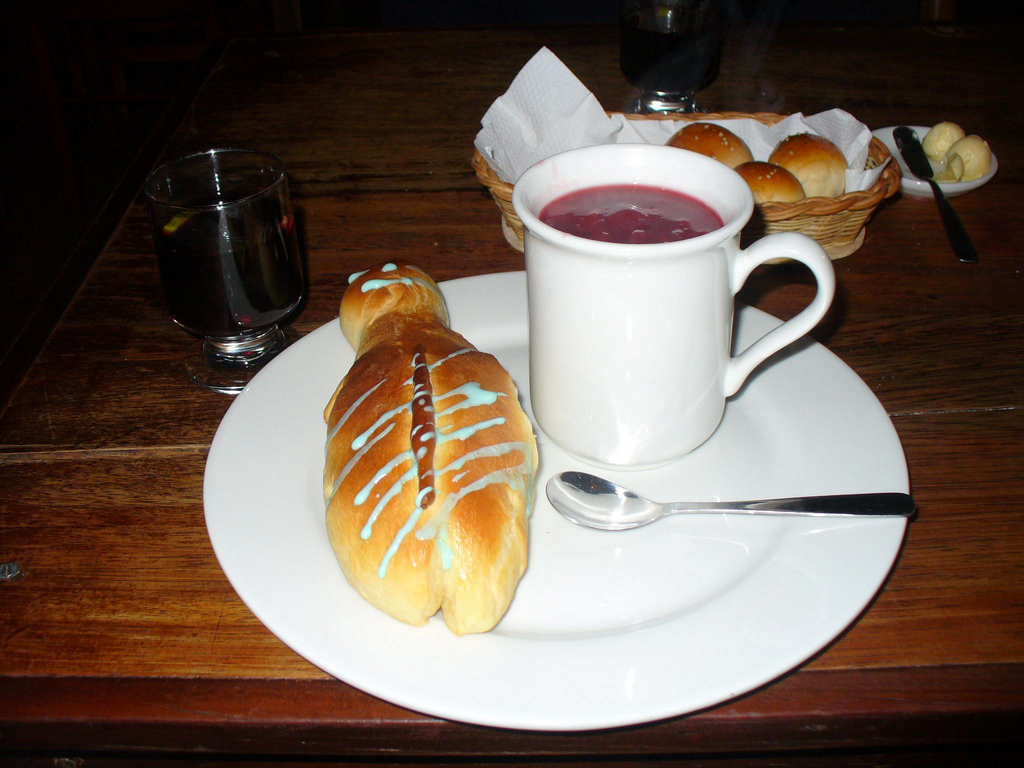
Colada morada served with a t'anta wawa

Colada morada is a drink that is part of Ecuador's gastronomic culture along with t'anta wawa bread dolls. It is a purple and thick liquid that is prepared with typical fruits of Ecuador, spices and corn flour.

This drink is traditionally consumed on November 2, a holiday called All Souls' Day or Day of the Dead,[1] along with the so-called t'anta wawa (bread usually of non-ordinary flavor and various fillings that has the shape of a doll, hence the name) which are representations of the dead wrapped in a blanket.[2]

The origin of this drink dates back to pre-Columbian times, where the ancestral peoples related to harvest and planting as synonyms of life and death. Indigenous people from the Ecuadorian mountain range celebrated the rainy season and in turn worshipped their relatives who had died. Being the Colada Morada as a symbol of a happy journey from life to death. For the same reason, they exhumed their dead and shared with them this traditional drink. As a great example in which they celebrated with the colada morada based on the blood of the llamas is the Quitu-Cara culture.[3]

After being colonized by the Spaniards, the tradition was adopted by them and they transformed it into a religious offering, also with their arrival, they brought products like wheat, with this product as a base, they created the t'anta wawa that we now know, and they supplanted the zapallo tortillas cooked in the pot, which was what the Indians commonly ate in this celebration.

Although the tradition is to eat it on the day of the dead, its consumption is usually marketed in the month of October and November.

Preparation of colada morada in steel pot

Ingredients

[edit]

Colada morada is mainly prepared with purple corn flour, which gives it its thick consistency. Some people, instead of corn flour, use corn starch, fruits such as naranjilla, pineapple, strawberry, babaco, guava, blackberry or mortiño (wild blueberry from the Andean paramo). It also carries a number of aromatic herbs and barks, such as cinnamon, cloves, ishpingo, sweet pepper, orange leaf, lemongrass, lemon verbena, etc. To sweeten, sugar or panela is used.[4]

See also

[edit]

References

[edit]
[edit]
Revisions and contributorsEdit on WikipediaRead on Wikipedia
from Grokipedia
Colada morada is a traditional Ecuadorian beverage known for its thick consistency and distinctive deep purple hue, made primarily from purple maize flour combined with a blend of native fruits, spices, and sweeteners. It is a staple of the country's culinary heritage, particularly associated with the celebrations on November 2, referred to as Día de los Difuntos, where it serves as a comforting drink to honor the deceased. The drink's origins trace back to pre-Columbian Andean indigenous traditions, where similar preparations using native ingredients symbolized cycles of life, harvest, and death, later evolving through Spanish colonial influences that introduced elements like cinnamon and cloves, resulting in a creolized form reflective of Ecuador's biocultural diversity. Key ingredients typically include purple maize (Zea mays L.), Andean fruits such as Rubus glaucus (mora or Andean blackberry), Vaccinium floribundum (mortiño or Andean blueberry), Solanum quitoense (naranjilla), and Vasconcellea × heilbornii (babaco), along with herbs like Aloysia citrodora (lemon verbena) and Myrcianthes fragrans (arrayán), spices including ishpingo (Ocotea quixos), clove, and cinnamon, and sweeteners like panela. Culturally, colada morada embodies themes of remembrance and communal bonding, frequently paired with guaguas de pan—sweet breads shaped like infants or animals—to form part of the mesa de los difuntos (altar of the dead), inviting the spirits of ancestors to partake in the festivities and bridging the living with the departed in a syncretic blend of indigenous and Catholic practices. Its coloration, derived from the fruits and , is said to evoke and the of , underscoring its role in rituals that celebrate continuity across generations and Ecuador's rich ethnobotanical traditions.

History

Pre-Columbian origins

The origins of colada morada trace back to pre-Columbian indigenous cultures in the Andean region of , where corn-based beverages played a central role in rituals honoring ancestors and marking agricultural cycles. These early practices, dating to before the and the arrival of Inca influence in northern , involved offerings of thick, porridge-like drinks made from native grains to symbolize the interconnectedness of life, death, and renewal. These practices were further influenced by Inca traditions, such as the Aya Marcay Quilla celebrations for honoring the dead, upon their arrival in the region in the late . Indigenous groups in the plateau and surrounding highlands prepared such beverages during harvest festivals and veneration ceremonies, viewing them as sacred means to communicate with the deceased and ensure communal prosperity. A staple ingredient in these pre-Hispanic formulations was (Zea mays L.), a variety cultivated extensively in the for its nutritional value and vibrant hue, which held spiritual significance as a sacred representing fertility and the earth's bounty. This corn was ground into and combined with local herbs, fruits, and grains to create nutrient-dense drinks consumed in communal rituals, reflecting agricultural practices that sustained highland societies for millennia. The use of purple corn underscored beliefs in its life-giving properties, often incorporated into ceremonies that paralleled planting and harvesting as metaphors for death and rebirth. Early versions of these beverages may have included symbolic elements evoking blood and sacrifice, such as amaranth (Amaranthus quitensis Kunth), whose red dye mimicked vital fluids in offerings to the dead, tying into broader Andean concepts of renewal through ritual exchange. These practices predated European contact and were adapted into the modern colada morada during the colonial period.

Post-colonial development

Following the Spanish conquest of the Andean region in the 16th century, colada morada evolved through a process of cultural syncretism, adapting indigenous ancestor-honoring rituals to align with Catholic observances. What was once a pagan offering tied to pre-Hispanic cycles of life, death, and agricultural renewal was transformed into a compatible element for All Saints' Day (November 1) and All Souls' Day (November 2), known as Día de los Difuntos in colonial Ecuador. This integration allowed indigenous communities to maintain spiritual practices under Spanish rule by merging them with Christian commemorations of the deceased, fostering a creolized tradition that symbolized rebirth during the onset of the rainy season. The beverage's core indigenous foundation—purple corn (Zea mays L.) as the primary base, evoking the earth's fertility and the of —was preserved, but colonial influences introduced European ingredients that enhanced its flavor and texture while ensuring compatibility with Christian rituals. Spices such as and cloves, along with sweetness from , were incorporated, shifting the drink away from any pre-colonial elements potentially viewed as incompatible, such as symbolic associations in ancestral offerings, toward a strictly plant-based preparation. Concurrently, the Spanish introduction of revolutionized accompanying customs, enabling the production of guaguas de pan—bread dolls shaped like children or animals that represent the souls of the departed and pair with the colada morada as a balanced offering of liquid and solid sustenance. By the 19th and 20th centuries, colada morada had achieved widespread commercialization across , particularly in urban centers like and Cuenca, where it transitioned from exclusive home preparation to market sales by vendors during the seasonal October-November period leading to Día de los Difuntos. This commercialization amplified its role as a shared cultural emblem, with street markets and bakeries producing large quantities of the beverage and guaguas de pan, making the tradition accessible beyond familial settings while preserving its ritual essence.

Cultural significance

Role in Day of the Dead

Colada morada holds a central place in Ecuador's Día de los Difuntos celebrations, observed nationwide on , which coincides with , as families honor the deceased through communal rituals and shared meals. This tradition, rooted in historical blending indigenous Andean practices with Catholic influences from colonial times, sees the beverage consumed alongside cemetery visits, where relatives clean graves, place offerings of flowers and food, and gather to remember loved ones. The drink is particularly prominent in Andean regions such as , Cuenca, Imbabura, and Ambato, where it reinforces cultural identity and familial bonds during the holiday. Traditionally paired with guaguas de pan—sweet bread figures shaped like babies or animals representing the departed—colada morada is enjoyed hot, often by dipping the bread into the thick, spiced beverage, creating a comforting ritual that accompanies the day's solemn yet joyful activities. This pairing is ubiquitous in homes and at gravesites, fostering moments of reflection and unity as families partake in the offerings left for the souls of the deceased. In the weeks leading up to , typically from late , colada morada is sold by vendors in street markets, bakeries, and homes across , with heightened activity in urban centers like and Cuenca, where local establishments offer variations to meet demand. This pre-holiday commerce not only sustains the tradition but also encourages community gatherings, as families collaborate on preparation, passing down recipes across generations and sharing batches with neighbors and visitors.

Symbolism and traditions

The distinctive purple hue of colada morada, derived from ingredients like purple maize, Andean blackberries, and blueberries, symbolizes and the blood or essence of life, evoking the connection to the deceased while also representing the earth's fertility renewed by the rainy season's onset. The drink's thick, porridge-like consistency further embodies sustenance for the souls in the , serving as a ceremonial offering to nourish the spirits during their journey. Colada morada encapsulates the transition from life to death, with its array of fruits—such as mortiños, , and —symbolizing abundance and the harvest's bounty, while spices like , cloves, and ishpingo provide warmth and comfort to guide . This layered symbolism reflects a syncretic fusion of indigenous Andean , which honors ancestral spirits and nature's cycles, and Catholic practices of remembrance, fostering themes of continuity between the living and the dead. In traditions surrounding colada morada, preparation becomes a communal activity, where generations gather to cook, passing down recipes and stories that strengthen bonds and . The beverage is often shared among and neighbors, reinforcing community ties during the celebrations, and has permeated modern Ecuadorian depictions in media and as an enduring emblem of heritage.

Preparation

Ingredients

Colada morada is prepared using a combination of traditional Ecuadorian ingredients that contribute to its distinctive purple hue, thick consistency, and aromatic profile. The recipe typically yields about 10 servings, with quantities scaled accordingly. The foundational element is purple or black corn flour (harina de maíz morado), usually about 1 cup, which provides the drink's vibrant color, thickening power, and subtle nutty flavor derived from Andean corn varieties. Cornstarch can serve as an alternative for texture if purple corn flour is unavailable, though it lacks the authentic coloration and taste. Fruits form a key component, infusing tartness, sweetness, and additional color. is central, with its peels and core used for to extract flavors and about 2 cups of diced pieces added for texture and subtle sweetness. Blackberries (around 2 cups), blueberries (2 cups), strawberries (2 cups, sliced), and naranjilla or lulo pulp (14 ounces) contribute berry notes and acidity. Optional additions such as , peaches, or pears enhance sweetness and tartness, with fruit selections varying slightly by region. Spices and aromatics add warmth and complexity. Common inclusions are 5-6 sticks for a spicy undertone, 4-5 whole cloves for , 4-5 berries for sweet-spicy notes, 1 star for licorice hints, and ishpingo (cinnamon flower) for an indigenous Ecuadorian aroma. Herbs like a few lemon verbena leaves for citrusy freshness, lemongrass for lemony fragrance, arrayan and ataco for herbal depth, and pieces of orange peel for brightness complete the profile. Sweeteners balance the fruits' acidity, typically 12-14 ounces of (unrefined cane sugar) or , sourced from local cane production. The primary liquid is , about 12 cups, serving as the medium to simmer and blend the components.

Step-by-step method

To prepare colada morada, begin by creating an infused base liquid. In a large pot, combine the peels and core from one , along with sticks, cloves, berries, seeds, ishpingo (or additional ), and (or ) to taste, adding 8 cups of . Bring the mixture to a boil and cook for 20 to 25 minutes to extract the flavors. Next, incorporate fresh herbs to enhance the aroma. Add a handful of lemon verbena leaves, lemongrass stalks, and strips of orange peel to the pot. Reduce the heat and simmer for an additional 10 minutes. Strain the liquid through a to remove all solids, reserving the spiced . This step yields approximately 6 to 7 cups of flavored liquid. In a separate pot, prepare the puree for color and tartness. Boil 2 cups each of blueberries and blackberries in 4 cups of water for 20 minutes until softened. Allow the mixture to cool slightly, then blend until smooth and strain to remove seeds and skins, resulting in about 3 cups of puree. To avoid lumps in the final thickening, dilute the corn flour separately. Measure 1 of flour and gradually it into 1 of the cooled spiced liquid from the earlier step, stirring vigorously until fully dissolved and smooth. Combine the components in a large pot. Pour in the strained puree, 1 of naranjilla (or lulo) juice, the remaining spiced liquid, and the diluted corn flour mixture. Place over medium heat and cook, stirring constantly with a , until the mixture reaches a boil and thickens slightly, about 10 to 15 minutes. Finally, add the fruits and finish cooking. Stir in 2 cups of diced fresh and any optional fruits such as or pieces. Simmer for 10 minutes to meld the flavors. Remove from heat and gently fold in 1 cup of sliced strawberries. The colada morada is now ready to serve warm or chilled. This preparation takes approximately 1 hour and 55 minutes total, including 30 minutes of prep and 1 hour 25 minutes of cooking, and yields about 10 servings. Stir constantly during the cooking phases to prevent sticking or scorching, especially when adding the corn flour. For best results, use fresh fruits when possible, though frozen berries can substitute effectively.

Variations

Regional differences

Colada morada exhibits notable regional variations across , primarily influenced by local availability of ingredients and traditional preparation methods. In the Andean regions, such as and Imbabura, the beverage emphasizes native berries like mortiño (Vaccinium floribundum, or Andean blueberries) and ishpingo (Ocotea quixos, a spice from the Amazonian region but commonly incorporated here for its aromatic qualities), resulting in a robust flavor profile. Preparations often achieve a thicker consistency through the use of additional corn flour, and fruits like , strawberries (frutilla), and are stewed separately before integration, with the mixture sometimes rested in clay pots to develop a subtle tangy note. In coastal areas, including , colada morada incorporates more tropical fruits such as passion fruit (maracuyá), plums (ciruela), mamey sapote, and peaches (durazno), alongside shared staples like pineapple and strawberries, leading to lighter, fruitier versions with heightened acidity. The preparation tends to be quicker, with all ingredients frequently boiled together in a single step, contrasting the more staged Andean process, and emphasizing fresh, locally abundant produce over extended resting. Amazonian influences, particularly in the Oriente region, highlight the use of ishpingo (Ocotea quixos) as a defining spice sourced from native laurel trees, often combined with additional elements like naranjilla for brightness, reflecting the area's . These versions are typically prepared on a smaller scale within families, focusing on homegrown herbs and fruits without widespread market commercialization, preserving indigenous preparation customs. Recipes nationwide generally share foundational elements like flour and key spices (, cloves, ), while fruit compositions differ based on regional ecology and customs, underscoring the beverage's adaptability.

Modern adaptations

In recent years, colada morada has seen adaptations to accommodate dietary restrictions, particularly in vegan and gluten-free formulations. Traditional recipes rely on flour, which is naturally gluten-free, but some versions substitute it with coconut flour or to ensure no cross-contamination and enhance texture, while maintaining the drink's vegan status by avoiding any animal-derived ingredients. Outside Ecuador, colada morada has been adapted for international audiences in the United States and , where purple corn flour is increasingly available through online retailers. Recipes often incorporate frozen berries—such as blackberries and blueberries—to replicate the traditional fruit base year-round, as fresh Andean varieties like mortiño may be scarce. These modifications preserve the drink's thick, aromatic consistency while making it accessible for home preparation abroad. Commercialization has expanded colada morada's reach, with pre-made mixes and spice packets sold online and in specialty stores, enabling year-round consumption beyond celebrations. Bottled or powdered versions, such as those from brands like Royal, simplify preparation and are available through major retailers. Health-oriented variants include low-sugar options appealing to wellness-focused consumers. Since the 2010s, colada morada has gained traction on platforms through user-shared DIY recipes, fostering global interest and creative home experiments. These emphasize easy, adaptable preparations that highlight the drink's versatility. For storage, the beverage improves in flavor after 1-2 days in the , and portions can be frozen for up to several months to extend enjoyment.

References

Add your contribution
Related Hubs
User Avatar
No comments yet.