


Community hub
Recent from talks
Contribute something
Nothing was collected or created yet.
Corn tea
View on Wikipedia| Corn tea | |
|---|---|
 | |
| Type | Herbal tea |
| Other names | Oksusu-cha |
| Origin | Korea |
| Quick description | Tea made from roasted corn kernels |
| Temperature | 100 °C (212 °F) |
| Time | 5‒10 minutes |
| Corn tea | |
| Hangul | 옥수수차 |
|---|---|
| Hanja | 옥수수茶 |
| RR | oksusucha |
| MR | oksusuch'a |
| IPA | ok.s͈u.su.tɕʰa |
| Corn silk tea | |
| Hangul | 옥수수수염차 |
| Hanja | 옥수수鬚髥茶 |
| RR | oksususuyeomcha |
| MR | oksususuyŏmch'a |
| IPA | ok.s͈u.su.su.jʌm.tɕʰa |
Oksusu-cha (옥수수차) or corn tea is a Korean tea made from corn.[1] While oksusu-suyeom-cha (옥수수수염차) or corn silk tea refers to the tea made from corn silk, oksusu-cha can be made from corn kernels, corn silk, or a combination of both.[2] The caffeine-free infusion is a popular hot drink in winter.[1]
In Gangwon Province, the tea is called gangnaengi-cha (강냉이차)—gangnaengi is a Gangwon dialect for "corn"—and is consumed throughout late autumn and winter in most households.[3]
Preparation
[edit]Traditionally, corn kernels are dried and roasted to prepare oksusu-cha.[2] The roasted corn kernels are then boiled in water until the tea turns yellow.[3] The tea is then strained and the boiled corn discarded. Although the drink is naturally sweet, sugar is sometimes added when a sweeter flavor is desired.[3]
Roasted corn kernels are available at groceries, traditional markets and supermarkets in Korea, as well as at Korean groceries abroad. Tea bags containing ground corn are also commercially available.[4]
Blends
[edit]Oksusu-cha is often combined with bori-cha (barley tea), as the corn's sweetness offsets the slightly bitter flavor of the barley.[citation needed]
Gallery
[edit]-
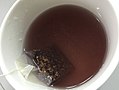 Jasaek-oksusu-cha (purple corn tea) tea bag
 -
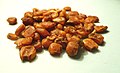 Roasted corn kernels
 -
 Boiling roasted corn kernels


See also
[edit]- Bori-cha – barley tea
- Hyeonmi-cha – brown rice tea
- Memil-cha – buckwheat tea
- Roasted grain beverage
References
[edit]- ^ a b Lee, J. (4 January 2016). "5 winter warmers that are caffeine-free". Christian Today. Retrieved 23 August 2017.
- ^ a b Jung, Alex (13 July 2017). "Best Korean drinks -- from banana milk to hangover juice". CNN Travel. Retrieved 23 August 2017.
- ^ a b c "Gangnaengi-cha" 강냉이차. Doopedia (in Korean). Doosan Corporation. Retrieved 23 August 2017.
- ^ 장, 박원 (13 February 2001). 샘표식품, 우리보리차.옥수수차 시판. Maeil Business Newspaper (in Korean). Retrieved 30 June 2010 – via Naver.
Corn tea
View on GrokipediaIntroduction and Etymology
Definition
Corn tea, known as oksusu-cha in Korean, is a caffeine-free herbal infusion made primarily from roasted corn kernels (Zea mays), corn silk, or a combination of the two, steeped in hot water to extract its flavors.[4][5] This grain-based tisane produces a light amber beverage with a mild, nutty taste and subtle natural sweetness from the corn's inherent sugars, accompanied by a toasty aroma from the roasting process.[3][6] Unlike true teas derived from the Camellia sinensis plant, corn tea belongs to the category of herbal infusions, providing a non-caffeinated, digestible option without stimulants.[7][8] As a versatile hot beverage, corn tea is especially popular in Korea during winter for its warming qualities, often enjoyed as a daily refreshment or alongside meals in everyday cuisine.[9] Its earthy, grain-like profile makes it approachable and comforting, appealing across age groups without the bitterness found in many caffeinated drinks.[5] This simplicity underscores its role as a staple non-alcoholic infusion in Korean dietary habits.[4]Names and Etymology
Corn tea is primarily known in Korea as oksusu-cha (옥수수차), a term that directly translates to "corn tea." The word "oksusu" (옥수수) refers to corn or maize, derived as a partial calque from Early Mandarin 玉蜀黍 (yùshǔshǔ), where "yù" means jade and "shǔshǔ" evokes sorghum-like grains, reflecting the plant's precious status upon its introduction to East Asia.[10] The suffix "cha" (차) stems from the Sino-Korean reading of Chinese 茶 (chá), originally denoting true tea but extended in Korean to encompass any hot infusion or tisane, including grain-based beverages like oksusu-cha. This nomenclature underscores its classification as a caffeine-free herbal infusion rather than a traditional Camellia sinensis-based tea.[11] Alternative names distinguish variants of the beverage. The standard roasted kernel version is often simply called "roasted corn tea" in English, a literal adaptation of oksusu-cha emphasizing the preparation method. In contrast, the variant made from corn silk is termed oksusu-suyeom-cha (옥수수수염차), where "suyeom" (수염) means "beard" or "silk," highlighting the fibrous threads used.[12] Both share the "oksusu-cha" base but specify the plant part to avoid confusion. Regionally, similar infusions appear under adapted names. In Japan, the equivalent drink is known as tōmorokoshi-cha (とうもろこし茶), combining "tōmorokoshi" (meaning "foreign sorghum," from 唐 "Tang/foreign" and 黍 "sorghum," reflecting corn's introduction as an exotic grain in the 16th century) with "cha" (茶), borrowed from Chinese like its Korean counterpart.[13][14] This reflects broader East Asian linguistic patterns for corn-derived beverages, though the Japanese version is less ubiquitous than its Korean namesake.[15]History and Cultural Significance
Origins and Development
Corn, native to the Americas and domesticated thousands of years ago, was introduced to the Korean peninsula in the mid-16th century during the Joseon Dynasty (1392–1910), likely through maritime trade routes that carried the crop from the New World via China and other Asian ports.[16] This arrival aligned with the broader Columbian Exchange, which brought New World crops to Asia, enabling their adaptation to local agriculture.[2] Following its establishment, maize cultivation expanded rapidly in Korea, particularly in upland and hilly regions unsuitable for rice, where it became a vital staple for rural and lower-income communities due to its high yield and nutritional value as an affordable grain.[2] Corn tea, known as oksusu-cha, developed as a simple infusion from roasted corn kernels, integrating into Korea's longstanding tradition of grain-based tisanes—such as barley tea (boricha)—that offered caffeine-free, economical alternatives to costly imported Camellia sinensis teas during periods of economic constraint.[2] Its appeal in rural areas stemmed from the use of abundant local corn, making it a practical daily beverage for households seeking sustenance without reliance on trade-dependent imports. Throughout the 19th and early 20th centuries, oksusu-cha remained largely a homemade preparation, roasted and brewed in homes as part of everyday routines in agrarian society. Post-Korean War (1950–1953), agricultural reforms and advancements, including land redistribution and improved farming techniques, boosted overall grain output and facilitated the transition to commercial production of corn-based products by the late 20th century, enabling wider distribution of pre-packaged oksusu-cha.[17]Role in Korean Culture
Corn tea, or oksusu-cha, holds a prominent place in Korean daily life as a staple, caffeine-free beverage that provides comfort and hydration, especially during the cold winter months when it is typically served hot. Its mild, nutty flavor pairs seamlessly with traditional meals such as rice, soups, and stews, enhancing the sensory experience of home-cooked Korean cuisine and symbolizing the simplicity and nourishing essence of everyday sustenance. In acts of hospitality, offering oksusu-cha to guests reflects a gesture of warmth and attentiveness, aligning with broader Korean traditions of sharing herbal infusions to welcome visitors and promote well-being.[3][6] Within social contexts, oksusu-cha is ubiquitous in households and informal gatherings, serving as a non-alcoholic alternative that encourages relaxation and conversation among family and friends. It plays a role in fostering bonding during family meals or seasonal observances, such as winter rituals where hot drinks ward off the chill, and is often prepared in large batches for shared enjoyment. Though formal tea ceremonies like darye emphasize green tea in traditional hanok settings, corn tea's accessibility makes it a practical choice for casual social interactions and community events, underscoring its integration into modern and historical Korean social fabric.[18][19] In contemporary Korean culture, oksusu-cha endures as an accessible "people's tea," emblematic of the nation's enduring preference for grain-based beverages like barley tea (bori-cha), which trace back to agrarian roots and continue to represent affordability and familiarity in urban lifestyles. Its presence in media and popular narratives reinforces this everyday appeal, portraying it as a humble yet cherished element of Korean identity.[6][3]Production and Preparation
Sourcing and Roasting
Corn tea, known as oksusu-cha in Korean, is primarily sourced from field corn kernels (Zea mays dent corn), which are harvested mature and dried to ensure optimal flavor development without bitterness. In Korea, production often uses locally grown corn, with premium varieties cultivated in regions like Jeollanam-do province. A variant uses corn silk, the stigmas from the female flowers of the corn plant, harvested during pollination and air-dried or gently dehydrated to retain its natural properties.[20] In Korea, glutinous corn (Zea mays var. ceratina) varieties are commonly used for oksusu-cha due to their sticky texture and enhanced flavor after roasting.[21] The roasting process for corn kernels involves dry-roasting at temperatures between 150–200°C for 10–20 minutes, promoting the Maillard reaction—a non-enzymatic browning process between amino acids and reducing sugars that generates the characteristic nutty aroma and caramelized flavor.[22][23] Traditional methods employ manual pan-roasting over medium heat, allowing even charring while stirring to prevent scorching, whereas industrial processes use continuous drum roasters for uniformity and larger-scale production. For corn silk, gentle drying rather than roasting is preferred to preserve its mild diuretic qualities without degrading sensitive bioactive compounds. Quality in sourcing and roasting hinges on selecting fully mature, low-moisture corn to minimize off-flavors like bitterness from immature starches, with over-roasting avoided to balance sweetness and roast depth. Traditional roasting yields a more artisanal, varied profile compared to industrial methods, which prioritize consistency but may reduce phenolic content due to higher heat exposure.[22]Brewing Methods
The traditional brewing method for corn tea, known as oksusu-cha in Korean, begins with using 10-20 grams of roasted corn kernels or a small bunch of dried corn silk per liter of water. To prepare, add the roasted material to cold water in a pot, bring to a boil over medium-high heat, then reduce to a simmer for 10-15 minutes to extract the nutty, roasted flavors. Strain the solids afterward to yield a clear, golden infusion; this process ensures optimal flavor extraction at boiling temperatures around 100°C. An alternative approach is cold brewing, which involves steeping 10-20 grams of roasted kernels in 1 liter of room-temperature or cool water for 1-2 hours or longer in the refrigerator for a smoother, less intense taste without heat. This method preserves subtle sweetness while avoiding bitterness from prolonged heat exposure.[24] Modern adaptations simplify preparation using pre-packaged forms. For tea bags, place one bag (equivalent to about 5-10 grams of roasted corn) in a cup or pot with 250-500 ml of boiling water and steep for 5-10 minutes, suitable for quick single servings.[24] Instant powder versions, often part of mixed grain drinks like misugaru containing corn, require dissolving 20 grams of powder in 100-200 ml of hot or cold water and stirring until fully mixed, allowing preparation in under a minute.[25] Corn tea is typically served hot without additives to highlight its natural roasted corn aroma and mild sweetness, though a small amount of honey or sugar can be added for personalization. The 1:50 to 1:100 ratio of roasted material to water balances strength, with stronger brews from shorter, hotter extractions and milder ones from longer steeps.[26]Varieties and Blends
Types of Corn Tea
Corn tea, known as oksusu-cha in Korean, encompasses several distinct forms based on the primary plant parts used, each offering unique characteristics while remaining caffeine-free infusions derived solely from corn. The most prevalent type is kernel-based oksusu-cha, prepared exclusively from roasted corn kernels, which imparts a sweet, toasty, and mildly nutty flavor profile appreciated for its comforting warmth. This variety is the standard form of corn tea in Korean households and commercial products, often brewed by boiling the roasted kernels to extract their caramel-like essence.[27][28] A lighter alternative is silk-based oksusu-suyeom-cha, made by infusing the silky threads or tassels from corn cobs, resulting in a more herbal and subtly sweet taste with mild earthy undertones. This form is valued for its delicate, non-roasted profile that highlights the plant's natural freshness, though it is generally less robust than the kernel version.[29][30] Less common but traditional in certain Korean practices is the combination type, which blends roasted corn kernels with corn silk to achieve a balanced flavor merging the sweetness of kernels with the herbal lightness of silk, while potentially amplifying the mild diuretic properties associated with the silk component. This variant appears in some regional preparations and homemade recipes, providing a versatile option for those seeking both taste depth and subtle health-oriented effects.[5][6][31]Common Blends
One of the most popular blends of corn tea is oksusu-bori-cha, which combines roasted corn kernels with roasted barley in a typical variation used by Korean tea makers.[32] This mixture enhances the light, nutty flavor of barley tea with the natural sweetness of corn, creating a balanced, caffeine-free infusion often enjoyed hot or cold.[33] The blend is prepared by roasting the grains together before simmering in water, similar to pure barley tea methods, and is widely available as pre-mixed packets in Korean markets and online retailers.[32] Other common blends incorporate corn with additional grains for varied textures and milder profiles. For instance, yulmu-cha, or Job's tears tea, frequently includes powdered roasted corn alongside Job's tears (Coix lacryma-jobi), walnuts, almonds, black beans, black sesame, and brown rice, resulting in a thicker, protein-rich beverage with a sweet, nutty taste.[34] A regional variation blends roasted corn and corn silk with nurungji (scorched rice), known as oksusu-nurungji-cha, which imparts a rich, toasty nuttiness and is sold in convenient tea bags as a traditional Korean roasted grain infusion.[35] These pre-roasted, harmonized mixtures are typically brewed by steeping or simmering in hot water, allowing for easy home preparation while preserving the distinct flavors of each component.[35]Nutritional Profile and Health Benefits
Nutritional Content
Corn tea is a low-calorie beverage, typically providing approximately 0-5 kcal per 100 ml serving when brewed from roasted kernels or silk, with the minimal energy derived primarily from trace amounts of carbohydrates extracted during steeping.[36][26] This caloric profile makes it a suitable option for hydration without significant energy contribution, as the infusion process extracts only soluble components from the roasted material.[37] The tea contains notable antioxidants, including ferulic acid and polyphenols, which are released into the brew during roasting and steeping, contributing to its phytochemical profile.[38][39] Minerals such as potassium and magnesium are present in small quantities, particularly in variants made from corn silk, where potassium levels in the source material can reach around 1,406 mg per 100 g before dilution in tea.[40] Protein and fat content are negligible, typically registering at 0 g per serving in prepared tea.[36] Variations exist between kernel-based and silk-based corn teas. Kernel tea tends to have slightly higher carbohydrate content, around 1 g per serving, due to soluble starches from the roasted grains.[26] In contrast, silk tea is richer in certain vitamins, including vitamin C and provitamin A (from beta-carotene), alongside its mineral contributions.[41][42] Both types are naturally caffeine-free and low in sodium, with most preparations showing 0 mg sodium per serving.[43][36]Potential Health Benefits
Corn tea, particularly varieties incorporating corn silk, has been traditionally used in Korean medicine for its potential diuretic effects, which may support urinary tract health by promoting urine production and reducing water retention. These properties are attributed to compounds like potassium in corn silk extracts, which exhibit diuretic and uricosuric activities in preliminary studies on animal models. Additionally, such effects are believed to aid kidney function by facilitating the elimination of excess fluids and toxins, though human clinical trials remain limited as of 2025.[44] In terms of digestive and metabolic benefits, corn tea consumption is associated with easing stomach discomfort and promoting detoxification through its hydrating qualities and mild laxative action in traditional practices. Corn silk components have shown potential in regulating blood sugar levels, with extracts demonstrating hypoglycemic effects in diabetic mouse models by improving insulin sensitivity and reducing hyperglycemia. This may indirectly support weight management by enhancing hydration and metabolic balance, but evidence is primarily from preclinical research rather than large-scale human studies.[4][45] Other purported benefits include relief from fatigue and modest blood pressure reduction, linked to the antioxidant phenolic acids (such as ferulic and caffeic acids) generated during roasting of corn kernels, which combat oxidative stress. However, these claims are largely anecdotal or based on preliminary in vitro and animal studies, with insufficient robust clinical evidence to confirm efficacy in humans as of 2025. Corn tea should not be considered a substitute for medical treatment, and individuals with conditions like diabetes or hypertension should consult healthcare professionals before regular consumption due to potential interactions or lack of standardized dosing.[4][41]Consumption and Availability
Traditional and Modern Consumption in Korea
In Korea, corn tea, or oksusu-cha, serves as a traditional daily hot beverage in households, valued for its mild, nutty flavor and caffeine-free profile that provides comfort during colder months. It is commonly prepared by simmering roasted corn kernels and enjoyed plain or paired with meals, a practice observed in both rural areas, where home roasting remains common, and urban settings, where it accompanies everyday dining.[27][6][46] Contemporary consumption reflects adaptations to fast-paced lifestyles, with pre-bottled versions available in convenience stores like GS25 and CU, featuring brands such as Woongjin that offer ready-to-drink options in various sizes.[47] Instant sachets and teabags enable quick brewing, often in under five minutes, making it accessible for on-the-go preparation at home or work.[48] Seasonally, consumption peaks in winter as a hot infusion, though chilled versions gain traction in summer, aligning with broader trends of year-round use across demographics from children to seniors.[46][5]International Popularity and Commercial Products
Corn tea, known as oksusu-cha in Korea, has gained international traction since the 2010s, propelled by the global rise of K-food trends influenced by K-pop, K-dramas, and cultural exports. In the United States, it has become accessible through Asian grocery chains like H Mart and mainstream retailers, appealing to consumers seeking caffeine-free, naturally sweet beverages amid the broader Korean cuisine boom. Similarly, in Europe, availability has expanded via online platforms and specialty stores in countries like the UK and Germany, where K-food enthusiasm has led to increased imports of traditional Korean teas. In Asia beyond Korea, such as Japan and Southeast Asian markets, corn tea benefits from regional familiarity with grain-based drinks and growing interest in health-oriented imports.[49][50][51] Commercial products featuring corn tea are predominantly imported from Korean brands and adapted for global markets in convenient formats. Popular options include loose roasted corn kernels from brands like ORGA and Healing N Farm, which use 100% Korean-grown corn for brewing at home, and tea bag varieties from Dong Suh, offering pre-portioned sachets for easy preparation. Ready-to-drink versions, such as bottled or canned corn tea infusions, are also emerging from producers like Woongjin, providing chilled, on-the-go options in Asian markets and select international outlets. Western adaptations often emphasize organic certifications, positioning corn tea as a mild, roast-flavored alternative in health stores, sometimes blended or marketed for its subtle sweetness without additives.[52][53][47] As of 2025, market trends reflect rising demand for caffeine-free herbal teas, with the global herbal tea sector projected to grow at a 7.5% CAGR through 2035, driven by health-conscious consumers favoring natural, low-calorie options like corn tea. Online sales have surged, particularly via platforms such as Amazon and specialized e-commerce sites like Gochujar, enabling direct access to authentic imports and fueling accessibility in non-Asian regions. This shift aligns with broader preferences for sustainable, plant-based beverages, positioning corn tea as a niche yet expanding player in the wellness-oriented tea market.[54][52]References
- https://en.wiktionary.org/wiki/%EC%98%A5%EC%88%98%EC%88%98
- https://en.wiktionary.org/wiki/%E7%8E%89%E8%9C%8E%E9%BB%8D