Hubbry Logo
logo
Colonel commandant
Community hub

Colonel commandant

logo
0 subscribers
Read side by side
from Wikipedia

Colonel commandant is a military title used in the armed forces of some English-speaking countries. The title, not a substantive military rank, could denote a senior colonel with authority over fellow colonels. Today, the holder often has an honorary role outside the executive military structure, such as advocacy for the troops.

Australia

[edit]

Until 1882, William Acland Douglas, who served in the 50th Regiment, was colonel-commandant of the military forces in Victoria.

Australian formations, such as the Royal Australian Corps of Military Police and the Royal Australian Regiment (RAR), have a colonel commandant, a retired soldier whose role is to act as advocate for the troops' interests. This requires visits to wherever the corps or regiment is deployed.[1]

Bangladesh

[edit]

In the Bangladesh Army, the post of colonel commandant is an honorary post held by the most senior serving member of a corps or regiment. He is usually a general officer in the rank of lieutenant general or major general. The post is found in all corps and regiments of the army.

Canada

[edit]

The Canadian Armed Forces widely uses colonels commandant as honorary appointments to act as advocates for members and to advise on relevant policy matters. In reserve regiments there has usually been an honorary colonel and an honorary lieutenant-colonel, while in the Regular Force, the title used is colonel commandant or colonel of the regiment. Many units also have a colonel-in-chief who is often a member of the Royal Family, frequently with a name connection to the regiment. Example: The Queen's York Rangers (First American Regiment) having the Queen and later the Duke of York, as Colonel-in-Chief. In the artillery, the monarch holds this role with the appellation "Captain-General". All of these "honoraries" are in head-of-family roles, approachable in varying degrees by anyone in the "regimental family".

The colonel commandant of the Royal Canadian Armoured Corps, is an appointment given by the Governor General and Commander-in-Chief of Canada to a distinguished retired armoured forces officer. The appointment is for three years, during which the incumbent is on the Canadian Forces' reserve list as the senior officer of the corps. He is responsible for advising the army commander on matters pertaining to the Royal Canadian Armoured Corps. A colonel commandant travels widely to canvass the views of all ranks in the corps and frequently attends military policy conferences, ceremonies and unit celebrations. He is an ex officio member of the Royal Canadian Armoured Corps Association's executive committee.[2]

In 2001, the Canadian Forces Medical Branch canvassed past and present members for nominations to the role of colonel commandant. The role is ceremonial but the colonel commandant acts as a link between the Canadian Forces Medical Branch and the wider civilian medical community. The position is not restricted to former senior medical officers; consideration is given to medical practitioners who are "particularly prominent and well respected within the world of civilian medicine."[3]

India

[edit]

In India colonel commandant is an honorary 'non-substantive' post, and is usually held by general officers mostly major generals or lieutenant generals. They are elected through secret ballot. Usually the officer would have been once part of the regiment, and in this role he represents the regiment and its men at the higher level of military hierarchy. This is especially in matters related to troop welfare. In photographs where the officer is portrayed as the 'colonel commandant', the rank insignia of a colonel affixed on a maroon/vine red background is used.

In the National Cadet Corps, which is closely connected to Indian universities the vice chancellor of the university is given the honorary rank of 'colonel commandant'. Vice chancellors are eligible to wear the NCC khakhi uniform and wear the insignia, even though they would not have any military experience. In NCC this appointment is purely ceremonial.[4]

Pakistan

[edit]

In the Pakistan Army the post of colonel commandant is an honorary post held by the most senior serving member of a corps or regiments. They are usually general officers in the rank of major general or lieutenant general.[5] The post is found in all corps and regiments of the army.[6]

Sri Lanka

[edit]

In the Sri Lankan Army the post of colonel commandant is an honorary post held by the most senior serving member of a corps, he/she is usually a general officer or a brigadier. The post is found in all corps of the army as well as the Mechanized Infantry Regiment and the Sri Lanka National Guard. It is similar in function to that of colonel of the regiment found in multi-battalion infantry regiments.

United Kingdom

[edit]

In the British Army, the term colonel-commandant goes back at least to the American War of Independence, when it denoted an officer in command of a regiment.[7]

In 1921, the Army abolished the appointment of brigadier-general and replaced it with the new appointments of colonel-commandant and colonel on the staff:[8] Colonels-commandant commanded brigades, depots or training establishments, while colonels on the staff held administrative appointments. Like brigadier-general, both of the new appointments were temporary, the holder reverting to his substantive rank (usually colonel) at the end of his appointment. They were both abolished from 1 June 1928, replaced by the appointment of brigadier (though the rank insignia – a crown over three "pips" or stars – remained the same).[9][10] The Indian Army used the same appointments.

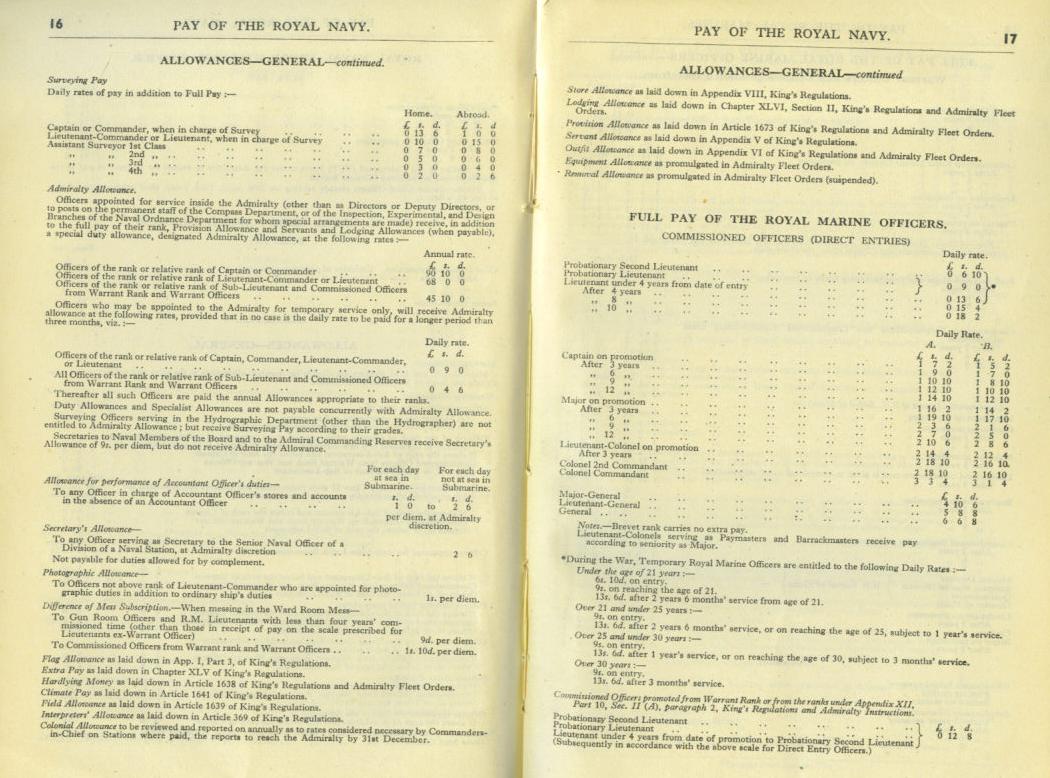
In the Royal Marines, the appointments of colonel commandant and colonel & 2nd commandant dated back to 1755, when fifty companies of marines were raised in three divisions: each division had a colonel commandant and a colonel & 2nd commandant. From 1755 until the end of the Napoleonic era, the appointment of colonel & 2nd commandant was usually held by a lieutenant-colonel, colonel, or major-general, while the appointment of colonel commandant was held by a colonel or above, but only very rarely by a full general.[11] The Royal Marines adopted the appointment of brigadier-general to be held by its colonels commandant (then five in number) in 1913,[12] and dispensed with it again in 1921. Like the Army, the Royal Marines adopted the appointment of brigadier in 1928, but the ranks of colonel commandant and colonel 2nd commandant persisted at least as far as World War II.[13] By 1957, however, they had been abolished and replaced with brigadier (now a rank instead of an appointment, as in the Army) and colonel.[14]

The title of colonel-commandant is now used as an honorary or ceremonial title relating to a military corps. For example, General Sir Richard Dannatt was Colonel-Commandant of the Army Air Corps as well as his full-time role as Chief of the General Staff[15] while Brigadier Jane Arigho, a retired Director of Army Nursing Services and Lieutenant-Colonel Carol Kefford, also a retired QARANC officer, are the Colonel-Commandants of Queen Alexandra's Royal Army Nursing Corps.[16]

United States

[edit]

In 1779, Hungarian-born Colonel Commandant Michael Kovats died leading the Continental Army cavalry against British troops at Charleston.[17]

The highest-ranking officer of the United States Marine Corps was formerly titled Colonel Commandant:[18] the title now is simply Commandant. Colonel-Commandant was also used for Lloyd J. Beall, the commanding officer of the short-lived Confederate States Marine Corps during the American Civil War.

At the Alamo, William B. Travis was given the position of lieutenant colonel commandant.

References

[edit]
[edit]
Revisions and contributorsEdit on WikipediaRead on Wikipedia
from Grokipedia
A colonel commandant is an honorary military appointment, rather than a substantive rank, used in the armed forces of Commonwealth nations and the United States, including the United Kingdom, Canada, India, and other Commonwealth countries such as Australia and Pakistan, where a senior (often retired) officer serves as a ceremonial head, advisor, and representative for a specific regiment, corps, or branch of service to foster morale, traditions, and welfare.[1] In the British Army and Royal Marines, the role dates back to at least the 18th century and involves promoting the esprit de corps, liaising with serving personnel, and attending key events on behalf of honorary colonels-in-chief when needed; appointments are typically held by lieutenant generals or higher for durations of three to five years.[2][3] For instance, serving officers like Lieutenant General Tom Copinger-Symes hold the position for formations such as The Rifles, providing guidance on regimental matters while maintaining a link to operational units.[2] Within the Canadian Armed Forces, the colonel commandant—first formalized in 1925 for the Royal Canadian Artillery and extended across branches by 1947—focuses on advising National Defence Headquarters on professional issues, managing branch-related funds and charities, and bridging Regular and Reserve forces to enhance cohesion and development.[4] Appointees, selected from retired colonels or prominent civilians and serving three-year terms (extendable), play a vital ceremonial role in events and policy consultations for entities like the Royal Canadian Armoured Corps.[5] In the Indian Army, the colonel commandant is a prestigious position often held by a lieutenant general as the senior-most officer of a corps (such as the Corps of Signals or Regiment of Artillery), emphasizing advisory duties on training, equipment, and heritage while ensuring continuity of regimental customs post-retirement.[6][7] This appointment underscores the officer's lifelong commitment to the branch, with recent examples including Lieutenant General HS Vandra as Colonel Commandant of the Corps of Signals in 2024.[8]

Overview

Definition and General Role

A colonel commandant is a senior military title predominantly employed in English-speaking armed forces, particularly within the British Army and Commonwealth nations, where it functions as an honorary or ceremonial appointment rather than a substantive rank conferring direct operational command. This title is typically held by senior officers, often lieutenant generals or higher, who may be serving or retired, or other distinguished individuals to symbolize leadership and continuity within a regiment, corps, or branch of service. It is distinct from the role of honorary colonel, which is typically for individual regiments and may be held by civilians. This appointment underscores a senior honorary status without the associated pay grade or chain-of-command responsibilities.[9][10] The general role of a colonel commandant emphasizes non-executive functions, such as fostering esprit de corps, providing strategic advice to unit leadership, overseeing ceremonial traditions, and representing the organization in public and military engagements. Appointees may contribute to training standards and morale initiatives but remain detached from day-to-day tactical decisions or personnel management, allowing active commanders to focus on operational duties. This advisory and symbolic capacity helps maintain regimental identity and historical ties, rooted in British military traditions.[9] Unlike standard colonel ranks, which involve active command of battalions or equivalent units, the colonel commandant position lacks formal authority in the operational hierarchy, distinguishing it clearly from substantive roles. In contrast to the term "commandant" in non-English-speaking militaries—such as the French Army, where it equates to a major responsible for company-level leadership—the English usage of colonel commandant denotes a higher, largely ceremonial status without direct equivalence to foreign mid-level officer grades.[11]

Historical Origins

The title "colonel commandant" has roots in broader European military rank structures of the 16th to 18th centuries, where the rank of colonel evolved from the Italian "colonello," meaning the leader of a column of soldiers, and later denoted the head of a regiment in professional armies emerging across Europe.[12] This structure influenced British forces, adapting the colonel's role as a senior commander overseeing units like regiments or divisions.[13] The specific title originated in the Royal Marines on 5 April 1755, when the British Admiralty authorized the formation of 50 permanent companies of marines, organized into three divisions at Chatham, Portsmouth, and Plymouth, each led by a colonel commandant responsible for command and coordination.[14] These officers, equivalent in stature to a brigadier-general in the army, oversaw marine forces for naval service, with the adjutant general providing staff support.[15] The rank of colonel second commandant was also established at this time to assist in divisional leadership.[15] In the British Army, the title saw temporary evolution from 1922 to 1928 as a replacement for the abolished appointment of brigadier-general, used for colonels commanding brigades or in senior staff roles, with insignia consisting of one crown and three pips on shoulder straps.[16] This period reflected post-World War I reforms to streamline ranks without general officer status.[17] The appointment was abolished on 1 June 1928 and replaced by the title of temporary brigadier, though the title persisted in the Royal Marines and later in honorary oversight roles within regiments.[17] Following colonial independence, the title spread to Commonwealth militaries, where countries like Canada adapted British traditions by establishing their own colonel commandants for artillery and other branches to maintain ceremonial and advisory continuity.[16] This inheritance preserved the role's emphasis on regimental leadership and honorific duties across former colonies.[18]

Usage in the United Kingdom and Commonwealth Countries

United Kingdom

In the Royal Marines, the title of Colonel Commandant originated during the 1755 reorganization of British marine forces into a permanent establishment of 50 companies across three divisions—Portsmouth, Chatham, and Plymouth—with each division led by a Colonel Commandant and supported by a Colonel 2nd Commandant.[14] Today, the title functions primarily as an honorary appointment in the British Armed Forces, bestowed upon senior retired officers to serve as Colonel Commandant for specific corps, such as the Royal Artillery or the Infantry. These appointees act as patrons, offering guidance on regimental matters, fostering traditions, and advising on welfare issues without exercising command authority.[19][9] Appointments as Colonel Commandant are made by the monarch and generally endure for 3 to 5 years, during which holders contribute to unit morale, support recruiting initiatives, and participate in ceremonial functions.[10] In the Royal Marines, the parallel role of Representative Colonel Commandant fulfills a similar advisory and representational function on behalf of the Captain General Royal Marines, who is the ceremonial head of the corps. The Representative Colonel Commandant role continues to be filled by senior officers, with appointments changing periodically to provide advisory support.[1] The title has historical origins as a senior appointment in the 1920s, reflecting changes in British Army structures.

Australia

In the Australian Army, the title of Colonel Commandant is an honorary appointment bestowed upon retired senior officers, typically at the rank of colonel or above, to serve as ceremonial leaders for specific regiments or corps, akin to the role of Colonel of the Regiment in British tradition.[20] This practice was established following the Federation of Australia in 1901, when the Australian military adopted and adapted British organizational structures to form a unified force. The role emphasizes preserving unit heritage and morale without any operational authority, distinguishing it from substantive ranks that involve command responsibilities and remuneration.[21] Appointees, often former general officers, undertake advisory duties such as guiding on regimental customs, traditions, and historical matters, while representing their unit at ceremonial events and fostering connections between serving and retired members.[22] Appointments are made by the Chief of the Army on the recommendation of the relevant Head of Corps, typically for an initial term of five years, with possible extensions up to the age of 70 based on contributions and availability.[21] For instance, in the Royal Australian Artillery, six Colonels Commandant are assigned to geographic regions to coordinate regimental activities, including esprit de corps and memorials.[22] Similarly, the Royal Australian Regiment maintains a Colonel Commandant to oversee ceremonial leadership for its battalions.[23] As a purely titular position, the Colonel Commandant receives no salary or command powers, focusing instead on symbolic support to enhance unit cohesion and public representation.[20] Holders are entitled to wear appropriate uniform insignia, including a gold 'R' on service dress to denote their retired honorary status, but they do not participate in active operations.[20] This system underscores the Australian Army's commitment to honoring distinguished service while maintaining a clear separation from active-duty hierarchies.

Bangladesh

In the Bangladesh Army, the title of Colonel Commandant was established as part of the post-independence military structure formalized in the Army Regulations of 1975, following the country's liberation from Pakistan in 1971 and retention of Commonwealth military traditions.[24] This honorary appointment is typically held by the most senior serving officer of a specific corps or regiment, serving as its ceremonial head to promote esprit-de-corps and maintain regimental identity.[24] The role involves advisory and oversight responsibilities, including fostering connections between active units, auxiliary forces, and former members; managing regimental charities, memorials, and historical records; and providing guidance on training, discipline, customs, and dress to regimental centers and Army Headquarters.[24] Appointees also act as trustees for regimental funds, ensuring welfare benefits for personnel while upholding efficiency and compliance with government directives.[24] These duties emphasize motivational leadership and preservation of national military heritage, with one Colonel Commandant authorized per corps and per infantry regiment.[24] Appointments are governed by Bangladesh Army regulations, requiring nominees to be serving officers of colonel rank or higher and of Bangladeshi nationality; the process begins with nomination by the regimental or corps center commandant, followed by approval from the Chief of Army Staff and final authorization by the President through the Ministry of Defence, with notification in the Gazette of Bangladesh.[24] Tenure is generally five years or until retirement, with possible extensions if the officer remains in service.[24] As of 2025, the title remains active across various corps, such as the Bangladesh Infantry Regiment, where General Waker-Uz-Zaman was inducted as the seventh Colonel Commandant in February;[25] the Electrical and Mechanical Engineers (EME) Corps, where for example Lieutenant General Md Saiful Alam was appointed as the eleventh Colonel Commandant in December 2023, serving until his retirement in 2024;[26] the Regiment of Artillery, led by Major General Mohammad Nurul Anwar as the tenth since October;[27] and the Corps of Engineers, with recent high-level appointments emphasizing operational readiness and heritage.

Canada

In the Canadian Army, the rank of colonel commandant was briefly employed from 1922 to 1928 as an equivalent to brigadier, serving as a temporary replacement for the abolished rank of brigadier general in line with British Army reforms.[4] This rank was used to command brigades, training centers, and administrative districts, but it was discontinued in 1928 and formally replaced by the rank of brigadier to standardize the officer structure.[4] The adoption reflected early interwar influences from British military organization, though it was short-lived in the Canadian context. Following the rank's abolition, the title evolved into an honorary appointment known as Colonel Commandant, first established for the Royal Canadian Artillery in January 1925 to honor distinguished retired officers and preserve regimental traditions.[4] By December 1947, the appointment expanded to permit one Colonel Commandant for each corps within the Canadian Army, a practice that persisted through the 1968 unification of the Canadian Armed Forces, which integrated the army, navy, and air force into a single service while retaining these roles to maintain branch-specific esprit de corps.[4] Post-unification, appointments continued across branches, such as the Colonel Commandant of the Communications and Electronics Branch in 2007, blending British honorary traditions with Canada's unified federal military structure.[28] In modern usage, Colonel Commandants are appointed by the Minister of National Defence on the recommendation of the Chief of the Defence Staff, typically for a three-year term that may be extended, and are drawn from retired officers of colonel rank or higher who have served with distinction.[29] Their roles are ceremonial and advisory, focused on promoting unit morale, advising National Defence Headquarters on customs and policy, and participating in events such as mess dinners, recruiting drives, and regimental ceremonies to foster connections between serving members and veterans.[30] For instance, the Colonel Commandant of the Royal Canadian Artillery acts as the honorary head of the regiment, safeguarding its history and supporting its units across Canada.[5] This system underscores a distinctly Canadian adaptation, emphasizing advisory support within a consolidated force while honoring corps identities like those in the artillery and engineering branches.[31]

India

In the Indian Army, the title of Colonel Commandant—often interchangeably referred to as Colonel of the Regiment—emerged post-independence in 1947 as an honorary position adapted from British colonial practices to maintain regimental pride and martial heritage. This ceremonial role, devoid of any operational command authority, is typically bestowed upon retired major generals or equivalent senior officers who have demonstrated exemplary service within specific regiments or corps. The appointment underscores the Army's commitment to fostering esprit de corps and continuity in unit traditions amid the transition to an independent military structure. Under the framework of the Indian Army Act, 1950, such appointments are formalized by the President of India, usually upon recommendations from Army Headquarters, ensuring alignment with national defense priorities. The Colonel Commandant acts as a paternal figure and patron, offering guidance on preserving regimental history, advising on welfare matters, and representing the unit in ceremonial functions, such as raising days and battle honors commemorations. This role plays a vital part in upholding the cultural and historical ethos inherited from pre-independence eras, including battle honors from World War campaigns and the freedom struggle. The position is particularly prevalent in infantry and artillery regiments, where it helps sustain unit identity and morale. As of 2025, it continues to feature prominent figures, including former Army chiefs serving in advisory capacities for their parent units, such as the late General Bipin Rawat's prior tenure with the 11th Gorkha Rifles. Examples from recent years illustrate its ongoing relevance, with Lieutenant General Anindya Sengupta assuming the role for the Punjab Regiment in April 2025, emphasizing mentorship and legacy preservation.

Pakistan

In the Pakistan Army, the title of Colonel Commandant was adopted following the 1947 partition of British India, retaining British colonial influences in military structures and serving primarily as an honorary position for senior officers overseeing specific regiments or corps. This role emerged in the early years of independence, with the Armoured Corps appointing its first Colonel Commandant, Lieutenant General Muhammad Yusuf, in 1952 to maintain regimental traditions and advisory functions. The title is typically held by lieutenant generals or higher-ranking officers, emphasizing continuity of discipline, heritage, and professional standards within their assigned units. The primary responsibilities of a Colonel Commandant include providing advisory oversight to corps commanders on operational, training, and administrative matters, as well as ensuring the welfare and morale of personnel in regimental centers and training establishments. Appointments are made by the Chief of Army Staff, often during formal ceremonies where badges are pinned to signify the role's prestige. While largely honorary, the position retains substantive elements, such as guiding curriculum and standards at training facilities affiliated with the corps, though it does not involve direct command authority. For instance, in the Army Medical Corps, the Colonel Commandant leads efforts to uphold healthcare delivery during conflicts, peacetime operations, and crises like pandemics. As of 2025, the title remains active across various branches, including the Armoured Corps, where Lieutenant General Sarfraz Sattar was installed in 2019 to advise on armored operations and heritage preservation, and infantry units such as the Punjab Regiment and Northern Light Infantry. In the Army Service Corps and Ordnance Corps, incumbents focus on logistical discipline and equipment maintenance. These roles underscore the Pakistan Army's commitment to regimental identity and veteran integration, with recent appointments highlighting inclusivity, such as Lieutenant General Nigar Johar's historic tenure as the first female Colonel Commandant of the Army Medical Corps from 2021 to 2022.

Sri Lanka

In the Sri Lanka Army, established in 1949 shortly after national independence in 1948, the title of Colonel Commandant serves as an honorary position for the senior-most serving officer of specific corps or regiments, typically a major general, reflecting traditions inherited from the British colonial forces of Ceylon. This role functions as the ceremonial and advisory head of units such as the Sri Lanka Engineers Corps, Corps of Engineer Services, Sri Lanka Artillery, Sri Lanka Ordnance Corps, and Sri Lanka Army Service Corps, where appointees provide strategic leadership, oversee training and instructional duties, and represent the corps in official capacities.[32][33][34] For infantry regiments like the Sri Lanka Sinha Regiment (SLSR), raised in 1956 as the first Sinhala-speaking unit, the position is historically termed Colonel Commandant and evolved into Colonel of the Regiment, with Brigadier D. Wijesinghe serving as the inaugural holder in 1956 to guide the regiment's early development in protecting national sovereignty. Appointed by the Commander of the Army, Colonel Commandants advise on regimental welfare, preservation of traditions, discipline, and recruiting efforts, often engaging directly with officers and other ranks through addresses and informal interactions to foster unit cohesion and morale.[35][36][37] Following the conclusion of the civil war in 2009, the appointment of Colonel Commandants has remained integral to sustaining regimental objectives and contributing to national development, with ceremonies emphasizing discipline and unit objectives amid post-conflict stabilization. As of 2025, notable appointments include Major General D. K. S. K. Dolage USP nps psc as the 24th Colonel Commandant of the Sri Lanka Engineers Corps, also serving as Chief of Staff; Major General K. A. N. Rasika Kumara as Colonel Commandant of the Corps of Engineer Services and Commander Security Forces (Jaffna); and Major General K. D. M. L. Samaradiwakara RWP RSP ndc psc for the Corps of Agriculture and Livestock, alongside Major General J. K. R. Jayakody RWP USP as Colonel of the Regiment for the SLSR (infantry) and similar roles in signals and other corps by retired or serving generals to support ongoing welfare and recruiting initiatives.[33][34][37]

Usage in the United States

Role in the Marine Corps

The title of Lieutenant Colonel Commandant was established in the United States Marine Corps by the Act of April 22, 1800, which organized the Corps under a formal structure including one Lieutenant Colonel Commandant as its senior leader, one lieutenant colonel, and two majors.[38] This position evolved from earlier Continental Marine practices and British Royal Marine influences, where a colonel commandant served as the principal commanding officer of marine forces attached to naval operations. Initially held at the rank of lieutenant colonel, the role was elevated to full colonel status in 1834, granting the incumbent permanent rank equivalent to that of other service colonels while retaining the distinctive title until 1867, when the Commandant was promoted to brigadier general.[38][39] In its operational capacity, the Lieutenant Colonel/Colonel Commandant functioned as the chief executive officer of the Marine Corps, responsible for the administration, discipline, training, and deployment of all Marine personnel and units under the Department of the Navy.[38] This included direct oversight of Marine detachments aboard naval vessels, shore-based garrisons, and expeditionary forces, such as those engaged in the Barbary Wars and early 19th-century conflicts, where the holder coordinated amphibious operations and logistics support for the Navy. The title underscored the Corps' distinct identity and loyalty to naval service, with the Commandant presiding over key traditions tied to the Corps' founding on November 10, 1775.[40] The insignia for a Colonel Commandant consisted of the standard silver eagle emblem on the shoulder epaulets and collar for Marine colonels, denoting field-grade authority over Marine commands without the stars of general officers. By the mid-19th century, as the Corps expanded, the position commanded growing forces, including training establishments and early expeditionary units, laying the foundation for modern Marine command structures. After 1867, the rank of the Commandant continued to evolve, eventually becoming a four-star general officer position.

Historical and Honorary Usage

The title of Colonel Commandant was introduced in the early 19th century to denote senior leadership within the United States Marine Corps. Established by an act of Congress on July 11, 1798, the Marine Corps initially appointed Major William Ward Burrows as Major Commandant. This was elevated to Lieutenant Colonel Commandant in 1800 under the same officer, reflecting the Corps' growing administrative needs during conflicts like the Quasi-War with France. By an act of June 30, 1834, the title became Colonel Commandant when Lieutenant Colonel Archibald Henderson was promoted and appointed, marking a substantive command role equivalent to a full colonel in rank and pay, overseeing the entire Corps during its expansion in the antebellum period.[38] The title saw limited use in the U.S. Army, particularly in specialized branches during the 19th and early 20th centuries, such as the Corps of Engineers, where officers like Lieutenant Colonel Stephen Rochefontaine served as commandant of the Corps of Artillerists and Engineers from 1795 to 1798, providing advisory oversight on fortifications and training.[41] In contrast to these operational applications, the Marine Corps usage remained distinctly command-oriented, emphasizing direct leadership of expeditionary forces rather than purely administrative or honorary functions seen in other branches. Honorary applications of the colonel title, sometimes styled with "commandant" in militia contexts, originated as a 19th-century tradition where U.S. governors appointed prominent civilians to their staffs as aides-de-camp without pay, duties, or active military obligations, honoring contributions to state service. Post-Civil War, this practice expanded significantly in reorganized state militias, with governors commissioning honorary colonels to boost civic engagement and militia morale; for example, states like Kentucky formalized such appointments by the 1890s to recognize community leaders.[42] By the mid-20th century, substantive military involvement declined due to federal professionalization under acts like the National Defense Act of 1916 and the National Guard Act of 1903, reducing these roles to symbolic honors without command authority. The title Colonel Commandant is now obsolete in the USMC, retained only as a historical reference, while broader honorary colonel appointments continue through state governors for distinguished civilians, distinct from active-duty ranks. This evolution underscores its shift from operational leadership in the Marines to non-pay, prestige-based recognition across U.S. military and state structures.[43]

References

User Avatar
No comments yet.