Hubbry Logo
Complement component 5Complement component 5Main
Open search
Complement component 5
Community hub
Complement component 5
logo
8 pages, 0 posts
0 subscribers
Be the first to start a discussion here.
Complement component 5
from Wikipedia

C5
Available structures
PDBOrtholog search: PDBe RCSB
Identifiers
AliasesC5, C5D, C5a, C5b, CPAMD4, ECLZB, complement component 5, complement C5
External IDsOMIM: 120900; MGI: 96031; HomoloGene: 20412; GeneCards: C5; OMA:C5 - orthologs
Orthologs
SpeciesHumanMouse
Entrez
Ensembl
UniProt
RefSeq (mRNA)

NM_001735
NM_001317163
NM_001317164

NM_010406

RefSeq (protein)

NP_001304092
NP_001304093
NP_001726

NP_034536

Location (UCSC)Chr 9: 120.93 – 121.08 MbChr 2: 34.87 – 34.95 Mb
PubMed search[3][4]
Wikidata
View/Edit HumanView/Edit Mouse

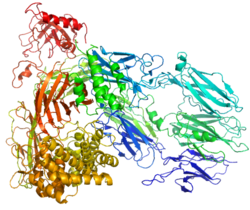
Complement component 5 is a protein that in humans is encoded by the C5 gene.[5]

Complement component 5 is involved in the complement system. It is cleaved into C5a and C5b:

Deficiency is thought to cause Leiner's disease.

Function

[edit]

Complement component 5 is the fifth component of complement, which plays an important role in inflammatory and cell killing processes. This protein is composed of alpha and beta polypeptide chains that are linked by a disulfide bridge. An activation peptide, C5a, which is an anaphylatoxin that possesses potent spasmogenic and chemotactic activity, is derived from the alpha polypeptide via cleavage with a C5-convertase. The C5b macromolecular cleavage product can form a complex with the C6 complement component, and this complex is the basis for formation of the membrane attack complex, which includes additional complement components.[5]

Clinical significance

[edit]

Mutations in this gene cause complement component 5 deficiency, a disease where patients show a propensity for severe recurrent infections. Defects in this gene have also been linked to a susceptibility to liver fibrosis and to rheumatoid arthritis.[5]

Therapeutic applications

[edit]

The drug eculizumab (trade name Soliris) prevents cleavage of C5 into C5a and C5b.[7]

Complement system pathway

[edit]
Membrane attack complex.

References

[edit]

Further reading

[edit]
[edit]
Revisions and contributorsEdit on WikipediaRead on Wikipedia
from Grokipedia
Complement component 5 (C5) is a central to the terminal phase of the , a key arm of innate immunity that mediates , opsonization, and direct of pathogens and altered host cells. Synthesized primarily by hepatocytes in the liver but also by extrahepatic cells such as monocytes, macrophages, and endothelial cells, C5 circulates in plasma as a single-chain precursor that is proteolytically activated during complement activation. Upon cleavage by C5 convertases generated in the classical, , or alternative pathways—such as C4b2a3b or C3bBb3b—C5 yields two fragments: the 74-amino-acid anaphylatoxin C5a, a potent chemoattractant and proinflammatory mediator, and C5b, which nucleates the assembly of the membrane attack complex (MAC, C5b-9) to form pores in target membranes.

Discovery and History

The was first described in the late as a heat-labile factor in serum that enhanced antibody-mediated bacterial killing. Individual components were isolated over the through biochemical studies; C5 was purified and characterized in the by Hans J. Muller-Eberhard and colleagues as the precursor to the anaphylatoxin C5a and the initiator of the terminal lytic pathway. Structurally, mature C5 comprises two -linked polypeptide chains—an α-chain of approximately 110 kDa and a β-chain of 75 kDa—encoded by the C5 gene on , with no internal thioester bond unlike its homologs C3 and C4. C5a, derived from the N-terminal portion of the α-chain, features a compact four-helix bundle stabilized by three bonds and a flexible C-terminal region critical for receptor binding, enabling it to interact with G protein-coupled receptors C5aR1 (CD88) and C5L2 on immune cells like neutrophils, macrophages, and T lymphocytes to trigger , release, and directed migration. In contrast, C5b sequentially recruits C6, C7, C8, and multiple C9 molecules to form the MAC, a transmembrane channel that disrupts cellular integrity and contributes to clearance. These dual functions position C5 at the convergence of complement pathways, amplifying immune responses while risking excessive if unregulated. Dysregulated C5 activation underlies various complementopathies, including (aHUS) and (PNH), where uncontrolled MAC formation damages endothelial cells and erythrocytes, respectively. Therapeutic targeting of C5, such as with the monoclonal antibodies and , inhibits cleavage and has proven effective in treating these conditions by preventing C5b-9 assembly, though it increases infection risk due to impaired MAC-mediated defense. C5a receptor antagonists, including the approved drug for ANCA-associated vasculitis, and other emerging agents are being investigated for modulating inflammation in conditions such as , , and renal diseases, highlighting C5's therapeutic potential beyond direct inhibition.

Introduction

Definition and Role

Complement component 5 (C5) is a pivotal in the , which constitutes a fundamental arm of innate immunity responsible for recognition, opsonization, , and direct cell lysis to maintain host and defense against infections. As the fifth component in the terminal complement pathway, C5 serves as a central convergence point where the classical, , and alternative activation pathways intersect, amplifying immune responses initiated by upstream components like C3. This strategic positioning enables C5 to orchestrate coordinated effector functions essential for innate immune surveillance. Synthesized primarily in the liver as a single-chain precursor, C5 circulates in plasma as a 190 kDa , ready for activation during complement cascade progression. Upon cleavage by C5 convertases, it yields two key fragments: C5a, an anaphylatoxin that drives responses, and C5b, which initiates assembly of the membrane attack complex (MAC) for cytolytic activity. Thus, C5 bridges soluble mediators of with membrane-disrupting mechanisms, enhancing both local immune cell recruitment and elimination.

Discovery and History

Complement component 5 (C5) was first identified in the through systematic of human serum as part of efforts to dissect the complement system's sequential components, with key contributions from Hans J. Müller-Eberhard and colleagues using hemolytic assays to define its position in the activation cascade. These studies established C5 as the fifth hemolytic component required for immune , distinguishing it from earlier components like C3 based on its lability and functional dependencies. A major milestone came in 1965 when Ulf R. Nilsson and Hans J. Müller-Eberhard achieved the first purification of human C5 from plasma, yielding a with two disulfide-linked polypeptide chains (α and β) and demonstrating structural homology to C3 through electrophoretic and immunochemical analyses. This purification enabled detailed characterization of C5's properties, including its molecular weight of approximately 180 kDa and susceptibility to cleavage by convertases. In 1968, Carl G. Cochrane and Müller-Eberhard further showed that proteolytic activation of purified C5 generates two distinct anaphylatoxin activities, with the smaller fragment (later identified as C5a) exhibiting potent spasmogenic and chemotactic effects, marking the recognition of C5a as a key inflammatory mediator. Subsequent advances in the and refined C5's biochemical profile, including large-scale isolations that supported functional studies of its role in membrane attack. A partial C5 cDNA was cloned in 1988 by Wetsel et al., localizing the gene to chromosome 9. The complete cDNA sequence was reported in 1991 by Haviland et al., revealing a ~5 kb coding region for the 1676-amino-acid single-chain pro-protein synthesized primarily in the liver. Knowledge of C5 evolved from these early hemolytic and purification-based assays to molecular insights into its gene structure and expression by the late . By the 2020s, research has expanded to non-canonical roles of C5 beyond the classical pathways, including intracellular complement activation influencing T-cell and production in immune cells, as well as contributions to tissue and chronic inflammation. These developments, driven by advanced and single-cell analyses, highlight C5's broader regulatory functions in and .

Molecular Biology

Gene and Expression

The human C5 gene, which encodes complement component 5, is located on the long arm of chromosome 9 at band q33.2, spanning approximately 122 kb from genomic position 120,952,335 to 121,074,865 on the reverse strand (GRCh38.p14 assembly). This comprises 43 exons interrupted by 42 introns, with the total length reflecting a complex organization typical of complement genes. The exon-intron boundaries show homology to those in related complement components like C3 and C4, suggesting evolutionary conservation in splicing patterns. In mice, the orthologous C5 gene (also known as Hc) maps to at cytogenetic band B (approximately 23.22 cM), covering a similar genomic span with 43 exons. This organization was elucidated through , revealing a large, highly interrupted structure that facilitates tissue-specific regulation and variants. Key regulatory elements, including promoter regions upstream of the transcription start site, control basal and inducible expression; for instance, the murine promoter lacks a but contains binding sites for ubiquitous transcription factors. Polymorphisms in the C5 gene influence expression levels and protein function. The single nucleotide polymorphism (SNP) rs17611 in exon 19 (c.2404G>A, p.Val802Ile) is associated with increased C5a production and heightened inflammatory responses, particularly in , where CC/CT genotypes correlate with elevated levels like TNF-α and IL-6. Similarly, the intronic SNP rs2269067 near 30 (G>C) enhances C5 transcript abundance without significantly altering C5a generation, potentially conferring protective effects against susceptibility in certain populations. These variants highlight how modulates complement activation thresholds. C5 expression is predominantly hepatic, with hepatocytes serving as the primary site of synthesis to maintain circulating plasma levels essential for systemic complement function. However, extrahepatic production occurs in immune cells, including macrophages and neutrophils, where local synthesis supports rapid responses at sites. In inflammatory contexts, such as infection or tissue damage, C5 mRNA levels increase in these cells, contributing to amplified complement deposition and effector functions. This upregulation is mediated by proinflammatory signals, including those involving pathways, which drive transcription in response to cytokines like IL-1β and TNF-α.

Protein Structure

Complement component 5 (C5) is synthesized as a single-chain precursor polypeptide of 1676 amino acids, which undergoes post-translational processing to form the mature protein. The mature C5 consists of two disulfide-linked polypeptide chains: an α-chain of approximately 115 kDa and a β-chain of approximately 75 kDa, resulting in a total molecular mass of about 190 kDa for the glycoprotein. The disulfide bonds, particularly those connecting the α- and β-chains, stabilize the overall heterodimeric structure and are essential for maintaining the protein's integrity prior to activation. The structural organization of C5 features multiple domains that contribute to its function within the . The β-chain primarily comprises macroglobulin (MG) domains, while the α-chain includes additional specialized regions such as a thioester-like domain (TED) located in the C5d region, which resembles the reactive thioester domain found in C3 and C4 but lacks covalent binding capability. The N-terminal portion of the α-chain harbors the anaphylatoxin domain within the C5a fragment, characterized by a compact with four antiparallel α-helices stabilized by three linkages. In the C5b fragment, which forms upon cleavage, MAC initiation sites are present in the C-terminal regions, including a C345C domain that facilitates binding to subsequent complement components like C6. C5 undergoes several post-translational modifications, notably N-linked at multiple sites, which contribute to its nature. Identified glycosylation sites include Asn-741 and Asn-911, with additional sites reported on the α-chain, such as those influencing the protein's and conformational stability. These modifications occur at four N-linked consensus sequences in the protein, aiding in proper folding and secretion, though they are not strictly required for core proteolytic cleavage by convertases.

Function

Activation and Cleavage

Complement component 5 (C5) is activated through proteolytic cleavage by C5 convertases generated in the classical, , and alternative pathways of the . The C5 convertases consist of C4b2a3b in the classical and pathways or C3bBb3b in the alternative pathway, which recognize and cleave the Arg751-Leu752 bond in the α-chain of C5. This cleavage process requires magnesium ions (Mg²⁺) as a cofactor to stabilize the convertase complexes and facilitate substrate binding. The kinetics of C5 cleavage follow Michaelis-Menten , with reported catalytic (kcat/Km) values on the order of 10³ to 10⁶ M⁻¹ s⁻¹ depending on whether the convertase is in fluid phase or surface-bound form. For instance, the surface-bound alternative pathway exhibits a Km of approximately 1.2 μM and kcat of 0.004 s⁻¹, yielding a kcat/Km of about 3 × 10³ M⁻¹ s⁻¹, while classical pathway forms can exhibit higher affinities (Km as low as 0.005 μM). These kinetic parameters highlight the of convertases in amplifying complement at sites of immune challenge. Upon cleavage, C5 undergoes significant conformational rearrangements, particularly in the C5b fragment, which exposes cryptic binding sites including hydrophobic regions that enable subsequent interactions, such as with C6. This structural change transforms the metastable C5b into a form primed for terminal complement pathway assembly. The cleavage yields the anaphylatoxin C5a and the initiator C5b fragments, whose activities are detailed elsewhere.

Biological Activities of Fragments

Upon cleavage of complement component 5 (C5), the resulting C5a fragment acts as a potent anaphylatoxin, binding primarily to the G protein-coupled receptor C5aR1 (also known as CD88) expressed on various immune cells such as neutrophils, monocytes, mast cells, and basophils. This binding triggers a cascade of proinflammatory responses, including directed chemotaxis of immune cells to sites of complement activation, thereby facilitating rapid recruitment and amplification of the innate immune response. Additionally, C5a induces degranulation in mast cells and basophils, leading to histamine release that promotes vascular permeability and smooth muscle contraction, which are critical for local inflammation and pathogen containment. Furthermore, engagement of C5a with C5aR1 on macrophages and monocytes stimulates the production of proinflammatory cytokines, such as interleukin-6 (IL-6) and tumor necrosis factor-alpha (TNF-α), enhancing systemic inflammatory signaling and immune cell activation. In contrast, the C5b fragment initiates the terminal complement pathway by sequentially binding complement components C6, C7, C8, and multiple C9 molecules to assemble the membrane attack complex (MAC) on target cell surfaces. This assembly forms a transmembrane pore approximately 10 nm in diameter, disrupting the osmotic integrity of membranes and leading to colloid osmotic lysis of susceptible cells, such as or virus-infected host cells. The lytic activity of the MAC is a key effector mechanism of complement-mediated , directly contributing to clearance during . Beyond its anaphylatoxic functions, C5a exhibits non-lytic roles that influence adaptive immunity and tissue remodeling; for instance, it modulates T-cell responses by costimulating proliferation and cytokine secretion in human CD4+ and CD8+ T cells, while also promoting regulatory T-cell expansion to fine-tune immune tolerance. In angiogenesis, C5a signaling through C5aR1 on endothelial and immune cells enhances vascular sprouting and tube formation, supporting wound healing but also contributing to pathological neovascularization in tumors and inflammatory conditions. Notably, C5a is approximately 20 times more potent than C3a (and 2,500 times more potent than C4a) in eliciting these anaphylatoxic effects, underscoring its dominant role among complement fragments in driving inflammation and immune modulation.

Role in Complement Pathways

Integration with Activation Pathways

Complement component 5 (C5) represents a critical point of convergence in the , where the three main activation pathways—classical, , and alternative—unite to initiate the terminal effector phase. In each pathway, C5 is cleaved by specific C5 convertases formed downstream of C3 activation, generating the anaphylatoxin C5a and the C5b fragment that nucleates the membrane attack complex. The classical pathway is triggered by the binding of C1q to antibody-antigen complexes or directly to pathogen surfaces, leading to the activation of C1r and C1s proteases. C1s then cleaves C4 and C2 to form the C4b2a, which processes C3 into C3a and C3b. The deposited C3b associates with C4b2a to generate the C4b2a3b, which subsequently cleaves C5. Similarly, the begins with the recognition of microbial carbohydrate patterns by mannose-binding lectin (MBL) or ficolins, recruiting MBL-associated serine proteases (MASPs), particularly MASP-2. MASP-2 cleaves C4 and C2, assembling the same C4b2a as in the classical pathway. This is followed by C3 cleavage and the formation of the C4b2a3b, enabling C5 processing. The alternative pathway initiates spontaneously through the hydrolysis of C3 to C3(H2O), which binds factor B and is cleaved by factor D to form a fluid-phase C3(H2O)Bb. Surface-bound C3b then recruits factor B, forming the stable C3bBb, which amplifies C3 cleavage in a feedback loop, depositing additional C3b on target surfaces. Two molecules of C3b associate with C3bBb to create the C3b2Bb, which cleaves C5; this amplification loop significantly enhances C5 activation even when initiated by the classical or lectin pathways. All three pathways converge at the level of formation, marking the transition from initiation and amplification to the shared terminal pathway that drives effector functions such as and . This integration ensures efficient and robust complement responses regardless of the triggering stimulus.

Membrane Attack Complex Formation

The membrane attack complex (MAC) forms through the sequential assembly of terminal complement components on the target , initiating with C5b and culminating in a lytic pore. C5b, produced by cleavage of C5 during complement activation, rapidly binds C6 to form the stable soluble complex C5b6. This complex then associates with C7, yielding C5b67, which exposes a hydrophobic domain that facilitates binding and insertion into the of the target membrane. Subsequently, C8 binds to C5b67 to create the C5b-8 complex, which further embeds in the membrane and exposes multiple binding sites for C9. The binding of the first C9 molecule is rate-limiting, after which additional C9 monomers are recruited in a unidirectional, manner, leading to their polymerization into a β-hairpin structure that completes the pore. The stoichiometry of the fully assembled MAC typically consists of one molecule each of C5b, C6, C7, and C8, along with 12-18 C9 monomers, forming a cylindrical pore with an inner of approximately 100 . This structure creates a transmembrane channel that permits uncontrolled influx of water and ions, resulting in osmotic of the target cell. While fully polymerized MAC exhibits high lytic efficiency, sublytic complexes with fewer C9 molecules (e.g., 1-4) can form non-lytic pores that induce signaling without , contributing to inflammatory responses. Physiologically, the MAC primarily targets by disrupting their outer membrane, enveloped viruses through penetration of their lipid envelopes, and aberrant host cells such as tumor or infected cells that lack sufficient regulatory proteins. This targeted is essential for innate immune defense, though nucleated host cells often evade complete destruction via membrane repair mechanisms.

Regulation and Interactions

Natural Inhibitors

The complement system employs several endogenous proteins to regulate C5 activation and prevent excessive inflammation or tissue damage. , a key soluble regulator of the alternative pathway, accelerates the decay of the C3/ (C3bBb) by binding to C3b and displacing Bb, thereby limiting C5 cleavage and downstream effects. Similarly, C4b-binding protein (C4BP) regulates the classical and C3/C5 convertases (C4b2a) through decay-accelerating activity, where it binds C4b to dissociate C2a and inhibit convertase assembly. Once C5 is cleaved, the terminal pathway is controlled by fluid-phase inhibitors that target the membrane attack complex (MAC). Vitronectin and clusterin bind to nascent C5b-7 and the assembling C5b-9 complex, preventing membrane insertion and polymerization into lytic pores; this forms a soluble, non-cytolytic MAC (sC5b-9) that circulates harmlessly. Clusterin, present in plasma at concentrations of approximately 50-100 µg/mL, contributes significantly to this regulation by enveloping multiple C9 molecules within the complex, enhancing its stability and clearance. These inhibitors ensure that off-target MAC formation in the fluid phase does not lead to uncontrolled lysis. Specific regulation of the anaphylatoxin C5a occurs through enzymatic and receptor-mediated mechanisms to dampen its potent proinflammatory effects. Carboxypeptidase N rapidly cleaves the C-terminal from C5a, generating the less active C5a-desArg form, which exhibits reduced chemotactic and receptor-binding potency. Additionally, the membrane-bound receptor C5aR2 functions as a decoy, binding C5a (and C5a-desArg) with high affinity but eliciting minimal signaling compared to C5aR1, thereby sequestering and attenuating inflammatory responses.

Interactions with Other Components

Complement component 5 (C5) interacts with convertases in both the classical and alternative pathways to facilitate its cleavage into C5a and C5b fragments. In the classical pathway, the C5 convertase (C4b2a3b) exhibits high-affinity binding to C5, with a Michaelis constant (Km) of approximately 5.1 nM for the surface-bound high-affinity form incorporating a C4b-C3b dimer. This affinity arises from the additional C3b molecule associating covalently with C4b in the C3 convertase (C4b2a), creating a specific high-affinity site for C5 with an association constant (Ka) of 2.1 × 10^8 M^{-1}, corresponding to a dissociation constant () of about 4.8 nM. Similarly, in the alternative pathway, the (C3bBbC3b) binds C5 with nanomolar affinity, enabling efficient substrate recognition and cleavage on surfaces. C5b, the nascent fragment generated upon cleavage, initiates the assembly of the terminal complement complex (membrane attack complex, MAC) through stoichiometric interactions with downstream components C6, C7, C8, and C9. The process begins with C5b binding C6 in a 1:1 ratio, followed by sequential addition of C7 (1:1), C8 (heterotrimer, 1:1), and multiple C9 molecules, ultimately incorporating up to 18 C9 units to form the pore-forming C5b-6-7-8-9_{18} structure. This defined ensures the formation of a stable, transmembrane β-barrel pore approximately 100 in , capable of lysing target cells. In the alternative pathway, enhances these interactions by stabilizing the (C3bBbC3b) through cross-linking of C3b and Bb subunits, promoting cluster formation and extending convertase half-life to localize MAC assembly on surfaces. Beyond the core complement network, C5 fragments engage extrinsic partners to amplify innate immune responses. The anaphylatoxin C5a binds its G-protein-coupled receptor (C5aR) on , triggering rapid up-regulation of the complement receptor 3 (CR3, CD11b/CD18), which enhances opsonin-mediated of complement-coated particles such as . This C5a-C5aR-CR3 axis is essential for and engulfment, as blockade of C5aR abolishes CR3 surface expression and phagocytic uptake in models. Additionally, C5a modulates interactions with Fcγ receptors (FcγRs) by regulating their expression on effector cells, linking complement activation to antibody-dependent responses and amplifying inflammation at sites of immune complex deposition.

Clinical Significance

Genetic Deficiencies

Inherited deficiencies of complement component 5 (C5) are autosomal recessive disorders resulting from biallelic mutations in the C5 gene located on 9q34.1. Complete null mutations, such as the variants Gln1Stop in 1 and Arg1458Stop in 36, lead to the absence of functional C5 protein in serum, as these premature stop codons trigger of the mRNA or produce truncated, non-functional polypeptides. Partial deficiencies are rare and arise from heterozygous missense mutations or that impair C5 function without complete absence. In some populations, such as those of African descent, the p.Ala252Thr variant is prevalent and associated with functional C5 deficiency. These mutations disrupt the cleavage of C5 into C5a and C5b fragments, thereby abolishing downstream complement activation. The of C5 deficiency is exceedingly rare, estimated at approximately 1 in 1,000,000 individuals in Western populations, based on limited case reports and screening studies in European and North American cohorts. In contrast, it appears more frequent in certain Asian populations, particularly Japanese, where serological screening of 145,640 healthy individuals identified two cases of inherited C5 deficiency, suggesting a of approximately 1 in 73,000. This higher incidence in Japanese may reflect founder effects or , though it remains far less common than deficiencies in other terminal components like C9 in that population. Immunologically, C5 deficiencies primarily impair the terminal complement pathway, preventing the assembly of the membrane attack complex (MAC) due to the lack of C5b initiation of the C5b-9 complex, which is essential for bacterial lysis, especially of Gram-negative organisms like species. Early complement functions remain intact, including classical and alternative pathway activation up to C3 cleavage, allowing normal generation of C3b for initial opsonization. However, full opsonization and phagocytic efficiency are reduced because C5a, an anaphylatoxin and potent chemoattractant, is absent; C5a normally enhances and recruitment and primes for optimal uptake of opsonized particles via CR3. This selective defect increases susceptibility to recurrent invasive meningococcal infections, though other immune defenses often compensate for non-lytic functions.

Associated Diseases

Deficiencies in complement component 5 (C5) impair the formation of the membrane attack complex, leading to increased susceptibility to recurrent infections, particularly by encapsulated bacteria such as and . Patients with C5 deficiency often experience severe, disseminated meningococcal infections, which can be life-threatening due to the inability to lyse bacterial cells effectively. In infants, C5 deficiency has been associated with Leiner's disease, a rare condition characterized by generalized seborrheic dermatitis, diarrhea, failure to thrive, and recurrent infections, resulting from defective opsonization and bacterial clearance. Additionally, C5 deficiency predisposes individuals to autoimmune disorders, including systemic lupus erythematosus (SLE), where impaired complement-mediated clearance of apoptotic cells contributes to autoantibody production and immune complex deposition. Dysregulated overactivation of C5, particularly excessive generation of C5a and C5b-9, plays a central role in several complement-mediated thrombotic and inflammatory diseases. In (PNH), uncontrolled C5 activation on red blood cells lacking protective regulators leads to complement-mediated , , and failure. Similarly, in (aHUS), C5 overactivation drives endothelial damage, , , and renal failure due to persistent membrane attack complex formation. Age-related macular degeneration (AMD), especially its dry form progressing to geographic atrophy, involves C5 dysregulation in the , where C5a promotes inflammation and photoreceptor loss, exacerbating accumulation and . Emerging evidence also links C5 overactivation to neurodegeneration, such as in , where C5a induces , microglial activation, and dysregulation, contributing to amyloid-beta plaque formation and cognitive decline. Recent studies from 2024 and 2025 highlight the involvement of C5a in additional pathologies. In , a late-stage complication of , systemic C5 activation correlates with accelerated lesion growth and progression from intermediate to advanced disease, underscoring the prognostic value of complement biomarkers.

Therapeutic Targeting

Approved Inhibitors

Eculizumab, marketed as Soliris, was the first complement C5 inhibitor approved by the U.S. Food and Drug Administration (FDA) in 2007 for the treatment of paroxysmal nocturnal hemoglobinuria (PNH). This humanized monoclonal antibody binds to C5 with high affinity, preventing its cleavage into C5a and C5b fragments and thereby inhibiting the formation of the membrane attack complex (MAC). Subsequent approvals expanded its indications to atypical hemolytic uremic syndrome (aHUS) in 2011 and neuromyelitis optica spectrum disorder (NMOSD) in anti-aquaporin-4 antibody-positive adults in 2019. In March 2025, the FDA further expanded approval to include pediatric patients aged 6 years and older with anti-acetylcholine receptor (AChR) antibody-positive generalized myasthenia gravis (gMG). Administered intravenously, the standard dosing regimen for PNH and aHUS involves an initial loading dose of 600 mg weekly for four weeks, followed by 900 mg every two weeks thereafter. Clinical trials demonstrated that eculizumab reduces intravascular hemolysis in PNH patients, with approximately 50-60% achieving normalization of lactate dehydrogenase levels and substantial reductions (median decrease of about 80%) in the majority, a key marker of hemolysis. Ravulizumab, sold as Ultomiris, received FDA approval in 2018 as a longer-acting analog of for PNH and aHUS, with later expansions to generalized (gMG) and NMOSD. Like , is a that specifically binds C5 to block its proteolytic activation and downstream MAC assembly, but it features substitutions that extend its pharmacokinetic profile. The drug's mean terminal elimination is approximately 50 days in PNH patients (49.7 days) and 51.8 days in aHUS patients, enabling less frequent maintenance dosing compared to . Dosing typically includes a weight-based followed by maintenance infusions every eight weeks, reducing the treatment burden for patients with similar indications. Pivotal studies showed to be noninferior to in controlling and transfusion requirements in PNH, with comparable efficacy in preventing disease progression in aHUS. Crovalimab, marketed as Piasky, is a C5 inhibitor approved by the FDA on June 26, 2024, for the treatment of PNH in adults and pediatric patients aged 12 years and older. This humanized binds to C5 and prevents its cleavage, inhibiting MAC formation. It is administered subcutaneously with a loading schedule over four weeks followed by monthly maintenance doses, offering a more convenient regimen than intravenous options. Clinical trials, including the COMMODORE 1 and 2 studies, demonstrated noninferiority to in controlling , with rapid LDH reduction and improved stabilization in PNH patients. Zilucoplan, branded as Zilbrysq, was approved by the FDA in October 2023 for the treatment of gMG in adults who are anti-acetylcholine receptor antibody-positive. This synthetic macrocyclic peptide acts as a C5 inhibitor by binding to the protein and preventing its cleavage, thereby attenuating complement-mediated damage at the without affecting upstream complement activation. Unlike antibody-based therapies, zilucoplan is self-administered via daily subcutaneous injection at a dose of 0.3 mg/kg (up to a maximum of 4.5 mg), offering a convenient alternative for long-term management. In the phase 3 trial, zilucoplan treatment resulted in a statistically significant improvement in (MG-ADL) scores, with a least-squares mean change of -4.39 from baseline at week 12 compared to -2.30 for (difference of -2.09), representing a significantly greater reduction in symptoms.

Emerging Therapies

Investigational therapies targeting complement component 5 (C5) continue to advance, with several candidates in late-stage clinical development as of 2025, focusing on autoimmune, hemolytic, and neurodegenerative disorders. Gefurulimab, a dual-binding nanobody from AstraZeneca designed for subcutaneous self-administration, demonstrated statistically significant improvements in myasthenia gravis activities of daily living (MG-ADL) scores in the phase III PREVAIL trial, with clinically meaningful reductions observed as early as week 1 and sustained through week 26. This once-weekly C5 inhibitor showed a favorable safety profile consistent with other complement inhibitors, positioning it as a potential next-generation option for generalized myasthenia gravis (gMG). Combination approaches are also gaining traction, exemplified by pozelimab, a against C5, paired with cemdisiran, an siRNA that suppresses hepatic C5 production. In December 2024, this regimen achieved superior hemoglobin stabilization and reduced transfusion needs in a phase III trial for (PNH), outperforming monotherapy with established C5 inhibitors. Similarly, positive phase III results in August 2025 supported potential regulatory filings for gMG, highlighting the synergy in achieving deeper and more durable C5 inhibition. These developments underscore a shift toward multimodal inhibition to enhance efficacy while minimizing dosing frequency. In the preclinical space, small-molecule antagonists of the C5a receptor (C5aR1), such as PMX-53 and PMX-205, have shown promise in neurodegenerative models by reducing and synaptic loss. Studies in murine models demonstrated decreased pathology and improved behavioral outcomes with C5aR1 blockade, suggesting potential for translation to clinical neurodegeneration therapies. Although still in early stages, these agents offer an alternative to upstream complement blockade, targeting anaphylatoxin-mediated effects without fully impairing the membrane attack complex. A key challenge for C5-targeted therapies remains the elevated risk of meningococcal infections, up to 2,000-fold higher than in the general , necessitating mandatory and prophylaxis. Despite these risks, the global C5 complement inhibitors market is projected to grow from $6.91 billion in 2024 to $7.84 billion in 2025, driven by expanding indications and novel delivery systems.

References

Add your contribution
Related Hubs
User Avatar
No comments yet.