Hubbry Logo
Creflo DollarCreflo DollarMain
Open search
Creflo Dollar
Community hub
Creflo Dollar
logo
8 pages, 0 posts
0 subscribers
Be the first to start a discussion here.
Creflo Dollar
Creflo Dollar
from Wikipedia

Creflo Augustus Dollar Jr.[2] (born January 28, 1962) is an American pastor, televangelist, and the founder of the non-denominational Christian World Changers Church International based in College Park, Georgia, a suburb of Atlanta.[3] Dollar also heads the Creflo Dollar Ministerial Association (formerly called International Covenant Ministries), Creflo Dollar Ministries, and Arrow Records.[4][5] He has been criticized for living a lavish lifestyle.

Key Information

Career

[edit]

Dollar began developing World Changers Ministries Christian Center in 1986.[6] He held the church's first worship service in the cafeteria of Kathleen Mitchell Elementary School in College Park, with eight people in attendance. He later renamed the ministry World Changers Church International (WCCI), and the congregation moved from the cafeteria to a dedicated chapel. Four services were held each Sunday, and Creflo added a weekly radio broadcast and the television show Changing Your World.

On December 24, 1995, WCCI moved into its present location, the 8,500-seat facility known as the World Dome. The church has said that the nearly $20 million World Dome was built without any bank financing.[7] As of 2007, the congregation reported having around 30,000 members, and $70 million in revenue (gross cash collections) for 2006.[8]

In October 2012, Creflo Dollar Ministries leased Loews Paradise Theater in The Bronx for a new church location in New York.[9]

In November 2018, CBS News listed WCCI as the 29th largest megachurch in the United States with about 15,000 weekly visitors.[10]

Dollar also speaks at conferences and writes about his gospel of wealth and his involvement in televangelism.[11][2]

Personal life

[edit]

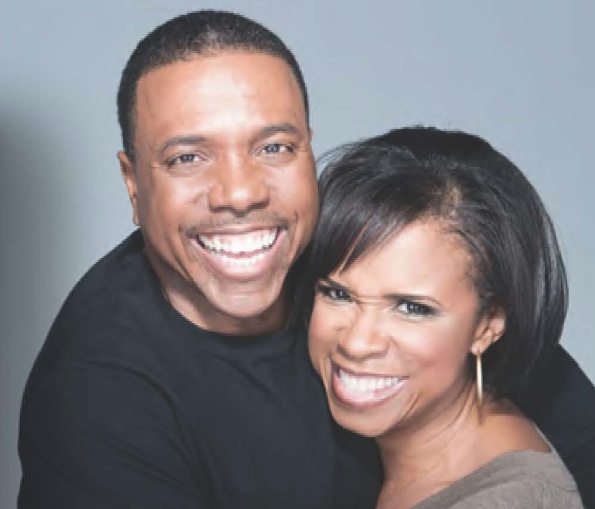
Dollar and his wife Taffi have five children and reside in Atlanta, Georgia.[6]

In June 2012, Dollar was arrested for an alleged attack on his fifteen-year-old daughter, according to the Fayette County, Georgia, Sheriff's Office.[12] Dollar was accused of choking and punching the girl, a story corroborated by Dollar's older daughter,[13] and Fayette County police released details of a subsequent 911 call.[14] The charges were dropped in January 2013 after he attended anger management classes.[15]

Finances and prosperity gospel teachings

[edit]

Dollar is known for controversial teachings regarding prosperity theology.[11] He has long been criticized for living a lavish lifestyle. He owns two Rolls-Royces, a private jet, and high-end real estate such as a million-dollar home in Atlanta, a $2.5 million home in Demarest, New Jersey, and a home in Manhattan that he bought for $2.5 million in 2006[11] (equivalent to $3.9 million in 2024) and sold for $3.75 million in 2012 (equivalent to $5.14 million in 2024).[16] Dollar has refused to disclose his salary. For declining to disclose any financial information to independent audit, Creflo Dollar Ministries received a grade of "F" (failing) for financial transparency by the organization Ministry Watch.[11][17]

Dollar was among six televangelists who were the subject of a 2007 investigation led by United States Senator Chuck Grassley of Iowa as ranking member of the Senate Finance Committee. Grassley asked for financial information to determine whether Dollar made any personal profit from financial donations and requested that Dollar's ministry make the information available by December 6, 2007. The investigation also asked for information from five other televangelists: Benny Hinn, Kenneth Copeland, Eddie L. Long, Joyce Meyer, and Paula White.[18] Dollar contested the probe, arguing that the proper governmental entity to examine religious groups is the IRS, not the Committee on Finance.[19] Dollar and three others were not cooperative, and the probe concluded in 2011 without any charges.[20]

In May 2015, Dollar asked his congregation to buy him a $65 million Gulfstream G-650 jet which caused scrutiny. In response to his critics, Dollar said in a sermon, "If I want to believe God for a $65 million plane, you cannot stop me. You can't stop me from dreaming, I'm going to dream until Jesus comes."[21] It followed the loss of a previous Gulfstream aircraft he owned on 24 November 2014, which left the runway during takeoff at London Biggin Hill Airport.[22] There were no injuries.[22] Investigators concluded that the pilot had misidentified lights marking the edge of the runway, believing them to denote the centreline.[22][23]

Tithe retraction views

[edit]

Over the years, Dollar has written books and made video recordings about the obligation for Christians to pay tithe in the churches. However, in July 2022, he publicly retracted his views on tithing confessing that he has misled people with these teachings, stating that it was not biblical to tithe but up to individuals to offer according to their heart and ability. Dollar received praise and criticism for these statements.[24]

References

[edit]
[edit]
Revisions and contributorsEdit on WikipediaRead on Wikipedia
from Grokipedia
Creflo Augustus Dollar Jr. is the founder and senior pastor of World Changers Church International (WCCI), a headquartered in , that serves approximately 30,000 members across multiple campuses. Dollar, a prominent televangelist and author, has built a global ministry through television broadcasts, conferences, and publications emphasizing grace-based teachings and prosperity principles, which hold that faithful adherence to biblical covenants yields material and spiritual abundance. His ministry's growth, from a small Bible study in 1986 to a multimillion-dollar operation with international reach, underscores Dollar's influence in , including best-selling books like The Divine Revelation of the Spirit and media presence on networks such as TBN. However, Dollar's promotion of has drawn criticism for conflating financial giving with divine favor, exemplified by his personal wealth—estimated at $27–30 million—and acquisitions like multiple private aircraft funded partly through donor contributions. In 2015, Dollar faced public backlash after launching a fundraising campaign for a $65 million Gulfstream G650 jet, arguing it was essential for safe, efficient gospel ministry amid security threats to commercial flights, though he later removed the appeal amid scrutiny. By 2022, Dollar publicly renounced his prior teachings on tithing as a prerequisite for blessings, admitting they were misguided and shifting focus to grace without performance-based prosperity formulas. These developments highlight evolving emphases in his doctrine while sustaining debates over the causal links between faith, giving, and wealth in his teachings.

Early Life and Education

Childhood and Family Background

Creflo Augustus Dollar Jr. was born on January 28, 1962, in . His father, Creflo Augustus Dollar Sr. (born December 2, 1936, in ; died 1993), served as a . Dollar grew up in a that regularly attended church services, though he has stated that this exposure did not result in a personal commitment to during his early years. Limited public details exist regarding his mother or precise family dynamics in childhood, with Dollar himself sharing few specifics beyond the religious environment of his upbringing. He has referenced at least one , a named Lynette, in later ministry contexts. The family's background reflects a working-class African American household in the American South during the civil rights era, though Dollar has not elaborated on socioeconomic conditions or parental influences shaping his formative years.

Religious Conversion and Initial Influences

Dollar was raised in a church-attending household in , but reports no personal commitment to during his youth. His religious conversion occurred in the summer following his freshman year at West Georgia College (now the ), around 1980, when he describes becoming "." Following his conversion, Dollar initially aspired to a career as a professional while continuing his studies. During a practice, he claims to have heard an audible voice from instructing him to "preach ," which he initially resisted but eventually accepted as a divine call to ministry. This experience marked a pivotal shift, leading him to abandon athletic ambitions despite no prior interest in preaching. Dollar subsequently joined a small local church where the provided , influencing his early ministerial development. He began leading a study group at West Georgia College, attracting over 100 students and laying groundwork for his preaching style. In 1983, at age 21, he was ordained by Perry Stone Sr., of an congregation in College Park, exposing him to Pentecostal emphases on spiritual gifts and that later informed his teachings. These early associations with practices, known for charismatic worship and prosperity-oriented interpretations in some circles, shaped his foundational approach to scripture and ministry before the emergence of his .

Formal Education

Dollar graduated from Lakeshore High School before pursuing higher education. He attended West Georgia College (now the ) and received a degree in in 1984. Following this, Dollar worked as an educational therapist at the Brawner Psychiatric Institute in , applying his training in a clinical setting. Dollar's official biography states that he subsequently earned a and a degree in counseling, though the granting institutions for these advanced degrees are not specified in public records or verified sources. In 1998, Oral Roberts University conferred upon him an honorary Doctorate of Divinity, a distinction separate from his claimed earned degrees in counseling. These credentials have supported his early career in therapeutic roles prior to his full-time ministry work, but details on the or specifics of the counseling programs remain undocumented in accessible materials.

Establishment and Growth of Ministry

Founding World Changers Church International

Creflo Dollar established World Changers Church International, initially known as World Changers Ministries Christian Center, in 1986 in , a suburb of . As a native of College Park, Dollar reported receiving a divine for the ministry that prompted its inception, leading him to leave his position at Brawner Elementary School to pursue full-time pastoral work. The inaugural worship service occurred in the cafeteria of Dollar's former elementary school, attended by eight individuals, including Dollar and his wife Taffi, who co-founded and co-pastored the church. This modest beginning marked the start of a Christian congregation focused on biblical teaching, with early services held in rented spaces due to limited resources. The church was formally incorporated as World Changers Church International effective December 30, 1994, under records, with Creflo Dollar and Taffi Dollar listed as initial members. Prior to incorporation, the ministry operated informally, growing from its small founding group through Dollar's preaching and outreach efforts centered on faith and prosperity principles.

Expansion of Congregation and Facilities

World Changers Church International began with modest origins, holding its first service in 1986 at the cafeteria of Kathleen Mitchell Elementary School in College Park, Georgia, attended by eight people. By 1988, the congregation had grown sufficiently to acquire the former Atlanta Christian Center building in College Park as its new permanent location. In response to continued expansion, the church broke ground on a new sanctuary in 1991 and rebranded from World Changers Ministries Christian Center to World Changers Church International to reflect its increasing global influence and membership. The most significant facility upgrade occurred in 1995, when the church relocated to its current flagship campus featuring the 8,500-seat World Dome auditorium in College Park, constructed debt-free to accommodate larger gatherings. Congregational growth accelerated thereafter, with reports of approximately 25,000 members by the early , though regular attendance varied. Recent figures indicate weekly attendance around 13,200 at the main campus as of the mid-2020s. To further extend its reach, the church developed a network of satellite campuses starting in Georgia and expanding internationally, including a 2014 launch on Australia's Gold Coast with plans for sites in and ; these fellowships support additional services and community outreach without specified attendance data.

Development of Media Outreach

In 1990, Creflo Dollar launched the "Changing Your World" television program, marking the inception of his ministry's structured media outreach aimed at disseminating teachings on , , and biblical principles to a broader audience beyond local services. This program, featuring Dollar and his wife Taffi, initially aired on select networks and quickly proved effective for global dissemination, as Dollar recognized television's potential to connect with viewers on spiritual and financial matters. By the mid-1990s, as the church relocated to its larger World Dome facility, broadcasts expanded via partnerships with stations like (TBN), where episodes from as early as 1996 documented Dollar's sermons on healing and . Radio broadcasts complemented the television efforts, with weekly airings of sermons introduced during the ministry's phase in the early to mid-1990s, enabling audio dissemination through Creflo Dollar Ministries' infrastructure. Publications formed another pillar, as Dollar began producing books, CDs, and DVDs on topics like success and , with his ministry's publishing arm active from 1992 onward and distributing hundreds of titles worldwide. Magazines such as CHANGE and resources like The Max newsletter for ministers further extended reach, providing printed and periodic content to support on-air teachings. By the and , media outreach evolved with satellite technology and digital platforms, culminating in "Changing Your World" reaching nearly 1 billion households across six continents in six languages by 2016. This expansion included streaming on networks like Daystar, podcasts, and 24/7 channels via apps and devices such as , solidifying the ministry's international footprint while maintaining focus on grace-based doctrines over traditional mandates in later iterations. Current listings show ongoing radio slots on stations like KJAK and KJBN, reflecting sustained multi-format delivery.

Core Teachings

Foundations of Prosperity Theology

Prosperity theology, integral to Creflo Dollar's ministry, maintains that God wills material wealth, physical health, and overall success for believers as an inherent right purchased by Christ's atonement. This teaching posits that poverty and illness stem from demonic influence or lack of faith rather than divine purpose, with redemption through Jesus restoring access to divine abundance. Dollar frames prosperity not merely as financial gain but as holistic wholeness encompassing mental peace, relational harmony, and spiritual vitality. The doctrinal foundation draws heavily from the Abrahamic covenant in Genesis 12:2-3 and 22:17, where God promises Abraham innumerable descendants, land, and blessings extended to his seed. Dollar asserts that believers inherit these material promises as Abraham's spiritual offspring per Galatians 3:29, interpreting the covenant as an unconditional guarantee activated by faith. This view aligns with broader principles, emphasizing continuity between blessings and Christian entitlement. A key mechanism is Christ's redemption from the curses of Deuteronomy 28, including and , via Galatians 3:13-14, which Dollar teaches transfers Abraham's blessing to believers. Scriptures like 3 John 1:2—"Beloved, I pray that you may prosper in all things and be in health, just as your soul prospers"—serve as proof-texts for God's desire for balanced tied to spiritual maturity. , expressed through positive , is presented as the conduit, with words holding creative power akin to God's speech in Genesis 1, enabling believers to "speak things into existence" per Romans 4:17 and :23. These foundations, rooted in a literalist reading of select biblical promises, have drawn scrutiny for overemphasizing material outcomes over scriptural themes of suffering and contentment (e.g., Philippians 4:11-13), with critics arguing they distort by prioritizing entitlement over grace-dependent sanctification. Empirical observation reveals no consistent between professed faith levels and prosperity across global , suggesting causal claims rest more on interpretive assertion than verifiable patterns. Nonetheless, Dollar's formulation underscores believer authority in against lack, positioning prosperity as evidence of operating in divine favor.

Interpretation of Biblical Covenants and Faith

Creflo Dollar interprets the Bible as a contractual document structured around divine covenants, which he defines as solemn pledges or vows establishing mutual obligations between God and humanity. Central to his teaching is the Abrahamic covenant, detailed in Genesis 12, 15, and 17, wherein God unconditionally promises Abraham blessings of land, descendants, and material increase, extending these to believers as Abraham's spiritual seed through faith in Christ, as articulated in Galatians 3:14. Dollar asserts this covenant embodies grace, mirroring the New Covenant, and includes provisions for favor and prosperity that activate when trusted without reliance on human effort. In contrast, Dollar views the , introduced at Sinai around 1446 BCE, as conditional and performance-based, demanding obedience to over 600 laws for blessings while imposing curses for failure, as outlined in Deuteronomy 28. He warns against blending this Old Covenant framework with the inaugurated by ' blood in the first century CE, arguing such mixing undermines grace and fosters legalism. The , per Dollar's of 8:6-13, supersedes the old by internalizing God's laws through the rather than external tablets, rendering it unconditional and promise-oriented. Faith serves as the operative principle for realizing covenant promises in Dollar's doctrine, defined not merely as intellectual assent but as active trust and confession aligned with Scripture, enabling believers to "receive the promise of the Spirit through faith." He teaches a balance of grace and faith, where grace provides unmerited favor and faith appropriates it, cautioning against "faith in God" (human effort) versus the "faith of God" (divine quality imparted to believers). Under the New Covenant, prayer operates from a position of righteousness, boldly claiming outcomes as already received, with the Holy Spirit administering revelation to sustain this faith amid trials. Dollar stresses covenant-mindedness—renewing the mind to these truths—to avoid operating under obsolete agreements, positioning faith as the conduit for longevity, protection, and fulfillment of Abrahamic blessings.

Grace-Based and Relationship-Centered Doctrines

Creflo Dollar teaches that the New Covenant establishes believers under grace rather than the Mosaic Law, which demanded performance for righteousness, whereas grace imparts righteousness through faith in Jesus Christ's completed atonement. This shift, he asserts, liberates Christians from self-effort and condemnation, as the law exposes sin but cannot empower victory over it, while grace provides divine enablement for holy living. Dollar emphasizes resting in the "finished work" of Christ, encompassing redemption from sin's penalty, reconciliation with God, and propitiation of divine wrath, all received by belief rather than works. In grace-based doctrines, practices such as , confessions, and character development stem from identity in Christ, not legalistic striving. Dollar contrasts law-based , which seeks to earn God's favor through merit, with grace-based that expresses for Christ's accomplishments on the . He instructs believers to make grace-based confessions affirming their position as righteous and whole in Christ, harnessing the power of words rooted in scriptural truth to align life with divine reality. Holiness under grace, according to Dollar, emerges organically from renewed identity, fostering wholeness—"nothing missing, nothing broken"—without reliance on rule-keeping, as the indwelling transforms conduct through relationship rather than external demands. Dollar's relationship-centered doctrines prioritize intimate fellowship with as the foundation for all Christian conduct, viewing transactional exchanges—based on —as inferior to relational bonds empowered by grace. He teaches that prioritizing one's relationship with and His Word governs priorities, mitigating busyness and self-centeredness by centering life on divine assignment. In interpersonal dynamics, including , grace-based relationships involve mutual submission modeled after Christ's example, where spouses yield to one another out of reverence for , rejecting worldly definitions of for sacrificial and respect. This approach extends to church and outreach, emphasizing relational focus over programmatic efforts, as seen in ministry initiatives that build connections to advance 's purposes. Dollar warns against mixing grace and , which breeds confusion and performance anxiety, advocating instead for a faith-driven reliance on Christ's sufficiency to sustain relational vitality.

Evolution of Financial Teachings

Promotion of Tithing and Giving

Dollar emphasized as a biblical mandate requiring believers to give 10 percent of their to the local church, positioning it as the foundational step to accessing God's prosperity promises under both Old and covenants. He drew heavily from 3:8-10, teaching that withholding tithes constitutes robbery of God, resulting in curses such as financial loss to "devourers," while obedient tithing triggers divine protection and abundant blessings, including overflowing material provision. In sermons delivered throughout the and 2000s, Dollar asserted that tithing aligns believers with Abrahamic blessings, transforming giving into a act that shifts one from to , often illustrated with personal anecdotes of members experiencing breakthroughs after committing to regular tithes. Beyond the baseline , Dollar promoted expansive "seed faith" giving, encouraging offerings, pledges, and sacrificial gifts as "seeds" sown into ministry to reap multiplied harvests, based on principles from 2 Corinthians 9:6 ("Whoever sows sparingly will also reap sparingly"). He described these acts as strategic investments where the size and faith behind the seed determine the supernatural return, such as debt cancellation or business success, warning that unmet needs remain unaddressed by without prior sowing. This teaching permeated his media outreach, including books like The Divine Order of Giving and Receiving and conferences where attendees were urged to declare seeds aloud for activation, framing non-participation as unbelief hindering divine favor. Dollar's promotion integrated and giving into a broader framework, where financial obedience precedes miracles, supported by testimonials from congregants claiming rapid windfalls post-obedience. He maintained that grace empowers generous giving without legalism, yet stressed measurable commitment—like tracking tithes—to verify faith's efficacy, influencing Changers Church International members to prioritize these practices amid the ministry's growth from the onward.

2022 Retraction on Tithing Requirements

On June 26, 2022, Creflo Dollar delivered a sermon titled "The Great Misunderstanding" at World Changers Church International, in which he publicly retracted decades of teachings that had presented tithing—defined as giving 10 percent of one's income to the church—as a mandatory requirement for New Testament Christians. Dollar explicitly stated that tithing "isn't required or even encouraged for believers in Jesus Christ," describing it instead as an Old Testament practice under the Mosaic Law that does not apply under the New Covenant of grace. Dollar acknowledged that his prior interpretations of scriptures like 3:8-10, which he had used to argue that failing to invoked curses, were erroneous and had misrepresented the gospel. He instructed congregants to discard all his previous books, CDs, DVDs, and other materials promoting as obligatory, asserting, "I want you to throw [them] away... because I got the subject wrong." This reversal came after Dollar claimed a deeper study of biblical covenants led him to conclude that giving should be voluntary and motivated by grace, not legalistic compulsion. Dollar framed the retraction as a correction born from progressive revelation through prayer and scriptural reevaluation, emphasizing that grace frees believers from obligations like while encouraging cheerful, Spirit-led generosity as described in 2 Corinthians 9:7. He did not issue a formal apology to followers who had adhered to his earlier teachings, which had been central to his for over 30 years and reportedly generated substantial church revenue. The announcement, disseminated via church services and online platforms, marked a significant doctrinal shift for Dollar's ministry, though it prompted varied responses from observers questioning its timing amid ongoing financial scrutiny.

Shift to Voluntary Grace-Based Giving

In June 2022, Creflo Dollar publicly renounced his longstanding promotion of tithing as a mandatory requirement for Christians, declaring that his prior interpretations were incorrect and rooted in Old Testament law rather than New Testament grace. During a sermon delivered on June 26, 2022, and subsequently shared via video, Dollar instructed followers to discard all his previous books, tapes, videos, and materials on tithing, stating, "I'm sorry. That's wrong. That's not what Jesus taught," emphasizing that tithing belonged to the era of Moses and not the covenant established through Christ's sacrifice. He framed this retraction as a revelation from deeper Bible study, arguing that under the New Covenant, believers are freed from legalistic obligations like the 10% tithe mandated in Malachi 3, which he now viewed as inapplicable to grace-era Christians. Dollar pivoted to advocating "grace-based giving," which he described as voluntary, heartfelt contributions motivated by an internal transformation through God's grace rather than fear of curse or compulsion under . In subsequent teachings, such as a October 3, 2022, devotional on his ministry website, he explained that grace-based giving aligns with 2 Corinthians 8–9, where Paul urges cheerful, proportional generosity from abundance to meet needs, without fixed percentages or threats of for noncompliance. Dollar posited that true flows from this relational dynamic with God, where giving becomes an outflow of and , unblocked by legalism that he claimed hinders blessings. This shift, he maintained, corrects a doctrinal error perpetuated for over 20 years in his ministry, during which had been presented as essential for financial breakthroughs and spiritual protection. The announcement elicited mixed responses within evangelical circles, with some viewing it as a genuine theological evolution toward emphases on freedom and relationship, while critics questioned its timing amid ongoing scrutiny of prosperity teachings and Dollar's personal finances. Dollar defended the change by appealing to scriptural distinctions between Old and New Testaments, asserting that grace liberates believers to give "as they have purposed in their hearts" (2 Corinthians 9:7), fostering generosity without the "blockages" of law-based mandates. By late 2022, his ministry materials had begun emphasizing this voluntary model, integrating it into broader doctrines of grace-centered living, though no formal restitution for past collections was announced or implemented.

Financial Practices and Assets

Church Revenue and Operations

World Changers Church International (WCCI), the primary ecclesiastical organization founded by Creflo Dollar in 1986 and headquartered in College Park, Georgia, operates a 81-acre campus that includes the 8,500-seat World Dome auditorium, completed in December 1995 at a cost of nearly $20 million. The facility supports multiple weekly services, including two Sunday morning gatherings at 8 a.m. and 11 a.m., as well as Wednesday and Friday night meetings led by Dollar or approximately 12 associate ministers. Church operations employ nearly 340 staff members to handle administrative, broadcast, and outreach functions, with services extending globally through Creflo Dollar Ministries' television and radio programs. Revenue for WCCI derives mainly from tithes and offerings by its estimated 25,000-member congregation—about 30% of whom regularly—along with contributions from international partners responding to media appeals and sales of books, DVDs, and other ministry resources. In 2006, the Atlanta-based church alone reported $69 million in contributions. As of 2004, the organization's annual budget reached approximately $80 million, encompassing a monthly of $3 million to $6 million and $30 million in yearly television airtime costs. WCCI, structured as a tax-exempt church under U.S. Section 501(c)(3), faces no obligation to file public financial disclosures, resulting in limited transparency on detailed audited statements or recent revenue figures. A 2007 Senate Finance Committee inquiry into finances, including WCCI, requested such documents but yielded no published records, with Dollar's organization rated among the least cooperative respondents before the probe concluded without enforcement in 2011.

Personal Wealth Accumulation

Creflo Dollar's personal wealth is estimated at $27–30 million as of 2024, derived largely from his leadership of World Changers Church International (WCCI), a non-denominational ministry he founded in 1986 that expanded into a multi-campus organization with significant member donations. The church's Atlanta headquarters reported $69 million in contributions in 2006 alone, reflecting revenue streams from tithes, offerings, and prosperity-oriented giving promoted through Dollar's teachings. Supplementary income arises from Dollar's authorship of over 30 books on biblical and faith, which generate royalties, alongside broadcasts reaching global audiences. He also owns ancillary businesses, including the Arrow Records, the publication Change Magazine, and investments that contribute to asset growth. Dollar's compensation package from WCCI, including salary and benefits, has not been publicly disclosed; a 2011 U.S. investigation noted the absence of published executive pay reports for Dollar and his wife Taffi, despite the organization's tax-exempt status and high revenues. His accumulated assets include a 17,000-square-foot mansion on nearly 60 acres in , valued at approximately $4.3 million by county appraisal, a $2.5 million Manhattan apartment, and luxury vehicles such as Rolls-Royce Phantoms. These holdings align with the financial principles Dollar advocates, positing material abundance as a divine reward for covenantal obedience and .

High-Profile Purchases like the Gulfstream Jet

In March 2015, Creflo Dollar launched a public fundraising campaign through World Changers Church International, soliciting $65 million to purchase a new Gulfstream G650 private jet, requesting $300 donations from each of approximately 200,000 followers to replace an existing 30-year-old aircraft deemed unsafe for international ministry travel. The initiative, dubbed "Project G650," featured a video on the ministry's website emphasizing the jet's necessity for efficient global outreach, but it faced immediate public scrutiny and social media backlash over the luxury expenditure amid Dollar's prosperity theology teachings. Dollar defended the effort in sermons, attributing criticism to satanic opposition aimed at discrediting his ministry, while the church board approved proceeding with the acquisition in June 2015 despite the fundraising page's removal. Dollar's ministry ultimately did not complete the G650 purchase through the publicized donor drive but later acquired a Gulfstream G550, a comparable long-range , by selling a prior ; flight tracking data from June 2024 shows the G550 logging multiple trips alongside the Learjet's replacement, with the fleet conducting 332 flights that month for ministry purposes. These aircraft, valued in the tens of millions, align with Dollar's rationale for to avoid commercial flight risks and enable rapid transport of ministry teams and resources internationally. Beyond aviation, Dollar has owned multiple high-value residences tied to ministry operations and personal use, including a , compound spanning 182.9 acres with a primary assessed at approximately $4.3 million, featuring expansive fencing, stone walls, and amenities like a pool. Additional properties include a $2.4 million purchased in New York City's Time Warner Center in 2005 and a home in , acquired in May 2012. Dollar has also maintained a collection of luxury vehicles, notably multiple Rolls-Royce models, including a Phantom valued at around $450,000 and a Phantom Drophead Coupé estimated at $462,000, which he cited as symbols of aligned with his teachings on divine abundance. In 2008, he sold a $280,000 Rolls-Royce amid a U.S. inquiry into ministry s, though he continued acquiring similar high-end automobiles. These assets, accumulated through book sales, speaking fees, and church tithes exceeding tens of millions annually, have drawn criticism for exemplifying prosperity gospel's emphasis on material wealth as evidence of faith, though Dollar maintains they facilitate his evangelistic work without personal enrichment beyond biblical precedents.

Controversies and Criticisms

2012 Domestic Incident and Arrest

On June 8, 2012, Creflo Dollar, then 50 years old, was arrested at his , residence on misdemeanor charges of simple battery, cruelty to children in the third degree, and family violence after an altercation with his 15-year-old . The incident stemmed from an argument when the daughter sought permission to attend a party, which Dollar denied, leading to her becoming upset and the situation escalating. According to the police report, the daughter alleged that Dollar charged at her, choked her for approximately five seconds, punched her in the face and eye area, and struck her with his , resulting in a visible scratch on her neck. Her 19-year-old sister, , corroborated the account to deputies, stating she witnessed Dollar grab, slap, and choke the younger daughter before throwing her to the floor. Dollar's wife, Taffi, informed investigators she had not observed any physical fight. The 15-year-old daughter placed a 911 call during the incident, calmly reporting to the operator that her father had "punched ... and choked" her and that she felt threatened, adding that "it was not the first time it’s happened." Fayette County Sheriff's deputies responded, documented injuries including the scratch, and took Dollar into custody; he was released later that morning on $5,000 bond. initially provided a modified statement in her parents' presence but reaffirmed the original account to authorities afterward. Dollar denied the allegations, describing the event as an emotional family discussion that did not involve physical violence and attributing any neck marks to the daughter's eczema. On June 10, 2012, he addressed his congregation at World Changers Church International, asserting he "should never have been arrested" and that "all is well at the Dollar household," receiving a . His attorney emphasized that Dollar did not punch or choke the child and planned to continue preaching. The charges were dismissed by Fayette County State Court on January 25, 2013, after Dollar completed an program, a period of , and paid $1,072 in court fees and costs. Prosecutors did not pursue further action, though the dismissal followed Dollar's compliance with pretrial diversion requirements rather than a finding of innocence.

Accusations of Exploitative Prosperity Gospel

Critics from evangelical and theological circles have long accused Creflo Dollar of advancing a gospel that exploits vulnerable followers by linking financial donations to guaranteed divine blessings. Dollar's teachings emphasize "sowing seeds" through and offerings to his World Changers Church International, promising multiplied returns in wealth, health, and success as a direct result of such giving, often citing passages like 2 Corinthians 9:6 out of context to support claims of supernatural reciprocity. This approach, rooted in theology, is criticized for manipulating congregants—many from low-income backgrounds—into disproportionate contributions, fostering a transactional view of where functions as a cosmic rather than a sovereign provider. The exploitative nature is highlighted by patterns where promised blessings fail to materialize for donors, while Dollar's ministry amasses substantial revenue, reportedly exceeding $100 million annually in some years from tithes, offerings, and media sales. Critics contend this creates a predatory cycle, guilting believers with teachings that or illness stem from insufficient or giving, thereby sustaining the preacher's lifestyle at the expense of the flock's . For instance, Reformed blogger describes Dollar's doctrine as false teaching that "turns God into a " and burdens the poor with expectations of through escalated donations, distorting scriptural calls for cheerful into obligatory investments. A 2007 U.S. Senate Finance Committee investigation into gospel organizations, including Dollar's, amplified these accusations by probing potential abuses of tax-exempt status, where solicited funds under promises funded lavish assets like multiple private jets and multimillion-dollar properties. Dollar's partial non-compliance, refusing to provide detailed financial records despite repeated requests, was noted by the committee and watchdog groups as evasive, suggesting opacity in how teachings translated to operational enrichment. Though no penalties ensued, the inquiry underscored concerns that such doctrines incentivize exploitation by framing non-disclosure as protected religious practice, while followers bear the cost without . Prominent voices like civil rights leader John Perkins have labeled Dollar's prosperity emphasis as "evil" and "heresy," particularly for targeting African American communities with messages that equate spiritual obedience to material gain, diverting resources from genuine needs to clerical opulence. These critiques maintain that the gospel's causal claims—wealth as evidence of favor—lack empirical biblical support and instead mirror pyramid-like schemes, preying on hope amid hardship without delivering verifiable outcomes for the majority of adherents.

Defenses Against Exploitation Claims

Dollar has responded to accusations of exploiting followers through prosperity teachings by framing criticism as aimed at hindering his global ministry. In an April 2015 sermon addressing backlash to his campaign for a $65 million Gulfstream G650 jet, he stated that "the is trying to discredit me," portraying detractors as agents of opposition rather than legitimate seekers. He argued that the jet was essential for safe and efficient travel, citing past mechanical failures with his 1984 Gulfstream III and risks from commercial airlines, including exposure to germs and unreliable schedules that could delay preaching engagements. Supporters of Dollar's ministry, including internal board statements, have maintained that high-profile assets like private aircraft enable effective outreach to millions, drawing parallels to biblical provisions for ministerial support such as those in 1 Corinthians 9:14, where laborers deserve their wages. Following public outcry, World Changers Church International halted the specific video campaign in May 2015 and issued an apology from its board for the approach's tone, while defending the underlying need for updated aviation resources to sustain international without compromising security or productivity. No charges of or arose from the incident, and the ministry emphasized that donations were voluntary expressions of rather than obligatory extractions. In response to broader claims of as exploitative under the prosperity gospel, Dollar retracted his prior emphasis on it as a mandatory requirement in June 2022, declaring in sermons titled "The Great Misunderstanding" and "The Truth About " that such teachings were "not correct" for believers under grace. He instructed congregants to discard old books and videos promoting , attributing the shift to newfound that giving should stem from gratitude and relationship with , not legalistic compulsion or promises of material return. This adjustment, proponents argue, directly counters exploitation narratives by eliminating any perceived pressure, aligning practices with voluntary, heart-led contributions as described in 2 Corinthians 9:7. Dollar's organization has defended its financial autonomy against external probes, such as Sen. Charles Grassley's 2007-2011 investigation into six ministries including Creflo Dollar Ministries, by withholding detailed records to protect ecclesiastical independence and donor privacy, consistent with First Amendment protections for religious entities. The review concluded in 2011 without recommending legislative changes or pursuing enforcement against Dollar, noting insufficient evidence of systemic abuse warranting federal intervention, though it highlighted governance gaps. Ministry advocates contend that internal accountability suffices, with giving framed as "seed-faith" investments yielding spiritual and temporal blessings for donors, evidenced by anecdotal reports of followers' debt reduction and business success post-obedience to giving principles.

Reception and Impact

Positive Influence on Followers and Success Stories

Followers of Creflo Dollar, through World Changers Church International, frequently attribute personal transformations and financial improvements to his emphasis on grace-based faith and teachings. The church's weekly "Testimony Tuesday" segments feature members sharing stories of life changes, such as overcoming personal struggles via applied grace principles, though specific details often remain anecdotal and church-verified rather than independently corroborated. In a 2008 ABC News investigation into prosperity gospel adherents, an anonymous follower of Dollar stated, "I have prospered under his ministry," linking their financial success directly to consistent exposure to his messages on faith and giving, asserting that "you can't stay up under that kind of word and not prosper." Such self-reported accounts highlight perceived motivational effects, where teachings on positive and seed-faith giving are credited with encouraging disciplined financial habits and among congregants. Dollar's global broadcasts, reaching millions weekly via television and online platforms, amplify these narratives, fostering a where participants claim enhanced resilience and opportunity recognition. Dollar's 2022 shift away from mandatory toward voluntary grace-giving has been cited by some adherents as liberating, potentially reducing financial pressure while maintaining motivational elements for . Followers report sustained engagement, with the church maintaining a core membership exceeding 25,000 in and international affiliates, suggesting enduring appeal despite external critiques. These stories, primarily sourced from church-affiliated channels, underscore a perceived positive on believers' mindsets, though empirical causation linking teachings to outcomes remains unverified beyond claims.

Critiques from Evangelical and Theological Perspectives

Evangelical theologians and leaders have criticized Creflo Dollar's teachings for promoting a gospel that distorts biblical and ethics by equating faith with guaranteed material and health. Proponents like Dollar assert that believers can "speak" into existence through positive , mirroring God's creative power, a claim rooted in theology but viewed by critics as anthropocentric and diminishing divine sovereignty. John MacArthur, pastor of , has labeled such prosperity preachers "insolent frauds" for elevating experiential over scriptural fidelity, arguing their doctrines foster greed rather than godliness. Theological objections center on Dollar's interpretation of the Abrahamic covenant as entitling Christians to material riches, which evangelicals contend misapplies promises to the era and ignores Jesus' warnings against earthly treasures, such as in Matthew 6:19-21 and the rich young ruler narrative. Critics like those at argue this framework faults the for failing to eradicate , portraying or lack as evidence of deficient , contrary to apostolic examples of and in Philippians 4:11-13. Dollar's emphasis on as a mechanism for return—taught for decades until his 2022 retraction—has been decried as manipulative, reducing grace to transactionalism and exploiting vulnerable congregants seeking divine favor. From a cessationist evangelical standpoint, Dollar's charismatic elements, including claims of and prosperity as normative, align with broader rebukes of the movement's prioritization of miracles over doctrinal purity, as articulated in MacArthur's 2013 Strange Fire conference, which targeted prosperity adherents for "counterfeit worship." Reformed voices, such as , classify Dollar as a false teacher whose substitutes self-empowerment for Christ's cross, potentially leading followers astray from and discipleship. These critiques persist despite Dollar's occasional doctrinal shifts, with evangelicals maintaining that his core methodology remains incompatible with historic , evidenced by unchanged emphases on wealth as a covenantal sign.

Cultural and Societal Reach

Creflo Dollar's ministry extends its influence through extensive media broadcasts, reaching audiences via television, online platforms, and publications. The Changing Your World program, a flagship broadcast, airs on networks including TBN, Lifetime, and the Impact Network, with listings scheduling episodes multiple times weekly. The ministry claims potential access to nearly 1 billion homes globally through these outlets, though actual viewership metrics remain unverified independently. Online, Creflo Dollar Ministries maintains a YouTube channel with over 500,000 subscribers and podcasts garnering thousands of engagements, disseminating teachings on grace, faith, and prosperity. Dollar's societal reach is particularly pronounced within African American communities, where his prosperity gospel emphasizes material blessings as evidence of divine favor, resonating with working-class and low-income congregants seeking empowerment amid economic challenges. World Changers Church International, under his leadership, grew from eight attendees in 1986 to over 38,000 weekly in 2012, positioning it as one of the largest U.S. megachurches and a hub for such . This message has fueled both adherence—framed by supporters as motivational for personal success—and broader cultural debates on faith's role in wealth accumulation, appearing in mainstream critiques like reports on televangelism's economic appeals to the vulnerable. His authored books, such as You're Supposed to Be Wealthy, further propagate these ideas, contributing to the movement's visibility in evangelical discourse. Globally, Dollar's operations include missions outreach and a 2017 documentary highlighting international efforts, though quantifiable impacts beyond U.S. borders rely on self-reported expansions into leadership in national and overseas ministries. His prominence has intersected with societal issues, including responses to racial division through sermons advocating unity via spiritual principles, influencing discussions on faith-based . Critics attribute a portion of prosperity theology's societal footprint to figures like Dollar for normalizing opulent pastoral lifestyles, yet adherents credit his teachings with fostering and entrepreneurial mindsets among followers.

Personal Life

Marriage and Family Dynamics

Creflo Dollar married Taffi Bolton in 1987 after meeting at West Georgia College, where they dated briefly before wedding. The couple has co-led World Changers Church International since its founding in 1986, with Taffi serving as co-pastor and overseeing women's ministries focused on , , and spiritual growth. Their partnership emphasizes biblical structures, with teachings promoting grace-based parenting, marital unity, and overcoming generational cycles through faith. Dollar and Taffi have five children: sons Gregory and Jeremy, and daughters , , and . Gregory was adopted by the family when he was 17 years old. The children have occasionally participated in ministry activities, with public mentions of family milestones such as daughters' graduations and commitments to Christian growth. dynamics in Dollar's teachings stress God's favor on households, mutual support in ministry, and resilience amid public scrutiny. In June 2012, Dollar faced a domestic incident when his then-15-year-old daughter reported to police that he had choked and punched her during an argument over her request to attend a party after missing a prior event; she also alleged he struck her with a shoe. Dollar was arrested on charges of simple battery and family violence but denied the accusations, asserting he had only spanked her on the back and shoulders with a shoe as discipline and that no choking or punching occurred. The daughter reportedly recanted her initial statement shortly after, expressing unwillingness to prosecute, and no formal charges were ultimately pursued against Dollar. The event sparked public debate on parental discipline but did not lead to conviction or long-term legal repercussions, with the family maintaining outward unity in subsequent ministry communications.

Health Challenges and Personal Testimonies

In 2021, Creflo Dollar contracted a severe case of , which resulted in blood clots forming around his lungs, requiring medical intervention and a period of recovery. Following this, he developed , exacerbating his physical struggles during what he described as a challenging season. Dollar was subsequently with an aggressive form of cancer, involving three tumors that he claimed were consuming his nutritional intake. He publicly shared details of this in personal testimonies, framing it as part of a multi-year battle beginning around 2019 and extending through at least 2025, during which he emphasized maintaining amid ongoing medical realities. In his testimonies, Dollar consistently asserted a faith-based position of pre-existing , stating phrases such as "I'm not trying to get healed. I'm ALREADY healed" despite the , attributing his stance to scriptural promises and . He described God's grace as sufficient through these trials, including , , and cancer, portraying them as opportunities for spiritual victory and overcomership rather than defeat. By 2023, Dollar expressed gratitude for recovery from cancer after an eight-week period, sharing images of restored health on as evidence of faith's role. These accounts, drawn from his ministry broadcasts and platforms, highlight a where verbal confessions and precede physical outcomes, though independent medical verification of full remission remains unconfirmed in .

References

Add your contribution
Related Hubs
User Avatar
No comments yet.