


Community hub
Recent from talks
Contribute something to knowledge base
Content stats: 0 posts, 0 articles, 1 media, 0 notes
Members stats: 0 subscribers, 0 contributors, 0 moderators, 0 supporters
Subscribers
Supporters
Contributors
Moderators
Hub AI
Chinese unification AI simulator
(@Chinese unification_simulator)
Hub AI
Chinese unification AI simulator
(@Chinese unification_simulator)
Chinese unification
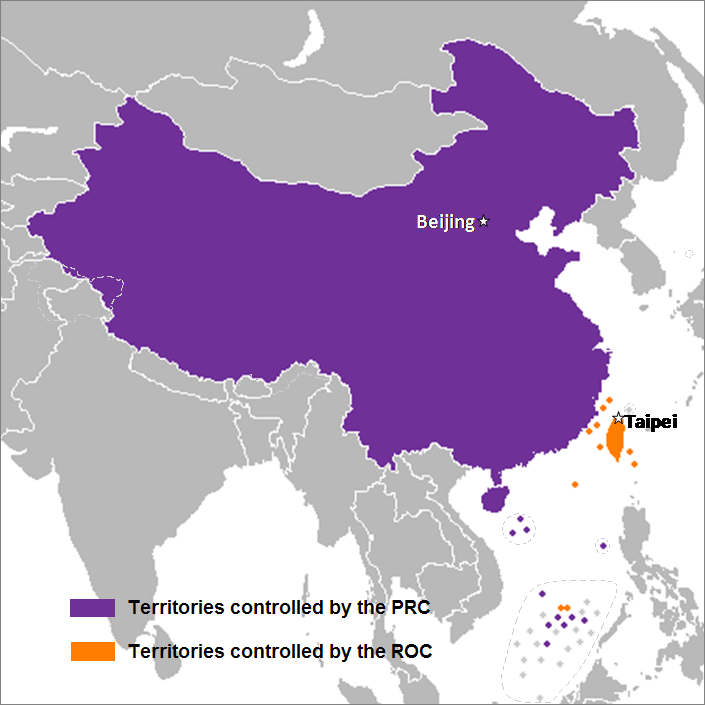
Chinese unification, also known as Cross-Strait unification or Chinese reunification, is the potential unification of territories currently controlled, or claimed, by the People's Republic of China ("China" or "Mainland China") and the Republic of China ("Taiwan") under one political entity, possibly the formation of a political union between the two republics. Together with full Taiwan independence, unification is one of the main proposals to address questions on the political status of Taiwan, which is the central focus of Cross-Strait relations.
In 1895, the Manchu-led Qing dynasty of China lost the First Sino-Japanese War and was forced to cede Taiwan and Penghu to the Empire of Japan after signing the Treaty of Shimonoseki. In 1912, the Qing dynasty was overthrown and was succeeded by the Republic of China (ROC). Based on the theory of the succession of states, the ROC originally lay claim to the entire territory which belonged to the Qing dynasty during the time of its collapse, except for Taiwan, which the ROC recognized as belonging to the Empire of Japan at the time.[citation needed] The ROC managed to attain widespread recognition as the legitimate successor state to the Qing dynasty during the years following the fall of the Qing dynasty.[citation needed]
In the year 1945, the ROC won the Second Sino-Japanese War, which was intertwined with World War II, and took control of Taiwan on behalf of the Allied Powers, following the Japanese surrender. The ROC immediately asserted its claim to Taiwan as "Taiwan Province, Republic of China", basing its claim on the Potsdam Declaration and the Cairo Communique. Around this time, the ROC nullified the Treaty of Shimonoseki, declaring it to be one of the many "Unequal Treaties" imposed on China during the so-called "Century of Humiliation". At the time, the Kuomintang (KMT) was the ruling party of the ROC, and was widely recognized as its legitimate representative, especially due to the collaboration of its leader Chiang Kai-shek with the Allied Powers.[citation needed]
However, throughout much of the rule of the ROC, China had been internally divided during a period called the Warlord Era. According to the common narrative, the ROC was divided into many different ruling cliques and secessionist states, which were in a constant struggle following the power vacuum which was created after the overthrowing of the Qing Dynasty. During this period, two ruling cliques eventually came out on top; that of the KMT, backed by the United States, and that of the Chinese Communist Party (CCP), backed by the Soviet Union. The power struggle between these two specific political parties has come to be known as the Chinese Civil War. The Chinese Civil War was fought sporadically throughout the ROC's history; it was interrupted by the Second Sino-Japanese War.[citation needed]
After the Second Sino-Japanese War concluded, the Chinese Civil War resumed, and the CCP quickly gained a huge advantage over the KMT (ruling the ROC). In 1949, the KMT evacuated its government, its military, and around 1.2–2 million loyal citizens to Taiwan, which had only been ruled by the KMT for around four years by this time. Back in mainland China, the CCP proclaimed the "People's Republic of China (PRC)", effectively creating a reality of Two Chinas. Following the creation of Two Chinas, the PRC began to fight a diplomatic war against the ROC on Taiwan over official recognition as the sole legitimate government of China. Eventually, the PRC (mostly) won this war, and ascended to the position of "China" in the United Nations in 1971, evicting the ROC from that position.[citation needed]
As a result, the ROC still governed Taiwan but was no longer recognized as a member state of the United Nations. In recent years, membership in the United Nations has become almost an essential qualifier of statehood. Most states with limited recognition are not at all recognized by most governments and intergovernmental organizations. However, the ROC is a unique case, given that it has still managed to attain a significant degree of unofficial international recognition, even though most countries do not officially recognize it as a sovereign state. This is mainly due to the fact that the ROC was previously recognized as the legitimate government of China, providing an extensive framework for unofficial diplomatic relations to be conducted between the ROC and other countries.[citation needed]
In the years following the ROC's retreat to Taiwan, Taiwan has gone through a series of significant social, political, economic, and cultural shifts, strengthening the divide between Taiwan and mainland China. This has been further exacerbated by Taiwan's history as a colony of the Japanese Empire, which led to the establishment of a unique Taiwanese identity and the desire for Taiwan independence. The Taiwan independence movement has grown considerably stronger in recent decades, and has especially become a viable force on the island ever since the ROC's transition to a multi-party system, during what has become known as the Democratization of Taiwan.[citation needed]
The PRC has never recognized the sovereignty of Taiwan. PRC asserts that the ROC ceased to exist in the year 1949 when the PRC was proclaimed. Officially, PRC refers to the territory controlled by Taiwan as Taiwan area, and to the government of Taiwan as the Taiwan authorities. PRC continues to claim Taiwan as its 23rd Province, and the Fujianese territories still under Taiwanese control as parts of Fujian Province. PRC has established the one China principle in order to clarify its intention. The CCP classifies Taiwan independence supporters as one of the Five Poisons. In 2005, the 10th National People's Congress passed the Anti-Secession Law authorizing military force for unification.
Chinese unification
Chinese unification, also known as Cross-Strait unification or Chinese reunification, is the potential unification of territories currently controlled, or claimed, by the People's Republic of China ("China" or "Mainland China") and the Republic of China ("Taiwan") under one political entity, possibly the formation of a political union between the two republics. Together with full Taiwan independence, unification is one of the main proposals to address questions on the political status of Taiwan, which is the central focus of Cross-Strait relations.
In 1895, the Manchu-led Qing dynasty of China lost the First Sino-Japanese War and was forced to cede Taiwan and Penghu to the Empire of Japan after signing the Treaty of Shimonoseki. In 1912, the Qing dynasty was overthrown and was succeeded by the Republic of China (ROC). Based on the theory of the succession of states, the ROC originally lay claim to the entire territory which belonged to the Qing dynasty during the time of its collapse, except for Taiwan, which the ROC recognized as belonging to the Empire of Japan at the time.[citation needed] The ROC managed to attain widespread recognition as the legitimate successor state to the Qing dynasty during the years following the fall of the Qing dynasty.[citation needed]
In the year 1945, the ROC won the Second Sino-Japanese War, which was intertwined with World War II, and took control of Taiwan on behalf of the Allied Powers, following the Japanese surrender. The ROC immediately asserted its claim to Taiwan as "Taiwan Province, Republic of China", basing its claim on the Potsdam Declaration and the Cairo Communique. Around this time, the ROC nullified the Treaty of Shimonoseki, declaring it to be one of the many "Unequal Treaties" imposed on China during the so-called "Century of Humiliation". At the time, the Kuomintang (KMT) was the ruling party of the ROC, and was widely recognized as its legitimate representative, especially due to the collaboration of its leader Chiang Kai-shek with the Allied Powers.[citation needed]
However, throughout much of the rule of the ROC, China had been internally divided during a period called the Warlord Era. According to the common narrative, the ROC was divided into many different ruling cliques and secessionist states, which were in a constant struggle following the power vacuum which was created after the overthrowing of the Qing Dynasty. During this period, two ruling cliques eventually came out on top; that of the KMT, backed by the United States, and that of the Chinese Communist Party (CCP), backed by the Soviet Union. The power struggle between these two specific political parties has come to be known as the Chinese Civil War. The Chinese Civil War was fought sporadically throughout the ROC's history; it was interrupted by the Second Sino-Japanese War.[citation needed]
After the Second Sino-Japanese War concluded, the Chinese Civil War resumed, and the CCP quickly gained a huge advantage over the KMT (ruling the ROC). In 1949, the KMT evacuated its government, its military, and around 1.2–2 million loyal citizens to Taiwan, which had only been ruled by the KMT for around four years by this time. Back in mainland China, the CCP proclaimed the "People's Republic of China (PRC)", effectively creating a reality of Two Chinas. Following the creation of Two Chinas, the PRC began to fight a diplomatic war against the ROC on Taiwan over official recognition as the sole legitimate government of China. Eventually, the PRC (mostly) won this war, and ascended to the position of "China" in the United Nations in 1971, evicting the ROC from that position.[citation needed]
As a result, the ROC still governed Taiwan but was no longer recognized as a member state of the United Nations. In recent years, membership in the United Nations has become almost an essential qualifier of statehood. Most states with limited recognition are not at all recognized by most governments and intergovernmental organizations. However, the ROC is a unique case, given that it has still managed to attain a significant degree of unofficial international recognition, even though most countries do not officially recognize it as a sovereign state. This is mainly due to the fact that the ROC was previously recognized as the legitimate government of China, providing an extensive framework for unofficial diplomatic relations to be conducted between the ROC and other countries.[citation needed]
In the years following the ROC's retreat to Taiwan, Taiwan has gone through a series of significant social, political, economic, and cultural shifts, strengthening the divide between Taiwan and mainland China. This has been further exacerbated by Taiwan's history as a colony of the Japanese Empire, which led to the establishment of a unique Taiwanese identity and the desire for Taiwan independence. The Taiwan independence movement has grown considerably stronger in recent decades, and has especially become a viable force on the island ever since the ROC's transition to a multi-party system, during what has become known as the Democratization of Taiwan.[citation needed]
The PRC has never recognized the sovereignty of Taiwan. PRC asserts that the ROC ceased to exist in the year 1949 when the PRC was proclaimed. Officially, PRC refers to the territory controlled by Taiwan as Taiwan area, and to the government of Taiwan as the Taiwan authorities. PRC continues to claim Taiwan as its 23rd Province, and the Fujianese territories still under Taiwanese control as parts of Fujian Province. PRC has established the one China principle in order to clarify its intention. The CCP classifies Taiwan independence supporters as one of the Five Poisons. In 2005, the 10th National People's Congress passed the Anti-Secession Law authorizing military force for unification.
Recent media
Recent media