Hubbry Logo
Danny DorlingDanny DorlingMain
Open search
Danny Dorling
Community hub
Danny Dorling
logo
8 pages, 0 posts
0 subscribers
Be the first to start a discussion here.
Danny Dorling
Danny Dorling
from Wikipedia

Danny Dorling FRSA FRGS FRSS FAcSS (born 16 January 1968) is a British social geographer. He is currently 1971 Professor of Geography (known as the Halford Mackinder Professor of Geography prior to February 2025) attached to St Peter's College at the University of Oxford; a post he has held since appointed in September 2013.[1][2][3][4]

Key Information

Dorling is a visiting professor in the Department of Sociology of Goldsmiths, University of London, a visiting professor in the School of Social and Community Medicine of the University of Bristol, a visiting fellow at the Institute for Public Policy Research, a member of the National Advisory Panel for the policy Centre for Labour and Social Studies (CLASS) Thinktank, and since 2011, a patron of RoadPeace.[5][6]

Dorling became a Fellow of the Royal Geographical Society (FRGS) and a Fellow of the Royal Statistical Society (FRSS) in 1989, a Fellow of the Academy of Social Sciences (FAcSS) in 2003, a Fellow of the Royal Society of Arts (FRSA) in 2010, an Honorary Fellow of the Faculty of Public Health (HonFFPH) in 2014, a senior associate member of the Royal Society of Medicine (SARSM) in 2015, and an honorary Doctor of the University of York in 2019.[7]

From 2007 to 2017 Dorling was the honorary president of the Society of Cartographers.[8]

Early life and education

[edit]

Born in Oxford, Dorling attended local state schools, including Cheney School, a coeducational comprehensive and was employed as a play-worker in children's summer play-schemes.[9] Dorling graduated with a Bachelor of Science with Honours in Geography, Mathematics and Statistics at the University of Newcastle in 1989 and completed a PhD in the Visualization of Spatial Social Structure under the supervision of Stan Openshaw in 1991.[10]

Academic career

[edit]

From 1991 to 1993, Dorling was a Joseph Rowntree Foundation Fellow and from 1993 to 1996 he was British Academy Fellow at the University of Newcastle. From 1996 to 2000, he was on the faculty of the School of Geographical Sciences at the University of Bristol. From 2000 to 2003 he was Professor of Quantitative Human Geography at the University of Leeds. From 2003 to 2013 he was Professor of Human Geography and also in 2013 he was Professor for the Public Understanding of Social Science at the University of Sheffield.

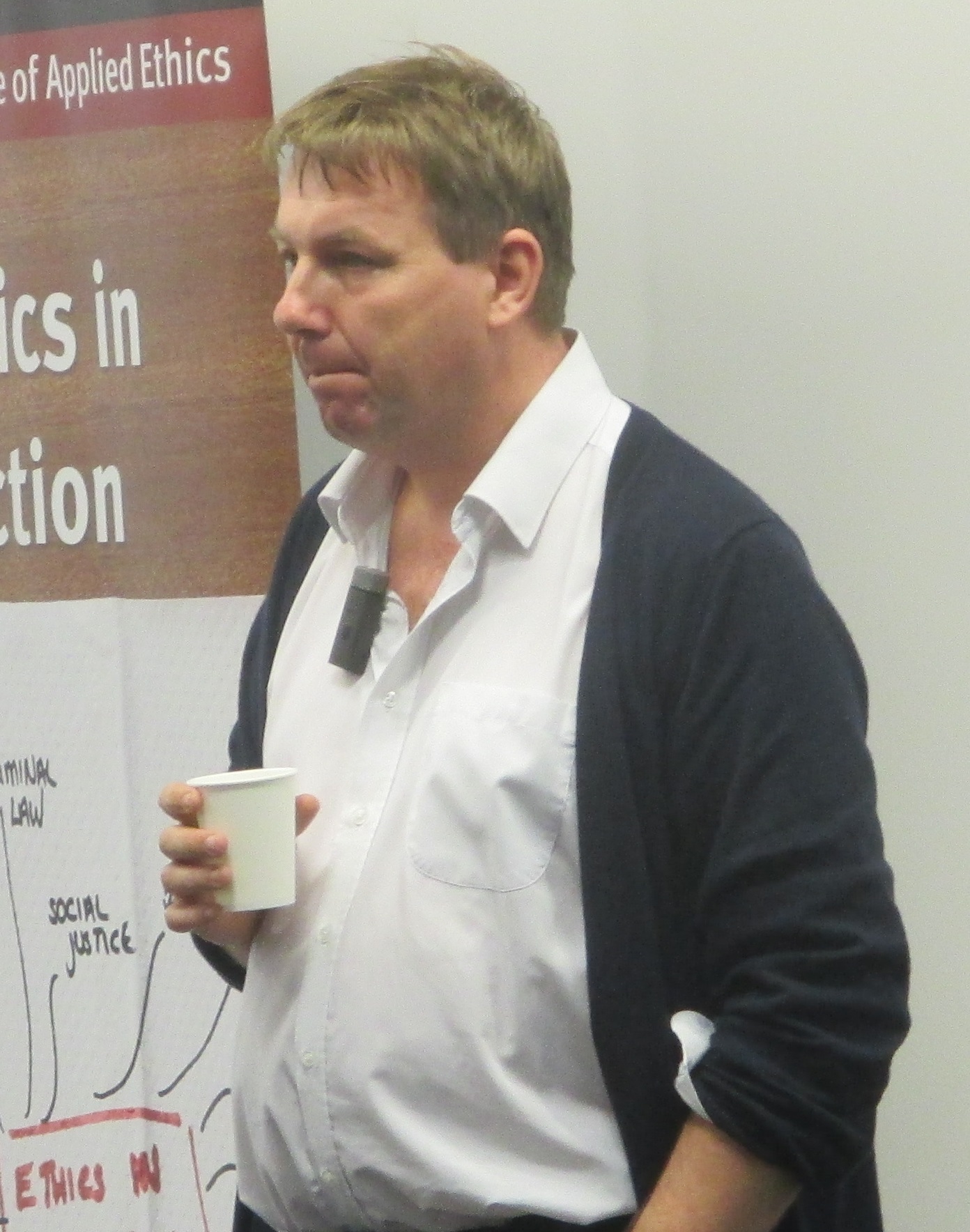
Dorling in 2011

In Dorling's inaugural lecture as Halford Mackinder Professor of Geography in September 2013 he spoke about the increasing disparity between Britain's majority and its richest 1%. He said, "Income inequality has now reached a new maximum and, for the first time in a century, even those just below the richest 1% are beginning to suffer, to see their disposable income drop."[11]

Dorling has mapped (mainly using cartograms), analysed and commented upon UK demographic statistics. In 2005 he co-founded the Internet-based Worldmapper project, which now has about 700 world maps and spreadsheets of international statistics. He has spoken on radio, featured on television and written newspaper articles.[7][12]

Views

[edit]

Dorling was very supportive of Jeremy Corbyn as Labour Party leader during his leadership from September 2015 until April 2020. In May 2016, Dorling said, "Jeremy Corbyn can take on the zealots and bigots who use migration to stir up fear and hatred. His popular appeal is not based on stoking up current prejudices. It is based on conviction, love and compassion. Just how cynical do you have to be not to see the hope and possibility in that?" [13] In May 2017 he appeared in a Labour Party political broadcast – "Labour Stands With You" – filmed by Ken Loach and published a week before the 2017 United Kingdom general election.

Reception

[edit]

In February 2006, Dorling's work in human geography was described as "rummaging around" in numbers, crunching his way through reams of raw data, building up an extraordinary picture of poverty and wealth in contemporary Britain.[14]

In April 2010, an editorial in The Guardian was entitled "In Praise of Danny Dorling".[15]

Works

[edit]

Source:[16]

Atlases

[edit]

Books

[edit]

Verso].

Collaborations

[edit]

References

[edit]
[edit]
Revisions and contributorsEdit on WikipediaRead on Wikipedia
from Grokipedia
Danny Dorling is a British human geographer and the 1971 Professor of at the University of Oxford's School of and the Environment, a position he has held since 2013. Specializing in social issues including housing, health, employment, , wealth, , and inequality, Dorling has produced over 30 books that analyze disparities in the and globally, frequently employing spatial data visualizations such as those on the Worldmapper project he co-created to illustrate global inequalities. Notable works include Injustice: Why Still Persists (2015), which critiques cultural and policy factors sustaining inequality, and Shattered Nation (2023), which maps regional economic divides in Britain. While his research has influenced public discourse on reducing inequality through redistributive policies, it has drawn criticism from free-market analysts for emphasizing perceived escalations in disparities despite of relative stability in since the late .

Biography

Early Life and Education

Danny Dorling was born on 16 January 1968 in , , where he grew up in the Cowley and Risinghurst areas. His mother worked as a teacher at a that later became , while his father served as a for the Blackbird Leys community. He attended state schools in , beginning with Wood Farm Infants and Junior School before progressing to Cheney School, a coeducational comprehensive, where he completed O-levels and A-levels by 1986. Dorling pursued undergraduate studies at the University of , earning a first-class BSc (Hons) in , , and Statistics in 1989. He remained at the same institution for postgraduate work, completing a PhD in in 1991 with a titled The Visualization of Spatial Social Structure.

Academic Appointments and Career Progression

Dorling began his academic career as a at the University of Newcastle upon Tyne from 1983 to 1986. He progressed to a lectureship in at the same institution, holding the position from 1986 to 1991, while also serving in research roles such as part-time researcher and research associate affiliated with the North East Regional Research Laboratory (NERRL) and the Centre for Urban and Regional Development Studies (CURDS) between 1989 and 1991. In the early , Dorling continued at Newcastle as a and in until 1996, overlapping with fellowships including a Fellowship (1991–1996) and a Fellowship (1991–1993). He then moved to the University of Bristol's School of Geographical Sciences, where he served as a from 1994 to 1996 and advanced to of quantitative by 1996, remaining in that role until 2003. During this period, he also held positions at the , including and of quantitative from approximately 1996 to 2003. Dorling joined the University of Sheffield's Department of Geography as professor of human geography in 2003, a position he held until 2013, during which he was also appointed professor for the public understanding of social science in 2013. In 2007, he became an adjunct professor at the University of Canterbury in New Zealand, a role that continues. In September 2013, Dorling was appointed to the Halford Mackinder Professorship of Geography (also referred to as the 1971 Professorship of Geography) at the University of Oxford's School of Geography and the Environment, where he remains as of 2025, concurrently serving as a professorial fellow at St Peter's College. He has maintained visiting professorships at the University of Bristol (since 2013) and Goldsmiths, University of London (2013–2016).

Research Focus and Key Arguments

Dorling maintains that income inequality in the United Kingdom escalated markedly from the 1980s, fueled by neoliberal policies, , and financial , but crested around 2007, when the bottom 90 percent of earners captured just 57.4 percent of total pre-tax income—the nadir of their share since systematic records began. He bases this on longitudinal data from Her Majesty's Revenue and Customs (HMRC) and the Office for National Statistics (ONS), which reveal the top decile's income share surging from approximately 25 percent in 1979 to over 42 percent by the mid-2000s, before plateauing amid the and subsequent measures. Post-peak, Dorling identifies nascent declines, with the bottom 90 percent's income share rebounding slightly to 58-59 percent by the mid-2010s, attributed to factors like real wage compression at the top, expanded low-wage employment absorbing surplus labor, and modest fiscal interventions such as the introduced in 2016. Wealth inequality, in Dorling's assessment, followed a parallel trajectory, peaking in the as housing and financial assets concentrated among older, asset-rich cohorts, with the top 1 percent holding nearly 20 percent of net by per ONS Wealth and Assets Survey estimates. He draws on historical comparisons, noting this mirrors early 20th-century levels but contrasts with the post-World War II compression, and signals potential reversal through mechanisms like taxation, drawdowns diluting concentrations, and stagnating property yields post-2020 amid rising interest rates and demographic stagnation. Dorling cautions, however, that wealth metrics lag trends due to illiquid assets and underreporting, yet projects equalization as millennial cohorts inherit without equivalent accumulation advantages. Extending to health and , Dorling documents narrowing gradients: life expectancy gaps between England's richest and poorest deciles shrank from 9.1 years in 2001 to 8.2 years by 2018, per ONS and data, linked to diffusion of medical advancements and reduced prevalence across classes. Educational inequalities, measured by participation rates, show convergence, with the proportion of working-class entering rising from under 10 percent in 1990 to over 30 percent by 2020, driven by policies despite persistent attainment disparities at elite institutions. These patterns, Dorling argues, reflect broader cyclical dynamics rather than linear progression, informed by cross-national comparisons where inequality ratios (top to bottom quintiles) fell in nations like the (from 5.2 to 4.2 between 2005 and 2013) while persisting in the UK until recently. Dorling's framework emphasizes causal drivers over correlative narratives, positing that peaks arise from temporary imbalances in power and opportunity, amenable to correction via demographic —such as differentials reducing reproduction—and recalibrations, rather than structural inevitability. He visualizes these via geospatial analyses, highlighting regional hotspots like London's income polarization peaking in before suburban diffusion, underscoring that sustained decline hinges on averting backsliding through targeted redistribution.

Perspectives on Housing, Population, and Health

Danny Dorling argues that the housing crisis in Britain and other Western countries stems primarily from spiraling inequality rather than an absolute shortage of dwellings, asserting in his 2014 book All That Is Solid: The Great Housing Disaster that there is sufficient housing stock but it is maldistributed due to under-occupancy, private landlord ownership, and rising prices fueled by income disparities since the 1980s. He contends that effective property taxation could redistribute access, reducing issues like homelessness, indebtedness, and evictions without relying solely on new construction, which he views as insufficient to address root causes like inadequate state support for housing. Critics, including economists from the Institute of Economic Affairs, have challenged this perspective, arguing that Dorling underemphasizes supply constraints and over-relies on redistribution, potentially ignoring demand pressures from population dynamics and zoning restrictions. On population, Dorling posits in Slowdown: The End of the Great Acceleration—and Why It's Good for the Planet, the Economy, and Our Lives (2020) that global rates and population growth are decelerating, with peaks expected around 10 billion people by the mid-21st century, countering narratives of endless exponential increase. He views this slowdown positively, linking it to reduced environmental strain, stabilized GDP growth , and opportunities for societal shifts toward care economies, as populations could foster intergenerational support and lower resource demands compared to rapid youth bulges. In How Population Falls (2024), Dorling critiques alarmist right-wing framings of decline as catastrophic, emphasizing instead adaptive benefits like decreased pressure and inequality if paired with reforms. These arguments draw on visualizations of trends and plateaus, though they have been noted for potentially overlooking localized migration-driven pressures in high-density areas. Dorling's work on emphasizes inequalities as direct consequences of economic disparities, detailed in Unequal Health: The Scandal of Our Times (2013), where he correlates higher income inequality with worse population outcomes across metrics like and morbidity, attributing this to psychosocial stresses and reduced access to care rather than solely factors. He highlights 's role as the strongest predictor of shortened lifespans, with data from events like the Titanic disaster to the 2008 financial crash illustrating persistent class-based gradients in survival rates. In Britain, Dorling has described the nation's as Europe's most "stunted," linking it to failures in addressing , , and insecurity since the 2010s. He advocates narrowing gaps through redistribution, warning that without it, inequalities exacerbate burdens like those from . Empirical support comes from cross-national comparisons showing inverse health-inequality links, though causal attribution remains debated amid variables like and genetics.

Broader Social and Economic Commentary

Dorling contends that , while rising since the , has reached a peak and is now declining in many metrics, driven by demographic stabilizations and social changes rather than policy alone. In Do We Need Economic Inequality? (2017), he argues this inequality represents a transient phase of capitalist evolution from agrarian societies to urban ones, but with global slowing to near zero by mid-century and women's participation rising, societies can revert to more egalitarian distributions seen historically in pre-industrial eras. He supports this with data showing Britain's for disposable income falling from 0.37 in 1990 to 0.34 by 2016, attributing the trend to reduced rates and expanded access rather than redistributive interventions. Critiquing as inherently destabilizing, Dorling asserts it fosters a distorted that normalizes extreme disparities, dooming adherents to perpetuate them. In a 2022 essay, he claims capitalist incentives prioritize short-term accumulation over long-term social cohesion, citing global income shares where the top 1% captured 27% of income growth from 1980 to 2016 while the bottom 50% saw only 12%, yet argues this model is self-limiting as resource constraints and public backlash emerge. He extends this to policy, advocating in A Better Politics: How to Fix Our Broken System (2016) for metrics centered on —such as and community trust—over GDP growth, proposing like and housing to replace market-driven allocations that exacerbate divides. Dorling views contemporary slowdowns in economic and technological acceleration as beneficial, countering narratives of perpetual progress with evidence of stagnating productivity gains. In Slowdown (2020), he documents how rates have halved globally since 1970 to 2.4 births per woman and filings peaked in the , interpreting these as signals for sustainable recalibration rather than crisis, potentially averting environmental collapse and enabling equitable resource distribution. Applied to Britain, he describes in Shattered Nation (2021) a fracturing social fabric akin to U.S.-style polarization, with regional health disparities widening— gaps between affluent and deprived areas reaching 10 years by —due to underinvestment in public goods amid trends since the . These observations, drawn from Dorling's analyses of official datasets like the UK's , underscore his broader thesis that inequality's harms— including stunted health outcomes, with Britain exhibiting Europe's highest rates of child poverty-related growth delays by 2023—stem from ideological commitments to market primacy over empirical social needs.

Criticisms and Counterarguments

Empirical and Methodological Challenges

Critics have challenged Dorling's analyses of inequality trends for emphasizing relative measures of and disparities while underweighting absolute improvements in living standards and wealth concentration. For instance, in discussions of persistence, some argue that Dorling's focus on recycles discredited immiseration narratives, overlooking data showing rising and reduced absolute rates in the UK since the 1990s, such as the halving of in absolute terms under Labour governments from 1998 to 2010 before subsequent rises. This approach, they contend, selectively interprets distributional data to sustain claims of without fully engaging causal factors like technological productivity gains or policy interventions that have lifted baseline consumption. In housing research, particularly in All That Is Solid: The Great Housing Disaster (), Dorling attributes skyrocketing prices and tenure insecurity primarily to rising income inequality, interpersonal selfishness, and underutilized space—such as "hoarded extra bedrooms"—rather than supply-side constraints. Critics highlight this as a methodological oversight, noting that Dorling largely dismisses evidence of regulatory barriers, restrictions, and NIMBYism that limit new , which economic analyses link to price inflation in high-demand areas like , where building rates fell to under 100,000 units annually in the despite . His proposals for redistribution, such as taxing spare rooms, are faulted for ignoring logistical challenges in reallocating stock and failing to model how increased supply—potentially via —could equilibrate markets without relying on behavioral moralizing. Dorling's extensive use of spatial visualizations and cartograms has drawn scrutiny for risks of ecological inference errors and selective data aggregation. While effective for highlighting geographic disparities, such as north-south divides in wealth, these methods can aggregate heterogeneous local data into broad patterns that obscure micro-level variations or confounders like migration flows and local policy effects. Reviews of works like Slowdown (2020) accuse him of cherry-picking trend lines—e.g., extrapolating debt dynamics from student loans to broader wealth without robust controls for asset inflation or monetary policy—to argue for a global deceleration in growth and inequality, potentially overstating reversals amid ongoing wealth gaps documented in sources like the Credit Suisse Global Wealth Report (2020 onward). These challenges often stem from free-market oriented sources, reflecting ideological divides, but underscore broader empirical tensions: Dorling's causal emphasis on social norms and redistribution versus market-oriented explanations prioritizing incentives and constraints. Absent direct peer-reviewed rebuttals in journals, such critiques highlight the need for sensitivity analyses in his multivariate models to test robustness against alternative specifications, such as incorporating supply elasticities or longitudinal wealth data beyond income quintiles.

Ideological and Policy Critiques

Critics of Dorling's ideological framework argue that his emphasis on inequality as the root cause of social ills reflects a collectivist that prioritizes redistribution over individual incentives and market mechanisms. For instance, in analyses of income and wealth disparities, reviewers from market-oriented perspectives contend that Dorling selectively highlights historical peaks in inequality—such as around —while downplaying evidence of stability or modest declines in key metrics like the for disposable income in the , which hovered around 0.35 from 2010 to 2020 according to official data, rather than escalating as implied in broader narratives of perpetual crisis. This approach, they assert, ideologically frames economic outcomes as moral failings of the affluent, sidelining causal factors like , , and policy-induced distortions in labor markets. Dorling's policy prescriptions, particularly on , have drawn fire for advocating interventions that critics view as economically distortive and impractical. In his 2014 book All That Is Solid, Dorling proposes measures such as rent controls, wealth taxes to redistribute underused space, and incentives for repurposing empty bedrooms, attributing the crisis primarily to hoarding and inequality rather than supply shortages. Economists like critique this as a rejection of basic supply-demand , noting that Dorling largely ignores regulatory barriers—such as stringent planning laws and zoning restrictions—that have constrained UK to under 200,000 units annually in the , far below formation rates, thereby inflating prices independently of redistribution schemes. Such policies, opponents argue, risk reducing landlord investment and maintenance, as evidenced by historical rent control episodes in cities like New York and , where controlled units deteriorated and black markets emerged, exacerbating effective shortages. Further ideological contention arises from Dorling's broader egalitarian agenda, which includes calls for progressive taxation and limits on high incomes, portrayed by detractors as undermining entrepreneurial risk-taking and . Reviews describe his works as veering into partisan advocacy, with discussions devolving into critiques of and Thatcher-era policies without rigorous alternatives that account for fiscal trade-offs, such as how funding social via higher taxes on could crowd out private development amid labor shortages in , where the skilled workforce gap reached 225,000 workers by 2023. While Dorling counters that peak inequality has passed and further equalization stabilizes societies, skeptics from think tanks like the IEA highlight that his metrics often conflate with trends, where the top 1%'s share rose from 20% to 23% of between 2010 and 2020, suggesting persistent disparities his policies fail to causally address without broader structural reforms. On population and migration-related policies, Dorling's qualified support for controlled —linking unchecked net inflows to pressures while debunking myths—has elicited mixed responses, with some left-leaning outlets viewing his acknowledgment of demographic strains as insufficiently progressive, potentially fueling restrictionist sentiments amid net migration peaking at 745,000 in 2022. Critics argue this stance ideologically soft-pedals the trade-offs, as higher population growth via migration has correlated with a 25% rise in demand since 2010 without commensurate supply increases, complicating his redistribution-focused remedies. Overall, these critiques portray Dorling's ideology as overly optimistic about state-led equalization, neglecting that market in and taxation could alleviate pressures more efficiently than punitive measures on wealth holders.

Publications and Outputs

Major Books

Dorling's major books center on empirical analyses of , often challenging prevailing narratives through spatial data, historical trends, and international comparisons, with a focus on Britain. These works argue that inequality in affluent societies stems from ideological justifications rather than resource scarcity, supported by statistics on , disparities, and access. Injustice: Why Social Inequality Persists (Policy Press, ), revised in 2015, identifies five contemporary "giants" of injustice—, exclusion, , greed, and despair—as replacements for Beveridge's original five evils, asserting that these beliefs sustain inequality despite sufficient national wealth, evidenced by rising top income shares from 6% in to over 20% by in the UK. Inequality and the 1% (Verso, 2014), updated in 2020, quantifies the top 1%'s capture of growth since the 1980s—reaching 14% of national by 2011—and links this to measurable harms, including a 1-2 year drop in for lower- groups and stalled , drawing on tax records and data. Peak Inequality: Britain's Ticking Time Bomb (Policy Press, 2018) contends that inequality peaked around 2008-2010, with the top decile's income share stabilizing at 12-15% thereafter, based on longitudinal datasets like the British Household Panel Survey, though it warns of persistent spatial divides in and . The Equality Effect (, 2017) compiles cross-national evidence from Gini coefficients and health metrics, showing that countries with lower inequality (e.g., Gini under 0.30 like Nordic states) achieve 10-20% better outcomes in , , and rates compared to high-inequality peers like the (Gini 0.41). These texts, grounded in Dorling's geospatial expertise, prioritize quantitative trends over qualitative anecdotes, though they interpret data toward egalitarian policy implications.

Atlases, Maps, and Collaborative Works

Dorling pioneered the use of cartograms in social atlases, resizing geographical areas proportionally to variables like or social metrics rather than land area, to better reveal patterns of inequality and human experience. This approach, detailed in his 1996 publication Area Cartograms: Their Use and Creation, emphasizes empirical visualization over conventional projections, drawing on and statistical data to challenge traditional perceptions. A New Social Atlas of Britain (1995) compiles choropleth and proportional symbol maps to depict 1991 data on demographics, , and deprivation across British localities, highlighting regional disparities in wealth and health. Co-authored with Bethan Thomas, Identity in Britain: A Cradle-to-Grave Atlas (2011) traces life-course patterns of migration, , and identity using longitudinal data, visualizing how varies geographically from birth to retirement. In The Atlas of the Real World: Mapping the Way We Live (2008, revised 2010), Dorling collaborated with Mark Newman and Anna Barford to produce 366 full-color cartograms covering global comparisons in resources, health, education, and emissions, sourced from and World Bank datasets; territories are scaled by demographic weight to underscore imbalances, such as China's enlarged representation in manufacturing output. Bankrupt Britain: An Atlas of Social Change (2011), also with Thomas, employs similar techniques to map effects post-2008, using UK figures to show rising , falling , and wealth concentration in 54 thematic maps. The Social Atlas of Europe (2014), co-authored with Dimitris Ballas and Benjamin Hennig, features over 80 cartograms on topics from GDP and to Eurovision voting patterns, drawing on data to portray through human geography lenses rather than political boundaries, revealing intra-continental divides in welfare and . People and Places: A 21st-Century Atlas of the UK (2016), again with Thomas, updates post-2011 trends in aging, , and inequality via 200+ maps, incorporating 2015 projections to forecast urban-rural shifts. Dorling co-initiated the Worldmapper project around 2006 with Newman, Barford, and others, generating over 700 online cartograms that proportionally distort global landmasses to depict distributions of , , or media access, based on verified international statistics; this open-access resource, hosted at worldmapper.org, facilitates collaborative data exploration and has influenced geographic education and .

Recent Publications (Post-2020)

In 2021, Dorling co-authored Finntopia: What We Can Learn from the World's Happiest Country with Koljonen, published by Agenda Publishing, which examines Finland's social policies and their implications for reducing inequality and improving through comparative analysis of indices and public services. Shattered Nation: Inequality and the Geography of a Failing State, released on , 2023, by , analyzes regional disparities in the , arguing that spatial inequalities in wealth, health, and opportunity have intensified post-Brexit and during the , drawing on geographic data to illustrate a fragmented national fabric. In , Dorling published Seven Children: Inequality and Britain's Next Generation, which constructs profiles of seven archetypal children based on aggregated statistical data to highlight affected by class, ethnicity, and location, emphasizing persistent intergenerational inequities in , , and . Also in 2024, Peak Injustice: Solving Britain's Inequality Crisis appeared via Policy Press on October 1, compiling updated essays and data from 2018–2024 to contend that the has reached a zenith of social , proposing reforms grounded in empirical trends in income distribution and public service decline. Dorling's most recent book, The Next Crisis: What We Think About the Future, issued by on May 13, 2025, interprets global polling data on public concerns such as cost-of-living pressures, , and , challenging media narratives by prioritizing respondent priorities over elite perceptions and advocating evidence-based responses.

Reception and Legacy

Academic and Scholarly Influence

Danny Dorling's scholarly output has achieved substantial citation impact, with his profile recording 27,961 total citations and an of 85 as of 2023. These metrics position him among highly influential figures in , where his research on inequality, , and has informed subsequent studies in social sciences. Since 2020, citations to his work have exceeded 7,495, indicating sustained relevance amid evolving debates on economic disparity and demographic trends. In institutional roles, Dorling has exerted influence through leadership at the , where he has held the Professorship of since 2013. As Director of the Graduate School in the School of and the Environment from 2018 to 2021, he oversaw the supervision and review processes for roughly 150 PhD students, contributing to the training of emerging scholars in and . He continues to supervise doctoral research, including that of students like Dasom Hong, whose work on financial geography aligns with Dorling's emphasis on mapping economic inequalities. Dorling's editorial contributions further extend his academic reach; he serves as Editor for Featured Graphics in Environment and Planning B: Urban Analytics and City Science, guiding the integration of visual methods in urban scholarship. His advocacy for accessible data visualization, evident in collaborative atlases, has influenced methodological practices in , promoting empirical mapping over abstract theorizing in inequality studies. While his quantitative approaches have drawn citations across disciplines, their interpretive framing of social trends warrants scrutiny for potential alignment with egalitarian priors prevalent in academia.

Public Engagement and Media Presence

Dorling maintains an active public presence through lectures, talks, and online dissemination of his work on inequality and social geography. He has delivered keynote addresses at events such as the British Society for Population Studies conference on stalling life expectancy in 2019, and public lectures at institutions including the University of Hull in 2018 on ethics and inequality, and Lancaster University on population slowdown. Recent engagements include talks at the Festival of Education on fear and education in July 2023, and the David Hume Institute in Edinburgh on preventing state failure in August 2023. In November and December 2025, he spoke on "Seven typical British children today—injustice and hope" at Sociology in Action events in London. Many of these are recorded and shared via his YouTube channel, which features discussions on UK inequality, migration, and demographics, and his Audioboom channel hosting over a dozen audio lectures. As a TED speaker, Dorling has presented on geographical visualizations and human world issues, emphasizing data-driven insights into inequality. He participates in public forums and festivals, such as the in May 2025 discussing in Britain, and public meetings on outcomes. platforms further amplify his outreach, with podcasts and seminars on media influence, urban data, and policy impacts. In media, Dorling contributes opinion pieces to outlets including the on peak inequality, Jacobin on child inequality, and on social contract erosion in 2024. He has appeared in interviews, such as on higher mortality in deprived areas in 2020 and environmental impacts of the super-rich in 2024. Print and online features include a 2023 Guardian profile on health stunting and , and podcast discussions on equality of opportunity and power structures in 2025. These appearances often highlight empirical trends in wealth disparities and policy failures, drawing from his .

References

Add your contribution
Related Hubs
User Avatar
No comments yet.