Hubbry Logo
Dario CecchiniDario CecchiniMain
Open search
Dario Cecchini
Community hub
Dario Cecchini
logo
8 pages, 0 posts
0 subscribers
Be the first to start a discussion here.
Dario Cecchini
Dario Cecchini
from Wikipedia

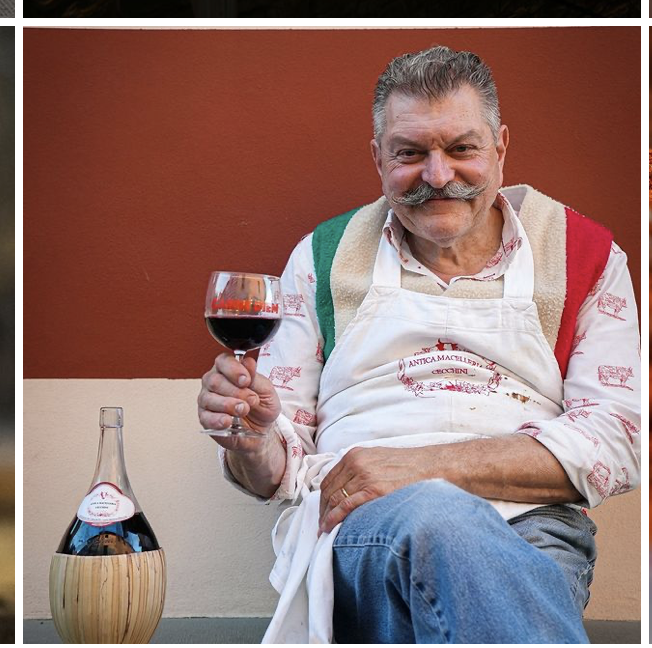
Cecchini with a glass of Chianti

Dario Cecchini (born 1955) is an eighth generation Italian butcher from Panzano in the Chianti region of Italy.[1]

Biography

[edit]

Cecchini was born in 1955 in the Tuscan village of Panzano. He studied veterinary science at the university of Pisa but left halfway through his studies in 1976 to take over the family business established in 1780, Antica Macelleria Cecchini,[2] from his dying father. Dario is an eighth-generation butcher.[1][3]

Cecchini gained international renown in 2001 when, after the EU banned the sale of all beef on the bone from cows that are more than one year old, he staged a widely publicised mock funeral for Bistecca.[4]

Plaque outside Antica Macelleria Cecchini commemorating the 2001 mock "funeral" for Bistecca alla Fiorentina, as a result of an EU ban.

He presented at the MAD Symposium in August 2013 in Copenhagen, to 500 chefs from around the world. He closed his presentation with a recitation of a passage from Dante Alighieri's Inferno.[5]

In March 2014, Cecchini was featured in BBC Radio 4's The Food Programme. In the interview, Cecchini described butchery as an ancient art that involved a respect for the animal, and he likened his work to poetry.[6]

He and his wife operate not only the historic butcher shop, but also three restaurants[7] attached to the shop: Panzanese (grilled Panzanese steak); Solociccia (braising, boiling, grilling, generally using lesser-known cuts); and Officina della Bistecca.

References

[edit]
Revisions and contributorsEdit on WikipediaRead on Wikipedia
from Grokipedia

Dario Cecchini (born 1955) is an Italian butcher who operates the Antica Macelleria Cecchini, a family-owned shop in Panzano in Chianti, Tuscany, continuing an eighth-generation tradition in the trade.
After studying veterinary science, Cecchini took over the business in 1976 following his father's sudden death, transforming it into a destination known for high-quality beef and pork sourced from regional farms.
He has expanded operations to include three restaurants—Officina della Bistecca, Solociccia, and Cinghiale Bianco—whose menus collectively utilize every part of the animal to minimize waste, reflecting his philosophy of respect for the carcass and sustainable meat practices.
Cecchini's charismatic style, including recitations from Dante while butchering and advocacy for traditional cuts like the bistecca alla fiorentina, has earned him international acclaim as a master artisan and ambassador for Tuscan culinary heritage.
The Antica Macelleria Cecchini itself dates back over 250 years, serving as a cornerstone of local commerce and now attracting global visitors for its authentic approach to meat preparation.

Early Life and Background

Family Heritage and Upbringing

Dario Cecchini was born in 1955 in the rural Tuscan village of Panzano in , a locale renowned for its heritage and agrarian traditions. He grew up as the son of Tullio Cecchini, a whose lineage traced back through eight generations of the trade, embedding the family deeply in the local economy and cultural fabric of butchery centered on high-quality, regionally sourced meats. The Antica Macelleria Cecchini, the family's longstanding shop in Panzano, has operated continuously for over 250 years, serving as a cornerstone of community life and preserving artisanal practices amid Tuscany's landscape. Cecchini's upbringing was shaped by this intergenerational commitment, though it was abruptly altered by personal hardship: his mother died when he was 16, followed by his father's passing four years later, thrusting him into early familial duties within the household and village setting. These events, compounded by his parents' preceding illnesses, underscored the precariousness of rural life in mid-20th-century while reinforcing ties to ancestral customs.

Entry into Butchery

Cecchini began assisting in the family butchery at age 13, introduced by his father to the daily operations of the Antica Macelleria Cecchini in Panzano, , where the trade had been practiced for eight generations. Initially aspiring to , he enrolled at the but abandoned his studies after one year when his parents fell ill, compelling him to work full-time in the shop at age 16 amid this family hardship. His mother's death from cancer and his father's subsequent illness deepened his immersion, transforming initial reluctance—marked by discomfort with handling carcasses and self-inflicted injuries—into a commitment to the craft. Lacking formal instruction after his father's passing, Cecchini's relied on practical, generational knowledge of Tuscan methods, including precise knife work with tools like cleavers and boning knives to maximize yield from the animal. He learned from Orlando, his father's trusted meat procurer, who emphasized ethical handling and reverence for the beast's life cycle, fostering techniques for nose-to-tail utilization such as deboning shanks and incorporating into dishes. These formative experiences in the and early honed his skills in selecting high-quality, locally sourced , prioritizing flavor and texture over efficiency. As postwar Italy encountered rising industrial meat production and supermarket chains eroding artisanal practices, Cecchini's early tenure centered on safeguarding traditional Tuscan standards, such as aging cuts for tenderness and rejecting additives in favor of natural preservation. This hands-on grounding instilled a foundational resistance to modernization's shortcuts, embedding sustainability and animal respect into his approach before broader expansions.

Professional Career

Taking Over the Family Business

In 1976, Dario Cecchini inherited the Antica Macelleria Cecchini, the family butcher shop in Panzano in Chianti, after his father's sudden death while Cecchini was in his third year of veterinary studies at the University of Pisa. As the eighth-generation butcher in his lineage, he reluctantly abandoned his academic path to assume leadership and support his family, marking an involuntary transition from aspiring veterinarian to steward of a centuries-old trade. Cecchini committed to retaining the shop's original location on Via XXIV Luglio in Panzano, a central hub in the community that had served locals for over two centuries under Cecchini family operation. This decision preserved its role as a communal anchor, where residents sourced and engaged in daily interactions, rather than relocating for potential expansion amid Italy's evolving rural in the late 1970s. Facing initial economic strains from fluctuating agricultural markets and competition from larger distributors, Cecchini prioritized continuity of the artisanal model inherited from prior generations, forgoing mechanized efficiencies that were gaining traction elsewhere in . This approach sustained the shop's viability through personalized service and local sourcing, embedding it deeper into Panzano's fabric without diluting its foundational practices.

Traditional Butchery Techniques

Cecchini's butchery techniques are grounded in longstanding Tuscan practices, emphasizing manual precision and efficiency in carcass breakdown. He relies on hand-forged tools, including an 11-inch for heavy chopping, a 12-inch slicer or filet knife for finer separations, and a 6-inch for detailed work, allowing for controlled cuts that preserve meat integrity across species like pigs and . This method contrasts with mechanized industrial processes by prioritizing tactile skill to navigate bones and tissues without excessive trimming. Central to his approach is whole-animal utilization, where the carcass is dissected to yield cuts for multiple preparations, from steaks to dishes, thereby reducing discard to near zero. Cecchini maintains the animal intact post-slaughter for at least 30 days of dry aging, permitting natural moisture loss and flavor concentration before sectioning, which enhances tenderness and taste uniformity. In public demonstrations at his Panzano shop, Cecchini integrates recitations from Dante Alighieri's , reciting verses by heart to underscore the rhythmic, almost poetic cadence of knife work and blade strikes, framing butchery as a performative intertwined with Italian literary tradition. Cecchini sources beef from vetted suppliers, such as select farms in , to ensure reliable marbling and maturity over rigid adherence to local provenance, enabling consistent execution of techniques like Fiorentina steak preparation. This selective supports his emphasis on quality inputs for traditional outputs, independent of origin hype.

Restaurant and Culinary Expansions

Dario Cecchini expanded his butchery operations in Panzano in by establishing dedicated restaurants to showcase his meat preparations, beginning with Solociccia, which offers a fixed-price lunch menu emphasizing lesser-known cuts through methods like , , and . This venue operates with a single daily seating, promoting a structured dining experience centered on underutilized beef parts. Subsequently, Officina della Bistecca opened in 2005, focusing on the renowned with a €50 fixed menu available for lunch at 12:30 and dinner at 19:30, each with one seating per service. The restaurant features communal long tables accommodating groups, serving unlimited portions of the signature alongside sides, in a format that highlights premium beef cuts. These eateries, alongside the original Antica Macelleria Cecchini, form a trio of venues designed to utilize the entire animal across menus, with Solociccia handling offal and secondary cuts while Officina prioritizes prime steaks. The expansions catered to growing tourism in the Chianti region by introducing experiential elements, such as performative service and fixed tasting formats that encourage shared, immersive meals without reservations beyond booking the set menu. This approach transformed the family butchery into a culinary destination drawing international visitors to Panzano's medieval setting.

Philosophy and Ethical Views

Stance on Animal Husbandry and Meat Quality

Cecchini holds that genuine respect for animals in butchery requires providing them a good life with the least possible suffering during rearing and slaughter. He maintains long-term sourcing relationships with family-run farms and slaughterhouses, such as those in northern Spain, prioritizing animals raised through traditional methods that emphasize welfare over intensive production. This approach, in his view, yields meat of superior flavor and nutritional value, as evidenced by his preference for artisanal breeds and husbandry practices that allow natural development rather than accelerated growth. Rejecting a focus on volume, Cecchini advocates consuming smaller quantities of ethically sourced to honor the animal's , arguing that carnivores bear a responsibility to approach with rather than indulgence in excess. He counters modern wastefulness—where only premium cuts are prized—by insisting on full utilization of the carcass, from to lesser-known parts, to ensure no part of the animal's life is squandered post-slaughter. This nose-to-tail , rooted in economic necessity and ethical duty, promotes sustainability by maximizing value from each animal while fostering appreciation for meat's origins. In practice, Cecchini demonstrates this stance through menus at his establishments that feature diverse cuts prepared simply, encouraging diners to value the whole animal and recognize quality derived from humane husbandry as superior to uniform, mass-produced alternatives. He attributes the enhanced taste and texture of such meat to the animals' natural diets and movements, often contrasting this with the diminished sensory qualities of meat from confined systems, though he frames it as a butcher's to elevate ethical consumption over .

Critique of Industrial Meat Production

Cecchini condemns meat as an inferior product derived from raised in confined, intensive systems that prioritize volume over vitality, resulting in compact flesh that is difficult to butcher and lacks robust flavor. He explicitly advises against purchasing such meat, recommending s instead for superior sensory qualities, as degrade tenderness and taste through unnatural rearing conditions. In contrast, meat from animals afforded natural movement yields easier cuts and richer profiles, empirically observable in butchery handling and cooking outcomes. Industrial methods exacerbate health risks, as evidenced by the early 2000s (BSE) outbreak tied to intensive feeding practices that sickened herds across Europe, prompting Cecchini's public protests against resulting bans on traditional cuts like . He attributes such crises to profit-driven confinement and medication, which compromise meat safety and nutritional integrity compared to grass-based, low-density systems that foster "happy animals" producing unadulterated, vital meat. These practices also undermine ethics by inducing animal distress, diminishing overall carcass utility and necessitating waste, whereas artisan approaches honor the animal through comprehensive utilization from nose to tail. Cecchini prioritizes verifiable quality metrics—such as marbling, aging response, and flavor depth—favoring artisan-sourced , even from distant origins like northern Spain's family-run operations, over local industrial outputs that fail these standards. He views corporate dominance in production as antithetical to craftsmanship, incapable of ensuring compassionate ends or ethical yields, and calls for butchers to reclaim the against mass-production's quantity-over-quality .

Activism and Public Demonstrations

2001 EU Beef Ban Protest

In February 2001, the banned the sale of meat attached to the bone from over one year old across several member states, including , effective April 1, 2001, as a precautionary measure against (BSE). This regulation targeted vertebral bone tissue potentially harboring prions linked to the disease, directly impacting the preparation and sale of , the iconic Tuscan requiring bone-in cuts from mature animals. On March 31, 2001, the day before the ban's enforcement, Dario Cecchini organized a mock in Panzano in to symbolically mourn the restriction on this traditional dish. The event centered on a three-foot slab of raw placed in a shiny black , paraded through the village streets accompanied by a and recitations of poems eulogizing the steak's cultural and gastronomic significance. Cecchini led participants in highlighting the ban's threat to Tuscan heritage, framing it as an overreach that disregarded local practices and meat quality controls. During the procession, Cecchini auctioned off remaining stocks of bone-in cuts, including those with vertebral , to local buyers before compliance became mandatory. The demonstration drew villagers and media, emphasizing the economic and identity-based losses for artisans like Cecchini, whose family butchery relied on such preparations. In commemoration, a plaque was installed outside the Antica Macelleria Cecchini, inscribed in remembrance of the "funeral" and the steak's purported demise under EU rules.

Advocacy for Sustainable Practices

Cecchini promotes zero-waste principles in butchery by structuring his butcher shop and associated restaurants to employ the entire animal carcass, from nose to tail, which minimizes discard and exemplifies efficient resource use in meat processing. His approach counters inefficiency in modern supply chains by demonstrating how traditional dissection yields viable products from all sections, including and lesser cuts, thereby reducing the environmental footprint per unit of meat consumed. He conducts educational workshops, including hands-on full-immersion sessions on cow butchery, to teach participants techniques for whole-carcass utilization, underscoring the practical advantages of valorizing underused portions for both nutritional completeness and waste aversion. These post-2001 initiatives extend his efforts to train butchers and consumers in methods that prioritize empirical utility over selective premium cuts, fostering a causal chain from informed handling to diminished overall production demands. Cecchini maintains collaborations with family-run farms in , sourcing beef from cattle grass-fed for eleven months yearly in native habitats, which enables direct and supports rearing systems grounded in natural rather than intensive feeds. This selective partnership, sustained over three decades, prioritizes breed-appropriate conditions that enhance meat quality while aligning with ecological realism, as grass-based diets correlate with lower input dependencies compared to grain-finishing regimes. In public discourse, Cecchini links artisan practices to tangible health and ecological gains, asserting that respectful, full utilization of animals sustains communities and planetary balance more effectively than industrial scales, which impose unaccounted externalities; he urges discernment in meat selection to favor proven, quality-driven systems over unsubstantiated calls for reduction. This stance reflects a commitment to causal evidence from traditional husbandry, where reveals benefits like improved profiles in grass-fed products, challenging narratives that overlook differentiations in production impacts.

Media Presence and Recognition

International Media Features

A 2006 profile in The New Yorker titled "Carnal Knowledge," written by Bill Buford and published on May 1, featured Cecchini's butchery practices in Panzano, highlighting the ritualistic and theatrical elements of his shop operations, such as reciting Dante while preparing meat, which introduced his unconventional approach to an international readership. In 2019, Cecchini appeared in episode 2 of season 6 of Netflix's Chef's Table, released on February 22, which chronicled his transition from aspiring veterinarian to butcher and explored his daily routines, emphasis on using every part of the animal, and philosophical views on meat as a cultural and ethical staple. The episode portrayed his charismatic persona and commitment to traditional Tuscan methods, receiving attention for humanizing the butchery trade amid global discussions on food ethics. Cecchini's theatrical style of butchery, involving dramatic presentations and recitations, was emphasized in a 2008 feature that described his hands-on demonstrations and passion for reviving offal-based dishes, positioning him as a defender of artisanal preparation against modern industrialization. A 2022 Eater documentary short captured a typical day at his Antica Macelleria Cecchini, showcasing the performative aspects of breaking down local meats and interacting with customers, underscoring his role in elevating butchery to an art form.

Collaborations and Global Influence

Cecchini's collaborations have extended his influence beyond through partnerships with international culinary leaders aligned with sustainable practices. In 2001, he participated in events hosted by , founder of and a pioneer of the movement, including the restaurant's 30th anniversary celebration, which helped elevate his profile among global advocates for quality, locality-driven food systems. This exposure linked his traditional butchery to broader principles, emphasizing respect for animal origins and regional sourcing over industrialized alternatives. Cecchini has disseminated his techniques via hands-on demonstrations for international audiences, such as a 2011 event at the in , where he dissected half a carcass to illustrate Tuscan cuts and their applications, fostering appreciation for whole-animal utilization among chefs and enthusiasts. Similar sessions, like a 2019 collaborative dinner in with chef Phil Scarfone, showcased his methods using local , adapting principles of ethical preparation to non-Italian contexts. His global reach includes the of signature products, such as preserves and condiments like senape mustard, available through online sales with international shipping, allowing consumers worldwide to incorporate his offal-based recipes into home cooking. These efforts have inspired ethical advocacy in regions transitioning from farming, promoting Cecchini's view of butchery as a reverent that honors the entire animal, as evidenced by his emphasis on nose-to-tail approaches in overseas workshops and product lines.

Recent Developments

Expansions in the 2020s

In 2024, Dario Cecchini opened his first restaurant in , Cecchini in Città, located within the 25hours Hotel Piazza San Paolino. The venue debuted on September 19, featuring two dining concepts: Cecchini Griglia for communal grilled feasts and a more intimate option emphasizing Cecchini's signature beef preparations. This expansion marked Cecchini's entry into the Tuscan capital, extending his Panzano-based operations to a urban hotel setting while maintaining focus on high-quality, Tuscan-sourced meats. Cecchini also partnered with to introduce The Butcher's Block by Dario aboard the Sun Princess, which entered service in February 2024. The impromptu offers family-style meals with premium steaks, aged porterhouse, cuts, and prime rib, curated from Cecchini's Tuscan sourcing standards. This collaboration, announced in 2023, adapts Cecchini's butchery expertise to a maritime venue, serving passengers with shared platters emphasizing beef's communal appeal. In , Cecchini collaborated with hawker stall Bold x Braised for a pop-up at Maxwell Food Centre on March 6–7, 2024, selling over 800 paninis priced at S$6.50 each, featuring his beef-filled sandwiches transported from . This event blended Cecchini's panini truck concept with local hawker culture, drawing crowds for affordable access to his preparations. Cecchini has outlined further international growth, with planned outposts in , New York, , and , Turkey, following existing collaborations like Carna by Dario Cecchini at SLS Dubai. In , a new is slated for Mandarin Oriental Hotel in May, prioritizing beef-centric menus in luxury settings. These initiatives aim to replicate Cecchini's model globally, though timelines remain subject to development.

Ongoing Projects and Collaborations

Cecchini continues to expand his influence through international restaurant collaborations that integrate his Tuscan butchery techniques with global cuisines. In Hong Kong, Carna by Dario Cecchini, opened at Mondrian Hong Kong, emphasizes a nose-to-tail approach using beef sourced from Italy, Australia, and the United States, earning selection as a recommended restaurant in the MICHELIN Guide Hong Kong & Macau 2025. The venue hosts ongoing culinary events, such as those in September 2024, where Cecchini demonstrates sustainable dining practices rooted in Chianti traditions. A key ongoing partnership is with , initiated in October 2023, featuring "The Butcher's Block by Dario" as an exclusive impromptu bistro on the Sun Princess ship, launched in February 2024. This collaboration adapts Cecchini's emphasis on high-quality, ethically sourced meats to shipboard dining, serving Tuscan-inspired cuts prepared with traditional methods. Cecchini engages in educational initiatives via workshops and pop-up events to promote butchery skills. In 2024, he conducted a tartare-making workshop in , building on prior collaborations with local hawkers to teach precise meat handling and flavor enhancement techniques derived from Tuscan practices. These efforts, shared through his presence, aim to preserve and disseminate hands-on knowledge of sustainable meat preparation across diverse markets.

Criticisms and Debates

Sourcing and Sustainability Questions

Cecchini sources much of his beef from family-run farms and slaughterhouses in northern , a practice maintained for over 30 years to secure consistent quality unattainable from declining local breeds like . This reliance on non-local suppliers has faced scrutiny for potentially undermining narratives centered on regional provenance, as the beef incurs transport emissions over distances exceeding 1,500 kilometers by truck from to . Data on supply chains reveal that contributes minimally—often under 5%—to the total footprint, far overshadowed by production-phase emissions from feed cultivation (up to 45%), enteric (around 40%), and (10-20%). Cecchini's Spanish partners adhere to his standards of extended on open land and humane treatment, yielding mature with superior marbling that enable efficient whole-animal utilization, thereby curtailing waste that can amplify impacts in less precise local operations. Counterpoints emphasize that local beef from industrial-scale facilities frequently exhibits higher resource intensity due to shorter-cycle feeding and inefficiency, whereas quality-focused imports like Cecchini's prioritize metrics such as feed conversion ratios and carcass yield over geographic origin. Studies affirm that optimizing rearing and processing efficiency reduces emissions more substantially than minimizing alone, supporting the viability of vetted non-local sourcing when it enhances overall system performance. Cecchini's model, rooted in near-total carcass exploitation, aligns with this by diverting and lesser cuts to prepared dishes, empirically lowering discard rates compared to premium-only local butchery.

Broader Implications for Meat Consumption Debates

Cecchini's advocacy for artisanal, respectful preparation underscores a pathway to mitigate the environmental and ethical drawbacks of industrial animal without resorting to categorical rejection of consumption. By emphasizing whole-animal utilization and support for regenerative farming practices, his model incentivizes market demand for higher-welfare systems, potentially displacing factory-farmed products more effectively than broad vegetarian promotion, which often fails to alter systemic production incentives. While acknowledging personal vegetarian choices as viable for those preferring them, Cecchini rejects absolutist framings that pit meat-eating against non-consumption as a binary, arguing instead that the focus should lie on responsibility toward the animal rather than . Claims of inherent moral superiority in lack robust causal evidence, particularly when ethical butchery minimizes waste and honors the animal's life cycle, rendering such assertions more ideological than empirically grounded. Nutritionally, high-quality, minimally processed meats provide bioavailable heme iron, , and complete proteins essential for human health, with grass-fed varieties offering conjugated linoleic acid (CLA) and omega-3 fatty acids linked to reduced in observational studies. In contrast, many ultra-processed plant-based alternatives, while lower in saturated fats, often exhibit deficiencies in these micronutrients and correlate with poorer outcomes, including lower and associations with increased all-cause mortality in cohort analyses exceeding 60% risk elevation for high UPF intake. Selective anti-meat narratives, frequently amplified in media and academic circles despite potential biases toward plant-centric views, overlook these distinctions by conflating unprocessed —consumed moderately in traditional diets—with processed forms, where epidemiological evidence for harm remains confounded by factors rather than causation. Cecchini's position thus highlights how prioritizing quality over quantity in consumption can align with imperatives, challenging reductionist calls for meat elimination that may inadvertently promote reliance on nutrient-poor substitutes.

References

Add your contribution
Related Hubs
User Avatar
No comments yet.