Hubbry Logo
David CarpenterDavid CarpenterMain
Open search
David Carpenter
Community hub
David Carpenter
logo
8 pages, 0 posts
0 subscribers
Be the first to start a discussion here.
David Carpenter
David Carpenter
from Wikipedia

David Joseph Carpenter (born May 6, 1930), also called the Trailside Killer,[3] is an American serial killer and sex offender who raped, tortured, and murdered various victims in the San Francisco Bay Area between 1979 and 1981. He was sentenced to death for seven murders and is believed to be responsible for several more.[4]

Key Information

Carpenter began committing sexual assaults at age 15 and was admitted to a mental hospital at age 17.[5] He committed all of his murders while on parole for rape and kidnapping convictions. Active primarily in Marin County and Santa Cruz County, Carpenter would hide along tree lines on secluded trails and wait for his target to approach and then would restrain, rape, and sometimes torture them before killing them.[6] A .38 caliber handgun was his preferred weapon, which was used in all but one of the killings.[7] According to pathologists, Carpenter would get so much enjoyment from tormenting his victims that he would lose his stutter.[8]

Both of Carpenter's trials had to be moved to Southern California due to extensive publicity. In 1984, he was tried and convicted in Los Angeles County of two murders and one attempted murder, for which he was sentenced to death.[9] Four years later, he was tried and convicted in San Diego County of five additional murders and given another death sentence. He is currently incarcerated at California Health Care Facility in Stockton, California. Carpenter is currently the oldest death row inmate in the United States.[10]

Early life

[edit]

David Joseph Carpenter was born in San Francisco on May 6, 1930. In his youth, Carpenter suffered physical abuse by his alcoholic father Elwood and domineering mother Frances, mostly concerning his persistent bed-wetting and cruelty to animals. Frances barred young Carpenter from playing outside with neighborhood kids and forced him to learn to play the violin and take ballet lessons.[11] Carpenter attended Glen Park Elementary School, where he was bullied for having a stutter. His teachers recommended him to enroll in speech therapy but Frances resisted all efforts.[12] After he was accused of biting a childhood friend, Carpenter was absent from school for several days and returned with bruises on his arms and legs.[11][13] Around the time he reached adolescence, he sparked a fierce temper that psychologists would claim developed into sexual rage. He attended Balboa High School until he was thrown out in his sophomore year for dragging a female student down the hall after an argument.[14][15]

Carpenter's childhood home on Sussex Street in Glen Park, San Francisco

Carpenter has acknowledged he molested several children in his adolescence, including two of his cousins, beginning when he was 15 years old.[13] At age 17, he was arrested for the first time on allegations he sexually assaulted a 3-year-old girl.[16] He was placed in custody of the California Youth Authority before spending several years at Napa State Hospital. When referring to the escalation of Carpenter's crimes, his mother was quoted saying to a probation officer, "As soon as he was able to walk, he was getting into trouble". That same probation officer described him as "quite a liar".[17] In 1950, Carpenter was arrested for the rape of a 17-year-old girl, and after pleading not guilty he was acquitted at trial.[18]

In the mid-1950s, Carpenter was employed as a purser on SS Fleetwood.[19] In 1955, he married Ellen Cooke, with whom he had three children before their divorce in 1961. Carpenter later remarked to a psychiatrist that his first marriage was unsatisfactory because Cooke "was not interested in anything but local neighborhood gossip".[15] Cooke would say that Carpenter was domineering, strong-willed, and charming, and said she knew nothing of his prior run-ins with law enforcement.[20]

First offences

[edit]

Carpenter later gained employment at a San Francisco post office[18] where he met 32-year-old Lois DeAndrade, the future mother of television personality Lisa Rinna.[21] On July 11, 1960, Carpenter, armed with a knife and hammer, was prowling through San Francisco when he approached DeAndrade and slashed her hands with the knife; when she fell to the ground, he beat her on the head with the hammer. The attack was interrupted by Jewell Hicks, a military officer, who shot and wounded Carpenter.[21] Once in recovery, DeAndrade claimed that, despite Carpenter's apparent stutter, she didn't recall him stuttering at all during the attack. After his arrest, he was booked for assault with a deadly weapon and pleaded guilty, receiving a 14-year federal prison sentence.[18][22] Carpenter claimed his "trigger" to commit the attack was the 1960 film Psycho. During his imprisonment, he earned a high school diploma. Carpenter was released in 1969 and married his second wife, Helen.[15]

Sexual assaults

[edit]

From January to February 1970, Carpenter went on a crime spree in the Bay Area.[23] The first of these cases occurred after he rear-ended a vehicle being driven by a young woman, and after a heated exchange he shoved her to the ground and raped her before stabbing her with a spatula.[12] He was armed with a hunting knife during the second attack, which was against a 19-year-old girl in Boulder Creek.[23] On February 3, he forced his way into the home of 45-year-old Lucille Davis in Modesto, where he bound her wrists and demanded her car keys, and he subsequently stole her vehicle and drove to Angels Camp. There, he confronted a 21-year-old mother and forced her to drive him to Oakdale while her 16-month-old son sat in the back of the vehicle.[24] When they arrived, Carpenter forced both out and drove off.[25] After he was detained on February 4, investigator James Marston obtained permission from Carpenter's wife to search their vehicle, which was found to have contained the knife used in the second attack.[26]

Around the time of his arrest, the Zodiac Killer was active in the San Francisco Bay Area, which drew high media attention and search efforts. In an effort to gain some sort of attention to himself, he began to refer to himself as "Zodiac" to other inmates.[27] Authorities were alerted and investigated him, but since he had been imprisoned during the time three of the murders occurred, he was cleared.[28] On April 26, Carpenter and five other inmates being held at the Calaveras County jail cut their way through cell bars and escaped.[27] He was captured two weeks later and sentenced to five-years-to-life imprisonment for auto theft and escape charges, and five-to-twenty-five years on kidnapping charges.[29]

During a presentencing hearing, it was estimated that Carpenter had an intelligence quotient (IQ) of 125.[30] He initially served his sentence at Folsom State Prison until being transferred to San Quentin State Prison in 1972, later returning to Folsom before being transferred to California Medical Facility.[31] A psychiatrist's report identified him with having antisocial personality disorder (ASPD), which the United States Parole Commission defined as someone who is manipulative and a pathological liar.[32]

Acquaintance with Shane Williams

[edit]

Despite many warnings, Carpenter was paroled for the California convictions in February 1977 but was immediately turned over to federal custody for other convictions.[33] Around 1978, Carpenter befriended fellow inmate Shane Mitchell Williams,[n 1] who was serving time for several bank robberies committed in Los Angeles.

Carpenter was granted full release on May 2, 1979, and transferred to a halfway house for 60 days and afterwards moved in with his parents in San Francisco's Glen Park neighborhood.[36] Under his parole conditions, he would remain on supervision until October 28, 1982, and would have to report monthly to his parole officer in San Francisco.[37] In October 1979, he began attending a vocational school in Hayward to learn offset printing, and after several months of training he was hired to lecture the course.[38][15]

After Williams' release, he and his wife, Karen Kilroy, made trips to San Francisco to visit Carpenter, and together the trio attended punk clubs along Broadway.[39] When they confided in Carpenter about wanting to resume committing robberies, Carpenter instructed the couple that using a gun would make getting away with their crimes easier.[40] Thereafter, the couple went on a crime spree with a .38 caliber revolver loaned to them by Carpenter, which had previously been used in several of the murders. Williams and Kilroy committed robberies in San Francisco, Los Angeles, and Phoenix, Arizona.[39] On June 1, 1981, after Carpenter's arrest, Williams and Kilroy were arrested for a botched robbery on Ventura Boulevard and subsequently were connected to their previous crimes.[39]

Murders

[edit]

Carpenter is believed to have begun killing in the summer of 1979. His modus operandi was to hide in tree lines along hiking trails and then confront his targets once they approached.[41] Carpenter was convicted of seven murders which occurred between October 1980 and May 1981 in Marin County and Santa Cruz County. He was also linked via DNA—albeit not charged with—an October 1979 murder in San Francisco. Two other murders, lacking physical evidence, are also believed to have been committed by him, along with the suspected homicide of a teenage girl in Daly City. He originally used a knife in his attacks until he duped a female friend into buying him a .38 caliber revolver in 1980.[33] All of Carpenter's suspected victims were aged between 18 and 44,[4] the majority of which were in their early twenties.[16]

Before Carpenter's identification, the murderer was known as the "Mount Tam Killer" by Marin County investigators as most of the killings there occurred within range of Mount Tamalpais. Early on, investigators incorrectly believed the killer was in his 20s or 30s, while Carpenter was 50. After his murders stretched into Santa Cruz County in 1981, he was redubbed the "Trailside Killer".[42] A more accurate depiction of the killer as a balding man in his 50s helped police arrest Carpenter.[43]

1979

[edit]

On August 20, 1979, 44-year-old Edda Kane was found murdered along a hiking trail near Mount Tamalpais.[44] Kane was a bank employee from Mill Valley and an experienced hiker who had last been seen the day prior by her husband. Kane had been stripped of her clothes and shot once in the head by a .44 caliber gun.[45] Days prior to the murder, one of Carpenter's acquaintances had reported that their handgun, a Charter Arms .44 caliber special, had been stolen.[46] The weapon has never been located, but the circumstances surrounding its possible link to the murder have made Carpenter the case's prime suspect.[47]

Two months after Kane's murder, Carpenter murdered 23-year-old Mary Francis Bennett from Deer Lodge, Montana, a graduate of Montana State University. On October 21, he attacked Bennett as she was jogging at Lands End and forcibly dragged her in nearby bushes and attempted to rape her. After a struggle during which Bennett managed to dislocate one of Carpenter's thumbs, he stabbed her over 25 times around her back, throat, breasts and groin.[48] Her neck wounds were so deep that she was nearly decapitated. Several residents reported to have heard Bennett's "prolonged, agonized screams", but didn't investigate as a police car was seen in the area and assumed it would respond to the noises.[49] Carpenter showed up at an emergency room not long after, claiming his thumb had been bitten by a dog.[50] Bennett's body was discovered protruding from underbrush at approximately 4:30 p.m. by a group of hitchhikers, who had followed her blood trail from the access road. Carpenter was named a suspect in her murder in 1981,[51] but was not charged due to lack of evidence. His guilt would be established in 2010 with a DNA match.[50]

1980

[edit]

Carpenter's third suspected murder occurred on March 8, 1980, when 23-year-old Barbara Ann Schwartz was stabbed to death on a hiking trail near Mount Tamalpais. Her body was found in the fetal position several days later.[52] A bloodied butcher knife found near her body was the weapon used. After the murder, sheriff Al Howenstein urged local women to not hike alone on Marin County trails.[53] A pair of glasses that may have belonged to Carpenter was also found near the crime scene, but this has never been proven.[54]

Rick Stowers and Cynthia Moreland

In September, Carpenter showed his former prison pen pal Mollie Purnell an advertisement for a .38 caliber revolver on sale for $230 in San Leandro and asked her to purchase it for him as part of a favor.[33][55] He told her he wanted to use it to join the mafia and after initially hesitating, Carpenter persuaded her by saying if there was ever a problem, she could tell authorities it had been stolen from her. She purchased the gun on October 2 and gifted it to Carpenter.[33][56] Nine days later, on October 11, Carpenter confronted 19-year-old Richard Stowers and 18-year-old Cynthia Moreland, an engaged couple from Sonoma County, as they walked along the Sky Camp Trail at the Point Reyes National Seashore park.[57] Using the gun he had obtained, he forced the couple on their knees and shot them execution-style.[58]

After several days of not knowing their whereabouts, Moreland's parents and the U.S. Coast Guard (Stowers was enlisted)[59] notified the Marin County Sheriff's Department and the Cotati Police Department of the couple's disappearance.[60] Law enforcement initially believed that Stowers and Moreland had simply eloped, given that Moreland's 1974 Toyota Corolla could not be located and a guardsman at the Training Center Petaluma claiming to have seen Moreland alive three days after her disappearance.[61][62] As such, Stowers was initially labeled a deserter.[63] Later, Moreland's vehicle would be found abandoned in a parking lot near Point Reyes trailhead.[64]

Anne Alderson

Three days later, on the afternoon of October 14, Carpenter was prowling through Mount Tamalpais State Park when he accosted, raped, and fatally shot 26-year-old Anne Evelyn Alderson, who was an attendee at the nearby Cushing Memorial Amphitheatre.[65] She was reported missing by her father Robert, who was a respected San Rafael physician, and the next day a search party discovered her body roughly one-quarter mile east of the Amphitheatre.[66][67] Alderson was a 1976 graduate of Evergreen Valley College, where she studied environmental issues and animal behavior.[68] She had returned to the Bay Area just several months before her murder after volunteering for the Peace Corps in Colombia.[69] Her death sparked a temporary shut down of hiking on Mount Tamalpais.[70]

On November 28, 22-year-old Diane Marie O'Connell, a Cornell University graduate from Queens, New York, went missing while hiking near Point Reyes National Seashore. She was discovered nude and shot to death the next day.[71] Along with her body, police discovered the body of 23-year-old Shauna May of Pullman, Washington, who was shot to death while hiking near Point Reyes National Seashore likely the same day of O'Connell's murder.[72] Like Alderson, May was a graduate of Evergreen Valley College where she studied social sciences, mathematics, and computer science.[68] Shortly after her body was found, the decomposed bodies of Stowers and Moreland were found.[73]

Investigation

[edit]

A week after Alderson's killing, authorities announced that a local fugitive named Mark McDermand was a suspect in her death and several others. McDermand, a former rock singer, had fled after an arrest warrant was issued for the shooting deaths of his mother and older brother in their Tamalpais Valley home.[74] In response McDermand wrote a letter to Sheriff Al Howenstein saying that while he did in fact kill his mother and brother, he did not kill anybody else. When The Press Democrat reported on the story on October 22, the term "Mount Tam Killer" was given to the assailant.[75] McDermand's arrest did not bring an end to the murders in Marin County and as such he was cleared of suspicion.[76] The following year he pled guilty to the murders of his mother and brother and was given a life sentence.[77]

By early December, the six murders had been linked to the same killer. The profile upon which homicide investigators relied described the killer as a lustful offender who thrived on inflicting psychological torture on his victims and enjoyed when they pleaded for mercy.[78] The profile indicated that the offender was a misogynist who committed murder to achieve psychological relief but not enough to fully satisfy him, that his urges would only continue to build up, and that he might be plagued with guilt.[79][80] It also suggested that the killer may be easily thrown into anger and over time would experience both physical and mental deterioration, which may lead to him experiencing anxiety attacks and hot flashes.[81]

On December 4, an unknown man claiming to be the killer made three phone calls to the Marin County Sheriff's Office before calling into KPIX-TV and KRON-TV. The caller said he disputed the psychological profile drawn of him and exclaimed he was not the "spoiled child" they made him out to be.[82] The man made fourteen more phone calls over the next two days saying each time he needed help and that he was ready to surrender, but the calls suddenly ceased after December 6.[83] Despite receiving more than 750 tips from across the country, including from as far as South Carolina, authorities had no solid suspects at this time.[84][85]

1981

[edit]
Ellen Hansen

On March 29, 1981, Carpenter voyaged over 90 miles to Santa Cruz County and staked out Henry Cowell Redwoods State Park. As he looked for potential victims from an observation deck he spotted a couple, 20-year-olds Ellen Marie Hansen and Steven Russell Haertle, who were both students at University of California-Davis, walking on a secluded trail leading to Monterey Bay.[86][87][88] Armed with his gun, he approached the couple and stopped them at gunpoint and ordered them to follow him.[89] He then told Hansen "I want to rape you", and when she told him "no", he walked both further down the trail before opening fire. Hansen was shot multiple times in the head and killed while Haertle was knocked unconscious having been shot in the neck.[72] Haertle later awoke and sought help from nearby hikers. He was treated for his neck wound which left him with severe nerve damage to his vocal cords and eye, but he made a full recovery.[89]

On May 2, 1981, Carpenter murdered his final victim, 20-year-old Heather Roxanne Scaggs of San Jose, who worked as an assistant printer at the same trade school where he worked.[90] He invited Scaggs to visit him in Santa Cruz with the ruse that he wanted to sell her a used car. Before leaving for Santa Cruz, Scaggs told her mother and her boyfriend, Dan Pingle, that she was meeting with Carpenter.[91] Aware of the murders in the area, Pingle pleaded with her not to go, but she refuted the potential danger she was in.[92] Later in the day, once meeting up with Carpenter, he drove her to Big Basin State Park along California State Route 236, where he brandished his gun and forced her to strip. He then raped and fatally shot her once in the head.[93] Her decomposing body would be found on May 24 by a group of hikers in Big Basin State Park. Her identity was confirmed two days later through dental records.[94][95][96]

Taskforce

[edit]

In early April 1981, the police jurisdictions in Santa Cruz and Marin County combined resources in an effort to identify the Trailside Killer. A link had been established after detectives concluded that a near identical modus operandi was carried out in Hansen's murder and the murders in Marin County, and the link was confirmed through forensic firearm examination.[97] They then sought to interview Haertle, who was believed to be the only known individual to have seen the killer's face.[98] When interviewed, Haertle told police that the killer was a thin, balding man in his early 50s who was between 5'10" and 6' tall, wore a baseball cap, a yellow and orange windbreaker with the name "Bud" on the front patch, and horn-rimmed glasses.[99] Another witness, Fresno resident Leland Fritz, came forward and said he saw the same man on the trail and his vehicle, which he described as a red foreign car.[100][43]

Original sketch
Updated sketch

Police were caught off guard by their statements as they had believed the killer was much younger. During the investigation in Marin County, one witness who claimed to have seen the killer described him as a white male in his late 20s or early 30s with medium-length brown hair.[101] Sheriff Al Howenstein and the Marin County Sheriff's Office had linked this individual, dubiously, to the murders and a sketch of this man was distributed throughout northern California.[102] Based on Haertle and Fritz's descriptions, a more accurate composite sketch was drawn by artist Dennis Dederick.[103][104]

To help with the investigation, police formed a tip line for anyone with information that would function 18 hours a day.[105] Authorities also offered up a $25,000 reward for anyone with critical information about the killer's identity to come forward.[106] Park rangers were dispatched throughout Northern California to post up warning signs and to warn hikers to proceed with caution when entering hiking trails alone.[107]

Surveillance

[edit]

Carpenter first came to law enforcement attention following an April 4, 1981 tip by 69-year-old Ben Lomond resident Roberta Patterson, who said that he resembled the sketch of the killer. Her story to police was that she had met Carpenter in 1955 while he was working as a purser on a ship sailing to Japan and recounted him exhibiting bizarre behavior around her then 14-year-old daughter.[108] She learned his name when he signed it in her autograph book and said she was "not surprised" when he was later mentioned in the newspaper for his 1960 and 1970 assault convictions.[109][n 2]

Authorities noted that Carpenter bore a resemblance to Haertle's description of the killer, and when it was revealed that he was the last person to have had contact with Heather Scaggs, investigators put him under surveillance and covertly surveyed his home in Glen Park for a week.[111] During their surveillance, they noted that Carpenter drove a red Fiat similar to the one Leland Fritz recalled seeing in Santa Cruz.[112] A team of seven FBI agents began their own surveillance of Carpenter on May 12, albeit it was mostly uneventful.[113] In separate police line-ups, Haertle, Fritz, and several other individuals identified Carpenter with little hesitation.[114]

Arrest

[edit]
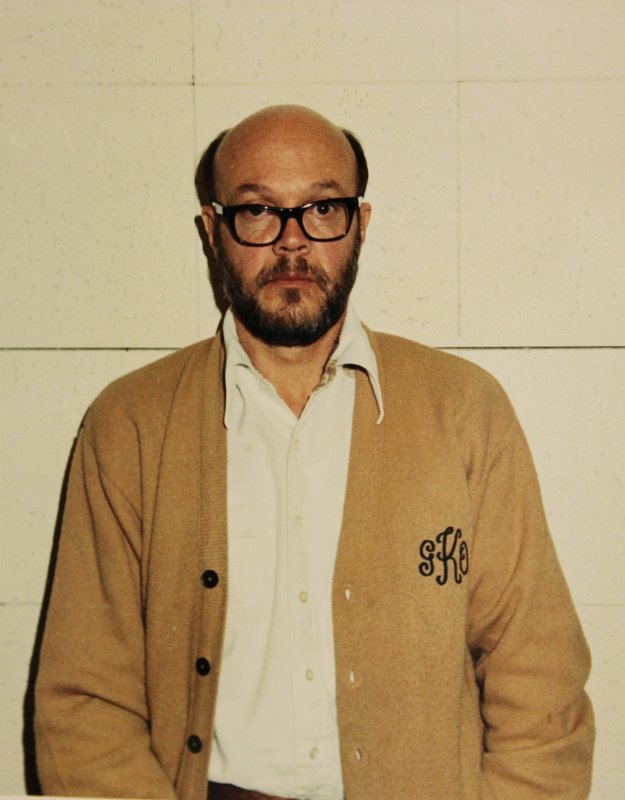
Carpenter during his arrest in San Francisco on May 14, 1981

Carpenter was arrested outside his San Francisco home on May 14, 1981.[115] He was driven to Santa Cruz County where he was ordered held without bail as authorities sought to investigate him in the murders.[116][117] Detectives issued a search warrant for his home and seized a Sierra Club book that contained maps of various California hiking trails, with paper clips conveniently marking pages containing areas where the murders occurred.[118] Although this was strong circumstantial evidence, investigators worried this was not enough for a conviction, and Carpenter's .38 caliber revolver could not be located. On May 15, Carpenter was formally indicted with the murder of Hansen.[119] He was not immediately indicted with Scaggs' murder as her body was not yet found, although after it was, he was charged with her murder on May 26. Carpenter pleaded not guilty to both charges.[120]

In mid-July, investigators received an unexpected break when Shane Williams (above), who had recently been arrested in Los Angeles for robbery, told detectives the location where he had hidden the gun.[121] When investigators searched the area, which was near a hiking trail, they recovered the firearm; when tested, the gun was determined to be the same one used in Hansen's murder.[122] The gun was traced back to Mollie Purnell; when police went to question her, she initially told them what Carpenter coerced her to say and claimed it had been stolen from her. When police threatened to indict her as an accomplice to murder, she recanted and told them she had indeed gifted it to Carpenter.[33]

On July 31, Carpenter was indicted in Marin County with the five murders, after his firearm was seized by investigators who determined that the bullet shells recovered at the crime scenes there undoubtedly originated from his gun.[123] In total, Carpenter was faced with seven murder charges, two rape charges, and one attempted rape charge.[124] Santa Cruz District Attorney Arthur Danner requested that the murder trials in relation to the deaths of Hansen and Scaggs be combined.[125] A preliminary hearing began on September 21, and the presiding Judge William A. Kelsay granted the defense's motion to prohibit the press from the courtroom during the three-week inquiry.[126]

Additional investigations

[edit]

Following Carpenter's arrest, the parents of 17-year-old Anna Kelly Menjivar, a Mercy High School student who had gone missing in Daly City in December 1980, asked investigators to look into Carpenter for her case. Daly City police had initially concluded Menjivar was a runaway but revelations that Carpenter frequented a bank where she worked diverted the case and it was investigated as a potential homicide.[127] Menjivar's skull and other bones were found off of Route 35 in June 1981, but the condition she was found in made it unlikely for her cause of death to be determined.[128]

In addition, Carpenter was also suspected in the murders of Jennifer McDowell and Diane Steffy, both of whom were strangled to death in the Santa Cruz Mountains in 1979, but he was cleared as a suspect in both cases.[129][130] Before Carpenter's identification, it was theorized that the Trailside Killer could have been the infamous Zodiac Killer who reemerged after eight years of silence.[131][132][133][134] The link was ruled out after his arrest due to him being imprisoned during several of the Zodiac murders.[135]

Trials

[edit]

Los Angeles County

[edit]

In 1982, the California Superior Court granted the defense's motion for a change of venue for the Santa Cruz trial, citing the risk that the high publicity surrounding the case could affect jury selection, and agreed it would be relocated to Southern California.[136] The defense and prosecutors eventually settled to move the case to Los Angeles County before Superior Court Judge Dion Morrow.[137] After several delays throughout 1983,[138] on May 24, 1984, Carpenter's trial for the murders of Ellen Hansen and Heather Scaggs and the attempted murder of Steven Haertle was opened at the Criminal Courts Building (now known as Clara Shortridge Foltz Criminal Justice Center).[139][140]

Danner sought the death penalty for Carpenter if convicted. During opening statements, he outlined the murder of Ellen Hansen and Steven Haertle's wounding and later identification of Carpenter: "You will hear him identify David Carpenter as the person who held the gun, and how he could see the bullets in the chamber. He will have to relive a nightmare in his life, but you will hear him tell you without equivocation that David Carpenter is the man who killed Ellen and then wounded him to within two inches of his life."[141] Danner also told the jury how Heather Scaggs had told her boyfriend that she was meeting with Carpenter shortly before she was murdered. In the defense's opening statements, Santa Cruz County Public Defender Steve Wright warned both juries to beware of "speculation, hunches and suspicion" by the prosecution and that their claims could all be argued away on cross examination.[141]

The Clara Shortridge Foltz Criminal Justice Center in Los Angeles, where the trial took place

Danner summoned Haertle to the witness stand and asked him to identify his attacker, to which Haertle pointed at Carpenter with no hesitation. Haertle testified that on the day he and Hansen were attacked, they were first approached by Carpenter at gunpoint, who ordered them down the trail into a secluded area.[89] He said that Carpenter pointed toward Hansen and told her "I want to rape you", and when she told him no, he walked both further down the trail until he began firing. In a husky voice, Haertle said that the neck wound he sustained left him with severe nerve damage to his vocal cords and eye.[89]

A centerpiece of the prosecution's case was the ballistics evidence tying Carpenter's firearm to the bullets found at the crime scenes, and they called up Mike Waller, a criminologist for the Santa Rosa Crime Laboratory, who testified that he analyzed the bullets found in the bodies of Hansen and Scaggs and determined they came from Carpenter's .38 caliber revolver.[142] He added that the gun was also tied to bullets found at the Marin County crime scenes.[143] The defense had no rebuttal.[144] Instead, the defense chose to argue that the sperm evidence tying Carpenter to the murder of Scaggs was weak since it had allegedly been deposited a day before her death.[145]

During closing arguments on July 3, the defense stunned the courtroom when one of Carpenter's lawyers, Larry Biggam, admitted that his client had killed both victims but said "that will not be an issue in your deliberations", citing Carpenter's competency instead.[146] In his rebuttal, Danner said that the defense's admission of Carpenter's guilt was tantamount to his guilt in the Marin County murders as well.[147] The jury was allowed recess for the July 4 holiday and deliberated for just over eight hours on July 5 and found Carpenter guilty on two counts of murder, one count of attempted murder, one count of rape, and one count of attempted rape, with the jury finding that his convictions had met the special circumstances allowing him to be eligible for the death penalty.[148][149]

The defense and prosecution readjourned on August 15 for the start of the penalty phase.[150] The prosecutors called up 18-year-old Tina Marie Vance, whom Carpenter had been acquainted with. She testified that she was 14 when she met Carpenter in 1980, and during a car ride from Fresno to San Francisco he showed her his briefcase containing a gun, wires, ropes and a gag, claiming to use them to "scare people".[151] Prosecutors elaborated on Vance's testimony by showing jurors morgue photos of one of the victims in Marin County, who had something tied tightly around her neck. Although the defense objected, Judge Marrow overruled them.[151]

The defense argued circumstances surrounding Carpenter's childhood and summoned two childhood friends to the witness stand. Both recounted how Carpenter's mother would beat and prohibit him from playing outside, instead forcing him take violin lessons. Another defense witness, child abuse expert Jo Ann Cook, testified that based on interviews with Carpenter, his parents, and state records, the abuse he suffered led him to commit a life of crime.[11] On behalf of the prosecution, Thomas Szasz, a professor of psychiatry from Syracuse, New York, disagreed and testified that although a bad childhood could shape a person's personality, it does not influence their decision-making skills.[152]

In one of his final statements to the jury, Danner called Carpenter an "efficient serial killer" who shot his rape victims so they could not testify against him, and as he spoke, photographs of all the victims were displayed in the courtroom.[153] In the defense's final statement, Carpenter's lawyer Larry Biggam remarked, "As Gandhi once said, an eye for an eye eventually makes the whole world blind".[154] The jury formally began deliberations on September 28.[155] Despite a plea from the defense to consider Carpenter's possible mental or emotional disturbance,[149] they ordered him to be sentenced to die in the gas chamber on October 5, marking the end of the five-month trial.[156] His sentence was formally imposed by Judge Morrow on November 16, who said to Carpenter, "I must conclude with the prosecution that if ever there was a case for the death penalty, this is that case."[157] On November 26, he was moved to death row at San Quentin State Prison.[158]

San Diego County

[edit]

Three weeks after his sentencing, on December 5, Carpenter was arraigned in Marin County for the murders committed there, where he agreed to the appointment of public defender Frank Cox as his attorney.[159] His preliminary hearing was delayed for several months so Cox could study the 20,000-page transcript of the Los Angeles County trial.[160] In early 1986, Cox advised Carpenter to plead guilty to the five murder charges, which angered him and he fired Cox,[161] but rehired him not long after.[162] In September of that year, Carpenter's trial for the five murders in Marin County was moved to San Diego County before Superior Court Judge Herbert Hoffman.[163]

Carpenter's defense opted for an unusual plea of double jeopardy since both the prosecution and Judge Morrow from the Los Angeles County trial had said there was "overwhelming evidence" of Carpenter's guilt in the Marin County murders—cases he had yet to be tried for—and thus was a violation of state law. A hearing on the matter was denied by the Supreme Court of California.[164] Carpenter's trial for the murders of Richard Stowers, Cynthia Moreland, Shauna May, Diane O'Connell and Anne Alderson commenced on January 5, 1988.[165]

Marin County Deputy District Attorney John Posey, who acted as head prosecutor, sought the death penalty. During opening statements, Posey outlined each of the victims' final moments, as well their last contact with their families.[166] The prosecution called up Shane Williams, whom law enforcement had agreed to not prosecute as an accessory to murder, who testified that Carpenter gifted him his .38 caliber revolver at a warehouse in San Francisco days prior to his arrest.[167] Williams' testimony was called into question by the defense, who argued that none of the detectives who had surveyed Carpenter in the days before his arrest had recalled him interacting with Williams.[168]

In April, Carpenter took the stand in his own defense. He struggled to speak clearly due to his stutter but testified that Purnell was not being truthful about her claim that she loaned him the gun later used in the murders and also claimed he was in Redwood City when several of them occurred.[169][170] After one day of deliberations, on May 10, 1988, the jury convicted Carpenter on five counts of first-degree murder. He was found guilty of raping two of the women and attempting to rape a third. The jury recommended a death sentence on June 27, which Judge Hoffman formally imposed on July 19.[171]

Aftermath

[edit]

One of Carpenter's initial pastimes on death row was corresponding with the Point Reyes Light newspaper in a series of letters, where he recounted the events of his life, answered readers' questions, and criticized the CDCR management.[172] In an interview with journalist David V. Mitchell, he continued to divert blame for the Trailside murders and said that during that time he was only guilty of selling drugs.[173]

Al Howenstein, the Marin County Sheriff at the time, lost re-election in 1982. His loss was attributed to his handling of the Mount Tam Killer investigation for which he was criticized, particularly for putting too much emphasis on the March 1980 sketch that later turned out to be inaccurate.[174][175][176]

Carpenter filed his first appeal in September 1988 after learning that a juror during the San Diego trial had been improperly informed of his criminal record.[177] The following year, the California Superior Court ruled in his favor and overturned the convictions.[178][179] The Marin County District Attorney fought the ruling and the case was heard by the U.S. Supreme Court in 1994,[180][181] who overruled the ruling and reinstated the convictions.[182][183] Another appeal was declined by the California Supreme Court.[184] In 1995, the Santa Cruz convictions were overturned due to juror misconduct, but the California Supreme Court later reinstated the convictions.[185] He again attempted to appeal his death sentence for the Marin County convictions in 1999 but failed.[186]

In 2009, the San Francisco Police Department reexamined evidence from the 1979 murder of Mary Bennett and a DNA sample obtained from the evidence was matched to Carpenter through state Department of Justice files. Subsequently, in February 2010, police confirmed the match with a recently obtained sample from Carpenter.[187]

Carpenter became California's oldest death row inmate in 2006 after Clarence Ray Allen was executed.[188] He remained on death row awaiting execution until 2019, when California Governor Gavin Newsom instituted a moratorium on executions in California. Ron Moreland, the father of Marin County victim Cynthia Moreland, spoke of his disappointment but acknowledged that he worried about "biases" with the death penalty that could possibly have helped convict innocent individuals.[189]

In 2023, it was announced that San Quentin would be repurposed as a rehabilitation center. While California no longer has a literal "death row" in the traditional sense, Carpenter remains under sentence of death. In September 2024, he contracted COVID-19 and was moved to an isolation unit and recovered within days.[10] Given his inability to walk and deteriorating interaction struggles, he was moved to California Health Care Facility (CHCF) in Stockton in May 2025.[10][190][191]

Media

[edit]

Literature

[edit]
  • Graysmith, Robert (1990). The Sleeping Lady: The Trailside Murders Above The Golden Gate. New York: Onyx. ISBN 0-45140255-3.
  • Schechter, Harold (2003), The Serial Killer Files: The Who, What, Where, How, and Why of the World's Most Terrifying Murderers, Ballantine Books, ISBN 978-0-345-46566-5
  • Maynard, Joyce (2013). After Her. New York: HarperLuxe. ISBN 9-78006225742-0.[192]

Television

[edit]
  • The New Detectives S04E08 "Body Count" (1998). Narrated by Gene Galusha.
  • Born to Kill? S06E11 "David Carpenter: The Trailside Killer" (2014). Directed by Matt Grosch.
  • Very Scary People S05E02/03 "The Trailside Killer" (2023). Aired in two-parts.

See also

[edit]

Notes

[edit]

References

[edit]
[edit]
Revisions and contributorsEdit on WikipediaRead on Wikipedia
from Grokipedia
David Joseph Carpenter (born May 6, 1930) is an American and known as the Trailside Killer for a series of murders targeting hikers on remote trails in . Between October 1979 and March 1981, Carpenter abducted, sexually assaulted, and fatally shot at least seven victims, primarily young women, in areas such as Mount Tamalpais State Park, , and Pescadero Creek. His crimes involved stalking solitary trail users, binding them, and executing them with a .38-caliber , instilling widespread fear among outdoor enthusiasts in the . Following ballistic matches, eyewitness identifications, and other forensic evidence, Carpenter was arrested in 1981 and convicted in multiple trials across Santa Cruz, Marin, and Santa Clara counties, receiving death sentences that have been upheld on appeal. Prior to these killings, he had a history of violent sexual offenses, including rapes dating back to the , for which he served prison time. Currently incarcerated at San Quentin State Prison, Carpenter remains one of California's longest-serving condemned inmates.

Early Life and Background

Childhood and Family Influences

David Joseph Carpenter was born on May 6, 1930, in , , to parents Elwood and Frances Carpenter. His father was an alcoholic who physically abused him during childhood, while his near-blind mother exerted domineering control over the household. The family environment was characterized by strict discipline and aggression, fostering Carpenter's early reclusive tendencies. By age 7, Carpenter developed a pronounced stutter that persisted into adulthood, leading to frequent teasing at school and exacerbating his social withdrawal. He also experienced chronic bedwetting until his early teens, for which his parents provided no medical intervention, instead compelling him to participate in extracurricular activities such as and lessons to mitigate his speech impediment. These unmet needs and familial pressures coincided with the emergence of violent behaviors, including animal torture in boyhood and explosive rages during . Trial testimony later highlighted how the abusive dynamics—physical punishment from his father and emotional dominance by his mother—contributed to Carpenter's damaged psychological development, as argued by his defense attorney who described him as "damned at an early age." No siblings are documented in available records, leaving Carpenter without evident familial buffers against these influences.

Education, Employment, and Early Adulthood

Carpenter endured a difficult school experience marked by a severe stutter that began around age three and continued into adulthood, resulting in peer teasing and social isolation. He left high school after the 10th grade without graduating. His tested IQ of 125 indicated above-average intelligence, though formal higher education details are limited. Following his teenage institutionalizations, Carpenter enlisted in the United States Coast Guard, from which he received an honorable discharge. In civilian life, he held jobs in sales, including as a ship's purser, and later in the printing industry as a typesetter and instructor. He also worked in key chain distribution at a San Francisco business. Contemporaries described him as a reliable employee despite personal challenges. In November 1955, at age 25, Carpenter married 19-year-old Ellen Heattle, with whom he fathered three children: Michael David (born September 1956), Gabrielle Louise (born July 3, 1958), and Circe Anne (born June 17, 1960). The marriage ended in divorce on March 27, 1962. He remarried Helen on August 8, 1969, though that union dissolved within a year.

Pre-Murder Criminal Record

Initial Convictions and Patterns of Offending

David Carpenter's earliest documented offenses occurred in the 1940s, beginning with commitment to at age 14 for unspecified sex offenses. In 1947, at age 17, he molested two young female cousins, aged 8 and 3, leading to a sentence by the Youth Authority. These incidents established an initial pattern of sexual predation against minors within his family, reflecting predatory behavior that persisted into adulthood. By the 1960s, Carpenter's offenses escalated to involve adult female victims and extreme violence. In July 1960, at age 30, he kidnapped Lois DeAndrade, binding her with a clothesline, stabbing her hand with a , and striking her head at least six times with a ; he was armed with these items in advance, indicating premeditation. Charged with with intent to and two counts of with a , he was arrested after attempting to shoot a officer. On March 9, 1961, he received a 14-year federal sentence (concurrent terms of 5 years on two counts and 4 years on one). Paroled on April 7, 1969, this period highlighted a shift toward lethal intent in sexual s, with tools for binding, cutting, and bludgeoning victims. Recidivism followed quickly in 1970, shortly after parole. Between January and February, Carpenter committed kidnapping, rape, armed robbery, and auto theft, targeting women in acts combining sexual violence with theft and restraint. Arrested on February 3, 1970, he was convicted on May 1, 1970, of armed robbery (5 years to life), kidnapping (1 to 25 years), and auto theft with escape (6 months to 5 years each); an additional October 29, 1970, plea bargain in Santa Cruz yielded convictions for kidnapping and robbery. These crimes demonstrated a consistent pattern: opportunistic yet planned attacks on women involving abduction, sexual assault, and robbery, often with firearms or vehicles for control, underscoring failure of incarceration to deter escalation from juvenile molestation to adult rape and near-murder. Paroled again on May 21, 1979, to a federal halfway house, his record showed over three decades of serial sexual and violent offending against females, with increasing brutality and disregard for victims' lives.

Imprisonment and Multiple Paroles (1960s–1979)

In July 1960, Carpenter attacked Lois DeAndrade, attempting to strangle her with a clothesline, her with a knife, and striking her with a ; he was charged with one count of with intent to murder and two counts of with a . On March 9, 1961, he was sentenced in U.S. Federal Court to a total of 14 years' , comprising five years each on two counts and four years on the third. Carpenter was paroled on April 7, 1969, after serving approximately eight years of his sentence. Less than a year later, on February 3, 1970, he was arrested following a series of violent offenses, including and attempting to Cheryl Lynn Smith, and Wilma Joyce, holding Sharon O'Donnell at gunpoint with a , stealing a from Lucille Davis, and Barbara, and escaping from jail on April 27, 1970 (though recaptured shortly thereafter). On May 1, 1970, he was convicted of armed robbery (sentenced to five years to life), (one year to 25 years), auto theft, and escape (six months to five years each). Carpenter remained imprisoned for these convictions until his parole on May 21, 1979, when he was released to a federal . This marked his second major parole within the decade, following a pattern of reoffending shortly after release from prior terms for escalating and .

Associations and Potential Influences

Carpenter experienced a tumultuous childhood marked by from his alcoholic father and strict control by his domineering, near-blind mother, who enforced rigid discipline without psychological intervention for his severe stutter and bed-wetting issues.<grok:render type="render_inline_citation"> 60 </grok:render> These family dynamics reportedly fostered resentment and , compounded by ridicule from peers over his speech impediment, which he attempted to mitigate through forced participation in activities like .<grok:render type="render_inline_citation"> 50 </grok:render> A defense later attributed Carpenter's early "damning" to this parental environment, suggesting it contributed to patterns of aggression evident in his childhood animal .<grok:render type="render_inline_citation"> 53 </grok:render><grok:render type="render_inline_citation"> 56 </grok:render> At age 17 in 1947, Carpenter was arrested for molesting two young cousins, an incident reflecting early sexual deviance potentially influenced by unresolved familial tensions and lack of therapeutic support.<grok:render type="render_inline_citation"> 50 </grok:render> His adult relationships included a 1955 that produced three children before amid his incarcerations in the , with limited documented involvement from extended family or mentors to counter his emerging criminality.<grok:render type="render_inline_citation"> 50 </grok:render> During multiple imprisonments and paroles from the 1960s to —including a 1969 release after serving time for a 1960 attempted murder and a 1977 parole following a 1970 kidnapping conviction—Carpenter associated with fellow inmates and parolees in California's penal system, environments known for reinforcing violent and predatory behaviors through peer exposure.<grok:render type="render_inline_citation"> 50 </grok:render> Specific named accomplices in his pre-murder burglaries and assaults remain undocumented in , though his escapes and suggest informal ties within criminal networks that may have normalized escalating .<grok:render type="render_inline_citation"> 50 </grok:render> No evidence indicates direct mentorship from notorious figures, but repeated failures under supervision—despite conditions prohibiting proximity to potential victims—highlighted systemic influences from inadequate rehabilitation, culminating in his release shortly before the trailside offenses.<grok:render type="render_inline_citation"> 50 </grok:render>

The Trailside Murders

1979 Incidents

On August 19, 1979, 44-year-old Edda Kane was murdered while hiking alone in Mount Tamalpais State Park, , marking the first known killing in the Trailside series attributed to David Carpenter. Her body was discovered the next day by hikers off a secluded trail in the park's forested area overlooking the ; she had been shot multiple times in the head and torso with a .38-caliber , consistent with the weapon later recovered from Carpenter's possession. Kane, a resident who enjoyed outdoor activities, was not sexually assaulted, but the remote location and method of attack aligned with the emerging pattern of targeting solitary individuals on hiking paths. Ballistic evidence from the .38-caliber bullets recovered at the scene matched those from Carpenter's , seized during his 1980 , providing a key forensic link despite the predating the cluster of killings that drew widespread attention. Carpenter, who had been paroled from in May 1979 after serving time for violent sexual offenses, resided nearby in the Bay Area and frequented the region's trails, positioning him geographically and temporally as the perpetrator. Although not among the specific counts in his death penalty convictions for later Trailside murders, Kane's killing initiated the sequence, with investigators retroactively connecting it through the shared and of isolated outdoor enthusiasts. No witnesses reported seeing Kane with Carpenter, but the absence of motive and precision of the shootings underscored a predatory escalation from his prior rapes to lethal violence.

1980 Killings and Initial Probes

On October 11, 1980, Cynthia Moreland, 18, and Richard Stowers, 19, were shot to death while hiking at in . The couple, both students, were found with multiple gunshot wounds from a .38-caliber , prompting an immediate homicide investigation by local authorities. Three days later, on October 14, 1980, Anne Alderson, 26, of San Rafael, was attacked while jogging on a trail in State Park. Her body was discovered the next day, October 15, having been raped, shot three times in the chest and head, and redressed by the perpetrator. In late November 1980, two additional women were killed in Santa Cruz County: Diane O'Connell, 22, disappeared on November 27 while hiking near Castle Rock State Park, her body later found shot; and Shauna May, 25, was shot in the head on November 29 during a hike in , with her body discovered shortly thereafter. Initial investigations treated these incidents as isolated trail assaults, but similarities in victim selection—hikers on remote paths—and the use of a raised concerns among Marin and Santa Cruz County . Police increased patrols in state parks and issued public advisories urging hikers, particularly women, to travel in groups and avoid secluded areas. Media coverage amplified fears, coining the "Trailside Killer" moniker by late 1980, though formal linkage of the cases via ballistics evidence solidified only after further 1981 incidents.

1981 Escalation and Linkages

In early 1981, the Trailside Killer's activities intensified with attacks in the . On March 29, 1981, Ellen Marie Hansen, 20, was raped and fatally shot in the head with a .38-caliber while with her fiancé, Steven Haertle, near Pescadero; Haertle was wounded in the face but survived, providing a description of the assailant as a white male in his 50s driving a red foreign car. This incident marked a shift as it produced the first eyewitness survivor, leading to a composite sketch circulated by law enforcement. Later in May 1981, Heather Scaggs, 20, a coworker of Carpenter at a Hayward printing shop, was lured to under the pretense of a job-related errand; she was raped, shot twice in the head with the same .38-caliber weapon, and her nude body discovered partially buried nearby. Ballistic analysis confirmed the bullets matched those from the Hansen shooting and earlier 1980 Trailside murders, establishing a direct evidentiary link via the Rossi . These 1981 crimes escalated public alarm and investigative efforts, prompting coordination among Santa Cruz, Marin, and San Mateo County authorities due to shared —targeting hikers on remote trails, , and execution-style shootings—and geographic proximity in Bay Area parks. The survivor testimony and forensic bridged the cases, shifting from isolated probes to a unified "Trailside Killer" series recognition, with the Haertle sketch aiding suspect identification. No further confirmed attacks occurred after Scaggs, as intensified patrols and media coverage deterred the perpetrator.

Additional Suspected Victims and Unresolved Cases

In February 2010, DNA evidence linked David Carpenter to the unsolved murder of Mary Frances Bennett, a 23-year-old stabbed to death on October 21, 1979, near the Palace of the Legion of Honor at in . Semen recovered from the scene matched Carpenter's DNA profile after comparison with samples from San Quentin State Prison, marking the first documented killing attributed to him prior to the Trailside series. San Francisco police had long suspected Carpenter due to the crime's proximity in time and location to his early 1979 activities, but lacked conclusive proof until advanced forensic testing. Prosecutors reviewed the evidence but declined to file charges, citing Carpenter's existing death sentences for seven other murders as rendering further action unnecessary. The Bennett case remains formally unresolved in terms of conviction, though the DNA match has been accepted by law enforcement as tying Carpenter to the . Beyond confirmed convictions and the Bennett linkage, investigators have speculated Carpenter's involvement in at least one or two additional unsolved homicides in the Bay Area during the late , based on patterns of and aligning with his , though no further DNA or ballistic ties have been publicly confirmed. These suspicions stem from contemporaneous cold cases involving young women in remote or semi-rural settings, but lack the evidentiary breakthroughs seen in Bennett's murder.

Criminal Methods and Forensic Evidence

Modus Operandi

David Carpenter's centered on ambushing victims on remote hiking trails in Santa Cruz and Marin Counties, , primarily targeting young women encountered alone or in vulnerable situations. He initiated contact with feigned familiarity, such as remarking "Oh, we've met again," before producing a concealed to assert control. The primary method of killing involved close-range shootings with a .38-caliber Rossi , often delivering multiple shots to the head or vital areas for rapid incapacitation, as seen in the murders of Ellen Hansen (two headshots and one to the shoulder on March 29, 1980) and Heather Scaggs (single facial gunshot on February 23, 1980). was a consistent element, with completed s in cases like Scaggs—where seminal fluid matched Carpenter—and explicit intent expressed to survivors, such as telling Hansen, "I want to rape you," prior to . Crime scenes exhibited patterns of isolation, with bodies dragged off trails into wooded seclusion (e.g., Scaggs found 136 yards from a roadway) and left partially exposed or minimally concealed, reflecting opportunistic rather than elaborate disposal. Carpenter scouted trails using for victim selection and timing, wore distinctive attire including a "Oly-Montana" jacket and blue-green cap during attacks, and occasionally bound or positioned victims to facilitate assault. While primarily ballistic, isolated instances involved knives or .45-caliber weapons, the core pattern linked by tied seven confirmed murders from 1979 to 1981.

Victim Selection and Crime Scene Patterns

Carpenter primarily targeted young women engaged in solitary hiking or jogging on remote trails in the and Marin County areas, such as , , State Park, and , exploiting the isolation of these locations to minimize witnesses and facilitate escape. Victims were typically in their late teens to mid-20s, including college students and young adults like Ellen Marie Hansen (age 20) and Shauna May, though he also killed male companions present with female victims, such as Richard Stowers accompanying Cynthia Moreland on October 11, 1980, indicating an opportunistic extension of attacks to eliminate threats rather than a strict preference excluding males. Crime scenes consistently featured bodies left in situ or dragged short distances into brush off the main path, without burial or elaborate concealment, as seen with Anne Alderson's body found facedown near a trail on on October 13, 1980, and Diane O'Connell and Shauna May discovered nude and positioned side by side at on November 28, 1980. Attacks involved confronting victims with a .38-caliber Rossi , forcing compliance through threats, and delivering fatal close-range headshots, often after binding or restraining females for , evidenced by seminal fluid in victims like Alderson and May, and ligature marks such as on May's wrist. This pattern of rapid execution post-assault, combined with minimal post-mortem manipulation, suggested a focus on sexual gratification over ritualistic display or prolonged torture. Forensic links, including matching shoeprints and ballistic evidence from the , reinforced the uniformity across scenes in Santa Cruz and Marin Counties from 1979 to 1981.

Ballistics, DNA, and Evidentiary Breakthroughs

Ballistics analysis played a central role in linking David Carpenter to the Trailside murders, establishing that a single .38-caliber Rossi was used across multiple scenes. The weapon was purchased by Carpenter's associate, Mollie Purnell, on his behalf in 1980, shortly before the series of killings began. On May 13, 1981, Carpenter transferred the to Shane and Karen Williams, who concealed it until police recovery; test firings from the produced markings consistent with bullets recovered from the murders of Moreland and Richard Stowers ( 30, 1980), Anne Alderson ( 25, 1980), Diane O'Connell and Shauna May (March 1981), and Ellen Hansen (March 29, 1981). Additionally, an unexpended .38-caliber bullet was found in one of Carpenter's vehicles post-arrest, further corroborating his possession of compatible ammunition. Forensic serology provided supporting evidence, such as semen stains on Alderson's clothing that matched Carpenter's , consistent with approximately 15-19% of the Caucasian male population. These linkages, derived from microscopic comparison of bullet and impressions, were pivotal in the prosecution's case during Carpenter's 1980s trials, overcoming defense challenges to the chain of custody and expert testimony reliability. A significant post-conviction breakthrough occurred in late 2009 when DNA testing connected Carpenter to the October 21, 1979, stabbing murder of Mary Frances Bennett in , an unsolved case predating the Trailside series. Evidence recovered from the scene matched Carpenter's DNA profile in the state database; a confirmatory sample taken from him at San Quentin State Prison on February 3, 2010, verified the link. Bennett, aged 23, had been stabbed over 25 times near the Palace of Legion of Honor, with authorities long suspecting Carpenter due to proximity and similarities, though no were involved as the killing lacked firearms. This match, processed via California's DNA databank, extended his evidentiary ties beyond the convicted cases but did not result in additional charges as of 2010. No further DNA linkages to other unsolved murders have been publicly confirmed.

Apprehension and Prosecution

Surveillance Operations

Police initiated surveillance of David Joseph Carpenter in early May 1981 after a female witness identified him from a composite sketch of the , recalling an attempted by him aboard a in 1955. The operation involved coordination among local agencies, including the , and federal support from the FBI, who monitored Carpenter's movements from his residence in San Jose to prevent potential additional attacks and to corroborate his connection to the trailside murders. The week-long stakeout focused on Carpenter's daily routines, including trips to , where officers observed him interacting with associates such as Shane and Karen Williams, a pair of convicted bank robbers. On May 13, 1981, during this period of observation, Carpenter handed a cloth-wrapped bundle containing a .38-caliber Rossi —the weapon ballistically linked to multiple victims—to , who buried it under asphalt fragments in a vacant lot. Williams later revealed the location to investigators post-arrest, enabling recovery and forensic confirmation that the gun fired bullets recovered from crime scenes, including those of Ellen Hansen on March 29, 1981, and earlier victims. Surveillance culminated in Carpenter's arrest without resistance on May 15, 1981, at his parents' home in , following the week's monitoring that yielded no immediate further crimes but solidified through observed associations and the gun's recovery. This operation marked a pivotal shift from reactive investigations to proactive containment, leveraging witness tips and persistent observation amid mounting public fear in the Bay Area parks.

Arrest and Interrogations

David Carpenter was arrested on May 15, , at his residence in by San Francisco police officers acting on an issued based on ballistic linking a .38-caliber Rossi to multiple Trailside shootings. The , buried by associate , had been recovered on May 13, , and matched bullets from the crimes, including the March 29, , attack on Ellen Hansen and Steven Haertle. Haertle, the sole survivor of that incident, identified Carpenter from a lineup shortly before the arrest, noting his resemblance to the clean-shaven gunman despite Carpenter's recent beard growth. Witnesses had also reported a red vehicle—similar to Carpenter's—fleeing crime scenes, further corroborating his involvement. Prior to the arrest, on May 8, 1981, San Jose police officers met voluntarily with Carpenter at his officer's office to discuss the disappearance of Heather Scaggs. Not in custody and without Miranda warnings, Carpenter provided an claiming he overslept and experienced car trouble on May 2, 1981—the day Scaggs vanished—while expressing unusual concern, including a that her body not be found or indicate . These statements, admitted at trial as non-custodial, were later deemed incriminating given the crime's circumstances. Following his arrest, Carpenter invoked his Miranda rights but engaged in limited questioning on May 15, 1981, admitting to ordering prescription glasses from optometrist Dr. Stamper around the time of recent assaults, contradicting his initial denial. He denied knowledge of the murders and assaults, maintaining alibis for key dates that were disputed by evidence such as shoe prints matching his Nikes and witness sightings. Carpenter made no confessions during interrogations, with his conviction relying instead on forensic links, eyewitness identifications, and rather than admissions.

Formal Indictments

Following his arrest on May 15, 1981, Carpenter was formally charged in Santa Cruz County on July 31, 1981, with five counts of , alongside additional counts of rape and attempted rape, primarily linked to the 1980 slayings of Ellen Marie Hansen on March 29 and Heather Scaggs on August 11, as well as related sexual assaults on hikers in county parks. These charges were supported by ballistic matches from shell casings recovered at crime scenes to a .38-caliber seized from Carpenter's vehicle, along with witness identifications from a surviving victim. Subsequent investigation expanded the scope, leading to formal charges in Marin County on January 31, 1985, where Carpenter faced five counts of first-degree murder, two counts of , and one count of attempted rape for crimes committed between October 1979 and November 1980. These included the murders of Cynthia Moreland and Richard Stowers on November 29, 1980; Anne Alderson on October 25, 1980; and Diane O'Connell on November 28, 1980, with the attempted rape and shooting of survivor Shauna May on October 30, 1979. Prosecutors tied these cases to Carpenter through fiber evidence, tire track impressions matching his vehicle, and eyewitness accounts placing him near trailheads. No additional formal murder charges were filed in other jurisdictions at that time, though linkages to persisted without prosecution.

Trial Proceedings

Los Angeles County Case

The County case stemmed from crimes committed in Santa Cruz County in late 1981, with venue transferred to Los Angeles due to pervasive pretrial publicity that risked prejudicing a local . Carpenter faced charges for the first-degree murders of Ellen Marie Hansen, a 20-year-old student shot multiple times during a hike in on December 22, 1981, and Heather Mary Scaggs, a 20-year-old woman killed by gunshot wounds on a trail near on December 1, 1981; he was also charged with the of Hansen's hiking companion, Steven Haertle, who survived being shot in the head. Prosecutors linked Carpenter to these incidents through ballistic matches from a .38-caliber recovered during his , eyewitness identification by Haertle, and evidence tying him to the scenes. The trial commenced in early 1984, with the prosecution emphasizing Carpenter's of targeting hikers on remote trails, binding and sexually assaulting victims before execution-style killings. Defense arguments centered on claims and challenges to the reliability of Haertle's identification, given the survivor's and the passage of time since the attack. On April 28, 1984, the jury returned guilty verdicts on all counts, affirming special circumstances of multiple murders, felony-murder-rape for both homicide counts, and lying-in-wait as to Hansen's killing; they also found true allegations of personal firearm use. Following the guilt phase, the penalty phase featured aggravating evidence of Carpenter's prior violent offenses, including rapes and assaults from the and for which he had served time, contrasted with minimal mitigating factors such as his age and family background. On November 16, 1984, the court imposed a death sentence, later upheld by the California Supreme Court in a 1997 decision that rejected claims of evidentiary errors, , and . This conviction preceded trials for additional Trailside murders in other jurisdictions.

Guilt Phase Evidence

The prosecution's case in the guilt phase centered on establishing David Carpenter's identity as the perpetrator of the March 29, 1981, first-degree murder of Ellen Marie Hansen and the attempted first-degree murder of her companion Steven Haertle in the , as well as the May 24, 1981, first-degree murder and of Heather Scaggs in the same area. Steven Haertle testified that Carpenter approached them on a , pointed a , stated "I want to you" to Hansen, and then shot Hansen twice in the head after her refusal; Haertle identified Carpenter in a pretrial lineup and in court as the clean-shaven assailant who also shot him in the neck before fleeing. Additional eyewitnesses, including Leland Fritz, Kenneth Fritz, Fred Morse, and Maureen Morse, described seeing a man matching Carpenter's appearance—wearing a gold jacket and —near the with shortly before the attack, with Fritz identifying him in a lineup and court. A young observed a red vehicle, consistent with one owned by Carpenter, speeding away from the area post-shooting. Ballistic and firearms evidence formed a core element, linking a .38-caliber Rossi —purchased in fall 1980 by Carpenter's associate Mollie Purnell at his request—to the Santa Cruz crimes; test-fired bullets from this weapon matched those recovered from Hansen's body, Haertle's wound, and Scaggs' body, with the gun later recovered buried in a lot after a tip from witness . An unexpended .38-caliber bullet found in Carpenter's Chevrolet station wagon exhibited similar rifling characteristics to those used in the shootings. Physical trace evidence included shoeprints at the Hansen-Haertle scene matching the tread pattern of Nike sneakers Carpenter purchased the day before the , with a second set of matching prints appearing days later, indicating a return to the site. For Scaggs' murder, forensic examination revealed semen in her vagina consistent with intercourse near the time of death, supporting the charge, though defense experts contested its source by suggesting possible contribution from her boyfriend; her nude body was found bound and shot in , approximately 12-15 miles from a planned outing with Carpenter that day. Circumstantial links included Carpenter's May 8, 1981, statement to police feigning concern over Scaggs' disappearance and of his prior display of a similar to associates in late 1980 and early 1981. The defense conceded Carpenter's identity as the gunman and his commission of the killings but challenged special circumstances such as lying in wait for Hansen and the rape-murder linkage for Scaggs, arguing instead on grounds without disputing the core acts. The convicted Carpenter on all counts after four days of deliberations, finding true the use enhancements and special circumstances of multiple murders, rape-murder, and .

Penalty Phase Arguments

In the penalty phase of the Los Angeles County trial, which addressed the Santa Cruz County convictions for the 1981 murders of Ellen Hansen and Heather Scaggs as well as the of Stephen Haertle, a separate weighed aggravating and mitigating factors under section 190.3. Prosecution and defense presented evidence of David Carpenter's criminal history, psychological background, and crime circumstances over a period expected to last four to six weeks beginning in August 1984. The prosecution, led by Santa Cruz County Art Danner, argued for the death penalty by emphasizing Carpenter's extensive prior record of violence, including over two decades of incarceration for and convictions, with granted in 1979 shortly before the crimes. They portrayed the murders as calculated acts where Carpenter had "learned to kill" victims to eliminate witnesses, highlighting special circumstances such as multiple murders, commission during or attempted , and . Additional aggravating evidence included unadjudicated offenses, such as five 1980 Marin County slayings linked by to a .38-caliber Rossi used in the charged crimes, and from a 1960 survivor illustrating a lifelong pattern of escalating brutality. Danner asserted that Carpenter operated as an "efficient " whose life represented a "continuous expression of violence," deeming the case uniquely suitable for given the victims' vulnerability on trails and the absence of remorse. The defense, represented by attorney Larry Biggam, sought a sentence of life without parole by focusing on mitigating factors rooted in Carpenter's traumatic upbringing and psychological impairments. They introduced evidence of an abusive childhood in a family described by state officials as "one of the worst messes," featuring a domineering mother, absent and physically violent father, neglect, and early institutionalization that exacerbated issues like severe stuttering and a personality disorder. Expert witnesses, including psychologists Dr. William Pierce and Dr. Craig Haney, testified to these developmental damages rendering Carpenter a "damaged human being" psychologically "damned at an early age," alongside lay evidence of good behavior in custody and positive traits such as intelligence and generosity. Biggam framed the arguments as explanatory rather than excusatory, attributing the crimes to systemic failures in rehabilitation and mental health support while urging the jury to consider lingering doubts from the guilt phase and institutional shortcomings over retribution.

Initial Sentencing

Following the penalty phase, a returned a verdict of , finding true the special circumstance allegations of multiple and in the commission of . On November 16, 1984, the of County imposed a judgment of on David Carpenter for the first-degree of Ellen Marie Hansen, who was and shot on March 29, 1981, and Heather Scaggs, who was shot on December 22, 1980, both in Santa Cruz County. The court denied Carpenter's automatic motion under Penal Code section 190.4, subdivision (e), to modify the verdict. Carpenter, then 54 years old, displayed no emotion as the sentence was pronounced in the courtroom. Prosecutors had portrayed him during trial as an "efficient " whose actions terrorized hikers over a three-year period. This marked the first of two death sentences imposed on Carpenter, with the case having been tried in due to a venue change from Santa Cruz County to ensure an impartial jury.

San Diego County Proceedings

Following a from Marin County due to extensive pretrial publicity, the trial of David Carpenter for five murders in that began on January 5, 1988, in before Herbert B. Hoffman. Carpenter, already under a death sentence from his 1984 Los Angeles County conviction for Santa Cruz County crimes, faced charges of five counts of first-degree murder for the killings of Cynthia Moreland and Richard Stowers on , , near Point Reyes; Anne Alderson on October 14, ; Shauna May on November 25, ; and Diane O'Connell on November 27, . Additional charges included the of Alderson and May, and attempted of O'Connell during her fatal assault. Special circumstances alleged multiple murders and murder in the course of or attempted for several victims. Prosecutors presented ballistic evidence linking a .38-caliber Rossi —purchased in 1970 by Carpenter's then-wife, Mollie Purnell, at his request—to fragments recovered from the victims and crime scenes, matching the weapon's characteristics across all Marin slayings. samples from Alderson and May aligned with Carpenter's and markers, excluding 99 percent of the . included identifications by hikers Shane and Karen Williams, who observed Carpenter near the Point Reyes trailhead shortly before Moreland and Stowers' murders, and shoeprint evidence matching his boot treads at multiple scenes. A distinctive green jacket owned by Carpenter was linked to witness descriptions of the suspect. Purnell testified about purchasing the and Carpenter's controlling behavior, while the defense countered with claims, such as his presence with family on October 11, and arguments challenging forensic linkages. On May 10, 1988, the convicted Carpenter on all counts, finding the special circumstances true, establishing his eligibility for . In the penalty phase, prosecutors emphasized the premeditated nature of the attacks on hikers in remote areas to satisfy power-driven sexual urges, while the defense introduced mitigating evidence of Carpenter's abusive childhood and prior incarcerations. The same returned a verdict, leading Judge Hoffman to impose a second sentence on June 27, 1988. This outcome relied on a unified for both phases, as permitted at the time, without separate penalty deliberations.

Key Testimonies and Verdicts

In the trial for the Marin County offenses, prosecution witnesses established a link between Carpenter and the murder weapon through Mollie Purnell, who testified that she purchased a .38-caliber Rossi for him in 1970 using his money. and his wife Karen further corroborated this, stating that Carpenter gave them the gun in 1980 and that Shane hid it in a vacant lot after Carpenter's arrest, where it was later recovered by police. Ballistic analysis confirmed that this single fired the bullets in all five murders, with matching characteristics to the victims' wounds. Eyewitness testimony included Steven Haertle, who survived a in a related Santa Cruz incident and identified Carpenter in a lineup and at as the assailant who demanded his and shot him on October 15, 1980. Additional hikers testified to hearing gunshots near the Cascade Falls trailhead on October 11 and 14, 1980, consistent with the timings of the Moreland-Stowers and Alderson killings. Forensic evidence featured semen stains on Anne Alderson's panties, with DNA typing indicating a match to 15-19% of the Caucasian male population, including Carpenter's profile, and shoeprints at the scenes matching Nike sneakers he purchased. Witnesses also placed Carpenter's red vehicle and a distinctive gold jacket near the crime areas. The defense countered with , including from Carpenter's employer that he worked until approximately 5:30-6:00 p.m. on October 14, 1980—the day of Alderson's —and witnesses who described seeing a suspect not matching Carpenter's appearance, such as a man with different or build. Carpenter himself testified, denying involvement and claiming he was shopping with his parents or at work during the crimes; a defense challenged the reliability of the shoeprint and due to limitations in forensic techniques at the time. The jury convicted Carpenter of five counts of first-degree murder for the deaths of Cynthia Moreland and Richard Stowers (October 11, 1980), Anne Alderson (October 14, 1980), Diane O'Connell, and Shauna May, finding true special circumstances of multiple murders and rape-murder for the Alderson, May, and O'Connell cases. He was also found guilty of raping Alderson and May, attempting to rape O'Connell, and personally using a in each offense. These verdicts followed a retrial after the initial conviction was overturned due to . The Supreme Court affirmed the judgments in 1999, upholding the evidentiary links as sufficient beyond .

Second Death Sentence Imposition

On June 27, 1988, the jury, following the penalty phase of the trial for five Marin County murders, unanimously recommended a death sentence for David Carpenter, emphasizing the "savagery" of the crimes in which he shot hikers execution-style on remote trails. The victims included Cynthia Moreland and Richard Stowers, killed on October 11, 1980, while hiking; Anne Alderson, shot on October 25, 1980; and Shauna May and Diane Ogle, murdered on March 29, 1981. Prosecutors highlighted the premeditated nature of the attacks, supported by ballistic evidence linking .38-caliber bullets from Carpenter's to the crime scenes, while the defense called over 30 witnesses to argue for based on Carpenter's history of psychological issues and prior non-capital offenses. Superior Court Judge Herbert Hoffman scheduled formal sentencing for July 19, 1988, during which California law permitted him to affirm the jury's recommendation or reduce it to life without parole. On that date, Hoffman imposed the death penalty, aligning with the jury's verdict and special circumstances findings of multiple murders and firearm use, marking Carpenter's second capital sentence after his 1984 conviction in Los Angeles County for Santa Cruz killings. The ruling reflected the jury's determination that aggravating factors, including the cold-blooded execution of victims in natural settings to evade detection, outweighed any mitigating evidence presented. This imposition occurred despite Carpenter's ongoing appeals of his first death sentence, with execution to proceed via gas chamber at San Quentin State Prison upon exhaustion of remedies.

Post-Conviction Developments

Carpenter's Marin County conviction faced significant post-trial scrutiny due to allegations of . In June 1989, Judge Gary Thomas granted a after determining that a juror had improperly learned during deliberations of Carpenter's prior Santa Cruz County conviction and death sentence, potentially biasing the penalty phase verdict. This ruling was appealed by the prosecution, and on March 7, 1995, the reversed it in a 4-3 decision, holding that the juror's exposure to extraneous information did not demonstrably prejudice the outcome, thereby upholding the original convictions and death sentence. Parallel habeas corpus proceedings challenged evidentiary rulings, including the admissibility of "prior bad acts" from the Santa Cruz Trailside murders in the Marin trial. A superior court initially vacated the judgment on these grounds, but the California Supreme Court reversed this in In re Carpenter (1995), reinstating the convictions by finding no prejudicial error in the trial court's handling of the evidence. Direct appeals of the Santa Cruz County convictions, tried in Los Angeles County after venue change, were affirmed by the California Supreme Court on April 28, 1997, rejecting claims of improper jury questioning and other procedural errors. The San Diego County retrial convictions and second death sentence, addressing the Marin murders, underwent automatic appeal to the California Supreme Court. On November 29, 1999, the court unanimously upheld the judgment in People v. Carpenter, dismissing arguments on evidentiary admissibility, , and penalty phase instructions as meritless. Carpenter subsequently petitioned the U.S. Supreme Court for , which was denied. Federal habeas corpus petitions followed, filed in the U.S. District Court for the Northern District of starting in 1998 (Carpenter v. Broomfield) and 2002 (Carpenter v. Davis), challenging the state judgments on , , and other constitutional grounds. These proceedings, including stays and evidentiary hearings, remained unresolved in public records through the early , with no grants of relief documented; claims of innocence and systemic errors were consistently rejected across state and lower federal reviews. By 2025, amid 's death penalty moratorium and prison reforms, no successful challenges had overturned the convictions, though Carpenter's advanced age and transfers between facilities prompted ongoing administrative reviews unrelated to merits appeals.

Death Row Confinement

David Joseph Carpenter was sentenced to death on October 25, 1984, by the Santa Cruz County following his conviction for the 1980 murders of Cynthia Moreland and Richard Stowers, marking the start of his confinement under capital sentence. A second death verdict was imposed on March 23, 1989, in County for the 1979 murders of Anne Alderson and Diane Ogle, which was later upheld by the Supreme Court in 1999; this did not alter his primary housing assignment. He was received into San Quentin State Prison's condemned unit shortly after the initial sentencing, where he remained for over four decades as one of 's longest-serving death row inmates, ultimately becoming the oldest at age 94 by early 2025. At San Quentin's East Block, designated for male condemned prisoners, Carpenter was housed in solitary confinement within a single cell of about 48 square feet, adhering to standard California Department of Corrections and Rehabilitation (CDCR) protocols for high-security capital cases. Daily routines permitted roughly one hour of exercise in enclosed outdoor cages, access to radio and television after a probationary period, and limited non-contact visitation, though privileges were curtailed by his institutional history of prior offenses and ongoing legal proceedings. No executions occurred during his tenure due to California's informal moratorium on capital punishment since 2006, initiated by court orders citing lethal injection flaws, resulting in de facto life imprisonment without parole for condemned inmates like Carpenter. In early 2025, as part of Governor Gavin Newsom's initiative to repurpose San Quentin as a rehabilitation-focused facility, the unit was dismantled, and Carpenter was transferred to another maximum-security prison housing condemned inmates, such as , to maintain his capital status amid ongoing appeals. This relocation, affecting all approximately 90 remaining condemned men, preserved isolation and security measures but shifted oversight to facilities better suited for aging populations, given Carpenter's advanced age and health decline by 2025. His confinement continues without an execution date, reflecting California's systemic delays in capital enforcement, where natural death or suicide exceeds as causes of mortality for populations.

2025 Prison System Reforms and Transfer

In 2025, completed the dismantling of San Quentin's East Block death row unit as part of Governor Gavin Newsom's broader prison reforms, which sought to transform the facility into a rehabilitation-focused model inspired by Scandinavian principles. This process, initiated under a 2019 executive moratorium on executions and accelerated by a 2023 state plan, involved transferring all 588 remaining condemned male inmates to general population housing across 24 other statewide, pursuant to Proposition 66 (2016), which authorized such relocations to alleviate and enable facility repurposing. The transfers, which began in January 2020, preserved death sentences but granted inmates expanded privileges, including communal meals, extended yard access, and enrollment in rehabilitative programs—over 70% of transferred condemned inmates participated in such activities by mid-2025, contributing more than $229,000 in restitution payments. David Carpenter, aged 95 and the longest-serving condemned inmate convicted in 1984 for seven murders as the Trailside Killer, was relocated to the in Stockton, a medical-focused suited to his mobility needs requiring a or walker. Housed in a single cell post-transfer, Carpenter engaged in computer education courses, attended church services, and benefited from improved daily routines such as hot breakfasts and additional recreation time, though he contracted and recovered from during isolation in September 2024. His case exemplified the reforms' emphasis on aging inmate care, yet drew criticism from victims' advocates, including Crime Survivors founder Patricia Wenskunas, who contended the changes undermined penal accountability by affording comforts to unrepentant offenders responsible for heinous crimes. Despite the shifts, California's death row population declined sharply to 580 by October 2025, driven partly by resentencings but not commutations, maintaining the suspension of executions under Newsom's policy. Transferred inmates like Carpenter faced ongoing disciplinary challenges, with 99 serious violations reported among the group, including assaults, highlighting tensions in integrating high-risk individuals into general populations.

Criminological Insights

Psychological Profile and Motivations

David Carpenter displayed early indicators of psychological dysfunction, including bedwetting into as reported in one source, animal torture, and a first at age eight involving forcibly removing a girl's , followed by intercourse at age 14. Born in 1930 in to a with heavy alcohol use and a mother, he endured physical and from both parents, contributing to disciplinary problems at school where he was teased for and participating in and lessons; he dropped out after but later obtained a GED. At age 14, Carpenter was committed to following sex offenses, marking an early institutionalization that psychologists later argued exacerbated preexisting issues and fostered dependency on structured environments due to inadequate treatment. Psychiatric evaluations diagnosed Carpenter with sociopathic and noted an "enormous sexual appetite," alongside marijuana use but no . His IQ measured 125, yet persistent and a of sexual underscored maladaptive traits. During penalty phase in his trials, neuropsychologist Dr. Ernest Bryant described a "mixed with borderline, narcissistic, and antisocial features," while Dr. Craig Haney emphasized how repeated institutional failures intensified these conditions without rehabilitation. Prosecution experts, including Drs. Szasz and Samenow, countered defense claims by highlighting enduring character flaws indicative of volitional criminality rather than treatable illness. Carpenter's crimes align with a mixed lust murder typology, involving , stabbing, shooting, and overkill on victims—primarily women encountered on remote hiking trails—suggesting motivations rooted in sexual deviance, dominance, and sadistic release in isolated settings where resistance was minimized. Prior convictions for and , spanning decades before the Trailside killings from 1979 to 1981, reflect a pattern of escalating unchecked by paroles, driven by antisocial impulses rather than external stressors or , as no succeeded. FBI profiler John Douglas's analysis, which aided the investigation, characterized the perpetrator as a disorganized yet opportunistic stalker exploiting natural seclusion for predatory fulfillment, consistent with Carpenter's unremarkable daytime facade masking predatory compulsions.

Systemic Failures in Prior Handling

Carpenter's extensive prior , spanning decades of , burglaries, and escalating , highlighted deficiencies in California's indeterminate sentencing system, which allowed for discretionary early releases without mandatory minimums for violent offenses. Convicted in 1970 of with intent to commit and after attacking a in her , he received an indeterminate sentence of up to 14 years but was after serving roughly seven years, a decision enabled by the system's emphasis on perceived rehabilitation over . This regime, reformed in 1976 via the Determinate Sentencing Law, nonetheless permitted ongoing leniency for pre-reform cases, contributing to Carpenter's freedom by February 28, 1977, despite documented parole violations and psychological indicators of untreated deviance, such as chronic stuttering linked to and sexual fixation. Parole board evaluations failed to adequately weigh Carpenter's pattern of recidivism, including multiple arrests for peeping and crimes dating to the , which had previously resulted in short incarcerations followed by releases deemed successful despite no evidence of behavioral change. Critics of the era's procedures argued that boards prioritized institutional conduct over predictive actuarial tools or psychiatric evaluations, a systemic oversight that ignored causal links between his voyeuristic escalations and potential for violence. Post-arrest scrutiny in 1981 amplified calls for , as Carpenter's case exemplified how indeterminate terms fostered disparities, with sex offenders often paroled prematurely amid overcrowded prisons and optimistic rehabilitation narratives unsupported by empirical follow-up data. Law enforcement handling prior to his 1984 arrest revealed coordination breakdowns across jurisdictions, as the Trailside murders spanned Santa Cruz, Marin, and Tuolumne counties without centralized forensic linking until ballistics evidence from a .38-caliber matched casings across scenes in 1981. Initial investigations treated incidents as isolated, hampered by siloed agency protocols and reluctance to profile hikers' trails as serial hunting grounds, despite witness sketches circulating from October 1980 onward that bore resemblance to Carpenter but yielded no immediate matches due to inadequate composite dissemination. These lapses, compounded by delayed bullet testing amid resource constraints, permitted Carpenter to offend uninterrupted from August 1979 to May 1981, underscoring broader causal failures in inter-departmental communication and proactive surveillance of parolees with violent histories.

Broader Implications for Criminal Justice

The case of David Carpenter, involving murders across multiple counties, highlighted inefficiencies in prosecuting serial offenders spanning jurisdictions, necessitating separate trials in Santa Cruz, Marin, and counties that consumed significant judicial resources and risked inconsistent outcomes. In response to such fragmented proceedings, legislators introduced SB 469 in 1997, proposing consolidation of murder charges for serial killers into a single to streamline prosecutions and reduce costs, though the bill did not ultimately pass. Carpenter's convictions, affirmed after appeals addressing issues like —which prompted a order in Marin County in 1989 before reversal on appeal—demonstrated the system's emphasis on , even for capital cases with overwhelming evidence such as ballistic matches from his .38-caliber revolver and survivor identifications. Post-conviction DNA analysis further exemplified advancements in forensic technology, linking Carpenter to additional unsolved crimes like the 1979 murder of Mary Thorn, confirming patterns in serial investigations and enabling closure for cold cases without retrials. These developments underscored the value of preserving biological evidence for future linkage, influencing protocols for evidence storage in multi-victim cases. However, the decades-long appeals process, culminating in upheld death sentences in and 1999, illustrated systemic delays in California's capital system, where procedural challenges prolonged incarceration without executions since the 2006 moratorium. Carpenter's status as the oldest death row inmate, reaching his 90s by 2025, contributed to debates on the fiscal and ethical burdens of long-term capital confinement, with annual per-inmate costs exceeding $100,000 due to heightened and medical needs. In early 2025, amid Governor Gavin Newsom's reforms, San Quentin's facility was dismantled, transferring over 550 condemned inmates—including Carpenter—to general population units in prisons like Corcoran and Kern Valley, prioritizing rehabilitation over execution and repurposing the site for vocational programs. This shift reflected broader critiques of capital punishment's inefficacy in , where death sentences rarely result in executions, prompting discussions on alternatives like life without parole to allocate resources toward prevention and victim support rather than indefinite housing of aging offenders. Empirical analyses of similar cases indicate that such delays erode public confidence in deterrence, as offenders like Carpenter remain confined for over four decades post-sentencing without resolution.

Cultural and Media Legacy

Books and Non-Fiction Accounts

Robert Graysmith's The Sleeping Lady: The Trailside Murders Above the Golden Gate, published in 1990, offers the most comprehensive non-fiction account of David Carpenter's crimes as the Trailside Killer. The book examines Carpenter's early life, including a reportedly abusive childhood marked by physical beatings from his mother and emotional distance from his father, which Graysmith links to his later development of violent sexual impulses. It details the series of attacks from 1979 to 1981, where Carpenter targeted women hiking in remote areas like Mount Tamalpais and Point Reyes, raping and shooting at least seven victims, with survivor testimonies and ballistic evidence central to the narrative. Graysmith, drawing from court records, police interviews, and witness sketches of a "hawklike" suspect, reconstructs the multi-agency investigation that culminated in Carpenter's 1984 arrest after a surviving victim identified him. Publishers Weekly described the work as a "thorough and engrossing account of a violent sociopath," though Graysmith's true crime style incorporates speculative psychological insights alongside verified facts. Subsequent anthologies have featured shorter treatments of Carpenter's case. Teri Davidson's The Trailside Killer: An Anthology of True Crime, released on July 1, 2021, recounts his pattern of and murdering primarily female hikers near trails, emphasizing the public panic and trail closures that followed the unsolved killings. Similarly, Robert Keller's Case Files Volume 3 includes a profile of Carpenter among 18 cases, focusing on his prior convictions for in the and , parole failures, and escalation to using a .38-caliber . These collections prioritize concise timelines over deep analysis, relying on secondary sources like trial transcripts rather than original reporting. Keller's series, spanning multiple volumes, situates Carpenter within broader patterns of serial offending in during the era. No major peer-reviewed criminological texts or academic monographs focus exclusively on Carpenter, reflecting the case's treatment primarily within popular literature rather than scholarly analysis of or forensic in serial investigations. Accounts consistently attribute his crimes to untreated paraphilic disorders and inadequate post-release supervision, with Graysmith noting Carpenter's 1970s despite multiple sex offense convictions.

Television, Film, and Podcasts

The crimes of David Carpenter, known as the Trailside Killer, have been depicted in multiple television documentaries focusing on his serial murders along hiking trails in during the late 1970s and early 1980s. The series Born to Kill? featured the 2014 episode "David Carpenter: The Trailside Killer," which profiled his unimposing demeanor, stutter, and brutal rapes and killings in the vicinity, attributing his actions to deep-seated rage. Similarly, HLN's Very Scary People aired "The Trailside Killer: Part 1" in 2023, emphasizing his methodical stalking of young women on remote paths in Marin and Santa Cruz counties. No major feature films have dramatized Carpenter's life or crimes, though online video documentaries such as "The Hunt for the Trailside Killer" (2023) and "The Terrifying Tale of the Trailside Killer" (2023) have recounted the case's details, including victim profiles and the 1980 suspect sketches that aided his identification. True crime podcasts have extensively covered Carpenter, often framing his offenses within California's 1970s-1980s serial killer epidemic alongside figures like the and . The Morbid podcast released a two-part series on April 14 and 17, 2025, detailing his history, .30-caliber murder weapon, and attacks from 1979 to 1981. That Chapter devoted Episode 32 to his background and trail abductions, hosted by Mike Oh. Once Upon a Crime concluded a miniseries with Episode 206 (Part 3) on his convictions and death sentence. Other episodes include Serial Killers (2019), which analyzed his minimum 10 confirmed victims, and True Crimecast's overview of his predations. These accounts consistently cite forensic evidence, such as bullet casings linking crimes, while noting Carpenter's prior and convictions that failed to prevent his release.

Public Fear, Policy Responses, and Deterrence Debates

The Trailside Killer's murders, occurring between October 1979 and May 1981 along remote trails in the , instilled widespread fear among outdoor enthusiasts, particularly solo female hikers. Visitor numbers plummeted in affected parks; for instance, saw parking lots nearly empty by late 1980, with fewer than half the typical December visitors reported by rangers. Trail usage dropped significantly across sites like , , and state parks, as news of the attacks—often involving young women shot, raped, or stabbed—spread, leading many to avoid trails altogether or hike only in groups. Local residents expressed relief only after Carpenter's arrest on May 24, 1981, with one Mill Valley woman noting that the parks, a key "national resource," were finally reclaiming public access. In response, park authorities and implemented immediate safety measures without resorting to full closures. Bright orange reading "DO NOT HIKE ALONE" were posted at entrances in 1980, targeting women specifically amid the pattern of attacks on solo or paired hikers. Marin County Sheriff's deputies increased patrols on , including mounted units to cover rugged terrain, while police issued public advisories urging group and heightened vigilance. These steps reflected a pragmatic focus on risk mitigation rather than restricting access, though some organized group hikes were canceled due to persistent safety concerns. No permanent policy overhauls, such as mandatory buddy systems or trail redesigns, were enacted directly from the case, but it amplified broader awareness campaigns on outdoor safety in state and national parks. The case fueled debates on criminal deterrence, particularly given Carpenter's extensive prior record of over 30 arrests for , , and since the , including multiple releases that failed to prevent escalation to murder. Prosecutors portrayed him as an "efficient " during his 1984 death penalty trial, arguing for as both retribution and a general deterrent against recidivist predators, a stance upheld by the in 1999 despite procedural challenges. Criminological analyses of serial offenders like Carpenter highlight limited evidence for death penalty deterrence in such cases, as perpetrators often operate impulsively or pathologically without rational fear of capture or execution; empirical studies, including those reviewing U.S. capital cases, show no statistically significant reduction in rates attributable to executions. Nonetheless, the Trailside murders bolstered public support for stricter oversight in , contributing to post-1980s reforms emphasizing for violent offenders to avert repeat predation.

References

Add your contribution
Related Hubs
User Avatar
No comments yet.