Hubbry Logo
DiaperingDiaperingMain
Open search
Diapering
Community hub
Diapering
logo
8 pages, 0 posts
0 subscribers
Be the first to start a discussion here.
Diapering
Diapering
from Wikipedia
Not found
Revisions and contributorsEdit on WikipediaRead on Wikipedia
from Grokipedia
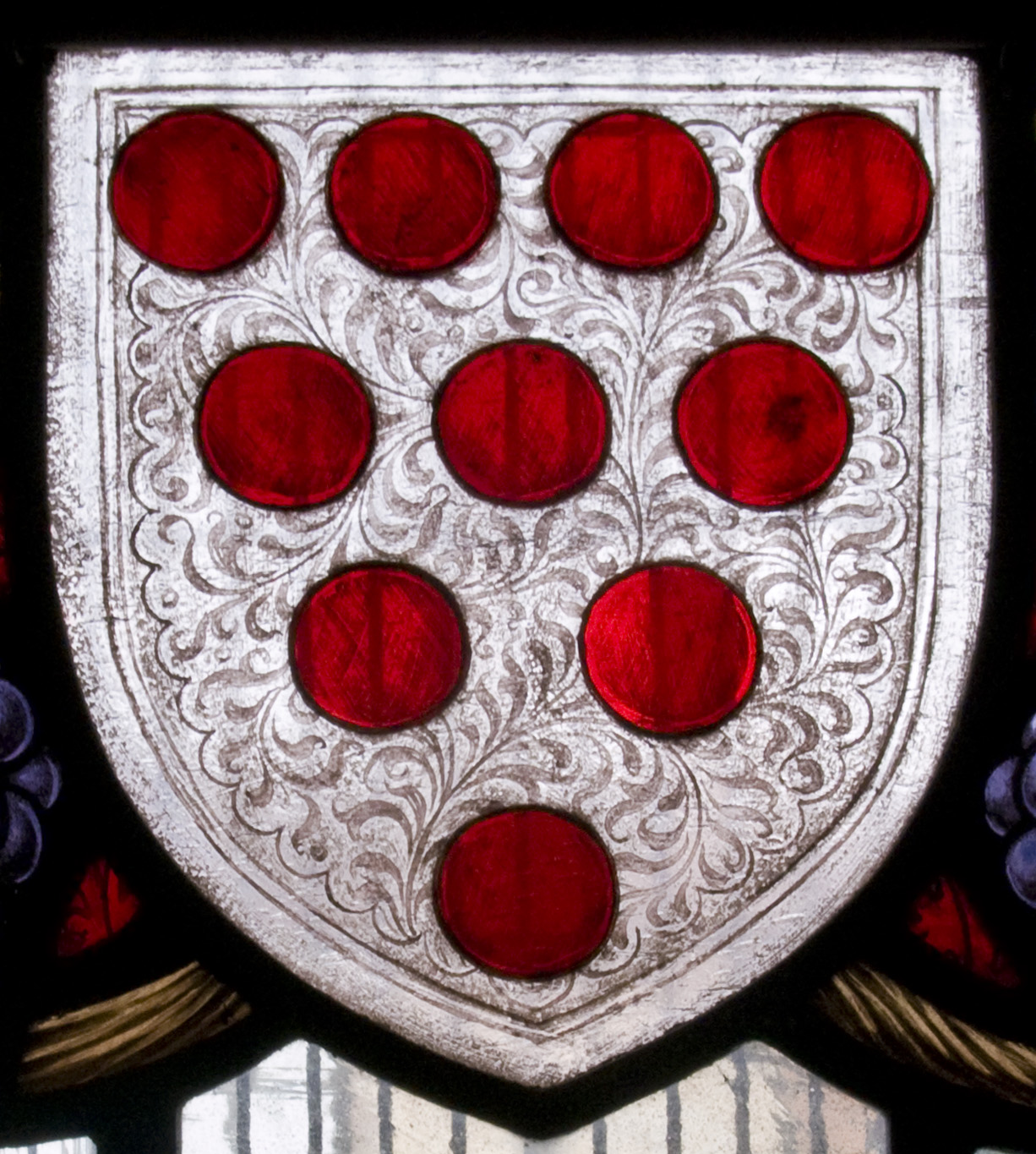
Diapering is a decorative technique involving a repeating geometric , typically composed of small diamonds, squares, or lozenges, used to ornament surfaces in textiles, , and . The term derives from the diapre (or diaspre), meaning a rich fabric with a woven of one color on a ground of another, ultimately from diasprum, referring to "white ground with interweaving threads of another tint," tracing back to Byzantine Greek diaspros ("interwoven with white"). Historically, emerged in medieval as a motif in luxury fabrics, evolving into architectural applications like or stone facades by the Gothic and periods, where it added texture and visual interest without structural change. In , it serves as a field treatment or , denoting stylized repeats for variation. The pattern's versatility extends to modern design, appearing in wallpapers, ceramics, and digital graphics, though its prominence has waned with changing aesthetic preferences.

Definition and Origins

Definition

Diapering refers to a decorative technique that employs a stylized, repeating motif of interlocking geometric shapes, such as lozenges, squares, or trellises, to fill backgrounds in various media including art, textiles, and . This pattern, often known as diaperwork, creates a continuous ornamental where individual elements interlock seamlessly, forming a cohesive surface decoration without reliance on color contrasts. In , it typically involves repeating small motifs such as medallions, leaves, or spearheads applied to fields for visual enhancement, distinct from structural partitions like lozengy, while in and manuscript illumination, it adorns stone surfaces or backgrounds with small, adjacent geometric motifs. Key characteristics of diapering include its neutrality and , allowing the to adapt to different sizes and contexts while maintaining visual uniformity through strict and repetition. These motifs are frequently rendered in or with subtle to imply texture rather than vivid coloration, emphasizing the geometric over chromatic variety. The technique prioritizes repetition to achieve a balanced, allover effect, making it suitable for background filling in diverse applications from woven fabrics to painted surfaces. Although sharing linguistic origins with the modern term for an infant's absorbent garment—derived from medieval references to patterned linen cloths used for wrapping—the decorative sense of diapering pertains exclusively to ornamental patterns and bears no relation to child care products. This etymological overlap stems from Old French diapre, denoting white or patterned , but the artistic technique evolved independently as a method of surface embellishment.

Etymology

The term "diaper" in the context of decorative patterns originates from the Old French "diaspre" or "diapre," denoting an ornamental cloth woven with repeating geometric motifs, often in white with gold or silver threads forming shapes. This form derives from "diasprum," likely borrowed from Byzantine Greek "diaspros," meaning "pure white" or "white interspersed with other colors," reflecting the fabric's characteristic appearance of translucent, white interspersed with metallic patterns. The word entered around 1330, initially referring specifically to this luxurious fabric type, as evidenced in early texts like Sir Degaré. By the 14th and 15th centuries, the term underwent a semantic shift from denoting the literal fabric—known as "diaper cloth"—to describing the abstract technique of applying any repeated ornamental design, such as lozenges or fleurs-de-lis, across surfaces. This evolution aligned with its adoption in , where the pattern's repetitive nature provided subtle texture without overpowering primary motifs. The first documented heraldic uses of diapering appear in the mid-12th century in European seals and enamels, such as on the circa 1150 seal of and the 1151 enamel plaque of Geoffrey d’Anjou, where it served as a background embellishment following earlier lozengy designs. Early examples include the circa 1150 seal of featuring alternate diapering and the 1151 enamel plaque above Geoffrey d’Anjou’s tomb at . Linguistic variants across European languages highlight related traditions; for instance, the German "Damast" refers to fabrics with similar reversible, woven patterns originating from , though specifically emphasizes small-scale geometric repeats rather than floral motifs. Over time, the term diverged in English usage: by the , "" began to denote squares of the patterned cloth repurposed as undergarments or napkins, eventually leading to its modern association with absorbent products by the late 1500s.

Historical Development

Early Uses

The diaper pattern, consisting of small, repeated geometrical motifs arranged adjacent to one another, first appeared in European art as early as the eleventh century, primarily serving as a decorative background in illuminated manuscripts and architectural elements. In medieval contexts, it emerged prominently during the twelfth and thirteenth centuries, coinciding with the rise of Gothic styles, where it was employed to fill empty spaces in illuminations and enhance visual texture without overwhelming primary figures or narratives. This repetitive design denoted luxury through its intricate execution, often using contrasting colors or materials to create a sense of opulence in religious and secular works. In manuscripts, diapering functioned as an efficient way to cover large areas, providing a neutral yet ornate backdrop for historiated initials, miniatures, and text, and was particularly noted in Gothic illuminations from northern and . For instance, early examples appear in twelfth- and early thirteenth-century decorations, where carved or painted patterns imitated motifs to add depth and rhythm to wall surfaces in ecclesiastical settings. Architecturally, the pattern was incised or sculpted into stone, as seen in the thirteenth-century in , where it adorned surfaces to evoke continuity and refinement in Gothic vaulting and . Key artifacts from this period highlight diapering's role in conserving artistic resources while amplifying symbolic depth; in illuminations on , it allowed scribes and artists to apply pigments sparingly over repeated motifs, often incorporating for a shimmering effect that suggested divine radiance. Early Gothic decorations, such as the carved pattern with imitation in the background of the relief figures in the sculpted frontal from Komnes, (c. 1230-1250), utilized diapered motifs to unify compositions and add depth mirroring ordered . These initial applications laid the groundwork for diapering's expansion, bridging practical decoration with aesthetic elevation in medieval .

Evolution Through Periods

During the in the 15th and 16th centuries, diapering expanded notably in Italian frescoes and prints, where artists incorporated the motif as a background element to enhance compositional depth and texture. For instance, in Botticelli's works, backgrounds were often incised with diagonal lines forming diaper patterns, punched with starry motifs to create a shimmering effect. This adoption was heavily influenced by Islamic geometric motifs, transmitted through trade routes from the and earlier sources, which introduced intricate interlocking designs of lozenges and diamonds into European decorative vocabulary. These evolutions built on early medieval foundations of simple repeating geometries but emphasized greater complexity and integration with figural scenes, reflecting the period's interest in perspective and ornamentation. In the Baroque and Rococo periods of the 17th and 18th centuries, diapering shifted toward more ornate and asymmetrical forms, adapting to the era's dramatic and playful aesthetics in European palace interiors. Designers employed freer, scrolling diaper patterns carved into frames and panels, often combined with shell motifs and rosettes to suggest illusionistic depth and movement. At Versailles, such motifs appeared in gilded stucco and frame decorations, contributing to the opulent, layered visual effects that symbolized royal grandeur. This transition from symmetrical Renaissance grids to asymmetrical, organic integrations aligned with Baroque emphasis on dynamism and Rococo's whimsical asymmetry, influencing widespread use in furniture and architectural embellishments across France and beyond. The 19th and 20th centuries marked a decline in elaborate diapering due to industrialization, which simplified patterns for efficient in textiles and wallpapers, prioritizing uniformity over artisanal intricacy. However, the , emerging around 1860 in Britain, revived handcrafted diaper designs as a reaction against mechanized output, promoting medieval-inspired geometries for moral and aesthetic reform. William Morris's "Diaper" pattern of 1870, featuring repeating leaf scrolls and flowers in a lattice framework, exemplified this revival, influencing modern through its emphasis on natural forms and quality craftsmanship.

Applications in Art and Architecture

In Visual Arts

In from the medieval period through the , diapering served as a subtle background technique in paintings and drawings, where artists used fine incised lines, , or to form repeating geometric motifs like intersecting diagonals creating diamonds or squares, thereby adding spatial depth and texture without overpowering the primary colors or figures. This method was particularly effective in panels and early oil works, as it allowed light to play across the surface, simulating the sheen of luxurious fabrics or architectural elements. For instance, incorporated diaper patterns in the gold backgrounds of works such as Saint Francis of Assisi with Angels (c. 1480), incising the leaf with a sharp tool to produce a diamond lattice that enhanced the composition's luminous, otherworldly atmosphere. In medieval illuminated manuscripts, diaper patterns held symbolic significance, often depicting heavenly vaults to convey divine realms or mimicking the embroidered brocades of ecclesiastical robes to signify opulence and sanctity. These motifs, derived from the French diapré meaning "variegated," filled backgrounds with repeated geometric forms in contrasting colors or gold, creating a sense of infinite space or patterned luxury. These patterns align with International Gothic conventions that prioritized decorative elaboration. Variations in diapering included monochrome executions, typically in gold or single tones for understated elegance in manuscript margins or drawing sketches, contrasted with tinted versions using red, blue, or green infills to heighten vibrancy in panel paintings. By the , these patterns evolved into abstracted forms in , serving as textured overlays in prints and posters to mimic material surfaces without literal representation, as seen in the geometric repetitions influenced by historical ornament in European movements.

In Architectural Decoration

In architectural decoration, diapering refers to a repetitive geometric or floral pattern applied to building surfaces, typically consisting of squares, lozenges, or intersecting motifs on a grid, often incorporating stylized foliage or simple figures to enhance ornamental texture. This technique, carved into stone or painted onto walls and vaults, was particularly prominent in during the 13th and 14th centuries, where it mimicked the intricate weave of fabric while adding depth and visual rhythm to structural elements like and spandrels. A notable example appears in the 14th-century pulpitum (choir screen) at in , where carved diaper patterns of lozenges filled with floral motifs adorn the stone surface, creating a sense of continuity across the architectural plane. In , diapering manifested in decorative elements such as those at the Palace in , , dating to the 13th and 14th centuries. A notable example is the 13th-century Moorish arabesque in the Hall of the Ambassadors, featuring interlaced strips and floral infills in plaster relief () on the walls, providing durable ornamental enhancement while maintaining intricate visual harmony. During the and subsequent Tudor periods in (late 15th to 16th centuries), diapering adapted to larger scales on facades, employing for bold, rhythmic repetitions that contrasted with finer interior applications. Over-fired dark bricks arranged in or square patterns against multicolored backgrounds created expansive decorative fields on exterior walls, as seen in Tudor manor houses, emphasizing status and structural unity. In contrast, interior uses featured smaller, painted panels on ceilings and vaults, such as those in Gothic-derived church interiors, where subtle motifs provided intimate ornamental detail without overwhelming the space.

Textiles and Patterning

Diaper Motifs in Fabrics

Diaper motifs in textiles refer to repeating geometric patterns, typically small-scale and all-over, woven or printed to create a decorative surface. Common types include the lozenge diaper, characterized by diamond-shaped units formed by intersecting lines, and the , a meandering key-like pattern of interlocking bands. These motifs were prominently woven into linens and silks during 14th-century , particularly in Italian centers like and , where skilled weavers produced high-quality fabrics for vestments, tablecloths, and elite garments. The aesthetic appeal of diaper motifs derives from their ability to produce subtle visual effects through weave structure, enhancing the fabric's texture and light reflection. In diapers, a self-patterned technique contrasts and bindings, with yarns alternating to create reversible designs where the pattern shifts between sides, yielding a lustrous sheen on one face and a matte ground on the other. This reversible quality, evident in Flemish tablecloths from the onward, allowed for versatile use in household linens while emphasizing the fabric's durability and elegance. Cultural variations in diaper motifs appear in Asian textiles, incorporating local and resist techniques. In , during the (1603–1868), fabrics featured tied-resist geometric patterns akin to diapers, with blurred edges from pre-dyed warp threads forming repeating motifs like diamonds and lattices, often in on for everyday garments and furnishings. These designs reflected sumptuary influences and regional traditions, emerging prominently from the late 18th century in areas like and .

Production Methods

The production of diaper patterns in textiles traditionally relied on handloom weaving techniques dating back to the medieval period. Artisans used upright or horizontal handlooms equipped with shuttles to pass the weft thread over and under warp threads, creating geometric repeats such as lozenge twills or goose-eye patterns characteristic of designs. These methods involved manual lifting of shafts to interlock threads in precise sequences, often requiring multiple shafts (four or more) for complex interlocking motifs that formed the repeating or square-based structures. By the early , the invention of the Jacquard loom revolutionized this process, enabling more precise and efficient production of diaper patterns. Patented in 1804 by Joseph-Marie Jacquard, the loom used punched cards to automate the raising and lowering of individual warp threads, allowing for intricate interlocking of threads to produce repeatable geometric designs without manual intervention. This mechanism built directly on earlier handloom practices but scaled up production, with thousands of such looms in operation across by the 1830s, facilitating the mass creation of weaves in linens and cottons. In parallel, printing techniques emerged as an alternative to for applying patterns, particularly on cotton fabrics. Block , prominent in 18th-century , involved carving wooden blocks with raised geometric motifs—such as allover designs—and stamping them onto resist-dyed cloth using natural pigments, a method centered in regions like and . This labor-intensive approach produced vibrant, repeating patterns for garments and exports, with one handling multiple blocks to layer colors and achieve the effect. Evolving into industrial scales, roller patented in 1783 by Thomas Bell in became dominant in the , using engraved cylinders to continuously apply patterns to fabric as it passed through the , enabling of geometric motifs at speeds equivalent to twenty block printers. By the mid-19th century, multi-color roller systems could handle up to eight hues simultaneously, making patterns affordable for widespread use in European textiles. Post-2000 advancements in digital methods have further transformed diaper pattern production, leveraging (CAD) software for scalable, customized outputs. Designers use tools like or specialized textile CAD systems to create and simulate geometric repeats, which are then directly printed via inkjet onto fabrics without physical looms or screens. This eliminates traditional setup times, allowing for and on-demand scalability, with printers like the Artistri series enabling high-resolution application of diaper motifs on diverse materials such as and . By 2005, accounted for over 44 million square meters of output annually, growing at 13% per year due to its flexibility for custom geometric designs. As of 2024, global digital printing exceeded 3.2 billion square meters annually.

Heraldic Uses

Integration in Blazons

In heraldic blazons, diapering is denoted by terms such as "diapered" to indicate a field adorned with a repeated ornamental , often consisting of geometric or floral motifs that cover the entire surface without constituting formal charges. This terminology differentiates it from "semé," which specifically describes a field scattered with discrete, countable elements like stars or crosses. Such phrasing emerged to convey texture and visual interest in armorial descriptions, particularly in monochrome contexts like engravings, where patterns substitute for color to depict complexity without specifying tinctures. The integration of diapering in blazons gained standardization during 16th-century , as heralds sought efficient ways to describe elaborate fields amid the growing formalization of armorial records. Legh's The Accedence of Armory (1562) highlighted this by cautioning against confusing diapered patterns with structural ordinaries like fretty, reflecting practices endorsed by the , founded in 1484, to streamline depictions in official grants and rolls. This approach simplified the rendering of intricate designs, ensuring consistency in heraldic documentation while preserving artistic flexibility. Visually, diapering conventions involve filling the field with motifs such as a "diaper of fleurs-de-lis," where the pattern is executed in a subtle shade variation of the field's or through fine line work to imply depth and texture, avoiding any conflict with the . In black-and-white engravings, heavier or varied line weights enhance this effect, allowing the pattern to stand out without implying additional colors or altering the blazon's core elements.

Rules and Exceptions

In heraldic practice, diapering is typically excluded from formal blazons when a tincture is explicitly specified for the field or charge, as this ornamental could otherwise introduce visual or interpretive ambiguity in official grants and descriptions. This convention emerged prominently in 17th-century , where ordinances emphasized precise verbal descriptions to maintain clarity and prevent misinterpretation of arms during legal or noble attributions, ensuring that decorative elements did not alter the perceived structure of the achievement. Exceptions to this exclusion arise in depictions of "ancient" arms, where diapering or similar field treatments like paillé (a medallion pattern) were occasionally blazoned explicitly in medieval and early modern armorials to denote specific textile-inspired designs integral to the original grant. For instance, 13th- and 14th-century French rolls, such as the Bigot Roll, include such notations for shields like that of Wilhelm Schillinck von Bornheim, described as "Or a fess gules fretty argent," interpreted as a diapered variant rather than a true fretty ordinary. In artistic renderings outside strict blazoning, 19th-century permitted the addition of diapers to for enhanced texture and visual depth, particularly in engraved or painted representations, without incorporating them into the formal description, as outlined in contemporary treatises on Scots armorial law. Modern guidelines exhibit international variations, with organizations like the U.S.-based Society for Creative Anachronism (SCA), established in 1966, explicitly allowing creative diapering in armory submissions since the 1970s as an unblazoned artistic flourish, provided it remains tone-on-tone and does not compromise identifiability or conflict with registered elements. SCA precedents confirm that patterns such as the Doric meander qualify as diapering when rendered in a lighter or darker shade of the same tincture, distinguishing them from charges and permitting flexibility in scrollwork and illuminations while adhering to core heraldic principles.

Examples and Modern Interpretations

Historical Examples

One notable medieval example of diapering appears in the 14th-century (, Add. MS 42130), where backgrounds feature intricate trellis patterns rendered in gold and blue, enhancing the manuscript's illuminated miniatures and to create a sense of depth and luxury. These diapered elements, often consisting of diamond-shaped motifs with inscribed crosses, fill the fields behind scenes of daily life, such as feasts and labors, underscoring the patron Sir Geoffrey Luttrell's status.

Contemporary Applications

In contemporary design, diaper patterns have been revived through digital tools for creating scalable, repeating motifs suitable for web backgrounds and branding. Graphic software such as , which introduced advanced pattern-making features in the , enables designers to generate geometric diaper patterns by defining artwork as swatches and applying them seamlessly to fills or strokes. This functionality supports minimalist , where simple interlocking forms like rhomboids or lattices provide subtle texture without overwhelming visual elements, often used in modern logos and digital interfaces. In interior decoration and fashion, 21st-century applications emphasize sustainable materials and custom production. Platforms like Spoonflower offer over 900 user-generated -pattern designs printed on eco-friendly fabrics using water-based inks, suitable for , curtains, and apparel. These prints incorporate geometric motifs in contemporary color palettes, such as soft pastels or neutrals, for wallpapers and textiles that blend historical elegance with modern , appealing to eco-conscious consumers in home decor and garment design. Similarly, companies like Adelphi Paper Hangings reproduce wallpapers for current installations, preserving the latticed structure while adapting colors for today's interiors. Cultural revivals extend diaper patterns into architectural and simulated environments. In recent restorations, such as the 2024 refurbishment of the Chapel at in , artisans applied monochrome diaper patterns over sienna walls in the sanctuary and gilded versions in the to enhance spatial and complement liturgical elements like the . In digital media, techniques in engines like Unity facilitate the creation of diaper-like geometric textures for architectural simulations, allowing dynamic, scalable patterns that mimic traditional motifs in immersive 3D spaces. This approach revives the pattern's utility in contemporary virtual design, bridging historical ornamentation with interactive technology.

References

  1. https://en.wikisource.org/wiki/Page:The_Grammar_of_Heraldry%2C_Cussans%2C_1866.djvu/40
Add your contribution
Related Hubs
User Avatar
No comments yet.