Hubbry Logo
search
logo
2246468

Edsel Ford

logo
Community Hub0 Subscribers
Read side by side
from Wikipedia

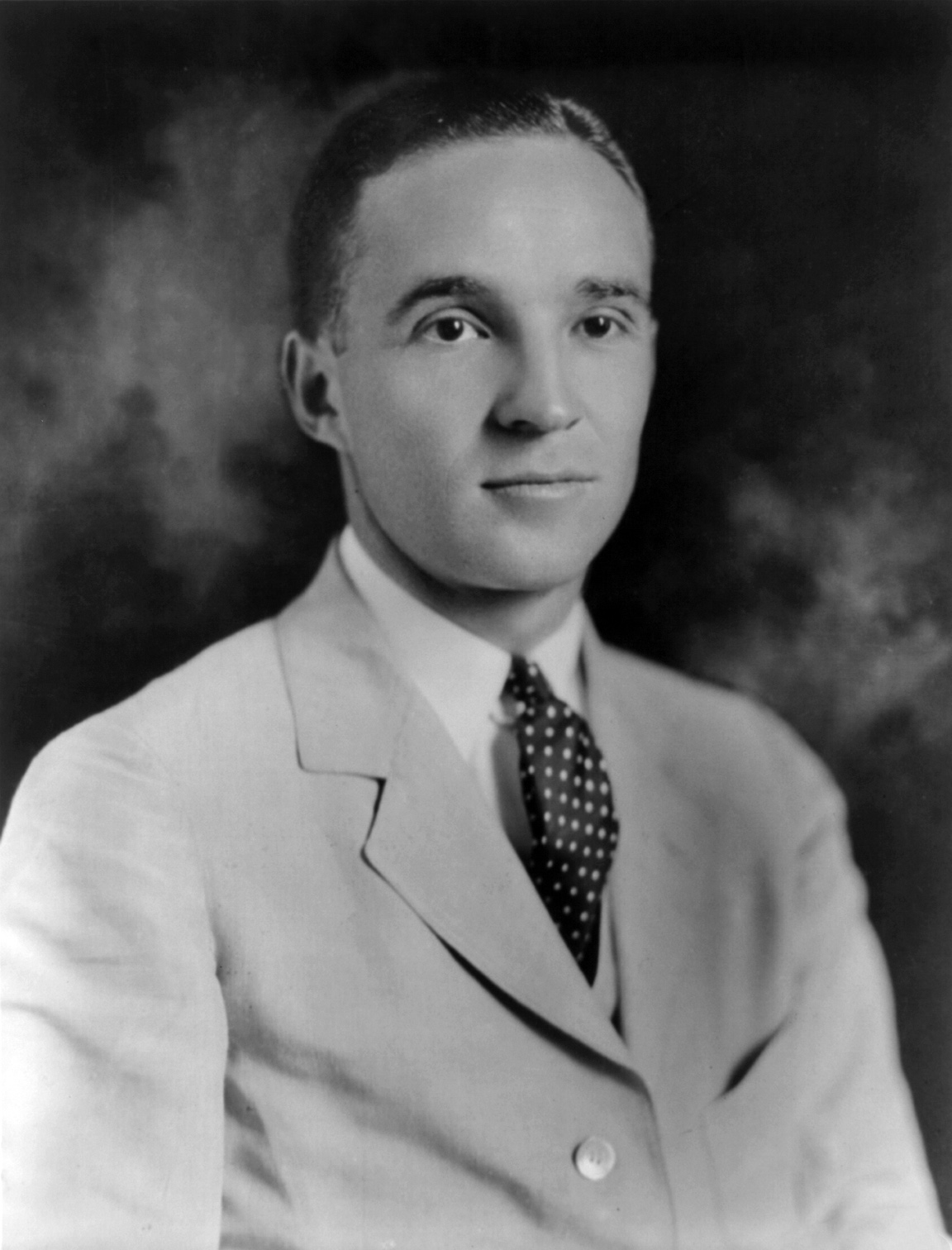
Edsel Bryant Ford (November 6, 1893 – May 26, 1943) was an American business executive and philanthropist, who was the only child of pioneering industrialist Henry Ford and his wife, Clara Jane Bryant Ford. He was the president of the Ford Motor Company from 1919 until his death in 1943.

Key Information

He worked closely with his father, as sole heir to the business, but was keen to develop cars more exciting than the Model T ("Tin Lizzie"), in line with his personal tastes. Even as president, he had trouble persuading his father to allow any departure from this formula. Only a change in market conditions enabled him to develop the more fashionable Model A in 1927. Edsel also founded the Mercury division and was responsible for the Lincoln-Zephyr and Lincoln Continental. He introduced important features, such as hydraulic brakes, and greatly strengthened the company's overseas production.

Ford was a major art benefactor in Detroit and also financed Admiral Richard Byrd's polar explorations. He died of stomach cancer aged 49. Henry Ford temporarily reassumed the presidency of Ford Motor Company on Edsel's death, then Edsel's eldest son, Henry Ford II, succeeded Henry as president of the company in 1945.

He was also a member of the board of directors of American IG, the American subsidiary of the German chemical conglomerate IG Farben.

Life and career

[edit]
Share of the Swedish Ford subsidiary, issued 1929, signed by Edsel B. Ford
Edsel Ford's Model 40 Special Speedster

Edsel Ford was born in November 1893 in Detroit. He was the only child of Clara and Henry Ford, and was named after Edsel Ruddiman, one of Henry Ford's closest childhood friends.

He was groomed to take over the family automobile business, and grew up tinkering on cars with his father. He became secretary of Ford in 1915, and married Eleanor Lowthian Clay (1896–1976), the niece of department store owner J. L. Hudson, on November 1, 1916.[2][3] Together, they had four children: Henry Ford II (1917–1987), Benson Ford (1919–1978), Josephine Clay Ford (1923–2005),[4][5] and William Clay Ford (1925–2014).[6][7] They made their home at 2171 Iroquois Street, in the Indian Village neighborhood of Detroit.[8]

Ford went to the Hotchkiss School, in Lakeville, Connecticut, and the Detroit University School. His family donated to both institutions. The school library at Hotchkiss is named the Edsel Ford Memorial Library.[9]

The younger Ford showed more interest than his father in flashier styling for automobiles. He indulged this proclivity in part with the purchase of the Lincoln Motor Company in 1922. His affinity for sports cars was demonstrated in his personal vehicles: Edsel bought the first MG motorcar imported to the US. In 1932, he had an aluminum, boat-tailed speedster automobile custom-designed by Ford's first designer, E. T. (Bob) Gregorie and featuring Ford's brand-new V8, the first low-cost, eight-cylinder engine. This car was sold at an auction during the Amelia Island Concours d'Elegance in 2016.[10]

After becoming the president of Ford, he advocated for the introduction of a more modern automobile to replace the Model T, but was repeatedly overruled by his father. Dwindling market share finally made the introduction of a new model inevitable: the Model A.

During the design of the Model A in 1927, Henry Ford assured mechanical quality and reliability, allowing his son to develop the body, with the help of designer József Galamb. Edsel also prevailed upon his father to allow the inclusion of four-wheel mechanical brakes and a sliding-gear transmission on this model. The resulting Model A was a commercial success, selling almost five million during four years of production.

As president, Edsel often disagreed with his father on major decisions and was occasionally humiliated in public by his father.[11] The relationship between the father and son was close, but fraught with unhealthy aspects.[12] Edsel managed to introduce many lasting changes. He founded and named the Mercury division. He was responsible for the Lincoln-Zephyr and Continental. He significantly strengthened Ford Motors' overseas production, and modernized the company's cars, such as by introducing hydraulic brakes.

World War II

[edit]

As an early and enthusiastic advocate for aviation, Edsel insisted that the Ford company should develop airplanes, over the initial objections of his father, who could not envision commercial applications for planes. After having huge success as the US Post Office's airmail carrier, Edsel's foresight was rewarded. Because of his vision in this area, the company was able to respond to the critical need for airplanes during World War II.[13]

Willow Run

[edit]
B-24 bombers under construction at Willow Run

The Ford Motor Company played a key role in the arming of the US "Arsenal of Democracy". With Edsel leading the company, he set the goal of producing one bomber per hour at Ford's expansive Willow Run manufacturing complex, where the B-24 was produced.[14] It was said that the stress of this job caused Edsel to become mortally ill.

Nazi collaboration

[edit]

According to Max Wallace in The American Axis: Ford, Lindbergh, and the Rise of the Third Reich,[15] letters between Edsel and Maurice Dollfus, the head of Ford SAF, sent in 1942 indicate that Ford knew and approved of their French subsidiary's manufacturing efforts on behalf of the German military. Edsel was also present at a celebratory dinner at the Manhattan Waldorf Astoria organized by Gerhard Alois Westrick after the Fall of France. Other attendees included Sosthenes Behn of ITT, Torkild Rieber of Texaco, James D. Mooney of General Motors, and Philip Dakin Wagoner of the Underwood Typewriter Company.[16][17]

Death and legacy

[edit]

Ford developed metastatic stomach cancer and undulant fever.[18] Surgery for the cancer was unsuccessful due to the metastasis, and he died in 1943 at Gaukler Point, in his lakeside home in Grosse Pointe Shores, at the age of 49 from stomach cancer.[19][20][21] All of his nonvoting stock was donated through a codicil in his will to the Ford Foundation, which he had founded with his father seven years earlier. He is buried at Woodlawn Cemetery in Detroit.

Each of Ford's children inherited sizable shares in the Ford Motor Company, and the three sons all worked in the family business. On Edsel's death, his father briefly reassumed the presidency of Ford; then Edsel's son, Henry Ford II, became president of the company on September 21, 1945.[22]

Ford was one of the most significant art benefactors in Detroit history. As president of the Detroit Arts Commission, he commissioned the famous Diego Rivera Detroit Industry Murals in the Detroit Institute of Arts (DIA).[23] He was an early collector of African art and his contributions became part of the core of the original DIA African art collection. After his death, his family continued to make significant contributions.

He helped finance exploratory expeditions, including the historic flight of Admiral Richard Byrd over the North Pole in 1926. Byrd, in his Antarctic expeditions, also financed by Edsel, named the Edsel Ford Range of mountains after him. Other Antarctic homages include Ford Massif, Ford Nunataks, and Ford Peak.

Interstate 94 in the Detroit Metropolitan Area is named the Edsel Ford Freeway.

In September 1957, Ford Motor Company unveiled a new division of cars called Edsel. The Edsel division included the Citation, Corsair, Pacer, Ranger, Bermuda, Villager, and Roundup models. The Edsel division is remembered as a significant commercial failure. The cars sold moderately well in their first year, but the Edsel division was discontinued soon after the 1960 models were introduced.

Edsel and Eleanor Ford House

[edit]
Edsel and Eleanor Ford, 1924

In September 1928 the Ford family moved into Gaukler Point, their new home designed by Albert Kahn, on the shores of Lake St. Clair in Grosse Pointe Shores, Michigan. The estate's landscape and gardens were designed by landscape architect Jens Jensen with his traditional long view, giving visitors a glimpse of the residence down the long meadow before revealing the entire house at drive's end.[24]

He also designed the gardens for Edsel and Eleanor's summer estate Skylands in Seal Harbor on Mount Desert Island in Maine.[24][25] Jensen designed work for their other Michigan residence, Haven Hill, between 1922 and 1935.[24] Haven Hill, now within the Highland Recreation Area near White Lake Township in southeastern Michigan, is designated as both a Michigan State Historical Landmark and State Natural Preserve. Jensen's landscape elements, with the diversity of tree, plant, and animal life, combine aesthetics, history, and nature.[26][27]

Ford died at Gaukler Point in 1943. His wife Eleanor continued living there until her death in 1976. It was her wish that the property be used for "the benefit of the public." The Edsel and Eleanor Ford House is now open to the public.[28] Located on 87 acres (35.2 ha), the house has an excellent collection of the Fords' original antiques and art, and the historical landscape grounds on the lakefront. The museum currently hosts tours, classes, lectures, and special events. The property is listed on the National Register of Historic Places.[29]

See also

[edit]

References

[edit]

Further reading

[edit]
[edit]
Revisions and contributorsEdit on WikipediaRead on Wikipedia
from Grokipedia
Edsel Bryant Ford (November 6, 1893 – May 26, 1943) was an American automotive executive and the only child of Henry Ford, founder of the Ford Motor Company.[1][2] He served as president of Ford Motor Company from 1919 until his death from stomach cancer at age 49, during which time he focused on modernizing vehicle designs amid tensions with his father's conservative engineering preferences.[3][4][5] Ford championed aesthetic innovations, including the 1922 acquisition of Lincoln Motor Company and the development of streamlined models like the Lincoln Zephyr, which integrated art into mass production automobiles.[6][7] In World War II, he directed the construction of the Willow Run plant, which applied assembly-line techniques to produce over 8,600 B-24 Liberator bombers, significantly aiding Allied air power despite initial production challenges.[8][9]

Early Life and Education

Birth and Family Background

Edsel Bryant Ford was born on November 6, 1893, in Detroit, Michigan.[4][1] He was the only child of Henry Ford and Clara Jane Bryant Ford.[4][10] Edsel's full name honored Edsel Ruddiman, a schoolmate and close childhood friend of his father from Greenfield, Michigan.[11][12] Henry Ford, born July 30, 1863, in Greenfield Township, Wayne County, Michigan, was the eldest of six children to William Ford, an Irish immigrant from County Cork who arrived in America in 1847, and Mary Litogot, of Scottish descent.[13][14] By 1893, Henry had begun experimenting with internal combustion engines, including his first two-cycle model around the time of Edsel's birth, laying groundwork for his later automotive innovations.[10] Clara Bryant Ford, born April 11, 1866, in Wayne County to farmer Melvin S. Bryant and Martha Bench, grew up in a rural Michigan family and married Henry on her 22nd birthday in 1888 at her parents' home in Greenfield Township.[15][16] The couple's early residence in Detroit reflected Henry's burgeoning mechanical pursuits, with Edsel's arrival coinciding with the family's move to 58 Bagley Street, site of Henry's prototype workshop.[4] As the sole heir to the Ford lineage, Edsel entered a household shaped by his parents' complementary roles: Henry's relentless drive toward industrialization and Clara's supportive domestic influence amid financial uncertainties from early business ventures.[13][2] This environment positioned him from infancy within the emerging automotive industry his father would dominate.[10]

Childhood and Influences

Edsel Bryant Ford was born on November 6, 1893, in Detroit, Michigan, as the only child of Henry Ford, the founder of Ford Motor Company, and Clara Bryant Ford.[5][4] The family resided at 58 Bagley Avenue shortly after his birth, where Henry tested the first Ford engine in their kitchen when Edsel was just six weeks old.[5][4] This early environment immersed him in his father's experimental work with internal combustion engines and prototypes, fostering a foundational familiarity with mechanical innovation.[5] From toddlerhood, Edsel engaged directly with automobiles, riding in his father's Quadricycle around age 2½ in 1896 and independently driving by age 12.[5][1] He frequently worked alongside Henry in garages and factories, absorbing practical knowledge of vehicle assembly and operation, which shaped his lifelong affinity for the industry.[1] By 1903, at age 10, Edsel began sketching automobile designs, reflecting an early interest in aesthetics over pure mechanics.[5] Edsel's influences were predominantly paternal, with Henry's emphasis on functionality and mass production instilling a strong work ethic and engineering mindset, though Edsel diverged toward stylistic elements like comfort and beauty in his own concepts, such as a proposed Model T torpedo runabout by age 12.[5][1] His family recognized innate artistic talents, with Henry describing him as "the artist in our family," evident in youthful drawings that foreshadowed his later focus on vehicle design.[17] Clara's supportive presence provided domestic stability amid Henry's demanding pursuits, though her direct influence on his interests remains less documented.[5]

Formal Education and Early Interests

Edsel Ford received his formal education primarily at the Detroit University School, an all-boys preparatory institution in Detroit, Michigan, where he studied drafting and engineering alongside general academics.[4] He also attended the Hotchkiss School, a boarding preparatory school in Lakeville, Connecticut, before returning to complete his studies in Detroit.[18] At Detroit University School, Ford served as assistant editor of the yearbook and competed as a sprinter on the school's six-man track team, graduating in June 1912 at age 18.[1] Rather than pursuing higher education at a university, he opted to enter the family business directly, reflecting his practical orientation toward automotive manufacturing.[5] From an early age, Ford displayed a keen interest in automobiles, influenced by his father's pioneering work; he rode in Henry Ford's experimental Quadricycle as a toddler and was driving independently by age 12.[1] His first known automobile design sketches date to 1903, when he was nine years old, demonstrating an innate focus on vehicle styling and mechanics rather than mere mechanical assembly.[5] Ford also nurtured artistic talents, including drawing and painting, which his father later described as marking him as "the artist in the family," foreshadowing his later influence on Ford Motor Company's aesthetic innovations.[17] These pursuits, combined with early exposure to the industry's evolution, shaped his preferences away from traditional academia toward hands-on experimentation in design and engineering.[4]

Entry and Rise at Ford Motor Company

Initial Involvement and Training

Edsel Ford's early exposure to Ford Motor Company operations occurred during his school years at the Detroit University School, where he regularly visited the Highland Park assembly plant after classes to assist in the main office and mailroom, performing tasks such as carrying mail and handling clerical duties.[5][19] These informal activities provided him with initial insights into automobile manufacturing processes and the company's daily functions.[19] In 1912, following his graduation from Detroit University School, Edsel formally entered the company as an apprentice, opting against college to pursue hands-on training in automobile production.[5] His apprenticeship emphasized practical learning across operational aspects, building on his prior office experience to foster a broad understanding of manufacturing and business mechanics.[5] This structured training culminated in early leadership roles, with Edsel elected as company secretary in 1915 and promoted to vice president in 1917, where he oversaw sales, purchasing, advertising, and routine business operations.[5] These positions reflected the effectiveness of his initial immersion, enabling him to contribute substantively to the firm's management from a young age.[5]

Key Early Contributions

Edsel Ford joined the Ford Motor Company in 1912 at age 19, shortly after graduating from the Detroit University School, where he began hands-on training in automobile manufacturing processes across various departments.[5] This apprenticeship allowed him to gain practical knowledge of production techniques, from assembly to quality control, reflecting his early interest in automotive engineering that dated back to childhood sketches of vehicles created as early as 1903.[5] By age 12, he owned a Model N runabout and experimented with modifications, demonstrating an innate dissatisfaction with the utilitarian aesthetics of early Ford models and a preference for refined styling.[20] In November 1915, Edsel was elected company secretary, a position that positioned him to oversee administrative operations and contribute to strategic planning amid the Model T's dominance.[5] This role marked his first formal executive involvement, where he advocated for improvements in vehicle comfort and appearance, influencing internal discussions on evolving consumer preferences beyond basic functionality.[5] By 1917, promoted to vice president while retaining his secretarial duties, he played a key part in the formation of Henry Ford & Son, Inc., the subsidiary tasked with developing the Fordson tractor.[21] [22] Edsel's contributions to the Fordson, launched in 1917, were instrumental in its design and production scalability; the lightweight, affordable tractor—priced at $400—rapidly mechanized farming, selling over 800,000 units by 1928 and reducing agricultural labor dependency through its 20-horsepower engine and simple transmission.[22] His involvement ensured the project's alignment with mass-production principles, adapting automotive assembly lines for agricultural machinery and aiding Allied efforts during World War I by boosting food production.[23] These efforts highlighted Edsel's ability to bridge his father's engineering focus with practical innovation, setting the stage for diversified Ford operations before his ascension to the presidency in 1919.[3]

Ascension to Presidency

On December 30, 1918, Henry Ford resigned as president of the Ford Motor Company, and Edsel Ford was appointed to succeed him effective January 1, 1919.[24] At 25 years old, Edsel had already demonstrated administrative capabilities within the company, including roles in sales and tractor divisions, positioning him as the natural heir to lead operations.[3] The transition occurred amid a strategic shift where Henry and Edsel Ford acquired all minority shareholders' stock, making the family the sole owners of the company by September 1919.[25] This buyout, valued at approximately $106 million paid in special dividends, eliminated external board influence and centralized control under the Fords.[26] Edsel's presidency thus formalized his executive authority while aligning with Henry Ford's vision for unencumbered family governance. Though Edsel held the titular presidency, Henry Ford retained de facto oversight as chairman and primary decision-maker on major policies, with Edsel focusing on day-to-day management and innovation initiatives.[3] This arrangement reflected Edsel's youth and Henry's enduring dominance, yet it enabled Edsel to implement changes in design and production without minority stockholder constraints.[25]

Executive Leadership and Innovations

Strategic Decisions and Design Influence

Edsel Ford exerted considerable influence over Ford Motor Company vehicle aesthetics, prioritizing elegant, artistic styling amid his father's emphasis on utilitarian engineering. As vice president of design starting in the early 1920s, he championed refined bodywork and streamlined forms, contributing to the 1927 Model A's departure from the boxy Model T with features like a more contoured radiator shell and curved fenders that appealed to buyers seeking modernity.[17] His 1930 updates to the Model A further incorporated deeper grilles and wider fenders, marking early adoption of iterative styling to sustain consumer interest against competitors like General Motors.[17][27] In strategic terms, Edsel advocated for diversification beyond mass-market Fords, influencing the 1922 acquisition of the Lincoln Motor Company for $8 million to enter luxury segments, where he directed designs blending mass-production efficiency with bespoke elegance, such as the 1936 Lincoln Zephyr's streamlined "aerodynamic" body that sold over 15,000 units in its debut year.[5][6] To address the price gap between Ford and Lincoln models, he spearheaded the creation of the Mercury division in 1938, launching 1939 models priced around $900–$1,300 to target upscale mid-market buyers with V8 engines and chrome-accented styling inspired by European influences, achieving initial sales of approximately 70,000 units.[28][29] These moves reflected his push for annual model refreshes and color options—contrasting Henry Ford's static approach—to counter GM's planned obsolescence tactics, though often thwarted by paternal interference.[27][19] Edsel's design ethos extended to custom projects like the 1934 Model 40 Special Speedster, a one-off prototype showcasing brass fittings and leather upholstery that foreshadowed production trends toward personalization.[6] Despite these innovations boosting Ford's market share to 40% by 1929, his strategies faced resistance, limiting broader implementation until post-war eras.[5]

Production Modernization Efforts

Edsel Ford, as president of Ford Motor Company from 1919 to 1943, advocated for updates to manufacturing processes amid growing competition from rivals like General Motors, which emphasized annual model changes and flexible production. Despite Henry Ford's preference for rigid efficiency tied to the Model T, Edsel supported the 1927 transition to the Model A, requiring extensive retooling of assembly lines across U.S. plants to accommodate new body styles, engines, and features; this shift involved redesigning tooling and training workers for higher-variety output, boosting production to over 1 million units by 1929.[25] A pivotal advancement under Edsel's leadership was the 1932 introduction of the flathead V8 engine, which demanded innovative single-block casting methods using sand molds to produce the complex aluminum-head design at scale; engineers developed specialized foundry techniques to cast the entire block in one piece, enabling mass production of 65-horsepower units that differentiated Ford vehicles and restored market share lost during the Model T era.[30] This engine's manufacturing breakthrough contrasted with competitors' multi-cylinder designs and highlighted Edsel's push for technical upgrades, though initial production challenges delayed full rollout until mid-1932.[31] Edsel also directed the integration of hydraulic brakes across Ford's lineup starting with the 1939 models, replacing mechanical systems and necessitating modifications to brake assembly lines, drum machining, and fluid system integration; this change improved safety and performance, aligning with consumer demands but requiring investment in new hydraulic component suppliers and worker retraining. Concurrently, he expanded and modernized overseas facilities, including upgrades to branch factories in Europe and Asia for localized assembly, which by the 1930s supported exports and reduced shipping costs through on-site stamping and welding operations.[21] These initiatives faced internal resistance from Henry Ford, who prioritized cost-cutting over flexibility, limiting broader adoption of multi-model assembly lines until wartime necessities; nonetheless, Edsel's efforts laid groundwork for post-war efficiencies by fostering incremental process improvements at the River Rouge complex, where new steel mill integrations enhanced vertical control over raw materials.[32]

Conflicts with Henry Ford

Edsel Ford's tenure as president of Ford Motor Company, beginning January 1, 1919, was marked by persistent tensions with his father, Henry Ford, who retained de facto control over major decisions despite nominally retiring.[33] Henry Ford's autocratic style clashed with Edsel's advocacy for professional management, product diversification, and adaptation to market changes, often leaving Edsel in a subordinate role despite his title.[34] These conflicts stemmed from Henry's resistance to organizational decentralization and his insistence on personal oversight, which undermined Edsel's efforts to implement modern administrative practices.[35] A primary area of discord involved product strategy, particularly the prolonged production of the Model T. As sales declined sharply from a peak of over 2 million units in 1923 to fewer than 500,000 by 1926 due to competition from more stylish Chevrolet models, Edsel urged replacement with updated designs to incorporate consumer preferences for aesthetics and features.[33] Henry Ford resisted these changes for years, prioritizing cost efficiency and his vision of the Model T as a universal, unchanging vehicle, which delayed innovation and eroded market share. The Model T finally ceased production on May 26, 1927, after 15 million units, with Edsel symbolically driving the last one off the line amid his father's evident reluctance.[33] Labor relations exacerbated the rift, especially regarding unionization. Edsel recognized the inevitability of organized labor following the 1935 Wagner Act and sought to negotiate with the United Auto Workers (UAW) to avoid confrontation, viewing it as essential for industrial stability.[36] Henry Ford, however, vehemently opposed unions, employing his Service Department to suppress organizing efforts, culminating in the violent Battle of the Overpass on May 26, 1937, where Ford security forces attacked UAW organizers at the River Rouge plant. This stance prolonged Ford's holdout status among Detroit automakers until a UAW strike forced recognition and the first contract on June 20, 1941.[36] During World War II preparations, disagreements intensified over military production commitments. Edsel championed the Willow Run plant's conversion to mass-produce Consolidated B-24 Liberator bombers, committing to government contracts despite engineering challenges and Henry's initial pacifist reservations and reluctance to collaborate with other firms.[8] Henry's isolationist leanings led him to initially decline aid to Britain and question large-scale war involvement, placing Edsel in direct opposition as he pursued the project, which ultimately produced over 8,600 bombers after overcoming delays.[8] These pressures, compounded by Henry's overriding authority, contributed to Edsel's deteriorating health, leading to his death on May 26, 1943.[8]

Philanthropy and Cultural Contributions

Support for the Arts

Edsel Ford was a prominent patron of the arts in Detroit, particularly through his longstanding support for the Detroit Institute of Arts (DIA), where he served on the Board of Trustees and as chairman of the Arts Commission.[4][5] He personally funded initiatives to sustain cultural institutions during economic hardship, including paying the salaries of DIA staff to keep the museum operational amid the Great Depression in the 1930s.[37] In 1932, Ford commissioned Mexican artist Diego Rivera to create the **Detroit Industry** murals, a series of 27 panels depicting industrial themes inspired by Ford's River Rouge Plant, for which he provided a $20,000 donation to cover costs and personally underwrote Rivera's fee of approximately $20,000 despite controversy over the artist's communist affiliations and inclusion of Lenin imagery.[38][39][2] Ford defended the project, appearing in one of the murals himself as a symbolic figure, and the work remains a centerpiece of the DIA's collection, viewed by millions.[38][40] Ford and his wife Eleanor amassed a significant personal art collection, donating works including African sculptures and pieces by European masters such as Vincent van Gogh, Pierre-Auguste Renoir, and Edgar Degas to the DIA.[4][41] He also contributed regularly to the Detroit Society of Arts and Crafts (predecessor to the College for Creative Studies), funding its programs and participating in painting classes, reflecting his own avocational interest in visual arts.[2] These efforts extended Ford's influence beyond automotive design into cultural preservation, positioning him as one of the DIA's most significant early benefactors alongside his family, with total Ford family donations to the institution later valued in the hundreds of millions.[40][2]

Architectural and Personal Legacy Projects

Edsel Ford commissioned the construction of his family estate, known as the Edsel and Eleanor Ford House, in Grosse Pointe Shores, Michigan, beginning in the mid-1920s to provide greater privacy and space for his wife Eleanor and their four children.[41][42] The project consolidated approximately 65 acres of land at Gaukler Pointe along Lake St. Clair, with the main residence designed in a neo-Tudor style by architect Albert Kahn, renowned for his industrial and residential works in Detroit.[43][44] The estate's landscape architecture, including gardens and site planning, was executed by Jens Jensen, a prominent Danish-American designer emphasizing native plantings and natural contours, resulting in one of the earliest abstract landscape designs in the United States.[45][44] Construction completed in 1928, when the Ford family relocated from Henry Ford's Fair Lane estate, and the 60-room mansion featured custom interiors blending English antiques, Asian art, and modern amenities reflective of Edsel's refined aesthetic tastes.[46][47] This project exemplified Edsel Ford's personal commitment to integrating art, architecture, and nature, serving as a private retreat that later became a public historic site preserving his family's legacy after Eleanor's death in 1976.[48][49] Beyond the residence, Edsel supported ancillary structures and grounds enhancements, such as power house and gatehouse designs by Kahn, underscoring his hands-on oversight in creating a cohesive estate ensemble.[50]

Broader Charitable Activities

Edsel Ford co-founded the Ford Foundation in 1936 with his father Henry Ford, providing an initial endowment of $25,000 to support scientific, educational, and charitable initiatives for public welfare.[51] The foundation, initially managed under family oversight in Michigan, distributed early grants to various organizations aligned with these objectives.[51] In healthcare, Ford contributed to the development and operations of Henry Ford Hospital in Detroit, founded in 1915, by supporting its expansion, innovative procedures, and emphasis on medical research and education during the 1920s and 1930s.[2] He made near-annual donations to the Frontier Nursing Service in Kentucky, including a used Ford station wagon in 1939 and a new one in 1941 to aid rural maternal care.[2] Ford also provided funding to organizations such as the American Red Cross, American Foundation for the Blind, The Seeing Eye (guide dog program), and National Foundation for Infantile Paralysis (polio research and aid).[2] Ford supported national parks through financial contributions, including a donation redirected to Shenandoah National Park in Virginia after initial plans for another site.[52] He served on the Isle Royale National Park Commission in Michigan, aiding land acquisition completed by 1931 and subsequent transfer to the National Park Service.[2] For scientific exploration, Ford pledged $20,000 in 1926 to fund Rear Admiral Richard E. Byrd's Arctic expedition, which included the first claimed flight over the North Pole, alongside matching contributions from other donors like John D. Rockefeller Jr.[53][54] He provided further backing for Byrd's Antarctic expeditions in the late 1920s and 1930s, enabling polar research and mapping efforts.[55]

World War II Involvement

Transition to War Production

Edsel Ford overcame significant internal opposition, particularly from his father Henry Ford's pacifist stance, to steer Ford Motor Company toward military production in support of the Allied cause. As early as December 1940, following President Roosevelt's call for increased defense manufacturing, Edsel pursued aviation-related contracts. In June 1941, he committed the company to producing 9,000 Rolls-Royce Merlin aircraft engines, though Henry later intervened to cancel the deal.[56] The Japanese attack on Pearl Harbor on December 7, 1941, accelerated the transition, with Edsel convincing Henry to repurpose Ford's facilities for wartime output. In 1941, Ford secured its first major military vehicle contract, initiating production of Jeeps for the U.S. Army. This marked the onset of diverting assembly lines from civilian automobiles to defense needs, including trucks, armored cars, and aircraft components.[57][56][8] Civilian automobile manufacturing ceased entirely on February 10, 1942, as mandated by government directives, allowing full retooling for war materials such as Pratt & Whitney aircraft engines and other military hardware. Edsel's leadership emphasized leveraging Ford's assembly-line expertise for high-volume output, promising government officials rates like one heavy bomber per hour to underscore the company's potential contribution. Despite production challenges and familial discord, these steps positioned Ford as a key Arsenal of Democracy supplier.[57][58][8]

Willow Run Assembly Plant

The Willow Run Assembly Plant, located near Ypsilanti, Michigan, was established by Ford Motor Company under Edsel Ford's presidency to mass-produce Consolidated B-24 Liberator heavy bombers for the Allied war effort during World War II. Groundbreaking occurred on April 18, 1941, following a U.S. government contract awarded to Ford earlier that year, with the facility designed to apply automotive assembly line techniques to aircraft manufacturing on an unprecedented scale.[59] The plant's construction transformed a 4.5 million square foot site into the world's largest factory under one roof, embodying Edsel Ford's commitment to rapid wartime production despite initial skepticism about adapting auto methods to complex aircraft.[9] Edsel Ford, as Ford's president, directed the redirection of company resources toward the project, concentrating significant personal energy on overcoming engineering and logistical hurdles to achieve high-volume output. Production of complete B-24 bombers began in 1942 after initial phases focused on subassemblies, with the plant eventually rolling out one aircraft per hour by mid-1944—a target Edsel had pledged that many experts deemed unattainable.[8] [60] This pace accounted for approximately half of all B-24s produced that year, contributing to Ford's total output of over 8,600 Liberators from Willow Run by the war's end in 1945.[9] [56] The plant's success validated Edsel Ford's vision for industrialized aircraft production, which reduced the B-24's unit cost from $238,000 in 1942 to $137,000 by 1944 through efficiencies in assembly line operations and workforce scaling to around 42,000 employees.[59] Willow Run's bombers played a critical role in strategic bombing campaigns, including support for D-Day operations, with the facility meeting Edsel's hourly production goal just one month after the June 1944 invasion.[56] Despite early delays due to tooling complexities and labor shortages, the plant exemplified causal links between managerial resolve, process innovation, and wartime industrial capacity, producing over 92 million pounds of aircraft material by June 28, 1945, when B-24 output ceased.[61]

International Operations and Pre-War Context

As president of Ford Motor Company from 1919 onward, Edsel Ford oversaw the acceleration of the firm's international manufacturing footprint, building on earlier assembly operations to establish full-scale production facilities abroad amid rising global automobile demand.[5] This expansion diversified revenue streams beyond the U.S. market, which faced saturation after the Model T's dominance, and positioned Ford to compete with European rivals on their home turf. Key initiatives included European plants designed for local adaptation of American mass-production techniques, such as moving assembly lines, to lower costs and meet tariff barriers.[62] In the United Kingdom, Ford broke ground on its Dagenham facility east of London on May 17, 1929, with Edsel Ford performing the ceremonial first dig into the marshland site acquired years earlier.[63] Production commenced on October 1, 1931, yielding the first Ford AA truck and Model A car, and rapidly scaling to become Europe's largest automotive plant, employing thousands and outputting tens of thousands of vehicles annually by the mid-1930s.[64] Concurrently, the Cologne plant in Germany initiated assembly of Model A vehicles on May 4, 1931, following Henry Ford's cornerstone-laying visit, enabling localized production to circumvent import duties and serve the continental market.[65] Edsel Ford directly influenced European strategy, approving investments like the later Poissy facility in France, which shifted operations toward greater autonomy for subsidiaries.[62] Pre-war context saw these operations navigate the Great Depression's fallout, with European subsidiaries adapting to economic volatility through cost efficiencies and model updates under Edsel's emphasis on sales and planning.[21] By the late 1930s, international plants contributed to Ford's global output, producing vehicles for civilian use amid political unrest, including autarkic policies in Germany that pressured foreign firms toward militarized production.[66] However, escalating tensions—such as Germany's rearmament and trade restrictions—strained supply chains and foreshadowed wartime disruptions, prompting U.S. headquarters to balance profitability with geopolitical risks while maintaining operational independence from Dearborn.[67] These efforts underscored Edsel's pragmatic focus on business viability, even as they laid groundwork for eventual reconfiguration toward Allied war needs.

Controversies and Criticisms

Labor Relations and Unionization

During Edsel Ford's presidency of Ford Motor Company from 1919 to 1943, the firm maintained a staunch opposition to unionization, employing aggressive tactics including a private security force known as the Service Department, led by Harry Bennett, which engaged in surveillance, intimidation, and violence against organizers.[36] This resistance persisted despite the 1935 Wagner Act, which legalized collective bargaining, leading to multiple National Labor Relations Board charges against Ford for unfair labor practices.[68] Edsel, while nominally in charge, operated under the dominant influence of his father Henry Ford, who viewed unions as antithetical to the company's paternalistic model of high wages—like the $5 day introduced in 1914—and direct worker relations.[69] A pivotal controversy erupted on May 26, 1937, in the "Battle of the Overpass" at the River Rouge Complex, where Ford Service Department personnel and Dearborn police assaulted United Auto Workers (UAW) organizers distributing leaflets on a pedestrian overpass, resulting in severe beatings of several union supporters, including women, and widespread media condemnation through iconic photographs.[70] Edsel Ford did not publicly intervene to halt the violence, which critics attributed to his deference to Henry's anti-union stance, though Edsel privately recognized the legal inevitability of unionization under the Wagner Act and urged his father toward accommodation.[36] The incident damaged Ford's public image and intensified UAW organizing efforts, but the company continued resisting, becoming the last of the Big Three automakers to recognize the union.[71] Unionization culminated in April 1941, when UAW-called strikes at key plants, including River Rouge, forced negotiations amid mounting production disruptions and impending war needs; Edsel Ford played a key role in facilitating talks, leading to the company's first contract with the UAW-CIO on June 20, 1941, covering approximately 130,000 workers and granting union demands on wages, hours, and grievance procedures without a strike at the bargaining table.[72][36] In a statement, Edsel emphasized solving problems from the workers' viewpoint, signaling a pragmatic shift driven by legal pressures and operational necessities rather than ideological endorsement.[72] Critics, however, faulted Edsel for years of inaction against Bennett's tactics, arguing his leadership failed to mitigate earlier labor strife despite his more conciliatory inclinations.[73] The eventual pact marked a turning point, but Ford's prior resistance highlighted tensions between managerial control and workers' rights in the auto industry.[71]

Family and Corporate Power Dynamics

Edsel Bryant Ford, born on November 6, 1893, in Detroit, Michigan, was the only child of Henry Ford and Clara Ala Bryant Ford.[5] He married Eleanor Rutherford Clay on November 1, 1916, with whom he had four children: Henry Ford II (born September 4, 1917), Benson Ford (born July 20, 1919), Josephine Clay Ford (born September 4, 1923), and William Clay Ford Sr. (born March 14, 1925).[5] The Ford family maintained close-knit ties, with Edsel's upbringing immersing him early in his father's automotive endeavors; at age 2½, he rode in the original Quadricycle, and by 1903, he began sketching car designs.[5] This familial environment fostered Edsel's technical aptitude but also exposed him to Henry Ford's authoritarian style, which emphasized self-reliance and viewed perceived weakness as a flaw requiring correction.[74] Edsel assumed the presidency of Ford Motor Company on January 1, 1919, at age 25, following Henry's resignation amid disputes with minority stockholders over international expansion plans.[5] In this role, Edsel managed sales, purchasing, advertising, and global outreach, contributing to the family's buyout of remaining shares by July 1919, which consolidated ownership and eliminated external checks on decision-making.[5] However, Henry's de facto dominance persisted; despite the title, he frequently countermanded Edsel's directives on product development and strategy, such as overruling preferences for diversified engine options in favor of his fixation on the flathead V8, introduced in 1932 after prolonged delays.[74] [75] This interference sidelined Edsel's efforts to modernize styling and features, like hydraulic brakes and safety glass on the Model A (launched 1927), reflecting a broader pattern where paternal control prioritized Henry's vision over operational efficiency.[76] [5] The power imbalance exacerbated tensions, with Henry viewing Edsel as insufficiently assertive, leading to public and internal humiliations that strained their relationship.[74] Edsel's advocacy for acquiring Lincoln Motor Company in 1922—yielding designs like the Continental—demonstrated his influence on luxury segments, yet Henry's reluctance and subsequent meddling limited broader autonomy.[5] Upon Edsel's death from stomach cancer on May 26, 1943, at age 49, Henry briefly reassumed the presidency, underscoring the elder Ford's enduring grip until his own resignation in 1945, when Henry Ford II took over.[5] [76] Chronic stress from these dynamics likely contributed to Edsel's health decline, as contemporaries noted the toll of navigating familial loyalty against corporate subordination.[74]

Alleged Ties to Nazi Germany

Edsel Ford, as president of Ford Motor Company from 1919 until his death in 1943, oversaw the expansion of the firm's international subsidiaries, including Ford-Werke A.G. in Cologne, Germany, established in 1925 to assemble vehicles from imported parts.[77] By the mid-1930s, under Nazi rearmament policies, Ford-Werke shifted production toward military trucks and engines, supplying the Wehrmacht with thousands of vehicles annually, such as the V3000 series, which comprised up to 30% of Germany's wartime truck fleet.[66] American executives, including Edsel Ford as a board member, received financial reports from the subsidiary until at least 1941, though direct control diminished after Germany's 1939 invasion of Poland, when Nazi authorities assumed operational oversight.[77] Allegations of Edsel Ford's personal complicity center on continued communications and financial benefits from European operations amid U.S. neutrality and wartime restrictions. Historian Max Wallace, in his 2003 book The American Axis, cites declassified documents showing Edsel exchanged letters post-Pearl Harbor (December 1941) with Maurice S. Dollfus, director of Ford's French subsidiary, commending production efforts that aligned with Axis demands and generated profits funneled back to Dearborn.[78] These ties, Wallace argues, exposed Edsel to a U.S. Treasury Department probe under the Trading with the Enemy Act, with a 1943 internal memo concluding "there is a basis for a case" for indictment; the investigation was reportedly shelved after Edsel's sudden death from stomach cancer on May 26, 1943, following an FBI directive from J. Edgar Hoover citing military priorities.[79] Critics, including Wallace, contend this reflects deliberate evasion of wartime asset freezes, as Ford-Werke employed up to 20,000 forced laborers, including concentration camp prisoners from Buchenwald, to sustain output of munitions components.[80] Counterarguments emphasize Edsel's limited influence over seized overseas plants and his domestic focus on Allied support, such as overseeing the Willow Run plant's production of over 8,600 B-24 Liberator bombers from 1942 onward.[81] Unlike his father Henry Ford, who espoused antisemitic views admired by Nazi leaders and received the Grand Cross of the German Eagle in 1938, no primary evidence links Edsel to ideological sympathies or direct oversight of Ford-Werke's labor practices after 1938, when he ceased attending board meetings.[82] Postwar lawsuits, including a 1998 class-action claim by former slave laborers against Ford's German unit, alleged corporate knowledge of atrocities but yielded no proven liability for U.S. leadership, with settlements focusing on humanitarian funds rather than admissions of Edsel-era culpability.[83] These claims, often amplified in journalistic accounts, rely heavily on archival inferences rather than explicit directives from Edsel, highlighting the tension between prewar commercial imperatives and wartime ethical constraints in multinational firms.[78]

Death and Long-Term Legacy

Final Years and Health Decline

Edsel Ford's health declined markedly in the late 1930s, manifesting as chronic stomach ulcers attributed to prolonged stress from his father's domineering influence over Ford Motor Company operations.[84] These ulcers worsened amid the pressures of wartime production demands and familial tensions, leading to repeated medical interventions by the early 1940s.[85] In January 1942, Ford underwent abdominal surgery at Henry Ford Hospital, where physicians removed portions of his stomach damaged by ulcers; however, the procedure revealed advanced metastatic stomach cancer, rendering further treatment ineffective.[86] Despite the grim prognosis, he continued limited involvement in company affairs from his sickbed, though his condition progressively weakened him.[87] Seeking relief from severe pain, Ford drank unpasteurized milk sourced from the family farms, which exposed him to Brucella bacteria and resulted in undulant fever (brucellosis), compounding his terminal illness.[85] [88] He died on May 26, 1943, at age 49, at his Ga-Tea Estate home in Grosse Pointe Farms, Michigan, with his wife Eleanor at his side; Henry Ford, informed of the cancer diagnosis, dismissed its severity and accused his son of malingering.[5][84]

Succession and Immediate Impact

Edsel Ford died of stomach cancer on May 26, 1943, at age 49, after serving as president of Ford Motor Company since 1919.[5][89] In response, Henry Ford, then 79 years old, reassumed the presidency, directing the company to halt all operations briefly in observance of his son's passing.[5] This transition occurred amid World War II, with Ford heavily committed to military contracts, including B-24 bomber production at Willow Run, which Edsel had championed. Henry Ford's return to leadership proved interim and strained, as his advanced age, physical frailty, and resistance to modernization exacerbated internal disorganization and delayed postwar planning.[90] Edsel's eldest son, Henry Ford II, who had served as a Navy ensign, left military service in July 1943 and entered company management shortly thereafter, gradually assuming greater responsibilities amid the elder Henry Ford's diminishing capacity.[57] The company's wartime output persisted but faced inefficiencies, including supply chain disruptions and labor tensions, underscoring the leadership vacuum left by Edsel's innovative oversight. On September 21, 1945, shortly after Japan's surrender, Henry Ford resigned the presidency, and Henry Ford II was formally appointed to the role at age 28.[57] This generational handover stabilized operations, enabling recruitment of external experts like the "Whiz Kids" from the Office of Production Management and initiating cost-cutting measures that reduced overhead by millions in the immediate postwar years.[90] The shift averted deeper financial peril, as Ford's market share had eroded to under 20% by 1946, but it also highlighted the prior regime's stagnation under Henry Ford's prolonged influence.[57]

Modern Reassessments and Achievements

Historians have reevaluated Edsel Ford's leadership at Ford Motor Company, portraying him as a capable executive who modernized the firm amid his father's conservative influence, including advocating for the replacement of the outdated Model T with the Model A in 1927, a shift that boosted sales to over 4 million units within four years.[91][92] His strategic expansions into international markets and emphasis on innovation laid foundational elements for the company's postwar growth.[93] Edsel Ford's contributions to automotive design are now widely recognized for introducing elegance and style to mass-market vehicles, particularly through his oversight of the styling department and personal designs like the 1939 Lincoln Continental, which featured a sleek, low-slung body and became a benchmark for American luxury cars, influencing Lincoln's brand identity for decades.[6][94] He commissioned custom prototypes, such as the aluminum-bodied Model 40 Special Speedster in 1934, exemplifying his artistic vision integrated into engineering.[95] In philanthropy, Edsel Ford co-founded the Ford Foundation in 1936, which evolved into one of the largest private philanthropic organizations globally, supporting initiatives in education, health, and the arts with billions in grants by the late 20th century.[96] His funding extended to cultural institutions like the Detroit Institute of Arts and national parks preservation, as well as backing Admiral Richard Byrd's Antarctic expeditions in the 1920s and 1930s, earning geographic features named in his honor.[2][4] Contemporary commemorations, including exhibitions at the Edsel & Eleanor Ford House launched in recent years, underscore his dual legacy in design and humanitarianism, with displays of his personal vehicles and artifacts highlighting his role in elevating Ford's aesthetic standards.[97][98]

References

User Avatar
No comments yet.