Hubbry Logo
search
logo

Electrospray

logo
Community Hub0 Subscribers
Read side by side
from Wikipedia

The name electrospray is used for an apparatus that employs electricity to disperse a liquid or for the fine aerosol resulting from this process. High voltage is applied to a liquid supplied through an emitter (usually a glass or metallic capillary). Ideally the liquid reaching the emitter tip forms a Taylor cone, which emits a liquid jet through its apex. Varicose waves on the surface of the jet lead to the formation of small and highly charged liquid droplets, which are radially dispersed due to Coulomb repulsion.

History

[edit]

In the late 16th century William Gilbert[1] set out to describe the behaviour of magnetic and electrostatic phenomena. He observed that, in the presence of a charged piece of amber, a drop of water deformed into a cone. This effect is clearly related to electrosprays, even though Gilbert did not record any observation related to liquid dispersion under the effect of the electric field.

In 1750 the French clergyman and physicist Jean-Antoine (Abbé) Nollet noted water flowing from a vessel would aerosolize if the vessel was electrified and placed near electrical ground.[2]

In 1882, Lord Rayleigh theoretically estimated the maximum amount of charge a liquid droplet could carry;[3] this is now known as the "Rayleigh limit". His prediction that a droplet reaching this limit would throw out fine jets of liquid was confirmed experimentally more than 100 years later.[4]

In 1914, John Zeleny published work on the behaviour of fluid droplets at the end of glass capillaries.[5] This report presents experimental evidence for several electrospray operating regimes (dripping, burst, pulsating, and cone-jet).[6] A few years later, Zeleny captured the first time-lapse images of the dynamic liquid meniscus.[7]

Between 1964 and 1969 Sir Geoffrey Ingram Taylor produced the theoretical underpinning of electrospraying.[8][9][10] Taylor modeled the shape of the cone formed by the fluid droplet under the effect of an electric field; this characteristic droplet shape is now known as the Taylor cone. He further worked with J. R. Melcher to develop the "leaky dielectric model" for conducting fluids.[11]

log(N+1) number of publications about electrospray by year: patent families from Questel-Orbit, non-patents from Web of Science and from SciFinder-N.

The number of publications about electrospray started rising significantly around 1990 (as shown in the figure on the right) when John Fenn (2002 Nobel Prize in Chemistry) and others discovered electrospray ionization for mass spectrometry.

Mechanism

[edit]
A close-up of an electrospray device, with emitter tip in foreground pointing to the right. The jet of ionised spray is visible within the image.

To simplify the discussion, the following paragraphs will address the case of a positive electrospray with the high voltage applied to a metallic emitter. A classical electrospray setup is considered, with the emitter situated at a distance from a grounded counter-electrode. The liquid being sprayed is characterized by its viscosity , surface tension , conductivity , and relative permittivity .

Effect of small electric fields on liquid menisci

[edit]

Under the effect of surface tension, the liquid meniscus assumes a semi-spherical shape at the tip of the emitter. Application of the positive voltage will induce the electric field:[12]

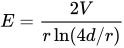
where is the liquid radius of curvature. This field leads to liquid polarization: the negative/positive charge carriers migrate toward/away from the electrode where the voltage is applied. At voltages below a certain threshold, the liquid quickly reaches a new equilibrium geometry with a smaller radius of curvature.

The Taylor cone

[edit]

Voltages above the threshold draw the liquid into a cone. Sir Geoffrey Ingram Taylor described the theoretical shape of this cone based on the assumptions that (1) the surface of the cone is equipotential and (2) the cone exists in a steady state equilibrium.[8] To meet both of these criteria the electric field must have azimuthal symmetry and have dependence to balance the surface tension and produce the cone. The solution to this problem is:


where (equipotential surface) exists at a value of (regardless of R) producing an equipotential cone. The angle necessary for for all R values is a zero of the Legendre polynomial of order 1/2, . There is only one zero between 0 and at 130.7°, which is the complement of the Taylor's now famous 49.3° angle.

Singularity development

[edit]

The apex of the conical meniscus cannot become infinitely small. A singularity develops when the hydrodynamic relaxation time becomes larger than the charge relaxation time .[13] The undefined symbols stand for characteristic length and vacuum permittivity . Due to intrinsic varicose instability, the charged liquid jet ejected through the cone apex breaks into small charged droplets, which are radially dispersed by the space-charge.

Closing the electrical circuit

[edit]

The charged liquid is ejected through the cone apex and captured on the counter electrode as charged droplets or positive ions. To balance the charge loss, the excess negative charge is neutralized electrochemically at the emitter. Imbalances between the amount of charge generated electrochemically and the amount of charge lost at the cone apex can lead to several electrospray operating regimes. For cone-jet electrosprays, the potential at the metal/liquid interface self-regulates to generate the same amount of charge as that lost through the cone apex.[14]

Applications

[edit]

Electrospray ionization

[edit]

Electrospray became widely used as ionization source for mass spectrometry after the Fenn group successfully demonstrated its use as ion source for the analysis of large biomolecules.[15]

Liquid metal ion source

[edit]

A liquid metal ion source (LMIS) uses electrospray in conjunction with liquid metal to form ions.[16][17] Ions are produced by field evaporation at tip of the Taylor cone. Ions from a LMIS are used in ion implantation and in focused ion beam instruments.

Electrospinning

[edit]

Similarly to the standard electrospray, the application of high voltage to a polymer solution can result in the formation of a cone-jet geometry. If the jet turns into very fine fibers instead of breaking into small droplets, the process is known as electrospinning .

Colloid thrusters

[edit]

Electrospray techniques are used as low thrust electric propulsion rocket engines to control satellites, since the fine-controllable particle ejection allows precise and effective thrust.

Deposition of particles for nanostructures

[edit]

Electrospray may be used in nanotechnology,[18] for example to deposit single particles on surfaces. This is done by spraying colloids on average containing only one particle per droplet. The solvent evaporates, leaving an aerosol stream of single particles of the desired type. The ionizing property of the process is not crucial for the application but may be used in electrostatic precipitation of the particles.

Deposition of ions as precursors for nanoparticles and nanostructures

[edit]

Instead of depositing nanoparticles, nanoparticles and nano structures can also fabricated in situ by depositing metal ions to desired locations. Electrochemical reduction of ions to atoms and in situ assembly was believed to be the mechanism of nano structure formation.

Fabrication of drug carriers

[edit]

Electrospray has garnered attention in the field of drug delivery, and it has been used to fabricate drug carriers including polymer microparticles used in immunotherapy[19] as well as lipoplexes used for nucleic acid delivery.[20] The sub-micrometer-sized drug particles created by electrospray possess increased dissolution rates, thus increased bioavailability due to the increased surface area.[21] The side-effects of drugs can thus be reduced, as smaller dosage is enough for the same effect.

Air purifiers

[edit]

Electrospray is used in some air purifiers. Particulate suspended in air can be charged by aerosol electrospray, manipulated by an electric field, and collected on a grounded electrode. This approach minimizes the production of ozone which is common to other types of air purifiers.

See also

[edit]

References

[edit]
Revisions and contributorsEdit on WikipediaRead on Wikipedia
from Grokipedia
Electrospray is a technique that uses high voltage to disperse a liquid into a fine aerosol of charged droplets, often forming a characteristic Taylor cone at the liquid's surface where electric forces overcome surface tension. This process, governed by electrohydrodynamics, has applications across multiple fields, including analytical chemistry, materials science, propulsion, and nanotechnology.[1] In mass spectrometry, electrospray ionization (ESI) is a prominent soft ionization method that generates gas-phase ions from analytes in solution by applying high voltage to a liquid sample, producing charged microdroplets that desolvate to yield intact molecular ions with minimal fragmentation.[2] The technique involves the ejection of charged droplets from the Taylor cone, which undergo fission and evaporation en route to the mass spectrometer. Ion formation follows models such as the ion evaporation model for small molecules, where ions emit from shrinking nanodroplets, and the charged residue model for larger biomolecules, leaving charged residues after solvent evaporation.[2] ESI excels at analyzing polar, thermally labile compounds like peptides, proteins, and noncovalent complexes without degradation.[3] The electrospray phenomenon was first observed in the early 20th century, with theoretical foundations developed by G. I. Taylor in the 1960s; its application to mass spectrometry was advanced by John B. Fenn in the 1980s, earning him the 2002 Nobel Prize in Chemistry.[4] As of 2025, ESI remains the dominant ionization technique in liquid chromatography-mass spectrometry (LC-MS), aiding proteomics, metabolomics, and clinical diagnostics for biomarker detection.[3] Key advantages include high sensitivity, no upper mass limit, and aqueous compatibility, though ion suppression from salts and matrix effects necessitate careful preparation.[5]

Fundamentals

Basic Principles

Electrospray is the process by which a liquid meniscus at the tip of a capillary is subjected to a high-voltage electric field, leading to the ejection of highly charged droplets that form a fine aerosol.[3] This dispersion occurs when the applied electric field induces charge separation at the liquid surface, generating electrostatic stresses that deform the meniscus and overcome surface tension.[6] The resulting droplets typically range from nanometers to micrometers in diameter, enabling the production of a stable spray under controlled conditions.[3] The electrospray process unfolds in distinct stages: initial deformation of the liquid meniscus into a pointed shape due to tangential electric stresses, formation of a stable cone-shaped structure at the tip, ejection of a thin liquid jet from the cone's apex driven by unbalanced electrostatic forces, and finally, the instability-induced fission of the jet into a multitude of smaller charged droplets.[7] These stages are governed by the interplay of electrostatic repulsion, which promotes droplet separation, surface tension, which resists deformation, and viscous forces, which influence the flow dynamics within the liquid.[2] A fundamental aspect of droplet stability in electrospray is the Rayleigh limit, which sets the maximum charge a droplet can sustain before Coulombic repulsion exceeds surface tension, triggering fission. This limit is expressed as
q=8πϵ0γr3 q = 8\pi \sqrt{\epsilon_0 \gamma r^3}
where $ q $ is the charge, $ \epsilon_0 $ is the vacuum permittivity, $ \gamma $ is the surface tension, and $ r $ is the droplet radius.[8] Droplets approaching this limit undergo asymmetric instabilities, leading to the release of smaller, highly charged progeny droplets that continue the aerosol formation process.[2]

Key Parameters and Setup

The standard electrospray setup features a capillary emitter, such as a stainless steel needle or fused silica capillary with an inner diameter of 50-200 μm, connected to a high-voltage power supply that delivers 1-10 kV to induce the electric field.[1][9] A counter-electrode, typically a grounded plate or ring, is placed opposite the emitter to complete the circuit, with the distance between electrodes ranging from 1-10 cm depending on the application. Liquid delivery is managed via a syringe pump or pressurized reservoir, maintaining flow rates of 0.1-10 μL/min to ensure controlled meniscus formation at the capillary tip.[10][11] Key parameters governing electrospray performance include the applied voltage, which must exceed a threshold of approximately 2-5 kV to initiate and sustain the cone-jet mode, beyond which higher voltages can transition to multi-jet operation. Liquid properties are critical: conductivity greater than 10^{-6} S/m promotes charge transport for stable spraying, while viscosities of 1-100 cP and surface tensions of 20-70 mN/m influence jet stability and droplet size, with low conductivity often leading to intermittent modes. The inter-electrode distance affects field strength, with shorter gaps (e.g., 1-3 cm) enabling lower voltages but risking arcing, and flow rates delineate regimes—low rates (<0.1 μL/min) favor dripping, while 1-5 μL/min support cone-jet stability.[10][12][13] Tuning these parameters directly impacts operational modes and jet characteristics; for instance, gradually increasing voltage from the dripping regime—where sessile drops form and detach under gravity and field—stabilizes the cone-jet mode, producing a steady liquid jet from the Taylor cone apex, whereas excessive voltage or mismatched flow induces multi-jet or unstable pulsating modes with erratic droplet dispersion. Low conductivity exacerbates instability by limiting charge accumulation, resulting in mode transitions to dripping or erratic ejection, while optimal flow rates maintain the cone-jet for uniform monodisperse droplets. These modes can be summarized as follows:
  • Dripping mode: Dominates at low voltages (<2 kV) and flow rates, yielding large droplets via Rayleigh-Plateau instability without a sustained cone.[14]
  • Cone-jet mode: Achieved at 2-5 kV and 0.1-5 μL/min, featuring a stable conical meniscus and fine jet for efficient atomization.[10]
  • Multi-jet/unstable mode: Emerges above 5-7 kV or high flow, producing multiple jets or oscillations due to overload.[15]
Safety considerations in electrospray setups emphasize high-voltage isolation to prevent electrical hazards, with enclosures and grounding essential to mitigate shock risks from potentials up to 10 kV. Solvent volatility poses fire hazards, necessitating inert atmospheres or ventilation for flammable liquids like methanol or acetone. Scalability to industrial applications involves multi-nozzle arrays, where parallel emitters (up to hundreds) increase throughput but introduce challenges like inter-jet repulsion and uniform field distribution, often addressed via staggered geometries or shared extractors for stable operation in deposition or propulsion systems.[16][17]

History

Early Observations

In the mid-19th century, early observations of charged liquid drops laid foundational insights into the behavior of liquids under electrostatic influences. Lord Kelvin's 1867 invention of the water dropper demonstrated how falling water droplets could acquire induced charges through proximity to electrified reservoirs, producing a continuous separation of positive and negative charges without external power input beyond gravity. This apparatus highlighted the role of liquid interfaces in charge transfer, a phenomenon later recognized as relevant to electrospray processes where electric fields interact with liquid surfaces to generate charged aerosols.[18] Building on these ideas, experimental work in the early 20th century began to explore the effects of electric fields directly on liquid menisci. In 1914, John Zeleny conducted pioneering experiments using a hydrostatic method to measure electric field strengths at the surfaces of liquid points, such as mercury or water tips, under high voltages. He observed that sufficiently strong fields caused the liquid surface to elongate into pointed protrusions, from which fine jet-like streams of liquid were emitted, accompanied by corona discharges and the formation of charged droplets. These jet emissions represented an initial empirical documentation of field-induced liquid atomization, though Zeleny attributed them primarily to electrostatic instability rather than systematic spraying. During the 1920s, further studies focused on the deformation and charging of free water droplets in electric fields, advancing understanding of aerosol formation. J.J. Nolan investigated the breaking of suspended water drops under applied electric fields, finding that fields above a critical strength deformed the drops into conical shapes before causing them to burst into smaller charged fragments and aerosols.[19] Nolan's observations quantified how field intensity influenced drop stability and charge distribution, with droplets acquiring charges up to several times the Rayleigh limit before disintegration, providing early evidence of electric fields promoting charged particle generation from liquids.[19] By the 1960s, efforts to apply high-voltage spraying for molecular ionization encountered practical hurdles, marking a transition toward modern electrospray techniques. Malcolm Dole attempted to ionize synthetic polymers by charging solutions with high voltages to produce aerosol beams for mass spectrometry, observing that sprayed droplets carried multiple charges but suffered from instability due to solvent evaporation and uneven charge distribution. These experiments revealed challenges in maintaining stable sprays and transferring intact macroions to the gas phase, yet they demonstrated the feasibility of generating charged macromolecular aerosols, paving the way for refined electrospray methods despite issues with beam coherence and detection sensitivity.

Theoretical Foundations and Taylor's Contributions

The theoretical foundations of electrospray were formalized in the mid-20th century through the work of Geoffrey Ingram Taylor, who provided a mathematical framework for understanding the equilibrium shapes of charged liquid interfaces under electric fields. In his seminal 1964 paper, Taylor derived the conditions under which a conical meniscus could form stably, balancing electrostatic stresses against surface tension in inviscid, perfectly conducting liquids.[20] This analysis predicted a specific cone geometry, with the semi-vertical angle α49.3\alpha \approx 49.3^\circ. Taylor's derivation assumed a potential distribution proportional to r1/2r^{1/2} (where rr is the radial distance) along the cone surface, ensuring the electric field intensity matched the capillary pressure gradient.[20] To validate this theory, Taylor conducted experiments using oil-filled glass capillaries immersed in water, applying voltages to create electric fields at the liquid interfaces. These setups produced static conical shapes at the predicted critical voltages, with observed semi-vertical angles closely matching 49.3°, contrasting earlier reports of unstable deformations in water drops.[20] Similar results were obtained with soap films stretched across wire frames, confirming the cone's equilibrium under tangential electric fields. These observations built briefly on prior empirical work, such as Zeleny's studies of electrified liquid points, but provided the first rigorous theoretical explanation for stable menisci.[20] Taylor extended his analysis in a 1969 follow-up paper, examining the dynamics of electrically driven jets emerging from near-conical menisci in viscous liquids. He described how fine, stable jets could form from conducting tubes under electric forces, with diameters as small as 20 μ\mum and lengths up to 5 cm, attributing their stability to mechanical tension rather than purely electrical effects.[21] This work clarified the transition from static cones to dynamic ejection, enabling later research on steady cone-jet modes essential for controlled electrospray. Taylor's contributions thus bridged theoretical hydrodynamics to practical applications, influencing developments like John B. Fenn's electrospray ionization techniques in the 1980s by establishing the principles of stable charged liquid emission.[21][22]

Mechanism

Electric Field Effects on Liquid Interfaces

When an electric field is applied to a liquid meniscus in electrospray setups, it exerts both normal and tangential stresses on the liquid-air interface, initiating deformation. For dielectric liquids with low conductivity, the field polarizes the liquid, inducing bound charges that generate tangential stresses, which circulate flow within the liquid and promote prolate deformation toward the field direction. In contrast, for conducting liquids typical in electrospray, free charges accumulate rapidly at the interface due to the applied field, producing primarily normal electrostatic stresses that pull the meniscus outward, forming a bulge at the capillary tip. These stresses arise from the Maxwell stress tensor, with the normal component dominating the initial outward deformation in conductive cases.[23] The threshold for noticeable meniscus deformation occurs when the electrostatic pressure $ P_e = \frac{1}{2} \epsilon_0 E^2 $ surpasses the capillary pressure $ P_s = \frac{2\gamma}{r} $, where $ \epsilon_0 $ is the vacuum permittivity, $ E $ is the electric field strength, $ \gamma $ is the surface tension, and $ r $ is the meniscus radius of curvature. This balance typically requires voltages of 1-2 kV in standard capillary-based electrospray configurations with tip radii on the order of 10-100 μm, beyond which the meniscus elongates from its initial hemispherical shape. For example, in aqueous solutions, deformation initiates around 2 kV, marking the onset where electric forces overcome surface tension to reshape the interface.[24][25] At low electric fields (below approximately 1 kV/cm), the deformation manifests as symmetric bulging of the meniscus, where the interface expands uniformly due to balanced normal stresses without significant asymmetry. As the field intensifies (above 1-2 kV/cm), the deformation becomes asymmetric, with the tip sharpening into a Taylor-like cone precursor, driven by localized charge accumulation and enhanced normal stress at the apex. Numerical simulations of this interface evolution, solving the augmented Young-Laplace equation incorporating electric stresses, confirm these modes: for instance, boundary integral methods show the transition from rounded bulges to pointed shapes as field strength increases, validating the stress balance without invoking emission dynamics.[7][26] The behavior of these deformations is strongly influenced by the liquid's electrical conductivity $ \sigma $ and relative permittivity $ \epsilon_r .Ininsulatingliquids(. In insulating liquids ( \sigma < 10^{-6} $ S/m), slow charge relaxation prevents sufficient free charge buildup, leading to weaker, polarization-dominated deformations that require higher fields for bulging. Conducting liquids ($ \sigma \geq 10^{-4} $ S/m), common in electrospray, allow rapid charge migration to the interface, enhancing normal stresses and enabling deformation at lower voltages. This distinction is quantified by the charge relaxation time $ \tau = \frac{\epsilon_0 \epsilon_r}{\sigma} $, which must be much shorter than hydrodynamic timescales (e.g., $ \tau < 10^{-3} $ s) for effective charge accumulation and stable bulging in conductive regimes. Higher permittivity prolongs $ \tau $, necessitating stronger fields to achieve comparable deformation.[23]

Taylor Cone Formation

The formation of the Taylor cone represents a stable equilibrium configuration of a liquid meniscus under the influence of a strong electric field, where the electrostatic normal stress precisely balances the capillary pressure due to surface tension across the interface. This balance results in a conical geometry characterized by a constant semi-vertical angle, ensuring zero net normal stress at the surface. The electrostatic potential surrounding the cone satisfies Laplace's equation in the vacuum region outside the liquid, with the cone surface serving as an equipotential boundary; self-similar solutions to this boundary value problem yield the specific conical shape that achieves equilibrium.[20] In ideal conducting liquids, this equilibrium assumes no tangential electric fields at the interface, focusing solely on normal stress contributions from the electric field. However, for real liquids with finite conductivity—common in electrospray setups—the leaky dielectric model, developed by Melcher and Taylor, extends this framework by incorporating tangential stresses arising from charge accumulation and relaxation at the interface. These tangential components drive internal flows that redistribute charge toward the apex, stabilizing the cone for non-perfect conductors and preventing immediate deformation. Stabilization of the Taylor cone requires sufficient charge accumulation at the meniscus apex to sustain the electric field gradient, alongside a flow rate that replenishes liquid volume to match any evaporation or minor mass loss without disrupting the shape. Deviations from these conditions, such as insufficient charge buildup or mismatched flow rates, can induce pulsations in the cone profile or hysteresis in the transition to stable modes.[10][27] Experimental observations of Taylor cone formation often employ high-speed imaging techniques to visualize the evolving meniscus and confirm the theoretical geometry. For low-viscosity liquids like ethanol-water mixtures, these images reveal cone profiles with a semi-vertical angle closely matching the predicted 49.3°, particularly within stable operating regimes of voltage and flow rate. Such visualizations highlight the cone's robustness under balanced forces, with deviations manifesting as oscillatory deformations prior to full stabilization.[28][20]

Singularity and Jet Development

In the cone-jet mode of electrospray, the static equilibrium of the Taylor cone becomes unstable at its apex, leading to the development of a singularity characterized by a finite-time blow-up in the interface curvature. This blow-up is driven by unbalanced electrostatic (Maxwell) stresses that exceed the restoring capillary and viscous forces, resulting in a self-similar conical cusp formation. Numerical finite-element simulations of perfectly conducting viscous liquids across a range of Reynolds numbers (from 0.1 to 3×1043 \times 10^4) confirm this process, showing curvature divergence scaling as τβ\tau^{-\beta} where τ\tau is the time remaining until blow-up and β0.7\beta \approx 0.7, with the blow-up exponents varying slightly between viscous (βC0.690.78\beta_C \approx 0.69-0.78) and inertial (βM0.680.99\beta_M \approx 0.68-0.99) limits. These models also reveal the wavelengths of nascent instabilities at the cusp, governed by the interplay of electrostatic enhancement and surface tension, typically on the order of the local radius of curvature.[29] The onset of the cone-jet transition occurs when the liquid flow rate QQ exceeds a critical threshold, destabilizing the cone apex and initiating emission of a steady, thin liquid jet with diameter typically ranging from 1 to 10 μ\mum. This transition is marked by a critical emission current IcγσQI_c \propto \sqrt{\gamma \sigma Q}, where γ\gamma is the surface tension and σ\sigma is the electrical conductivity of the liquid, reflecting the balance of electrohydrodynamic forces in highly conducting fluids. The proportionality arises from charge transport models where the current is limited by the cone's geometry and the liquid's relaxation time, ensuring steady operation in the cone-jet regime for flow rates above this minimum.[30] Once formed, the jet is accelerated by the axial electric field to velocities of 1-10 m/s, with the jet length extending until varicose instabilities dominate, often spanning tens to hundreds of micrometers depending on the electric field strength and liquid properties. These varicose instabilities follow the Plateau-Rayleigh mechanism, where surface tension drives periodic perturbations with wavelengths approximately 4.5 times the jet radius, leading to eventual breakup; however, the electric field and charge distribution modify the growth rates compared to neutral jets. Liquid viscosity influences jet stability by damping short-wavelength instabilities, though excessive viscosity can hinder the transition by increasing the minimum operable flow rate, as captured by the dimensionless parameter δ=(ϵ0γ3/K2μ3Q)1/9\delta = (\epsilon_0 \gamma^3 / K^2 \mu^3 Q)^{1/9} where KK is conductivity and μ\mu is viscosity. In conductive liquids, Ohmic heating from the current stabilizes the jet by elevating temperature (up to several hundred degrees Celsius in ionic liquids), which reduces viscosity and enhances conductivity, thereby widening the operational window for steady emission. At elevated flow rates, typically beyond Q106Q \sim 10^{-6} m³/s for common setups, the single-jet mode transitions to multi-jet configurations, where the meniscus develops multiple protrusions to distribute the excess liquid and maintain overall stability.[30][31][32]

Droplet Formation and Charge Transfer

In the electrospray process, the electrified liquid jet, emerging from the Taylor cone, undergoes instability leading to breakup into primary charged droplets through the Rayleigh-Plateau mechanism, where capillary waves perturb the jet surface, causing it to fission into discrete droplets while Coulomb repulsion between surface charges prevents their coalescence. This varicose instability dominates in the cone-jet mode, producing uniformly sized primary droplets typically 1-2 μm in diameter, each carrying a fraction of the total jet charge determined by the relation $ I = q \cdot f $, where $ I $ is the spray current, $ q $ is the charge per droplet, and $ f $ is the droplet emission frequency. The charge is primarily distributed on the droplet surface as solvated ions, with the underlying liquid oriented by the electric field to maintain electroneutrality in the bulk.[2][33][10] As these primary droplets travel away from the emitter under the influence of the applied electric field, overcharged ones approach the Rayleigh stability limit, defined by the charge-to-radius ratio $ q / r^{3/2} = \sqrt{8\pi \epsilon_0 \gamma} $, beyond which electrostatic repulsion overcomes surface tension, triggering secondary fission into smaller offspring droplets roughly one-tenth the size of their parents. This iterative process of evaporation-driven shrinkage and Coulombic fission reduces droplet diameters from microns to 10-100 nm, concentrating the charge and analytes while closing the electrical circuit through progressive solvent loss and ion emission from the highly curved surfaces. Secondary fission events ensure that excess charge is redistributed, maintaining the overall current flow without droplet coalescence.[5][2][33] Post-emission, the charged droplets follow curved trajectories influenced by the electric field and initial momentum, undergoing rapid solvent evaporation in ambient or vacuum conditions, which further increases surface charge density and leads to desolvation of ions for downstream applications. In vacuum interfaces, such as those in mass spectrometry, the shrinking nanodroplets reach a point where either direct ion evaporation or residue charging releases gas-phase ions, completing the charge transfer cycle initiated at the emitter. This evolution ensures efficient transport of charge and material while minimizing aggregation due to the repulsive forces.[5][33][2]

Applications

Analytical Chemistry: Electrospray Ionization

Electrospray ionization (ESI) serves as a soft ionization method that preserves the native structures of large biomolecules, such as proteins, by transferring them from solution to the gas phase without excessive fragmentation. It enables the analysis of proteins and protein complexes with molecular weights ranging from small peptides to over 1 MDa, revolutionizing the study of complex biological samples that were previously challenging for traditional ionization techniques.[22][34] Large biomolecules, including proteins and peptides, often acquire multiple charges, typically ranging from +5 to +50 depending on the molecule's size and solvent conditions, which shifts the ion signals into a detectable m/z range for mass analyzers. Ion formation is facilitated by desolvation in a heated capillary interface, usually maintained at 200–400°C, where thermal energy aids in solvent removal while minimizing analyte decomposition.[2] ESI offers significant advantages over harder ionization methods like electron impact or MALDI, including high sensitivity down to the femtomole level for many analytes, which allows detection of trace amounts in complex mixtures. It is highly compatible with liquid chromatography (LC) separations, enabling online coupling (LC-ESI-MS) for direct analysis of chromatographic effluents without sample preparation interruptions. The technique operates in both positive and negative ion modes, providing flexibility for analyzing acidic or basic compounds by selecting protonation or deprotonation pathways.[35] Modern implementations include nano-ESI, which employs pulled glass or fused silica capillaries to achieve ultralow flow rates of 10–1000 nL/min, dramatically reducing sample consumption to microliter volumes while enhancing ionization efficiency and sensitivity for limited biological samples. Despite these advances, ESI faces challenges such as adduct formation with alkali metals (e.g., sodium or potassium ions) that can complicate spectra, and ion suppression effects in complex matrices where competing species reduce analyte signal intensity. These issues are often mitigated through optimized sample preparation and mobile phase composition.[36][37]

Materials Processing: Electrospinning

Electrospinning represents an adaptation of the electrospray process tailored for materials science, where polymer solutions or melts are subjected to higher flow rates—typically 0.1 to 1 mL/h—and directed toward grounded collectors to elongate the charged jet into continuous fibers rather than discrete droplets.[38] This stretching occurs under the influence of electrostatic forces, resulting in nanofibers with diameters ranging from 50 to 500 nm, as the solvent evaporates during the jet's flight path, solidifying the polymer into a fibrous structure mid-air.[39] The resulting nonwoven mats exhibit high surface area-to-volume ratios, making them ideal for structural applications distinct from ionization-focused electrospray variants.[40] Key process parameters significantly influence fiber morphology and performance. Applied voltages of 10-30 kV generate the necessary electric field to initiate and sustain jet formation, while collector distances of 10-20 cm allow sufficient time for whipping instability and solvent evaporation to refine fiber diameter and uniformity.[39] Incorporating nanoparticles, such as silica or carbon nanotubes, into the polymer solution via blending enables the production of composite fibers with enhanced mechanical strength or conductivity, though excessive loading can disrupt jet stability and lead to bead defects.[39] Fiber alignment, crucial for anisotropic properties, is controlled using rotating drum collectors or auxiliary electric fields, yielding oriented mats that mimic extracellular matrix structures.[38] In materials processing, electrospun nanofibers find prominent applications in filtration media and tissue engineering scaffolds. Nanofiber mats provide superior filtration efficiency due to their interconnected pore networks, capturing particles as small as PM2.5 with up to 99% removal rates in air and water purification systems.[40] For tissue engineering, these scaffolds support cell adhesion and proliferation, as demonstrated in polycaprolactone-based constructs for wound healing and bone regeneration.[38] Advancements in electrospinning have expanded its utility through coaxial configurations and improved scalability. Coaxial electrospinning employs dual concentric nozzles to produce core-shell fibers, where sensitive cores (e.g., drugs or bioactive agents) are encapsulated within a protective polymeric sheath, enabling controlled release over extended periods without initial burst effects.[41] Since the 2000s, scalability efforts have transitioned from lab-scale single-nozzle setups to industrial roll-to-roll production, incorporating needleless emitters and multi-jet arrays to achieve continuous output rates exceeding 100 g/h for large-area nanofiber webs.[40]

Space Propulsion: Electrospray Thrusters

Electrospray thrusters function as micro-propulsion systems by electrostatically extracting and accelerating charged droplets or ions from a conductive liquid propellant, generating low thrust in the range of micro-Newtons to milli-Newtons while delivering high specific impulses of 1000 to 3000 seconds.[42] This principle leverages the electrospray process to produce a beam of charged particles that is then accelerated by an electric field, providing efficient momentum transfer for precise spacecraft maneuvering without the need for complex moving parts.[43] The low thrust levels make them ideal for fine adjustments rather than primary propulsion, with the high specific impulse enabling extended mission durations on limited propellant.[44] Thruster designs are categorized into passively fed systems, which utilize porous emitters to draw propellant via capillary action, and actively fed systems, which employ arrays of capillaries for pressurized or controlled delivery to multiple emission sites.[42][45] Propellants typically consist of ionic liquids, such as 1-ethyl-3-methylimidazolium tetrafluoroborate (EMI-BF₄), selected for their inherent conductivity, room-temperature stability, and negligible vapor pressure to prevent evaporation in vacuum.[46] Performance is quantified by the thrust equation $ T = I \sqrt{2 \frac{m}{q} V} $, where $ I $ represents the total beam current, $ \frac{m}{q} $ is the mass-to-charge ratio of the emitted species, and $ V $ is the acceleration voltage; this relation highlights the scalability with current and voltage.[43] In colloid mode, where multi-charged droplets dominate emission, thruster efficiencies greater than 70% have been demonstrated, reflecting effective conversion of electrical power to kinetic energy.[47] These thrusters find primary application in attitude control for small satellites like CubeSats, enabling precise pointing and station-keeping with minimal mass and volume penalties.[48] NASA's efforts, including the High Specific-impulse Electrospray Explorer for Deep-space (HiSPEED) project under the Small Spacecraft Technology Program since the 2010s, have focused on integrating electrospray systems for both propulsion and attitude control in CubeSat missions, such as deep-space exploration and debris mitigation.[49][50] However, operational challenges persist, including electrode erosion from droplet impingement and overspray, which can degrade performance over time, alongside the requirement for power levels on the order of watts per thruster to maintain emission stability.[51][47]

Nanotechnology: Particle Deposition and Nanostructure Fabrication

Electrospray deposition of nanoparticle suspensions enables the creation of uniform monolayers and three-dimensional arrays on substrates, facilitating applications in sensors and catalysts. By atomizing suspensions into charged droplets that evaporate during flight, electrospray allows precise control over particle arrangement, achieving high packing densities without aggregation. For instance, self-limiting electrospray deposition on polymer templates produces conformal coatings with sub-micrometer thickness uniformity, ideal for catalytic surfaces. This technique leverages the electrostatic repulsion of charged particles to form ordered structures, such as monolayer films of metal oxide nanoparticles for gas sensing.[52][53] In ion precursor delivery, electrospray generates charged metal ions or clusters from liquid precursors, serving as building blocks for nanowires and quantum dots through subsequent reduction or pyrolysis. The process involves electrospraying metal salt solutions, where solvent evaporation concentrates precursors, and post-deposition reactions form nanostructures. A representative example is the synthesis of anisotropic gold nanoparticles via electrospray-assisted reduction of Au³⁺ precursors in glycerol, yielding particles with controlled shapes for electronic components. Similarly, electrospray pyrolysis of semiconductor precursors produces quantum dot thin films with 1–2.5 nm crystallites, enabling optoelectronic devices. These charged droplets, formed via charge transfer at the liquid interface, ensure monodisperse delivery.[54][55] Beam focusing with electrostatic lenses provides resolution and control in electrospray nanofabrication, achieving spot sizes below 100 nm for targeted deposition. Electrostatic lenses, such as Einzel or ion-induced masks, converge charged particle beams, minimizing aberrations to enable sub-micrometer patterns. For example, ion-induced focusing masks create nanoscale electrostatic lenses around mask apertures, guiding nanoparticles to form patterns with features smaller than the mask openings, down to 100–200 nm clusters. Multilayer deposition for heterostructures is facilitated by sequential electrospray runs, building complex architectures like alternating metal-semiconductor layers for nanoelectronics.[56][57][58] Recent advances since 2010 include integration of electrospray with atomic force microscopy (AFM) for direct-write nanoassembly, enhancing precision in localized deposition. Electrospray from AFM probes with nanoscale apertures enables non-contact delivery of droplets, achieving resolutions suitable for single-particle placement in nanoelectronics. Applications in photovoltaics involve electrospray fabrication of nanostructured films, such as perovskite layers with 300 nm grains yielding 15% power conversion efficiency. In electronics, electrospray deposits ultrathin films on 3D substrates, supporting flexible devices with nanometer-scale uniformity.[59][60]

Biomedical Engineering: Drug Carrier Production

Electrospray techniques enable the fabrication of biocompatible drug carriers by atomizing polymer-drug solutions into microspheres or nanoparticles, typically using biodegradable polymers like poly(lactic-co-glycolic acid) (PLGA) as matrices.[61] In this process, a polymer solution containing the therapeutic agent is subjected to a high-voltage electric field, leading to the formation of charged droplets that solidify into particles ranging from 1 to 100 μm in diameter upon solvent evaporation.[62] This method achieves high encapsulation efficiencies, often exceeding 80%, due to the gentle drying conditions that minimize drug loss during particle formation.[63] For instance, electrospray of PLGA with drugs like quercetin has yielded microspheres with encapsulation efficiencies of 81.84 ± 1.60%.[63] Drug release from electrospray-produced carriers is primarily governed by diffusion through the polymer matrix or erosion of the polymer itself, with profiles tunable by adjusting particle size, polymer composition, and surface charge.[64] Smaller nanoparticles facilitate faster diffusion-based release, while larger microspheres promote sustained erosion-controlled delivery over weeks to months, as seen in PLGA systems where hydrolytic degradation dictates the kinetics.[65] Surface modifications, such as coating with targeting ligands, further enable controlled release for site-specific delivery, enhancing therapeutic efficacy while reducing off-target effects.[66] In biomedical applications, electrospray-fabricated carriers serve as inhalable microparticles for pulmonary drug delivery, allowing deep lung deposition of therapeutics like antibiotics or anti-inflammatories.[67] Injectable nanoparticles have shown promise in cancer therapy, encapsulating chemotherapeutic agents such as doxorubicin for targeted tumor accumulation and reduced systemic toxicity.[68] Since the early 2000s, insulin-loaded PLGA particles produced via electrospray have demonstrated sustained release profiles suitable for oral or injectable diabetes management, preserving protein bioactivity with encapsulation efficiencies near 90%.[69] Regulatory considerations for electrospray-derived drug carriers emphasize biocompatibility testing per ISO 10993 standards to ensure minimal immunogenicity and cytotoxicity.[70] Scalability to good manufacturing practice (GMP) production remains a key challenge, requiring optimized multi-nozzle electrospray systems to achieve uniform particle batches while controlling variability in size and loading.[71] A primary hurdle is preventing initial burst release, which can be mitigated through core-shell designs or polymer end-group modifications to stabilize the drug-polymer interface.[72]

Environmental Control: Air Purification Systems

In electrospray-based air purification systems, the core mechanism involves the generation of highly charged microdroplets or nanodroplets from conductive liquids such as water, which are atomized under a high-voltage electric field to form a Taylor cone and subsequent jet. These charged droplets collide with airborne pollutants, including particulate matter (PM) like dust and smoke, as well as volatile organic compounds (VOCs), transferring charge through ion attachment and enabling the particles to be attracted to oppositely charged collection surfaces via electrostatic forces. This process draws on charge transfer principles where ions from the evaporating droplets neutralize or charge the contaminants, facilitating their removal without relying on mechanical filtration.[73][74] System designs typically feature multi-stage configurations, such as arrays of wick-based or needle electrospray sources integrated with parallel-plate collectors or cylindrical chambers, operating without traditional corona discharge to avoid byproduct generation. For instance, prototypes using hundreds of wick emitters have demonstrated particle collection efficiencies exceeding 90% for PM2.5 particles (0.3–3 µm) across flow rates of 100–1000 m³/h, with ionization efficiencies approaching 100% for submicron particles when optimized for droplet size and voltage (3–9 kV). These setups are compact, with volumes as small as 20 L, and can be scaled for integration into heating, ventilation, and air conditioning (HVAC) ducts or standalone units for cleanrooms and indoor environments.[75][73] Key advantages include low energy consumption, typically 10–50 W excluding fans, making them suitable for continuous operation in energy-sensitive applications, and the elimination of replaceable filters, which reduces maintenance costs and prevents clogging from high pollutant loads. Unlike conventional HEPA filters, electrospray systems handle a broad spectrum of particle sizes (0.065–5 µm) with minimal pressure drop, achieving clean air delivery rates (CADR) up to 136 m³/h for dust in tested prototypes. Applications have emerged in HVAC systems and cleanrooms for improving indoor air quality in commercial and industrial settings.[75][74] To mitigate environmental impacts, these systems employ pulsed DC voltages or wick-based electrospray to minimize ozone generation, often achieving near-zero levels compared to corona-based precipitators, while the dry evaporation of droplets leaves no liquid residue. Integration with air quality sensors allows for adaptive operation, adjusting voltage or flow based on real-time pollutant detection to optimize efficiency and energy use in smart purification setups.[75][73]

Specialized Sources: Liquid Metal Ion Sources

Liquid metal ion sources (LMIS) operate on the electrospray principle adapted for molten metals, where a high electric field applied to a wetted emitter tip induces the formation of a Taylor cone from which ions are emitted via field evaporation.[76] Typically, low-melting-point metals such as gallium (Ga) or indium (In) are used, with the emitter heated to maintain the liquid state—often around 200–300°C for Ga or up to 250°C for In—to facilitate wetting and stable emission.[77][78] The cone apex reaches fields of approximately 10^{10} V/m, enabling the emission of singly or multiply charged ions (up to triply charged), with total emission currents ranging from 1 to 100 μA depending on the applied voltage and source conditions.[76][79] These sources produce highly focused ion beams with virtual source sizes as small as 50 nm (FWHM), allowing spot sizes below 10 nm in focused ion beam (FIB) systems after optical focusing.[79][80] In FIB milling applications, this enables precise semiconductor patterning, such as etching features in thin gold coatings on silicon substrates with resolutions at the nanoscale.[81] Compared to gas-based ion sources, LMIS offer superior brightness in the range of 10^6 to 10^8 A/cm² sr, enabling higher current densities and better beam collimation for microprobe applications.[81] Alloy-based variants, such as Si-Au, provide additional benefits for targeted doping in ion implantation, allowing the introduction of specific elements to modify material properties.[80][81] Developments in alloy liquid metal ion sources trace back to the 1980s, expanding the range of available ion species across much of the periodic table and enabling applications like direct resistless nano-lithography when integrated with scanning electron microscopes (SEM).[80] Key challenges include precise control of the wetted area on the emitter to ensure stable cone formation and prevent instabilities in emission.[81]

References

User Avatar
No comments yet.