


Community hub
Recent from talks
Contribute something
Nothing was collected or created yet.
Fire Service College
View on Wikipedia
The Fire Service College is responsible for providing leadership, management and advanced operational training courses for senior fire officers from the United Kingdom and foreign fire authorities. It is located at Moreton-in-Marsh in Gloucestershire, England. It has been owned by Capita since February 2013, having previously been an executive agency and trading fund of the Department for Communities and Local Government.
Key Information


The college provides the full range of training for firefighters at all levels, including initial training for recruit firefighters. Scotland closed its own Scottish Fire Service College in 2015 and set up the Scottish Fire and Rescue Service National Training Centre near Cambuslang.[1] As a result many Scottish fire officers go to Moreton-in-Marsh for more specialist and senior ranking courses.[citation needed]
The college has a wide range of facilities for theoretical education and practical training in firefighting, fire safety and accident and emergency work.
History
[edit]Under the Fire Brigades Act 1938 (1 & 2 Geo. 6. c. 72), the UK Government set up a training centre[2] at Saltdean near Brighton in 1941, to train National Fire Service personnel. With the return to local authority control after World War II, the British government decided to standardise the way in which the fire service worked. The college at Saltdean became too small and the Home Office opened the Senior Staff College at Wotton House, Dorking in Surrey in 1949,[3] to train senior officers from all over the country. On 4 June 1966, they decided to do the same for the lower ranks and established the Fire Service Technical College at Moreton-in-Marsh on a disused RAF wartime airfield about 3 km (2 miles) outside the town. In 1981, the Staff College in Dorking closed and amalgamated with the Technical College to form the Fire Service College on the Moreton-in-Marsh site.
RAF Moreton-in-Marsh was, as the home station of 21 Operational Training Unit, RAF Bomber Command responsible for the training of aircrew to fly Wellington bombers.[2] The Station also flew operations, and sent aircraft on the large bomber raids on the German cities of Cologne, Dresden and Hamburg. The airbase remained operational until the late 1950s. The government then used the base to teach fire fighting to military personnel undergoing their National Service.
The Home Office opened the college on the 500-acre (2.0 km2) site in 1968.[2] The first students whilst having most of the facilities seen today had no proper accommodation and were bunked in large huts (in the area that is now the cricket and football pitches), which originally housed the RAF personnel when it was an operational airbase. The Staff College at Dorking was closed in 1981 and all training was transferred to Moreton-in-Marsh.
In April 1992,[2] the college became an executive agency and trading fund under the Fire Service Trading Fund Order 1992 (Statutory Instrument 1992 No. 640).[4] In June 2001, the responsibility for the college transferred from the Home Office to the Department for Transport, Local Government and the Regions and just one year later to the Office of the Deputy Prime Minister and then to the Department for Communities and Local Government.
On 16 May 2009, a fire broke out at one of the appliance bays in the college, destroying 11 fire engines at a cost of £116,000 each.[5] The blaze was not suspicious.
In April 2011, the Government announced it was studying different options for private investment in the college to allow it to achieve its full potential and in March 2012 it was concluded that the best option was full privatisation. In December 2012, Capita was selected as the preferred bidder and the sale was completed for £10 million on 28 February 2013.[6]
Education
[edit]Educationally, the college has lecture facilities and specialised areas such as IT suites, a chemistry laboratory and hydraulics laboratory. The tutors are drawn from both the academic world and from officers serving in fire and rescue services around the country. Courses available range from firefighter recruits through junior officer development to senior officer management courses right up to chief officer level. To support the educational side, there as a large administration complex and a library of fire related literature. Students come mainly from the UK but several countries also send students.
Operational training
[edit]Operational training is carried out in several purpose built areas of the college,[2] including:
- Breathing apparatus complex
- Industrial complexes
- Domestic property
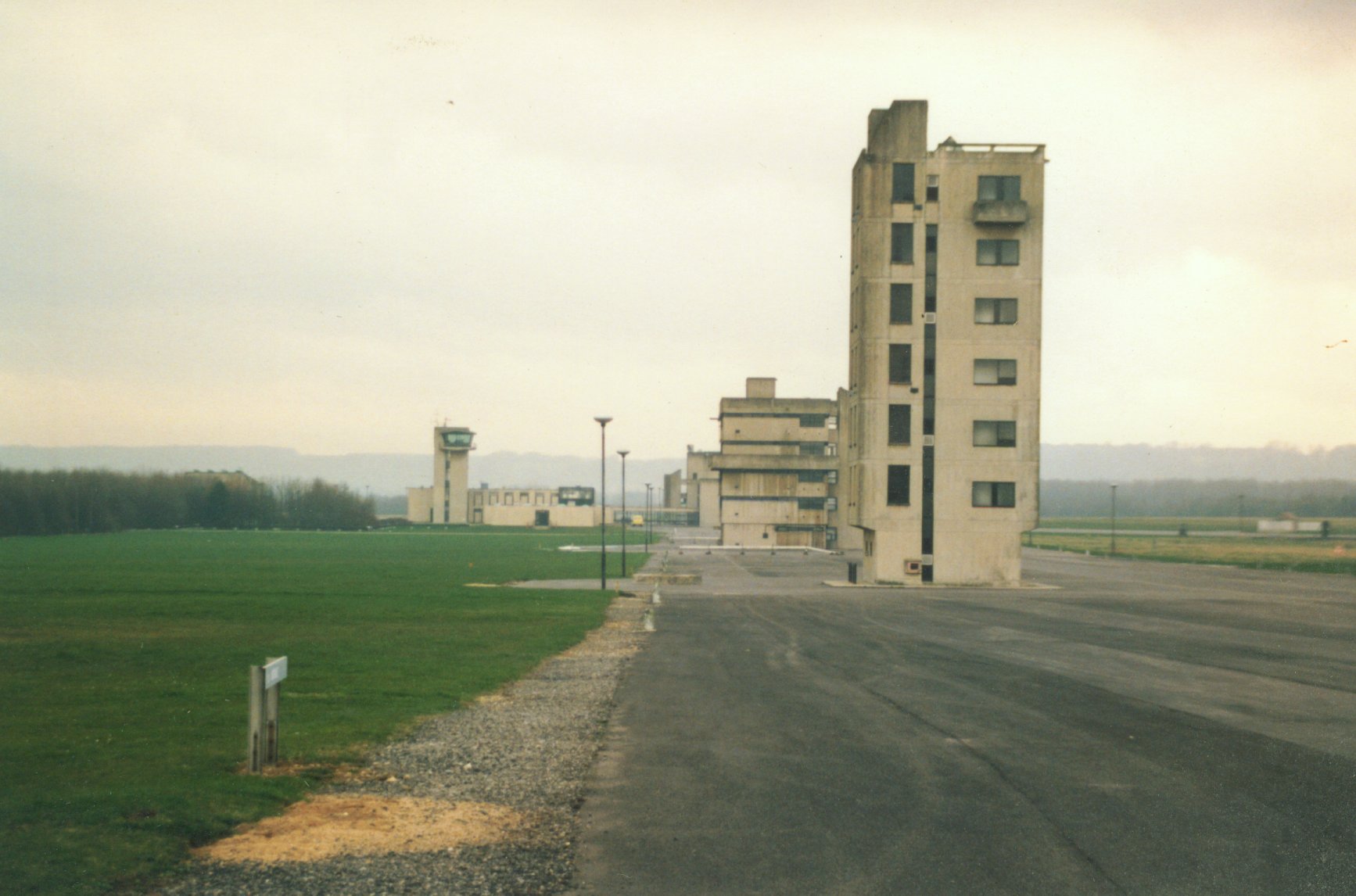
- High rise property
- Areas for electrical, pool fire and fixed installation training
- Small-scale versions of petroleum and chemical installations
- A concrete "ship", the “Sir Henry”
- A railway, which includes a section of rail with locomotives and carriages of various types, both passenger and freight.
- A mock motorway (M96)
- USAR (Urban Search and Rescue)
- A range of aircraft including helicopters, military and civil passenger aircraft including a simulated Boeing 747
- Fire behaviour units
To support the operational training the college has a fully equipped appliance room with a number of appliances from different manufacturers including pumps, aerial appliances, rescue tenders, USAR vehicles and hazmats appliances. There is also a large workshop to maintain the appliances and all the other operational equipment used.

The M96 motorway is a 400-yard (370 m) stretch of road at the college which imitates in detail a typical UK motorway; it is used to teach firefighters in training how to deal with road traffic incidents. It consists of one of the former runways of the airfield. The numbering of the motorway is not consistent with the Great Britain road numbering scheme; however its number is largely irrelevant, as it is not open to the public.[citation needed]
Social
[edit]The social and domestic facilities include
- Standard and deluxe accommodation for 600 students
- Television rooms and lounge areas
- Chapel
- The 'Four Shires' Restaurant and bar complex
- Sports complex with a 25 m × 9 m (82 ft × 30 ft) swimming pool, sauna, four squash courts a sports hall and fitness suite
- Several football and cricket pitches
- Two tennis courts
Other uses
[edit]The college site is also home to the Fire Protection Association (FPA).[7]
In 2003, the BBC used the location to film the docudrama The Day Britain Stopped about a series of catastrophic transport accidents. For the purposes of the programme, the motorway was temporarily rebranded "M91".
The college has been on occasions shut over weekends and used by the military and police for training, as the live fire buildings and complexes allow training in certain operational areas that cannot easily be carried out or reconstructed elsewhere.
In November 2016, the site was used by HTIS for an Airsoft Military Simulation event called Blue Fox II.[8]
On 8 December 2018, the first Fire Service College parkrun was held on the site.[9][10] The parkrun was paused on 7 March 2020, just before the cessation of all UK parkrun events because of the COVID-19 pandemic. Due to security restrictions on the site, the event was not held again until 24 May 2025.[citation needed]
-
 Accommodation blocks
 -
 Breathing apparatus complex
 -
 Industrial fire house
 -
 View showing the domestic house and railway in background
 -
 The ship 'MV Sir Henry' Named for Sir Henry Martin Smith, His Majesty's first Chief inspector of Fire Services appointed 1948.


See also
[edit]References
[edit]- ^ "Training and Development | SFRS". Scottish Fire and Rescue Service. Archived from the original on 1 June 2021. Retrieved 1 June 2019.
- ^ a b c d e Fire Service College staff (2009). "Fire Service College Official website". Archived from the original on 2 May 2007. Retrieved 2 May 2007.
- ^ Fire Service College staff (2009). "Heritage and History". Fire Service College. Archived from the original on 31 August 2011.
- ^ Parliament (1992). "The Fire Service College Trading Fund Order 1992". UK legislation on-line. Archived from the original on 19 October 2021. Retrieved 18 August 2020.
- ^ BBC staff (16 May 2009). "Blaze breaks out at fire college". BBC Gloucestershire. Archived from the original on 18 May 2009. Retrieved 16 May 2009.
- ^ "Sale of the Fire Service College completed". Ministry of Housing, Communities & Local Government. 28 February 2013. Archived from the original on 25 July 2021. Retrieved 25 July 2021.
- ^ "Contact us". Fire Protection Association. Archived from the original on 1 June 2021. Retrieved 1 June 2021.
- ^ "HTIS: BLUE FOX II 11-13 NOVEMBER 2016". Popular Airsoft. 1 August 2016. Archived from the original on 1 June 2021.
- ^ "Fire Service College parkrun - Weekly Free 5km Timed Run". Archived from the original on 1 June 2021. Retrieved 1 June 2021.
- ^ "latest news". Parkrun. 11 June 2021. Archived from the original on 6 February 2022. Retrieved 6 February 2022.
External links
[edit]
51°59′42″N 1°40′48″W / 51.995°N 1.680°W


| International | |
|---|---|
| National | |
Fire Service College
View on GrokipediaHistory
Founding and Early Years (1959–1980s)
The former Royal Air Force station at Moreton-in-Marsh, Gloucestershire, transitioned in the late 1950s from operational military use to a firefighting training facility following the end of National Service. The site initially supported Cold War-era training for RAF national servicemen and began accommodating civilian firefighters in 1959, establishing an early foundation for centralized fire service instruction amid post-war decentralization of training responsibilities.[3] On 14 June 1966, Home Secretary Sir Kenneth Joseph William Mackenzie announced the creation of the Fire Service Technical College at Moreton-in-Marsh, leveraging the existing on-site Fire Service Training Centre to consolidate operational, technical, and administrative education previously scattered across local brigades. This development addressed longstanding needs for standardized national training, with the Dorking-based facility repurposed as the Fire Service Staff College for higher-level instruction. Construction commenced late in 1966 or early 1967, designed to house up to 470 students and incorporate advanced simulation environments for practical drills.[5][3] Harry Judge QFSM MIFireE was appointed as the inaugural Commandant in 1968, guiding the project's expansion amid growing demands for professionalized firefighting expertise. The college was formally opened by Queen Elizabeth II on 17 May 1974, marking its operational launch as a dedicated national hub. By 1976, principal buildings and infrastructure were completed, complemented by extensive landscaping that included the planting of 80,000 trees across the 500-acre site.[3] Into the 1980s, the institution focused on delivering core programs in fire suppression, rescue operations, and command structures, training thousands of UK fire service personnel annually while adapting to evolving hazards like chemical incidents and urban fires. This period solidified its role in elevating service standards through hands-on simulations and technical curricula, though it remained under direct Home Office oversight without major structural changes until later decades.[3]Expansion and Institutional Development (1990s–2010s)
In 1992, the Fire Service College was established as a government trading fund under the Fire Service College Trading Fund Order, effective from 1 April, enabling it to operate on a commercial basis by charging fees for training and consultancy services while remaining under departmental oversight.[6] This shift aimed to enhance financial autonomy and efficiency, allowing reinvestment in facilities and programs without full reliance on direct public funding, though it maintained its core role in delivering operational and leadership training to UK fire services.[7] By the mid-1990s, the college had expanded its scope to include more international clients and specialized courses, reflecting broader institutional maturation amid evolving fire risks and service professionalization. The Fire and Rescue Services Act 2004 formally confirmed the college's status as the central training institution for English and Welsh fire and rescue services, extending its functions to foster a "centre of excellence" in operational, leadership, and multi-agency capabilities.[8] This legislative backing supported growth in response to national priorities, including the New Dimension programme initiated after 2001 to bolster resilience against terrorism, chemical incidents, and mass casualties; by 2009, the college had trained over 7,000 personnel in New Dimension equipment and 4,700 firefighters in urban search and rescue techniques.[9] Training volume surged, with 8,420 students attending courses in 2008–09 alone, generating £21.6 million in turnover primarily from fire service contracts.[9] Throughout the 2000s, institutional developments emphasized innovation and diversification, including the launch of the FireLearn online learning platform in April 2008, which enrolled 7,500 learners by year-end, and new specialist courses such as Hazardous Materials and Environmental Protection (May 2008) and Road Traffic Collision Instructor training (June 2008).[9] The college broadened multi-agency interoperability by incorporating police, ambulance, and military participants, while pursuing accreditations like ISO 9001:2008 in January 2009 and recognition as the UK's best training provider at the National Training Awards in 2008.[9] These advancements, supported by its 400-acre Moreton-in-Marsh campus with advanced simulation suites and incident grounds, positioned the institution for sustained operational excellence amid fiscal pressures and expanding threats.[9]Privatization and Modern Era (2010s–Present)
In March 2012, the UK government announced its intention to privatize the Fire Service College, stating that private ownership would secure its long-term viability and allow for greater commercial flexibility in delivering training services.[10] The decision followed a review highlighting financial challenges and opportunities for expansion beyond public sector constraints. Capita was selected as the preferred bidder in December 2012, with the sale finalized on 28 February 2013 for an enterprise value of £10 million, representing a transfer from government ownership under the Department for Communities and Local Government to private sector management.[11][7][12] The government described the transaction as a favorable outcome for taxpayers, enabling continued operations as a national training hub without ongoing public subsidy.[7] The privatization drew opposition from trade unions and safety advocates, who argued that shifting control to a for-profit entity risked compromising training quality and firefighter preparedness, potentially prioritizing cost efficiencies over rigorous standards.[13][14] Under Capita's ownership since 2013, the college has maintained its core mission of providing operational, leadership, and specialist fire and rescue training, while expanding into defense-related programs, including management of the Defence Fire and Rescue Project for training UK military firefighters.[15] In the ensuing decade, investments have supported infrastructure modernization, such as the completion of a £5 million purpose-built accommodation block and fire station in 2021 to enhance residential training capacity.[16] Recent innovations include the introduction of an AI-powered virtual training suite in 2025, designed to simulate hyper-realistic fire scenarios for improved skill development without physical resource demands.[17] The college has also pursued asset optimization, appointing Capita in the mid-2010s to market surplus land (Project Ignis), comprising 15.54 acres with outline planning consent for development, reflecting efforts to generate revenue for core activities.[18] As of 2024, Capita retains ownership, with no reported changes, and the institution continues to serve public fire services, international clients, and specialized sectors amid evolving demands like counter-terrorism and environmental hazards.[19]Facilities and Infrastructure
Campus Location and Layout
The Fire Service College's main campus is located in Moreton-in-Marsh, Gloucestershire, England, within the rural Cotswolds region.[20] The site spans approximately 300 acres and originated as a former military airfield.[20] [21] Accessibility to the campus is facilitated by major road networks, including the nearby Fosse Way Roman road, and rail connections, with Moreton-in-Marsh railway station situated about one mile away, equivalent to a 15-minute walk.[22] Birmingham International Airport lies roughly 45 minutes away by car.[20] The campus layout centers on residential and support infrastructure, including multiple accommodation blocks such as Braidwood House, Bowles House, Tanner House, and Bridges Accommodation, as well as staff quarters in an L-shaped block and the Connections Restaurant for dining.[23] Training facilities are distributed across the site, featuring specialized structures like a breathing apparatus complex, industrial fire house, domestic housing simulators, a railway segment, and the training vessel MV Sir Henry, named after Sir Henry Martin Smith, the first Chief Inspector of Fire Services appointed in 1948.[24] These elements enable replication of diverse incident scenarios on expansive incident grounds.[24]Specialized Training Environments
The Fire Service College's Incident Ground encompasses a 236-acre area dedicated to practical training in fire suppression, rescue operations, and incident management, simulating diverse emergency scenarios to prepare firefighters for real-world challenges.[21] This facility includes specialized structures such as industrial complexes, domestic buildings, transportation simulators, and high-risk environments like oil rigs, enabling hands-on experience with fire behavior, hazardous materials, and multi-agency responses.[24] Key environments replicate urban and industrial fires, with the Industrial High Rise providing a six-floor structure for training in high-rise responses, including rare radiation hazard simulations, and hot/cold fire scenarios to test procedures under controlled conditions.[24] The Industrial Training Facility features a factory setup with a boiler room and chip shop, used for industrial fire and hazmat incidents, accommodating military personnel and external productions.[24] Adjacent, the Domestic Training Building, a two-storey four-bedroom house, facilitates drills for residential fires and incident command exercises.[24] Transportation-specific simulators enhance operational readiness; the M96 Motorway, a four-lane 370-meter replica of a UK motorway, supports large-scale vehicle crash training involving multi-agency teams, including helicopter and paramedic integration.[24] The Railway and Carriages facility, refurbished in 2012 with input from Network Rail, utilizes real tracks and carriages to simulate derailments and rail emergencies.[24] Maritime training occurs on the 'Sir Henry', a full-scale ship replica complete with compartments for shipboard fire scenarios.[24] Additional rigs include the Oil Rig, a multi-level platform with silo and helipad for oil, LPG, and chemical fire management; Urban Search and Rescue (USAR) buildings with indoor rigs for confined spaces, collapses, and technical searches; and Fire Behaviour units—10 in total—for demonstrating flashover and backdraft dynamics.[24][21] The Breathing Apparatus School serves as a central hub for self-contained breathing apparatus training, incorporating global best practices for firefighters and USAR paramedics.[24] These environments collectively support over 50 years of specialized instruction, emphasizing safety features like automatic flame detection in the Fire Screen for controlled heat and extinguishment demonstrations.[24]Training Programs and Curriculum
Leadership and Management Education
The Fire Service College provides leadership and management education primarily through advanced command and strategic training programs designed for senior fire officers, focusing on incident management, risk assessment, and organizational decision-making in high-stakes emergency contexts. These offerings align with accredited qualifications from bodies like SFJ Awards, emphasizing practical application over general business management to enhance command capabilities in fire and rescue services.[25] A key program is the SFJ Awards Level 7 Award in Strategic Incident Command in Fire and Rescue Services (N.O.G. Level 4), which equips participants with the functional skills, knowledge, and understanding required for the Strategic 'Gold' Command role and representation on Strategic Co-ordination Groups. This qualification targets senior leaders handling multi-agency, large-scale incidents, covering strategic oversight, resource allocation, and inter-service coordination.[26] For international delegates preparing for strategic senior officer roles, the International Divisional Command course delivers modules on risk management, incident command, leadership in fire-specific operations, and broader strategic responsibilities to support effective brigade-level management. Participants develop competencies in aligning operational tactics with organizational goals, fostering interoperability in diverse fire service environments.[27] The International Brigade Command program targets chief officer-level personnel, integrating leadership training with advanced operational scenarios to prepare for brigade-wide command and policy-level decision-making. It emphasizes holistic management of fire service resources, crisis response, and long-term resilience planning.[28] Continuous professional development (CPD) opportunities in leadership and incident command are available to UK fire and rescue services personnel, enabling career progression through specialized modules that maintain currency in evolving management practices. These programs collectively prioritize evidence-based command protocols derived from real-world incident analysis, ensuring leaders can mitigate risks and optimize team performance without reliance on generalized management theories.[29]Operational and Technical Skills Training
The Fire Service College delivers specialized operational and technical skills training through residential courses and apprenticeships tailored to firefighters and rescue personnel, emphasizing hands-on practice in firefighting tactics, incident response, and equipment handling. These programs integrate theoretical instruction with practical simulations using purpose-built facilities, including mock urban structures, industrial fire houses, and breathing apparatus complexes, to replicate real-world hazards such as fire behavior dynamics and structural collapses.[25][29] A core offering is the Operational Firefighter Level 3 Apprenticeship, a two-year program that equips recruits with foundational and advanced skills in operational firefighting, including casualty evacuation, hose deployment, and risk assessment, delivered via a blend of on-site residential training and service-specific pathways supported by experienced instructors.[30] This apprenticeship aligns with national standards for UK Fire and Rescue Services (FRS), incorporating continuous professional development through tools like the BUD learning management system for tracking progress in technical competencies.[30] Key technical courses include:- Breathing Apparatus Advanced Refresher: A two-day program focusing on advanced firefighting techniques, fire behavior recognition, and tactical decision-making in low-visibility environments using self-contained breathing apparatus (SCBA).[25]
- Hazardous Materials First Responder: A one-week residential course training participants in initial assessment, containment, and mitigation of chemical, biological, radiological, nuclear, and explosive (CBRNE) incidents, adhering to National Operational Guidance protocols.[31]
- Hazardous Materials Advisor: A three-week intensive covering in-depth hazard identification, modeling spill dynamics, and advising on multi-agency responses, utilizing the college's specialized simulation sites.[32]
- Tactical Fire: Emphasizes fire science, including gas ignitions, flashover, backdraught, and compartment fire suppression strategies, with practical drills on container systems and ventilation tactics.[33]
- Road Traffic Collisions Instructor: Trains instructors in vehicle extrication, addressing modern vehicle safety features, electric vehicle fire risks, and casualty stabilization techniques.[25]