Hubbry Logo
Fire alarm systemFire alarm systemMain
Open search
Fire alarm system
Community hub
Fire alarm system
logo
8 pages, 0 posts
0 subscribers
Be the first to start a discussion here.
Fire alarm system
Fire alarm system
from Wikipedia

A fire alarm horn strobe (System Sensor SpectrAlert), remote annunciator (Honeywell RA-1000R) and pull station (Edwards 270-SPO), connected together in a fire alarm system.
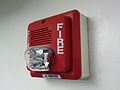
A fire alarm notification appliance (Wheelock MT-24-LSM) as widely used under North American standards

A fire alarm system is a building system designed to detect, alert occupants, and alert emergency forces of the presence of fire, smoke, carbon monoxide, or other fire-related emergencies. Fire alarm systems are required in most commercial buildings. They may include smoke detectors, heat detectors, and manual fire alarm activation devices (pull stations). All components of a fire alarm system are connected to a fire alarm control panel. Fire alarm control panels are usually found in an electrical or panel room. Fire alarm systems generally use visual and audio signalization to warn the occupants of the building. Some fire alarm systems may also disable elevators, which are unsafe to use during a fire under most circumstances.[1]

Design

[edit]

Fire alarm systems are designed after fire protection requirements in a location are established, which is usually done by referencing the minimum levels of security mandated by the appropriate model building code, insurance agencies, and other authorities. A fire alarm designer will detail specific components, arrangements, and interfaces necessary to accomplish these requirements. Equipment specifically manufactured for these purposes is selected, and standardized installation methods are anticipated during the design. There are several commonly referenced standards for fire protection requirements, including:

  • ISO 7240-14, the international standard for the design, installation, commissioning, and service of fire detection and fire alarm systems in and around a building. This standard was published in August 2013.[2]
  • NFPA 72, The National Fire Alarm Code, an established and widely used installation standard from the United States. In Canada, the Underwriters' Laboratories of Canada or ULC provides fire system installation standards.
  • TS 54 -14 is a technical specification (CEN/TS) for fire detection and fire alarm systems (Part 14: Guidelines for planning, design, installation, commissioning, use, and maintenance). Technical Committee CEN/TC72 has prepared this document as part of the EN 54 series of standards. This standard was published in October 2018.[3]

There are national codes in each European country for planning, design, installation, commissioning, use, and maintenance of fire detection systems with additional requirements that are mentioned on TS 54 -14:

Across Oceania, the following standards outline the requirements, test methods, and performance criteria for fire detection control and indicating equipment utilised in building fire detection and fire alarm systems:

Parts

[edit]
A Simplex TrueAlert fire alarm strobe
A Honeywell DeltaNet FS90 fire alarm control panel
Fire alarm speaker and pull station

Fire alarm systems are composed of several distinct parts:

  • Fire alarm control panel (FACP), or fire alarm control unit (FACU): This component, the hub of the system, monitors inputs and system integrity, controls outputs, and transmits information.
  • Remote annunciator: a device that connects directly to the panel; the annunciator's main purpose is to allow emergency personnel to view the system status and take command from outside the electrical room the panel is located in. Usually, annunciators are installed by the front door, the door the fire department responds by, or in a fire command center. Annunciators typically have the same commands as those available from the panel's LCD screen, although some annunciators allow for full system control.
  • Primary power supply: Commonly, a commercial power utility supplies a non-switched 120 or 240-volt alternating current source. A dedicated branch circuit is connected to the fire alarm system and its constituents in non-residential applications. "Dedicated branch circuits" should not be confused with "Individual branch circuits" which supply energy to a single appliance.
  • Secondary (backup) power supplies: Sealed lead-acid storage batteries or other emergency sources, including generators, are used to supply energy during a primary power failure. The batteries can be either inside the bottom of the panel or inside a separate battery box installed near the panel.
  • Initiating devices: These components act as inputs to the fire alarm control unit and are manually or automatically activated. Examples include pull stations, heat detectors, duct detectors, and smoke detectors.
  • Fire alarm notification appliance: This component uses energy supplied from the fire alarm system or other stored energy source to inform the proximate persons of the need to take action, usually to evacuate. This is done using a variety of audio and visual means, ranging from pulsing incandescent lights, flashing strobe lights, horns, sirens, chimes, bells, loudspeakers, or a combination of these devices.
  • Building safety interfaces: This interface allows the fire alarm system to control aspects of the built environment, prepare the building for fire, and control the spread of smoke fumes by influencing air movement, lighting, process control, human transport, and availability of exits.[12]

Initiating devices

[edit]
Fire alarm box
An activated Siemens MCL-R1A call point with telephone jack and illuminated response LED

Initiating devices used to activate a fire alarm system are either manually or automatically actuated devices. Manually actuated devices, also known as fire alarm boxes, manual pull stations, or simply pull stations, break glass stations, and (in Europe) call points, are installed to be readily located (usually near the exits of a floor or building), identified, and operated. They are usually actuated using physical interaction, such as pulling a lever or breaking glass.

Automatically actuated devices can take many forms, and are intended to respond to any number of detectable physical changes associated with fire: convected thermal energy for a heat detector, products of combustion for a smoke detector, radiant energy for a flame detector, combustion gases for a fire gas detector, and operation of sprinklers for a water-flow detector. Automatic initiating devices may use cameras and computer algorithms to analyze and respond to the visible effects of fire and movement in applications inappropriate for or hostile to other detection methods.[13][14]

Notification appliances

[edit]
The standard fire alarm sound used in most of North America
A Honeywell SC809A1019 speaker with a Space Age V33 light
A fire alarm notification appliance in Sweden

Alarms can take many forms, but are most often either motorized bells or wall-mountable sounders or horns. They can also be speaker strobes that sound an alarm, followed by a voice evacuation message for clearer instructions on what to do. Fire alarm sounders can be set to certain frequencies and different tones, either low, medium, or high, depending on the country and manufacturer of the device. Most fire alarm systems in Europe sound like a siren with alternating frequencies. Fire alarm electronic devices are known as horns in the United States and Canada and can be continuous or set to different codes. Fire alarm warning devices can also be set to different volume levels.

Notification appliances utilize audible, visible, tactile, textual or even olfactory stimuli (odorizers)[15][16] to alert the occupants of the need to evacuate or take action in the event of a fire or other emergency. Evacuation signals may consist of simple appliances that transmit uncoded information, coded appliances that transmit a predetermined pattern, and/or appliances that transmit audible and visible information such as live or prerecorded instructions and illuminated message displays. Some notification appliances are a combination of fire alarm and general emergency notification appliances, allowing both types of emergency notifications from a single device. In addition to pre-recorded and predetermined messages and instructions, some systems also support the live broadcasting and recording of voice announcements to all or certain parts of the property or facility, including customized instructions for the situation for each area, such as by emergency or facility management personnel. Outdoor appliances (such as large-scale speaker/horn/strobe poles to effectively reach outdoor occupants over potentially larger distances or areas), lighting control, and dynamic exit signage may also be used in certain circumstances.

Emergency voice alarm communication systems

[edit]

Some fire alarm systems utilize emergency voice alarm communication systems (EVAC)[17] to provide prerecorded and manual voice messages. Voice alarm systems are typically used in high-rise buildings, arenas, and other large "defend-in-place" occupancies such as hospitals and detention facilities where total evacuation is difficult to achieve.[citation needed] Voice-based systems allow response personnel to conduct orderly evacuation and notify building occupants of changing event circumstances.[citation needed]

Audible textual appliances can be employed as part of a fire alarm system that includes EVAC capabilities. High-reliability speakers notify the occupants of the need for action concerning a fire or other emergency. These speakers are employed in large facilities where general undirected evacuation is impracticable or undesirable. The signals from the speakers are used to direct the occupant's response. The fire alarm system automatically actuates speakers in a fire event. Following a pre-alert tone, selected groups of speakers may transmit one or more prerecorded messages directing the occupants to safety. These messages may be repeated in one or more languages. The system may be controlled from one or more locations within the building, known as "fire warden stations", or from a single location designated as the building's "fire command center". From these control locations, trained personnel activating and speaking into a dedicated microphone can suppress the replay of automated messages to initiate or relay real-time voice instructions.[18]

In highrise buildings, different evacuation messages may be played on each floor, depending on the location of the fire. The floor the fire is on along with ones above it may be told to evacuate while floors much lower may be asked to stand by.[citation needed]

In the United States

[edit]

In the United States, fire alarm evacuation signals generally consist of a standardized audible tone, with visual notification in all public and common-use areas. Emergency signals are intended to be distinct and understandable to avoid confusion with other signals.

As per NFPA 72, 18.4.2 (2010 Edition), Temporal Code 3 is the standard audible notification in a modern system. It consists of a repeated three-pulse cycle (0.5 s on, 0.5 s off, 0.5 s on, 0.5 s off, 0.5 s on, 1.5 s off). Voice evacuation is the second most common audible notification in modern systems. Legacy systems, typically found in older schools and buildings, have used continuous tones alongside other audible notifications.

In the United Kingdom

[edit]

In the United Kingdom, fire alarm evacuation signals generally consist of a two-tone siren with visual notifications in all public and common-use areas. Some fire alarm devices can emit an alert signal, which is generally used in schools for lesson changes, the start of morning break, the end of morning break, the start of lunch break, the end of lunch break, and when the school day is over.

Emergency communication systems

[edit]

New codes and standards introduced around 2010, especially the new UL Standard 2572, the US Department of Defense's UFC 4-021-01 Design and O&M Mass Notification Systems, and NFPA 72 2010 edition Chapter 24, have led fire alarm system manufacturers to expand their systems voice evacuation capabilities to support new requirements for mass notification. These expanded capabilities include support for multiple types of emergency messaging (i.e., inclement weather emergency, security alerts, amber alerts). The major requirement of a mass notification system is to provide prioritized messaging according to the local facilities' emergency response plan, and the fire alarm system must support the promotion and demotion of notifications based on this emergency response plan. In the United States, emergency communication systems also have requirements for visible notification in coordination with any audible notification activities to meet the needs of the Americans with Disabilities Act.

Mass notification system categories include the following:

  • Tier 1 systems are in-building and provide the highest level of survivability
  • Tier 2 systems are out of the building and provide the middle level of survivability
  • Tier 3 systems are "At Your Side"[clarification needed] and provide the lowest level of survivability

Mass notification systems often extend the notification appliances of a standard fire alarm system to include PC-based workstations, computers, mobile devices, text-based or display monitor-based digital signage, and a variety of remote notification options including email, text message, RCS/other messaging protocols, phone calls, social media, RSS feed, or IVR-based telephone text-to-speech messaging. In some cases and locations, such as airports, localized cellular communication devices may also send wireless emergency alerts to cell phones in the area, and radio override may override other radio signals to play the emergency message and instructions to radios in range of the signal.

Residential systems

[edit]

Residential fire alarm systems are commonplace. Typically, residential fire alarm systems are installed along with security alarm systems. In the United States, the NFPA requires residential fire alarm system in buildings where more than 12 smoke detectors are needed.[19] Residential systems generally have fewer parts compared to commercial systems.

Building safety interfaces

[edit]

Various equipment may be connected to a fire alarm system to facilitate evacuation or to control a fire, directly or indirectly:

Coded fire alarm pull station below a 10-inch (25 cm) bell.
  • Magnetic smoke door holders and retainers are wall-mounted solenoids or electromagnets controlled by a fire alarm system or detection component that magnetically secures spring-loaded self-closing smoke-tight doors in the open position. The device demagnetizes to allow automatic closure of the door on command from the fire control or upon failure of the power source, interconnection, or controlling element. Stored energy in the form of a spring or gravity can then close the door to restrict the passage of smoke from one space to another in order to facilitate evacuation and firefighting efforts. Electromagnetic fire door holders may also be hard-wired into the fire panel, radio-controlled, triggered by radio waves from a central controller connected to a fire panel, or acoustic, which learns the sound of the fire alarm and releases the door upon hearing this exact sound.[20]
  • Duct-mounted smoke detectors may be mounted in such a manner as to sample the airflow through ductwork and other plenums fabricated explicitly for the transport of environmental air into conditioned spaces. As part of the fire alarm system, these detectors may be connected to the fan motor control circuits in order to stop air movement, close dampers and generally prevent the recirculation of toxic smoke and fumes from fire in occupied spaces.
  • Automatic initiating devices associated with elevator operation are used for emergency elevator functions, such as the recall of associated elevator cab(s). The recall will cause the elevator cabs to return to the ground level for use by fire service response teams and to ensure that cabs do not return to the floor of fire incidence, as well as preventing people from becoming trapped in the elevators. Phases of operation include primary recall (typically the ground level), alternate/secondary recall (typically a floor adjacent to the ground level—used when the fire alarm initiation occurred on the primary level), illumination of the "fire hat" indicator when an alarm occurs in the elevator hoistway or associated control room, and in some cases shunt trip (disconnect) of elevator power (generally used where the control room or hoistway is protected by fire sprinklers).
  • Audio public address racks can be interfaced with a fire alarm system by adding a signaling control relay module to either the rack's power supply unit or the main amplifier driving the rack. The purpose of the fire alarm system interface is usually to "mute" the background music in case of an emergency.

British fire alarm system categories

[edit]

In the United Kingdom, fire alarm systems in non-domestic premises are generally designed and installed in accordance with the guidance given in BS 5839 Part 1. There are many types of fire alarm systems, each suited to different building types and applications. A fire alarm system can vary dramatically in price and complexity, from a single panel with a detector and sounder in a small commercial property to an addressable fire alarm system in a multi-occupancy building.

BS 5839 Part 1 categorizes fire alarm systems as:[21]

  • "M" manual systems (no automatic fire detectors, so the building is fitted with call points and sounders).
  • "L" automatic systems intended for the protection of life.
  • "P" automatic systems intended for the protection of property.

Categories for automatic systems are further subdivided into L1 to L5 and P1 to P2.

M Manual systems, e.g., handbells, gongs, etc. These may be purely manual or manual electric, the latter may have call points and sounders. They rely on the occupants of the building discovering the fire and acting to warn others by operating the system. Such systems form the basic requirement for places of employment with no sleeping risk; e.g., a fire cannot occur while occupants are asleep.
P1 The system is installed throughout the building—the objective is to automatically call the fire brigade as early as possible to minimize any damage caused by the fire. Small low-risk areas can be excepted from the system, such as toilets and cupboards less than one square meter (11 sq ft).
P2 Detection should be provided in parts of the building where the risk of ignition is high and/or the contents are precious. Category 2 systems provide fire detection in specified parts of the building where there is either high risk or where business disruption must be minimized.
L1 A category L1 system is designed for the protection of life and which has automatic detectors installed throughout all areas of the building (including roof spaces and voids) to provide the earliest possible warning. A category L1 system is likely to be appropriate for the majority of residential care premises. In practice, detectors should be placed in nearly all spaces and voids. With category 1 systems, the whole of a building is covered apart from minor exceptions.
L2 A category L2 system is designed for the protection of life and has automatic detectors installed in escape routes, rooms adjoining escape routes and high-hazard rooms. In medium-sized premises (sleeping no more than ten residents), category L2 system are often used. These fire alarm systems are identical to an L3 system but with additional detection in areas with a high chance of ignition (e.g., kitchens) or where the risk to people is particularly increased (e.g., sleeping risk).
L3 This category is designed to give early warnings to everyone. Detectors should be placed in all escape routes and all rooms that open onto escape routes. Category 3 systems provide more extensive cover than Category 4. The objective is to warn the occupants of the building early enough to ensure that all can exit the building before escape routes become impassable.
L4 Category 4 systems cover escape routes and circulation areas only. Therefore, detectors will be placed in escape routes, although this may not be suitable depending on the risk assessment or if the size and complexity of a building are increased. Detectors might be located in other areas of the building, but the objective of an L4 system is to protect the escape route.
L5 This is the "all other situations" category, e.g., computer rooms, which may be protected with an extinguishing system triggered by automatic detection. Category 5 systems are the "custom" category and relate to special requirements that other categories cannot cover.

Zoning

[edit]

An important consideration when designing fire alarms is that of individual "zones". The following recommendations are found in BS 5839 Part 1:

  • A single zone should not exceed 2,000 square meters (22,000 sq ft) in floor space.
  • Where addressable systems are in place, two faults should not remove protection from an area greater than 10,000 square meters (110,000 sq ft).
  • A building may be viewed as a single zone if the floor space is less than 300 square meters (3,200 sq ft).
  • Where the floor space exceeds 300 square meters (3,200 sq ft) then all zones should be restricted to a single floor level.
  • Stairwells, lift shafts or other vertical shafts (nonstop risers) within a single fire compartment should be considered as one or more separate zones.
  • The maximum distance traveled within a zone to locate the fire should not exceed 60 meters (200 ft).

The NFPA recommends placing a list for reference near the fire alarm control panel showing the devices contained in each zone.

See also

[edit]

References

[edit]
[edit]
Revisions and contributorsEdit on WikipediaRead on Wikipedia
from Grokipedia
A fire alarm system is a critical component of a building's and life safety strategy, designed to detect the presence of fire or through initiating devices such as heat and detectors, process signals via a central , and alert occupants through audible and visible notification appliances to facilitate safe evacuation. , these systems are governed by standards such as , the National Fire Alarm and Signaling Code, which outlines requirements for installation, testing, and to ensure reliable performance in detecting fires, signaling emergencies, and integrating with other building safety features such as sprinklers and emergency lighting. Fire alarm systems typically consist of key components including the fire alarm (FACU), which serves as the system's central processor monitoring inputs and activating outputs; initiating device circuits connecting detectors like ionization or photoelectric detectors and fixed-temperature detectors; notification appliance circuits powering horns, speakers, and strobes; and secondary power supplies such as batteries to maintain operation during primary power failures. They are broadly classified into two main types: conventional systems, which use physical wiring zones to group devices and provide general location information upon activation; and addressable systems, which assign unique identifiers to each device for precise identification of the alarm source, enabling faster response and troubleshooting. Beyond detection and notification, advanced systems incorporate supervisory functions to monitor circuit integrity and trouble conditions, emergency control functions like recall and door releases, and off-premises signaling to alert fire departments or monitoring stations. The effectiveness of fire alarm systems, particularly those including working smoke alarms, significantly reduces fire-related fatalities; for instance, , homes with operational smoke alarms experience a death rate approximately 60 percent lower than those without.

Fundamentals

Purpose and Basic Operation

A fire alarm system is an active device or network designed to detect fire-related hazards such as , , or flames and to alert building occupants and responders accordingly. These systems form a critical part of overall and strategies in buildings, serving to monitor protected spaces and initiate responses to potential emergencies. The basic operation of a fire alarm system follows a sequential process beginning with detection. Initiating devices, such as sensors, monitor for signs of and transmit signals to a fire alarm control unit (FACU) via dedicated circuits when hazards are identified. The FACU then processes these signals to verify the alarm condition, distinguishing between alarms, troubles, or supervisory events, and activates notification appliances to produce audible and visible alerts throughout the building. Finally, the system interfaces with off-premises supervising stations to notify emergency services, ensuring coordinated response efforts. By providing early warnings, fire alarm systems significantly reduce risks to life and property; for instance, the presence of working smoke alarms, a core component, lowers the death rate per 1,000 home structure fires by 60 percent. The primary goals of these systems encompass life safety through occupant evacuation, property protection by minimizing fire spread and damage, and compliance with established building codes such as those outlined in and Chapter 9.

Historical Development

The development of fire alarm systems began in the early with rudimentary manual methods in industrial settings across the and , where factory whistles and bells served as primary alerts to summon workers and firefighters during outbreaks. These simple acoustic signals, often powered by in , marked an initial shift from shouting or basic watchmen to more organized notifications, though they lacked precision and coverage for urban areas. A pivotal advancement occurred in 1852 in , , following devastating fires that highlighted the need for a reliable municipal system; Dr. William F. Channing, assisted by Moses G. Farmer, invented the world's first electric fire alarm telegraph network, which used manual pull stations connected via underground wires to transmit coded signals to central stations and activate bells. This system, operational from April 28, 1852, revolutionized fire response by enabling rapid, location-specific alerts across the city, reducing response times and inspiring similar installations in other US cities. In the , innovations accelerated with the introduction of photoelectric smoke detectors in 1972 by Donald Steele and Robert Emmark at Electro Signal Lab, who developed light-scattering technology to detect early smoke particles, enhancing automatic detection beyond manual activation. The saw the widespread adoption of hardwired systems in buildings, integrating thermostats and early smoke sensors into fixed electrical networks for more reliable operation in commercial and residential spaces. By the 1980s, microprocessors enabled the emergence of addressable systems, allowing precise identification of alarm sources within complex networks, a leap driven by advancements. Post-World War II, the (NFPA) played a key role in standardization, culminating in the 1970 publication of as the National Fire Alarm Code, which consolidated guidelines for installation and maintenance to ensure nationwide consistency. The transition to and smart systems gained momentum in the 2000s, with battery-powered and radio-frequency devices offering easier retrofits in historic or hard-to-wire structures, while the 2020s integrated (IoT) connectivity for , using AI to analyze environmental data and forecast fire risks before ignition. The 2025 edition of introduced a new chapter on cybersecurity and requirements for emerging detection technologies, such as acoustic and thermal image detectors.

System Components

Initiating Devices

Initiating devices are the sensors and manual actuators in a fire alarm system that detect fire-related hazards and send signals to the control panel to initiate alarms. These devices form the input layer of the system, relying on physical phenomena such as particles, , or radiation to trigger responses. Common types include automatic detectors like , , and sensors, as well as manual pull stations for human activation. The 2025 edition of NFPA 72 introduces new initiating device types, including acoustic leak detectors for identifying fluid leaks in piping via acoustic signals (Section 17.11) and thermal image fire detectors that use infrared imaging to detect heat signatures of fires (Section 17.12). Smoke detectors are among the most widely used initiating devices, categorized primarily into ionization and photoelectric types. Ionization smoke detectors are effective for detecting fast-flaming fires, operating on the principle of an ionization chamber where a small radioactive source, typically americium-241, emits alpha particles to ionize air molecules, creating a steady electrical current between two charged plates. When smoke enters the chamber, it neutralizes the ions, reducing the current and triggering the alarm. Photoelectric smoke detectors, better suited for smoldering fires, use a light beam and photosensor; smoke particles scatter the light onto the sensor, increasing its output to activate the detector. These detectors must comply with sensitivity testing under UL 268 standards, which evaluate their response to various smoke types and nuisance sources like cooking aerosols. Heat detectors respond to changes rather than products, making them suitable for areas with high air flow or dust that could cause false alarms from smoke detectors. Fixed- heat detectors activate when ambient reaches a preset threshold, typically between 135°F and 165°F (57°C to 74°C), using mechanisms like eutectic alloys that melt or bimetallic strips that bend at the rated point. Rate-of-rise heat detectors, in contrast, trigger if increases rapidly—often 15°F (8°C) or more per minute—employing an air chamber and diaphragm that expands with heated air to close a circuit. Flame detectors, primarily used in industrial environments such as oil refineries or aircraft hangars, identify open flames by sensing ultraviolet (UV) or infrared (IR) radiation emitted during combustion. UV/IR combination detectors enhance reliability by requiring signals in both spectra, reducing false activations from non-fire sources like welding arcs. These line-of-sight devices are positioned to cover high-risk areas without obstruction. Manual pull stations provide a direct means for occupants to activate the system, consisting of a or handle that, when pulled, completes an electrical circuit to signal the control panel. requires these stations to be located near exits, at heights between 42 and 48 inches (1.07 to 1.22 m) above the floor for , and designed to be conspicuous and tamper-resistant. Placement of smoke detectors follows guidelines to ensure effective coverage, with ceiling-mounted units preferred to capture rising smoke; they should avoid dead air spaces near walls or corners, maintaining at least 4 inches (100 mm) from walls and 36 inches (910 mm) from supply air vents. Maximum spacing is 30 feet (9.1 m) on smooth ceilings up to 40 feet (12.2 m) high, reduced for irregular surfaces or ceilings above 40 feet requiring performance-based design, per (2025 edition). Multi-criteria detectors integrate multiple sensors, such as smoke, heat, and (CO), to improve detection accuracy and minimize false alarms from individual triggers. For instance, these devices may use algorithms to correlate smoke obscuration with rising temperatures or CO levels, providing nuanced responses to diverse signatures while meeting enhanced UL 268 requirements for nuisance resistance.

Notification Appliances

Notification appliances are devices in a fire alarm system designed to alert building occupants to an through audible, visual, or tactile signals, ensuring effective evacuation or response. These appliances activate upon detection of a condition and are connected to the system's notification appliance circuits (NACs), which provide power and supervision for reliable operation. Common types of notification appliances include audible devices such as horns, which produce a piercing tone for general alerting; bells, which provide a traditional ringing sound often used in older installations; and speaker arrays capable of delivering both tones and voice messages for more directed instructions. Visual appliances primarily consist of strobe lights, typically using flash tubes operating at a rate of 1-2 Hz to produce bright, intermittent illumination visible in various lighting conditions. Tactile appliances, essential for individuals with hearing impairments, include bed shakers or vibratory devices that provide physical to alert sleeping or unaware occupants. Audible appliances must produce sound levels ranging from 85 to 110 dB at to ensure audibility over ambient noise, with a maximum of 110 dBA at the minimum hearing distance to prevent discomfort. Visual strobes are rated from 15 to 110 (cd), with intensity selected based on room size and occupancy to meet coverage requirements, and must comply with ADA standards for in public and common areas. is critical for strobes; all units within the same must flash simultaneously or within 10 milliseconds of each other to minimize risks for individuals with , though broader system synchronization ensures activation within 10 seconds across the facility. Notification appliance circuits (NACs) distribute power to these devices, typically operating on 24 VDC with reverse polarity supervision during alarm states and a lower supervisory voltage for monitoring integrity. Each NAC is supervised using end-of-line resistors, usually 4.7 kΩ, placed at the circuit's termination to detect opens, shorts, or grounds, ensuring the system remains operational. Audible signals follow the temporal-3 pattern mandated by , consisting of three 0.5-second pulses separated by 0.5-second silences, repeating every 1.5 seconds, to distinguish fire alarms from other notifications.

Control Panels and Power Supplies

The , often referred to as the fire alarm control unit (FACU), serves as the central hub for a fire alarm system, receiving and interpreting signals from initiating devices such as smoke detectors and manual pull stations. It processes these inputs to determine the validity of an alarm condition, activates notification appliances like horns and strobes, and interfaces with building systems for functions such as elevator recall or smoke control. Additionally, the panel provides through visual displays and audible indicators to alert occupants and operators, while incorporating troubleshooting interfaces like event logs and diagnostic screens to identify system faults. Control panels are categorized by their zoning capabilities, with single-zone panels designed for smaller installations where the entire protected area is monitored as one circuit, suitable for basic applications like single-story buildings. In contrast, multi-zone panels divide the system into multiple circuits, each representing a distinct area, allowing for more granular monitoring in larger or complex structures. A key distinction exists between conventional and addressable panels: conventional panels group devices into zones without individual identification, providing only general location information upon activation, such as "alarm in zone 3." Addressable panels, however, assign a unique digital address to each device, enabling precise pinpointing of the alarm source, which facilitates faster response and maintenance. Power supplies for fire alarm control panels consist of a primary source from commercial AC power, typically 120 or 240 volts, and a secondary backup system using sealed lead-acid batteries rated at 24 volts DC with capacities ranging from 20 to 200 ampere-hours, depending on the system's load and duration requirements. Battery sizing must account for standby operation of 24 to 60 hours—varying by system class, such as longer durations for remote supervising stations—and alarm operation for 5 to 15 minutes, with the latter extended for voice communication systems to ensure full evacuation signaling. Supervision features in control panels continuously monitor circuit integrity, power status, and device connectivity, generating trouble signals for issues like low battery voltage or ground faults to prompt immediate . These panels must comply with UL 864, the standard for control units and accessories in fire alarm systems, which ensures reliability through rigorous testing of performance under fault conditions and power loss scenarios.

Design and Installation

System Layout and Zoning

Fire alarm systems are spatially organized through zoning to facilitate rapid identification of fire locations, enabling targeted emergency responses and efficient evacuation. Zoning divides a building into distinct areas, each monitored by separate circuits or addresses within the control panel, allowing the system to pinpoint activations to specific zones. According to NFPA 72 (2025 edition), the maximum area per initiating device zone is generally 22,500 square feet (2,090 m²), though this can vary based on building occupancy and configuration to ensure precise localization without overwhelming responders. Annunciators, often located near building entrances or control panels, display visual maps of these zones, using color-coded diagrams to represent floors, rooms, and high-risk areas, aiding first responders in navigation. Coverage requirements ensure comprehensive detection and notification throughout the protected spaces. Smoke detectors must be spaced no more than 30 feet (9.1 m) apart in standard areas, covering a maximum of 900 square feet (84 m²) per device on smooth, flat ceilings, with adjustments for obstructions like beams or sloped surfaces to maintain sensitivity to layers. Notification appliances, including horns and strobes, are positioned to achieve audibility of at least 15 dB above the average ambient noise level or 5 dB above the maximum sound level (whichever is greater) in every occupiable space, ensuring alerts reach all areas without dead zones. This uniform coverage prioritizes life safety by minimizing response times in diverse building environments. Initiating devices are strategically placed to detect fires early while minimizing false alarms. Smoke detectors are installed in corridors, entryways to rooms, and return air plenums to capture smoke migration, with additional units in high-risk areas such as mechanical rooms or storage spaces where combustible materials are present. In kitchens and cooking areas, heat detectors are preferred over smoke detectors to avoid nuisance activations from steam or cooking fumes, positioned near appliances to detect abnormal heat rises while minimizing false alarms from normal cooking, in accordance with NFPA 72 spacing and placement guidelines for heat detectors. Placement must avoid interference from HVAC systems, maintaining a minimum 3-foot (0.9 m) clearance from supply diffusers and return vents to prevent airflow dilution of smoke or heat. In the , BS 5839-1 (2025 edition) outlines categories tailored to life protection (L1-L5) and property protection (P1-P2), emphasizing escape route integrity. Category L1 provides full coverage with detectors in all areas, including circulation spaces and voids, for maximum life safety in high-occupancy buildings. L2 extends L3 coverage to additional high-risk rooms, L3 focuses on escape routes and adjacent rooms, L4 limits to circulation areas, and L5 targets specific localized risks, such as stairwells or protected zones. For property protection, P1 covers the entire building to limit fire spread, while P2 zones only designated high-value or vulnerable areas, all requiring that aligns with escape strategies and manual call points at exits.

Wiring and Configuration Standards

Fire alarm systems employ two primary wiring configurations for signaling line circuits (SLCs) and initiating device circuits (IDCs): Class A and Class B, as defined in (2025 edition), the National Fire Alarm and Signaling Code. Class A wiring forms a redundant loop, where devices connect in a continuous circuit that returns to the control panel, ensuring operation continues via the alternate path if a single wire fault occurs. This style enhances reliability in critical applications but requires additional cabling. In contrast, Class B wiring uses a branched, single-path from the panel to devices, which is more common due to lower cost and simpler installation; however, a break in the line disables communication with devices beyond the fault point. To ensure , shielded cables are often utilized for protection, particularly in environments with potential from nearby equipment like motors or fluorescent lighting. recommends shielded twisted-pair conductors for SLCs in such cases, with the shield grounded at one end to mitigate noise without creating ground loops. Configuration involves verifying loop resistance, typically limited to 40 ohms maximum for SLCs to prevent communication errors, as specified by manufacturers like . calculations for notification appliance circuits (NACs) must limit the drop to no more than 3 volts under full load to maintain device performance at the minimum operating voltage, often calculated using based on , length, and current draw. Installation adheres to NEC Article 760 and NFPA 72 requirements for conduit and separation to safeguard circuits from damage and interference. Fire alarm cables must be installed in metallic or rigid nonmetallic conduit when passing through floors or walls to a height of 7 feet, and separated at least 2 inches from power conductors to avoid induction or short-circuit risks. Commissioning tests include continuity checks using a low-resistance ohmmeter to confirm circuit integrity end-to-end, along with insulation resistance measurements exceeding 20 megohms to detect potential shorts or grounds before system activation. Fault-tolerant designs incorporate short-circuit isolators on addressable SLC loops to limit the impact of a single-wire failure, such as a short, to a single zone or segment rather than the entire circuit. These devices automatically disconnect faulty sections while allowing the rest of the loop to function, complying with NFPA 72's Class A pathway requirements for survivability. Isolators are typically placed at intervals, such as every 20 devices or at zone boundaries, to optimize redundancy without excessive cost.

Types of Systems

Conventional Systems

Conventional fire alarm systems represent a traditional approach to fire detection and alerting, where the building is divided into predefined zones, each connected to a specific circuit on the central control panel. Initiating devices, such as smoke detectors and manual pull stations, within a zone are wired in parallel to an initiating device circuit (IDC), allowing any activation in that zone to send a general signal to the fire alarm control unit (FACU). Upon detection, the FACU identifies only the affected zone—rather than the precise device—triggering notification appliances across the system to alert occupants. This zoned architecture simplifies signal processing but limits pinpointing the exact source of an alarm. These systems offer advantages in cost and simplicity, particularly for smaller installations, as the components and control panels are generally less expensive and require minimal programming compared to more advanced alternatives. They are easier to set up and maintain in environments where broad zonal coverage suffices, reducing initial complexity for facility managers. However, disadvantages include higher installation costs due to extensive wiring needs and limited diagnostic capabilities, as the system cannot isolate individual device faults or sensitivities, potentially increasing the risk of false alarms and delaying targeted responses. Conventional systems find primary applications in small commercial settings, such as schools, stores, restaurants, and apartments, as well as in legacy retrofits where upgrading to modern infrastructure is not feasible. Typical setups feature 2 to 32 zones, depending on the panel capacity, with each zone accommodating up to 32 devices within a defined area to ensure reliable coverage without excessive wiring. Historically, conventional systems dominated fire alarm installations from the late 1800s through the pre-1980s era, serving as the standard for grouping devices by zone in simpler applications like sprinkler monitoring. Their prevalence stemmed from straightforward design and low labor for basic setups, but the introduction of addressable systems in the late 1980s shifted preferences due to enhanced diagnostics and compliance with evolving standards. While addressable systems have become more prevalent due to enhanced diagnostics and compliance with evolving standards, conventional systems remain suitable and code-compliant for smaller or simpler applications under NFPA 72.

Addressable and Intelligent Systems

Addressable fire alarm systems utilize an in which each initiating device, such as smoke detectors or manual pull stations, and notification appliance is assigned a unique digital address, enabling the (FACP) to pinpoint the exact source of an activation rather than just a general zone. These systems rely on signaling line circuits (SLCs), which consist of two-wire loops that carry both power and data to connect devices to the FACP, allowing for efficient communication and supervision. A single SLC loop can support up to several hundred addressable devices, depending on the manufacturer and configuration (e.g., 99 to 318), facilitating in installations with hundreds of components. Intelligent features distinguish these systems by incorporating advanced to enhance reliability and reduce false alarms. Drift compensation automatically adjusts the sensitivity of smoke detectors over time to counteract gradual from dust or environmental particles, ensuring consistent performance without frequent manual recalibration. Cross-zone verification requires simultaneous or sequential activation from at least two detectors in predefined separate areas before declaring a confirmed alarm, providing an additional layer of validation against transient conditions like cooking . Key advantages of addressable and include rapid identification of alarm origins for faster response, simplified through remote diagnostics and individual device status monitoring, and the capability to network multiple FACPs across large facilities for centralized oversight. These attributes make them ideal for expansive structures like commercial high-rises, hospitals, and educational institutions, where conventional zone-based systems would lack the necessary precision. Protocols for addressable systems often employ proprietary communication methods developed by manufacturers, such as those used in systems, which limit interoperability to vendor-specific hardware. However, many modern implementations support open standards like for seamless integration with broader and control networks, enabling unified monitoring of alongside HVAC and functions. The adoption of addressable and has surged since the early 2000s, becoming the dominant choice in commercial and industrial applications due to technological advancements and evolving regulatory requirements.

Notification and Communication

Audible and Visual Alerts

Audible alerts in fire alarm systems primarily consist of sound-based signals designed to warn occupants of an , using tones that are continuous, intermittent, or patterned to ensure attention and prompt evacuation. These tones include steady continuous sounds, intermittent pulses, or distinctive patterns such as the "whoop" (a rising and falling tone) or "yelp" (rapid on-off bursts), though modern systems often standardize to the Temporal-3 pattern—three 0.5-second pulses followed by a 1.5-second —for fire-specific alerts to distinguish them from other alarms like carbon monoxide detectors. The volume must exceed the ambient noise level by at least 15 dB above the average or 5 dB above the maximum sound lasting at least 60 seconds, whichever is greater, ensuring audibility throughout the protected area without exceeding safe limits, typically up to 110 dB at the source. Visual alerts complement audible signals through strobe lights that provide flashing illumination to notify individuals, including those with hearing impairments, using white flashes synchronized across devices at a rate of 1 Hz (one flash per second). Strobe intensities range from 15 to 185 candela (cd), with common ratings such as 15 cd for corridors, 75 cd for general areas, 110 cd for wall-mounted in bedrooms, and 177 cd for ceiling-mounted in sleeping areas, selected based on mounting location, room size, and visibility requirements per NFPA 72 to achieve required coverage. In corridors up to 20 feet wide, strobes must be placed no more than 15 feet from the ends and spaced no further than 100 feet apart to provide uniform coverage, while in open spaces, calculations ensure a minimum illumination of 0.0375 lumens per square foot over the area. Combined notification appliances, such as horn-strobes, integrate both audible and visual elements into single units for installation efficiency and synchronized operation, reducing wiring complexity while meeting dual requirements. These devices ensure signal clarity, with intelligibility metrics like the (STI) exceeding 0.5 in environments where tonal signals must penetrate noise, though primarily applied to verify overall alert effectiveness. In the United States, these requirements are governed by , the National Fire Alarm and Signaling Code, which mandates distinct patterns and levels for fire alarms separate from other hazards like CO detection. In Europe, standards apply, with EN 54-3 defining performance criteria for audible sounders (including tone patterns); design standards such as BS 5839 typically require at least 65 dB(A) throughout the area and 10 dB above ambient noise, while EN 54-23 defines visual alarm devices (VADs) by coverage categories (e.g., C-3 for small ceiling-mounted units covering 20 m²) and flash rates between 0.5 and 2 Hz to ensure attention-grabbing performance across diverse spaces.

Voice Evacuation and Emergency Messaging

Voice evacuation and emergency messaging systems in fire alarms utilize spoken announcements to direct occupants during emergencies, providing clear instructions for orderly evacuation rather than relying solely on tones or sirens. These systems integrate audio distribution networks with and control infrastructure to broadcast pre-recorded or live messages tailored to the incident, enhancing response effectiveness in complex buildings. Compliance with standards such as ensures reliable performance, including automatic activation upon fire signal receipt. System setup typically involves distributed audio amplifiers connected to speaker circuits configured in high-impedance setups (70.7V or 25V) for efficient power distribution over long distances and multiple speakers. These amplifiers, often rated at 25-125 watts per circuit, support up to eight circuits per panel and include built-in digital message repeaters for . Speaker circuits are zoned to allow targeted audio delivery, with speakers spaced for edge-to-edge coverage maintaining a 6 dB sound pressure level (SPL) drop to optimize clarity. Pre-recorded announcements, stored digitally for instant playback, are preferred for consistency and speed, while live announcements via enable real-time updates from operators, though both require backup power supplies to function during outages. Message design emphasizes phased evacuation strategies, where announcements direct occupants from specific zones—such as "evacuate floor 3 first"—to prevent congestion in stairwells and elevators, as defined by Acoustically Distinguishable Spaces (ADS) in NFPA 72. Intelligibility testing, using metrics like with a target of ≥0.45 at 90% of locations or Articulation Loss of Consonants (ALCons) below 20%, ensures messages are understandable amid , with between 400-4000 Hz and low harmonic . These designs incorporate signal-to-noise ratios exceeding 10 dB for clarity. Integration occurs through fire command centers, where voice systems link to central control panels for manual override and status monitoring, often supporting up to six simultaneous audio channels. Standards like UL 2572 govern control units and accessories for emergency voice/alarm communications, aligning with requirements for in-building systems and ensuring compatibility with building codes such as the International Building Code (IBC). Advantages include reduced panic by providing specific guidance, assistance for individuals with disabilities through clear verbal cues, and improved outcomes in high-rise structures, where post-9/11 mandates under NFPA 101 and IBC now require such systems in buildings over 75 feet to manage staged evacuations effectively.

Applications

Residential Systems

Residential fire alarm systems primarily consist of smoke alarms designed for single-family homes and apartments, focusing on early detection of smoke and fire to facilitate safe evacuation. These systems emphasize standalone or interconnected units that alert occupants audibly within the home, differing from more complex commercial setups by prioritizing simplicity, affordability, and ease of installation. According to the (NFPA), effective residential alarms can reduce the risk of fire-related deaths by more than 50 percent when properly installed and maintained. Common types include battery-powered smoke alarms with 10-year sealed batteries, which eliminate the need for frequent battery replacements and comply with the UL 217 10th edition (2024) standards for longevity, reliability, faster detection, and reduced nuisance alarms. Hardwired smoke alarms with battery backup provide continuous power via the home's electrical , ensuring operation during outages, and are required in new constructions under building codes referencing NFPA 72. between units—allowing all alarms to sound simultaneously when one detects smoke—can be achieved through hardwiring or radio frequency (RF) technology, with NFPA recommending this setup for optimal protection across multiple rooms. Proper placement is critical for effectiveness, with NFPA 72 guidelines specifying installation of at least one smoke alarm on every level of the home, including basements, inside each bedroom, and outside sleeping areas to ensure rapid detection near where people sleep. Alarms should be positioned on ceilings or high on walls, at least 20 feet away from kitchens to avoid the 10-20 foot zone unless equipped with an alarm-silencing feature, or closer than 10 feet only if the device is listed for cooking areas; similarly, position away from bathrooms to minimize interference from steam in high-humidity areas. Modern residential smoke alarms incorporate user-friendly features such as hush buttons to temporarily silence nuisance alarms without disabling the unit, audible low-battery chirps to prompt maintenance, and integration with smart home ecosystems for remote notifications. For instance, devices like the Protect connect via to send app-based alerts to smartphones, enabling users to monitor status and receive early warnings even when away from home. These enhancements align with UL 217 10th edition (2024) requirements for reduced false activations while maintaining sensitivity to real threats. In the United States, regulations mandating smoke alarms in new residential began emerging in the , with NFPA 101 adopting requirements in 1976 that influenced state laws, leading to widespread adoption by the and significantly lowering home fire fatalities. However, challenges persist with nuisance alarms, particularly from cooking, which account for a substantial portion of activations—studies indicate that cooking-related false alarms occur in up to 73 percent of reported cases and contribute to alarm disabling in about 40 percent of homes.

Commercial and Industrial Systems

Commercial and industrial fire alarm systems are designed to address the unique demands of large-scale, high-occupancy environments, where rapid detection and response can prevent widespread damage and loss of life. These systems often span multi-building complexes or high-rise structures, incorporating vertical to isolate alarms by floor or section for precise incident location. According to , high-rise buildings—defined as those over 75 feet (23 meters) in height—require emergency voice communication capabilities integrated into the fire alarm system to allow trained personnel to assess and direct responses during emergencies. In industrial settings, these systems extend beyond smoke and heat detection to include gas and flame sensors, which monitor for hazardous leaks in environments like chemical plants or manufacturing facilities. Specific applications tailor these systems to operational needs. In office buildings, voice evacuation systems replace traditional tonal alarms with clear, spoken instructions to guide occupants, reducing panic and improving evacuation efficiency in high-density workspaces. Warehouses, with their vast storage areas and high fuel loads, integrate fire alarms with early suppression systems, such as ESFR sprinklers, to activate water flow upon detection and contain fires before they spread to combustible materials. Hospitals employ staged alert mechanisms, where an initial "code red" notification alerts staff only, allowing controlled patient relocation before a full evacuation signal, minimizing disruption in critical care areas. Key challenges in these environments include accurate occupant load calculations and continuous monitoring. Occupant load factors, determined by space use per NFPA guidelines, influence alarm audibility and notification coverage; for instance, assembly areas use 7 net square feet per person, ensuring systems reach up to thousands in commercial spaces. mandates 24/7 supervision for most commercial systems, requiring transmission of signals to a central monitoring station for immediate dispatch of emergency services. The 2017 exemplifies system failures, where the absence of an automatic fire alarm—relying instead on a "stay put" policy—and inadequate notifications led to confusion, delayed evacuations, and 72 deaths, as detailed in the official inquiry report. Advancements in the have introduced AI-driven for industrial fire alarms, particularly in factories, where algorithms analyze data on , air quality, and equipment performance to forecast failures and schedule interventions proactively. This technology reduces downtime and false alarms by up to 30% in monitored systems, enhancing reliability in continuous-operation settings.

Integration and Interfaces

Building Safety System Linkages

Fire alarm systems integrate with other building safety features through relay outputs and control interfaces to enhance overall response during emergencies. These interfaces typically include dry contact relays from the fire alarm control panel (FACP) that signal the shutdown of elevators to prevent their use in hazardous conditions, such as upon detection of smoke in lobbies or machine rooms. Similarly, relays can deactivate HVAC fans to limit smoke spread, while also triggering pre-action sprinkler systems, where initial fire detection opens the pre-action valve to fill pipes with water without immediate discharge, awaiting confirmation from a heat-activated sprinkler head. Integration with building management systems (BMS) often employs standardized protocols like or to enable seamless communication between the fire alarm and other subsystems. For instance, allows the FACP to transmit alarm signals to the BMS, which then overrides smoke control dampers to close and isolate affected zones, preventing smoke migration. serves a similar role in industrial settings, facilitating the automation of damper actuation and fan reversal for smoke extraction upon fire detection. These protocols ensure that the fire alarm acts as a central trigger for coordinated responses across HVAC and ventilation systems. Safety sequences initiated by fire alarms prioritize occupant egress and containment, incorporating designs to maintain functionality even during power loss. Upon alarm activation, electromagnetic door holders release to allow self-closing fire doors to seal compartments, while systems unlock stairwell and exit doors for free egress without manual intervention. Stairwell pressurization systems are also engaged, using fans to create positive pressure that blocks entry, ensuring clear evacuation paths in multi-story structures. mechanisms, such as battery backups and automatic resets, guarantee that these sequences operate reliably, reverting to normal only after alarm clearance and manual override if needed. In the United States, the International Building Code (IBC) mandates integrated testing for fire alarm linkages in high-rise buildings to verify coordinated operation with systems like elevators, sprinklers, and smoke control. Section 901.6.2.1 requires such testing per NFPA 4 before occupancy and every 10 years thereafter, unless a system test plan specifies otherwise, ensuring that alarms trigger elevator recalls, door releases, and pressurization without failure. This integration is critical for high-rise buildings, defined as those with an occupied floor more than 75 feet (22 860 mm) above the lowest level of fire department vehicle access, where interconnected life safety functions must respond uniformly to detection events.

Mass Notification Integration

Mass notification integration enables fire alarm systems to interface with broader emergency communication networks, extending alerts beyond building interiors to encompass large-scale public or community-wide notifications. This integration typically involves linking fire alarm control panels to public address (PA) systems, platforms, sirens, and IP-based networks for or venue-wide dissemination. For instance, platforms like facilitate multi-channel alerts, including voice calls, emails, and , triggered automatically upon fire detection to coordinate evacuations and inform external responders. Such systems ensure that fire events escalate to comprehensive alerts, such as calls that notify residents in surrounding areas via automated outreach. Triggers for mass notifications often stem from fire alarm activations, where signals from detectors or manual pull stations initiate sequenced responses compliant with standards like , which governs Emergency Communications Systems (ECS) in Chapter 24. This standard permits the combination of mass notification systems (MNS) with fire alarms, requiring distinct audibility and intelligibility for messages during non-fire emergencies as well. UL 2572 provides additional performance criteria for MNS control units and peripherals, ensuring reliability in delivering alerts across integrated channels. In practice, these triggers prioritize life-safety data transmission, using shared pathways that segregate or dedicate bandwidth to prevent interference from other network traffic. Applications of mass notification integration are prominent in high-occupancy environments like schools and stadiums, where rapid, targeted communication can mitigate risks from fires or other hazards. In educational settings, fire alarms connect to systems that alert students, staff, and parents via apps, , and loudspeakers, with adoption surging after the 2007 , which prompted over 300% increase in inquiries for such technologies on campuses. Stadiums employ similar integrations, using PA and visual displays tied to fire systems for zoned messaging to tens of thousands of spectators, enhancing orderly evacuations during events. This post-2000s expansion, driven by incidents and regulatory updates like amendments to the , has made IP-based MNS standard for coordinating multi-agency responses. Challenges in mass notification integration include message prioritization and cybersecurity vulnerabilities inherent to networked systems. requires multi-channel strategies to overcome limitations like low opt-in rates for text alerts (often 20-30% in campuses), ensuring redundant delivery via sirens, PA, and voice systems without overwhelming users. Cybersecurity risks escalate with IP connectivity, prompting NFPA 72's 2025 edition to introduce mandatory protections, such as levels (SL1-SL3) for interfaces and for personnel to guard against unauthorized access or data breaches in fire alarm-MNS linkages. These measures address potential disruptions from shared networks, emphasizing firewalls and dedicated pathways to maintain system integrity during crises.

Standards and Maintenance

Regulatory Standards

The ISO 7240 series establishes international standards for fire detection and alarm system components, specifying requirements, test methods, and performance criteria for elements such as smoke detectors, control equipment, and compatibility assessments to ensure reliable operation in buildings. This series provides guidelines for design, installation, commissioning, and service, particularly suited for global applications including developing regions. Complementing these, the standard outlines principles for electrical, electronic, and programmable electronic safety-related systems, including fire alarm systems, by defining safety integrity levels (SIL) to mitigate risks from failures and ensure dependable hazard detection and response. In the United States, the National Fire Alarm and Signaling Code (2025 edition) serves as the primary regulation for the application, installation, , testing, and of fire alarm and signaling systems, emphasizing comprehensive coverage for various occupancies to protect lives and property. The 2025 edition introduces updates including provisions for remote access and testing, cybersecurity measures for networked systems, and revised detector spacing requirements. UL listings, provided by Underwriters Laboratories, certify fire alarm control units, detectors, and service providers for compliance with safety and performance standards, ensuring equipment reliability and installer qualifications under NFPA guidelines. In the and , BS 5839 provides codes of practice for the design, installation, and of and systems, categorizing them into L systems for life protection (L1 to L5, focusing on escape routes and high-risk areas) and P systems for property protection (P1 and P2, targeting fire spread and business continuity). The series harmonizes European product standards for and components, including requirements for control and indicating equipment, detectors, and units, mandating to verify functionality and . Following , the UK maintains alignment with through adoption of BS EN equivalents and introduces the for conformity, while continuing to reference these standards without significant divergence in technical requirements. Regulatory approaches vary regionally, with the prioritizing life safety through integrated codes like NFPA 101, which mandates fire alarm systems based on occupancy risks to facilitate safe evacuation and minimize casualties. In contrast, the EU incorporates environmental protections, such as the RoHS Directive, which restricts hazardous substances like lead and certain flame retardants in electrical and electronic equipment, including fire alarm components, to reduce ecological impact during production and disposal.

Testing and Maintenance Procedures

Fire alarm systems require regular inspection, testing, and maintenance to ensure reliability and compliance with established standards. According to , the National Fire Alarm and Signaling Code, these procedures are categorized into visual inspections, functional tests, and sensitivity testing, with schedules specified in Tables 14.3.1 and 14.4.3.2 to detect degradation before failure occurs. Visual inspections, which involve checking for physical damage, obstructions, or environmental issues on components like control panels and detectors, are generally performed monthly. Functional tests verify the operational integrity of circuits, notification appliances, and initiating devices by simulating activations to confirm alarms sound and signals transmit correctly, with frequencies ranging from monthly to every 2 years depending on the component. Sensitivity tests for detectors use calibrated tools to measure response thresholds, ensuring they activate within manufacturer-specified ranges, and are required every 5 years using approved methods. Testing methods include smoke simulation using aerosol or canned smoke to mimic fire conditions without actual combustion, allowing verification of detector response times and alarm propagation across the system. Alarm activation tests involve manually triggering pull stations or heat detectors to assess the full evacuation sequence, including strobe lights and horns. For secondary batteries (typically sealed lead-acid), visual inspections are monthly, and load tests entail discharging the batteries under load for at least 30 minutes annually to confirm they can sustain operations during primary power loss, followed by recharging verification. All procedures must be documented in logs that record dates, results, deficiencies, and corrective actions, retained for at least or as required by local authorities, to support audit trails and compliance verification. Troubleshooting common issues is integral to , as faults can compromise performance. Dirty sensors, often due to dust accumulation, are a leading cause of false alarms in industrial and commercial settings, interfering with light-scattering or mechanisms and contributing to up to 90% of incidents attributed to faulty apparatus overall. Wiring faults, such as loose connections or , frequently lead to intermittent signals or total failures and require continuity checks with multimeters during routine inspections. detectors with or vacuums, replacing degraded wiring, and recalibrating components resolve most issues, reducing and false activations. Maintenance must be conducted by certified professionals to meet industry benchmarks. The National Institute for Certification in Engineering Technologies (NICET) offers four levels of certification for fire alarm systems technicians, from Level I (basic installation and testing) to Level IV (system design and advanced ), requiring documented experience and examinations. Since the early 2020s, remote monitoring via cloud platforms has become standard for ongoing diagnostics, enabling real-time alerts for faults like low battery voltage or sensor drift without on-site visits, as introduced by solutions like Honeywell's Connected Life Safety Services in 2020.

References

Add your contribution
Related Hubs
User Avatar
No comments yet.