Hubbry Logo
Fire damperFire damperMain
Open search
Fire damper
Community hub
Fire damper
logo
8 pages, 0 posts
0 subscribers
Be the first to start a discussion here.
Fire damper
Fire damper
from Wikipedia
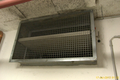
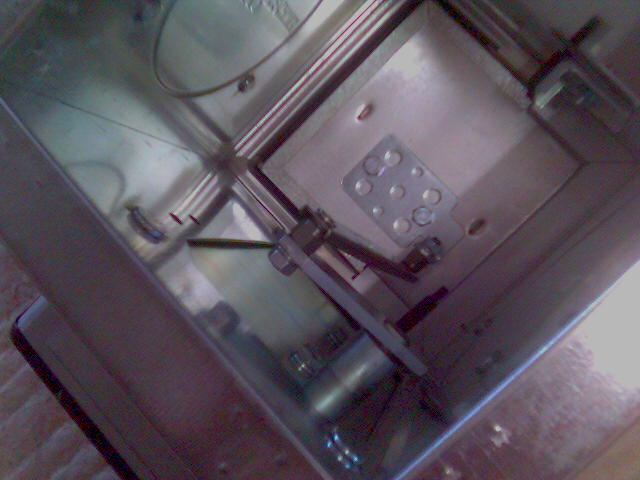
Interior of German mechanical fire damper inside of a galvanised steel duct.

Fire dampers (or fire shutters) are passive fire protection products used in heating, ventilation, and air conditioning (HVAC) ducts to prevent and isolate the spread of fire inside the ductwork through fire-resistance rated walls and floors.[1] Fire/smoke dampers are similar to fire dampers in fire resistance rating, and also prevent the spread of smoke inside the ducts. When a rise in temperature occurs, the fire damper closes, usually activated by a thermal element which melts at temperatures higher than ambient but low enough to indicate the presence of a fire, allowing springs to close the damper blades. Fire dampers can also close following receipt of an electrical signal from a fire alarm system utilising detectors remote from the damper, indicating the sensing of heat or smoke in the building occupied spaces or in the HVAC duct system.

Regulations and fire test regimes vary from one country to another, which can result in different designs and applications.

Fire dampers for ducts

[edit]

Mechanical dampers

[edit]

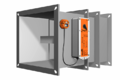
Mechanical dampers obstruct the cross-sectional area of a HVAC duct in the event of a fire either by means of a pivoting a fire-resistant board in Europe, or steel shutters in North America. Maintenance includes the function of the damper and removal of obstructions that may impair proper function.

Intumescent dampers

[edit]

Intumescent dampers swell shut due to intumescence in the event of a fire. Unlike mechanical dampers, it is a physical/chemical reaction that causes closure. Cleaning and an age assessment are periodically performed. The annulus of an intumescent damper is closed eliminating smoke migration. Also, intumescent fire dampers can be qualified to ASTM E2912.[2] or ISO 10294-5:2005 Fire dampers for air distribution systems—Part 5: Intumescent fire dampers. The purpose of some intumescent fire dampers is to prevent entry of airborne burning embers into buildings as a result of Wildlife Urban Interface Fires (WUI).[3]

Air transfer dampers

[edit]

Air transfer fire dampers (ATFD) are not protected by ductwork and must therefore be installed and manufactured to standards and tests that take into account room fire exposures. Air transfer fire dampers are passive such as intumescent types or mechanical types. They are designed for fire resistance, direct flame resistance in the open state or for smoke resistance or for combinations. Some designs are for exterior use, some are for hygienic zone use and some are for Ex-zone applications.

Depending on regional regulation, they are either tested to the same exposure as wall and floor building elements or tested slightly different such as for cable or pipe penetrations. In Europe, Sm or Sa classifications can be obtained for cold smoke resistance or cold and hot smoke resistance respectively. In the US, listing can be issued for use in wildfire exposure.

Contrary to dampers in ducts the closing time of ATFDs are crucial to avoid fire passing during the open state. For applications where direct flame penetration is not allowed through openings that are normally in open state, ATFDs must pass adequate standards. In the US, ASTM E2912 verify direct flame resistance in the open state and ASTM E119 for closed state.

Air transfer fire dampers for walls or floors are usually designed for flush installation and comes in multiple sizes. Dampers are listed for vertical or horizontal installation or both and for one- or two-way fire exposure. Performance may be fire rated resistance as the compartment they serve, with or without smoke resistance. In Europe, the harmonized ETAG 026 Part 4 apply to classification of ATFDs.

Air transfer fire dampers for doors are designed and tested for use in the lower part of door leaves and cannot be installed elsewhere or higher. In Europe, the fire door test EN 14600 and EN 1634-1 applies.

Air transfer fire dampers in facades are vents applied in wall, eave soffit, gable or foundation. In the US, these are used to protect from exterior fire exposure from neighboring structure or via window-, arson- and wildfire (ASTM E2912 plus ASTM E119) or against wildfire only (ASTM E2886). In Europe, air transfer grilles for walls can be applied externally once a national assessment of suitability for the application in regards of embers, direct flame impingement, environmental impacts etc. has been done.

Ventilating cavity fire barriers is a type of air transfer fire damper used in cavities or voids in constructions with natural ventilation, typically inside air gaps behind cladding. These are often subject to sudden direct flame impingement. In the US, ASTM E2912 cover testing, combined with E119 where required. A method to verify performance in the open state, similar to E2912, is being assessed in Europe by CEN.

Dampers for ducts applied as air transfer dampers: Allowances exist for use of duct dampers as air transfer fire dampers. Since these typically will be too hot, and even allow penetration of flames to the unexposed side during fire, they must be modified and classified for such application. To achieve this they are tested with a grid on either side to prevent combustibles to be stored too close to hot parts or flaming. Some jurisdictions prescribe a general grid for use in front of listed duct dampers, which are not listed for use without ductwork.

Fire damper inspections and maintenance

[edit]
Fire damper deficiency: The installed annular clearance around the damper violates the certification listing
The damper's certification listing is violated because the damper shares the opening with other through-penetrants and the drywall fire-separation is not continuous.

In the US, the Joint Commission, State Fire Marshals and Other Authorities Having Jurisdiction (AHJ's), require some Fire and Smoke Dampers to be tested at specified intervals. Similarly, European authorities mandate maintenance and repairs of fire dampers also, as part of approvals or listings issued following successful testing of fire damper assemblies.

See also

[edit]

References

[edit]
[edit]
Revisions and contributorsEdit on WikipediaRead on Wikipedia
from Grokipedia
A fire damper is a passive fire protection device installed within air distribution systems, such as HVAC ducts, to prevent the spread of by automatically closing off when exposed to , thereby maintaining the fire-resistance of walls, floors, partitions, or ceilings that the ducts penetrate. These dampers are essential components in building , designed to interrupt the passage of flames, hot gases, and radiant through ventilation pathways during a event, without actively controlling unless specified as a type. Typically constructed from noncombustible materials like galvanized , fire dampers feature a spring-loaded blade or multi-blade assembly that deploys via a fusible link melting at a predetermined , usually between 165°F (74°C) and 286°F (141°C), to ensure rapid closure. Fire dampers are classified into static and dynamic types based on their operational environment: static dampers are used in systems where airflow ceases upon fire detection, while dynamic dampers maintain closure against ongoing airflow to handle high-velocity conditions in active HVAC setups. They differ from smoke dampers, which are actuated by smoke detectors to restrict smoke migration rather than heat, and combination fire/smoke dampers, which integrate both functions for barriers requiring protection against fire and smoke. Installation is mandated in locations where ducts cross fire-rated assemblies with ratings of 2 hours or more, such as shaft enclosures or fire walls, and must be accessible for periodic inspection, testing, and maintenance to verify operability. Compliance with fire damper performance is governed by rigorous testing and standards, including UL 555 for fire resistance evaluation, which assesses closure under fire exposure for up to 3 hours depending on the assembly rating, and NFPA 90A for installation in air-conditioning and ventilating systems. Additional codes like NFPA 80 outline maintenance protocols, requiring inspection and testing (including visual and operational components) at least every 4 years (or every 6 years in healthcare facilities) or after system alterations, while NFPA 101 specifies their role in life safety pathways. These requirements ensure fire dampers contribute effectively to compartmentalization strategies in commercial, industrial, and institutional buildings, reducing fire propagation risks and supporting occupant evacuation.

Overview

Definition and Purpose

A fire damper is a component installed within (HVAC) ductwork to prevent the spread of through ventilation systems by automatically closing upon exposure to elevated temperatures. The primary purpose of a fire damper is to compartmentalize buildings by sealing off ducts that penetrate fire-rated walls, floors, or ceilings, thereby preserving the structural integrity of fire-resistance-rated assemblies and facilitating safe occupant evacuation during a . These devices play a critical role in life safety codes by limiting the propagation of flames and hot gases within commercial, industrial, institutional, and multi-family residential buildings, ensuring that remains confined to its origin and reducing the risk of widespread damage or . In basic applications, fire dampers are integrated into air handling systems to safeguard against fire traveling through concealed pathways such as ducts, which could otherwise accelerate rapid fire growth; for instance, they help prevent conditions in multi-story buildings by interrupting that might otherwise fuel across floors. Various types, such as mechanical or variants, are available to accommodate different duct configurations while fulfilling this protective function.

Historical Development

Prior to the 20th century, fire control in buildings relied on manual mechanisms such as louvers and shutters in chimneys and vents to manage smoke and limit fire spread, particularly in Middle Ages dwellings where these devices helped channel smoke from open fire pits. However, these early methods lacked standardization and integration with modern heating, ventilation, and air conditioning (HVAC) systems, which did not emerge until the post-World War II building boom in the mid-20th century. Early 20th-century building codes began addressing HVAC fire risks, culminating in the importance of automatic fire dampers for preventing fire propagation being first formally recognized in 1939 by the National Board of Fire Underwriters, based on NFPA studies of smoke hazards in ventilation systems, marking the shift toward engineered solutions in building fire protection. This invention addressed vulnerabilities in emerging plastic piping and ductwork, laying the foundation for passive fire barriers in HVAC systems using designs with a fusible link that melts under heat exposure, allowing the damper to close automatically via and block fire spread through ducts. During the and , fire damper technology evolved rapidly amid the rise of high-rise construction, with the development of Underwriters Laboratories (UL) testing standards, including UL 555 in 1966, which established protocols to verify dampers' performance under fire conditions. In the 1980s, the application of intumescent materials in fire dampers expanded, providing superior sealing against fire and hot gases when heated and enhancing effectiveness beyond mechanical closures alone. In the and , advancements included the integration of smoke detection systems into combination fire and smoke dampers, driven by updates to (NFPA) codes such as NFPA 90A, which expanded requirements for damper placement and actuation in complex building environments. Post-2010 developments have emphasized dynamic fire dampers capable of closing against high-velocity in active HVAC systems, improving reliability in modern high-performance buildings. These innovations also align with standards like , incorporating energy-efficient designs that maintain without compromising ventilation efficiency.

Types

Mechanical Fire Dampers

Mechanical fire dampers are passive devices installed in HVAC ductwork to prevent the spread of by physically closing off paths through ducts penetrating fire-rated barriers. These dampers rely on mechanical components rather than chemical reactions, ensuring reliable operation in response to exposure without requiring external power sources. Design variants of mechanical fire dampers include curtain-style and multi-blade configurations. Curtain-style dampers feature a single folding blade that deploys like an accordion, stacking open at the top of the frame during normal operation to permit , then unfolding to seal the duct upon activation. Multi-blade dampers, in contrast, use multiple parallel or opposed blades that pivot via linkages to form a tight seal when closed, offering options for low-leakage performance in various duct orientations. Additionally, mechanical fire dampers are classified as static or dynamic based on their intended use. Static dampers are suited for non-moving air systems where fans are off during a fire, while dynamic dampers are engineered to close against active , typically rated for velocities up to 3000 feet per minute (fpm). The functionality of mechanical fire dampers centers on a heat-responsive fusible link that melts at 165°F (74°C), releasing tension to allow springs or gravity to drive the closure of blades or the curtain. This mechanism ensures rapid sealing of the duct opening, with certified performance achieving a 3-hour fire-protection rating under UL 555 standards, which test for integrity during fire exposure and hose stream resistance. Unlike alternatives that expand to seal gaps, mechanical designs provide immediate physical closure but may necessitate greater frame depth for blade travel. Mechanical fire dampers find primary applications in low-velocity duct systems within static HVAC configurations, such as supply and exhaust ducts in commercial office buildings, where they compartmentalize fire spread across floors or walls. Their advantages include cost-effectiveness due to simple construction and high reliability from the absence of electrical dependencies, making them a standard choice for routine building ventilation protection.

Intumescent Fire Dampers

Intumescent fire dampers feature a design centered on a sleeve or blade embedded with materials, such as graphite-based compounds, housed within a rigid galvanized without any moving components. These materials are engineered to expand dramatically—typically 20 to 50 times their original volume—when exposed to temperatures exceeding 200°C, thereby filling voids and sealing HVAC ducts to prevent . This passive mechanism relies solely on the thermal response of the substance to achieve closure, making the dampers lightweight, compact, and modular for integration into walls, floors, or ceilings. In terms of functionality, the material activates directly through heat exposure, swelling to form a dense, insulating char that blocks and restricts across the ductwork, eliminating the need for a fusible link or mechanical actuators. Tested assemblies can achieve fire integrity and insulation ratings of up to 4 hours, ensuring robust compartmentation during events. Their slim profile and absence of operational parts also make them ideal for retrofitting into confined spaces, such as existing duct risers or penetrations, where traditional dampers might be impractical. These dampers find applications in challenging environments prone to high humidity or , including commercial kitchens and laboratories, where mechanical elements could degrade over time, and they are widely adopted in to meet EN 15650 requirements for ventilation . Unlike blade-based mechanical dampers, models provide silent operation throughout their lifecycle due to the lack of . Their versatility extends to facilities, high-rise buildings, and educational institutions, supporting compliance with standards like AS 1530.4 for fire resistance levels up to 120 minutes in various substrates.

Smoke and Combination Dampers

Smoke dampers are specialized devices installed in heating, ventilating, and air-conditioning (HVAC) systems to restrict the movement of through ductwork during events, while allowing normal under typical conditions. These dampers remain open during standard operations but close automatically upon detection of , utilizing motorized or pneumatic actuators connected to smoke detectors to seal the duct and prevent migration across barriers. They are designed to operate and maintain integrity at elevated but relatively low temperatures, up to 286°F (141°C), ensuring functionality in the early stages of a before higher heat levels compromise the system. Smoke dampers are tested and rated for leakage and operational performance under UL 555S, the Standard for Smoke Dampers, which evaluates their ability to limit passage under dynamic conditions, including air velocities up to 2,000 fpm and pressures up to 4 in. wg. Combination fire-smoke dampers integrate the functions of both and dampers into a single unit, providing dual protection against flame spread and propagation in HVAC penetrations of fire-rated and barriers. These devices incorporate a fusible link for heat-activated closure, similar to mechanical dampers, alongside an for detection response, allowing the damper to close upon either a thermal signal (typically at 165°F to 286°F) or a activation. Classified under both UL 555 for resistance (up to 3-hour ratings) and UL 555S for control, combination dampers must demonstrate low leakage rates (Class I or II) and operational reliability at temperatures up to 350°F, though code limits often cap ambient exposure at 286°F in barrier applications. Unlike standalone dampers, they require electrical or pneumatic power to reopen after closure, supporting engineered control systems that may need periodic modulation. These dampers are essential in building designs requiring compartmentalization of , such as in atriums, stairwells, and high-occupancy structures where rapid spread poses significant life-safety risks. Under the International Building Code (IBC) Section 717, dampers are mandated at duct penetrations of barriers, while combination fire- dampers are required where both fire partitions and control are needed, such as in corridors and zoned HVAC systems to maintain tenable environments during evacuation. Applications focus on zoning to isolate contaminated areas, ensuring compliance with performance-based management in assembly occupancies and high-rise buildings.

Air Transfer and Specialized Dampers

Air transfer dampers are specialized dampers designed for installation in walls, partitions, or other fire-rated assemblies between contiguous spaces, such as rooms, to facilitate under normal conditions while automatically closing to restrict spread during an . These dampers typically feature a multi-blade that aligns parallel to the when open, ensuring minimal resistance, and are equipped with fusible links or other actuators that release at elevated temperatures, typically around 165°F (74°C), to drive the blades into a closed position. They are classified under UL 555, providing fire-resistance ratings of 1.5 hours or 3 hours, depending on the assembly penetrated, and are tested for closure under both static and dynamic conditions up to 2,000 feet per minute (fpm). Unlike standard duct dampers, air transfer dampers do not require connection to HVAC ductwork and are often integrated into grilles or vents for aesthetic and functional purposes in non-ducted applications. Ceiling radiation dampers serve as protective devices in fire-resistance-rated floor/ceiling or roof/ceiling assemblies, particularly where ducts or air outlets penetrate the membrane, to limit radiative into concealed spaces above the ceiling. These dampers are usually circular in shape to match common duct terminations and can employ either mechanical blades with fusible links or materials that expand upon heat exposure to seal the opening. They are evaluated under UL 555C for operational performance and must be tested as part of the specific assembly per ASTM E119 or UL 263, achieving fire-resistance ratings such as 2 hours for typical board ceilings without compromising the assembly's integrity. Dynamic-rated versions accommodate velocities up to 1,500 fpm and static pressures of 4 inches water gauge (in. wg), making them suitable for active HVAC terminations like diffusers, while static models suffice for inactive openings. Corridor dampers are low-profile combination fire and smoke dampers specifically engineered for installation in the ceilings of fire-resistance-rated corridors, where they protect penetrations from both flame and smoke migration while maintaining minimal obstruction to normal ventilation. These units integrate fire damper functionality per UL 555 with smoke control per UL 555S, closing via thermal or pneumatic actuators, and are tested horizontally in corridor ceiling configurations to withstand velocities up to 150 fpm during fire exposure. They achieve a 1-hour fire-resistance rating and Class I or II leakage performance at temperatures up to 350°F (177°C), ensuring compliance with building codes for egress paths. In healthcare facilities, such as hospitals, corridor dampers are mandated to compartmentalize smoke zones, supporting by isolating areas during emergencies without fully ducted HVAC systems. These specialized dampers find application in scenarios beyond conventional ductwork, including partition walls for inter-room ventilation, plenums for equalization, and penetrations in multi-story structures where standard fire dampers are impractical. For instance, in hotels, air transfer dampers enable controlled airflow between guest rooms and corridors or plenums, enhancing energy efficiency and comfort while meeting fire separation requirements.

Operation and Components

Activation Mechanisms

Fire dampers primarily activate through heat-responsive mechanisms designed to detect elevated temperatures and initiate closure to prevent spread through HVAC systems. The most common activation method involves a fusible link, typically composed of a low-melt eutectic rated at 165°F (74°C), which holds the damper blades open under normal conditions. When exposed to conditions, the fusible link melts, breaking the tension that restrains closure springs or allowing gravity to drop the blades into position, thereby sealing the duct. This process requires replacement of the fusible link for reset after , as it is a one-time-use device, with temperature ratings ranging from 160°F to 286°F (71°C to 141°C) depending on the application and UL 555 classification. Fusible links are widely used in mechanical fire dampers, such as curtain-style designs, to ensure passive, reliable operation without external power. Alternative thermal sensors include frangible glass types, which contain a that expands and shatters the bulb at predetermined temperatures, releasing a mechanism to close the damper via springs or weights. Pellet-type sensors employ fusible materials in pellet form that soften or melt at set thresholds, similarly triggering closure; these are often rated for 165°F to 212°F (74°C to 100°C) and provide an additional option for detection in static or low-velocity systems per UL 555 requirements. Both bulb and pellet sensors ensure automatic response to without electrical input, expanding or fusing to activate within the standard's operational limits. For dynamic or combination fire and smoke dampers, motorized actuators provide activation, utilizing electric or pneumatic motors to drive blade closure upon receiving a signal from a system or integrated thermal . These actuators incorporate designs that default to the closed position during power loss, often with battery backups to maintain functionality, and must comply with UL 555 testing for controlled closure operations. Activation mechanisms are engineered for rapid response to achieve full closure before conditions develop, with UL 555 mandating operation upon detection and no leakage after exposure to the standard endurance curve reaching up to 2500°F (1371°C). Fusible link and thermal sensor-based systems typically close within seconds of melting or bursting, while motorized types must complete closure in no more than 75 seconds under test conditions to verify performance. This ensures dampers maintain integrity during the rated exposure period, typically 1.5 or 3 hours, without permitting flame passage.

Structural Components

Fire dampers are constructed from durable, fire-resistant materials to ensure reliable performance in containing and within HVAC systems. The primary structural elements include the frame, , blades or , linkage and springs, and various accessories, all designed to withstand high temperatures and maintain during fire exposure. These components must comply with rigorous standards to achieve fire-resistance ratings typically ranging from 1.5 to 3 hours. The frame forms the foundational structure of the damper, typically fabricated from galvanized steel with a minimum thickness equivalent to 16-gauge (0.060 inch or 1.5 mm) to provide rigidity and support for mounting in walls or floors. Retaining angles, often integrated into the frame, facilitate secure attachment to building assemblies, ensuring the damper remains in place under thermal stress. Corrosion protection, such as G60 hot-dipped galvanizing (minimum 0.00041-inch zinc coating), is applied to ferrous metal frames to prevent degradation in humid or corrosive environments. Stainless steel options, such as 304 or 316 grades, are available for enhanced durability in specialized applications. Adjacent to the frame is the sleeve, a cylindrical extension that connects the damper to the ductwork, constructed from galvanized with a minimum thickness of 0.053 inches (16-gauge) for dampers up to 24 by 36 inches and 0.067 inches (14-gauge) for larger sizes. The sleeve typically extends 6 to 16 inches beyond the frame to allow for breakaway duct connections, promoting flexibility during seismic or events while maintaining airtight integration. Its gauge must match or exceed that of the connected duct to ensure structural continuity. The blades or curtain assembly serves as the primary barrier to and smoke passage, commonly made from 16-gauge galvanized (0.060-inch thickness) or for multi-blade designs, with interlocking edges to achieve a tight seal. In curtain-style dampers, a flexible or aluminum curtain (minimum 0.027-inch thickness for aluminum variants) deploys to block the opening. seals, composed of materials that expand under heat, are applied to blade edges to ensure zero leakage when closed, enhancing the damper's fire-containment . Linkage mechanisms, typically stainless steel arms or rods, connect the blades to the closure system, providing precise movement and positive engagement. High-tension closure springs, made from corrosion-resistant materials like or equivalents, generate sufficient force to overcome and latch the damper securely, ensuring rapid and reliable shutoff. Gaskets, often silicone-based, surround linkage points to maintain an airtight seal against infiltration. Accessories enhance functionality and compliance, including access panels fabricated from the same material as the sleeve for easy inspection of internal components. Position indicators, such as open/closed switches, provide visual or electrical confirmation of damper status. UL labels, affixed to the assembly, denote the (e.g., 1.5 or 3 hours) and maximum size tested per UL 555, verifying adherence to construction standards.

Installation

Placement Requirements

Fire dampers must be installed at every point where ducts penetrate fire-rated barriers, including walls, floors, partitions, and ceilings with a of 2 hours or greater, to prevent the spread of fire through HVAC systems. According to NFPA 90A, this requirement applies to all such penetrations, ensuring compartmentalization during a event. Additionally, if a duct offsets or branches within a fire-rated barrier, separate fire dampers are required at each penetration to maintain the barrier's . In vertical installations, such as those within shafts, fire dampers are placed at each floor penetration to protect against vertical fire spread through multi-story enclosures. For horizontal installations in floors, the dampers must be positioned to preserve the full of the assembly, typically in the plane of the floor. Dynamic fire dampers, designed for high-velocity airflow, are recommended in locations where the HVAC system remains operational during a fire. Exceptions to these placement rules exist to accommodate specific construction methods. Fire dampers are not required if the duct is fully encased in or other materials providing an equivalent , or if the entire duct run remains within a single fire compartment without crossing rated barriers. For air transfer openings in 1-hour rated partitions, smoke dampers may suffice instead of fire dampers, depending on the barrier's role in smoke control. In multi-zone HVAC systems, fire dampers are strategically placed at branch points and duct intersections that align with fire compartment boundaries to isolate affected areas and limit fire propagation across zones.

Installation Procedures

Proper installation of fire dampers is essential to maintain their fire-resistance rating and ensure compliance with applicable standards such as UL 555 and NFPA 90A. The process begins with preparation of the opening in the fire barrier, where the wall or floor penetration must accommodate the damper assembly while allowing for thermal expansion during a fire event. Typically, the opening is cut to provide a clearance of at least 1/4 inch but no more than 1/2 inch larger than the damper frame dimensions on all sides, though specific requirements may vary by damper size and type— for instance, rectangular dampers often require 1/8 inch per foot of dimension with a minimum of 1/4 inch total clearance. A steel sleeve, matching the gauge specified in the UL listing (e.g., 16 gauge for dampers up to 36 by 24 inches), must be installed prior to constructing the surrounding barrier to support the damper and facilitate secure mounting. Once the opening and sleeve are prepared, the damper frame is mounted within the barrier using retaining angles to secure it in place. These angles, typically 1-1/2 by 1-1/2 by 16-gauge , must overlap the barrier surface by a minimum of 1 inch on all sides to cover the annular space and ensure stability, with larger assemblies potentially requiring angles on both sides of the partition. Fasteners such as (minimum 1/2-inch beads), No. 10 screws, 1/4-inch bolts, or 3/16-inch rivets are used to attach the angles to the , spaced no more than 6 to 8 inches on center; is preferred for permanence in high-vibration areas. Vertical installations occur in walls with the damper blades to the barrier plane, while horizontal installations in floors require the assembly to be oriented accordingly, often with breakaway duct connections to prevent structural stress transmission during . Ducts are connected to the using breakaway joints—such as draw bands, flanges, or flexible connectors rated for the system's —to allow disconnection under conditions without compromising the damper's function. Sealing the installation perimeter is critical to prevent air leakage and maintain the barrier's integrity. Fire-rated or is applied around the damper frame and retaining angles where they meet the barrier, filling any gaps without exceeding the maximum annular space permitted by the listing; non-firestop materials are generally prohibited unless specified by the manufacturer. Duct-to-sleeve joints are sealed with appropriate or mastic to ensure airtightness under normal operation, while avoiding rigid connections that could induce stress. After installation, field-applied labeling identifies the damper type, rating, and installation orientation per UL requirements, often including a permanent tag for . An initial operational test is performed to verify free blade movement, full closure without binding, and proper alignment, conducted under both airflow and static conditions to confirm functionality before system commissioning. Access panels must be provided for future inspections without penetrating the rated assembly.

Standards and Regulations

Key Codes and Standards

In the United States, fire dampers are primarily regulated by several key codes from the National Fire Protection Association (NFPA) and Underwriters Laboratories (UL), alongside building codes such as the International Building Code (IBC) and International Fire Code (IFC). NFPA 90A, Standard for the Installation of Air-Conditioning and Ventilating Systems, governs the installation of fire dampers within HVAC systems to prevent fire spread through ducts penetrating fire-rated assemblies. NFPA 80, Standard for Fire Doors and Other Opening Protectives, addresses the installation, testing, and maintenance of fire dampers as part of protective assemblies in walls, floors, and ceilings. The IBC and IFC require fire dampers in ducts penetrating fire barriers with a 2-hour or greater fire-resistance rating, ensuring compartmentalization in buildings. UL 555, Standard for Fire Dampers, establishes testing protocols where dampers must withstand a standard fire exposure reaching up to 1910°F (1040°C) for specified durations without excessive leakage or failure. Internationally, standards vary by region but emphasize fire resistance testing for dampers in service installations. In , EN 1366, Fire Resistance Tests for Service Installations (specifically Part 2 for fire dampers), defines methods to evaluate damper performance in fire-separating elements under elevated temperatures. In the , BS 476, Fire Tests on Building Materials and Structures (Parts 20-22), provides protocols for assessing the fire resistance of non-loadbearing elements, including dampers in ducts and partitions. Australia's AS 1530, Methods for Fire Tests on Building Materials, Components and Structures (Part 4: Fire-Resistance Tests of Elements of Construction), outlines procedures for determining damper integrity during fire exposure. Fire dampers must be sized to match the cross-sectional dimensions of the associated ducts to ensure effective sealing, with fire resistance limits (FRL) typically ranging from 1 to 4 hours depending on the assembly rating. Leakage ratings are critical for performance, with a maximum Class 1A (lowest leakage) required under standards like UL 555 and AMCA 511 to minimize airflow through closed dampers at elevated temperatures.

Testing and Certification

Fire dampers are subjected to factory testing under UL 555 to verify their ability to close and maintain integrity during exposure. In the furnace test, the damper is installed in a test assembly and exposed to a standard time-temperature curve that reaches temperatures of approximately 1700°F (930°C) at 1 hour and 1850°F (1010°C) by 1.5 hours, continuing for a total duration of 1.5 or 3 hours based on the desired fire-protection rating. The test evaluates closure upon activation of the fusible link, which melts at a minimum of 165°F, ensuring the damper fully closes without re-opening and with no flaming on the unexposed side or excessive leakage that could propagate . Leakage through the closed damper is measured and must remain below specified limits in cubic feet per minute (CFM) per to confirm containment. For applications involving active airflow, dynamic testing under UL 555 assesses the damper's performance against moving air. Dampers rated for dynamic systems must close reliably at airflow velocities of at least 2000 feet per minute (fpm) and differentials up to 4 inches gauge (in. wg.), with testing conducted under both ambient and heated conditions to simulate fire scenarios. This ensures the damper can overcome system pressures greater than 1000 fpm without failing to seal. Following installation, field verifies proper integration and functionality. This includes for correct placement, secure mounting, and absence of obstructions, followed by manual operation to confirm full opening and closure. Airflow verification is performed under operational conditions to ensure no blockages impede performance, with documentation of results required for compliance. Certification marks from recognized laboratories affirm compliance with testing standards. Underwriters Laboratories (UL) and FM Global labels indicate successful passage of UL 555 and related tests, while third-party certifications from (ETL) provide international validation for equivalent performance. These marks are affixed to the damper and must be present for regulatory acceptance.

Inspection and Maintenance

Inspection Protocols

Fire dampers must undergo an initial inspection and test within one year following installation or , with subsequent inspections required every four years thereafter, as stipulated by NFPA 80. In healthcare facilities such as hospitals, this interval extends to every six years to accommodate operational constraints while ensuring compliance. For dampers integrated into smoke control systems, more frequent testing applies: semi-annually for dedicated systems and annually for non-dedicated ones, per NFPA 105 and related International Fire Code provisions. Inspection methods emphasize both visual and functional assessments to verify operational . Inspectors perform a visual examination for signs of damage, , or obstructions, ensuring the damper frame, blades, and surrounding components remain free from defects that could impair function. involves manual operation, such as removing the fusible link to confirm the damper achieves full closure without binding and that blades securely if equipped; the fusible link must be verified as intact, unpainted, and rated for the correct temperature. Access panels must allow unobstructed reach to these elements, and for dynamic fire dampers, airflow velocity should not exceed the manufacturer's rated limits during testing. Documentation is essential for compliance and , requiring of each to include the damper's location, test date, inspector's name and qualifications, observed conditions, and any deficiencies noted. Photographs of the damper in both open and closed positions, along with tags indicating pass/fail status, should accompany these , which must be retained by the building owner for at least three inspection cycles. In certain jurisdictions, such as , inspections since January 1, 2022, must be conducted by certified professionals holding credentials from the International Certification Board (ICB) for and smoke damper technicians. Common issues identified during inspections include stuck or bound blades due to accumulated dust, debris, or misalignment, as well as failed fusible links from or improper installation, which prevent proper closure. Such deficiencies necessitate immediate tagging of the damper as out-of-service to alert teams, ensuring it is not relied upon until addressed. These findings often highlight the need for follow-up to restore functionality.

Maintenance Procedures

Fire dampers require both preventive and corrective maintenance to ensure they function reliably during fire events by preventing obstructions and maintaining mechanical integrity. Preventive maintenance focuses on routine upkeep to mitigate environmental factors that could impair performance. Debris accumulation on blades, frames, and linkages should be cleaned as required by the manufacturer, during periodic inspections, or more frequently in dusty environments using mild detergents or compressed air to avoid binding or incomplete closure. Linkages, bearings, and pivot points should be lubricated as specified by the manufacturer with silicone-based or dry lubricants, such as silicone spray or TFE dry lube, avoiding petroleum-based products that attract dust; non-metallic bearings typically require no lubrication. Corrective maintenance involves targeted repairs to restore functionality following , , or . Fusible links, being non-resettable, must be replaced after or testing with equivalent temperature-rated components to ensure proper thermal response. If blades show signs of binding or misalignment, they should be realigned and tested under normal airflow to confirm full closure without obstruction. Gaskets and seals compromised by or require resealing or replacement to preserve and barrier integrity. For motorized fire dampers, actuators may need adjustment or replacement if inoperable, using manufacturer-specified parts. Essential tools for include access panels to reach concealed dampers, wrenches to secure mountings and linkages during repairs, and hand levers or for resetting multi-blade dampers while replacing fusible links. generation equipment is used for testing actuators in systems integrated with smoke detection to verify response mechanisms. Following maintenance, dampers must be retested by cycling through open and closed positions under normal airflow to confirm operational integrity, with results documented including dates, actions taken, and any parts replaced. For motorized variants, power supplies and backup batteries should be checked to ensure reliable actuation during emergencies. These steps address issues identified during routine inspections, such as or buildup.

References

Add your contribution
Related Hubs
User Avatar
No comments yet.