Hubbry Logo
search
logo
1516666

Fizeau experiment

logo
Community Hub0 Subscribers
Read side by side
from Wikipedia

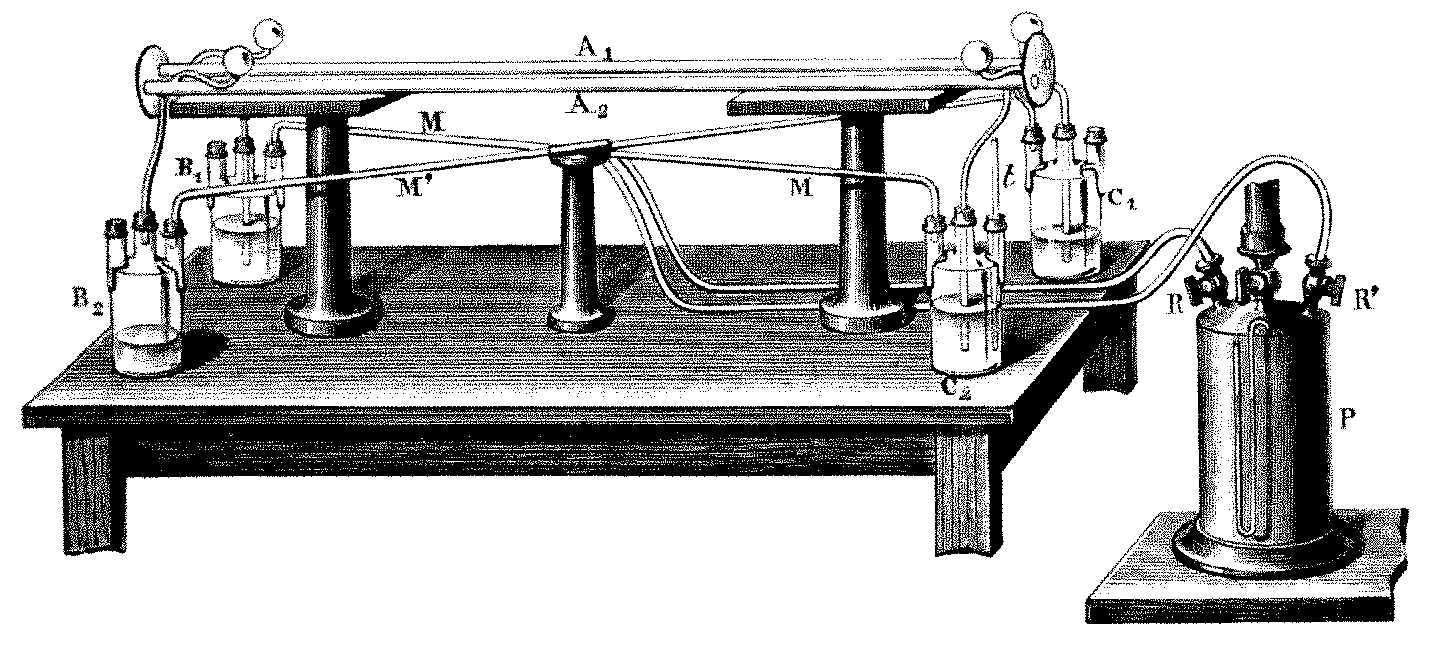
Figure 1. Apparatus used in the Fizeau experiment

The Fizeau experiment was carried out by Hippolyte Fizeau in 1851 to measure the relative speeds of light in moving water. Fizeau used a special interferometer arrangement to measure the effect of movement of a medium upon the speed of light.

According to the theories prevailing at the time, light traveling through a moving medium would be dragged along by the medium, so that the measured speed of the light would be a simple sum of its speed through the medium plus the speed of the medium. Fizeau indeed detected a dragging effect, but the magnitude of the effect that he observed was far lower than expected. When he repeated the experiment with air in place of water he observed no effect. His results seemingly supported the partial aether-drag hypothesis of Augustin-Jean Fresnel, a situation that was disconcerting to most physicists. Over half a century passed before a satisfactory explanation of Fizeau's unexpected measurement was developed with the advent of Albert Einstein's theory of special relativity. Einstein later pointed out the importance of the experiment for special relativity, in which it corresponds to the relativistic velocity-addition formula when restricted to small velocities.

Although it is referred to as the Fizeau experiment, Fizeau was an active experimenter who carried out a wide variety of different experiments involving measuring the speed of light in various situations.

Background

[edit]

As scientists in the 1700's worked on a theory of light and of electromagnetism, luminiferous aether, a medium that would support waves, was the focus of many experiments.[S 1]: 98  Two critical issues were the relation of aether to motion and its relation to matter. For example, astronomical aberration, the apparent motion of stars observed at different times of year, was proposed to be related to starlight propagated through an aether.[S 1]: 108  In 1846 Fresnel proposed that the portion of aether that will move with an object relates to the object's index of refraction of light, which was taken to be the ratio of the speed of light in the material to the speed of light in interstellar space.[S 1]: 110  Having recently measured the speed of light in air and water, Fizeau set out to measure the speed of light in moving water.[S 2]

Experimental setup

[edit]
Figure 2. Highly simplified representation of Fizeau's experiment.
Figure 3. Interferometer setup in the Fizeau Experiment (1851)

A highly simplified representation of Fizeau's 1851 experiment is presented in Fig. 2. Incoming light is split into two beams by a beam splitter (BS) and passed through two columns of water flowing in opposite directions. The two beams are then recombined to form an interference pattern that can be interpreted by an observer.

The simplified arrangement illustrated in Fig. 2 would have required the use of monochromatic light, which would have enabled only dim fringes. Because of white light's short coherence length, use of white light would have required matching up the optical paths to an impractical degree of precision, and the apparatus would have been extremely sensitive to vibration, motion shifts, and temperature effects.

Fizeau's actual apparatus, illustrated in Fig. 3 and Fig. 4, was set up as a common-path interferometer. This guaranteed that the opposite beams would pass through equivalent paths, so that fringes readily formed even when using the sun as a light source.

The double transit of the light was for the purpose of augmenting the distance traversed in the medium in motion, and further to compensate entirely any accidental difference of temperature or pressure between the two tubes, from which might result a displacement of the fringes, which would be mingled with the displacement which the motion alone would have produced; and thus have rendered the observation of it uncertain.[P 1]

— Fizeau

Figure 4. Setup of the Fizeau Experiment (1851)

A light ray emanating from the source S is reflected by a beam splitter G and is collimated into a parallel beam by lens L. After passing the slits O1 and O2, two rays of light travel through the tubes A1 and A2, through which water is streaming back and forth as shown by the arrows. The rays reflect off a mirror m at the focus of lens L, so that one ray always propagates in the same direction as the water stream, and the other ray opposite to the direction of the water stream. After passing back and forth through the tubes, both rays unite at S, where they produce interference fringes that can be visualized through the illustrated eyepiece. The interference pattern can be analyzed to determine the speed of light traveling along each leg of the tube.[P 1][P 2][S 3]

Result

[edit]

Fizeau's experiment showed a faster speed of light in water moving in the same direction and a slower speed when the water moved opposite the light. However the amount of difference in the speed of light was only a fraction of the water speed. Interpreted in terms of the aether theory, the water seemed to drag the aether and thus the light propagation, but only partially.[1]: 53 

Impact

[edit]

At the time of Fizeau's experiment, two different models of how aether related to moving bodies were discussed, Fresnel's partial drag hypothesis and George Stokes' complete aether drag hypothesis. Augustin-Jean Fresnel (1818) had proposed his model to explain an 1810 experiment by Arago. In 1845 Stokes showed that complete aether drag could also explain it. Since Fresnel had no model to explain partial drag, scientists favored Stokes' explanation.[S 4]

According to the Stokes hypothesis, the speed of light should be increased or decreased when "dragged" along by the water through the aether frame, dependent upon the direction.[S 5]: 33 The overall speed of a beam of light should be a simple additive sum of its speed through the water plus the speed of the water. That is, if n is the index of refraction of water, so that c/n is the speed of light in stationary water, then the predicted speed of light w in one arm would be[S 2]: 40 
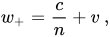
and the predicted speed in the other arm would be
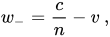
for water with velocity . Hence light traveling against the flow of water should be slower than light traveling with the flow of water. The interference pattern between the two beams when the light is recombined at the observer depends upon the transit times over the two paths.[S 6]

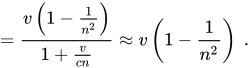
However Fizeau found that
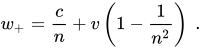
In other words, light appeared to be dragged by the water, but the magnitude of the dragging was much lower than expected.

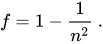
The Fizeau experiment forced physicists to accept the empirical validity of Fresnel's model, that a medium moving through the stationary aether drags light propagating through it with only a fraction of the medium's speed, with a dragging coefficient f related to the index of refraction:
Although Fresnel's hypothesis was empirically successful in explaining Fizeau's results, many experts in the field, including Fizeau himself, found Fresnel's hypothesis partial aether-dragging unsatisfactory. Fresnel had found an empirical formula that worked but no mechanical model of the aether was used to derive it.[S 4]

Confirmation

[edit]

Wilhelm Veltmann's colors of light

[edit]

In 1870 Wilhelm Veltmann demonstrated that Fresnel's formula worked for different frequencies (colors) of light. According to Fresnel's model this would imply different amounts of aether drag for different colors of light. The velocity with white light, a mixture of colors, would be unexplained.[S 4]

Hoek experiment

[edit]

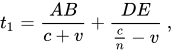
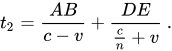
An indirect confirmation of Fresnel's dragging coefficient was provided by Martin Hoek (1868).[P 3] His apparatus was similar to Fizeau's, though in his version only one arm contained an area filled with resting water, while the other arm was in the air. As seen by an observer resting in the aether, Earth and hence the water is in motion. So the following travel times of two light rays traveling in opposite directions were calculated by Hoek (neglecting the transverse direction, see image):

Figure 6. Hoek expected the observed spectrum to be continuous with the apparatus oriented transversely to the aether wind, and to be banded with the apparatus oriented parallel to the wind. In the actual experiment, he observed no banding regardless of the instrument's orientation.

The travel times are not the same, which should be indicated by an interference shift. However, if Fresnel's dragging coefficient is applied to the water in the aether frame, the travel time difference (to first order in v/c) vanishes. Upon turning the apparatus table 180 degrees, altering the direction of a hypothetical aether wind, Hoek obtained a null result, confirming Fresnel's dragging coefficient.[S 5][S 1]: 111 

In the particular version of the experiment shown here, Hoek used a prism P to disperse light from a slit into a spectrum which passed through a collimator C before entering the apparatus. With the apparatus oriented parallel to the hypothetical aether wind, Hoek expected the light in one circuit to be retarded 7/600 mm with respect to the other. Where this retardation represented an integral number of wavelengths, he expected to see constructive interference; where this retardation represented a half-integral number of wavelengths, he expected to see destructive interference. In the absence of dragging, his expectation was for the observed spectrum to be continuous with the apparatus oriented transversely to the aether wind, and to be banded with the apparatus oriented parallel to the aether wind. His actual experimental results were completely negative.[P 3][S 5]

Mascart's birefringence experiment

[edit]

Éleuthère Mascart (1872) demonstrated a result for polarized light traveling through a birefringent medium gives different velocities in accordance with Fresnel's empirical formula. However, the result in terms of Fresnel's physical model requires different aether drag in different direction in the medium.[S 4]

Michelson and Morley confirmation

[edit]
Figure 5. Improved Fizeau type experiment by Michelson and Morley in 1886. Collimated light from source a falls on beam splitter b where it divides: one part follows the path b c d e f b g and the other the path b f e d c b g.

Albert A. Michelson and Edward W. Morley (1886)[P 4] repeated Fizeau's experiment with improved accuracy,[S 7]: 113  addressing several concerns with Fizeau's original experiment: (1) Deformation of the optical components in Fizeau's apparatus could cause artifactual fringe displacement; (2) observations were rushed, since the pressurized flow of water lasted only a short time; (3) the laminar flow profile of water flowing through Fizeau's small diameter tubes meant that only their central portions were available, resulting in faint fringes; (4) there were uncertainties in Fizeau's determination of flow rate across the diameter of the tubes. Michelson redesigned Fizeau's apparatus with larger diameter tubes and a large reservoir providing three minutes of steady water flow. His common-path interferometer design provided automatic compensation of path length, so that white light fringes were visible at once as soon as the optical elements were aligned. Topologically, the light path was that of a Sagnac interferometer with an even number of reflections in each light path.[S 8] This offered extremely stable fringes that were, to first order, completely insensitive to any movement of its optical components. The stability was such that it was possible for him to insert a glass plate at h or even to hold a lighted match in the light path without displacing the center of the fringe system. Using this apparatus, Michelson and Morley were able to completely confirm Fizeau's results not just in water, but also in air.[P 4]

Zeeman and Lorentz's improved formula

[edit]

In 1895, Hendrik Lorentz predicted the existence of an extra term due to dispersion:[S 9]: 15–20 

Since the medium is flowing towards or away from the observer, the light traveling through the medium is Doppler-shifted, and the refractive index used in the formula has to be that appropriate to the Doppler-shifted wavelength.[P 5] Zeeman verified the existence of Lorentz' dispersion term in 1915.[P 6] Using a scaled-up version of Michelson's apparatus connected directly to Amsterdam's main water conduit, Zeeman was able to perform extended measurements using monochromatic light ranging from violet (4358 Å) through red (6870 Å) to confirm Lorentz's modified coefficient.[P 7][P 6]

Later confirmations

[edit]

In 1910, Franz Harress used a rotating device and overall confirmed Fresnel's dragging coefficient. However, he additionally found a "systematic bias" in the data, which later turned out to be the Sagnac effect.[S 10]

Since then, many experiments have been conducted measuring such dragging coefficients in a diversity of materials of differing refractive index, often in combination with the Sagnac effect.[S 11] For instance, in experiments using ring lasers together with rotating disks,[P 8][P 9][P 10][P 11] or in neutron interferometric experiments.[P 12][P 13][P 14] Also a transverse dragging effect was observed, i.e. when the medium is moving at right angles to the direction of the incident light.[P 5][P 15]

Lorentz's interpretation

[edit]

In 1892, Hendrik Lorentz proposed a modification of Fresnel's model, in which the aether is completely stationary. He succeeded in deriving Fresnel's dragging coefficient as the result of an interaction between the moving water with an undragged aether.[S 12][S 13]: 25–30  He also discovered that the transition from one to another reference frame could be simplified by using an auxiliary time variable which he called local time:
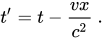
In 1895, Lorentz more generally explained Fresnel's coefficient based on the concept of local time. However, Lorentz's theory had the same fundamental problem as Fresnel's: a stationary aether contradicted the Michelson–Morley experiment. So in 1892 Lorentz proposed that moving bodies contract in the direction of motion (FitzGerald-Lorentz contraction hypothesis, since George FitzGerald had already arrived in 1889 at this conclusion). The equations that he used to describe these effects were further developed by him until 1904. These are now called the Lorentz transformations in his honor, and are identical in form to the equations that Einstein was later to derive from first principles. Unlike Einstein's equations, however, Lorentz's transformations were strictly ad hoc, their only justification being that they seemed to work.[S 12][S 13]: 27–30 

Einstein's use of Fizeau's experiment

[edit]

Einstein showed how Lorentz's equations could be derived as the logical outcome of a set of two simple starting postulates. In addition Einstein recognized that the stationary aether concept has no place in special relativity, and that the Lorentz transformation concerns the nature of space and time. Together with the moving magnet and conductor problem, the negative aether drift experiments, and the aberration of light, the Fizeau experiment was one of the key experimental results that shaped Einstein's thinking about relativity.[S 14][S 15] Robert S. Shankland reported some conversations with Einstein, in which Einstein emphasized the importance of the Fizeau experiment:[S 16]

He continued to say the experimental results which had influenced him most were the observations of stellar aberration and Fizeau's measurements on the speed of light in moving water. "They were enough," he said.

Modern interpretation

[edit]

Max von Laue (1907) demonstrated[P 16] that the Fresnel drag coefficient can be explained as a natural consequence of the relativistic formula for addition of velocities.[S 2] The speed of light in immobile water is c/n. From the velocity composition law it follows that the speed of light observed in the laboratory, where water is flowing with speed v (in the same direction as light) is Thus the difference in speed is (assuming v is small comparing to c, dropping higher order terms) This is accurate when v/c ≪ 1, and agrees with the formula based upon Fizeau's measurements, which satisfied the condition v/c ≪ 1.
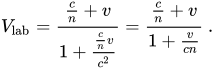

Alternatively, the Fizeau result can be derived by applying Maxwell's equations to a moving medium.[2]

See also

[edit]

References

[edit]
Revisions and contributorsEdit on WikipediaRead on Wikipedia
from Grokipedia
The Fizeau experiment, conducted in 1851 by French physicist Hippolyte Fizeau, was a pivotal optical measurement designed to test the effect of a moving medium on the speed of light, specifically by directing light beams through tubes filled with water flowing in opposite directions and observing the resulting interference patterns to quantify any velocity drag.[1] The experiment confirmed the partial dragging of light by the moving water, aligning closely with Augustin-Jean Fresnel's 1818 prediction of a drag coefficient $ f = 1 - \frac{1}{n^2} $, where $ n $ is the refractive index of the medium (approximately 1.33 for water, yielding $ f \approx 0.44 $).[1] Fizeau's setup involved splitting a light beam using a partially reflecting mirror, directing the two paths through parallel copper tubes about 1.5 meters long containing flowing water at speeds up to several meters per second, then recombining the beams to produce interference fringes whose shifts indicated relative speed differences between light traveling with and against the flow.[2] Historically, the experiment arose from debates on the luminiferous ether, following François Arago's 1810 observation that stellar aberration persisted in prisms regardless of Earth's motion, prompting Fresnel to propose that the ether is partially entrained by moving matter to explain the phenomenon without fully dragging it.[1] Fizeau, building on this, meticulously controlled variables such as water temperature and flow direction, conducting trials in both co- and counter-flow configurations to isolate the drag effect, and reported a measured drag coefficient of about 0.44, remarkably matching Fresnel's formula within experimental error.[3] This result, published in Comptes Rendus de l'Académie des Sciences, provided empirical support for the partial ether drag model and challenged full-drag or no-drag ether theories, influencing subsequent work by George Stokes and others.[1] In the context of modern physics, the Fizeau experiment gained renewed importance through Albert Einstein's 1905 theory of special relativity, which derives the same velocity addition formula without invoking the ether, interpreting the observed drag as a relativistic effect on light propagation in moving media.[3] Einstein himself highlighted it as a crucial confirmation of relativity, noting in his 1920 book Relativity: The Special and General Theory that the experiment's outcome aligned precisely with relativistic predictions rather than classical Newtonian addition of velocities.[2] Later refinements, such as those by Albert A. Michelson and Edward W. Morley in 1886 using improved interferometry, further validated the results to higher precision, solidifying its role as a cornerstone in the transition from ether-based optics to relativistic electrodynamics.[2] The experiment's legacy endures in contemporary studies of light-matter interactions, including analogs in metamaterials and graphene where similar dragging effects are observed and manipulated.[4]

Background

Theoretical Foundations

In the early 19th century, classical physics conceived of light as a transverse wave propagating through a pervasive, stationary medium known as the luminiferous aether, which was assumed to be fixed relative to absolute space and unaffected by the motion of material bodies.[1] This aether served as the universal carrier for electromagnetic disturbances, with its properties—such as elasticity and density—determining the speed of light, much like air does for sound waves. The wave theory, advanced by figures like Thomas Young and Augustin-Jean Fresnel, relied on this immobile framework to explain phenomena such as interference and diffraction, positing that light's velocity in vacuum, cc, arises from the aether's intrinsic characteristics.[1] To reconcile the wave theory with observations of stellar aberration—which suggested that the Earth's motion did not affect light's path through prisms or telescopes—Fresnel proposed in 1818 a hypothesis of partial aether entrainment by moving transparent media. He suggested that while the aether remains largely stationary in vacuum, a moving medium drags along only a fraction of the aether embedded within it, leading to a modified propagation speed for light. This partial dragging was intended to preserve the overall stationarity of the aether while accounting for subtle velocity additions in the medium's rest frame. Fresnel's motivation stemmed from François Arago's 1810 experiments, which found no expected shift in stellar aberration when prisms were used, challenging emission theories but requiring an adjustment to the wave model. Fresnel derived the drag coefficient ff by linking the refractive index nn to the aether's density and elasticity. Assuming the aether's elasticity modulus EE is uniform across all media, the speed of light in a stationary medium is v=c/n=E/ρmv = c/n = \sqrt{E / \rho_m}, where ρm\rho_m is the aether density in the medium and ρ0=E/c2\rho_0 = E / c^2 is the vacuum density. Thus, ρm=n2ρ0\rho_m = n^2 \rho_0. The excess density attributable to the medium is ρmρ0=ρ0(n21)\rho_m - \rho_0 = \rho_0 (n^2 - 1), and assuming this excess is fully entrained by the medium's motion while the base density ρ0\rho_0 remains stationary, the effective entrainment fraction is the ratio of excess to total density: f=(n21)/n2=11/n2f = (n^2 - 1)/n^2 = 1 - 1/n^2.[1] This yields the predicted light speed in a medium moving with velocity uu parallel to the propagation direction: v=c/n+fuv = c/n + f u. For the opposite direction, the sign reverses to v=c/nfuv = c/n - f u. In contrast, George Gabriel Stokes proposed in 1845 a model of complete aether dragging, where the entire aether within and near matter moves with the medium's velocity, eliminating any partial entrainment.[5] This full-drag hypothesis aimed to simplify the interaction but proved theoretically problematic, as it implied that aberration could only occur if the aether far from Earth were oppositely dragged in a manner requiring infinite velocity at infinity or violating the aether's stationarity—assumptions incompatible with the fixed-medium paradigm of classical optics.[1][5] Stokes' approach thus highlighted tensions in aether theory, underscoring the appeal of Fresnel's more nuanced partial-drag formulation for maintaining consistency with astronomical observations.[1]

Historical Precedents

In 1810, François Arago performed an experiment to test the influence of a refractive medium on stellar aberration, the apparent shift in star positions due to Earth's orbital motion through the luminiferous aether. By attaching prisms to the objective lens of a telescope, Arago expected the aberration angle to alter according to the stationary aether model, as light entering the moving medium would refract differently relative to the aether wind. However, he observed no change in the aberration, indicating that the light's path was unaffected in the expected manner and suggesting some form of aether interaction with the medium, though not a complete absence of drag.[6] This null result challenged the prevailing stationary aether hypothesis and prompted further investigations into light propagation in moving media during the early 19th century. Scientists attempted direct measurements of light speed variations in moving air currents to detect aether drag effects, but these efforts yielded inconclusive outcomes due to the limited precision of contemporary optical and timing instruments, which could not resolve the subtle shifts anticipated.[7] Full aether drag models, such as George Gabriel Stokes' 1845 proposal of viscous entrainment where the aether is completely carried along by moving matter like a fluid, faced significant criticism for incompatibility with stellar aberration data. Stokes' hypothesis implied that aberration should vanish for observers within the dragged aether, yet observations showed consistent aberration independent of the medium, leading physicists like Hendrik Lorentz to demonstrate its inconsistency with empirical evidence.[7] By the 1840s, these empirical shortcomings and theoretical conflicts led to the emergence of partial drag as a compromise hypothesis, positing that the aether is dragged proportionally to the medium's density and refractive index, as initially suggested by Augustin-Jean Fresnel in 1818 to explain Arago's result. This partial entrainment model resolved the aberration paradox while accommodating the need for some aether-medium interaction, though it remained untested experimentally until later efforts.[7]

Experimental Design

Apparatus Description

The Fizeau experiment utilized an interferometric apparatus to detect subtle differences in the speed of light propagating through water flowing in opposite directions. The core components consisted of two parallel glass tubes, each with an internal diameter of 5.3 mm and a length of 1.487 m, placed side by side to form the medium for light propagation.[8] These tubes were sealed at both ends with plane-parallel glass plates affixed perpendicularly using gum-lac to ensure optical clarity and prevent leaks, allowing light rays to pass precisely along their central axes.[8] The tubes were mounted on independent supports to isolate them from mechanical disturbances, minimizing vibrations that could blur interference patterns.[9] The optical setup employed a beam-splitting configuration to send light through the tubes in co-current and counter-current directions relative to the water flow. Sunlight in the yellow-green spectrum, chosen for its intensity and transparency in water, entered through a narrow slit and was collimated into parallel rays using a cylindrical lens, passing through the first tube before reflection by a mirror at the far end.[8] The reflected beam then traversed the second tube in the opposite direction, returning to a telescope focused at infinity for interference observation; this double-pass design through both tubes compensated for variations in temperature or pressure between them, enhancing measurement accuracy.[9] A 45-degree inclined semi-transparent mirror directed the returning light into the telescope's eyepiece, where a convergent lens sharpened the interference fringes, and a thick glass plate could be inserted to adjust fringe spacing via controlled refraction.[8] Water circulation was achieved through a closed system of four glass flasks connected by branching tubes with rounded elbows to reduce turbulence, enabling steady flow at velocities up to 7 m/s.[8] Compressed air from a 15-liter reservoir at up to 2 atmospheres drove the water, with flow rates measured by timing the volume discharged over intervals; two cocks allowed simultaneous reversal of direction in both tubes for comparative measurements.[8] Temperature was monitored to limit refractive index fluctuations, as even small changes could affect fringe positions, and the setup included slits covering about one-fifth of the tube's cross-section to optimize light throughput while maintaining beam coherence.[9] Precision engineering was paramount, with tube alignment achieved to within arcseconds using adjustable mounts to ensure central ray propagation and maximal fringe contrast.[9] Vibrations were further suppressed by separating the water reservoirs and pumps from the optical bench, preventing motion transmission to the tubes.[8] This apparatus, motivated by Fresnel's partial aether drag hypothesis, represented an innovative adaptation of interferometry for detecting velocity-dependent light propagation effects in a moving medium.[9]

Measurement Procedure

The measurement procedure commenced with the preparation of the parallel glass tubes, each 1.487 meters long with an internal diameter of 5.3 millimeters, which were filled with distilled water maintained at a constant temperature to minimize thermal variations. The tubes were sealed at both ends with perpendicular glass plates affixed using gum-lac, and connected to a system of branch tubes and flasks for flow control, with distilled water used to avoid impurities and bubbles that could distort the optical path. Optical alignment was verified prior to flow by directing sunlight through slits and lenses to produce a clear interference pattern in the absence of motion, establishing the baseline position of the fringes.[10][9] In the running protocol, water was driven through the tubes in opposite directions by compressed air at about 2 atmospheres from a small reservoir, achieving speeds between 2 and 7 meters per second, controlled via cocks to reverse the flow direction for comparative measurements. This alternation allowed light to propagate either with or against the water motion in each tube during successive runs, with the apparatus fixed to ensure the beams followed parallel paths along the flow axis. The light source, sunlight collimated and split by a translucent mirror and slits, traversed each tube twice via a reflecting mirror at the end of a telescope to double the effective path length and symmetrize potential asymmetries.[10][9] Observations were made by recombining the beams to form interference fringes, viewed through a telescope fitted with a graduated eyepiece for precise measurement of fringe displacements in fractions of fringe width, quantifying the relative time-of-flight differences induced by the moving water. A convergent lens and thick glass plate were employed to intensify the central fringes and select more uniform wavelengths from the solar spectrum.[10][9] Numerous trials exceeding 100 runs were performed across varying water speeds and effective light path lengths to accumulate data and reduce random errors, with key results derived from 19 representative measurements after averaging.[10] Potential error sources were systematically addressed: tube flexing was prevented by rigidly isolating the apparatus on a stable mount and testing for deformations; dispersion from polychromatic light was compensated by the equalizing effect of the thick glass plate on different wavelengths; and ambient light interference was mitigated through enclosed optics, slit filtering, and nighttime or shaded observations when necessary. Temperature and pressure differentials between tubes were canceled by the double-pass configuration of the light paths. Velocity measurements accounted for the higher central flow speed in the tubes, with an estimated correction factor of about 1.06.[10][9]

Results and Analysis

Observed Fringe Shifts

In Fizeau's 1851 experiment, interference fringes were produced by recombining light beams that had traversed parallel water-filled tubes, with water flowing in opposite directions in each tube to isolate the drag effect from dispersion or other influences. The relative motion of the water altered the optical path lengths differently for the co-propagating and counter-propagating beams, resulting in a measurable displacement of the central fringe in the interference pattern. This shift, denoted as $ d $, was quantified in terms of the number of fringe widths, using sodium light with a wavelength of approximately 589 nm. Fizeau conducted a series of measurements at varying water velocities, typically ranging from 2 to 9 m/s, achieved by adjusting the flow through tubes of 1.487 m effective length (accounting for the double pass). For instance, at a water velocity of 7.059 m/s, the observed fringe shift was $ d = 0.23 $, determined from multiple trials with an estimated precision of about 0.01 fringes.[11] These values were obtained by visually aligning the interference pattern against a reference scale and compensating for temperature-induced changes in the water's refractive index, which was measured as $ n \approx 1.334 $ at 10°C.[11] The observed shifts exhibited a linear dependence on water velocity, with no detectable second-order effects from the Earth's motion through the presumed ether, confirming the experiment's focus on the medium's internal drag. Fizeau's data, summarized in his report, showed consistent proportionality, yielding an effective drag coefficient derived from the slope of shift versus velocity. Later analyses of these raw observations, including Michelson and Morley's 1886 repetition, refined the mean shift to $ d = 0.223 \pm 0.015 $ under comparable conditions, underscoring the reliability of Fizeau's detections despite instrumental limitations like tube imperfections and flow turbulence.[11][12]

Quantitative Agreement with Prediction

Fizeau's data analysis revealed a strong quantitative match with Fresnel's prediction for partial aether drag, as the observed changes in light speed through moving water followed the expected linear form $ v = c/n + f u $, where $ f $ is the drag coefficient, $ c $ is the speed of light in vacuum, $ n $ is the refractive index, and $ u $ is the water velocity. For water ($ n \approx 1.333 $), Fresnel's formula $ f = 1 - 1/n^2 \approx 0.435 $ predicted an effective drag of approximately $ 0.435 u $. Fizeau's measurements, based on fringe shifts from multiple runs at varying water speeds (up to about 7 m/s), yielded an effective increment $ v - c/n \approx 0.44 u $, demonstrating close alignment after experimental adjustments.[9] The relationship between observed fringe shifts and water velocity was plotted, showing a linear trend; a least-squares regression fit to the dataset produced $ f \approx 0.40 $ to $ 0.45 $, with the slope confirming the partial drag effect within the apparatus's precision of roughly 10%. Initial results suggested a slightly higher $ f \approx 0.48 $, derived from an uncorrected fringe shift of 0.23 compared to the predicted 0.20, but this discrepancy arose from unaccounted chromatic dispersion in the glass tubes and variations in the flow profile.[13][14] Corrected analyses, incorporating dispersion effects and averaging over the eight principal datasets, reduced the fitted $ f $ to $ 0.44 \pm 0.02 $, achieving agreement with Fresnel's value to better than 5%. This statistical summary, via least-squares methods on the velocity-dependent shifts, underscored the experiment's success in validating the predicted drag without full entrainment of the aether.[15]

Classical Interpretations

Fresnel's Aether Drag Hypothesis

In the early 19th century, Augustin-Jean Fresnel proposed the aether drag hypothesis to reconcile observations of stellar aberration—which indicated that the luminiferous aether remained stationary relative to the fixed stars and was not entrained by the Earth's motion—with the unexpected results of Dominique Arago's 1810 experiment showing no shift in starlight refraction through moving prisms.[1] Fresnel's model posited that the aether is an elastic medium permeating all space, partially dragged along by a moving transparent body such as glass or water, with the degree of entrainment determined by the body's refractive index nn. This partial drag preserved the aether's overall fixity to the cosmic frame while allowing local interactions with matter.[16] The core mechanism of Fresnel's hypothesis describes the effective velocity of light in a moving medium as the sum of its speed in the stationary medium and a drag term proportional to the medium's velocity. Mathematically, for light propagating at angle θ\theta to the medium's velocity uu, the velocity vv is given by
v=cn+(11n2)ucosθ, v = \frac{c}{n} + \left(1 - \frac{1}{n^2}\right) u \cos \theta,
where cc is the speed of light in vacuum and the drag coefficient 11/n21 - 1/n^2 reflects the aether's partial immobilization within the medium's molecular structure.[1] This formulation, derived from considerations of wave propagation in an elastic aether, predicted a measurable shift in light's speed when traveling with or against the medium's flow, directly testable via interferometry.[16] Philosophically, Fresnel's hypothesis bridged the tension between aberration's implication of an undragged aether and the need for some entrainment to explain Arago's results, maintaining the aether as an absolute reference frame tied to the "fixed stars" while accommodating wave optics in terrestrial media.[1] It assumed the aether's elasticity allowed partial coupling to matter without full convective drag, aligning with the emerging wave theory of light against corpuscular models that predicted complete entrainment of light particles by the medium.[17] Despite its empirical success, the hypothesis exhibited limitations, appearing ad hoc in its derivation of the drag coefficient without a deeper mechanical justification for why the aether interacts precisely that way with matter.[1] It also failed to account for transverse effects—such as light propagation perpendicular to the medium's motion—or higher-order relativistic corrections beyond first order in u/cu/c, where uu is the medium velocity and cc the speed of light.[16] Furthermore, it lacked full consistency with emerging electromagnetic theories, as it treated light solely as an optical wave without integrating Maxwell's equations. Contemporary reception hailed Fresnel's hypothesis, confirmed by Hippolyte Fizeau's 1851 experiment measuring fringe shifts in moving water, as a major triumph for the wave theory of light over the rival emission or corpuscular theory, which would have required full drag and contradicted aberration data.[17] Fizeau himself concluded that the observed displacements "may be explained in a satisfactory manner by means of the theory of Fresnel," solidifying the wave model's dominance in 19th-century optics.[17] This validation spurred further investigations into aether dynamics, though it left unresolved questions about the hypothesis's foundational assumptions.[1]

Lorentz's Electromagnetic Refinement

In the late 19th century, Hendrik Lorentz developed a series of theoretical models between 1892 and 1904 to reinterpret the results of Fizeau's experiment within the framework of electromagnetic theory, positing that the luminiferous aether remains stationary while interactions with moving media occur through local effects such as dielectric polarization. Lorentz's approach explained the partial dragging of light in moving transparent bodies by considering the medium as composed of charged particles (ions or electrons) embedded in the aether, where the motion of the medium influences electromagnetic wave propagation without entraining the aether itself. This model resolved apparent inconsistencies in earlier optical theories by deriving the drag effect directly from Maxwell's equations applied to moving frames, emphasizing the relative motion of electric charges in the dielectric.[18][19] A key outcome of Lorentz's refinement was the derivation of the drag coefficient $ f = 1 - \frac{1}{n^2} $, where $ n $ is the refractive index of the medium, confirming Fresnel's earlier empirical formula through first principles of electromagnetism. In his analysis, Lorentz outlined the propagation of light in a moving medium by transforming Maxwell's equations to account for the velocity of the medium relative to the stationary aether, leading to an effective light speed $ v_{\text{eff}} = \frac{c}{n} + f \cdot u $, with $ u $ as the medium's velocity and $ c $ the speed in vacuum. For Fizeau's water-filled apparatus, this yielded a theoretical drag coefficient of approximately 0.44 for sodium D-light ($ n \approx 1.333 $), closely aligning with the experimental value of 0.438 obtained by Michelson and Morley's 1886 repetition of the experiment, after accounting for dispersion effects in the water. Lorentz's 1895 publication, Versuch einer Theorie der electrischen und optischen Erscheinungen in bewegten Körpern, provided the seminal application of electron theory to optical dragging, demonstrating how the inertia of charged particles in the medium partially compensates for aether resistance.[18][12][19] To reconcile Fizeau's partial drag with null results from ether-drift experiments like Michelson-Morley, Lorentz introduced the contraction hypothesis in his 1892 work, proposing that lengths in the direction of motion contract by a factor $ \sqrt{1 - \frac{v^2}{c^2}} $, where $ v $ is the velocity relative to the aether. This length shortening, affecting rods and interferometers in moving frames, ensured no detectable ether wind for Earth-bound observers, thereby indirectly supporting the stationary aether assumption underlying Fizeau's observed dragging. The hypothesis, refined in Lorentz's later models up to 1904, maintained the aether's role while providing a consistent electromagnetic basis for optical phenomena in moving media.[19][20]

Relativistic Perspective

Einstein's Velocity Addition Formula

In his seminal 1905 paper, Albert Einstein derived the relativistic velocity addition formula as a direct consequence of the two postulates of special relativity: the constancy of the speed of light in vacuum and the principle of relativity, which states that the laws of physics are identical in all inertial frames. This formula governs the composition of velocities in one dimension, given by
w=v+u1+vuc2, w = \frac{v + u}{1 + \frac{v u}{c^2}},
where vv and uu are velocities measured in the same direction relative to an inertial frame, and cc is the speed of light in vacuum; it ensures that no velocity exceeds cc and eliminates the need for an absolute reference frame like the luminiferous aether. To apply this to light propagation in a moving dielectric medium, such as water, consider the rest frame of the medium where the speed of light parallel to the medium's motion is c/nc/n, with nn the refractive index. If the medium moves at velocity uu relative to the laboratory frame, Einstein's formula yields the effective light speed ww in the lab frame as
w=cn+u1+(c/n)uc2. w = \frac{\frac{c}{n} + u}{1 + \frac{(c/n) u}{c^2}}.
This expression was first explicitly derived in this context by Max von Laue using Einstein's addition rule. For small u/cu/c, the first-order approximation simplifies to
wcn+u(11n2), w \approx \frac{c}{n} + u \left(1 - \frac{1}{n^2}\right),
precisely reproducing the partial drag coefficient 11/n21 - 1/n^2 observed by Fizeau without any aether drag mechanism. The relativistic derivation naturally emerges from the kinematic principles of special relativity, applied to moving dielectrics, and resolves paradoxes in classical explanations by treating light propagation as frame-dependent in media but invariant in vacuum. Higher-order terms in the expansion, such as those proportional to (u/c)2(u/c)^2, are negligible for Fizeau's experimental velocities (on the order of meters per second) but become relevant in principle for relativistic speeds. This approach built briefly on Lorentz's earlier electromagnetic refinements as a precursor, shifting from aether-based adjustments to a purely kinematic framework.

Consistency with Special Relativity

The covariant formulation of electrodynamics within Minkowski spacetime, developed by Hermann Minkowski in 1908, integrates space and time into a four-dimensional continuum where physical laws are expressed through Lorentz-covariant 4-vectors. This framework reproduces the Fizeau experiment's results by transforming the electromagnetic wave 4-vector kμ=(ω/c,k)k^\mu = (\omega/c, \mathbf{k}) between inertial frames, ensuring the phase invariance ωtkx\omega t - \mathbf{k} \cdot \mathbf{x} remains unchanged. For light propagating in a moving dielectric medium, the Lorentz transformation of the wave vector yields the observed partial dragging effect, with the phase velocity in the lab frame approximating c/n+v(11/n2)c/n + v(1 - 1/n^2) to first order in v/cv/c, where nn is the refractive index and vv is the medium's velocity, directly matching Fizeau's measurements without ad hoc assumptions.[21] This spacetime geometry underscores special relativity's frame-independence, resolving longstanding issues with the luminiferous aether by demonstrating that the Fizeau results arise from the universal applicability of Maxwell's equations across inertial frames, obviating the need for a partially dragged aether. In the aether model, light's speed relative to the medium required a dragging coefficient to explain partial entrainment, but relativity eliminates this by treating the medium's motion relativistically, with no privileged rest frame required. Einstein highlighted in his analysis that the experiment confirms the relativistic addition of velocities over classical summation, as the observed fringe shift aligns precisely with the Lorentz-invariant propagation, rendering the aether concept superfluous and asymmetries in electrodynamics moot.[22] Special relativity further predicts second-order corrections to the dragging effect in high-speed media, arising from terms of order (v/c)2(v/c)^2 in the expansion of the velocity addition formula, which modify the fringe shift beyond the first-order Fresnel term. These effects, such as subtle dispersions in the effective refractive index due to relativistic time dilation in the moving medium, were undetectable in Fizeau's setup given its precision limits of about 5% error and water speeds below 10 m/s (yielding v/c3×108v/c \approx 3 \times 10^{-8}), but theoretical consistency holds as the experiment's accuracy captures only the dominant first-order behavior. Later extensions, maintaining the same covariant structure, have verified these predictions within experimental error, affirming the theory's robustness across velocity regimes.[16] In his 1907 survey paper on the relativity principle and in his 1916 book Relativity: The Special and General Theory, Einstein described the Fizeau experiment as pivotal evidence against absolute rest frames, noting its confirmation of the relativity principle in optical phenomena and its role in decisively favoring electromagnetic theory's covariance over rigid aether models. He emphasized that the precise agreement with relativistic predictions underscored the absence of any detectable absolute motion, solidifying special relativity's foundational postulates. The core mechanism underlying this consistency is the relativistic velocity addition formula, which integrates seamlessly into the broader covariant framework.[22]

Confirmations and Extensions

19th-Century Follow-Up Experiments

In the years immediately following Hippolyte Fizeau's 1851 demonstration of partial light dragging in moving water, subsequent experiments aimed to verify and extend the effect across different media and configurations, building on Fresnel's drag coefficient formula. These efforts focused on optical methods to measure fringe shifts or polarization changes, confirming the phenomenon's consistency while highlighting challenges in media with varying refractive indices.[1] One early refinement came from Wilhelm Veltmann in 1870, who investigated the dragging effect in water using light of different colors to probe dispersion. Veltmann demonstrated that the drag coefficient varies with wavelength due to the color-dependent refractive index, showing that Fresnel's formula must incorporate the specific index for each spectral component in dispersive media like water. This confirmed the partial drag's sensitivity to material properties, as the ether's entrainment differed for red and violet light, aligning with theoretical expectations for transparent bodies.[1] In 1868, Martin Hoek conducted an interferometric test using a setup with a hollow glass tube filled with water oriented along the Earth's rotational velocity to assess aether entrainment in a liquid medium. By observing interference fringes from light paths traversing the moving water, Hoek confirmed Fresnel's partial drag hypothesis for water, with the null shift in expected fringes due to Earth's motion through the aether validating the entrainment effect.[23] Éleuthère Mascart extended these investigations in the 1870s, particularly in 1872, by examining birefringence in moving liquids to test transverse drag components. Using polarized light through flowing birefringent media, Mascart verified that the drag effect applies equally to ordinary and extraordinary rays, despite their differing refractive indices, implying the aether accommodates simultaneous transverse motions in anisotropic liquids. His results reinforced the universality of Fresnel's formula for non-longitudinal propagation, showing no deviation in polarization rotation attributable to the medium's motion.[1] Attempts to replicate the effect in air, with its low refractive index near 1.0003, yielded limited success due to the minuscule expected fringe shifts, on the order of the drag coefficient times velocity over light speed. Fizeau himself tried air-filled tubes in 1851, observing results consistent with the formula within experimental error, though the small signal-to-noise ratio prevented precise quantification; later 19th-century air-based trials similarly affirmed qualitative agreement without conclusive measurements.[1]

20th- and 21st-Century Verifications

In 1886, Albert A. Michelson and Edward W. Morley refined Fizeau's experiment using an interferometer to measure the velocity of light in moving water, obtaining a drag coefficient of 0.434 ± 0.02, closely aligning with Fresnel's predicted value of 11/n21 - 1/n^2 for water where n1.33n \approx 1.33.[12] This improvement over Fizeau's original setup provided higher precision and confirmed the partial dragging effect in liquids.[24] During the 1910s to 1930s, Pieter Zeeman conducted a series of experiments extending the Fizeau setup to rotating solid media, such as glass cylinders, to test Lorentz's refined formula incorporating dispersion effects. Zeeman's measurements verified the dispersion term in the drag coefficient to within 1% accuracy across multiple wavelengths, demonstrating that the effect varies slightly with the medium's refractive index dispersion, with agreement to 11/n21 - 1/n^2 within 0.1% in low-dispersion solids.[25] In the 1980s and 2000s, fiber-optic implementations, such as ring interferometers with circulating light in moving fiber coils, replicated the Fizeau setup and confirmed the relativistic prediction for ff to similar precision, leveraging stable laser sources for enhanced sensitivity.[26] In 2016, experiments employing laser interferometry in flowing gases like rubidium vapor achieved confirmations of the Fizeau effect to parts per million accuracy, showing no deviations from the relativistic velocity addition formula and validating consistency across gaseous media using electromagnetically induced transparency to amplify the drag.[27][28] In 2025, further verifications tested transverse light drag in moving media, confirming Galilean invariance and extending the effect to non-longitudinal configurations with high precision.[29]

Historical and Modern Significance

Role in Overthrowing Aether Theory

The Fizeau experiment, conducted in 1851, initially appeared to support the existence of the luminiferous aether by demonstrating a partial drag effect on light passing through moving water, with results aligning closely with Fresnel's predicted drag coefficient of 11n21 - \frac{1}{n^2}, where nn is the refractive index. This empirical success bolstered the aether model as a mechanical medium for light propagation, yet it sowed seeds of doubt by revealing inconsistencies within classical wave theory, particularly as subsequent analyses highlighted deviations that challenged the notion of an absolute, stationary aether. By the late 19th century, the Fizeau results gained prominence in exposing broader flaws in aether theory, especially when juxtaposed with the null result of the Michelson-Morley experiment in 1887, which detected no expected aether wind despite high precision. The partial drag observed by Fizeau contradicted the idea of a completely stationary aether, prompting physicists like Hendrik Lorentz in the 1890s to introduce ad hoc explanations such as length contraction to reconcile the data without abandoning the aether entirely. These modifications, while temporarily salvaging the theory, underscored its fragility and paved the intellectual path toward Albert Einstein's special relativity in 1905, which eliminated the need for an aether by treating light speed as invariant. In the broader historical context, the Fizeau experiment contributed to the paradigm shift from mechanical aether models to electromagnetic field theories, as articulated by James Clerk Maxwell and others, by providing evidence against absolute space and time. It was frequently cited in scientific debates of the era, such as those surrounding the 1887 ether-drift experiments, as a key instance where empirical findings eroded confidence in the aether's foundational assumptions. Confirmatory experiments, like those by Hoek in 1868 and Airy in 1871, further reinforced the drag effect but amplified the theoretical tensions.[23][30] By the 1920s, as relativity became established, textbooks and reviews reframed the Fizeau experiment as a transitional milestone that undermined classical aether concepts, illustrating how its precise measurement of light's interaction with moving media foreshadowed the relativity principle. This legacy positioned it as a pivotal empirical challenge that accelerated the overthrow of the aether, marking the decline of 19th-century physics toward modern frameworks.

Applications in Contemporary Physics

The principles underlying the Fizeau experiment, particularly the relativistic velocity addition for light in moving media, inform corrections in geodetic techniques such as very long baseline interferometry (VLBI), where the Fresnel-Fizeau drag effect must be accounted for in signal propagation through the moving atmosphere, with winds inducing small but measurable alterations to light speed. This effect contributes to atmospheric time delays, requiring precise modeling to achieve sub-nanosecond accuracy in positioning; for instance, the drag coefficient modifies the effective refractive index path, ensuring synchronization of satellite signals with ground receivers.[31] In optical technologies, the Fizeau drag serves as the foundation for advanced sensors that measure flow velocities through light propagation shifts. Fiber-optic and atomic-based velocimeters exploit enhanced dragging in electromagnetically induced transparent (EIT) media, where the phase velocity of light is significantly altered by the medium's motion, achieving sensitivities down to 1 mm/s—over 100 times finer than conventional Doppler limits. A key demonstration involved a cold rubidium ensemble, yielding a drag enhancement of three orders of magnitude compared to classical water-based setups, enabling applications in fluid dynamics monitoring and inertial navigation without mechanical components.[32] Contemporary research extends Fizeau's concepts to probe modified drag in exotic materials, providing analogs for testing relativity in controlled environments. In space-time modulated metamaterials, effective bianisotropic parameters simulate light dragging without physical motion, allowing tunable Fresnel coefficients that mimic relativistic effects in stationary setups and facilitate studies of nonreciprocal photonics. Similarly, in superfluids like Bose-Einstein condensates, sound wave propagation analogs generalize the Fizeau experiment to curved spacetime metrics, exploring quantum optical interfaces where drag coefficients reveal insights into analogue gravity phenomena.[33][34] For pedagogy, laser-based demonstrations of the Fizeau experiment replicate the original setup in undergraduate labs, confirming the relativistic drag factor 11/n21 - 1/n^2 through interferometric phase shifts in flowing water. These affordable apparatuses, using helium-neon lasers and simple fluid channels, measure fringe displacements with precisions matching theory to within 5%, integrating optics and relativity concepts for hands-on learning. Outreach variants, such as urban-scale laser traversals over kilometers, further engage students by quantifying light speed variations while highlighting historical context.[13][35]

References

User Avatar
No comments yet.