


Community hub
Recent from talks
Contribute something
Nothing was collected or created yet.
Hydrocotyle ranunculoides
View on Wikipedia
| Hydrocotyle ranunculoides | |
|---|---|

| |
Scientific classification 
| |
| Kingdom: | Plantae |
| Clade: | Tracheophytes |
| Clade: | Angiosperms |
| Clade: | Eudicots |
| Clade: | Asterids |
| Order: | Apiales |
| Family: | Araliaceae |
| Genus: | Hydrocotyle |
| Species: | H. ranunculoides
|
| Binomial name | |
| Hydrocotyle ranunculoides | |


Hydrocotyle ranunculoides, known commonly as floating pennywort, or floating marshpennywort, is an aquatic plant in the family Araliaceae. It is native to North and South America.
Origin and invasiveness
[edit]Water pennywort is an aquatic plant, native to the Americas. Due to its popularity as a pond plant, and subsequent escape into rivers, it has established as an invasive alien species in parts of Europe, Australia, Africa and Japan.[1][2][3] It was one of five aquatic plants which were banned from sale in the UK from April 2014, and was the first prohibition of its kind there.[4] On the other hand, it is in decline in parts of its range in the United States.[5]
In Europe, floating pennywort is included since 2016 in the list of Invasive Alien Species of Union concern (the Union list).[6] This stipulates that this species cannot be imported, cultivated, transported, commercialized, planted, or intentionally released into the environment in the whole of the European Union.[7]
Description
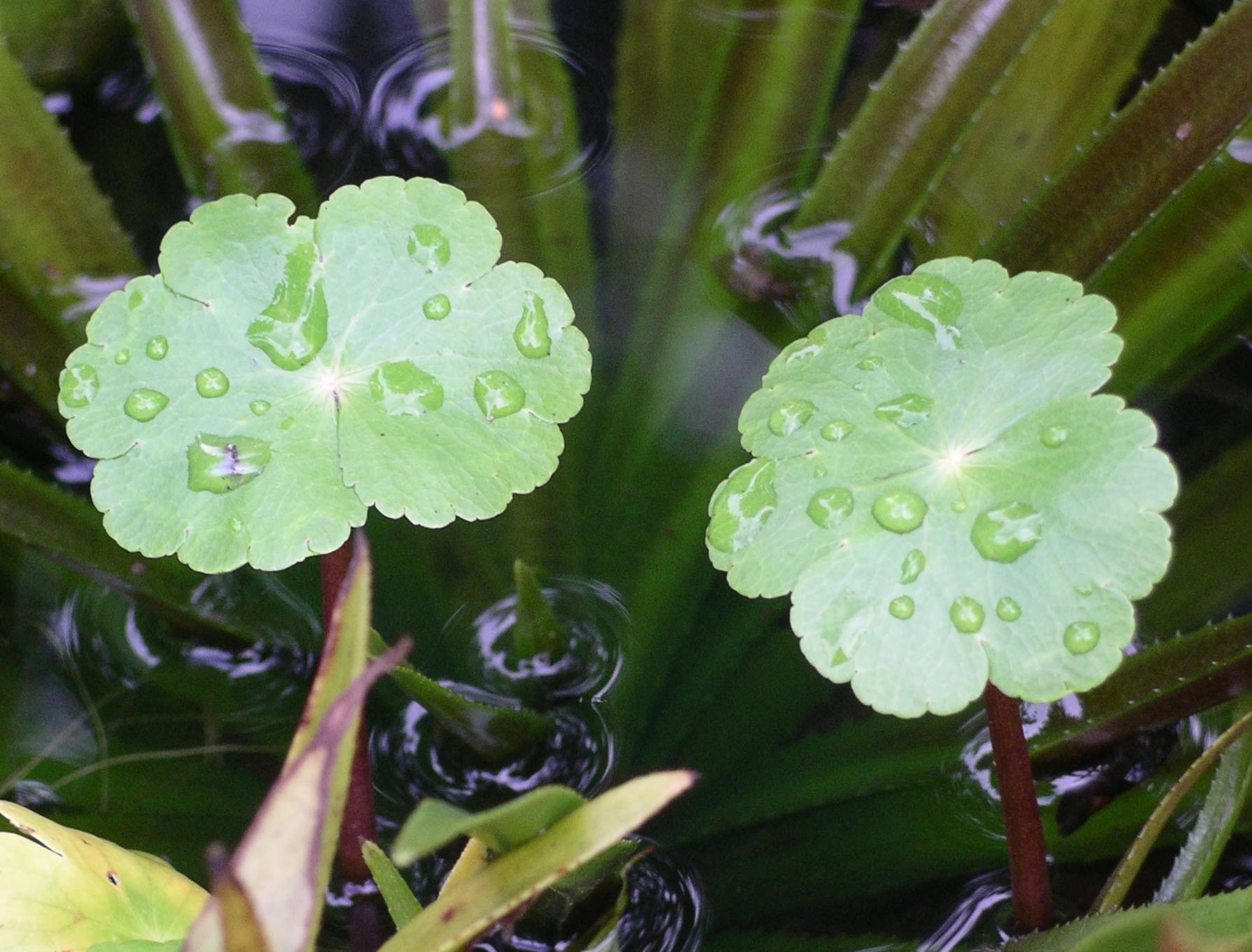
[edit]Water pennywort has stems that spread horizontally and can float on water.[8] Leaves grow on petioles up to 35 cm long, and are round to kidney-shaped, with 3–7 lobes and crenate to entire margins.[9] Flowers are small, pale greenish white to pale yellow, and come in umbels of 5–13.[8] Fruits are small achenes that can float, helping the seeds to disperse.[8]
The South American weevil Listronotus elongatus lays eggs on and eats the floating pennywort, and larvae also eat into the stems, reducing the pennywort's ability to grow. The weevil has been introduced for biocontrol of the floating pennywort into waterways in Britain, following extensive research to establish that the weevil is not a threat in itself.[10]
References
[edit]- ^ "Hydrocotyle ranunculoides (floating pennywort)". Invasive Species Compendium. Retrieved 3 February 2021.
- ^ "Invasive non-native species - indicator two". Environment Agency. Archived from the original on 13 May 2010. Retrieved 28 August 2017.
- ^ "Aquatic invaders threat to biodiversity". The Ecologist. Retrieved 2017-08-28.
- ^ Kinver, Mark (2013-01-29). "UK bans sale of five invasive non-native aquatic plants". BBC News. Retrieved 2017-08-28.
- ^ "Plants Profile for Hydrocotyle ranunculoides (floating marshpennywort)". USDA, NRCS. 2021. The PLANTS Database. National Plant Data Team, Greensboro, NC 27401-4901 USA. Retrieved 2021-02-03.
- ^ "List of Invasive Alien Species of Union concern - Environment - European Commission". ec.europa.eu. Retrieved 2021-07-27.
- ^ "REGULATION (EU) No 1143/2014 of the European parliament and of the council of 22 October 2014 on the prevention and management of the introduction and spread of invasive alien species".
- ^ a b c John, Hilty. "Water Pennywort". Illinois Wildflowers. Retrieved 16 December 2012.
- ^ "H. ranunculoides". Jepson Manual. University of California. Retrieved 16 December 2012.
- ^ Horton, Helena (17 May 2022). "South American weevils released in UK waterways to tackle invasive weed". The Guardian.
| International | |
|---|---|
| National | |
| Other | |

 | This Araliaceae article is a stub. You can help Wikipedia by adding missing information. |
Hydrocotyle ranunculoides
View on GrokipediaHydrocotyle ranunculoides L. f., commonly known as floating pennywort or floating marshpennywort, is a perennial herbaceous aquatic plant in the family Apiaceae.[1] It produces long, creeping stems that root at the nodes, supporting rounded, peltate leaves up to 6 cm in diameter with crenate margins and small umbels of tiny white flowers on erect peduncles rising from leaf axils.[2] Native to wetlands across the Americas, from southern Canada through the United States to Central and South America, the species thrives in shallow, slow-moving or standing water.[3] Introduced to regions outside its native range via the ornamental aquarium and water garden trade, H. ranunculoides has proliferated aggressively in Europe, Australia, and parts of Asia since the late 20th century, primarily through vegetative fragmentation rather than seed.[4] These fragments readily establish new colonies, enabling rapid coverage of water surfaces at growth rates exceeding 20 cm per day under optimal conditions.[5] In invaded waterways, it forms dense, continuous mats that persist year-round in temperate climates.[6] The ecological consequences stem from these mats' capacity to block sunlight penetration, thereby suppressing submerged aquatic vegetation and phytoplankton photosynthesis, which in turn depletes dissolved oxygen levels and disrupts food webs for fish and invertebrates.[4] Such alterations reduce habitat suitability for native species, diminish biodiversity, and exacerbate flooding by impeding water flow, while also hindering recreational and commercial navigation.[5] Economic impacts include substantial management costs and losses to fisheries and tourism, estimated at over £25 million annually in parts of Europe.[4] Classified as a species of Union concern under EU regulations, control efforts emphasize mechanical harvesting, herbicide application, and biological agents like the stem-mining weevil Listronotus elongatus, approved for release in select areas to suppress biomass without broad environmental harm.[4][7]
Taxonomy
Classification and synonyms
Hydrocotyle ranunculoides is a species in the genus Hydrocotyle within the family Araliaceae, order Apiales. Its taxonomic classification follows the hierarchy: Kingdom Plantae, Phylum Tracheophyta, Class Magnoliopsida, Order Apiales, Family Araliaceae, Genus Hydrocotyle, Species Hydrocotyle ranunculoides L.f..[8] [9] The species authority is attributed to Carl Linnaeus the Younger (L.f.), who described it in Supplementum Plantarum in 1782.[8] The accepted binomial name is Hydrocotyle ranunculoides L.f., with no basionym. Historical synonyms include Hydrocotyle cymbalarifolia Muhl. ex Elliott, treated as a synonym in North American floras based on morphological overlap and regional distributions.[10] Other names occasionally misapplied or historically confused, such as Hydrocotyle natans and Hydrocotyle batrachioides, reflect nomenclatural revisions but are not currently accepted as synonyms in major databases.[11] Phylogenetic studies confirm placement in Araliaceae rather than Apiaceae, resolving earlier uncertainties from shared apomorphic traits like schizocarp fruits.[12][13]Etymology
The generic name Hydrocotyle originates from the Ancient Greek terms hýdōr (ὕδωρ), denoting "water," and kotýlē (κοτύλη), referring to a "cup" or "small vessel," reflecting the genus's predominantly aquatic or semi-aquatic habit and the peltate, cup-shaped leaves characteristic of many species.[14][15] The specific epithet ranunculoides derives from the Latin genus name Ranunculus (buttercups), combined with the suffix -oides, signifying "resembling" or "similar to," in allusion to the reniform or orbicular leaf shape of H. ranunculoides, which bears superficial resemblance to foliage in the Ranunculaceae family.[16]Description
Morphology
Hydrocotyle ranunculoides is a glabrous, stoloniferous perennial aquatic plant with fleshy stems that creep horizontally or float on the water surface, rooting adventitiously at the nodes.[17][18] The stems are terete, pale green to brownish-white, thick, and branched, typically measuring 5-30 cm in length but capable of indefinite extension through vegetative growth.[2][19] Leaves are alternate, borne on elongate, stout petioles 5-35 cm long, often longer than the leaf blades.[20] The blades are round to reniform, 2-6 cm in diameter, wider than long, with a cordate to truncate base and 3-7 shallow, rounded lobes; margins are crenate with 7-9 teeth per side, and the surface is shiny and glabrous.[21][22] Basal sheaths or stipules enclose the stem at the petiole base.[23] Inflorescences arise from leaf axils on peduncles 1-5 cm long, shorter than subtending petioles, bearing simple umbels of 3-20 small flowers.[20][21] Flowers are white to greenish-white, 1.5-3 mm in diameter, with minute sepals, ovate petals, and short styles; each umbel typically contains 5-12 florets on short pedicels up to 2 mm.[2][11] Fruits are schizocarps, elliptic to orbicular, 1-3 mm long and wide, glabrous, with obscure dorsal ribs and a thin marginal wing.[20][21] The plant exhibits amphibious adaptability, with emergent forms up to 40 cm tall.[21]Reproduction and life cycle
Hydrocotyle ranunculoides is a perennial aquatic herb capable of reproducing both vegetatively and sexually, though vegetative propagation predominates in many environments, particularly in introduced temperate regions.[24][21] The plant forms horizontal stems that root at nodes, enabling rapid clonal growth and the development of dense floating mats.[2] Vegetative reproduction occurs via fragmentation of stems and stolons, where even small pieces containing at least one node can regenerate into independent plants, facilitating aggressive spread in waterways.[24][25] This mode allows year-round growth in suitable conditions, with stems extending up to 100 cm or more and producing adventitious roots at internodes.[24] Sexual reproduction involves the production of small, white flowers in umbels during warm months, typically from April to July in native North American habitats, followed by fruiting shortly thereafter.[26] Flowers are pollinated by insects, yielding distinctly notched schizocarps approximately 3 mm wide that contain viable seeds capable of dispersal by water or animals.[25] However, in non-native temperate areas such as Europe, flowering and viable seed set are infrequent, limiting sexual contributions to population expansion and emphasizing reliance on asexual means.[21][24] The life cycle begins with establishment from seeds or fragments, progressing through vegetative expansion into perennial mats that persist across seasons in frost-free or mild climates, with dieback possible in colder winters but regrowth from surviving rhizomes or fragments.[24] Germination of seeds occurs under moist, warm conditions, though specific dormancy mechanisms remain understudied; overall, the species exhibits high phenotypic plasticity, adapting growth forms between fully aquatic and semi-terrestrial states.[24]Native range and ecology
Geographic distribution
Hydrocotyle ranunculoides is native to the Americas, spanning from southwestern British Columbia in Canada southward through the United States, Mexico, Central America, and into South America.[3][10] In North America, its distribution includes wetlands and aquatic habitats across the contiguous United States east to the Atlantic coast and west to California and Arizona, with records extending to Texas.[1][10] The core of its native range centers on the southern United States, Central America, and South America, where it thrives in diverse aquatic environments.[5] While considered native throughout these regions, some analyses point to South America as the primary origin due to the presence of numerous co-evolved natural enemies there, contrasting with fewer such interactions in North America.[28] Populations in northern parts of its North American range, such as British Columbia, represent the species' northernmost extent.[3] In some U.S. areas, native stands have shown declines, potentially due to habitat alterations or other environmental pressures.[29]Habitat preferences and native interactions
Hydrocotyle ranunculoides preferentially occupies aquatic and semi-aquatic habitats with full sun to partial shade exposure, favoring nutrient-enriched, slow-moving or stagnant waters such as swamps, marshes, ponds, lake margins, backwaters, blackwater streams, and irrigation ditches. It tolerates mucky soils and shallow depths up to several inches, occasionally extending into swiftly flowing streams but rarely persisting there. Optimal growth occurs in warm-temperate to subtropical climates with consistent moisture, where it roots at nodes and forms creeping mats over substrates.[2][3] In native North, Central, and South American ecosystems, H. ranunculoides interacts symbiotically with co-occurring flora and fauna, often forming patchy rather than dominant mats that allow light penetration and oxygen exchange sufficient for underlying communities. Its proliferation is constrained by specialist herbivores, such as aquatic insects and gastropods, and fungal pathogens that reduce biomass accumulation, maintaining equilibrium with competitors like other Hydrocotyle species and emergent macrophytes. These biotic controls, absent or ineffective in non-native ranges, prevent ecosystem-wide shading or hypoxia, enabling the plant to contribute to habitat structure for invertebrates and small fish without supplanting biodiversity.[30][5][31]Introduction and global spread
Pathways of human introduction
Hydrocotyle ranunculoides was primarily introduced to Europe through the international trade in ornamental aquatic plants, where it was marketed for use in aquariums and garden ponds.[28] In the United Kingdom, the species entered via the aquatic nursery trade during the 1980s, initially as a decorative plant for still waters.[32] This deliberate importation facilitated its establishment, with subsequent escapes occurring when fragments or whole plants were discarded or washed from private ponds into connected natural waterways.[6] Accidental releases from the aquarium hobbyist sector have also contributed significantly, as the plant's fragments readily regenerate upon disposal into local water bodies.[5] In Belgium, for instance, sales under its correct name or synonyms like Hydrocotyle vulgaris promoted its availability for indoor and outdoor aquatic setups, leading to unintended propagule transfer.[33] The species' appeal as a low-maintenance, fast-growing oxygenator in tropical aquaria amplified these pathways, though detailed records outside Europe remain limited.[28] Human-mediated transport via boating equipment or contaminated water transfers has occasionally vectored initial introductions, but these are secondary to ornamental trade.[34] By the early 1990s, such pathways had enabled footholds in multiple European countries, prompting regulatory bans on sales—such as in the UK from 2014 onward—to curb further intentional dissemination.[4]Established invasive populations
Hydrocotyle ranunculoides has established persistent invasive populations outside its native range in the Americas, primarily through escape from ornamental aquatic trade.[4] These populations thrive in nutrient-rich, slow-flowing or stagnant freshwater systems, forming dense mats that persist and expand vegetatively.[35] In Europe, invasive establishments are widespread, with the species listed as a concern under the EU's Invasive Alien Species Regulation since 2016. It is notably invasive in the United Kingdom, where modern populations expanded rapidly from the 1990s, particularly in lowland England and Ulster, obstructing waterways.[36] Similar persistent infestations occur in the Netherlands, Belgium (introduced circa 1990, spreading by 1998), Germany, France, and Ireland, often requiring ongoing management in canals and rivers.[6][6] In Australia, the first established population was recorded in 1983 in Bannister Creek near Perth, from which it spread to regional waterways, forming extensive covers.[37] Invasive populations in Japan have similarly become problematic in aquatic habitats, mirroring European impacts.[38] Despite control efforts, these non-native populations continue to regenerate from fragments, underscoring their invasiveness in suitable climates.[4]Ecological and environmental impacts
Effects on aquatic ecosystems
Hydrocotyle ranunculoides forms expansive floating mats that cover water surfaces, reducing light penetration to submerged aquatic vegetation and phytoplankton.[31] [17] This shading inhibits photosynthesis in underlying organisms, leading to declines in primary production and disrupting the base of aquatic food webs.[39] The mats also impede water flow, promoting sediment accumulation and altering channel morphology, which shifts habitat availability for benthic species.[40] These physical alterations contribute to reduced dissolved oxygen levels, particularly during periods of high respiration at night or under dense cover, creating hypoxic conditions that stress or kill fish and macroinvertebrates.[31] [17] By outcompeting native macrophytes through rapid vegetative spread and resource monopolization, H. ranunculoides decreases overall plant diversity, which cascades to affect herbivorous and predatory aquatic fauna reliant on varied habitats.[28] Studies in invaded European waterways have documented corresponding drops in native species abundance, with mats altering trophic structures and reducing ecosystem resilience to further stressors.[41] In addition to biotic shifts, the plant's decomposition following dieback events exacerbates oxygen depletion and nutrient cycling imbalances, potentially fueling eutrophication in susceptible systems.[17] Observations from managed and unmanaged sites indicate that unchecked infestations can lead to localized biodiversity hotspots being converted to monocultures, impairing ecological functions such as nutrient filtration and habitat heterogeneity essential for aquatic community stability.[4]Biodiversity and water quality alterations
The proliferation of Hydrocotyle ranunculoides forms extensive floating mats that severely limit sunlight penetration to submerged aquatic vegetation, resulting in the die-off of native plant species and a reduction in overall macrophyte diversity.[5][42] These mats create monotypic communities dominated by the invader, outcompeting indigenous flora for space and resources, which diminishes habitat heterogeneity and supports fewer native species.[5][43] Such alterations extend to faunal communities, as reduced light and plant cover disrupt habitats for macroinvertebrates and threaten rare or scarce aquatic invertebrates by altering ecological processes.[44][45] Fish populations are similarly impacted through habitat loss and decreased availability of periphyton and invertebrates as food sources.[46] Regarding water quality, the dense biomass shades the water column, suppressing photosynthesis by algae and submerged plants, which leads to localized deoxygenation upon plant decay and die-off of underlying vegetation.[5][42] This hypoxic condition impairs the ecological status of affected water bodies under frameworks like the European Union Water Framework Directive.[40] Accumulated organic matter from the plant further exacerbates oxygen depletion through microbial decomposition, potentially elevating biochemical oxygen demand and altering nutrient dynamics in slow-moving waters.[17]Human uses and economic considerations
Ornamental and traditional applications
is employed in ornamental horticulture, particularly as a floating aquatic plant in ponds and aquariums, where it functions as an oxygenator and contributes to aesthetic landscapes with its coin-shaped leaves and rapid growth.[47] Commercial cultivars, including variegated forms with cream-bordered jade-green leaves, are marketed as hardy marginal plants for pond edges, aiding in nutrient absorption to enhance water quality.[48][49] In traditional applications, immature leaves of the plant are consumed raw in salads, as a garnish, or cooked by steaming or sautéing, providing a greens option in some regional practices.[50] Anecdotal accounts suggest potential medicinal benefits similar to those attributed to related species like Hydrocotyle asiatica, including treatment of skin ailments such as leprosy and itch, though specific ethnobotanical documentation for H. ranunculoides remains limited and unverified by clinical studies.[51] No peer-reviewed evidence confirms therapeutic efficacy, and consumption or application requires caution due to reports of toxicity in large quantities from related hydrocotyles, potentially causing headache, dizziness, or gastrointestinal distress.[52]Economic benefits versus invasion costs
Hydrocotyle ranunculoides has limited economic benefits, primarily derived from its historical use as an ornamental aquatic plant in aquariums and ponds, which facilitated its initial introduction to non-native regions such as Europe.[53] This trade generated revenue for nurseries and hobbyists prior to recognition of its invasive potential, though specific figures for ornamental sales are not quantified in available assessments. Experimental applications include its use in wastewater treatment, such as for poultry effluent in Alabama, USA, where it demonstrated nutrient uptake capabilities, potentially offering localized bioremediation value.[28] However, such uses remain niche and have not translated into widespread commercial economic gains. In contrast, the invasion costs of H. ranunculoides substantially outweigh these benefits, encompassing direct control expenditures and indirect damages across invaded areas. In Great Britain, annual management and impact costs are estimated at £27 million.[28] Across Europe and Great Britain combined, these costs exceed £25 million per year, driven by mechanical removal, herbicide applications, and mitigation of waterway blockages.[4] In the Netherlands, control efforts by water boards escalated to approximately 1 million EUR annually by 2000, reflecting doubled yearly expenses during the 1990s due to rapid spread.[40] In Flanders, Belgium, monitoring and control incur several hundred thousand Euros yearly.[54] Indirect economic losses stem from impeded navigation, reduced tourism via disrupted fishing and water sports, harm to commercial fisheries through habitat alteration, and infrastructure risks like pipe blockages in water treatment facilities and heightened flooding from channel obstruction.[28] These impacts amplify as dense mats form, exacerbating flood risks and necessitating ongoing interventions, with early detection shown to curb exponential cost increases in case studies.[55] Regulatory bans on its sale in regions like the UK (Schedule 9, Wildlife and Countryside Act) underscore the net negative economic balance, as former ornamental benefits are now curtailed to prevent further proliferation.[56]Management and control strategies
Mechanical and chemical methods
Mechanical control methods for Hydrocotyle ranunculoides primarily involve physical removal to eliminate biomass and prevent vegetative propagation from fragments, which can rapidly regenerate into new plants. Hand pulling or raking is effective for small infestations, requiring complete extraction of roots and all fragments to minimize regrowth; incomplete removal often leads to denser reinfestation due to the plant's ability to propagate from small stem or leaf pieces.[11][57] For larger areas, mechanical excavation using hydraulic rakes, buckets, or aquatic mowers removes substantial mats, but sites must be netted downstream to capture debris and prevent downstream spread via water flow.[58] In the United Kingdom, repeated mechanical removal combined with hand picking four times annually during the growing season (typically April to October) has become standard practice to suppress populations over time. These methods provide immediate reduction in coverage but demand ongoing monitoring, as surviving fragments can lead to resurgence, and they may disturb sediments, potentially releasing nutrients that favor further growth.[59] Chemical control relies on herbicides applied to target the plant's foliage or systemic transport, though efficacy varies due to the species' waxy leaves and rapid growth, which can dilute chemical uptake. The herbicide 2,4-D amine, applied at 4.2 kg active ingredient per hectare, has demonstrated a 76% reduction in biomass and nearly 100% mortality in treated patches within weeks, making it one of the more reliable options for foliar application in static water bodies.[60] Bispyribac-sodium offers slower control, requiring 4 to 6 weeks for visible effects, but can be tank-mixed with other agents for enhanced results against floating mats. Glyphosate shows limited effectiveness at rates up to 2.16 kg active ingredient per hectare, attributed to the plant's resistance linked to its thick cuticle and runoff in flowing water; higher doses or adjuvants may improve outcomes but risk non-target impacts.[61] Applications must comply with aquatic labeling and timing to avoid drift to desirable vegetation, with follow-up surveys essential as surviving rhizomes can resprout; integrated mechanical follow-up often augments chemical treatments to address regrowth.[62] Environmental considerations include potential toxicity to fish and invertebrates, necessitating buffered zones and permits in regulated waters.[31]Biological controls and recent advancements
Biological control efforts for Hydrocotyle ranunculoides, commonly known as floating pennywort, have primarily focused on the introduction of host-specific herbivores from its native South American range. The weevil Listronotus elongatus has emerged as the leading candidate due to its life cycle adapted to the plant: adults feed on leaves and lay eggs at the petiole base, while larvae mine stems and petioles, causing significant damage that weakens plant growth and reduces biomass.[56][63] This specificity minimizes risks to non-target species, as field and lab tests confirm it does not feed or reproduce on native European plants.[56] Initial research by CABI identified L. elongatus alongside potential agents like the stem-mining fly Eugaurax floridensis, but the weevil advanced to field trials due to superior efficacy in reducing plant vigor.[56] Pathogen-based options, such as fungal isolates associated with the plant, have been cataloged but remain exploratory without approved releases, as host-range testing prioritizes insects for reliable, self-sustaining suppression.[64] Recent advancements include the first global authorized release of L. elongatus in the UK in 2022, marking a shift from mechanical methods to integrated biocontrol.[5] In February 2025, the UK Environment Agency, with CABI support, released the weevil in the Cam Washes Site of Special Scientific Interest to curb infestations without habitat disturbance, leveraging the insect's evolution for low biosecurity risks.[65] By September 2025, similar releases occurred in the Netherlands, targeting persistent aquatic invasions and demonstrating scalability across Europe.[66] Ongoing monitoring assesses establishment rates, with early data indicating reduced regrowth in trial sites compared to untreated areas.[7] These developments underscore biocontrol's potential for long-term management, though full population-level impacts require multi-year evaluation.[56]References
- https://dnr.[wisconsin](/page/Wisconsin).gov/sites/default/files/topic/Invasives/LR_Hydrocotyle_ranunculoides.pdf