Hubbry Logo
Glucose 6-phosphateGlucose 6-phosphateMain
Open search
Glucose 6-phosphate
Community hub
Glucose 6-phosphate
logo
8 pages, 0 posts
0 subscribers
Be the first to start a discussion here.
Glucose 6-phosphate
Glucose 6-phosphate
from Wikipedia
Glucose 6-phosphate
Names
IUPAC names
D-Glucopyranose 6-phosphate
6-O-Phosphono-D-glucopyranose
Identifiers
3D model (JSmol)
ChEBI
ChemSpider
KEGG
MeSH Glucose-6-phosphate
UNII
  • InChI=1S/C6H11O9P/c7-3-2(1-14-16(11,12)13)15-6(10)5(9)4(3)8/h2-10H,1H2,(H2,11,12,13)/t2-,3-,4+,5-,6?/m1/s1 ☒N
    Key: NBSCHQHZLSJFNQ-GASJEMHNSA-N checkY
  • InChI=1/C6H11O9P/c7-3-2(1-14-16(11,12)13)15-6(10)5(9)4(3)8/h2-10H,1H2,(H2,11,12,13)/t2-,3-,4+,5-,6u/m1/s1
    Key: NBSCHQHZLSJFNQ-SEZHTIIRBF
  • O[C@H]1[C@H](O)[C@@H](COP(O)(O)=O)OC(O)[C@@H]1O
Properties
C6H13O9P
Molar mass 260.136
Except where otherwise noted, data are given for materials in their standard state (at 25 °C [77 °F], 100 kPa).
☒N verify (what is checkY☒N ?)

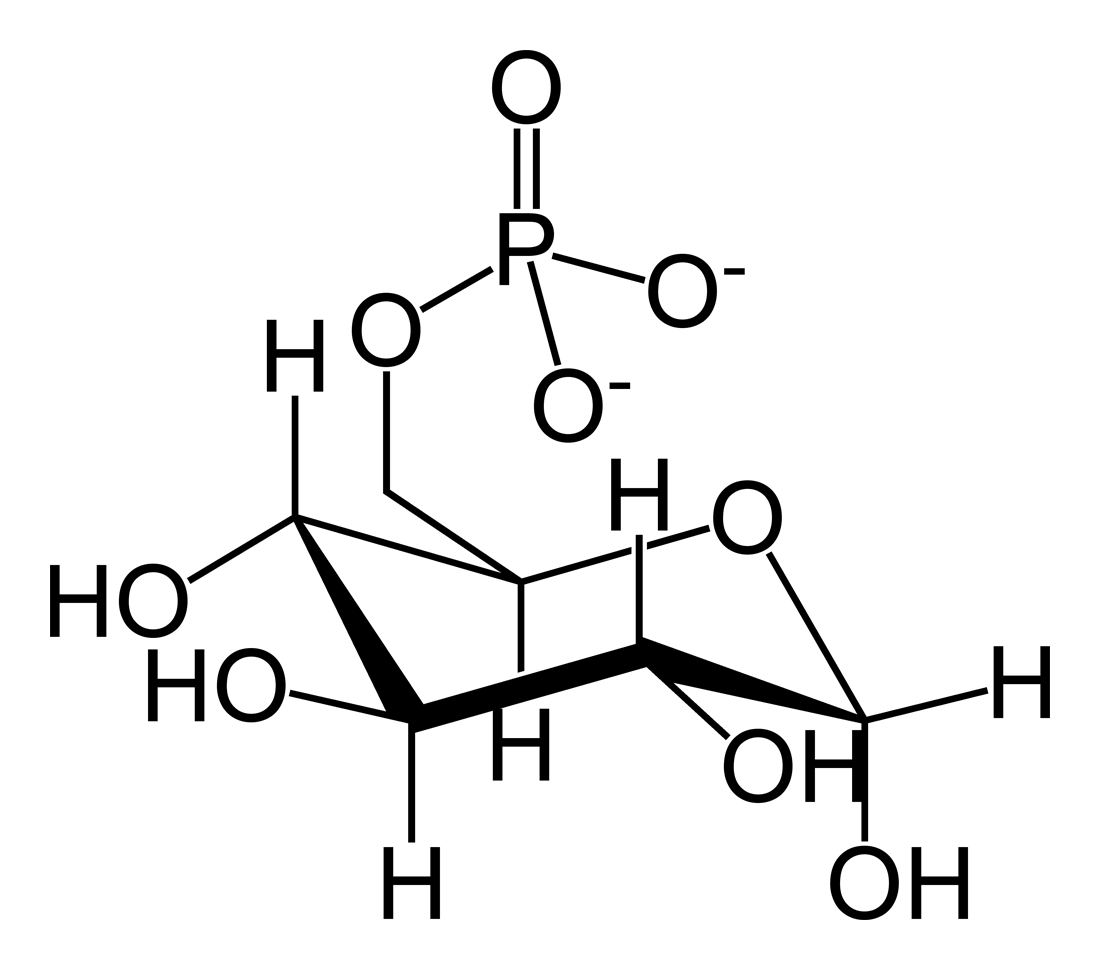
Glucose 6-phosphate (G6P, sometimes called the Robison ester) is a glucose sugar phosphorylated at the hydroxy group on carbon 6. This dianion is very common in cells as the majority of glucose entering a cell will become phosphorylated in this way.

Because of its prominent position in cellular chemistry, glucose 6-phosphate has many possible fates within the cell. It lies at the start of two major metabolic pathways: glycolysis and the pentose phosphate pathway.

In addition to these two metabolic pathways, glucose 6-phosphate may also be converted to glycogen or starch for storage. This storage is in the liver and muscles in the form of glycogen for most multicellular animals, and in intracellular starch or glycogen granules for most other organisms.

Production

[edit]

From glucose

[edit]

Within a cell, glucose 6-phosphate is produced by phosphorylation of glucose on the sixth carbon. This is catalyzed by the enzyme hexokinase in most cells, and, in higher animals, glucokinase in certain cells, most notably liver cells. One equivalent of ATP is consumed in this reaction.

D-Glucose Hexokinase α-D-Glucose 6-phosphate
 
ATP ADP
 
  Glucose 6-phosphatase

Compound C00031 at KEGG Pathway Database. Enzyme 2.7.1.1 at KEGG Pathway Database. Compound C00668 at KEGG Pathway Database. Reaction R01786 at KEGG Pathway Database.

The major reason for the immediate phosphorylation of glucose is to prevent diffusion out of the cell. The phosphorylation adds a charged phosphate group so the glucose 6-phosphate cannot easily cross the cell membrane.

From glycogen

[edit]

Glucose 6-phosphate is also produced during glycogenolysis from glucose 1-phosphate, the first product of the breakdown of glycogen polymers.

Pentose phosphate pathway

[edit]

When the ratio of NADP+ to NADPH increases, the body needs to produce more NADPH (a reducing agent for several reactions like fatty acid synthesis and glutathione reduction in erythrocytes).[1] This will cause the G6P to be dehydrogenated to 6-phosphogluconate by glucose 6-phosphate dehydrogenase.[1] This irreversible reaction is the initial step of the pentose phosphate pathway, which generates the useful cofactor NADPH as well as ribulose-5-phosphate, a carbon source for the synthesis of other molecules.[1] Also, if the body needs nucleotide precursors of DNA for growth and synthesis, G6P will also be dehydrogenated and enter the pentose phosphate pathway.[1]

Glycolysis

[edit]

If the cell needs energy or carbon skeletons for synthesis, then glucose 6-phosphate is targeted for glycolysis.[2] Glucose 6-phosphate is first isomerized to fructose 6-phosphate by phosphoglucose isomerase, which uses magnesium as a cofactor.[2]

α-D-Glucose 6-phosphate Phosphoglucose isomerase β-D-Fructose 6-phosphate
 
 
  Phosphoglucose isomerase

Compound C00668 at KEGG Pathway Database. Enzyme 5.3.1.9 at KEGG Pathway Database. Compound C05345 at KEGG Pathway Database. Reaction R00771 at KEGG Pathway Database.

This reaction converts glucose 6-phosphate to fructose 6-phosphate in preparation for phosphorylation to fructose 1,6-bisphosphate.[2] The addition of the second phosphoryl group to produce fructose 1,6-bisphosphate is an irreversible step, and so is used to irreversibly target the glucose 6-phosphate breakdown to provide energy for ATP production via glycolysis.

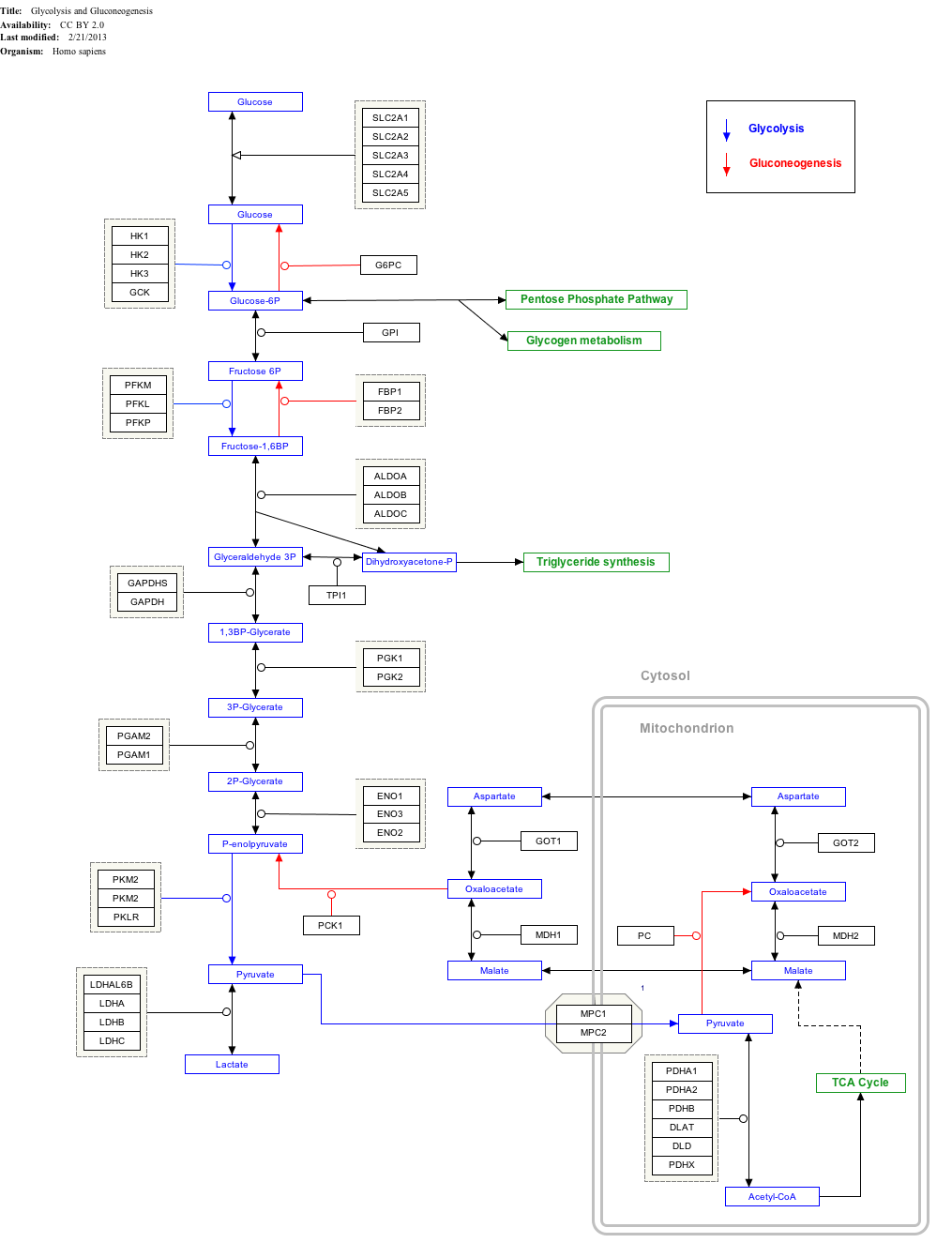
Click on genes, proteins and metabolites below to link to respective articles.[§ 1]
[[File:
GlycolysisGluconeogenesis_WP534go to articlego to articlego to articlego to articlego to articlego to articlego to articlego to articlego to articlego to articlego to articlego to articlego to articlego to articlego to articlego to articlego to articlego to articlego to articlego to articlego to articlego to articlego to articlego to articlego to articlego to articlego to articlego to articlego to articlego to articlego to articlego to articlego to articlego to articlego to articlego to articlego to articlego to articlego to articlego to articlego to articlego to articlego to articlego to articlego to articlego to articlego to articlego to articlego to articlego to articlego to articlego to articlego to articlego to articlego to articlego to articlego to articlego to articlego to articlego to articlego to articlego to articlego to articlego to articlego to articlego to articlego to articlego to articlego to articlego to articlego to WikiPathwaysgo to articlego to Entrezgo to article
[[
]]
[[
]]
[[
]]
[[
]]
[[
]]
[[
]]
[[
]]
[[
]]
[[
]]
[[
]]
[[
]]
[[
]]
[[
]]
[[
]]
[[
]]
[[
]]
[[
]]
[[
]]
[[
]]
[[
]]
[[
]]
[[
]]
[[
]]
[[
]]
[[
]]
[[
]]
[[
]]
[[
]]
[[
]]
[[
]]
[[
]]
[[
]]
[[
]]
[[
]]
[[
]]
[[
]]
[[
]]
[[
]]
[[
]]
[[
]]
[[
]]
[[
]]
[[
]]
[[
]]
[[
]]
[[
]]
[[
]]
[[
]]
[[
]]
[[
]]
[[
]]
[[
]]
[[
]]
[[
]]
[[
]]
[[
]]
[[
]]
[[
]]
[[
]]
[[
]]
[[
]]
[[
]]
[[
]]
[[
]]
[[
]]
[[
]]
[[
]]
[[
]]
[[
]]
[[
]]
[[
]]
[[
]]
[[
]]
[[
]]
[[
]]
GlycolysisGluconeogenesis_WP534go to articlego to articlego to articlego to articlego to articlego to articlego to articlego to articlego to articlego to articlego to articlego to articlego to articlego to articlego to articlego to articlego to articlego to articlego to articlego to articlego to articlego to articlego to articlego to articlego to articlego to articlego to articlego to articlego to articlego to articlego to articlego to articlego to articlego to articlego to articlego to articlego to articlego to articlego to articlego to articlego to articlego to articlego to articlego to articlego to articlego to articlego to articlego to articlego to articlego to articlego to articlego to articlego to articlego to articlego to articlego to articlego to articlego to articlego to articlego to articlego to articlego to articlego to articlego to articlego to articlego to articlego to articlego to articlego to articlego to articlego to WikiPathwaysgo to articlego to Entrezgo to article
|alt=Glycolysis and Gluconeogenesis edit]]
Glycolysis and Gluconeogenesis edit
  1. ^ The interactive pathway map can be edited at WikiPathways: "GlycolysisGluconeogenesis_WP534".

Storage as glycogen

[edit]

If blood glucose levels are high, the body needs a way to store the excess glucose. After being converted to G6P, the molecule can be turned into glucose 1-phosphate by phosphoglucomutase. Glucose 1-phosphate can then be combined with uridine triphosphate (UTP) to form UDP-glucose, driven by the hydrolysis of UTP, releasing phosphate. Now, the activated UDP-glucose can add to a growing glycogen molecule with the help of glycogen synthase. This is a very efficient storage mechanism for glucose since it costs the body only 1 ATP to store the 1 glucose molecule and virtually no energy to remove it from storage. It is important to note that glucose 6-phosphate is an allosteric activator of glycogen synthase, which makes sense because when the level of glucose is high the body should store the excess glucose as glycogen. On the other hand, glycogen synthase is inhibited when it is phosphorylated by protein kinase during times of high stress or low levels of blood glucose, via hormone induction by glucagon or adrenaline.

When the body needs glucose for energy, glycogen phosphorylase, with the help of an orthophosphate, can cleave away a molecule from the glycogen chain. The cleaved molecule is in the form of glucose 1-phosphate, which can be converted into G6P by phosphoglucomutase. Next, the phosphoryl group on G6P can be cleaved by glucose 6-phosphatase so that a free glucose can be formed. This free glucose can pass through membranes and can enter the bloodstream to travel to other places in the body.

Dephosphorylation and release into bloodstream

[edit]

Liver cells express the transmembrane enzyme glucose 6-phosphatase in the endoplasmic reticulum. The catalytic site is found on the lumenal face of the membrane, and removes the phosphate group from glucose 6-phosphate produced during glycogenolysis or gluconeogenesis. Free glucose is transported out of the endoplasmic reticulum via GLUT7 and released into the bloodstream via GLUT2 for uptake by other cells. Muscle cells lack this enzyme, so myofibers use glucose 6-phosphate in their own metabolic pathways such as glycolysis. Importantly, this prevents myocytes from releasing glycogen stores they have obtained into the blood.

See also

[edit]

References

[edit]
Revisions and contributorsEdit on WikipediaRead on Wikipedia
from Grokipedia
Glucose 6-phosphate (G6P) is an essential phosphorylated derivative of glucose, where a group is attached to the sixth carbon atom of the glucose molecule, resulting in the C₆H₁₃O₉P. This of glucose and is produced intracellularly by the of glucose, catalyzed by the in most tissues or in the liver and pancreatic β-cells, utilizing ATP as the donor. The traps glucose within the cell, preventing its across the plasma , and positions G6P as the first committed intermediate in glucose . G6P functions as a central metabolic hub, directing glucose flux into several critical pathways that support energy production, biosynthesis, and cellular maintenance. In , G6P is isomerized to by phosphoglucose isomerase, continuing the breakdown of glucose to generate ATP. In the (PPP), G6P is dehydrogenated by to produce NADPH and ribose-5-phosphate, which are vital for , production, and protection against . Additionally, G6P can be converted to glucose-1-phosphate via for incorporation into storage, or it serves as a precursor in and the hexosamine pathway. In the liver and kidneys, G6P plays a pivotal role in glucose through its by the glucose-6-phosphatase, which removes the group to yield free glucose for export into the bloodstream, particularly during or . This process is crucial for maintaining blood glucose levels and preventing . Dysfunctions in G6P-related enzymes underscore its physiological importance; for instance, , an X-linked , impairs NADPH production in the PPP, leading to under . Similarly, glucose-6-phosphatase deficiency causes (von Gierke disease), characterized by severe , , and hepatic accumulation.

Structure and Properties

Molecular Formula and Structure

Glucose 6-phosphate has the molecular formula C6H13O9P, representing the neutral form with a dihydrogen group. At physiological , the molecule predominantly exists in its dianionic form, C6H11O9P2-, due to of both acidic hydrogens of the phosphate moiety. Structurally, glucose 6- is derived from D-glucose, a six-carbon aldohexose, by esterification of a group to the primary hydroxyl at the C6 position, replacing the terminal -CH2OH of unmodified glucose (C6H12O6) with -CH2OPO3H2. It primarily adopts a ring conformation, forming a six-membered ring between C1 and C5, with the attached to the exocyclic at C6. The corresponds to the D-isomer of glucose, featuring the specific chiral configurations (2R,3S,4S,5R) in the cyclic form, where the hydroxyl groups are arranged as in D-glucopyranose. Like glucose, glucose 6-phosphate exists in equilibrium between α and β anomers, differing in the configuration at the anomeric C1 carbon: the α-anomer has the hydroxyl (or ring oxygen in open form) below the plane, while the β-anomer has it above. In a , the molecule is depicted as a flat hexagon representing the ring, with the C6 group extending outward from the CH2OPO3H2 attached to C5; the anomeric hydroxyl at C1 is axial (down) for α and equatorial (up) for β, and the other hydroxyls follow the D-glucose pattern (C2 and C3 down, C4 up).

Physical and Chemical Properties

Glucose 6-phosphate, commonly handled as its disodium salt , presents as a white to off-white powder. The molecular formula is C6H13O9P, with a molecular weight of 260.14 g/mol for the free acid form. It is highly soluble in , with the free acid exhibiting a of approximately 31.4 g/L at 25°C, while the disodium salt demonstrates a of approximately 50 mg/mL in at room temperature. Due to its polar and ionic character, the compound displays low volatility and lacks a defined , typically decomposing at elevated temperatures rather than vaporizing. Chemically, glucose 6-phosphate functions as an alkyl , featuring a group attached to the C6 hydroxyl of glucose. The moiety exhibits acid-base behavior with pKa values of approximately 1.22 (for the first dissociation) and around 6.5 (for the second), rendering it predominantly in the dianionic form (–2 charge) at physiological 7.4. This enhances its and reactivity in biological contexts. The compound remains stable in neutral aqueous solutions at room temperature, retaining integrity for extended periods when stored dry, but it is susceptible to hydrolytic cleavage of the phosphoester bond under acidic conditions ( < 4) or via enzymatic catalysis. In terms of spectroscopic properties, glucose 6-phosphate exhibits minimal ultraviolet (UV) absorbance beyond 220 nm, owing to the lack of extended conjugated π-systems in its structure. Nuclear magnetic resonance (NMR) data reveal characteristic 1H signals in the 3.27–5.22 ppm range, corresponding to the sugar protons, including the anomeric proton near 5.2 ppm, while 13C NMR shifts for the ring carbons and phosphate-bearing methylene appear between 65.62 and 98.79 ppm. These features aid in structural confirmation and purity assessment in analytical applications.

Biosynthesis

From Glucose Phosphorylation

Glucose 6-phosphate is primarily synthesized from free glucose through an ATP-dependent phosphorylation reaction at the C6 position, which serves as the initial commitment step for glucose entry into cellular . This is catalyzed by hexokinases, a family of enzymes that transfer the γ-phosphate from ATP to glucose, yielding glucose 6-phosphate and ADP. The standard free energy change (ΔG°') for this reaction is approximately -17 kJ/mol, rendering it highly exergonic and favorable under physiological conditions. In most mammalian tissues, such as and , the reaction is mediated by low-Km isoforms (I–III), which exhibit high affinity for glucose with Km values ranging from 0.05 to 0.2 mM and follow classical Michaelis-Menten hyperbolic kinetics. These isoforms ensure efficient glucose even at low extracellular glucose concentrations, such as during . In contrast, the liver, pancreatic β-cells, and certain enteroendocrine cells express ( IV), an isoform with a higher Km for glucose of approximately 8 mM, allowing it to function as a glucose sensor responsive to postprandial blood glucose fluctuations. Glucokinase displays sigmoidal kinetics due to positive cooperativity with glucose (Hill coefficient ≈1.7), which enhances its sensitivity to glucose levels in the physiological range of 4–10 mM without requiring additional allosteric effectors for this behavior; it is not inhibited by its product, glucose 6-phosphate, unlike other hexokinases. This kinetic profile enables glucokinase to accelerate phosphorylation proportionally with rising blood glucose, facilitating hepatic glucose uptake and storage after meals. Overall, this phosphorylation step traps glucose intracellularly, as the charged glucose 6-phosphate cannot readily cross the plasma membrane, marking it as the key entry point for absorbed dietary glucose into metabolic pathways. The reaction can be represented as: Glucose+ATPGlucose 6-phosphate+ADP\text{Glucose} + \text{ATP} \rightarrow \text{Glucose 6-phosphate} + \text{ADP} with ΔG°' ≈ -17 kJ/mol.

From Glycogen Breakdown

Glycogenolysis, the breakdown of glycogen to generate glucose units for energy, primarily produces glucose 6-phosphate (G6P) through a phosphorolytic process initiated by the enzyme glycogen phosphorylase. This enzyme catalyzes the cleavage of α-1,4-glycosidic bonds at the non-reducing ends of glycogen chains using inorganic phosphate (Pi), yielding glucose 1-phosphate (G1P) without the release of free glucose in the initial steps: (glycogen)n + Pi → (glycogen)n-1 + G1P. When branch points (α-1,6 linkages) are encountered after four residues from the branch, the bifunctional debranching enzyme (amylo-α-1,6-glucosidase/4-α-glucanotransferase) transfers a maltotriose unit to a nearby chain and hydrolyzes the remaining α-1,6 bond, releasing a small amount of free glucose (approximately 7-10% of total glucose units). The bulk of G1P is then isomerized to G6P by phosphoglucomutase, an enzyme that facilitates the reversible transfer of the phosphate group from the C1 to C6 position via a glucose 1,6-bisphosphate intermediate. The reaction reaches equilibrium favoring G6P, with an (Keq) of approximately 19 for the G1P to G6P direction at physiological conditions, resulting in about 95% of the product as G6P. This conversion is essential because G6P serves as the entry point for subsequent metabolic pathways like , whereas G1P cannot directly participate. In most tissues, this process efficiently mobilizes stored without net ATP consumption for the phosphorolytic step, contrasting with hydrolytic breakdown that would yield free glucose and require additional . Regulation of glycogenolysis is tightly controlled to match energy demands, primarily through hormonal signals that activate . In the liver, binds to its receptor, stimulating adenylate cyclase to increase cyclic AMP (cAMP) levels, which activates (PKA); PKA then phosphorylates , which in turn activates by . Epinephrine similarly activates the pathway in both liver and muscle via β-adrenergic receptors and cAMP, though liver responds to both hormones while primarily responds to epinephrine for rapid energy mobilization during stress or exercise. Allosteric effectors, such as AMP in muscle (activating ) and glucose in liver (inhibiting it), provide additional fine-tuning. Tissue-specific differences in G6P handling arise from the presence or absence of glucose-6-phosphatase. In liver and kidney, this hydrolyzes G6P to free glucose, which is released into the bloodstream to maintain blood glucose homeostasis during . In contrast, skeletal muscle lacks glucose-6-phosphatase, ensuring near-complete conversion of glycogen-derived G6P to glycolytic intermediates for local ATP production without free glucose export. This compartmentalization supports the liver's role in systemic glucose supply and muscle's focus on anaerobic energy generation.

Metabolic Roles

In Glycolysis

Glucose 6-phosphate serves as a key intermediate in , the central that converts glucose into pyruvate for energy production under both aerobic and anaerobic conditions. Formed primarily through the phosphorylation of glucose by in most tissues or in the liver, it represents the initial trapping of glucose within the cell, preventing its out and committing it to intracellular . In the glycolytic pathway, glucose 6-phosphate is rapidly converted to by the enzyme , also known as . This reversible isomerization reaction equilibrates the form (glucose 6-phosphate) with the form (), facilitating the subsequent steps toward energy extraction. The reaction operates near equilibrium with an (K_eq) of approximately 0.3–0.5, favoring the glucose 6-phosphate substrate under physiological conditions, which ensures efficient despite the slight bias. This step positions glucose 6-phosphate immediately after the initial , marking the preparatory phase of before the committed bifurcation toward and eventual pyruvate formation. Unlike later branch points, there is no major diversion from this linear progression in proper, allowing smooth advancement to ATP-generating reactions. The overall rate of glycolytic flux through this stage is primarily controlled upstream by the activities of and , which are inhibited by glucose 6-phosphate accumulation to match cellular energy demands and prevent wasteful . By retaining the phosphate group added during , glucose 6-phosphate preserves this moiety for later utilization in steps, contributing to the net yield of the pathway. In anaerobic conditions, complete oxidation of one glucose molecule to two lactate molecules via generates a net of 2 ATP molecules, underscoring the efficiency of this phosphate conservation in oxygen-limited environments.

In Pentose Phosphate Pathway

Glucose 6-phosphate serves as the primary substrate initiating the (PPP), a metabolic route parallel to that generates NADPH and sugars essential for cellular and balance. The pathway begins with the oxidation of glucose 6-phosphate by the enzyme (), the rate-limiting step, which catalyzes the irreversible conversion of glucose 6-phosphate and NADP⁺ to 6-phosphogluconolactone and NADPH. This reaction occurs in the and is the committed entry point into the PPP, diverting glucose 6-phosphate from glycolytic flux to support reductive processes. The PPP consists of two interconnected phases: the oxidative and non-oxidative branches. In the oxidative phase, glucose 6-phosphate is sequentially converted to ribulose 5-phosphate through a series of dehydrogenations and decarboxylations, yielding two molecules of NADPH per glucose 6-phosphate molecule processed. Specifically, after the initial G6PD step, 6-phosphogluconolactonase hydrolyzes 6-phosphogluconolactone to 6-phosphogluconate, which is then oxidatively decarboxylated by 6-phosphogluconate dehydrogenase to ribulose 5-phosphate, producing an additional NADPH. The non-oxidative phase involves reversible rearrangements of ribulose 5-phosphate and other intermediates, catalyzed by and transaldolase, to form glycolytic intermediates such as and , as well as . This branch allows flexibility, enabling the pathway to produce for nucleotide synthesis without net NADPH generation when reductive demands are low. The primary functions of glucose 6-phosphate in the PPP center on NADPH production for reductive and antioxidant defense, alongside the provision of for synthesis. NADPH generated in the oxidative phase supports and synthesis in lipogenic tissues, as well as glutathione reduction to combat , particularly in erythrocytes where the PPP accounts for approximately 10% of glucose utilization under normal conditions and nearly all during oxidative challenge. from the non-oxidative phase serves as a precursor for in proliferating cells, such as those in immune responses or tumor growth. The pathway adapts to cellular needs: in rapidly dividing cells, flux favors production, while in adipocytes or liver, it prioritizes NADPH for lipid synthesis. Regulation of glucose 6-phosphate metabolism in the PPP is primarily controlled at the G6PD step, ensuring NADPH production matches demand. G6PD activity is allosterically inhibited by high NADPH/NADP⁺ ratios, which bind competitively to the enzyme's NADP⁺ site, reducing flux when reductant levels are sufficient; conversely, elevated NADP⁺ activates it. At the transcriptional level, insulin induces G6PD expression in responsive tissues like liver and adipose, promoting PPP activity during fed states to support . This hormonal regulation integrates the pathway with systemic nutrient status, preventing unnecessary diversion of glucose 6-phosphate.

In Glycogen Synthesis

Glucose 6-phosphate serves as a central intermediate in synthesis, facilitating the storage of excess glucose as in tissues such as the liver and . Upon entry into cells, glucose is phosphorylated to glucose 6-phosphate by hexokinases or , which then undergoes to in a catalyzed by . This step is essential for directing glucose toward rather than other metabolic fates. Glucose 1-phosphate subsequently reacts with uridine triphosphate (UTP) to form UDP-glucose, driven by the enzyme UDP-glucose pyrophosphorylase, which provides the activated glucose donor for chain elongation. The polymerization of glycogen proceeds with UDP-glucose serving as the substrate for , which catalyzes the addition of α-1,4-linked glucose units to the non-reducing ends of existing chains or to the protein that initiates the structure. To create the branched architecture necessary for compact storage, (also known as amylo-(1→4)→(1→6)-transglycosylase) transfers a segment of 6-7 glucose residues from the α-1,4 chain to form an α-1,6 branch point, enhancing and . This branching occurs every 8-12 residues, optimizing 's role as an efficient energy reserve. Glycogen synthesis is tightly regulated to match physiological needs, particularly in response to elevated glucose levels postprandially. Insulin promotes the process by activating protein phosphatase-1, which dephosphorylates to its active form, thereby increasing its affinity for UDP-glucose. Additionally, high levels of glucose 6-phosphate act as an allosteric activator of , further enhancing its activity independent of state and integrating metabolic flux control. In the liver and muscle, this mechanism facilitates the disposal of post-meal glucose, with hepatic serving to maintain glucose during and muscle supporting contractile activity.

In Gluconeogenesis

In gluconeogenesis, glucose 6-phosphate serves as a key intermediate near the pathway's endpoint, where it is formed from via the reverse reaction catalyzed by phosphoglucose isomerase (PGI). This step follows the dephosphorylation of to by , a critical regulatory enzyme that bypasses the irreversible phosphofructokinase-1 step of . Subsequently, glucose 6-phosphate is hydrolyzed by glucose-6-phosphatase (G6Pase) to yield free glucose and inorganic phosphate (Pi), enabling the release of glucose into the bloodstream for systemic use. The expression of G6Pase is restricted primarily to the liver and , allowing these organs to complete and export glucose, whereas it is absent in , where glucose 6-phosphate remains trapped intracellularly for local energy needs rather than conversion to free glucose. This tissue-specific distribution ensures that contributes to maintaining blood glucose levels during or , with the liver accounting for the majority of glucose output. Precursors such as lactate (via the ) or gluconeogenic amino acids are converted to glucose 6-phosphate through upstream steps, ultimately requiring the expenditure of 6 ATP equivalents to synthesize one molecule of glucose from two molecules of lactate. Regulation of G6Pase activity and expression is tightly controlled to align with metabolic demands and prevent futile cycling with . Hormones such as and induce G6Pase transcription in the liver, promoting during by elevating cyclic AMP levels (via ) and enhancing through response elements, respectively. High glucose levels, in contrast, suppress G6Pase activity indirectly via insulin-mediated repression of gluconeogenic genes, thereby inhibiting unnecessary glucose production when blood glucose is abundant.

Regulation and Clinical Aspects

Enzymatic Control

Glucose 6-phosphate (G6P) levels are tightly controlled through enzymatic mechanisms that modulate its production, consumption, and partitioning among metabolic pathways, ensuring balanced cellular and . Key regulatory enzymes include and , which catalyze the initial phosphorylation of glucose to G6P; these enzymes are subject to product inhibition by G6P itself, particularly in non-hepatic tissues where hexokinase isoforms exhibit strong feedback inhibition to prevent excessive when G6P accumulates. In contrast, hepatic is less sensitive to G6P inhibition but is regulated by glucokinase regulatory protein (GKRP), which sequesters it in the nucleus under low glucose conditions, releasing it upon rising glucose levels to fine-tune G6P formation. (G6PD), the rate-limiting enzyme of the (PPP), is feedback-regulated by the NADPH/NADP⁺ ratio, where high NADPH levels inhibit G6PD to reduce G6P flux into the PPP when reductive power is sufficient. , which interconverts G6P and glucose-1-phosphate for , is primarily governed by substrate availability, with G6P concentrations dictating the direction and rate of the reversible reaction based on synthetic or breakdown demands. Hormonal signals further orchestrate G6P regulation via transcriptional and post-translational modifications of these enzymes. Insulin promotes G6P accumulation by upregulating expression in hepatocytes and activating through , thereby directing G6P toward storage. Conversely, triggers a phosphorylation cascade via cAMP-dependent , activating to generate G6P from breakdown and enhancing glucose-6-phosphatase activity to deplete cytosolic G6P by promoting glucose release. Allosteric mechanisms provide rapid, fine-tuned control over G6P utilization. In muscle tissue, elevated G6P allosterically inhibits , slowing further glucose phosphorylation and preventing metabolic overload during high glycolytic flux. G6P also exerts positive allosteric effects on phosphofructokinase-1 (PFK-1), the committed step of , by counteracting ATP inhibition and facilitating the conversion of fructose-6-phosphate to fructose-1,6-bisphosphate when glycolytic demand increases. G6P is predominantly localized in the , where its flux is partitioned between , the PPP, and synthesis based on cellular energy (ATP/AMP ratio) and redox (NADPH/NADP⁺) status; for instance, high energy charge favors G6P entry into the PPP for NADPH production, while low energy directs it toward ATP-generating . This compartmentalization ensures efficient resource allocation without requiring dedicated organelles, relying instead on localization and gradients.

Associated Disorders

Glucose 6-phosphate metabolism is disrupted in (GSD I), also known as von Gierke disease, which results from deficiencies in the glucose-6-phosphatase (G6Pase). This autosomal recessive disorder impairs the final step of and , leading to accumulation of in the liver and kidneys. Clinical manifestations include severe , , , , and , often presenting in infancy with growth retardation and doll-like facial features. The condition has an estimated incidence of approximately 1 in 100,000 live births. Another major disorder associated with glucose 6-phosphate is (G6PD) deficiency, an X-linked recessive enzymopathy that affects the pentose phosphate pathway's ability to generate NADPH for defense in red blood cells. This leads to , particularly when triggered by oxidative stressors such as infections, certain drugs (e.g., ), or fava beans. The deficiency affects an estimated 400 million people worldwide, with higher prevalence in malaria-endemic regions due to against . Rarely, phosphoglucomutase 1 (PGM1) deficiency, a (PGM1-CDG), impairs the interconversion of glucose 6-phosphate and , resulting in multisystem involvement including episodic , elevated transaminases, cleft palate, muscle weakness, and growth delay. Additionally, heterozygous inactivating mutations in the gene, which catalyzes the of glucose to glucose 6-phosphate in the liver and , cause maturity-onset diabetes of the young type 2 (MODY2), characterized by mild, non-progressive fasting without significant microvascular complications. Diagnosis of these disorders typically involves enzyme activity assays, to identify pathogenic variants, and metabolic profiling such as measurement of blood glucose, lactate, and lipid levels. For GSD I, management focuses on preventing through frequent cornstarch feedings, continuous glucose monitoring, and dietary interventions to control and ; emerging therapies, including AAV-based (e.g., DTX401) and gene editing approaches, are in clinical trials and have shown promising results in improving metabolic control as of 2025. In G6PD deficiency, treatment emphasizes avoidance of triggers and, during hemolytic episodes, supportive care including hydration and, if severe, blood transfusions; antioxidants like may be used adjunctively; recent advances include the WHO prequalification of a point-of-care G6PD diagnostic test in 2025 to support safer antimalarial treatments, and preclinical success in to correct G6PD mutations in stem cells. For PGM1-CDG and MODY2, approaches include galactose supplementation for glycosylation defects and lifestyle management for mild , respectively, with recommended for all affected individuals.

References

Add your contribution
Related Hubs
User Avatar
No comments yet.