Hubbry Logo
Gamma Phi DeltaGamma Phi DeltaMain
Open search
Gamma Phi Delta
Community hub
Gamma Phi Delta
logo
8 pages, 0 posts
0 subscribers
Be the first to start a discussion here.
Gamma Phi Delta
Gamma Phi Delta
from Wikipedia

Gamma Phi Delta (ΓΦΔ) is a historically African American service sorority for businesswomen, professionals, and students.[1] It was founded in 1943 at the Lewis College of Business and expanded to have chapters across the united states[2] The sorority is an affiliate of the National Council of Negro Women.[3]

Key Information

History

[edit]

Sisters Elizabeth Garner and Violet T. Lewis founded the Phi Gamma Delta sorority at the Lewis College of Business in Detroit, Michigan on February 20, 1943.[4][2][5] Lewis was the owner and president of the college and Lewis was a teacher.[4][6] Phi Gamma Delta was a business and professional sorority.[2][4][7]

The two founders recruited eleven members; these thirteen women are called the Sorority's 13 Original Pearls.[8] They are:[8]

  • Annie Blakemore
  • Robely Trumbo Dungey
  • Elizabeth Garner
  • Lula Garner
  • Odell Glover
  • Eurine Harrison
  • Ivalue Lennear
  • Violet T. Lewis
  • Jean Myers
  • Geraldine Harrison Perkins
  • Beatrice Preston
  • Ruby Tipton
  • Mattie Willis

Each of the Original Pearls was tasked with starting a chapter of Gamma Phi Delta in her home city.[9] In February 1946, Ivalue Lennear formed the Gamma chapter in Indianapolis, Indiana, her hometown.[10] As a special dispensation, the chapter was allowed to use Gamma, instead of Beta, as its name.

Around 1945, the Phi Gamma Delta fraternity filed a lawsuit against the sorority to discontinue using its name illegally.[11] The fraternity had formed more than 100 years before but had never applied for a copyright for the use of the name Phi Gamma Delta.[11] However, the sorority had received a copyright for the name.[11] Despite this, the fraternity consisted of wealthy and powerful men, including presidents, senators, and congressmen.[11] Fearing a lengthy and expensive legal battle, the sorority settled with the fraternity, agreeing to change its name in exchange for $10,000 and payment of legal fees. At that time, the sorority voted to change its name to Gamma Phi Delta.[11]

By 1970, the sorority had 62 chapters in 32 states and the Bahamas.[12][13] It is a member of the Coalition of Black Business Sororities, which also includes Eta Phi Beta, Iota Phi Lambda, and Lambda Kappa Mu.[14]

Gamma Phi Delta seeks to improve youth education and units for civic and community awareness.[15] The sorority's headquarters is located at 2657 West Grand Blvd. in Detroit, Michigan.[16] The City of Detroit designated the building as part of the West Grand Boulevard African American Arts and Business Historic District on July 24, 2018.[16]

Symbols

[edit]

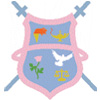
Gamma Phi Delta's motto is "Peace and Harmony".[10] The sorority's colors are baby pink and baby blue. Its symbols are the butterfly, dove, and lamp. Its flower is the pink rose and its gemstone is the pearl. The Gamma Phi Delta publication is The Lamplighter.[17]

Chapters

[edit]

Gamma Phi Delta has both collegiate and graduate chapters across the United States.

Philanthropy

[edit]

The Gamma Phi Delta Foundation was established in October 1987 to oversee youth scholarships and educational projects.[18]

On the national level, the sorority awards three scholarships and one endowment award annually. The scholarships are: The Gamma Phi Delta Merit Scholarship; the Elizabeth Garner Memorial Scholarship, and the Undergraduate Scholarship.[19] Its endowment is called The Ann McElwee Perpetual Endowment Fund.[19]

At the local level, chapters raise funds to support education and locally awarded scholarships.[12] Members also participate in a variety of community service projects with local charities.[12]

Membership

[edit]

Gamma Phi Delta has five membership types: undergraduate, graduate, association, honorary, and member-at-large.[20] Membership is by invitation.[10] Members are required to have completed two years of college study.[12]

Notable members

[edit]

References

[edit]
[edit]
Revisions and contributorsEdit on WikipediaRead on Wikipedia
from Grokipedia
Gamma Phi Delta Sorority, Incorporated (ΓΦΔ) is a historically African American service sorority founded on February 28, 1943, at Lewis College of Business in , , by educator Elizabeth A. Garner and businesswoman Violet T. Lewis, along with eleven other women known as the Thirteen Original Pearls, with the aim of advancing the economic, social, and political status of women through , , and . The sorority's objectives include promoting high standards in business and professional pursuits, fostering interracial and interreligious understanding, and supporting charitable causes, while maintaining a non-political and non-sectarian stance that acknowledges a Supreme Being in its creed. Membership is extended by invitation to graduate women in professions or business-related fields and to undergraduate students pursuing relevant studies, with chapters established across the and its territories to facilitate networking, , and . Key programs encompass youth initiatives such as the Rosebuds and Phi-Teens for girls, Junior Cavaliers and Cavaliers for boys, and the annual Artist of Tomorrow , alongside broader efforts in volunteerism, charity support, and addressing socioeconomic disparities through and enhancement. In 1987, the sorority established the Gamma Phi Delta Foundation, Inc., a 501(c)(3) that funds , health and seminars, tutorial programs, single-parent counseling, and job training to further these goals. The national headquarters, dedicated in 1976, remains in , underscoring the organization's enduring commitment to empowering women and strengthening communities.

History

Founding and Early Years

Gamma Phi Delta Sorority, Incorporated, was established on February 28, 1943, at Lewis College of Business in , , by Elizabeth Garner, an instructor at the college, and her sister Violet T. Lewis, the institution's owner. The organization emerged as a professional sorority dedicated to business and professional women, particularly African American women facing exclusion from mainstream networks due to . The founders' primary motivation was to create a supportive framework for developing business acumen, leadership skills, and mutual aid among women in vocational and professional fields, at a time when opportunities for African American women in business were severely limited by discriminatory practices. Garner and Lewis, along with the initial group known as the "13 Original Pearls," emphasized grassroots networking without reliance on external funding, reflecting the era's economic constraints during World War II. Each of the 13 founding members committed to establishing chapters in their respective home cities to extend this network. Early operations were challenged by wartime resource shortages and the broader socio-economic barriers of segregation, yet the sorority quickly prioritized educational and professional upliftment through member-driven initiatives, laying the groundwork for its focus on proficiency and support. This foundational period underscored a commitment to , as the organization operated independently to foster vocational training and professional solidarity among its members.

Expansion and Institutionalization

Following its founding in , Gamma Phi Delta Sorority was incorporated in , with 26 women signing the articles of incorporation to formalize its structure as a dedicated to and professional women. The sorority's bylaws, established from inception, prioritized professional development, leadership training, and economic empowerment over purely social functions, reflecting the founders' focus on addressing barriers faced by African American during the post-World War II era of limited opportunities. This emphasis aligned with causal shifts from wartime labor demands and early civil rights legal victories, such as (1944), which indirectly expanded professional networks for Black women by challenging exclusionary practices. Expansion beyond Detroit commenced in the late , as founders committed to chartering chapters in their home cities and other urban centers with growing Black professional communities, such as , where founder Elizabeth Garner personally established a local chapter after relocating there. By the , this proliferation included additional graduate chapters in Midwestern and Southern cities, driven by migration patterns and economic growth in sectors like and business, with one early leader organizing at least 22 chapters nationwide. A name change from Phi Gamma Delta Sorority to Gamma Phi Delta Sorority, Inc., occurred circa 1945–1947 following a lawsuit by the preexisting , further institutionalizing the organization's distinct identity. Institutional solidification advanced with the establishment of the national headquarters at 2657 West Grand Boulevard in Detroit's historic Row district, formally dedicated on July 25, 1976, and marked by cornerstone ceremonies in February 1979; this facility centralized governance and supported chapter coordination amid expanding membership. To accommodate rising access to higher education amid civil rights advancements like the , the sorority adapted by incorporating undergraduate chapters alongside its graduate focus starting in the late 1970s and 1980s, enabling recruitment from college campuses while maintaining professional standards. This dual structure reflected pragmatic response to demographic shifts, with early undergraduate efforts like the 1984 chartering of Gamma Pi Chapter at exemplifying targeted growth in educational institutions.

Recent Developments and Adaptations

In the early , Gamma Phi Delta Sorority sustained its organizational growth across seven regions—Northern, Far-Western, Mid-Western, Eastern, Southern, Quad-States, and South Atlantic—with all regions represented at national gatherings to coordinate activities and . The sorority adapted to technological shifts by launching a mobile application in recent years for managing conferences, events, and meetings, enabling streamlined communication and participation among members nationwide. This digital tool supports the MEEPS framework's emphasis on membership recruitment and retention, fostering sustained engagement without dependence on external funding mechanisms. The 2025 National Administrative Board Meeting, convened October 2–5 in , , at the Marriott Riverwalk, prioritized strategic collaboration, leadership training, and purpose-driven initiatives, including a Give Back Day on October 2 where chapters donated over five empty backpacks to for foster children. Outcomes reinforced resilience through focused amid economic changes, such as remote work proliferation. Scholarship efforts expanded in the 2024–2025 cycle, with national awards for sorors' children entering and chapter-specific grants, like those from the Gamma Chapter and Beta Sigma Chapter, prioritizing , , and to promote and . Recent programming, including career days highlighting youth business pitches, aligns with the sorority's foundational emphasis on entrepreneurial skills to navigate modern labor market dynamics.

Symbols and Traditions

Insignia and Regalia

The primary insignia of Gamma Phi Delta Sorority, Inc. consists of the Greek letters ΓΦΔ, which directly represent the organization's name and are incorporated into badges, pins, and official merchandise. These letters appear in exact replicas without alteration, as stipulated in national usage guidelines to maintain integrity. The sorority's official colors are and , employed in such as lapel pins, clothing, and accessories to signify membership and unity during events like commemorations. All non-jewelry items bearing must adhere to these colors, with proofs submitted for approval to ensure consistency. The official shield, a copyrighted central to the sorority's visual identity, is rendered in these colors or black and white for authorized reproductions on items including jewelry, bags, and glassware, subject to a usage fee and permission from national officers. Regalia protocols emphasize presentation, with pins featuring the Greek letters or founding year 1943 worn at official gatherings to denote active status; alterations or unauthorized designs are prohibited to preserve symbolic precision aligned with the sorority's business-oriented ethos.

Rituals and Customs

The rites of Gamma Phi Delta Sorority, Inc., are conducted privately among members to preserve organizational exclusivity and emphasize commitments to , mutual aid, and ethical business conduct. These ceremonies include structured steps such as prospective members, formal induction, a candlelight service symbolizing enlightenment in pursuits, the core where oaths are administered, and a senior ritual marking advanced standing, all overseen by chapter officers like the who ensures orderly progression. Pledging culminates in the presentation of a pledge pin by a designated "big sister," fostering targeted oriented toward measurable rather than sentimental ties. Annual observances reinforce these principles through disciplined gatherings focused on reflection and strategic networking. , held each February 28 to commemorate the sorority's establishment in 1943 by Elizabeth Garner and Violet T. Lewis, features chapter and regional events honoring the original 13 founders—known as "pearls"—with programs that review historical milestones and set professional benchmarks for the year ahead. Regional conferences, convened biennially or as scheduled by administrative boards, enforce protocols of formal , including structured agendas for goal-setting sessions on business leadership and metrics, prioritizing practical outcomes over casual fellowship. Customs within the sorority further promote and professional discipline, such as ongoing pairings that pair seasoned members with juniors to monitor and elevate career advancement indicators like skill acquisition and networking efficacy, distinct from emotional support mechanisms in social sororities. These practices, embedded in chapter operations, underscore the organization's foundational aim of cultivating independent businesswomen through rather than affective bonding, with enforcement via officer-led reviews during meetings and events.

Organizational Framework

National Governance

The national governance of Gamma Phi Delta Sorority, Inc. is centralized under the National President, who serves as , supported by a National Board of Directors and elected officers. The headquarters, located at 2657 West Grand Boulevard in , , handles administrative functions including coordination of national activities, maintenance of records, and support for educational resources such as the Dr. Bozeman Library and Kennedy Heritage Hall. This facility, dedicated in 1976, facilitates oversight without exerting direct control over local chapter operations. National officers, including the President, First , and other executive roles, are elected to four-year terms, as evidenced by the current slate serving from 2024 to 2028. Dr. Kartessa Bell holds the position of National President during this period, with Brenda A. Roper as National First and additional officers such as Theresa Dillard in supporting roles. Elections occur through processes aligned with national conventions, emphasizing among business and women. Decision-making at the national level involves annual Administrative Board meetings, where policies on membership standards, financial management, and program guidelines are formulated and reviewed. These gatherings, hosted by the National Board of Directors and Presidents Council, focus on researching non-political issues and issuing recommendations to chapters on economic, social, and educational priorities, while relying primarily on member dues for revenue to maintain fiscal accountability. Disputes and compliance with sorority standards are adjudicated nationally to ensure uniformity, though implementation of initiatives like the five-point MEEPS program remains decentralized at the chapter level.

Regional and Chapter Operations

Gamma Phi Delta Sorority, Inc. organizes its chapters into seven geographic regions—Northern, Far-Western, Mid-Western, Eastern, Southern, Quad-State, and South Atlantic—to facilitate localized professional networking and support amid diverse business environments. This structure, with approximately 87 chapters nationwide, enables scalable operations by allowing regional coordination while preserving chapter-level flexibility for events tailored to regional economic and community needs, such as workshops on business leadership in urban versus rural settings. Predominantly comprising graduate chapters for professional women, the organization maintains a smaller cadre of undergraduate chapters at institutions like Lewis College of Business (historical founding site) to distinguish campus-focused development from career-stage initiatives. Chapters hold primary responsibility for operational execution, including the organization of educational and recreational programs, collection of membership dues to fund local activities, and adherence to national compliance standards such as mandatory sponsorship of the annual Artist of Tomorrow youth arts initiative. in program adaptation permits chapters to align initiatives with proximate business landscapes—for instance, emphasizing in tech-heavy regions like the Far-Western area—while ensuring alignment with the sorority's core objectives of professional advancement and community enhancement. Regional oversight supports this decentralization through periodic financial reviews and performance discussions, but bottom-up decision-making drives event planning and member engagement to sustain retention linked to tangible professional outcomes like networking referrals. Undergraduate chapters, limited in number and regionally distributed (e.g., Northern, Mid-Western, Southern), prioritize academic integration and sisterhood-building on campuses, contrasting with graduate chapters' focus on post-collegiate service and for established professionals. This dual structure underscores the sorority's emphasis on lifecycle-appropriate support, with chapters collectively contributing to over 500 individual life memberships through volunteer-driven efforts that vary by local priorities.

Programs and Initiatives

Core Five-Point Program

The National Five-Point Program, acronymized as MEEPS, constitutes the core operational framework of Gamma Phi Delta Sorority, Inc., guiding member empowerment through targeted professional and communal initiatives since the organization's in 1943. Founded amid barriers to women's entry into professions, particularly for African American women, the program originated as a structured response to exclusionary practices, prioritizing skill acquisition, networking, and economic independence via practical training over redistributive aid. Implementation occurs through chapter-level workshops, mentorship pairings, and collaborative events that yield verifiable outcomes, such as enhanced metrics and entrepreneurial ventures among participants, as tracked in regional reports. Membership emphasizes sustained recruitment and mentoring of , professional, and vocational fields to build a robust network for career progression and mutual support. This pillar drives organizational growth by integrating diverse expertise, with chapters hosting invitation-only orientations that vet candidates for alignment with self-reliant professional ethos. Education focuses on continuous , leveraging the sorority's roots at Lewis Business College through seminars on , , and technical skills to equip members for competitive markets. Programs stress empirical skill-building, such as certification courses, to foster independence and counter historical underrepresentation in corporate roles. Economic Development targets entrepreneurial capacity and job readiness, implementing strategies like clinics and funding linkages that prioritize measurable results, including startup formations and placements over grant dependency. This component underscores causal pathways from training to financial autonomy, with chapters reporting annual metrics on member-led enterprises. Public Information entails to amplify the sorority's visibility and advocate for women's economic roles, utilizing media, events, and partnerships to disseminate success stories and policy insights without partisan framing. Social Action integrates scholarships and targeted service to reinforce member self-sufficiency and community uplift, channeling resources toward educational endowments and vocational aid that promote long-term productivity rather than short-term relief. Outcomes are evaluated via recipient advancement data, aligning with the program's aversion to perpetuating welfare cycles.

Philanthropic and Service Efforts

The Gamma Phi Delta Foundation, Inc., a 501(c)(3) organization supporting the sorority's external efforts, administers scholarships to promote educational advancement, awarding three scholarships in 2024 to recipients affiliated with Lawson State College and Miles College in Birmingham, Alabama, alongside community outreach donations to these institutions. These merit-driven awards target youth pursuing higher education, aligning with the sorority's emphasis on business and professional development without fostering dependency, though specific outcomes such as graduation rates or career placements remain undocumented in public reports. The foundation also funds job training and single-parent counseling programs, which aim to enhance employability and family stability in underserved communities, contributing to localized economic self-reliance through skill-building rather than short-term aid. Nationally, the sorority organizes observance services to address public health and civic needs, including National Community Service Day in October, which mobilizes chapters for direct community aid, and March's Dr. Catherine E. Bozeman Month of Kindness focused on senior services such as provision of essentials and companionship. Health initiatives encompass awareness campaigns for breast cancer (October), HIV/AIDS (March and December), sickle cell disease (June and September), and childhood obesity (September), alongside events like National Wear Red Day (February) for cardiovascular health promotion. These efforts, while raising visibility and encouraging preventive behaviors, lack quantified impact metrics like reduced incidence rates or participant health improvements, limiting assessment of causal efficacy beyond participation numbers reported by chapters. Additional foundation-supported seminars on and , combined with and after-school programs, extend service to and families, prioritizing practical knowledge dissemination over ideological training. Local chapter variations, such as brunches funding charitable causes, amplify these national frameworks but vary in scale and verification, with successes evident in sustained educational access rather than transformative economic shifts. Overall, these philanthropic activities demonstrate targeted uplift through verifiable distributions, though broader reveals reliance on self-reported data from organizational sources without independent audits.

Membership

Eligibility Criteria

Membership in Gamma Phi Delta Sorority, Inc. is restricted to women who exhibit and reputation, with eligibility divided into undergraduate and graduate categories to align with the organization's focus on in business and related fields. Undergraduate membership requires women to be currently enrolled at an accredited or , having completed at least one semester, trimester, or two quarters of coursework, while maintaining a minimum cumulative grade point average of 2.0 on a 4.0 scale. Applicants must also demonstrate interest in business or professional pursuits and cannot hold membership in another sorority or equivalent Greek-letter organization. Graduate membership is by invitation only and extends to women who hold a baccalaureate or , have completed an approved two-year specialized training program, or possess equivalent business or professional experience sufficient to qualify for professional standing. This criterion ensures members contribute to and benefit from networks emphasizing achievement in , industry, or professions, without mandating a degree for all but prioritizing demonstrated capability over formal alone. Across both categories, the sorority prohibits denial of membership based on race, , , , age, or , though selectivity through invitation and verification upholds standards of professional merit and organizational integrity.

Recruitment and Induction

Graduate membership occurs by invitation to eligible women, followed by submission of an application reviewed and approved by the National Membership Chair. Applicants must demonstrate and reputation, with the process emphasizing alignment with the sorority's focus on professional standards in business and vocations. Undergraduate recruitment is facilitated through existing chapters, where prospective members submit applications endorsed by two active graduate sorors, including the chapter advisor, along with official transcripts verifying a minimum 2.0 GPA and a profile of extracurricular activities. Selection involves chapter review and voting, requiring at least 85% approval from active members to ensure candidates uphold the organization's values of , , and ethical conduct. This threshold underscores the sorority's commitment to quality over quantity in membership, prioritizing individuals who exhibit potential for professional excellence. Accepted candidates enter a pledge service period, during which they participate in activities designed to instill the sorority's principles of , sisterhood, and service to and . This probationary phase assesses commitment and prepares pledges for full integration. Induction follows through formal rituals, including bid acceptance and initiation ceremonies that bind members to oaths of upholding high ethical standards in professional pursuits and contributing to the sorority's aims. These ceremonies reinforce the organization's foundational goals of fostering and among businesswomen.

Notable Members

Professional and Business Achievers

Violet T. Lewis, co-founder of Gamma Phi Delta Sorority, Inc., established Lewis College of Business in 1928 with a $50 loan amid the , initially offering stenography courses to African American women barred from mainstream training programs. The institution expanded into an accredited , becoming the Midwest's only historically Black for decades and graduating over 20,000 students in its first 50 years, equipping them with skills in , , and that enabled entry into clerical and administrative roles in segregated industries. Lewis's enterprise model emphasized , bartering services for enrollment growth and securing U.S. Department of recognition as a for its role in economic empowerment. Elizabeth A. Garner, the sorority's primary founder and a teacher at Lewis College, advanced by administering curricula that produced business-ready graduates, directly influencing the sorority's formation at the college to foster networks among such women. Her efforts complemented Lewis's by promoting ongoing education and vocational advancement, aligning with the era's market constraints where averaged lower business participation rates due to , yet sorority affiliates like these founders demonstrated agency through institution-building. Dr. Willie B. Kennedy, a past national president (1986–1992), founded W.B. Kennedy and Associates Consulting Company, managing site operations for major redevelopment projects like while advocating for minority- and women-owned business contracts in public procurement. Her capitalized on openings in the 1980s–1990s, securing opportunities in urban development amid limited access for Black-owned enterprises, which faced approval rates under 10% in many municipal bids during that period. Current leadership, including National President Dr. Kartessa Bell, exemplifies sustained executive roles, with Bell holding a doctoral degree and steering sorority initiatives that emphasize entrepreneurial training, though specific revenue metrics for member-founded firms remain documented primarily through individual cases like the founders' ventures rather than aggregate alumni data. These examples illustrate how early members navigated market barriers via targeted education and consulting, predating broader gains.

Community and Civic Contributors

Dr. Willie B. Kennedy, initiated into the Rho Chapter of Gamma Phi Delta Sorority in 1966, exemplified civic leadership through her election to the , where she advocated for community development and reforms. As the second African American to serve on the board, Kennedy focused on equitable and urban improvement initiatives during her tenure. She later channeled her commitment to by founding the Gamma Phi Delta Foundation in 1988, establishing it as a nonprofit vehicle for scholarships, youth programs, and community outreach aligned with the sorority's social action goals. Kennedy's national presidency of the sorority from 1986 to 1992 further amplified her civic impact, including the creation of the Ann McElwee Phi-Teen Perpetual Fund to support youth leadership and in underserved communities. Her multifaceted roles bridged sororal service with broader public policy, emphasizing voter engagement and economic empowerment for women and families. Through these efforts, she advanced the sorority's mission of while holding elected office, demonstrating sustained dedication to civic betterment.

References

Add your contribution
Related Hubs
User Avatar
No comments yet.