



Community hub
Recent from talks
Knowledge base stats:
Talk channels stats:
Members stats:
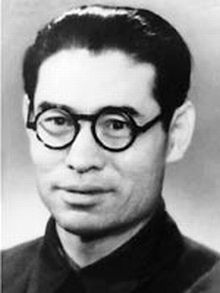
Gao Gang
Gao Gang (Chinese: 高岗; Wade–Giles: Kao Kang; 1905 – August 1954) was a Chinese Communist Party (CCP) leader during the Chinese Civil War and the early years of the People's Republic of China (PRC) before he became the victim of the first major purge within the party since before 1949. The events surrounding Gao's purge, the so-called "Gao Gang Affair", are still the subject of debate: a limited amount of research has been done on the topic, partly because of the relatively small amount of information available.
Born in rural Shaanxi province in 1905, Gao Gang joined the party in 1926 and led a revolutionary guerrilla base there during the Chinese Civil War. He was of peasant background with a low level of education: he is said to have not been very literate. Among his colleagues in the party, he gained a reputation as having great confidence and ambition, as well as of being a womanizer. Trusted by Mao Zedong, Gao was dramatically promoted in the final years of the civil war to become the party state and military head of Manchuria, the key Northeast area of China. In 1952, he was ordered to Beijing to become head of the State Planning Commission of China (SPC), where he later attempted a leadership challenge against Liu Shaoqi and Zhou Enlai. His attempt failed and he committed suicide in August 1954.
When his friend since middle school Liu Zhidan led a failed insurrection in 1928, Gao joined him in remote Northwest Shaanxi, where together they built up a guerrilla base. The deaths of local guerrilla leaders in the Northwest region distinguished Gao as the symbol of the revolutionary base. Gao met Mao Zedong in 1935 when the Long March ended in Shaanxi. Both developed a close relationship based on personal friendship and their agreement on Marxism–Leninism ideological matters. Gao spent many years during the Chinese Civil War coordinating party activities and became one of the top commanders in the region.
In 1945, Gao joined the Politburo of the Chinese Communist Party, and was transferred along with Lin Biao to northeast China (Dongbei), becoming head of the local party (the Northeastern Bureau), state and military apparatus. By 1947 Gao was the most important cadre in the region. After the founding of the PRC in 1949, Gao was named one of the six chairmen of the State Council, under Mao Zedong.
Influence from the nearby Soviet Union meant that Soviet ideas of industrial organization and economic planning were prominent, and Gao strongly supported these methods as the area became China's center of heavy industry. Northeastern Chinese areas such as Manchuria held further significance to China due to its occupation by the Japanese earlier in the century, and the People's Liberation Army's symbolic liberation of it from the Kuomintang in 1948 gave the region greater appeal for the CCP's industrial plans. Gao Gang, now an influential local party cadre in the Northeastern region, detailed in a 1950 report that the CCP shall "recon[struct] the Northeast to serve as a starting point or important base for the industrialization of the whole country" Gao Gang was thus, a key contributing player in the country's economic reconstruction and general production management in the early years of the CCP regime. Due to its economic advancement, the northeast region was often used to test new Communist policies, something that increased both the prestige of the region and that of Gao himself. Gao also received significant propaganda coverage, as workers and peasants were encouraged to respond to his 'call' for increased industrial production; personal letters supporting him and salutations to his health were also published.
In July 1950, shortly after the outbreak of the Korean War, Gao was placed in command of the 260,000-man "Northern Frontier Guards", stationed along the border with North Korea. Gao was then held responsible for preparing his forces for the possibility of China's participation in the war. When China finally entered the Korean War in November 1950, Chinese forces were commanded by Peng Dehuai.
Gao Gang was transferred to Beijing in 1952 to take up the post of Chairman of the State Planning Commission of China (SPC), which made him principally responsible for carrying out the First Five-Year Plan, the national policy that introduced Soviet economic planning into the People's Republic of China. In addition to responsibility over the SPC, Gao was made in charge of eight major economic industries, including heavy industry, light industry, the first and second mechanical industries, fuel, construction, geological planning, and textiles. Despite Gao's increases in power and responsibility, sources point out that Mao orchestrated Gao's promotion to Beijing in order to reduce Zhou Enlai's authority, who Mao suspected was gaining too much influence over CCP policies and leadership alongside Chen Yun and Liu Shaoqi.Gao was also confirmed as a Politburo member, a vice-chairman of the Central People's Government Council, and a vice-chairman of the People's Revolutionary Military Council. Gao's facilitation of Sino-Soviet relations during the advising stages of the First Five-Year Plan were of particular importance to the party, making him a valuable, capable Politburo member to Mao and other senior party members. However, there is some evidence that Gao was reluctant to leave his power base in the Northeast and move to Beijing.
Gao advocated the early to mid-1950s policy of centralizing control over China's state-owned enterprises.
Hub AI
Gao Gang AI simulator
(@Gao Gang_simulator)
Gao Gang
Gao Gang (Chinese: 高岗; Wade–Giles: Kao Kang; 1905 – August 1954) was a Chinese Communist Party (CCP) leader during the Chinese Civil War and the early years of the People's Republic of China (PRC) before he became the victim of the first major purge within the party since before 1949. The events surrounding Gao's purge, the so-called "Gao Gang Affair", are still the subject of debate: a limited amount of research has been done on the topic, partly because of the relatively small amount of information available.
Born in rural Shaanxi province in 1905, Gao Gang joined the party in 1926 and led a revolutionary guerrilla base there during the Chinese Civil War. He was of peasant background with a low level of education: he is said to have not been very literate. Among his colleagues in the party, he gained a reputation as having great confidence and ambition, as well as of being a womanizer. Trusted by Mao Zedong, Gao was dramatically promoted in the final years of the civil war to become the party state and military head of Manchuria, the key Northeast area of China. In 1952, he was ordered to Beijing to become head of the State Planning Commission of China (SPC), where he later attempted a leadership challenge against Liu Shaoqi and Zhou Enlai. His attempt failed and he committed suicide in August 1954.
When his friend since middle school Liu Zhidan led a failed insurrection in 1928, Gao joined him in remote Northwest Shaanxi, where together they built up a guerrilla base. The deaths of local guerrilla leaders in the Northwest region distinguished Gao as the symbol of the revolutionary base. Gao met Mao Zedong in 1935 when the Long March ended in Shaanxi. Both developed a close relationship based on personal friendship and their agreement on Marxism–Leninism ideological matters. Gao spent many years during the Chinese Civil War coordinating party activities and became one of the top commanders in the region.
In 1945, Gao joined the Politburo of the Chinese Communist Party, and was transferred along with Lin Biao to northeast China (Dongbei), becoming head of the local party (the Northeastern Bureau), state and military apparatus. By 1947 Gao was the most important cadre in the region. After the founding of the PRC in 1949, Gao was named one of the six chairmen of the State Council, under Mao Zedong.
Influence from the nearby Soviet Union meant that Soviet ideas of industrial organization and economic planning were prominent, and Gao strongly supported these methods as the area became China's center of heavy industry. Northeastern Chinese areas such as Manchuria held further significance to China due to its occupation by the Japanese earlier in the century, and the People's Liberation Army's symbolic liberation of it from the Kuomintang in 1948 gave the region greater appeal for the CCP's industrial plans. Gao Gang, now an influential local party cadre in the Northeastern region, detailed in a 1950 report that the CCP shall "recon[struct] the Northeast to serve as a starting point or important base for the industrialization of the whole country" Gao Gang was thus, a key contributing player in the country's economic reconstruction and general production management in the early years of the CCP regime. Due to its economic advancement, the northeast region was often used to test new Communist policies, something that increased both the prestige of the region and that of Gao himself. Gao also received significant propaganda coverage, as workers and peasants were encouraged to respond to his 'call' for increased industrial production; personal letters supporting him and salutations to his health were also published.
In July 1950, shortly after the outbreak of the Korean War, Gao was placed in command of the 260,000-man "Northern Frontier Guards", stationed along the border with North Korea. Gao was then held responsible for preparing his forces for the possibility of China's participation in the war. When China finally entered the Korean War in November 1950, Chinese forces were commanded by Peng Dehuai.
Gao Gang was transferred to Beijing in 1952 to take up the post of Chairman of the State Planning Commission of China (SPC), which made him principally responsible for carrying out the First Five-Year Plan, the national policy that introduced Soviet economic planning into the People's Republic of China. In addition to responsibility over the SPC, Gao was made in charge of eight major economic industries, including heavy industry, light industry, the first and second mechanical industries, fuel, construction, geological planning, and textiles. Despite Gao's increases in power and responsibility, sources point out that Mao orchestrated Gao's promotion to Beijing in order to reduce Zhou Enlai's authority, who Mao suspected was gaining too much influence over CCP policies and leadership alongside Chen Yun and Liu Shaoqi.Gao was also confirmed as a Politburo member, a vice-chairman of the Central People's Government Council, and a vice-chairman of the People's Revolutionary Military Council. Gao's facilitation of Sino-Soviet relations during the advising stages of the First Five-Year Plan were of particular importance to the party, making him a valuable, capable Politburo member to Mao and other senior party members. However, there is some evidence that Gao was reluctant to leave his power base in the Northeast and move to Beijing.
Gao advocated the early to mid-1950s policy of centralizing control over China's state-owned enterprises.