Hubbry Logo
Gastric-brooding frogGastric-brooding frogMain
Open search
Gastric-brooding frog
Community hub
Gastric-brooding frog
logo
8 pages, 0 posts
0 subscribers
Be the first to start a discussion here.
Gastric-brooding frog
from Wikipedia

Gastric-brooding frogs
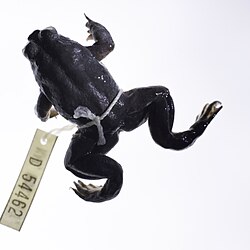
Southern gastric-brooding frog (Rheobatrachus silus)

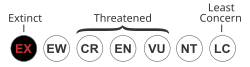
Extinct (1983-1987)  (IUCN 3.1)[1][2]
Scientific classification Edit this classification
Kingdom: Animalia
Phylum: Chordata
Class: Amphibia
Order: Anura
Family: Myobatrachidae
Genus: Rheobatrachus
Liem, 1973
Species
The former distributions of Rheobatrachus silus (green) and Rheobatrachus vitellinus (blue)

Rheobatrachus, whose members are known as the gastric-brooding frogs or platypus frogs, was a genus of extinct ground-dwelling frogs native to Queensland in eastern Australia. The genus consisted of only two species, the southern and northern gastric-brooding frogs, both of which became extinct in the mid-1980s. The southern gastric brooding frog was last seen in 1983 and was declared extinct in 2006. The northern gastric brooding frog was last seen in 1987 and was declared extinct in 2015. The genus is unique because it contains the only two known frog species that incubated the prejuvenile stages of their offspring in the stomach of the mother.[3]

The combined ranges of the gastric-brooding frogs comprised less than 2,000 square kilometres (770 sq mi). Both species were associated with creek systems in rainforests at elevations of between 350 and 1,400 metres (1,150 and 4,590 ft). The causes of the gastric-brooding frogs' extinction are not clearly understood, but habitat loss and degradation, pollution, and some diseases may have contributed.

The assignment of the genus to a taxonomic family is hotly debated. Some biologists class them within Myobatrachidae under the subfamily Rheobatrachinae, but others place them in their own family, Rheobatrachidae.[4] Molecular genetics finds it sister to Mixophyes.[5]

Scientists at the University of Newcastle and University of New South Wales announced in March 2013 that the frog would be the subject of a cloning attempt, referred to as the "Lazarus Project", to resurrect the species. Embryos were successfully cloned, and the project eventually hopes to produce a living frog.[6][7]

Taxonomy

[edit]

The genus Rheobatrachus was first described in 1973 by David Liem[8] and since has not undergone any scientific classification changes; however its placement has been controversial. It has been placed in a distinct subfamily of Myobatrachidae, Rheobatrachinae; in a separate family, Rheobatrachidae; placed as the sister taxon of Limnodynastinae; and synonymized with Limnodynastinae. In 2006, D. R. Frost and colleagues found Rheobatrachus, on the basis of molecular evidence, to be the sister taxon of Mixophyes and placed it within Myobatrachidae.[9][5]

Both species of gastric-brooding frogs were very different in appearance and behaviour from other Australian frog species. Their large protruding eyes and short, blunt snout along with complete webbing and slimy bodies differentiated them from all other Australian frogs. The largely aquatic behaviour exhibited by both species was only shared (in Australia) with the Dahl's aquatic frog and their ability to raise their young in the mother's stomach was unique among all frogs.

Common names

[edit]

The common names, "gastric-brooding frog" and "platypus frog", are used to describe the two species. "Gastric-brooding" describes the unique way the female raised the young and "platypus" describes their largely aquatic nature.

Reproduction

[edit]

What makes these frogs unique among all frog species is their form of parental care. Following external fertilization by the male, the female would take the eggs or embryos into her mouth and swallow them.[10] It is not clear whether the eggs were laid on the land or in the water, as it was never observed before their extinction. Interestingly, Darwin's frog, another species of frog, has been observed to exhibit similar mouth-brooding characteristics. This feature still remains extremely rare in nature.

Eggs found in females measured up to 5.1 mm in diameter and had large yolk supplies. These large supplies are common among species that live entirely off yolk during their development. Most female frogs had around 40 ripe eggs, almost double that of the number of juveniles ever found in the stomach (21–26). This means one of two things, that the female fails to swallow all the eggs or the first few eggs to be swallowed are digested.

At the time the female swallowed the fertilized eggs her stomach was no different from that of any other frog species. In the jelly around each egg was a substance called prostaglandin E2 (PGE2), which could turn off production of hydrochloric acid in the stomach. This source of PGE2 was enough to cease the production of acid during the embryonic stages of the developing eggs. When the eggs had hatched the tadpoles created PGE2. The mucus excreted from the tadpoles' gills contained the PGE2 necessary to keep the stomach in a non-functional state. These mucus excretions do not occur in tadpoles of most other species. Tadpoles that do not live entirely off a yolk supply still produce mucus cord, but the mucus along with small food particles travels down the oesophagus into the gut. With Rheobatrachus (and several other species) there is no opening to the gut and the mucus cords are excreted. During the period that the offspring were present in the stomach the frog would not eat.

Information on tadpole development was observed from a group that was regurgitated by the mother and successfully raised in shallow water. During the early stages of development tadpoles lacked pigmentation, but as they aged they progressively develop adult colouration. Tadpole development took at least six weeks, during which time the size of the mother's stomach continued to increase until it largely filled the body cavity. The lungs deflated and breathing relied more upon gas exchange through the skin. Despite the mother's increasing size she still remained active.

The birth process was widely spaced and may have occurred over a period of as long as a week. However, if disturbed the female may regurgitate all the young frogs in a single act of propulsive vomiting. The offspring were completely developed when expelled and there was little variation in colour and length of a single clutch.[11]

Cause of extinction

[edit]

The cause for the gastric-brooding frogs' extinction is speculated to be due to human introduction of pathogenic fungi into their native range. Populations of southern gastric-brooding frogs were present in logged catchments between 1972 and 1979. The effects of such logging activities upon southern gastric-brooding frogs was not investigated but the species did continue to inhabit streams in the logged catchments. The habitat that the southern gastric-brooding frog once inhabited is now threatened by feral pigs, the invasion of weeds, altered flow and water quality problems caused by upstream disturbances.[12] Despite intensive searching, the species has not been located since 1976 or 1981 (depending on the source).

The Eungella National Park, where the northern gastric-brooding frog was once found, was under threat from bushfires and weed invasion. Continual fires may have destroyed or fragmented sections of the forest.[13] The outskirts of the park are still subject to weed invasion and chytrid fungus has been located within several rainforest creeks within the park. It was thought that the declines of the northern gastric-brooding frog during 1984 and 1985 were possibly normal population fluctuations.[14] Eight months after the initial discovery of the northern gastric-brooding frog, sick and dead Eungella torrent frogs, which cohabitat the streams with gastric brooding frogs, were observed in streams in Pelion State Forest.[15] Given the more recent understanding of the role of the amphibian disease in the decline and disappearance of amphibians, combined with the temporal and spatial pattern of the spread of the pathogen in Australia, it appears most likely that the disease was responsible for the decline and disappearance of the gastric-brooding frogs. Despite continued efforts to locate the northern gastric-brooding frog it has not been found. The last reported wild specimen was seen in the 1980s. In August 2010 a search organised by the Amphibian Specialist Group of the International Union for Conservation of Nature set out to look for various species of frogs thought to be extinct in the wild, including the gastric-brooding frog.[16]

Conservation status

[edit]

Both species are listed as Extinct under both the IUCN Red List and under Australia's Environment Protection and Biodiversity Conservation Act 1999; however, they are still listed as Endangered under Queensland's Nature Conservation Act 1992.

De-extinction attempt

[edit]

Scientists are making progress in their efforts to bring the gastric-brooding frog species back to life using somatic-cell nuclear transfer (SCNT), a method of cloning.[17]

In March 2013, Australian scientists successfully created a living embryo from non-living preserved genetic material. These scientists from the University of Newcastle Australia led by Prof Michael Mahony, who was the scientist who first discovered the northern gastric-brooding frog, Simon Clulow and Prof Mike Archer from the University of New South Wales hope to continue using somatic-cell nuclear transfer methods to produce an embryo that can survive to the tadpole stage. "We do expect to get this guy hopping again," says UNSW researcher Mike Archer.[18]

The scientists from the University of Newcastle have also reported successful freezing and thawing (cryopreservation) of totipotent amphibian embryonic cells,[19] which along with sperm cryopreservation[20] provides the essential "proof of concept" for the use of cryostorage as a genome bank for threatened amphibians and also other animals.

References

[edit]

Further reading

[edit]
[edit]
Revisions and contributorsEdit on WikipediaRead on Wikipedia
from Grokipedia
The gastric-brooding frogs (Rheobatrachus spp.) were two highly distinctive species of extinct frogs in the family Myobatrachidae, endemic to the rainforests of , , best known for their extraordinary reproductive adaptation in which females incubated fertilized eggs and developing young in a modified that functioned as a brood chamber. These frogs, discovered in the , represented the only known vertebrates to employ gastric brooding, a form of where the mother swallowed her eggs post-fertilization, suppressed and digestive secretions for approximately six to seven weeks, and subsequently regurgitated fully formed froglets through her mouth—up to 25 per brood in the case of the southern species. This unique mechanism not only protected the offspring from external predators but also highlighted extreme physiological adaptations in anuran , with the stomach's glandular transforming to support embryonic development without digestion. The genus comprised two species: the southern gastric-brooding frog (Rheobatrachus silus), described in 1973 and native to the Blackall and Conondale Ranges at elevations of 350–800 meters, and the northern gastric-brooding frog (Rheobatrachus vitellinus), described in 1984 and restricted to the Eungella region at 400–1,000 meters altitude. Both were medium- to large-sized, squat-bodied frogs adapted to fast-flowing, rocky streams in pristine and wet habitats, where they sheltered in rock crevices and leaf litter during the day and foraged nocturnally on , , and small . Breeding occurred seasonally from to , with males producing distinctive calls to attract females; physical traits included fully for aquatic life, granular dorsal skin, and, in brooding females, a distended . Despite their scientific intrigue, both species suffered rapid population declines and were declared extinct by the mid-1980s, with the last wild R. silus sighted in 1981 and the last captive individual dying in 1983, while R. vitellinus was last observed in 1985. The primary cause of their extinction was chytridiomycosis, a lethal skin disease caused by the fungal pathogen Batrachochytrium dendrobatidis, which emerged in Australian amphibian populations during the late 1970s and early 1980s, disrupting electrolyte balance and leading to cardiac arrest in infected individuals. Secondary factors may have included habitat alteration from logging and feral pig disturbance in the case of R. silus, though no evidence supported over-collection or pollution as major drivers for R. vitellinus. Both species are classified as Extinct (EX) on the IUCN Red List, underscoring their loss amid a broader amphibian crisis affecting over 40% of global frog species.

Taxonomy

Classification

The genus Rheobatrachus belongs to the Myobatrachidae within the superfamily Myobatrachoidea. It was originally placed in the monotypic Rheobatrachinae established by Heyer and Liem in based on morphological analyses distinguishing it from other myobatrachid groups. The genus was originally described by Liem in 1973 as part of the Leptodactylidae, but subsequent revisions integrated it into Myobatrachidae due to shared Australo-Papuan affinities; later studies have debated the status, with some placing it in Myobatrachinae or elevating the genus to its own Rheobatrachidae. The name Rheobatrachus derives from the Greek "rheo-" (referring to flowing or stream) combined with "batrachos" (), alluding to the genus's preference for fast-flowing freshwater habitats. Its phylogenetic position remains somewhat controversial, with some analyses supporting a close relationship to the subfamily Limnodynastinae or to the genus Mixophyes, while molecular data place it as sister to the core myobatrachids; the unique subfamily status stems primarily from derived reproductive traits, such as gastric brooding. These adaptations highlight its distinct evolutionary lineage among Australian ground s.

Species and common names

The genus Rheobatrachus includes two species of extinct gastric-brooding frogs, both endemic to , . The southern gastric-brooding frog, Rheobatrachus silus, was formally described in 1973 by D.S. Liem, with the type locality at Kondalilla, 3 km southwest of Montville in southeastern . No synonyms are recognized for this species. The northern gastric-brooding frog, Rheobatrachus vitellinus, was described in 1984 by M.J. Mahony, M.J. Tyler, and M. Davies, with the type locality in Eungella National Park, . Like its southern counterpart, it has no recognized synonyms. Common names for the genus Rheobatrachus include gastric-brooding frog and platypus frog, reflecting the unique reproductive strategy where females brood offspring in their stomachs; species-specific names are southern gastric-brooding frog and northern gastric-brooding frog, with occasional variants such as southern platypus frog or Eungella gastric-brooding frog.

Description and distribution

Physical characteristics

The gastric-brooding frogs, genus Rheobatrachus, exhibited distinct morphological traits adapted to their aquatic stream environments, with variations between the two species. The southern gastric-brooding frog (R. silus) was a medium-sized species, with males measuring 33–41 mm in snout-vent length (SVL) and females 44–54 mm SVL. In contrast, the northern gastric-brooding frog (R. vitellinus) was larger and more robust, with males reaching 55.7–58 mm SVL and females 62.2–83 mm SVL. Both species possessed a squat, streamlined body form conducive to underwater movement, featuring a short, blunt snout and large, protruding eyes positioned close together and directed upwards for enhanced visibility in clear streams. Dorsal coloration in R. silus ranged from olive to nearly black, marked by irregular small light and dark patches, dark streaks from the eye to the base, and crossbars on the limbs, providing cryptic against substrates. The ventral surface was smooth and white or cream, often with yellow markings on the limbs. For R. vitellinus, the dorsum was pale brown with darker patches, while the venter was cream with dark brown stippling in preservative, though bright yellow to orange hues appeared on the and limb undersides in life. Both species had granular dorsal skin and smooth ventral skin, with fully bearing small discs for propulsion in water and unwebbed, claw-shaped fingers. Anatomically, these frogs displayed adaptations for an aquatic lifestyle, including hidden tympana, a round blunt with upward-directed nostrils, and short hindlimbs without tarsal folds. The possessed structural modifications, such as an expandable fundus and proximal body region, enabling accommodation of developing offspring.

Habitat and range

The gastric-brooding frogs, comprising the southern species Rheobatrachus silus and the northern species Rheobatrachus vitellinus, inhabited cool, fast-flowing streams and creeks with rocky bottoms in southeastern and mid-coastal , , where they preferred highly oxygenated waters in pristine environments. The range of R. silus was restricted to the Blackall and Conondale Ranges, spanning less than 1,400 km² at elevations of 350–800 m between Coonoon Gibber Creek and Kilcoy Creek. In contrast, R. vitellinus was confined to a smaller area of under 500 km² in Eungella National Park and the adjacent Clarke Range (also recorded in Mt. Pelion State Forest), at altitudes of 400–1,000 m. These frogs occupied microhabitats in shallow riffles, cascades, and broken-water sections of first- to third-order , sheltering diurnally under rocks, boulders, or logs in crevices, and showing nocturnal activity in adjacent oxygenated pools or soaks, never recorded more than 4 m from . They required high humidity, cool conditions in shaded settings, and clear, unpolluted , with breeding tied to summer rains from October to December.

Biology

Reproduction

The gastric-brooding frogs, belonging to the genus Rheobatrachus, exhibited a distinctive reproductive strategy characterized by followed by internal brooding in the female's . For R. silus, mating occurred during the breeding season, which spanned spring to summer— to December. Males attracted females through vocalizations emitted from positions in shallow water or on streamside rocks and logs, leading to , though this process was never directly observed in either species. Fertilization was external, with the female releasing eggs into the water where they were inseminated by the male before being swallowed by the female shortly thereafter. For R. vitellinus, the breeding season was to , but whether eggs are laid on land or in water prior to fertilization and swallowing is unknown. The brooding process began with the female ingesting the fertilized eggs or early embryos, which measured approximately 5.1 mm in diameter for R. silus and possessed large yolk reserves to support initial development. Inside the , the young developed into fully formed froglets over a total of 6–7 weeks, without the female feeding during this period. The tadpoles sustained themselves by feeding on nutrient-rich secreted by the lining. Upon completion of , which lasted 6–7 weeks in total, the female regurgitated the froglets through her mouth in a process akin to , with 21–26 froglets emerging from a single clutch in R. silus. In R. vitellinus, clutches were smaller, yielding around 22 froglets with larger body sizes at birth (snout-vent length of 15.1–15.9 mm). This unique adaptation involved profound physiological changes to protect the developing young from digestion. The stomach ceased production and inhibited gastric secretions entirely during brooding, a mechanism triggered by (PGE2) secreted by the embryos or tadpoles. In R. silus, PGE2 from the young directly suppressed acid secretion, while in R. vitellinus, PGE2 present in the egg jelly contributed to the inhibition. The female's digestive tract reverted to normal function within four days after the froglets emerged, allowing resumption of feeding. These adaptations represented an extreme form of in amphibians, with the southern species exhibiting a slightly longer brooding duration compared to the northern.

Diet and behavior

The gastric-brooding frogs were carnivorous, with diets consisting primarily of small live , , and other captured from both terrestrial and aquatic environments. For R. silus, observations in captivity indicated that it consumed insects such as , Diptera, and , as well as soft-bodied prey at the water surface and more robust items underwater. For R. vitellinus, the diet included small , larvae, terrestrial and aquatic beetles, and even individuals of the congeneric species Taudactylus eungellensis. Tadpoles, which developed internally without a free-living stage, did not feed during brooding and emerged as fully metamorphosed froglets. As ambush predators, these frogs exhibited sedentary foraging behavior, often remaining stationary for extended periods while positioned at the edges of rock pools or streams. They captured prey using their forelimbs to manipulate into the mouth after initial contact, rather than relying prominently on projection, and were capable of both on and in . For R. silus, activity patterns were neither strictly nocturnal nor diurnal, with individuals active during spring and summer near clear, slow-moving streams, though they could drift or float passively in the water. R. vitellinus was mostly nocturnal and active on rocks during rainfall. In terms of general behavior, R. silus was largely solitary outside of breeding periods, maintaining limited home ranges—males typically 0–6.2 m and females 0–3.4 m—and showing sedentary tendencies, particularly among juveniles and gravid females. Seasonal movements ranged from 0.9–53 m between pools, and during cooler winter months, individuals likely hibernated in deep rock crevices or under substrate, as their winter habitat remains poorly documented. Sensory adaptations included large, upward-directed eyes positioned to detect movement from above, aiding in prey detection and predator avoidance in their streamside habitats. Following the release of young, adults provided no further parental care.

Decline and extinction

Discovery and decline timeline

The southern gastric-brooding frog (Rheobatrachus silus) was discovered in 1972 in the Conondale and Blackall Ranges of southeast , , and formally described as a new and in 1973 by D. S. Liem. The unique gastric-brooding reproductive behavior was documented shortly after by M. J. Tyler and colleagues in 1974. During the 1970s, populations appeared abundant in their restricted rainforest stream habitats, with multiple specimens collected for study. A rapid population decline began around 1979, coinciding with disappearances of other local frog species. The last confirmed wild sighting of R. silus occurred in September 1981 in the Blackall Range. Specimens were brought into captivity in the early 1980s for breeding attempts at the , where some females successfully brooded young, but no second-generation offspring were produced, and the last captive individual died in November 1983. In January 1984, a second species, the northern gastric-brooding frog (Rheobatrachus vitellinus), was discovered in undisturbed streams of Eungella National Park, further north in , and described later that year by M. Mahony, M. J. Tyler, and M. Davies. Like its southern relative, R. vitellinus exhibited gastric brooding, but populations declined precipitously within months; the last wild individuals were sighted in March 1985, with no successful efforts established due to the species' swift disappearance. No confirmed sightings of either species occurred after 1985. Extensive monitoring surveys in the 1990s, including targeted searches in historical habitats, failed to relocate R. silus or R. vitellinus. Further surveys in the 2000s across Queensland rainforests also yielded no evidence of persistence. Both species were assessed as Extinct by the IUCN in 2004, based on the absence of records despite thorough investigations.

Causes of extinction

The extinction of both species of gastric-brooding frogs, Rheobatrachus silus and Rheobatrachus vitellinus, is primarily attributed to infection by the chytrid fungus (Bd), which causes the disease . This pathogen disrupts electrolyte balance in skin, leading to and high mortality rates, particularly in cool, moist environments like the rainforest streams these frogs inhabited. For R. vitellinus, chytridiomycosis is considered the most likely cause of its rapid decline and disappearance after 1985, with evidence suggesting transmission from sympatric species such as Taudactylus eungellensis, which acted as a reservoir. Similarly, for R. silus, Bd infection is strongly suspected, as its decline from 1979 onward coincided with the fungus's emergence in rainforests, contributing to the extinction of at least 13 co-occurring frog species at high elevations. Habitat loss and degradation exacerbated vulnerability, particularly for R. silus, whose stream catchments in southeastern were affected by activities between 1972 and 1979, alongside expanding that altered riparian zones and reduced available breeding sites. Although R. silus populations initially persisted amid these disturbances, the cumulative loss of pristine habitat limited recolonization potential. For R. vitellinus, habitat impacts were minimal, as it occupied relatively undisturbed upland streams in ; however, broader regional pressures from land clearing for indirectly threatened and stream stability. Secondary factors included from agricultural fertilizers and runoff, which could acidify streams and increase susceptibility to pathogens, though direct links remain correlative. variability, including altered rainfall patterns and temperature fluctuations in the 1970s–1980s, likely intensified Bd transmission by creating optimal conditions for fungal dispersal in streams, while droughts reduced refuge availability. The frogs' susceptibility stemmed from their restricted geographic ranges—R. silus confined to a 100-km stretch of the Conondale and Blackall Ranges, and R. vitellinus to a similarly narrow area near Eungella—coupled with specialized requirements for fast-flowing, oxygen-rich streams in subtropical rainforests, leaving little buffer against localized threats. No specific data on exists, but their isolation likely reduced adaptive capacity. for Bd's role includes detection in museum specimens of other Queensland frogs from the late 1970s, with the earliest regional positives from the Conondale Range in December 1978, aligning temporally and spatially with gastric-brooding frog declines; post-mortem analyses of preserved amphibians confirm chytrid presence during the extinction window, correlating with mass die-offs across Australian species. These factors combined to drive both species to by the mid-1980s, without successful to mitigate losses.

Conservation

Status

The gastric-brooding frogs, comprising the two species Rheobatrachus silus (southern) and Rheobatrachus vitellinus (northern), are classified as Extinct (EX) by the International Union for Conservation of Nature (IUCN) Red List. For R. silus, this status was assessed in 2004 following the last wild sighting in 1981, with no subsequent records despite extensive searches. Similarly, R. vitellinus was assessed as Extinct in 2021, with the final wild observation in 1985 and no evidence of persistence. The IUCN periodically reviews these assessments, but both remain confirmed extinct based on the absence of verifiable populations. Under Australian law, both species are protected as Extinct under the Environment Protection and Conservation Act 1999 (EPBC Act), which safeguards threatened fauna and prohibits actions that could harm their remnants or habitats. Their historical ranges, including areas in the Conondale and Blackall Ranges for R. silus and the Clarke Range for R. vitellinus, are preserved within national parks such as Conondale National Park and Eungella National Park, managed by the to maintain and prevent further degradation. No wild or captive populations exist for either species, with the last captive R. silus dying in 1983 and R. vitellinus individuals perishing shortly after their 1984 discovery, by 1985 at the latest. Ongoing monitoring efforts, including over 50 targeted surveys for R. silus in historical habitats since 1995 and continued but unsuccessful searches for R. vitellinus post-1985, have yielded no detections, reinforcing the extinction status. Preserved tissues from museum specimens are maintained in genetic banks, such as those at the University of Newcastle and Queensland Museum, providing a repository for potential future research while underscoring the irreversible loss.

De-extinction efforts

The Lazarus Project, initiated in 2013 by researchers at the University of Newcastle in collaboration with the and other institutions, aims to resurrect the southern gastric-brooding frog (Rheobatrachus silus) through techniques. The project employs (SCNT), a method where nuclei extracted from preserved somatic cells of the extinct frog—sourced from specimens collected in the 1970s and stored in —are inserted into enucleated oocytes from living surrogate species, such as the (Xenopus laevis) or the great barred frog (Mixophyes fasciolatus). Early progress in demonstrated the feasibility of this approach, with cloned embryos developing to the tailbud stage, exhibiting spontaneous movement and beating hearts, though none survived beyond that point. As of 2025, the project remains inactive following these initial attempts, with no further progress or viable offspring reported. Significant challenges persist, including extremely low success rates in SCNT—often below 1% for viable embryos—due to difficulties in reactivating and the physiological differences between the extinct species and surrogates. Ethical concerns surround during surrogate pregnancies, potential ecological disruptions from reintroduction into altered habitats affected by ongoing threats like chytrid fungus, and the risk of diverting resources from conserving extant species. for the project has been provided through university grants and collaborative initiatives, supporting ongoing refinements despite these hurdles.

References

Add your contribution
Related Hubs
User Avatar
No comments yet.