Hubbry Logo
Geoffrey NiceGeoffrey NiceMain
Open search
Geoffrey Nice
Community hub
Geoffrey Nice
logo
8 pages, 0 posts
0 subscribers
Be the first to start a discussion here.
Geoffrey Nice
Geoffrey Nice
from Wikipedia

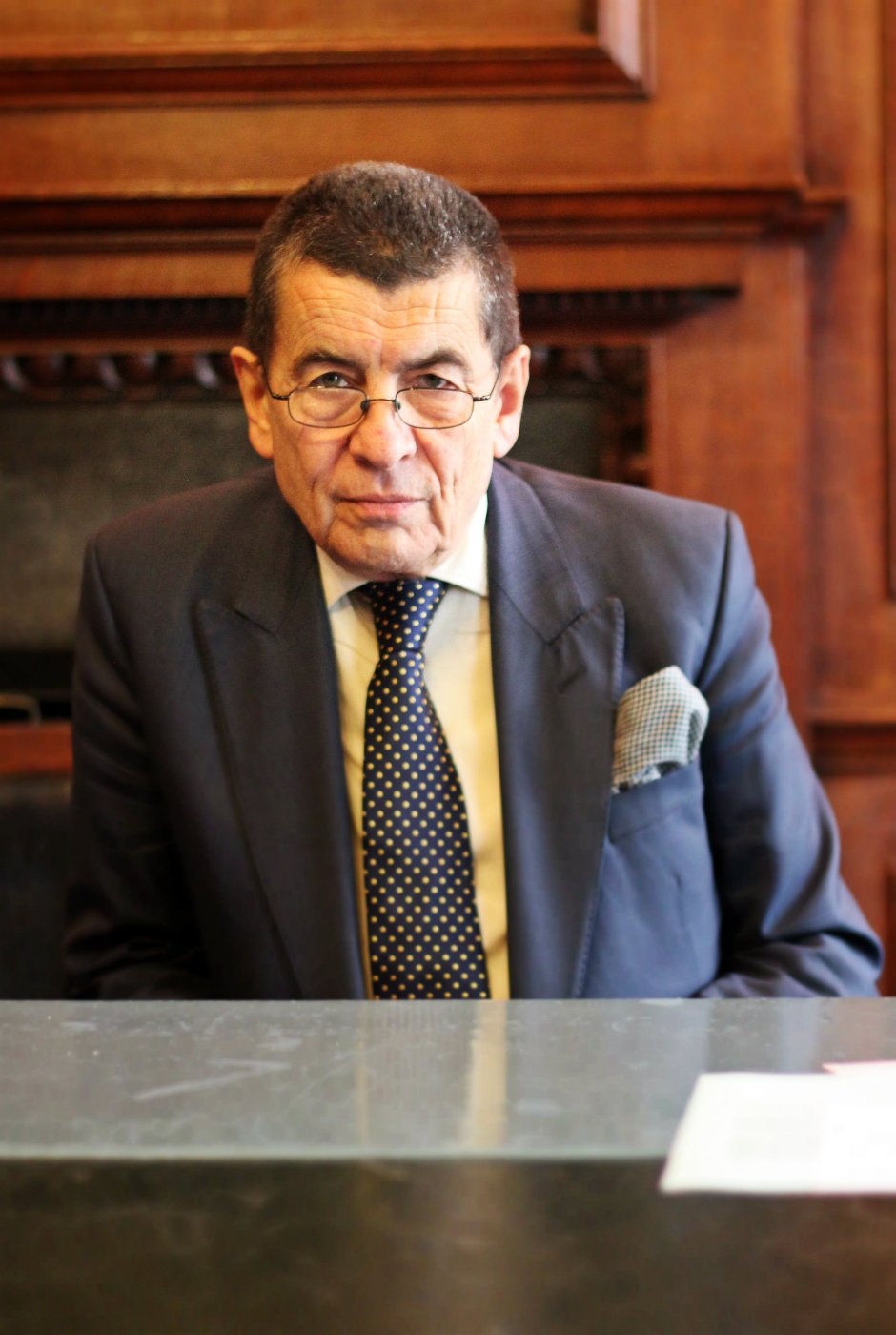
Sir Geoffrey Nice KC (born 21 October 1945) is a British barrister and former part-time judge. In the 1983 United Kingdom general election and the 1987 United Kingdom general election, he was the unsuccessful Social Democratic Party candidate for Dover. He took part in the International Criminal Tribunal for the Former Yugoslavia and was lead prosecutor at Slobodan Milošević's 2002 trial.

Key Information

Between 2009 and 2012, he was Vice-Chair of the Bar Standards Board, the body that regulates barristers in England and Wales.

In 2017, Nice published a book, "Justice for All and How to Achieve It".[1] In 2019 he chaired the China Tribunal, an independent people’s tribunal[citation needed] established to inquire into forced organ harvesting from prisoners of conscience in China. In 2021 he chaired the Uyghur Tribunal, which examined evidence regarding the ongoing human rights abuses against the Uyghur people by the Government of China.

In 2005 Nice received an Honorary Doctorate of Law from the University of Kent at Canterbury, and in 2021 he received an Honorary Doctorate of Law from the University of Buckingham.

Life and career

[edit]

Early life

[edit]

Nice's family home was in Catford, England,[2] where he attended St Dunstan's College, and later Keble College, Oxford. He became a barrister in 1971 and was appointed Queen's Counsel in 1990. From 1984 to 2014 he was a part-time judge at the Old Bailey.[3][4] Nice was made a Knight Bachelor in 2007.[5] In 2009, he was named Vice-Chair of the Bar Standards Board. In 2012 he was appointed the Professor of Law at Gresham College, a position formerly occupied by Baroness Deech.[4][6]

Politics

[edit]

In the 1983 United Kingdom general election and 1987 United Kingdom general election, he was the unsuccessful Social Democratic Party candidate for Dover.[7]

Prosecutor career

[edit]

Nice has been involved with the International Criminal Tribunal for the Former Yugoslavia (ICTY). He was lead prosecutor at the 2002 trial of Slobodan Milošević in The Hague and initiated the prosecution's initial case of linking atrocities committed in the former Yugoslavia to Milosevic. His contract in that case ended in 2006.[8] He prosecuted the ICTY cases of the Bosnian Croat Dario Kordić and the successful prosecution of Goran Jelisić. Nice has been active in the International Criminal Court (ICC) and in pro bono work for victims groups.[4] His practice includes human rights/public law and personal injury.[5]

In February 2009 he represented Omar al-Bashir, and tried but failed to block the ICC cases against Bashir; the ICC issued an arrest warrant for al-Bashir the following month on counts of war crimes and crimes against humanity.[9]

In August 2010, journalist Judith Armatta published a book titled Twilight of Impunity: The War Crimes Trial of Slobodan Milosevic.[10] In December 2010, Nice reviewed this book on London Review of Books.[10] In his review, Nice criticized the ICTY for its decisions during the trial of Milosevic.[10] Nice alleged that the prosecutor of the ICTY, Carla Del Ponte, had compromised with Milosevic, which then led to a failure of Bosnia-Herzegovina in their genocide case against Serbia in February 2007.[10]

Uyghurs

[edit]

Nice was the chair of the China Tribunal, independently initiated by the International Coalition to End Transplant Abuse in China (ETAC). The tribunal focused on the issue of forced organ harvesting from prisoners of conscience in China and delivered its Final Judgment in January 2020.[11][12] Nice was asked to become the head of 2021 Uyghur Tribunal by the World Uyghur Congress to examine evidence regarding the ongoing human rights abuses against the Uyghur people by the Government of China.

In 2021, in retaliation for sanctions issued against Chinese officials by the United States, European Union and United Kingdom, the People's Republic of China issued sanctions against Nice that banned him from entering territory that the country controls or from doing business with Chinese persons. A Chinese Foreign Ministry spokesperson said in a statement that these sanctions were issued due to Nice discussing the persecution of Uyghurs in China, which the statement termed as "lies and disinformation".[13][14][15]

Gaza-Israel

[edit]

In 2015, Nice chaired a panel discussion at Gresham College on the Gaza-Israel conflict to discuss the possibility of war crimes being committed.[16]

The Geoffrey Nice Foundation

[edit]

The Geoffrey Nice Foundation [17] was founded by Nice in 2014. It aims to promote a multidisciplinary approach to the study and teaching of International Criminal Justice and uses methodologies from law, history, sociology, political science, and international relations to address issues related to political violence and mass atrocities.

Judicial career

[edit]

In 2009, a conviction Nice had presided over was ordered quashed and retried, after a Privy Council Appeal found his handling of the case had resulted in an unfair hearing.[18] One reason that Nice was criticized by the Privy Council for his was his unfair handling in the trial of a St. Helier-based accountant Peter Michel.[19] Michel had been accused of ten counts of money laundering in 2007, and was sentenced to six years in prison. In 2009, however, the Privy Council quashed the conviction against Michel, and said that Nice had been hostile, sarcastic, mocking, and patronising toward the defendant in an excessive number of inappropriate interventions during the trial, and that such action had rendered the trial unfair.[19] In the same report, the Jersey Evening Post claimed that the actions could have cost the Jersey taxpayers "millions of pounds."[19] In 2012, two members of the General Council of the Bar, Desmond Browne KC and Tim Dutton KC, challenged the Privy Council's decision to overturn the conviction against Michel.[20]

References

[edit]
Revisions and contributorsEdit on WikipediaRead on Wikipedia
from Grokipedia
Sir Geoffrey Nice KC is a British barrister and international criminal lawyer who has specialized in prosecuting war crimes and abuses. Admitted to the bar in 1971 and appointed in 1990, Nice served as a part-time in from 1984 to 2018 and was knighted in 2007 for services to . He gained prominence between 1998 and 2006 as the lead prosecutor in the trial of Slobodan Milošević at the International Criminal Tribunal for the former , marking the first and prosecution of a sitting for such crimes. In addition to his work at the ICTY, Nice chaired the independent investigating alleged and against in , as well as the China Tribunal examining forced organ harvesting. He founded the Geoffrey Nice Foundation in 2014 to promote multidisciplinary understanding of international and has lectured as Gresham Professor of Law from 2012 to 2016.

Early Life and Education

Childhood and Upbringing

Geoffrey Nice was born in in 1945. He grew up in the city during the post-World War II period and attended St Dunstan's College, an independent day school in , , for his . Limited public details exist regarding his family background or specific formative influences in childhood, with available biographical accounts focusing primarily on his subsequent academic path rather than early personal circumstances.

Academic and Initial Career Steps

Nice studied at , before pursuing legal training at the College of Law, London. He was called to the Bar of in July 1971 by the and commenced practice as a , initially at Farrar's Building in the Temple. Early in his career, Nice established a reputation as a leading advocate in health and safety law. His domestic practice continued for over two decades, during which he was appointed Queen's Counsel in 1990 and began serving as a part-time in 1984, including sittings at the . This period laid the foundation for his later involvement in complex prosecutions, though his initial focus remained on civil and regulatory matters rather than .

Political Involvement

Election Campaigns and Affiliations

Nice contested the Dover constituency as the candidate for the Social Democratic Party (SDP) in the but failed to secure the seat, which was retained by the incumbent Conservative MP. The SDP, established in 1981 by dissident Labour members advocating and market-oriented policies, had entered an electoral pact with the Liberal Party known as the SDP-Liberal Alliance. He ran again for the SDP in Dover during the 1987 general election under the Alliance banner, again unsuccessfully against the Conservative candidate. This marked the final general election appearance for the SDP prior to its merger with the Liberals to form the Liberal Democrats in 1988. No further electoral candidacies by Nice are recorded, and his subsequent career focused on legal practice rather than partisan politics.

Practice as a Barrister

Nice was called to the Bar by the in 1971 and established a practice in at the English Bar. He primarily handled prosecutions, including complex fraud cases tried at courts such as , building expertise in serious before transitioning to international tribunals in 1998. His domestic advocacy spanned over two decades, reflecting the demands of 20th-century barristerial work in high-stakes criminal proceedings. During this period, Nice also contributed to regulatory aspects of the profession, serving as Vice-Chairman of the Bar Standards Board, where he influenced standards for conduct and oversight. He sat on the Criminal Injuries Compensation Board, adjudicating claims related to violent crimes, which complemented his courtroom experience in criminal matters. These roles underscored his commitment to the integrity of the legal system prior to his international prosecutions.

Judicial Roles

Sir Geoffrey Nice KC was appointed a Recorder, a part-time judicial role in the , in 1984 and served in this capacity until 2018. As a Recorder, he sat at the Central Criminal Court, commonly known as the , in , presiding over serious criminal trials. This domestic judicial service complemented his primary career as a specializing in complex prosecutions, allowing him to adjudicate cases while maintaining his practice at the Bar. Nice's tenure as a part-time judge spanned over three decades, during which he contributed to the administration of justice in without specific high-profile domestic cases publicly attributed to his bench in available records.

International Prosecutions at the ICTY

Appointment and Key Cases

Geoffrey Nice was recruited to the Office of the Prosecutor at the International Criminal Tribunal for the former (ICTY) in 1998, leaving his established practice as a in to serve as a senior prosecutor. His appointment came amid the tribunal's early efforts to address war crimes from the Yugoslav conflicts, where he quickly assumed leadership roles in high-profile trials. One of Nice's initial key cases was Prosecutor v. Goran Jelišić, involving a Bosnian Serb accused of and other crimes for killings and persecutions in in 1992. As lead prosecutor, Nice oversaw the trial, which marked the ICTY's first to adjudicate charges and conclude with a judgement on 14 December 1999; Jelišić was convicted of 15 counts of and violations of the laws or customs of war but acquitted of due to insufficient evidence of specific intent, receiving a 40-year sentence later reduced on appeal to 40 years. Nice also headed the prosecution team in Prosecutor v. Dario Kordić and Mario Čerkez, targeting Bosnian Croat leaders for their roles in campaigns in central Bosnia from 1992 to 1993, including attacks on villages like Ahmići. The trial, spanning 1998 to 2001, resulted in convictions on 26 February 2001 for Kordić on multiple counts of , willful killing, and unlawful attacks, with a 25-year sentence (later adjusted on appeal), while Čerkez received six years for ; the case established precedents on command responsibility and . These prosecutions demonstrated Nice's approach to building cases on witness testimony, forensic evidence, and patterns of systematic violence, contributing to the ICTY's evolving on mass atrocities.

Prosecution of Slobodan Milošević

Geoffrey Nice, a British barrister who joined the International Criminal Tribunal for the former Yugoslavia (ICTY) in 1998, was appointed senior trial attorney for the prosecution of in November 2001, assuming leadership of the team coordinating indictments from the conflicts in , , and . This role positioned him to oversee the presentation of evidence against Milošević, the former and the Federal Republic of , who had been transferred to ICTY custody on 28 June 2001 following his ouster in October 2000. The consolidated indictment encompassed 66 counts, including genocide in Bosnia (specifically the 1995 ), , and war crimes such as murder, , and of non-Serb populations. The trial commenced on 12 February 2002 in , with Nice delivering the outlining Milošević's alleged orchestration of joint criminal enterprises aimed at establishing Serb dominance through and violence. Milošević, rejecting the tribunal's legitimacy and representing himself, pleaded not guilty and used cross-examinations to advance a of defensive wars against . Under Nice's strategy, the prosecution prioritized a comprehensive evidentiary foundation to counter denialism and establish a factual record of atrocities, presenting testimony from survivors, experts, and insiders alongside documents, videos, and forensic evidence spanning the 1991 Croatian war, 1992–1995 , and 1998–1999 conflict. This approach involved sequencing evidence thematically—beginning with for recency and victim availability—while amassing over 5,000 exhibits and calling 295 witnesses, including high-profile figures like former subordinates and international observers. The prosecution's case, spanning more than two years of hearings, closed on 25 February 2004 after the Trial Chamber rejected Milošević's motions to dismiss, deeming sufficient of his and participation in crimes. Challenges included Milošević's protracted cross-examinations, health-related delays, and logistical strains from the volume of material, which some legal analysts later described as a broad "scatter-gun" method prioritizing historical documentation over streamlined proof of specific intent. Nice defended the scope as essential for addressing the cumulative nature of Milošević's alleged policies, noting that while not all directly proved guilt, it illuminated patterns of , shelling of civilians, and concentration camps affecting hundreds of thousands. The trial's defense phase began thereafter, but terminated without verdict on 11 March 2006 upon Milošević's death from a heart attack in detention. In post-trial reflections, Nice underscored the proceedings' role in compiling an irrefutable archive—transcripts exceeding 40,000 pages and digitized exhibits—for future accountability and denial prevention, despite criticisms that the ICTY's focus on Serb leadership overlooked broader war crimes proportions. The evidentiary legacy influenced subsequent ICTY rulings, such as confirmations of in , though Milošević's acquittal in absentia on Croatian counts via Rule 65 ter proceedings in 2013 highlighted unresolved aspects.

Independent Tribunals and Inquiries

Tribunal on Forced Organ Harvesting in

The China Tribunal, formally known as the Independent Tribunal into Forced Organ Harvesting from Prisoners of Conscience in , was established in 2018 as a non-governmental people's tribunal to investigate allegations of state-sanctioned organ harvesting targeting prisoners of conscience, including practitioners, , Tibetans, and house Christians. Sir Geoffrey Nice, a British barrister with extensive experience in international criminal prosecutions, served as chair, leveraging his background from leading the prosecution of at the International Criminal Tribunal for the former to guide the inquiry's evidentiary standards. The tribunal operated independently of any government or official body, relying on public hearings, expert testimonies, and rather than subpoena powers, with proceedings held in over multiple sessions, including December 2018 and April 2019. Under Nice's leadership, the tribunal examined data anomalies in China's transplant system, such as the rapid expansion of transplant hospitals from approximately 60 in 1999 to over 700 by 2007, alongside official claims of voluntary donor programs that failed to account for the volume of procedures—estimated at 60,000 to 100,000 annually in recent years, far exceeding reported consented donations of around 20,000. Witness accounts from survivors and medical insiders detailed coerced medical examinations, unexplained disappearances of detainees, and short wait times for organs (often days or weeks, compared to years globally), corroborated by records and inconsistencies in state data. The panel, comprising Nice and six other experts in law, medicine, and , applied a "beyond " standard, emphasizing causal links between detention practices and organ supply chains. The 's final judgment, delivered on June 17, 2019, concluded unanimously that forced organ harvesting had occurred on a significant scale for years and continued as of that date, constituting through the killing of prisoners for their organs, with practitioners identified as primary victims since at least 2000. , in subsequent statements, highlighted the tribunal's reliance on verifiable patterns rather than isolated claims, urging international medical bodies to suspend cooperation with Chinese transplant programs until transparency was achieved. The findings prompted calls for UN investigations and influenced legislative actions, such as U.S. Congressional hearings in 2022 where testified on the evidence's robustness despite Chinese government denials attributing transplants to ethical reforms post-2015. Critics of the tribunal, including Chinese , dismissed it as biased due to its initiation by advocacy groups like the International Coalition to End Transplant Abuse in , though maintained the panel's independence and evidence-based approach mitigated such concerns.

Uyghur Tribunal

The Uyghur Tribunal was an independent non-governmental inquiry established in 2020 to examine evidence of alleged and perpetrated by the against , , and other Turkic Muslim minorities in the Uyghur Autonomous Region. Sir Geoffrey Nice served as its chair, drawing on his experience from prior tribunals, including the China Tribunal on forced organ harvesting. The operated as a "people's tribunal," lacking formal judicial authority but aiming to apply principles of to public evidence, with proceedings conducted virtually due to the scale of witness testimonies and documentary submissions. Initiated at the request of , president of the , in June 2020, the convened public hearings on June 4–7 and September 17–18, 2021, hearing from over 50 witnesses, including survivors, experts, and officials, and reviewing thousands of documents such as leaked Chinese government files and . , as chair, oversaw a panel of experts in , , and academia, emphasizing the 's from state influence and its reliance on verifiable evidence rather than . The process mirrored adversarial legal standards, with opportunities for , though declined to participate or submit counter-evidence, which the noted did not preclude findings based on the presented material. On December 9, 2021, delivered the tribunal's judgment in , concluding that the Chinese state had committed genocide against the under the 1948 , particularly through intentional acts to destroy the group in part via measures like mass sterilization, forced abortions, and IUD insertions affecting over 80% of women of childbearing age in some regions, alongside cultural erasure and separation of children from families. , including enslavement, , , and , were found proven beyond , with specifically attributed to state policy. The judgment, spanning 57 pages in full, urged international recognition and action but acknowledged the tribunal's symbolic rather than enforceable role, stating that "the intent of the [Chinese Communist] Party is most likely to destroy the Uyghur people as a group." Nice has defended the tribunal's in subsequent interviews, arguing that the volume and consistency of —from satellite photos of detention camps holding up to 1 million people to internal directives on birth prevention—compelled its conclusions despite criticisms of bias from Chinese state media, which dismissed the proceedings as politically motivated without engaging the substance. He emphasized that the findings aligned with patterns observed in other state-directed atrocities, underscoring the need for mechanisms when international courts face geopolitical barriers to . The government referenced the judgment in parliamentary debates, with Foreign Secretary citing it in support of sanctions against Chinese officials in 2022, though enforcement remains limited.

Involvement in Gaza-Israel Conflict Inquiries

In 2014, Sir Geoffrey Nice was appointed as a legal representative for victims of the Mavi Marmara incident, part of the Gaza flotilla raid on 31 May 2010, in which Israeli naval commandos boarded ships attempting to breach the of Gaza, killing ten Turkish activists and injuring dozens. Representing claimants including those from the IHH Humanitarian Relief Foundation, Nice submitted arguments to the International Criminal Court's Pre-Trial Chamber I on 13 March 2015, advocating for investigation into alleged arising from the operation. The ICC ultimately declined to proceed with a full investigation into the incident as part of the broader Situation in the State of Palestine, citing jurisdictional limitations, though Nice's involvement highlighted efforts to apply to blockade enforcement actions. Nice has chaired public panels examining potential war crimes in the Israel-Gaza conflicts, including a 2015 discussion on legal and military perspectives following Operation Protective Edge, where he assessed proportionality under amid over 2,100 Palestinian and 73 Israeli deaths reported by the UN. In these forums, he emphasized empirical evidence of civilian targeting and infrastructure damage as criteria for war crimes determinations, without endorsing specific prosecutorial outcomes. In May 2025, Nice contributed to the , a non-binding international people's tribunal convened in to scrutinize allegations of , war crimes, and complicity in Israel's military operations in Gaza following the 7 October 2023 Hamas attacks. Speaking at the event, organized by pro-Palestinian advocates including figures linked to former Labour leader , Nice stated that arms-supplying states risked complicity in "criminal warfare" if evidence showed violations of , urging accountability for both direct perpetrators and enablers. The tribunal issued non-enforceable recommendations for sanctions and investigations, echoing patterns in independent bodies Nice has led elsewhere, though critics, including media watchdogs, have questioned its impartiality due to participant affiliations and lack of adversarial , viewing it as symbolic rather than neutral . No official international body has adopted its findings, and Nice's role aligned with his prior in ad hoc tribunals, prioritizing public evidence presentation over state-sanctioned processes.

The Geoffrey Nice Foundation

Founding and Mission

The Geoffrey Nice Foundation was established in 2014 by Sir Geoffrey Nice KC, a British barrister renowned for his roles in international prosecutions. The organization operates as a non-governmental entity focused on educational and analytical initiatives in the field of international justice. The foundation's mission centers on advancing a multidisciplinary understanding of international criminal justice, encompassing processes conducted by courts, truth commissions, and inquiries into mass atrocities. It emphasizes integrating perspectives from law, history, , and society to examine mechanisms for addressing large-scale violations. This approach seeks to enhance scholarly and professional engagement with the complexities of prosecuting atrocities, drawing on empirical case studies and institutional analyses rather than prescriptive models. To fulfill its objectives, the foundation organizes targeted educational programs, including summer schools and master classes, which convene experts and practitioners to dissect real-world applications of international justice. These activities prioritize rigorous, evidence-based over , aiming to equip participants with tools for evaluating the efficacy and limitations of global accountability frameworks.

Educational and Advocacy Activities

The Geoffrey Nice Foundation conducts educational programs primarily through annual Master Classes held at the Inter-University Centre in , , targeting MA, PhD, and post-doctoral students in fields such as , , , , , and . These sessions combine lectures from academics, legal practitioners, and NGO activists with practical exercises and group discussions to foster a multidisciplinary understanding of international criminal justice, , and responses to mass atrocities. For instance, the 2017 Master Class focused on the and of post-Cold War, in partnership with the and the Serbian Helsinki Committee for , while the 2018 edition addressed , collaborating with the Transitional Justice Working Group in and Justice for in . Subsequent iterations have emphasized post-transitional justice mechanisms, such as the 2020 program examining developments in 25 years after the , which adapted to potential virtual formats amid the . The Foundation's broader educational mission extends to summer schools and lectures that integrate legal, historical, and political perspectives on accountability for atrocities, aiming to equip participants with tools for analyzing courts, truth commissions, and related institutions. These initiatives underscore a commitment to training future professionals in evidence-based scrutiny of justice processes, drawing on Geoffrey Nice's prosecutorial . In advocacy, the Foundation produces analytical reports to outline legal pathways for addressing violations, as demonstrated by its 2020 report on avenues for accountability in the Democratic People's Republic of Korea (DPRK). This document, developed through review of over 800 witness files documenting abuses, evaluates prosecutorial, diplomatic, and options while critiquing international bodies' inaction on DPRK . Such efforts complement educational activities by disseminating findings to policymakers and activists, promoting evidence-driven calls for justice without direct litigation involvement.

Views, Controversies, and Criticisms

Critiques of International Criminal Justice Mechanisms

Geoffrey Nice has described international criminal justice mechanisms, including tribunals like the International Criminal Tribunal for the former Yugoslavia (ICTY) and the International Criminal Court (ICC), as experimental endeavors still in their early stages, where comprehensive evaluations of efficacy remain premature. He has emphasized the importance of identifying and addressing shortcomings rather than dismissing the systems outright, viewing them as improvements over impunity but requiring ongoing refinement to achieve broader accountability. A primary critique from Nice concerns the protracted duration of trials, which he has characterized as "lumbering judicial processes" that produce voluminous records inaccessible to victims and potentially ineffective in influencing global outcomes. For instance, he has questioned the necessity of such delays in cases like that of , where events from the 1995 and siege were addressed nearly two decades later, despite evidence emerging publicly much sooner. Nice has also warned of the ICC's perceived selectivity, noting that its focus predominantly on African cases creates an appearance of bias—"it looks terrible [for the court] only to have prosecuted "—which risks undermining legitimacy and could lead to withdrawal by African states, potentially proving "terminal for the court." Nice has expressed skepticism about deterrence, stating there is "very little evidence that prosecuting people... will stop the next monster doing what he or she might want to do," suggesting limited preventive impact from mechanisms like the ICC or ad hoc tribunals. He has criticized the ICC's sluggish response in politically sensitive situations, such as its slow handling of alleged Israeli Defense Forces wrongdoing, which ultimately resulted in declining to pursue the case, potentially missing opportunities to de-escalate conflicts like that involving . Additionally, Nice has raised concerns over timing, questioning whether accountability processes should commence during ongoing conflicts or only post-resolution, as premature interventions may complicate peace efforts. In broader terms, Nice has cautioned against over-reliance on judicial authority, asserting that "nobody should want to be ruled by lawyers," and has advocated pragmatic restraint, such as supporting efforts to dissuade ICC judges from issuing an for Sudanese President when urged by local tribal leaders claiming victimization. These views underscore his preference for mechanisms that balance legal rigor with contextual sensitivity, avoiding the imposition of Western legal norms without regard for local histories or cultures.

Allegations of Bias in Tribunal Leadership

Criticisms of bias in Geoffrey Nice's leadership of independent tribunals, particularly the China Tribunal (2018–2019) and the Uyghur Tribunal (2020–2021), have emanated chiefly from Chinese state-affiliated media and officials, who contend that the proceedings were structurally predisposed against the . These tribunals, established as non-binding people's inquiries to examine allegations of forced organ harvesting and against respectively, operated without participation from Chinese authorities or witnesses, relying instead on from exiles, defectors, and . Chinese state media, such as , described the Uyghur Tribunal's judgment—delivered by Nice on December 9, 2021—as "fatally compromised" by the absence of and adversarial testing, asserting that it amplified unverified claims from Uyghur advocacy groups without counterbalancing perspectives. Such critiques portray Nice's chairmanship as emblematic of Western institutional , with allegations that the tribunals' funding and initiation—linked to international coalitions including affiliates for the China Tribunal and the for the Uyghur Tribunal—predetermined outcomes favoring anti- narratives. In response to the Uyghur Tribunal's findings of and , imposed sanctions on Nice in March 2021, framing the process as a politically motivated smear lacking judicial rigor. These state responses, however, originate from outlets under oversight, which systematically reject external scrutiny of Xinjiang policies and have themselves been documented suppressing domestic dissent on related issues. Nice has countered bias claims by emphasizing the tribunals' evidence-driven methodology, which reviewed over 100 public hearings' worth of material despite non-cooperation from , arguing that formal courts were infeasible given China's non-ratification of relevant conventions and history of evading accountability. Independent observers, including legal scholars, have noted that people's tribunals inherently prioritize investigative breadth over full to circumvent state obstruction, though this format invites accusations of one-sidedness from implicated parties. No substantiated of personal animus or procedural irregularities in Nice's has emerged from non-Chinese sources, though broader toward ad hoc tribunals questions their enforceability absent state consent.

Perspectives on Selective Application of Justice Standards

Sir Geoffrey Nice has repeatedly highlighted the selective application of justice standards in international criminal mechanisms, attributing it to political pressures, jurisdictional constraints, and biases favoring powerful states. In a 2012 public lecture, he described the selection of conflicts for tribunals and commissions of inquiry as "highly selective," noting that decisions to establish such bodies often reflect geopolitical priorities rather than a comprehensive response to global atrocities, as evidenced by the limited scope of institutions like the International Criminal Tribunal for the former Yugoslavia (ICTY). This selectivity, he argued, undermines the legitimacy of international justice, with bodies like the ICTY facing accusations of political interference that compromise prosecutorial independence. Nice has extended these critiques to the (ICC), characterizing its approach as fundamentally flawed due to inconsistent case selection. During his involvement in the 2012 Iran Tribunal, an independent inquiry into the 1988 massacre of political prisoners, he stated that the ICC "suffers a further, significant and probably fatal flaw. It is highly selective in the situations it chooses to investigate and prosecute," pointing to its failure to address atrocities in non-party states or those shielded by influential veto powers in the UN Security Council. He contrasted this with the potential of or tribunals to circumvent such limitations, arguing they enable evidence-based scrutiny where official channels falter due to . This perspective underpins Nice's leadership in independent tribunals, such as the China Tribunal (2019) on forced organ harvesting and the Uyghur Tribunal (2021), where judgments found evidence of and —allegations unprosecuted by the ICC owing to 's non-ratification of the and its permanent UN Security Council seat. Nice posits that such selectivity in official bodies necessitates supplementary mechanisms to uphold universal standards, though he acknowledges the risk of perceptions of bias if tribunals appear to target specific regimes without equivalent scrutiny elsewhere. In the Gaza-Israel context, Nice has advocated for rigorous, non-selective application of , participating in post-October 7, 2023, inquiries into alleged war crimes by both and Israeli forces, while cautioning against politicized narratives that equate criticism of one side with exoneration of the other. He has emphasized that true accountability requires evidence-driven processes free from double standards, echoing his broader view that international justice must transcend to deter effectively. Critics, including state representatives from targeted nations like , have countered that Nice's tribunals themselves exhibit selectivity by prioritizing non-Western perpetrators, potentially amplifying Western geopolitical agendas under the guise of impartiality.

References

Add your contribution
Related Hubs
User Avatar
No comments yet.