


Community hub
Recent from talks
Contribute something to knowledge base
Content stats: 0 posts, 0 articles, 1 media, 0 notes
Members stats: 0 subscribers, 0 contributors, 0 moderators, 0 supporters
Subscribers
Supporters
Contributors
Moderators
Hub AI
Eastern Front (World War II) AI simulator
(@Eastern Front (World War II)_simulator)
Hub AI
Eastern Front (World War II) AI simulator
(@Eastern Front (World War II)_simulator)
Eastern Front (World War II)
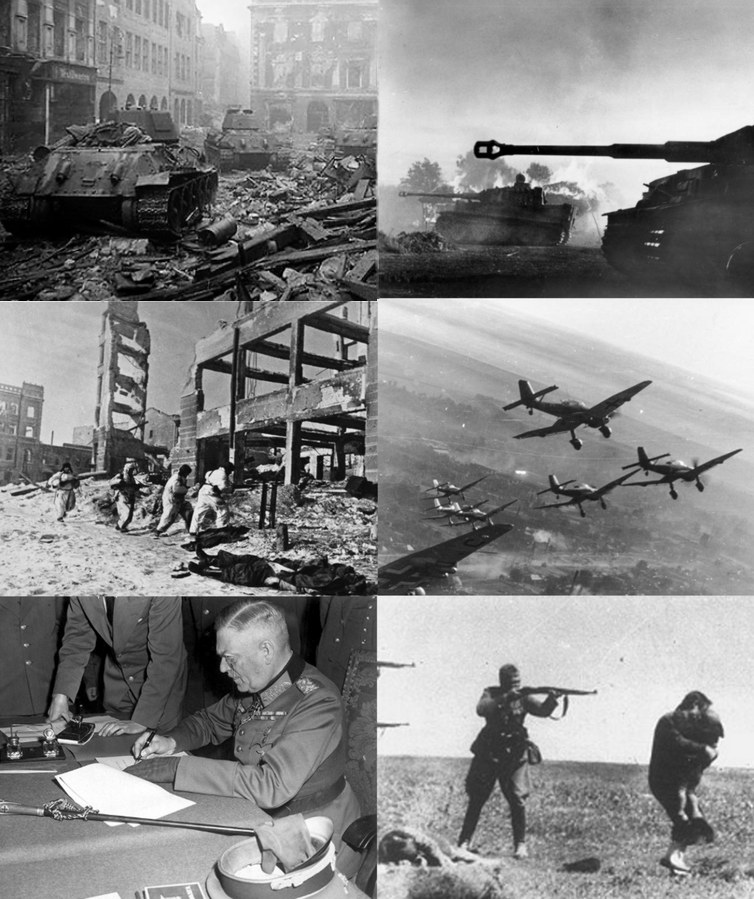
The Eastern Front, also known as the Great Patriotic War in the Soviet Union and its successor states, and the German–Soviet War in modern Germany and Ukraine, was a theatre of World War II fought between the European Axis powers and Allies, including the Soviet Union (USSR) and Poland. It encompassed Central Europe, Eastern Europe, Northeast Europe (Baltics), and Southeast Europe (Balkans), and lasted from 22 June 1941 to 9 May 1945. Of the estimated 70–85 million deaths attributed to the war, around 30 million occurred on the Eastern Front, including 9 million children. The Eastern Front was decisive in determining the outcome in the European theatre of operations in World War II and is the main cause of the defeat of Nazi Germany and the Axis nations. Historian Geoffrey Roberts noted that "more than 80 percent of all combat during the Second World War took place on the Eastern Front".
The Axis forces, led by Germany, invaded the Soviet Union in Operation Barbarossa on 22 June 1941. Despite warnings and the deployment of Axis armies on his borders, Stalin refused to believe that Hitler would invade and forbade any defensive preparations. Thus the Soviets were caught completely unprepared. They were unable to halt deep Axis advances into Russia, which came close to seizing Moscow. However, the Axis failed to capture the city, and Hitler shifted his focus to the oil fields of the Caucasus the following year. German forces advanced into the Caucasus under Fall Blau ("Case Blue"), launched on 28 June 1942. The Soviets decisively defeated the Axis at the Battle of Stalingrad—the bloodiest battle in the war and arguably in all of history—making it one of the key turning points of the front. A second great Axis defeat, at the Battle of Kursk, crippled German offensive capabilities permanently and cleared the way for Soviet offensives. Several Axis allies defected to the Allies, such as Italy, Romania and Bulgaria. The Eastern Front concluded with the capture of Berlin, followed by the signing of the German Instrument of Surrender on 8 May, ending the Eastern Front and the war in Europe.
The battles on the Eastern Front constituted the largest military confrontation in history. In pursuit of its "Lebensraum" settler-colonial agenda, Nazi Germany waged a war of annihilation (Vernichtungskrieg) throughout Eastern Europe. Nazi military operations were characterised by brutality, scorched earth tactics, wanton destruction, mass deportations, starvation, wholesale terrorism, and massacres. These included the genocidal campaigns of Generalplan Ost and the Hunger Plan, which sought the extermination and ethnic cleansing of more than a hundred million Eastern Europeans. German historian Ernst Nolte called the Eastern Front "the most atrocious war of conquest, enslavement, and annihilation known to modern history", while British historian Robin Cross expressed that "In the Second World War no theatre was more gruelling and destructive than the Eastern Front, and nowhere was the fighting more bitter".
The two principal belligerent powers in the Eastern Front were Germany and the Soviet Union, along with their respective allies. Though they never sent ground troops to the Eastern Front, the United States and the United Kingdom both provided substantial material aid to the Soviet Union in the form of the Lend-Lease program, along with naval and air support.
The joint German–Finnish operations across the northernmost Finnish–Soviet border and in the Murmansk region are considered part of the Eastern Front. In addition, the Soviet–Finnish Continuation War is generally also considered the northern flank of the Eastern Front.
The German Empire was defeated in World War I (1914–1918). The Russian Empire and the subsequent Russian Republic belonged to the victorious bloc of the Allies, but following the October Revolution in Russia, the Bolshevik government signed the separate Treaty of Brest-Litovsk (March 1918), therefore violating its agreement with the other two members of the Triple Entente and breaking the alliance. The Bolsheviks also issued the Declaration of the Rights of the Peoples of Russia which formally provided the peoples of the former Russian Empire the right to self-determination, including secession and creation of separate states; Russia had lost substantial territory in Eastern Europe as a result of the treaty, where the Bolsheviks in Petrograd conceded to German demands and ceded control of Poland, Lithuania, Estonia, Latvia, Finland, and other areas, to the Central Powers. Subsequently, when Germany in its turn surrendered to the Allies (November 1918) and these territories became independent states under the terms of the Paris Peace Conference of 1919 at Versailles, Soviet Russia was in the midst of a civil war, and the Allies did not recognise the Bolshevik government and supported White governments of Russia, so no Soviet Russian representation attended.
Adolf Hitler had declared his intention to invade the Soviet Union on 11 August 1939 to Carl Jacob Burckhardt, League of Nations Commissioner, by saying:
Everything I undertake is directed against the Russians. If the West is too stupid and blind to grasp this, then I shall be compelled to come to an agreement with the Russians, beat the West and then after their defeat turn against the Soviet Union with all my forces. I need the Ukraine so that they can't starve us out, as happened in the last war.
Eastern Front (World War II)
The Eastern Front, also known as the Great Patriotic War in the Soviet Union and its successor states, and the German–Soviet War in modern Germany and Ukraine, was a theatre of World War II fought between the European Axis powers and Allies, including the Soviet Union (USSR) and Poland. It encompassed Central Europe, Eastern Europe, Northeast Europe (Baltics), and Southeast Europe (Balkans), and lasted from 22 June 1941 to 9 May 1945. Of the estimated 70–85 million deaths attributed to the war, around 30 million occurred on the Eastern Front, including 9 million children. The Eastern Front was decisive in determining the outcome in the European theatre of operations in World War II and is the main cause of the defeat of Nazi Germany and the Axis nations. Historian Geoffrey Roberts noted that "more than 80 percent of all combat during the Second World War took place on the Eastern Front".
The Axis forces, led by Germany, invaded the Soviet Union in Operation Barbarossa on 22 June 1941. Despite warnings and the deployment of Axis armies on his borders, Stalin refused to believe that Hitler would invade and forbade any defensive preparations. Thus the Soviets were caught completely unprepared. They were unable to halt deep Axis advances into Russia, which came close to seizing Moscow. However, the Axis failed to capture the city, and Hitler shifted his focus to the oil fields of the Caucasus the following year. German forces advanced into the Caucasus under Fall Blau ("Case Blue"), launched on 28 June 1942. The Soviets decisively defeated the Axis at the Battle of Stalingrad—the bloodiest battle in the war and arguably in all of history—making it one of the key turning points of the front. A second great Axis defeat, at the Battle of Kursk, crippled German offensive capabilities permanently and cleared the way for Soviet offensives. Several Axis allies defected to the Allies, such as Italy, Romania and Bulgaria. The Eastern Front concluded with the capture of Berlin, followed by the signing of the German Instrument of Surrender on 8 May, ending the Eastern Front and the war in Europe.
The battles on the Eastern Front constituted the largest military confrontation in history. In pursuit of its "Lebensraum" settler-colonial agenda, Nazi Germany waged a war of annihilation (Vernichtungskrieg) throughout Eastern Europe. Nazi military operations were characterised by brutality, scorched earth tactics, wanton destruction, mass deportations, starvation, wholesale terrorism, and massacres. These included the genocidal campaigns of Generalplan Ost and the Hunger Plan, which sought the extermination and ethnic cleansing of more than a hundred million Eastern Europeans. German historian Ernst Nolte called the Eastern Front "the most atrocious war of conquest, enslavement, and annihilation known to modern history", while British historian Robin Cross expressed that "In the Second World War no theatre was more gruelling and destructive than the Eastern Front, and nowhere was the fighting more bitter".
The two principal belligerent powers in the Eastern Front were Germany and the Soviet Union, along with their respective allies. Though they never sent ground troops to the Eastern Front, the United States and the United Kingdom both provided substantial material aid to the Soviet Union in the form of the Lend-Lease program, along with naval and air support.
The joint German–Finnish operations across the northernmost Finnish–Soviet border and in the Murmansk region are considered part of the Eastern Front. In addition, the Soviet–Finnish Continuation War is generally also considered the northern flank of the Eastern Front.
The German Empire was defeated in World War I (1914–1918). The Russian Empire and the subsequent Russian Republic belonged to the victorious bloc of the Allies, but following the October Revolution in Russia, the Bolshevik government signed the separate Treaty of Brest-Litovsk (March 1918), therefore violating its agreement with the other two members of the Triple Entente and breaking the alliance. The Bolsheviks also issued the Declaration of the Rights of the Peoples of Russia which formally provided the peoples of the former Russian Empire the right to self-determination, including secession and creation of separate states; Russia had lost substantial territory in Eastern Europe as a result of the treaty, where the Bolsheviks in Petrograd conceded to German demands and ceded control of Poland, Lithuania, Estonia, Latvia, Finland, and other areas, to the Central Powers. Subsequently, when Germany in its turn surrendered to the Allies (November 1918) and these territories became independent states under the terms of the Paris Peace Conference of 1919 at Versailles, Soviet Russia was in the midst of a civil war, and the Allies did not recognise the Bolshevik government and supported White governments of Russia, so no Soviet Russian representation attended.
Adolf Hitler had declared his intention to invade the Soviet Union on 11 August 1939 to Carl Jacob Burckhardt, League of Nations Commissioner, by saying:
Everything I undertake is directed against the Russians. If the West is too stupid and blind to grasp this, then I shall be compelled to come to an agreement with the Russians, beat the West and then after their defeat turn against the Soviet Union with all my forces. I need the Ukraine so that they can't starve us out, as happened in the last war.
Recent media
Recent media