



Community hub
Recent from talks
Contribute something
Nothing was collected or created yet.
Grapico
View on Wikipedia A can of Grapico | |
| Type | Soft drink |
|---|---|
| Manufacturer | Sun Fresh Beverages |
| Distributor | Buffalo Rock |
| Origin | United States (New Orleans, Louisiana and Birmingham, Alabama) |
| Introduced | 1916 |
| Colour | Purple |
| Flavour | Artificial Grape |
| Variants | Diet Grapico |
| Related products | Welch's Grape Soda Grape Nehi Grapette Grape Crush Stewart's Grape Soda NuGrape |
| Website | Grapico.com |
Grapico is a caffeine-free, artificially flavored carbonated soft drink with a purple color and a grape taste that is sold in the Southeastern United States. When introduced in 1916, the product quickly became a success, which in part was due to implying that Grapico contained real grape juice even though it contained fake juice. In the spring of 1926, J. Grossman's Sons sold the Grapico business to the Pan American Manufacturing Company in New Orleans. Pan American continued J. Grossman's Sons' improper practice of implying that Grapico contained real grape juice and lost the right to use the word "Grapico" to designate their artificial grape drink in 1929.
Although the J. Grossman's Sons line of the brand had ended, the Grapico brand continued on through Alabama businessman R. R. Rochell and his Birmingham, Alabama–based Grapico Bottling Works. R. R. Rochell had first become a wholesale syrup customer of J. Grossman's Sons in the summer of 1917 to serve the Alabama soft drink market. By the time Pan American had lost their artificial grape drink name in 1929, Rochell was selling bottled Grapico in Alabama, Florida, Georgia, Mississippi, and Louisiana.
Rochell received the federal trademark on Grapico in 1940, giving his Grapico Company of America the right to use the name "Grapico" everywhere in the United States. In 1955, Grapico Company of America attempted to expand its fruit-flavored brands with Orangico, a sister product to Grapico that included real orange juice. The orange juice-based Orangico did not sell well and the federal trademark eventually expired. In September 1981, both the franchising rights to the Grapico brand name and The Pepsi Bottling Group in Newnan, Georgia, were acquired by Buffalo Rock, an independent Pepsi bottler based in Birmingham, Alabama. Buffalo Rock revived the Orangico trademark in 1999 for an artificially flavored orange drink and introduced Diet Grapico in 2005. Grapico is now produced at Buffalo Rock's Birmingham, Alabama bottling facility.
History
[edit]Grapico was first sold in 1914 in New Orleans, Louisiana, by J. Grossman's Sons. In the summer of 1917, businessman R. R. Rochell and his Birmingham, Alabama–based Grapico Bottling Works purchased Grapico syrup barrels from J. Grossman's Sons and bottled and sold Grapico to the Alabama soft drink market, becoming the first bottler to buy the syrup wholesale.[1] Present Grapico distributor Buffalo Rock, an independent Pepsi bottler based in Birmingham, Alabama, purchased the Grapico business in 1981.[1] The J. Grossman's Sons' Grapico retail sales line ended in 1929 and the present Grapico traces its roots to the summer of 1917 in Birmingham, Alabama through R. R. Rochell's Grapico.
J. Grossman's Sons' Grapico
[edit]
J. Grossman's Sons was a business that had been operating in New Orleans, Louisiana, since at least 1884.[2] By the early 1900s, the business was being run by both Adolph Grossman and Isidore Grossman.[3] Prior to developing Grapico, J. Grossman's Sons served as creditors. In 1905 for example, a collection attorney successfully sued J. Grossman's Sons to recover legal fees for reducing to judgment a debt of $875 owed to J. Grossman's Sons.[4] Also in 1905, J. Grossman's Sons unsuccessfully prevented the sale of their securing collateral, a debtor's home, to the debtor's daughter.[2] In January 1912, J. Grossman's Sons lent $1000 to a Lewisburg, Louisiana, saloon owner who they successfully sued eleven months later to recover the amount against his real estate.[5]
J. Grossman's Sons began manufacturing Grapico in 1914.[6] At that time, Grapico consisted of a syrup that, when mixed with soda water, had the taste, smell, and color of a genuine grape drink.[7] The product was artificially colored and flavored with only an infinitesimal amount of grape juice or fruit of the grape.[7]
Prior to 1916, J. Grossman's Sons contacted American jazz composers Peter DeRose and Ivan Reid to write a song about Grapico.[8] DeRose, who would later be inducted into the Songwriters Hall of Fame, produced the piano accompanied song, Meet Me in the Land of Grapico.[8] Meet Me in the Land of Grapico is a sentimental ballad from Tin Pan Alley that imagined a faraway Land of Grapico where love lives forever.[8] The song (see below) and its cover sheet alluded to a grape vine-covered arbor in the Land of Grapico, even though Grapico contained no grape juice.[8] Dedicating the song to all the drinkers of Grapico,[9] J. Grossman's Sons published the song in 1916 and provided it free on request.[10]
In the summer of 1917, businessman R. R. Rochell and his Birmingham, Alabama–based Grapico Bottling Works began purchasing Grapico syrup barrels from J. Grossman's Sons to bottle and sell the Alabama soft drink market.[11] In that same year, Laurel, Mississippi–based Grapico Bottling Company also became a wholesale customer of J. Grossman's Sons and began bottling and selling Grapico in Mississippi.[12] In 1918, Rochell's Grapico Bottling Works opened a bottling plant in Hattiesburg, Mississippi as a second Mississippi bottler and seller of Grapico.[6][13][14]

By 1919, Grapico manufacturer J. Grossman's Sons was successful enough in their efforts to distribute Grapico that they awarded the Grapico advertising account to the Chambers Agency, Inc. of New Orleans.[15] As early as November 1919, businessman J. C. Kramer was doing business in Louisiana under the name of the Grapico Bottling Works (Louisiana),[16] a business unconnected with Rochell's Grapico Bottling Works.[17]
In 1920, the demand for soft drinks significantly increased as a result of the prohibition against alcohol in the United States that began on January 29, 1920.[18][19] The Grapico product was so successful by 1920, that Grapico specifically was listed in the Louisiana law among generic items, Coca-Cola, and RC Cola as items to be taxed: Section 22 of Act No. 233 of 1920, which read:
That all persons, associations of persons, firms and corporations engaged in the sale of soda water, ice cream, confections, soda pop, Coca Cola, Chero-Cola, Grapico or other similar soft drinks or beverages or refreshments, shall pay license based on the gross annual sales, and such licenses are hereby fixed and graded as follows.[20]
In addition to experiencing taxes as a result of its success, the Grapico efforts found labor troubles. In 1920, the International Union of United Brewery, Flour, Cereal, Soft Drink and Distillery Workers presented Grapico Bottling Company (Mississippi) with a union agreement.[21] When the company refused to sign the agreement, the 112 employees at Grapico Bottling Company were called to strike.[21] The Grapico Bottling Co. eventually signed the agreement.[21]
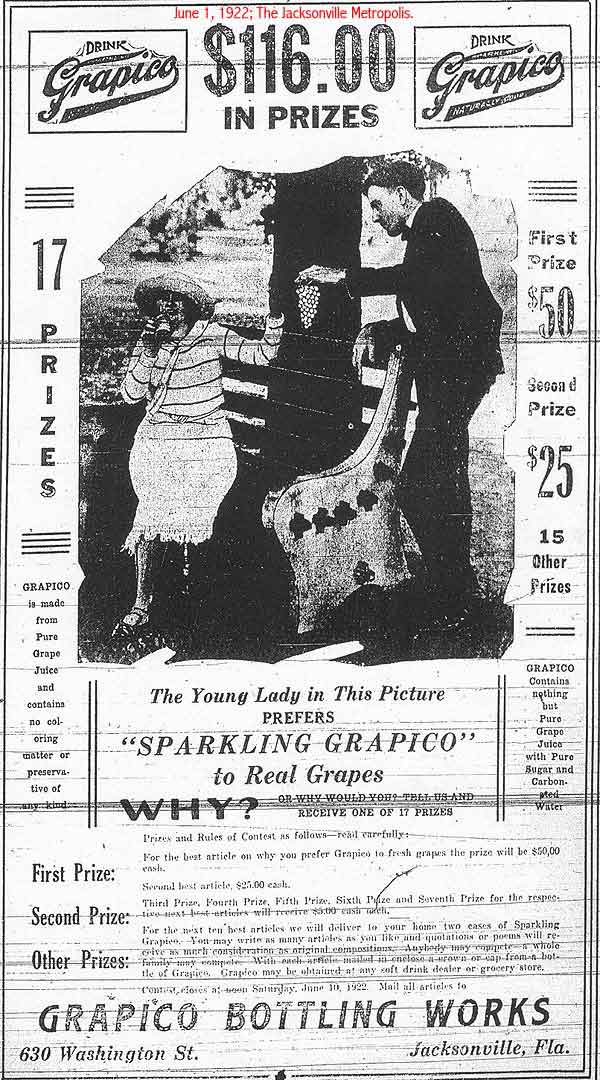
In June 1922, Grapico Bottling Works furthered the connection between the artificially flavored beverage and real grape juice through an advertisement campaign.[22] On June 1, 1922, The Jacksonville Metropolis published a Grapico Bottling Works advertisement announcing a ten-day writing contest that offered US$116 in prize money for essays on why a consumer would prefer "Sparkling Grapico" over real, fresh grapes.[22] The advertisement indicated that Grapico was made from Pure Grape Juice with pure sugar and carbonated water and had no coloring or preservatives.[22] Although not true, this information was consistent with the Grapico product labels used by J. Grossman's Sons on the barrels that were shipped to and received by R. R. Rochell.[23]

Mississippi based Grapico Bottling Company troubles did not end with its union problems. In September 1924, John Henry Ennis of Ellisville, Mississippi, purchased a Grapico.[24] On drinking it, Ennis discovered that the contents were filled with flies, some of which he swallowed and became sick.[24] On filing a lawsuit against Grapico Bottling Company and its sole stockholder, Philip Carriere, Ennis learned that Grapico Bottling Company had filed for and successfully dissolved itself as a corporation between the time Ennis consumed the flies and filed suit against Grapico Bottling.[24] On appeal, the Supreme Court of Mississippi issued an opinion that serve as precedent in Mississippi for the rule that a stockholder of a corporation is not liable for the debts, liabilities, and other acts of the corporation.[24] After Grapico Bottling Company (Mississippi) dissolved in 1925, Rochell's Grapico Bottling Works became the sole supplier of Grapico to Mississippi.[6]
Unfair competition through deceptive advertising
[edit]Since almost its inception in 1914, Grapico was associated with real grape juice by J. Grossman's Sons through its advertisements and business stationery.[23] Publicly associating Grapico with genuine grape juice allowed J. Grossman's Sons to compete directly with real grape juice producers such as Welch Grape Juice Co. and have an advantage over other imitation grape flavored beverage producers.[23] A problem with this approach was that Grapico was an artificial grape drink that included neither real grape juice nor fruit from the grape.[23]

In May 1926, J. Grossman's Sons became a defunct corporation and sold its Grapico formula and all rights connected to that formula to Pan American Manufacturing Co., Inc., a Louisiana corporation that had been manufacturing and selling extracts, ice cream powder, and syrups and flavors for soft drinks from New Orleans since 1911.[6][25] Pan American began manufacturing Grapico syrup and concentrate and continued supplying its wholesale customers outside of Louisiana with one-gallon bottles of concentrated Grapico to allow them to make Grapico.[6] In addition, through its subsidiary corporation, World Bottling Co., Pan American continued supplying its retail customers in Louisiana with bottled Grapico for consumption.[6][26] At the time Pan American acquired the Grapico business, it had three wholesale Grapico customers: Rochell's Grapico Bottling Works in Birmingham, Alabama and two bottling plants operating in Mississippi.[6] Grapico concentrate was sold by Pan American to its wholesale customers for $7.50 per gallon and the finished bottled Grapico was by sold by Pan American and its three wholesale customers at 5 cents per 7-oz bottle.[6]
Pan American continued associating their artificial grape drink with real grape juice in advertisements in trade periodicals, display cards, newspapers, boys' caps for customers' use, and in its company stationery.[7] Typically, advertising material displayed images of grape vineyards and bunches of grapes together with the qualifying statements:
Sparkling
Grapico
Naturally Good
Acknowledged
The Best
Grape Drink
On The Market
Sparkling
Grapico
Naturally Good
The Drink of The Nation[27]
In addition, Pan American continued J. Grossman's Sons practice of using 7-oz clear bottles with molded labels prominently featuring a pictorial representation of a bunch of grapes with word "Grapico".[27] Given that the product was artificially colored and flavored to simulate the appearance, taste and smell of grape juice, the combination of the advertisements, the bottle grape bunch mold, and the product itself implied to others that the Grapico product was composed of pure grape juice.[27]
In July 1928, the Federal Trade Commission charged Pan American with unfair methods of competition and deceptive practices.[28] After learning of the Federal Trade Commission complaint, Pan American altered the labels it used on its one-gallon concentrate jugs.[27] However, the efforts were too little, too late and Pan American and its "representatives, agents, servants, employees, and successors" lost the right to use the word "Grapico" to designate their artificial grape drink as of 1929.[29] Pan American's wholesale customers, including R. R. Rochell, were seen as victims of Pan American's unfair competition and the cease and desist order regarding the Grapico name did not extend to them.[26]
R. R. Rochell's Grapico
[edit]R. R. Rochell was a successful business man operating in Birmingham, Alabama.[11] His success came despite the fact that he was illiterate.[30] He was one of two major stock holders in the Edgewood Amusement Company, which dissolved in 1924.[31] Rochell began selling bottled Grapico in Alabama in 1917 and then in Mississippi in 1918.[11][13] In June 1920, Rochell's Grapico Bottling Works formally incorporated in Alabama as "The Grapico Bottling Works".[32]
Rochell's early Grapico efforts were not without problems. For example, in November 1921, Grapico Bottling Works acquired a US$648 Baltimore Semi-Automatic Machine, Model B-1485 from New Orleans–based Crown Cork and Seal Co. to cork and seal soda water bottles.[30] Within three months, the bottle capper began to fail.[30] Frequently, the neck of the moving bottles became stuck in the machine, which additionally broke bottles whose contents drenched workers.[30] In addition, the caps made by the machine did not seal properly so that carbonation gas escaped from the Grapico bottles.[30] After Grapico refused to pay the US$358 balance, the Sheriff seized the bottling machine from Grapico.[30] The matter was resolved 3½ years later by the Louisiana First Circuit Court of Appeal, who set aside the machine sales contract so that Grapico Bottling Works no longer owed the balance.[30]
By 1922, R. R. Rochell's Grapico had been expanded into the Florida soft drink market.[22] With Grapico Bottling Company (Mississippi) dissolved in 1925 and Pan American prohibited from using the name "Grapico" in connection with the Grapico artificial grape drink, Rochell became the sole supplier of bottled Grapico in Alabama, Florida, Georgia, Mississippi, and Louisiana in 1929.
In 1938, R. R. Rochell was doing business in Alabama as "Orange Crush 7-Up Bottling Company."[33][34] At that time, it cost .44312 cents to produce a case of Grapico at Rochell's plant in Birmingham and to deliver that same case approximately 100 miles (160 km) away cost .32734 cents, making a total cost of approximately .77 cents per case to deliver a case of soft drinks to the areas surrounding Birmingham.[34] The product was sold at .80 a case, for a .03 cent profit per case.[34]

Just before he died in early 1940,[35] R. R. Rochell filed for a federal trademark on Grapico on behalf of Orange Crush 7-Up Bottling Company.[36] The federal trademark issued just after Rochell. secured the national rights to the Grapico mark to the Orange Crush 7-Up Bottling Company.[36] In that same year, Grapico was sold using the trademarked slogan,
"The Drink of the Nation • Made its Way by the Way its Made."[37]
In June 1947, Rochell's business began using the names "The Grapico Bottling Company"[38] and "The Grapico Company of America."[39] In October 1949, "The Grapico Bottling Company" name was changed to "Orange Crush 7 Up Bottling Company" to reflect the work it was doing in Alabama on behalf of the Seven-up Company.[38][40] Despite the Alabama company's efforts, the Seven-up Company refused to grant The Grapico Company of America a bottling franchise to handle Seven-up soft drinks.[40] The business was operating as Orange Crush-Grapico Bottling Company by 1953.[41] In July 1957, the bottling business name was officially changed to "Orange Crush Grapico Company."[38]
In 1955, Grapico Company of America expanded its fruit-flavored brands into orange with Orangico,[42][43] a play on the name Grapico. Orangico was to include real orange juice.[44] The orange juice based Orangico did not sell well and the federal trademark eventually expired in 1999.[44]
In September 1981, both the franchising rights to the Grapico brand name and The Pepsi Bottling Group in Newnan, Georgia were acquired by Buffalo Rock, an independent Pepsi bottler founded in Birmingham, Alabama in 1901.[45][46][47][48] Both Buffalo Rock and R.R. Rochell's businesses were located in Birmingham since the early 1900s. For example, in October 1940, R.R. Rochell's business was located at 1031 11th Avenue North[11] and Buffalo Rock's business was located at 10th Avenue and 26th Street North[49]—a distance of about three miles (5 km).[50]
Between at least 1981 and 1988, Grapico was distributed in only three states: Alabama, Florida and Georgia.[51] In August 1988, Buffalo Rock announced that they would expand distribution of Grapico the rest of the Southeastern United States.[51][52] The announcement coincided with the new, more contemporary Grapico packaging.[51] By June 1990, Grapico was being sold in South Carolina.[53]
Buffalo Rock revived the Orangico trademark in 1999, this time to be used on an artificial orange syrup rather than a real orange-based drink.[54] Buffalo Rock introduced Diet Grapico in 2005.[55] Grapico is produced by Buffalo Rock through its Columbus, Georgia, bottling facility, Sun Fresh Beverages, Inc.[56]
At the request of Buffalo Rock, a cupcake shop in Homewood introduced a Grapico cupcake in 2012.[1]
In popular culture
[edit]Grapico is mentioned in Fried Green Tomatoes at the Whistle Stop Cafe, 1987 best selling novel by Fannie Flagg.[57] Anne George's 1996 novel Murder on a Bad Hair Day: A Southern Sisters Mystery,[58] and the 2004 novel Making Waves by Cassandra King,[59] Grapico mixed with Absolut Peppar jalapeño flavored vodka is a drink called the Ex-girlfriend.[60] It's called the Ex-girlfriend because "it's sweet and seems like a good idea, but eventually it's going to burn you and make you sick."[60] Grapico and coconut rum is called a "grapicolada." NFL QB Jameis Winston has said his favorite childhood drink was Grapico and he would drink it while eating pickled pig's feet.[61]
Gallery
[edit]- Meet Me in the Land of Grapico
-

-

-

-

-


-
 Grapico being bottled in 1917
 -
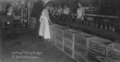 Grapico bottled being packaged in 1917
 -
 Grapico bottles and syrup barrels being shipped in 1917
 -
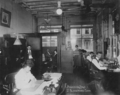 Grapico accounting office in 1917
 -
 Grapico mail order in 1917
 -
 Grapico manufacturing plant in 1917


References
[edit]- ^ a b c Carlton, Bob (2016-04-22). "15 things to know and love about Grapico". al. Retrieved 2022-07-21.
- ^ a b Breaux, Chief Justice Joseph Arsenne. (May 22, 1905.) Louisiana Supreme Court J. Grossman's Sons v. John B. Sanders, sheriff. 114 La. 958, 38 So. 692 (No. 15,525). (Quote, "Plaintiffs are judgment creditors of Charles F. Kramer, the father just referred to, in the sum of $249.80. This judgment was obtained in 1884, and was revived in 1894 and duly recorded.")
- ^ Monroe, Frank A. (March 16, 1908) Louisiana Supreme Court Josephson v. Powers. 121 La. 28, 46 So. 44
- ^ DuFour, J. (April 3, 1905) Fourth Circuit Court of Appeals of Louisiana, Parish of Orleans. Hiddleston Kenner v. J. Grossman's Sons. 2 Teiss. 209, 2 Orleans App. 209 (No. 3665) Rehearing refused Apr. 19, 1905.
- ^ Provosty, Chief Justice Olivier. (February 8, 1915) Louisiana Supreme Court J. Grossman's Sons v. Chachere. 136 La. 666, 67 So. 545 (No. 20727).
- ^ a b c d e f g h Hornibrook, E. J. (July 5, 1929) Federal Trade Commission In re Pan-American Mfg. Co., Inc. Page 87.
- ^ a b c Hornibrook, E. J. (July 5, 1929) Federal Trade Commission In re Pan-American Mfg. Co., Inc. Page 84.
- ^ a b c d Charles H. Templeton, Sr. Music Museum. (March 25, 2008) Mitchell Memorial Library Summary of the sheet music Meet Me in the Land of Grapico. Accessed July 21, 2008.
- ^ J. Grossman's Sons. (1916) Page 1 of Meet Me in the Land of Grapico.[permanent dead link] (header quote, "Dedicated to all drinkers of Grapico.") Accessed June 21, 2008.
- ^ J. Grossman's Sons. (1916) Coversheet to Meet Me in the Land of Grapico.[permanent dead link] (quote, "Copy sent free on application to J. Grossman's Sons.") Accessed June 21, 2008.
- ^ a b c d United States Trademark Office (2008) Grapico United States Trademark registration certificate. Accessed July 21, 2008.
- ^ Mississippi Secretary of State Business Services. (2008) Grapico Bottling Company. Archived 2012-12-24 at archive.today Business ID: 427804; Name Reservation: 5/19/1914; Amendment: 8/11/1922; Admin Dissolution: 5/1/1989. Accessed July 21, 2008.
- ^ a b Mississippi Secretary of State Business Services. (2008) Grapico Bottling Works. Archived 2012-12-24 at archive.today Business ID: 427805; Name Reservation: 6/11/1918. Accessed July 21, 2008.
- ^ Supreme Court of Mississippi, Division A. (November 3, 1924) Margiotta v. J. Grossman's Sons, Inc. 101 So. 715 (No. 24388) (Case establishing that J. Grossman's Sons was operating in Mississippi and operating as Grapico Bottling Works.)
- ^ Printers' Ink (July 3, 1919) Has "Grapico" Account v.108 1919 Jul-Sep. Page 12. Publisher: Decker Communications. ("The magazine of marketing/communications management.")
- ^ Overton, Winston. (May 23, 1927) Louisiana Supreme Court Grapico Bottling Works v. Liquid Carbonic Co. 163 La. 1057, 113 So. 454 (No. 26511) **Precedent in Louisiana.
- ^ NOTE: Even though they had similar names, there was no connection between Kramer's Grapico Bottling Works (Louisiana - 1919) and Rochell's Grapico Bottling Works (Alabama - 1917).
- ^ 40 Stat. 1941
- ^ Drown, Kathleen Morgan; Huber, Patrick. (2004) The 1920s. Page 139. Greenwood Publishing ISBN 0-313-32013-6.
- ^ Higgins, Judge. (February 26, 1934) Fourth Circuit Court of Appeals of Louisiana, Parish of Orleans. State v. Louisiana Baking Corp. 153 So. 41 (No. 14723).
- ^ a b c Proceedings [of The] Convention by International Union of United Brewery, Flour, Cereal, Soft Drink, and Distillery Workers of America, Dominion Educational Association (Canada) - Labor unions (1920) Grapico Bottling Co. Page 28.
- ^ a b c d The Jacksonville Metropolis (June 1, 1922) Grapico Bottling Works advertisement. Accessed July 21, 2008.
- ^ a b c d Hornibrook, E. J. (July 5, 1929) Federal Trade Commission In re Pan-American Mfg. Co., Inc. Page 88.
- ^ a b c d Ethridge, George Hamilton [1] Archived 2010-07-28 at the Wayback Machine (November 30, 1925) Supreme Court of Mississippi Grapico Bottling Co. v. Ennis. No. 25015. 140 Miss. 502, 106 So. 97, 44 A.L.R. 124. (Suggestion of Error Overruled Dec. 7, 1925.)
- ^ Louisiana Secretary of State. (2008) Detailed Records: Pan American Manufacturing Company.[permanent dead link] Accessed July 21, 2008.
- ^ a b Hornibrook, E. J. (July 5, 1929) Federal Trade Commission In re Pan-American Mfg. Co., Inc. Page 90.
- ^ a b c d Hornibrook, E. J. (July 5, 1929) Federal Trade Commission In re Pan-American Mfg. Co., Inc. Page 85.
- ^ Annual Report of the Federal Trade Commission for the Fiscal Year Ending June 30, 1929. (June 30, 1929) Complaints Pending July 1, 1929. Page 196, Part III Documents and Summaries (Exhibits)
- ^ Hornibrook, E. J. (July 5, 1929) Federal Trade Commission In re Pan-American Mfg. Co., Inc. Page 91.
- ^ a b c d e f g Leche, Richard W. (February 18, 1925) Louisiana First Circuit Court of Appeal Crown Cork and Seal Co. v. Grapico Bottling Works 1 La.App. 638. Rehearing Refused: May 5, 1925.
- ^ Sayre, A. D. (November 26, 1926) Alabama Supreme Court McGregor v. Alabama Bank. 215 Ala. 307, 110 So. 468 (6 Div. 528)
- ^ Alabama Secretary of State. (2008) The Grapico Bottling Works. Business ID: D/C 749-372 ; Date Of Inc.: 06-14-1920 Dissolved.: 01-12-2007. Accessed July 21, 2008.
- ^ Brown, Justice. (June 16, 1938) Alabama Supreme Court Rochell v. City of Florence 236 Ala. 313, 182 So. 50. (8 Div. 901)
- ^ a b c Thomas, Justice. (March 30, 1939) Alabama Supreme Court Rochell v. City of Florence II 237 Ala. 635, 188 So. 247. (8 Div. 955) Rehearing Denied May 4, 1939.
- ^ Thomas, Justice. (June 5, 1941) Alabama Supreme Court Rochell v. Oats 241 Ala. 372, 2 So.2d 749. (6 Div. 807).
- ^ a b United States Trademark Office (2008) TARR web server: Grapico Accessed July 21, 2008.
- ^ United States Trademark Office (2008) Grapico slogan United States Trademark registration certificate. Accessed February 11, 2015.
- ^ a b c Alabama Secretary of State. (2008) Transactions of The Grapico Bottling Company. Accessed July 21, 2008.
- ^ Alabama Secretary of State. (2008) Corporate Details: The Grapico Company of America. Accessed July 21, 2008.
- ^ a b Lynne, Seybourn H. (February 10, 1955) United States District Court for the Northern District of Alabama, Southern Division. Orange-Crush Grapico Bottling Co. v. Seven-up Company[permanent dead link] 128 F.Supp. 174 (Civ. A. No. 7051)
- ^ Carr, Judge. (January 20, 1953) McClellan v. Orange Crush-Grapico Bottling Co. 36 Ala.App. 682, 62 So.2d 803 (6 Div. 645).
- ^ bottlebooks.com (2007) Soda and Carbonated Beverage Trademarks 1945. Archived 2008-08-01 at the Wayback Machine Reprint of U.S. Trademark registration by Digger Odell Publications. Accessed July 21, 2008.
- ^ United States Trademark Office (2008) Orangico United States Trademark registration certificate.[permanent dead link] Accessed July 21, 2008.
- ^ a b United States Trademark Office (2008) United States Trademark TARR web server - Orangico. Accessed July 21, 2008.
- ^ Beverage World (September 1981) Pepsi-Cola Bottling of Newnan, Ga has been acquired by Buffalo Rock. Page 16.
- ^ Theodore, Sarah. (April 30, 2001) Beverage Industry. Changing with the times. Volume 92; Issue 4; Page 40. Stagnito Publishing
- ^ Hartman, Lauren R. (August 1, 2001) Packaging Digest Conveyor upgrade 'rocks' with savings. Volume 38; Issue 8; Page 44.
- ^ Hartman, Lauren R. (June 1, 2003) Packaging Digest Conveyor upgrade meets bottler's challenge. Volume 40; Issue 6; Page 38.
- ^ Buffalo Rock Official Website - History. Archived 2008-08-09 at the Wayback Machine Accessed July 21, 2008
- ^ maps.google.com. Accessed July 21, 2008.
- ^ a b c Beverage World (August 1988) Soft Drinks: New logo portends big plans for Grapico Page 10.
- ^ Product Alert by Marketing Intelligence Service Archived 2017-09-22 at the Wayback Machine. (September 12, 1988) Grapico Carbonated Grape Drink. Manufacturer: Buffalo Rock Co. Category: Miscellaneous Soft Drinks. Volume 18; Issue 37
- ^ Anderson, Joseph F. (July 30, 1990) United States District Court for the District of South Carolina, Greenville Division. Cheshire v. Coca-Cola Bottling Affiliated. 758 F.Supp. 1098, 1990-2 Trade Cases P 69,168 (Civ. A. No. 6:89-2618-17)
- ^ United States Trademark Office. (2008) TARR web server for Orangico. Accessed July 21, 2008.
- ^ Grapico Official website. (2008) Buffalo Rock - Beverages and Food Services. Archived 2008-09-15 at the Wayback Machine Accessed July 22, 2008.
- ^ TheValleyPartnership.com, (August 23, 2007) Sun Fresh Beverages Expanding Columbus Facility, New facility will add 50 jobs.[permanent dead link] Accessed July 21, 2008
- ^ Flagg, Fannie (1987) Fried Green Tomatoes at the Whistle-Stop Cafe Page 373. Publisher: Random House. (writing, "His daddy gives him a barbecue and a Grapico, and he runs way back up in the woods to eat it, where it's cool and green and the pine needles are soft.") ISBN 0-07-021257-0
- ^ George, Anne Carroll (1996) Murder on a Bad Hair Day: A Southern Sisters Mystery. Page 150. Publisher: HarperCollins. ISBN 0-380-78087-9
- ^ King, Cassandra. (2004) Making Waves. Page 125. Publisher: Hyperion. ISBN 0-7868-8793-1
- ^ a b Davidson, J'Mel R. (January 17, 2008) Birmingham Weekly How I Write. Volume 11; Issue 21; Page 29.
- ^ Fox, NFL on (2025-02-08). "NFL on Fox". X.com. Retrieved 2025-02-08.
Grapico
View on GrokipediaHistory
Origins and early production
Grapico was invented in 1914 by J. Grossman's Sons, a company based in New Orleans, Louisiana, as a grape-flavored syrup designed to be mixed with carbonated soda water, creating a beverage that closely mimicked the taste, aroma, and appearance of real grape juice.[4][5] The syrup was artificially flavored and colored purple but marketed in a way that suggested it contained natural grape ingredients, with packaging and advertisements emphasizing its fruity authenticity to appeal to consumers seeking a wholesome, juice-like alternative.[2] This approach contributed to its quick rise in popularity across the Southern United States, where it became a favored non-alcoholic refreshment amid growing demand for carbonated drinks.[6] Early production focused on wholesale distribution of the syrup to soda fountains and bottlers, allowing for on-site mixing and serving in the mid-1910s.[4] By the summer of 1917, Birmingham, Alabama, businessman Raymond R. Rochell acquired rights to bottle Grapico, marking the launch of pre-mixed, ready-to-drink versions and expanding its commercialization beyond New Orleans.[2][4] Rochell's Grapico Bottling Works formalized this process, supplying the product to retailers in Alabama and neighboring Southeastern states, which solidified its regional foothold.[4] Key figures in this foundational phase included J. Grossman, who oversaw the original formulation and initial sales efforts, and Rochell, whose bottling initiative transitioned Grapico from a syrup-based fountain drink to a widely available bottled soda.[2] The product's early success stemmed from its innovative imitation of scarce or expensive natural grape juice, though this marketing strategy later sparked legal scrutiny over its claims.[7]Legal challenges and trademark disputes
In 1929, the Federal Trade Commission (FTC) brought proceedings against Pan American Manufacturing Co., Inc., which had acquired the Grapico formula and rights from J. Grossman's Sons in 1926, charging the company with unfair methods of competition and deceptive advertising under Section 5 of the FTC Act. The core allegations focused on Pan American's implication that Grapico was a natural grape juice product, despite it being an artificially flavored and colored beverage containing only negligible amounts of actual grape juice.[7] The deceptive practices included prominent use of the name "Grapico" on labels, bottle caps, and advertisements, combined with grape-related imagery such as clusters of grapes, vineyards, and references to "pure grape flavor," which misled consumers about the product's composition. Disclosures like "Artificially Flavored and Colored" appeared in much smaller type—often one-fifth the size of the main branding—rendering them ineffective, while promotional materials avoided any mention of artificial ingredients. The FTC determined these elements created a false association with real grape juice, harming competitors offering genuine fruit-based drinks.[7] On July 5, 1929, the FTC issued a cease-and-desist order prohibiting Pan American from using the "Grapico" name in interstate commerce for artificially flavored grape drinks, effectively stripping the company of trademark rights and requiring clearer labeling for any similar products. This ruling forced Pan American to rebrand its offerings and discontinue misleading packaging, though it primarily targeted the syrup manufacturer rather than independent bottlers.[7] In the aftermath, regional bottlers like R. R. Rochell's Grapico Bottling Works, which had been producing the drink since 1917, acquired the production and distribution rights in 1929, following the FTC ruling and a successful lawsuit against a competitor, and continued operations by emphasizing non-deceptive labeling that disclosed the artificial flavoring. By 1938, Rochell's enterprise had reorganized as the Orange Crush 7-Up Bottling Company, maintaining Grapico production alongside other sodas while complying with regulatory scrutiny on advertising. Rochell filed for federal trademark protection in 1939, securing registration for "Grapico" on October 1, 1940, for carbonated non-alcoholic beverages after establishing prior continuous use without evidence of deception in his Southern markets; this granted his newly formed Grapico Company of America exclusive nationwide rights to the name.[4][8][9]Ownership transitions
Following the successful securing of the federal trademark for Grapico in 1940, the Grapico Company of America, founded by Raymond R. Rochell, assumed full ownership of the brand and operated it through various iterations of its bottling operations, including as the Orange Crush Grapico Company from 1957 onward.[4][2] This entity managed production and distribution primarily in the Southern United States until the late 20th century.[4] In September 1981, the Grapico franchise rights were acquired by the Birmingham-based Buffalo Rock Company, a major Pepsi bottler, marking a significant consolidation within regional beverage operations.[10][11] This purchase integrated Grapico into Buffalo Rock's portfolio, allowing for expanded distribution beyond its traditional markets in Alabama, Florida, and Georgia.[4] Buffalo Rock has remained the owner of Grapico since 1981, with no reported changes in ownership as of 2025.[10] Under their stewardship, production of the syrup shifted to their subsidiary, Sun Fresh Beverages, Inc., at a facility in Columbus, Georgia, while bottling and distribution continue from Birmingham.[4][12]Product characteristics
Flavor profile and ingredients
Grapico is a caffeine-free grape soda characterized by its intensely sweet, artificial grape flavor, which mimics the taste of Concord grapes without incorporating any real grape juice. The beverage's signature deep purple hue is achieved through the use of food dyes FD&C Blue No. 1 and FD&C Red No. 40, contributing to its vibrant visual appeal. This flavor profile, developed from synthetic compounds, provides a bold, fruity sweetness that distinguishes it from other grape sodas, often described as less cloyingly syrupy despite its high sugar content.[2][1][13] The core ingredients of Grapico include carbonated water, high fructose corn syrup, phosphoric acid for tartness, sodium benzoate as a preservative, artificial flavors, gum arabic as a stabilizer, sucralose and acesulfame potassium, and the aforementioned colorings. Unlike natural fruit-based drinks, it relies entirely on artificial flavorings to replicate the grape essence, ensuring consistency in taste across batches. This formulation has remained largely consistent in its modern ready-to-drink presentation.[1] Nutritionally, a 12-ounce serving of Grapico contains 140 calories, all derived from approximately 35 grams of sugar, with zero grams of fat, protein, or fiber. The high sugar content underscores its indulgent nature as a treat, while the absence of caffeine makes it suitable for consumption at any time.[1][14] Originally introduced in 1916 as a syrup concentrate mixed with carbonated water, Grapico's formula evolved into a pre-mixed, ready-to-drink soda while retaining its artificial composition, a shift clarified following early 20th-century legal rulings on misleading advertising that implied natural grape content.[2][4]Variants and formulations
In 2005, Buffalo Rock introduced Diet Grapico as a low-calorie alternative to the original formulation, replacing sugar with artificial sweeteners including aspartame and acesulfame potassium to achieve approximately 0 calories per 12-ounce serving.[2][15][16] Grapico's product line has expanded modestly beyond the diet version, including a Real Sugar variant that substitutes high fructose corn syrup with cane sugar while retaining the core grape flavor profile adapted from the original recipe.[1] As of 2025, no major limited-edition or flavored twists have been widely launched post-2005, though the lineup remains focused on these core offerings without documented seasonal variants.[13] The diet and Real Sugar variants feature adjusted acidulants—citric and malic acids in the diet version versus phosphoric acid in the standard—for formulation stability, but no specific changes to sodium content or dyes like Red 40 and Blue 1 have been reported in response to regulations.[1] Packaging differs from the standard 12-ounce glass bottle primarily in the diet version, which is commonly available in aluminum cans and plastic (PET) bottles for multi-packs and larger sizes like 2 liters, while the Real Sugar option is typically offered in 12-ounce glass 4-packs.[2][1] Unopened variants across formats generally maintain comparable shelf stability to the original, though specific durations are not publicly detailed by the manufacturer.Production and distribution
Manufacturing process
Grapico's manufacturing process occurs at Buffalo Rock Company's primary bottling facility in Birmingham, Alabama, following the company's acquisition of the brand's rights in 1981. The syrup base is prepared by Buffalo Rock's subsidiary, Sun Fresh Beverages, Inc., in Columbus, Georgia, before being transported to the Birmingham plant for final mixing, carbonation, and packaging. This centralized approach allows for efficient production of the carbonated soft drink using automated systems that have replaced earlier manual methods from the brand's origins in the early 20th century.[17][18][4] At the Birmingham facility, the process begins with the syrup being blended with purified carbonated water in high-speed mixing tanks to achieve the desired flavor profile and effervescence, followed by pasteurization to ensure product stability and safety. The mixture then proceeds to automated filling lines, where it is packaged into glass and plastic bottles or cans at rates supporting the plant's overall capacity of more than 50 million cases annually, with Grapico contributing several million cases for Southeastern markets. These lines include three for cans and four for PET bottles, enabling versatile output for regional distribution.[19][20] Quality control is integrated throughout production, involving regular testing for attributes such as color consistency, carbonation levels, and adherence to FDA regulations on ingredients including artificial flavors and preservatives. Automated monitoring systems and on-site laboratory analysis help maintain compliance and product uniformity, reflecting the facility's evolution to modern industrial standards since the 1980s.[21][19]Regional availability and market reach
Grapico maintains a strong regional footprint in the Southeastern United States, where it is widely available in states including Alabama, Georgia, Florida, Mississippi, and South Carolina.[2][22] As a product of Buffalo Rock Company, an independent Pepsi bottler based in Birmingham, Alabama, Grapico is distributed primarily through Pepsi-affiliated networks and independent regional distributors serving the South.[23] This focus ensures accessibility in local grocery chains such as Publix and Winn-Dixie, which stock various formats including cans, bottles, and multipacks across their stores in these states.[24][25] Beyond its core markets, Grapico has limited national availability, primarily through select online retailers and specialty vendors that ship to customers outside the Southeast. Platforms like Amazon and Instacart offer Grapico for delivery nationwide, enabling broader access for fans unable to find it locally.[26][27] Online sales have been facilitated through these channels and Buffalo Rock-associated e-commerce since the 2010s, though the brand remains oriented toward domestic Southern consumers with no significant international exports or expansion efforts reported.[11] As a niche grape soda, Grapico enjoys a loyal regional following but holds a modest market share within the competitive carbonated soft drink category, with steady sales sustained since Buffalo Rock's acquisition of the brand in 1981.[11] This enduring presence underscores its role as a beloved Southern staple rather than a mass-market product.[2]Marketing and cultural role
Advertising strategies
In the early 1910s and 1920s, Grapico's advertising emphasized its purported natural grape qualities to attract consumers, often through creative and novel promotions. J. Grossman's Sons, the initial producer, commissioned the 1916 jazz tune "Meet Me in the Land of Grapico," composed by Ivan Reid and Peter De Rose, which romanticized the beverage as originating from a idyllic "land of the grape arbor" to suggest authentic fruit content and health benefits.[28] However, these claims were misleading, as the product contained no real grape juice, leading to a 1929 Federal Trade Commission ruling against Pan-American Manufacturing Company (a subsequent licensee) for unfair competition via deceptive advertising practices, including labels and promotions that falsely implied natural grape ingredients.[29] Following the legal resolution in 1929, which prohibited misleading claims, R. R. Rochell, who acquired bottling rights in 1917 and secured the federal trademark in 1940, shifted Grapico's branding toward transparent messaging centered on refreshment and regional charm.[4] Mid-20th-century promotions under Rochell's Grapico Company of America highlighted the soda's crisp taste and Southern roots, avoiding health or natural-origin assertions to comply with regulations while appealing to local consumers in the Southeast.[12] Since acquiring the brand in 1981, Buffalo Rock has leveraged Grapico's over-century-old heritage in its campaigns, focusing on nostalgia to reinforce its status as a Southern staple. The 2011 "New Retro" redesign, developed by Birmingham agency o2ideas, updated packaging with a multi-hued purple emblem and block lettering evoking vintage appeal, positioning the drink as "A Southern Thing" to blend historical charm with modern accessibility.[30] This nostalgic strategy continued with the 2016 centennial celebration, featuring limited-edition vintage-inspired bottles and a real-sugar variant to evoke childhood memories and regional pride.[31] Advertising has remained primarily regional, utilizing TV and radio spots—such as a 1984 commercial promoting the "grape sensation"—alongside event sponsorships in Alabama, including community gatherings and golf classics supported by Buffalo Rock.[32] In the 2020s, efforts have expanded digitally through social media tie-ins on platforms like Instagram, targeting younger audiences with heritage-themed content while maintaining a focus on Southeastern markets.[33]Significance in Southern culture
Grapico holds an iconic status in Southern culture as a symbol of nostalgia and regional identity, frequently dubbed the "South's grape soda" due to its deep roots in the American Southeast. First introduced in New Orleans in 1916 and quickly popularized through bottling operations in Alabama starting in 1917, the beverage has become synonymous with the flavors and traditions of the region, evoking memories of simpler times for generations of consumers.[34][4] In 2014, Thrillist recognized it as Alabama's most iconic soft drink, underscoring its enduring place in Southern heritage alongside other regional specialties like Cheerwine.[2] The drink's cultural footprint extends to media representations that reinforce its role as a comforting Southern staple. It appears in Fannie Flagg's 1987 novel Fried Green Tomatoes at the Whistle Stop Café, where a character fondly recalls sipping Grapico as part of cherished childhood rituals, mirroring its real-life association with familial and communal warmth in the South.[2] This literary nod highlights Grapico's embedding in narratives of Southern life, further amplified by its mentions in other regional literature and its alignment with the era's depictions of everyday indulgences. Grapico's ties to Southern events and traditions are evident in its presence at local festivals, diners, and social gatherings, where it often accompanies classic fare like hot dogs and potato chips at beloved Birmingham spots such as Pete’s Famous Hot Dogs and Gus’s Hot Dogs.[2] The brand marked its cultural longevity with centennial celebrations in 2016, featuring vintage-inspired packaging, limited-edition real-sugar variants in glass bottles, and promotional campaigns that celebrated its 100-year legacy as a Southern original.[35] These events drew attention to its role in community rituals, from backyard barbecues to state fairs, solidifying its status as more than just a beverage but a thread in the fabric of Southern identity. Consumer loyalty to Grapico stems from its distinctive super-sweet grape flavor and striking purple hue, which many describe as a quintessential taste of youth and home in the South. Anecdotes from longtime fans portray it as a generational favorite, passed down through families and evoking instant nostalgia upon sight or sip, with its appeal remaining robust as of 2025 amid a landscape of national brands.[36][13] This steadfast devotion is reflected in its continued dominance in Southeastern markets, where it outshines competitors as the go-to grape soda for those seeking an authentic regional experience.[37] In 2024, Buffalo Rock was named Bottler of the Year, reflecting Grapico's enduring success.[38]References
- https://en.wikisource.org/wiki/In_re_Pan-American_Mfg._Co.,_Inc.