Hubbry Logo
TasteTasteMain
Open search
Taste
Community hub
Taste
logo
8 pages, 0 posts
0 subscribers
Be the first to start a discussion here.
Taste
Taste
from Wikipedia

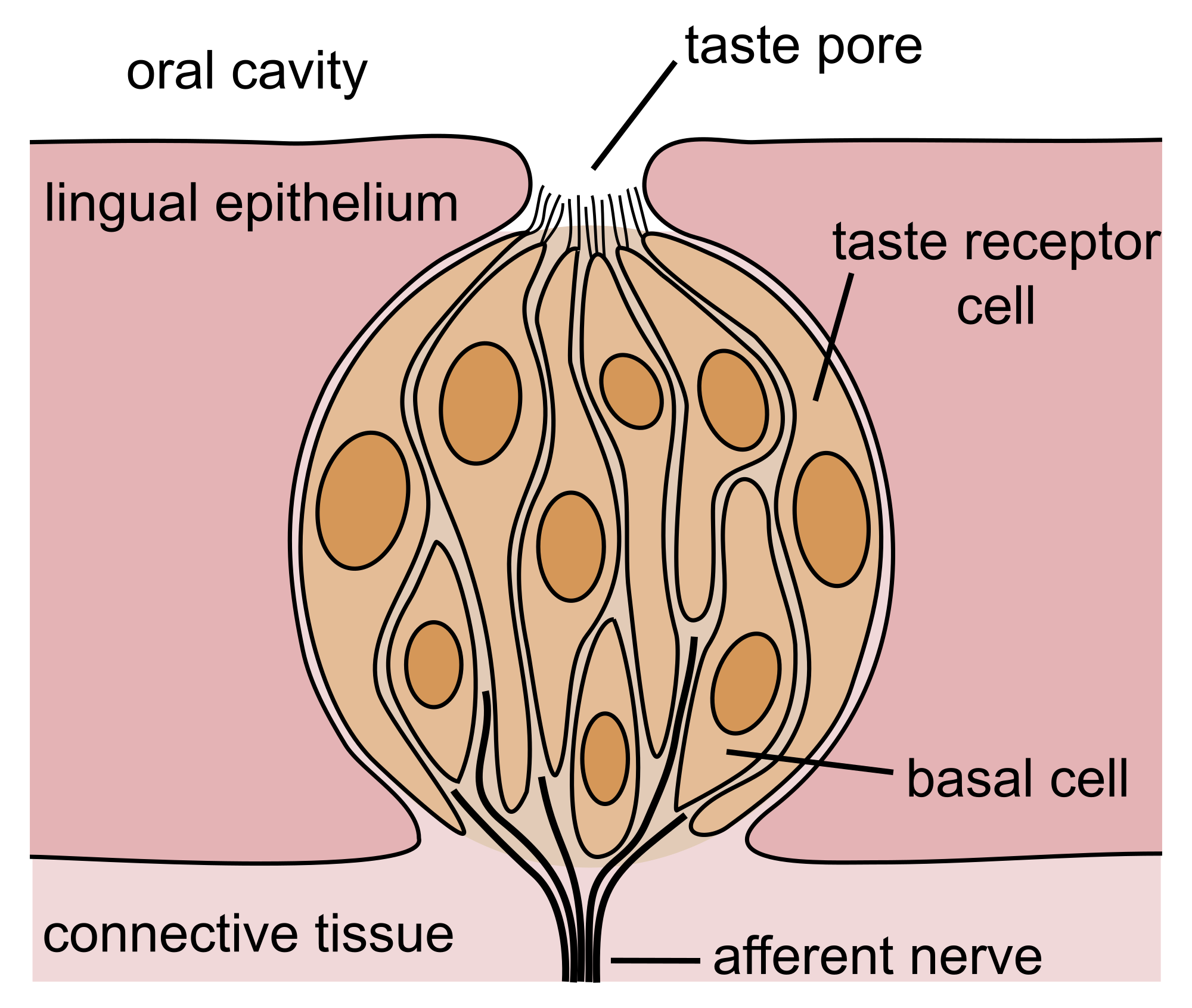
Taste bud

The gustatory system or sense of taste is the sensory system that is partially responsible for the perception of taste.[1] Taste is the perception stimulated when a substance in the mouth reacts chemically with taste receptor cells located on taste buds in the oral cavity, mostly on the tongue. Taste, along with the sense of smell and trigeminal nerve stimulation (registering texture, pain, and temperature), determines flavors of food and other substances. Humans have taste receptors on taste buds and other areas, including the upper surface of the tongue and the epiglottis.[2][3] The gustatory cortex is responsible for the perception of taste.

The tongue is covered with thousands of small bumps called papillae, which are visible to the naked eye.[2] Within each papilla are hundreds of taste buds.[1][4] The exceptions to this is the filiform papillae that do not contain taste buds. There are between 2000 and 5000[5] taste buds that are located on the back and front of the tongue. Others are located on the roof, sides and back of the mouth, and in the throat. Each taste bud contains 50 to 100 taste receptor cells.[6]

Taste receptors in the mouth sense the five basic tastes: sweetness, sourness, saltiness, bitterness, and savoriness (also known as savory or umami).[1][2][7][8] Scientific experiments have demonstrated that these five tastes exist and are distinct from one another. Taste buds are able to tell different tastes apart when they interact with different molecules or ions. Sweetness, savoriness, and bitter tastes are triggered by the binding of molecules to G protein-coupled receptors on the cell membranes of taste buds. Saltiness and sourness are perceived when alkali metals or hydrogen ions meet taste buds, respectively.[9][10]

The basic tastes contribute only partially to the sensation and flavor of food in the mouth—other factors include smell,[1] detected by the olfactory epithelium of the nose;[11] texture,[12] detected through a variety of mechanoreceptors, muscle nerves, etc.;[13] temperature, detected by temperature receptors; and "coolness" (such as of menthol) and "hotness" (pungency), by chemesthesis.

As the gustatory system senses both harmful and beneficial things, all basic tastes bring either caution or craving depending upon the effect the things they sense have on the body.[14] Sweetness helps to identify energy-rich foods, while bitterness warns people of poisons.[15]

Among humans, taste perception begins to fade during ageing, tongue papillae are lost, and saliva production slowly decreases.[16] Humans can also have distortion of tastes (dysgeusia). Not all mammals share the same tastes: some rodents can taste starch (which humans cannot), cats cannot taste sweetness, and several other carnivores, including hyenas, dolphins, and sea lions, have lost the ability to sense up to four of their ancestral five basic tastes.[17]

Basic tastes

[edit]

The gustatory system allows animals to distinguish between safe and harmful food and to gauge different foods' nutritional value. Digestive enzymes in saliva begin to dissolve food into base chemicals that are washed over the papillae and detected as tastes by the taste buds. The tongue is covered with thousands of small bumps called papillae, which are visible to the naked eye. Within each papilla are hundreds of taste buds.[4] The exception to this are the filiform papillae, which do not contain taste buds. There are between 2,000 and 5,000[5] taste buds that are located on the back and front of the tongue. Others are located on the roof, sides and back of the mouth, and in the throat. Each taste bud contains 50 to 100 taste-receptor cells.[6]

The five specific tastes received by taste receptors are saltiness, sweetness, bitterness, sourness, and savoriness (often known by its Japanese name umami, which translates to 'deliciousness').

As of the early 20th century, Western physiologists and psychologists believed that there were four basic tastes: sweetness, sourness, saltiness, and bitterness. The concept of a "savory" taste was not present in Western science at that time, but was postulated in Japanese research.[18]

One study found that salt and sour taste mechanisms both detect, in different ways, the presence of sodium chloride (salt) in the mouth. Acids are also detected and perceived as sour.[19] The detection of salt is important to many organisms, but especially mammals, as it serves a critical role in ion and water homeostasis in the body. It is specifically needed in the mammalian kidney as an osmotically active compound that facilitates passive re-uptake of water into the blood.[20] Because of this, salt elicits a pleasant taste in most humans.

Sour and salt tastes can be pleasant in small quantities, but in larger quantities become more and more unpleasant to taste. For sour taste, this presumably is because the sour taste can signal under-ripe fruit, rotten meat, and other spoiled foods, which can be dangerous to the body because of bacteria that grow in such media. Additionally, sour taste signals acids, which can cause serious tissue damage.

Sweet taste signals the presence of carbohydrates in solution.[21] Since carbohydrates have a very high calorie count (saccharides have many bonds, therefore much energy),[22] they are essential to the human body, which evolved to seek out the highest-calorie-intake foods.[23] They are used as direct energy (sugars) and storage of energy (glycogen). Many non-carbohydrate molecules trigger a sweet response, leading to the development of many artificial sweeteners, including saccharin, sucralose, and aspartame. It is still unclear how these substances activate the sweet receptors and what adaptative significance this has had.

The savory taste (known in Japanese as umami), identified by Japanese chemist Kikunae Ikeda, signals the presence of the amino acid L-glutamate. The amino acids in proteins are used in the body to build muscles and organs, and to transport molecules (hemoglobin), antibodies, and the organic catalysts known as enzymes. These are all critical molecules, and it is important to have a steady supply of amino acids; consequently, savory tastes trigger a pleasurable response, encouraging the intake of peptides and proteins.

Pungency (piquancy or hotness) had traditionally been considered a sixth basic taste.[24] In 2015, researchers suggested a new basic taste of fatty acids called "fat taste",[25] although "oleogustus" and "pinguis" have both been proposed as alternate terms.[26][27]

Sweetness

[edit]
The diagram above depicts the signal transduction pathway of the sweet taste. Object A is a taste bud, object B is one taste cell of the taste bud, and object C is the neuron attached to the taste cell. I. Part I shows the reception of a molecule. 1. Sugar, the first messenger, binds to a protein receptor on the cell membrane. II. Part II shows the transduction of the relay molecules. 2. G Protein-coupled receptors, second messengers, are activated. 3. G Proteins activate adenylate cyclase, an enzyme, which increases the cAMP concentration. Depolarization occurs. 4. The energy, from step 3, is given to activate the K+, potassium, protein channels.III. Part III shows the response of the taste cell. 5. Ca+, calcium, protein channels is activated.6. The increased Ca+ concentration activates neurotransmitter vesicles. 7. The neuron connected to the taste bud is stimulated by the neurotransmitters.

Sweetness, usually regarded as a pleasurable sensation, is produced by the presence of sugars and substances that mimic sugar. Sweetness may be connected to aldehydes and ketones, which contain a carbonyl group. Sweetness is detected by a variety of G protein coupled receptors (GPCR) coupled to the G protein gustducin found on the taste buds. At least two different variants of the "sweetness receptors" must be activated for the brain to register sweetness. Compounds the brain senses as sweet are compounds that can bind with varying bond strength to two different sweetness receptors. These receptors are T1R2+3 (heterodimer) and T1R3 (homodimer), which account for all sweet sensing in humans and animals.[28][29]

Taste detection thresholds for sweet substances are rated relative to sucrose, which has an index of 1.[30][31] The average human detection threshold for sucrose is 10 millimoles per liter. For lactose it is 30 millimoles per liter, with a sweetness index of 0.3,[30] and 5-nitro-2-propoxyaniline 0.002 millimoles per liter. "Natural" sweeteners such as saccharides activate the GPCR, which releases gustducin. The gustducin then activates the molecule adenylate cyclase, which catalyzes the production of the molecule cAMP, or adenosine 3', 5'-cyclic monophosphate. This molecule closes potassium ion channels, leading to depolarization and neurotransmitter release. Synthetic sweeteners such as saccharin activate different GPCRs and induce taste receptor cell depolarization by an alternate pathway.

Sourness

[edit]
The diagram depicts the signal transduction pathway of the sour or salty taste. Object A is a taste bud, object B is a taste receptor cell within object A, and object C is the neuron attached to object B. I. Part I is the reception of hydrogen ions or sodium ions. 1. If the taste is sour, H+ ions, from acidic substances, pass through H+ channels. Depolarization takes place II. Part II is the transduction pathway of the relay molecules. 2. Cation, such as K+, channels are opened. III. Part III is the response of the cell. 3. An influx of Ca+ ions is activated. 4. The Ca+ activates neurotransmitters. 5. A signal is sent to the neuron attached to the taste bud.

Sourness is the taste that describes acidity. The sourness of substances is rated relative to dilute hydrochloric acid, which has a sourness index of 1. By comparison, tartaric acid has a sourness index of 0.7, citric acid an index of 0.46, and carbonic acid an index of 0.06.[30][31]

Sour taste is detected by a small subset of cells that are distributed across all taste buds called Type III taste receptor cells. H+ ions (protons) that are abundant in sour substances can directly enter the Type III taste cells through a proton channel.[32] This channel was identified in 2018 as otopetrin 1 (OTOP1).[33] The transfer of positive charge into the cell can itself trigger an electrical response. Some weak acids such as acetic acid can also penetrate taste cells; intracellular hydrogen ions inhibit potassium channels, which normally function to hyperpolarize the cell. By a combination of direct intake of hydrogen ions through OTOP1 ion channels (which itself depolarizes the cell) and the inhibition of the hyperpolarizing channel, sourness causes the taste cell to fire action potentials and release neurotransmitter.[34]

The most common foods with natural sourness are fruits, such as lemon, lime, grape, orange, tamarind, and bitter melon. Fermented foods, such as wine, vinegar or yogurt, may have sour taste. Children show a greater enjoyment of sour flavors than adults,[35] and sour candy containing citric acid or malic acid is common.

Saltiness

[edit]

Saltiness taste seems to have two components: a low-salt signal and a high-salt signal. The low-salt signal causes a sensation of deliciousness, while the high-salt signal typically causes the sensation of "too salty".[36]

The low-salt signal is understood to be caused by the epithelial sodium channel (ENaC), which is composed of three subunits. ENaC in the taste cells allow sodium cations to enter the cell. This on its own depolarizes the cell, and opens voltage-dependent calcium channels, flooding the cell with positive calcium ions and leading to neurotransmitter release. ENaC can be blocked by the drug amiloride in many mammals, especially rats. The sensitivity of the low-salt taste to amiloride in humans is much less pronounced, leading to conjecture that there may be additional low-salt receptors besides ENaC to be discovered.[36]

A number of similar cations also trigger the low salt signal. The size of lithium and potassium ions most closely resemble those of sodium, and thus the saltiness is most similar. In contrast, rubidium and caesium ions are far larger, so their salty taste differs accordingly.[citation needed] The saltiness of substances is rated relative to sodium chloride (NaCl), which has an index of 1.[30][31] Potassium, as potassium chloride (KCl), is the principal ingredient in salt substitutes and has a saltiness index of 0.6.[30][31]

Other monovalent cations, e.g. ammonium (NH4+), and divalent cations of the alkali earth metal group of the periodic table, e.g. calcium (Ca2+), ions generally elicit a bitter rather than a salty taste even though they, too, can pass directly through ion channels in the tongue, generating an action potential. But the chloride of calcium is saltier and less bitter than potassium chloride, and is commonly used in pickle brine instead of KCl.[citation needed]

The high-salt signal is poorly understood. This signal is not blocked by amiloride in rodents. Sour and bitter cells trigger on high chloride levels, but the specific receptor is unidentified.[36]

Bitterness

[edit]
The diagram depicted above shows the signal transduction pathway of the bitter taste. Bitter taste has many different receptors and signal transduction pathways. Object A is a taste bud, object B is one taste cell, and object C is a neuron attached to object B. I. Part I is the reception of a molecule.1. A bitter substance such as quinine, is consumed and binds to G protein-coupled receptors.II. Part II is the transduction pathway 2. Gustducin, a G protein second messenger, is activated. 3. Phosphodiesterase, an enzyme, is then activated. 4. Cyclic nucleotide, cNMP, is used, lowering the concentration 5. Channels such as the K+, potassium, channels, close. III. Part III is the response of the taste cell. 6. This leads to increased levels of Ca+. 7. The neurotransmitters are activated. 8. The signal is sent to the neuron.

Bitterness is one of the most sensitive of the tastes, and many perceive it as unpleasant, sharp, or disagreeable, but it is sometimes desirable and intentionally added via various bittering agents. Common bitter foods and beverages include coffee, unsweetened cocoa, South American mate, coca tea, bitter gourd, uncured olives, citrus peel, some varieties of cheese, many plants in the family Brassicaceae, dandelion greens, horehound, wild chicory, and escarole. The ethanol in alcoholic beverages tastes bitter,[37] as do the additional bitter ingredients found in some alcoholic beverages including hops in beer and gentian in bitters. Quinine is also known for its bitter taste and is found in tonic water.

Bitterness is of interest to those who study evolution, as well as various health researchers[30][38] since a large number of natural bitter compounds are known to be toxic. The ability to detect bitter-tasting, toxic compounds at low thresholds is considered to provide an important protective function.[30][38][39] Plant leaves often contain toxic compounds, and among leaf-eating primates there is a tendency to prefer immature leaves, which tend to be higher in protein and lower in fiber and poisons than mature leaves.[40] Amongst humans, various food processing techniques are used worldwide to detoxify otherwise inedible foods and make them palatable.[41] Furthermore, the use of fire, changes in diet, and avoidance of toxins has led to neutral evolution in human bitter sensitivity. This has allowed several loss of function mutations that has led to a reduced sensory capacity towards bitterness in humans when compared to other species.[42]

The threshold for stimulation of bitter taste by quinine averages a concentration of 8 μM (8 micromolar).[30] The taste thresholds of other bitter substances are rated relative to quinine, which is thus given a reference index of 1.[30][31] For example, brucine has an index of 11, is thus perceived as intensely more bitter than quinine, and is detected at a much lower solution threshold.[30] The most bitter natural substance is amarogentin, a compound present in the roots of the plant Gentiana lutea, and the most bitter substance known is the synthetic chemical denatonium,[contradictory] which has an index of 1,000.[31] It is used as an aversive agent (a bitterant) that is added to toxic substances to prevent accidental ingestion. It was discovered accidentally in 1958 during research on a local anesthetic by T. & H. Smith of Edinburgh, Scotland.[43][44]

Research has shown that TAS2Rs (taste receptors, type 2, also known as T2Rs) such as TAS2R38 coupled to the G protein gustducin are responsible for the human ability to taste bitter substances.[45] They are identified not only by their ability to taste for certain "bitter" ligands, but also by the morphology of the receptor itself (surface bound, monomeric).[19] The TAS2R family in humans is thought to comprise about 25 different taste receptors, some of which can recognize a wide variety of bitter-tasting compounds.[46] Over 670 bitter-tasting compounds have been identified, on a bitter database, of which over 200 have been assigned to one or more specific receptors.[47] It is speculated that the selective constraints on the TAS2R family have been weakened due to the relatively high rate of mutation and pseudogenization.[48] Researchers use two synthetic substances, phenylthiocarbamide (PTC) and 6-n-propylthiouracil (PROP) to study the genetics of bitter perception. These two substances taste bitter to some people, but are virtually tasteless to others. Among the tasters, some are so-called "supertasters" to whom PTC and PROP are extremely bitter. The variation in sensitivity is determined by two common alleles at the TAS2R38 locus.[49] This genetic variation in the ability to taste a substance has been a source of great interest to those who study genetics.

Gustducin is made of three subunits. When it is activated by the GPCR, its subunits break apart and activate phosphodiesterase, a nearby enzyme, which in turn converts a precursor within the cell into a secondary messenger, which closes potassium ion channels.[citation needed] Also, this secondary messenger can stimulate the endoplasmic reticulum to release Ca2+ which contributes to depolarization. This leads to a build-up of potassium ions in the cell, depolarization, and neurotransmitter release. It is also possible for some bitter tastants to interact directly with the G protein, because of a structural similarity to the relevant GPCR.

The most bitter substance known as of 2025oligoporin D – stimulates the bitter taste receptor type TAS2R46 at the lowest concentrations 100 nM (0.1 micromolar, approx. 63 millionths of a gram/liter).[50][51]

Savoriness

[edit]

Savoriness, or umami, is an appetitive taste.[14][18] It can be tasted in soy sauce, meat, dashi and consomme. Umami, a loanword from Japanese meaning "good flavor" or "good taste",[52] which is similar to the word "savory" that comes from the French for "tasty". Umami (旨味) is considered fundamental to many East Asian cuisines,[53] such as Japanese cuisine.[54] It dates back to the use of fermented fish sauce: garum in ancient Rome[55] and ge-thcup or koe-cheup in ancient China.[56]

Umami was first studied in 1907 by Ikeda isolating dashi taste, which he identified as the chemical monosodium glutamate (MSG).[18][57] MSG is a sodium salt that produces a strong savory taste, especially combined with foods rich in nucleotides such as meats, fish, nuts, and mushrooms.[58]

Some savory taste buds respond specifically to glutamate in the same way that "sweet" ones respond to sugar. Glutamate binds to a variant of G protein coupled glutamate receptors.[59][60] L-glutamate may bond to a type of GPCR known as a metabotropic glutamate receptor (mGluR4) which causes the G-protein complex to activate the sensation of umami.[60]

Perceptual independence from salty and sweet taste

[edit]

There are doubts regarding whether umami is different from salty taste, as standalone glutamate (glutamic acid) without table salt ions (Na+), is perceived as sour, salt taste blockers reduce discrimination between monosodium glutamate and sucrose in rodents, since sweet and umami tastes share a taste receptor subunit; and part of the human population cannot tell apart umami from salty.[61]

If umami does not have perceptual independence, it could be classified with other tastes like fat, carbohydrate, metallic, and calcium, which can be perceived at high concentrations but may not offer a prominent taste experience.[61]

Measuring relative tastes

[edit]

Measuring the degree to which a substance presents one basic taste can be achieved in a subjective way by comparing its taste to a reference substance.

Sweetness is subjectively measured by comparing the threshold values, or level at which the presence of a dilute substance can be detected by a human taster, of different sweet substances.[62] Substances are usually measured relative to sucrose,[63] which is usually given an arbitrary index of 1[64][65] or 100.[66] Rebaudioside A is 100 times sweeter than sucrose; fructose is about 1.4 times sweeter; glucose, a sugar found in honey and vegetables, is about three-quarters as sweet; and lactose, a milk sugar, is one-half as sweet.[b][62]

The sourness of a substance can be rated by comparing it to very dilute hydrochloric acid (HCl).[67]

Relative saltiness can be rated by comparison to a dilute salt solution.[68]

Quinine, a bitter medicinal found in tonic water, can be used to subjectively rate the bitterness of a substance.[69] Units of dilute quinine hydrochloride (1 g in 2000 mL of water) can be used to measure the threshold bitterness concentration, the level at which the presence of a dilute bitter substance can be detected by a human taster, of other compounds.[69] More formal chemical analysis, while possible, is difficult.[69]

There may not be an absolute measure for pungency, though there are tests for measuring the subjective presence of a given pungent substance in food, such as the Scoville scale for capsaicine in peppers or the Pyruvate scale for pyruvates in garlics and onions.

Functional structure

[edit]
Taste buds and papillae of the human tongue
Taste receptors of the human tongue
Signal transduction of taste receptors

Taste is a form of chemoreception which occurs in the specialised taste receptors in the mouth. To date, there are five different types of taste these receptors can detect which are recognized: salt, sweet, sour, bitter, and umami. Each type of receptor has a different manner of sensory transduction: that is, of detecting the presence of a certain compound and starting an action potential which alerts the brain. It is a matter of debate whether each taste cell is tuned to one specific tastant or to several; Smith and Margolskee claim that "gustatory neurons typically respond to more than one kind of stimulus, [a]lthough each neuron responds most strongly to one tastant". Researchers believe that the brain interprets complex tastes by examining patterns from a large set of neuron responses. This enables the body to make "keep or spit out" decisions when there is more than one tastant present. "No single neuron type alone is capable of discriminating among stimuli or different qualities, because a given cell can respond the same way to disparate stimuli."[70] As well, serotonin is thought to act as an intermediary hormone which communicates with taste cells within a taste bud, mediating the signals being sent to the brain. Receptor molecules are found on the top of microvilli of the taste cells.

Sweetness

[edit]

Sweetness is produced by the presence of sugars, some proteins, and other substances such as alcohols like anethol, glycerol and propylene glycol, saponins such as glycyrrhizin, artificial sweeteners (organic compounds with a variety of structures), and lead compounds such as lead acetate.[citation needed] It is often connected to aldehydes and ketones, which contain a carbonyl group.[citation needed] Many foods can be perceived as sweet regardless of their actual sugar content. For example, some plants such as liquorice, anise or stevia can be used as sweeteners. Rebaudioside A is a steviol glycoside coming from stevia that is 200 times sweeter than sugar. Lead acetate and other lead compounds were used as sweeteners, mostly for wine, until lead poisoning became known. Romans used to deliberately boil the must inside of lead vessels to make a sweeter wine. Sweetness is detected by a variety of G protein-coupled receptors coupled to a G protein that acts as an intermediary in the communication between taste bud and brain, gustducin.[71] These receptors are T1R2+3 (heterodimer) and T1R3 (homodimer), which account for sweet sensing in humans and other animals.[72]

Saltiness

[edit]

Saltiness is a taste produced best by the presence of cations (such as Na+
, K+
or Li+
)[73] and is directly detected by cation influx into glial like cells via leak channels causing depolarisation of the cell.[73]

Sourness

[edit]

Sourness is acidity,[74][75] and, like salt, it is a taste sensed using ion channels.[73] Undissociated acid diffuses across the plasma membrane of a presynaptic cell, where it dissociates in accordance with Le Chatelier's principle. The protons that are released then block potassium channels, which depolarise the cell and cause calcium influx. In addition, the taste receptor PKD2L1 has been found to be involved in tasting sour.[76]

Bitterness

[edit]

Research has shown that TAS2Rs (taste receptors, type 2, also known as T2Rs) such as TAS2R38 are responsible for the ability to taste bitter substances in vertebrates.[77] They are identified not only by their ability to taste certain bitter ligands, but also by the morphology of the receptor itself (surface bound, monomeric).[78]

Savoriness

[edit]

The amino acid glutamic acid is responsible for savoriness,[79][80] but some nucleotides (inosinic acid[54][81] and guanylic acid[79]) can act as complements, enhancing the taste.[54][81]

Glutamic acid binds to a variant of the G protein-coupled receptor, producing a savory taste.[59][60]

Further sensations and transmission

[edit]

The tongue can also feel other sensations not generally included in the basic tastes. These are largely detected by the somatosensory system. In humans, the sense of taste is conveyed via three of the twelve cranial nerves. The facial nerve (VII) carries taste sensations from the anterior two thirds of the tongue, the glossopharyngeal nerve (IX) carries taste sensations from the posterior one third of the tongue while a branch of the vagus nerve (X) carries some taste sensations from the back of the oral cavity.

The trigeminal nerve (cranial nerve V) provides information concerning the general texture of food as well as the taste-related sensations of peppery or hot (from spices).

Pungency (also spiciness or hotness)

[edit]

Substances such as ethanol and capsaicin cause a burning sensation by inducing a trigeminal nerve reaction together with normal taste reception. The sensation of heat is caused by the food's activating nerves that express TRPV1 and TRPA1 receptors. Some such plant-derived compounds that provide this sensation are capsaicin from chili peppers, piperine from black pepper, gingerol from ginger root and allyl isothiocyanate from horseradish. The piquant ("hot" or "spicy") sensation provided by such foods and spices plays an important role in a diverse range of cuisines across the world—especially in equatorial and sub-tropical climates, such as Ethiopian, Peruvian, Hungarian, Indian, Korean, Indonesian, Lao, Malaysian, Mexican, New Mexican, Pakistani, Singaporean, Southwest Chinese (including Sichuan cuisine), Vietnamese, and Thai cuisines.

This particular sensation, called chemesthesis, is not a taste in the technical sense, because the sensation does not arise from taste buds, and a different set of nerve fibers carry it to the brain. Foods like chili peppers activate nerve fibers directly; the sensation interpreted as "hot" results from the stimulation of somatosensory (pain/temperature) fibers on the tongue. Many parts of the body with exposed membranes but no taste sensors (such as the nasal cavity, under the fingernails, surface of the eye or a wound) produce a similar sensation of heat when exposed to hotness agents.

Coolness

[edit]

Some substances activate cold trigeminal receptors even when not at low temperatures. This "fresh" or "minty" sensation can be tasted in peppermint and spearmint and is triggered by substances such as menthol, anethol, ethanol, and camphor. Caused by activation of the same mechanism that signals cold, TRPM8 ion channels on nerve cells, unlike the actual change in temperature described for sugar substitutes, this coolness is only a perceived phenomenon.

Numbness

[edit]

Both Chinese and Batak Toba cooking include the idea of 麻 () or mati rasa, a tingling numbness caused by spices such as Sichuan pepper. The cuisines of Sichuan province in China and of the Indonesian province of North Sumatra often combine this with chili pepper to produce a 麻辣 málà, "numbing-and-hot", or "mati rasa" flavor.[82] Typical in northern Brazilian cuisine, jambu is an herb used in dishes like tacacá. These sensations, although not taste, fall into a category of chemesthesis.

Astringency

[edit]

Some foods, such as unripe fruits, contain tannins or calcium oxalate that cause an astringent or puckering sensation of the mucous membrane of the mouth. Examples include tea, red wine, or rhubarb.[citation needed] Other terms for the astringent sensation are "dry", "rough", "harsh" (especially for wine), "tart" (normally referring to sourness), "rubbery", "hard" or "styptic".[83]

Metallicness

[edit]

A metallic taste may be caused by food and drink, certain medicines or amalgam dental fillings. It is generally considered an off flavor when present in food and drink. A metallic taste may be caused by galvanic reactions in the mouth. In the case where it is caused by dental work, the dissimilar metals used may produce a measurable current.[84] Some artificial sweeteners are perceived to have a metallic taste, which is detected by the TRPV1 receptors.[85] Many people consider blood to have a metallic taste.[86][87] A metallic taste in the mouth is also a symptom of various medical conditions, in which case it may be classified under the symptoms dysgeusia or parageusia, referring to distortions of the sense of taste,[88] and can be caused by medication, including saquinavir,[88] zonisamide,[89] and various kinds of chemotherapy,[90] as well as occupational hazards, such as working with pesticides.[91]

Fat taste

[edit]

Recent research reveals a potential taste receptor called the CD36 receptor.[92][93][94] CD36 was targeted as a possible lipid taste receptor because it binds to fat molecules (more specifically, long-chain fatty acids),[95] and it has been localized to taste bud cells (specifically, the circumvallate and foliate papillae).[96] There is a debate over whether we can truly taste fats, and supporters of human ability to taste free fatty acids (FFAs) have based the argument on a few main points: there is an evolutionary advantage to oral fat detection; a potential fat receptor has been located on taste bud cells; fatty acids evoke specific responses that activate gustatory neurons, similar to other currently accepted tastes; and, there is a physiological response to the presence of oral fat.[97] Although CD36 has been studied primarily in mice, research examining human subjects' ability to taste fats found that those with high levels of CD36 expression were more sensitive to tasting fat than were those with low levels of CD36 expression;[98] this study points to a clear association between CD36 receptor quantity and the ability to taste fat.

Other possible fat taste receptors have been identified. G protein-coupled receptors free fatty acid receptor 4 (also termed GPR120) and to a much lesser extent Free fatty acid receptor 1 (also termed GPR40)[99] have been linked to fat taste, because their absence resulted in reduced preference to two types of fatty acid (linoleic acid and oleic acid), as well as decreased neuronal response to oral fatty acids.[100]

Monovalent cation channel TRPM5 has been implicated in fat taste as well,[101] but it is thought to be involved primarily in downstream processing of the taste rather than primary reception, as it is with other tastes such as bitter, sweet, and savory.[97]

Proposed alternate names to fat taste include oleogustus[102] and pinguis,[27] although these terms are not widely accepted. The main form of fat that is commonly ingested is triglycerides, which are composed of three fatty acids bound together. In this state, triglycerides are able to give fatty foods unique textures that are often described as creaminess. But this texture is not an actual taste. It is only during ingestion that the fatty acids that make up triglycerides are hydrolysed into fatty acids via lipases. The taste is commonly related to other, more negative, tastes such as bitter and sour due to how unpleasant the taste is for humans. Richard Mattes, a co-author of the study, explained that low concentrations of these fatty acids can create an overall better flavor in a food, much like how small uses of bitterness can make certain foods more rounded. A high concentration of fatty acids in certain foods is generally considered inedible.[103] To demonstrate that individuals can distinguish fat taste from other tastes, the researchers separated volunteers into groups and had them try samples that also contained the other basic tastes. Volunteers were able to separate the taste of fatty acids into their own category, with some overlap with savory samples, which the researchers hypothesized was due to poor familiarity with both. The researchers note that the usual "creaminess and viscosity we associate with fatty foods is largely due to triglycerides", unrelated to the taste; while the actual taste of fatty acids is not pleasant. Mattes described the taste as "more of a warning system" that a certain food should not be eaten.[104]

There are few regularly consumed foods rich in fat taste, due to the negative flavor that is evoked in large quantities. Foods whose flavor to which fat taste makes a small contribution include olive oil and fresh butter, along with various kinds of vegetable and nut oils.[105]

Heartiness

[edit]

Kokumi (/kkmi/, Japanese: kokumi (コク味)[106] from koku (こく)[106]) is translated as "heartiness", "full flavor" or "rich" and describes compounds in food that do not have their own taste, but enhance the characteristics when combined.

Alongside the five basic tastes of sweet, sour, salt, bitter and savory, kokumi has been described as something that may enhance the other five tastes by magnifying and lengthening the other tastes, or "mouthfulness".[107]: 290 [108] Garlic is a common ingredient to add flavor used to help define the characteristic kokumi flavors.[108]

Calcium-sensing receptors (CaSR) are receptors for kokumi substances which, applied around taste pores, induce an increase in the intracellular Ca concentration in a subset of cells.[107] This subset of CaSR-expressing taste cells are independent from the influenced basic taste receptor cells.[109] CaSR agonists directly activate the CaSR on the surface of taste cells and integrated in the brain via the central nervous system. A basal level of calcium, corresponding to the physiological concentration, is necessary for activation of the CaSR to develop the kokumi sensation.[110]

Calcium

[edit]

The distinctive taste of chalk has been identified as the calcium component of that substance.[111] In 2008, geneticists discovered a calcium receptor on the tongues of mice. The CaSR receptor is commonly found in the gastrointestinal tract, kidneys, and brain. Along with the "sweet" T1R3 receptor, the CaSR receptor can detect calcium as a taste. Whether the perception exists or not in humans is unknown.[112][113]

Temperature

[edit]

Temperature can be an essential element of the taste experience. Heat can accentuate some flavors and decrease others by varying the density and phase equilibrium of a substance. Food and drink that—in a given culture—is traditionally served hot is often considered distasteful if cold, and vice versa. For example, alcoholic beverages, with a few exceptions, are usually thought best when served at room temperature or chilled to varying degrees, but soups—again, with exceptions—are usually only eaten hot. A cultural example are soft drinks. In North America it is almost always preferred cold, regardless of season.

Starchiness

[edit]

A 2016 study suggested that humans can taste starch (specifically, a glucose oligomer) independently of other tastes such as sweetness, without suggesting an associated chemical receptor.[114][115][116]

Nerve supply and neural connections

[edit]
Active brain areas in taste perception
This diagram linearly (unless otherwise mentioned) tracks the projections of all known structures that allow for taste to their relevant endpoints in the human brain.

The glossopharyngeal nerve innervates a third of the tongue including the circumvallate papillae. The facial nerve innervates the other two thirds of the tongue and the cheek via the chorda tympani.[117]

The pterygopalatine ganglia are ganglia (one on each side) of the soft palate. The greater petrosal, lesser palatine and zygomatic nerves all synapse here. The greater petrosal carries soft palate taste signals to the facial nerve. The lesser palatine sends signals to the nasal cavity, which is why spicy foods cause nasal drip. The zygomatic sends signals to the lacrimal nerve that activate the lacrimal gland, which is the reason that spicy foods can cause tears. Both the lesser palatine and the zygomatic are maxillary nerves (from the trigeminal nerve).

The special visceral afferents of the vagus nerve carry taste from the epiglottal region of the tongue.

The lingual nerve (trigeminal, not shown in diagram) is deeply interconnected with the chorda tympani in that it provides all other sensory info from the anterior two-thirds of the tongue.[118] This info is processed separately (nearby) in the rostral lateral subdivision of the nucleus of the solitary tract (NST).

The NST receives input from the amygdala (regulates oculomotor nuclei output), bed nuclei of stria terminalis, hypothalamus, and prefrontal cortex. The NST is the topographical map that processes gustatory and sensory (temp, texture, etc.) info.[119]

The reticular formation (includes Raphe nuclei responsible for serotonin production) is signaled to release serotonin during and after a meal to suppress appetite.[120] Similarly, salivary nuclei are signaled to decrease saliva secretion.

Hypoglossal and thalamic connections aid in oral-related movements.

Hypothalamus connections hormonally regulate hunger and the digestive system.

Substantia innominata connects the thalamus, temporal lobe, and insula.

Edinger-Westphal nucleus reacts to taste stimuli by dilating and constricting the pupils.[121]

Spinal ganglia are involved in movement.

The frontal operculum is speculated to be the memory and association hub for taste.[citation needed]

The insula cortex aids in swallowing and gastric motility.[122][123]

Taste in insects

[edit]

Insects taste using small hair-like structures called taste sensilla, specialized sensory organs located on various body parts such as the mouthparts, legs, and wings. These sensilla contain gustatory receptor neurons (GRNs) sensitive to a wide range of chemical stimuli.

Insects respond to sugar, bitter, acid, and salt tastes. However, their taste spectrum extends to include water, fatty acids, metals, carbonation, RNA, ATP, and pheromones. Detecting these substances is vital for behaviors like feeding, mating, and oviposition.

Invertebrates' ability to taste these compounds is fundamental to their survival and provides insights into the evolution of sensory systems. This knowledge is crucial for understanding insect behavior and has applications in pest control and pollination biology.

Other concepts

[edit]

Supertasters

[edit]

A supertaster is a person whose sense of taste is significantly more sensitive than most. The cause of this heightened response is likely, at least in part, due to an increased number of fungiform papillae.[124] Studies have shown that supertasters require less fat and sugar in their food to get the same satisfying effects. These people tend to consume more salt than others. This is due to their heightened sense of the taste of bitterness, and the presence of salt drowns out the taste of bitterness.[125]

Aftertaste

[edit]

Aftertastes arise after food has been swallowed. An aftertaste can differ from the food it follows. Medicines and tablets may also have a lingering aftertaste, as they can contain certain artificial flavor compounds, such as aspartame (artificial sweetener).

Acquired taste

[edit]

An acquired taste often refers to an appreciation for a food or beverage that is unlikely to be enjoyed by a person who has not had substantial exposure to it, usually because of some unfamiliar aspect of the food or beverage, including bitterness, a strong or strange odor, taste, or appearance.

Clinical significance

[edit]

Patients with Addison's disease, pituitary insufficiency, or cystic fibrosis sometimes have a hyper-sensitivity to the five primary tastes.[126]

Disorders of taste

[edit]

Viruses can also cause loss of taste. About 50% of patients with SARS-CoV-2 (causing COVID-19) experience some type of disorder associated with their sense of smell or taste, including ageusia and dysgeusia. SARS-CoV-1, MERS-CoV and even the flu (influenza virus) can also disrupt olfaction.[127][128]

History

[edit]

In the West, Aristotle postulated in c. 350 BC[129] that the two most basic tastes were sweet and bitter.[130] He was one of the first persons to develop a list of basic tastes.[131]

Research

[edit]

The receptors for the basic tastes of bitter, sweet and savory have been identified. They are G protein-coupled receptors.[132] The cells that detect sourness have been identified as a subpopulation that express the protein PKD2L1, and The responses are mediated by an influx of protons into the cells.[132] As of 2019, molecular mechanisms for each taste appear to be different, although all taste perception relies on activation of P2X purinoreceptors on sensory nerves.[133]

See also

[edit]

Notes

[edit]

References

[edit]

Further reading

[edit]
[edit]
Revisions and contributorsEdit on WikipediaRead on Wikipedia
from Grokipedia
Taste, also known as gustation, is one of the five traditional that enables the detection and of specific chemical compounds in ingested substances, primarily through specialized sensory receptors in the oral cavity. This plays a crucial role in evaluating the , safety, and palatability of by distinguishing five basic qualities: sweet (detecting sugars for energy sources), sour (sensing acidity via hydrogen ions), salty (identifying sodium ions), bitter (alerting to potential toxins like alkaloids), and (recognizing savory such as glutamate). These tastes are mediated by , which are clusters of 50 to 150 receptor cells located on the tongue's papillae (fungiform, foliate, and circumvallate) and other oral surfaces, where cells (TRCs) transduce chemical stimuli into neural signals via ion channels or G protein-coupled receptors (GPCRs). Signals from these receptors travel through VII (), IX (glossopharyngeal), and X (vagus) to the , , and for processing, often integrating with smell (olfaction) and texture to form the overall flavor experience. Variations in taste arise from genetic factors, such as the number of fungiform papillae (with "" possessing more and heightened sensitivity to bitterness), age-related decline, and health conditions like or infections. Beyond the mouth, taste receptors are expressed in the , influencing and , underscoring taste's evolutionary role in by promoting intake and avoiding hazards.

Physiology of Taste

Taste Buds and Detection

are specialized sensory structures embedded in the of the and oral cavity, primarily responsible for detecting chemical stimuli from and beverages. They are housed within three main types of papillae: fungiform papillae, which are mushroom-shaped and distributed across the anterior two-thirds of the , containing approximately 25% of the total ; foliate papillae, located on the lateral edges of the in vertical folds; and circumvallate papillae, forming an inverted V-shaped row at the posterior , accounting for about 50% of all . These papillae elevate the toward the oral surface, optimizing contact with dissolved tastants, while filiform papillae, which cover much of the 's dorsum, lack and primarily aid in mechanical functions like manipulation. Each taste bud forms an onion-shaped cluster of 50 to 100 epithelial cells, including gustatory cells (also known as cells), which directly detect tastants; supporting cells (or sustentacular cells), which provide structural integrity and insulation; and basal cells, which serve as progenitor or stem cells for regeneration. Gustatory cells are elongated and polarized, extending from the to the taste pore, while supporting cells wrap around them like , and basal cells reside at the periphery, contributing to cell renewal. These cell types work in concert to maintain the bud's functionality, with taste receptors located on the microvilli of gustatory cells protruding into the taste pore for stimulus interaction. Taste cells exhibit a rapid renewal cycle, with an average lifespan of 10 to 14 days in mammals, driven by continuous differentiation from basal progenitor cells to replace senescent cells. This turnover ensures sustained sensory acuity, as new gustatory and supporting cells migrate upward within the bud, maturing and integrating into the functional before being shed from the apical surface. The detection of taste stimuli begins when tastants—chemical compounds from —dissolve in and diffuse into the taste pore, where they bind to the microvilli of gustatory cells. This binding initiates the sensory process, with the narrow pore concentrating stimuli for efficient interaction at the cellular surface. plays a crucial role in by dissolving water-insoluble tastants into a medium that can access the , facilitating their transport to microvilli. Additionally, provides lubrication to reduce during mastication, allowing smooth bolus formation and prolonged contact with papillae, while its enzymes, such as α-amylase, initiate the breakdown of starches and other macromolecules, potentially modulating tastant release and intensity.

Taste Receptors and Transduction

Taste receptors are specialized proteins expressed in taste receptor cells within taste buds that detect chemical stimuli and initiate transduction, the process converting these stimuli into electrical signals for neural transmission. These receptors fall into two main categories: G-protein-coupled receptors (GPCRs) for sweet, bitter, and umami tastes, and ion channels for sour and salt tastes. The sweet and umami tastes are mediated by the T1R family of GPCRs, encoded by the TAS1R genes. Specifically, the heterodimer TAS1R2/TAS1R3 detects sweet compounds such as sugars and artificial sweeteners, while TAS1R1/TAS1R3 recognizes umami stimuli like L-amino acids. Upon ligand binding, these receptors activate the G-protein gustducin, whose Gβγ subunits stimulate phospholipase C β2 (PLCβ2), producing inositol 1,4,5-trisphosphate (IP3), which triggers calcium release from intracellular stores, activating the transient receptor potential channel M5 (TRPM5) and resulting in depolarization. A secondary pathway involving increased cAMP may also contribute by modulating ion channels. Bitter taste is detected by approximately 25-30 TAS2R genes encoding the T2R family of GPCRs, which respond to a diverse array of aversive compounds.80705-9) Activation of T2Rs couples to gustducin and phospholipase C β2 (PLCβ2), producing inositol 1,4,5-trisphosphate (IP3), which triggers calcium release from intracellular stores, activating the transient receptor potential channel M5 (TRPM5) and resulting in depolarization. Sour taste arises from acids and is transduced primarily through proton-gated ion channels, notably the polycystin-2-like 1 (PKD2L1) channel, often in complex with PKD1L3. Proton influx through these channels directly depolarizes type III taste cells, independent of G-protein signaling. Salt taste, particularly at low concentrations, involves the (ENaC), an amiloride-sensitive that allows sodium ions to enter taste cells, directly causing . Higher salt levels may engage additional pathways, but ENaC remains central for attractive salty perception. from genetic studies in mice confirms the specificity of these receptors. For instance, T1R2/T1R3 double knockouts exhibit complete loss of sweet taste preference, while T1R1/T1R3 knockouts abolish responses. Similarly, of T2R-expressing cells or knockouts of T2R clusters eliminate behavioral and neural responses to specific bitter compounds. For sour taste, PKD2L1 mice show significantly reduced acid-evoked responses, though residual detection suggests additional mechanisms. ENaC subunit knockouts impair low-salt attraction, underscoring its role.

Basic Tastes

Sweetness

Sweetness is one of the basic human taste modalities, characterized by the perception of sugars and other sweeteners as a pleasant sensation that typically evokes a positive hedonic response. This perception primarily arises from the detection of carbohydrates, which serve as a key indicator of caloric availability in foods. The sweet taste is elicited by a variety of natural ligands, including monosaccharides such as glucose and fructose, and disaccharides like sucrose, which are common in fruits, honey, and other plant-derived sources. Artificial sweeteners, such as aspartame and saccharin, also activate the same perceptual pathway despite their non-caloric nature, allowing them to mimic the taste of natural sugars without providing energy. These compounds bind to the human sweet taste receptor, a G protein-coupled receptor (GPCR) formed by the heterodimer of taste receptor type 1 member 2 (T1R2) and member 3 (T1R3), initiating a signaling cascade that leads to taste cell depolarization and neural transmission. In 2025, the high-resolution structure of the T1R2/T1R3 receptor was elucidated, providing insights into sweet ligand binding. This receptor mechanism shares the general GPCR transduction pathway with umami taste detection. Evolutionarily, the preference for sweetness is thought to have developed as an adaptive trait to identify and favor energy-dense foods, such as ripe fruits and , which were crucial for in ancestral environments where carbohydrates provided essential fuel. This innate attraction to sweet flavors persists across species and human populations, promoting the consumption of nutrient-rich, non-toxic options over potentially harmful alternatives. The intensity of sweet taste perception follows principles described by the Weber-Fechner law, where the in sweetness is proportional to the magnitude of the stimulus, allowing for scaling of perceived intensity relative to concentration. For , the detection threshold—the lowest concentration at which is reliably perceived—is approximately 0.01 M (about 3.4 g/L), varying slightly with factors like age and individual sensitivity. Cultural preferences for sweetness exhibit variations influenced by dietary habits and environmental factors; for instance, populations with traditional high-carbohydrate diets, such as those in parts of , often show heightened acceptance of intense sweetness compared to groups accustomed to lower-sugar intakes in certain Western or Mediterranean contexts. These differences highlight how repeated exposure and cultural norms can modulate the universal appeal of sweet taste without altering the underlying biology.

Sourness

Sourness is one of the basic tastes, elicited by the presence of acids in and beverages, where the sensation is primarily triggered by hydrogen s (H⁺) interacting with cells. In humans, this perception occurs in type III cells (TRCs) located in , which detect protons through specialized channels. The primary receptor mechanism for sour taste involves OTOP1, a proton-selective expressed in type III TRCs, which allows H⁺ influx to depolarize the cell and initiate transduction. Although acid-sensing channels () were initially proposed as candidates due to their sensitivity to extracellular acidification, genetic and pharmacological studies have shown they play a minimal role in gustatory sour detection, as their inhibition does not significantly impair sour responses. This OTOP1-mediated process distinguishes sourness from other tastes by directly coupling proton entry to neural signaling without requiring G-protein-coupled receptors. Human detection of sourness typically begins at pH levels below 4, with a perceptual threshold around pH 4 for strong acids like HCl, though sensitivity can vary by acid type and individual factors. The intensity of the sour sensation correlates directly with concentration, increasing logarithmically as pH decreases, which allows for graded responses from mild tartness to intense acidity. Biologically, sour taste serves as an evolutionary warning system, signaling potential spoilage in foods through elevated acidity from microbial , thereby deterring of harmful substances. It also aids in identifying in fruits, where increasing acid content during maturation (often alongside sugars) indicates nutritional availability, as seen in preferences for mildly sour, ripe rich in vitamins. Common examples include , which imparts the sharp sourness in lemons and other fruits due to its low pKa values (3.13, 4.76, 6.40), and , responsible for the tangy sourness in from bacterial . In beverages, sourness often interacts with , where added sugars like can mask or suppress acidic perceptions, as observed in lemonade where reduces the intensity of -induced sourness while enhancing overall palatability.

Saltiness

Saltiness is one of the five basic tastes, characterized by the of (NaCl) and other salts, particularly at low to moderate concentrations where it elicits an attractive, appetitive response that encourages consumption. This sensation arises primarily from the detection of sodium ions (Na⁺) in the oral cavity, serving as a cue for essential intake. The primary mechanism for saltiness involves amiloride-sensitive epithelial sodium channels (ENaC), which are expressed in specific cells and allow Na⁺ influx, leading to and release. At low concentrations, this ENaC-mediated pathway drives the pleasurable aspect of salt taste. However, at higher concentrations, salt activates alternative aversive pathways, recruiting bitter- and sour-sensing taste cells, which can produce unpleasant sensations. This dual mechanism helps balance attraction to beneficial levels with aversion to excess. The human detection threshold for NaCl is approximately 3 mM (0.003 M), below which saltiness is not reliably perceived, though individual variability exists based on factors like age and diet. Recognition thresholds, where the taste is identified as salty, are slightly higher, around 0.015-0.02 M. Physiologically, salt taste plays a critical role in maintaining electrolyte homeostasis by signaling sodium availability, which is vital for fluid balance, nerve function, and muscle contraction. It also regulates appetite for sodium, with depletion states enhancing sensitivity to promote intake and restore balance. Excessive salt intake is linked to through mechanisms like increased and , contributing to cardiovascular risks. As a variation, (KCl) serves as a common , mimicking some saltiness via cation detection but often imparting bitter or metallic off-notes at higher levels, which can be mitigated in mixtures with NaCl.

Bitterness

Bitterness is recognized as one of the five basic tastes, eliciting an aversive sensation that serves as a warning against potentially harmful substances. This taste arises from the activation of approximately 25 functional type 2 (TAS2Rs), a subfamily of G protein-coupled receptors (GPCRs) expressed on the apical surface of within . Recent studies (as of 2024) have identified dual binding sites in TAS2R receptors, enhancing understanding of diversity. These receptors enable the detection of a remarkably diverse array of chemical compounds, far broader than those activating other taste modalities, reflecting the evolutionary pressure to identify toxins. The TAS2R receptors function through a common transduction mechanism: upon binding a bitter , they couple to G proteins, primarily gustducin, triggering a signaling cascade that increases intracellular calcium and depolarizes the taste cell, ultimately releasing neurotransmitters to afferent nerves. This family detects structurally varied molecules, including alkaloids like and , as well as prevalent in tissues. sensitivity to bitterness is exceptionally acute, with detection thresholds for certain poisons reaching as low as 0.008 mM for , allowing rapid identification of even trace amounts of hazardous substances. From an evolutionary standpoint, the bitterness detection system likely developed as a protective against plant-derived toxins, many of which are bitter alkaloids or that could cause illness or death if ingested. This is evidenced by the correlation between TAS2R gene repertoire size and dietary reliance on across , underscoring bitterness's role in safety for early humans and other vertebrates. Prominent examples of bitter compounds include , found in and , which activates multiple TAS2Rs such as TAS2R7 and TAS2R10, and benzoate, the most intensely bitter substance known, detectable at concentrations as low as 10 and recognized by at least eight TAS2R subtypes including TAS2R4 and TAS2R16. Although inherently aversive, of bitterness can adapt through repeated exposure, leading to tolerance and even acquired preference for bitter beverages like and ; for instance, consistent consumption of green tea polyphenols such as reduces perceived bitterness intensity over time via changes in salivary protein profiles and hedonic evaluation. This learned often links the initial unpleasantness to rewarding physiological effects, such as caffeine's properties, facilitating cultural acceptance of these foods.

Umami (Savoriness)

Umami is the savory taste quality primarily elicited by the L-glutamate and enhanced by 5'-ribonucleotides such as (IMP) and (GMP), often perceived as meaty, brothy, or richly flavorful. This taste was first scientifically identified in 1908 by Japanese chemist Kikunae Ikeda, who isolated glutamate from as the compound responsible for the distinctive savoriness in broth. The taste is mediated by the heterodimeric G-protein-coupled receptor T1R1/T1R3, where glutamate binds to the domain of T1R1, triggering conformational changes that activate downstream signaling. and GMP bind to a separate site on T1R3, allosterically enhancing glutamate's affinity and amplifying the taste response by up to eightfold, a synergy unique to this receptor. Human detection thresholds for are relatively low, with (MSG) recognized at concentrations around 1 mM (0.001 M), allowing it to function effectively as a flavor enhancer in foods. Evolutionarily, serves as a sensory signal for the presence of proteins and in the diet, promoting intake of nutrient-dense foods like , , and fermented products to support protein . Umami exhibits synergies with other tastes, intensifying saltiness and in mixed stimuli to enhance overall , as seen in culinary combinations like or cheese. Psychophysical studies, including , demonstrate umami's perceptual independence, with it clustering distinctly from salty and sweet tastes in sensory space, confirming its status as a unique basic taste quality.

Other Oral Sensations

Pungency and Irritation

Pungency and in the oral cavity arise from chemesthetic sensations, which are chemical activations of sensory nerves that produce perceptions of burning, stinging, or spicy heat, distinct from the five basic tastes. These sensations are primarily mediated by transient receptor potential vanilloid 1 () channels, a type of expressed in endings and epithelial cells of the mouth and nasal passages. is activated by pungent compounds such as , leading to an influx of cations that depolarizes sensory neurons and triggers nociceptive signals interpreted as irritation or warmth. Unlike gustatory pathways, these chemesthetic responses occur via the (cranial nerve V), which innervates the and conveys non-thermal sensations that mimic heat, even at ambient temperatures around 22–37°C. This creates an illusory sensation of burning without actual temperature elevation, as is also sensitive to physical heat above 43°C. For instance, , the primary in chili peppers ( spp.), binds to specific sites on 's intracellular domain, eliciting a dose-dependent burning sensation starting at concentrations as low as 1–5 μM. Similarly, , the main pungent compound in (Piper nigrum), activates but through a distinct structural mechanism, interacting with the channel's pore-forming S6 segment rather than the capsaicin-binding pocket, resulting in a less potent but comparable spicy with an of approximately 3.3 μM. The intensity of pungency from capsaicinoids is quantified using the Scoville Heat Units (SHU) scale, originally developed in 1912 by diluting pepper extracts in sugar water until the heat is undetectable by trained panelists; modern measurements employ to assess content, with 1 ppm equating to 16 SHU. This scale ranges from 0 SHU for mild bell peppers (lacking ) to about 16 million SHU for pure , though extreme varieties like the reach 2.2 million SHU. In plants, capsaicinoids evolved as a mechanism in species, deterring mammalian herbivores and fungal pathogens while allowing by birds, which lack receptors and thus perceive no pungency; this trait likely emerged around 20 million years ago in the family. In culinary applications, enhances food flavor by stimulating salivation, modulating aroma release, and amplifying perceptions of saltiness and at low doses, thereby increasing and without adding calories. Prolonged or repeated exposure to these irritants leads to desensitization, where perceived intensity diminishes due to TRPV1 channel inactivation and reduced neuronal responsiveness; this effect can onset within minutes of stimulation at concentrations above 33 μM and persist for days, though it is partially reversible through stimulus-induced recovery with equivalent or higher doses after short intervals.

Coolness and Temperature Effects

Cooling sensations in the oral cavity are primarily mediated by the transient receptor potential melastatin 8 () channel, a thermosensitive expressed in sensory neurons innervating the and . , a compound found in mint plants, activates by binding to it, triggering an influx of cations that depolarizes neurons and produces a perceived coolness even at neutral s. This menthol-induced cooling is distinct from actual temperature reduction but mimics cold stimuli, contributing to the refreshing quality of mint-flavored foods and beverages. Temperature significantly modulates basic taste perceptions through interactions with taste receptor cells and neural signaling. Warmer temperatures, typically above body temperature, enhance the intensity of sweet and umami tastes by increasing the activity of TRPM5 channels in type II taste cells, which amplify gustatory signals. Conversely, colder temperatures suppress bitterness and, to a lesser extent, sweet and umami perceptions, likely by reducing receptor sensitivity and slowing transduction processes. These effects are evident in everyday experiences, such as how warm intensifies or chilled mellows its bitter aftertaste. The optimal for detecting and perceiving most tastes falls within 20–30°C, where detection thresholds for , sour, salty, bitter, and are lowest, forming a U-shaped sensitivity curve. At this range, flavor profiles are most balanced and vivid, as seen in room-temperature fruits or beverages served slightly cool. Thermosensitive TRP channels, including for cooling below 28°C and for warming above 43°C, underpin these oral sensations by gating flow in response to thermal changes in the mucosa. For instance, the cooling from mint integrates with taste via co-expression in oral afferents, while in , moderate cold (around 0–10°C) combines with texture to enhance creaminess and subtle before full melting boosts flavor release. Extreme temperatures override taste by activating nociceptive pathways, shifting focus from gustation to . Temperatures below 5°C or above 50°C engage and other channels, eliciting burning or stinging sensations that dominate oral input and mask finer tastes. This physiological limit protects against thermal but can alter flavor enjoyment, as in hot soups where eclipses savoriness. TRP channels involved in these extremes overlap with those sensing , such as capsaicin-induced heat via TRPV1.

Astringency and Numbness

Astringency refers to a dry, puckering, and rough tactile sensation in the , distinct from the five basic tastes and primarily triggered by dietary polyphenols such as . These compounds, abundant in sources like , , and unripe fruits, interact with salivary proteins to elicit the effect. The primary mechanism involves the binding and precipitation of proline-rich proteins (PRPs) and other salivary components by polyphenols, which reduces oral and disrupts the protective salivary pellicle on mucosal surfaces. This leads to increased between oral tissues, perceived as dryness and . Mucins, another salivary protein , may also contribute by aggregating with polyphenols, further impairing the 's slippery coating. Unlike gustatory sensations, astringency is mediated through somatosensory pathways of the , involving mechanoreceptors that detect changes in oral texture and chemoreceptors sensitive to mucosal alterations. This non-taste mechanism explains why astringency can persist or build over time, often intensifying with repeated exposure due to cumulative protein binding. In , for instance, from grape skins and seeds cause a velvety-to-rough proportional to their concentration, , and galloylation. Similarly, polyphenols produce a comparable drying effect, particularly in oversteeped brews. Evolutionarily, likely evolved in as anti-herbivory defenses, with astringency serving as an aversive signal to deter consumption of immature or nutrient-poor foliage by reducing and digestibility. Astringency measurement typically employs subjective sensory evaluation by trained panels using scales that capture mouthfeel attributes. Common methods include time-intensity (TI) profiling, where participants rate sensation peak and duration on a structured scale (e.g., 0-10 for intensity), or general labeled magnitude scales (gLMS) to quantify puckering and dryness. These approaches provide reliable data for , though individual variability arises from salivary flow rates and protein composition. In culinary contexts, astringency enhances flavor complexity by contrasting with or fat, but excessive levels can mask desirable notes. Numbness in the oral cavity manifests as a tingling or anesthetic-like desensitization, often accompanied by a vibrating buzz, and is elicited by certain alkaloids rather than taste receptors. Hydroxy-α-sanshool, the key compound in Szechuan pepper ( species), induces this by selectively inhibiting two-pore domain channels (K2P channels like KCNK3, KCNK9, and KCNK18) in sensory neurons. This inhibition reduces potassium efflux, causing depolarization and hyperexcitability in both nociceptive (TRPV1-positive) and mechanoreceptive (TrkC-positive) fibers, resulting in anomalous firing rates equivalent to 50 Hz vibrations. The effect mimics low-dose local anesthetics like lidocaine, producing transient numbness without full blockade. This somatosensory response is conveyed via pathways, activating subsets of cutaneous and lingual afferents to create multimodal irritation distinct from or coolness. In , sanshool from red or green huajiao peppers delivers a signature ma (numbing) sensation that pairs with la (spicy) from , amplifying overall flavor through cross-modal interactions. Other spices, such as those containing related alkylamides, produce milder versions, but sanshool's potency stems from its lipophilic structure enabling rapid neuronal penetration. While its evolutionary role as a defense is hypothesized based on patterns, direct evidence links it primarily to sensory deterrence in herbivores. Sensory evaluation of numbness follows similar protocols to astringency, using descriptive scales for tingling intensity, duration, and quality in panel tests. Time-intensity methods track the buzz's onset (rapid, within seconds) and fade (up to minutes), often integrated with to correlate perceived vibration with muscle activity. These tools aid in standardizing formulations, where numbness contributes to perceptual without overwhelming taste.

Fat Perception and Other Emerging Tastes

Fat perception has emerged as a potential sixth basic taste modality, distinct from the traditional five, based on molecular evidence involving specific receptors in cells. The fatty acid translocase , identified as a key receptor for long-chain s, facilitates the detection of free fatty acids released from dietary s by lingual lipases. This receptor's role was first demonstrated in , where gene transfer conferred gustatory sensitivity to fatty acids, and subsequent human studies confirmed its expression in and association with oral detection. In 2015, the term "oleogustus" was proposed to describe this unique fat taste quality, characterized as a distinct oral sensation beyond texture or aroma. As of 2025, fat is still considered a potential but debated sixth basic taste. Detection thresholds for fat taste are notably low, with , a common polyunsaturated , detectable at concentrations around 1 mM in subjects, indicating high sensitivity comparable to other basic tastes. However, debates persist on whether constitutes a true taste or primarily contributes through textural attributes like creaminess and , as emulsified s can elicit sensations via somatosensory pathways rather than purely chemosensory ones. Recent research continues to explore evidence for as a primary taste. Starchiness represents another emerging taste , perceived as a creamy or sensation from complex carbohydrates like maltodextrins, which are breakdown products of starches via salivary amylase. This perception arises from the interaction of maltodextrins with oral receptors, potentially involving GPR40 and GPR120, which are G-protein-coupled receptors typically associated with sensing but also responsive to carbohydrate-derived signals that enhance . Unlike simple from glucose, starchiness evokes a distinct, satiating that influences food preferences for starchy items. Calcium perception operates through the calcium-sensing receptor (CaSR), a G-protein-coupled receptor expressed in type II taste cells, enabling detection of calcium ions at physiological concentrations and contributing to a subtle mineral-like taste. Similarly, metallic tastes from and iron ions are mediated by interactions with zinc transporters, such as ZIP4, which facilitate ion entry into taste cells and trigger aversive sensations often described as bitter-metallic. Kokumi, or "heartiness," enhances the intensities of basic tastes like through CaSR activation by γ-glutamyl peptides and other compounds, creating a richer, mouth-filling without a distinct flavor of its own. This modality, prominent in aged cheeses and fermented foods, amplifies overall via calcium-sensing mechanisms in the oral cavity.

Neural Pathways and Perception

Peripheral Nerve Supply

The peripheral nerve supply for taste sensation in humans is mediated primarily by three cranial nerves: the facial nerve (cranial nerve VII), the glossopharyngeal nerve (cranial nerve IX), and the vagus nerve (cranial nerve X). These nerves carry gustatory afferents from taste buds located on the tongue, soft palate, and pharynx to the central nervous system. The facial nerve, via its chorda tympani branch, innervates the anterior two-thirds of the tongue, providing sensory input from fungiform papillae. The glossopharyngeal nerve supplies the posterior one-third of the tongue, including the circumvallate and foliate papillae. The vagus nerve, through its superior laryngeal branch, innervates the epiglottis and a small region of the pharynx, contributing to taste perception in the upper airway. Taste buds, as specialized sensory structures embedded within lingual papillae, receive direct innervation from these , with nerve fibers penetrating the basal region to with receptor cells. The (cranial nerve V) does not directly mediate taste but provides somatosensory input, including pain and temperature sensations, from the ; this integration can influence perceived taste intensity through synesthetic effects, such as enhanced pungency from irritants. Damage to these nerves can result in zonal or . For instance, injury to the branch of cranial nerve VII, often occurring during middle ear , leads to taste loss on the anterior , though may occur over time via remaining nerves. Lesions of cranial nerve IX affect the posterior , causing taste loss, while damage is rarer but can alter epiglottic sensitivity. This innervation pattern exhibits evolutionary conservation across vertebrates, where VII, IX, and X consistently provide gustatory afferents to organs, reflecting an ancient origin in early chordates for chemosensory detection essential to feeding and survival. In mammals and other vertebrates, the reliance on these nerves for maintaining integrity underscores their fundamental role, with nerve transection leading to taste bud degeneration in denervated regions.

Central Processing in the Brain

Taste signals from the peripheral nerves first synapse in the nucleus of the solitary tract (NTS) in the , serving as the primary relay station for gustatory information. The NTS exhibits a rostro-caudal organization, with rostral regions processing gustatory inputs and caudal areas handling visceral afferents, allowing for initial integration of taste with other sensory modalities. From the NTS, projections ascend to the parvocellular division of the ventroposteromedial nucleus (VPMpc) in the , which acts as a relay to the primary located in the insula and adjoining frontal operculum. This cortical region processes basic taste qualities, with neurons responding selectively to specific stimuli like sweet or bitter. Higher-order processing involves integration of gustatory signals with olfactory inputs in the (OFC), where flavor emerges as a multisensory construct. The OFC evaluates the hedonic value of tastes, modulating responses based on context and prior experience. Two primary theories explain taste coding in these central pathways: the labeled line theory, which posits dedicated neural pathways for each taste quality (e.g., sweet-specific neurons from receptor to cortex), supported by genetic studies of taste receptors; and the across-fiber pattern theory, which suggests quality is encoded by distributed activity patterns across broadly tuned neurons. Evidence from electrophysiological recordings in favors a hybrid model, with labeled lines at peripheral levels giving way to pattern coding centrally. Affective and reward aspects of taste are processed in limbic structures, including the and ventral , which assign emotional valence and drive ingestive behaviors. The basolateral encodes taste palatability, while the central nucleus influences autonomic responses; projections to the ventral , particularly the , facilitate reward signaling. For sweet tastes, release in the ventral reinforces preference and motivation, as demonstrated in studies where sweet stimuli elicit phasic bursts linked to hedonic "liking." (fMRI) studies in humans reveal distinct activation patterns for compared to sweet, with eliciting stronger responses in the anterior insula and OFC, highlighting specialized central representations for this savory quality.

Variations in Taste Perception

Genetic and Individual Differences

Individual differences in taste perception are significantly influenced by genetic variations, particularly in bitter taste receptors. The TAS2R38 gene encodes a bitter taste receptor that exhibits polymorphisms affecting sensitivity to compounds like phenylthiocarbamide (PTC) and 6-n-propylthiouracil (PROP). Homozygous carriers of the functional PAV haplotype (PAV/PAV) display heightened sensitivity to PTC bitterness, detecting it at concentrations over 400-fold lower than non-tasters (AVI/AVI), while heterozygotes show intermediate responses.00109-0) These genetic variants contribute to the classification of individuals as supertasters, who experience intensified bitter tastes, medium tasters, or non-tasters. The genetic basis of bitter perception involves multiple TAS2R receptors, but TAS2R38 is a primary determinant for thiourea-related bitterness.00109-0) Population prevalence of these phenotypes is approximately 25% supertasters, 50% medium tasters, and 25% non-tasters, based on PROP/PTC sensitivity assessments. PROP tasting serves as a reliable proxy for overall taste sensitivity, as supertasters not only perceive PROP as intensely bitter but also exhibit elevated responses across sweet, salty, sour, and qualities, along with heightened oral somatosensation. Age and gender further modulate taste sensitivity. Taste function declines notably after age 60, with significant reductions in detection of sweet, sour, and bitter tastes compared to younger adults (20-39 years), attributed to decreased density and salivary changes. Females generally demonstrate greater taste sensitivity than males, particularly for bitter and sweet stimuli in older age groups (≥60 years). Cultural and environmental factors, including dietary exposure, shape taste preferences despite genetic predispositions. For instance, Asian populations, who have a higher prevalence of (around 55%), show reduced aversion to bitter foods through familiarity with bitter-tasting vegetables like species in traditional cuisines, leading to greater acceptance compared to Western groups. Twin studies indicate moderate heritability for taste preferences, with approximately 50% of variation in sweet taste liking attributable to genetic factors, the remainder influenced by shared and unique environmental experiences.

Taste Across Species

Taste perception varies widely across species, reflecting evolutionary adaptations to dietary needs and environmental pressures. In mammals, taste systems are tailored to specific feeding ecologies; for instance, cats exhibit a complete loss of sweet taste detection due to pseudogenization of the Tas1r2 gene through a 247-base pair deletion in exon 3, rendering them indifferent to sugars as obligate carnivores. Rodents, in contrast, display heightened sensitivity to bitter compounds, supported by an expanded repertoire of approximately 35 Tas2r bitter taste receptor genes, which enables detection of a broad array of potentially toxic plant alkaloids in their omnivorous diets. This intraspecific variation among mammals highlights how taste evolves to prioritize toxin avoidance or nutrient seeking based on lifestyle. Birds generally possess a simplified taste apparatus compared to mammals, with reduced numbers of —ranging from about 24 in pigeons to 240–360 in chickens—concentrated primarily on the and . Their taste system emphasizes detection via T1R1/T1R3 receptors, which respond to abundant in and , aiding in the identification of protein-rich foods essential for granivorous and insectivorous species. like employ a distinct gustatory system, utilizing around 60 gustatory receptors (Grs) expressed in sensilla on the legs, wings, and ; specific Grs such as Gr5a and Gr64a mediate sweet taste for sugars, while subsets like Gr66a respond to bitter stimuli, allowing precise evaluation of during . In , taste are distributed across the body surface, integrating with other sensory modalities such as electroreception in species like and mormyrids to enhance prey detection in aquatic environments. This allows to combine chemical cues from taste with disturbances for efficient hunting. Evolutionary divergences in taste often align with dietary shifts; carnivorous mammals, including sea lions and dolphins, have lost functional umami receptors (Tas1r1 pseudogenization), as meat provides ample without needing specialized detection. Such losses underscore how relaxed selective pressure from specialized diets leads to degeneration across lineages. Model organisms like (Danio rerio) are pivotal in taste research due to their remarkable regenerative capacity; taste buds fully renew every few weeks through Wnt and Fgf signaling pathways, providing insights into epithelial cell turnover absent in mammals. Unlike humans, where genetic variations in taste receptors like influence individual bitter sensitivity, these animal models reveal broader phylogenetic patterns in taste adaptation.

Clinical and Applied Aspects

Taste Disorders

Taste disorders, collectively termed gustatory dysfunctions, refer to pathological impairments in the perception of taste, distinct from olfactory issues though often overlapping. These conditions can profoundly affect daily life by altering food enjoyment and nutritional intake. The primary types include , characterized by a complete loss of taste sensation; , involving reduced taste sensitivity; , marked by distorted or unpleasant taste perceptions such as a persistent metallic flavor; and parageusia (or phantogeusia), the experience of phantom tastes without external stimuli. The etiology of taste disorders is diverse, encompassing neurological damage to peripheral nerves or central neural pathways, as seen in conditions like , , or head trauma. Infections, particularly viral ones such as , frequently trigger post-infectious or , with 40% to 50% of affected patients reporting symptoms. Most post-infectious cases recover within 7 days to 3 months, with over 80% regaining function by 3 months; however, as of 2025, persistent taste disorders affect approximately 10-20% of individuals with . Nutritional deficiencies, especially , contribute to taste impairment by affecting regeneration, while iatrogenic causes include , to the head and neck, and certain medications like ACE inhibitors or antibiotics. Diagnosis typically involves clinical history, , and specialized tests to quantify taste thresholds. Electrogustometry applies electrical stimulation to the to assess function and detect unilateral deficits, while tests use strips impregnated with solutions of salt, , sour, and bitter compounds to evaluate overall gustatory sensitivity. focuses on addressing reversible causes, with treatments tailored to the underlying . supplementation, such as 140 mg daily of , has demonstrated improvement in linked to deficiency, and alpha-lipoic acid (600 mg daily) may aid recovery in some cases. For persistent parageusia, psychological counseling or can mitigate distress from phantom sensations. Discontinuing offending medications or treating infections promptly is essential when applicable. Prevalence increases with age, affecting about 19% of adults aged 40 and older and 27% of those 80 and older, often underreported due to overlap with smell loss. Isolated taste disorders occur in roughly 3% to 5% of clinic-referred cases of sensory complaints, with notable surges during viral pandemics like the 2020s outbreaks. The impact of taste disorders extends beyond sensory loss, often leading to from reduced and food avoidance, heightened risk of depression, and compromised quality of life, particularly in vulnerable populations like the elderly.

Acquired Tastes and Aftertaste

An develops when an initially unpleasant flavor, such as the bitterness of or the astringency of alcoholic beverages, becomes enjoyable through repeated exposure and learning processes. This phenomenon contrasts with innate preferences for sweet or tastes, reflecting adaptive changes in sensory and emotional responses to potential foods. For instance, durian fruit, known for its pungent and creamy texture, is often rejected at first but embraced in Southeast Asian cultures after habitual consumption. The primary mechanisms underlying acquired tastes include the , where repeated encounters with a stimulus enhance liking without conscious , as demonstrated in seminal psychological experiments. Neural in the to repeated food cues can diminish initial responses, potentially facilitating preference formation through reduced reactivity. Cultural and social factors further reinforce these shifts, as observed in the learned acceptance of spicy or fermented foods across diverse societies. These processes often link to brain reward pathways, integrating with central taste processing to associate flavors with positive outcomes like or social bonding. Aftertaste refers to the persistent flavor sensation that remains in the after , arising from the slow dissipation of volatile aroma compounds or the prolonged activation of taste receptors by certain tastants. For example, the elicited by (MSG) produces a lingering savory note lasting over 30 seconds, longer than many other basic tastes due to sustained receptor binding. This persistence contributes to overall flavor complexity, distinguishing it from fleeting initial perceptions. Aftertaste is quantitatively assessed using time-intensity profiles, a sensory method that plots perceived intensity against time to map onset, peak, and decay phases of a flavor. In stimuli like MSG combined with , profiles reveal extended plateaus at maximum intensity (16–20 seconds) followed by aftertastes of 50–96 seconds. In the , aftertaste manipulation is a key aspect of flavor design, where enhancers like MSG are incorporated to create balanced, memorable profiles in products such as soups, snacks, and ready meals, improving and consumer satisfaction. This approach allows for reduced salt or sugar while maintaining desirable lingering effects, as seen in low-sodium formulations.

Historical and Scientific Development

Early Discoveries

The understanding of taste as a distinct sensory modality began in ancient times, with the Greek philosopher identifying four primary taste qualities—sweet, sour, salty, and bitter—in his work De Anima, where he described them as arising from interactions between food substances and the tongue's humoral qualities. These qualities were thought to reflect the four elements (, air, fire, water), and notably excluded what would later be recognized as , limiting the framework to these elemental associations without a savory dimension. Aristotle's classification dominated Western thought for over two millennia, influencing perceptions of flavor as a balance of opposites rather than a complex perceptual system. In the 19th century, advances in microscopy enabled the first detailed observations of the tongue's surface structures, with papillae identified as early as the 1820s through early microscopic examinations that revealed their role in sensory reception. This period also saw the separation of chemical senses, as physiologists distinguished taste from smell based on their distinct peripheral mechanisms and neural pathways, moving away from earlier conflations where flavors were largely attributed to olfactory influences. Key to this era was the 1867-1868 description of taste buds by German anatomists Christian Lovén and Gustav Schwalbe, who identified these flask-shaped structures embedded in the papillae as the primary sites for taste detection, marking a shift toward anatomical precision in sensory physiology. The 20th century brought further refinements, beginning with the 1908 identification of by Japanese chemist Kikunae Ikeda, who isolated (as , or MSG) from seaweed as the source of a savory taste distinct from the four traditional qualities, coining the term "umami" to describe it. By the , receptor theories began to emerge, building on earlier conceptual models like Hans Henning's taste prism from the , which visualized taste qualities as points on a geometric structure to illustrate their perceptual relationships and mixtures, though it was later critiqued for oversimplification. Nobel laureate contributed significantly during this decade, applying biophysical methods from his auditory research to taste; his 1964 duplexity theory proposed that taste sensations form two grouped categories (e.g., bitter-warm-sweet vs. sour-cold-salty) based on electrical and thermal stimulation experiments, highlighting parallels in sensory funneling mechanisms across modalities.

Modern Research Advances

In the early 2000s, significant progress in taste research came from the and characterization of key genes, including the TAS1R family for sweet and detection and the TAS2R family for bitter . These discoveries, achieved through positional and functional expression studies in systems, revealed G-protein-coupled receptors as central mediators of taste transduction, enabling targeted genetic manipulations in model organisms. Bachmanov and colleagues further elucidated the genetic basis of taste variation by mapping these receptors and linking polymorphisms to behavioral responses in mice. Advancing beyond the classical five tastes, research in the confirmed as a distinct gustatory , termed oleogustus, based on the oral of non-esterified s. This proposal stemmed from psychophysical studies showing that medium- and long-chain s evoke a unique and flavor, distinct from texture or aroma. Concurrently, investigations into , a receptor expressed in cells, demonstrated its role in binding and signaling, with knockout studies in revealing diminished preference and detection thresholds. Optogenetic techniques have revolutionized the study of taste cellular mechanisms since the mid-2010s, allowing precise manipulation of specific taste cell types . In mice, channelrhodopsin-2 expression targeted to type II or bitter cells elicited taste-like behaviors upon , confirming the specificity of receptor-mediated pathways without chemical stimuli. These approaches, extended to type III cells, have illuminated presynaptic modulation of taste signals, showing how sour-sensing cells integrate and release neurotransmitters to influence overall gustatory output. Post-2020 studies have uncovered links between the oral and taste perception, with altering receptor function and sensitivity. For instance, shifts in bacterial composition, such as increased acid-producing species, can degrade integrity or modulate TAS2R signaling, leading to heightened bitterness or reduced sweet detection in conditions like . Interventions targeting , including , have shown potential to restore taste profiles by influencing local and metabolite production. Artificial intelligence has enhanced predictive modeling of taste qualities, particularly bitterness, by leveraging like BitterDB to train algorithms on molecular structures. Tools such as BitterPredict use to forecast bitterness intensity from chemical features, achieving high accuracy in classifying ligands for TAS2R receptors and aiding to mask off-flavors. Recent AI frameworks extend this to multi-taste prediction, integrating structural data with receptor binding simulations for broader applications. In 2023, researchers proposed as a potential sixth basic taste, evoking a unique unpleasant sensation distinct from bitter or sour. In May 2025, the structure of the human sweet taste receptor (TAS1R2/TAS1R3) was unveiled using cryo-electron microscopy, providing fundamental insights into how sweet compounds bind and activate the receptor. Despite these advances, key gaps persist in resolving the full taste code—the precise neural encoding of complex flavor mixtures—and translating findings to personalized . Current challenges include integrating multimodal sensory inputs and accounting for individual , limiting tailored dietary interventions for conditions like or . Emerging efforts in precision nutrition aim to bridge this by combining genomic profiling with taste phenotyping for customized recommendations.

References

Add your contribution
Related Hubs
User Avatar
No comments yet.