Hubbry Logo
List of guinea pig breedsList of guinea pig breedsMain
Open search
List of guinea pig breeds
Community hub
List of guinea pig breeds
logo
8 pages, 0 posts
0 subscribers
Be the first to start a discussion here.
List of guinea pig breeds
from Wikipedia
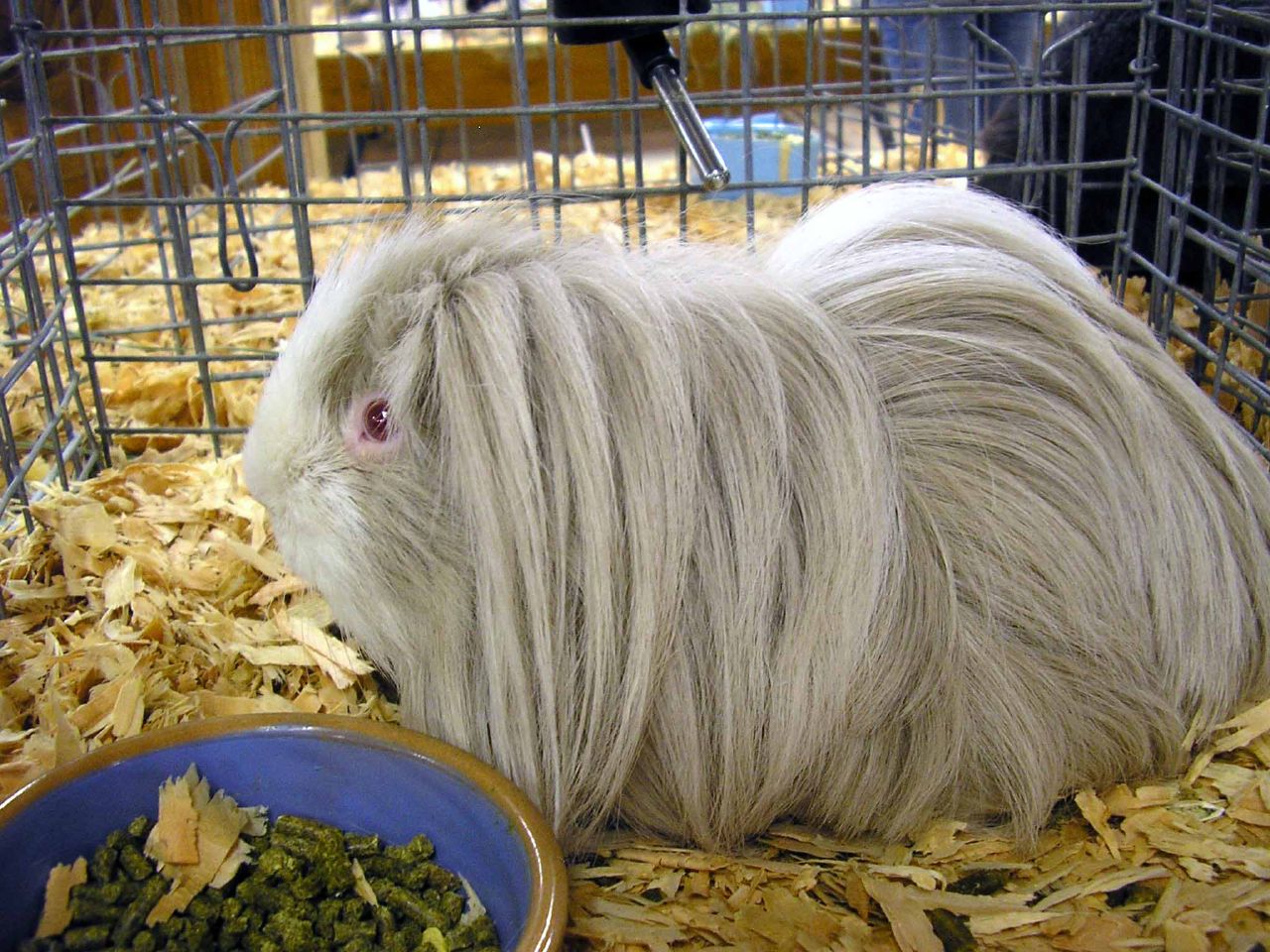
A Sheltie guinea pig with lilac and white coloring

Guinea pigs (Cavia porcellus), also known as cavies, have been domesticated since c. 5000 BCE, leading to the development of a diverse array of breeds. These breeds exhibit a wide range of physical characteristics and serve various purposes. Some are show breeds, notable for their long, flowing hair, while others are laboratory breeds, used as model organisms in scientific research. The period from 1200 to 1532 CE, which coincides with the Spanish conquest of the Inca Empire, saw indigenous South Americans selectively breeding guinea pigs. This resulted in numerous landrace varieties of domestic guinea pigs, which have since become the foundation for some of the formal modern breeds.[1] Early Andean varieties were primarily kept as agricultural stock for food, and efforts at improving cavy breeds (cuy) bred for food continue to the modern era, with entirely separate breeds that focus on size and disease resistance.

Details

[edit]

With the export of guinea pigs to Europe in the 15th century, breeding objectives shifted to focus on the development of appealing pets. To this end, various competitive breeding organizations were founded by fanciers. The American Cavy Breeders Association, an adjunct to the American Rabbit Breeders Association, is the governing body in the United States and Canada.[2][3] The British Cavy Council governs cavy clubs in the United Kingdom.[4] For Australia and New Zealand, there are the Australian National Cavy Council and the New Zealand Cavy Council.[5][6] Each club publishes its own "standard of perfection" and determines which breeds are eligible for showing. New breeds are continuously emerging, which may or may not be recognized by these breeding organizations.[citation needed]

Though there are many breeds of guinea pig, only a few found on the show table are common as pets. Most pet guinea pigs were either found undesirable by breeders, or else were bred to be pleasant pets regardless of how well they met the "standard of perfection" for the breed.[citation needed] The American (short-haired), the Abyssinian (rough-coated), the Peruvian (long-coated), and the Sheltie/Silkie (also long-coated) are the breeds most frequently seen as pets. Besides the Silkie, they also historically form the core breeds in the competitive showing of guinea pigs. In addition to their standard form, nearly all breeds come in a satin variant. Satins, due to their hollow hair shafts, possess coats of a special gloss and shine.[citation needed] However, there is growing evidence that the genes responsible for the satin coat can also cause severe bone problems, including osteodystrophy and Paget's disease.[7]

All cavy breeds have some shared general standards: the head profile should be rounded and have large eyes and large, smooth ears; the body should be strong and of compact build; coat color should, in all variations, be clearly defined and thorough from root to tip. These standards are best met by long-established, commonly bred breeds, as their breeders have had enough time and animals to effectively breed for these qualities. The coat color ideal—good definition and thoroughness—is rarely met by breeds other than the smooth-coated ones, which have had well-established, separate breeding lines for different colors.[citation needed]

Satin variants

[edit]

The satin trait refers to the glassy sheen found in some guinea pigs' coats and are not a distinct breed.[citation needed] The genetic factor for a satin coat is recessive and found in all types of coat: long, rough, curly, and short. There is a Satin version of the following breeds: Abyssinian, American, Peruvian, Silkie, and Teddy.[citation needed]

A satin coat is linked to osteodystrophy (OD), an incurable and potentially painful metabolic disease of the bones. Osteodystrophy symptoms begin showing at around 12 to 18 months of age. These symptoms include a wobbly gait, problems eating, and—with sows—parturition complications.[8] Due to animal welfare concerns, some registries such as the Swedish and Finnish guinea pig associations, refuse to register satin cavies or cavies with a satin parent.[9][10]

American

[edit]
An American Guinea Pig

The most widespread breed of guinea pig, the American guinea pig, is a recognized breed by the American Rabbit Breeders Association (ARBA). They are entered and shown in ARBA competitions in nineteen color classifications; Black, Cream, Red, White, Any Other Self (Beige, Chocolate, Lilac, Red-Eyed Orange), Brindle, Roan, Dilute Solid, Golden Solid, Silver Solid, Dilute Agouti, Golden Agouti, Silver Agouti, Dalmatian, Dutch, Himalayan, Tortoise Shell & White, Any Other Marked (Broken Color and Tortoise Shell), and Tan Pattern (Black Tan, Blue Tan, Chocolate Tan, Beige Tan, and Lilac Tan). The American guinea pig is to be posed with the hind feet under the animal and the front feet slightly ahead of the shoulders, and should not be forced into a cobby position or stretched out.

The American should have a broad shoulder, Roman nose, and full crown, and the coat is to be short, straight and feel silky. The coat is faulted for feathering, harshness, or be thin or long. Contestants are disqualified for ridges, rosettes, side whiskers, or a satin sheen, though this should not be confused with the natural luster of some varieties. The ears are to be drooping but not fallen, and the eyes are to be bold and bright.

The American is known for its sweet and docile personality, and is considered by many an excellent breed of cavy for new owners due to these characteristics.[11]

American Crested

[edit]

The American Crested is a short-haired guinea pig with a distinctive crest of hair on the top of its head that is a different color than the rest of its body.[citation needed]

English Crested

[edit]

An English Crested is a breed of guinea with a short, smooth coat and a crest on its head that is the same color as its body.[citation needed]

White Crested

[edit]

The White Crested is similar to the American, but they have one white rosette on the forehead. The breed standards and ideals are nearly identical, with the exception that a White Crested cavy's crest should be completely of a color different from the rest of the animal. Most usually the crest is white, as necessitated by the ACBA standard. No other white hair should be present in the animal.[citation needed] By this standard, White Cresteds are not bred in colorations that have white anywhere on the body, such as Dutch, roan, and Dalmatian.[citation needed]

Abyssinian

[edit]
Male champion Abyssinian cavy with tortoiseshell-and-white coloring

The derivation of the breed's name is unknown, but does not connote an origin in the geographical region of Abyssinia (present day Ethiopia).[12] They are one of the oldest breeds of guinea pig.

The Abyssinian breed is known for their 'rosettes', which are cowlicks growing from the coat.[citation needed]

Between the rosettes of the Abyssinian's hair are the ridges, worth 25 points by ARBA standard. The ridges between two rosettes should ideally stand rigidly straight, without breaking down onto either side even if pressed down lightly with the palm of a hand. There should be a collar ridge, back ridge, rump ridge, and ridges between every saddle, hip, and rump rosette. ARBA faults for flatness of coat, crooked ridges, a short coat, and soft texture. Other hair disqualifications include a coat over 1.5 inches in length and a satin sheen (not to be confused by the natural luster of some varieties). Required head furnishings (5 points by ARBA standard) include a well formed mustache and an erect mane running down the head.

Abyssinians are deemed by many as good pets for experienced owners of exotic animals but their excitable nature makes them not necessarily a good choice for first time cavy owners.[12]

Peruvian

[edit]
A show Peruvian with hair wraps

The Peruvian, formerly the Angora, has a long smooth coat all over its body that may reach the floor, including a prominent "forelock" resulting from a portion of its coat on the head and the neck growing forward on the body.[11] They have a middle parting and typically have rosettes on their head and thighs.[13] Their long hair is an autosomal recessive characteristic that is inherited. When two different length hair types are crossed, the shorter hair length will be the dominant one shown.[14]

Peruvians may come in a Satin variant, featuring a silkier and more lustrous coat.[15]

The Peruvian is generally not recommended for first time guinea pig owners, due to the tediousness of grooming their long coat.[15]

Silkie

[edit]

The Silkie breed, also called Sheltie in the United Kingdom, originated in the United Kingdom during the 1970s from a crossbreed between a Peruvian and an American Shorthair.[16]

They are understood to generally have a tamer personality than most other guinea pig breeds.[17]

They have a long, smooth coat, with hair that flows back over the body that may grow up to 24 inches in length.[16] A Silkie must never have any rosettes or any hair growing in the direction towards its face. Its coat should not have a part. When viewed from above, a Silkie and its coat forms a teardrop shape. The coat is generally accepted to have a somewhat longer sweep of hair in the rear. Silkie's may also have a satin coat, which is glossier and smoother than that of its standard coat.[17] Their weight differs significantly from guinea pig to guinea pig, ranging from 1 to 3 Ib.[16]

As with the Peruvian and other long haired breeds of guinea pig, they require more work to groom their thick coat, and thus are not recommended for first time guinea pig owners.[15]

Coronet

[edit]
A Coronet cavy

The Coronet resembles the Silkie with its smooth coat growing backward over its body, but it has a crest on its forehead. As with the short-coated crested breeds, this crest should be symmetrical and distinct with a small centre and no sticking hairs. The ears of a coronet may also droop sightly.[15]

Lunkarya group

[edit]

The Lunkarya, or "Lunk" for short, is a new group of related breeds developed in Sweden and mainly seen in the Nordic countries. These breeds have long, rough, curly coats that should be very dense and full. The group has three breed variations: the Lunkarya Peruvian (with a prominent forelock), the Lunkarya Sheltie (with hair flowing back over the body), and the Lunkarya Coronet (with a crest on the forehead).

It was initially described as a "dominant rex Peruvian",[clarification needed] but later was named Lunkarya, a variation of the last name of the breed's creator: Lundqvist.

This breed is not recognized by the American Rabbit Breeders Association.

Rex

[edit]

A Rex is a breed of guinea pig known for its short, dense, and very coarse wiry fur that stands upright, giving it a somewhat hedgehog-like appearance.[citation needed] They are popular pets due to their calm, gentle temperament and low maintenance grooming needs, as their fur doesn't require frequent brushing like some other guinea pig breeds.[citation needed]

Texel

[edit]
Texel guinea pig

Texel guinea pigs originated in Britain in the 1980s, and are a crossbreed between the Silkie and the British Rex. They were officially recognised by the American Cavy Breeders Association in 1988.[18]

The mix between the Silkie's smooth long coat and Rex's curly coat characterizes them with a long, curly coat and fur that is coarser, not so curly, and shorter around their faces. As with many other long haired breeds, they require more care to brush their long coat to avoid knotting or tangling.[citation needed] They generally weigh 1.5 to 2.5 Ib, on the smaller end of guinea pig breeds.[citation needed]

Merino

[edit]

The Merino, or English Merino, is a texel with a crown (also known as a crest) on its head. It is recognized in Europe as a standard breed.[citation needed]

Sheba

[edit]

The Sheba, also called the"Sheba Mini Yak", is a relative of the hairless guinea.[clarification needed] It is a long-haired, rosetted cavy characterized by "mutton chop" whiskers. It is often referred to as the "Bad-Hair-Day Cavy".[citation needed] The Sheba has a frontal presented to one side of the face in a naturally tousled appearance. They are recognized as a cavy breed in Australia. Their breed standard was developed by Wynne Eecen of Sydney, in the 1970s, and was published in her book Pigs Isn't Pigs.[19]

This breed is not recognized by the American Rabbit Breeders Association.

Teddy

[edit]
Teddy guinea pig

A Teddy, developed from a mutation,[15] has a short, rough, very dense, springy coat that stands up all over the body. The hair typically grows to a moderate length and makes this breed resemble a soft toy more than any other.[20] Another unique feature of Teddies in the US is the relatively long hair coating their bellies. The Teddy has a kinky, springy coat that is famous for its soft, cuddly quality, often compared to an old teddy bear. They come in Plush Coat and Harsh Coat; the plush-coated animals have a softer coat, while the harsh-coated ones have a coarser texture to their hair. They come in a Satin variant.

Teddy bear guinea pigs are typically on the average to larger end of guinea pig breeds, weighing 1.5 to 3.0 Ib on average.[21]

Hairless varieties

[edit]

Only two varieties of the hairless guinea pig exist: the Skinny and the Baldwin. They are two separate breeds with different genetic factors rendering them hairless. Hairless cavies in general need warmer accommodation and more energy-rich food (foods to avoid[22]) to compensate for the loss of body heat. They are also susceptible to draughts (breezes), drying of the skin, and skin infections without careful husbandry.

Skinny

[edit]

The Skinny stands out for being a mostly hairless breed, with some short rough hair on the face and feet. Pups are born nearly hairless, unlike the Baldwin which loses its hair.

The breed was developed from a hairless laboratory strain that was crossed with Teddies and other haired breeds: a form of outcrossing.

Baldwin

[edit]

The Baldwin, like the Skinny, is a nearly hairless breed. However, Baldwins are born with a full coat, which sheds out with age until only a little hair remains on the feet (the Skinny also has hair on the face).

The breed was developed from spontaneously mutated pups born to American Crested parents of a single breeder.

Colorations

[edit]
Two satin short-hair self cavies, one with black fur and one with pink eyes and white fur

Cavies of various breeds have several colorations and patterns. For short-coated cavies, most colors constitute breed variations bred and shown separately from other colors. All colorations should be true throughout the coat, with the roots and tips being of same shade.

In the case of broken-colored cavies, i.e. any cavies with other than separately recognised combinations of colors, the coloring is described in order of magnitude (i.e., a mostly lilac cavy with some cream and a speck of white would be called "lilac-cream-and-white", while a mostly white cavy with a patch of red-black ticking would be "white-and-golden-agouti").

Self

[edit]

A self cavy is uniformly of one color, without any ticking or patterning. Self guinea pigs come in a variety of colors. The colors include black, chocolate, red, golden, buff, cream, white, lilac, beige, and slate.

Ticked

[edit]
A guinea pig with golden coloring as well as ticking

Ticked cavies have black series hairs with red series ticking, i.e. each individual hair has stripes of both a black and a red series color. In case a ticked cavy also has the tortoiseshell pattern, the red series patches are uniformly colored while the black series patch.

Agouti

[edit]

An agouti cavy has a solid colored belly and is otherwise fully ticked. Two common variations are the golden agouti, with black and red, and the silver agouti, with black and white. Any other color combinations in the US are called dilute agouti.

A solid agouti is completely ticked. Its variations are referred to like normal agoutis, i.e. a solid agouti with black and red would be called a golden solid agouti, and so forth.

A black-and-buff brindle Abyssinian cavy

Brindle

[edit]

A brindle cavy has intermixed hairs of both black and red series colors throughout their coats, with no ticking. An ideal show brindle appears uniformly colored, with both series appearing evenly all over.

Magpie

[edit]

A magpie cavy is a particular form of brindle, with black for the black series, but substituting white for the red series. Magpie can easily be confused with "roan", although in magpie the white hairs can appear anywhere on the cavy.

Dutch pattern

[edit]

A Dutch cavy has a specific white pattern: a blaze on the face, a wide white band around the neck, chest, and the belly, including the front paws, and white tips on the hind feet. The pattern is essentially the same as the Dutch pattern in rabbits, and was named after it.

Himalayan pattern

[edit]
A Himalayan Guinea pig with its characteristic point colouring.

A Himalayan cavy has a white body with colored points (face, ears, feet). It is an acromelanic, i.e. temperature-responding coloration, and its degree of darkness depends on how cool or warm the cavy is kept in. Show Himalayans should have black or dark brown points with ruby, i.e. dark red, eyes. The darkest areas should be the face, paws, and the feet.

A Himalayan cavy is born solid white, the points slowly gaining color after a few weeks.

Tan pattern

[edit]
A "tan" cavy is actually mostly black.

A tan cavy is an otherwise solid black, with red ticking around the muzzle, around the eyes, in spots above the eyes, under the neck and the belly, and sparsely on the lower sides.

Otter and fox

[edit]

Otter and fox cavies have yellow and white ticking, respectively. Different shades are named after the black series shade, for instance black otter, lilac-and-tan, and grey fox.

Tortoiseshell pattern

[edit]

A tortoiseshell ("tortie" for short) cavy has patches of red and black. An ideal show tortoiseshell cavy has regular, well-defined patches of each color on each side, and appears to have lengthwise "seams" on its back and belly, almost similar to brindle. Diluted tortoiseshells are called broken colors, and diluted tortoiseshell-and-whites tricolors. They follow the same pattern ideal.

Roan and Dalmatian

[edit]

A roan cavy has white hairs evenly intermixed on their body, while a Dalmatian (pattern) cavy has a white body with colored spots. The latter is named after the spotted Dalmatian dog, and is not actually from Dalmatia. The head and the rump are mostly colored in both varieties. They are caused by the same gene, and whether a cavy appears roan or Dalmatian is defined by modifier factors. Many cavies have an intermediate roan/Dalmatian pattern, and these varieties are challenging to successfully breed in show quality.

The roan/Dalmatian factor, sometimes called the "lethal white gene" or simply "lethal gene", is incompletely dominant. While the roan/Dalmatian factor is consistently visible in heterozygous carriers that do not have other factors producing white hair, the pattern can be masked by extreme dilution (resulting in full white coloration) or extreme white spotting. The gene is lethal when homozygous, resulting in full white pups with varying combinations of deafness, blindness, loss of smell, and deformities. Some lethal pups may survive for some time, while others die soon after birth if not euthanised. Most roan/Dalmatian breeders breed them solely to lethal-non-carriers to avoid the 25% risk of homozygous pups that occurs breeding carrier-to-carrier.

References

[edit]
[edit]
Revisions and contributorsEdit on WikipediaRead on Wikipedia
from Grokipedia
Guinea pig breeds refer to the diverse varieties of the domestic (Cavia porcellus), a originating from the region of where it was domesticated over 5,000 years ago primarily for food and ceremonial purposes. Following its introduction to in the by Spanish explorers, for ornamental, pet, and exhibition traits intensified in the 19th and 20th centuries, resulting in distinct breeds differentiated by coat length, texture, rosetting, color patterns, and even hairlessness. The (ARBA), in conjunction with the American Cavy Breeders Association (ACBA), officially recognizes 13 breeds of guinea pigs (also known as cavies) for competitive showing and ethical breeding standards, as outlined in the ARBA Standard of Perfection. These breeds encompass a range of coat types, including short and smooth (e.g., American and White Crested), wiry and rosetted (e.g., Abyssinian), dense and kinky (e.g., ), long and flowing (e.g., Peruvian, , and Coronet), curly (e.g., ), and satin variants of many of these for added sheen and silkiness. The recognized breeds are: Abyssinian, Abyssinian Satin, American, American Satin, Coronet, Peruvian, Peruvian Satin, , Silkie Satin, , Teddy Satin, , and White Crested. Beyond these official breeds, numerous informal or emerging varieties exist worldwide, such as hairless types like the Skinny and Baldwin, or long-haired breeds like the Lunkarya, often developed by hobbyists or in other countries for pet companionship rather than show standards. This diversity highlights the guinea pig's adaptability as a popular small pet, valued for its gentle temperament and social nature across all breeds.

General Information

Breed Recognition and Standards

The American Cavy Breeders Association (ACBA) serves as the primary organization in the United States for recognizing breeds, currently approving 13 distinct s as of 2025, which include both standard and variants characterized by a lustrous sheen in their coat. These encompass Abyssinian, American, Coronet, Peruvian, , , , and White Crested, along with their corresponding versions where applicable, emphasizing variations in coat type as a foundational element for classification. Recognition by the ACBA relies on adherence to detailed standards outlined in the American Rabbit Breeders Association's (ARBA) Standard of Perfection, which ACBA adopts for judging and purposes. Key criteria include coat texture (such as wiry or ), length (ranging from short-haired under 1 inch to long-haired exceeding 6 inches when fully grown), the presence and quality of rosettes (swirled hair patterns) or crests (distinct head rosettes), and overall conformation encompassing body proportion, head shape, ear placement, and eye alertness to ensure and breed-specific traits. For show eligibility, guinea pigs must exhibit these traits without disqualifying faults like malformed rosettes, excessive coat length beyond breed norms, or poor body condition, with judges awarding points based on how closely the animal matches the ideal standard. Internationally, breed recognition varies, with some varieties acknowledged by regional clubs but not yet by the ACBA; for instance, the Swedish Lunkarya, known for its curly, woolly long coat, is accepted by Nordic cavy organizations but lacks ACBA approval due to ongoing evaluation of its distinct merits. In a recent update, the ACBA incorporated the as a full recognized breed in 2024, expanding options for breeders and exhibitors focused on the sheen combined with the Teddy's dense, kinky texture.

Historical Development

Guinea pigs, or cavies, were first domesticated in the Andean region of around 5000 BCE, primarily for food and ceremonial purposes by such as the Incas. Archaeological evidence from sites in present-day indicates selective breeding began as early as 6000–2000 BCE, leading to variations in size, color, and coat that formed the basis for later domestic strains. These early domesticated animals, derived from wild species like tschudii, were integral to Andean cultures, used in rituals and as a protein source. Introduced to in the 16th century by Spanish explorers following the of in 1532, guinea pigs quickly became exotic pets among the elite, valued for their novelty and ease of care. By the 19th century, breeding efforts in Britain shifted focus toward pet and varieties, with enthusiasts developing distinct colorations and coat types for shows. A key milestone occurred in 1888 with the founding of the National Cavy Club in Britain, the world's first organization dedicated to promoting purebred guinea pigs through standards and competitions. In the , accelerated the creation of recognizable breeds, such as the Abyssinian with its rosetted coat, which traces to late 19th-century European developments from imported South American stock and gained prominence in exhibitions by the 1890s. The Peruvian, a long-haired variety, emerged in the early 1900s through crosses aimed at enhancing coat length for aesthetic appeal in pet and show contexts. These advancements were supported by growing clubs like the American Cavy Breeders Association, established in 1949, which formalized breed distinctions. The 21st century has seen further diversification, including the recognition of hairless breeds like the , which originated from a 1970s laboratory mutation in and entered the pet trade in the 1980s before becoming established as a distinct pet variety in the 2000s through for minimal fur. Emerging long-haired variants continue to evolve via international breeding programs, emphasizing coat texture and color while prioritizing .

Short-Haired Breeds

American

The American guinea pig, also known as the English American in some standards, represents the foundational short-haired breed widely recognized for its smooth, glossy coat that lies flat against the body without rosettes or wiry texture. This breed features a compact, rectangular body shape, short legs, a rounded Roman nose, large round ears set high on the head, and an absence of a tail, typically measuring 8-10 inches in length and weighing 2-3 pounds as adults. Originating as the base breed developed in the United States through selective breeding from early imported cavies, it serves as the parent stock for many other varieties and remains the most common choice for pet owners due to its straightforward appearance and availability in a wide array of solid, marked, and patterned colors. In terms of temperament, American guinea pigs are generally docile, easygoing, and sociable, making them ideal family pets that adapt well to handling by children and thrive in pairs or small groups as herd animals. Their average lifespan ranges from 5 to 8 years with proper care, though individual variation occurs based on diet, environment, and genetics. Care for this breed is relatively low-maintenance, requiring minimal grooming such as occasional brushing and nail trims due to the short coat, but they are prone to common health issues like pododermatitis (bumblefoot), an inflammation of the footpads often caused by abrasive or soiled flooring, unsanitary conditions, or obesity. Preventive measures include providing soft, absorbent bedding and regular veterinary check-ups to monitor for early signs.

White Crested

The White Crested guinea pig is a short-haired breed recognized by the (ARBA) and American Cavy Breeders Association (ACBA), featuring a smooth, glossy coat identical to the American but with a single white rosette centered on the forehead contrasting a solid-colored body. It maintains the compact, rectangular body shape, short legs, rounded Roman nose, large round ears, and tailless form, measuring 8-10 inches in length and weighing 1.5-2.5 pounds as adults. Developed through emphasizing the white crest on non-white solid colors, it is a popular show variety valued for its striking appearance. White Crested guinea pigs share the docile, sociable temperament of the American breed, making them suitable family pets with a lifespan of 5-8 years under proper care. Grooming needs are minimal, similar to the American, with attention to preventing pododermatitis through appropriate bedding.

Abyssinian

The is a short-haired renowned for its distinctive rosetted coat, where the hair forms 8 to 10 prominent swirls or rosettes radiating from central points, creating a tousled, rugged appearance. The coat texture is coarse and wiry, particularly in some breeding lines, with elevated ridges of hair separating the rosettes to enhance the overall structure and boldness of the fur pattern. This typically displays an alert, upright posture, complemented by a bold head shape featuring a Roman nose and full cheeks, contributing to its lively and inquisitive demeanor. Originating as one of the oldest documented breeds, the Abyssinian traces its roots to South American stock introduced to in the , with the rosetted variety likely emerging through among early imported cavies. The modern form was refined in Britain during the late 19th and early 20th centuries, gaining formal recognition under standards set by organizations like the American Cavy Breeders Association (ACBA), which has upheld the breed since its founding in 1949 as one of the core short-haired varieties. Adult Abyssinians generally measure 8 to 10 inches in and weigh 1.5 to 2.2 pounds, aligning with standards for compact, cobby body types in the breed. Grooming requirements for the Abyssinian are moderate compared to long-haired breeds, necessitating weekly brushing with a soft tool like an old to gently clean the rosettes and prevent debris accumulation in the swirls. The rosetted structure can trap dirt and bedding material, potentially leading to irritations or infections if not maintained, so regular inspection and spot cleaning are essential to avoid issues like dryness or fungal buildup in the coat folds. Bathing should be infrequent and limited to spot treatments, as over-wetting disrupts the natural oils that protect the wiry fur. The breed includes a standard variety with the described rough and a satin variant featuring a denser, iridescent sheen, though the latter shares the same rosette and ridge standards. Occasionally, crested individuals with a single rosette on the forehead appear, but this is not part of the core .

Teddy

The is a short-haired characterized by its distinctive wiry, kinky that gives it a plush, teddy bear-like appearance. Developed in the United States through following a genetic , the gained official recognition from the American Cavy Breeders Association (ACBA) in 1978. This recognition established the as one of the 13 ACBA-approved cavy , emphasizing its unique texture over color or markings. Key physical characteristics include a dense, coarse of short, kinky hairs that stand on end, creating a raised, bouncy texture approximately 3/4 inch in , with no rosettes or swirls present. The body is typically rounded and compact, supporting the overall look, while the coat exhibits a rexoid quality—similar to the Rex breed but distinguished by a softer undercoat that enhances its velvety feel. According to ACBA standards, the ideal is extremely dense and kinky, with two possible textures: or harsh, both oriented from the rump toward the head. In terms of temperament, Teddy guinea pigs are known for being friendly, playful, and outgoing, making them well-suited for family environments and easy to handle by children and adults alike. Their sociable nature often leads them to enjoy interaction, though they retain the typical guinea pig curiosity and vocalizations. Health considerations for the Teddy include the need for regular brushing of its dense coat to prevent matting and skin issues, as the wiry texture can trap debris if neglected. Like other guinea pig breeds, they are susceptible to respiratory infections, particularly in drafty or dusty environments, requiring clean, well-ventilated housing and a diet rich in vitamin C to support overall immunity. With proper care, Teddies can live 5 to 8 years, though monitoring for common cavy ailments such as dental overgrowth is essential.

Rex

The Rex guinea pig is a short-haired breed distinguished by its coarse, wiry coat that stands erect and crimped without any rosettes or curls, giving it a uniform, fuzzy appearance. The hair is short, dense, and harsh to the touch, with a maximum length of about 1.2 cm, lacking guard hairs due to a recessive genetic . These guinea pigs exhibit a , cobby build with a short, thick-set body, broad shoulders, and firm flesh, typically weighing 1-3 pounds and measuring 8-10 inches in . They come in a variety of solid and patterned colors, including shades like silver and cinnamon. The is recognized internationally by organizations such as the British Cavy Council for exhibition standards, but it is not fully recognized by the American Cavy Breeders Association as of 2025. Originating in Britain, the Rex breed developed from a spontaneous observed in the late , specifically around 1977 when a unique offspring from a pair of red Dutch guinea pigs was exhibited at the Show. Breeders like Fred Holmes and Phil Dolphin recognized the potential of this rexoid coat , breeding it selectively to establish the line, with the first guide standard achieved by the late and a full standard formalized in 1984 by the Rex Cavy Club, founded in 1992. This produces a coarser texture compared to similar wiry-coated breeds like the , resulting from a distinct recessive gene. The Rex's short, wiry coat requires minimal grooming, making it a low-maintenance option that typically needs only occasional brushing to prevent matting and weekly nail trims. Its brief hair length reduces shedding, which some owners report as less likely to trigger allergies compared to longer-coated breeds, though no guinea pig is fully . Rex guinea pigs are known for their active, social temperament, displaying gentle, friendly behavior that makes them suitable for families and frequent handling. With proper diet, exercise, and veterinary care, they have an average lifespan of 5-7 years.

Long-Haired Breeds

Peruvian

The Peruvian guinea pig is a long-haired breed distinguished by its silky, straight coat that grows continuously throughout the animal's life, often reaching lengths of 12 inches or more. The hair lacks rosettes or swirls, instead flowing smoothly with a natural center part along the back and an upswept on the head; this dense typically covers the face, including the eyes, giving the breed its signature "mop-like" appearance. Recognized as one of the original long-haired varieties by the American Cavy Breeders Association (ACBA), the Peruvian exemplifies for exhibition qualities, with coat colors ranging from solid shades to multi-patterned varieties. Developed during the through of long-haired guinea pigs imported from , the emerged as a distinct variety prized for its elegant, flowing coat suitable for shows. These imports traced back to Andean domestication practices, where long-haired traits were enhanced over generations for aesthetic and companion purposes before crossing the Atlantic and being refined in American cavy fancy circles. By the early , the had solidified its standards under organizations like the ACBA, which first acknowledged it as a competitive class in 1947. Grooming is a critical aspect of Peruvian care, requiring daily brushing with a soft to prevent matting, tangles, and debris accumulation in the lengthy . For show preparation, owners often employ specialized clips, such as trimming the rear and face while leaving the body hair full-length to accentuate flow and sheen; regular trims around the hindquarters help maintain and mobility. Neglecting grooming can lead to or uneven growth, underscoring the need for consistent maintenance to support the breed's luxurious appearance. Health considerations for the Peruvian include a predisposition to gastrointestinal issues, particularly wool block—a form of blockage caused by the ingestion of loose hairs during grooming, which can obstruct the digestive tract and lead to stasis if untreated. Owners should monitor for signs like reduced appetite or and provide high-fiber diets to mitigate risks; veterinary intervention may involve laxatives or manual removal in severe cases. With proper care, including a balanced diet rich in and adequate exercise, Peruvians typically enjoy a lifespan of 5 to 8 years. A crested variant, featuring a single rosette on the forehead, is classified separately as the Coronet breed.

Specialized and Emerging Breeds

Lunkarya

The Lunkarya is a distinctive long-haired breed originating from , developed in the through a spontaneous genetic observed in a Peruvian . In , breeders Monica and Annica Lundqvist, who operated a pet shop in , noticed a unique male piglet named Prince Adam exhibiting a curly, rough coat, which became the foundation for the breed; the name "Lunkarya" combines their surname "Lundqvist" with a reference to the woolly texture. This resulted in a dominant rough-hair gene, leading to the breed's characteristic appearance without intentional crossbreeding. The Lunkarya features long, coarse, wavy hair that grows forward from two rosettes located on the rear, creating a natural part in the middle of the back and a windswept, untidy look without additional rosettes on the body. The dense, wool-like coat has a harsh texture, thick undercoat, and a facial fringe that covers the head, often combed into a full circle for exhibitions; the body is short, compact, and broad-shouldered, with large, drooping ears and round, bold eyes. Recognized by the Svenska Marsvinsföreningen since 2008, the breed remains popular primarily in but is not acknowledged by the American Cavy Breeders Association as of 2025. Its rough coat bears a superficial similarity to the coarser texture of wild cavy fur. Care for the Lunkarya involves moderate grooming to preserve the waves and prevent tangling, with regular combing essential as the coat grows approximately 25 mm per month; the fringe requires attention to avoid matting around the face. These guinea pigs are hardy in cold climates, benefiting from their thick, insulating fur that provides natural protection. In temperament, Lunkarya guinea pigs are independent and robust, displaying an inquisitive nature while remaining gentle and responsive to handling, making them suitable companions for experienced owners.

Sheba

The Sheba guinea pig, also known as the Sheba Mini Yak, originated in in 1969 through by Mrs. Wynne Eecen, founder of the NSW Cavy Club, via a cross between an old-style and a long-haired Peruvian guinea pig. This hybrid aimed to combine the rosetted coat pattern of the Abyssinian with the flowing hair of the Peruvian, resulting in a distinctive, untamed appearance. The breed remains unofficial and is not standardized by major organizations such as the American Cavy Breeders Association (ACBA), though it has gained popularity among enthusiasts in and parts of for its unique aesthetics. Sheba guinea pigs are characterized by their compact to medium build, typically measuring 7 to 12 inches in length, with a scruffy, mid-to-long coat that features multiple rosettes and sticks out in various directions, often described as having a perpetual "" look. Their broad, squarish heads are framed by prominent mutton-chop , and the hair roughly touches or drags on the floor in adults, emphasizing a wild, voluminous texture inherited from both parent breeds. Unlike smoother-coated varieties, the Sheba's rosettes are smaller and more numerous, contributing to its playful, disheveled charm without the wiry or fully silky traits of other long-haired types. In terms of care, Shebas require regular grooming to trim excess length and prevent matting or tangles, which is less demanding than that for full Peruvian guinea pigs but still essential for and comfort. Their active and inquisitive personality makes them engaging pets, often displaying a friendly, good-natured demeanor suitable for first-time owners, with a lifespan of 4 to 7 years under proper care including a balanced diet rich in hay and . As an emerging variety, Shebas represent a fun, low-maintenance entry into long-haired ownership, though prospective owners should monitor for common issues like dental overgrowth seen across cavy breeds.

Alpaca

The guinea pig is a rare long-haired breed distinguished by its dense, curly coat that forms tight waves and ringlets closely against the body, often accompanied by rosettes, particularly one on the head resembling a crest. This texture gives the fur a woolly appearance similar to that of it's named after, with hair growing forward over the face and body in a variety of colors and patterns. Unlike straighter long-haired breeds, the Alpaca's curls are finer and more uniform, extending throughout the coat for a plush, voluminous look. Developed as a variant with enhanced curliness from long-haired lines, the is frequently compared to the guinea pig but features longer, tighter curls rather than looser waves. Its origin traces back to from Peruvian guinea pigs, resulting in the distinctive curly , though exact historical development remains undocumented in major registries. As of , the breed is not officially recognized by the American Cavy Breeders Association (ACBA), classifying it as an emerging or unofficial variety in competitive showing. Grooming the requires intensive daily brushing with a soft slicker to prevent tangles, matting, and debris accumulation in the curls, which can lead to skin issues if neglected. Owners should also trim nails monthly and perform regular spot-cleaning to remove feces or hay from the fur, making it a high-maintenance choice compared to short-haired breeds. Temperamentally, are typically sweet, affectionate, and sociable, enjoying interaction with humans and other guinea pigs, though their shy, gentle nature may require patient handling to build trust.

Merino

The Merino guinea pig is a long-haired breed distinguished by its dense, soft, curly that forms gentle waves and features a single rosette (crest) on the forehead, resembling crested varieties. This structure gives the coat a luxurious appearance, with hair length typically reaching several inches. These characteristics stem from of curly long-haired varieties. The , also known as English Merino, developed in Britain as the rexoid (curly-haired) equivalent of the Coronet. This breeding effort focused on refining the coat's curl while maintaining a compact body size of 8 to 10 inches and a weight of 1.5 to 2.5 pounds. The breed remains relatively uncommon and is not officially recognized by the American Cavy Breeders Association (ACBA), though it is exhibited in some international shows under specialized categories. Merinos exhibit a calm, gentle , making them suitable companions for families, with curious personalities that thrive on interaction. Care for Merinos emphasizes regular grooming to prevent matting in the long, curly fur, with professional trimming recommended every 4-6 weeks to maintain and comfort. Bathing should be infrequent to preserve natural oils, and a diet rich in supports overall health. Enclosures need ample space for movement, with soft bedding to protect the coat.

Hairless Varieties

Skinny

The Skinny guinea pig is a hairless featuring smooth, often wrinkled with only sparse on the muzzle, feet, and legs in adults. Newborns are born with minimal fuzz that sheds within weeks, leaving them nearly bald and giving the breed its distinctive, skin-exposed appearance. This recessive genetic trait results in a low-maintenance coat that appeals to sufferers and those seeking a unique . Originating from a spontaneous in laboratory guinea pigs at the Institut Armand-Frappier in , , in 1978, the Skinny was initially developed for dermatological . By the , breeders began selectively pairing carriers of the hairless to produce consistent traits, and the breed gained popularity as a companion animal in the early through pet trade channels. Unlike fully engineered hairless strains, the Skinny retains some residual hair, distinguishing it from other varieties. Care for Skinny guinea pigs emphasizes skin health and thermal regulation due to their exposed . Their sensitive skin requires regular moisturizing with veterinarian-approved products, such as , to combat dryness and prevent irritation or infections; baths should be infrequent and use mild, shampoos. A stable warm environment between 70°F and 75°F (21°C to 24°C) is crucial, as they lack insulating fur and have a higher metabolic rate, necessitating draft-free housing and possibly supplemental heating in cooler climates. They share the standard diet of unlimited timothy hay, C-rich pellets, and fresh , but may consume slightly more to generate . With attentive husbandry, Skinnies have a lifespan of 5 to 8 years. In temperament, Skinny guinea pigs are typically affectionate, docile, and highly social, thriving in pairs or small groups of the same sex to avoid unintended breeding. They enjoy gentle handling and often vocalize contentment during interactions, making them suitable for families. Their hairless nature contributes to a cleaner disposition, as they produce less and are easier to spot-clean after messes.

Baldwin

The is a hairless distinguished by its unique coat development, where pups are born with a full coat of fur that gradually sheds over the first few months of life, resulting in completely bald adults by around 2 to 3 months of age. This shedding process typically begins within days after birth and progresses until only remain, if any, giving the mature Baldwin a rubbery, wrinkled skin texture and large, droopy ears. Adult Baldwins are similar in appearance to Skinny pigs but originate from a distinct genetic . They exhibit the same variety of colors and patterns as haired guinea pigs, with skin pigmentation mirroring what their fur would have been. In terms of size, Baldwins are comparable to standard coated s, weighing 1 to 3 pounds and measuring up to 12 inches in length. As of 2025, the Baldwin is not recognized as an official by the American Cavy Breeders Association (ACBA), which acknowledges only 13 breeds. The breed originated in the United States during the from a spontaneous recessive genetic discovered by California breeder Carol Miller in her line of white-crested guinea pigs. This , which affects hair growth postnatally, was selectively bred from show-line stock, leading to the establishment of the Baldwin as a distinct variety. Baldwin guinea pigs are prone to health challenges associated with their hairless condition, including sensitivity to cold temperatures and chill, which necessitates a warm environment maintained at 75–79°F to prevent discomfort or hypothermia. Their exposed skin also makes them susceptible to sunburn, requiring UV protection such as shaded enclosures or protective creams during outdoor exposure. Additionally, they may experience skin irritations, scratches, or infections more readily, benefiting from soft, clean bedding to minimize these risks. Like other guinea pigs, they require a diet rich in vitamin C to avoid deficiencies such as scurvy. In temperament, Baldwins are playful, affectionate, and social, often enjoying interaction with humans and other guinea pigs while displaying vocal and gentle behaviors. They are curious and mellow, readily cuddling for warmth and attention, with no notable differences from coated breeds in overall personality or intelligence.

Satin Coat Variants

Characteristics of the Satin Coat

The satin coat in guinea pigs is determined by a recessive genetic trait, denoted as the satin (sn), which modifies the structure of the hair shafts to become hollow and translucent. This genetic modification can be introduced into most coated guinea pig breeds through , as the trait requires inheritance from both parents to express fully. Physically, the satin coat exhibits a smooth, highly reflective surface that produces a glossy, iridescent sheen, often described as luminous or glowing under light. This structure enhances the vibrancy and depth of colors, making patterns appear more intense and uniform, while the overall texture feels silkier and denser compared to non-satin counterparts. However, the hollow hair shafts contribute to increased fragility, rendering the more susceptible to breakage and wear during grooming or handling. The satin coat trait was first observed as a spontaneous in the United States during the 1970s, initially appearing in American lines and quickly attracting interest among breeders for its aesthetic appeal. By the 1980s, the American Cavy Breeders Association (ACBA), in collaboration with the (ARBA), began formally recognizing variants in established breeds, with the Silkie Satin achieving official status in 1987 as one of the early examples. Despite its visual allure, the coat presents notable drawbacks, including a heightened of breakage due to the compromised structural of the shafts, which can lead to uneven coat maintenance and increased shedding. Additionally, while accepted in ACBA and ARBA standards for specific breeds, satins are not suitable for all international show standards, with some organizations, such as those in and certain European cavy councils, prohibiting or restricting them owing to associated concerns like osteodystrophy.

Satin Applications Across Breeds

The satin coat trait, characterized by hollow hair shafts that produce a reflective sheen, has been selectively bred into several established guinea pig varieties recognized by the American Cavy Breeders Association (ACBA). Among these, the American features a smooth, short that lies close to the body, enhancing the breed's sleek appearance under show lighting. The Abyssinian incorporates the trait into a rosetted , where distinct swirls and ridges of fur gain an added luster from the 's reflective quality. Similarly, the Peruvian applies the satin gene to long, straight hair that flows freely, creating a silky, high-gloss finish prized in exhibitions. Further ACBA-recognized integrations include the Satin, with its swept-back long coat that drapes elegantly while exhibiting the signature sheen, and the Satin, which combines wiry, short hair standing erect with a resilient, light-reflecting texture. These applications demonstrate the 's versatility across short, long, and textured coats, allowing breeders to enhance visual appeal in diverse morphologies. The ARBA-recognized satin variants are: Abyssinian Satin, American Satin, Peruvian Satin, Satin, and Satin. Breeding satins requires careful genetic management, as all satins are homozygous for the recessive (sn/sn). Mating two satins will produce 100% satin offspring, all carrying the same . However, the itself is associated with risks, including osteodystrophy, a that can affect calcium absorption and lead to brittle bones and dental issues. Responsible breeding protocols emphasize welfare, and many experts and organizations discourage breeding satins due to these inherent genetic concerns. Satin guinea pigs enjoy popularity in show circuits for their eye-catching luster, which highlights coat patterns and textures under judging standards, contributing to higher placement rates in ACBA and similar events. However, their appeal as pets is more limited, as the hollow hairs demand vigilant grooming to prevent matting and the genetic predispositions increase veterinary needs, deterring casual owners.

Color and Pattern Varieties

Self Colors

Self colors in guinea pigs refer to varieties featuring a uniform coat color extending from root to tip, without any patterns, markings, or variations in shade across the body. These solid hues result from the even distribution of pigments throughout the fur, creating a consistent appearance. Common shades include , chocolate, gold, red, buff, and lilac, among others such as cream, beige, and slate. The of colors are governed by the interplay of eumelanin ( ) and phaeomelanin ( ), modulated by specific that control production and dilution. For instance, the series (B ) determines intense versus , while the extension locus (E ) influences whether extends fully or allows to dominate. , with the typically aa EE BB PP CC, is the most common self color due to its prevalence as the baseline or wild-type pigmentation in guinea pigs. Self colors appear across all guinea pig breeds, from short-haired to long-haired , making them a foundational variety in cavy exhibitions and breeding programs. Examples include the solid black American, prized for its deep, glossy sheen, and the white (often pink-eyed white or ), which displays a pure, even without pigmentation. Unlike patterned varieties that incorporate multi-color markings, selfs emphasize monochromatic uniformity for aesthetic and genetic simplicity.

Himalayan Pattern

The Himalayan pattern in guinea pigs features a predominantly white or cream-colored body with contrasting darker points on the nose, ears, and feet, where the pigmentation appears in shades of black, chocolate, or lilac depending on interactions with the B locus alleles. This distinctive coloration arises from temperature-sensitive production, with pigment developing primarily in cooler extremities of the body, akin to the point coloration seen in Siamese cats or Himalayan rabbits. The eyes are typically ruby-red or pink, reflecting the partial dilution effect of the underlying genetics. Genetically, the Himalayan pattern is governed by the recessive at the C locus, which encodes the essential for synthesis. Individuals must be homozygous (c^h/c^h) to express the pattern, as the allele inhibits full pigmentation in warmer body areas while allowing it in cooler regions due to the enzyme's thermolability. This mechanism was first detailed in early genetic studies on guinea pig pigmentation series. The pattern can combine with other loci, such as e/e for non-extension, to eliminate red pigments entirely, enhancing the clean point contrast. The Himalayan pattern is recognized not as an independent breed but as a valid color variety within established short-haired breeds like the American and Abyssinian by organizations such as the American Cavy Breeders Association, where it must meet standards for even point distribution and minimal body shading. It remains uncommon in long-haired varieties due to challenges in maintaining the pattern's clarity amid denser coats. In show contexts, ideal specimens exhibit sharp, symmetrical points without spreading to the body. Care for guinea pigs exhibiting the Himalayan pattern aligns with general cavy requirements, including a spacious , high-quality hay-based diet rich in , and regular veterinary monitoring for common issues like dental overgrowth. While the pattern itself imposes no unique health demands, exposure to fluctuating temperatures may alter point intensity over time, so a stable environment between 65-75°F (18-24°C) is recommended to support consistent pigmentation.

Ticked and Agouti Patterns

The pattern in guinea pigs, often referred to as ticked, features hairs with alternating bands of color, typically a base of black-series (such as or ) transitioning to a tip of red-series (such as orange or buff), creating a grizzled or wild-type appearance that enhances the coat's visual depth. This pattern arises from the dominant A at the agouti locus, which is responsible for the banded or ticked hairs, with interactions from multiple pigment genes including those for extension (E locus) and dilution determining specific varieties. The belly remains self-colored without ticking, providing contrast to the fully ticked body, head, and flanks. Recessive self (a/a) eliminates the ticking for solid coats. Unlike uniform self colors, agouti introduces a subtle multi-tonal variation without forming distinct patches or stripes. In this pattern, each hair shaft exhibits the characteristic banding, resulting in varieties like golden agouti (black base with red ticking), silver agouti (dilute black base with cream ticking), or cinnamon agouti (red-based with lighter banding). This pattern is prevalent in breeds like the American and Abyssinian, where silver agouti examples showcase the grizzled effect prominently, and it is often retained in wild-derived lines for its adaptive camouflage properties. According to the American Rabbit Breeders Association (ARBA) Standard of Perfection, agouti varieties are evaluated on the evenness and proximity of ticking to the ideal description, emphasizing uniform distribution across the body while penalizing faults like muddy belly shading or uneven banding.

Brindle and Magpie Patterns

The pattern in guinea pigs is defined by alternating stripes of dark and gold hairs, creating an even distribution of color across the body through the close intermixing of black-series and red-series pigments within individual hairs or small clusters. This results in a fuzzy-edged, mottled appearance that resembles striping, with ideal specimens exhibiting uniform blending without large solid blocks of color exceeding five to six hairs. The pattern emphasizes balance, with both dark and gold elements appearing proportionally throughout the coat to achieve a harmonious, blended effect. Genetically, arises from the interaction of the non- (aa) at the locus and the homozygous partial extension (e^p e^p) at the extension locus, which limits black pigment expression to irregular patches while permitting red pigment to fill intervening areas, producing the characteristic striping. This combination ensures the absence of banding, allowing the pigments to manifest in a brindled form rather than solid or ticked distributions. The pattern represents a subtype of featuring larger white patches overlaying a colored base, yielding dramatic contrast between dark ( or ) sections and expansive areas. In this variant, the gold or red components of standard are substituted with through the incorporation of dilution factors, such as the homozygous ruby-eyed dilution (c^r c^r) at the C locus, which suppresses yellow phaeomelanin production and enhances the pied-like boldness. differs from pure by its heightened patch size and color separation, often appearing as distinct black-and-white zoning while retaining underlying striping elements. These patterns are prevalent in textured coat breeds like the Rex and , where the wiry or rosetted hair structure amplifies the visual impact of the stripes and patches, making the contrasts more pronounced and desirable in settings. and may occasionally display subtle silvering akin to ticked patterns, though their emphasis remains on defined, even striping over uniform ticking.

Dutch and Tan Patterns

The Dutch pattern in guinea pigs features a predominantly white body accented by symmetrical colored patches on the head, shoulders, and hindquarters, creating a saddle-like appearance. The white blaze forms an inverted "V" on the face, widest at the nostrils and tapering to a point between the ears, while the cheeks are rounded and colored, avoiding the mouth and whiskers. The neck remains clean white, and the colored extends from a straight midline across the back, with white foot stops positioned midway between the hocks and toes on the hind legs. This pattern is recognized in self colors such as black, red, chocolate, and lilac, as well as varieties like golden and silver . The tan pattern extends the Dutch structure by incorporating tan (phaeomelanin) trim on the white areas, resulting in a "badger" face with tan ticking around the eyes, muzzle, and ears against the blaze. The body maintains a dark base color, typically , with a wide belly band featuring tan edging and no ticking on the surface. Recognized tan varieties include tan, tan, tan, and lilac tan, often seen in short-haired breeds like the American. This pattern shares structural similarities with the variety but emphasizes symmetric hooding and tan accents. Genetically, the Dutch pattern arises from the recessive white spotting (ss) at the spotting locus, which produces the characteristic white patches when homozygous, combined with dominant color s such as E for eumelanin in Dutch or e for phaeomelanin in red Dutch. The tan pattern is governed by the recessive tan (a^t a^t) at the locus, which restricts eumelanin to the body while allowing phaeomelanin expression in tan areas, interacting with the extension locus (E) for the dark base. Examples include the Dutch in guinea pigs, where the pattern overlays the silky coat, and tan varieties in short-haired breeds like the American, which highlight the markings clearly.

Otter, Fox, and Tortoiseshell Patterns

The and patterns in guinea pigs feature a solid self-colored body with contrasting light trim markings on the belly, feet, and facial areas, providing a structured appearance similar to the Dutch pattern but with tan-like accents rather than broad white bands. These varieties are primarily smooth-coated but can appear in other coat types, emphasizing distinct cream or white regions that must remain sharply defined without merging or excessive spreading. Recognized base colors for both include , , slate, lilac, and beige, with the light markings required to be even and glossy to meet show quality. In the pattern, cream markings cover the nostrils, jowls, chest, eye circles, pea-spots near the ears, belly, and lower legs, complemented by cream-tipped ticking along the sides for a subtle effect; the cream must be pale and free of yellow tones to avoid faults. The pattern mirrors this structure but substitutes pure white for cream, resulting in more prominent and extensive light areas that enhance contrast against the dark base, with white-tipped side ticking adding to the overall sharpness. Both patterns are governed by specific autosomal combinations at loci such as (a^t), extension (), and dilution series, distinguishing them as separate varieties despite their visual similarities. The pattern displays a mottled arrangement of black, red, and white patches distributed across the body, with ideal specimens showing square-cut, non-overlapping sections on each side and a central division along the spine and belly for balanced symmetry. Black patches must be jet-deep, red rich and vibrant without paling, and white pure and clean, often accompanied by dark eyes unless a white head patch allows a tinge. Genetically, this pattern arises from a non-agouti background (aa) combined with the partial extension (e^p e^p), producing the black and red segmentation without . These patterns are fully standardized by the British Cavy Council, particularly valued in exhibition settings for their striking visuals, which are especially effective in long-haired breeds to highlight coat flow and color separation.

Roan and Dalmatian Patterns

The roan pattern in guinea pigs features an even intermixing of white hairs with a base color, producing a distinctive frosted appearance across the body, while the head and feet typically remain solid-colored. This pattern arises from a heterozygous expression of the dominant roan gene (Rn rn), which causes progressive dilution of pigmentation through white hair incorporation. However, homozygous individuals (Rn Rn) result in lethal white offspring characterized by all-white coats, ruby or blue eyes, microphthalmia, and frequent deformities, often leading to reduced viability or death shortly after birth. Due to this genetic lethality, breeding two roan guinea pigs carries a 25% risk of producing such lethals, which exhibit severe health issues including near-total blindness and deafness. The Dalmatian pattern, closely related to the roan, displays larger, round white spots on a colored base coat, often with a predominantly white body and colored markings concentrated on the head or in distinct patches, resembling the spotting of Dalmatian dogs. Genetically, it stems from the same roan locus (Rn rn) but is modified by additional genes that cluster the colored hairs into spots rather than evenly distributing them, creating clearer demarcation compared to the roan's intermixed effect. Like the roan, homozygous expression leads to lethal whites with associated congenital defects. Both patterns are commonly observed in mixed-breed guinea pigs, where the roan gene may be carried without full expression, though selective breeding in recognized varieties emphasizes pattern clarity and color balance. The roan gene's relation to ticked patterns provides a base for silvering effects, but Dalmatian spotting represents an intensified form.

References

Add your contribution
Related Hubs
User Avatar
No comments yet.