Hubbry Logo
CaviaCaviaMain
Open search
Cavia
Community hub
Cavia
logo
8 pages, 0 posts
0 subscribers
Be the first to start a discussion here.
Cavia
Cavia
from Wikipedia

Cavia
Temporal range: PlioceneHolocene
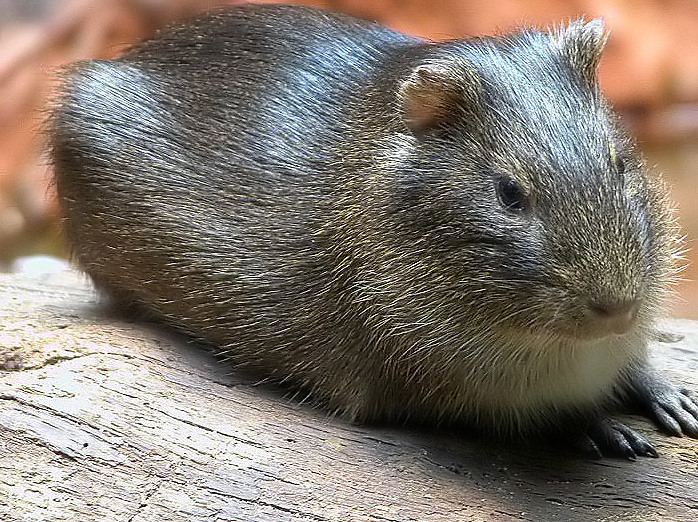
Cavia aperea, or Brazilian guinea pig
Scientific classification Edit this classification
Kingdom: Animalia
Phylum: Chordata
Class: Mammalia
Order: Rodentia
Family: Caviidae
Subfamily: Caviinae
Genus: Cavia
Pallas, 1766[1]
Type species
Cavia cobaya[1]
Pallas, 1766
(= Mus porcellus Linnaeus, 1758)
Species

Cavia is a genus in the subfamily Caviinae that contains the rodents commonly known as the guinea pigs or cavies.[1] The best-known species in this genus is the domestic guinea pig, Cavia porcellus, a meat animal in South America and a common household pet outside that continent.

Characteristics

[edit]

General characteristics

[edit]

The true guinea pigs are medium-sized rodents. They reach a head-body length of 20 to 35 centimeters (8 to 14 inches) and a weight of 500 to a maximum of 1,000 grams. The largest species of the genus is the greater guinea pig (Cavia magna). The species are very similar in habit and appearance, the long and relatively rough fur is usually grayish or brown to reddish-brown in color. The coloring can be variable, especially in species with a large distribution area and several subspecies.

The head is relatively large in relation to the body, the eyes are large and the ears are small. The legs are short and strong, the front feet have four toes and the hind feet have three, all of which end in sharp claws, the middle one being the longest.[2][3] All species of the genus are also tailless.[4]

Characteristics of the skull and teeth

[edit]
Incisors of a domestic guinea pig
Skull of a domestic guinea pig

Guinea pigs have a typical rodent dentition with incisors (incisivi) and a gap between the teeth (diastema). In both the upper and lower jaws, there is one premolar and three molars in each half. Overall, they have a set of 20 teeth, like all guinea pigs.[5] The teeth are hypsodont like all species of guinea pigs and converge towards the front.[4] The crowns are prismatic and the teeth grow throughout life.[5] In contrast to the yellow-toothed cavies (Galea), the teeth are white in colour.[5]

The jaws of all guinea pigs are hystricomorphous ("porcupine-like"): the angular process growing from the rear end of the lower jaw is not in line with the rest of the jaw, as is the case with other rodents with a sciuromorphous ("squirrel-like") jaw structure, but is angled sideways. The masseter muscle, a jaw muscle, runs partially through the infraorbital foramen, which is correspondingly enlarged; moreover, like all representatives of the Hystricognathi, they lack the infraorbital plate.[5] The species of true guinea pigs can be regarded as comparatively primitive in terms of skull structure. They have only a slight interorbital constriction of the skull, pan elongated paroccipital process of the occipital bone, a relatively short hard palate and enlarged tympanic cavity.[5] The skulls of the mountain cavies correspond to those of the true guinea pigs, but are significantly more compact and rounded.[5]

Former taxonomic controversy

[edit]

Cavia is classified in order Rodentia, although there was once a minority belief in the scientific community that evidence from mitochondrial DNA and proteins suggested the Hystricognathi might belong to a different evolutionary offshoot, and therefore a different order.[6] If this had been so, it would have been an example of convergent evolution. However, this uncertainty is largely of historical interest, as abundant molecular genetic evidence now conclusively supports classification of Cavia as rodents.[7][8] This evidence includes draft genome sequences of Cavia porcellus and several other rodents.[9]

Species

[edit]

Historically, there has been little consensus in regard to the number of Cavia forms and their taxonomic affiliations. Morphological characters differentiating between Cavia species are limited and levels of inter- and intraspecific morphologic variation have not been well documented, thus, interpretations have varied and resulted in very different taxonomic conclusions. Three scientists disagreed on the number of species, Tate (1935) recognized 11 species, while Cabrera (1961) recognized seven, and Huckinghaus (1961) recognized only three. Recent scientific compilations have generally followed either Cabrera or Huckinghaus.[10]

A domestic guinea pig (Cavia porcellus) eating grass leaves

At least five wild species of guinea pig are recognised, in addition to the domestic form:

Some authors also recognise the following additional species:

In addition, four fossil species have been identified:[12]

  • Cavia cabrerai - early Pliocene Argentina
  • Cavia galileoi - late Pliocene Argentina
  • Cavia lamingae – late Pleistocene Brazil
  • Cavia vates – late Pleistocene Brazil

References

[edit]
[edit]
Revisions and contributorsEdit on WikipediaRead on Wikipedia
from Grokipedia
Cavia is a of in the family and subfamily , consisting of small, stocky mammals native to , commonly known as cavies or guinea pigs. Members of the are characterized by robust bodies, short limbs and ears, large heads and eyes, a single pair of mammae, and a vestigial . They typically measure 20–40 cm in length and weigh 0.7–1.5 kg, with a herbivorous diet primarily consisting of grasses, , and . The genus Cavia includes eight recognized species: the domestic guinea pig (C. porcellus), (C. aperea), (C. tschudii), (C. magna), shiny guinea pig (C. fulgida), short-tailed guinea pig (C. nana), and two more recently described species, C. guianae and C. anolaimae. These species are distributed across , from and in the north to and in the south, inhabiting diverse environments such as open grasslands, forest edges, swamps, rocky areas, and high-altitude Andean regions up to 4,200 meters. Wild cavies live in social groups or herds within shared home ranges, exhibiting burrowing behaviors and vocalizations for communication. The domestic guinea pig (C. porcellus) was likely domesticated from the wild (C. tschudii) around 5,000–7,000 years ago in the Andean regions of Peru and , initially for food by who referred to them as "cuy." Today, C. porcellus is globally popular as a due to its docile and is also raised for meat in parts of ; additionally, guinea pigs have been integral to biomedical research since the 17th century, notably used by in 1882 to identify the bacterium and in early 20th-century studies on and . Wild species face threats from habitat loss and predation, though some, like C. aperea, remain relatively common in their native ranges.

Taxonomy

Etymology and classification history

The genus name Cavia derives from "cabiai," the term for the animal in the Galibi language spoken by native to regions including , with Brisson first applying it as a generic name in his 1762 work Regnum Animale. The type species designated for Cavia was C. cobaya Pallas, 1766, which subsequent taxonomic revisions have treated as a junior synonym of C. porcellus Linnaeus, 1758. Early classifications of guinea pigs reflected limited understanding of rodent diversity, with Linnaeus assigning the domesticated form to Mus porcellus in 1758 within the genus Mus, often grouped broadly under porcupine-like rodents in the family Hystricidae by contemporary naturalists. By the 19th century, dental and morphological studies prompted reclassification, as Waterhouse established the distinct family in to accommodate cavies based on their unique dentition and cheek teeth structure. Further refinement occurred in 1917 when Thomas recognized Cavia as a well-defined within the subfamily , distinguishing it from related forms like Galea through cranial and pelage traits. A major modern revision by Woods and Kilpatrick in recognized between 5 and 7 species in Cavia, emphasizing the need for further clarification on wild species boundaries and the domesticated C. porcellus's origins while maintaining the genus's placement in .

Phylogenetic relationships

The genus Cavia belongs to the subfamily within the family , superfamily Cavioidea, and order Rodentia. Molecular phylogenetic studies using nuclear and sequences have consistently placed Cavia in a with the genera Microcavia and Galea, all comprising the subfamily. Specifically, analyses of cytochrome b and genes indicate that Cavia forms a to Microcavia, with Galea as the outgroup within this subfamily, supporting a diversification pattern driven by South American environmental changes. These relationships were resolved through and maximum likelihood methods in studies spanning to 2012, confirming the monophyly of and its position basal to (capybaras) and Dolichotinae (maras) in . The evolutionary origins of Cavia trace back to the to early transition, approximately 5–2 million years ago (mya), arising from ancestors within the South American Hystricognathi radiation. This timing aligns with the expansion of open, arid grasslands in southern , which likely facilitated niche specialization for these herbivores. Divergence of the lineage from other subfamilies occurred around 7–10 mya, based on relaxed analyses of (mtDNA) sequences such as cytochrome b, calibrated against fossil constraints from the Chasicoan South American Land Mammal Age (SALMA). Earlier splits within Cavioidea are estimated at 25–33 mya, reflecting the broader Eocene-Oligocene arrival of hystricognath rodents in via trans-Atlantic dispersal. The fossil record of Cavia is relatively sparse but provides key insights into its evolutionary history, with the earliest definitive records appearing in the early . Basal caviids like Prodolichotis pridiana, from the late Laventan SALMA (approximately 11.8–13.5 mya), represent precursors to modern lineages, exhibiting proto-hypsodont indicative of grassland . Direct fossils of Cavia include C. cabrerai from the Andalhuala Formation in northwestern , dated to about 4.72 mya, which shows intermediate dental traits between extinct palaeocaviins and extant . Four extinct have been described: C. cabrerai (early , ), C. galileoi (late , ), C. hussoni (Pleistocene, ), and C. curileus (Pleistocene, ), highlighting a Pleistocene diversification followed by range contractions. These fossils, primarily dental remains, underscore Cavia's persistence in Andean and Pampasian regions amid climatic shifts.

Taxonomic controversies

One significant taxonomic controversy surrounding the genus Cavia involved the higher classification of hystricognath rodents, including guinea pigs, within the order Rodentia during the 19th and 20th centuries. Morphological differences, particularly in jaw structure and dentition, led some researchers to question whether hystricognaths like Cavia represented a separate order distinct from other rodents (Sciurognathi), proposing alternatives such as Ctenodactylomorpha based on the angle of the lower jaw relative to the braincase. This debate was reignited in the late 20th century by molecular analyses; for instance, a 1991 study using 12S rRNA sequences suggested that Cavia porcellus diverged earlier than expected, potentially placing hystricognaths outside the core rodent clade and supporting polyphyly of Rodentia. However, subsequent molecular evidence from nuclear genes, such as the von Willebrand Factor exon 28, resolved this by confirming the monophyly of Rodentia, with hystricognaths nested within it and diverging around 75 million years ago, thus affirming Cavia as true rodents. The number of recognized species in Cavia has varied considerably due to challenges in species delimitation, reflecting ongoing taxonomic instability. Historical accounts, such as Ximénez's 1980 revision, acknowledged up to 11 based primarily on morphological traits, including newly described forms like C. magna. By 2005, Woods and Kilpatrick consolidated this to five valid wild (C. aperea, C. fulgida, C. magna, C. tschudii, and C. porcellus as the domestic form), treating many former as or amid debates over geographic variation. Ongoing disputes persist, exemplified by the status of C. anolaimae, first described in 1916 and later debated as a full , a of the domestic C. porcellus, or a of C. aperea (C. a. anolaimae), with analyses supporting its distinction but aligning it closely with wild C. aperea populations. Molecular phylogenies, including sequencing, have further refined this to six or seven by elevating taxa like C. patzelti while highlighting cryptic diversity in regions like the Brazilian . Early taxonomic classifications of Cavia heavily relied on dental and cranial criteria, such as tooth structure and skull proportions, which often resulted in over-splitting due to pronounced intraspecific variation unrelated to true phylogenetic divergence. For example, differences in enamel microstructure and rostrum width were used to differentiate species, but these traits proved conservative across the genus and influenced more by ecological factors like diet than by genetic isolation, leading to the proliferation of synonyms in pre-molecular era works. Phylogenetic studies have since demonstrated that such morphological characters alone fail to resolve species boundaries reliably, as evidenced by overlapping cranial among closely related taxa like C. aperea and C. tschudii, underscoring the need for integrated molecular approaches to avoid artificial inflation of diversity.

Physical characteristics

Body morphology

Species of the genus Cavia exhibit a robust, cylindrical body form adapted to terrestrial life in South American grasslands and forests. The body is stocky with short limbs, a large head featuring rounded ears, large eyes, and a single pair of mammae, and a complete absence of an external , though a vestigial tail bone is present internally. These possess dense fur covering the body, with wild species typically displaying grizzled patterns in shades of grayish-brown to black for , while domestic forms (C. porcellus) show extensive variation in color and texture due to , including solid colors, rosettes, and long-haired varieties. Adult Cavia measure 20–35 cm in head-body length and weigh 500–1,000 g on average, though ranges vary by ; for instance, C. magna can reach up to 40 cm and 1,500 g, exceeding the smaller C. aperea at 19.6–32 cm and 520–795 g. is evident, with males generally larger than females across , such as in C. porcellus where males attain up to 1,100 g compared to females at 700–900 g. Key external adaptations include blunt claws on the short limbs, suited for shallow and in for burrows or , and prominent mystacial that provide tactile sensitivity for in low-light or cluttered environments. The consists of 20 teeth that grow continuously throughout life to accommodate constant wear from abrasive . These features complement internal cranial structures that support the overall morphology.

Skull and dentition

The skull of Cavia exhibits a hystricomorphous configuration typical of caviomorph , characterized by a broad, short rostrum that supports the masticatory apparatus for herbivorous feeding. The is robust and hystricomorphous, accommodating enlarged jaw adductor muscles, while the is notably large, permitting the passage of a hypertrophied medial to enhance biting force. The braincase is rounded with a prominent occipital region, providing structural support for the posterior attachment of nuchal muscles and enclosing a relatively compact adapted to the animal's burrowing lifestyle. Dentition in Cavia consists of 20 teeth following the I11,C00,P11,M33I \frac{1}{1}, C \frac{0}{0}, P \frac{1}{1}, M \frac{3}{3}, with all teeth being aradicular and elodont, meaning they are ever-growing and lack distinct to compensate for continuous wear. The incisors are single in each quadrant, high-crowned, and covered in white enamel without pigmentation, differing from the orange enamel seen in many other ; they function primarily for cropping vegetation. The premolars and molars are laminated hypselodont structures with complex prismatic enamel folds and transverse lophs, forming deep dentine basins that facilitate efficient grinding. These cranial and dental features are functionally adapted for processing abrasive, fibrous vegetation, with the hystricomorphous skull enabling powerful jaw closure via expanded masseter and pterygoid muscles for propalinal (fore-aft) grinding motions. The ever-growing teeth maintain occlusal integrity against high wear from siliceous phytoliths in grasses, supporting a strictly herbivorous diet without the need for selective on softer foods.

Distribution and ecology

Geographic range

The genus Cavia is native to , with its species distributed primarily across the and eastern regions of the continent. The Brazilian guinea pig (C. aperea) occupies a broad range from and through the Guianas, , , northern , and . The (C. magna) is restricted to coastal areas in southern and . The (C. tschudii), considered the primary wild ancestor of the domestic , inhabits high-altitude Andean zones from northern through southern , northwestern , and northern , extending up to elevations of approximately 4,200 meters. The shiny guinea pig (C. fulgida) is endemic to southeastern , from to Santa Catarina. The short-tailed guinea pig (C. nana) occurs in . C. guianae is found in southern , Guyana, and northern . C. anolaimae inhabits areas near in central and is believed to be a derivative of the domestic . The domestic guinea pig (C. porcellus) has been introduced worldwide since the following European colonization of , primarily as a source and , but no established feral populations are documented outside its native range. Archaeological evidence indicates early introductions to the islands by pre-Columbian cultures and later to and by Europeans, though these did not result in self-sustaining wild groups. In contrast, wild Cavia species remain confined to , with no records of successful naturalization elsewhere. Fossil records suggest the genus Cavia underwent a post- radiation associated with the expansion of open grasslands and arid environments across around 5 to 2 million years ago. The earliest known fossils date to the late , and no Cavia remains have been found in , consistent with the genus's endemic South American origins.

Habitat and diet

Species of the genus Cavia primarily inhabit open grasslands, forest edges, rocky areas, and swamps across , favoring environments that provide dense for cover and protection from predators. They show a preference for burrowing in moist soils or utilizing existing burrows and rock crevices, which offer stable microclimates and refuge. Elevational ranges vary widely from to 4,200 m, with species such as C. tschudii adapted to montane Andean habitats featuring coarse and runways through foliage. As strict herbivores, Cavia species mainly on grasses, , and occasionally bark from bushes, reflecting their to ground-level vegetation in diverse ecosystems. They engage in cecotrophy, reingesting nutrient-rich soft pellets produced in the to maximize extraction from fibrous plant material via . Daily fresh intake typically ranges from 100 to 200 g per individual, depending on body size and resource availability, with species like C. fulgida in Brazilian marshlands relying on and grasses suited to their flooded environments. Ecologically, Cavia play key roles as grazers that influence structure and composition through selective . They serve as primary prey for predators including foxes, , and snakes, contributing to trophic dynamics in their habitats. Habitat loss from agricultural conversion and disrupts access, exacerbating vulnerability in species with restricted ranges, such as insular populations.

Behavior and reproduction

Social structure and activity

Wild cavies of the genus Cavia exhibit varied social structures across , ranging from solitary to colonial, with many forming loose aggregations of small family groups typically comprising 2–10 individuals, including one dominant male, one to several females, and their offspring. These groups cooperatively, enhancing predator vigilance and resource access, while multiple units may overlap in shared home ranges without strict territorial boundaries. Dominant males establish hierarchies through aggressive displays, including vocalizations such as chutter calls and teeth chattering, to defend access to females and deter rivals. Females often share burrow systems or dense vegetation shelters for protection, maintaining stable associations that support group cohesion. Activity patterns in wild Cavia are primarily diurnal to crepuscular, with peak and movement occurring at dawn and dusk to minimize predation risk in open grasslands. Individuals alternate between short bursts of and intermittent rest, remaining vigilant throughout the day. In response to threats, cavies display adaptive escape behaviors, such as freezing in place to auditory cues like unfamiliar sounds or rapidly fleeing toward cover when visual predators are detected. Communication within groups relies on a of approximately 8–10 distinct vocalizations, including whines for distress, purrs for contentment, and high-pitched squeals for alarm, supplemented by scent marking via perineal and anal glands to signal and . Sensory adaptations in Cavia emphasize olfaction and hearing over vision, as their eyesight is limited, with poor and color discrimination that hinders distant threat detection. Acute hearing allows detection of predator movements from afar, while a highly developed facilitates social recognition, food location, and environmental navigation. Grooming rituals, including mutual allogrooming among group members, strengthen social bonds and reinforce hierarchies, often occurring during periods of rest to maintain and affiliation.

Mating and parental care

Cavia species exhibit a polygynous , in which dominant males defend access to multiple females within social groups, often displaying courtship behaviors such as rhythmic hindquarter movements () and vocalizations like purring to attract mates. Females experience an averaging 16 days (ranging from 13 to 20 days), and is induced by copulation rather than occurring spontaneously. Social and systems vary among , with some showing monogamous or promiscuous patterns. Reproduction in Cavia is characterized by a period of 59 to 72 days, typically resulting in litters of 1 to 6 precocial young that are born with eyes open, fully furred, and capable of immediate mobility and . In wild populations, such as Cavia aperea, females produce up to 2–4 litters per year during the breeding season ( to ), with breeding largely confined to favorable seasons and ceasing during periods of environmental stress like winters. Parental care in Cavia is minimal, reflecting the precocial nature of the offspring, which begin nibbling solid food shortly after birth and require little direct protection. Mothers provide short nursing bouts totaling around 5 to 10 minutes per day, primarily in the first week, with pups weaned by 3 weeks of age as they become independent foragers. This strategy contributes to high infant survival rates due to the young's early autonomy, though by females can occur rarely under conditions of resource scarcity or social stress.

Species and domestication

Wild species

The Cavia includes seven recognized wild species, all native to and characterized by their herbivorous diet, burrowing habits, and social behaviors in grasslands or montane environments. These species exhibit variations in body size, with C. aperea being the smallest, typically measuring 20–30 cm in head-body length and weighing 200–400 g, while C. magna is notably larger at 25–40 cm and up to 1 kg. Cavia aperea, the common or Brazilian cavy, is the most widespread species, ranging from and south through , , , and northern , inhabiting open grasslands and savannas. It is classified as Least Concern by the IUCN due to its large population and adaptability to disturbed s, though local threats include from and . Cavia magna, known as the , is restricted to coastal regions of southeastern and northeastern , preferring moist grasslands and marshy areas near water bodies. Despite its limited range, it is assessed as Least Concern, with stable populations, but faces risks from habitat loss and flooding alterations; no dedicated programs exist for any Cavia wild species. Cavia tschudii, the , occupies high-altitude Andean regions from through and into northern and , adapting to rocky slopes and puna grasslands above 3,000 m. Its IUCN status is Least Concern, reflecting a broad distribution, but data on population trends remain limited, and from mining and grazing poses ongoing threats. Cavia fulgida, or the shiny cavy, is endemic to northeastern , particularly the biome's semi-arid shrublands. It is rated Least Concern, with a stable but localized population tolerant of dry conditions, though for contributes to fragmentation risks. Cavia nana, known as the short-tailed guinea pig, is found in southern , inhabiting grasslands and savannas similar to C. aperea. It is classified as Least Concern by the IUCN, with a relatively stable , though it faces threats from habitat loss due to . Cavia guianae, recently recognized as a distinct from , southern , and northern 's forests, was described based on morphological and genetic distinctions from C. aperea. Its is due to sparse data on distribution and , with potential threats from and habitat conversion in lowland rainforests. Taxonomic debates persist, with some authorities treating C. guianae and C. anolaimae as of C. aperea rather than full . Cavia anolaimae is endemic to the Andean region of central near , inhabiting highland grasslands and shrublands. Its status is Least Concern when treated as a of C. aperea, but data are limited; it may have origins linked to early events. Threats include habitat degradation from and .

Domestic guinea pig

The domestic guinea pig (Cavia porcellus) originated through in the region of , primarily in what is now , between approximately 6000 and 2000 BCE. Genetic analyses of from archaeological sites indicate that it descended primarily from the wild (C. tschudii), with evidence supporting multiple independent events across Andean populations, including possible contributions from C. anolaimae in . These early domestications likely began as a response to the animal's ease of breeding and nutritional value as a protein source, transitioning from wild foraging to managed herds. By the time of the (around 1200–1533 CE), C. porcellus had spread widely through extensive trade networks, reaching regions like the islands by AD 500 and integrating into diverse cultural practices. Selective breeding over millennia has produced over 50 recognized breeds and varieties of domestic guinea pigs, emphasizing traits like coat texture, color patterns, and body conformation for both utility and aesthetics. Common examples include the American breed, known for its short, smooth coat; the Abyssinian, featuring distinctive rosette patterns in its fur; roan varieties with intermixed white and colored hairs creating a speckled appearance; and hairless types like the , which lacks most body fur except on the face and feet. These variations arose from selection, often starting in Andean communities for food production and later refined in and for companionship. In captivity, domestic guinea pigs typically have a lifespan of 4 to 8 years, influenced by factors such as diet, , and veterinary care, with hairless breeds sometimes living slightly shorter due to vulnerabilities. Today, C. porcellus serves multiple roles shaped by its domesticated history. In and , it remains a traditional food source known as cuy, valued for its high-protein, low-fat and roasted or fried in regional dishes, with annual production exceeding 20 million animals in Peru alone. Globally, it has been a popular pet since its introduction to in the by Spanish explorers, where it quickly gained favor among all social classes for its docile nature and ease of care. In scientific research, guinea pigs have been pivotal laboratory animals since the early 20th century, notably in studies of deficiency (), as they, like humans, cannot synthesize this nutrient and thus model related metabolic disorders. In Andean , the guinea pig symbolizes , fertility, and spiritual protection, often featured in myths as a mediator between humans and deities, and used in traditional healing rituals to diagnose illnesses by observing its reactions.

References

Add your contribution
Related Hubs
User Avatar
No comments yet.