Hubbry Logo
Gurinder SinghGurinder SinghMain
Open search
Gurinder Singh
Community hub
Gurinder Singh
logo
8 pages, 0 posts
0 subscribers
Be the first to start a discussion here.
Gurinder Singh
Gurinder Singh
from Wikipedia

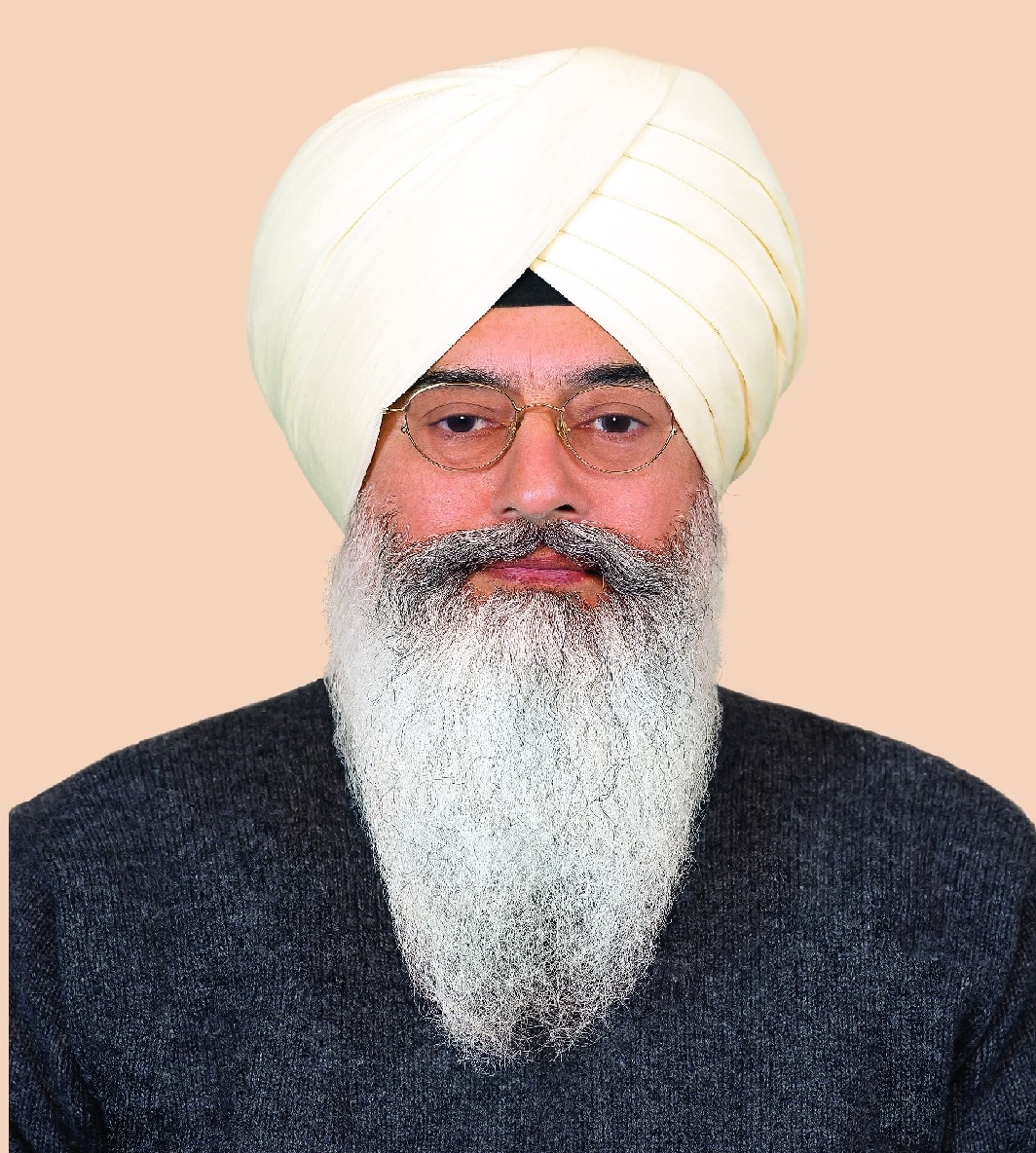
Gurinder Singh Dhillon, also known as Baba Ji to his followers, is the spiritual head of Radha Soami Satsang Beas (RSSB). He succeeded Charan Singh, his uncle, in 1990.[1] The headquarters of this spiritual community, called Dera Baba Jaimal Singh, is located beside the river Beas near the town of Beas, Punjab, in northern India, and have been a centre for Satsang since 1891. RSSB has centres located worldwide.[citation needed]

Key Information

Biography

[edit]

Gurinder Singh was born on 1 August 1954 into a family of the Dhillon clan who were followers of the Radha Soami Satsang Beas. His parents were Gurmukh Singh Dhillon and Mahinder Kaur.[citation needed]

He was educated at the Lawrence School, Sanawar, in the Shimla Hills of Himachal Pradesh[2] and obtained his bachelor's degree in Commerce from Panjab University, Chandigarh. He was in Spain working before returning to India to accept his nomination as the next spiritual head of RSSB in 1990. He has two sons, namely Gurpreet Singh Dhillon and Gurkirat Singh Dhillon. [3]

Spiritual discourses

[edit]

The Dera, located in Beas, Punjab, is the designated home of the organisation's spiritual leader. Large crowds visit on selected days, usually weekends, to hear discourses from him. He also gives Satsang at other major centres of RSSB in India.[4] He tours the various RSSB centres outside of India during April to August.[citation needed]

References

[edit]
[edit]
Revisions and contributorsEdit on WikipediaRead on Wikipedia
from Grokipedia
Gurinder Singh Dhillon (born 1 August 1954) is an Indian spiritual leader and the current Sant (spiritual head) of (RSSB), a prominent founded in 1891 that promotes the tradition through meditation on inner light and sound, ethical living, and selfless service. Affectionately known as Baba Ji by his followers, Dhillon was appointed to lead RSSB in 1990 by his predecessor, Maharaj , and has since guided millions of adherents worldwide in practices aimed at spiritual enlightenment and personal transformation. Under his leadership, RSSB has expanded its global reach, conducting satsangs (spiritual discourses) in over 90 countries and serving vast communities through humanitarian initiatives, including large-scale langar (community kitchen) programs that provide millions of meals annually. In September 2024, at the age of 70, Dhillon nominated Jasdeep Singh Gill as his successor for administrative duties but reaffirmed his ongoing role as the primary spiritual guide, ensuring continuity in the organization's mission (as of November 2025, Dhillon remains the spiritual head).

Early Life

Birth and Family Background

Gurinder Singh Dhillon was born on August 1, 1954, in , , to Gurmukh Singh Dhillon and Mahinder , into a Sikh family of the . His family maintained an agricultural background as traditional Punjabi landowners in rural , reflecting the region's agrarian heritage. The had a long-standing devotion to the (RSSB) tradition, with generations following its spiritual path. This familial commitment was exemplified by Gurinder Singh's maternal uncle, Maharaj Charan Singh, who served as the head of RSSB from 1951 until 1990. Growing up in the rural countryside, Gurinder Singh experienced an upbringing steeped in Sikh cultural norms and the devotional practices of the gurus, which emphasized ethical living and spiritual meditation from an early age. This environment, influenced by his family's RSSB affiliation, provided a foundational exposure to the sect's teachings on inner devotion and .

Education

Gurinder Singh Dhillon completed his secondary education at the Lawrence School in Sanawar, located in the Hills of , one of India's premier boarding schools. He pursued higher education in India, earning a bachelor's degree in Commerce from in . After graduation, Dhillon worked in business, including time in Spain, before returning to in 1990.

Initiation into Radha Soami Satsang Beas

Encounter with Charan Singh

As the maternal nephew of , the spiritual head of (RSSB) since 1951, Gurinder Singh was exposed to the organization's teachings from an early age through family visits to the Dera Baba at . He was introduced to profound teachings on inner , emphasizing and , as well as the essential guru-disciple relationship that guides the seeker's spiritual journey. This exposure profoundly influenced his understanding of devotion and the path to divine connection. The family's prior deep involvement with RSSB, rooted in their commitment to the tradition, played a crucial role in arranging and nurturing this formative interaction.

Early Discipleship

Gurinder Singh received formal (naam dan) into the (RSSB) path from his uncle, who served as the spiritual head at the time; the exact date of this initiation is not publicly documented. As an initiate, Gurinder Singh committed to the core practices of as taught by RSSB, including a daily routine of at least 2.5 hours focused on , the inward on divine light and sound. This practice, performed in the early morning hours, is central to spiritual progress and is required of all initiates to withdraw the attention from worldly distractions and connect with the inner divine current. He adhered strictly to RSSB's ethical principles, embracing a lacto-vegetarian diet to promote non-violence and reduce karmic burdens, while abstaining from alcohol, , and intoxicants to maintain mental clarity. Gurinder Singh also upheld a life of moral purity, emphasizing honesty, selfless service (seva), and detachment from materialism in daily conduct, all of which form the foundational vows for disciples. Throughout his early adulthood, Gurinder Singh balanced these spiritual disciplines with his personal responsibilities, including higher education and professional pursuits, demonstrating the RSSB teaching of performing worldly duties without attachment to outcomes. This period of disciplined discipleship laid the groundwork for his deeper involvement in the path.

Appointment and Leadership Role

Succession Announcement

In late May 1990, shortly before his death, Charan Singh dictated a will designating his nephew and initiate, Gurinder Singh Dhillon, then aged 36, as his and the new Patron of the (RSSB) society. This appointment was publicly announced following Charan Singh's passing from on June 1, 1990, marking the formal transition of leadership within the organization. The selection of Gurinder Singh adhered to RSSB's of appointing a successor from among close initiates, emphasizing family ties, personal devotion to the teachings, and demonstrated spiritual maturity through years of discipleship under the previous master. As Charan Singh's nephew and a long-term disciple who had received in 1966, Gurinder exemplified these qualities, having maintained a committed while pursuing a secular career abroad. The announcement elicited initial surprise among the RSSB community due to Gurinder Singh's youth and his residence in Spain at the time, but it garnered swift and overwhelming acceptance from satsangis worldwide, bolstered by the clarity of Charan Singh's will and trust in the established succession process. Media reports at the time highlighted the unusual appointment of such a young leader to head one of India's largest spiritual organizations, noting the seamless transition amid the dera's vast following.

Early Tenure and Challenges

Upon the death of on June 1, 1990, Gurinder Singh Dhillon, then 36 years old, assumed leadership of (RSSB), inheriting an organization with over 1.2 million initiates worldwide and a strong emphasis on the spiritual legacy of his predecessors. As the nephew of and great-grandson of earlier leader , Dhillon's appointment was formalized through a will dictated by just two days prior, on May 30, 1990, and witnessed by key RSSB figures including Seva Singh and S. L. Sondhi. This transition occurred amid RSSB's established global presence, requiring Dhillon to prioritize continuity in teachings on , selfless service, and ethical living to sustain the organization's momentum. Dhillon faced significant challenges in consolidating his role, primarily stemming from his relative youth and limited prior visibility within the RSSB community. Having resided in as a businessman with minimal involvement at the Dera Beas headquarters, he was largely unfamiliar to many satsangis (devotees), which fueled initial skepticism about his readiness to lead such a vast and diverse following. Administrative transitions were complicated by the need to manage internal expectations for seamless , including coordinating regional centers and addressing potential divisions in an increasingly internationalized prone to schisms in Radhasoami traditions. External doubts arose from perceptions of his non-traditional path, contrasting with the more dera-centric backgrounds of previous leaders. In his early decisions, Dhillon focused on fostering unity and accessibility, swiftly accepting the role and announcing plans for regular visits to key international centers such as the and to engage directly with global sangats (congregations). He maintained established schedules and introduced minor organizational adjustments to streamline administration while upholding Charan Singh's core principles, which helped solidify widespread support within the first year of his tenure. These steps emphasized continuity, mitigating transition hurdles and reinforcing RSSB's commitment to spiritual guidance over structural upheaval.

Guidance of RSSB

Organizational Growth

Under Gurinder Singh's leadership since 1990, the (RSSB) experienced substantial membership growth, expanding from several million followers to over 20 million worldwide by the late 2010s. This surge was accompanied by the establishment of numerous new dera facilities across , increasing the number of centers to over 5,167 by 2019. These developments reflected a broader organizational scaling, with RSSB now conducting meetings in more than 90 countries through over 100 affiliated organizations. Administrative enhancements under Gurinder Singh included the bolstering of volunteer networks, which manage the society's operations, properties, and centers through unpaid service. Additionally, RSSB introduced digital resources to support satsangs, such as online platforms offering audio and video recordings of discourses, eBooks on spiritual topics, and interactive schedules for regional gatherings. These tools have enabled broader access to organizational activities, particularly for remote members. Infrastructure projects at the headquarters focused on colony expansions to handle growing attendance, transforming the site into a self-sufficient that supports hundreds of thousands of visitors annually. Key additions include a covered seating area expandable to accommodate up to 500,000 people for large gatherings, alongside facilities for voluntary service and maintenance. These enhancements have sustained the core operations at Dera Baba Jaimal Singh while accommodating the society's internal growth.

Global Outreach

Under Gurinder Singh's leadership since 1990, (RSSB) significantly expanded its international footprint, establishing centers and holding regular meetings in over 90 countries worldwide. This growth built on the organization's foundational spread from beginning in the late , but accelerated notably in the and beyond through the development of dedicated properties and affiliated groups. Key hubs emerged in , with major centers in the United States (such as , and Fresno), ( and ), and (Guadalajara); in , including , the , , and ; and in and the Pacific, encompassing ( and Perth), , and . These efforts facilitated missionary activities by local volunteers, enabling weekly satsangs and meditation sessions tailored to regional communities without altering the core practices. To accommodate the growing global devotee base, Gurinder Singh conducted international tours starting in the early 1990s, delivering satsang discourses in major cities abroad. These tours, often scheduled alongside India-based programs, allowed direct personal guidance for overseas followers, with events held at RSSB-owned facilities to foster spiritual connection. In the post-2000s era, particularly amid technological advancements, RSSB introduced virtual satsangs through online platforms, including live-streamed and archived discourses on its official YouTube channel. This digital outreach enabled devotees worldwide to access Gurinder Singh's questions-and-answers sessions and spiritual talks in multiple languages, bridging geographical barriers while maintaining the tradition of in-person gatherings where possible. RSSB's global expansion under Gurinder Singh emphasized adapting administrative and communicative aspects of its outreach to diverse cultural contexts, while steadfastly preserving the unaltered principles of meditation, ethical living, and inner spiritual focus. Teachings were disseminated in local languages—such as English, Spanish, German, and Punjabi—through translated audio and video resources, ensuring accessibility without imposing rituals or requiring adherents to abandon their existing religious or cultural identities. This non-sectarian approach, rooted in universal , supported follower growth across varied societies, from Western urban centers to African and Asian communities, by integrating satsangs into everyday life without proselytizing.

Teachings and Discourses

Core Spiritual Principles

Gurinder Singh, as the spiritual head of (RSSB), upholds the core principles of , emphasizing as the primary path to spiritual liberation. This practice involves focusing the attention at the eye center to attune the to the inner divine light and sound, known as the Shabd, which is the creative power of . Through consistent daily practice of at least 2.5 hours, practitioners withdraw from external senses to achieve direct communion with the divine, enabling the to transcend physical and mental limitations and return to its origin. Central to these teachings is the role of the living , who initiates disciples into the path and provides ongoing guidance for inner progress. The , exemplified by Gurinder Singh, is seen as a perfect master who implants a radiant form within the initiate to facilitate contact with the Shabd, helping to dissolve karmic bonds without personal effort from the disciple beyond sincere devotion and practice. This personal connection is essential, as the cannot escape the cycle of —repeated births driven by accumulated karma from past actions—through individual efforts alone; the guru's grace purges these debts, allowing liberation. Ethical living supports this process, requiring commitments to a lacto-vegetarian diet, from alcohol and intoxicants, honest , and non-violence toward all beings, which purify the mind and reduce new karmic accumulations. RSSB's approach distinguishes itself from other Radha Soami branches by prioritizing a non-sectarian, inwardly focused without rituals, fees for , or proselytizing. Unlike some groups that may emphasize external ceremonies or community structures, RSSB stresses individual under the living master's guidance, free from organizational publicity or mandatory group practices, fostering personal responsibility for spiritual growth.

Key Public Addresses

Gurinder Singh regularly delivers satsangs at the Dera Baba Jaimal Singh in , , on approximately 19 designated Sundays each year, excluding , , and , where he provides spiritual guidance to attendees on themes of devotion, ethical living, and . These gatherings attract hundreds of thousands of participants from and abroad, with the dera serving over 19 million meals annually in recent years to support the large-scale events, underscoring the organization's emphasis on communal . For instance, during major bhandaras, crowds have exceeded 400,000, fostering an environment for collective and . In response to the COVID-19 pandemic, Gurinder Singh adapted his public engagements by initiating virtual satsangs broadcast via a temporary YouTube channel starting in 2020, allowing global followers to access his messages on resilience, inner balance, and maintaining spiritual discipline amid crises. He emphasized that such global challenges arise from imbalances in human lives and urged devotees to prioritize meditation and ethical conduct for inner strength, delivering these insights through online platforms until physical gatherings resumed. This shift enabled millions to participate remotely, preserving the continuity of satsang during lockdowns. A notable public address occurred on September 2, 2024, when Gurinder Singh announced the appointment of Jasdeep Singh as his successor and the next spiritual head of RSSB, addressing speculation about leadership transition during a period of health concerns. In this statement, shared through official channels, he affirmed Gill's role while committing to continue satsangs, promoting unity and seamless guidance for the sangats worldwide. This announcement was followed by public appearances, such as a event with Gill on September 4, 2024, reinforcing themes of succession and devotion. More recently, on November 18, 2025, they shared the stage again at a attended by over 100,000 followers, clarifying ongoing roles and addressing rumors about the transition. Compilations of Gurinder Singh's discourses and messages are made available through RSSB's platforms, including audio recordings of satsangs and written essays that capture his teachings on spiritual principles. For example, RSSB publications like the essay "Take a Step Towards Me," published on the RSSB website in October 2025, illustrate aligned spiritual guidance on drawing closer to the divine through daily practice and inner focus. These digital and audio formats, rather than traditional books, facilitate widespread dissemination without formal printed compilations attributed directly to him.

Philanthropy and Social Contributions

Healthcare and Welfare Programs

Under Gurinder Singh's leadership as spiritual head of Radha Soami Satsang Beas (RSSB) since 1990, the organization has expanded its healthcare network through the Maharaj Jagat Singh Medical Relief Society, established in 1978, to provide free medical care in underserved regions of northern India. This includes four charitable hospitals offering outpatient, inpatient, and emergency services without discrimination based on caste, creed, or economic status, with a particular emphasis on rural populations lacking adequate facilities. The facilities are the 300-bed Maharaj Sawan Singh Charitable Hospital in Beas, Punjab; the 50-bed Maharaj Charan Singh Charitable Hospital in Sikanderpur, Haryana; the 75-bed Bhota Charitable Hospital in Bhota, Himachal Pradesh; and the Dera Hospital in Beas, Punjab, serving local residents. These hospitals deliver high-quality care, including free treatment for the rural poor, supported by volunteer sevadars (seva meaning selfless service) who handle operations, aligning with RSSB's ethos of compassionate service to humanity. RSSB's welfare programs under Gurinder Singh have also encompassed rapid disaster relief efforts, mobilizing thousands of volunteers to deliver immediate aid. Following the , which killed approximately 20,000 people and devastated infrastructure, RSSB provided , , , , and medical care to survivors, later constructing earthquake-resistant and schools using designs developed by its engineers as prototypes for future relief. This response exemplified the organization's commitment to community welfare, with all materials and services donated through local RSSB centers. In 2025, RSSB provided support during the Punjab floods, mobilizing volunteers to distribute aid to affected communities. In response to the , Gurinder Singh personally offered RSSB's nationwide facilities to government authorities for and isolation, including participation in a March 2020 video conference with Prime Minister to pledge support. The organization converted centers into sites, such as a 5,000-bed facility in completed in eight days, and provided free medical services at its three affiliated hospitals in Beas, Bhota, and Sikanderpur. Additionally, RSSB distributed over 1 million daily food packets at peak times in 2020, accommodated more than 20,000 people for shelter, and donated Rs 8 crore to relief funds, including Rs 2 crore to the , prioritizing aid for migrants and the needy in rural and urban areas. These initiatives underscore RSSB's focus on enhancing rural healthcare access and emergency welfare, fostering self-reliance through volunteer-driven service.

Educational Initiatives

Under Gurinder Singh's leadership as spiritual head of (RSSB) since 1990, the organization has prioritized educational efforts that integrate value-based learning to foster moral development alongside academic growth. These initiatives, managed through affiliated societies such as the RSSB Educational and Environmental Society, focus on creating supportive environments for children, particularly in underserved communities. A key example is the Pathseekers School at the Dera Baba Jaimal Singh headquarters in , , established in 2014. This co-educational institution, affiliated with the (CBSE), began with 570 students from pre-primary to primary levels, primarily serving children of hospital staff, and has expanded to over 1,000 students across preschool to senior secondary grades. The school's curriculum emphasizes holistic development, including moral education through activities that promote ethical values, environmental awareness, and , in line with RSSB's spiritual principles. Facilities include modern laboratories, libraries, and sports amenities to support comprehensive learning. During the Punjab insurgency in the 1980s and 1990s, RSSB operated a temporary at the Dera to provide and shelter for children displaced by violence, addressing immediate needs amid regional instability. Following the devastating , which destroyed thousands of schools and affected over 20,000 lives, RSSB spearheaded a major reconstruction effort in the Santhalpur taluka of . Sevadars (volunteers) constructed 73 earthquake-resistant schools with 481 classrooms, completed within months using donated materials and no paid labor. These institutions included essential infrastructure such as separate toilets for girls, facilities, and playgrounds, enabling access to for children in disaster-impacted, underprivileged areas and promoting gender-inclusive . The project exemplified RSSB's commitment to long-term community empowerment through in vulnerable regions. These efforts have evolved since the , shifting from crisis-response schooling to sustained institutional development, with a focus on moral education to build character and resilience among youth. While primarily centered in , they align with RSSB's broader social welfare activities, occasionally integrating educational components into programs for holistic support.

Personal Life

Family and Residence

Gurinder Singh Dhillon was married to Shabnam Dhillon, who passed away on November 27, 2019, following complications from abdominal surgery in . The couple had two sons, Gurpreet Singh Dhillon, who formerly served as CEO of Religare Health Trust until 2019 and resides in , and Gurkirat Singh Dhillon, who lives in ; both maintain low public profiles while managing their respective businesses. Dhillon resides at the Dera Baba Jaimal Singh complex, the headquarters of in , , where he has lived with his family since assuming leadership in 1990. His family remains involved in RSSB activities to a limited extent, adhering to the organization's core lifestyle principles of and selfless service (seva), though no succession indications point to family members.

Interests and Lifestyle

Gurinder Singh Dhillon maintains a deep appreciation for across various genres, often engaging with it as a source of personal enjoyment. He is also known for his passion for films, frequently watching and discussing them with close associates, reflecting a cultural interest that complements his spiritual role. At the Dera Baba Jaimal Singh in , , Dhillon leads a simple and modest lifestyle, residing in accommodations with basic amenities amid the expansive 300-acre complex that supports thousands of devotees. These sessions, along with regular community interactions such as car darshans and satsangs, allow him to connect directly with followers, managing gatherings of up to 500,000 people while upholding the organization's emphasis on humility and service. Dhillon balances these responsibilities with occasional travels, including international visits to conduct spiritual discourses, ensuring his leadership remains accessible to global followers while prioritizing reflection and organizational duties.

Controversies and Criticisms

Financial Allegations

In 2018 and 2019, Gurinder Singh , the spiritual head of (RSSB), became embroiled in financial allegations stemming from the collapse of the business empire of brothers and , former promoters of and . The brothers alleged that their financial downfall, involving losses estimated at over $2 billion, was partly due to substantial loans and donations extended to Dhillon and his family, influenced by their deep involvement with RSSB and personal devotion to its teachings. These transactions reportedly included around 25 billion rupees (approximately $360 million at the time) in loans from the brothers' holding company to Dhillon's family and associated property businesses over several years, which the Singhs claimed contributed significantly to their inability to service corporate debts and led to arrests on charges. The allegations intensified in February 2019 when Malvinder Singh filed a criminal with against his brother Shivinder and , accusing them of cheating and criminal intimidation in connection with these financial dealings. Malvinder specifically claimed that , through his lawyer, had issued threats to kill him if he pursued recovery of the loaned funds, and that RSSB had received donations tied to the brothers' business activities, including misappropriation from Enterprises. In August 2020, Malvinder submitted an to the detailing specific loan transactions to and his family, further alleging that these were not repaid despite acknowledgments of the debts as late as May 2018. Dhillon and his family have denied owing any money to the Singhs, filing petitions in the in October 2019 asserting that the transactions were personal and not liabilities under the Daiichi-Ranbaxy litigation context. In November 2019, Dhillon publicly admitted to financial dealings with the brothers for the first time but maintained there was no wrongdoing, describing the exchanges as voluntary. RSSB's official position, as stated on its , emphasizes that all contributions to the are strictly voluntary, with no mandatory fees or rituals, and that the group does not provide financial advice or involve itself in members' business affairs, operating solely as a non-profit spiritual focused on philosophical teachings. Gurinder Dhillon, as the head of (RSSB), has been embroiled in several legal disputes primarily related to financial transactions involving former promoters Malvinder and Shivinder . In 2019, Dhillon and his family approached the , asserting they owed no money to RHC Holdings Pvt Ltd, a company promoted by the Singh brothers, amid claims linked to a Rs 3,500-crore arbitral award won by against the brothers for concealing regulatory issues in the sale of . The court had directed potential garnishees, including the Dhillon family, to deposit any owed amounts within 30 days, but the Dhillons challenged this, leading the court to seek responses from the involved parties. Dhillon has admitted to financial dealings with the Singh brothers but denied any wrongdoing or liability in these transactions. Further allegations surfaced in October 2023 when filed a complaint with accusing Dhillon, along with associates Alok Rai Rajpur and Yuvraj Narain Gorwaney, of illegally diverting Rs 1,006 through a transaction involving mortgaged land in Asola, with outstanding loans totaling Rs 5,400 to Dhillon and his family. Malvinder Singh, while in custody for charges related to a Rs 2,100- fraud involving shell companies, separately accused Dhillon in 2020 of misusing spiritual influence to orchestrate the downfall of and RHC groups, including appointing devotees as directors in defaulting firms; he had filed a prior complaint in 2019 that remained uninvestigated. In December 2024, the quashed a reassessment notice issued by the against RSSB, ruling in favor of the organization after the had initially denied relief, thereby halting related tax proceedings. Community disputes involving RSSB under Dhillon's leadership have centered on land use and encroachments, particularly in , , leading to tensions with local panchayats and the Sikh community. In January 2024, the issued a notice to the Punjab government on a by the Lok Bhalai Insaf Welfare Society alleging illegal usurpation of land and unauthorized by RSSB in Warraich village, claiming the organization altered the course by 2 km post-Dhusi Bandh, resulting in the loss of approximately 2,500 acres of cultivable land; the court sought a reply by February 15, 2024, and demanded an inquiry by a retired . This issue echoes earlier conflicts, such as a 2006 accusation by former (SGPC) member that RSSB had usurped land in originally donated to . A notable community friction arose in 2012 over the alleged demolition of a in Warraich village on disputed panchayat land sold to RSSB without proper approval, prompting protests from Sikh organizations and an SGPC investigation as directed by . Jathedar ultimately gave a clean chit to RSSB followers in July 2012, finding no sacrilege since the had been relocated years earlier and religious recitations ceased, urging Sikh groups to end protests. However, concerns resurfaced by July 2025, with deliberating the status of a structure in the same village—claimed by RSSB as a 1996-built for the Harijan community purchased in 2011, but asserted by locals and Sikh bodies as an active at risk from nearby excavations—following appeals for intervention to prevent damage. RSSB has maintained that its land acquisitions are legitimate and in line with legal processes.

References

Add your contribution
Related Hubs
User Avatar
No comments yet.