Hubbry Logo
Guy MolinariGuy MolinariMain
Open search
Guy Molinari
Community hub
Guy Molinari
logo
8 pages, 0 posts
0 subscribers
Be the first to start a discussion here.
Guy Molinari
Guy Molinari
from Wikipedia

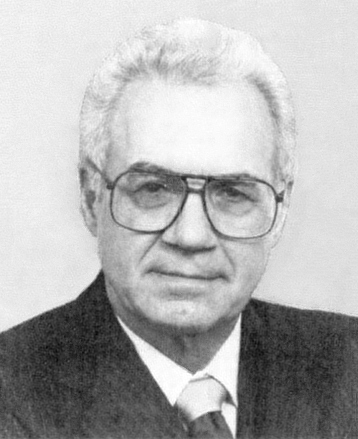
Gaetano Victor Molinari (November 23, 1928 – July 25, 2018) was an American lawyer and Republican politician from New York city. He represented Staten Island in the United States House of Representatives for four terms (1981–1989) and then served 12 years as Staten Island borough president (1990–2002). His daughter, Susan Molinari, also served as a U.S. Representative.[2]

Key Information

Education and military service

[edit]

Gaetano Kenneth Molinari, "who changed his middle name as a teenager to Victor"[3] was born on Manhattan's Lower East Side. His father was S. Robert Molinari (1897–1957), "the first Italian immigrant to serve in the New York state Assembly,"[4][dubiousdiscuss] representing the 2nd District of Richmond County in the New York State Assembly from 1943 to 1944. After changing from a Republican to a Democrat, Molinari's father was not reelected. His mother, Elizabeth Margaret (Majoros), was of Czechoslovak descent.[3][5][6]

Molinari attended private schools growing up and graduated from New Dorp High School in Staten Island in 1945. He attained a Bachelor of Arts degree from Staten Island's Wagner College in 1949 and his law degree from New York Law School in 1951. He served in the United States Marine Corps (attaining the rank of sergeant), from 1951 to 1953 during the Korean War. He was admitted to the New York State Bar following his discharge from the military in 1953 and commenced practice in Staten Island.[7][8]

Political career

[edit]
Molinari and his daughter Susan with President Ronald Reagan in 1984
Molinari with President George H. W. Bush in 1989

Molinari was a Republican member of the New York State Assembly from 1975 to 1980, sitting in the 181st, 182nd and 183rd New York State Legislatures. He was a delegate to the New York State Republican conventions in 1979 and the Republican National Convention in both 1980 and 1984.

In 1980, he was elected to the House of Representatives, unseating nine-term Democrat John M. Murphy. The district included all of Staten Island and most of Lower Manhattan. In 1982, his district lost its share of Manhattan, and was instead merged with a Brooklyn-based district that was held by four-term Democrat Leo Zeferetti. Molinari defeated Zeferetti won with 57%. He was reelected to the three succeeding Congresses with minimal opposition and served from January 3, 1981, until his resignation December 31, 1989, to become Borough President of Staten Island. He was succeeded in the House by his daughter, Susan, who also served on the New York City Council. He served as Borough President from January 1, 1990, to December 31, 2001.

In 1994, a week before the statewide elections, Molinari announced his view that Karen Burstein, the Democratic nominee for New York Attorney General, was not qualified to serve as attorney general because she was a lesbian. The combination of Molinari's remarks, a strong national Republican showing, and the win of George Pataki in the governor's race, led to Republican Dennis Vacco's narrowly defeating Burstein.[9] The New York Times called his remarks "gutter politics".[10]

In 1995, Molinari ran for Richmond County District Attorney. He lost the race to Democratic incumbent, William L. Murphy.[11]

A Life of Service (book)

[edit]

Molinari co-authored his autobiography A Life of Service[12] with former NYC Police Lt. Patricia Feerick-Kossman, a "highly decorated cop, who is also a lawyer and a registered nurse."[13] Feerick, after five years of appeals,[14] began to serve her sentence for having illegally searched for a stolen police radio. With a search warrant still pending, she launched a technically legal "random .. door-to-door" search that, in being carried out, went beyond legal bounds.[15] Feerick-Kossman, a mother with husband Joseph Kossman of two sons, the second seven weeks old,[16] entered Rikers Island jail. Molinari successfully "lobbied Gov. George Pataki to commute her sentence"[17] and she was released a month later. Her law license was returned in 2000.[18]

The book, whose start can be traced to Feerick's pushing,[19] discusses Molinari's success[20] at convincing a then age 44 Rudy Giuliani to run for mayor of NYC, Giuliani's push for Molinari to run for Staten Island's Boro President, and the (2001) closing of Fresh Kills Landfill, "the largest .. in the world."[21]

Personal life

[edit]

Guy Molinari's daughter Susan succeeded him as a member of Congress. She is married to Bill Paxon, a former United States House Representative from Buffalo.[22]

Death and legacy

[edit]

Guy Molinari died of pneumonia on July 25, 2018, at the age of 89.[23]

In September 2003, a new Staten Island Ferry boat was built and was christened the Guy V. Molinari;[24] it joined the New York City Department of Transportation fleet in September 2004, a year later.[25][26] The boat continues to transport commuters and tourists between Staten Island and Manhattan.

James S. A. Corey's novel Leviathan Wakes and its television adaptation, The Expanse, featured a spaceship named for Molinari.[24]

References

[edit]
[edit]
Revisions and contributorsEdit on WikipediaRead on Wikipedia
from Grokipedia
Guy Victor Molinari (November 23, 1928 – July 25, 2018) was an American Republican politician and lawyer from Staten Island, New York, who served as a member of the New York State Assembly from 1975 to 1982, U.S. Representative for New York's 14th congressional district from 1983 to 1990, and Borough President of Staten Island from 1990 to 1998. Born in New York City and raised on Staten Island, Molinari graduated from New Dorp High School in 1945, earned a law degree from New York Law School in 1953, and served as a sergeant in the United States Marine Corps during the Korean War before establishing a private law practice. Entering politics later in life, he built a reputation as a combative advocate for Staten Island interests, including sponsoring legislation that enabled New York State to fund liver transplants publicly and exerting influence in Republican circles by early endorsements of figures like Rudy Giuliani for mayor and George Pataki for governor. A central figure in a multigenerational political family—his daughter Susan Molinari succeeded him in Congress—Molinari dominated local Republican politics for decades through organizational control and electoral success, though his tenure included intraparty conflicts and a 1995 defeat in a bid for Staten Island district attorney.

Early Life

Family Background and Upbringing

Gaetano Victor "Guy" Molinari was born on November 23, 1928, in , , as one of five children to S. Robert Molinari, an Italian immigrant, and Elizabeth Margaret Majoros, whose family originated from . His paternal grandparents had immigrated legally from to the in 1899, instilling in the family a strong adherence to the and honorable conduct. The Molinari family relocated to shortly after Guy's birth, where he was raised in a politically engaged household. His father, Sigmund Robert Molinari, served as a member of the during the 1940s, exposing young Guy to local governance and Republican principles from an early age. S. Robert Molinari, emphasizing the value of higher education as a pathway to success for his sons despite his own immigrant background, influenced Guy's commitment to academic and civic achievement. This upbringing in a working-class, immigrant-rooted environment on shaped Molinari's focus on community service and conservative values.

Education and Military Service

Academic Education

Molinari attended private schools in his early years before graduating from on in 1945. He then enrolled at , also on , where he majored in , joined the Alpha fraternity, and earned a degree in 1949. His enrollment at Wagner followed his father's strong emphasis on higher education for his sons. Following his undergraduate studies, Molinari pursued legal training at in , obtaining a (LL.B.) in 1951. This degree qualified him to practice law, which he did on prior to entering politics.

Military Service in the United States Marine Corps

Guy Molinari served in the United States Marine Corps from 1951 to 1953, attaining the rank of . His enlistment interrupted his nascent legal career following receipt of an LL.B. from in 1951. Molinari's service coincided with the , during which he deployed to and participated in combat operations in harsh winter conditions. During his tour, Molinari sustained wounds in action, for which he received ; the injury left a visible scar on his right hand. He returned to the in 1953 and was admitted to the New York bar later that year, resuming civilian practice on .

Entry into Politics

Initial Motivations and Early Involvement

Guy Molinari's initial foray into politics occurred in the 1950s as a Republican district leader on , where he engaged in organizing amid a dominated by Democratic voters. This role laid the foundation for his later ambitions, fostering connections within local Republican circles and exposing him to community grievances against New York City's centralized governance. In 1974, at age 46 and after two decades practicing civil law, Molinari decided to run for the , securing election to represent the 60th district, which encompassed much of . His motivations centered on amplifying 's voice as a "forgotten ," advocating for its middle-class homeowners who felt overburdened by citywide policies and neglected in . A primary driver was opposition to the , the massive New York City-operated site on Staten Island's west shore, which Molinari sought to close from the outset of his campaign due to its environmental and quality-of-life impacts on residents. He emphasized drives and mobilization to shift the borough's political balance, positioning himself as a champion against perceived Democratic overreach and for local autonomy. These efforts marked his transition from legal practice to elected office, serving three terms in the Assembly until 1980.

Legislative Career

Service in the New York State Assembly (1975–1980)

Molinari was elected to the in the November 1974 general election, securing the Republican nomination and defeating the incumbent Democrat Lucio F. Russo to represent the 60th Assembly District, which encompassed the South Shore communities of . At age 46, he entered elective office as a political newcomer following in the footsteps of his father, S. Robert Molinari, the first Italian immigrant to serve in the Assembly. He took office on January 1, 1975, and served continuously through the end of the 183rd on December 31, 1980, participating in the 181st, 182nd, and 183rd legislative sessions. As one of the few Republican assemblymen from New York City in a Democrat-dominated chamber, Molinari prioritized representation of Staten Island's suburban and working-class interests, including infrastructure needs and local governance matters pertinent to the borough's relative isolation from . His tenure marked the beginning of a family political dynasty, with Molinari leveraging his legal background and community ties to build a base in the district's conservative-leaning areas. He did not seek re-election to in , instead mounting a successful campaign for the , where he succeeded nine-term Democrat John M. Murphy in . Upon his departure, the seat was filled by Republican Straniere in the election.

Tenure in the United States House of Representatives (1981–1989)

Guy Victor Molinari was elected to the in November 1980, defeating nine-term incumbent Democrat John M. Murphy, who had been convicted in the corruption scandal involving bribery attempts by undercover FBI agents. Molinari took office on January 3, 1981, representing , which encompassed and parts of . His campaign emphasized anti-corruption themes, capitalizing on voter backlash against scandals in Congress. Serving through the 97th to 100th Congresses (1981–1989), Molinari aligned closely with President Ronald Reagan's conservative agenda, advocating for tax reductions, deregulation, and reduced federal spending to shrink government size. He maintained a strong anti-communist position, supporting Reagan administration initiatives against Soviet-backed insurgents in Central and . In 1983, Molinari voted against legislation establishing as a federal holiday, reflecting reservations among some conservatives about the measure's cost and symbolism at the time. Following 1982 redistricting, Molinari's district became New York's 14th, centered on with adjusted boundaries. He secured reelection in 1982, 1984, 1986, and 1988, achieving margins exceeding 60% in the latter contest amid 's Republican leanings. His legislative sponsorship emphasized transportation infrastructure, projects benefiting his port-adjacent district, and operations reforms, though few of his introduced bills became law during this period. Molinari's attendance record showed he missed 349 of 3,915 votes (8.9%), exceeding the for representatives of the era. In 1985, he was displaced as ranking minority member of a House subcommittee by , signaling internal Republican dynamics favoring younger, more aggressive members. Throughout his tenure, he prioritized federal funding for local priorities like harbor improvements and anti-crime efforts, consistent with his district's suburban and working-class demographics.

Executive Role as Borough President

Election and Service as Staten Island Borough President (1990–2001)

![Guy Molinari in 1987]float-right In the November 7, 1989, New York City elections, U.S. Representative Guy V. Molinari defeated incumbent Democratic Borough President Ralph J. Lamberti, becoming the first Republican to hold the office since its establishment in 1898. Molinari's victory reflected 's shifting political landscape toward Republican dominance, building on his prior electoral successes in the district. He resigned his congressional seat effective December 31, 1989, and was sworn into the borough presidency on January 1, 1990, by Judge Dominick L. DiCarlo. Molinari served three four-year terms until term limits ended his tenure on December 31, 2001. He was re-elected in 1993 and 1997, continuing a streak of ten consecutive victories across state assembly, congressional, and borough president races. During his presidency, Molinari prioritized addressing Staten Island's unique challenges as the city's least populous and most suburban borough, advocating aggressively for local autonomy from Manhattan-centric policies. A central focus of his administration was the campaign to close the , New York City's primary waste disposal site since 1948, which generated severe odors, health concerns, and environmental degradation for island residents. Molinari spearheaded legal and political efforts, including a alleging Clean Air Act violations, pressuring city and state officials for action. These initiatives culminated in a May 30, 1996, agreement between , George E. Pataki, and Molinari to cease operations by the end of 2001, redirecting waste elsewhere and initiating site remediation. Molinari also emphasized public safety, targeting property crimes that plagued suburban neighborhoods, through enhanced local policing coordination and community programs. His tenure solidified Republican control in politics, fostering alliances that supported broader conservative priorities like fiscal restraint and anti-corruption measures.

Key Administrative Actions and Policies

Molinari's administration emphasized environmental remediation, particularly the long-standing issue of the , which had operated since 1948 and become a major source of pollution and odor for residents. He collaborated with federal and city officials to enforce its closure, culminating in the landfill's shutdown on March 22, 2001, after a 1996 lawsuit joined by Molinari and other leaders alleged violations of the federal Clean Air Act due to and issues. This action redirected away from the island and supported post-closure plans for parkland conversion under the Fresh Kills Park project. In infrastructure and , Molinari secured reductions in Verrazano-Narrows Bridge tolls for local residents, easing commuting costs to , and opposed a proposed power plant in the Rosebank area to mitigate risks. His office advocated for expanded public facilities, including new schools, additional parkland, recreation centers, and the construction of the minor-league baseball stadium at Richmond County Bank Ballpark, opened in 2001, which boosted local tourism and youth sports programs. Public safety initiatives under Molinari targeted rising crime rates, with a focus on constituent complaints about burglaries and through enhanced coordination with the . He also prioritized veteran services, pushing to preserve the VA Hospital, establish a direct public bus route from , and open a local VA clinic to improve access for island residents. Additionally, Molinari participated in annual citywide clean-up drives, such as the 1998 Adopt-A-Park event alongside Mayor , mobilizing volunteers for beautification efforts.

Major Political Stances and Endorsements

Advocacy for Local Autonomy and Anti-Crime Measures

As Borough President from 1990 to 2001, Guy Molinari championed greater local amid residents' grievances over New York City's centralized policies, which they viewed as extracting high taxes from the borough while providing inadequate services in return. A key manifestation of this advocacy was his support for from the city, a recurring demand rooted in fiscal imbalances where contributed disproportionately to city coffers—estimated at over $300 million annually in net subsidies during the early —yet faced decisions imposed from . Although initially skeptical, viewing early efforts as politically unviable, Molinari embraced the cause as borough-wide frustration intensified under mayoral administrations perceived as neglectful. This culminated in the November 2, 1993, , where 53 percent of voters approved commissioning a study on feasibility, reflecting widespread desire for independent control over , taxation, and to preserve the borough's suburban character against urban overreach. Molinari leveraged his platform to advance the initiative, coordinating with state legislators and highlighting disparities such as the Fresh Kills landfill's burden, though ultimate failure stemmed from legal and fiscal hurdles, including loss of state aid. His stance aligned with broader Republican critiques of big-city governance, prioritizing borough-specific decision-making to enhance responsiveness and efficiency. On anti-crime measures, Molinari prioritized aggressive enforcement against drug trafficking, , and quality-of-life offenses that eroded residential safety during the 1980s-1990s crack epidemic and related violence. He targeted infiltration in waste management at the , advocating federal probes into that doubled as environmental crimes, securing stricter oversight to curb syndicate profits estimated in millions annually. In response to the 1989 murder of DEA agent Everett Hatcher by Bonanno family associate Gus Farace, Molinari pushed for enhanced inter-agency cooperation to dismantle local drug networks. Molinari addressed petty but pervasive crimes through targeted campaigns, such as displaying a wrecked in a public park to graphically illustrate dangers, aiming to reduce incidents that claimed dozens of lives yearly borough-wide. He lobbied for state laws classifying as a quality-of-life , proposing bans on artists transporting supplies in to deter vandalism that defaced public and , arguing it undermined and signaled broader disorder. In 1995, he ran for District Attorney explicitly to wield power against narcotics dealers and corrupt officials, framing the race as a direct on entrenched criminal elements. His pro-law enforcement posture extended to controversial defenses, including campaigns for the release of DEA agent Occhipinti—convicted in 1991 of civil rights violations during anti-Mafia raids but pardoned in 1993 after Molinari's appeals—and NYPD officer Charles Schwarz, implicated in the 1997 Abner Louima , reflecting a of aggressive policing over subsequent legal rebukes.

Endorsement and Support for Rudy Giuliani

Guy Molinari was the first politician to endorse for mayor, doing so in 1988 ahead of the 1989 election, and played a pivotal role in convincing the then-U.S. Attorney to enter the race. As chief campaign advisor for Giuliani's 1989 bid against incumbent , Molinari mobilized Staten Island's Republican base, though Giuliani narrowly lost. In the 1993 mayoral campaign, Molinari again served as chief campaign advisor, providing crucial organizational support from , where Giuliani secured overwhelming margins that proved decisive in his narrow victory over Dinkins by 53,825 votes citywide. Molinari's advocacy extended to the 1997 reelection effort, where he continued as advisor amid Giuliani's landslide win. Their alliance weathered tensions, including Giuliani's 1994 endorsement of Democrat for governor, which drew Molinari's public ire as a of Republican principles. Molinari's support for Giuliani persisted into national politics, serving as New York state co-chairman for Giuliani's 2008 presidential campaign and endorsing him early via the Staten Island Republican Party in May 2007, defying state GOP leadership. Giuliani later described Molinari as his "staunchest ally" and a mentor whose influence was instrumental in launching his mayoral career.

Controversies and Criticisms

Push for NASCAR Track Development

In the mid-2000s, following his tenure as Borough President, Guy Molinari served as a paid and lobbyist for (ISC), advocating for the construction of a speedway on a 176-acre abandoned oil tank farm site near the in Bloomfield, . The proposed $500 million project included a three-quarter-mile oval track capable of hosting 80,000 spectators, a 1.2 million-square-foot shopping plaza, 8,400 parking spaces, and 635 RV spots, with races planned three times annually. Molinari's firm, the Molinari Group, received over $250,000 in fees from ISC to build political support, including efforts to address community concerns over , , and of the contaminated site. Molinari publicly championed the development as an economic boon, pledging in April 2006 that the track would proceed despite opposition, arguing it would generate jobs and without unduly burdening residents. He participated in public hearings, such as a contentious , 2006, session in Tottenville where crowds exceeded capacity, leading to near-physical altercations among attendees, and attempted to mediate by inviting track opponents onstage to de-escalate tensions. Proponents, including Molinari, highlighted potential benefits like $100 million in annual economic impact and upgrades, while dismissing feasibility studies predicting severe on local roads like the West Shore Expressway. The initiative drew widespread criticism for exacerbating Staten Island's existing traffic issues, posing risks to air and on the ecologically sensitive waterfront, and conflicting with local zoning and quality-of-life priorities. Opponents, organized under groups like Staten Island Citizens Against the Track, argued the project ignored resident input and favored corporate interests, with figures such as then-City Council members and environmental advocates citing inadequate mitigation for noise levels up to 100 decibals and diesel emissions. Molinari's role post-public office raised questions about influence peddling, as his prior elected positions lent perceived authority to efforts that secured initial endorsements from some local stakeholders but alienated broader community segments. By December 5, 2006, ISC abandoned the plans after failing to gain approval from Staten Island's three City Council members, who represented the district and cited overwhelming public resistance evidenced in hearings and petitions. The episode contributed to perceptions of Molinari's later career as prioritizing paid advocacy over consensus-building, tarnishing elements of his legacy among critics who viewed it as emblematic of undue commercialization of preserved industrial land. The site remained undeveloped for racing and was later sold in 2013 for waterfront industrial reuse.

Personal Style and Political Resignations

Molinari exhibited a pugnacious and combative personal style throughout his political career, characterized by outspoken advocacy for conservative principles and a willingness to engage in feuds with party colleagues when he perceived deviations from core Republican values or Staten Island's interests. This approach, often described as that of a "power broker" and "kingpin" in local Republican circles, emphasized direct, unyielding communication with constituents, urging collective action on moral and policy issues such as anti-communism and local autonomy. His style contrasted with more conciliatory figures, positioning him as a feisty defender of traditional conservatism in a predominantly Democratic New York City environment. Among his political resignations, Molinari stepped down from the U.S. on December 31, 1989—nearly a year before his term would have ended—to assume the office of Borough President after winning the 1989 election against incumbent Democrat Ralph J. Lamberti. This transition reflected his strategic focus on enhancing local influence amid the rapid collapse of global , including the fall of the earlier that month, which he viewed as diminishing the imperatives that had defined his congressional tenure. The decision drew from observers, given the borough president's reduced formal powers post-1989 City Charter revisions, but aligned with Molinari's emphasis on grassroots Republican control in . In a notable act of protest, Molinari resigned from President George H.W. Bush's re-election committee on June 13, , after Bush refused to commute the sentence or grant a to , a convicted in 1968 for firing a at a Polish freighter linked to Castro's regime. Molinari stated he felt "morally compelled" to act, framing the refusal as a betrayal of anti-communist solidarity, consistent with his service and long-held opposition to leftist regimes. This resignation underscored his principled, confrontational style but did not derail his local influence, as he continued serving as borough president until term limits ended his tenure on December 31, 2001.

Later Career and Writings

Post-Term Political Consulting

Following his departure from the Staten Island Borough Presidency in 2001 due to term limits, Guy Molinari transitioned into roles leveraging his political experience. He initially joined the Russo, Scamardella & D'Amato, where he applied his background in to legal and advisory work. Molinari later co-founded the Molinari Group LLC, a firm, partnering with figures including attorney . The firm focused on domestic efforts, with Molinari registered as a principal lobbyist handling issues such as research, medical and disease-related clinical labs. In 2002, the Molinari Group operated as a entity, and by 2008, it secured at least one client contract worth $10,000 for federal advocacy. Notable engagements included representing Interstate Industrial Corporation, a firm owned by sons of a Democratic political figure, for which Molinari contracted as a lobbyist at $25,000 per month starting in April of an unspecified year in the mid-2000s. These activities positioned Molinari as a behind-the-scenes influencer, drawing on his congressional and borough president networks to advance client interests in Washington and Albany, though the firm's operations were modest in scale compared to larger outfits. The Molinari Group exemplified his post-public service pivot to via influence peddling, a common path for former elected officials, amid New York's regulatory environment for lobbyist disclosures.

Authorship of A Life of Service

In 2016, Guy V. Molinari co-authored the autobiography A Life of Service with Patricia Feerick-Kossmann, a former New York City Police lieutenant and longtime acquaintance who assisted in documenting his recollections. The book, published by Page Publishing Inc., spans over 40 years of Molinari's public service, emphasizing themes of duty, honor, and loyalty while detailing his tenure as a New York State assemblyman from 1982 to 1985, U.S. congressman from 1985 to 1989, and Staten Island borough president from 1990 to 2001. It portrays Molinari's identification with Staten Island's political identity, including his advocacy for local issues and interactions with national figures. The memoir received an endorsement from former New York City Mayor , who praised Molinari's contributions to the region and credited him with influencing Staten Island's secession referendum in 1993. Molinari, then 88 years old, marked the book's release around his birthday in November 2016, noting in interviews that certain anecdotes from his career "read like fiction" due to their improbable nature. Available in hardcover, paperback, Kindle, and Nook formats through retailers like Amazon and , the work serves as a primary account of Molinari's self-described unfiltered political experiences without evident reliance on external editorial constraints.

Personal Life

Marriage and Immediate Family

Guy Victor Molinari married Marguerite Wing on September 1, 1956; both had grown up on . The couple remained together until Marguerite's death on August 14, 2008, at age 70 from complications following a at Richmond University Medical Center in West Brighton. Molinari and Marguerite had one child, daughter Susan Molinari, born in 1958. Susan followed her father into politics, serving as a Staten Island City Council member from 1990 to 1993 before succeeding him in the U.S. House of Representatives for New York's 14th congressional district from 1990 to 1997. She later married former U.S. Representative Bill Paxon, with whom she had two children.

Death and Legacy

Circumstances of Death

Guy V. Molinari died on July 25, 2018, at the age of 89, from complications of while hospitalized in . His son-in-law, former U.S. Congressman , confirmed the , noting Molinari had endured a prolonged debilitating illness in the years leading up to his passing. One report specified the location as NYU Medical Center, where he succumbed after battling health challenges that did not deter his ongoing political advocacy. No evidence suggests any unnatural or suspicious elements in his death, which followed a pattern consistent with advanced age and in an elderly individual with prior health decline.

Enduring Political Influence and Evaluations

Molinari's efforts in the 1970s transformed Staten Island from a Democratic borough into a Republican stronghold by focusing on voter registration among middle-class homeowners, a shift that facilitated later GOP successes, including the borough's support for Donald Trump in the 2016 presidential election. This realignment elevated Staten Island's visibility in citywide and national politics, with Molinari's influence persisting through alliances with figures like Mayors Rudy Giuliani and Michael Bloomberg, Governor George Pataki, and Presidents Ronald Reagan and George H.W. Bush. His advocacy secured the closure of the Fresh Kills Landfill in 2001, repurposing the site into New York City's largest public park and wildlife refuge, demonstrating a blend of conservative priorities with environmental action against urban pollution. Known for prescient endorsements, Molinari backed Giuliani's unsuccessful 1988 U.S. campaign, providing early momentum for the future mayor's rise, and supported Reagan's anti-communist policies, including funding for Nicaraguan in 1986. He later endorsed for governor and over in 2000, reflecting independent judgment within GOP circles. These choices underscored his role in mentoring successors, including daughter , who succeeded him in Congress from 1990 to 1997, and local figures like and Michael Grimm. Contemporary evaluations describe Molinari as an irascible yet effective who dominated politics for two decades, extending leverage to City Hall, Albany, and Washington despite occasional feuds with allies like Giuliani and Pataki. Observers credit him with amplifying the borough's voice on issues like bridge tolls and , though his combative style drew criticism; his anti-communist fervor and defense of accused officers, such as in the cases of Joe Occhipinti and the "Feerick Four," highlighted a commitment to causal accountability over institutional narratives. This legacy, rooted in family political dynasty—spanning his father S. Robert Molinari's assembly service to Susan's national roles—solidified 's conservative identity amid New York City's liberal dominance.

References

Add your contribution
Related Hubs
User Avatar
No comments yet.