


Community hub
Recent from talks
Contribute something
Nothing was collected or created yet.
Warm-blooded
View on Wikipedia
| Thermoregulation in animals |
|---|
 |

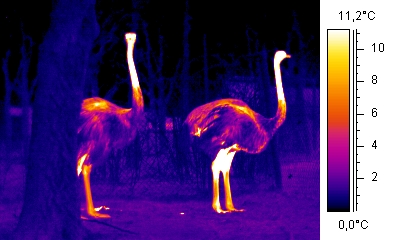
Warm-blooded is a term referring to animal species whose bodies maintain a temperature higher than that of their environment. In particular, homeothermic species (including birds and mammals) maintain a stable body temperature by regulating metabolic processes. Other species have various degrees of thermoregulation.
Because there are more than two categories of temperature control utilized by animals, the terms warm-blooded and cold-blooded have been deprecated in the scientific field.
Terminology
[edit]In general, warm-bloodedness refers to three separate categories of thermoregulation.
- Endothermy[a] is the ability of some creatures to control their body temperatures through internal means such as muscle shivering or increasing their metabolism. The opposite of endothermy is ectothermy.
- Homeothermy[b] maintains a stable internal body temperature regardless of external influence and temperatures. The stable internal temperature is often higher than the immediate environment. The opposite is poikilothermy. The only known living homeotherms are mammals and birds, as well as one lizard, the Argentine black and white tegu. Some non-avian dinosaurs as well as some extinct reptiles such as ichthyosaurs, pterosaurs, plesiosaurs are believed to have been homeotherms.
- Tachymetabolism[c] maintains a high "resting" metabolism. In essence, tachymetabolic creatures are "on" all the time. Though their resting metabolism is still many times slower than their active metabolism, the difference is often not as large as that seen in bradymetabolic creatures. Tachymetabolic creatures have greater difficulty dealing with a scarcity of food.[citation needed]
Varieties of thermoregulation
[edit]A significant proportion of creatures commonly referred to as "warm-blooded," like birds and mammals, exhibit all three of these categories (i.e., they are endothermic, homeothermic, and tachymetabolic).[1] However, over the past three decades, investigations in the field of animal thermophysiology have unveiled numerous species within these two groups that do not meet all these criteria. For instance, many bats and small birds become poikilothermic and bradymetabolic during sleep (or, in nocturnal species, during the day). For such creatures, the term heterothermy was introduced.
Further examinations of animals traditionally classified as cold-blooded have revealed that most creatures manifest varying combinations of the three aforementioned terms, along with their counterparts (ectothermy, poikilothermy, and bradymetabolism), thus creating a broad spectrum of body temperature types. Some fish have warm-blooded characteristics, such as the opah. Swordfish and some sharks have circulatory mechanisms that keep their brains and eyes above ambient temperatures and thus increase their ability to detect and react to prey.[2][3][4] Tunas and some sharks have similar mechanisms in their muscles, improving their stamina when swimming at high speed.[5]
Heat generation
[edit]Body heat is generated by metabolism.[6] This relates to the chemical reaction in cells that break down glucose into water and carbon dioxide, thereby producing adenosine triphosphate (ATP), a high-energy compound used to power other cellular processes. Muscle contraction is one such metabolic process generating heat energy,[7] and additional heat results from friction as blood circulates through the vascular system in premise to their specialized fat cells which produce heat through uncoupled respiration, contributing to thermoregulation.
All organisms metabolize food and other inputs, but some make better use of the output than others. Like all energy conversions, metabolism is rather inefficient, and around 60% of the available energy is converted to heat rather than to ATP.[8] In most organisms, this heat dissipates into the surroundings. However, endothermic homeotherms (generally referred to as "warm-blooded" animals) not only produce more heat but also possess superior means of retaining and regulating it compared to other animals. They exhibit a higher basal metabolic rate and can further increase their metabolic rate during strenuous activity. They usually have well-developed insulation in order to retain body heat: fur and blubber in the case of mammals and feathers in birds. When this insulation is insufficient to maintain body temperature, they may resort to shivering—rapid muscle contractions that quickly use up ATP, thus stimulating cellular metabolism to replace it and consequently produce more heat. Additionally, almost all eutherian mammals (with the only known exception being swine) have brown adipose tissue whose mitochondria are capable of non-shivering thermogenesis.[9] This process involves the direct dissipation of the mitochondrial gradient as heat via an uncoupling protein, thereby "uncoupling" the gradient from its usual function of driving ATP production via ATP synthase.[10]
In warm environments, these animals employ evaporative cooling to shed excess heat, either through sweating (some mammals) or by panting (many mammals and all birds)—mechanisms generally absent in poikilotherms.
Defense against fungi
[edit]It has been hypothesized that warm-bloodedness evolved in mammals and birds as a defense against fungal infections. Very few fungi can survive the body temperatures of warm-blooded animals. By comparison, insects, reptiles, and amphibians are plagued by fungal infections.[11][12][13][14] Warm-blooded animals have a defense against pathogens contracted from the environment, since environmental pathogens are not adapted to their higher internal temperature.[15]
See also
[edit]References
[edit]Footnotes
Citations
- ^ Osvath, Mathias; Němec, Pavel; Brusatte, Stephen L.; Witmer, Lawrence M. (1 November 2024). "Thought for food: the endothermic brain hypothesis". Trends in Cognitive Sciences. 28 (11): 998–1010. doi:10.1016/j.tics.2024.08.002. ISSN 1364-6613.
- ^ Hot Eyes for Cold Fish – Wong 2005 (110): 2 – ScienceNOW
- ^ Block, B.A. & Carey, F.G. (March 1985). "Warm brain and eye temperatures in sharks". Journal of Comparative Physiology B. 156 (2): 229–36. doi:10.1007/BF00695777. PMID 3836233. S2CID 33962038.
- ^ "Warm eyes give deep-sea predators super vision". University of Queensland. 11 January 2005.
- ^ McFarlane, P. (January 1999). "Warm-Blooded Fish". Monthly Bulletin of the Hamilton and District Aquarium Society. Archived from the original on 15 May 2013. Retrieved 31 May 2008.
- ^ Yousef, Hani; Ramezanpour Ahangar, Edris; Varacallo, Matthew (2024), "Physiology, Thermal Regulation", StatPearls, Treasure Island (FL): StatPearls Publishing, PMID 29763018, retrieved 28 February 2024
- ^ Periasamy, Muthu; Herrera, Jose Luis; Reis, Felipe C. G. (24 October 2017). "Skeletal Muscle Thermogenesis and Its Role in Whole Body Energy Metabolism". Diabetes & Metabolism Journal. 41 (5): 327–336. doi:10.4093/dmj.2017.41.5.327. PMC 5663671. PMID 29086530.
- ^ Macherel, David; Haraux, Francis; Guillou, Hervé; Bourgeois, Olivier (1 February 2021). "The conundrum of hot mitochondria" (PDF). Biochimica et Biophysica Acta (BBA) - Bioenergetics. 1862 (2) 148348. doi:10.1016/j.bbabio.2020.148348. ISSN 0005-2728. PMID 33248118.
- ^ Berg, Frida; Gustafson, Ulla; Andersson, Leif (18 August 2006). "The Uncoupling Protein 1 Gene (UCP1) Is Disrupted in the Pig Lineage: A Genetic Explanation for Poor Thermoregulation in Piglets". PLOS Genetics. 2 (8) e129. doi:10.1371/journal.pgen.0020129. ISSN 1553-7404. PMC 1550502. PMID 16933999.
- ^ Cannon, Barbara; Nedergaard, Jan (1 January 2004). "Brown Adipose Tissue: Function and Physiological Significance". Physiological Reviews. 84 (1): 277–359. doi:10.1152/physrev.00015.2003. ISSN 0031-9333. PMID 14715917.
- ^ Dunn, Rob (2011). "Killer Fungi Made us Hotblooded". New Scientist. Retrieved 27 April 2016.(subscription required)
- ^ Aviv Bergman, Arturo Casadevall. 2010. Mammalian Endothermy Optimally Restricts Fungi and Metabolic Costs. mBio Nov 2010, 1 (5) e00212-10. doi:10.1128/mBio.00212-10
- ^ Vincent A. Robert, Arturo Casadevall. 2009. Vertebrate Endothermy Restricts Most Fungi as Potential Pathogens. The Journal of Infectious Diseases, Volume 200, Issue 10, 15 November 2009, Pages 1623–1626. doi:10.1086/644642
- ^ Casadevall A (2012) Fungi and the Rise of Mammals. PLoS Pathog 8(8): e1002808. doi:10.1371/journal.ppat.1002808
- ^ Robert, Vincent A.; Casadevall, Arturo (15 November 2009). "Vertebrate Endothermy Restricts Most Fungi as Potential Pathogens". The Journal of Infectious Diseases. 200 (10): 1623–1626. doi:10.1086/644642. ISSN 0022-1899. PMID 19827944.
External links
[edit]


Warm-blooded
View on GrokipediaTerminology and Definitions
Core Concepts
Endothermy refers to the physiological process by which an organism generates heat internally through metabolic reactions to maintain a body temperature that is typically higher than the ambient environmental temperature.[8] This internal heat production allows endotherms to regulate their thermal environment independently of external conditions, primarily through elevated metabolic rates that convert chemical energy into thermal energy.[9] Homeothermy is the regulatory strategy that maintains a relatively constant core body temperature within a narrow range, despite fluctuations in external temperatures or internal activity levels.[10] This stability is achieved by balancing heat production and loss, enabling consistent physiological function across diverse environments.[11] Tachymetabolism complements these traits as an elevated basal metabolic rate that sustains high levels of activity and supports the continuous energy demands of endothermy and homeothermy.[12] The colloquial term "warm-blooded" describes endothermic and homeothermic animals, such as birds and mammals, which actively generate and retain metabolic heat to keep body temperatures elevated.[13] In contrast, "cold-blooded" refers to ectothermic animals that rely primarily on external heat sources, like sunlight or water, to regulate body temperature, resulting in more variable internal temperatures tied to the environment.[14] All extant birds and mammals exemplify core endothermic groups, with fossil evidence from eggshell geochemistry suggesting that some non-avian dinosaurs may have exhibited potential homeothermy through metabolic thermoregulation.[15]Historical and Modern Usage
The term "warm-blooded" emerged in 18th-century natural history to distinguish animals capable of maintaining a relatively constant internal body temperature independent of environmental fluctuations, contrasting them with "cold-blooded" species whose temperatures varied more directly with surroundings. This usage was popularized by figures such as Erasmus Darwin in his 1794–1796 work Zoonomia, where he described all warm-blooded animals as deriving from a single ancestral form with inherent heat-generating capabilities.[16] Jean-Baptiste Lamarck further employed the term in his 1809 Philosophie Zoologique, classifying mammals and birds as "animaux à sang chaud" based on their consistent high temperatures, which he linked to advanced physiological organization.[17] By the mid-20th century, the limitations of temperature-centric labels like "warm-blooded" became evident, as they overlooked nuances in heat production and regulation. Physiologist Per F. Scholander's pioneering studies in the 1940s and 1950s on thermal adaptation in polar and tropical species shifted focus toward metabolic mechanisms, promoting terms like "endotherm" for internal heat generation and "homeotherm" for stable body temperature maintenance.[18] Scholander's 1950 collaboration on metabolic rates in arctic mammals underscored these distinctions, influencing subsequent physiological research.[19] This evolution was formalized in the 1973 Glossary of Terms for Thermal Physiology by John Bligh and Kevin G. Johnson, which established "endotherm" and "homeotherm" as precise alternatives to avoid implying uniform "warmth" across taxa.[20] In 2025, "warm-blooded" endures in popular science and education for its accessibility but is deprecated in academic and professional contexts, where "endothermy" and "homeothermy" prevail per guidelines from the International Union of Physiological Sciences (IUPS).[21] The IUPS Thermal Commission's 2001 revised glossary reinforces this preference, defining endotherms as organisms relying on metabolic heat for temperature control.[22] Recent reviews, such as the 2022 analysis in The American Biology Teacher, highlight ongoing efforts to abandon "warm-blooded" due to its inaccuracies, advocating endothermy-focused terminology in pedagogy.[4] A common misconception persists that all such animals share identical body temperatures; in reality, birds typically maintain ~39–41°C, higher than the ~37°C average in mammals, reflecting adaptive variations in endothermic strategies.[23]Types of Thermoregulation
Endothermy and Homeothermy
Endothermy refers to the physiological process by which animals generate heat internally through metabolic reactions to maintain elevated body temperatures largely independent of ambient environmental conditions.[2] This metabolic heat production allows endothermic organisms to sustain high and stable core temperatures, distinguishing them from ectotherms that rely primarily on external heat sources. Homeothermy, closely associated with endothermy, involves the active regulation of body temperature within a narrow range to ensure metabolic stability and optimal enzymatic function. In mammals, this range is typically 36–38°C, while in birds it is 39–42°C, achieved through negative feedback loops orchestrated by the hypothalamus, which acts as the central thermostat detecting temperature deviations and initiating corrective responses.[23][24] These mechanisms ensure that body temperature remains relatively constant despite fluctuations in external conditions, supporting consistent physiological performance.[2] Endothermy and homeothermy are uniformly characteristic of most mammals and birds, enabling these animals to exploit diverse ecological niches, including nocturnal activity when temperatures drop and expansion into colder geographic regions that would be inhospitable to ectotherms. The circulatory system plays a crucial role in this integration by transporting metabolically generated heat from production sites, such as muscles and organs, to peripheral tissues via blood flow, thereby promoting even thermal distribution throughout the body.[25] A foundational equation for understanding thermoregulation is the heat transfer relation , where represents the heat energy required, is the body mass, is the specific heat capacity of the tissues (approximately 3.5–4.2 J/g°C for biological materials), and is the change in temperature; this illustrates the thermal inertia that endothermic systems must counteract to maintain homeostasis.[26]Variations and Exceptions
While most endotherms maintain relatively stable body temperatures, heterothermy represents a significant variation where body temperature fluctuates substantially, often as an energy-saving adaptation during periods of stress or inactivity. In hibernating mammals such as arctic ground squirrels (Urocitellus parryii), body temperature can drop to near 0°C or below, supercooling to as low as -2.9°C during torpor phases, far below the typical euthermic range of 37–39°C, allowing metabolic rates to decrease by over 90% to conserve energy over winter.[27] This heterothermic strategy is common among small endotherms facing seasonal food shortages, contrasting with the more constant homeothermy seen in larger species.[28] Regional endothermy provides another deviation, where heat is generated and retained in specific body parts rather than uniformly across the body, enabling targeted physiological advantages in otherwise ectothermic or partially endothermic animals. The opah (Lampris guttatus), a mesopelagic fish, achieves whole-body endothermy through vascular countercurrent heat exchangers in its gills and pectoral fins, maintaining core temperatures up to 5°C above ambient water, which enhances swimming efficiency and aerobic capacity in cold depths.[29] Similarly, swordfish (Xiphias gladius) exhibit cranial regional endothermy, warming their brains and eyes to 10–15°C above surrounding water temperatures via modified eye muscles acting as heaters, thereby improving visual acuity and neural function during deep dives.[30] Among birds and mammals, exceptions to strict endothermy occur particularly in smaller or basal species that employ torpor or variable thermoregulation to cope with environmental challenges. Bats, such as the little brown bat (Myotis lucifugus), routinely enter daily torpor, reducing body temperature to near ambient levels (around 5–10°C) during rest, which lowers energy expenditure by up to 99% without full hibernation.[31] Monotremes, the egg-laying mammals like the platypus (Ornithorhynchus anatinus) and echidna (Tachyglossus aculeatus), display inherently variable body temperatures averaging 30–32°C but ranging as low as 5°C in torpor for echidnas, reflecting their transitional physiology between reptilian and mammalian traits.[32] Recent research has uncovered potential localized endothermy in reptiles, challenging traditional views of them as strictly ectothermic. A 2024 study proposes the "endothermic brain hypothesis," suggesting that brain elaborations in early archosaurs, including ancestors of crocodiles, facilitated regional neural warming to support enhanced cognition and foraging efficiency, with crocodilians retaining vestigial traits like separated pulmonary and systemic circulations that may enable intermittent brain heating.[33] This hypothesis implies subtle thermoregulatory variations in extant reptiles, such as localized cranial warmth in crocodiles (Crocodylus niloticus), aiding sensory processing in variable aquatic environments. Full endothermy is universal among birds, with over 11,000 species maintaining body temperatures around 40–42°C, enabling global distribution and high activity levels.[34] In contrast, certain insects like hawkmoths (*Manduca sexta*) demonstrate flight-induced endothermy, rapidly elevating thoracic temperatures to approximately 40°C through shivering prior to and during flight, without achieving whole-body homeothermy, which supports short bursts of powered flight in cool conditions.[35]Mechanisms of Thermoregulation
Heat Production
Warm-blooded animals, or endotherms, primarily generate internal heat through metabolic processes inherent to cellular respiration. In these organisms, approximately 60-70% of the energy from basal metabolism is converted to heat due to the inefficiency of ATP production, where the majority of chemical energy from nutrients is released as thermal energy rather than being captured in ATP bonds.[36] This heat arises from the hydrolysis of ATP and other exothermic reactions in mitochondria, quantified by the equation for heat output: where is the heat produced, is the efficiency of energy conversion (typically around 30-40% for aerobic respiration), and is the total energy input from substrates like glucose.[37] This basal metabolic heat production is essential for maintaining core body temperatures around 37-40°C in mammals and birds, independent of environmental conditions within the thermoneutral zone.[38] To respond to cold stress, endotherms activate shivering thermogenesis, involving rapid, involuntary contractions of skeletal muscles that elevate heat production. This mechanism can increase metabolic heat output up to five times the basal rate in mammals, primarily through enhanced ATP hydrolysis and oxidative phosphorylation in muscle mitochondria without significant mechanical work.[39] Shivering is a universal facultative response in endotherms, triggered by hypothalamic signals when core temperature drops, and it serves as the primary acute defense against hypothermia until non-shivering pathways dominate in adapted individuals.[40] Non-shivering thermogenesis provides a more efficient, sustained heat generation pathway, predominantly via brown adipose tissue (BAT) in mammals. BAT mitochondria express uncoupling protein 1 (UCP1), which dissipates the proton gradient across the inner membrane, allowing electron transport to produce heat directly instead of ATP synthesis.[41] This process is particularly prominent in newborns, where BAT accounts for rapid warming post-birth, and in hibernators, facilitating arousal from torpor without muscle fatigue.[42] While present in most eutherian mammals, functional BAT and UCP1-mediated thermogenesis are absent in swine (Sus scrofa), which rely more heavily on shivering due to evolutionary loss of this tissue.[43] Beyond specialized mechanisms, heat production also stems from organ-specific metabolism, with the liver and brain contributing significantly to basal thermogenesis. The liver, a highly metabolic organ, accounts for 20-25% of total heat output in resting mammals through processes like gluconeogenesis and detoxification, which demand substantial ATP turnover.[44] Similarly, the brain generates notable heat via constant neural activity and ion pumping, comprising about 20% of basal metabolic rate despite its small mass, underscoring the role of vital organs in endothermic homeostasis.[45] Recent research as of 2025 highlights mitochondrial adaptations in high-latitude mammals that enhance thermogenic efficiency, such as increased proton leak and optimized respiratory chain complexes in arctic species like the polar bear (Ursus maritimus), allowing greater heat yield per unit of fuel under prolonged cold exposure.[46] These adaptations, including elevated UCP1-independent uncoupling in muscle mitochondria, support sustained endothermy in extreme environments without excessive energy expenditure.[47]Heat Conservation and Dissipation
Warm-blooded animals employ various physiological and anatomical mechanisms to conserve metabolic heat generated internally while also dissipating excess heat to prevent overheating. These strategies are essential for maintaining a stable core body temperature, typically around 37–42°C in mammals and birds, despite fluctuating environmental conditions.[24]Insulation
Insulation serves as a primary barrier against conductive and convective heat loss in endotherms, primarily through layers of fur, feathers, or blubber that trap air or fat adjacent to the skin. Fur and feathers create a static air layer that acts as an effective insulator due to air's low thermal conductivity, reducing heat transfer to the environment by up to several-fold compared to bare skin.[48] In polar bears (Ursus maritimus), the dense, multilayered fur traps insulating air and, combined with blubber, minimizes radiative and convective losses, allowing the animal to thrive in subzero Arctic conditions with limited heat emission visible via infrared imaging.[49] Blubber, a thick subcutaneous fat layer in marine mammals like seals and whales, provides similar insulation by reducing heat conduction, with its effectiveness enhanced in colder waters where it can constitute up to 50% of body mass.[50] Feathers in birds, such as those of penguins, form overlapping barriers that further trap air, preventing convective loss during exposure to wind or water.[51]Vasoregulation
Vasoregulation adjusts peripheral blood flow to balance heat retention and loss through vasoconstriction and vasodilation of cutaneous vessels, controlled by the autonomic nervous system. In cold environments, vasoconstriction reduces blood flow to the skin and extremities, minimizing convective heat loss from warm arterial blood to cooler venous return, which can lower peripheral temperatures by 10–20°C while preserving core heat.[3] This mechanism is particularly vital in mammals and birds, where it diverts blood inward, effectively increasing insulation by limiting heat transfer at the surface. Conversely, vasodilation in warm conditions increases skin blood flow, promoting radiative and convective heat dissipation; for instance, human skin can flush to release up to 25% of metabolic heat via this route during exercise.[52] These responses are rapid, occurring within seconds to minutes, and integrate with other thermoregulatory signals for precise control.[53]Evaporative Cooling
Evaporative cooling dissipates heat through water vaporization from respiratory or cutaneous surfaces, crucial for preventing hyperthermia in warm or active conditions, and can account for over 90% of heat loss in some scenarios. In humans, eccrine sweat glands enable sweating rates up to 2 L/hour during intense activity in hot environments, with each gram of evaporated sweat removing approximately 2.43 kJ of heat, effectively cooling the body surface.[54] Dogs and many birds rely on panting, which increases respiratory evaporation; for example, dogs can pant at rates exceeding 400 breaths per minute, enhancing evaporative loss from the tongue and lungs while minimizing water use compared to sweating.[55] Countercurrent heat exchange in extremities further aids dissipation control; in penguin flippers, arterial blood warms venous return from cold water, retaining core heat while allowing controlled loss through the thin-finned surfaces.[56]Behavioral Adaptations
Behavioral strategies complement physiological mechanisms by actively modifying the animal's interaction with its thermal environment, often serving as the first line of defense against temperature extremes. Huddling in groups, as seen in emperor penguins (Aptenodytes forsteri), reduces exposed surface area and convective loss, potentially lowering individual heat expenditure by 50% in Antarctic winds.[57] Burrowing or seeking shelter insulates against cold; rodents like ground squirrels dig into soil, where temperatures are more stable, cutting heat loss via conduction. Postural changes, such as tucking limbs or adopting a spherical shape, minimize surface area exposure—cats curl up to halve radiative loss, while birds fluff feathers to enhance trapped air insulation.[58] These behaviors are instinctive or learned, triggered by hypothalamic signals, and can adjust set points temporarily for energy efficiency.[53]Physiological Limits
Thermoregulation operates within narrow physiological bounds, with the hypothalamus acting as the central integrator that maintains a core temperature set point through neural and hormonal feedback, adjustable by 1–4°C in response to stressors like fever or acclimation. Exceeding upper limits leads to hyperthermia; in mammals, core temperatures above 42°C disrupt protein function and enzyme activity, often proving lethal due to cellular damage and organ failure within hours.[59] The hypothalamus detects deviations via warm-sensitive neurons in the preoptic area, initiating cascading responses like vasodilation or sweating to restore balance, but prolonged exposure beyond 41–42°C overwhelms these systems, as seen in heatstroke cases where mortality rises sharply.[48] Lower limits are similarly critical, though conservation mechanisms provide a wider buffer against hypothermia.[26]Evolutionary Aspects
Origins and Development
Endothermy, the physiological ability to generate and maintain elevated body temperatures through internal metabolic heat production, evolved independently in the avian and mammalian lineages. In mammals, this trait emerged from synapsid ancestors during the late Carboniferous to Permian periods, approximately 300 million years ago (MYA), with early evidence in varanopid synapsids exhibiting elevated metabolic rates inferred from bone microstructure.[60] In birds, endothermy arose in the Early Jurassic (~180 MYA) within the archosaur lineage from theropod dinosaurs, supported by phylogenetic analyses of metabolic proxies and a shift to colder climates.[61][62] Bone histology provides key evidence for these origins, revealing fibrolamellar bone tissue and high vascularization indicative of rapid, continuous growth rates comparable to modern endotherms in both synapsid and theropod fossils, contrasting with the slower, cyclical growth seen in ectothermic reptiles.[63][64] Transitional fossils from theropod dinosaurs illustrate the gradual development of homeothermy, the stable maintenance of body temperature. Species from polar regions, such as those in the Late Cretaceous, lack annual growth rings in their bones, suggesting year-round growth without metabolic slowdowns typical of ectotherms, which implies partial endothermic capabilities to sustain activity in cold, seasonal environments.[65] The evolution of endothermy was driven by environmental pressures, including climate shifts during the Mesozoic era that favored sustained locomotor activity and foraging in variable temperatures. An early Jurassic cooling event in theropod habitats likely selected for enhanced heat production, enabling constant activity independent of ambient conditions.[62] The multiple origins hypothesis is exemplified in teleost fishes, where regional endothermy evolved convergently in scombroid groups like tunas around 50-100 MYA, involving vascular counter-current heat exchangers to maintain elevated temperatures in swimming muscles for improved performance.[66] The timeline marks ~300 MYA for initial synapsid tachymetabolism, with full homeothermy achieved by the Jurassic in avian ancestors, as evidenced by accelerated skeletal growth and insulation precursors in fossils.[67] At the genetic level, key innovations involved mutations in thyroid hormone pathways and mitochondrial genes that underpinned tachymetabolism, the high metabolic flux characteristic of endothermy. Thyroid hormones regulate basal metabolic rate by influencing mitochondrial activity and heat generation, with evolutionary shifts enhancing their role in synapsids and archosaurs to support elevated energy demands.[68] Mitochondrial adaptations, such as modifications in uncoupling proteins and electron transport chain efficiency, enabled efficient non-shivering thermogenesis, as seen in comparative genomic reconstructions of amniote ancestors.[69] These genetic changes collectively facilitated the transition from ectothermy to sustained internal heat production across independent lineages.[6]Advantages and Costs
Warm-blooded animals, or endotherms, gain significant selective advantages from maintaining a constant high body temperature, enabling enhanced physiological performance across diverse environments. One key benefit is the ability to sustain high levels of activity in cold conditions, where ectotherms would become sluggish due to lowered body temperatures. This allows endotherms to forage, hunt, and escape predators effectively regardless of ambient temperature fluctuations.[70] Additionally, the elevated body temperature accelerates biochemical reactions, leading to faster nerve conduction and muscle contraction speeds—potentially up to 10 times quicker than in ectotherms at typical environmental temperatures—resulting in superior reflexes and agility. For instance, endothermic mammals and birds exhibit rapid response times that confer a competitive edge in predation and evasion. This physiological speed supports broader habitat ranges, as endotherms can exploit cold or variable climates inaccessible to many ectotherms limited by thermal constraints.[70][7] Endothermy also facilitates advanced parental care, such as brooding eggs or newborns to maintain optimal developmental temperatures, improving offspring survival rates compared to ectothermic strategies reliant on environmental warmth. These advantages collectively expand ecological niches and enhance fitness in unpredictable settings.[71] However, these benefits come at substantial energetic costs, primarily a metabolic rate 5–10 times higher than that of comparable ectotherms, necessitating frequent foraging to meet energy demands. Daily energy expenditure can be estimated as , where basal metabolic rate (BMR) follows Kleiber's law, scaling with body mass as . This elevated baseline consumption limits energy reserves and increases vulnerability to food scarcity, as endotherms deplete fat stores far quicker than ectotherms during starvation.[72][73] Trade-offs further manifest in body size patterns; in tropical regions, endotherms often evolve smaller sizes to mitigate heat stress and improve heat dissipation, contrasting with larger forms in cooler latitudes per Bergmann's rule. This adaptation reduces overheating risks but constrains overall biomass and endurance in hot environments.[74] Evolutionarily, these costs are balanced by higher reproductive outputs, including faster development and earlier reproduction, which offset metabolic demands through increased lifetime fitness. Recent 2025 life-history optimization models suggest endotherms have a fitness advantage in climatically variable habitats, where consistent activity sustains population persistence. Endotherms accordingly dominate apex predation roles across ecosystems, leveraging sustained endurance and speed to outcompete ectotherms at the top trophic levels.[75][76][77]Biological Implications
Defense Against Pathogens
Warm-blooded animals maintain elevated body temperatures, typically between 37°C and 42°C, which provide a significant nonspecific defense against fungal pathogens. The fungal defense hypothesis posits that endothermy evolved partly as a selective pressure to inhibit fungal growth, as high temperatures restrict the proliferation of most fungal species. For instance, a study of 4,802 fungal strains found that only about 21% from soils and 27% from plants could grow at 37°C, meaning the majority (~73-79%) of environmental fungi are inhibited at mammalian body temperatures.[78] This hypothesis was proposed by Arturo Casadevall in 2012, building on earlier work showing endothermy as a barrier to fungal infection. A 2024 review supports these findings, noting that thermotolerance remains an uncommon characteristic among fungi despite environmental pressures.[79][80][81] The mechanism underlying this resistance involves heat-induced disruption of fungal cellular processes. Elevated temperatures denature fungal enzymes essential for metabolism and replication, while also compromising cell wall integrity and membrane fluidity, leading to cell lysis and inhibited growth. While most fungi are inhibited, some opportunistic pathogens like Candida albicans and Aspergillus fumigatus have evolved thermotolerance to grow at 37°C, though they may face stresses at higher fever temperatures. In contrast, ectothermic animals, which operate at ambient temperatures often below 30°C, face heightened susceptibility to fungal infections. The amphibian chytridiomycosis crisis exemplifies this, where the fungus Batrachochytrium dendrobatidis thrives at 17–25°C, causing mass die-offs in over 500 species since the 1980s by disrupting skin electrolyte balance.[82][83] Beyond fungi, warm body temperatures reduce the virulence of certain bacterial pathogens adapted to cooler environments. For example, Salmonella enterica serovar Typhimurium shows reduced intracellular replication and invasion efficiency at 37°C compared to 25°C in macrophage models, as higher temperatures downregulate key virulence genes and enhance host immune responses. This broader resistance aligns with the evolutionary pressures during the Mesozoic era, where massive fungal blooms following the Cretaceous-Paleogene extinction event—triggered by plant decomposition and reduced UV radiation—likely favored the survival of endothermic vertebrates over ectotherms and dinosaurs. Casadevall's hypothesis links these blooms to the rise of mammals, suggesting co-evolution where endothermy provided a critical edge against proliferating fungi.[84][79] However, this thermal defense is not absolute and has limitations. Immunocompromised individuals, such as those with HIV/AIDS or undergoing chemotherapy, remain vulnerable to thermotolerant fungi like Candida and Aspergillus, which can cause invasive infections even at 37°C. Additionally, ongoing climate change is eroding this advantage for ectotherms; for example, a 2025 study indicates rising global temperatures are enabling fungal pathogens to adapt and expand into new host ranges, exacerbating threats to amphibians and reptiles.[85][86] These findings underscore that while endothermy offers robust protection, it interacts with immune status and environmental factors.Ecological and Physiological Effects
Endotherms play pivotal ecological roles as keystone predators that structure food webs and maintain ecosystem balance. For example, gray wolves (Canis lupus) exert top-down control on herbivore populations like elk (Cervus canadensis), reducing overgrazing and allowing riparian vegetation and beaver populations to recover, as demonstrated by trophic cascades following their reintroduction to Yellowstone National Park in 1995.[87] [88] This regulatory influence extends to broader biodiversity, preventing competitive exclusion and supporting diverse plant and animal communities. Additionally, endotherms exhibit higher migration and colonization rates than ectotherms due to their metabolic independence from ambient temperatures, enabling them to track seasonal resources and rapidly occupy new habitats, such as post-glacial environments.[89] [90] Physiologically, the consistent body temperature of endotherms sustains high metabolic rates that support advanced neural functions, facilitating complex behaviors including learning, problem-solving, and tool use observed in species like corvids and primates.[33] [91] This thermal stability enhances cognitive flexibility, allowing endotherms to adapt to varied environmental challenges beyond the limitations of ectothermic variability. In reproduction, endothermy underpins viviparity in mammals by providing a stable internal milieu for embryonic development, which improves offspring viability compared to oviparity in cooler, fluctuating conditions; this adaptation evolved from endothermic oviparous ancestors through progressive egg retention.[92] [93] Endotherms' interactions with their environments reveal vulnerabilities to climate change, particularly heat stress, which has driven up to 38% declines in tropical bird abundances since the 1950s, including range contractions in small species unable to dissipate excess heat efficiently.[94] [95] These shifts disrupt community dynamics, as seen in endotherm-ectotherm pollination networks where bats (Chiroptera) provide reliable nocturnal service to chiropterophilous plants, outperforming cold-sensitive insects in cooler or variable conditions and thus sustaining plant diversity.[96] [97] Globally, endotherms dominate terrestrial vertebrate biomass patterns, with humans and livestock accounting for approximately 96% of all mammal biomass—livestock at 62% and humans at 34%—eclipsing wild mammals at just 4% and underscoring anthropogenic influences on ecosystems.[98] In marine realms, endothermic tunas (Thunnus spp.) shape fisheries through their regional endothermy-enabled migrations to exploit prey-rich zones, but their sensitivity to warming oceans heightens stock vulnerabilities, projecting significant shifts in catch distributions under climate scenarios.[99] [100]References
- https://fr.wikisource.org/wiki/Philosophie_zoologique_(1809)