Hubbry Logo
Harry PowersHarry PowersMain
Open search
Harry Powers
Community hub
Harry Powers
logo
8 pages, 0 posts
0 subscribers
Be the first to start a discussion here.
Harry Powers
Harry Powers
from Wikipedia

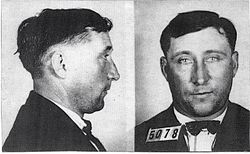
Harry F. Powers (born Harm Drenth; November 17, 1892 – March 18, 1932) was a Dutch-born American serial killer who was hanged in Moundsville, West Virginia.

Key Information

Powers lured his victims through "lonely hearts" advertisements, claiming he was looking for love, but ultimately murdering them for their money. Davis Grubb's 1953 novel The Night of the Hunter and its 1955 film adaptation and 1991 TV adaptation were based on these crimes, with Preacher Harry Powell being the character inspired by Powers.[1] Preacher was played by Robert Mitchum in the 1955 film and by Richard Chamberlain in the 1991 TV movie. Jayne Anne Phillips's novel Quiet Dell (2013) examined the Powers case anew. Sergio Aquindo's graphic novel Harry & the helpless children (2012) traces the killer's career and the fascination the case aroused in the press at the time.

Early life

[edit]

He was born as Harm Drenth in 1892 in Beerta, the Netherlands.[2] He immigrated to the United States in 1910, first living in Cedar Rapids, Iowa, and then moving to West Virginia in 1926.[3]

In 1927, he married Luella Strother, an owner of a farm and grocery store, after responding to her lonely hearts advertisement. Though now married, Powers took out his own lonely hearts advertisements. Many women wrote in response to his advertisement. "Postal records later indicated that replies to Powers' advertisement poured in at a rate of 10 to 20 letters per day."[3] Powers constructed a garage and basement at his home in Quiet Dell; the garage was later discovered to be the scene of the murders, of which he was convicted.

After his 1931 arrest, police investigation using fingerprints and photographs revealed that he had been incarcerated for burglary under his birth name in Barron County, Wisconsin, in 1921 and 1922.[4] Although not charged, Powers was suspected of involvement in the 1928 disappearance of Dudley C. Wade, a carpet sweeper salesman with whom he had once worked, and the unsolved murder of a Jane Doe in Morris, Illinois.[5]

Murders

[edit]

Using the alias "Cornelius Orvin Pierson", Powers began writing letters to Asta Eicher, a widowed mother of three residing in Park Ridge, Illinois. Powers went to visit Eicher and her children—Greta, Harry, and Annabel—on June 23, 1931,[6] and soon left with Eicher for several days. Elizabeth Abernathy cared for the children until she received a letter saying that "Pierson" was going to come pick up the children to join him and their mother.[7] When he arrived, he sent a child to the bank to withdraw money from Eicher's account. The child returned empty-handed because the signature on the check was forged. Powers and the children then hastily departed. He told neighbors concerned about their disappearance that they were on a trip to Europe.[7]

Some time later, Powers courted Dorothy Pressler Lemke from Northborough, Massachusetts, who was also looking for love through lonely hearts advertisements. He brought her to Iowa to marry her and persuaded her to withdraw $4,000 from her bank account. Lemke did not notice that instead of sending her trunks to Iowa, where Powers claimed to be living, he sent them to the address of "Cornelius O. Pierson" of Fairmont, West Virginia. Asta Eicher, her children, and Dorothy Lemke had disappeared with no explanation.[8]

In August 1931, police began investigating the disappearances of Asta Eicher and her children, beginning with "Pierson", who was discovered emptying Eicher's house.[9] They found love letters, which led them to Quiet Dell, where "Pierson" lived under the name Harry Powers with his wife.[9] Powers was arrested and his house in Quiet Dell was searched. Police found the crime scene in four rooms located under Pierson's garage. Bloody clothing, hair, a burned bankbook and a small bloody footprint of a child were discovered. Citizens of the town began to arrive at the scene to watch the investigation unfold. A 15-year-old bystander informed the sheriff that he had recently helped Powers dig a ditch on his property. The freshly filled-in ditch was then dug up, and the bodies of Asta Eicher, her children, and Dorothy Lemke were uncovered.[3]

Evidence and autopsy results showed that the two girls and their mother had been strangled while the young boy's head was beaten in with a hammer.[3] Lemke was the last victim uncovered; she had also been strangled, with a belt still wrapped around her neck.[3] Love letters were found in the trunk of Powers' automobile. He had written back to many women with the intention of stealing their money and killing them, just as with his most recent victims.[3]

Trial and execution

[edit]

Shortly following his arrest, Powers received two black eyes and bruising, allegedly from falling down a staircase during his questioning.[3] On September 20, 1931, a lynch mob attempting to take Powers from the jail was dispersed with fire hoses and tear gas.[10] Powers was then moved to the West Virginia State Penitentiary in Moundsville.

Powers' five-day trial was held at a local opera house because of the large number of spectators. Numerous witnesses testified to the evidence in Powers' home, that he had been with the victims and picked up their luggage, and so on; Powers also testified for himself. On December 12, 1931, he was sentenced to death for the murder of Dorothy Lemke.[3][11] He was hanged on March 18, 1932.[7][12]

See also

[edit]

References

[edit]

Further reading

[edit]
[edit]
Revisions and contributorsEdit on WikipediaRead on Wikipedia
from Grokipedia
Harry Powers (born Harm Drenth; November 17, 1893 – March 18, 1932) was a Dutch immigrant turned American , notorious as the " of Quiet Dell" for luring at least five victims—two women and three children—through fraudulent matrimonial advertisements during the , murdering them on his farm in Quiet Dell, , and burying their bodies in a drainage ditch. Born in Beerta, (now the ), Powers immigrated to the as a young man, anglicizing his name and settling in the Clarksburg area of , where he worked as a door-to-door vacuum cleaner salesman, small-time grocer, and farmer. Under aliases such as Cornelius Pierson, he placed ads in "lonely hearts" columns of newspapers and magazines, posing as a wealthy widower seeking marriage to exploit financially vulnerable women. His confirmed victims included Illinois widow Asta Eicher, 43, and her three children—Greta, 14; Harry, 12; and Anabel, 9—whom he killed in June 1931 by strangulation and other brutal means after luring them with promises of a new life; and Massachusetts widow Dorothy Lemke, 50, murdered in July 1931 by similar methods for her modest savings. Powers' crimes were uncovered in August 1931 when Eicher's brother-in-law, suspicious of her disappearance, traveled to and confronted him, leading to Powers' arrest on August 27 after bloodstained items and a suspicious "murder farm" garage were found on his property. He quickly confessed to the five killings, admitting to stealing around $2,000 from the victims, though he was suspected of up to 50 s across multiple states; only the five bodies were recovered from his Quiet Dell farm. His trial, held from December 7 to 11, 1931, in Clarksburg's Moore's due to overwhelming , resulted in a on for first-degree on four counts (Eicher and her children), with additional charges related to Lemke. Powers was hanged on March 18, 1932, at the State Penitentiary in Moundsville, marking one of the era's most sensational cases and highlighting the dangers of Depression-era scams.

Early Life

Childhood in the Netherlands

Harm Drenth, later known as Harry Powers, was born on November 17, 1892, in Beerta, a rural village in the Groningen province of the Netherlands, to Wilko Drenth and Jantje Woltjer. His father worked as a daglooner, or day laborer, in the agricultural region, indicative of the family's modest socioeconomic status amid the area's farming economy. Drenth was the third of four children; his second and fourth siblings died in infancy, leaving him with one surviving older sister, Grietj. Raised by both parents in this tight-knit rural community, his early years were shaped by the rhythms of Dutch countryside life, where opportunities were limited and family ties strong. Formal was sparse; Drenth struggled in school, often skipping classes as a truant, though records suggest he possibly earned a . By his late teens, Drenth exhibited troubling behavioral patterns, including habitual lying, , trespassing, and alcohol use, traits later described as congenital in nature. These issues may have influenced his family's decision to seek greater for him abroad. In 1910, at age 18, they sent him to the accompanied by the Bakker family to labor on a farm, with his parents following on March 21, 1911. Upon settling in America, Drenth anglicized his name.

Immigration and Settlement in America

Harm Drenth immigrated to the in 1910 at the age of 18, arriving with the Bakker family and initially settling in . His parents joined him there the following year in March 1911, marking the beginning of their American life in the Midwest. This move from Beerta, , represented a significant shift, as Drenth sought opportunities in the growing industrial and agricultural landscape of early 20th-century America. Upon arrival, Drenth quickly adapted to his new environment by anglicizing his first name from —a Dutch equivalent of Herman—to Herman Drenth in 1911, facilitating easier integration into English-speaking communities. He took up early employment as a farm laborer on a local property known as the Ross place, though he soon departed due to his strong dislike of hierarchical authority. By this time, he had begun mastering English, becoming bilingual within a year and immersing himself in American customs through daily interactions in Iowa's rural and small-town settings. In his early twenties, Drenth transitioned to other entry-level positions, including door-to-door sales and assisting in a local grocery store, which allowed him to build social connections and navigate the economic challenges faced by recent immigrants. These years were marked by his efforts to establish stability, though he exhibited a restless nature, eventually adopting the alias Harry F. Powers around 1918 to further blend into American society. By the mid-1920s, seeking better prospects, he relocated to in 1926, settling near Clarksburg and transitioning into more entrepreneurial pursuits. This period of settlement solidified his American identity, bridging his Dutch roots with a burgeoning life in the Appalachian region.

Personal Life

Marriage and Family

In 1927, Powers married Luella Blanche Strother in , after responding to her lonely hearts advertisement. The couple established a more stable domestic life together and settled in Quiet Dell, a small community just outside , where they resided at 111 Quincy Street in a modest home. Powers maintained the facade of a reliable and community member, occasionally traveling for work while leaving Luella at home. The couple had no children, and their marriage appeared outwardly unremarkable to neighbors, with no reported strains or unusual behaviors noted in public records.

Occupation and Residence

Harry Powers settled in , by the , where he worked briefly as a salesman, engaging in sales that supplemented his income. In 1927, he married Luella Strother, who owned a small in the city's Broad Oaks neighborhood and a in the rural community of Quiet Dell; following the , Powers helped manage the store, which provided their family's modest livelihood. The couple resided on the Quiet Dell property, a secluded with a main house and detached structures including a garage, where Powers balanced daily store duties and occasional sales calls. To his neighbors and the local community, Powers appeared as an ordinary, dependable husband and businessman, a perception shattered only after his , leaving residents in profound shock.

Modus Operandi

The Lonely Hearts Correspondence

In the late , Harry Powers began his scheme by placing advertisements in lonely hearts publications, such as those from the American Friendship Society, to target vulnerable women seeking companionship, particularly widows and divorced individuals during the economic hardships of the . These ads portrayed him as a wealthy and kind widower, for example claiming: "Wealthy widower, worth $150,000. Has income from $400 to $2,000 a month. Own a beautiful 10-room home... My wife would have her own and plenty of spending money." He often used aliases like Cornelius O. Pierson to maintain anonymity while fabricating stories of financial security and a prosperous life as a civil engineer. Powers' correspondence style involved crafting romantic and persuasive letters to build trust gradually, starting with expressions of for the women's and progressing to promises of , emotional support, and a shared affluent future. These letters frequently included requests for photographs, personal details, and small sums of under pretexts like travel expenses or gifts, exploiting the recipients' desires for stability. By presenting himself as a compassionate figure who had suffered loss similar to theirs, he created an illusion of genuine connection, often referencing his supposed isolated farm in Quiet Dell, , as an idyllic destination for reunion. The volume of Powers' exchanges was extensive, with investigators discovering correspondence with over a hundred women across the , involving dozens of ongoing threads that spanned years and utilized multiple fabricated personas to juggle interactions. This methodical approach allowed him to sustain the deception while identifying potential victims based on their responses, prioritizing those who appeared financially independent or emotionally isolated.

Luring and Exploitation of Victims

Following the initial exchange of letters through lonely hearts correspondence clubs, Harry Powers escalated his interactions by inviting targeted women to his property in Quiet Dell, West Virginia, under promises of marriage and a prosperous future together. He often posed as a wealthy using the alias Cornelius Pierson to enhance his appeal, convincing correspondents to make the journey alone or with minimal companions for secrecy, thereby minimizing the risk of external intervention. Travel arrangements were typically handled discreetly, with Powers providing instructions or funds to facilitate their arrival without alerting family members or authorities. Upon the women's arrival, Powers employed psychological manipulation to establish control, beginning with displays of affection and reassurance to build immediate trust and emotional dependence. This feigned intimacy allowed him to isolate them in a detached structure on his property, such as a soundproofed garage or , effectively preventing escape or communication with the outside world. As trust deepened, he subtly introduced threats or coercive pressure to maintain dominance, ensuring compliance while shifting focus to material extraction. Exploitation for financial gain followed this isolation, with Powers pressuring victims to surrender jewelry, cash, and personal valuables immediately upon arrival. He coerced them into signing letters or documents authorizing bank withdrawals, asset liquidation, or property transfers, often depleting their resources under the guise of preparing for their shared life. This pattern—escalating from romantic enticement in correspondence to physical confinement and systematic —characterized his approach across multiple targets, prioritizing widows with discernible wealth to maximize gains.

The Crimes

The Eicher Family Murders

In June 1931, Harry Powers, using the alias Cornelius Pierson, began corresponding with Asta Eicher, a 43-year-old widow from , through a matrimonial agency, promising and a new life together. Eicher, recently widowed and struggling financially during the , was drawn in by Powers' affectionate letters describing his prosperous life in . She shared details of her modest circumstances and her three children—Greta (14), Harry (12), and Anabel (9)—hoping for stability. On August 24-25, 1931, Eicher and her children arrived by train in , where Powers met them at the station and escorted them to his residence in nearby Quiet Dell. Initially, the family stayed with Powers, who continued to portray himself as a devoted suitor, but he soon relocated them to an isolated barn on his property, claiming it was temporary preparation for their future home. Isolated from outsiders, the Eichers were subjected to increasing control, with Powers confiscating their belongings and money under the pretense of securing their new life. Late in August 1931, Powers murdered Asta Eicher first, strangling her in the barn after she discovered his deceptions and attempted to leave with her savings. He then killed the children one by one—strangling daughters Greta and Anabel, and bludgeoning son Harry with a blunt object—over the following hours to eliminate witnesses. The motive was financial gain; Powers had already extracted Eicher's life savings of approximately $2,000 and planned to sell her , including jewelry and clothing, while forging documents to claim her assets. Powers buried the bodies in shallow graves beneath the barn floor and in a nearby ditch, covering them with lime to hasten and conceal the evidence. He then returned their trunks to the Clarksburg , shipping them back to Park Ridge labeled as "returned goods" to maintain the illusion that the family had simply moved on. This act of concealment delayed suspicion, allowing Powers to continue his schemes briefly before neighbors noticed inconsistencies in the family's disappearance.

The Dorothy Lemke Murder

In 1931, Harry Powers, posing as the affluent Cornelius O. Pierson, contacted Dorothy Lemke, a 50-year-old divorced nurse from , via the American Friendship Society in , promising and a comfortable life together. Powers portrayed himself as a successful businessman, exchanging affectionate letters that convinced Lemke of his sincerity and financial stability. Lemke arrived alone at Powers' property in Quiet Dell, West Virginia, on June 28, 1931. She brought personal belongings, including clothing, jewelry, and approximately $1,500 in cash—savings accumulated from her nursing career and late husband's estate—intending to start a new life with her prospective husband. Upon arrival, Lemke stayed briefly at the isolated farmhouse, where Powers hosted her under the guise of domestic preparation, but he quickly exploited her trust to gain control over her assets. He murdered Lemke by strangulation in an outbuilding on his property shortly after her arrival in July 1931. He then disposed of her body in a shallow, separate dug in a ditch adjacent to the garage, wrapping it in burlap to conceal it hastily amid the rural terrain. This site was distinct from the larger drainage ditch used for the Eicher family remains, reflecting Powers' ongoing efforts to hide on his 1.75-acre lot. In addition to the killing, Powers stole Lemke's money, clothing, and other valuables, which he later pawned or sold to fund his lifestyle, including arranging the sale of her Massachusetts home through forged documents. This financial exploitation underscored his consistent pattern of preying on isolated, affluent women without family oversight, differing from familial cases by focusing solely on an adult victim to maximize personal gain. Her body was discovered on August 29, 1931, during the investigation into the Eicher disappearances, leading Powers to confess shortly thereafter.

Arrest and Investigation

In late August 1931, a boarder in the Eicher home, William O'Boyle, alerted authorities in , to the disappearance of Asta Eicher and her three children after returning from a trip to find a man emptying their house of belongings. O'Boyle confronted the man, who identified himself as Cornelius O. Pierson and claimed the family had relocated to with him but could provide no proof. Examination of letters found in the Eicher residence revealed correspondence with Pierson, whose return address pointed to . In late August 1931, police coordinated with Clarksburg authorities, leading to Powers' arrest on August 27 after tracing the Pierson alias to him through the he rented. Powers, who lived in the nearby Quiet Dell community, firmly denied any knowledge of or involvement with the Eicher family, offering inconsistent explanations for his activities that failed to alleviate concerns. As public interest grew, media outlets began covering the case extensively, amplifying reports of the Eichers' disappearance and drawing tips from individuals who had encountered Powers through matrimonial ads. This pressure led to an immediate search of Powers' barn and garage on his Quiet Dell property starting , allowing investigators to probe for evidence linked to the missing persons. The initial search uncovered incriminating items, including articles of women's and , apparent bloodstains on the premises, and other traces suggestive of foul play, though no bodies were located that day. These discoveries intensified the scrutiny on Powers and set the stage for deeper examination of the site the following day.

Discovery of Evidence and Confession

On August 27, 1931, Harry Powers was arrested in , based on correspondence linking him to the disappearance of Asta Eicher and her family. The following day, August 28, authorities conducted a thorough search of his Quiet Dell property, unearthing the decomposed bodies of Eicher and her three children—Greta (14), Harry Jr. (12), and Anabel (9)—from a shallow adjacent to the garage. The remains exhibited clear signs of violence, including strangulation, possible gassing or , and blunt force injuries consistent with beatings using a hammer. Personal effects recovered from the site, such as the victims' clothing, jewelry, and documents related to their , directly tied Powers to the Eichers' arrival and exploitation. On , 1931, the search extended into the garage, where the body of Dorothy Lemke was found wrapped in burlap sacks; her remains showed similar trauma, including blows from a and indications of . During initial interrogations after his arrest, Powers denied any involvement in the disappearances. However, under sustained questioning, he confessed on , 1931, admitting to the murders of Asta Eicher, her three children, and Dorothy Lemke, detailing methods like strangulation and hammering to ensure silence. The written , later shared with investigators including Dr. H. H. Haynes, focused on these five confirmed victims, though Powers alluded to potentially more without providing specifics.

Trial

Court Proceedings

In November 1931, Harry Powers was indicted by a in , on charges of first-degree for the killings of Asta Eicher, her three children, and Dorothy Lemke. The trial began on December 7, 1931, in Clarksburg and lasted five days, having been relocated to the Moore Opera House to accommodate the overwhelming public interest and prevent overcrowding in the county courthouse. The prosecution, led by special prosecutor Otto L. Parsons, focused on building a case through recovered from Powers' Quiet Dell property, including the victims' decomposed bodies, bloodstained garments, jewelry, and a child's in the garage . They presented over 100 incriminating letters Powers had exchanged with lonely women via matrimonial bureaus, demonstrating his pattern of deception, alongside forged checks and financial records linking him to the victims' assets. Key witnesses, such as neighbors who observed the Eichers' arrival, postal inspectors who traced the correspondence, and bank tellers who handled suspicious transactions, provided accounts of Powers' manipulative behavior and evasive actions following the disappearances. The prosecution briefly referenced Powers' August 1931 confession, in which he admitted to the killings, as corroborating the timeline and methods. Powers pleaded not guilty, with his defense team, headed by attorney W. B. Wheeler, arguing that two unidentified men were responsible for the crimes and attempting to portray the deaths as accidental or in during altercations. They emphasized from Powers' members, including his Venie, who described him as a devoted uninvolved in , and introduced expert psychological evaluations diagnosing him as a psychopathic but legally sane and capable of distinguishing right from wrong. The proceedings unfolded amid intense sensationalism, with national media outlets like Time magazine dispatching reporters and local crowds swelling to thousands, prompting police to use tear gas to control mobs outside the jail and venue. Vendors sold pamphlets, records, and sheet music recounting the case, while hundreds were turned away daily from the opera house. Powers exhibited a calm and somewhat charismatic demeanor in court, remaining composed and engaging quietly with his attorneys despite the hostility.

Key Testimonies and Arguments

The prosecution's case relied on a combination of circumstantial evidence and direct testimony to demonstrate Powers' premeditated involvement in the murders. Sheriff W. B. Grimm testified that Powers confessed to the crimes shortly after his arrest on August 27, 1931, signing a detailed statement that implicated only himself and explicitly cleared his wife and sister-in-law of any knowledge or participation. Dr. H. H. Haynes, a key medical expert, presented Powers' written confession during the trial, in which he admitted to killing Dorothy Lemke, Asta Eicher, and her three children by methods including strangulation, gassing in an enclosed garage, starvation, and blunt force trauma from a hammer. Additional state witnesses challenged Powers' alibi for the timing of Lemke's murder, testifying that a rainstorm in Hagerstown, Maryland—where he claimed to be—occurred on a day he described as clear, thus undermining his account of events. The prosecution emphasized premeditation through Powers' use of "lonely hearts" correspondence via matrimonial agencies, arguing that he systematically lured victims with promises of marriage to exploit their finances before murdering them for their money and possessions. T. A. Hoganson, coroner from Morris, Illinois, provided testimony linking Powers to the potential murder of an unidentified woman in that area, further illustrating a pattern of targeting vulnerable women through deceptive letters. Edwin H. Mayer, a psychiatrist, testified that Powers was sane and competent to stand trial, countering any potential claims of mental incapacity. In a notable moment, Powers himself took on December 8, 1931, where he recanted his earlier and maintained his , blaming two unidentified men for while providing details that were rigorously cross-examined by prosecutors against the timeline of events supported by accounts. The defense strategy centered on minimizing Powers' direct responsibility and appealing for leniency. Attorneys argued that were committed by two unnamed acquaintances of Powers, portraying him as an unwitting participant in a larger scheme rather than the sole perpetrator. They also introduced hints of Powers' psychopathic tendencies to suggest diminished capacity, though they conceded he understood the difference between right and wrong, avoiding a full . Defense counsel J. E. Law urged the to show mercy based on Christian principles, while contending that widespread media and public had tainted the proceedings, preventing a fair . No specific character witnesses from Powers' family were highlighted in trial records, but the overall argument sought to humanize him amid the overwhelming evidence.

Execution

Sentencing and Appeals

On , 1931, after deliberating for approximately 45 minutes, the returned a finding Harry Powers guilty of first-degree in the death of Dorothy Lemke. The following day, Circuit Judge James I. Shepard formally pronounced the death sentence, ordering Powers to be hanged by the neck until dead, with the execution scheduled for March 18, 1932. Powers' defense attorney, J. Edward , immediately filed a motion for a , contending that the extensive pretrial had biased the against his client and that the consolidation of evidence from the Eicher family murders into the Lemke case had prejudiced the proceedings. The motion also challenged the admissibility of and testimonies related to the multiple killings, arguing that they improperly influenced the by portraying Powers as a serial offender rather than focusing solely on the Lemke charge. These legal debates centered on whether the introduction of details from the four Eicher murders—admitted to establish motive and pattern—violated rules against prejudicial other-acts evidence under at the time. The motion for a new trial was overruled by Judge Shepard on December 12, 1931, with the court deeming the arguments insufficient to warrant retrial. No further appeal to the West Virginia Supreme Court of Appeals was successfully pursued, though defense efforts to seek clemency or a stay based on the same publicity concerns were denied by early 1932, clearing the path for execution. Immediately after sentencing, Powers was transferred from the Harrison County Jail in Clarksburg to the West Virginia Penitentiary in Moundsville for incarceration on death row. During his roughly three months there, Powers engaged in conversations with prison guards, often reiterating claims of innocence while occasionally alluding to unresolved aspects of his crimes; these interactions were noted by officials but did not alter his legal status.

The Hanging and Aftermath

On March 18, 1932, Harry Powers, then 39 years old, was executed by hanging at the in Moundsville following his conviction for the murders of Dorothy Lemke and the Eicher family. The execution occurred in the morning and followed standard procedure for the time, with Powers led to inside the prison yard. He appeared calm and composed throughout, declining to make a final statement when asked by officials. The drop was approximately five feet using a thick bull rope, and two physicians pronounced him dead after 11 minutes. Around 40 witnesses, including state officials, prison staff, a juror, doctors, and members of the press, observed the event from within the prison. In the immediate aftermath, Powers' body was not claimed by his widow, Leckie, who had separated from him during the trial. It was buried a few days later in an unmarked grave in the prison's potter's field at Whitegate Cemetery in the Toms Run valley near Moundsville. The execution marked the closure of the case, with authorities confirming Powers' confession to five murders and pursuing no further investigations into additional victims based on available evidence. Powers' property in Quiet Dell, including the garage where the crimes occurred, was later sold as part of estate proceedings to remove reminders of the tragedy from the community. His two young daughters, aged around 10 and 6 at the time, were left in an orphan-like status, reliant on extended family amid widespread social stigma.

Legacy

Media Sensationalism

The press coverage of the Harry Powers case garnered national attention from 1931 to 1932, marking it as one of the first major sensational crime stories of the Great Depression era. National outlets like The New York Times alongside local West Virginia newspapers, including the Clarksburg Exponent-Telegram, provided extensive reporting that transformed the murders into a nationwide spectacle. Powers earned monikers such as the "Bluebeard of Quiet Dell"—evoking the folktale of a serial wife-killer—and the "Lonely Hearts Killer," reflecting his tactic of targeting women through matrimonial advertisements in classified sections. Reporting emphasized sensational details to captivate readers, including graphic accounts of the victims' remains—described as starved, beaten, strangled, and hastily buried in a beneath Powers' garage on his Quiet Dell farm. Newspapers reprinted Powers' love letters verbatim, showcasing his suave, affectionate prose under aliases like "Cornelius Pierson" that masked his predatory intent and starkly contrasted with the brutality uncovered. These elements portrayed Powers as a charismatic deceiver exploiting economic desperation, with hundreds of reporters converging on the scene to document the unfolding horror. Public response was fervent and volatile, evidenced by massive crowds that flocked to the Quiet Dell site on August 30, 1931, even dismantling parts of the garage for souvenirs amid the exhumations. During the trial proceedings at Clarksburg's Moore Opera House in December 1931, spectators overflowed the venue, mirroring the frenzy at Powers' execution. A ensued over "lonely hearts" clubs and ads, as coverage warned of the dangers posed to isolated widows and divorcees seeking companionship amid widespread poverty. Media played a in the case: published letters and public tips spurred investigative leads that connected disappearances to Powers' farm, yet the unrelenting likely compromised impartiality by inflaming prejudices and turning the proceedings into a public circus.

Influence on Literature and Film

Harry Powers' crimes profoundly influenced American literature and cinema, most notably serving as the primary inspiration for Davis Grubb's 1953 novel The Night of the Hunter, a finalist that fictionalizes a preacher-like preying on families during the . The story draws loosely from Powers' deceptive persona as a lonely hearts correspondent and his murders of women and children, transforming these elements into a gothic thriller centered on Reverend Harry Powell's pursuit of hidden money through terror. Adapted into a 1955 film directed by and starring as the chilling antagonist, the movie has been hailed as a seminal horror-noir work, influencing filmmakers like and with its blend of and psychological dread. Non-fiction accounts have sustained Powers' legacy in true crime literature, beginning with early works such as Evan Allen Bartlett's The Love-Murders of Harry F. Powers (1932), which detailed his correspondence-based deceptions and garnered widespread attention for exposing the dangers of matrimonial scams. More recent publications, including Vance McLaughlin's The Mail Order Serial Killer: The Life and Death of Harry Powers (2011), revisit the case with archival evidence, emphasizing Powers' role as an early example of a predatory con artist in the pre-digital era. In the 2020s, the story has seen renewed interest through true crime podcasts, such as the 2023 episode of Southern Mysteries titled "Harry Powers: The Bluebeard of Quiet Dell," which explores his methods and cultural resonance, and Partners N Crime's 2022 installment, framing him as a pioneer of manipulative online-like predation. In 2025, the case received further attention through the true crime series "Criminally Obsessed: Murder Farm," which explored Powers' deceptions and crimes in detail. Modern media depictions include documentaries like the 2024 YouTube production Appalachia's Deadliest: Harry Powers by The Appalachian Storyteller, which analyzes the case as emblematic of rural American horror and positions Powers as West Virginia's first recognized serial killer. Scholarly discussions often invoke Powers within the "Bluebeard" archetype—a folkloric figure of the serial wife-murderer derived from Charles Perrault's fairy tale—highlighting his psychological profile as a charming sociopath who exploited vulnerability for control and gain. This archetype has informed early serial killer profiling, as seen in academic analyses linking Powers' case to the evolution of understanding hedonistic and power-oriented killers in 20th-century criminology.

References

Add your contribution
Related Hubs
User Avatar
No comments yet.