
Recent from talks
Hasanamba Temple
Knowledge base stats:
Talk channels stats:
Members stats:
Hasanamba Temple
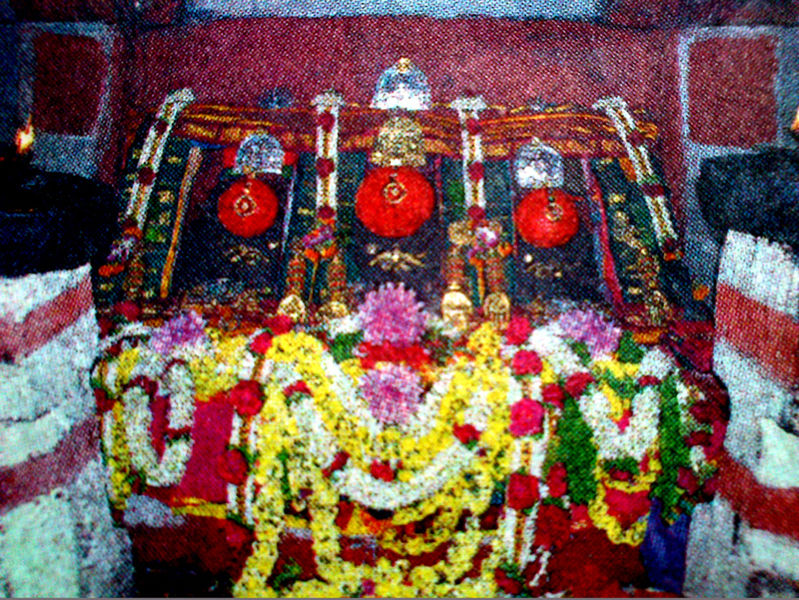
Hāsanāmbā temple is a Hindu temple located in Hassan district, Karnataka, India, dedicated to the Goddess Shakti, also called as Ambā or Ambe which means mother. The city Hassan is named after the goddess 'Hāsanāmbā', 'Hasanamma' or 'Haasanadamma', meaning the smiling mother also according to the Kannada term 'Hasanu' (ಹಸನು) means fertility, It is believed that the goddess bestow the life with fertility and grace. The temple was built in the 12th century CE. The temple is opened once a year during the Hindu festival Deepavali in October.
It is believed that the temple was constructed by a local chieftain Sanjeeva Krishnappa Nayaka in the 12th century CE, although the exact date is unknown. Earlier, Hassan was known as 'Simhāsanapuri' and later got the name of 'Hāsana'. It is said that during the rule of Hoysala dynasty in twelfth century A.D. an idol was found with its face wearing a pleasant smile. Hasana mukhi or a smiling face was transformed into Hassan.
Archeological experts consider the Hasanamba Temple to be an example of the epitome of temple architecture in Karnataka. The city of Hassan dates back to the 11th century CE and the temples around Hassan signify the various dynasties that have ruled ever since the 11th century CE. It was originally built by the Hoysala dynasty in their tradition, reflecting their faith in Hinduism. The temples in the Hassan district are some of the examples of the Hoysala tradition of temple architecture.
There is an ant-hill representing the presiding deity inside the temple premises. There is an unusual image depicting the demon-king Ravana's with nine heads, instead of ten, playing the instrument veena.
Siddeshwara Swamy can be seen inside the temple, which is unusual as it is not depicted in the Linga roopa. It appears as Lord Shiva giving pashupatastra to Arjuna.
Because the temple is open only for two weeks annually, it is considered special to obtain a darshan during the Deepavali festival. For the remainder of the year, the goddess is left with a ghee-lit lamp (nandaa deepa), flowers, water and two bags of rice as an offering (naivedya) until the next year. The lamp burns for the entire duration of the temple closure, with the ghee never depleting. It is believed that the rice offering remains warm and unspoiled when the doors are reopened. It is revered as a great temple in Hassan.
Once when the seven Matrikas (Kannada: Sapta-Maatrukeyaru) - Brahmi, Maheshwari, Kaumari, Vaishnavi, Varahi, Indrani and Chamundi came floating from Varanasi to South India, they were taken aback by the pristine beauty of Hassan and decided to reside here. Maheshwari, Kaumari and Vaishnavi settled in the three anthills inside the temple, Brahmi in Kenchamma's Hosakote, while Indrani, Varahi and Chamundi chose the three wells in Devigere (lake).
Hassan city was named after Hasanamba goddess. As per local legend the 'Haasana' is abridged form of 'Simhasanapuri' a place associated with Janamejaya, he was great-grandson of Pandava hero Arjuna. According to mythology Janamejaya had lived in Simhasanapuri during his cursed period.
Hub AI
Hasanamba Temple AI simulator
(@Hasanamba Temple_simulator)
Hasanamba Temple
Hāsanāmbā temple is a Hindu temple located in Hassan district, Karnataka, India, dedicated to the Goddess Shakti, also called as Ambā or Ambe which means mother. The city Hassan is named after the goddess 'Hāsanāmbā', 'Hasanamma' or 'Haasanadamma', meaning the smiling mother also according to the Kannada term 'Hasanu' (ಹಸನು) means fertility, It is believed that the goddess bestow the life with fertility and grace. The temple was built in the 12th century CE. The temple is opened once a year during the Hindu festival Deepavali in October.
It is believed that the temple was constructed by a local chieftain Sanjeeva Krishnappa Nayaka in the 12th century CE, although the exact date is unknown. Earlier, Hassan was known as 'Simhāsanapuri' and later got the name of 'Hāsana'. It is said that during the rule of Hoysala dynasty in twelfth century A.D. an idol was found with its face wearing a pleasant smile. Hasana mukhi or a smiling face was transformed into Hassan.
Archeological experts consider the Hasanamba Temple to be an example of the epitome of temple architecture in Karnataka. The city of Hassan dates back to the 11th century CE and the temples around Hassan signify the various dynasties that have ruled ever since the 11th century CE. It was originally built by the Hoysala dynasty in their tradition, reflecting their faith in Hinduism. The temples in the Hassan district are some of the examples of the Hoysala tradition of temple architecture.
There is an ant-hill representing the presiding deity inside the temple premises. There is an unusual image depicting the demon-king Ravana's with nine heads, instead of ten, playing the instrument veena.
Siddeshwara Swamy can be seen inside the temple, which is unusual as it is not depicted in the Linga roopa. It appears as Lord Shiva giving pashupatastra to Arjuna.
Because the temple is open only for two weeks annually, it is considered special to obtain a darshan during the Deepavali festival. For the remainder of the year, the goddess is left with a ghee-lit lamp (nandaa deepa), flowers, water and two bags of rice as an offering (naivedya) until the next year. The lamp burns for the entire duration of the temple closure, with the ghee never depleting. It is believed that the rice offering remains warm and unspoiled when the doors are reopened. It is revered as a great temple in Hassan.
Once when the seven Matrikas (Kannada: Sapta-Maatrukeyaru) - Brahmi, Maheshwari, Kaumari, Vaishnavi, Varahi, Indrani and Chamundi came floating from Varanasi to South India, they were taken aback by the pristine beauty of Hassan and decided to reside here. Maheshwari, Kaumari and Vaishnavi settled in the three anthills inside the temple, Brahmi in Kenchamma's Hosakote, while Indrani, Varahi and Chamundi chose the three wells in Devigere (lake).
Hassan city was named after Hasanamba goddess. As per local legend the 'Haasana' is abridged form of 'Simhasanapuri' a place associated with Janamejaya, he was great-grandson of Pandava hero Arjuna. According to mythology Janamejaya had lived in Simhasanapuri during his cursed period.
Recent media