Hubbry Logo
Hellfire ClubHellfire ClubMain
Open search
Hellfire Club
Community hub
Hellfire Club
logo
8 pages, 0 posts
0 subscribers
Be the first to start a discussion here.
Hellfire Club
Hellfire Club
from Wikipedia

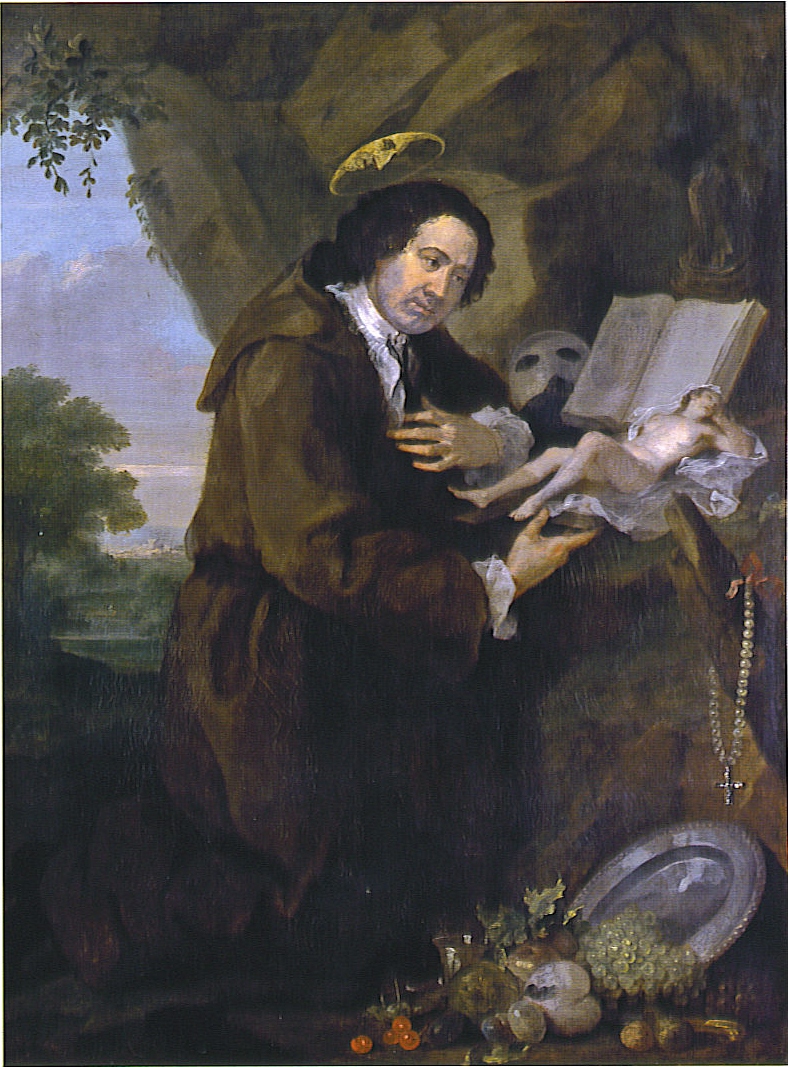
Portrait of Francis Dashwood by William Hogarth from the late 1750s, parodying Renaissance images of Francis of Assisi. The Bible has been replaced by a copy of the erotic novel Elegantiae Latini sermonis, and the profile of Dashwood's friend Lord Sandwich peers from the halo.

Hellfire Club was a term used to describe several exclusive clubs for high-society rakes established in Great Britain and Ireland in the 18th Century. The name most commonly refers to Francis Dashwood's Order of the Friars of St Francis of Wycombe.[1] Such clubs were rumoured to have served as the meeting places of "persons of quality"[2] who wished to take part in socially taboo activities, and the members were often involved in politics. Neither the activities nor membership of the clubs are easy to ascertain. The clubs allegedly had distant ties to an elite society known only as "The Order of the Second Circle".[3][4]

The first official Hellfire Club was founded in London in 1718, by Philip Wharton, 1st Duke of Wharton and a handful of other high-society friends. The most notorious club associated with the name was established in England by Francis Dashwood,[5] and met irregularly from around 1749 to around 1760, and possibly up until 1766. The term was closely associated with Brooks's, established in 1764. Other groups described as Hellfire Clubs were set up throughout the 18th century. Most of these arose in Ireland after Wharton's had been dissolved.[6]

Wharton's club was unusual for its time, as it admitted men and women as equals. Most of the other British clubs of the 18th century were practicing sex segregation. The Greyhound Tavern was one of the meeting places used regularly by Wharton's club, but because women were not to be seen in taverns, the meetings were also held at members' houses and at Wharton's riding club. A 1730s incarnation of the Club under Sir Francis Dashwood instead met at the George and Vulture Inn. This version's club motto was Fais ce que tu voudras (Do what thou wilt), a philosophy of life associated with François Rabelais's fictional abbey at Thélème and later used by Aleister Crowley.

Duke of Wharton's club

[edit]
Philip, Duke of Wharton

Lord Wharton was made a duke by George I[7] and was a prominent politician with two separate lives: the first as a "man of letters" and the second as "a drunkard, a rioter, an infidel and a rake".[8] The members of Wharton's club are largely unknown. Mark Blackett-Ord assumes that members included Wharton's immediate friends: the Earl of Hillsborough, cousin; the Earl of Lichfield[clarification needed]; and Sir Ed. O'Brien. Aside from these names, other members are not revealed.

At the time of the London gentlemen's club, when there was a meeting place for every interest, including poetry, philosophy and politics,[9][10] Wharton's Hellfire Club was, according to Blackett-Ord, a satirical "gentleman's club" which was known to ridicule religion, catching onto the contemporary trend in England of blasphemy.[9][11] The club was more a joke, meant to shock the outside world, than a serious attack on religion or morality. The supposed president of this club was the Devil, although the members themselves did not apparently worship demons or the Devil, but called themselves devils.[12] Wharton's club admitted men and women as equals, unlike other clubs of the time.[11] The club met on Sundays at a number of different locations around London. The Greyhound Tavern was one of the meeting places used regularly, but because women were not to be seen in taverns, the meetings were also held at members' houses and at Wharton's riding club.[13][11]

According to at least one source, their activities included mock religious ceremonies and partaking of meals featuring such dishes as "Holy Ghost Pie", "Breast of Venus", and "Devil's Loin", while drinking "Hell Fire Punch".[13][14] Members of the club supposedly came to meetings dressed as characters from the Bible.[14]

Wharton's club came to an end in 1721[11] when George I, under the influence of Wharton's political enemies (in particular, Robert Walpole) put forward a Bill "against 'horrid impieties'" (or immorality), aimed at the Hellfire Club.[2][15] Wharton's political opposition used his membership as a way to pit him against his political allies, thus removing him from Parliament.[15] After his Club was disbanded, Wharton became a Freemason, and in 1722 he became the Grand Master of England.[16]

Sir Francis Dashwood's clubs

[edit]

Sir Francis Dashwood and the Earl of Sandwich are alleged to have been members of a Hellfire Club that met at the George and Vulture Inn throughout the 1730s.[17] Dashwood founded the Order of the Knights of St Francis in 1746, originally meeting at the George & Vulture.[18]

The club motto was Fais ce que tu voudras (Do what thou wilt), a philosophy of life associated with François Rabelais's fictional abbey at Thélème[19][20] and later used by Aleister Crowley.

Francis Dashwood was well known for his pranks: for example, while in the imperial court in St Petersburg, he dressed up as the king of Sweden, a great enemy of Russia. The membership of Sir Francis's club was initially limited to twelve but soon increased. Of the original twelve, some are regularly identified: Dashwood, Robert Vansittart, Thomas Potter, Francis Duffield, Edward Thompson, Paul Whitehead and John Montagu, 4th Earl of Sandwich.[21] The list of supposed members is immense; among the more probable candidates are Benjamin Bates II, George Bubb Dodington, a fabulously corpulent man in his 60s;[22] William Hogarth, although hardly a gentleman, has been associated with the club after painting Dashwood as a Franciscan Friar[23][24] and John Wilkes, though much later, under the pseudonym John of Aylesbury.[25] As there are no records left (these having been burned in 1774),[26] many of these members are just assumed or linked by letters sent to each other.[27]

Meetings and club activities

[edit]

Sir Francis's club was never originally known as a Hellfire Club; it was given this name much later.[3][4] His club in fact used a number of other names, such as the Brotherhood of St. Francis of Wy,[28] Order of Knights of West Wycombe, The Order of the Friars of St Francis of Wycombe,[23] and later, after moving their meetings to Medmenham Abbey, they became the Monks or Friars of Medmenham.[29] The first meeting at Sir Francis's family home in West Wycombe was held on Walpurgis Night, 1752; a much larger meeting, it was something of a failure and no large-scale meetings were held there again. In 1751, Dashwood, leased Medmenham Abbey[23] on the Thames from a friend, Francis Duffield.[30]

On moving into Medmenham Abbey, Dashwood had numerous expensive works done on the building. It was rebuilt by the architect Nicholas Revett in the style of the 18th-century Gothic revival. At this time, the motto Fais ce que tu voudras was placed above a doorway in stained glass.[19] It is thought that William Hogarth may have executed murals for this building; none, however, survive. Eventually, the meetings were moved out of the abbey into a series of tunnels and caves in West Wycombe Hill.[31] They were decorated again with mythological themes, phallic symbols and other items of a sexual nature.

Records indicate that the members performed "obscene parodies of religious rites" according to one source.[32] According to Horace Walpole, the members' "practice was rigorously pagan: Bacchus and Venus were the deities to whom they almost publicly sacrificed; and the nymphs and the hogsheads that were laid in against the festivals of this new church, sufficiently informed the neighbourhood of the complexion of those hermits." Dashwood's garden at West Wycombe contained numerous statues and shrines to different gods; Daphne and Flora, Priapus and the previously mentioned Venus and Dionysus.[33]

A parish history from 1925 stated that members included "Frederick, Prince of Wales, the Duke of Queensberry, the Earl of Bute, Lord Melcombe, Sir William Stanhope, K.B, Sir John Dashwood-King, bart., Sir Francis Delaval, K.B., Sir John Vanluttan, kt., Henry Vansittart, afterwards Governor of Bengal, (fn. 13) and Paul Whitehead the poet".[34] Meetings occurred twice a month, with an AGM lasting a week or more in June or September.[35] The members addressed each other as "Brothers" and the leader, which changed regularly, as "Abbot". During meetings members supposedly wore ritual clothing: white trousers, jacket and cap, while the "Abbot" wore a red ensemble of the same style.[36] Legends of Black Masses and Satan or demon worship have subsequently become attached to the club, beginning in the late Nineteenth Century. Rumours saw female "guests" (a euphemism for prostitutes) referred to as "Nuns". Dashwood's Club meetings often included mock rituals, items of a pornographic nature, much drinking, wenching and banqueting.[37]

Decline of Dashwood's Club

[edit]

The downfall of Dashwood's Club was more drawn-out and complicated. In 1762, the Earl of Bute appointed Dashwood his Chancellor of the Exchequer, despite Dashwood being widely held to be incapable of understanding "a bar bill of five figures". (Dashwood resigned the post the next year, having raised a tax on cider which caused near-riots).[38] Dashwood now sat in the House of Lords after taking up the title of Baron Le Despencer after the previous holder died.[39] Then there was the attempted arrest of John Wilkes for seditious libel against the King in the notorious issue No. 45 of his The North Briton in early 1763.[39] During a search authorised by a General warrant (possibly set up by Sandwich, who wanted to get rid of Wilkes),[40] a version of The Essay on Woman was discovered set up on the press of a printer whom Wilkes had almost certainly used. The work was almost certainly principally written by Thomas Potter, and from internal evidence can be dated to around 1755. It was scurrilous, blasphemous, libellous, and bawdy, though not pornographic – still unquestionably illegal under the laws of the time, and the Government subsequently used it to drive Wilkes into exile. Between 1760 and 1765 Chrysal, or the Adventures of a Guinea by the Irish author Charles Johnstone was published.[41] It contained stories easily identified with Medmenham, one in which Lord Sandwich was ridiculed as having mistaken a monkey for the Devil. This book sparked the association between the Medmenham Monks and the Hellfire Club. By this time, many of the Friars were either dead or too far away for the club to continue as it did before.[42] Medmenham was finished by 1766.

Paul Whitehead had been the Secretary and Steward of the Order at Medmenham. When he died in 1774, as his will specified, his heart was placed in an urn at West Wycombe. It was sometimes taken out to show to visitors, but was stolen in 1829.[5][23]

The West Wycombe Caves in which the Friars met are now a tourist site[43] known as the "Hellfire Caves".

In Anstruther, Scotland, a likeminded sex and drinking club called The Beggar's Benison was formed in the 1730s, which survived for a century and spawned additional branches in Glasgow and Edinburgh. Honorary membership was extended to the Prince of Wales in 1783. Thirty-nine years later, while the Prince (by now King George IV) was paying a royal visit to Scotland, he gifted the club a snuff box filled with his mistresses' pubic hair.[44]

Hellfire Clubs in contemporary life

[edit]

Phoenix Society

[edit]

In 1781, Dashwood's nephew Joseph Alderson (an undergraduate at Brasenose College, Oxford) founded the Phoenix Society (later known as the Phoenix Common Room), but it was only in 1786 that the small gathering of friends asserted themselves as a recognised institution.[45] The Phoenix was established in honour of Sir Francis, who died in 1781, as a symbolic rising from the ashes of Dashwood's earlier institution. To this day, the dining society abides by many of its predecessor's tenets. Its motto uno avulso non deficit alter 'when one is torn away another succeeds' is from the sixth book of Virgil's Aeneid and refers to the practice of establishing the continuity of the society through a process of constant renewal of its graduate and undergraduate members, but also refers to the alchemical kabbalistic process that a life snatched via sacrifice is a life given back via a spirit at the command of its master. The Phoenix Common Room's continuous history was reported in 1954 as a matter of note to the college.[46]

See also

[edit]

References

[edit]
[edit]
Revisions and contributorsEdit on WikipediaRead on Wikipedia
from Grokipedia
The Hellfire Club originally denoted an exclusive, short-lived gentlemen's association founded around 1719 in by Philip Wharton, 1st Duke of Wharton, comprising aristocratic rakes who engaged in heavy drinking, gambling, , and deliberate as a of religious and social conventions. The club's notoriety prompted parliamentary in 1725 prohibiting such "irreligious and profane" societies, leading to its dissolution amid public scandal, though Wharton's group exemplified broader trends among the elite rather than organized . Subsequent informal clubs, particularly Sir Francis Dashwood's Order of the Knights of St. Francis (also known as the Monks of Medmenham) established in the 1740s at Medmenham Abbey near Henley-on-Thames, adopted similar motifs of mock monasticism, irreligion, and hedonism under the Rabelaisian motto Fais ce que tu voudras ("Do what thou wilt"), attracting politicians, writers, and nobles including John Wilkes and Thomas Potter. These gatherings involved satirical rituals, nude tableaux inspired by classical antiquity, and political intrigue, but contemporary accounts and later scholarship indicate exaggerated tales of orgies and devil-worship stem more from moralistic propaganda and unreliable gossip than verifiable evidence. The Hellfire Clubs' legacy endures as symbols of Enlightenment-era aristocratic excess and , influencing literary depictions and modern perceptions of secret societies, though their actual influence on policy or culture appears limited to networking among Whig sympathizers and providing fodder for satirical prints by artists like . By the 1760s, Dashwood's chapter relocated to the in , where excavations and chambers facilitated continued, if subdued, revelries until internal scandals and member deaths dispersed the group.

Historical Origins

Duke of Wharton's Club (1718–1721)

The Hell-Fire Club, founded in London in 1718 by Philip Wharton, 1st Duke of Wharton, represented an early incarnation of exclusive aristocratic societies dedicated to libertine pursuits. Wharton, born in 1698 to a prominent Whig family and elevated to duke in 1715 at age 17, embodied the rake archetype through his indulgence in gambling, dueling, and political intrigue. The club attracted high-society members, primarily young noblemen, who convened in taverns or private residences to engage in excessive revelry. Activities centered on heavy alcohol consumption, gluttonous feasting, and deliberate mockery of religious norms, including profane toasts and ceremonies that parodied Christian sacraments. Participants reportedly drank "Hell-fire punch," a potent mixture symbolizing their defiance of conventions. Such behaviors reflected a broader reaction among Restoration-era elites against Puritan restraints, prioritizing personal over societal , though accounts vary in degree of due to reliance on scandalized contemporary reports. By 1721, the club's notoriety prompted intervention from King George I, who issued an on April 28 suppressing "immorality and profaneness" explicitly targeting groups like Wharton's. This royal decree, amid growing public alarm over aristocratic debauchery, effectively disbanded the organization, with Wharton himself facing political repercussions that contributed to his later exile. The episode highlighted tensions between elite privilege and emerging calls for moral governance in early Hanoverian Britain.

Influences from Earlier Libertine Societies

The libertine traditions influencing the Hellfire Club originated in the rake culture of Restoration England (1660–1688), where aristocratic men rejected Puritan moral strictures in favor of hedonistic pursuits, including excessive drinking, , sexual promiscuity, and irreverent mockery of religious authority. This cultural shift, epitomized at the court of Charles II, fostered informal gatherings of rakes—terms denoting reckless —who frequented taverns and private venues to indulge in debauchery as a deliberate affront to the preceding Commonwealth's austerity. Figures like John Wilmot, 2nd Earl of Rochester, embodied this ethos through poetry and behavior celebrating sensual gratification over ethical restraint, setting a precedent for the satirical defiance later formalized in Wharton's club.) Philip Wharton, 1st Duke of Wharton, drew directly from this familial and societal legacy; his father, Thomas Wharton, 3rd Baron Wharton, was a notorious rake in the 1680s, infamous for acts of such as urinating in a church font, which underscored a hereditary pattern of aristocratic excess. Wharton's Hellfire Club extended these practices into an organized, parodic , adopting titles like "Mother Superior" and rituals inverting Christian sacraments—such as toasting the over "Holy Ghost Pie"—to satirize religious amid the early 18th-century backlash against vice-suppression groups like the Societies for the of Manners, founded in 1691 to prosecute . While no identically named precursor societies existed, the club's structure echoed the convivial rake assemblies of Restoration coffeehouses and theaters, where freethinking elites debated and debauched in defiance of prevailing norms. Broader European libertine influences, including 17th-century French free-thinkers who prioritized empirical skepticism and personal liberty over dogma, indirectly shaped the club's anti-clerical bent, though English rake precedents were paramount in its formation. This synthesis enabled Wharton's group, limited to around 12–15 members including high-ranking Jacobites and freemasons, to operate as a self-consciously scandalous to genteel clubs, amplifying the rake's hellraising into collective ritual until its suppression by royal in 1721.

Sir Francis Dashwood's Clubs

Formation at Medmenham Abbey (1740s)

Sir Francis Dashwood, an English politician and antiquarian born in 1708, initiated the formation of a libertine society known as the Monks of Medmenham—later retroactively dubbed the Hellfire Club—in the late 1740s at Medmenham Abbey, a disused 12th-century Cistercian on the River Thames in . Influenced by his Grand Tour experiences in during the 1730s, where he engaged with classical antiquities and Rabelaisian libertinism, Dashwood assembled a core group of aristocratic and intellectual associates to pursue private revels mocking ecclesiastical rituals and embracing under the motto Fais ce que tu voudras (""), drawn from ' Gargantua. The society's foundational meetings emphasized pseudoreligious pageantry, with members adopting monastic habits and titles such as "Brother" or "Friar," while Paul Whitehead, a poet and Dashwood's steward, served as the group's initial secretary and ritual organizer from its inception around 1745–1749. Early participants included figures like Thomas Potter, son of the Archbishop of Canterbury, and other Whig politicians, totaling perhaps a dozen core members who valued the club's seclusion for unbridled discourse on politics, literature, and vice away from public scrutiny. Dashwood secured a formal lease on the abbey from its owners, the Duffield family, in 1751, enabling structural modifications including Gothic revival extensions to accommodate gatherings. These adaptations transformed the dilapidated site into a venue for the club's distinctive activities, though records indicate the group's cohesion solidified prior to full occupancy, reflecting Dashwood's intent to revive medieval monastic for satirical ends rather than genuine occultism. Contemporary accounts, such as those from participants' correspondences, confirm the 1740s origins without evidence of earlier precedents beyond informal rake associations, distinguishing this iteration from Philip Duke of Wharton's short-lived 1710s club. The formation underscored a causal link between Enlightenment-era toward and elite desires for autonomous, pleasure-oriented fraternities, unencumbered by moral or legal oversight.

Transition to Hellfire Caves and West Wycombe (1750s–1760s)

In the late 1740s, Sir Francis Dashwood, seeking to alleviate local unemployment following three consecutive harvest failures beginning in 1748, commissioned the expansion of an existing flint quarry beneath Hill on his estate into an elaborate underground network known as the . Employing over 100 laborers, the project involved hand-chiseling through chalk and flint bedrock to create approximately 300 meters of passages and chambers, including the Banquet Room, River , and , with construction spanning from 1748 to around 1751. As the Medmenham Abbey gatherings drew increasing public scrutiny and scandal—exacerbated by incidents such as the 1762 discovery of a satirical poem by criticizing the club's activities—Dashwood shifted the society's meetings to the more secluded Caves for enhanced privacy and to evade notoriety that had rendered the Thames-side abbey untenable. The transition, beginning in the mid-1750s, transformed the caves into the primary venue, where members adopted pseudonyms like "Brother of the Order of Knights of St. Francis of Wycombe" and conducted rituals in chambers fitted with banqueting facilities and alcoves. This relocation aligned with Dashwood's broader estate improvements at , including the construction of a atop the hill and a golden-ball-capped church, symbolizing his interests in classical and pagan motifs, though the caves' use for the club emphasized practical seclusion over overt symbolism. By the early , Medmenham's lease had lapsed amid ongoing controversies, solidifying the caves as the society's enduring base until its dissolution around 1763.

Membership and Political Dimensions

The membership of Sir Francis Dashwood's Hellfire Club, formally the Order of the Knights of St. Francis of Wycombe or the Monks of , was drawn exclusively from the British aristocracy and political , emphasizing exclusivity among gentlemen of influence. The core group, known as the "Superiors," comprised around 12 individuals, with Dashwood as the Superior General overseeing initiations and proceedings. Probable members included ; George Bubb Dodington, Baron Melcombe; Thomas Potter; Paul Whitehead, the club's steward; Simon Luttrell; Sir William Stanhope; John Tucker; and John Clerke of Aston. joined briefly in the 1750s but was expelled in 1763 following political acrimony and his publication of satirical works targeting club associates. No comprehensive roster survives, as secrecy was integral, but contemporary accounts and later historical analyses confirm these figures through correspondence and scandal reports. Politically, the club served as a discreet forum for Whig opposition networking during the and , countering the dominance of Sir Robert Walpole's ministry and its successors. Members, many holding parliamentary seats or court positions, utilized meetings to cultivate alliances, discuss strategy, and exchange favors amid Britain's competitive political landscape. For example, Dodington acted as paymaster-general, while Sandwich advanced to high naval office, reflecting the group's ties to government circles despite their anti-establishment posturing. Dashwood's own ascent to in 1762 under Lord Bute's short-lived administration underscores the club's indirect role in elevating participants through cultivated connections. The political dimensions extended to satirical critiques of religious orthodoxy and monarchical authority, aligning with Enlightenment skepticism, though evidence indicates these were vehicles for bolstering intra-elite solidarity rather than radical reform. Scandals, amplified by rivals like Wilkes after his rift, politicized the club's reputation, with exposés such as the 1763 "Essay on Woman" parody fueling debates on press freedom and ministerial accountability. While debauchery claims predominated in moral panics, primary sources suggest substantive discourse on liberty and governance underpinned the gatherings, aiding members' navigation of factional intrigue without direct policy formulation.

Activities and Rituals

Mock Ceremonies and Debauchery

The Order of the Friars of St. Francis of Wycombe, commonly associated with the Hellfire Club, conducted meetings at Medmenham Abbey where members donned monastic robes to parody Catholic friars and religious rituals, reflecting a satirical critique of ecclesiastical hypocrisy prevalent among Enlightenment-era deists. Sir Francis Dashwood, often titled "Brother Superior" or mockingly "The Devil," presided over initiations involving blindfolded novices swearing oaths of secrecy and loyalty, followed by toasts to abstract ideals like Reason and or ironic salutes to pagan deities such as Bacchus and , as described in contemporary correspondence from figures like . These ceremonies, held biannually around 1751–1763, incorporated Rabelaisian elements, including the motto fais ce que tu voudras ("") inscribed on abbey glass, emphasizing libertine philosophy over genuine occultism. Debauchery intertwined with these parodies, featuring excessive drinking from hogsheads of wine and the invitation of courtesans or "nuns" (women in habits) for entertainment, with accounts noting their masked arrivals by gondola and treatment as temporary "lawful wives" unbound by celibacy vows. The abbey's library housed erotic literature, such as Memoirs of a Woman of Pleasure, and walls bore obscene artwork, fostering an environment of sexual license among members including John Wilkes and the Earl of Sandwich. However, primary evidence remains limited to hearsay and rival polemics—such as those amplified after Wilkes's 1763 North Briton scandal—prone to exaggeration for political or moralistic ends, with no direct member testimonies confirming orgiastic extremes beyond heavy revelry. Later tales of baboon "devils" or black masses, drawn from fictional works like Chrysal (1760), further mythologize activities that historians attribute more to anti-clerical jest than systematic immorality. By the 1760s, scandals prompted relocation to the Hellfire Caves at West Wycombe, where similar but subdued gatherings continued until circa 1763.

Political and Intellectual Discussions

The Hellfire Club, particularly under Sir Francis Dashwood's leadership at Medmenham Abbey and later the Hellfire Caves, functioned as an informal venue for political networking and opposition strategy among elite members, many of whom were Members of Parliament or government officials. Dashwood himself, appointed Chancellor of the Exchequer in 1762 under Lord Bute, hosted gatherings that blended libertine revelry with critiques of ministerial policies and royal influence, fostering alliances against the Pitt-Newcastle ministry's successors. John Wilkes, a key member and radical Whig MP for Aylesbury from 1757, leveraged these meetings to build support for his campaigns against perceived corruption, including his 1762 publication of North Briton No. 45, which attacked George III's speech and led to his prosecution. Intellectually, sessions often featured satirical parodies of religious rituals and political authority, drawing on Rabelaisian influences and the club's motto Fay ce que vouldras ("Do what thou wilt"), which promoted unorthodox freethinking over dogmatic constraints. Members debated topics like ecclesiastical power's role in state affairs, reflecting broader Enlightenment skepticism toward clerical interference in politics, though records emphasize mockery—such as inverting monastic vows—over systematic philosophy. Wilkes and poet Charles Churchill, another attendee, contributed verses lampooning bishops and courtiers, tying intellectual irreverence to anti-establishment agitation that influenced Wilkes's later defense of press freedom and parliamentary reform. These exchanges, while unstructured, reinforced opposition cohesion amid the 1760s political flux, contrasting with formal parliamentary debates by prioritizing candid, irreverent critique. Prominent attendees like Thomas Potter, father of the future , and Paul Whitehead, the club's steward, facilitated discourse on and liberty, informed by Dashwood's earlier Grand Tour experiences parodying papal elections. However, contemporary accounts, such as those in The Secrets of the Convent (1765), portray these as laced with excess, suggesting intellectual pursuits served partly as cover for factional plotting rather than pure scholarship. The club's dissolution around 1763 coincided with Wilkes's following his North Briton , underscoring how its discussions amplified real political risks without yielding codified manifestos.

Controversies and Myths

The Order in Council issued by King George I on April 28, 1721, explicitly targeted the Hellfire Club founded by Philip Wharton, 1st Duke of Wharton, in 1718, condemning its promotion of "immorality and profaneness" through blasphemy and irreverent mockery of religious rites, which included toasting the devil and parodying sacraments. This royal decree effectively suppressed the club, reflecting broader governmental concerns that such societies served as potential hotbeds for sedition amid post-Jacobite tensions in early 18th-century England. Public outrage, amplified by pamphlets like the 1721 account of a "Diabolical Masquerade" depicting orgiastic and anti-Christian revelry, fueled a moral panic among clergy and reformers, who viewed the club's open defiance of piety as a threat to social order. Sir Francis Dashwood's later fraternity, active from the 1740s at Abbey and transitioning to the in the 1750s, provoked similar but less formalized responses, with contemporary critics decrying its mock ecclesiastical ceremonies—such as inverting the and inducting nuns (prostitutes in disguise)—as emblematic of aristocratic licentiousness eroding moral fabric. Groups like the for the Reformation of Manners petitioned for curbs on such assemblies, citing fears of debauchery inspiring lower-class vice, though no specific prosecutions ensued due to the elite membership's influence and the club's . A pivotal erupted in 1763 when member John Wilkes's publication of the obscene "Essay on Woman"—a satirical of Alexander Pope's work, printed at the club's press—drew parliamentary scrutiny and exile for Wilkes, indirectly exposing Dashwood's group and hastening the dissolution of gatherings by 1764 amid heightened political infighting. These episodes, while rooted in verifiable excesses like heavy drinking and sexual indulgence, were often inflated by opponents into tales of outright , a historians attribute to partisan and religious zeal rather than of ritual murder or pacts with the . No comprehensive anti-club materialized despite calls for a governmental , underscoring the limits of legal enforcement against privileged networks, though the scares contributed to a cultural backlash favoring societies and stricter social norms by the late .

Satanic and Occult Allegations vs. Historical Evidence

Allegations of Satanic and occult involvement have long surrounded Sir Francis Dashwood's Hellfire Club, particularly its activities at Medmenham Abbey in the 1740s and the Hellfire Caves constructed between 1748 and 1751. Contemporary critics, including moralistic pamphlets and gossip from figures like John Wilkes' rivals, claimed the group performed black masses, invoked demons, and conducted rituals with prostitutes dressed as nuns, ostensibly to worship the devil in subterranean chambers adorned with pagan motifs. These stories gained traction amid 18th-century fears of libertinism eroding social order, amplified by anonymous exposés that portrayed the club as a nexus of infernal pacts and orgiastic devilry. Historical records, including members' correspondence and archaeological findings, reveal no substantive evidence for genuine Satanic worship or belief systems. The club's s, documented in accounts from participants like Paul Whitehead, involved parodies of Catholic masses—such as reciting the backwards or toasting "to the and all his works"—intended as anticlerical by Enlightenment deists who rejected supernaturalism rather than embraced it. Excavations at the , including those by local historians in the , uncovered neoclassical and Masonic-inspired decorations like the River chamber but no artifacts indicative of or veneration, such as altars or talismans linked to traditions. Dashwood's own library and architectural projects, influenced by and , prioritized pagan revivalism as aesthetic and political symbolism over esoteric mysticism. The persistence of myths owes more to 19th- and 20th-century than to primary sources, with embellishments in novels and transforming political revelry into tales of horror. Historians attribute this discrepancy to the of the clubs, which fueled , but emphasize that members' documented —evident in their mockery of both Catholic and Protestant dogmas—precludes sincere engagement with , a antithetical to their rationalist worldview. While debauchery and occurred, claims of rituals lack corroboration from verifiable documents or material remains, rendering them historically unsubstantiated exaggerations born of moral outrage.

Other Regional Variants

Irish Hellfire Club (Mid-18th Century)

The Irish Hellfire Club, established in in 1735 by Richard Parsons, 1st Earl of Rosse (1702–1741), represented an early variant of societies among the Anglo-Irish elite, characterized by deliberate provocation against prevailing moral and religious norms. Parsons, a Freemason and member of the , served as the club's first president under the title "King of Hell," with initial meetings held at the Eagle Tavern on Cork Hill in . The group drew inspiration from Philip Wharton’s earlier of the 1710s–1720s, emphasizing excessive drinking, gambling, and satirical mockery of through toasts to the and mock ecclesiastical rituals, rather than genuine practices. Membership was limited to around 12–20 young aristocratic men from the , including figures like the painter James Worsdale, who hosted some gatherings; the club excluded women from formal participation, focusing on male camaraderie amid Ireland's tense sectarian context. Activities centered on nightly "ordinaries" involving heavy alcohol consumption—often 20–30 bottles of claret per session—and blasphemous oaths designed to scandalize observers, such as pledging allegiance to Lucifer over Christ, which contemporaries viewed as a direct assault on Anglican piety. By 1736, public outrage prompted ecclesiastical and parliamentary intervention; Archbishop Edward Synge and others decried the clubs as engines of atheism, leading to a royal proclamation in Ireland banning "blasphemous and profane" societies and authorizing arrests for such offenses. The Dublin club's notoriety peaked with reports of members parading a Bible on a pike while shouting profanities, though primary accounts from the period, including newspaper satires like those in Pue's Occurrences, emphasize rhetorical excess over verifiable ritualistic depth. Later relocations to a hunting lodge on Montpelier Hill in the Dublin Mountains, built around 1730 and acquired by Parsons, facilitated more secluded debauchery, but the core Dublin group dissolved by 1741 following Parsons' death from illness. While romanticized legends attribute satanic pacts, human sacrifices, or hauntings to the Montpelier site—fueled by 19th-century and modern claims—historical evidence from parliamentary records and biographical sources indicates the club's provocations were primarily social rebellion against puritanical constraints, not engagements. Incidents like the 1739 of a servant by club associate Lord Santry (acquitted on grounds of insanity) amplified moral panics but were isolated crimes rather than organized club policy, contributing to the suppression of similar groups across by the early 1740s. The Irish variant thus differed from the longer-lived English Medmenham Abbey group by its brevity, overt blasphemy amid Catholic-Protestant tensions, and lack of enduring infrastructure, serving as a flashpoint for Enlightenment-era debates versus order.

Legacy and Modern Depictions

Influence on Secret Societies and Enlightenment Thought

The Hellfire Clubs, particularly Wharton's original established around , contributed to the proliferation of exclusive associational groups in early 18th-century Britain by exemplifying elite networks that blended social revelry with subversive against religious and moral conventions. Wharton's group, which included Freemasons like the Jacobite , overlapped with Masonic circles and popularized the archetype of secretive, oath-bound societies among the aristocracy, though its short lifespan—ending after a royal condemning such immoral assemblies—limited direct institutional transmission. This early model influenced subsequent clubs by demonstrating how high-society could use anonymity and ritual parody to evade public scrutiny, fostering a cultural tolerance for private vice within Enlightenment-era 's burgeoning club . Sir Francis Dashwood's later iteration, the Monks of Medmenham Abbey formed in the 1740s, adapted pseudo-Masonic rites and initiatory structures to mock ecclesiastical authority, thereby parodying the hierarchical and symbolic elements of while incorporating political intrigue among members like . Dashwood, who proposed early Masonic reforms and drew from his Grand Tour experiences in and , structured the club as a order with elected priors and novice inductions, elements that echoed but inverted practices to emphasize excess over fraternal ethics. This adaptation highlighted tensions between secret societies' esoteric pretensions and aristocratic hedonism, potentially inspiring later esoteric groups to refine their rituals for greater exclusivity, though primary records—destroyed by club secretary Paul Whitehead—obscure precise causal links. In relation to Enlightenment thought, the Hellfire Clubs embodied a radical libertine strand that challenged dogmatic religion through blasphemous ceremonies and intellectual discourse on irreligion, aligning with deists' and freethinkers' critiques of clerical power during an era of rational inquiry and skepticism toward superstition. However, their emphasis on sensory indulgence and anti-authoritarian mockery contrasted with the more temperate rationalism of figures like or Locke, serving instead as a cautionary reflection of how Enlightenment individualism could devolve into moral relativism among elites unconstrained by public accountability. Attributed influences, such as alleged participation by during his 1760s London visits, remain speculative and unverified by contemporary documents, underscoring how the clubs' notoriety amplified perceptions of their philosophical impact beyond . Overall, while not foundational to secret societies' doctrines, the Hellfire Clubs normalized ritualistic secrecy as a vehicle for elite dissent, indirectly shaping the associational landscape that underpinned Enlightenment political networking. The Hellfire Club has been fictionalized in various literary works, often exaggerating its historical reputation for libertinism and into narratives of intrigue and moral excess. In Peter Straub's 1988 novel The Hellfire Club, the club serves as a central element in a labyrinthine fantasy plot involving and elements, drawing loosely on 18th-century precedents to structure its narrative around secretive gatherings of elites. Jake Tapper's 2018 thriller The Hellfire Club transplants the name to a mid-20th-century , amid McCarthy-era politics, invoking Benjamin Franklin's purported associations with the original clubs to frame themes of power and corruption, though the depiction prioritizes dramatic conspiracy over historical fidelity. In film, the 1961 British production The Hellfire Club, directed by Robert S. Baker and , portrays a young nobleman confronting familial rivalries and club rituals in a Gothic adventure loosely inspired by 18th-century rake culture, starring as the protagonist navigating betrayal and debauchery. The club's name recurs in superhero media, notably ' version debuting in Uncanny X-Men #129 (1980), where it functions as an elite cabal of mutants pursuing supremacy through manipulation, first adapted to film in X-Men: First Class (2011) as antagonists led by Sebastian Shaw and , blending historical with fictional mutant terrorism. Television depictions further diverge from history, as in the 1960s British spy series The Avengers, which featured a satirical take on the club as a decadent society of villains in episodes evoking aristocratic vice. More recently, Netflix's Stranger Things (season 4, 2022) reimagines the Hellfire Club as a Hawkins High School Dungeons & Dragons group of social outcasts, led by Eddie Munson, using the name to symbolize rebellion against conformity rather than replicating the original's adult hedonism or political satire. These portrayals typically amplify myths of occultism and excess for entertainment, detached from verifiable records of the clubs' mock ceremonies and intellectual debates.

References

Add your contribution
Related Hubs
User Avatar
No comments yet.