Hubbry Logo
Henry FauldsHenry FauldsMain
Open search
Henry Faulds
Community hub
Henry Faulds
logo
8 pages, 0 posts
0 subscribers
Be the first to start a discussion here.
Henry Faulds
Henry Faulds
from Wikipedia

Henry Faulds

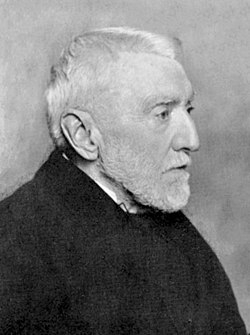
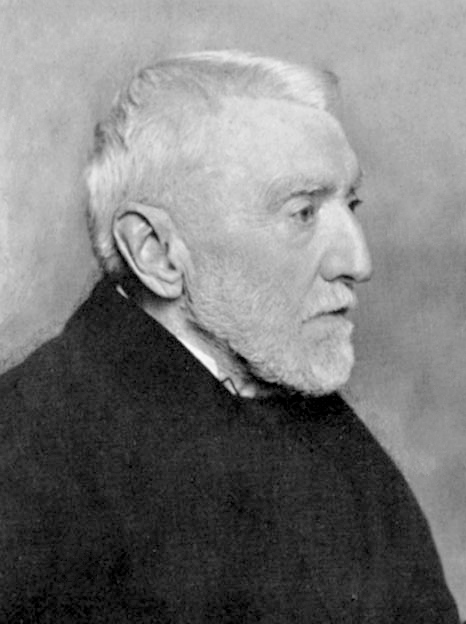
Henry Faulds (1 June 1843 – 24 March 1930) was a Scottish doctor, missionary and scientist who is noted for the development of fingerprinting.

Early life

[edit]

Faulds was born in Beith, North Ayrshire, into a family of modest means. Aged 13, he was forced to leave school, and went to Glasgow to work as a clerk to help support his family; at 21 he decided to enrol at the Facility of Arts at Glasgow University, where he studied mathematics, logic and the classics. He later studied medicine at Anderson's College, and graduated with a physician's licence.

Following graduation, Faulds then became a medical missionary for the Church of Scotland. In 1871, he was sent to British India, where he worked for two years in Darjeeling at a hospital for the poor.

On 23 July 1873, he received a letter of appointment from the United Presbyterian Church of Scotland to establish a medical mission in Japan. He married Isabella Wilson that September, and the newlyweds departed for Japan in December.

Life in Japan

[edit]

Faulds established the first English speaking mission in Japan in 1874, with a hospital and a teaching facility for Japanese medical students. He helped introduce Joseph Lister's antiseptic methods to Japanese surgeons. In 1875, he helped found the Rakuzenkai, Japan's first society for the blind, and set up lifeguard stations to prevent drowning in nearby canals. He halted a rabies epidemic that killed small children who played with infected mice, and he helped stop the spread of cholera in Japan. He even cured a plague infecting the local fishmonger's stock of carp. In 1880 he helped found a school for the blind. By 1882, his Tsukiji Hospital in Tokyo treated 15,000 patients annually. Faulds became fluent in Japanese, and in addition to his full-time work as a doctor, he wrote two books on travel in the Far East, many academic articles, and started three magazines.

Whilst accompanying a friend (American archaeologist, Edward S. Morse) to an archaeological dig he noticed how the delicate impressions left by craftsmen could be discerned in ancient clay fragments. Examining his own fingertips and those of friends, he became convinced that the pattern of ridges was unique to each individual.

Shortly after these observations his hospital was broken into. The local police arrested a member of staff whom Faulds believed to be innocent. Determined to exonerate the man, he compared the fingerprints left behind at the crime scene to those of the suspect and found them to be different. On the strength of this evidence the police agreed to release the suspect.

In an attempt to promote the idea of fingerprint identification he sought the help of the noted naturalist Charles Darwin. Darwin declined to work on the idea, but passed it on to his relative Francis Galton, who forwarded it to the Anthropological Society of London. When Galton returned to the topic some eight years later, he paid little attention to Faulds' letter. As a result of this interchange some controversy has arisen about the inventor of modern forensic fingerprinting. However, there can be no doubt that Faulds' first paper on the subject was published in the scientific journal Nature in 1880; all parties conceded this.

The following month Sir William Herschel, a British civil servant based in India, wrote to Nature saying that he had been using fingerprints (as a form of bar code) to identify criminals since 1860. However, Herschel did not mention their potential for forensic use. Over the years, Faulds conducted a bitter controversy with Herschel over the use of fingerprints, demanding proof in 1894 that Herschel had ever used fingerprints officially, which Herschel duly provided, and then writing a series of books and pamphlets many years later containing variations of the argument that he had been cheated his due credit (see[1] for complete facsimiles of these and other fundamental works on fingerprinting, and the Herschel/Faulds letters). These books were published from 1905 onward, long after fingerprinting had come into widespread use.

Return to Britain

[edit]

Returning to Britain in 1886, after a quarrel with the missionary society which ran his hospital in Japan, Faulds offered the concept of fingerprint identification to Scotland Yard but he was dismissed, most likely because he did not present the extensive evidence required to show that prints are durable, unique and practically classifiable. Subsequently, Faulds returned to the life of a police surgeon, at first in London, and then in the Stoke-on-Trent town of Fenton. In 1922 he sold his practice and moved to James Street in nearby Wolstanton, where he died in March 1930 aged 86, bitter at the lack of recognition he had received for his work. In 2007 a plaque acknowledging Faulds' work was unveiled at Bank House,[2] near to Wolstanton's St Margaret's churchyard where his grave can be seen. In 2011, a plaque was unveiled at his former James Street residence.[3] On 12 November 2004 a memorial was dedicated to his memory in Beith town centre close to the site of the house in New Street where he was born.[4]

Legacy

[edit]

The method of identifying criminals by their fingerprints had been introduced in the 1860s by Sir William James Herschel in India, and their potential use in forensic work was first proposed by in 1880. Galton, following the idea written by Faulds, which he failed to credit, was the first to place the study on a scientific footing, which assisted its acceptance by the courts.[5] The Japanese police officially adopted the fingerprinting system in 1911.

His clinic in Tokyo was bought by Ludolph Teusler and became St. Luke's International Hospital.

References

[edit]
[edit]
Revisions and contributorsEdit on WikipediaRead on Wikipedia
from Grokipedia
Henry Faulds (1843–1930) was a Scottish physician, medical , and early pioneer in , best known for originating the use of fingerprints as a reliable method for personal identification and . Born in , , , Faulds trained in at Anderson's in under the renowned surgeon before embarking on a career with the . In 1874, Faulds arrived in , where he established the first Western-style in and made significant contributions, including halting a epidemic and curing a case of plague. His interest in fingerprints emerged in the late after observing ridge patterns on ancient Japanese pottery shards, leading him to hypothesize that these marks were unique to individuals and could serve as permanent identifiers. His ideas were first applied in 1878, when he identified a thief using fingerprints left on a bottle and used the outline of a palm print to exonerate an innocent colleague in a separate case. Faulds formalized his findings in a seminal 1880 article in titled "On the Skin-Furrows of the Hand," proposing a classification system for fingerprints and advocating their use in forensics, including recording them with printer's ink. He corresponded with , who forwarded his ideas to cousin , though initial responses were lukewarm; Faulds later exchanged views with and persistently lobbied for adoption, publishing further works like Guide to Finger-Print Identification in 1905. Despite his foundational role, Faulds received limited recognition during his lifetime, with credit often attributed to Galton and others, but modern scholarship acknowledges him as the true originator of fingerprinting for identification purposes. Beyond forensics, Faulds founded a society for the blind in , authored travel books, and launched magazines, reflecting his broad humanitarian impact.

Early Life

Birth and Family

Henry Faulds was born on June 1, 1843, in , , , to William Pollock Faulds and Anne Cameron. His father worked as a local grocer, placing the family within a working-class socioeconomic context in the modest town of , where trade and community ties were central to daily life. This background likely provided Faulds with early exposure to through his father's interactions with local residents, fostering a sense of communal responsibility that would later influence his career path. Faulds was the eldest of several children in a household shaped by Presbyterian values prevalent in the region, which emphasized education, moral duty, and service to others. These early influences in Beith, including the town's strong Presbyterian community and family dynamics in a close-knit setting, nurtured his aspirations toward helping professions, setting the stage for his eventual pursuits in medicine and missionary work.

Education and Initial Career

Faulds, having worked as a after his family's financial difficulties in the 1850s, pursued formal education in his early twenties, enrolling at the in 1865 to study in the Faculty of Arts. There, he took classes in , logic, Greek, Latin, and divinity until 1871, developing a strong foundation in analytical thinking and that later influenced his career path. Recognizing medicine as his vocation, Faulds then studied at Anderson's College in —now part of the —qualifying as a Licentiate of the Faculty of Physicians and Surgeons of (L.F.P.S.G.) with commendation in 1871. This qualification enabled him to practice professionally in . Following his qualification, Faulds gained practical experience through positions at key institutions, including work at the and in , where he served in roles such as house surgeon, focusing on surgical and clinical training. These early professional experiences in sharpened his observational and diagnostic skills amid the era's medical advancements, including exposure to antiseptic techniques under pioneers like at nearby Glasgow institutions. Following his hospital positions, Faulds became a medical missionary with the in 1871 and was posted to a hospital for the poor in , , where he worked for two years. In , he received an appointment from the United Presbyterian Church of Scotland to establish a medical mission in , marking the transition from his initial career in to overseas service.

Time in Japan

Missionary and Medical Roles

In 1874, Henry Faulds departed from under the auspices of the United Presbyterian Church of Scotland to serve as its first medical missionary in . Upon his arrival in , he was appointed superintendent of the Tsukiji Hospital, a key foreign mission facility aimed at providing Western medical care to the local population amid Japan's rapid modernization. Faulds' daily responsibilities at the hospital encompassed treating a steady stream of patients with a range of ailments, from routine illnesses to surgical cases, while introducing antiseptic techniques inspired by to prevent infections. He played a pivotal role in training Japanese medical staff and students, lecturing on contemporary Western practices to build local capacity in healthcare delivery. Concurrently, he oversaw the expansion of hospital facilities, adapting them to meet growing demands during the Meiji era's push toward scientific and institutional reforms. From 1874 to 1885, Faulds demonstrated remarkable adaptation to Japanese society by responding to crises, including halting a rabies that threatened children and helping curb the spread of through implemented containment measures. He also established a system to extend affordable medical services beyond the hospital walls, reaching underserved communities and fostering greater integration of missionary efforts with local needs. In 1875, he co-founded the Rakuzenkai, Japan's first society for the blind, further extending his humanitarian efforts. In addition to his medical duties, Faulds pursued interests in Japan's , participating in archaeological digs at ancient sites and conducting studies of Japanese to better understand the nation's historical depth. These endeavors led him to publish articles in journals, sharing insights on Japanese , artifacts, and societal evolution to inform Western audiences about the country's transformation.

Fingerprint Discovery and Experiments

While serving as a medical at Tsukiji Hospital in , Henry Faulds became intrigued by after observing impressions left by ancient potters on shards of prehistoric Japanese pottery excavated near the site. These markings, preserved in clay, prompted him to examine the ridge patterns on human , leading him to hypothesize that such furrows were unique to each individual and could serve as a reliable means of personal identification. This initial curiosity was further fueled by a at the Tsukiji mission in , where greasy were left on a wall; Faulds collected impressions from suspects and realized their potential to distinguish the guilty from the innocent, ultimately helping to exonerate a wrongly accused staff member by demonstrating non-matching patterns. To test his , Faulds conducted systematic experiments using printer's to capture impressions from his own fingers, those of patients, colleagues, and even monkeys available in . He amassed thousands of such prints, meticulously comparing them to confirm that no two were identical, even among twins or family members, and observed that patterns remained consistent over time, with only size changes occurring from infancy to adulthood. Faulds classified the ridge configurations into primary types—arches, loops, and whorls—based on their flow and structure, noting variations like central pockets and accidental forms, which allowed for subclassification and emphasized the individuality of each print. These experiments, carried out amid his medical duties, demonstrated the permanence and variability of skin furrows, supporting their use in forensic contexts without alteration by age, injury, or occupation. In February 1880, Faulds corresponded with , enclosing inked specimens and outlining his findings on fingerprint uniqueness and classifiability, seeking assistance for comparative studies with ; Darwin, citing ill health, forwarded the materials to his cousin , though the response was limited and did not immediately advance Faulds' work. Later that year, on October 28, 1880, Faulds published a seminal letter in titled "On the Skin-Furrows of the Hand," proposing that "when bloody finger-marks or impressions on clay, glass, etc., exist, they may lead to the scientific identification of the criminal" due to the immutable and individual nature of the patterns. Despite its groundbreaking content, the publication garnered little initial attention from the , overshadowed by other priorities of the era.

Return to Britain

Professional Resettlement

Upon returning to in 1886, prompted by deteriorating health concerns for his wife and tensions with the United Presbyterian Church's foreign mission committee that led to the termination of his posting in , Henry Faulds faced significant challenges in re-establishing his medical career. The competitive landscape of Victorian medicine, compounded by his extended absence abroad, made securing stable employment difficult; he took on temporary locum tenens positions and sporadic work while residing in the capital. These early years in Britain were marked by financial hardship, as Faulds relied on modest fees from small-scale practices and supplemented his income through writing, including his 1885 Nine Years in Nipon, amid the broader economic strains of late 19th-century Britain that affected many returning colonial professionals. By the early , seeking more reliable prospects, he relocated to North , where he established a in Fenton as a "club doctor" serving working-class patients through affordable subscription schemes, often a penny per week. In , Faulds gradually built a more secure professional footing, serving as police surgeon for areas including Fenton, , and Longton, and as medical officer for the local Poor Law Union in Wolstanton, where he attended to the health needs of the indigent under the parish system. His role extended to local initiatives. During this period, his interest in fingerprinting remained a personal pursuit, pursued alongside his clinical duties without immediate professional application.

Fingerprint Advocacy Efforts

Upon returning to Britain in 1886, Henry Faulds intensified his efforts to promote fingerprinting as a reliable method for personal identification in criminal investigations, building on his earlier observations from . He followed up his seminal 1880 letter in with additional correspondence and publications, including another Nature letter in 1894 where he asserted his priority over contemporaries like . These writings emphasized the uniqueness and permanence of , urging to adopt the technique over anthropometric measurements. Faulds directly engaged British authorities, contacting in 1888 to advocate for forensic use of , though his overtures were dismissed without action. He renewed this outreach in 1901 by proposing a comprehensive classification system to the ; however, officials rejected it in favor of Francis Galton's anthropometric approach, which implemented that same year. Throughout the and , Faulds also exchanged letters with Galton and Herschel, sparking public disputes over credit for the discovery—Faulds challenged Herschel's claims in 1894 and again in 1905, arguing that his independent work predated theirs. In 1905, Faulds self-published Guide to Finger-Print Identification, a detailed manual outlining classification methods and forensic applications, which he distributed to police forces and officials to demonstrate practicality. He petitioned the that year, addressing as , seeking official recognition and a knighthood for his contributions, but received no favorable response. These efforts extended into the , including articles in (1911) and a short-lived journal he founded, yet persistent rejections fueled his growing frustration, leading to embittered critiques of the establishment's preference for Galton's system even as fingerprinting gained traction in Britain around 1902.

Personal Life

Marriage and Family

Henry Faulds married Isabella Wilson in September 1873, shortly before their departure for as medical missionaries with the United Presbyterian Church of Scotland. The couple had five children, with at least three born during their residency in : Agnes Cameron Faulds (1876–1968), Horace Wilson Faulds, and Isabella Jane Faulds. The family returned to Britain in 1885 due to Isabella's illness, eventually settling in , where Faulds took up roles as a police surgeon in Fenton and later resided in Wolstanton. In their later years, the family faced challenges reintegrating into Victorian British society, particularly with children raised abroad, yet domestic life in remained close-knit. After Faulds' death, his daughters Agnes and Isabella Jane continued advocating for recognition of his work, including petitions for royal beneficence in the . This familial support bolstered Faulds' resilience amid professional frustrations in Britain.

Death and Final Years

In 1922, at the age of 79, Henry Faulds retired from his role as police surgeon in Fenton, Staffordshire, due to advancing age and declining health, selling his practice and relocating to James Street in nearby Wolstanton, where he lived with family support during his final years. Despite his retirement, Faulds remained engaged with his lifelong interest in fingerprints, producing late writings that reflected on his contributions; notably, in 1923, he self-published A Manual of Practical Dactylography, a comprehensive guide that reiterated his priority claims in the field's development and included practical instructions for identification techniques. Faulds passed away on March 24, 1930, at age 86, in Wolstanton, , after a period of ill health that confined him to his home in his later months. He was buried in St. Margaret Churchyard in Wolstanton. His death occurred in relative obscurity, marked by ongoing bitterness over the lack of recognition for his pioneering work.

Legacy

Initial Overshadowing

Despite his pioneering 1880 publication in Nature proposing fingerprints for criminal identification, Henry Faulds received scant recognition during his lifetime, as his ideas were eclipsed by more established figures and institutional inertia. Faulds' work faced stiff competition from contemporaries whose approaches aligned better with prevailing scientific and administrative priorities. , a prominent British , advanced a statistical framework for fingerprints in his 1892 book Finger Prints, emphasizing empirical data on pattern permanence and uniqueness, which garnered widespread academic acclaim and influenced classification systems. In contrast, Sir had been employing fingerprints administratively in since 1858 to prevent contract fraud and verify identities among local workers, amassing practical evidence over decades that appealed to colonial authorities and later forensic adopters. These efforts by Galton and Herschel, backed by extensive documentation and institutional networks, overshadowed Faulds' earlier theoretical and experimental insights, which lacked comparable scale and validation. Institutional resistance further marginalized Faulds' contributions, particularly in circles. , the Metropolitan Police's headquarters, steadfastly favored Alphonse Bertillon's anthropometric system—measuring body dimensions for identification—until 1901, when it reluctantly incorporated fingerprints as a supplement amid growing evidence of Bertillonage's limitations. Faulds had proposed fingerprinting for forensic use in his 1880 Nature article and followed up with a direct offer in 1886 to establish a dedicated bureau, but these overtures were dismissed without trial, reflecting a broader reluctance among British police to abandon established methods. Galton's interactions with Faulds highlighted a partial but ultimately self-serving acknowledgment. In correspondence and his 1892 book, Galton credited Faulds as the first to suggest fingerprints' forensic potential but critiqued the absence of rigorous proof, positioning his own statistical analyses and Herschel's data as the foundational advancements that validated the science. In a 1905 Nature review of Faulds' Guide to Finger-Print Identification, Galton reiterated this, praising the idea's origin while underscoring his role in substantiating it through superior evidence. This dynamic contributed to Faulds' exclusion from emerging forensic networks; he was sidelined from influential bodies like the Anthropological Institute, where Galton and Herschel held sway, limiting his ability to disseminate or refine his methods. Socio-cultural factors compounded these challenges, as Faulds' background as a in positioned him as an outsider in Victorian scientific communities. Unlike Galton, an aristocratic with ties to the Royal Society, or Herschel, a high-ranking colonial administrator, Faulds' affiliations evoked perceptions of enthusiasm rather than rigorous scholarship, hindering his acceptance among academics who prioritized empirical pedigrees and social standing.

Posthumous Recognition

In the decades following Faulds' death in 1930, his contributions began to receive renewed attention through the efforts of advocates like George Wilton, a fingerprint expert who published Fingerprints: History, Law and Romance in 1938, crediting Faulds as the originator of identification and campaigning for official recognition, including pensions for his daughters. Wilton's subsequent works, such as Fingerprints: Scotland Yard and Henry Faulds (1950 and 1951 editions) and Facts (1953), further highlighted Faulds' foundational experiments and publications, portraying him as the "father of " in forensic histories and prompting discussions among experts about his overlooked role. A plaque commemorating Faulds' work was erected in the at the site of the former Hospital in , where he had conducted his early research, honoring his establishment of the facility and his pioneering studies on skin-furrows. This memorial, along with ongoing reverence in , marked an early step in reevaluating his legacy beyond Britain. In the early , the Fingerprint Society honored Faulds by donating a to his grave, recognizing his pioneering work in identification. In 2004, a memorial plaque was unveiled in , , honoring Faulds' contributions to forensic ing, attended by forensic experts and local officials. This event symbolized a formal correction to his earlier neglect. Institutional acknowledgments followed, with Faulds featured prominently in authoritative forensic texts such as The Fingerprint Sourcebook (2011) by the U.S. , which details his classification system and emphasis on permanence and uniqueness, and Advances in Fingerprint Technology (2001), crediting him alongside other pioneers for enabling modern identification methods. In 2011, another plaque was placed at his former home in , further acknowledging his legacy. , which had initially rejected his proposals, later incorporated elements of his individuality principle into its practices, as noted in historical reviews of the bureau's 1901 adoption of ing. Faulds' work, despite initial delays, inspired the global adoption of fingerprints for identification by the early 1900s, influencing systems in Britain, the , and beyond; his principle of ridge uniqueness parallels modern DNA forensics, where individual genetic markers ensure reliable matching in investigations. Today, his 1880 Nature letter remains a seminal reference in forensic education, underscoring the enduring value of his empirical approach to pattern analysis.

References

Add your contribution
Related Hubs
User Avatar
No comments yet.