Hubbry Logo
search
logo
hub-image

Iron fertilization

logo
Community Hub0 Subscribers
Read side by side
from Grokipedia
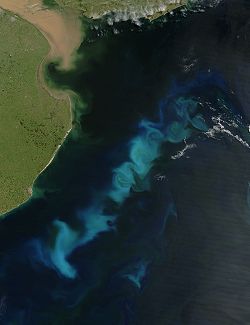
Iron fertilization is the intentional addition of dissolved iron to high-nutrient, low-chlorophyll (HNLC) ocean regions to alleviate iron limitation, thereby promoting phytoplankton growth and potentially enhancing biological carbon export to the deep ocean as a means of atmospheric CO₂ removal.[1][2] Proposed in the late 1980s by oceanographer John Martin following observations of natural iron inputs driving productivity, the technique targets vast iron-limited gyres comprising about one-third of the global ocean surface where macronutrients abound but primary production is constrained by trace metal scarcity.[3] Field experiments conducted since the 1990s, including IronEx I and II in the equatorial Pacific, SOIREE and SOFeX in the Southern Ocean, and LOHAFEX near Antarctica, consistently induced phytoplankton blooms detectable via satellite chlorophyll anomalies, confirming the iron-limitation hypothesis under controlled conditions.[2] However, empirical measurements revealed limited carbon sequestration efficacy, with exported particulate organic carbon often comprising less than 10-20% of gross primary production sinking beyond the seasonal mixed layer, as much of the biomass was remineralized in the upper water column or grazed without deep export.[4] Reviews of these mesoscale trials indicate transient CO₂ drawdown on the order of 10-1000 GtC potential globally if scaled, but actual net sequestration remains inefficient due to rapid recycling and insufficient sinking fluxes, challenging claims of scalable geoengineering viability.[2][4] Controversies surrounding iron fertilization stem from ecological risks and regulatory hurdles, including potential for hypoxic zones from organic matter decomposition, shifts toward gelatinous or toxic algal dominances altering food webs, and enhanced nitrous oxide emissions—a potent greenhouse gas—from denitrification in stratified bloom patches.[5] Model simulations and observations further highlight uncertainties in long-term feedbacks, such as nutrient depletion in equatorial upwelling zones or biodiversity losses, underscoring the technique's departure from natural variability and potential for unintended regional impacts outweighing marginal carbon benefits.[4] Despite international moratoriums under the London Protocol prohibiting non-scientific deployments since 2008, ongoing research advocates for targeted experiments to quantify export efficiencies, though systemic biases in climate-focused academia may overstate benefits while underemphasizing empirical limitations from small-scale trials.[3][2]

Scientific Principles

Role of Iron in Marine Ecosystems

Iron functions as an essential micronutrient in marine ecosystems, serving as a cofactor in key enzymes that facilitate phytoplankton processes such as photosynthesis, respiration, and nitrogen fixation.[6] Specifically, iron is required for the synthesis of chlorophyll, the function of cytochromes in electron transport chains, and the activity of ferredoxin in photosynthetic reduction pathways.[7] These roles make iron indispensable for primary production, the foundation of marine food webs supporting zooplankton, fish, and higher trophic levels.[8] In vast regions of the open ocean, including high-nutrient, low-chlorophyll (HNLC) areas like the Southern Ocean, subarctic Pacific, and equatorial upwelling zones, iron availability constrains phytoplankton biomass and productivity despite replete macronutrients such as nitrate and phosphate.[9] Dissolved iron concentrations in surface waters of these HNLC regions typically range from 0.08 to 0.5 nanomolar (nM), far below levels needed for unconstrained growth, leading to persistent underutilization of macronutrients.[10] This limitation influences phytoplankton community composition, favoring smaller diatoms and picoplankton over larger bloom-forming species that demand higher iron quotas.[11] The scarcity of bioavailable iron stems from its low solubility in oxygenated seawater and rapid scavenging by organic ligands and particles, with natural inputs primarily from aeolian dust deposition, continental shelf sediments, and sub-surface upwelling.[12] In iron-limited conditions, phytoplankton exhibit physiological adaptations like reduced cellular iron quotas or enhanced uptake efficiency, but these cannot fully compensate for deficits, resulting in subdued carbon fixation and export to deeper waters.[13] Consequently, iron dynamics regulate not only local productivity but also global biogeochemical cycles, including carbon sequestration and nutrient regeneration.[14]

Phytoplankton Dynamics and the Iron Hypothesis

Phytoplankton, primarily unicellular algae, constitute the foundation of oceanic primary production, converting dissolved carbon dioxide into organic matter through photosynthesis and supporting marine food webs and carbon cycling. Their growth rates and biomass accumulation are governed by light, macronutrients such as nitrate and phosphate, and micronutrients including iron, with dynamics influenced by environmental mixing, grazing, and sinking rates. In regions with adequate macronutrients, phytoplankton communities can form dense blooms that enhance carbon export to deeper waters via particulate organic matter sedimentation.[15][6] High-nutrient, low-chlorophyll (HNLC) regions, encompassing approximately 20-30% of the global ocean surface including the Southern Ocean, subarctic North Pacific, and equatorial Pacific divergence zones, exhibit elevated macronutrient concentrations yet persistently low phytoplankton biomass, as indicated by chlorophyll levels typically below 0.5 μg/L. This paradox arises because ambient dissolved iron concentrations, often below 0.1 nM in these areas, constrain cellular processes despite macronutrient abundance, leading to subdued growth rates and minimal bloom formation. Iron scarcity stems from its low solubility in oxygenated seawater and limited atmospheric or upwelled inputs, resulting in phytoplankton communities dominated by small, iron-efficient picoeukaryotes rather than larger diatoms capable of rapid biomass accrual.[16][17][9] The Iron Hypothesis, articulated by oceanographer John H. Martin in the late 1980s, asserts that iron acts as the primary limiting factor for phytoplankton productivity in HNLC waters, explaining the uncoupling between macronutrient availability and observed biomass. Martin's team demonstrated this through shipboard incubation experiments in the northeast subarctic Pacific, where additions of 1-2 nM iron to surface seawater induced phytoplankton growth rates up to 1.0 day⁻¹, comparable to iron-replete coastal systems, with chlorophyll increasing by factors of 10-30 within days. Subsequent bottle and in situ mesoscale enrichments, such as the 1993 IronEx I trial in the equatorial Pacific, confirmed that iron alleviation shifts community structure toward diatom dominance, elevates primary production, and promotes aggregate formation for potential carbon export, though efficacy varies with co-limitations like silicate or grazing pressure.[18][16][19] Under the Iron Hypothesis, phytoplankton dynamics in HNLC regions exhibit a threshold response to iron inputs: sub-nanomolar additions trigger exponential growth phases lasting 1-2 weeks, followed by bloom termination via nutrient drawdown, protozoan grazing, or iron depletion through particle scavenging. Modeling and field observations indicate that while iron fertilization enhances net community production by 2-5-fold in experiments, sustained sequestration remains uncertain due to recycled production within the euphotic zone and variable export efficiencies ranging from 10-50% of fixed carbon. These dynamics underscore iron's role in modulating oceanic carbon pumps, with natural analogs like subantarctic dust events periodically alleviating limitation and inducing transient blooms observable via satellite chlorophyll anomalies exceeding 1 mg/m³.[20][21][19]

Natural vs. Artificial Iron Inputs

Natural iron inputs to the ocean primarily derive from aeolian dust deposition, riverine discharge, subglacial melting, hydrothermal vents, and sediment resuspension, with atmospheric dust accounting for the majority in high-nutrient, low-chlorophyll (HNLC) regions such as the Southern Ocean.[22] Global aeolian dust supplies approximately 15-22 million metric tons of iron annually, but only a small fraction—typically 0.5-5%—is solubilized and bioavailable to phytoplankton due to its association with insoluble mineral phases like hematite and goethite.[23] Hydrothermal sources contribute dissolved iron from deep-sea vents, with shallow vents (<2000 m) providing up to 10-20% of iron in certain coastal upwelling zones, though much of this remains sequestered below the euphotic zone unless mixed upward.[24] These inputs are episodic and spatially heterogeneous, driven by wind patterns, volcanic eruptions, and glacial dust during ice ages, which historically enhanced phytoplankton productivity and carbon drawdown by an estimated 15-60 GtC over glacial-interglacial cycles.[25] Artificial iron inputs, in contrast, involve deliberate additions of soluble iron compounds, predominantly ferrous sulfate (FeSO4·7H2O), during ocean iron fertilization experiments to stimulate phytoplankton blooms in iron-limited waters.[2] Early experiments like IronEx I (1993) added ~420 kg of iron over a 64 km² patch, while larger mesoscale trials such as SOFeX (2002) deployed up to 3,750 kg, achieving initial dissolved iron concentrations of 1-3 nM to overcome limitation thresholds of ~0.1 nM.[2] These additions are acidified to enhance solubility and often paired with trace metals like copper to mimic natural ligands, ensuring rapid bioavailability exceeding 50-80% uptake within days, far surpassing natural dust's immediate accessibility.[26] Key differences lie in form, bioavailability, and persistence: natural aeolian iron arrives as refractory particles requiring photochemical or biological reduction for solubilization, yielding lower initial bioavailability (often <1% relative to free inorganic Fe') and supporting patchy, transient blooms tied to dust events.[27] Artificial inputs, as soluble Fe(II), provide immediate relief from limitation, promoting denser blooms with 10-100-fold biomass increases in experiments, but risk rapid precipitation into less bioavailable Fe(III) oxyhydroxides without sustained supply.[22] While natural fluxes dwarf experimental scales—annual dust iron to the Southern Ocean alone exceeds 1 Tg versus <10 tons per trial—artificial dosing enables targeted, quantifiable responses, though it bypasses natural ligand complexes that stabilize iron over longer timescales.[28] Anthropogenic pollution, including fly ash, has amplified soluble natural inputs by up to 50% in some regions, blurring distinctions but highlighting that deliberate fertilization achieves higher short-term efficiency at microgram scales.[29]

Deployment Methods

Direct Oceanic Dispersion Techniques

Direct oceanic dispersion techniques for iron fertilization primarily involve the infusion of soluble iron compounds into high-nutrient, low-chlorophyll (HNLC) surface waters using vessels to stimulate phytoplankton growth. The standard approach utilizes ferrous sulfate heptahydrate (FeSO₄·7H₂O) as the iron source, dissolved in seawater acidified to a pH of approximately 4 with hydrochloric acid (HCl) or sulfuric acid to inhibit rapid oxidation of Fe(II) to insoluble Fe(III) oxyhydroxides and promote bioavailability. This solution is prepared onboard and released via pumps through hoses or nozzles, often at or near the surface (0-30 meters depth) to target the euphotic zone while minimizing immediate precipitation.[30] Dispersion is achieved by maneuvering the vessel in patterns such as spirals or transects to cover targeted patches ranging from square kilometers in experimental scales to potentially hundreds of square kilometers in proposed large-scale operations, with inert tracers like sulfur hexafluoride (SF₆) sometimes added to track patch integrity and dilution.[31] In practice, release rates are calibrated to achieve iron concentrations of 0.5-2 nmol L⁻¹ initially, based on empirical dosing from prior trials, with total iron additions scaling from 1-10 metric tons in mesoscale experiments to hypothetical gigatons annually for global carbon removal ambitions. To enhance mixing and retention, techniques include subsurface injection using towed drogues or fish-like towed bodies that facilitate Lagrangian drift with ocean currents, reducing uneven distribution and aggregation. Challenges include the short residence time of dissolved iron (hours to days) due to photochemical and biological scavenging, necessitating repeated dosing in multi-addition protocols observed in field tests. For scalability, proposals incorporate commercial bulk carriers or modified fishing vessels equipped with large-capacity mixing tanks and high-volume pumps, potentially automating dispersion via GPS-guided releases to optimize coverage over vast HNLC regions like the Southern Ocean. Economic models estimate ship-based direct dispersion costs at $20-50 per tonne of CO₂ sequestered, factoring in fuel, iron sourcing, and logistics, though verification of sequestration remains a key uncertainty.[31][32]

Innovative and Alternative Approaches

Aerial delivery of iron, typically as fine iron particles or sulfate powders dispersed from aircraft, has been modeled as a potentially more efficient alternative to ship-based methods, with estimates indicating 30-40% lower costs per tonne of carbon sequestered due to reduced vessel time and fuel requirements.[31] This approach leverages aviation for rapid coverage of large high-nutrient, low-chlorophyll (HNLC) regions, minimizing the need for on-site dissolution and allowing deployment in remote areas where ship access is logistically challenging.[31] However, practical implementation faces hurdles such as aircraft range limitations, precise particle sizing to ensure bioavailability, and potential atmospheric losses before ocean deposition.[31] Aerosolized sprays of liquid iron solutions or powdered iron compounds represent another proposed innovation, aiming to enhance spatial uniformity and mixing depth compared to surface pumping from vessels. These methods involve atomizing iron via high-pressure nozzles or drones to create mists that penetrate the upper mixed layer, potentially reducing aggregation issues observed in bulk dispersions and improving iron retention in sunlit zones for phytoplankton uptake. Preliminary modeling suggests such techniques could optimize bloom initiation in expansive HNLC patches, though field validation remains limited, with concerns over scalability and wind-driven drift. Electrochemical approaches offer an in situ alternative by using electrolytic cells deployed from ships or fixed platforms to dissolve iron from abundant seawater minerals or electrodes, generating bioavailable ferrous iron without external sourcing or transport of bulk chemicals.[33] This method exploits anodic oxidation to release iron at controlled rates, potentially coupled with alkalinity enhancement for synergistic carbon drawdown, and requires lower upfront material inputs than traditional fertilization.[33] Advantages include reduced logistical footprints and minimized contamination risks, but energy demands for electrolysis and electrode durability in corrosive marine environments pose engineering challenges, as demonstrated in lab-scale prototypes.[33] Biogenic iron dust, derived from engineered microbial processes to produce iron-rich aerosols or particles mimicking natural aeolian inputs, has been conceptually advanced as a sustainable vector, potentially integrating with existing bioenergy systems for carbon-neutral delivery.[34] This technique aims to enhance iron solubility through organic coatings, improving persistence in surface waters over inorganic salts, though it remains largely theoretical with untested ecological interactions.[34]

Experimental Evidence

Initial Proof-of-Concept Trials

The inaugural in situ iron fertilization experiment, designated IronEx I, occurred in October 1993 within the equatorial Pacific Ocean, approximately 800 km west of the Galapagos Islands in high-nutrient, low-chlorophyll (HNLC) waters. Researchers deployed 420 kg of dissolved iron (as ferrous sulfate) alongside 33 kg of an inert sulfur hexafluoride (SF6) tracer into a roughly 64 km² surface patch, targeting a depth-integrated iron addition of about 0.8 nM. Within four days, phytoplankton chlorophyll a concentrations increased threefold from baseline levels near 0.15 µg L⁻¹, accompanied by elevated primary productivity rates up to 3.5 µmol C L⁻¹ d⁻¹ and shifts in community composition favoring diatoms; however, the response dissipated rapidly due to patch dilution from equatorial upwelling and turbulence, with limited evidence of carbon export to depth.[35][36] Building on these findings, IronEx II followed in March–April 1995 in the same region, employing a staged addition of 770 kg total iron (initial dose plus two rechallenges) and SF6 to a 81 km² patch, achieving sustained iron concentrations around 1–2 nM. This trial produced a more persistent phytoplankton bloom, with chlorophyll a peaking at 3.5 µg L⁻¹ after 13 days—over 20-fold the initial value—and net primary production exceeding 400 mmol C m⁻² over the experiment duration; diatom dominance emerged, and thorium-based measurements indicated modest particulate organic carbon export fluxes of approximately 20–30 mmol C m⁻² to depths below 100 m, though much of the biomass remained in surface layers.[35][2] The Southern Ocean Iron Release Experiment (SOIREE), conducted in February 1999 at 61°S, 140°E south of Tasmania, marked the first such trial in polar Antarctic waters, fertilizing a 50 km² HNLC patch with 3,600 kg of iron (as acidified ferrous sulfate) in three infusions totaling ~1 nM, traced by SF6. Phytoplankton biomass tripled within a week, reaching chlorophyll a levels of 0.6–1.0 µg L⁻¹ with a pronounced diatom bloom visible via satellite imagery persisting over 20–30 days; enhanced primary production and grazing rates were recorded, but carbon remineralization in the mixed layer limited deep export, estimated at less than 10% of new production sinking below 100 m. These early experiments collectively validated the iron limitation hypothesis in HNLC regimes, demonstrating causal bloom induction while highlighting challenges in patch retention and efficient carbon sequestration.[37][2][38]

Mesoscale and Field-Scale Experiments

Mesoscale experiments involved the deliberate addition of iron to defined ocean patches, typically spanning 25–300 km², to simulate larger-scale responses in high-nutrient, low-chlorophyll (HNLC) regions and assess bloom dynamics, carbon export, and sequestration potential. These trials, conducted primarily in the Southern Ocean and subpolar North Pacific between 1999 and 2005, built on smaller proof-of-concept studies by enabling multi-week tracking of patch evolution using ship-based sampling, drifters, and remote sensing. Key objectives included quantifying primary production increases, particulate organic carbon (POC) flux to depth, and iron retention efficiency, revealing that while iron reliably stimulated phytoplankton growth, the magnitude and persistence of carbon drawdown varied with hydrographic conditions such as mixed-layer depth and natural iron inputs.[2][39] The SOIREE experiment in February 1999 fertilized a 50 km² patch southeast of Tasmania with 3,850 kg of dissolved iron (as FeSO₄), inducing a diatom-dominated bloom that increased chlorophyll a concentrations from ~0.2 to 2 µg L⁻¹ over 13 days and elevated primary production by over twofold within the mixed layer. However, carbon export was minimal, with most POC retained in the upper 50 m due to shallow mixing and rapid iron depletion, yielding a low sequestration efficiency of approximately 1–3% of added iron incorporated into sinking material. EisenEx in 2001 added 1,500 kg of iron to a 200 km² patch in the Southern Ocean near the Crozet Islands, producing a bloom with chlorophyll peaks exceeding 5 µg L⁻¹ and enhanced POC export fluxes of 0.3–0.7 mmol C m⁻² d⁻¹ to 100 m, though much of the carbon remineralized above 200 m, limiting net sequestration.[2][35]
ExperimentYearLocationPatch Size (km²)Iron Added (kg)Key Outcomes
SOIREE1999Southern Ocean (Tasmania)~503,850Diatom bloom; >2x primary production; low deep export (<100 m) due to iron limitation after day 13.[2]
EisenEx2001Southern Ocean (Crozet)~2001,500Chlorophyll >5 µg L⁻¹; POC flux to 100 m but remineralization dominant; efficiency ~10–20 mol C/mol Fe.[35]
SOFeX-North2002NE Pacific~400Variable (multiple additions)Bloom in transitional zone; moderate production increase but variable export influenced by natural gradients.[2]
SOFeX-South2002Southern Ocean~1,0001,400Targeted deep export; sinking POC to >500 m observed via thorium proxies, with ~20–30% of new production exported.[2]
EIFEX2004Southern Ocean (ACC)~4501,800 (replicates)Persistent bloom; high export efficiency (~50 mol C/mol Fe) with fecal pellets sinking to 3,000 m, indicating potential for deeper sequestration in polar waters.[2][35]
Subsequent trials like SOFeX-South and EIFEX highlighted location-specific export successes, with EIFEX recording fecal aggregate sinking rates supporting fluxes to abyssal depths, contrasting earlier experiments where grazing or aggregation failures limited transfer efficiency below 200 m. Across these studies, iron addition consistently relieved limitation in HNLC waters, boosting net community production by 1.5–5-fold, but overall carbon sequestration efficacy remained low (e.g., <1–10 mol C per mol Fe exported beyond the seasonal thermocline), attributed to factors like rapid iron scavenging by organics, incomplete nutrient drawdown, and eddy dispersion diluting patches. Mesoscale designs also revealed ecological shifts, including diatom proliferation and altered microbial communities, though without evidence of lasting hypoxic zones or toxic accumulations in observed timescales. These findings underscored iron's role in bloom initiation but emphasized uncertainties in scalable sequestration, informing subsequent modeling of operational deployments.[39][40]

Post-2010 Projects and Natural Analogs

In the years following the 2009 LOHAFEX experiment, no additional large-scale scientific iron fertilization trials have been executed in high-nutrient, low-chlorophyll (HNLC) regions of the open ocean.[41] A notable non-scientific initiative occurred in July 2012, when the Haida Salmon Restoration Corporation released approximately 100 metric tons of iron sulfate into the northeastern Pacific Ocean, about 300 kilometers west of Haida Gwaii, British Columbia, Canada.[42] This dispersal, conducted from a vessel over a targeted area, aimed to stimulate phytoplankton growth to support salmon fisheries and achieve carbon dioxide removal, but lacked peer-reviewed experimental design or comprehensive monitoring protocols.[43] Satellite imagery confirmed a subsequent phytoplankton bloom, with chlorophyll-a concentrations rising significantly in the affected patch, alongside shifts in the pelagic ecosystem including increased zooplankton abundance.[44] [45] The project drew condemnation for breaching international regulations under the London Convention and Protocol, which prohibit non-scientific ocean fertilization activities.[46] Assessments of carbon sequestration were inconclusive, with no verified measurements of enhanced export to the deep ocean, though organizers reported anecdotal increases in subsequent salmon catches.[43] Natural analogs—regions receiving ongoing iron inputs from geological or atmospheric sources—offer observational evidence on fertilization dynamics without artificial intervention. The Kerguelen Plateau in the Indian sector of the Southern Ocean serves as a prominent example, where iron leached from shallow bathymetric features sustains recurrent phytoplankton blooms spanning over 100,000 square kilometers.[47] Data from the KErguelen Ocean and Plateau compared Study (KEOPS) expeditions in 2005 and 2011 indicate that this natural iron supply boosts primary production and particulate organic carbon (POC) export at 200 meters depth by 2.9 to 4.5 times relative to surrounding HNLC waters.[48] Export efficiency, defined as the fraction of net community production transferred below the mixed layer, reached about 28% in the fertilized bloom versus 58% in HNLC areas, but absolute fluxes were elevated due to higher productivity.[48] These findings, derived from thorium-234 deficit methods and sediment trap deployments, underscore iron's role in amplifying the biological carbon pump, though remineralization rates and lateral advection influence net sequestration.[48] [49] Shallow hydrothermal vents provide another analog, delivering dissolved iron to surface waters and enhancing microbial processes. Research in 2023 documented that vent-proximal sites exhibit diazotroph (nitrogen-fixing organism) activity 2 to 8 times greater and carbon export fluxes 2 to 3 times higher than nearby iron-poor waters.[24] This stimulation supports elevated primary production and particle sinking, mirroring potential artificial outcomes but on smaller scales constrained by vent hydrography. Such analogs reveal variable efficacy dependent on iron retention time, nutrient co-limitation, and grazing pressures, informing models of fertilization impacts without direct manipulation risks.[50]

Carbon Sequestration Efficacy

Measured Carbon Drawdown from Experiments

In the Southern Ocean Iron Release Experiment (SOIREE), conducted from 9–24 February 1999 south of the Polar Front, the addition of approximately 1.3 metric tons of dissolved iron (as acidified FeSO₄) over multiple infusions stimulated a phytoplankton bloom that resulted in a biological uptake of 1389 metric tons of inorganic carbon across the ~50 km² patch after 12 days, equivalent to a molar efficiency of roughly 10,000–15,000 atoms of carbon per atom of iron added.[51] This uptake corresponded to a 21% drawdown in surface-water partial pressure of CO₂ (pCO₂) and a modest net community production increase, though sediment trap measurements indicated limited export of particulate organic carbon (POC) below the euphotic zone, with most carbon remineralized in the upper 100 m.[37][51] The EisenEx experiment, held in March–April 2001 in the Southern Ocean's Polar Frontal Zone, added a similar total of ~1.5 metric tons of iron and achieved a comparable biological carbon uptake of 1433 metric tons over 12 days, with a ~15–20% reduction in surface pCO₂.[51] However, thorium-234-based export estimates showed negligible POC flux to depths greater than 100 m, attributing the drawdown primarily to temporary surface-layer fixation rather than deep sequestration.[2] During the Southern Ocean Iron Experiment (SOFeX) in January–February 2002, which included northern (low-silicate) and southern (high-silicate) patches with total iron additions of ~0.5 and ~1.2 metric tons respectively, enhanced net community production led to DIC drawdowns of ~5–10 µmol kg⁻¹ in surface waters, but no significant downwind or deep export was detected via particle tracking or nutrient deficits.[52][53] The southern patch exhibited higher bloom persistence due to silicate availability, yet overall carbon export efficiency remained low, with remineralization dominating over sinking.[52] The European Iron Fertilization Experiment (EIFEX), conducted in March 2004 downstream of the Crozet Islands, added ~1.1 metric tons of iron and produced the strongest evidence of export among early trials, with sediment traps capturing POC fluxes of ~0.1–0.3 g C m⁻² d⁻¹ to 300–500 m depths and diatom aggregates observed sinking to over 3,000 m via neutrally buoyant profiling floats. This yielded an estimated sequestration efficiency of ~1,400 mol C per mol Fe added for exported carbon, far exceeding other experiments but still representing only ~10–20% of total fixed carbon escaping upper-ocean recycling.[54][2] A 2012 reanalysis suggested atomic C/Fe ratios up to 13,000 for sequestered material, based on fecal pellet and aggregate sinking rates, though verification challenges persist due to patch dilution.[55]
ExperimentIron Added (metric tons)Total C Uptake (metric tons)Estimated Export Efficiency (mol C/mol Fe)Key Limitation
SOIREE (1999)~1.31389<1,000 (mostly remineralized)Low sinking flux below 100 m[51]
EisenEx (2001)~1.51433Negligible deep exportSurface retention and grazing[51][2]
SOFeX-South (2002)~1.2~500–1,000 (inferred)Low (<500)No deep POC detected[52]
EIFEX (2004)~1.1~1,500–2,000 (inferred)~1,400Highest but patch-scale only[54][55]
Across these mesoscale trials, DIC drawdowns per unit iron averaged 3,000–4,000 mol C/mol Fe in high-nutrient, low-chlorophyll regions, but sequestration (defined as export below 1,000 m) rarely exceeded 10–15% of fixed carbon, constrained by grazing, aggregation inefficiencies, and remineralization.[35] Later experiments like CROZEX (2005) showed analogous patterns, with natural analogs (e.g., Kerguelen Plateau) implying potential for higher efficiencies under sustained inputs but highlighting scalability issues from transient patch dynamics.[2] These measurements underscore that while short-term drawdown is verifiable, verifiable long-term oceanic carbon removal remains empirically modest and site-dependent.[2][56]

Quantification Challenges and Modeling Insights

Quantifying the carbon sequestration efficacy of iron fertilization remains challenging due to the transient nature of phytoplankton blooms and the difficulty in measuring deep-ocean export. In mesoscale experiments, such as those conducted in high-nutrient, low-chlorophyll (HNLC) regions, observed carbon export fluxes have been small or negligible within the typical 12–24 day observation periods, complicating direct attribution of sequestration to fertilization.[57] Physical measurement techniques, including sediment traps, often fail to capture the full spectrum of export pathways like dissolved organic carbon or grazing-mediated flux, leading to underestimates or uncertainties in net carbon drawdown to depths below 100 meters.[58] For instance, post-experiment analyses from trials like SOIREE and SERIES revealed export rates substantially lower than model-based predictions used for scaling potential climate benefits.[59] These empirical limitations necessitate reliance on biogeochemical models to extrapolate sequestration potential, though models themselves grapple with parameterizing iron bioavailability, particle sinking rates, and remineralization. Global ocean circulation models, such as those from GFDL, indicate that small-scale fertilization yields low efficiency for atmospheric CO2 mitigation, with much of the fixed carbon remineralized in the upper ocean rather than exported durably.[60] Large-scale simulations suggest higher efficacy, with carbon uptake efficiencies 179–225% greater than small-scale efforts in regions like the Southern Ocean and Equatorial Pacific, due to reduced edge effects and enhanced aggregation.[61] However, even optimistic modeling caps the maximum atmospheric CO2 reduction from fertilizing all HNLC areas at approximately 18.7%, highlighting constraints from nutrient stoichiometry and ventilation processes that limit long-term storage.[62] Insights from coupled physical-biogeochemical models underscore the need for region-specific optimization, as iron addition efficiency hovers around 1% in past experiments, with untested dose-response curves potentially improving export if tailored to maximize particle flux.[40] Discrepancies between models and observations persist, particularly in predicting the fate of fertilized patches amid advection and diffusion, emphasizing that while fertilization can transiently enhance drawdown, verifiable sequestration requires integrated monitoring of export vectors beyond bloom termination.[63]

Efficiency Metrics and Optimization Factors

Efficiency in ocean iron fertilization is primarily assessed through the molar ratio of biogenic carbon exported to the deep ocean per mole of iron added, denoted as (C:Fe)export, which quantifies the amount of carbon removed from the surface mixed layer relative to input. Field experiments have reported (C:Fe)export ratios ranging from approximately 650 to 25,000 mol C per mol Fe, with higher values associated with greater export depths and conditions favoring particle sinking, such as diatom-dominated blooms.[64] In the European Iron Fertilization Experiment (EIFEX, 2004), conducted in the Southern Ocean, carbon export reached depths of 300–500 m, yielding elevated (C:Fe)export due to the formation of dense fecal pellets and phytodetritus aggregates that resisted remineralization.[65] Conversely, earlier trials like SOIREE (1999) in the Southern Ocean exhibited lower export efficiency, with much of the fixed carbon remineralized in the upper 100 m, resulting in (C:Fe)export closer to the lower end of observed ranges.[2] Another key metric is carbon transfer efficiency, defined as the fraction of primary production that sinks below the euphotic zone and reaches deep storage reservoirs like Antarctic Bottom Water (AABW). In high-nutrient, low-chlorophyll (HNLC) regions offshore, this efficiency is low at 0.7%–2.7%, as exported particles often dissolve before subduction; however, Antarctic continental shelves achieve near-total transfer due to shallow AABW formation sites.[56] Net sequestration is further modulated by air-sea CO2 exchange, where rapid re-equilibration (>50% offshore) can offset drawdown unless blooms persist long enough for vertical export to dominate.[56] Modeling studies indicate global sequestration potentials varying by region, with sustained fertilization in HNLC areas potentially removing 0.1–1 Gt C yr−1, though empirical verification remains limited by experiment scale.[66] Optimization hinges on site selection within HNLC regions, prioritizing areas with high silicic acid concentrations (>10 μmol kg−1) to promote diatom blooms, which produce ballast-heavy particles for enhanced sinking.[53] Antarctic shelves, such as the Ross Sea, emerge as most cost-efficient, enabling >2 t CO2 sequestered per km2 at <100 US/tCO<sub>2</sub>,comparedto>1,000[US](/page/UnitedStates)/t CO<sub>2</sub>, compared to >1,000 [US](/page/United_States)/t offshore, due to superior carbon transfer and limited gas exchange.[56] Iron dosing strategy influences bioavailability: acidic, dissolved Fe(III) forms improve retention against precipitation, while repeated additions counteract depletion via scavenging or biological uptake.[40] Temporal factors include targeting austral summer for optimal light and stratification, minimizing grazing by mesozooplankton through patch-scale dynamics, and leveraging natural analogs like the Kerguelen Plateau, where chronic dust-derived iron yields sustained export efficiencies informing scalable designs.[2] Challenges persist in scaling, as mesoscale patch dilution and nutrient recycling can reduce long-term efficacy unless integrated with vertical mixing enhancements.[67]

Ecological and Environmental Impacts

Short-Term Biological Responses

In high-nutrient, low-chlorophyll (HNLC) regions, short-term biological responses to iron fertilization primarily involve rapid enhancements in phytoplankton growth and biomass accumulation. Mesoscale experiments, such as SOIREE (1999), IronEx II (1995), and SOFeX (2002), consistently demonstrated that iron additions trigger phytoplankton blooms within days, with chlorophyll a concentrations rising by factors of 10 to 30 over 1-3 weeks, often dominated by diatoms capable of tolerating low iron conditions.[2][68] Primary productivity increases correspondingly, as photosynthetic quantum yield improves with elevated dissolved iron levels above 0.2 nM, enabling relief from iron limitation.[69] Phytoplankton community structure shifts toward larger-celled diatoms from initially small pico- and nanophytoplankton, reflecting iron's role in facilitating silicic acid uptake and cell division in these species.[70] In the LOHAFEX experiment (2009), chlorophyll a and primary productivity doubled within the fertilized patch, alongside an increase in photosynthetic efficiency from 0.33 to ≥0.40, though the bloom was smaller than in prior Antarctic trials due to low silicic acid availability.[52] Heterotrophic bacteria also exhibit stimulated growth in response to the organic matter released from blooming phytoplankton, as observed in Southern Ocean enrichments where bacterial production rose in tandem with algal proliferation.[71] Zooplankton responses occur on similar timescales but are secondary to phytoplankton dynamics; grazing pressure intensifies as herbivore abundances track bloom development, potentially limiting net biomass accumulation in some cases.[72] However, short-term net community production generally increases, with iron alleviating limitations on both autotrophic and heterotrophic processes, though the extent varies by initial nutrient profiles and patch dilution effects.[2] These responses underscore iron's co-limiting role alongside macronutrients in HNLC ecosystems, but also highlight variability influenced by local conditions like temperature and mixing.[37]

Long-Term Ecosystem Risks and Evidence

Iron fertilization experiments, conducted over durations of weeks to months, have not provided direct empirical evidence of long-term ecosystem disruption, as fertilized patches typically dilute rapidly due to ocean mixing and currents, allowing for apparent recovery within the observation periods.[73] Modeling studies, however, project potential persistent alterations at scales relevant to geoengineering, including shifts in nutrient cycling and community structure that could extend beyond the fertilized area.[73] For instance, repeated large-scale additions could deplete silicic acid, favoring non-diatom phytoplankton and reducing export efficiency in subsequent cycles, as inferred from silicon limitation observed in experiments like LOHAFEX (2009), where diatom growth stalled despite iron availability.[73] No post-experiment monitoring has confirmed lasting changes, but natural analogs in iron-enriched regions, such as around the Kerguelen Islands, exhibit elevated productivity without evident biodiversity collapse, though these systems are naturally pulsed rather than continuously fertilized.[2] A key risk is the stimulation of toxic phytoplankton, particularly Pseudo-nitzschia species producing domoic acid (DA), a neurotoxin harmful to marine mammals and fisheries. In situ iron additions at Ocean Station Papa (a high-nitrate, low-chlorophyll region) in 2004 increased DA concentrations to approximately 200 pg L⁻¹, with batch cultures yielding up to 290 fg mL⁻¹ under iron-copper amendments, altering community structure to favor toxin producers.[74] Concentrations approaching 1–2 μg L⁻¹ could bioaccumulate in food webs, posing risks at scale, though no toxic blooms were documented in open-ocean mesoscale trials like EIFEX (2004) or SOFeX (2002).[74] [73] Hypoxia risks arise from microbial remineralization of sinking organic matter, potentially expanding suboxic zones. Models estimate a 17.5% increase in anoxic ocean volume after 80 years of Southern Ocean fertilization, driven by enhanced denitrification.[73] Experiments showed no measurable oxygen drawdown due to dilution, but enhanced nitrous oxide (N₂O) production—up to 5–40% offsetting carbon sequestration via stimulated nitrification in low-oxygen microsites—has been modeled as a countervailing greenhouse effect.[75] [76] Food web alterations include proliferation of grazers like the amphipod Themisto gaudichaudii, which increased during LOHAFEX and consumed bloom biomass, potentially redirecting energy to gelatinous zooplankton over fish, with models suggesting broader trophic imbalances and reduced fisheries yields in fertilized regions.[73] Biodiversity impacts remain uncertain, with diatom dominance in five of 13 experiments depleting macro-nutrients and favoring opportunistic species, but empirical data indicate transient shifts rather than permanent loss.[73] Large-scale fertilization could exacerbate climate-induced nutrient gradients, reducing tropical productivity by altering Southern Ocean export, per 2023 modeling.[77] Overall, while experiments demonstrate ecosystem responsiveness without observed irreversibility, untested scaling amplifies precautionary concerns grounded in biogeochemical feedbacks.[2]

Comparisons to Natural Perturbations

Natural iron perturbations, such as aeolian dust deposition and benthic leaching from shallow shelves or volcanic islands, episodically alleviate iron limitation in high-nutrient, low-chlorophyll (HNLC) regions, stimulating phytoplankton blooms comparable to those induced by artificial fertilization. During the Last Glacial Maximum (LGM), dust fluxes were approximately four times higher than Holocene levels, enhancing biological carbon export in iron-limited oceans and contributing to an estimated 20 ppm reduction in atmospheric CO₂ through iron-mediated fertilization effects.[78] These paleoclimate responses underscore the potential for iron supply to drive sequestration on millennial scales, though modulated by co-limiting factors like silicate availability.[78] Prominent natural analogs include the Kerguelen Plateau, where iron leached from shallow sediments sustains blooms exceeding 100,000 km², with primary production rates substantially elevated over adjacent HNLC waters due to seasonal iron inputs integrated with macronutrients.[50][79] In contrast to artificial experiments, which typically encompass only thousands of km² and rely on discrete sulfate dosing, Kerguelen fertilizations exhibit heterogeneous dissolved iron distributions and termination via iron or silicate exhaustion, fostering diatom dominance and variable carbon export efficiencies.[80][81] Similar dynamics occur at Crozet Islands, where downstream plumes highlight the role of pulsed, multi-nutrient perturbations in amplifying productivity beyond isolated iron additions.[50] Shallow hydrothermal vents represent another perturbation vector, diffusing iron at rates of 1.1 × 10⁻⁴ mmol Fe m⁻² day⁻¹ along arcs like Tonga–Kermadec, supporting diazotroph blooms spanning 360,000 km² with nitrogen fixation rates over 2,000 μmol N m⁻² day⁻¹ and particulate organic carbon export 2–3 times higher than ambient levels.[24] This yields sequestration efficiencies of 13,600–23,000 mol C per mol Fe, outperforming the 4,300 mol C per mol Fe in the SOFeX artificial trial, attributable to sustained, vertically mixed iron plumes that enhance diazotrophy and sinking flux without deep remineralization losses.[24] Key differences from artificial methods include iron speciation—natural sources often deliver bioavailable colloidal or organically complexed forms alongside dust particulates or sediments that promote aggregation and export—versus soluble ferrous sulfate, which may evade rapid uptake or scavenging.[2] Natural events, being spatially extensive and recurrent, align with ecosystem adaptations, yielding integrated responses like increased grazing and remineralization, whereas artificial patches risk transient imbalances, such as flagellate shifts or incomplete nutrient drawdown, limiting verifiable long-term sequestration relative to analogs.[50][24] Empirical quantification from these perturbations thus informs scalability challenges, emphasizing synergies with natural variability for efficacy.[50]

Controversies and Debates

Efficacy Skepticism and Scientific Critiques

Scientific critiques of iron fertilization's efficacy for carbon sequestration emphasize the limited and variable export of particulate organic carbon (POC) to depths exceeding 1000 meters, where sequestration durations of centuries or more could occur. In the 2009 LOHAFEX experiment in the Southern Ocean, iron addition stimulated a phytoplankton bloom with enhanced net community production, yet downward POC flux remained negligible, with most biomass grazed by zooplankton or remineralized in the upper water column, resulting in minimal CO2 drawdown from the atmosphere.[52] [2] This outcome contrasted with earlier experiments like EIFEX (2004), where diatom-dominated blooms facilitated greater sinking rates, but LOHAFEX's conditions—low silicic acid and dominance by smaller, less sinkable flagellates—highlighted site-specific limitations, suggesting iron alone insufficiently overcomes co-nutrient constraints or promotes export in many high-nutrient, low-chlorophyll (HNLC) regions.[2] Model-based assessments and syntheses of multiple experiments further underscore inefficiencies, estimating that even optimized artificial ocean iron fertilization (aOIF) might offset only about 10% of anthropogenic CO2 emissions at best, due to rapid recycling of fixed carbon and incomplete transfer to deep waters via the biological pump.[2] Critics, including oceanographers like Ken Buesseler, argue that measured export in experiments often fails to persist, with POC aggregates dissolving or being consumed before reaching sequestration depths, as evidenced by thorium-based flux proxies showing shallow remineralization dominating over deep burial.[25] Empirical data from natural iron-induced blooms, such as those near Crozet Islands, similarly reveal inconsistent carbon export, influenced by grazing pressure and eddy dynamics, challenging assumptions of scalable, predictable sequestration.[2] Additional skepticism arises from air-sea gas exchange dynamics: while blooms temporarily reduce pCO2, incomplete export can lead to post-bloom outgassing, negating net uptake, as simulated in coupled biogeochemical models calibrated to experimental observations. Peer-reviewed reviews conclude that aOIF's efficacy remains unproven for climate-scale intervention, with logistical challenges in verifying long-term storage exacerbating doubts; for instance, no experiment has demonstrated sustained sequestration exceeding 1-2% of added iron's potential carbon fixation in verifiable deep-ocean sinks.[2] These findings prioritize caution, advocating further targeted research over deployment, given the empirical gap between bloom stimulation and durable CO2 removal.[25]

Regulatory and Ethical Objections

In 2008, the Consultative Parties to the London Convention adopted a non-binding resolution deeming ocean iron fertilization a potential threat to the marine environment and recommending against large-scale or commercial activities pending further scientific assessment.[82] In 2010, the London Protocol—binding on its parties—was amended to prohibit ocean fertilization except for legitimate scientific research, with a 2013 assessment framework further restricting research to small-scale experiments that demonstrate plausible oceanographic or ecological benefits and minimize risks.[83] These measures under the London Convention/Protocol framework, which regulate marine dumping to prevent pollution, reflect objections rooted in uncertainties over long-term ecological impacts, such as altered nutrient cycles or harmful algal blooms, and the transboundary nature of ocean ecosystems that complicates enforcement.[82] Similarly, the 2010 decision by the Conference of Parties to the Convention on Biological Diversity imposed a de facto moratorium on geoengineering activities, including ocean iron fertilization, citing risks to biodiversity and insufficient evidence of net environmental benefits.[84] Regulatory critiques emphasize the precautionary approach, arguing that empirical data from field experiments—like the 2009 LOHAFEX study showing minimal carbon sequestration and localized biomass declines—underscore the potential for unintended consequences without adequate governance for monitoring or liability.[85] Incidents such as the 2012 Haida Salish Sea iron dump by a private entrepreneur, which released 100 metric tons of iron sulfate without permits, highlighted enforcement gaps and prompted international condemnation for violating LC/LP principles, as it risked toxic phytoplankton proliferation and fishery disruptions in Canadian waters.[46] Proponents of stricter bans, including some marine scientists, contend that even research-scale efforts could set precedents for commercialization, potentially undermining emission reduction efforts by fostering reliance on unproven carbon offsets.[86] Ethically, opponents invoke the moral hazard of geoengineering, positing that iron fertilization might delay urgent decarbonization by offering a technically feasible but low-efficiency alternative, as modeled sequestration rates often fall below 10% of added carbon sinking to depths exceeding 1,000 meters.[87] Justice concerns arise from unequal global stakes, with high-northern-hemisphere emitters potentially imposing risks on southern ocean-dependent communities, raising questions of informed consent and intergenerational equity absent multilateral oversight.[88] Philosophically, the interventionist scale evokes "playing God" critiques, where deliberate planetary manipulation disregards causal complexities in ocean food webs, potentially eroding intrinsic ecological values in favor of anthropocentric climate goals, as articulated in analyses of geoengineering's ethical phases from research to cessation.[89] These objections prioritize empirical caution over speculative benefits, given persistent modeling discrepancies between short-term blooms and verifiable deep-ocean carbon export.[4]

Precautionary Approaches vs. Empirical Validation

The precautionary principle, as applied to iron fertilization, emphasizes avoidance of potentially irreversible harm to marine ecosystems despite scientific uncertainty, leading to calls for moratoriums on large-scale deployments. In 2008, the Convention on Biological Diversity (CBD) adopted a de facto moratorium on geoengineering activities, including ocean iron fertilization, citing risks such as altered food webs, toxic algal blooms, and regional deoxygenation that could exacerbate hypoxia. Similarly, the London Convention and Protocol's 2008 resolution prohibited non-scientific ocean fertilization, reflecting concerns that iron-induced phytoplankton blooms might export organic matter unevenly, potentially disrupting nutrient cycles and biodiversity without verifiable carbon sequestration benefits. Proponents of this approach, including environmental NGOs and some regulators, argue that the potential for unintended consequences—like increased dimethyl sulfide emissions altering cloud formation or nitrous oxide production offsetting climate gains—outweighs unproven advantages, prioritizing ecosystem integrity over speculative mitigation.[90] In contrast, advocates for empirical validation contend that controlled, small-scale experiments are essential to test hypotheses derived from models, which often overestimate or underestimate bloom dynamics and carbon export due to incomplete parameterization of iron bioavailability and grazing pressures. Historical field trials, such as the 1999 SOIREE experiment in the Southern Ocean, demonstrated rapid phytoplankton growth and CO2 drawdown without immediate ecological collapse, with iron concentrations returning to background levels within weeks and no evidence of toxic domoic acid accumulation. The 2004 EIFEX study further observed carbon export to depths exceeding 100 meters, suggesting potential for subduction in certain gyres, though efficiency varied by hydrography; these outcomes underscore that risks can be monitored and minimized in scientific contexts, challenging blanket prohibitions. Critics of strict precaution note that natural iron inputs from dust and upwelling already induce comparable perturbations annually, implying that anthropogenic additions at experimental scales (e.g., 10-300 km² patches) pose negligible global threats, and withholding data hinders causal understanding of sequestration mechanisms.[3][91][92] This tension highlights a divide: precautionary frameworks, often influenced by institutional caution in bodies like the Intergovernmental Panel on Climate Change, may embed biases toward inaction amid modeled worst-case scenarios, whereas empirical proponents, drawing from oceanographic data, stress iterative testing to refine predictions—evident in ongoing proposals for mesoscale trials to quantify export fluxes under varying conditions. While past experiments revealed limitations, such as rapid iron depletion limiting sustained blooms, they provided verifiable metrics absent in purely theoretical assessments, supporting scaled research under international oversight rather than indefinite halts. Recent analyses reaffirm that without further validation, policy risks dismissing a tool with demonstrated short-term efficacy, potentially forgoing adaptive strategies informed by real-world causality.[93][41][94]

Economic and Policy Dimensions

Cost Analyses and Scalability Potential

Cost estimates for ocean iron fertilization (OIF) as a carbon dioxide removal strategy span a wide range, reflecting uncertainties in iron delivery methods, bloom efficiency, carbon export rates, and verification requirements. Peer-reviewed models indicate potential costs as low as approximately $2 per tonne of CO2 removed in optimistic scenarios involving efficient dust dispersion or aerial delivery, but these can escalate to $1,280 per tonne or higher when accounting for monitoring, reporting, and verification (MRV) challenges.[32] A 2024 cost model developed by researchers at Bigelow Laboratory estimates best-case operational costs at $7 per net tonne of carbon captured (equivalent to roughly $2 per tonne CO2, given the molecular weight ratio), but worst-case scenarios exceed $1,500 per tonne of carbon due to variables like vessel fuel consumption and low carbon sinking efficiency, which often ranges from 1% to 10% of primary production.[31] Including MRV expenses, which may require satellite tracking, autonomous floats, and sediment trap deployments, could double or triple these figures, as quantifying long-term sequestration remains technically demanding and unproven at scale.[95] Key cost drivers include the choice of iron source—dissolved ferrous sulfate via ship dispersal is common in experiments but logistically intensive, while alternatives like natural mineral dust or aircraft spraying aim to reduce per-unit delivery expenses but face efficacy uncertainties. Techno-economic analyses emphasize that oceanographic factors, such as current strengths and stratification, exert greater influence on total costs than engineering optimizations, with high-variability regions like the Southern Ocean potentially yielding costs around $200 per tonne CO2 under modeled conditions.[96] The Intergovernmental Panel on Climate Change's Sixth Assessment Report synthesizes these as $50–$500 per tonne CO2 captured, positioning OIF as potentially competitive with terrestrial afforestation or direct air capture but contingent on empirical validation of sequestration durability.[97] Early estimates from advocacy groups suggested costs below $50 per tonne, but these predate comprehensive modeling of side effects and regulatory compliance.[98] Scalability potential hinges on targeting high-nutrient, low-chlorophyll (HNLC) regions, which span about 20–30% of the global ocean surface and could theoretically sequester gigatonnes of CO2 annually if blooms consistently export carbon to depths exceeding 1,000 meters. Proponents argue OIF's deployability via commercial vessels or modified fishing ships enables rapid scaling without massive infrastructure, with simulations indicating feasible operations over millions of square kilometers in the Southern Ocean or equatorial Pacific.[40] However, practical limitations include logistical bottlenecks—such as sourcing and transporting thousands of tonnes of iron yearly for global impact—and biophysical constraints, where repeated fertilization may deplete macronutrients or induce microbial shifts reducing export efficiency over time. Assessments rate scalability as low-to-moderate due to these factors, plus the risk of compensatory carbon release elsewhere via altered circulation or nutrient redistribution.[41] Economic feasibility for widespread adoption would require verifiable carbon credits, yet no formal markets exist, and governance under frameworks like the London Convention hampers commercialization. While modeling suggests non-negligible potential relative to other mitigation options, unaddressed ecological feedbacks and high MRV costs constrain deployment to pilot scales absent further experimentation.[92][99]

International Regulations and Governance

The London Convention (1972) and its 1996 Protocol regulate ocean dumping, including iron fertilization activities, which are classified as the disposal of wastes or other matter into the sea. In 2008, Contracting Parties to the London Convention adopted Resolution LC.275(69), deeming large-scale ocean iron fertilization operations contrary to the convention's objective of promoting the effective control of all sources of marine pollution, while allowing small-scale legitimate scientific research under strict assessment.[82] The London Protocol, ratified by 53 states as of 2025, strengthened these measures through an amendment effective October 2013, explicitly prohibiting all ocean fertilization except for scientific research that meets predefined criteria, such as demonstrating a scientific basis, minimizing environmental risks, and ensuring no commercial intent.[100] Permits for such research require rigorous environmental impact assessments, with activities limited to those assessed under the 2010 framework (Resolution LP.1(16)) and further refined in 2013 (Resolution LP.4(8)), emphasizing transboundary consultation and monitoring.[101] The Convention on Biological Diversity (CBD), administered by the United Nations Environment Programme, imposes additional constraints via a de facto moratorium on geoengineering activities, including ocean iron fertilization, adopted in 2010 (Decision X/33). This decision prohibits activities that could lead to significant adverse impacts on biodiversity, extending a 2008 CBD statement specifically opposing commercial-scale ocean fertilization experiments due to potential ecological disruptions. The moratorium applies to all CBD parties (196 states and the EU as of 2025) and permits only small-scale, controlled scientific research subject to prior assessment of risks, though no large-scale approvals have been granted.[84] Unlike the LC/LP's focus on dumping, the CBD emphasizes biodiversity conservation, creating overlapping but sometimes conflicting governance layers for high-seas activities.[102] The United Nations Convention on the Law of the Sea (UNCLOS, 1982) provides a foundational framework under Articles 192 and 194, obligating states to protect and preserve the marine environment from pollution, including from introduced substances like iron particles. While UNCLOS lacks specific provisions for iron fertilization, it requires due diligence in preventing harm, with flag states liable for vessels conducting such operations on the high seas; disputes may invoke the International Tribunal for the Law of the Sea. Commercial iron fertilization has been deemed inconsistent with UNCLOS dumping prohibitions absent explicit authorization, reinforcing LC/LP restrictions.[103] Governance remains fragmented, with ongoing discussions under LC/LP and CBD addressing marine carbon dioxide removal (mCDR) broadly, but no amendments as of 2025 permit non-research deployment of iron fertilization. In 2023, LC/LP parties issued guidance treating certain ocean alkalinity enhancement similarly to iron fertilization—requiring permits only for research—signaling a precautionary stance amid uncertainties in long-term carbon sequestration efficacy and ecosystem effects. Proposals for harmonized international standards persist, but regulatory inertia prevails due to concerns over unintended transboundary impacts and verification challenges.[104][105]

Incentives and Barriers to Implementation

Proponents of ocean iron fertilization (OIF) highlight its potential as a low-cost carbon dioxide removal (CDR) method, with techno-economic assessments estimating deployment costs as low as $10–$50 per tonne of CO2 sequestered at scale, potentially scalable to gigatonne levels through repeated applications in high-nutrient, low-chlorophyll (HNLC) regions like the Southern Ocean.[32][31] This cost advantage stems from the abundance and low price of iron sulfate as a fertilizer, combined with the ocean's vast surface area, offering economic incentives via carbon credit markets or offset programs if verifiable sequestration is achieved.[106][56] Additionally, successful small-scale experiments since the 1990s have demonstrated enhanced phytoplankton productivity and short-term CO2 drawdown, providing empirical basis for viewing OIF as a supplement to emissions reductions in climate mitigation strategies.[107] Implementation faces substantial barriers, including international regulatory prohibitions under the London Protocol, which imposed a moratorium on non-scientific ocean fertilization in 2008 and explicitly banned commercial activities by 2013, classifying large-scale OIF as ocean dumping requiring permits that have not been granted for deployment-scale efforts.[82][108] These restrictions reflect ethical and precautionary concerns over unintended ecological consequences, such as altered nutrient cycling or amplified climate stresses in equatorial regions, as modeled in biogeochemical simulations showing limited net sequestration due to carbon remineralization and export inefficiencies.[56][109] Technical hurdles compound these issues, with challenges in monitoring sequestration permanence, scaling operations without localized toxicity, and verifying atmospheric CO2 reductions amid natural variability, leading assessments to deem OIF's global effectiveness low relative to risks.[107][32] National frameworks, such as U.S. requirements under the Marine Protection, Research, and Sanctuaries Act, further demand environmental impact assessments that past proposals have failed to satisfy, stalling private ventures.[110][111]

Historical Development

Origins of the Iron Hypothesis

The observation of high-nutrient, low-chlorophyll (HNLC) regions in the open ocean, where macronutrients like nitrate and phosphate abound yet phytoplankton biomass remains paradoxically low, dates back to oceanographic surveys in the mid-20th century, but the iron limitation explanation emerged prominently in the late 1980s.[3] These HNLC areas, including the Southern Ocean, equatorial Pacific, and subarctic Pacific, constitute roughly one-third of the global ocean surface and were noted for their underutilization of nutrients during expeditions such as the Geosecs program in the 1970s, which measured persistent nutrient surpluses alongside subdued primary production.[112] Biogeochemist John Martin, director of the Moss Landing Marine Laboratories, formalized the iron hypothesis in a 1990 Paleoceanography paper, positing that trace-level iron deficiency constrains phytoplankton growth in these regions, limiting new production to approximately 7.4 × 10^13 grams of carbon per year in the Southern Ocean alone.[112] Martin argued from first-principles that aeolian dust inputs historically supplied bioavailable iron, with glacial periods featuring heightened atmospheric dust deposition—evidenced by sediment core records showing dust flux increases of up to 20-40 times modern levels—driving enhanced diatom blooms and carbon export, thereby contributing to observed drops in atmospheric CO2 by 80-100 ppm during ice ages.[112] [113] His provocative statement, "Give me half a tanker of iron, and I’ll give you an ice age," encapsulated the idea that artificial iron addition could mimic these natural perturbations to amplify carbon sequestration.[114] Martin's hypothesis built on laboratory evidence from the 1970s and 1980s demonstrating iron's role as a cofactor in phytoplankton enzymes like nitrogenase and photosystem II, but extended it causally to field scales by integrating nutrient profiles, dust proxy data, and productivity models, challenging prior attributions to grazing or light limitation.[115] Initial bottle experiments by Martin's team in 1989 confirmed rapid phytoplankton responses to iron enrichment in HNLC waters, providing empirical validation that shifted the paradigm from speculation to testable proposition, though subsequent open-ocean trials would refine its climatic implications.[116] This framework not only explained modern ocean biogeochemistry but also offered a mechanism for geoengineering interventions, sparking decades of research despite debates over iron's bioavailability and ecosystem feedbacks.[3]

Evolution of Research and Policy Milestones

The iron hypothesis, articulated by John Martin in 1990, marked the conceptual foundation for iron fertilization research by proposing that iron scarcity limits phytoplankton growth in high-nutrient, low-chlorophyll (HNLC) ocean regions, potentially enabling enhanced biological carbon export upon supplementation.[3] Initial validation came from enclosed bottle experiments, including the VERTEX series in the Gulf of Alaska starting in 1989, which demonstrated dose-dependent phytoplankton responses to iron addition.[3] Open-ocean trials commenced with IronEx I in October 1993 in the equatorial Pacific, where 420 kg of iron sulfate induced a detectable chlorophyll increase over nine days, confirming iron's role in relieving nutrient limitation but revealing short-lived effects due to rapid iron depletion.[83] IronEx II in 1995 expanded to a mesoscale patch with multiple infusions totaling 2,200 kg of iron, yielding a phytoplankton bloom that drew down 20-50% of ambient CO2 and exported carbon to depths of 100 meters, though much was remineralized within months.[83] Subsequent experiments, such as SOIREE in February 1999 in the Southern Ocean (adding ~1,400 kg iron over 13 days), produced a coherent bloom persisting 30-40 days with enhanced particle export, while SOFeX in 2002 (North and South Pacific patches, ~3,000 kg iron each) tested deeper export, finding variable sinking rates influenced by silica availability.[3] EIFEX in 2004 further evidenced aggregation into fecal pellets facilitating export to 500 meters, but overall, 13 experiments from 1993 to 2009 consistently showed blooms yet limited verifiable long-term sequestration, often <10-20% of fixed carbon reaching the deep ocean due to grazing, remineralization, and lateral dispersion.[83] Policy scrutiny intensified amid commercial proposals, such as those by Planktos Inc. in 2007 aiming to sell carbon credits from large-scale dumps.[3] The London Convention's Scientific Groups issued a "Statement of Concern" in June 2007, highlighting ecological risks and calling for regulation beyond research.[82] In October 2008, parties adopted Resolution LC-LP.1, prohibiting non-scientific ocean fertilization and requiring case-by-case evaluation of experiments.[82] This framework was formalized in Resolution LC-LP.2 (2010), establishing an Assessment Framework for scientific research involving potential environmental impacts.[82] A 2013 amendment to the London Protocol sought to explicitly regulate research-scale activities, though ratification remains incomplete among parties as of 2023, reflecting ongoing debates over empirical validation versus precautionary bans.[82] The 2009 LOHAFEX experiment in the Southern Atlantic, criticized for modest bloom formation and negligible export, exemplified heightened oversight, with German and Indian authorities proceeding under provisional approval amid protests.[3] Post-2010, research has shifted to modeling and small-scale analogs, constrained by regulatory hurdles prioritizing risk aversion over scaled testing.[83]

Recent Advances and Future Trajectories

Recent techno-economic assessments have advanced the evaluation of ocean iron fertilization (OIF) as a marine carbon dioxide removal (mCDR) strategy, providing updated frameworks for cost modeling and scalability. A March 2024 study developed a basic cost model estimating OIF deployment expenses at approximately $10-50 per tonne of CO2 sequestered, depending on operational scale and iron delivery methods, though emphasizing uncertainties in long-term carbon export efficiency.[31] Similarly, a May 2025 analysis in Frontiers in Climate outlined research and development pathways, projecting potential for gigatonne-scale annual sequestration if efficacy barriers are overcome, while highlighting needs for improved monitoring of particulate organic carbon sinking.[32] Field experimentation has remained limited post-2020, with no large-scale additions conducted, but momentum is building for renewed small-scale trials to address knowledge gaps in bloom dynamics and carbon sequestration. The Export Ocean Iron Study (ExOIS) workshop in 2024 recommended a new generation of targeted experiments in high-nutrient, low-chlorophyll regions to quantify export fluxes and ecological impacts, building on historical data showing transient productivity boosts but variable deep-ocean retention.[40] Private initiatives, such as those planning iron seeding in the Pacific Ocean, aim to initiate tests as early as 2025 to measure verifiable CO2 drawdown, potentially validating or refuting scalability claims amid ongoing debates over remineralization rates.[117] Future trajectories hinge on resolving regulatory and scientific hurdles, with proponents advocating integration into diversified mCDR portfolios under frameworks like the London Protocol's amendments for controlled research. Modeling studies from 2025 suggest climate-fire interactions could naturally enhance iron inputs, amplifying OIF potentials, but stress the necessity of adaptive governance to mitigate risks like hypoxic zones or altered food webs.[118] If empirical validation confirms net sequestration exceeding 20-30% of stimulated primary production reaching abyssal depths, OIF could contribute significantly to 1.5°C pathways by 2050, though skeptics urge prioritization of proven emissions reductions over unproven geoengineering.[119]

References

User Avatar
No comments yet.