


Community hub
0 subscribers8 pages, 0 posts
Recent from talks
All channels
Be the first to start a discussion here.
Be the first to start a discussion here.
Be the first to start a discussion here.
Be the first to start a discussion here.
Contribute something
Welcome to the community hub built to collect knowledge and have discussions related to Italian resistance movement.
Nothing was collected or created yet.
Italian resistance movement
View on Wikipediafrom Wikipedia
Not found
Italian resistance movement
View on Grokipediafrom Grokipedia
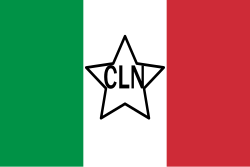
The Italian resistance movement was an armed insurgency comprising diverse partisan formations—ranging from communists and socialists to Catholics, liberals, and military personnel—that opposed the Nazi German occupation and the collaborationist Italian Social Republic following the Italian armistice on 8 September 1943, evolving into a guerrilla campaign intertwined with civil strife until the Allied liberation in spring 1945.[1][2] Coordinated primarily through the Committee of National Liberation (CLN), established by major anti-fascist parties shortly after the armistice, the movement mobilized tens of thousands in sabotage operations, intelligence gathering for Allied forces, and direct combat that immobilized up to seven German divisions and facilitated the rapid advance of Allied troops in northern Italy.[3] By war's end, partisan strength peaked at around 200,000 active fighters, though estimates of their casualties vary from 35,000 to over 65,000 deaths, reflecting the intensity of reprisals by German and Republican forces.[4][5][6]
While the resistance contributed decisively to Italy's liberation and the downfall of fascism, it was marked by profound ideological fractures—manifesting as a class war for some and a patriotic struggle for others—and episodes of partisan-perpetrated violence, including executions of civilians suspected of collaboration, which exacerbated the civil war dimension between Italians on opposing sides.[7][1] Postwar historiography, dominated by leftist perspectives, has often portrayed the movement as a monolithic national epic, sidelining its internal divisions and the complicity of significant portions of the population in fascist support or passive acquiescence until late in the conflict.[8][7] These tensions underscore the resistance's dual role as both a catalyst for democratic renewal and a precursor to Italy's polarized political legacy.[9]