Hubbry Logo
Jakob HutterJakob HutterMain
Open search
Jakob Hutter
Community hub
Jakob Hutter
logo
8 pages, 0 posts
0 subscribers
Be the first to start a discussion here.
Jakob Hutter
Jakob Hutter
from Wikipedia

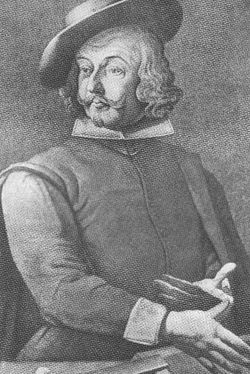
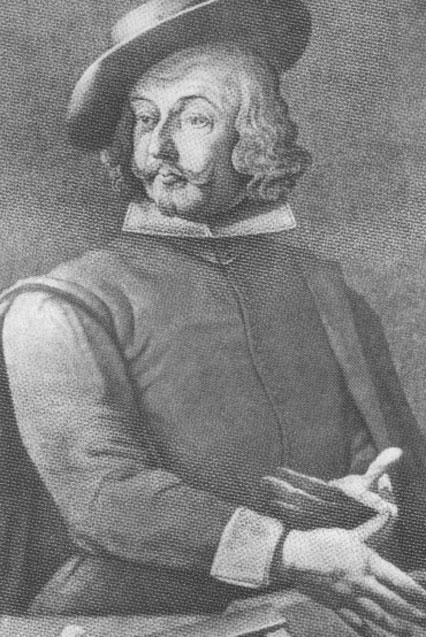
Jakob Hutter, 18th century engraving

Jakob Hutter (/ˈhʌtər/; Austrian German: [ˈhʊtɐ]; also spelled Huter or Hueter; c. 1500 – 25 February 1536) was a Tyrolean Anabaptist leader and founder of the Hutterites.

Biography

[edit]

Hutter was born in the small hamlet of Moos near St. Lorenzen in the Puster Valley, in the County of Tyrol (present-day South Tyrol, Italy). He learned hat making in nearby Prags and became an itinerant craftsman. Later he settled in Spittal, Carinthia.

He probably first encountered Anabaptists in Klagenfurt and soon thereafter was converted to their belief. He began preaching in the Puster Valley region, forming several small congregations. As soon as the Habsburg authorities in Tyrol learned of these activities in early 1529, they (Catholic Church) began to persecute the Anabaptists. In 1527, the Habsburg archduke Ferdinand I of Austria declared that seductive doctrines and heretical sects "will not be tolerated". In turn, Hutter and a few others went to investigate Moravia, because they heard the persecution was not as severe there. They visited Auspitz, where they found the situation was indeed more tolerant and the Tyrolean Anabaptists decided to emigrate. As small groups moved to Moravia, Hutter first remained in Tyrol to pastor to those who remained. He escaped capture by the authorities because other captured Anabaptists would not reveal his whereabouts, even under severe torture.

Hutter arrived in Moravia in 1533, when the persecution of the Anabaptists in Tyrol was at its peak. Many Anabaptists from the Palatinate, Swabia and Silesia also went to Moravia. Hutter united the local Anabaptist congregations, enabling Anabaptism in Moravia to flourish. Under Hutter's leadership, several of the congregations adopted the early Christian practice of communal ownership of goods, in addition to their Anabaptist beliefs of nonviolence, and adult baptism.

In 1535, however, the Moravian Landtag diet had all Anabaptists expelled from Moravia and they scattered to surrounding countries. Hutter returned to Tyrol, where he and his wife were arrested on 30 November 1535 in Klausen and brought to the fortress of Branzoll (Bronzolo). On 9 December, Hutter was deported to the Tyrolean capital Innsbruck, where he was interrogated and pressured to recant. Even under severe torture he would not recant or reveal the names of other Anabaptists. Hutter was sentenced to death by fire and burned at the stake on 25 February 1536 in Innsbruck in front of the Golden Roof.[1] According to the Hutterian Chronicle, a total of 360 Anabaptists were executed in Tyrol.

Hutter's words are recorded in eight letters, written under severe persecution.

Commemoration

[edit]
Plaque at the Golden Roof: "Jakob Huter, one of the most important leaders of the Tyrolean Anabaptists, died here on 25 February 1536 as a martyr of his Christian faith at the stake."

In Innsbruck, Hutter is remembered by a plaque at the Golden Roof.

In 2006–2007, a working group with representatives from Protestant and Catholic churches, the peace movement Pax Christi and the Association of Evangelical churches in Tyrol worked toward reconciliation with the Hutterites. On 25 February 2007, the group, along with three couples invited to represent the Hutterites, held a memorial ceremony at the Golden Roof and a joint prayer service in the old city hall in Innsbruck.[2]

References

[edit]

Further reading

[edit]
[edit]
Revisions and contributorsEdit on WikipediaRead on Wikipedia
from Grokipedia

Jakob Hutter (c. 1500 – 1536) was a Tyrolean Anabaptist leader and founder of the , an Anabaptist group distinguished by its practice of communal ownership of goods and strict modeled on the early Christian community in .
Born in Moos near St. Lorenz in the Tyrol (present-day , ), Hutter apprenticed as a hatmaker and had limited formal education before encountering Anabaptist teachings in Klagenfurt, leading to his and work by the late 1520s. In 1533, he relocated to Auspitz in to unify scattered Anabaptist refugees, where he implemented reforms emphasizing shared possessions, , and separation from worldly ties, forming organized Bruderhofs that laid the foundation for Hutterite communalism. Expelled from Moravia in 1535 amid internal and external pressures, Hutter was arrested on November 29 during a journey in Klausen, Tyrol, and after in , he was executed by burning at the stake on February 25, 1536, in the city's public square under orders from King Ferdinand, becoming a whose steadfastness inspired the perseverance of his followers. His brief leadership forged a distinctive Anabaptist tradition that endures today in Hutterite colonies, primarily in , committed to , adult , and economic communalism amid ongoing separation from state churches.

Early Life

Birth and Family Origins

Jakob Hutter was born around 1500 in the hamlet of Moos in the of , then part of the within the Habsburg domains. The precise location was the Pröslhof farmstead near the village of St. Lorenzen. Details on Hutter's parents remain undocumented in historical records, but his family background points to a modest rural existence in the Tyrolean Alps, where agrarian and artisanal pursuits predominated. He apprenticed in with his uncle Caspar Huter in the nearby village of Stegen, suggesting familial ties to the craft trade typical of the region's peasant economy. Hutter received limited schooling in , acquiring basic literacy sufficient for reading Scripture in German but lacking advanced formal education. This upbringing in a peripheral, German-speaking Alpine community shaped his early worldview amid the ferment of early influences.

Occupation and Pre-Conversion Influences

Jakob Hutter was born circa 1500 in the hamlet of Moos near St. Lorenz, in the of Tyrol (present-day , ). He received only basic schooling in , lacking formal higher education. Hutter worked as a hatmaker by trade, apprenticing under his uncle Caspar Huter in Stegen. His journeyman years involved travel to locations including and , exposing him to diverse regional influences during the early era. Pre-conversion religious influences included a 1526 by Wölfl, a herdsman from the Sarntal, which introduced Hutter to evangelical preaching centered on Scripture. Further contacts in Klagenfurt likely acquainted him with emerging ideas, though he had not yet embraced Anabaptist distinctives. These experiences, amid Tyrol's Catholic-dominated society and peasant unrest, shaped his worldview toward questioning established church authority without yet prompting or communalism.

Conversion and Initial Ministry

Encounter with Anabaptism

Jakob Hutter, born around 1500 in Moos in the Pustertal valley of Tyrol, worked as a hatmaker and apprenticed under his uncle Caspar Huter in St. Lorenzen. During his trade journeys in the mid-1520s, he encountered circulating Reformation ideas amid the Peasants' War and the spread of Anabaptism from Switzerland into the German-speaking Alps. In 1526, Hutter heard a sermon by Wölfl, a goatherd from the Sarntal who had embraced early Anabaptist teachings emphasizing voluntary adult baptism and nonresistance. This encounter, likely one of his initial exposures, inspired him to acquire a New Testament in Bozen (Bolzano), where personal study deepened his rejection of infant baptism and Catholic sacramental practices in favor of believer's baptism as a commitment to discipleship. The sermon's influence prompted Hutter to begin preaching Anabaptist doctrines, leading to conflict with his uncle and dismissal from his apprenticeship. Further contacts during travels, possibly in Klagenfurt where Anabaptist teachings were gaining traction among artisans and laborers, reinforced his commitment to a "godly life" of separation from worldly authorities and communal . By the late 1520s, Hutter had internalized these principles, marking his transition from tradesman to evangelist, though records of his personal remain absent. This period aligned with intensified persecution in Tyrol, where Anabaptists faced mandates for rebaptism as , shaping Hutter's early resolve for pacifist over violent revolt.

Baptism and Early Evangelism in Tyrol

Hutter, a hatmaker from the Pustertal region in , encountered ideas through a sermon preached in 1526 by Wölfl, a goat herdsman from the Sarntal valley, which prompted his conversion to . This event marked the beginning of his rejection of in favor of , though the exact date and administrator of his own adult remain undocumented in surviving records; it likely occurred shortly thereafter, amid the nascent spread of Anabaptist practices in Tyrol introduced by figures like Georg Blaurock around 1527. Following his , Hutter rapidly engaged in evangelism across Tyrol, preaching repentance, communal discipleship, and the necessity of adult as a public confession of faith, often in secret gatherings to evade authorities who had begun enforcing edicts against Anabaptist baptisms by 1527. His efforts contributed to the movement's growth in the region, where had taken root independently of his involvement, drawing converts from rural communities disillusioned with Catholic and emerging Protestant establishments. By 1529, Hutter had emerged as a key organizer among Tyrolean Anabaptists, succeeding Blaurock as a primary leader and conducting mass baptisms, such as one instance where he baptized ten individuals in a single day, prompting governmental crackdowns including arrests and executions. These early activities unfolded against intensifying persecution, as Tyrolean authorities, under Habsburg rule, viewed Anabaptist evangelism as a threat to social order and religious uniformity, leading to mandates for the suppression of "rebaptizers" and the dispersal of Hutter's nascent networks. Despite this, Hutter's itinerant preaching emphasized nonresistance and separation from the world, attracting followers who formed small, disciplined congregations focused on mutual aid and scriptural fidelity rather than political agitation. His leadership in Tyrol laid groundwork for later migrations, as evangelism yielded converts but also heightened risks of capture and martyrdom for participants.

Expansion and Leadership

Missionary Efforts in Tyrol and Beyond

Following his adult baptism around 1527, Hutter commenced itinerant preaching in the of Tyrol, organizing small Anabaptist congregations amid growing opposition from Catholic authorities. In one notable instance at Welsperg, he baptized ten individuals in a single day during 1529, establishing an early group that exemplified his emphasis on and communal discipline. Persecution intensified from May 1529, with executions of Anabaptists in the region prompting Hutter to evade capture while continuing evangelism, baptizing converts and appointing local leaders to sustain the movement. Seeking refuge from Tyrolean mandates for Anabaptist suppression, Hutter traveled approximately 600 kilometers to in 1529, investigating reports of tolerant noble estates where believers could assemble freely. Upon confirming safer conditions, he returned to Tyrol and orchestrated migrations, dispatching groups under delegates like Jörg Zaunring to Moravian settlements such as Austerlitz and Nikolsburg, where Anabaptists from and had already gathered. These efforts catalyzed a mass exodus of Tyrolean converts, peaking between 1533 and 1534, as Hutter's epistles from Moravia urged perseverance and relocation to evade drowning, burning, and exile decreed by Habsburg rulers. Hutter maintained repeated journeys between Tyrol and through the early 1530s, preaching separation from state churches and advocating shared property to support expanding communities. By August 11, 1533, he relocated permanently to Auspitz in , assuming oversight of dispersed Anabaptist factions and mediating disputes to unify them under structured eldership. Even after this shift, he dispatched preachers back to Tyrol and undertook further evangelistic forays, including one in late 1535 that resulted in his capture near Klausen on November 29 or 30, underscoring the perilous cross-regional scope of his mission to propagate Anabaptist nonconformity.

Migration to Moravia and Community Building

Facing escalating persecution in Tyrol, where Anabaptists faced arrests and executions, Jakob Hutter sought refuge in , a region under feudal lords who initially tolerated dissenting religious groups, including earlier Anabaptist settlements near Nikolsburg. Hutter first visited in 1529 to scout potential havens for his followers, connecting with existing communal Anabaptist communities amid internal divisions over leadership and property practices. Between 1531 and 1533, he undertook three arduous journeys covering over 600 kilometers each way between Tyrol and to organize of persecuted believers and strengthen ties with Moravian brethren. On August 11, 1533, Hutter arrived in Auspitz with one companion, having been commissioned by Tyrolean Anabaptists to prepare settlements for emigrants fleeing authorities. Despite opposition from figures like Balthasar Hubmaier and Gabriel Ascherham, who favored partial private property, the majority in Auspitz elected Hutter as chief elder and spiritual overseer that year, tasking him with unifying and reforming the fragmented brotherhood. He immediately enforced strict communal ownership of goods, distributing existing funds to the needy and expelling those adhering to individualistic economic views, thereby distinguishing the emerging Hutterite faction from more lenient groups like the Gabrielites. Under Hutter's direction, refugee bands from Tyrol migrated to , with 120-130 joining by late 1533, enabling the establishment of self-sustaining colonies focused on agriculture and crafts. A key settlement formed in Schäckowitz, half a mile south of Auspitz, to accommodate rapid growth and implement shared labor and resources modeled on Acts 2:44-45. Hutter resolved prior schisms, such as a 1530 dispute in nearby Austerlitz over doctrinal laxity, reintegrating compliant members while maintaining discipline through collective accountability and separation from worldly ties. These efforts solidified a cohesive Hutterite identity centered on pacifist communalism, though external pressures culminated in partial expulsions by 1535 under Habsburg decrees.

Theological and Practical Innovations

Advocacy for Communal Living

Hutter's advocacy for communal living stemmed from a strict interpretation of teachings, particularly the practices of the early church as depicted in Acts 4:32–35, where believers held "all things in common" and distributed goods according to need. He regarded as incompatible with genuine discipleship, arguing that it fostered and division, while shared ownership promoted unity, discipline, and mutual support essential for persecuted communities. This stance aligned with broader Anabaptist emphases on apostolic imitation but went further than groups like the or , who permitted personal possessions; Hutter insisted on total surrender of goods as a non-negotiable mark of faith. Upon arriving in in 1529, Hutter integrated his Tyrolean followers into existing Anabaptist settlements like Austerlitz, where communal experiments had begun under Jacob Wiedemann in 1528 with groups pooling possessions on a shared . By 1533, as chief elder, he resolved leadership disputes by enforcing strict communalism, expelling figures like Simon Schützinger for concealing money and addressing covetousness through accountability measures such as a single communal treasury managed by appointed treasurers. These Bruderhofs operated without private ownership, with labor and resources allocated collectively to sustain , care for the vulnerable, and withstand economic pressures from non-resistant lifestyles that barred participation in feudal obligations like warfare. In his Bruderbriefe (letters to the brotherhood), Hutter repeatedly urged adherence to this model as a divine mandate, viewing it as a practical embodiment of the Holy Spirit's guidance and a bulwark against amid . He positioned communal living not merely as an ideal but as a tool for moral rigor and mission expansion, enabling colonies to support itinerant preachers and refugees without individual wealth disparities. This framework, formalized in the 1530s, laid the socioeconomic foundation for Hutterite resilience, contrasting with less rigorous Anabaptist variants that Hutter critiqued for diluting biblical purity.

Core Beliefs on Baptism, Pacifism, and Separation

Hutter adhered to the Anabaptist doctrine of , rejecting as unscriptural and insisting instead on adult baptism as a voluntary covenant signifying conscious , , and commitment to a godly life of discipleship. He personally administered baptisms to converts during his missions, including ten individuals in a single day at Welsperg in 1529, viewing the rite as an inner awakening and public pledge of obedience to Christ rather than mere ritual. Central to Hutter's teachings was , or non-resistance to evil, rooted in the conviction that must emulate Christ's example by refusing and harm under any circumstances. In a 1535 letter to Moravian Kuna von Kunstadt, he affirmed, "We do not want to cause anyone or wrong, not even our worst enemy," emphasizing a life of , unity, and that would eliminate and if universally adopted. This stance prompted a in around 1531, as Hutter expelled members willing to participate in defensive militias against Turkish threats, prioritizing absolute separation from the sword over temporal alliances. Hutter advocated rigorous separation between the church and the world, including the state, to preserve communal purity and fidelity to apostolic . He opposed entanglement with secular authorities through oaths, political office, or , promoting instead a distinct brotherhood governed by mutual and shared possessions, free from worldly corruption and church-state fusion. This separatism, drawn from early Anabaptist confessions like Schleitheim (1527) but intensified in his Moravian communities, rejected "fleshly freedom" and enforced discipline to foster an of voluntary exile from societal norms.

Challenges and Conflicts

Internal Disputes and Expulsions

During the early 1530s, Jakob Hutter encountered significant internal divisions among Anabaptist communities in , stemming from disagreements over , leadership authority, and the implementation of communal living. In the winter of 1530 at Austerlitz, a split occurred due to misapplication of regulations by ministers, irregularities in discipline, and mismanagement influenced by personal ambition, as criticized in a 1531 letter from Wilhelm Reublin to Pilgram Marpeck. Hutter and Schützinger investigated the conflict, attributing blame to the Austerlitz group, which prompted some members to relocate to Auspitz while Hutter worked to restore order. The most prominent schism unfolded in August 1533 at Auspitz upon Hutter's return from missionary work in Tyrol, fracturing the fragile union of Moravian Anabaptists into factions, including those who accepted Hutter's leadership and others who rejected it. Key disputes centered on Hutter's push for rigorous reforms, including strict communal property and separation from that conflicted with doctrinal purity, against resistance from established leaders like Schützinger, Hans , and Gabriel Ascherham, whose perceived incapability and favoritism undermined unity. Hutter prevailed as the dominant leader, resulting in the departure of Schützinger and other dissenters, who formed separate groups such as the Gabrielites; the vacancies were filled by 120-130 Tyrolean refugees loyal to Hutter's vision. Hutter's enforcement of communal discipline, modeled on Matthew 18:15-17, emphasized progressive —private correction, involvement of witnesses, congregational intervention—culminating in expulsion for unrepentant violations of moral, economic, or doctrinal standards, such as reluctance to fully surrender or tolerance of worldly attachments. These measures solidified the Hutterite core by purging nonconformists but exacerbated separations, contributing to the emergence of rival Anabaptist branches like the Austerlitz Brethren, who abandoned strict communalism amid ongoing tensions. By 1534, Hutter's group had coalesced as the dominant Moravian Anabaptist faction through these expulsions and realignments, prioritizing absolute adherence to shared goods and pacifist separation over broader unity.

External Persecutions by Authorities

In Tyrol, Anabaptists led by Jakob Hutter encountered escalating state-sponsored persecutions from Habsburg authorities under Archduke I, beginning in the late 1520s and reaching a peak in 1533, when the government deployed exhaustive suppression tactics including surveillance, betrayals, and incentives for informants to capture leaders like Hutter. In May 1529, local sheriffs such as Christoph Herbst at Toblach-Welsberg received orders to arrest Anabaptist groups, resulting in some captures while Hutter evaded seizure; by that year, over 700 individuals had been executed, expelled, or forced to flee, often abandoning property and children, as reported to I. Between 1528 and 1540, at least 20 Anabaptists were executed in alone, with Hutter himself briefly imprisoned at Freundsberg Castle amid raids targeting his followers. These measures reflected Ferdinand's view of Anabaptists as heretics undermining civil order through adult baptism, , and communal practices, prompting mandates for , property confiscation, and public executions by fire or other means to deter conversions. Despite such pressures, Hutter continued evangelism, gathering believers for the final time on August 1, 1533, at Staner Joch before fleeing to , where relative tolerance initially allowed community rebuilding. However, even there, external interference intensified; in 1535, I pressured the Moravian diet to expel all Anabaptists, citing the 1534-1535 as justification for treating them as a unified , forcing Hutter's groups into nomadic poverty near and prompting returns to Tyrol under active arrest orders issued from to 1535. The persecutions scattered Hutterite communities, reducing organized presence in Tyrol to small, underground remnants while driving migrations that tested communal bonds, though core groups persisted in until further Habsburg interventions in the late 1530s. Local enforcers, including judges and sheriffs, executed these policies alongside authorities, who branded Anabaptist separation from state churches as warranting .

Martyrdom and Final Years

Arrest, Trial, and Execution

Jakob Hutter was arrested on November 29, 1535, at the home of Hans Steiner in Klausen, , along with his wife Katharina and others, by local authorities including the clerk of Seben and city judge Riederer. The couple was separated shortly after capture, with Hutter transferred under heavy escort to on December 9, 1535, enduring severe cold weather during the journey. He was imprisoned in the Kräuterturm tower and initially cross-examined on December 11 by Dr. Gallus Müller, a theologian who attempted but failed to persuade him to recant his Anabaptist beliefs. During his imprisonment, Hutter endured extensive to extract confessions, names of supporters, or recantations, including placement in ice-cold water, beatings with rods, slashing of flesh, and pouring brandy into wounds before igniting it; he was also gagged to prevent him from proclaiming his faith. King Ferdinand I decreed that no would be granted even if Hutter renounced his views, citing his role in misleading many into , though opportunities for recantation were offered during interrogations. Hutter steadfastly refused to betray fellow believers or abandon his convictions on adult baptism, communal living, and separation from the state church. On February 25, 1536, Hutter was sentenced to death by burning and executed at the stake in Innsbruck's public square as a deterrent to other Anabaptists, under Ferdinand's direct oversight. At the execution, he reportedly called to his opponents, "Come closer, those of you who contradict me! Let us test our in the fire," delivering what contemporaries described as a final sermonic through his . His wife Katharina remained imprisoned and was later executed in 1538.

Writings from Prison and Immediate Succession

While imprisoned in from December 9, 1535, to his execution on February 25, 1536, Jakob Hutter composed several epistles smuggled to his followers, emphasizing steadfastness amid and the communal ethic of the brotherhood. These writings, part of his eight preserved epistles overall, included exhortations against compromise with state authorities and calls for mutual aid among scattered Anabaptist communities in and Tyrol. In one final letter designated L-8, Hutter identified himself as a "slave of and of Christ," underscoring his self-perceived divine mandate to proclaim despite imminent death. The epistles addressed immediate threats from "raging foes" and bailiffs, urging brethren to harvest souls amid ripening peril while maintaining separation from worldly powers. Hutter's prison writings reinforced his prior advocacy for all things in common, warning against that could fracture the church under duress, and provided consolation to captured groups such as those at Hohenwart, noting depleted numbers in Tyrol and Auspitz. These documents, preserved in 17th-century codices and later translated, reflect unyielding first-hand testimony from torture and interrogation, without retraction despite offers of leniency by figures like Dr. Gallus Müller. No doctrinal treatises beyond epistolary form survive from this period, distinguishing Hutter's output from contemporaries like Peter Riedemann's confessional works. Prior to departing Moravia in 1535 for Tyrol, Hutter designated Hans Amon, a cloth weaver and trusted deputy, as his immediate successor to oversee the Hutterian Brethren's bishopric and communal settlements there. Amon, who had collaborated closely with Hutter, assumed leadership post-execution, coordinating with emerging figures like Riedemann to sustain missionary bands and economic sharing amid scattering. A trusted envoy relayed news of Hutter's martyrdom to Moravian outposts, enabling rapid reorganization; communities relocated to estates of sympathetic lords like those at Steinabrunn, preserving the Hutterite framework without immediate collapse. Amon led until his death from plague in 1542, during which the brotherhood evangelized Tyrol returnees and repelled internal dilutions of communalism. This transition underscored Hutter's preemptive structure, averting leadership vacuum despite intensified Habsburg enforcement.

Legacy and Influence

Development of Hutterite Tradition

Following Jakob Hutter's execution on , 1536, leadership transitioned to Hans Amon until 1542, after which Peter Riedemann assumed the role of spiritual leader until his death in 1556. Riedemann, imprisoned from to 1541, authored the Rechenschaft (Account of Our Religion, Doctrine and Faith), a comprehensive that systematized Hutterite doctrines, including the scriptural mandate for communal ownership of based on Acts 2:44–45 and 4:32–35, adult baptism, , and church through the Ban. This document, translated and published in multiple editions, served as the enduring theological foundation, distinguishing Hutterites from other Anabaptists by mandating strict Gemeinschaft (community of ) as essential to discipleship. In the subsequent "Golden Period" from 1565 to 1592, Hutterite communities in , , and expanded to 102 colonies, with membership reaching 20,000 to 30,000, supported by tolerant who valued their agricultural expertise and pacifist labor. Communal traditions flourished, with shared property, elected ministry, and separation from state churches enabling economic self-sufficiency through and crafts. However, the prompted expulsion from by 1622, reducing numbers to approximately 1,000 by 1648 amid book burnings, torture, and dispersal to and , where communalism lapsed for about 60 years due to survival pressures. Migrations continued amid Jesuit-led persecutions: in 1767, groups fled to (modern ), then in 1770–1771, around 60 families trekked 800 miles to (Vishenka and Radichev), reestablishing colonies despite harsh conditions and land disputes. By the 1850s, a visionary experience of Michael Waldner in 1859 prompted renewal of strict communalism, reversing earlier privatizations and realigning practices with Hutter's original model. Facing Russian conscription and cultural assimilation policies, approximately 1,265 emigrated in the 1870s, founding the first North American colony at Bon Homme, , in 1874 under Waldner. World War I conscription and imprisonment for refusing military service—resulting in deaths like those of Michael and Josef Hofer in 1918—drove most U.S. colonies to , where they proliferated into over 500 today across Schmiedeleut, Dariusleut, and Lehrerleut branches. The tradition has endured through geographic mobility and internal governance, preserving 16th-century elements like Carinthian German dialect, traditional hymns, limited formal , and total economic communalism, with colonies averaging 100–150 members and dividing upon reaching 120 to maintain cohesion. Legal incorporation as the Hutterische Bruderkirche in 1950 bolstered property rights without diluting core separations. By the , North American membership exceeded 25,000, reflecting sustained growth via high birth rates and retention despite modernization pressures.

Historical Assessments and Modern Commemorations

Historical assessments of Jakob Hutter emphasize his role as a transformative yet polarizing figure in 16th-century Anabaptism, credited with systematizing communal living (Bruderhof) among Tyrolean Anabaptists fleeing persecution after 1527. Scholars note that while Hutter did not originate Anabaptism in the Tyrol—where it emerged independently through local conversions around 1526—he consolidated scattered groups into organized communities in Moravia by 1529, enforcing strict separation from the world, adult baptism, and pacifism through writings and leadership. His insistence on economic communism, drawn from Acts 2:44-45 and 4:32-35, distinguished Hutterite Anabaptism from individualistic strands, but assessments highlight his authoritarian tendencies, including the 1531 expulsion of about 60 Gabrielites for rejecting full communalism, which some view as a pragmatic defense of unity amid survival threats rather than mere intolerance. Contemporary Catholic authorities condemned him as a seditious heretic, justifying his 1536 execution by fire in Innsbruck for undermining feudal order through property rejection and nonresistance. Later Anabaptist , particularly within Hutterite and Mennonite traditions, portrays Hutter as a martyr-prophet whose prison letters provided enduring theological guidance on and community discipline, sustaining the movement through centuries of . Modern scholars, such as Werner Packull, assess him as neither simplistic fanatic nor unlearned artisan—contrary to some detractors—but a strategic organizer whose firmness countered fragmentation, though his paucity of personal documents limits psychological depth in evaluations. Critics within broader studies question romanticized views from sectarian sources, noting Hutter's escalation of internal purges and potential overreach in equating dissent with , yet affirm his causal impact: without his Moravian synthesis, Anabaptist communalism might have dissipated under . Grete Mecenseffy, a historian of Austrian Anabaptism, ranks him as the era's foremost leader in the region, attributing to him the mobilization of thousands despite relentless Habsburg suppression. Modern commemorations center on Hutter's martyrdom site and the persistence of Hutterite colonies, which embody his vision through approximately 500 communities worldwide as of 2023, primarily in and , preserving German dialect, communal property, and . In , a memorial plaque (Gedenktafel) at the (Goldenes Dachl)—erected in the 20th century—honors Hutter and other Anabaptists executed there on February 25, 1536, serving as a site for annual Gedenken an Wiedertäufer reflections on religious liberty. Scholarly publications, such as the 2024 annotated edition Jakob Hutter: His Life and Letters, revive his correspondence for contemporary Anabaptist audiences, framing him as a model of radical discipleship amid . Hutterite educators and external historians, including Emmy Maendel, integrate his into talks and texts, emphasizing empirical continuity from 1530s to modern self-sufficient agrarian life, while online memorials like aggregate global remembrances of his legacy. These efforts, often from confessional communities, prioritize primary sources like his letters over potentially biased state archives, underscoring Hutter's enduring appeal as a countercultural rather than a political radical.

References

Add your contribution
Related Hubs
User Avatar
No comments yet.