Hubbry Logo
Moravian ChurchMoravian ChurchMain
Open search
Moravian Church
Community hub
Moravian Church
logo
8 pages, 0 posts
0 subscribers
Be the first to start a discussion here.
Contribute something
Moravian Church
Moravian Church
from Wikipedia

Unity of the Brethren
Latin: Unitas Fratrum
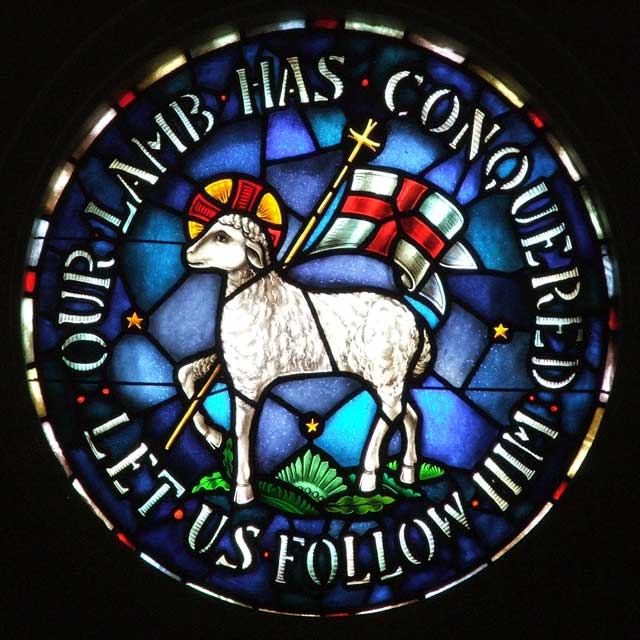
A stained-glass emblem of Agnus Dei at Trinity Moravian Church in Winston-Salem, North Carolina
ClassificationProto-Protestant
OrientationHussite (Bohemian) with Pietist Lutheran influences
AssociationsChristian Churches Together
FounderFollowers of Jan Hus and Petr Chelčický; later renewed by Nicolaus Ludwig Zinzendorf, Christian David and David Nitschmann
Origin1457 (568 years ago) (1457)
1722 (303 years ago) (1722)
Bohemia
Herrnhut
Congregations1,000+[1]
Number of followers1,112,120 (2016)[2]
Official websiteunitasfratrum.org

The Moravian Church, or the Moravian Brethren, formally the Unitas Fratrum (Latin: "Unity of the Brethren"),[3][4][5] is one of the oldest Protestant denominations in Christianity, dating back to the Bohemian Reformation of the 15th century and the original Unity of the Brethren (Czech: Jednota bratrská) founded in the Kingdom of Bohemia, sixty years before Martin Luther's Reformation.

The church's heritage can be traced to 1457 and the Lands of the Bohemian Crown, which included Bohemia, Moravia, Silesia, and previously the Hussite movement against several practices and doctrines of the Catholic Church. Its name is derived from exiles who fled from Moravia to Saxony in 1722 to escape the Counter-Reformation, establishing the Christian community of Herrnhut. Hence, it is also known in German as the Herrnhuter Brüdergemeine [sic][6] ("Unity of Brethren of Herrnhut").[7]

The modern Unitas Fratrum has about one million members worldwide,[1] continuing their tradition of missionary work, such as in the Americas and Africa, which is reflected in their broad global distribution.[8] Moravians continue many of the same practices established in the 18th century, including placing a high value on a personal conversion to Christ, called the New Birth, and piety, good works, evangelism (including the establishment of missions), nonresistance, ecumenism, and music.[8][9]

The Moravian Church's emblem is the Lamb of God (Agnus Dei) with the flag of victory, surrounded by the Latin inscription "Vicit agnus noster, eum sequamur" ('Our Lamb has conquered; let us follow Him').

Apart from the Moravian Church, the more conservative Unity of the Brethren, based in Texas, as well as the Czechoslovak Hussite Church, based in the Czech Republic and Slovakia, are denominations in the same Hussite-Moravian theological tradition.[10]

History

[edit]

Jan Hus and the Bohemian Reformation

[edit]
Jan Hus
Jan Hus Preaching at Bethlehem Chapel in Prague, a 1916 portrait by Alfons Mucha
Jan Hus at the Council of Constance, a portrait by Václav Brožík

The Hussite movement that was to become the Moravian Church was started by Jan Hus (English: John Huss) in early 15th-century Bohemia, in what is today the Czech Republic.[3] Hus objected to some of the practices and doctrines of the Roman Catholic Church. Specifically, he wanted the liturgy to be celebrated in Czech, married priests, and eliminating indulgences and the idea of Purgatory. Since these actions predate the Protestant Reformation by a century, some historians claim the Moravian Church was the first Protestant church.[11][12]

The movement gained support from the Crown of Bohemia. However, Hus was summoned to attend the Council of Constance, which decided that he was a heretic. Hus was released to the secular authority, which sentenced him to be burned at the stake on 6 July 1415. From 1419 to 1437 were a series of Hussite Wars, initially between various Roman Catholic rulers and the Hussites. Then there was a Hussite civil war, between the more compromising Utraquists and the radical Taborites. In 1434, an army of Utraquists and Roman Catholics defeated the Taborites at the Battle of Lipany. The Utraquists signed the Compacts of Basel on 5 July 1436.

Within 50 years of Hus's death, a contingent of his followers had become independently organised as the "Bohemian Brethren" (Čeští bratři) or Unity of the Brethren (Jednota bratrská), which was founded in Kunvald, Bohemia, in 1457. A brother known as Gregory the Patriarch was very influential in forming the group, as well as the teachings of Peter Chelcicky. This group held to a strict obedience to the Sermon on the Mount, which included non-swearing of oaths, non-resistance, and not accumulating wealth. Because of this, they considered themselves separate from the majority Hussites that did not hold those teachings. They received episcopal ordination through the Waldensians in 1467.[11]: 36 ff [12]: 107 ff 

These were some of the earliest Protestants, rebelling against Rome some fifty years before Martin Luther.[11][12] By the middle of the 16th century, as many as 90 percent of the subjects of the Bohemian Crown were Protestant.[13] The majority of the nobility was Protestant, and the schools and printing-shops established by the Moravian Church were flourishing.

Protestantism had a strong influence in the education of the population. Even in the middle of the 16th century there was not a single town without a Protestant school in the Bohemian Crown Lands. Many had more than one, mostly with two to six teachers each. In Jihlava, a principal Protestant centre in Moravia, there were five major schools: two German, one Czech, one for girls and one teaching in Latin, which was at the level of a high/grammar school, lecturing on Latin, Greek and Hebrew, Rhetorics, Dialectics, fundamentals of Philosophy and fine arts, as well as religion according to the Lutheran Augustana.[14]

Counter-Reformation

[edit]

With the University of Prague also firmly in hands of Protestants, the local Roman Catholic Church was unable to compete in the field of education. The Jesuits were invited, with the backing of the Catholic Habsburg rulers, to come to the Lands of the Bohemian Crown and establish a number of Roman Catholic educational institutions. One of these was the university in the Moravian capital of Olomouc. In 1582, they forced the closure of local Protestant schools.

In 1617, Emperor Matthias had his fiercely Roman Catholic brother Ferdinand of Styria elected as King of Bohemia. In the year that followed, Protestant Bohemian noblemen, in fear of losing their religious freedom,[15] instigated a revolt with the unplanned Defenestrations of Prague. The Protestants were defeated in 1620 in the Battle of White Mountain near Prague, known as the first battle in the Thirty Years' War.[16] As a consequence, the local Protestant noblemen were either executed or expelled from the country, while the Habsburgs placed Roman Catholic, and mostly German-speaking nobility in their place. The war, plague, and subsequent disruption led to a decline in the population from over 3 million to some 800,000 people. By 1622, the entire education system was in the hands of Jesuits, and all Protestant schools were closed.

The Brethren were forced to go underground, and eventually dispersed across Northern Europe as far as the Low Countries, where their bishop, John Amos Comenius, attempted to direct a resurgence. The largest remaining communities of the Brethren were located in Leszno (German: Lissa) in Poland, which had historically strong ties with the Czechs, and small, isolated groups in Moravia. The latter are referred to as "the Hidden Seed", which John Amos Comenius had prayed would preserve the evangelical faith in the land of the fathers.

In addition to the Renewed Unitas Fratrum or Moravian Church, which preserves the Unitas Fratrum's three orders of episcopal ordination, the Evangelical Church of Czech Brethren and the Czechoslovak Hussite Church also continue the Hussite tradition in the Czech Republic and Slovakia today, as with the Unity of the Brethren in the United States; these are denominations in the same Hussite-Moravian theological tradition.[10] They only account for 0.8% of the Czech population, which is 79.4% non-religious, and 10.4% Catholic.[citation needed][when?]

Herrnhuter Brüdergemeine, 18th-century renewal

[edit]
Nicolaus Ludwig Zinzendorf preaching to people from many nations
Vogtshof in Herrnhut, the administrative centre of the worldwide Moravian Church

In 1722, a small group of the Bohemian Brethren, the "Hidden Seed", who had been living in northern Moravia, as an illegal underground remnant surviving in the Catholic setting of the Habsburg Empire for nearly 100 years, arrived at the Berthelsdorf estate of Nikolaus Ludwig von Zinzendorf in present-day Saxony in the eastern part of present-day Germany. Out of a personal commitment to helping the poor and needy, von Zinzendorf, a nobleman who had been brought up in the traditions of Pietistic Lutheranism, agreed to a request from their leader, Christian David, an itinerant carpenter, that they be allowed to settle on his lands in Upper Lusatia in Saxony. The Margraviates of Upper and Lower Lusatia were governed in personal union by the Saxon rulers and enjoyed great autonomy, especially in religious questions.

The refugees established a new village called Herrnhut, about 2 miles (3 km) from Berthelsdorf. The town initially grew steadily, but major religious disagreements emerged and by 1727 the community was divided into factions. Count Zinzendorf worked to bring about unity in the town, and the Brotherly Agreement was adopted by the community on 12 May 1727. This is considered the beginning of the renewal. On 13 August 1727, the community underwent a dramatic transformation when the inhabitants of Herrnhut "learned to love one another", following an experience that they attributed to a visitation of the Holy Spirit, similar to that recorded in the Bible on the day of Pentecost.

Herrnhut grew rapidly following this transforming revival and became the centre of a major movement for Christian renewal and mission during the 18th century. The episcopal ordination of the Ancient Unitas Fratrum was transferred in 1735 to the Renewed Unitas Fratrum by the Unity's two surviving bishops, Daniel Ernst Jablonski and Christian Sitkovius. The carpenter David Nitschmann and, later, Count von Zinzendorf, were the first two bishops of the Renewed Unity. In 1756, Zinzendorf founded a Brüdergemeine that still exists today in Neuwied on the Rhine. Moravian historians identify the main achievements of this period as:

  • Setting up a watch of continuous prayer that ran uninterrupted, 24 hours a day, for 100 years.
  • Originating the Daily Watchwords.
  • Establishing more than 30 settlements internationally on the Herrnhut model, which emphasized prayer and worship, and a form of communal living in which simplicity of lifestyle and generosity with wealth were held to be important spiritual attributes. The purpose of these communities was to assist the members resident there in the sanctification of their lives, to provide a meeting place for Christians from different confessional backgrounds, to provide Christian training for their own children and the children of their friends and supporters and to provide support for the Moravian Mission work throughout the world. As a result, although personal property was held, divisions between social groups and extremes of wealth and poverty were largely eliminated.
  • Being the first Protestant church body to begin missionary work.
  • Forming many hundreds of small renewal groups operating within the existing churches of Europe, known as "diaspora societies." These groups encouraged personal prayer and worship, Bible study, confession of sins and mutual accountability.

Missions

[edit]
A group of Moravian Church members with George II, depicted in a portrait by Johann Valentin Haidt, c. 1752–1754
In 1772, John Ettwein[17] and his group of some 200 Lenape and Mohican Christians traveled west along The Great Shamokin Path from their village of Friedenshütten (Cabins of Peace) near modern Wyalusing on the North Branch Susquehanna River to their new village of Friedensstadt (City of Peace)] on the Beaver River in southwestern Pennsylvania.

Along with the Royal Danish Mission College, the Moravian missionaries were the first large-scale Protestant missionary movement. They sent out the first missionaries when there were only 300 inhabitants in Herrnhut. Within 30 years, the church sent hundreds of Christian missionaries to many parts of the world, including the Caribbean, North and South America, the Arctic, Africa, and the Far East. They were the first to send lay people as missionaries, the first Protestant denomination to minister to slaves, though some communities also owned slaves, and the first Protestant presence in many countries.

Owing to Zinzendorf's personal contacts with their royalty, the first Moravian missions were directed to the Dano-Norwegian Empire. While attending the coronation of Christian VI of Denmark-Norway in 1730, Zinzendorf was profoundly struck by two Inuit converts of Hans Egede's mission in Greenland and also by an African from the West Indies.[18] The first Moravian mission was established on the Caribbean island of Saint Thomas in 1732 by a potter named Johann Leonhard Dober and a carpenter named David Nitschmann,[19]: 7  who later became the first bishop of the Renewed Unity in 1735. Matthaeus Stach and two others founded the first Moravian mission in Greenland in 1733 at Neu-Herrnhut on Baal's River, which became the nucleus of the modern capital Nuuk.

Moravians also founded missions with the Mohicans, an Algonquian-speaking tribe in the colony of New York in the Thirteen Colonies. In one instance, they founded a mission in 1740 at the Mohican village of Shekomeko in present-day Dutchess County, New York. The converted Mohican people formed the first native Christian congregation in the present-day United States of America. Because of local hostility from New Yorkers to the Mohicans, the Moravian support of the Mohicans led to rumors of them being secret Jesuits, trying to ally the Mohicans with France in the ongoing French and Indian Wars.

Although supporters defended their work, at the end of 1744, the colonial government based in Poughkeepsie, New York, expelled the Moravians from the Province of New York.[20]

In 1741, David Nitschmann and Count Zinzendorf led a small community to found a mission in the colony of Pennsylvania. The mission was established on Christmas Eve, and was named Bethlehem, after the Biblical town in Judea. There, they ministered to the Algonquian-speaking Lenape. Bethlehem, Pennsylvania, is today the seventh-largest city in Pennsylvania, having developed as a major industrial city in the 19th and 20th centuries. In 1772, the first European-Native American settlement of what later became Punxsutawney, Pennsylvania, occurred when Reverend John Ettwein, a Moravian missionary, arrived there with a band of 241 Christianized Lenape.[21]

In 1771, Moravians established a settlement at Nain, Labrador, which became a permanent settlement and the Moravian headquarters in Labrador.[22] The mission stations expanded to Okak (1776), Hopedale (1782), Hebron at Kauerdluksoak Bay (1830–1959), serving also Napartok Bay and Saeglek Bay, Zoar (1864–1889), Ramah (1871–1908), Makkovik (1896), and Killiniq on Cape Chidley island (1905–1925).[22][23] Two further stations were added after this period at Happy Valley near Goose Bay (1957) and North West River (1960).[22]

Colonies were founded in North Carolina, where Moravians led by Bishop August Gottlieb Spangenberg purchased 98,985 acres (40,058 ha) from John Carteret, 2nd Earl Granville. This large tract of land was named die Wachau, or Wachovia, after one of Zinzendorf's ancestral estates on the Danube River in Lower Austria. Other early settlements included Bethabara (1753), Bethania (1759), and Salem, now referred to as Old Salem (1766) in Winston-Salem, North Carolina.

In 1801, the Moravians established Springplace mission to the Cherokee Nation in what is now Murray County, Georgia. Coinciding with the forced removal of the Cherokees to Oklahoma, this mission was replaced in 1842 by New Springplace in Oaks, Oklahoma. Due to Civil War-related violence, New Springplace closed in 1862 and resumed during the 1870s. In 1898, the Moravian Church discontinued their missionary engagement with the Cherokees and New Springplace, now the Oaks Indian Mission, was transferred to the Danish Evangelical Lutheran Church.[24]

The start of far-flung missionary work necessitated the establishment of independently administered provinces. So, from about 1732,[19]: 7  the history of the church becomes the history of its provinces.

Eventually, the Moravian missions in Australia and Greenland were transferred to the local Presbyterian and Lutheran Churches, respectively.

The first mission station in present-day South Africa was established by the Moravian Georg Schmidt at Genadendal in 1738. The mission at Wupperthal, established by the Rhenish Missionary Society, was eventually transferred to the Moravian Church.

The Moravians sought to unify the converts into "one people" living together with the same religious beliefs. Zeisberger, a significant Moravian missionary, implored the converts to remember that they were "one people not two."[25]

Present

[edit]
Mary Greenwoord was buried in Gracehill in County Antrim in 1752. Her gravestone is identical in style to hundreds of others irrespective of their gender or former status
Friedensthal Moravian Church in Christiansted in the United States Virgin Islands, founded in 1755

The modern Moravian Church has about 750,000 members worldwide.[1]

The motto of the Moravian Church is: "In essentials, unity; in nonessentials, liberty; and in all things, love".[26]

Organization

[edit]

Provinces

[edit]

For its global work, the Church is organised into Unity Provinces, Mission Provinces and Mission Areas and four regions of Africa, Caribbean and Latin America, Northern America, and Europe. The categorisation is based on the level of independence of the province. Unity Province implies a total level of independence, Mission Province implies a partial level of supervision from a Unity Province, and Mission Area implies full supervision by a Unity Province. (The links below connect to articles about the history of the church in specific provinces after 1732, where written.)

In the Czech Republic and Honduras splits occurred within the churches after charismatic revivals; non-charismatic minorities formed their own bodies, but both sides remained connected to the international church. The minority communities are listed as "mission provinces".[27]

Membership

[edit]
Provinces (year of foundation) or mission area Congregations Membership[2]
Africa 907,830
Burundi (mission province) 40,000
Tanzania, North (2007) 25 3,910
Tanzania, East (2007) 56 28,510
Tanzania, Rukwa (1986) 60 66,410
Tanzania, South (1891) 170 203,000
Tanzania, South West (1978) 211 300,000
Tanzania, Lake Tanganyika (2005) 30 32,100
Tanzania, West (1897) 61 104,000
Zambia (1989) 17 5,210
South Africa (1792/1737) 87 98,000
Congo/DR Congo (2005) 80 21,500
Malawi (2007) 10 5,190
Caribbean & Latin America 204,980
Costa Rica (1980/1941) 3 1,900
Guyana (1878/1835) 960
Honduras (1930) 85 34,450
Jamaica (1754) 65 8,100
Nicaragua (1849) 226 97,000
Suriname (1735) 67 30,000
Eastern West Indies (1732)
Trinidad, Tobago, Barbados, Antigua, St. Kitts, and the Virgin Islands including St. Croix, St. John, St. Thomas, Tortola and Grenada
52 15,100
Honduras (Mission Province) 16,870
Cuba (1997) (Mission Province) 600
North America 39,150
Alaska (1885) 22 1,690
America (North) (1741/1735)
Greenland, Canada and the Northern States of the US
89 20,530
America (South) (1753)
Southern States of the USA
55 15,030
Labrador (1771/1752) (mission province) 1,900
Europe 20,180
European Continental [de] (1727)
Germany, the Netherlands, Denmark, Sweden, Switzerland, Albania, Estonia, Latvia
24 14,530
British (1742)
Great Britain and Ireland
30 1,200
Czech Republic (1862/1457) 29 3,800
Czech Republic/Herrnhut Seniority (mission province) 650
Missions Areas
Belize, French Guiana, Garifuna, Haiti, Kenya, Northern India & Nepal, Rwanda, Zanzibar, Sierra Leone, Tanzania Kiwele Region, Kivu and Katanga in DR Congo, Tanzania Iringa Region; Tanzania Ruvuma/Njombe Region, Uganda, Peru
25,000
Total 1,112,120

Other areas with missions but that are not yet established as Provinces are:

  • Star Mountain Rehabilitation Centre, Ramallah, Palestine – under the care of the European Continental Province. Work began among people with leprosy in 1867 at the Jesus-Hilfe (Jesus' help) home in Jerusalem, responsibility for which was taken over by the Israeli state. In 1980, the former leper home on Star Mountain was converted for use as a home for handicapped children of the Arab population.[28]
  • South Asia [North India (Ladakh, Dehradun, Delhi), Nepal, Assam, Manipur] – under the care of the British Province. Formerly the West Himalayan Province (1853) and designated a Unity Undertaking in 1967.

Tanzania is divided into seven provinces because of the size of country and the numbers of people in the church. The "Moravian Church in Tanzania" co-ordinates the work in the nation.

The lists above, except for some details given under 'Other areas', can be found in The Moravian Almanac.[28]

Each province is governed by a synod, made up of representatives from each congregation plus ex officio members.

The Synod elects the Provincial Board (aka Provincial Elders' Conference or PEC[29]) to be responsible for the work of the province and its international links between synods.

Districts

[edit]

Many, but not all, of the provinces are divided into districts.

Congregations

[edit]
A Moravian church in Neudietendorf in Thuringia, Germany

Each congregation belongs to a district and has spiritual and financial responsibilities for work in its own area as well as provincially. The Congregation Council (all the members of a congregation) usually meets twice a year and annually elects the Joint Board of Elders and Trustees that acts as an executive.

In some provinces two or more congregations may be grouped into circuits, under the care of one minister.

Unity Synod

[edit]

The Unity Synod meets every seven years and is attended by delegates from the different Unity Provinces and affiliated Provinces.

Unity Board

[edit]

The Unity Board is made up of one member from each Provincial Board, and acts as an executive committee between Unity Synods. It meets three times between Synods but much of its work is done by correspondence and postal voting.

The President of the Unity Board (who is elected by the Board for two years and not allowed to serve for more than two terms) works from his/her own Provincial office. The Unity Business Administrator is an officer appointed by the Unity Board to administer the day-to-day affairs of the Unity through the office of the Unity.

Orders of ministry

[edit]

The highest order of ministry is that of a bishop. Bishops are elected by Provincial Synods usually through ecclesiastical ballot without nomination. In the Moravian Church, bishops do not have an administrative role but rather serve as spiritual leaders and pastors to the pastors. Bishops serve the worldwide Unity.[30] The Moravian Church teaches that it has preserved apostolic succession.[31]

In order to preserve the succession, three Bohemian Brethren were consecrated bishops by Bishop Stephen of Austria, a Waldensian bishop who had been ordained by a Roman Catholic bishop in 1434.[32][33] These three consecrated bishops returned to Litice in Bohemia and then ordained other brothers, thereby preserving the historic episcopate.[32]

Beliefs

[edit]

The Moravian Church teaches the necessity of the New Birth, piety, evangelism (especially missionary work), and doing good works. As such, the Moravian Brethren hold strongly that Christianity is a religion of the heart.[9] It emphasizes the "greatness of Christ" and holds the Bible to be the "source of all religious truths".[9] With regard to the New Birth, the Moravian Church holds that a personal conversion to Christianity is a joyful experience, in which the individual "accepts Christ as Lord" after which faith "daily grows inside the person."[9] The Moravian Church, following the teaching of bishop Nicolaus Zinzendorf, holds that "We are sanctified wholly the moment we are justified, and are neither more nor less holy to the day of our death; entire sanctification and justification being in one and the same instant."[34]

For Moravians, "Christ lived as a man because he wanted to provide a blueprint for future generations" and "a converted person could attempt to live in his image and daily become more like Jesus."[9] The Moravian Church historically adheres to the position of Christian pacifism, evidenced in atrocities such as the Gnadenhutten massacre, where the Moravian Christian Indian Martyrs practiced nonresistance, singing hymns and praying to God until their execution.[35][36][37][38]

In the Book of Order[39][40] the several provinces of the Moravian Unity accept:

Moravian missions in which missionaries and the believers they ministered to lived together and adhered to Moravian practices, such as the following taught by David Zeisberger, John Heckewelder and John Ettwein:[41]

  1. We will know no other God, but the one only true God, who made us and all creatures, and came into this world in order to save sinners; to Him alone we will pray.
  2. We will rest from work on the Lord's Day, and attend public service.
  3. We will honor father and mother, and when they grow old and needy we will do for them what we can.
  4. No person shall get leave to dwell with us until our teachers have given their consent, and the helpers (native assistants) have examined him.
  5. We will have nothing to do with thieves, murderers, whoremongers, adulterers, or drunkards.
  6. We will not take part in dances, sacrifices, heathenish festivals, or games.
  7. We will use no Tschappish or witchcraft when hunting.
  8. We renounce and abhor all tricks, lies and deceits of Satan.
  9. We will be obedient to our teachers and to the helpers who are appointed to order our meetings in the town and fields.
  10. We will not be idle nor scold, nor beat one another, nor tell lies.
  11. Whoever injures the property of his neighbor shall make restitution.
  12. A man shall have but one wife—shall love her and provide her and his children. A woman shall have but one husband, be obedient to him, care for her children, and be cleanly in all things.
  13. We shall not admit rum, or any other intoxicating liquor into our towns. If strangers or traders bring intoxicating liquors, the helpers shall take it from them and not restore it until the owners are ready to leave the place.
  14. No one shall contract debts with traders, or receive to sell for traders, unless the helpers give their consent.
  15. Whoever goes hunting, or on a journey, shall inform the minister or stewards.
  16. Young persons shall not marry without the consent of their parents, and minister.
  17. Whenever the stewards or helpers appoint a time to make fences or perform other work for the public good, we will assist and do as we are bid.
  18. Whenever corn is needed to entertain strangers, or sugar for love-feasts, we will freely contribute from our stores.
  19. We will not go to war, and will not buy anything of warriors taken in war.[41]

According to the Ground of the Unity[39][40] of 1957, fundamental beliefs include but are not limited to:

  • The Holy Trinity: the Father, the Son or Logos/Word, and the Holy Spirit.
  • The Fatherhood of God
  • God's Love for fallen humanity
  • The Incarnation of God in the God/Man Jesus Christ
  • Jesus' sacrificial death for the sinful rebellion of humanity
  • Jesus' Resurrection, Ascension and Exaltation to the Right Hand of the Father
  • Jesus' sending of the Holy Spirit to strengthen, sustain and empower believers
  • Jesus' eventual return, in majesty, to judge the living and the dead
  • The Kingdom of Christ shall never end
  • There is one Baptism for the forgiveness of sins. Rebaptism is not allowed.
  • Infants are baptized most commonly, but all forms of baptism are accepted (infant or adult; pouring, sprinkling or immersion).
  • Moravian doctrine teaches that the Body and Blood of Christ are present in Holy Communion. Without seeking to explain the "Mode" or the "How" of the Presence of Jesus' Body and Blood in the Eucharist, they teach a sacramental union whereby with the Bread and the Wine the Body and Blood are also received. Cf. the "Easter Morning Litany" of the Moravian Church, a statement of faith, in the Moravian Book of Worship, p. 85.

These tenets of classical Christianity are not unique to the Moravian Church. The emphasis in both the Ancient Unity and the Renewed Unity is on Christian living and the fellowship of believers as a true witness to a vibrant Christian Faith.

Spirit of the Moravian Church

[edit]

An account of the ethos of the Moravian Church is given by one of its British bishops, Clarence H. Shawe.[42] In a lecture series delivered at the Moravian Theological Seminary in Bethlehem, Pennsylvania, Shawe described the Spirit of the Moravian Church as having five characteristics: simplicity, happiness, unintrusiveness, fellowship, and the ideal of service:

  • Simplicity is a focus on the essentials of faith and a lack of interest in the niceties of doctrinal definition. Shawe quotes Zinzendorf's remark that "The Apostles say: 'We believe we have salvation through the grace of Jesus Christ....' If I can only teach a person that catechism I have made him a divinity scholar for all time" (Shawe, 1977, p. 9). From this simplicity flow secondary qualities of genuineness and practicality.
  • Happiness is the natural and spontaneous response to God's free and gracious gift of salvation. Again Shawe quotes Zinzendorf: "There is a difference between a genuine Pietist and a genuine Moravian. The Pietist has his sin in the foreground and looks at the wounds of Jesus; the Moravian has the wounds in the forefront and looks from them upon his sin. The Pietist in his timidity is comforted by the wounds; the Moravian in his happiness is shamed by his sin" (p. 13).
  • Unintrusiveness is based on the Moravian belief that God positively wills the existence of a variety of churches to cater for different spiritual needs. There is no need to win converts from other churches. The source of Christian unity is not legal form but everyone's heart-relationship with the Saviour.
  • Fellowship is based on this heart-relationship. Shawe says: "The Moravian ideal has been to gather together kindred hearts... Where there are 'Christian hearts in love united', there fellowship is possible in spite of differences of intellect and intelligence, of thought, opinion, taste and outlook. [...] Fellowship [in Zinzendorf's time] meant not only a bridging of theological differences but also of social differences; the artisan and aristocrat were brought together as brothers and sat as equal members on the same committee" (pp. 21,22).
  • The ideal of service entails happily having the attitude of a servant. This shows itself partly in faithful service in various roles within congregations but more importantly in service of the world "by the extension of the Kingdom of God". Historically, this has been evident in educational and especially missionary work. Shawe remarks that "none could give themselves more freely to the spread of the gospel than those Moravian emigrants who, by settling in Herrnhut [i.e., on Zinzendorf's estate], had gained release from suppression and persecution" (p. 26).

Worship

[edit]
  • Hymnals
  • Liturgy
  • The Sacrament of the Holy Communion
  • The Sacrament of Baptism, Infants and Adults
  • Marriage
  • Confirmation
  • Christian Burial
  • Ordination of Bishops, Presbyters and Deacons
  • Consecration of church buildings and facilities

Traditions

[edit]
A Moravian diener serves bread to fellow members of her congregation during the celebration of a lovefeast.

Former traditions

[edit]
  • The drawing of "lots" in decision making
  • Single Brethren's and Single Sisters' Houses: in the old original Settlement Congregations of Europe, Britain and the US, there were separate Houses caring for the spiritual and also temporal welfare of the Choirs of Single Brethren, Single Sisters, Widows.[43]
  • Wide/Short layout of church interiors
  • Separate seating of sexes in churches
  • Mission ships (the Harmony and the Snow Irene)
  • Choirs: the word "Choir" has been used in the Moravian tradition since the 18th century to indicate a group of congregation members classified according to age and sex. Formerly there were in several congregations separate Houses caring for the spiritual and also temporal welfare of the Choirs of Single Brethren, Single Sisters, Widows.[43]

Uniformed and other organizations

[edit]

Ecumenical relations

[edit]

The Moravian Church provinces are members individually of the World Council of Churches and the Lutheran World Federation. Most provinces are also members of their national councils of churches, such as the Evangelische Kirche in Deutschland (EKD) in Germany and the National Council of Churches of Christ in the US, the all African Council of Churches, the Caribbean Council of Churches, the Jamaica Council of Churches. The American Southern Province was instrumental in the founding of the North Carolina Council of Churches. The British Province is of the Churches Together in Britain and Ireland (formerly the British Council of Churches) and has an interim Communion agreement with the Church of England.[44]

The two North American provinces are in full communion with the Evangelical Lutheran Church in America (ELCA). The Northern Province of the Moravian Church voted 18 June 2010 to enter into full communion with the Episcopal Church. The Moravian Church's Southern Province voted to enter into full communion with the Episcopal Church during its synod in September 2010. Each province can independently enter into full communion relationships.[45]

The Northern and Southern Provinces of the Moravian Church in North America and the Presbyterian Church USA agreed to enter covenant partnership with one another. The two churches celebrated their agreement with a national service of worship on 5 June 2016 at the Covenant Presbyterian Church in Madison, Wisconsin. National leaders from both denominations participated in the service which included sharing the eucharist.[46] In the 1980s there were discussions in England by which an agreement was created that would have created full communion between the Moravians, Presbyterians, Methodists, and the Church of England. The Presbyterians and Methodists would have accepted the Historic Episcopate, but since the Moravians already had this, they would have changed nothing. This agreement fell through, because the General Synod of the Church of England did not give approval.

One aspect of Moravian history and mission is the diaspora work in Germany and Eastern Europe, seeking to deepen and encourage the Christian life among members of the territorial churches, particularly in Poland and the Baltic states and throughout German-speaking lands. Count Zinzendorf's ideal was a fellowship of all Christians, regardless of denominational names, and the Moravian Brethren sought in the Diaspora not to convert people to the Moravian Church but to awaken the hearts of believers and make them better members of the churches to which they already belonged.

At first the object of suspicion, in the course of time the Moravian Diaspora workers became valued co-workers in eastern Europe. This Diaspora work suffered almost total destruction in World War II, but is still carried on within the territorial churches of Germany. With the restored independence of Estonia and Latvia, it was revealed that much of the Diaspora Work there had been kept alive in spite of occupation and annexation by the Soviet Union, which had held to the doctrine of state atheism.

Historical societies

[edit]
  • American North: the Moravian Historical Society and Historic Bethlehem (Pennsylvania)
  • American South: the Wachovia Historical Society as well as Old Salem
  • British: Moravian Church House, London
  • Continental Province Verein für Geschichts- und Gegenwartsfragen der Brüdergemeine
  • „Via exulantis", Suchdol nad Odrou (Zauchtenthal or Zauchtel), The Moravian Brethren's Museum. The permanent exposition of the exile of 280 inhabitants from Suchdol nad Odrou to Herrnhut in Saxony in the 18th century, where they renewed the Unity of the Brethren and then established missionary establishments in all parts of the world.

Goals of the Moravian Missions

[edit]
  • Moravians sought to unify the converts into "one people."
  • Herrnhuter Bote (former title: der Brüderbote), the periodical of the Continental Province
  • Unitas Fratrum, the publication of the Continental Province's historical society
  • The Moravian Magazine, the publication of the North American Provinces
  • The Moravian Voice, a publication of the Moravian Church in Jamaica
  • The Moravian Messenger, periodical of the British Province
  • Moravian History Magazine – published within the British Province but deals with the work worldwide.
  • Journal of Moravian History[47] – scholarly journal, published by the Moravian Archives[48] in Bethlehem, Pennsylvania, and the Moravian Historical Society[49] in Nazareth, Pennsylvania.

See also

[edit]

References

[edit]

General and cited references

[edit]
[edit]
Revisions and contributorsEdit on WikipediaRead on Wikipedia
from Grokipedia
The Moravian Church, officially the Unitas Fratrum (Unity of the Brethren), is the oldest surviving Protestant denomination, with episcopal roots in the 15th-century Bohemian Reformation led by followers of Jan Hus (c. 1369–1415), a Czech priest executed for heresy after criticizing Catholic practices such as indulgences and simony, and renewed in the 18th century through the Herrnhut community under Count Nikolaus Ludwig von Zinzendorf (1700–1760).
Emerging from the Hussite movement, the church organized as the Unity of the Brethren in 1457 in Kunvald, Moravia, emphasizing scriptural authority, communal living, and rejection of papal supremacy amid persecution that scattered its members across Europe.
In 1722, Protestant exiles from Moravia resettled on Zinzendorf's estate in Herrnhut, Saxony, fostering a spiritual awakening in 1727 that propelled the church's global expansion; by 1760, it had dispatched over 200 missionaries to regions including the Danish West Indies, Greenland, Africa, and North America, pioneering Protestant overseas evangelism through self-sustaining settlements and emphasis on personal conversion over colonial exploitation.
Doctrinally, Moravians affirm the Trinity, the necessity of the new birth for salvation, and Christ's lordship, practicing baptism by sprinkling and open communion while prioritizing piety, evangelism, good works, and communal practices like lovefeasts and daily covenant renewals rooted in heartfelt devotion rather than rigid confessionalism.
The church's influence extended to shaping Pietism and Methodism, notably through John Wesley's encounters with Moravian missionaries during his voyage to Georgia in 1735–1736, and it maintains a worldwide presence today with congregations emphasizing unity in essentials, liberty in non-essentials, and active mission amid historical resilience against suppression.

Origins and Early History

Jan Hus and the Bohemian Reformation

Jan Hus, born around 1369 in Husinec, Bohemia, emerged as a prominent critic of ecclesiastical corruption in the early 15th century. Ordained a priest in 1400, he became preacher at Prague's Bethlehem Chapel in 1402, where he denounced the sale of indulgences, simony, and the moral failings of the clergy, drawing on the writings of English reformer John Wycliffe. Hus argued that Scripture held supreme authority over papal decrees and church councils, asserting that doctrines must align with biblical teaching rather than human traditions or institutional power. This emphasis on scriptural primacy challenged the Catholic hierarchy's claim to infallible interpretation, laying a doctrinal foundation for later reform movements by prioritizing empirical fidelity to the Bible over accreted customs. Hus's advocacy for utraquism—communion under both kinds for laity, symbolizing equality in Christ's body and blood—further alienated him from Roman authorities, who reserved the cup for clergy under the doctrine of concomitance. Summoned to the Council of Constance in 1414 under promise of safe conduct by Emperor Sigismund, Hus was imprisoned upon arrival, tried for heresy in 1415, and condemned for views including the denial of papal supremacy and critiques of indulgences as unbiblical extortion. Despite recanting under duress to avoid execution, he refused to fully submit, leading to his burning at the stake on July 6, 1415; his steadfastness, rooted in conscience bound to Scripture, exemplified resistance to coercive authority absent biblical warrant. The execution ignited the Bohemian Reformation, transforming Hus's followers into the Hussite movement, which demanded reforms like utraquism and clerical poverty. The First Defenestration of Prague on July 30, 1419—when radical Hussites hurled Catholic officials from a window of the New Town Hall—sparked the Hussite Wars (1419–1434), a series of conflicts pitting Bohemian reformers against crusading armies dispatched by the papacy and Holy Roman Empire. These wars causally stemmed from suppressed grievances over Hus's death and institutional abuses, fostering proto-separatist communities that rejected full reintegration into the Catholic fold. The Compactata of Basel in 1436 granted limited religious tolerance, permitting utraquism and Czech chalice symbolism in Bohemia, but this fragile accommodation eroded under Habsburg reconquest, driving radical Hussite factions toward independent ecclesial structures. Hus's legacy thus provided causal impetus for reformist separatism, with his scriptural emphasis and anti-corruption stance prefiguring the Moravian Church's roots in the Unity of Brethren, an offshoot prioritizing biblical fidelity amid persecution.

Formation of the Unitas Fratrum

The Unitas Fratrum, or Unity of the Brethren, emerged in 1457 as a distinct ecclesiastical body amid the fragmented aftermath of the Hussite movement, when a group of approximately 300 individuals from various Hussite factions gathered at the deserted village of Kunvald in eastern Bohemia to pursue a return to apostolic Christianity. This assembly, convened on March 1, sought separation from the doctrinal and practical excesses of radical Taborite groups and the more politically compromised Utraquists, emphasizing instead a biblically grounded communal life free from secular entanglements. The participants, including peasants, nobles, clergy, and laypeople from Bohemia and Moravia, adopted a fraternal covenant modeled on early Christian practices, committing to ideals of voluntary poverty, chastity for the celibate orders, obedience to scriptural authority, and mutual accountability within a hierarchical structure of elders. Leadership coalesced around Gregory, known as the Patriarch, a Bohemian noble's son and nephew of the Utraquist leader Jan Rokycana, who guided the nascent community with permission from King George of Podiebrad to settle at Kunvald. Drawing inspiration from the pacifist writings of Peter Chelčický, the group established an initial organization featuring 28 elders and a tripartite class system—Beginners for new adherents, Learners for those advancing in discipline, and the Perfect for fully committed members practicing communal property ownership, rejection of oaths, and non-participation in warfare. By 1464, these commitments were further codified in the Statutes of Reichenau, formalizing priorities of faith, fellowship, and freedom from institutional corruption. A pivotal synod in 1467 at nearby Lhota ordained the first ministers—Matthias, Thomas, and Elias—through the casting of lots, incorporating Waldensian episcopal succession to affirm priestly authority independent of Catholic hierarchies. The early Unitas Fratrum expanded rapidly across Bohemia and Moravia, establishing self-sustaining communities that attracted diverse recruits, including Waldensian converts and urban dissidents from Prague, through appeals to scriptural literalism and ethical rigor. Initial cohesion stemmed from the covenant's enforceable disciplines and Gregory's authoritative mediation, which resolved tensions arising from members' varied social origins and prior Hussite allegiances. However, underlying fragmentation risks emerged from internal debates over the extent of priestly roles and adherence to pacifist tenets, as stricter "Perfect" ideals clashed with the practical needs of broader fellowship, foreshadowing schisms after Gregory's death in 1473. These dynamics reflected causal pressures from the group's voluntary, non-coercive structure, where ideological purity fostered unity but also amplified disputes absent centralized enforcement beyond communal consensus.

Persecution Under the Counter-Reformation

The defeat of Protestant forces at the Battle of White Mountain on November 8, 1620, initiated a systematic Habsburg campaign to eradicate non-Catholic religious expression in Bohemia and Moravia, targeting the Unitas Fratrum among other groups. Emperor Ferdinand II, leveraging the victory to consolidate power, decreed that adherents must convert to Catholicism or depart the realm, with non-compliance resulting in execution, property seizure, or forced recantation. This policy, rooted in the Counter-Reformation's imperative for confessional uniformity, directly caused the dispersal of Protestant communities, as Habsburg authorities viewed nonconformity as a threat to monarchical stability and Catholic dominance. In the ensuing years, Unitas Fratrum churches were shuttered, their liturgical texts—including Bibles and hymnbooks—confiscated and destroyed, while clergy faced expulsion or death. Over 30,000 Protestant families, encompassing significant numbers of Brethren, emigrated from Bohemia and Moravia, with many resettling in Leszno, Poland, where historical Czech-Polish ties and relative tolerance under Polish-Lithuanian rule enabled temporary continuity. Key figures like Jan Amos Comenius fled to Leszno by 1628, preserving fragments of Brethren records such as the Acta Unitatis Fratrum amid the suppression. Despite the devastation, small clandestine networks—termed the "hidden seed"—persisted in rural Bohemia and Moravia through secret worship and oral transmission of traditions, evading detection by outwardly conforming while maintaining core practices. These underground remnants, numbering in the low hundreds by the late 17th century, endured intermittent raids and surveillance until the early 1720s, when renewed pressures prompted their exodus to Saxony. The Habsburg intolerance, prioritizing absolutist religious control over pragmatic coexistence, thus reduced the once-substantial Unitas Fratrum to near-extinction in its homeland, scattering adherents across Europe.

Renewal in the 18th Century

The Herrnhut Community and Count Zinzendorf

Count Nikolaus Ludwig von Zinzendorf (1700–1760), a German nobleman and Lutheran Pietist, played a pivotal role in renewing the ancient Unitas Fratrum by offering refuge to Protestant exiles from Bohemia and Moravia on his estate in Berthelsdorf, Saxony. Influenced by the Pietist teachings of Philipp Jakob Spener and August Hermann Francke, which emphasized personal devotion and communal Bible study over rigid orthodoxy, Zinzendorf sought to foster a disciplined Christian community amid the relative tolerance of Lutheran Saxony. In June 1722, he permitted three Moravian families fleeing Counter-Reformation persecution to settle there, marking the establishment of Herrnhut, meaning "the Lord's watch," as a pragmatic haven for spiritual renewal. By 1727, the Herrnhut community had expanded from a handful of families to approximately 220 residents, including 87 children, housed in 30 dwellings, through Zinzendorf's leadership in organizing communal labor and spiritual disciplines. On May 12, 1727, the inhabitants formalized their commitment via the Brotherly Agreement, a covenant pledging mutual love, forgiveness, and adherence to biblical principles, which imposed structure to prevent discord and promote ethical living. This document evolved into the modern Moravian Covenant for Christian Living and underscored Herrnhut's emphasis on practical piety, including division into "choirs"—age- and status-based groups for daily devotions, work, and mutual accountability—that facilitated rapid growth to thousands by the mid-18th century via self-sustaining economies and migration. While Herrnhut thrived as a model of disciplined communalism under Pietistic renewal, it was not immune to excesses; in the late 1740s, a period known as the "Sifting Time" saw outbreaks of overly sensual mysticism, particularly interpretations of union with Christ as mystical marriage, which Zinzendorf factually critiqued and suppressed to restore doctrinal balance and communal order. These episodes, peaking around 1748–1750, involved hymnody and practices veering into antinomianism, prompting Zinzendorf to disband certain groups and bury inflammatory materials, thereby prioritizing empirical spiritual health over unchecked enthusiasm. The causal roots lay in the unchecked fervor of early revivalism, but Zinzendorf's interventions, grounded in Pietist realism, preserved Herrnhut's viability as a refuge fostering verifiable growth and discipline rather than transient ecstasy.

Theological and Pietistic Influences

The Moravian Church's 18th-century renewal under Nikolaus Ludwig von Zinzendorf drew heavily from Pietism, a Lutheran reform movement originating in the late 17th century that stressed experiential piety and personal conversion over scholastic disputation and confessional strife. Zinzendorf, educated in Pietist circles including those linked to Philipp Jakob Spener's Pia Desideria (1675), blended orthodox Lutheran confessions—such as the Augsburg Confession (1530)—with an emphasis on heartfelt devotion, viewing doctrine as secondary to a direct, childlike reliance on Christ's wounds and merits. This integration rejected the era's rationalist alternatives, like those in Enlightenment theology, by privileging empirical spiritual encounters and communal disciplines that cultivated inward renewal as the causal foundation for outward conduct, rather than mere intellectual orthodoxy. Pietism's influence manifested in Moravian practices like conventicles—small-group Bible studies and prayer meetings—that fostered personal regeneration and rejected rigid ecclesiastical hierarchies in favor of relational faith. Zinzendorf's theology, articulated in works like his 1738 Herrnhuter Bruderschaft, promoted a "religion of the heart" that critiqued dead formalism while affirming core Lutheran tenets, such as justification by faith alone, but subordinated them to affective union with Christ. This approach distinguished Moravians from contemporaneous rationalists, who prioritized reason over revelation, by grounding piety in verifiable personal transformation evidenced through daily obedience and mutual accountability. The Moravians' experiential focus exerted notable influence on John Wesley, whose May 24, 1738, Aldersgate Street experience—attending a Moravian society reading Martin Luther's preface to Romans—ignited his assurance of salvation, as he recorded his "heart strangely warmed" and faith in Christ alone. Earlier interactions, including Wesley's 1736 voyage with Moravian missionaries to Georgia who exhibited calm faith amid storms, further shaped his pivot from ritualistic Anglicanism toward evangelical revivalism. Wesley initially adopted Moravian views on instantaneous justification but later diverged, critiquing their perceived undervaluation of sanctification. Despite these strengths, the Moravians faced verifiable critiques of quietism during the 1740s "Sifting Time," a period of internal ecstasy and external controversy where emphasis on passive surrender to Christ led detractors, including former allies like Wesley, to accuse them of antinomianism and neglect of moral duties or sacraments. In 1741–1742, Zinzendorf addressed these charges by reaffirming active piety, but pamphlets like Gilbert Tennent's Some Account of the Principles of the Moravians (1743) alleged their teachings fostered spiritual indolence over disciplined holiness. Such accusations stemmed from observable tensions between heart-centered repose and rigorous ethics, highlighting Pietism's risks when unmoored from doctrinal boundaries.

Early Missionary Outreaches

The Moravian Church's missionary efforts commenced in 1732 with the dispatch of its first two missionaries, potter Johann Leonhard Dober and carpenter David Nitschmann, to the Danish West Indies island of St. Thomas, where they arrived on December 13 to evangelize enslaved Africans amid a hostile plantation economy. To circumvent restrictions on preaching, Dober sold himself into slavery for 18 months, laboring on a plantation while conducting clandestine Bible studies that yielded initial conversions among slaves, though exact early figures remain sparse due to persecution and secrecy. Logistical hurdles included Danish colonial authorities' opposition, disease outbreaks, and the missionaries' need to self-fund through manual trades, with the venture sustained by Herrnhut community's pooled resources rather than external patronage. Expansion followed rapidly to Greenland in 1733, prompted by Count Nikolaus Ludwig von Zinzendorf's encounter with two Inuit boys in Copenhagen, who recounted their people's spiritual openness; this led to the sending of lay missionaries Christian David and Matthias Stach, establishing New Herrnhut station by 1734 despite Arctic hardships like famine and isolation. Zinzendorf's direct involvement included vetting candidates from Herrnhut's communal choirs and providing theological oversight, enabling deployment of non-clerical workers—potters, carpenters, and farmers—who comprised over 90% of early personnel, a model that prioritized personal piety over formal ordination for swift mobilization. By 1735, these outreaches had baptized dozens in St. Thomas, with communal tithing from Saxony supporting voyages costing equivalent to thousands of thalers annually, though high mortality rates—nearly half of initial missionaries perished within years—underscored the empirical risks. In March 1735, David Nitschmann was consecrated as the first bishop of the renewed Moravian Church in Berlin by surviving Ancient Brethren bishops, restoring episcopal succession and authorizing sacraments for overseas fields without reliance on state churches. This ordination facilitated independent oversight of missions, with Nitschmann himself embarking for Georgia in 1735 to aid settlement efforts, though conflicts with colonial governors highlighted tensions between lay-driven evangelism and established hierarchies. The lay-centric approach, funded via Herrnhut's economium system of shared labor and voluntary contributions, allowed 10-15 missionaries to deploy annually by mid-decade, contrasting with slower denominational models and yielding measurable footholds: by 1737, St. Thomas hosted a sustained congregation of about 100 converts despite recurrent hurricanes and planter expulsions.

Theological Foundations

Core Doctrines and Christocentricity

The Moravian Church upholds the Apostles' and Nicene Creeds as foundational statements of faith, affirming essential scriptural truths such as the incarnation of Jesus Christ as fully God and fully human, his atoning death on the cross, and his bodily resurrection as the decisive victory over sin and death. This Christocentric orientation positions Jesus as the singular mediator and redeemer, with all doctrine oriented toward his person and work rather than speculative metaphysics or human merit. The church's emphasis on Christ's redemptive accomplishment rejects any form of works-righteousness, insisting that justification arises solely from faith in his completed atonement, not from personal achievements or ritual observance. Sanctification, understood as progressive conformity to Christ's image, is attributed to the transformative agency of the Holy Spirit, who empowers believers to exhibit genuine faith through observable fruits such as interpersonal love and communal harmony. This doctrinal framework causally links inner renewal to outward ethical conduct: the Spirit's indwelling, grounded in Christ's resurrection power, generates voluntary obedience and mutual service, evidencing authentic conversion rather than mere doctrinal assent. Empirical patterns in Moravian history, including sustained missionary endurance and voluntary communal labor from the 18th century onward, illustrate how this Christ-centered soteriology fosters resilient moral agency without reliance on legalistic enforcement. The church applies a guiding principle of unity in Trinitarian essentials—such as the doctrines of creation, redemption, and divine blessing—while permitting liberty in adiaphora, or non-essential matters, always bounded by love as the supreme ethic. This motto, rooted in the Bohemian Brethren's historical discernment of scriptural priorities over divisive disputations, promotes doctrinal minimalism focused on Christ's gospel, enabling diverse expressions of piety while guarding against factionalism. In practice, it has verifiable effects in maintaining ecclesiastical cohesion across global provinces, as seen in the Unity Synod's resolutions prioritizing redemptive mission over secondary controversies.

The Ground of the Unity Document

The Ground of the Unity is the foundational doctrinal statement of the worldwide Moravian Church (Unitas Fratrum), adopted by the Unity Synod in Bethlehem, Pennsylvania, from August 13 to September 10, 1957, to commemorate the 500th anniversary of the church's origins in the Bohemian Brethren. This concise document, structured in 11 sections, affirms core Christian beliefs without prescribing a rigid systematic theology, emphasizing instead a Christocentric faith lived in community. It was revised substantively at the Unity Synod in Antigua from July 3 to 15, 1988, and in its presentation of Scripture at the 1995 Unity Synod in Dar es Salaam, Tanzania, from August 13 to 25, with changes maintaining alignment to historic creeds like the Apostles' and Nicene while clarifying scriptural centrality. Central affirmations include the authority of Holy Scripture as the sole standard for doctrine and faith, with the "Word of the Cross" as its interpretive core, rejecting any human authority that contradicts Christ's will. The document confesses the unity of the Church as given in Jesus Christ, who redeems and gathers believers into one body transcending ethnic, social, or national divisions, while acknowledging historical schisms and committing to ecumenical pursuit of visible unity. It underscores the mission imperative as proclaiming the Gospel worldwide, serving humanity through deeds of love, and fostering peace, rooted in Christ's example of self-emptying service. These elements anchor Moravian synods, providing a minimal consensus that guides governance and preserves doctrinal continuity with Reformation-era orthodoxy, including Trinitarian faith and creedal affirmations. The statement's brevity on non-essential matters—eschewing detailed positions on secondary doctrines—reflects the Moravian motto "In essentials, unity; in non-essentials, liberty; in all things, love," enabling adaptability but inviting critique for potential vagueness that prioritizes relational piety over precise confessional boundaries. This emphasis on "right living" (orthopraxy) over exhaustive "right believing" (orthodoxy) traces causally to Hussite roots in the 15th-century Bohemian Reformation, where reformers like Jan Hus prioritized moral accountability to Scripture and communal ethics amid ritualistic excesses, influencing the early Unitas Fratrum's focus on daily forgiveness, neighborly service, and non-discriminatory fellowship as expressions of faith. Revisions through 1995 preserved this practical orientation without doctrinal drift, reinforcing orthodoxy's essentials while allowing provincial flexibility in application.

Scriptural Authority and Sacraments

The Moravian Church, formally the Unitas Fratrum, affirms the Holy Scriptures as the supreme and final authority in matters of faith, doctrine, and Christian living, interpreting them Christocentrically with the Word of the Cross—Christ's atoning death and resurrection—as the central lens. This primacy traces to the church's Bohemian origins, as evidenced in the 1535 Confession of Faith, which opens by declaring Scripture's sole sufficiency for salvation and rejects human traditions that contradict it. The church maintains that biblical interpretation must be tested continually against the Scriptures themselves, subordinating creeds and confessions to this standard while emphasizing personal engagement with the text through the Holy Spirit's illumination. The Moravians recognize two sacraments—baptism and Holy Communion—as visible signs and seals of God's grace, efficacious not inherently (ex opere operato) but through the faith of the recipient in Christ's work. Baptism serves as the covenantal entry into the Christian community, administered by sprinkling or pouring to infants of believing parents as a sign of inclusion in God's promises, or to adults upon profession of faith; the church accepts baptisms from other Trinitarian traditions without rebaptism. Holy Communion, observed as a memorial of Christ's sacrifice, conveys a real sacramental presence of Christ spiritually rather than physically or transubstantiationally, fostering awareness of sin, forgiveness, and communal unity. This practice maintains historical continuity with Jan Hus's advocacy for communion in both kinds (utraquism), distributing bread and wine to all participants since the 15th century as a biblical norm against medieval restrictions. Moravian communion is open, extending invitation to baptized Christians from any denomination who examine themselves and seek Christ's grace, rather than restricting it to confirmed members, underscoring the sacrament's role as a divine gift accessible beyond denominational boundaries. This openness reflects a rejection of exclusivity claims tied to ecclesiastical control, prioritizing personal faith response over institutional gatekeeping, though participants are encouraged to approach with repentance and expectancy of spiritual nourishment.

Worship and Communal Practices

Liturgical Elements and Festivals

The liturgical practices of the Moravian Church emphasize structured services built around litanies, which incorporate responsive elements enabling broad congregational participation in prayer and affirmation. Candle services form a prominent feature, particularly in Advent and Christmas observances, where beeswax candles—often adorned with red ribbons symbolizing Christ's blood—are distributed by deacons to congregants and lit to represent divine light amid darkness. The August 13 festival commemorates the 1727 spiritual renewal in Herrnhut, Germany, where, on August 13 during a Holy Communion service, the exiled Protestant community under Count Nikolaus Ludwig von Zinzendorf adopted a covenant of mutual reconciliation and unity, precipitating an outpouring of the Holy Spirit that unified approximately 300 members. Observed annually with liturgies focused on renewal themes, this festival reinforces the church's foundational commitment to communal harmony, causally preserving doctrinal cohesion and collective identity for dispersed congregations facing historical persecution and geographic separation. Global variations in these elements reflect provincial adaptations, such as localized languages in litanies or contextual integrations in candle rituals, while retaining the August 13 covenant observance as a universal anchor across approximately 1 million members in over 100 countries.

Hymnody and Musical Traditions

The Moravian Church places significant emphasis on hymnody as a central element of worship and personal devotion, viewing music as a means to foster communal piety and Christ-centered reflection. Under Count Nikolaus Ludwig von Zinzendorf's leadership in the 18th century, hymn singing became integral to daily spiritual life in Herrnhut, where congregational chorales expressed themes of unity and the wounds of Christ. Zinzendorf himself composed hymns from age 12 until 1760, contributing to a tradition that prioritized original texts over rote liturgy. These Zinzendorf-era chorales, often simple and repetitive for memorization, served as devotional aids, reinforcing the church's Pietistic focus on heartfelt faith rather than doctrinal formality. The church's hymn collections expanded rapidly, with the first restored hymnal published in German in 1735, followed by multi-volume editions containing over 3,000 entries by the mid-18th century. Moravians produced several thousand hymns during the renewal period, many translated into over 90 languages to support missionary work, emphasizing accessibility and emotional resonance in worship. Choirs formed a key communal structure, promoting discipline and collective expression; single-sex and mixed groups rehearsed regularly, integrating music into community identity. A distinctive feature is the trombone choir (Posaunenchor), introduced in Herrnhut in 1733 with the arrival of the first instruments, comprising SATB ensembles that played chorales to signal events like funerals, weddings, and calls to worship. These groups, rooted in 18th-century German and Silesian traditions, used sackbuts and later trombones for outdoor announcements, blending solemnity with accessibility to draw communities into devotion without elaborate orchestration. The practice persists in Moravian settlements, underscoring music's role in marking life's transitions. Moravian hymnody influenced broader Protestant traditions, notably impacting John Wesley during his 1735-1738 encounters with Moravians on the voyage to Georgia and in Germany, where he adopted their emphasis on fervent congregational singing and translated numerous hymns into English for Methodist use. While direct ties to Johann Sebastian Bach are indirect—through shared Pietist chorale styles rather than personal exchange—Moravian musicians preserved and performed Baroque-influenced works akin to Bach's, adapting them for simple, devotionally focused settings that prioritized spiritual edification over virtuosity.

Daily Disciplines and Community Life

The Moravian Church emphasizes daily personal piety through the Daily Texts, a devotional guide originating in the Herrnhut community in 1722 as shared biblical "watchwords" for meditation. First published in 1731, these texts provide Old and New Testament verses alongside prayers or hymn stanzas, fostering consistent scriptural engagement amid the movement's spiritual renewal. Their uninterrupted annual publication for over 290 years demonstrates empirical evidence of sustained commitment, contrasting with transient enthusiasms in other Pietist groups, as the practice has supported individual resilience and communal unity across generations. Small-group band meetings formed a core accountability mechanism, involving candid sharing of struggles, temptations, and spiritual progress to cultivate transparency and mutual support. Documented in Zinzendorf's journals, these gatherings promoted rigorous self-examination, enabling participants to address personal failings directly and reinforce collective discipline, which contributed to the church's early missionary endurance by embedding habits of perseverance over episodic fervor. However, this intensity, while building long-term fortitude, exposed vulnerabilities to emotional extremes, as seen in the 1740s "Sifting Time" crises marked by mystical over-emphases and communal disruptions in settlements like Herrnhaag. Community life centered on "choirs," familial-like groupings organized by age, marital status, and sex, where members lived, worked, and worshipped together separate from nuclear families to deepen spiritual bonds. This structure, intended to mirror aspects of Christ's life and foster tailored discipleship, enhanced interpersonal accountability and emotional support, evidenced by the choirs' role in sustaining Herrnhut's cohesion during hardships. Yet, the close-knit dynamics, while causal in promoting resilience through shared routines, facilitated excesses in the 1740s, including unchecked mystical fervor that strained governance and piety. Overall, these disciplines prioritized ongoing, evidence-backed faithfulness over fleeting zeal, though their relational intensity required periodic reforms to avert imbalances.

Organizational Structure

Provinces, Synods, and Governance

The governance of the Moravian Church, formally known as the Unitas Fratrum, operates through a synodal structure that emphasizes collective decision-making across its global provinces. The Unity Synod serves as the highest legislative authority, convening delegates from all provinces every seven years to establish doctrinal principles, allocate shared resources, and address church-wide policies. This body, as outlined in the Church Order of the Unitas Fratrum, ensures unity while respecting provincial autonomy in local matters. Between Unity Synods, the Unity Board functions as the executive organ, comprising representatives from each provincial board and meeting periodically—typically biennially—to handle ongoing administration, mission coordination, and crisis response through correspondence and assemblies. The Board oversees common funds and initiatives, such as global partnerships, while deferring major doctrinal changes to the Synod. In 2024, the Unity Board convened in Antigua with the theme "Steadfast in Growth," focusing on sustaining identity amid persecution, integrating new mission areas like South Asia, and evaluating expansion strategies despite demographic challenges in established regions. The church comprises 19 provinces spanning Africa, Europe, the Caribbean, Latin America, and North America, each governed by its own Provincial Elders Conference (PEC) that manages regional synods, finances, and ministries under the Unity's overarching framework. Bishops, elected from among presbyters and consecrated for life, hold a spiritual oversight role rather than administrative or uniquely sacramental authority; they provide pastoral care to clergy, promote fidelity to Christocentric doctrine, and represent the Unity in ecumenical contexts without supervisory power over provinces. Empirical evidence from recent synods reveals tensions between conservative and progressive factions, particularly in votes on social issues like ministerial ordination and marriage definitions, with North American provinces showing sharper divides that influence Unity-level deliberations. These debates, while resolved through majority voting and appeals to the Ground of the Unity, highlight ongoing efforts to balance scriptural fidelity with cultural adaptation across diverse provinces.

Orders of Ministry

The Moravian Church maintains three constituted orders of ordained ministry: deacon, presbyter, and bishop, each delineated by escalating responsibilities in preaching the Word, administering sacraments, and providing pastoral oversight. Deacons represent the initial order, authorized to officiate at baptisms, Holy Communion, marriages, and funerals, but excluded from ordinations or consecrations. Presbyters, ordained from the deaconate, extend these privileges to include ordaining fellow deacons and exercising broader pastoral leadership within congregations or districts. Bishops, the episcopal order, hold supervisory authority across provinces, with functions encompassing the ordination of presbyters and deacons, consecration of church buildings, and representation of the Unity's collegial oversight, without jurisdictional governance over territories. This tiered structure integrates with congregational and lay ministries, where non-ordained members—such as elders, deaconesses, and choir leaders—handle community governance, education, and diaconal service, preserving ordained roles' exclusivity to sacramental and preaching functions while enabling broad lay participation in daily church life. Established by 1467 in the church's Bohemian antecedent, the Unity of Brethren, these orders emphasize servant-leadership under Christ as Chief Elder, fostering flexibility that historically propelled missionary outreach by deploying both ordained and lay personnel into remote fields. Women have participated in Moravian ministry since the 18th century, with ordinations as presbyters (termed "priestesses") occurring as early as 1758 in Herrnhut, under Count Zinzendorf's influence, allowing them to preach, baptize, and lead congregations amid the church's renewal. This egalitarianism, rooted in pietistic emphases on personal calling over institutional hierarchy, facilitated inclusive mission teams but introduced tensions, as subsequent retrenchments in the 19th century curtailed women's preaching roles amid broader Protestant conservatism, potentially diluting early doctrinal rigor through unchecked experiential emphases. The flexibility of these orders, blending episcopal oversight with congregational autonomy and lay agency, thus supported the church's 18th-century global expansion—evident in over 100 missionaries dispatched by 1760—but invited risks of interpretive variance, as lay-led initiatives occasionally prioritized communal harmony over confessional precision.

Membership Statistics and Demographics

The Moravian Church, or Unitas Fratrum, reports worldwide membership exceeding 700,000 adherents across approximately 40 nations, organized into 19 provinces. Recent estimates place the total closer to one million members globally, with the largest concentrations in Africa. North American provinces, including the Northern and Southern Provinces in the United States, account for less than 10 percent of the overall membership, numbering over 60,000 communicants as of the early 2020s. Africa hosts the majority of Moravian members, driven by substantial growth in provinces such as Tanzania and South Africa. The Moravian Church in Tanzania alone encompasses about 800,000 members, reflecting rapid expansion since its establishment in 1891. In contrast, European and North American provinces exhibit stagnation or decline; for instance, the Northern Province has documented closures of congregations like Mountainview Moravian Church due to diminishing attendance and membership as of 2024. Demographic trends highlight a youthful base in African provinces, where ongoing growth correlates with higher participation among younger generations in Tanzania and South Africa, comprising over 60 percent of the global total. Western provinces, however, contend with aging congregations and lower worship attendance, contributing to provincial challenges in sustaining numbers.

Global Missions and Expansion

Historical Missionary Achievements

The Moravian Church launched its pioneering Protestant missionary program in December 1732, when lay missionaries Friedrich Martin and Matthäus Freundlich arrived on St. Thomas in the Danish West Indies to evangelize African slaves, establishing the first sustained Protestant outreach to this population. This initiative rapidly expanded to nearby islands like St. Croix, where missionaries integrated evangelism with practical instruction in trades and agriculture, leading to the baptism of over 10,000 slaves by 1840 across Caribbean stations. The self-supporting model—combining mission work with artisan labor and crop cultivation—enabled financial independence, reducing dependence on colonial authorities and allowing focus on spiritual formation through Bible studies and communal worship. In 1733, Moravian pioneers including Christian David and the Stach brothers founded the New Herrnhut mission near Nuuk, Greenland, initiating the first Protestant missions to Inuit peoples and introducing Lutheran-influenced hymns and catechism in the local language. By the late 18th century, additional stations at Nain and Lichtenfels facilitated scripture translations and literacy programs, resulting in the baptism of approximately 1,200 Inuit by 1800 and cultural documentation that preserved oral traditions alongside Christian conversion. This approach emphasized relational evangelism—living among converts in communal houses—yielding stable congregations that endured harsh Arctic conditions through mutual economic support via hunting and trade. North American expansion included the 1753 founding of Bethabara as a base for outreach to Native Americans and settlers, culminating in the 1772 establishment of Salem, North Carolina, as an administrative and missionary hub on 100,000 acres of Wachovia land. These agrarian settlements, numbering over a dozen by 1800, supported missions to Delaware and Cherokee tribes via itinerant preachers, baptizing hundreds while modeling equitable labor practices that influenced broader Protestant views on human dignity. The emphasis on self-reliance—through shared industries like pottery and tanning—sustained growth, with Salem's congregation reaching 300 members by 1780 and exporting the model to later outposts in Suriname and South Africa. Such practices, by demonstrating fair treatment of workers and slaves without coercion, contributed causally to abolitionist arguments in transatlantic networks, as reports of Moravian slave baptisms and protections circulated among evangelicals like John Wesley.

Challenges and Failures in Missions

Moravian missionary efforts in remote and tropical regions were frequently undermined by extraordinarily high mortality rates among personnel, driven primarily by endemic diseases such as malaria, yellow fever, and dysentery. In the Caribbean missions initiated on St. Thomas in 1732, early waves of missionaries suffered devastating losses, with many succumbing within months of arrival due to tropical fevers and poor sanitation. Similar patterns emerged in African outposts; for example, the 1828 Gold Coast (modern Ghana) mission saw multiple pioneers die from malaria shortly after establishment, exacerbating recruitment challenges and operational instability. These losses, often exceeding 50% in initial cohorts, stemmed from inadequate medical knowledge and the missionaries' European constitutions' vulnerability to local pathogens, compelling frequent reinforcements that strained the church's resources. Cultural clashes with indigenous spiritual practices frequently led to resistance and mission setbacks, particularly in Labrador where Inuit shamanism (angakkuq traditions) directly confronted Moravian evangelism. Established in Nain in 1771 after preliminary surveys, the Labrador missions encountered fierce opposition from shamans who viewed Christian inroads as threats to their authority, resulting in sporadic violence, apostasy among converts, and temporary abandonments of outstations in the 1770s and 1780s. In Africa and India, analogous frictions arose from perceived impositions of European social norms, such as rigid communal discipline and rejection of polygamy or caste elements, which alienated potential adherents and yielded minimal sustained conversions; the Tranquebar mission in India, active from 1758, faltered amid Hindu ritual resistance and was largely withdrawn by the early 19th century due to entrenched cultural barriers. These encounters highlighted causal mismatches between the Moravians' pietistic emphasis on personal regeneration and indigenous worldviews prioritizing ancestral and communal rites, often culminating in stalled progress without adaptive compromises. Entanglements with colonial dynamics and external precipitated outright failures and abandonments in several theaters. North American missions, such as those among Delaware and Mohican groups in , collapsed following the 1782 Gnadenhütten , where 96 pacifist Christian Indians were killed by on , forcing survivors to flee and rendering sites like Schoenbrunn uninhabitable amid heightened intertribal and hostilities. In Labrador's southern reaches, logistical failures tied to colonial disruptions and Inuit of European intermediaries impeded expansion, contributing to uneven coverage and eventual retrenchment by the early 19th century. Critics, including later historians, have attributed some shortfalls to paternalistic approaches that prioritized doctrinal over cultural accommodation, fostering perceptions of missions as extensions of imperial control rather than autonomous spiritual , though primary accounts emphasize environmental and oppositional factors over intentional overreach.

Contemporary International Presence

The Moravian Church maintains a global presence spanning more than 40 countries, with approximately one million members as of the early 21st century, the majority concentrated in Africa. Tanzania and South Africa account for about two-thirds of the total membership, reflecting sustained growth in sub-Saharan regions established through 19th- and 20th-century missions that have since developed into self-sustaining provinces. In contrast, European and North American provinces, such as those in Germany, the United Kingdom, and the United States, represent a smaller fraction—around 5% in the U.S. alone—amid demographic shifts and secularization trends leading to relative retrenchment in the West. This distribution underscores a pivot toward the Global South, where local congregations have expanded through indigenous evangelism and community integration. The Board of World Mission (BWM), the international arm of the Moravian Church in America, facilitates partnerships across provinces, prioritizing capacity-building over direct expatriate intervention to address historical challenges like dependency on foreign funding and leadership. This approach encourages provinces to cultivate local pastors and resolve internal matters autonomously before seeking external support, reducing vulnerabilities associated with expatriate-led models that previously strained resources during political instabilities or economic shifts in mission fields. In Africa, such strategies have supported province growth, with Tanzania's Moravian Church operating hundreds of congregations under native bishops, while in Latin America, efforts in Nicaragua and Honduras emphasize self-governance, yielding steady membership increases through education and health initiatives. As of 2025, BWM initiatives focus on collaborative projects in Africa and Central America, including church development grants and youth engagement programs to foster intergenerational leadership. Partnerships extend to emerging South American communities, integrating new members via cultural adaptation and mission training, while global synods promote inter-provincial exchanges to align on sustainable expansion amid varying regional pressures like urbanization in Africa and migration in the Americas. These efforts reflect a pragmatic adaptation, leveraging local agency to sustain vitality where Western influence has waned.

Controversies and Internal Debates

Historical Theological Crises

The Moravian Church encountered a significant internal crisis in the mid-18th century, known as the "Sifting Time" or Sichtungszeit, spanning roughly from 1743 to 1750. This period marked an escalation of radical Pietist practices within the community centered at Herrnhut, where intense emotional piety overshadowed doctrinal boundaries, leading to theological excesses. The crisis stemmed from an unchecked emphasis on personal spiritual experiences, particularly bridal mysticism, which portrayed believers in an intimate, marital union with Christ as the bridegroom. Such fervor resulted in sensual and erotic interpretations of this mysticism, blurring lines between devotion and impropriety. Central to these developments was Count Nikolaus Ludwig von Zinzendorf's "blood and wounds theology," which fixated on Christ's physical sufferings, especially the side wound inflicted by the Roman soldier's spear. Zinzendorf described this wound as the "nexus" of his theology, symbolizing spiritual rebirth and the church's emergence from Christ's body, akin to a maternal organ. Liturgies and hymns during this era, such as the Moravian Litany of the Wounds, amplified this imagery, encouraging believers to "penetrate" the wound in contemplative exercises. However, these practices devolved into diminutive, childish language and rituals that critics, including within the church, deemed antinomian—rejecting moral law—and gnostic, prioritizing esoteric experiences over scriptural orthodoxy. Some members expressed contempt for Bible reading and traditional theology, viewing them as inadequate for true spiritual insight. The excesses of the Sifting Time prompted accusations of spiritual delusion and moral laxity, with reports of behaviors bordering on the scandalous, such as symbolic acts evoking sodomy in mystical contexts. Zinzendorf himself later acknowledged the period as one of "insensate folly," where Satan sought to undermine the movement through over-spiritualization. In response, church leadership initiated a rigorous self-correction, purging inflammatory writings, hymns, and personnel—over 100 members were disciplined or expelled by 1750. This empirical reevaluation restored alignment with Lutheran orthodoxy, reemphasizing scriptural authority and rational theology while curbing unchecked emotionalism. The purge demonstrated causal realism in the crisis's origins: devotional intensity without doctrinal anchors inevitably produced deviations, necessitating structured governance to preserve fidelity.

Modern Divisions Over Social Issues

In the Northern Province of the Moravian Church in North America, the 2014 Provincial Synod approved a resolution permitting the ordination of openly gay and lesbian individuals to ministry, passing by a vote of 181 to 62. This decision built on prior discussions of inclusivity but marked a formal shift, allowing such clergy to serve whether single, married, or in covenanted relationships. Critics within the church argued that this contravened traditional biblical interpretations prohibiting homosexual practice, viewing it as a departure from scriptural authority on sexual ethics. The Southern Province followed a similar trajectory in 2018, when its Synod passed Resolution 14, affirming pastors' and church boards' discretion to officiate same-sex marriages and permitting gay and lesbian ministers to marry. This resolution extended to lay members, enabling same-sex unions within congregations under local governance. Opponents contended that these policies undermined the Moravian Church Order and historic confessions, prioritizing cultural accommodation over fidelity to texts like Romans 1:26-27 and 1 Corinthians 6:9-11, which they interpret as barring unrepentant homosexual behavior from leadership roles. These synodical actions precipitated the formation of Concerned Moravians, a nonprofit group established around 2014-2015 with over 900 members by 2021, comprising current and former adherents seeking to reverse what they term "unconstitutional resolutions" on sexuality. The organization advocates adherence to pre-2014 stances, including opposition to the ordination of practicing homosexuals and same-sex marriage, framing the shifts as erosive to doctrinal integrity and unity. Provincial leaders have responded by affirming the group's right to voice dissent but clarifying its status as an independent entity, not an official church body, amid ongoing tensions reported as late as 2023. Divisions have manifested in reduced participation and membership strains, with Concerned Moravians citing instances of congregational attrition and ministerial resignations tied to perceived progressive overreach, though aggregate data links broader declines—such as aging demographics and cultural secularization—rather than isolating social issues. Conservative voices warn of potential exoduses mirroring patterns in other mainline denominations post-similar reforms, emphasizing empirical risks to cohesion where biblical traditionalism retains significant lay support. No formal schisms have occurred by 2025, but the rift underscores generational and interpretive cleavages, with younger synod delegates more amenable to inclusion and elders invoking historical Moravian emphasis on scriptural primacy.

Criticisms of Doctrinal Shifts

Some observers have criticized the Moravian Church for doctrinal shifts toward theological latitudinarianism, broadening its historical pietistic emphasis on Christocentric piety and scriptural authority to accommodate more permissive interpretations on social issues. This critique posits that such evolution dilutes the church's original first-principles commitment to transformative personal faith, akin to 18th-century tensions where John Wesley accused Moravians of quietism and antinomianism that prioritized inner assurance over active obedience to biblical mandates. In the realm of sexuality, resolutions and congregational policies in provinces like the Northern U.S. have fueled internal divisions, with some adopting "open and affirming" stances that affirm same-sex unions and gender identities diverging from traditional views of marriage as exclusively heterosexual. For example, the Waconia Moravian Church explicitly welcomes members "regardless of sexual orientation [or] gender identity," prompting debates that echo Wesley-era disputes over faith's practical outworking, where critics argue modern leniency risks conflating cultural accommodation with gospel fidelity. These positions, while not uniform across the global Unity, have been faulted for prioritizing inclusivity over scriptural prohibitions on sexual immorality, leading to congregational fractures reported as early as 2021. On abortion, the Northern Province's 1974 synod resolution framed the procedure as potentially merciful in "difficult situations where other options may be more destructive of human life and spirit," a stance that joined the Religious Coalition for Abortion Rights (RCAR) in 1986 to oppose blanket criminalization. Withdrawal from RCAR occurred in 1990 amid synodal review, yet detractors from conservative Protestant circles viewed the initial alignment and residual permissive language as evidence of liberal drift from the church's missionary-era moral rigor, which emphasized life's sanctity rooted in Christ's atonement rather than situational ethics. This episode underscores broader accusations that ecumenical engagements have eroded doctrinal boundaries, paralleling historical critiques of Moravian enthusiasm yielding to broader Protestant compromises.

Ecumenical and External Relations

Ties with Protestant Denominations

The Moravian Church exerted significant influence on the formation of Methodism through its interactions with John Wesley. In February 1736, Wesley encountered Moravian missionaries aboard the ship Simmonds during his voyage to Georgia, where their composed faith amid a violent storm prompted him to question his own spiritual state. Subsequently, in London, Wesley consulted Peter Böhler, a Moravian leader, who emphasized justification by faith alone, shaping Wesley's evolving theology. A pivotal moment occurred on May 24, 1738, at a Moravian society meeting on Aldersgate Street, where Wesley experienced evangelical assurance: "I felt my heart strangely warmed" while hearing Martin Luther's preface to the Epistle to the Romans expounded, marking his personal conversion and the genesis of Methodist revivalism. Wesley later visited the Moravian community at Herrnhut in August 1738, engaging with Count Nikolaus Ludwig von Zinzendorf and adopting practices such as love feasts, band meetings for spiritual accountability, and emphasis on personal piety and missions. These exchanges fostered early joint missionary endeavors, including shared outreach in Britain and colonies, rooted in common Pietist commitments to experiential faith and global evangelism. Despite shared Pietist roots—prioritizing heartfelt devotion over ritualism—the relationship diverged over soteriological emphases. Moravians stressed childlike trust in Christ's atoning blood and a phase of "stillness" to await divine initiative, which Wesley critiqued as antinomian passivity hindering holy living. In contrast, Wesley advocated Christian perfection as a pursuit of entire sanctification through disciplined means of grace, leading to public disputes by 1741 and separation from Moravian fellowships in England, though mutual respect persisted in missionary collaboration. This causal tension arose from Moravian quietism's potential to underemphasize moral effort, empirically evident in Wesley's journals documenting frustrations with perceived doctrinal laxity. In modern times, the Moravian Church maintains formal ties with Protestant bodies, including full communion with the United Methodist Church, ratified by the Moravian Church in North America on June 22, 2018, affirming mutual recognition of baptisms, pulpits, and tables. Similarly, full communion exists with the Evangelical Lutheran Church in America since 1999, reflecting shared episcopal oversight and confessional alignments on justification by faith, though independent of Lutheran synods. These pacts empirically sustain interdenominational dialogues and joint initiatives, such as community partnerships, without merging structures.

Interactions with Broader Christianity

The Moravian Church, tracing its origins to the Hussite movement of the early 15th century, emerged in opposition to certain Roman Catholic doctrines and practices, including the sale of indulgences and restrictions on lay access to Scripture in vernacular languages. Jan Hus, a key precursor, advocated for reforms such as communion in both kinds (utraquism) and the priesthood of all believers, leading to schism rather than reconciliation with the Catholic hierarchy. This foundational rupture has persisted, with Moravians rejecting papal infallibility, transubstantiation, and mandatory clerical celibacy as incompatible with their emphasis on scriptural authority and personal piety. Modern relations with the Roman Catholic Church remain limited by these doctrinal divergences, with no formal agreements for full communion or mutual recognition of orders. Isolated instances of practical cooperation exist, such as joint Bible translation projects in Nicaragua, where Moravian and Catholic leaders collaborated on a Miskito New Testament edition completed in the late 1990s. However, intercommunion rates are negligible, as Moravians administer only baptism and the Lord's Supper without Catholic-specific validations, and Catholic canon law restricts eucharistic sharing with non-Catholics absent explicit permission. Ecumenical dialogues have not bridged core gaps, such as differing views on sacramental efficacy and ecclesiastical authority, resulting in structural separation despite shared commitments to social service. Interactions with Eastern Orthodoxy are even more attenuated, with no documented bilateral theological dialogues or communion agreements in contemporary records. Historical connections trace to the 9th-century evangelization of Great Moravia by Orthodox missionaries Cyril and Methodius, who introduced Slavic liturgy and scripture, influencing early Christianization before Latin Rite dominance. Yet, Moravian theology—emphasizing relational faith over ritual mysticism and rejecting icons or saint veneration—clashes with Orthodox emphases on theosis and tradition, precluding unity efforts analogous to Protestant frameworks like the Porvoo Communion. Critics within Protestant circles, including some Moravian observers, argue that expansive ecumenism risks diluting Reformation distinctives, such as sola scriptura, by prioritizing institutional harmony over confessional fidelity. Empirical evidence underscores this limited integration: Moravian membership, approximately 1 million globally as of recent estimates, shows no significant crossover communion participation with Catholic or Orthodox bodies, contrasting with full communion pacts limited to select Protestant groups. In response to broader secular challenges eroding Christian distinctives, Moravians prioritize internal renewal through small-group piety and missionary outreach, viewing diluted ecumenism as insufficient against doctrinal relativism.

Responses to Secular and Political Pressures

The Moravian Church has historically emphasized obedience to civil authorities as a matter of Christian conscience, instructing its missionaries in colonial contexts to adhere strictly to the laws and directives of governing powers under which they operated, such as British colonial administrations in Africa and the Caribbean during the 18th and 19th centuries. This approach fostered loyalty among converts, teaching them industriousness and submissiveness to secular rulers as compatible with faith, while avoiding entanglement in political upheavals. Yet, this obedience coexisted with a prophetic pacifist witness, rooted in rejection of oaths of allegiance and military participation, which periodically strained relations with states demanding conscription or fealty. During the American Revolutionary War, for instance, Moravian communities in Pennsylvania and North Carolina refused combat roles, leading to assaults on clergy and property by militias enforcing enlistment, though the church upheld non-violence without rebellion against the emerging republic. In the 20th century, the church navigated totalitarian pressures by prioritizing spiritual integrity over political alignment, as seen in its responses to Nazi and communist regimes in Europe. Under the Third Reich, Moravian leaders in Germany resisted ideological distortions of scripture, such as Nazi efforts to excise the Old Testament from Christian doctrine; post-war synods in 1957 explicitly reaffirmed the unity of both Testaments as foundational, countering such secularized manipulations of faith. Similarly, in communist Czechoslovakia after 1948, the church—linked to the pre-Reformation Unity of the Brethren—faced suppression through clergy restrictions and property seizures, yet persisted by cooperating where possible on non-essential matters while preserving underground worship and doctrinal fidelity, avoiding outright defiance that could invite eradication. This pattern reflected a realist commitment to church-state separation, recognizing government's legitimate role in order but subordinating it to divine authority, without capitulating to atheistic ideologies. Contemporary Moravian governance continues this balance, addressing political and economic variances across provinces through synodal deliberations on justice, peace, and creation care, while eschewing partisan endorsements or violence against lawful regimes. In secularizing societies, the church critiques cultural encroachments on conscience—such as mandatory participation in conflicts—via conscientious objection policies, allowing members to opt out of war on biblical grounds without severing civic ties. This stance privileges empirical coexistence with diverse systems, informed by historical survivals, over idealistic confrontations, maintaining prophetic calls for ethical governance amid modernism's relativism.

Current Developments and Outlook

Recent Synods and Initiatives

In 2024, the Unity Board of the worldwide Moravian Church held its regular meeting in Antigua, within the Eastern West Indies Province, where it addressed resolutions from the 2023 Unity Synod, including the establishment of new mission areas in Angola and Brazil to support expanding outreach efforts. The Board emphasized continued growth in mission activities despite challenges, with delegates reviewing progress on global coordination. The Board of World Mission published its 2024 annual report on mission grants, which funded targeted projects evaluated for innovation, project design, goals, assessment methods, and budgetary soundness, aiding partners in regions such as Tanzania with infrastructure like church roofing. These grants represented a key initiative to address specific ministerial needs identified by international partners. Provincial synods in 2024 included the Eastern District Synod of the Northern Province, held June 26-29 at Moravian Theological Seminary, where delegates reelected Rev. Melissa Johnson as president. The Western District Synod of the same province elected Rev. Jason Andersen as president, focusing on provincial governance and ministry. In South Africa, the 9th Provincial Synod convened September 28-29 at Mentors Country Estate in Jeffrey's Bay, incorporating prayers of solidarity for conflict-affected regions including the Middle East. The Unity Prayer Watch initiative ran December 1-22, 2024, across Northern Province congregations, aligning with global Moravian practices to intercede for the Unity's 27 provinces, undertakings, and mission areas amid ongoing worldwide responsibilities. In Nicaragua, preparations for the 2025 synod highlighted commitments to reconciliation, with Fredimil Muller Urbina elected vice-president following annual reviews.

Growth Patterns and Declines

The Moravian Church's global membership stands at approximately one million, with the vast majority concentrated in the Global South, particularly Africa, where missionary initiatives since the late 19th century have driven expansion. In Tanzania, the church reports around 800,000 adherents, coordinated across provinces with a focus on theological education and local leadership development to sustain outreach. Similar patterns hold in South Africa, where missions dating to 1737 have yielded tens of thousands of members through community-based evangelism emphasizing personal conversion and communal piety. This African growth contrasts sharply with European and North American stagnation, where the Northern and Southern Provinces together represent only about 5% of worldwide totals, or roughly 50,000 members. In the Northern Province of North America, membership has declined to the point of forcing closures, as evidenced by the 2025 shuttering of Mountainview Moravian Church under provisions of the church's Book of Order due to insufficient adherents. Attendance and retention metrics in these regions mirror broader Protestant declines, with average congregation sizes shrinking amid demographic aging and lower conversion rates. Empirical data from U.S. religious censuses indicate Moravian adherents comprising less than 0.1% of the population in key states, with no significant rebound post-2020. These divergent trajectories correlate with variances in doctrinal fidelity: African provinces, adhering closely to historic emphases on scriptural authority, experiential faith, and aggressive missions without substantial accommodation to progressive social theologies, have sustained numerical vitality through high birth rates and conversions. Conversely, North American and European bodies, incorporating liberalizations on issues like sexuality and authority since the late 20th century, exhibit patterns of attrition akin to mainline denominations, where internal theological shifts precede membership losses by decades, as tracked in longitudinal denominational reports. This causal linkage underscores how diluted orthodoxy undermines evangelistic appeal in secularizing contexts, while uncompromised adherence bolsters resilience in receptive cultural soils.

Prospects for Doctrinal Fidelity

The Moravian Church's prospects for maintaining doctrinal fidelity hinge on recommitting to its foundational Christocentric principles and the Church Order of the Unitas Fratrum, which emphasize scriptural authority and global unity in proclaiming the Gospel. Internal advocacy groups, such as Concerned Moravians with over 900 members, have explicitly called for restoring biblical standards by challenging synod decisions that permit local variations on clergy qualifications, including the 2018 Southern Province Synod's Resolution 14 allowing same-sex marriages for clergy, viewed as contravening Article 885 of the Church Order and prior Unity Synod resolutions on doctrinal uniformity. These efforts project sustainability through renewed emphasis on the Ground of the Unity's mandate for faith-based service and evangelism, potentially reversing fragmentation by prioritizing scriptural essentials over adaptive accommodations. Yet, empirical patterns of decline in missionary zeal among later generations, attributed to insufficient grounding in core doctrines like justification by faith and sanctification, highlight risks of dilution without rigorous fidelity. The church's strong ecumenical commitments, fostering cooperation across denominations at the potential expense of doctrinal precision, amplify vulnerabilities to external cultural influences, as seen in recent synods addressing social issues like repudiating the Doctrine of Discovery in 2023 while permitting congregational discretion on marriage doctrines. Causal realism suggests that such flexibility, while promoting relational harmony, erodes the pietistic rigor that fueled historical renewals like Herrnhut in 1727, where Bible-centered community life spurred global outreach; absent a pivot to uncompromised scriptural mission, further internal divisions and membership erosion remain probable.

References

Add your contribution
Related Hubs
Contribute something
User Avatar
No comments yet.