



Community hub
James Best
View on Wikipedia | This article needs additional citations for verification. (July 2021) |
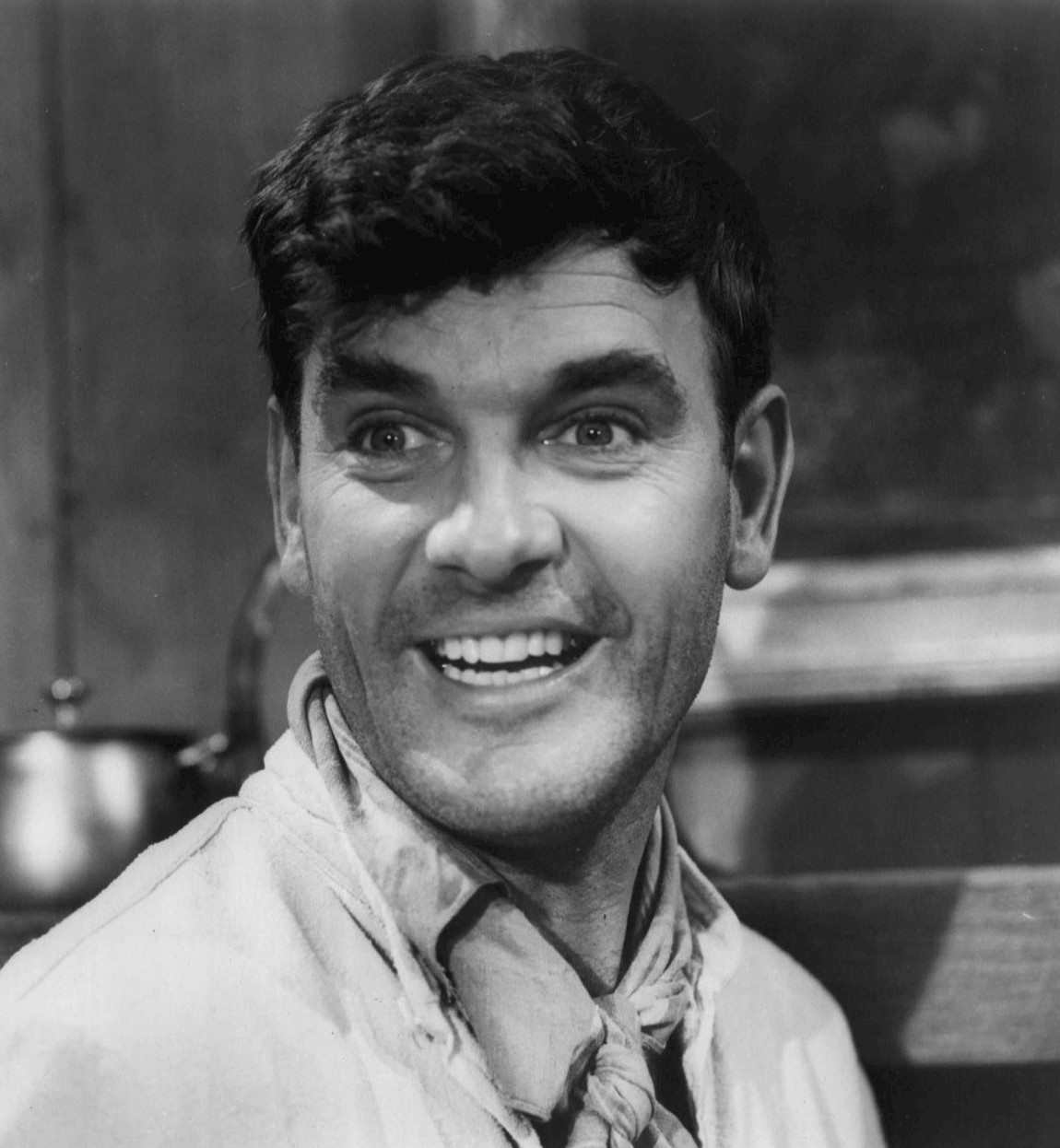
Jewel Franklin Guy (July 26, 1926 – April 6, 2015), known professionally as James Best, was an American television, film, stage, and voice actor, as well as a writer, director, acting coach, artist, college professor, and musician. During a career that spanned more than 60 years, Best, who was known for his high-pitched, exasperated voice, performed not only in feature films, but also in scores of television series. His appearances were almost all on Western programs, as well as various country music programs and talk shows. He gained recognition for his starring role as the bumbling Sheriff Rosco P. Coltrane in the action comedy series The Dukes of Hazzard, which originally aired on CBS between 1979 and 1985. He reprised the role in 1997 and 2000 for the made-for-television movies The Dukes of Hazzard: Reunion! and The Dukes of Hazzard: Hazzard in Hollywood (2000).
Key Information


Early years
[edit]James Best was born Jewel Franklin Guy on July 26, 1926, in Powderly, Kentucky, to Lark and Lena (née Everly) Guy.[1] Lena Guy's brother was Ike Everly, the father of the pop duo the Everly Brothers.[2] Best was raised by adoptive parents in Corydon, Indiana.[3]
Best served in the United States Army Air Forces in World War II, training in 1944 in Biloxi, Mississippi, as a gunner on a B-17 bomber; but by the time he completed his training the war had almost ended, so he was assigned to the army's law enforcement section. In the military police, Best served in war-torn Germany immediately after the Nazi government's surrender in May 1945. While stationed in Germany, he transferred from the military police to an army unit of actors, who traveled around Europe performing plays for troops. Those experiences formed the beginning of his acting career.[4]
Film career
[edit]Best began his contract career in 1949 at Universal Studios, where he met fellow actors Julie Adams, Piper Laurie, Tony Curtis, Mamie Van Doren and Rock Hudson. Initially, he performed in several uncredited roles for Universal, such as in the 1950 film One Way Street, but credited performances soon followed that same year in the Westerns Comanche Territory, Winchester '73, and Kansas Raiders. Work in that genre continued to be an important part of his ongoing film career, including roles in The Cimarron Kid (1952); Seven Angry Men (1955), in which he portrays one of the sons of abolitionist John Brown; Last of the Badmen (1957); Cole Younger Gunfighter (1958); Ride Lonesome (1959); The Quick Gun (1964); and Firecreek (1968).
Best's film roles were not limited to Westerns. He also starred in the 1959 science fiction cult movie The Killer Shrews, and in its 2012 sequel Return of the Killer Shrews; as army medic Rhidges in the 1958 film adaptation of Norman Mailer's The Naked and the Dead; as escaped POW Carter in the James Stewart movie Shenandoah; as Dr. Ben Mizer in the 1966 comedy Three on a Couch; and as the cross-dressing Dewey Barksdale in the 1976 drama Ode to Billy Joe. He had the lead role in Samuel Fuller's Verboten! (1955), and played Burt Reynolds's partner Cully in the 1978 movie Hooper.
Television
[edit] | This section needs additional citations for verification. (June 2023) |

Best guest-starred more than 280 times in various television series. In 1954, he played outlaw Dave Ridley in an episode of Stories of the Century. In 1954, Best appeared twice on the syndicated Annie Oakley series. In 1955, he played Jim Blake on The Lone Ranger, Season 4, Episode 47. He was cast in the religion anthology series Crossroads, in its 1956 episode "The White Carnation." He was also cast on an episode of the NBC sitcom The People's Choice and in the crime drama Richard Diamond, Private Detective.

Best made four appearances on the syndicated anthology series Death Valley Days. His first role was as miner "Tiny" Stoker in the 1955 episode "Million Dollar Wedding".
In 1960, Best appeared in the episode "Love on Credit" of CBS's anthology series The DuPont Show with June Allyson. The same year, he guest-starred on The Andy Griffith Show as "The Guitar Player" (Season 1, Episode 3 and 31). He starred in three episodes of The Twilight Zone including "The Grave" (Season 3, Episode 7), "The Last Rites of Jeff Myrtlebank" (Season 3, Episode 23), and "Jess-Belle" (Season 4, Episode 7).
In 1961, he guest-starred in the Alfred Hitchcock Presents episode "Make My Death Bed". In 1963, he was cast as the courageous Wisconsin game warden Ernie Swift in the episode "Open Season" of another CBS anthology series, GE True, hosted by Jack Webb. In the story line, Swift's character faces the reprisal of organized crime after he tickets a gangster for illegal fishing.[5]
In 1962, he played the part of Art Fuller in the episode "Incident of El Toro" on CBS's Rawhide; and in 1963, he returned to play Willie Cain in the episode "Incident at Spider Rock." Best made two guest appearances on Perry Mason. In 1963, he played title character Martin Potter in "The Case of the Surplus Suitor," and in 1966 he played defendant and oilman Allan Winford in "The Case of the Unwelcome Well." He appeared on a long list of other television series in the 1950s and 1960s, including Wagon Train (three times), Laramie (three times), The Adventures of Kit Carson, The Rebel, Bonanza, Sheriff of Cochise, Pony Express, Rescue 8, The Texan, Gunsmoke, Have Gun – Will Travel, The Barbara Stanwyck Show, Tombstone Territory, Whispering Smith, Trackdown, The Rifleman, Cheyenne, Stagecoach West, Wanted: Dead or Alive, Overland Trail, Bat Masterson, Alfred Hitchcock Presents, Combat!, The Green Hornet ("Deadline for Death"), The Mod Squad, I Spy, The Fugitive, and Flipper. He made a guest appearance on former costar Anne Francis's series Honey West in the 1965 episode "A Matter of Wife and Death".
The Dukes of Hazzard
[edit]Best's highest-profile role was as Sheriff Rosco P. Coltrane on CBS's The Dukes of Hazzard. He appeared during the entire run of the program, from 1979 until the end of the series in 1985. He later revealed that the caricature-like persona of Sheriff Coltrane was developed from a voice he used when playing with his young children.[6] On set, Best was particularly close to Sorrell Booke, who played the character of Boss Hogg, who was both the boss and the brother-in-law of Rosco. The two actors became close friends; and according to interviews by the series' creators, the two often improvised their scenes together, making up their own dialogue as they went along. In the second season of the show, he temporarily left the show, due to a dispute over changing-room conditions. Best appeared in almost every episode of the series, with the exception of 5, throughout the run. Until his death, he remained close to actress Catherine Bach, who played the character of Daisy Duke; and long after the show's cancellation, she was a regular visitor to the website dedicated to Best's painting.[7]
Later television career
[edit]In 1991, Best appeared in an episode of the NBC crime drama In the Heat of the Night. He portrayed retired sheriff and repentant killer Nathan Bedford in the episode "Sweet, Sweet Blues".
In August 2008, Best was presented the Florida Motion Picture and Television Association's Lifetime Achievement Award.[8]
Artist, teacher, writer, and other activities
[edit]Best later moved to Florida and taught at the University of Central Florida (Orlando). After semi-retiring, he administered a production company and accepted occasional acting roles. He also developed a reputation as an artist for his paintings of landscapes, scenes from The Dukes of Hazzard in collaboration with Scott Romine, and other subjects. Later, after residing for a while on Lake Murray near Columbia, South Carolina, he moved once again, this time to Hickory, North Carolina.
An acting coach too, Best taught drama and acting techniques for more than 25 years in Los Angeles. He also served as artist-in-residence and taught drama at the University of Mississippi (Oxford) for two years prior to his stint on The Dukes of Hazzard.[citation needed]
On November 9, 2014, Best and fellow actor Robert Fuller (along with their wives) attended the 100th birthday celebration of lifelong friend and fellow actor Norman Lloyd. Best said, "I had the honor to have been directed by Norman in a Hitchcock episode called 'The Jar.' Having worked with hundreds of directors in my career, I found very few that had Norman's qualities. He was most kind, gracious and patient with his actors. He is in all respects a complete gentleman in his personal life and I found it a genuine pleasure just to be in the presence of such a talented man. I am also doubly honored to consider him my friend. We are so blessed to have such a man among us for so long."[9]
Personal life
[edit]Best had a son, Gary, with his first wife. In 1959, he married his second wife, Jobee Ayers. The couple had two daughters, Janeen and JoJami, before divorcing in 1977. Best then married his third wife, Dorothy Collier, in 1986.[10] He had three grandchildren.[11]
He enjoyed a wide range of hobbies and interests and was an accomplished painter, guitarist,[1] held a black belt in karate,[1] enjoyed writing,[1] and ran his own acting school. His students included Lindsay Wagner, Roger Miller, Glen Campbell, Quentin Tarantino, and Regis Philbin.[1] He was also an animal rights advocate.[1]
James Best was a born-again Christian; when he converted is unknown, but it was sometime during or after The Dukes Of Hazzard.
Death
[edit]Best died on April 6, 2015, at the age of 88, in Hickory, North Carolina, from complications of pneumonia.[12]
Prior to his death, Best's former Dukes of Hazzard co-star and longtime friend John Schneider said: "I laughed and learned more from Jimmie in one hour than from anyone else in a whole year." He also added that, when asked to cry for the camera, "(Best) would say, 'sure thing, which eye?' I'm forever thankful to have cut my teeth in the company of such a fine man."[13] Nearly one year after Best's death, Schneider said about his working relationship with Best:
He was amazing in everything he did; he was not just a funny guy. In fact, I think the comedic timing came to him later on in life because before that he was a very serious actor. I was very fortunate to have grown up working with people like Jimmie Best and Denver Pyle and Sorrell Booke. Incredibly talented men, incredibly talented actors.[14]
Filmography
[edit]- One Way Street (1950) as Driver (uncredited)
- Comanche Territory (1950) as Sam
- I Was a Shoplifter (1950) as Police Broadcaster in Surveillance Plane (uncredited)
- Winchester '73 (1950) as Crater
- Peggy (1950) as Frank Addison
- Kansas Raiders (1950) as Cole Younger
- Target Unknown (1951) as Sergeant Ralph Phelps
- Air Cadet (1951) as Jerry Connell
- Apache Drums (1951) as Bert Keon
- Abbott and Costello Meet the Invisible Man (1951) as Tommy Nelson (Arthur Franz's stand-in)
- The Cimarron Kid (1952) as Bitter Creek Dalton
- About Face (1952) as Joe, Hal's Roommate
- Steel Town (1952) as Joe Rakich
- The Battle at Apache Pass (1952) as Corporal Hassett
- Ma and Pa Kettle at the Fair (1952) as Marvin Johnson
- Francis Goes to West Point (1952) as Corporal Ransom
- Flat Top (1952) as Radio Operator (uncredited)
- Seminole (1953) as Corporal Gerard
- Column South (1953) as Primrose
- The President's Lady (1953) as Samuel Donelson (uncredited)
- The Beast from 20,000 Fathoms (1953) as Charlie, Radar Man (uncredited)
- City of Bad Men (1953) as Deputy Gig (uncredited)
- Riders to the Stars (1954) as Sidney K. Fuller
- The Yellow Tomahawk (1954) as Private Bliss
- The Caine Mutiny (1954) as Lieutenant Jorgensen (uncredited)
- Return from the Sea (1954) as Barr
- The Raid (1954) as Lieutenant Robinson
- They Rode West (1954) as Lieutenant Finlay (uncredited)
- Seven Angry Men (1955) as Jason Brown
- A Man Called Peter (1955) as Man with Jane at Youth Rally (uncredited)
- The Eternal Sea (1955) as Student
- Top of the World (1955) as Colonel French's Orderly (uncredited)
- The Adventures of Champion (1955–1956, TV Series) (2 episodes)
- (Season 1 Episode 13: "The Stone Heart") as Paul Kenyon
- (Season 1 Episode 21: "Andrew and the Daily Double") as Mace Kincaid
- Death Valley Days (1955–1964, TV Series) (4 episodes)
- (Season 3 Episode 12: "Million Dollar Wedding") as Tiny Stoker
- (Season 11 Episode 2: "The $275,000 Sack of Flour") as Ruel Gridley
- (Season 12 Episode 14: "Sixty-Seven Miles of Gold") as Jimmy Burns
- (Season 13 Episode 6: "The Hero of Fort Halleck") as Jim Campbell
- Come Next Spring (1956) as Bill Jackson
- When Gangland Strikes (1956) as Jerry Ames (uncredited)
- Forbidden Planet (1956) as Crewman (uncredited)
- Gaby (1956) as Jim
- Calling Homicide (1956) as Arnie Arnholf
- The Rack (1956) as Millard Chilson Cassidy
- Last of the Badmen (1957) as Ted Hamilton
- Hot Summer Night (1957) as Kermit
- I Was a Teenage Werewolf (1957) as Kid at party who gets slapped (uncredited)
- Man on the Prowl (1957) as Doug Gerhardt
- Trackdown (1957–1958, TV Series) (3 episodes)
- (Season 1 Episode 1: "The Marple Brothers") (1957) as Rand Marple
- (Season 1 Episode 27: "The Mistake") (1958) as Bud Ehlers
- (Season 2 Episode 12: "Sunday's Child") (1958) as Joe Sunday
- Have Gun – Will Travel (1957–1961, TV Series) (3 episodes)
- (Season 1 Episode 10: "The Long Night") (1957) as Andy Fisher, one of three parties in danger of being hanged, along with Richard Boone and guest star Richard Schallert
- (Season 4 Episode 17: "A Quiet Night in Town: Part 1") (1961) as Roy Smith
- (Season 4 Episode 18: "A Quiet Night in Town: Part 2") (1961) as Roy Smith
- Cole Younger, Gunfighter (1958) as Kit Caswell
- The Restless Gun (1958) (Season 2 Episode 1: "Jebediah Bonner") as Jim Kenyon
- The Left Handed Gun (1958) as Tom Folliard
- Bat Masterson (1958) as Joe Best, murderer
- The Naked and the Dead (1958) as Private Rhidges
- Alfred Hitchcock Presents (1958–1961) (3 episodes)
- (Season 3 Episode 30: "Death Sentence") as Norman Frayne
- (Season 5 Episode 34: "Cell 227") (1960) as Hennessy
- (Season 6 Episode 37: "Make My Death Bed") (1961) as Bish Darby
- Ride Lonesome (1959) as Billy John
- Verboten! (1959) as Sergeant David Brent
- The Killer Shrews (1959) as Thorne Sherman
- Cast a Long Shadow (1959) as Sam Mullen
- Wagon Train (1959–1960, TV Series) (3 episodes)
- (Season 2 Episode 35: "The Andrew Hale Story") (1959) as Garth English
- (Season 3 Episode 15: "The Colonel Harris Story") (1960) as Bowman Lewis
- (Season 3 Episode 18: "The Clayton Tucker Story") (1960) as Art Bernard
- The Mountain Road (1960) as Niergaard
- The Andy Griffith Show (1960–1961, TV Series) (2 episodes) as Jim Lindsey
- (Season 1 Episode 3: "The Guitar Player") (1960)
- (Season 1 Episode 31: "The Guitar Player Returns") (1961)
- The Twilight Zone (1961–1963, TV Series) (3 episodes)
- (Season 3 Episode 7: "The Grave") (1961) as Johnny Rob
- (Season 3 Episode 23: "The Last Rites of Jeff Myrtlebank") (1962) as Jeff Myrtlebank
- (Season 4 Episode 7: "Jess-Belle") as Billy Ben Turner
- Bonanza (1961–1968, TV Series) (3 episodes)
- (Season 2 Episode 20: "The Fugitive") (1961) as Carl Reagan
- (Season 5 Episode 11: "The Legacy") (1963) as Page
- (Season 9 Episode 19: "The Price of Salt") (1968) as Sheriff Vern Schaler
- The Rifleman (1962, TV Series) (Season 4 Episode 29: "The Day a Town Slept") as Bob Barrett
- Bronco (1962, TV Series) (Season 4 Episode 18: "Then the Mountains") as Frankie Banton
- Cheyenne (1962, TV Series) (Season 7 Episode 2: "Satonka") as Ernie Riggins
- Black Gold (1962) as Jericho Larkin
- Shock Corridor (1963) as Stuart Couter
- The Fugitive (1963, TV Series) (Season 1 Episode 13: "Terror at High Point") as Dan Murray
- Perry Mason (1963–1966, TV Series) (2 episodes)
- (Season 6 Episode 19: "The Case of the Surplus Suitor") (1963) as Martin Potter
- (Season 9 Episode 25: "The Case of the Unwelcome Well") as Allan Winford
- Gunsmoke (1963–1969, TV Series) (3 episodes)
- (Season 8 Episode 29: "With a Smile") (1963) as Dal Creed
- (Season 9 Episode 14: "The Glory and the Mud") (1964) as Beal
- (Season 15 Episode 7: "Charlie Noon") (1969) as Charlie Noon
- The Alfred Hitchcock Hour (1964) (Season 2 Episode 17: "The Jar") as Tom Carmody
- Combat! (1964, TV Series) (Season 2 Episode 21: "Mail Call") as Trenton
- The Quick Gun (1964) as Sheriff Scotty Grant
- Flipper (1965, TV Series) (Season 1 Episode 29: "The Call of the Dolphin") as Dr. Peter Kellwin
- Black Spurs (1965) as Sheriff Ralph Elkins
- Shenandoah (1965) as Carter
- The Virginian (1965, TV series) (Season 4 Episode 14: "Letter of the Law") as Curt Westley
- Daniel Boone (1965) (Season 1 Episode 21: "The Devil's Four") as Wyatt
- Honey West (1965, TV series) (Season 1 Episode 4: "A Matter of Wife and Death") as Vince Zale
- Three on a Couch (1966) as Dr. Ben Mizer
- First to Fight (1967) as Gunnery Sergeant Ed Carnavan
- The Guns of Will Sonnett (1967–1969, TV Series) (2 episodes)
- (Season 1 Episode 8: "Meeting at Devil's Fork") (1967) as Rake Hanley
- (Season 2 Episode 15: "Robber's Roost") as Harley Bass
- Firecreek (1968) as Drew
- Sounder (1972) as Sheriff Charlie Young
- Hawkins (1973, TV Series) (Season 1 Episode 4: "Blood Feud") as Sheriff John Early
- Savages (1974, TV Movie) as Sheriff Bert Hamilton
- Ode to Billy Joe (1976) as Dewey Barksdale
- Gator (1976)
- Nickelodeon (1976) as Jim
- Rolling Thunder (1977) as Texan
- The Brain Machine (1977) as Reverend Emory Neill
- The End (1978) as Pacemaker Patient
- Hooper (1978) as Cully
- Centennial (1979, TV Mini-Series) (Season 1 Episode 12: "The Scream of Eagles") as Hank Garvey
- The Dukes of Hazzard (1979–1985, TV Series) (141 episodes) as Sheriff Rosco P. Coltrane
- Enos (1981, TV series) (Season 1 Episode 9: "Horse Cops") as Sheriff Rosco P. Coltrane
- The Dukes (1983, TV Series) (20 episodes) as Sheriff Rosco P. Coltrane
- In the Heat of the Night (1991, TV Series) (Season 5 Episode 8: "Sweet, Sweet Blues") as retired Sheriff Nathan Bedford – Crystal Reel Award, Best Actor[8]
- The Dukes of Hazzard: Reunion! (1997, TV Movie) as Sheriff Rosco P. Coltrane
- Raney (1997) as Uncle Nate
- Death Mask (1998) as Wilbur Johnson
- The Dukes of Hazzard: Hazzard in Hollywood (2000, TV Movie) as Rosco P. Coltrane
- Hot Tamale (2006) as Hank Larson
- Moondance Alexander (2007) as Buck McClancy, a friend and storekeeper of the Alexanders (based on the life of real-life daughter Janeen)
- Return of the Killer Shrews (2012) as Thorne Sherman
- The Sweeter Side of Life (2013, TV Movie) as Paddy Kerrigan, the father of the protagonist (final film role)
Further reading
[edit]Best, James; Clark, Jim (2009). Best in Hollywood: The Good, The Bad, And The Beautiful. Albany, New York: BearManor Media, 2009; ISBN 1-59393-460-2.
References
[edit]- ^ a b c d e f "Obituary for James Best". jamesbest.com. Retrieved April 9, 2015.
- ^ "Dukes of Hazzard's James Best Dies at Age 88". CMT. April 7, 2015. Archived from the original on April 10, 2015. Retrieved April 7, 2015.
- ^ Staff (April 7, 2015). "Kentucky Born, Indiana Raised, James Best Dies at 88". WEHT-TV. Retrieved January 24, 2024.
- ^ Best, James and Jim Clark (2009). Best in Hollywood: The Good, The Bad, And The Beautiful, chapter three. Albany, New York: BearManor Media, 2009; ISBN 1-59393-460-2
- ^ "TV Previews for Tonight". Press & Sun-Bulletin. Binghamton, New York. January 6, 1963. p. 6C. Retrieved April 11, 2023 – via newspapers.com.
- ^ James Best Interview | Part 7: How James Got Started on The Dukes of Hazzard, youtube.com; accessed September 2, 2015.
- ^ Catherine Bach profile, mtv.com; accessed April 7, 2015.
- ^ a b Staff writers (August 1, 2008). "The Florida Motion Picture and Television Association Announces Lifetime Achievement Award Recipient". filminflorida.com. Archived from the original on November 25, 2011. Retrieved March 15, 2020.
- ^ Best comments on Norman Lloyd Archived July 31, 2016, at the Wayback Machine, yesweekly.com; accessed April 7, 2015.
- ^ "James Best - Lincoln Herald". Archived from the original on July 26, 2021. Retrieved November 15, 2020.
- ^ Mai-Duc, Christine (April 7, 2015). "James Best dies at 88; actor played sheriff in 'Dukes of Hazzard'". Los Angeles Times. Archived from the original on July 10, 2019. Retrieved March 15, 2020.
- ^ Washburn, Mark (April 7, 2015). "James Best, sheriff of 'Hazzard', dies in Hickory at 88". The Charlotte Observer. Retrieved April 7, 2015.
- ^ Lane, Gary (April 8, 2015). "'Dukes' John Schneider Remembers the "Best"". The Hollywood Billboard. Archived from the original on April 22, 2015. Retrieved March 15, 2020.
- ^ "Actor John Schneider is Living The Dream". Digital Journal. January 7, 2016. Retrieved February 25, 2016.
External links
[edit]
- James Best at IMDb
- James Best at the TCM Movie Database
- James Best Bio at HazzardNet.com
- James Best Crystal Reel Awards
- Obituary – Legacy
- James Best at Find a Grave


| International | |
|---|---|
| National | |
| Artists | |
| People | |
| Other | |
James Best
View on GrokipediaEarly life
Childhood and family background
James Best was born Jewel Franklin Guy on July 26, 1926, in Powderly, Muhlenberg County, Kentucky, to parents Larkin Jasper Guy and Lena Mae Everly Guy—the sister of Ike Everly, father of the Everly Brothers—the youngest of nine children.[3][1] At age three, following his mother's death in 1929, Best was orphaned, briefly placed in an orphanage, and subsequently adopted by Armen and Essa Best, a farming couple who renamed him Jimmie Best.[3][1] The family relocated to Corydon, Indiana, where Best was raised on their farm amid the hardships of the Great Depression, a period marked by widespread economic struggle in rural America.[3][1] Best's upbringing involved the rigors of farm labor, contributing to the development of his work ethic and appreciation for family unity in the face of adversity.[3] His adoptive father introduced him to outdoor pursuits like fishing and hunting, fostering a connection to nature that influenced his later life.[4] Local storytelling traditions and radio dramas further sparked his early fascination with narrative, shaping his path toward performance.Education and early aspirations
James Best, born Jewel Franklin Guy on July 26, 1926, in Powderly, Kentucky, faced significant hardships in his early years that shaped his resilience and determination. The youngest of nine children to parents Lena Mae Everly Guy and Larkin Jasper Guy, he was orphaned at age three following his mother's death in 1929. Placed in an orphanage shortly after, Best was adopted at age four by the childless couple Armen and Essa Best, who renamed him Jimmie and raised him in Corydon, Indiana.[1] These early family challenges provided a motivational backdrop for his later pursuits, instilling a drive to seek better opportunities despite limited resources.[5] Best's formal education took place in Corydon, where he graduated from Corydon High School in 1944. With no documented formal drama training during this period, his early exposure to performance came through personal interests inspired by Hollywood films and radio broadcasts, though he primarily self-educated by immersing himself in plays and soap operas. At age 18, shortly after graduation, Best enlisted in the U.S. Army Air Forces amid World War II, serving initially as a B-17 gunner trainee before being reassigned to military police duties in Germany. It was during this service that his passion for acting ignited; he joined an Army entertainment unit and performed in productions such as My Sister Eileen, marking his initial steps toward a professional career in the arts.[1][6][7] Following his discharge in 1946, Best's aspirations led him to hitchhike to New York City, where he pursued stage opportunities and worked odd jobs, including as a fashion model, to support himself while auditioning for roles. This period of self-reliance and determination, fueled by his wartime experiences, transitioned him toward relocation to California in 1947, setting the stage for his entry into film and television. Despite the absence of structured training, Best's innate talent and perseverance—honed through early adversities—propelled him into a prolific acting career.[5][1]Film career
Early film roles (1950s–1960s)
James Best made his screen debut in the 1950 film noir One Way Street, portraying an uncredited henchman role as a driver in this Universal-International production directed by Hugo Fregonese.[8] Shortly thereafter, he signed a contract with Universal-International Pictures, which propelled him into a steady stream of supporting roles in B-movies, particularly Westerns, allowing him to hone his craft as a character actor.[9] This early affiliation with the studio marked the beginning of a prolific phase, where Best's rugged good looks and intense screen presence positioned him as a reliable presence in low-budget genre fare. Throughout the 1950s, Best became a staple in Hollywood Westerns, often cast as rugged villains, outlaws, or loyal sidekicks. Notable early appearances include his role as Crater, a young cowboy in Anthony Mann's landmark Western Winchester '73 (1950), starring James Stewart, which highlighted his ability to convey gritty determination in ensemble casts.[10] That same year, he portrayed Cole Younger in Kansas Raiders, a Civil War-era drama directed by Ray Enright, depicting the infamous outlaw alongside Audie Murphy as Jesse James.[11] By mid-decade, Best expanded into historical dramas, playing Jason Brown, a fervent abolitionist supporter and son of the radical John Brown, in Charles Marquis Warren's Seven Angry Men (1955). He appeared in over 20 films during the decade, frequently collaborating with acclaimed directors like Anthony Mann and Budd Boetticher—the latter in projects such as The Cimarron Kid (1952) and Ride Lonesome (1959), where he essayed antagonists like Billy John—solidifying his reputation for portraying morally ambiguous frontiersmen. Best also gained cult status for his lead role as Thorne Sherman in the horror film The Killer Shrews (1959).[12][13] In the 1960s, Best began transitioning to more varied dramatic roles, demonstrating his versatility beyond pure Western archetypes. In Sidney Salkow's The Quick Gun (1964), he took on the authoritative part of Sheriff Scotty Grant, a steadfast lawman aiding protagonist Audie Murphy against bandits, adding layers of moral complexity to his cowboy personas. Similarly, these performances underscored his evolution from typecast heavy to a multifaceted supporting player capable of dramatic depth.Later film appearances (1970s–2000s)
In the 1970s, James Best shifted toward supporting roles in a variety of genres, moving beyond his earlier Western focus to dramas, comedies, and action films. He portrayed the antagonistic Sheriff Charlie Young in the 1972 family drama Sounder, directed by Martin Ritt, where his character enforces racial injustice during the Great Depression, contributing to the film's exploration of African American resilience; the movie received four Academy Award nominations, including for Best Picture.[14] That same year, Best played Rev. Emory Neill in the low-budget sci-fi thriller The Brain Machine, a story about mind control experiments.[15] In 1976, he appeared as the quirky Dewey Barksdale, a cross-dressing lumber mill owner, in the musical drama Ode to Billy Joe, adapted from the hit song and emphasizing Southern Gothic themes.[16] He also took on the role of Jim, a silent film-era director, in Peter Bogdanovich's nostalgic comedy Nickelodeon, starring alongside Ryan O'Neal and Burt Reynolds.[15] Best's collaborations with Burt Reynolds extended into action and stunt-driven projects later in the decade. In 1977, he played the cruel Texan thief in Rolling Thunder, a gritty revenge thriller directed by John Flynn, noted for its intense violence and influence on later vigilante films.[16] The following year, Best portrayed Cully, a fellow stuntman and friend to Reynolds's character, in the high-energy comedy Hooper, which celebrated the stunt profession and featured real-life daredevil sequences.[16] These roles highlighted Best's versatility in ensemble casts during a period when his television commitments, particularly The Dukes of Hazzard starting in 1979, began to dominate his career.[16] Film appearances became sporadic in the 1980s and 1990s as Best focused on television, but he occasionally returned to the screen in independent and reunion projects. In 1998, he starred as and co-wrote Death Mask, a supernatural horror film about a cursed mask, marking one of his rare leading roles in later years.[16][17] The 2000s saw a modest resurgence with family-oriented features; Best played Hank Larson, a wise uncle figure, in the 2006 romantic comedy Hot Tamale, directed by Michael Damian.[15][18] He followed this with the role of the gruff Mr. McClancy in the 2007 equestrian drama Moondance Alexander, a heartwarming story of a girl's bond with a horse.[16] In 2012, Best reprised and expanded on his early career by starring as Thorne Sherman and writing the script for Return of the Killer Shrews, a direct-to-video sequel to his 1959 cult horror film, blending nostalgia with low-budget monster effects.[19] His final film role came in 2013 as Paddy Kerrigan in the lighthearted Hallmark-style comedy The Sweeter Side of Life.[15]Television career
Pre-1980s television work
James Best made his television debut in 1953 in the Hallmark Hall of Fame episode "McCoy of Abilene." Over the course of the 1950s and 1960s, he amassed nearly 200 television credits, establishing himself as a prolific performer in episodic formats. His early work often drew on his experience in film Westerns, lending authenticity to his portrayals of rugged characters in the genre.[6][20][21] In the 1950s, Best frequently appeared in Western series, including two episodes of The Adventures of Kit Carson in 1954–1955, where he played supporting roles such as Henry Jordan.[22] He also guest-starred twice in the syndicated Annie Oakley that same year, portraying Scott Warren in "Outlaw Mesa" and Jess Dugan in "Annie and the Outlaw's Son." These roles highlighted his versatility in frontier settings, often as outlaws or allies navigating moral dilemmas.[23] Best ventured into dramatic anthology programming with notable turns in the late 1950s and early 1960s. In 1958, he starred as the anxious Norman Frayne in the Alfred Hitchcock Presents episode "Death Sentence," a tale of paranoia and unintended consequences.[24] He appeared in three episodes of The Twilight Zone: as the skeptical Johnny Rob in "The Grave" (1961), confronting a gunslinger's legacy; as the enigmatic Jeff Myrtlebank in "The Last Rites of Jeff Myrtlebank" (1962), a man suspected of supernatural resurrection after rising from his own coffin; and as Billy Ben Turner in "Jess-Belle" (1963), a man entangled in a witch's curse.[25][26][27] Throughout the 1960s and 1970s, Best's television career diversified across genres, with recurring guest spots that showcased his range from villains to comic figures. He appeared in three episodes of Bonanza, including as Carl Reagan in "The Fugitive" (1961), Page in "The Legacy" (1963), and Will Hewitt in "The Price of Salt" (1968). On Gunsmoke, he played antagonists in multiple installments, such as the arrogant Dal Creed in "With a Smile" (1963), the desperate Beal in "The Glory and the Mud" (1964), and Charlie Noon in "Charlie Noon" (1969).[28][29][30] In lighter fare, Best portrayed the talented but timid guitarist Jim Lindsey in two episodes of The Andy Griffith Show: "The Guitar Player" (1960) and "Guitar Player Returns" (1961), roles that demonstrated his knack for authoritative yet humorous characters.[31] These varied performances solidified his reputation as a reliable television staple before the 1980s.The Dukes of Hazzard
James Best was cast in 1979 as Sheriff Rosco P. Coltrane in the CBS action-comedy series The Dukes of Hazzard, portraying the bumbling yet endearing lawman across all 146 episodes from 1979 to 1985.[32][1] Rosco served as the corrupt but comically inept sheriff of Hazzard County, often scheming alongside Boss Hogg while pursuing the Duke cousins in high-speed chases that highlighted Best's physical comedy. The character's backstory positioned him as a small-town enforcer with a childish vernacular, frequently botching arrests and uttering malapropisms during pursuits.[3][33] Best drew on his prior experience in Western television roles to infuse Rosco with a folksy demeanor, enhancing the character's appeal through improvised dialogue that elevated the scripts. He frequently ad-libbed lines, introducing catchphrases like "possum on a gumbush" and exclamations during crashes, which became hallmarks of Rosco's endearing incompetence. Behind the scenes, Best shared a strong rapport with co-stars Sorrell Booke, who played the scheming Boss Hogg, and Denver Pyle as the wise Uncle Jesse, fostering on-set chemistry that amplified their comedic interplay in car chases and schemes.[1][33][34] The role marked the peak of Best's career, reviving his visibility after decades in film and television and providing financial stability through syndication and merchandising, though it led to typecasting as the hapless sheriff in subsequent offers. Best reprised Rosco in the 1997 made-for-TV reunion movie The Dukes of Hazzard: Reunion! and the 2000 sequel The Dukes of Hazzard: Hazzard in Hollywood, maintaining the character's legacy for fans. Despite the performance's popularity, Best received no Emmy nomination for the series.[32][35][34]Post-Dukes television roles
Following the conclusion of The Dukes of Hazzard in 1985, James Best continued to appear in television, primarily in guest roles and made-for-TV films that often drew on his established reputation as a character actor in law enforcement or folksy authority figures. His post-series work was sporadic, reflecting a shift toward selective engagements amid his growing focus on teaching acting and other pursuits.[36] In 1990, Best guest-starred in the episode "Night Train" of the ABC crime drama B.L. Stryker, portraying Mr. Parkinson, a figure involved in protecting a young witness during a tense train journey. The following year, he appeared in the NBC series In the Heat of the Night episode "Sweet, Sweet Blues," playing Nathan Bedford, a retired sheriff haunted by a past murder he committed decades earlier, a role that allowed him to explore themes of redemption in a Southern Gothic setting. These appearances showcased Best's versatility in dramatic guest spots on popular procedural shows.[37][38] Best reprised his iconic role as Sheriff Rosco P. Coltrane in two made-for-television reunion movies. In 1997's The Dukes of Hazzard: Reunion!, he reunited with much of the original cast for a nostalgic adventure involving family reunions and small-town mischief. He returned for the 2000 sequel, The Dukes of Hazzard: Hazzard in Hollywood, where Rosco joins the Duke brothers in a trip to California amid Hollywood hijinks.[17] In the 2010s, as Best entered semi-retirement, his television output diminished but included a final notable role in the 2013 Hallmark Channel romantic comedy TV movie The Sweeter Side of Life, where he played Paddy Kerrigan, a wise mentor figure aiding the protagonist's personal growth after a divorce. Overall, Best accumulated fewer than a dozen post-Dukes television credits, emphasizing cameos and supportive roles that underscored his legacy in ensemble-driven stories.[39]Other professional activities
Artistic pursuits
James Best developed a passion for painting as a creative outlet alongside his acting career, beginning around the 1970s after starting in high school. He worked primarily in oils, watercolors, and mixed media, focusing on landscapes and floral subjects that captured serene, natural scenes.[40][41] Best's artworks were showcased through private exhibitions in major cities including Nashville, Tennessee; Atlanta, Georgia; and Los Angeles, California, where he connected with collectors and fans. He frequently participated in the Mount Dora Arts Festival in Florida, displaying dozens of pieces and engaging directly with attendees to discuss his process and inspirations. Prices for his paintings varied widely, from affordable smaller works at $60 to larger pieces fetching up to $8,000, such as a 14-by-16-inch acrylic depiction of a barn sold in Atlanta.[41][42] In addition to traditional landscapes, Best incorporated elements from his iconic role as Sheriff Rosco P. Coltrane in The Dukes of Hazzard, creating vibrant scenes featuring the show's famous General Lee car and other Hazzard County motifs. These works appealed particularly to fans, with prints and originals auctioned for charitable causes tied to Dukes events. Painting provided Best with therapeutic relief during intense filming schedules, allowing him to unwind and channel his observations of rural American life into visual form.[43][44][41]Teaching and writing
In the 1970s, Best founded the first school dedicated to teaching motion picture acting techniques in Los Angeles, where he served as a coach and taught drama and acting techniques for over 25 years.[45] His classes emphasized practical skills drawn from his own experiences in the industry, helping aspiring performers navigate the challenges of professional acting.[45] Among Best's notable students were future stars including Clint Eastwood, Burt Reynolds, Teri Garr, and Farrah Fawcett, whom he mentored during their early development as actors.[20] He also held academic positions, acting as artist-in-residence at the University of Mississippi to teach film technique and drama, and delivering classes at the University of Central Florida.[20] In addition to teaching, Best contributed to acting literature through his 2009 autobiography, Best in Hollywood: The Good, the Bad, and the Beautiful.[46] The memoir chronicles his journey from an orphaned youth in Kentucky to a Hollywood veteran, recounting key roles in Westerns and television while providing candid insights into the glamour, hardships, and survival strategies of show business.[46]Personal life and later years
Marriages and family
Best was first married, a union that ended in divorce and produced one son, Gary Allen Best.[1] His second marriage was to Jobee Ayers in 1959; the couple had two daughters, Janeen (born 1961) and JoJami, before divorcing in 1977.[47] In 1986, Best married actress Dorothy Collier, with whom he shared the remainder of his life until his death nearly three decades later.[3] Collier provided steadfast support for Best's post-acting endeavors, particularly his passion for painting, including commissioning collections of his artwork for public display and sharing personal stories of their life together.[48][49] Best maintained close family ties throughout his career, exemplified by his emphasis on familial involvement during the production of The Dukes of Hazzard (1979–1985), when his daughter Janeen Damian made on-set visits and even appeared as an actress in the 1983 episode "A Baby for the Dukes."[50] Janeen Damian later built her own career in the entertainment industry as an actress, screenwriter, and producer, often collaborating with her husband, Michael Damian.[51]Health challenges and retirement
In the mid-1970s, Best opted for semi-retirement from full-time acting to pursue teaching and artistic endeavors, serving as artist-in-residence at the University of Mississippi where he instructed over 650 students in drama techniques.[21] This shift allowed him to manage the physical demands of his earlier stunt-heavy roles while channeling energy into education and painting, activities that became central to his later professional life.[21] By the late stages of his career, physical ailments significantly restricted Best's on-screen work, prompting a further emphasis on non-physical pursuits such as running an acclaimed acting workshop in Los Angeles and producing occasional voice recordings.[21] These health limitations, which emerged prominently in his later decades, curtailed demanding roles and led to a gradual withdrawal from public performances, though he maintained selective engagements like personal appearances at fan events.[36] Best's retirement centered on a quieter existence in Hickory, North Carolina, alongside his wife Dorothy, whom he married in 1986; the couple prioritized low-key activities, including his ongoing art exhibitions and sporadic convention visits, supported by family during periods of health management.[52] By the 2010s, his contributions were largely confined to voice work, reflecting ongoing constraints that prevented more physically intensive commitments.[53]Death and legacy
Circumstances of death
James Best, aged 88, was receiving hospice care in Hickory, North Carolina, after a brief illness complicated by pneumonia in early April 2015.[3] He died peacefully on the evening of April 6, 2015, with the official cause listed as complications from pneumonia, worsened by age-related frailty.[1][54] His wife of 29 years, Dorothy Best, announced the death the following day, confirming it occurred at a local hospice facility near their home.[50]Tributes and enduring influence
Following Best's death on April 6, 2015, numerous tributes poured in from his Dukes of Hazzard co-stars, highlighting his humor, creativity, and mentorship. Ben Jones, known as Cooter Davenport, described Best as "the most constantly creative person I have ever known," noting his lifelong dedication to acting, writing, directing, teaching, painting, and laughing, calling him a "true Renaissance Man and a great American."[55] John Schneider, who portrayed Bo Duke, praised Best as "one of the most amazing men I've ever known," emphasizing his skills as an actor, teacher, artist, and friend, and recalled, "I laughed and learned more from Jimmie in one hour than in four years of college. He was a great teacher and a better friend."[55] Sonny Shroyer, Best's on-screen deputy Enos Strate, added that Best was "a great friend and a great actor" who would be deeply missed.[56] Fans honored Best through ongoing tributes at Dukes of Hazzard conventions, where attendees often held moments of silence, shared personal stories, and celebrated his portrayal of Sheriff Rosco P. Coltrane during annual gatherings.[57] These events, organized by fan associations, featured panels discussing his contributions and impersonator performances that kept his character's spirit alive.[58] Best's funeral was a private service held shortly after his passing, with burial in the family plot at Cedar Hill Cemetery in Corydon, Indiana, his childhood hometown.[59] In lieu of flowers, his family requested donations to local Humane Society chapters, reflecting his love for animals.[48] Best's portrayal of the bumbling yet endearing Sheriff Rosco P. Coltrane left an enduring mark on popular culture, inspiring parodies of inept law enforcement figures in subsequent media, such as comedic sheriff archetypes in animated series and films that echoed Rosco's malapropisms and slapstick chases. From 2015 to 2025, revivals including podcasts like Our American Stories credited Best's improvisational style for enhancing the show's humor, with episodes recounting how his ad-libbed lines, such as unique insults and dog-related quips with his on-screen basset hound Flash, added spontaneity to scenes.[60] Interviews preserved online, including those where Best discussed his ad-libbing techniques, continue to influence aspiring actors.[61] In the 2020s, fans have bolstered Best's legacy through efforts to promote and preserve his artwork, with his official website and fan club showcasing original pieces like Dukes of Hazzard-themed giclée prints, ensuring his multifaceted talents as a painter remain accessible.[62] Additionally, recordings of Best's acting workshops and interviews from his decades-long teaching career—where he mentored stars like Burt Reynolds on naturalistic screen performance—have been shared by enthusiasts.[63]Filmography
Film credits
James Best's film career spanned over five decades, with more than 80 feature film appearances, predominantly in low-budget westerns and supporting roles during the 1950s. The following table presents a comprehensive chronological listing of his theatrical film credits, drawn from reliable archival sources, noting uncredited roles where applicable. Roles in TV movies are excluded.[64][65]| Year | Title | Role |
|---|---|---|
| 1950 | One Way Street | Driver (uncredited) |
| 1950 | Comanche Territory | Sam |
| 1950 | I Was a Shoplifter | Police Broadcaster in Surveillance Room |
| 1950 | Kansas Raiders | Cole Younger |
| 1950 | The Cimarron Kid | |
| 1950 | Winchester '73 | Crater |
| 1950 | Ma and Pa Kettle at the Fair | Marvin Johnson |
| 1950 | Peggy | Frank |
| 1950 | Steel Town | Joe Rakich |
| 1951 | Air Cadet | Jerry Connell |
| 1951 | The Battle at Apache Pass | |
| 1951 | The Great Missouri Raid | |
| 1951 | The Last Outpost | |
| 1951 | Target Unknown | Ralph G. Phelps |
| 1951 | The Golden Horde | |
| 1951 | The People Against O'Hara | |
| 1951 | Riders to the Stars | |
| 1952 | About Face | Hal's roommate |
| 1952 | The Caine Mutiny | Lt. Jorgensen |
| 1952 | The Black Castle | |
| 1952 | Flat Top | Radar operator |
| 1952 | Francis Goes to West Point | Cpl. Ransom |
| 1952 | The Half-Breed | |
| 1952 | The Lawless Breed | |
| 1952 | The Raiders | |
| 1952 | The Savage | |
| 1952 | The Duel at Silver Creek | Pecos |
| 1953 | The Beast from 20,000 Fathoms | Radar Technician (uncredited) |
| 1953 | City of Bad Men | Gig |
| 1953 | Column South | Primrose |
| 1953 | The President's Lady | Samuel Donelson |
| 1953 | Seminole | Cpl. Gerard |
| 1953 | The Charge at Feather River | |
| 1953 | The Man from the Alamo | |
| 1953 | The Redhead from Wyoming | |
| 1953 | The Stranger Wore a Gun | |
| 1954 | Apache | |
| 1954 | The Bounty Hunter | |
| 1954 | The Command | |
| 1954 | Return from the Sea | Barr |
| 1954 | Riders to the Stars | Sidney Fuller |
| 1954 | The Raid | Lt. Robinson |
| 1954 | They Rode West | Lt. Finlay |
| 1954 | The Yellow Tomahawk | Pvt. Bliss |
| 1955 | The Eternal Sea | Pilot Student (uncredited) |
| 1955 | Seven Angry Men | Jason Brown |
| 1955 | The Last Command | |
| 1955 | The Naked Dawn | |
| 1955 | The Prodigal | |
| 1955 | The Return of Jack Slade | |
| 1955 | The Tall Men | |
| 1955 | The Violent Men | |
| 1956 | Calling Homicide | Arnie Arnholf |
| 1956 | Come Next Spring | Bill Jackson |
| 1956 | Forbidden Planet | Crewman (uncredited) |
| 1956 | Gaby | Jim |
| 1956 | Hot Summer Night | Kermit |
| 1956 | The Proud Ones | |
| 1956 | The Rack | Lt. David 'Millard' Cassidy |
| 1956 | The Rawhide Years | |
| 1956 | When Gangland Strikes | Jerry Ames |
| 1957 | Last of the Badmen | Ted Hamilton |
| 1957 | Man on the Prowl | Doug Gerhardt |
| 1957 | The Oklahoman | |
| 1957 | The Restless Breed | |
| 1957 | The Tall T | |
| 1957 | The Tin Star | |
| 1958 | Cole Younger, Gunfighter | Kit Caswell |
| 1958 | The Fiend Who Walked the West | |
| 1958 | The Gun Runners | |
| 1958 | The Left Handed Gun | Tom Folliard |
| 1958 | The Naked and the Dead | Ridges |
| 1958 | The Young Lions | |
| 1959 | Cast a Long Shadow | Sam Muller |
| 1959 | The Hanging Tree | |
| 1959 | The Horse Soldiers | |
| 1959 | The Jayhawkers! | |
| 1959 | The Killer Shrews | Thorne Sherman |
| 1959 | Ride Lonesome | Billy John |
| 1959 | Verboten! | Sgt. David Brent |
| 1959 | The Wonderful Country | |
| 1960 | The Mountain Road | Sgt. Niergaard |
| 1963 | Black Gold | Jericho Larkin |
| 1963 | Shock Corridor | Stuart |
| 1964 | The Quick Gun | Scotty Grant |
| 1965 | Black Spurs | Sheriff Elkins |
| 1965 | Shenandoah | Carter |
| 1966 | Three on a Couch | Dr. Ben Mizer |
| 1967 | First to Fight | Sgt. Carnavan |
| 1968 | Firecreek | Drew |
| 1972 | Sounder | Sheriff Young |
| 1972 | The Brain Machine | Rev. Emory Neill |
| 1974 | Savages | Sheriff Bert Hamilton |
| 1976 | Nickelodeon | Jim |
| 1976 | Ode to Billy Joe | Dewey Barksdale |
| 1977 | Rolling Thunder | Texan |
| 1978 | Hooper | Cully |
| 1978 | The End | |
| 1990 | Night Train | |
| 1998 | Death Mask | Wilbur Johnson |
| 2005 | Hot Tamale | Judge Harlan Cole |
| 2007 | Moondance Alexander | Mr. McClancy |
| 2008 | The Last Confederate: The Story of Robert Adams | Judge Carr |
| 2012 | Return of the Killer Shrews | Uncle Fred[66] |
Television credits
James Best's television career was prolific, encompassing over 200 appearances across series, guest spots, miniseries, and TV movies from the early 1950s until the early 2010s. He frequently portrayed supporting characters in Westerns and dramas during the 1950s and 1960s, transitioning to more comedic roles in the 1970s and beyond, with his most iconic performance as the bumbling Sheriff Rosco P. Coltrane in the long-running series The Dukes of Hazzard. His work ranged from one-off guest roles to recurring parts and voice acting, often highlighting his skill in bringing depth to antagonists and everyman figures.[36][67][20] The following table presents a chronological selection of his notable television credits, focusing on series regulars, significant guest appearances, and specials (TV movies included where broadcast on television). This is not exhaustive but representative of his extensive output, with episode counts provided where available for context on recurring roles.[65][68]| Year(s) | Title | Role | Episodes | Type |
|---|---|---|---|---|
| 1950 | Fireside Theatre | Unspecified | 1 | Guest |
| 1951 | The Lone Ranger | Unspecified | 1 | Guest |
| 1952 | The Adventures of Kit Carson | Unspecified | 1 | Guest |
| 1953 | The Roy Rogers Show | Unspecified | 1 | Guest |
| 1954 | Schlitz Playhouse of Stars | Unspecified | 1 | Guest |
| 1955 | The Adventures of Rin Tin Tin | Unspecified | 1 | Guest |
| 1956 | Cheyenne | Unspecified | 1 | Guest |
| 1957 | Maverick | Unspecified | 1 | Guest |
| 1958 | Alfred Hitchcock Presents | Norman Frayne | 1 | Guest |
| 1958 | Tombstone Territory | Unspecified | 1 | Guest |
| 1958 | Climax! | Unspecified | 1 | Guest |
| 1958 | Wagon Train | Unspecified | Multiple | Guest |
| 1959 | The Twilight Zone | Johnny Rob | 1 ("The Grave") | Guest |
| 1960 | Stagecoach West | Unspecified | 3 | Recurring guest |
| 1960–1961 | The Andy Griffith Show | Jim Lindsey | 2 | Recurring guest |
| 1960 | Lock-Up | Unspecified | 1 | Guest |
| 1961 | Gunsmoke | Unspecified | Multiple | Guest |
| 1961 | Ben Casey | Unspecified | 1 | Guest |
| 1961 | Whispering Smith | Unspecified | 1 | Guest |
| 1963 | Perry Mason | Martin Potter | 1 ("The Case of the Surplus Suitor") | Guest |
| 1963 | The Twilight Zone | Jeff Myrtlebank | 1 ("The Last Rites of Jeff Myrtlebank") | Guest |
| 1964 | Rawhide | Unspecified | 1 | Guest |
| 1965 | The Big Valley | Unspecified | 1 | Guest |
| 1966 | The Wild Wild West | Unspecified | 1 | Guest |
| 1967 | The High Chaparral | Unspecified | 1 | Guest |
| 1968 | The Mod Squad | Clay | 1 | Guest |
| 1969 | Hawaii Five-O | Unspecified | 1 | Guest |
| 1970 | The F.B.I. | Unspecified | 1 | Guest |
| 1970 | Dan August | Wiley | 1 | Guest |
| 1972 | Nichols | Unspecified | 1 | Guest |
| 1973 | Kung Fu | Unspecified | 1 | Guest |
| 1974 | Little House on the Prairie | Unspecified | 1 | Guest |
| 1975 | Barbary Coast | Unspecified | 1 | Guest |
| 1976 | The Bionic Woman | Unspecified | 1 | Guest |
| 1977 | Charlie’s Angels | Unspecified | 1 | Guest |
| 1979–1985 | The Dukes of Hazzard | Sheriff Rosco P. Coltrane | 146 | Series regular |
| 1983 | The Dukes | Sheriff Rosco P. Coltrane | 7 | Series regular (spin-off) |
| 1990 | Night Train | Unspecified | TV movie | Lead |
| 1997 | The Dukes of Hazzard: Reunion! | Sheriff Rosco P. Coltrane | TV movie | Recurring character |
| 1998 | Death Mask | Wilbur | TV movie | Supporting |
| 2000 | The Dukes of Hazzard: Hazzard in Hollywood | Sheriff Rosco P. Coltrane | TV movie | Recurring character |
| 2013 | The Sweeter Side of Life | Paddy Kerrigan | 1 | TV movie[39] |