Hubbry Logo
JobriathJobriathMain
Open search
Jobriath
Community hub
Jobriath
logo
8 pages, 0 posts
0 subscribers
Be the first to start a discussion here.
Jobriath
Jobriath
from Wikipedia

Key Information

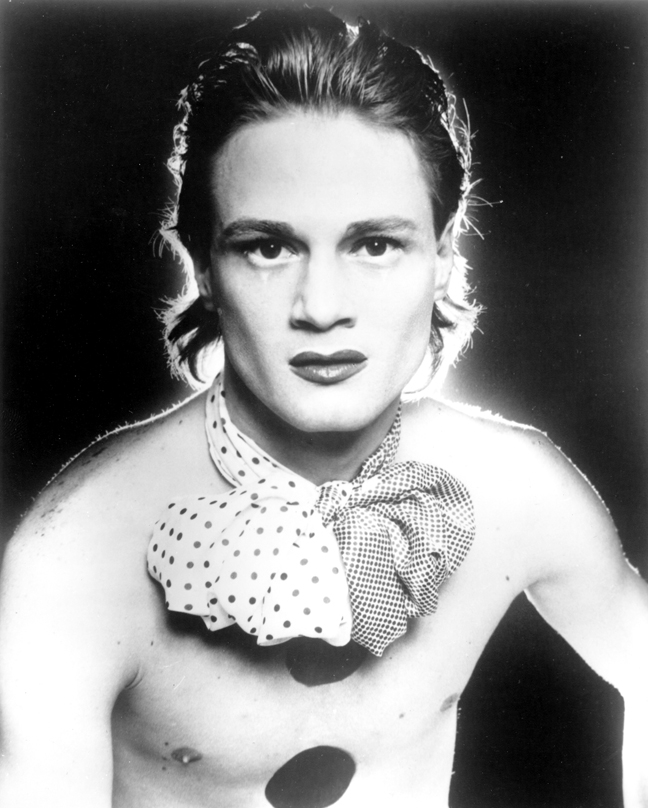
Bruce Wayne Campbell (December 14, 1946 – August 3, 1983[a]), known by his stage name Jobriath, was an American rock musician and actor. He was the first openly gay rock musician to be signed to a major record label and one of the first internationally famous musicians to die of AIDS.

Biography

[edit]

Early life and career

[edit]

Born Bruce Wayne Campbell in King of Prussia, Pennsylvania,[5] Jobriath showed early musical talent for playing the piano, and soon played organ in his local church.[6] It was during this time his talents led him to being introduced to Eugene Ormandy as a child prodigy.[7] While he was a high school student, he became further interested in classical music, and favored composers such as Sergei Prokofiev. He wrote the first two movements of his first symphony by his senior year in high school, but for reasons unknown chose not to complete it.[8]

After graduating from Upper Merion High School (in King of Prussia, Pennsylvania) in 1964, Jobriath took an interest in folk music, partly inspired by seeing Peter, Paul and Mary in concert several times.[9] He briefly formed a folk group with the help of his music teacher who arranged for identical twins Marty and Grace to join him. As a trio they named themselves "The Last Three", and played several regional shows in the PA area before Marty and Grace departed for college. While Jobriath attended Temple University for one semester in the music program,[9] he soon dropped out. He was drafted into the U.S. Army in the mid-1960s and went AWOL within months.[7] Renaming himself Jobriath Salisbury, he relocated to Los Angeles.[3]

Casting in Hair and early recordings with Pidgeon

[edit]

After accompanying a friend to the audition for the musical Hair as a piano player, he impressed the producer and director with his singing and talents on the piano. He was soon cast by the director Tom O'Horgan into the leading role of Woof, a character implied to be gay.[10] He appeared in the legendary West Coast production at the Aquarius Theater on Sunset Boulevard. Despite receiving positive reviews for his performances,[11] he was fired from the production for "upstaging" the other actors.[12][better source needed] After leaving the production in 1969, he joined the folk-rock band Pidgeon, which was then signed to Decca Records, as their lead singer, pianist and guitarist. The band recorded a debut album originally titled First Flight From the Forest which was re-titled by their label as the self-titled Pidgeon,[13] and—shortly after the album's release—the band released the single "Rubber Bricks" b/w "Prison Walls" before disbanding.[14] Both were produced by Stan Farber. At this time he was traced by the Military Police and arrested, spending nearly six months in a military psychiatric hospital after suffering a breakdown.[10] During this period he began writing the songs that would lead to his next musical incarnation.

Jerry Brandt, the hype and Jobriath Boone

[edit]

In mid-December 1972, Jerry Brandt, Carly Simon's former manager, overheard a demo tape being played by Clive Davis at Columbia Records. Davis rejected the tape as "mad, unstructured and destructive to melody", but Brandt was quick to step in. Jobriath later remarked "that coming from a man who discovered both Patti Smith and Barry Manilow...so much for sanity and structure!"[15] Brandt located Jobriath in California, where he was living in an unfurnished apartment and working as a prostitute. Brandt:[clarify] "In walked this beautiful creature dressed in white. I said, Why don't you come out to Malibu and hang out?"[15][additional citation(s) needed] This became a feature of the mythology used to promote Jobriath, and helps to explain the acrimony that followed the dissolution of their professional and personal relationship.[citation needed]

Brandt signed Jobriath, now calling himself Jobriath Boone, to Elektra Records for a reported $500,000, in what was allegedly the most lucrative recording contract of its time.[16] Jobriath was signed to a two-album deal.[17] A huge marketing campaign and media blitz ensued, including full-page advertisements in Vogue, Penthouse, and Rolling Stone magazines, full-length posters on over 250 New York City buses and a huge 41 ft (12 m) by 43 ft (13 m) billboard in Times Square. All featured the forthcoming debut album sleeve design by noted photographer Shig Ikeda, which featured a nude Jobriath, made to resemble an ancient Roman statue.[18] Plans were announced for a lavish three night live debut at the Paris Opera that December, at a cost of $200,000 and a subsequent tour of European opera houses. Jobriath informed the press that the show would feature him dressed as "King Kong being projected upwards on a mini Empire State Building. This will turn into a giant spurting penis and I will have transformed into Marlene Dietrich."[19] Elektra, concerned about spiraling production costs, postponed the Paris Opera shows until February, later canceling them due to expense.

Amidst this barrage of promotion, the debut album Jobriath was released on June 15, 1973, garnering mostly positive reviews. Rolling Stone stated that Jobriath had "talent to burn", Cashbox called it "truly one of the most interesting albums of the year", and Record World hailed it as "brilliantly incisive", referring to Jobriath as "a true Renaissance man who will gain a tremendous following". Esquire disagreed, calling it "the hype of the year". The album was co-produced by Eddie Kramer and Jobriath, featuring string arrangements by Jobriath, recorded at Olympic Studios with the London Symphony Orchestra.[20] Kramer described Jobriath in Mojo as "a romantic soul, really. He wanted orchestrations like old film music, though he knew nothing about scoring. So he bought a book on orchestration and within a week he'd come up with scores of a haunting quality". Peter Frampton is also credited on the album, though his contribution is unclear.[21]

During this period, Brandt continued making extravagant statements such as "Elvis, the Beatles, and Jobriath" and declaring that both he and Jobriath had booked flights on Pan American's first passenger flight to the Moon. Meanwhile, Jobriath declared himself "rock's truest fairy", a comment that did little to increase his popularity at the time but has since confirmed his status as the first openly gay rock singer to be signed to a major record label.[22][23]

Jobriath's debut public performance was made on television, when Brandt secured him an appearance on the popular show The Midnight Special. The costumes were designed by Jobriath and the choreography was by Joyce Trisler, of the Joffrey Ballet.[24] Two songs were performed: "I'maman" and "Rock of Ages", the latter substituting for "Take Me I'm Yours" which was pulled after the producer objected to its overtly sado-masochistic theme.[citation needed] The long-awaited live performance finally came in July 1974 with two sold-out shows at New York's The Bottom Line club.[10] Sales for the album, however, were poor, and it failed to secure a chart placing.

Six months after the release of the debut album, Creatures of the Street was released, again featuring Peter Frampton, as well as John Paul Jones of Led Zeppelin.[25] The costumes were by Stephen Sprouse. The photography was by Gered Mankowitz. Compiled from the extensive sessions for its predecessor, it was launched without any fanfare or media promotion and failed commercially. A US tour followed, where Jobriath and his backing-band (called 'The Creatures') did several residencies around the US (in Philadelphia, Boston, Chicago, San Francisco, Los Angeles & Memphis) during which recordings took place at local studios for a projected third album. Despite the tour having several well-attended shows and/or several sold-out nights, both Brandt and Elektra stopped financing the tour midway through. Despite this, Jobriath and the band completed the tour, continuing to bill Elektra for expenses. A final show, at the University of Alabama, ended in five encores and the fire department being summoned when the excited audience set off the alarm.[26]

Cole Berlin, cabaret and The Chelsea Hotel

[edit]

In January 1975, Jobriath announced his retirement from the music industry and moved into a pyramid-topped rooftop apartment at the Chelsea Hotel in New York City. He attempted to resume his acting career, and was invited to audition for the role of Al Pacino's lover in the film Dog Day Afternoon. According to keyboard player Hayden Wayne, Jobriath had the script for Dog Day Afternoon backstage at a concert at Nassau Coliseum, and claimed he did not want to do the film due to the character's wearing of a dress.[27][better source needed] Calling himself "Cole Berlin" (a play on both Cole Porter and Irving Berlin), he worked as a cabaret singer[5] at a restaurant called the Covent Garden, as well as clubs and cabarets, augmenting his income with occasional prostitution.[10] In a 1979 interview, he said the Jobriath persona had "committed suicide in a drug, alcohol and publicity overdose".[3]

Death

[edit]

By the time his 10-year contract with Brandt was finally up, Jobriath was sick with AIDS.[3] He began to feel ill in late 1981 but still contributed to the Chelsea Hotel's 100th birthday celebrations in November 1982 and continued to perform cabaret until shortly before his death.[3] He died at his residence at The Chelsea in 1983.[a]

Legacy

[edit]

In November 2004, long-time fan Morrissey oversaw Jobriath's first CD re-issue, a compilation called Lonely Planet Boy.[28] It was produced by Eddie Kramer. Morrissey had previously attempted to secure Jobriath as a support act for the tour in support of his Your Arsenal album, having been unaware that the singer had died some years previously.[citation needed] Both Jobriath's original studio albums were officially reissued on CD in Japan in late 2007, remastered and issued in mini-vinyl replica sleeves. They were released in the U.S. in standard jewel-box packaging in 2008 by Collectors' Choice Music.[29]

The group Balcony released a semi-tribute track entitled "Jobriath" as a free MP3 anonymously on the internet in 2000[30] that was later included on their second album Before Needs.[31][non-primary source needed] He is referenced using his legal name by the indie-folk band Okkervil River on the final song of their 2008 album The Stand Ins, entitled "Bruce Wayne Campbell Interviewed on the Roof of the Chelsea Hotel, 1979". Def Leppard released a cover of "Heartbeat" on some versions of their 2006 album Yeah!.[32] "Morning Starship" was sampled by hip-hop artist Ill Bill on the title track to his 2007 mixtape album Black Metal.

Filmmaker Kieran Turner (24 Nights) created a feature documentary about the late singer called Jobriath A.D.[33] On March 28, 2012, English singer Marc Almond said of Jobriath on his retrospective, "For me, above all else, he was a sexual hero: truly the first gay pop star. How extreme that was to the US at the time. His outrageous appearances on the hallowed US rock show The Midnight Special prompted shock, bewilderment and disgust. Everyone hated Jobriath – even, and especially, gay people. He was embarrassingly effeminate in an era of leather and handlebar moustaches."[34] On July 11, 2012, Ann Magnuson released an EP featuring four Jobriath songs and a spoken-word narrative.[35] On October 29, 2013, Eschatone Records released three 1971 Jobriath tracks digitally and on 10" vinyl as the EP Amazing Dope Tales. On May 6, 2014, Eschatone Records released As the River Flows, a full-length album of never-before released Jobriath recordings from 1971 to 1972 on CD, limited edition vinyl and in digital format.[36] On December 5, 2018, Morrissey released a statement that his next album, California Son, would open with a cover of Jobriath's "Morning Starship".[37]

Discography

[edit]

Studio albums

[edit]

Compilations

[edit]
  • 2004 Lonely Planet Boy – Attack / Sanctuary
  • 2014 As the River Flows – Eschatone
  • 2015 Popstar: The Lost Musical – Factory25

Singles

[edit]
  • 1969 "Rubber Bricks" / "Prison Walls" (with Pidgeon) – Decca
  • 1974 "Take Me I'm Yours" / "Earthling" – Elektra
  • 1974 "I'maman" / "Rock of Ages" – Elektra / Barclay
  • 1974 "Liten Up" / "Ooh La La" – Elektra
  • 1974 "Street Corner Love" / "Rock of Ages" – Elektra
  • 1974 "Ooh La La" / "Gone Tomorrow" – Elektra
  • 2004 "I Love a Good Fight" + "Scumbag" – Attack / Sanctuary
  • 2013 "Amazing Dope Tales" + "As the River Flows" + "City Freak" – Eschatone

Notes

[edit]

References

[edit]
[edit]
Revisions and contributorsEdit on WikipediaRead on Wikipedia
from Grokipedia
Jobriath Boone (born Bruce Wayne Campbell; December 14, 1946 – August 3, 1983) was an American and recognized as one of the earliest openly gay rock musicians promoted by a major record label. Signed to in a high-profile deal valued at $500,000, Boone released his self-titled debut album in 1973, featuring theatrical songs like "I'maman" and "Heartbeat," followed by Creatures of the Street in 1974; despite aggressive marketing including massive billboards equating him to the next , both records sold poorly, leading to critical backlash over perceived overhype. Following the commercial disappointment, he abandoned public life, subsisting through odd jobs in New York City's Chelsea Hotel, where he composed privately but released no further material. Boone died alone from AIDS-related causes at age 36, with his body undiscovered for several days, marking him among the first prominent musicians claimed by the emerging ; his work later garnered cult appreciation for its bold eccentricity and prescience in queer-themed glam aesthetics.

Early Life and Formative Years

Childhood and Family Background

Bruce Wayne Campbell was born on December 14, 1946, in to working-class parents James and Marion Campbell. His mother was 18 years old at the time of his birth, and he was the second of three sons, with a younger brother Jerry born around 1948. The lived in a trailer town in rural Pennsylvania after Marion Campbell left the household, leaving Bruce and his brothers in the care of their father Jim. Details on dynamics remain sparse, with no evidence of or other notable affiliations among relatives. Campbell displayed early musical talent, learning as a child through classical training that honed his technical proficiency; he also played the organ at his local church.

Musical Education and Initial Aspirations

Bruce Wayne Campbell, born on December 14, 1946, in , demonstrated early aptitude for music, beginning lessons around age 10 or 11 in 1956 or 1957 from a local instructor with classical . He also played organ in his local church, honing skills that laid the foundation for his proficiency. This formal emphasized classical techniques, fostering a disciplined approach to keyboard performance amid a self-directed exploration of repertoire. By the mid-1960s, following his high school graduation in 1964, Campbell developed a keen interest in , influenced by repeated concert viewings of . Adopting the stage name Jobriath to signal artistic reinvention, he formed a short-lived folk trio called The Last Three, marking his initial forays into group performance and songwriting. These efforts reflected aspirations toward original composition, blending folk sensibilities with personal expression, though the group disbanded quickly. Seeking further structure, Jobriath enrolled in music courses at Temple University but withdrew after one semester in late 1964, deeming the curriculum insufficiently advanced for his ambitions. He then pursued private piano lessons and dedicated time to band activities, prioritizing self-directed development over institutional paths. This period underscored his drive for compositional independence and live performance, rooted in verifiable classical foundations and emerging folk inclinations, before transitioning to broader entertainment pursuits.

Entry into Entertainment

Theater Debut in Hair

In 1968, Bruce Wayne Campbell, who had begun using the stage name Jobriath Salisbury, joined the West Coast production of the rock musical at the Aquarius Theater in , directed by Tom O'Horgan. He was cast as the character after attending an audition to play for a friend, where his skills impressed the producers enough to secure the role on the spot. As , Jobriath performed key Act One numbers, including "," which showcased the character's implied homosexuality amid the show's provocative themes of sexual freedom and countercultural rebellion. The production immersed Jobriath in Hair's avant-garde environment, featuring full-frontal nudity, tribal rituals, and critiques of Vietnam War-era conformity, elements that reflected and amplified the late-1960s hippie ethos he encountered in Los Angeles. This exposure marked his breakthrough in musical theater, earning him positive notices for his vocal and piano talents during performances, such as a November 24, 1968, appearance by the cast on a primetime variety show. However, Jobriath's tenure ended prematurely when he was fired for onstage misbehavior, including upstaging fellow actors, an incident that revealed early tendencies toward professional volatility. By 1969, following this dismissal, he transitioned away from theater, redirecting his energies toward composition and performance as a means to channel his artistic ambitions independently.

Formative Recordings with Pidgeon

Pidgeon formed in late 1968 in , centered on keyboardist, guitarist, and songwriter Jobriath Salisbury (born Bruce Wayne Campbell), who served as the band's lead vocalist, pianist, and primary creative force alongside lyricist Richard T. Marshall. The group blended psychedelic folk-rock with elements, incorporating intricate arrangements, harmonious vocals reminiscent of , and quirky psychedelic touches influenced by sunshine pop traditions. The band's sole output was their self-titled debut album, , released in 1969 on (DL 7-516), produced by Stan Farber and featuring 11 tracks of original material. contributed compositions such as "The Dancer," "The Main Line," and "Springtime Girl," which highlighted his versatile vocal delivery—ranging from ethereal falsettos to robust leads—and showcased early theatrical flourishes in the psychedelic arrangements. Other notable cuts included "Of the Time When I Was Young" and "House on the Hill," emphasizing the band's folk-psych leanings with accents from Cheri Gage and layered instrumentation. Despite the 's artistic merits in capturing late-1960s psychedelic experimentation, it achieved minimal commercial traction, failing to chart or garner significant radio play amid a saturated market. The group disbanded shortly after release, with no further recordings, as internal dynamics and lack of breakthrough success prompted to pursue independent opportunities. This brief venture marked Salisbury's initial foray into professional recording but yielded no enduring band legacy, influencing his subsequent shift toward solo endeavors.

Rise to Prominence

Partnership with Jerry Brandt

In late 1972, Jerry Brandt, a music manager previously associated with , encountered Jobriath's demo tape during a playback at , where label executive had rejected it as "mad, unstructured and destructive to melody." Brandt, recognizing potential, tracked down Jobriath in and signed him to a 50/50 management and music-publishing contract modeled after the Elvis Presley-Colonel Tom Parker arrangement. Brandt swiftly negotiated a two-album deal with , securing a reported advance of $500,000—the largest sum ever offered to an at that time—which reflected Brandt's high-stakes vision for Jobriath as a transformative figure in . Brandt's promotional tactics emphasized unprecedented hype, including full-page advertisements in publications like Vogue and , and a massive billboard replicating the provocative image of a nude, crawling Jobriath from the debut artwork. These efforts, budgeted in the tens of thousands, aimed to position Jobriath as "the true fairy of rock" and a rival to , but they generated expectations decoupled from Jobriath's limited prior commercial output, primarily confined to theater and folk-rock demos.

Adoption of Jobriath Boone Persona and Hype Campaign

In 1972, Bruce Wayne Campbell adopted the stage name Jobriath Boone, marking a deliberate shift toward a flamboyant identity that emphasized overt theatricality and self-identification as "rock's first true fairy." This persona drew comparisons to David Bowie's glam style but amplified elements of explicit homosexuality, positioning Jobriath as the first openly gay rock musician signed to a major label, . Manager Jerry Brandt orchestrated a high-intensity publicity campaign in 1973 to launch Jobriath's career, investing heavily in visual and print media to cultivate superstar expectations. Key tactics included full-page advertisements in prominent publications such as Vogue, , and Penthouse, featuring provocative imagery like a crawling, nude, white-painted Jobriath. The effort extended to a $200,000 Times Square billboard displaying Jobriath nearly nude and posters affixed to 250 buses, creating widespread urban visibility. These strategies aimed to generate immediate buzz by equating Jobriath with icons like and , though the absence of commensurate pre-release sales data underscored the speculative nature of the hype. Brandt's approach, as a self-appointed , involved direct involvement in interviews to amplify the narrative of Jobriath as an unprecedented phenomenon in .

Major Label Career

Debut Album and Initial Publicity

Jobriath's self-titled debut was released by on June 15, 1973. Produced under the label's auspices following a high-profile signing, the record featured 11 tracks blending with theatrical and eclectic elements, including "Take Me I'm Yours," "I'maman," and "Space Clown." The album's sound incorporated arrangements in several compositions, such as "Be Still" and "Morning Star Ship," reflecting Jobriath's background in musical theater. The release was preceded by an aggressive publicity campaign orchestrated by manager Jerry Brandt, including a massive billboard in New York City's Times Square displaying a provocative image from the album cover—a nude Jobriath posed as a crawling figure—and full-page advertisements in publications like , Vogue, and Penthouse. This hype positioned Jobriath as a glamorous successor to figures like and , with promotional expenditures reportedly exceeding $40,000 for the debut alone. Jobriath's first public performance occurred on the television program The Midnight Special in 1973, where he appeared in elaborate costumes performing tracks from the album, further amplifying his eccentric persona. Despite the initial buzz and generally positive critical reception—such as Rolling Stone noting Jobriath's "talent to burn"—the album achieved limited commercial success, failing to chart and attracting minimal sustained public interest. The extravagant promotion, while generating media attention, did not translate into strong sales, underscoring a disconnect between the manufactured hype and audience reception of the music itself.

Second Album and Commercial Realities

Creatures of the Street, Jobriath's second album, was released in early 1974 by , approximately six months after his debut. The record comprised ten tracks, including "Heartbeat," "Ooh La La," and "Scumbag," which maintained his approach with theatrical orchestration and provocative lyrics. These elements reflected ongoing experimentation in extravagant, cabaret-influenced production amid the glam genre's peak. Commercial reception underscored the limitations of the preceding hype strategy. The album failed to enter any major charts and recorded dismal sales, mirroring the debut's underperformance despite heavy promotion. Elektra subsequently terminated Jobriath's contract, citing inadequate returns on investment after two releases. This decision highlighted the disconnect between extravagant publicity expenditures—estimated in the hundreds of thousands for the overall campaign—and actual market viability, as audience interest waned post-debut without sustained hits. Plans for further touring faltered amid persistently low ticket sales, exacerbating financial strain and signaling the promotional bubble's burst. The label's withdrawal left Jobriath without major-label support, concretizing the career's rapid downturn driven by mismatched expectations and empirical underdelivery.

Decline and Reinvention

Withdrawal from Rock and Cabaret Turn

Following the commercial disappointment of his second album, Creatures of the Dream (released October 1974), Jobriath publicly announced his retirement from the rock music industry in January 1975, citing exhaustion from the intense promotional hype and its fallout. This decision stemmed from the rock scene's superficial tolerance of his overt , which invited audience hostility and media backlash despite initial intrigue, rendering sustained stardom untenable amid poor sales and severed label ties. By 1976, operating under the pseudonym Cole Berlin—a nod to —Jobriath pivoted to piano-bar performances in venues, prioritizing intimate vocal showcases over theatrical glam elements. These gigs, including regular sets at spots like The restaurant, focused on straightforward accompaniment and song interpretations that highlighted his range and phrasing, drawing modest crowds seeking accessible entertainment rather than rock spectacle. The alias allowed anonymity, distancing him from prior persona-driven controversies while providing reliable, low-pressure income in contrast to the volatile economics of major-label rock tours and recordings. This turn reflected a pragmatic rejection of industry exploitation, where extravagant had overshadowed musical substance and yielded financial instability; piano-lounge work offered creative continuity through performance without the demands of production or arena-scale expectations. Performances under Cole continued into 1977, emphasizing endurance over reinvention, as Jobriath adapted to a niche sustaining his artistry amid broader with rock's performative excesses.

Residence at the Chelsea Hotel

In early 1975, following his announced retirement from the recording industry, Jobriath relocated to the Chelsea Hotel at 222 West 23rd Street in , taking up residence in a pyramid-shaped on the rooftop. This unconventional space, featuring glass walls and an elevated, angular design, overlooked the surrounding urban landscape and aligned with the hotel's reputation for attracting nonconformist artists. Jobriath remained there until his death in 1983, using the as a secluded base amid the Chelsea's transient, creative milieu. During this period, Jobriath sustained private , producing unpublished songs on his within the confines of the rooftop dwelling, though he eschewed broader commercial pursuits or tours. His daily life reflected increasing withdrawal from external engagements, supplemented by sporadic income from local piano work, as documented in contemporary accounts of his diminished visibility post-1974. The Chelsea's communal environment provided incidental contact with fellow residents, but Jobriath's routine emphasized solitude over active collaboration, evidenced by the lack of recorded joint projects or public affiliations from these years.

Death

Final Days and Suicide

Jobriath Boone died on August 4, 1983, at age 36, after jumping from the window of his rooftop apartment at the Chelsea Hotel in . The incident occurred one week after the expiration of his original 10-year contract with manager Jerry Brandt. His body remained undiscovered for four days, by which time decomposition had set in, a circumstance that underscored his profound isolation from friends, family, and the music industry in his final period. The death was determined to be a by , occurring amid the early emergence of the AIDS crisis in the United States, though direct causal links to health conditions remain unverified in official records.

Context of Health and Isolation

Jobriath's reclusiveness in his final years at the Chelsea Hotel stemmed in part from the psychological aftermath of his rapid rise and fall in the music industry, where aggressive promotion yielded commercial disappointment and led to professional withdrawal. After his second album's poor sales in 1974, he abandoned rock performance for sporadic work, increasingly limiting social interactions and relying on substance use, which intensified patterns of instability observed earlier in his career, such as his dismissal from the West Coast production of the musical around 1968–1969 amid reported boredom and disruptive behavior. These experiences fostered a cycle of self-imposed isolation, independent of external prejudice, as he grappled with unfulfilled ambitions and personal dependencies on alcohol and drugs. The early 1980s AIDS crisis provided a broader epidemiological context for gay artists in New York, with Jobriath reportedly beginning to experience unexplained illnesses from late 1981, though his HIV status was never medically confirmed owing to the disease's nascent identification and lack of widespread testing at the time. Rumors of AIDS-related decline circulated posthumously, attributed retrospectively by some biographers to his lifestyle and era-specific risks, yet official records cite suicide as the cause of death without corroborating infectious disease evidence. This uncertainty underscores how health speculations intertwined with his documented mental strains from career reversals, contributing to a deepening seclusion that severed ties with former collaborators and the public.

Musical Style and Influences

Core Elements of Songwriting and Performance

Jobriath's songwriting centered on piano-driven compositions, often featuring thundering dramatic lines that anchored rock arrangements, as heard in tracks like "Be Still" where low notes build tension before transitioning to lyrical passages. He employed self-taught techniques, learning scoring from a in one week to create romantic, film-like arrangements for his 1973 debut , recorded with a 55-piece at in using a nine-foot grand . These arrangements incorporated complex layers, including scorching electric guitars, soulful backing choruses, and circus-like sound effects, blending art-rock muscularity with nostalgic piano-and-vocal structures reminiscent of or . His vocal delivery emphasized high-register, dramatic phrasing with a soulful theatricality, delivering lyrics in a style that evoked emotional intensity without strict adherence to but prioritizing expressive range over conventional rock shouting. Performance elements highlighted sexual presence through provocative phrasing, supported by grand orchestral swells that avoided genre purity, mixing glam rock's outlandishness with quirkiness and early rhythms, as in "World Without End." Lyrical themes recurrently explored love via romantic, haunting imagery and alienation through space-oriented fantasies and introspective isolation, such as in "Inside" and "," where poetic depictions of otherworldliness convey disconnection without overt folk simplicity. Additional motifs included critiques of , , and , integrated into theatrical narratives that prioritized causal emotional realism over narrative purity, resulting in songs like "" that fused alienation with whimsical cosmic elements. This approach reflected a blend of influences—glam theatricality, nostalgia, and rock complexity—without committing to any single style, yielding recordings defined by self-orchestrated density rather than sparse production.

Comparisons to Peers and Artistic Borrowings

Jobriath's stage persona and visuals, characterized by flamboyant costumes and androgynous presentation, echoed David Bowie's Ziggy Stardust in their emphasis on theatrical and extraterrestrial themes, though often critiqued as a more feverish, derivative adaptation tailored to an American glam context. This included space alien imagery and swaggering performance styles that mirrored Bowie's 1972-1973 era, with observers noting Bowie-esque elements in Jobriath's early 1970s appearances, such as metallic outfits and mime-influenced gestures, but lacking the underlying innovation in persona development. In songwriting and arrangement, Jobriath borrowed structures reminiscent of Noël Coward's sophisticated, witty show tunes, incorporating flair and ironic lyricism into tracks like those on his 1974 album, which reviewers identified as drawing from pre-war theatrical traditions rather than originating novel forms. These elements surfaced more prominently in his mid-1970s pivot to under the alias Cole , where piano-driven performances evoked Coward's poised, cheeky delivery, functioning as an adaptive reuse of established techniques amid commercial pressures. Prior to his solo glam phase, Jobriath's work with the band from 1969 onward incorporated ethereal instrumentation and introspective harmonies typical of late-1960s West Coast folk-rock experimentation, including multi-layered guitar and keyboard textures that aligned with contemporaries like but prioritized virtuosic display over groundbreaking synthesis. Critics have pointed to these borrowings as evidence of limited originality, with his overall output labeled a "pop " that repackaged peers' innovations—such as Bowie's —without substantial causal advancements in evolution.

Reception and Controversies

Contemporary Critical Assessments

Jobriath's self-titled debut album, released on June 15, 1973, elicited mixed critical responses, with some reviewers praising his vocal prowess and songwriting flair while others dismissed the work as overly theatrical and derivative. critic Stephen Holden lauded the record for its "honest, personal magnetism and talent to burn," highlighting tracks like "" for their bold energy and positioning the album among the year's more intriguing releases. However, contemporaries in outlets like New Musical Express and broader press coverage critiqued the extravagant staging and cabaret-infused arrangements as prioritizing spectacle over substantive rock execution, often likening the aesthetic to a strained fusion of Broadway excess and glam posturing that failed to cohere. The album's commercial underperformance underscored these divisions, as it achieved no chart placement despite a promotional campaign featuring massive billboards and a reported $500,000 advance from —the largest for an unknown artist at the time—and ultimately sold negligible units, reflecting limited audience resonance. Jobriath's second effort, Creatures of the Street, issued in , fared worse in reception, garnering scant notice and further emphasizing execution flaws such as uneven production and pretentious lyrical conceits, with critics noting a dilution of the debut's rawer rock elements in favor of polished but hollow . Sales mirrored this trajectory, yielding no measurable chart success or widespread sales, empirically confirming the hype's disconnect from tangible impact.

Debates over Hype, Talent, and Sexuality

Jerry Brandt's promotional campaign for Jobriath, which included lavish billboards in on December 27, 1972, and comparisons to and before any music release, generated significant pre-album buzz but drew criticism for prioritizing spectacle over substance, fostering perceptions of gimmickry. This approach, while innovative in creating anticipation, backfired when the self-titled debut album failed to meet inflated expectations, with detractors arguing the overshadowed substantive artistic evaluation and invited skepticism about authenticity. Brandt's , involving provocative seminude and absence of live performances, amplified visibility but alienated critics who viewed it as manipulative overreach rather than organic artist development. Debates over Jobriath's talent center on mixed 1970s reviews, with some outlets like Rolling Stone praising his debut as having "talent to burn" and incisive songwriting, while others highlighted weaknesses in vocal delivery, unconventional structures, and lack of broad appeal as reasons for commercial failure. Critics contended that personal choices, such as retreating from promotion and live shows, squandered potential rather than industry barriers alone causing downfall, pointing to poor album sales—under 5,000 copies for the debut—and negative assessments of song quality as evidence of mismatched ambition and execution. Proponents of greater merit argue that structural biases in review processes, influenced by era-specific tastes, undervalued his theatrical flair, though empirical data like chart non-performance supports claims of overhyped underdelivery over victimhood narratives. Jobriath's open , marketed as the "true fairy of rock" amid stigma, positioned him as a pioneer but sparked debates on whether it represented genuine expression or exploitative , with press responses often laced with homophobic undertones that conflated personal identity with artistic gimmick. While his candor challenged norms predating widespread acceptance, market rejection tied more to stylistic eccentricity than sexuality alone, as evidenced by contemporaneous glam acts succeeding despite ambiguity; critics attributed backlash to perceived amplifying , yet sales data indicates broader disinterest in the sound rather than isolated . This duality—bold visibility versus reinforced —fueled arguments that overt promotion of gay identity invited but also reflected causal industry unreadiness, prioritizing verifiable reception metrics over sympathetic reinterpretations.

Posthumous Recognition

Rediscovery Efforts and Reissues

In 2004, the Lonely Planet Boy was released on Attack Records, curated by and featuring selections from Jobriath's recordings, including some previously unreleased material, to highlight overlooked aspects of his catalog. The release targeted a audience interested in early obscurities but did not achieve broad commercial penetration. The original studio albums Jobriath (1973) and Creatures of the Street (1974) received remastered CD reissues in 2008 via Collectors' Choice Music, marking their first widespread digital availability and preserving the Elektra-era productions with improved audio fidelity. Further archival efforts culminated in 2014 with As the River Flows on Eschatone Records, a ten-track collection of unreleased demos and recordings from 1971 predating his major-label debut, sourced from private tapes and emphasizing raw, pre-glam compositions. These posthumous projects, driven by independent labels and fan advocacy, sustained interest among niche collectors without propelling Jobriath into mainstream revival.

Documentaries and Enduring Influence

The 2012 documentary Jobriath A.D., directed by Kieran Turner, examines the rise and rapid decline of Jobriath Boone through archival footage, animation, and interviews with key figures including his manager Jerry Brandt and glam-era associates such as , , and . Narrated by , the film highlights the extravagant marketing campaign orchestrated by Brandt, which positioned Jobriath as a potential successor to but ultimately contributed to his commercial isolation. Premiering at film festivals in 2012, it premiered commercially in limited release, underscoring Jobriath's persistent obscurity even in retrospective media. Jobriath retains a dedicated cult following among glam rock enthusiasts, drawn to his audacious self-presentation and the narrative of his era's promotional overreach. This niche appreciation is evidenced by selective artistic tributes, such as Morrissey's 2019 cover of Jobriath's "Morning Starship," recorded with Grizzly Bear's Ed Droste for the album California Son. Morrissey, a longtime admirer, had previously contributed liner notes to Jobriath reissues, reflecting personal affinity rather than broader industry emulation. Notwithstanding these isolated revivals, Jobriath's influence has not permeated mainstream music or culture, largely because his output aligned closely with the ephemeral aesthetics of early-1970s glam—characterized by theatrical excess and novelty—without demonstrating adaptable qualities that propelled peers like Bowie into enduring relevance. The absence of widespread sampling, remixes, or canonical status in subsequent genres points to a causal limitation: his work's appeal, tied to historical hype and subcultural curiosity, failed to transcend its context, confining recognition to archival interest among specialists.

Discography

Studio Albums

Jobriath released his self-titled debut studio album in October 1973 through . The album comprised eleven original songs, including "," "Be Still," "World Without End," "Space Clown," "Earthling," and "Movie Queen." It featured contributions from musicians such as on guitar and on drums, alongside a 55-piece accompaniment. Production followed a substantial promotional investment exceeding $80,000 by Elektra, part of a larger $500,000 two-album advance secured by manager Jerry Brandt. His second and final studio album, Creatures of the Street, followed in January 1974, also on . Drawing from unused material from the debut's sessions, it included tracks such as "Ooh La La" and emphasized street-themed narratives over the prior album's cosmic and theatrical elements. Jobriath produced no additional studio albums thereafter.

Compilations and Posthumous Releases

Lonely Planet Boy, a curated by , was released in 2004 on Attack Records, featuring 15 tracks selected from Jobriath's 1973 self-titled album and 1974's Creatures of the Street, presented in a non-chronological order to highlight key songs such as "Heartbeat" and "I'maman." The release aimed to reintroduce Jobriath's sound to new audiences, with production credits including and Bill Inglot. In 2014, Eschatone Records issued As the River Flows, comprising 10 tracks recorded in 1972 at prior to Jobriath's major-label debut, including early versions of songs like "I'maman" and previously unreleased material produced by Richard Robinson. This album drew from archival tapes, offering insight into Jobriath's pre-Elektra songwriting and piano-driven compositions. Popstar: The Lost Musical, released in 2015 by Factory 25, assembled recordings and elements from Jobriath's unfinished 1970s musical project of the same name, blending theatrical songs with narrative fragments intended for a Broadway-style production about fame and identity. The release included demo tracks and supplemented audio with contextual , marking one of the few outlets for this ambitious, unrealized work. Additional posthumous efforts have included vinyl reissues and digital compilations by labels like Eschatone, but these primarily repackage existing studio material rather than introducing new content.

References

Add your contribution
Related Hubs
User Avatar
No comments yet.