Hubbry Logo
Judith MagreJudith MagreMain
Open search
Judith Magre
Community hub
Judith Magre
logo
8 pages, 0 posts
0 subscribers
Be the first to start a discussion here.
Judith Magre
Judith Magre
from Wikipedia

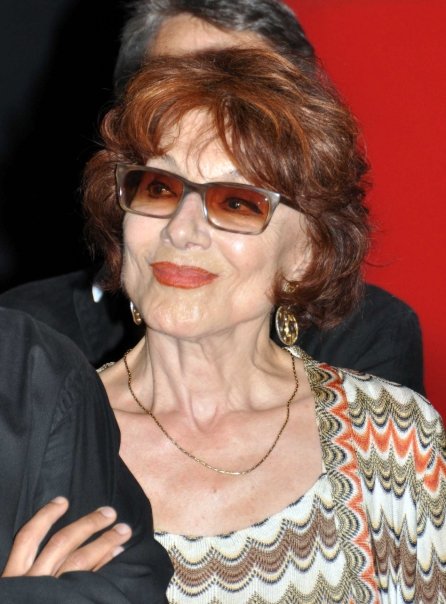
Judith Magre (born 20 November 1926) is a French actress, born in Montier-en-Der, Haute-Marne.

Key Information

Filmography

[edit]
Year Title Role Director Notes
1948 Clochemerle Pierre Chenal
1949 Maya Raymond Bernard
1951 Un grand patron Yves Ciampi
1952 Adorables créatures Jenny Christian-Jaque
My Husband Is Marvelous André Hunebelle
1953 The Long Teeth Mr Commandeur's secretary Daniel Gélin
Capitaine Pantoufle Carmen's friend Guy Lefranc
The Slave'' Claudie Yves Ciampi (2)
1954 Papa, maman, la bonne et moi Germaine Jean-Paul Le Chanois
1955 Village magique Jean-Paul Le Chanois (2)
Napoléon A wonderful Sacha Guitry
Tu ne m'échapperas jamais Marcel Bluwal TV movie
The Grand Maneuver Emilienne René Clair
Le réveillon Marcel Bluwal (2) TV movie
1956 The Ambassador's Daughter Minor Role Norman Krasna
1957 The Man in the Raincoat Éva Julien Duvivier
Procès de famille Vanna Marcel Cravenne TV movie
Comme un cheveu sur la soupe A journalist Maurice Régamey
Lovers of Paris Rachel Julien Duvivier (2)
La Parisienne Irma Michel Boisrond
1958 White Cargo Dora Georges Lacombe
The Lovers of Montparnasse The prostitute Jacques Becker
La Joconde: Histoire d'une obsession Henri Gruel Short
The Lovers Maggy Thiebaut-Leroy Louis Malle
Le Sicilien Pete's wife Pierre Chevalier
Les jeux dangereux Éliane Fournier Pierre Chenal (2)
Les Cinq Dernières Minutes Corinne Lestelle Claude Loursais TV series (1 Episode : "Tableau de chasse")
1959 Signé: Arsène Lupin Yves Robert
Le travail c'est la liberté Yvonne Louis Grospierre
Les Cinq Dernières Minutes Marie-Laure Darsac Claude Loursais (2) TV series (1 Episode : "On a tué le mort")
1960 Bouche cousue Barbara Jean Boyer
Le dialogue des Carmélites Rose Ducor Raymond Léopold Bruckberger
Philippe Agostini
La caméra explore le temps Charlotte de Sauves
The Marquise de Verneuil
Guy Lessertisseur
Stellio Lorenzi
TV series (2 episodes)
1963 Horace Camille Jean Kerchbron TV movie
1964 Les fables de La Fontaine Hervé Bromberger TV series (1 Episode : "Le chat, la belette et le petit lapin")
1965 Huis clos Inès Michel Mitrani TV movie
1966 Rouletabille Callista Robert Mazoyer TV series (1 Episode : "Rouletabille chez les Bohémiens")
La tour Eiffel qui tue Hélène de Tigris Jean-Roger Cadet
Michel de Ré
TV movie
1967 All Mad About Him The medium Norbert Carbonnaux
Woman Times Seven Bitter Thirty Vittorio De Sica (1 Episode : "Amateur Night")
Antoine et Cléopâtre Cleopatra Jean Prat TV movie
Bajazet Roxane Michel Mitrani (2) TV movie
1968 La double inconstance Flaminia Marcel Bluwal (3) TV movie
1969 La promesse Éliane Paul Feyder
Robert Freeman
1970 Reportage sur un squelette ou Masques et bergamasques Michel Mitrani (3) TV movie
Le Voyou Mme Gallois Claude Lelouch
1971 La cavale Gina Michel Mitrani (4)
Un peu de soleil dans l'eau froide Odile Jacques Deray
1973 Les Thibault Anne de Battaincourt André Michel
Alain Boudet
TV mini-series (4 episodes)
Papa, les petits bateaux Marylène Nelly Kaplan
Petite flamme dans la tourmente Tilia Michel Wyn TV movie
1974 And Now My Love David's mother Claude Lelouch (2)
Black Thursday Mme Ash Michel Mitrani (5)
Jeanne ou La révolte Jeanne Harvilliers Luc Godevais TV movie
1975 Cat and Mouse The lady with the dog Claude Lelouch (3)
1976 Mon coeur est rouge Angry woman Michèle Rosier
1977 Genre masculin Mme Jacquot Jean Marboeuf
1978 Allégra Carmen Corail Michel Wyn (2) TV movie
Les grandes conjurations: Le connétable de Bourbon Louise de Savoie Jean-Pierre Decourt TV movie
1972–1979 Au théâtre ce soir Several characters Pierre Sabbagh
Georges Folgoas
TV series (5 episodes)
1979 La mouette Arkadina Jacques Duhen TV movie
The Associate Mme. Brezol René Gainville
Rien ne va plus Béatrice Jean-Michel Ribes
1980 Je vais craquer!!! Irina François Leterrier
La sourde oreille Antoinette Michel Polac TV movie
1981 À nous de jouer Director of Programs André Flédérick TV movie
Le beau monde Anna Michel Polac (2) TV movie
Adèle ou la marguerite The Countess Pierre Desfons TV movie
Oxalá Françoise António-Pedro Vasconcelos
1982 Salut... j'arrive! Mathilde Gérard Poteau
1983 Vive la sociale! The mother Gérard Mordillat
1985 Les temps difficiles Mélanie Georges Folgoas (2) TV movie
1986 Les étonnements d'un couple moderne Solange Morane Pierre Boutron TV movie
1987 Spirale Falconnetti Christopher Frank
Les Cinq Dernières Minutes Julia Guy Jorré TV series (1 Episode : "La peau du rôle")
1988 Un coeur de marbre Mme Thérèse Stéphane Kurc TV movie
M'as-tu-vu? Salima TV series (1 Episode : "La rencontre")
L'enfance de l'art Francis Girod
Paparoff Antonia Denys de La Patellière TV series (1 Episode : "L'addition est pour moi: Paparoff est de retour")
La belle Anglaise Alice Jacques Besnard TV series (2 episodes)
1989 Les deux Fragonard An anatomist Philippe Le Guay
Jesus of Montreal Dubbing actress Denys Arcand
1990 La campagne de Cicéron Hermance Jacques Davila
Feu sur le candidat Huguette Cavaillon Agnès Delarive
1991 La milliardaire Léon Raynaud Jacques Ertaud TV movie
Le dernier lien Camille Joyce Buñuel TV movie
L'huissier Mme Malicorne Pierre Tchernia TV movie
1992 Jour blanc Eva Kalinska Jacob Berger TV movie
Urgence d'aimer Roselyne Philippe Le Guay (2) TV movie
1993 Rhésus Roméo Roselyne Philippe Le Guay (3) TV movie
1994 Montparnasse-Pondichéry Mme Chamot Yves Robert (2)
Regards d'enfance Colette Jean-Paul Salomé TV series (1 Episode : "La grande fille")
1995 L'enfant en héritage Edith Schomberg Josée Dayan TV movie
1996 Berjac: Coup de théâtre Edith Jean-Michel Ribes (2) TV movie
Andrea Renata Sergi Casamitjana
Album de famille Hélène Shiri Tsur Short
1998 Man Is a Woman Simon's mother Jean-Jacques Zilbermann
2000 Le pique-nique de Lulu Kreutz Olga Steg Didier Martiny
Avocats & associés Elodie Jacquin Denis Amar TV series (1 Episode : "Le bébé de la finale")
2003 Les parents terribles Léo Jean-Claude Brialy TV movie
Nathalie... Catherine's mother Anne Fontaine
2004 Le menteur Geneviève Philippe de Broca TV movie
2005 L'antidote Mme Marty Vincent De Brus
2007 Trivial Duchess Sophie Marceau
Les interminables Gaëlle Thomas Pieds TV movie
Le réveillon des bonnes Mme Despréaux Michel Hassan TV mini-series
2008 Ça se soigne? Aline Bledish Laurent Chouchan
John Adams Madame Helvétius Tom Hooper TV mini-series (2 episodes)
2009 La folle histoire d'amour de Simon Eskenazy Bella Jean-Jacques Zilbermann (2)
Pour ma fille Esther Claire de la Rochefoucauld TV movie
2010 What War May Bring Esther Claude Lelouch (4)
La maison des Rocheville The house's voice Jacques Otmezguine TV mini-series (5 episodes)
Quand l'amour s'emmêle Jeanne Claire de la Rochefoucauld (2) TV movie
2011 Les Cybernautes rêvent-ils d'amours digitales? Olga Gilles Bindi Short
2012 Aruna Villiers TV series (1 Episode : "Mission à Pessac")
Granny's Funeral Madame de Tandévou Bruno Podalydès
Du vent dans mes mollets The grandmother Carine Tardieu
A l'abri de la tempête Valentine Camille Brottes
2013 Clean Granny Benjamin Bouhana Short
La Minute Vieille TV series (1 Episode : "Un spectateur hors du commun")
2014 Le règne de la beauté Mathilde Denys Arcand (2)
Ariane's Thread The Turtle (voice) Robert Guédiguian
2016 Le sang de la vigne Mme Newman
Elle Irène Leblanc Paul Verhoeven

References

[edit]
[edit]
Revisions and contributorsEdit on WikipediaRead on Wikipedia
from Grokipedia
Judith Magre (born Simone Dupuis; 20 November 1926) is a French actress renowned for her prolific career spanning film, theater, and television over seven decades. Born in Montier-en-Der, , she grew up in a family of industrialists and studied philosophy at the Sorbonne before training at the prestigious Cours Simon acting school. Adopting stage names like Simone Chambord early on, she debuted in cinema in the early 1950s with small roles, such as in Un grand patron (1951), and quickly established herself as a versatile performer in both dramatic and comedic works. Magre's filmography includes numerous credits, featuring collaborations with acclaimed directors like in Les Amants (1958), in Les Grandes Manœuvres (1955), and in films such as Le Voyou (1970) and Toute une vie (1974). Her later roles highlight her enduring presence, including appearances in Nathalie... (2003), La Disparue de Deauville (2007) alongside , Elle (2016) directed by , Ça se soigne ? (2008), Joyeuse retraite 2 (2022), and theater roles in Judith prend Racine (2024) and Judith Magre dit Aragon (2025). In theater, she performed with the influential Renaud-Barrault company in the early 1960s, including Anton Chekhov's La Cerisaie (1960), and was a member from 1961 to 1962, also appearing in Aeschylus's L’Orestie (1962); she later worked with the Théâtre National Populaire on plays by , , and . Her stage achievements earned her multiple Molière Awards in 1990, 2000, and 2006, with a recent notable role in Judith prend Racine (2024). On television, she appeared in series like Au théâtre ce soir and Les Interminables (2007) with . Personally, Magre was married to journalist and filmmaker from 1963 to 1971. At 98 years old, she remains an icon of French performing arts, celebrated for her rebellious spirit and longevity in the industry.

Early life and education

Family background

Judith Magre was born Simone Dupuis on November 20, 1926, in the small rural commune of Montier-en-Der, in the department of northeastern . She was the daughter of René Dupuis, an engineer who co-managed a prosperous local factory producing combine harvesters alongside his brother, and Clothilde Vitry, from a longstanding family in the area. As the eldest of seven children in a close-knit industrial family, Magre grew up immersed in the rhythms of rural life, surrounded by expansive forests and farmlands that shaped her early worldview. The family dynamics emphasized unity and tradition, with regular Sunday gatherings at both maternal and paternal grandparents' homes fostering strong intergenerational bonds; she later recalled joyful activities like fishing with her paternal grandfather and exploring the woods for mushrooms. However, her childhood was marked by the trauma of , as the family resided in Montier-en-Der until she was 13, when the town was bombed by German forces on June 14–15, 1940, prompting a relocation and leaving indelible memories of destruction amid the otherwise serene countryside. Local influences included attending school and church, where she sang Gregorian chants, and discovering through series like La Bibliothèque rose and works by La Comtesse de Ségur, which sparked her imaginative inclinations. For her initial forays into acting, Magre adopted the stage name Simone Chambord, reflecting her desire to distance herself from her family roots while embarking on professional endeavors.

Studies and early influences

After completing her , at the age of 17 Magre became engaged during a family wedding in to a man who worked abroad, receiving a as a token. During a subsequent family lunch, she abruptly broke off the engagement by removing the ring in front of her relatives and left home, back to . To support herself financially in the city, she took on various odd jobs, including selling tapestries, sketching images of the for tourists, and sewing clothes from fabrics purchased at markets. Judith Magre then enrolled at the in during the late 1940s to study , initially aspiring to become a philosophy teacher. However, she soon found the academic path unfulfilling and abandoned her studies. She subsequently trained at the prestigious Cours Simon acting school. Magre's early theatrical inspirations emerged around 1947, when, at age 21, she made her stage debut during a touring production in , , in a by Émile Mazaud. Pushed onto the stage by the stage manager, she tripped and fell, an incident that the audience initially mistook for an intentional element of the performance. This unexpected experience ignited her passion for acting, leading her to commit fully to the profession; in 1953, she adopted the stage name Judith Magre, moving away from her earlier pseudonym Simone Chambord.

Career

Theater

Judith Magre began her theater career in the late under the stage name Simone Chambord, making her debut during a tour in in a play by Émile Mazaud, where she was pushed onstage by a amid initial fright and improvised a fall into a comedic moment that solidified her commitment to acting. In the early 1950s, after training at the Cours Simon, she secured her first professional contract and joined the Compagnie Renaud-Barrault for a tour, performing in La Farce des ténébreux by Michel de Ghelderode at the Théâtre du Grand-Guignol in 1952, directed by Georges Vitaly. By 1955, Magre had adopted her professional name and garnered attention for her portrayal of Marie-Chantal, a vapid and snobbish young bourgeois woman, in Jacques Chazot's sketch Marie-Chantal at the Théâtre Fontaine, opposite , under Michel de Ré's direction. She rejoined the Compagnie Renaud-Barrault that year and again from 1961 to 1962, contributing to key productions including Jean Giraudoux's Judith, Anton Chekhov's La Cerisaie (1960), and Aeschylus's L’Orestie (1962), showcasing her versatility in classical and modern repertoire. From 1962 to 1971, Magre was a prominent member of the Théâtre National Populaire (TNP) under directors Jean Vilar and , interpreting roles in a broad spectrum of works that included Bertolt Brecht's political dramas, Euripides's tragedies, Maxim Gorki's social realist plays, and Jean Vauthier's experimental pieces, such as her acclaimed performance as in Giraudoux's La Guerre de Troie n'aura pas lieu in 1962 and as part of Les Prodiges by Vauthier in 1971, directed by Claude Régy at the Théâtre de Chaillot. Her TNP tenure emphasized accessible, high-caliber ensemble theater, aligning with the company's mission to democratize culture through diverse classical and contemporary stagings. Magre sustained an active stage presence through the late and into the 21st, often at intimate venues like the Théâtre de Poche-Montparnasse, where she became a resident artist. In Une vie allemande (2021-2023), adapted by from the documentary on and directed by Thierry Harcourt, she embodied the former secretary to , delivering over two dozen performances that explored complicity and denial in with poignant restraint. In 2024, she collaborated with Olivier Barrot in Judith prend Racine au poche, a duo homage to Jean Racine's tragic heroines—Andromaque, , and —staged from September to November at the Théâtre de Poche-Montparnasse, blending recitation and commentary to illuminate the essence of classical tragedy. Her most recent engagement, Judith Magre dit Baudelaire (2024-2025), pairs her once more with Barrot under Harcourt's direction, reciting selections from Charles Baudelaire's every Monday from late 2024 until April 2025 at the same venue, drawing on her personal connection to the poet discovered in childhood.

Film

Magre began her film career in 1948 under the pseudonym Simone Chambord, debuting as Hortense Girodot in , a directed by Pierre Chenal that satirized provincial French life. She followed with supporting roles in Un grand patron (1951), directed by Yves Ciampi, where she portrayed a minor character in a about industrial ambition, and Mon mari est merveilleux (1952), a lighthearted helmed by Hunebelle featuring . These early appearances established her in French cinema as a versatile supporting actress, often in ensemble casts exploring social dynamics. In 1953, Magre adopted her professional name, transitioning to more defined roles that highlighted her distinctive presence. A breakthrough came with The Lovers (1958), directed by Louis Malle, in which she played Maggy Thiebaut-Leroy, the wife of a provincial professor entangled in themes of marital discontent and personal awakening. Her mid-career work expanded through collaborations with esteemed directors, including René Clair's Les Grandes Manœuvres (1955), a romantic drama set in pre-World War I France; Julien Duvivier's Pot-Bouille (1957), an adaptation of Émile Zola's novel delving into bourgeois hypocrisy; and Claude Lelouch's Le Voyou (1970) and Le Chat et la Souris (1975), thrillers emphasizing moral ambiguity. She also featured prominently in Woman Times Seven (1967), directed by Vittorio De Sica, sharing the screen with Shirley MacLaine in a series of vignettes portraying women's varied emotional states. As her career progressed into character-driven parts, Magre's roles grew more nuanced, reflecting her evolution into a reliable figure for complex, often eccentric women in French films. In later years, she appeared as Irène in Elle (2016), Paul Verhoeven's starring , contributing to its exploration of power and trauma. Additional collaborations included Anne Fontaine's Nathalie... (2003), where she played Catherine's mother in a story of and identity, and works with such as Trivial (2007), which Marceau directed and in which Magre portrayed the Duchesse, alongside (2021), a drama on . Spanning over 50 films from 1948 to 2021, Magre's filmography underscores her enduring impact as a character actress, frequently enhancing narratives with her subtle intensity and adaptability in French cinema.

Television

Judith Magre's television career began in the with adaptations of literary and theatrical works, marking her transition from stage to broadcast media. One of her earliest notable roles was as Inès in the 1965 television adaptation of Jean-Paul Sartre's Huis clos, directed by Michel Mitrani, which captured the existential drama of three souls confined in hell. This performance highlighted her ability to convey psychological intensity in a suited to intimate character studies. In the 1970s, Magre gained prominence through major miniseries and theater adaptations broadcast on French television. She portrayed Anne de Battaincourt in Les Thibault (1972–1973), a significant of Roger Martin du Gard's Nobel Prize-winning novel cycle, spanning multiple episodes that explored family dynamics and historical events in early 20th-century . She also frequently appeared in Au théâtre ce soir, the acclaimed anthology series featuring live theater recordings, with roles across several episodes from 1972 to 1979, including Lady Chiltern in Oscar Wilde's Un mari idéal (1972), Mme Bertolier in Marcel Aymé's La Tête des autres (1973), Eléonore in Yves Jamiaque's Monsieur Amilcar (1979), and Marie-Madeleine in Armand Salacrou's Une femme trop honnête (1979). These appearances, often in comedic or dramatic revivals of classic plays, showcased her versatility and contributed to the series' popularity in bringing theater to a wider . Magre's television work continued steadily through the decades, with guest roles in period dramas and contemporary series that sustained her visibility in French broadcast media. In the late , she played Carmen Corail in the series Allégra (1978) and Louise de in the historical TV film Les grandes conjurations: Le connétable de Bourbon (1978). Later, in the 2000s and 2010s, she took on roles in both domestic and international productions, such as Madame Helvétius in the miniseries (2008), appearing in two episodes depicting Enlightenment-era figures. In French television, she appeared as in the TV movie Pour ma fille (2009) and as Jeanne in Quand l'amour s'emmêle (2010), alongside recurring roles like Madame Newman in the crime drama series Le Sang de la vigne (2011 and 2016). These later works often featured her in supporting maternal or enigmatic characters within dramatic narratives. With around 25 television credits over five decades, primarily in adaptations and period pieces, Magre's small-screen contributions emphasized her enduring presence in French cultural programming.

Personal life

Marriage

Judith Magre married the French filmmaker, journalist, and intellectual in 1963. The union lasted eight years and ended in divorce in 1971. This marriage coincided precisely with Magre's active period at the Théâtre National Populaire (TNP) from 1963 to 1971, during which she gained prominence in the French theater scene through roles in works by playwrights including , , , and Jean Vauthier. Lanzmann, editor of the influential journal Les Temps Modernes and a key figure in post-war French intellectual life with ties to and , shared Magre's immersion in Paris's vibrant cultural milieu, though no direct professional collaborations between them are recorded.

Friendships and later years

Throughout her life, Judith Magre cultivated significant platonic friendships within France's artistic and cultural elite, notably with , the vicomtesse known for her of the arts. Magre described Noailles as a "great friend," with whom she socialized frequently, using the informal "tu," visiting her home regularly, and attending the lavish parties she hosted, which immersed Magre in vibrant intellectual and creative circles. Another key relationship was with designer ; early in her Paris career, after breaking off an engagement, Magre was hosted by Putman's sister, providing crucial support during a challenging period and connecting her to influential design and artistic networks. These bonds enriched Magre's exposure to diverse creative influences, fostering her eclectic approach to theater, film, and literature. In her later years, Magre maintained a robust professional presence, demonstrating remarkable vitality at age 98 in 2025. She continued to engage publicly, including signing the December 2023 tribune "N'effacez pas Gérard Depardieu" in , where 50 cultural figures defended the actor's artistic legacy while upholding the amid his legal challenges. Her enduring commitment to her craft positioned her among the oldest active French actresses, second only to (born 1925), with ongoing stage work underscoring her longevity in the profession. Magre's ties to her roots were honored locally when the médiathèque in her birthplace of Montier-en-Der was renamed the Médiathèque Judith Magre in 2015, transforming the former wheat market and cinema into a modern cultural hub with spaces for young readers and community events. As of November 2025, she remains professionally engaged through the theatrical production Judith Magre dit Aragon at the Théâtre de Poche , a recitation of Louis Aragon's works, running through January 12, 2026.

Recognition

Awards

Judith Magre received the Award for in 1990 for her performance in Steven Berkoff's Greek, directed by at the Théâtre national de la Colline, where her portrayal of a complex, multifaceted character contributed to the production's critical acclaim for its raw emotional intensity. In 2000, she was honored with the Award for for her leading role in Shirley by van Cauwelaert, staged at the Théâtre du Rond-Point and later at the Théâtre La Bruyère, showcasing her commanding stage presence in a role that explored themes of identity and resilience, solidifying her reputation as a versatile theatrical force. Magre earned her third Molière Award in 2006, this time for , for her work in Histoires d'hommes by Xavier Durringer, performed at the Théâtre de la Colline, where her nuanced interpretation of intimate human narratives highlighted her enduring mastery of dramatic subtlety and emotional depth. In addition to her Molière Awards, Magre was promoted to Chevalier de la Légion d'honneur in 2001 for her contributions to French arts. She received the Prix du Brigadier in 2018, recognizing her lifetime achievements in theater.

Legacy

Judith Magre's career spans over 75 years, from her film debut in 1948 with Scandals of Clochemerle to recent roles in 2024 productions such as Molière's Last Stage, establishing her as a enduring figure in French across theater, film, and television. Her longevity reflects a rare commitment to the profession into her late 90s, with active work continuing as of 2025, making her one of the oldest working actresses in . This extended tenure highlights her adaptability and resilience in an industry often unforgiving to aging performers. As a versatile character actress, Magre bridged the post-war era of French cinema and theater with contemporary works, embodying complex supporting roles that enriched narratives in both mediums. Her contributions to prestigious ensembles, including the Théâtre National Populaire (TNP) from 1963 to 1971 under directors like Jean Vilar and , underscored her role in advancing accessible, high-caliber public theater during a transformative period for French arts. At TNP, she appeared in key productions such as Bertolt Brecht's Maître Puntila et son valet Matti and Maxim Gorky's Les Enfants du soleil, contributing to the company's mission of democratizing culture. Magre's cultural footprint in France is marked by her extensive body of work, exceeding 100 credits across media, which has cemented her status as a foundational talent in character-driven storytelling. Her performances, often in nuanced, eccentric roles, have influenced generations of actors by demonstrating the power of subtlety and presence in supporting capacities, from post-war films like The Lovers (1958) to modern entries such as Elle (2016). While specific early career anecdotes remain part of theatrical lore, her overall legacy lies in sustaining a prolific output that spans decades, inspiring ongoing appreciation for veteran performers in French arts.

References

Add your contribution
Related Hubs
User Avatar
No comments yet.